

• Regeln für den Video-Bereich:

    In den Börsenbereich gehören nur Angebote die bereits den Allgemeinen Regeln entsprechen.

    Einteilung

    - Folgende Formate gehören in die angegeben Bereiche:
    - Filme: Encodierte Filme von BluRay, DVD, R5, TV, Screener sowie Telesyncs im Format DivX, XviD und x264.
    - DVD: Filme im Format DVD5, DVD9 und HD2DVD.
    - HD: Encodierte Filme mit der Auflösung 720p oder darüber von BluRay, DVD, R5, TV, Screener sowie Telesyncs im Format x264.
    - 3D: Encodierte Filme von BluRay, die in einem 3D Format vorliegen. Dies gilt auch für Dokus, Animation usw.
    - Serien: Cartoon/Zeichentrick, Anime, Tutorials, Dokumentationen, Konzerte/Musik, Sonstiges sind demnach in die entsprechenden Bereiche einzuordnen, auch wenn sie beispielsweise im High Definition-Format oder als DVD5/DVD9/HD2DVD vorliegen. Ausnahme 3D.
    - Bereich Englisch: Englische Releases gehören immer in diesen Bereich.
    - Bereich Talk: Der Bereich, in dem über die Releases diskutiert werden kann, darf, soll und erwünscht ist.


    Angebot/Beitrag erstellen

    - Ein Beitrag darf erst dann erstellt werden, wenn der Upload bei mindestens einem OCH komplett ist. Platzhalter sind untersagt.
    - Bei einem Scenerelease hat der Threadtitel ausschließlich aus dem originalen, unveränderten Releasenamen zu bestehen. Es dürfen keine Veränderungen wie z.B. Sterne, kleine Buchstaben o.ä. vorgenommen werden. Ausnahme Serienbörse:
    - Bei einem Sammelthread für eine Staffel entfällt aus dem Releasename natürlich der Name der Folge. Beispiel: Die Simpsons S21 German DVDRip XviD - ITG
    - Dementsprechend sind also u.a. verboten: Erweiterungen wie "Tipp", "empfehlenswert", "only", "reup", usw. / jegliche andere Zusatzinformation oder Ergänzung, welche nicht in obiger Beschreibung zu finden ist.

    Aufbau des Angebots und Threadtitel

    Der Titel nach folgendem Muster erstellt zu werden. <Name> [3D] [Staffel] [German] <Jahr> <Tonspur> [DL] [Auflösung] <Quelle> <Codec> - <Group>
    Beispiel: The Dark Knight German 2008 AC3 DVDRip XviD - iND
    Beispiel: The Dark Knight 2008 DTS DL BDRip x264 - iND
    Beispiel: The Dark Knight 2008 AC3 DL BDRip XviD - iND
    Beispiel: The Dark Knight German 2008 AC3 720p BluRay x264 iND
    Beispiel: The Dark Knight 2008 DTS DL 1080p BluRay x264 iND
    Beispiel: Die Simpsons S01 German AC3 DVDRip XviD iND
    Beispiel: Die Simpsons S20 German AC3 720p BluRay x264 iND
    Beispiel: Sword Art Online II Ger Sub 2014 AAC 1080p WEBRip x264 - peppermint
    Entsprechend sind also u.a. verboten: Sonderzeichen wie Klammern, Sterne, Ausrufezeichen, Unterstriche, Anführungszeichen / Erweiterungen wie "Tipp", "empfehlenswert", "only", "reup", usw. / jegliche andere Zusatzinformation oder Ergänzung, welche nicht in obiger Beschreibung zu finden ist
    Ausnahmen hiervon können in den Bereichen geregelt sein.

    Die Beiträge sollen wie folgt aufgebaut werden:
    Überschrift entspricht dem Threadtitel
    Cover
    kurze Inhaltsbeschreibung
    Format, Größe, Dauer sind gut lesbar für Downloader außerhalb des Spoilers zu vermerken
    Nfo sind immer Anzugeben und selbige immer im Spoiler in Textform.
    Sind keine Nfo vorhanden z.B. Eigenpublikationen, sind im Spoiler folgende Dateiinformationen zusätzlich anzugeben :
    Quelle
    Video (Auflösung und Bitrate)
    Ton (Sprache, Format und Bitrate der einzelnen Spuren)
    Untertitel (sofern vorhanden)
    Hosterangabe in Textform außerhalb eines Spoiler mit allen enthaltenen Hostern.
    Bei SD kann auf diese zusätzlichen Dateiinformationen verzichtet werden.

    Alle benötigten Passwörter sind, sofern vorhanden, in Textform im Angebot anzugeben.
    Spoiler im Spoiler mit Kommentaren :"Schon Bedankt?" sind unerwünscht.


    Releases

    - Sind Retail-Release verfügbar, sind alle anderen Variationen untersagt. Ausnahmen: Alle deutschen Retail-Release sind CUT, in diesem Fall sind dubbed UNCUT-Release zulässig.
    - Im Serien-Bereich gilt speziell: Wenn ein Retail vor Abschluss einer laufenden Staffel erscheint, darf diese Staffel noch zu Ende gebracht werden.62
    - Gleiche Releases sind unbedingt zusammenzufassen. Das bedeutet, es ist zwingend erforderlich, vor dem Erstellen eines Themas per Suchfunktion zu überprüfen, ob bereits ein Beitrag mit demselben Release besteht. Ist dies der Fall, ist der bereits vorhandene Beitrag zu verwenden.
    - P2P und Scene Releases dürfen nicht verändert oder gar unter einem iND Tag eingestellt werden.


    Support, Diskussionen und Suche

    - Supportanfragen sind entweder per PN oder im Bereich Talk zu stellen.
    - Diskussionen und Bewertungen sind im Talk Bereich zu führen. Fragen an die Uploader haben ausschließlich via PN zu erfolgen, und sind in den Angeboten untersagt.
    - Anfragen zu Upload-Wünschen sind nur im Bereich Suche Video erlaubt. Antworten dürfen nur auf Angebote von MyBoerse.bz verlinkt werden.


    Verbote

    - Untersagt sind mehrere Formate in einem einzigen Angebotsthread, wie beispielsweise das gleichzeitige Anbieten von DivX/XviD, 720p und 1080p in einem Thread. Pro Format, Release und Auflösung ist ein eigener Thread zu eröffnen.
    - Grundsätzlich ebenso verboten sind Dupes. Uploader haben sich an geeigneter Stelle darüber zu informieren, ob es sich bei einem Release um ein Dupe handelt.
    - Gefakte, nur teilweise lauffähige oder unvollständige Angebote sind untersagt. Dies gilt auch für eigene Publikationen, die augenscheinlich nicht selbst von z.B. einer DVD gerippt wurden. Laufende Serien, bei denen noch nicht alle Folgen verfügbar sind, dürfen erstellt und regelmäßig geupdatet werden.
    - Untersagt sind Angebote, welche nur und ausschließlich in einer anderen Sprache als deutsch oder englisch vorliegen. Ausnahmen sind VORHER mit den Moderatoren zu klären.


    Verstoß gegen die Regeln

    - Angebote oder Beiträge, die gegen die Forenregeln verstoßen, sind über den "Melden"-Button im Beitrag zu melden.
  • Bitte registriere dich zunächst um Beiträge zu verfassen und externe Links aufzurufen.

*** Bestes IPTV *** bester Preis *** gratis Test ***


Englische Tutorials

Non-Fiction Writing Workshop

exspqrckvc62gchddyy5arafip.jpg


Non-Fiction Writing Workshop
Last updated 1/2019
MP4 | Video: h264, 1280x720 | Audio: AAC, 44.1 KHz
Language: English | Size: 6.07 GB | Duration: 4h 34m

Your path to a lucrative writing career


What you'll learn
Turn Your Idea Into a Non-Fiction Book
Different Types of Non-Fiction
Different Markets for Non-Fiction
How to Structure Your Non-Fiction
How to Create Non-Fiction that Sells
Polish Your Manuscript
Develop a Marketing Plan
Get Published!

Requirements
Open to all aspiring writers, young or old, experienced or just getting started

Description
The BEST COURSE CHOICE for those with a book idea and a desire to get published!
In this lively and fun course, author and mentor Steve Alcorn shows you how to achieve success. During the past two decades, Steve and Dani have helped more than 30,000 aspiring writers structure their stories, and many are now in print. You can be next!Why write non-fiction?More than 75% of all books published are non-fiction. Publishers and readers are actively looking for new non-fiction titles, and they have a long shelf life, often selling well for decades. That means it's far easier to get non-fiction published, and to make money from it.
This workshop shows you how to select the right category and topic for your book, how to organize and write it, and how to get it published. Step by step instructions and clear explanations make it easy for you to get into print and start your career as a successful non-fiction author!What are the requirements?Open to all aspiring writers, young or old, experienced or just getting startedWhat am I going to get from this course?38 lectures and 7 hours of content!Downloadable, printable handouts and exercises38 Discussion Areas where you can share your work and get feedbackTurn Your Idea Into a Non-Fiction BookPolish Your ManuscriptDevelop a Marketing PlanGet Published!What is the target audience?First-Time AuthorsIf Your Manuscript Needs PolishIf Your Manuscript is UnfinishedAuthors Who Want to Get Published

Overview

Section 1: Planning

Lecture 1 Introduction

Lecture 2 What Is Non-Fiction?

Lecture 3 Types of Non-Fiction

Lecture 4 Forms of Non-Fiction

Lecture 5 Technical, Academic, and Reference

Lecture 6 Topic Driven

Lecture 7 Self-Help

Lecture 8 Short Forms

Lecture 9 Criticism

Lecture 10 Personal and Individual

Lecture 11 Non-Fiction for Children

Lecture 12 Your Audience

Lecture 13 Non-Fiction Organization

Lecture 14 Subjects

Lecture 15 Narrative Non-Fiction

Lecture 16 Putting Yourself Into Your Work

Lecture 17 Legal Issues

Lecture 18 Research

Lecture 19 Our Favorites

Section 2: Writing

Lecture 20 Organizing Your Writing

Lecture 21 Plot vs. Story

Lecture 22 Story Patterns

Lecture 23 Characters

Lecture 24 Three Act Structure

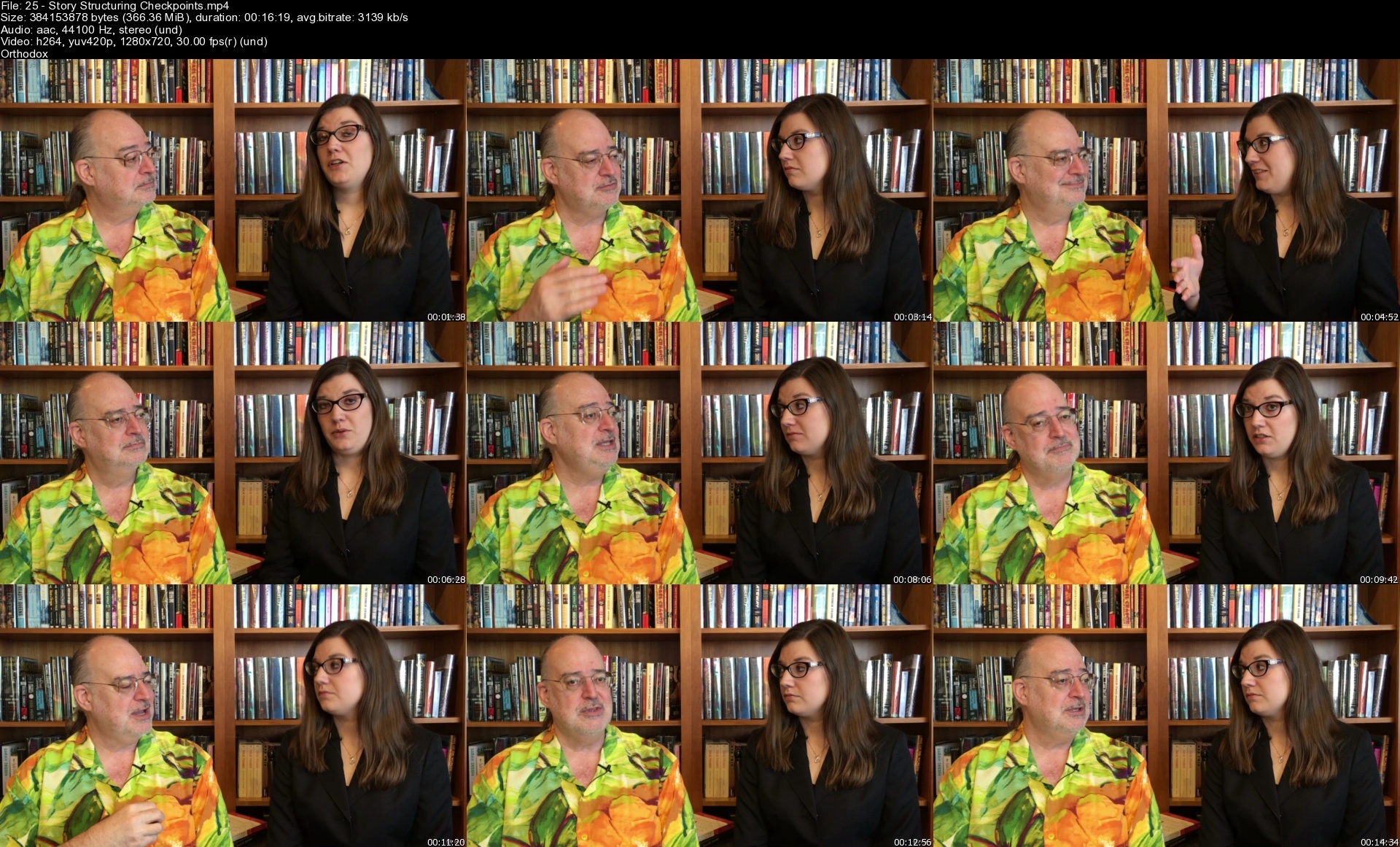
Lecture 25 Story Structuring Checkpoints

Lecture 26 Framing Non-Fiction

Lecture 27 Scenes

Lecture 28 Settings and Descriptions

Lecture 29 Viewpoint and Tense

Lecture 30 Dialogue

Lecture 31 Active Verbs and More

Lecture 32 Your Manuscript

Lecture 33 The Writing Process

Lecture 34 Editing

Lecture 35 Final Checks

Section 3: Publishing

Lecture 36 Traditional Publishing

Lecture 37 Self-Publishing

Lecture 38 Next Steps

First-Time Authors,If Your Manuscript Needs Polish,If Your Manuscript is Unfinished,Authors Who Want to Get Published

Homepage

25storystructuringche3kfcy.jpg


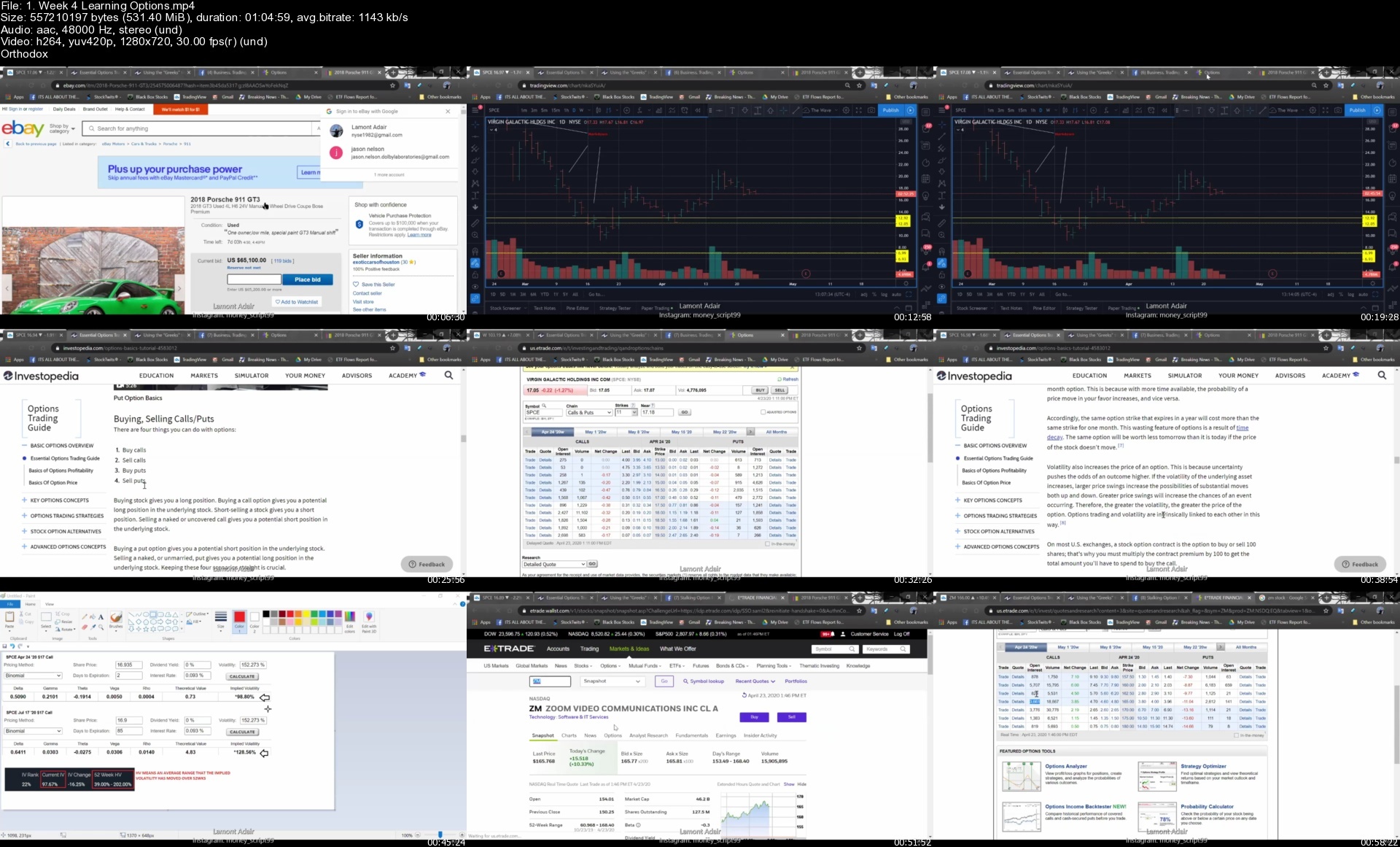
Intro to Candlestick Chart Reading and Volume Analysis

aqdus1ukyuatzpmxk2amngxiyp.jpg


Intro to Candlestick Chart Reading and Volume Analysis
Published 07/2022
Genre: eLearning | MP4 | Video: h264, 1280x720 | Audio: AAC, 48.0 KHz
Language: English | Size: 5.48 GB | Duration: 11 lectures • 9h 37m

Candlesticks + Volume Determine Market Direction


What you'll learn
Understand the types and patterns of candlesticks used in stock market charts.
Identifying spreads to execute call/put transactions.
Determine volume manipulation and campaigns.
Navigate and set up accounts in a brokerage and charting platform.
Utilize real time date ie. moving average and volume indicators to forecast next move.


Requirements
Internet access + Signup for an account on Tradingview (Basic Plan)
Add time data on Tradingview + Access to download indicators
You need an active brokerage account ie. Thinkorswim, TD Ameritrade, Etrade or Webull
Have some basic knowledge regarding the Stock Market

Description
Throughout my personal journey into trading I made a lot of mistakes. I blew several accounts on my way to becoming a profitable trader. It's honestly a rights of passage in my opinion. You have to experience losses in the beginning and it humbles you. Overtime, you will learn that once you can control your emotions, focus on technical analysis, and understand money management you will see your results improve. In my course you will begin at basic and progress all the way to advanced understanding to candlesticks and how to read them effectively. I go over the relationship between price action (price activity) and the volume activity. You will then learn how to utilize both of these to determine when the algorithm is going to move price in a specific direction and how to capitalize on that price movement. I also cover how to control your emotion of fear of losing while day trading as well as how to utilize money management. Emotions tend to be one of the main culprits which cause traders to falter in their trading journey. I will teach you how to overcome your negative emotions and train you to believe in your skill. This course will enhance your trading results immensely.

Who this course is for
Beginners & Intermediate potential traders looking to improve their trading skillset

Homepage


1.week4learningoption30ete.jpg


Project Manager's Playbook for Construction - Part 6 of 6

3197098a6062jfd5a.jpg


Project Manager's Playbook for Construction - Part 6 of 6
MP4 | Video: h264, 1280x720 | Audio: AAC, 44.1 KHz, 2 Ch
Genre: eLearning | Language: English + srt | Duration: 18 lectures (1h 55m) | Size: 2.22 GB

Project execution and control - Documentation, records, claims, dispute resolution, dispute avoidance and negotiation


What you'll learn
This course teaches critical skills necessary for any project manager in construction. The lessons of this course represent the "playbook" for a PM to succeed


Requirements
There are no prerequisites for this course.


Description
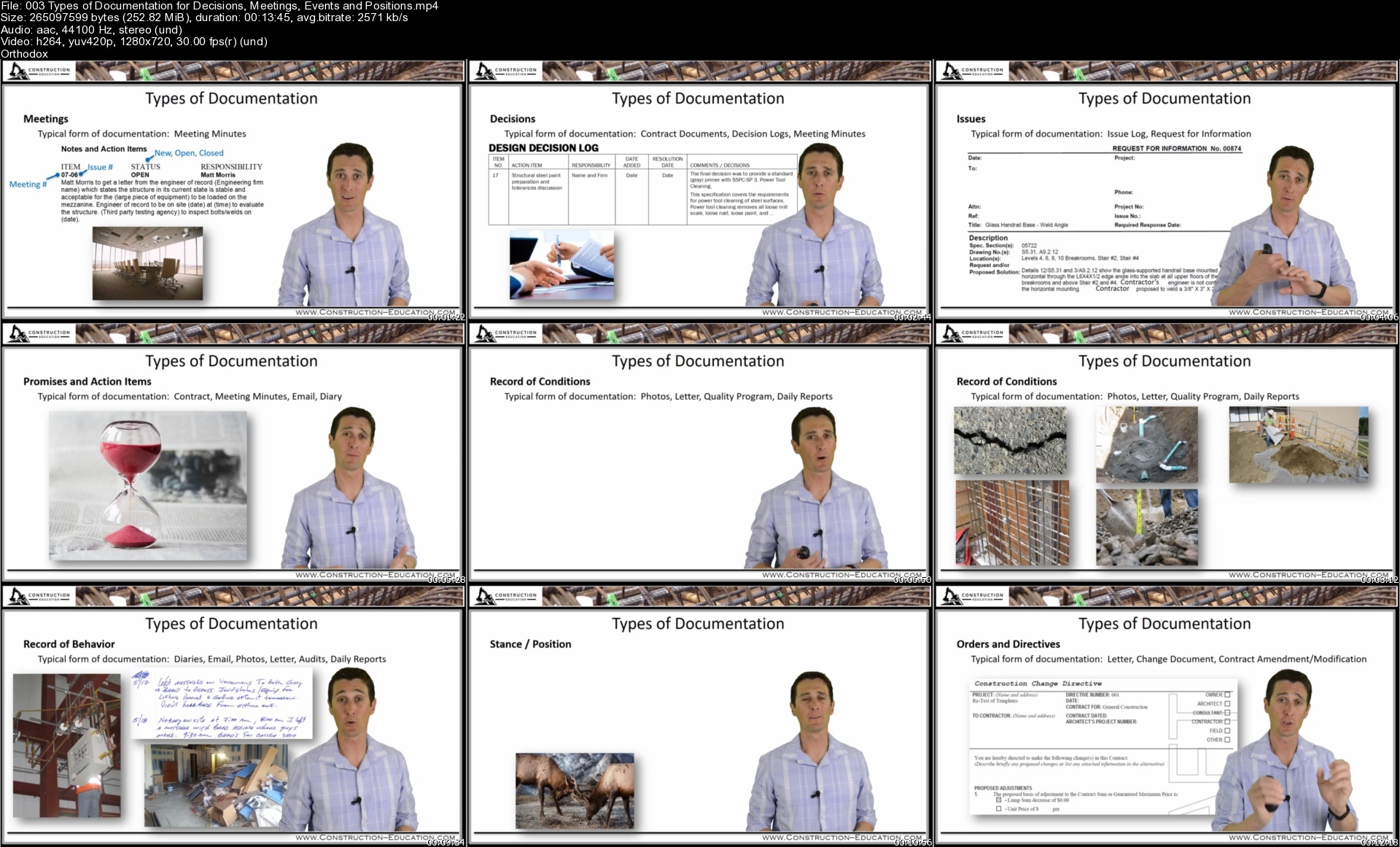
Given the nature of construction, it is inevitable that conflict will happen and disputes will arise. In this final course in the series, we'll review the contractual steps you must take if a dispute can't be resolved on the jobsite. However, resolving the dispute at the project-level is the preferred path. We will discuss how to negotiate and handle conflict. Even better, the most preferred route would be to avoid disputes all together. We'll spend a lot of time discussing how to set expectations through clear and unambiguous contracts, how to properly document activities and decisions, proper jobsite records and the importance of communication. Ultimately, people build construction projects. This course discusses ways to interact in an effective way on a personal-level to improve the atmosphere and conditions on site.

Who this course is for
Primary Audience Industry Sectors - Heavy Civil, Commercial Building Construction, Industrial, Residential.
Primary Audience Project Roles - Project Managers, Project Engineers (aspiring PMs), Project Controls, Superintendents
Primary Audience Project Players - Owners (and Owner's Representatives), General Contractors, Subcontractors, Suppliers
Secondary Audience - Design Engineers, Architects, Preconstruction, Estimators, Schedulers, Design-Phase Managers

Homepage


003typesofdocumentatiyqi0f.jpg


Business Strategy Execution-Agile Organization System Design

8iraovxyghlicgirvkdcm8ze8d.jpg


Business Strategy Execution-Agile Organization System Design
Last updated 3/2020
MP4 | Video: h264, 1280x720 | Audio: AAC, 44.1 KHz
Language: English | Size: 8.26 GB | Duration: 18h 10m

Transforming Culture and Capabilities to Execute Business Strategy: The Agile Way to Business Strategy Success


What you'll learn
To create a process of agile action to achieve strategic business goals.
To align the internal technical systems (work process), social systems, and economic system to achieve business strategy.
To achieve agile adaptation and alignment of the organization's systems, structure, skills, style and symbols.
To engage the maximum number of leaders and associates in the process of building the future culture and capabilities that will lead to sustainable performance.

Requirements
Any prior understanding of organization culture and strategy; as well as change management experience, will be helpful.

Description
Understanding your organization as a system is critical to success and sustainability. Your business success is not merely having a goal, a direction, a vision. It is the ability to change, to create the process, the organization, the capabilities and culture, that result in performance. This course is a roadmap that will enable you to successfully execute strategy."Engaging and enlightening. Larry's wealth of experience allows you to easily apply the subject matter to the real world." Neil ShawNote: Now included is the complete ebook Getting to Lean - Transformational Change Management. It is attached to lecture 4. Business Strategy Execution is a hot topic in management today. The Conference Board's recent Survey of CEOs revealed that chief executives are so concerned about strategy execution that they rated it as both their number one and number two most challenging issue.Why does strategy execution so often fail? Because most strategic plans are little more than a series of vertically integrated objectives. But, the problem is not objectives and it is not vertical. It is the "whole-system" and its ability to adapt and align, internally and externally in fast cycles. In other words, to be agile. The problem is the culture and capabilities of the organization and a process to design and deploy those capabilities. This course provides that process and is based on forty years of experience improving the performance of organizations.The problem is developing new capabilities and a new culture that will enable the organization to achieve its goals. The term "Agile" implies an iterative process of experimentation, learning, adaptation to the changing environment, and alignment with other business units and support groups. This course is about creating that agility, adaptation and alignment.Every organization has capabilities that are embedded in the culture. This course will take the leader through a process of assessing the current culture, its assets and liabilities, sensing the changing landscape that presents threats and opportunities, and then engaging the organization in the design of those processes and systems that will represent competitive advantage. The author of this course is the author of ten books on leadership, lean management and change process. This course includes the text and material from three of his books.

Overview

Section 1: Introduction to Strategy Execution - The Agile/Lean Way

Lecture 1 Connecting Strategy, Culture & Capabilities

Lecture 2 Strategy Execution: The Problem and Solution

Lecture 3 The Strategy is in the System

Section 2: Defining Strategy, Culture & Capabilities

Lecture 4 What is Strategy?

Lecture 5 What is Culture?

Lecture 6 What are Capabilities?

Lecture 7 Adaptation and Alignment

Section 3: The Plan for Agile Strategy Execution

Lecture 8 Myths of Strategy Execution

Lecture 9 Principles of Agile Strategy Execution

Lecture 10 The Agile Strategy Execution Process

Lecture 11 A VERY(!) Brief Discussion of Theory

Lecture 12 An Overview of Whole-System Architecture

Lecture 13 A Case Study of Strategic Redesign in Health Care

Section 4: What is the Business Strategy?

Lecture 14 Linking Business Strategy to Customer Satisfaction

Lecture 15 What is Moving on the Landscape?

Lecture 16 What is Our Business Model?

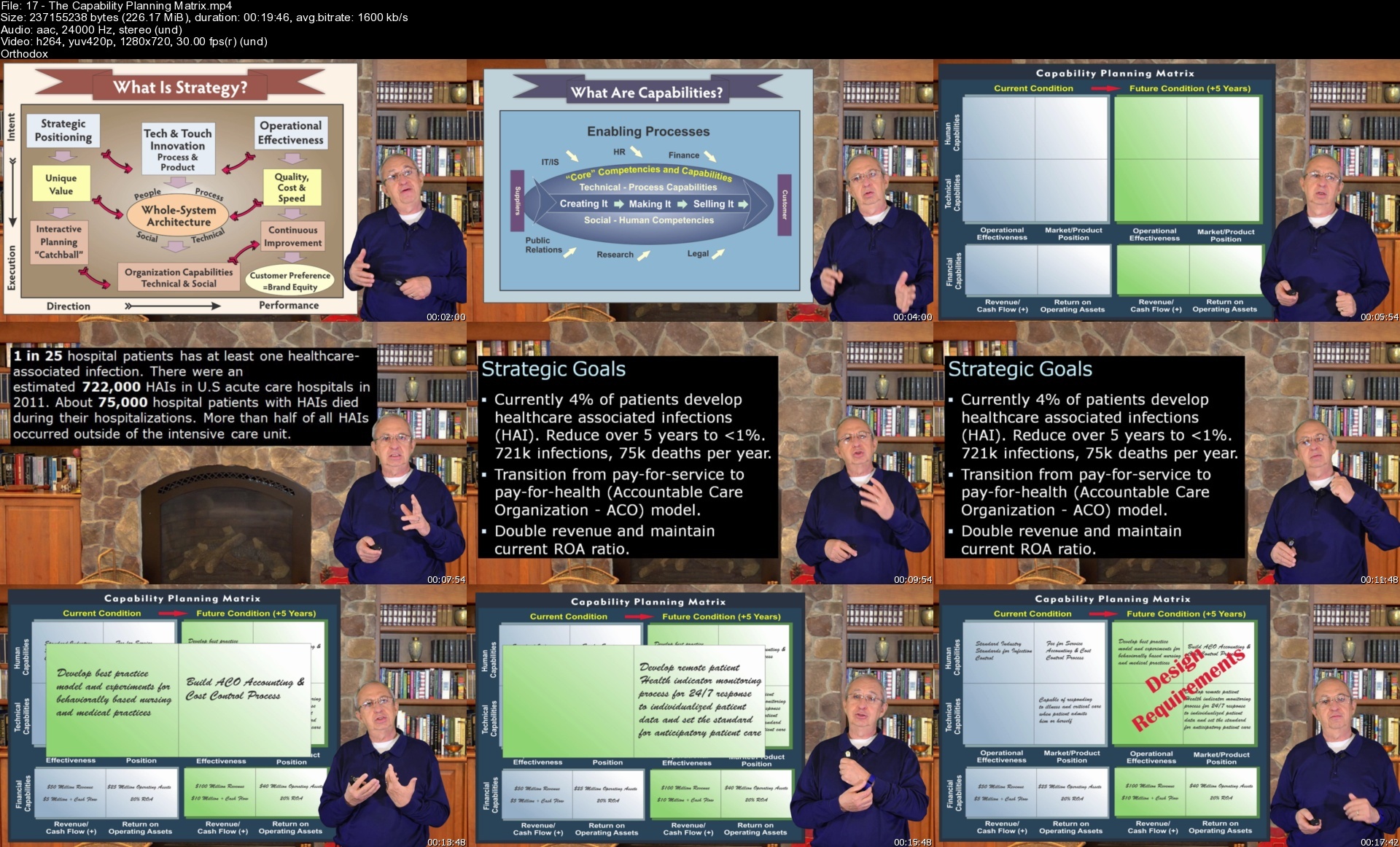
Lecture 17 The Capability Planning Matrix

Section 5: Assessment: Leadership and Life Cycles

Lecture 18 Introduction to Culture Assessments

Lecture 19 Barbarians to Bureaucrats - Synopsis and Assessment Questions

Lecture 20 Life Cycle Analysis 1 - Integration and Disintegration

Lecture 21 Life Cycle Analysis 2 - Emerging and Declining Cultures

Lecture 22 The Prophet - In the Beginning....

Lecture 23 The Failure of the Prophet

Lecture 24 The Conquering Barbarian and Rapid Growth

Lecture 25 The Failure of the Barbarian

Lecture 26 Stability and Differentiation: The Builder and Explorer

Lecture 27 Failure of the Builder and Explorer

Lecture 28 Tipping the Curve: The Administrator and an Orderly Life

Lecture 29 From Collaboration to Control: The Grip of the Bureaucrat

Lecture 30 The Aristocrat: Alienation and Revolution

Lecture 31 The Synergist

Section 6: Assessment: The Five Forms of Capital

Lecture 32 Sustainable Wealth - the Book

Lecture 33 Creating Sustainable Wealth: Assessing Your Assets and Liabilities

Lecture 34 Spiritual Capital

Lecture 35 Social Capital

Lecture 36 Human Capital

Lecture 37 Innovation Capital

Lecture 38 Financial Capital

Lecture 39 Assessing Your Assets and Liabilities

Lecture 40 Forms of Capital Self-Assessment

Section 7: Assessment: Lean Culture

Lecture 41 The Beginning of Lean

Lecture 42 Lean Principles 1

Lecture 43 Lean Principles 2

Lecture 44 Lean Principles 3

Lecture 45 A Visit to Honda - Discovering Lean Culture

Lecture 46 Lean Self-Assessment

Section 8: Writing the Strategy Design Charter

Lecture 47 The Steering Team and Design Team - Who and What

Lecture 48 The Roles & Responsibilities of Steering and Design Teams

Lecture 49 Writing the Design Charter

Lecture 50 Writing the Design Charter and Sample Charters

Section 9: Design Team Discovery

Lecture 51 Design Team Introduction

Lecture 52 Gathering the Facts

Lecture 53 Interviewing Customers

Lecture 54 Mapping the Work Flow

Lecture 55 Chapter: Mapping Your Value Stream

Lecture 56 Analyzing for Waste, Time, Variances and Cost

Section 10: Dream the Ideal Future

Lecture 57 Dreaming the Ideal Future

Lecture 58 Developing the Dream

Section 11: Design the Future System

Lecture 59 Designing the Future Work System

Lecture 60 Social System Design - Structure

Lecture 61 Social System Design - Supportive Systems

Lecture 62 Designing the Ideal Social System

Section 12: Deploying and Developing the Future State

Lecture 63 The Design Presentation - Advice for the Design Team

Lecture 64 The Design Presentation - Advice for the Steering Team

Lecture 65 Deploying and Developing the Design

Lecture 66 Agile Strategy Deployment

Lecture 67 The Psychology of Objectives

Lecture 68 Management by Objectives & Self-Control

Section 13: Additional Resources

Lecture 69 Bonus Lecture: Some Additional Resources

Leaders and leadership teams with business unit responsibility.

Homepage


17thecapabilityplanniw7dk2.jpg


Team Leadership & Team Building 2022 Master Class

xn4mtxtctloz9swguz5g4tsdld.jpg


Team Leadership & Team Building 2022 Master Class
Last updated 3/2022
MP4 | Video: h264, 1280x720 | Audio: AAC, 44.1 KHz
Language: English | Size: 13.84 GB | Duration: 16h 36m

Team Leadership: Green Belt Certification in Leading Teams, Hybrid Teams, Problem Solving, Lean & Continuous Improvement


What you'll learn
This course includes three complete books, seventy downloadable articles, assignments and self-assessments; in addition to a thirty-day money back guarantee!
You will learn the most important skill for success at every level of management...bringing the best out of people and teams.
This course has been updated to include the design and implementation of hybrid or remote teams and the responsibilities of remote team members to self-manage..
You will learn how to create a high performing culture of high employee engagement.
You will learn the essential principles and practices of lean management or Toyota Production System.
You will learn how to solve problems in a systematic, fact-based manner.
Learn the communication and facilitation skills that are essential to leading people and teams.
You will gain the experience form forty years of implementing team management in dozens of organizations.

Requirements
The only course requirement is a desire to learn to be a great team leader.

Description
2022 Update: I have worked to make this course a truly comprehensive course on team leadership, participation, employee involvement and hybrid organizations with remote teams. You will find little or no academic theory in this course. All the lessons here are derived from my forty-five years of implementing teams in dozens of manufacturing plants, health care and other settings. It is all based on practical application. Note: the course now includes three complete ebooks - Team Kata - The Habits of Continuous Improvement which describes the functions of teams and team leaders in our modern organization.The Lean Coach which presents a model of positive coaching, improving personal and team performance.Getting To Lean - Transformational Team Management which is a complete guide to the design of a team based organization, defining its processes and structure. This is a book about strategic change in the culture and capabilities of an organization. Plus a dozen articles, case studies, 70 downloadable papers and assignments on the implementation of teams."Searching a best course for Team Leadership ends here.......awesome! Lawrence Miller is a Highly experienced author, created topics in a very systematic manner and providing his stories of experience from Industry. Very colorful and meaningful slides once we start the course we never feel to miss any of his lectures. Thanks a lot!!" Hari Prasad Bandari November 22, 2019"To me this is an exceptional piece of coaching which is very well presented. Very clear communication which is easy to understand as examples are numerous to get to the main point. Deep diving is done to prepare the course and practical examples are given which is close to day to day operations in any business." Hani Ul Nasir, 23 Feb 2018The Challenge:To succeed as a manager, entrepreneur, or executive, you must have the skills of team leadership. This course provides those skills. It provides the skills of facilitation, communication, problem solving, conflict resolution, process improvement and managing human performance. It is based on the principles and practices of lean management and culture (Toyota Production System) and the instructors forty years of experience implementing team management and lean culture.Action-Learning:This course is structured to facilitate the relationship between the team leader, his or her team, and a coach who may assist in applying the lessons. There are fourteen exercises that ask the student to put the lessons to work with their team or practice with their coach. The instructor employs an "action-learning" model, recognizing that the best learning occurs from applying the lessons to the student's real work situation, and from receiving feedback from a coach. It is intended as a comprehensive model and curriculum for team leaders. Recognition and Celebration:When you complete this course, you will receive a certificate of completion from Udemy. However, this is a demanding course and you are asked to demonstrate competence in managing people, teams and processes. The instructors believes that you deserve more recognition. If you complete the assignments and send a portfolio of completed assignments to the instructor you will be recognized with a Green Belt certification by the Institute for Leadership Excellence; and, the author will send you ebook copies of his three most recent books on coaching, team leadership, and developing lean organization and culture. You deserve it!Note: this course duplicates much of the material in the instructor's New Manager Skills course. There is about a 50% overlap. This course is intended for current managers while the New Manager course is intended for those about to become or who have recently become new managers. I suggest that you look at the curriculum of each and decide which is most appropriate for you.

Overview

Section 1: Introduction to Team Leadership & The Kata of High Performing Teams

Lecture 1 Team Leadership - Introduction

Lecture 2 The Curriculum & Green Belt Certification

Lecture 3 Here are all the assignments required for the Green Belt Certification

Lecture 4 Books and Resources

Lecture 5 The Progress Chart: Motivation and Accountability

Section 2: Principles of Lean Management

Lecture 6 The Beginning of Lean

Lecture 7 The House of Lean

Lecture 8 Principles of Lean Management - 1

Lecture 9 Principles of Lean Management - 2

Lecture 10 Principles of Lean Management - 3

Section 3: Organizing Your Team

Lecture 11 Team Structure

Lecture 12 Writing Your Team's Charter

Lecture 13 Roles and Responsibilities on a Team

Lecture 14 The Agenda

Lecture 15 Action Learning Assignment 1: Organize Your Team

Section 4: Stages of Team and Organization Development

Lecture 16 Stages of Team Development

Lecture 17 Life Cycles of Organizations

Lecture 18 Life Cycles of Leadership

Section 5: Clarifying Decision Styles

Lecture 19 Clarifying Decision Styles

Lecture 20 How to Reach Consensus

Lecture 21 Action Learning Assignment 2: Clarify Decision Styles

Section 6: Keeping Score and Beginning the Improvement Process

Lecture 22 Introduction to The Improvement Kata and Daily Leadership

Lecture 23 Developing Your Team Scorecard

Lecture 24 The Balanced Scorecard

Lecture 25 Visual Display

Lecture 26 Action Learning Assignment 3: Develop Your Team Scorecard

Lecture 27 Targets, Goals and Objectives

Lecture 28 MBO & Self-Control

Lecture 29 Action Learning Assignment 4: Set Targets & Visual Display

Section 7: Defining Customer Requirements

Lecture 30 Defining Customer Requirements & Improvement Targets

Lecture 31 The Customer Interview

Lecture 32 Action Learning Assignment 5: Customer Requirements

Section 8: Solving Problems

Lecture 33 Principles of Team Problem Solving

Lecture 34 Why Brainstorm?

Lecture 35 The Skills of Brainstorming

Lecture 36 The Fishbone or Cause-and-Effect Diagram

Lecture 37 The Affinity Diagram

Lecture 38 Pareto Analysis

Lecture 39 Practice Exercise - Brainstorming

Lecture 40 Root Cause Analysis or "the Five Why's"

Lecture 41 Introduction to PDCA Problem Solving

Lecture 42 PDCA Problem Solving - The Plan

Lecture 43 PDCA Problem Solving - the Do and Check Phase

Lecture 44 PDCA Problem Solving - The Act Phase

Lecture 45 The A3 Problem Solving Process

Lecture 46 Steps in the A3 Process

Lecture 47 Action Learning: Practice the A3

Section 9: Mapping Your Value Stream

Lecture 48 Mapping Your Value Stream

Lecture 49 Work Process & Relationship Maps

Lecture 50 Steps in the Process

Lecture 51 Action Learning Assignment 9: Mapping Your Process

Section 10: Analyzing Variances in Your Process

Lecture 52 Understanding Variances and Variability

Lecture 53 Variance Analysis

Section 11: Finding and Eliminating Waste from Your Process

Lecture 54 Eliminating Waste

Lecture 55 Management Waste

Lecture 56 Action Learning Assignment 10: Eliminating Waste

Section 12: Motivation and Human Performance

Lecture 57 The Hierarchy of Motivation

Lecture 58 The Power of Purpose - The Soul of Work

Lecture 59 Social Motivation and the Radius of Trust

Lecture 60 Situational Motivation

Lecture 61 Situational Motivation - Why it Works

Lecture 62 Lean Culture and Motivation

Lecture 63 Fact-Based Definitions

Lecture 64 Types of Positive Reinforcement

Lecture 65 Keys to Intrinsic Motivation

Lecture 66 Schedules of Reinforcement

Lecture 67 Analyzing Human Performance Problems

Lecture 68 Modeling and Appreciative Inquiry

Lecture 69 Reducing Poor Performance - To Punish or Not?

Section 13: Standard Work

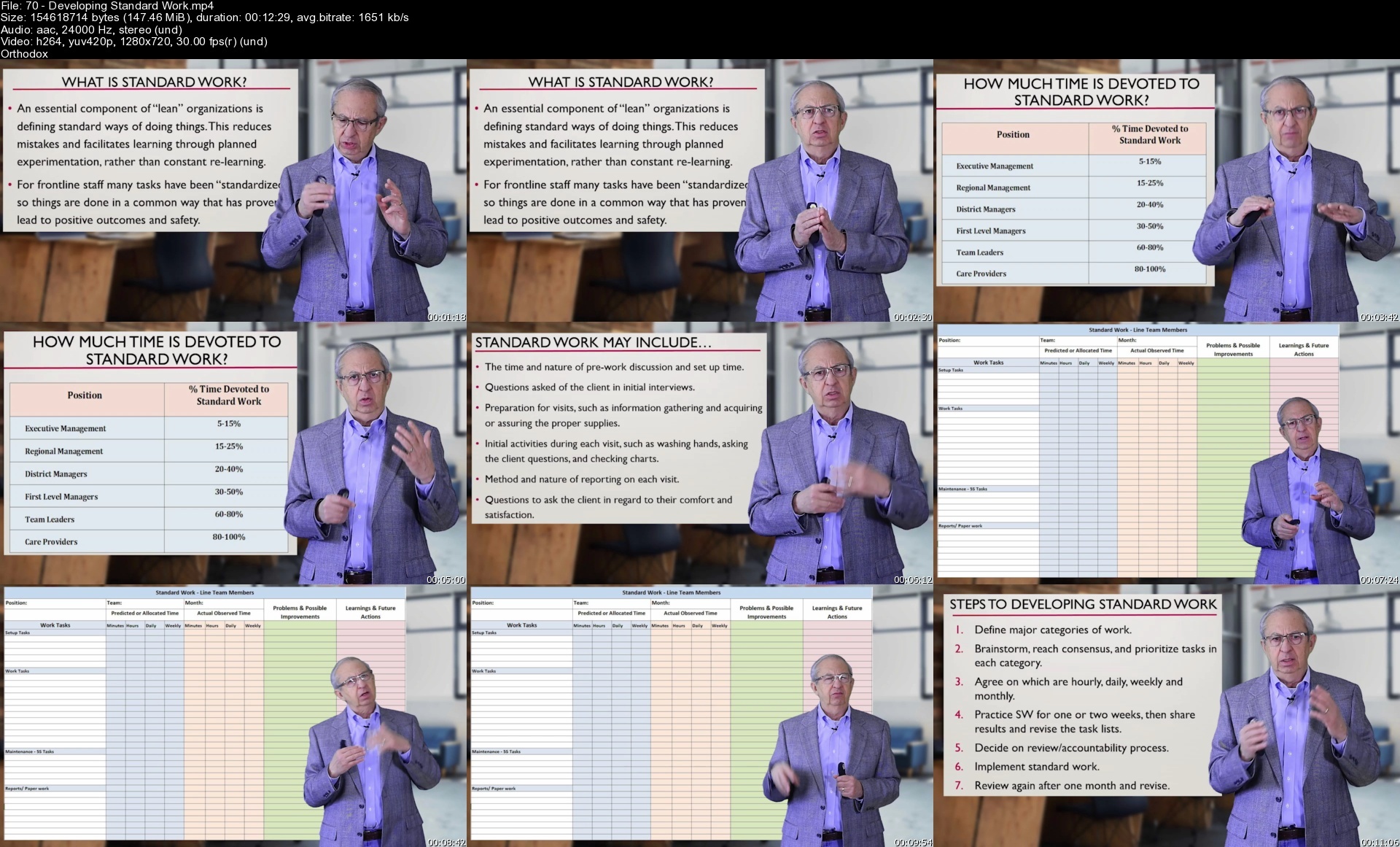
Lecture 70 Developing Standard Work

Lecture 71 Leader Standard Work

Lecture 72 Action Learning Assignment 11 - Standard Work

Section 14: Designing Hybrid Work Systems

Lecture 73 Introduction to Hybrid Work System Design

Lecture 74 What is a Hybrid Work System

Lecture 75 Research on Home or Office Work

Lecture 76 More Research on the Pandemic Experience

Lecture 77 Whose Needs Are We Meeting and What Are Those Needs?

Lecture 78 Designing the System to Meet Human Needs

Lecture 79 Design - The Steering Team

Lecture 80 Writing the Design Charter

Lecture 81 The Work of the Design Team

Lecture 82 Review the Design Team's Work

Section 15: The Personal Responsibility of Team Members to Self-Manage

Lecture 83 Introduction to Team Member Personal Responsibility

Lecture 84 Understanding Self-Discipline

Lecture 85 Managing Your Work Space

Lecture 86 Managing Your Self in Time

Lecture 87 Develop Your Own Scorecard

Lecture 88 Assignment: Assess Your Own Self-Management

Section 16: Team Member's Responsibility to be a Great Team Member

Lecture 89 Relationships and the Power of Trust

Lecture 90 Be a Great Team Member

Lecture 91 Types of Teams and Your Participation

Lecture 92 Assignment - What Can I Do To Be A Great Team Member

Lecture 93 Google's Research and Psychological Safety

Lecture 94 Take Care of Yourself

Section 17: Facilitating Remote or Virtual Teams

Lecture 95 Introduction to the Research on Virtual Teams

Lecture 96 Research on Remote Teams from HBR

Lecture 97 Research from Forbes

Lecture 98 Survey of Users: Introduction

Lecture 99 Evaluation of Best Team Practices

Lecture 100 Advice from Virtual or Remote Team Leaders

Lecture 101 One Thing You Could Do to Improve Virtual Meetings

Section 18: Team Facilitation Skills

Lecture 102 Introduction to Team Facilitation

Lecture 103 The Critical Skills of Facilitation: Organizing and Focus

Lecture 104 The Eight Skills: Clarifying

Lecture 105 The Eight Skills: Reflecting

Lecture 106 The Eight Skills: Comforting

Lecture 107 The Eight Skills: Motivating

Lecture 108 The Eight Skills: Controlling

Lecture 109 Concluding a Topic or Meeting

Section 19: Effective Listening Skills

Lecture 110 Body Language

Lecture 111 Asking Effective Questions

Lecture 112 Empathy and Active Listening

Lecture 113 Acknowledging and Using Silence

Section 20: Giving and Receiving Feedback - "Straight Talk"

Lecture 114 "Straight Talk" - A Model for Giving Feedback

Lecture 115 "Straight Talk" - Receiving Feedback

Lecture 116 Action Learning Assignment 12: Giving and Receiving Feedback

Section 21: Conflict Resolution

Lecture 117 Principles of Conflict Resolution

Lecture 118 A Model of Conflict Resolution

Lecture 119 Conflict Resolution: Debate or Dialogue?

Lecture 120 Conflict Resolution: Behavioral Characteristics of Debate or Dialogue

Lecture 121 Action-Learning Assignment 13: Conflict Resolution

Section 22: Improving the System

Lecture 122 Introduction to Improving the System

Lecture 123 Models of Organizational Systems

Lecture 124 Whole System Architecture

Lecture 125 Action-Learning Assignment 14: Improving the System

Section 23: Additional Resources

Lecture 126 Bonus Lecture: Some Additional Resources

All managers and those wishing to become leaders or managers.,Both management and front line team members and leaders,Any manager wishing to improve their skills of leading teams, people and improving processes.,Those managers and companies implementing lean management and wishing to institute lean culture.

Homepage


70developingstandardwnodku.jpg


Create A Long-Term Successful Software Company

wlajt8pamjhnhhxq8vvo45kijb.jpg


Create A Long-Term Successful Software Company
Last updated 1/2020
MP4 | Video: h264, 1280x720 | Audio: AAC, 44.1 KHz
Language: English | Size: 15.89 GB | Duration: 16h 12m

How to start a business as a software company from scratch and make it successful in the long term


What you'll learn
How to create a software company from scratch
How to launch a software startup
How to start a SaaS startup company

Requirements
Know how to use PC and MAC

Description
In this course the students will learn how to launch a business in the software industry and make it successful in the long term.You do not need to have technical skills or knowledge to launch company.In this course the following topics are presented and discussed:What to know before starting a software companyHow to setup a successful Software Business How to create a software company Startup tips Marketing strategies Skills needed to create a software company Which are the Types of softwareWhat are Generic Software ProductsWhat are Custom Software ProductsPrinciples of Project Management for Software projectsSoftware product definitionWhat is Software Architecture and how to put it into practiceWhat is Cloud Computing and why it is a technological field crucial for the success of a software businessWhich are the emerging cloud technologies and servicesCloud Services e.g. Software as a Service (SaaS)How to Build Your Own SaaS PlatformProduct development strategiesPrinciples of Software programmingGeneral Programming GuidelinesProduct Solution typesThe secret to success: LeverageTools for a StartUpGo to the next level: make your business sustainable in the long termEverything is explained in video lectures and annexed reports with practical examples and case studies

Overview

Section 1: What to know before starting a software company

Lecture 1 Introduction

Lecture 2 Why should you decide for a software company

Lecture 3 Determine what to create software for

Section 2: Setup a successful Software Business

Lecture 4 The secret to Startup Success (I)

Lecture 5 The secret to Startup Success (II)

Lecture 6 The Successful Startup Entrepreneurs Must Have

Lecture 7 Must Have Tools for the Startup Process

Lecture 8 The process to Successfully Launch a Business

Lecture 9 How to Establish the Right Business Model

Lecture 10 Prepare your company to adapt to changes

Section 3: Creating a software company

Lecture 11 A long term project

Lecture 12 Do your business Analysis

Lecture 13 Survey your audience

Lecture 14 Learn how to hire people

Lecture 15 Effective growth strategy

Section 4: Startup tips

Lecture 16 Market Analysis

Lecture 17 How to choose the way to sell your software

Lecture 18 How to make sure you will have the software your customers need

Lecture 19 Step-by-step setup guide

Lecture 20 How to hire the right resources

Section 5: Marketing strategies

Lecture 21 Marketing strategy for a Startup

Lecture 22 Customer acquisition: Paid Media Marketing

Lecture 23 Customer acquisition: Earned Media Marketing

Lecture 24 Customer acquisition: Own Media Marketing

Lecture 25 Business Models to Consider for a Startup

Lecture 26 How to Raise Prices Without Losing Customers

Section 6: Skills needed to create a software company

Lecture 27 Creating a software company having only an idea as asset

Lecture 28 How to Start a Software Company without technical skills

Lecture 29 The process to build a software company

Lecture 30 Skills needed to create a software company

Section 7: Types of software - Overview

Lecture 31 Products vs services

Lecture 32 Software categories

Lecture 33 Types of software (I)

Lecture 34 Types of software (II)

Lecture 35 Types of Applications

Lecture 36 Application vs Service

Lecture 37 Technology platforms

Lecture 38 Types of Software Products Developed by The Most Popular Software Companies

Section 8: Types of products - Generic Software Products

Lecture 39 Introduction

Lecture 40 Custom software development vs. Generic software development

Section 9: Types of products - Custom Software Products

Lecture 41 Why Custom Software?

Lecture 42 Definition of custom software

Lecture 43 Example of custom software: Case Study

Lecture 44 How to show the value of a custom software solution

Lecture 45 Advantages and disadvantages of a custom software

Section 10: Project Management for Software projects

Lecture 46 What is project management?

Lecture 47 Why project management is the most important and crucial skill for a sw company

Lecture 48 Software Development LifeCycle (SDLC)

Lecture 49 The Waterfall Model

Lecture 50 Importance of a project plan

Lecture 51 How to reduce risks in a project

Lecture 52 Stages of Project Management

Lecture 53 Agile project management

Lecture 54 Example of project using MS Project

Lecture 55 Incident Management and Agile Project Management Tools: Atlassian JIRA and other

Lecture 56 Tools for version control: Git and Github

Section 11: Software product definition

Lecture 57 Requirement gathering

Lecture 58 The importance of good requirements specifications

Lecture 59 Technical requirements

Lecture 60 User story

Lecture 61 Acceptance criteria (definition of done)

Section 12: Software Architecture

Lecture 62 Introduction

Lecture 63 Software Architecture in Web Design

Lecture 64 Basic concepts of software architecture

Lecture 65 High Level Design

Lecture 66 Principles of UML

Lecture 67 Definition of use case

Lecture 68 Low Level Design (I)

Lecture 69 Low Level Design (II)

Lecture 70 Low level design - detailed process descriptions

Lecture 71 Wireframes and prototypes

Lecture 72 Design for different types of software products

Section 13: Cloud Computing

Lecture 73 What is cloud computing

Lecture 74 Cloud computing deployment models

Lecture 75 Cloud computing characteristics and benefits

Lecture 76 Types of cloud computing services

Lecture 77 Cloud computing security

Lecture 78 Examples of cloud computing

Section 14: Emerging cloud technologies and services

Lecture 79 Introduction

Lecture 80 Platform as a Service (PaaS)

Lecture 81 Infrastructure as a Service (IaaS)

Lecture 82 The Best Infrastructure-as-a-Service Solutions

Lecture 83 Application Service Provider (ASP)

Lecture 84 Popular Cloud Services

Section 15: Cloud Services - Software as a Service (SaaS)

Lecture 85 What is SaaS

Lecture 86 How to Deploy SaaS

Lecture 87 Advantages of SaaS

Lecture 88 Disadvantages of SaaS

Lecture 89 SaaS Architecture

Section 16: How to Build Your Own SaaS Platform

Lecture 90 Introduction

Lecture 91 Identify your product idea

Lecture 92 Determine your pricing model

Lecture 93 Document your requirements

Lecture 94 Choose the technology

Lecture 95 Identify the needed skills and project team

Lecture 96 Create your product

Lecture 97 Deploy your product

Lecture 98 The secrets to create a profitable SaaS easily and fast (Part IA)

Lecture 99 The secrets to create a profitable SaaS easily and fast (Part IB)

Lecture 100 The secrets to create a profitable SaaS easily and fast (Part II)

Lecture 101 Challanges in a SaaS Startup

Section 17: Product development strategies

Lecture 102 Overview

Lecture 103 Characteristics of Software Engineering

Lecture 104 Fundamentals of Software Engineering Principles

Lecture 105 Basic Principles of Software Engineering

Lecture 106 Create a new product - General

Lecture 107 Create a new product - Case study #1

Lecture 108 Create a new product - Case study #2

Lecture 109 Create a new product - Case study #3

Lecture 110 Provide an improved solution

Lecture 111 Provide an integration or extension

Lecture 112 Blueprint product and customizations

Lecture 113 Provide a service

Lecture 114 Middleware and web services

Lecture 115 Small product ideas (wp plugins, VBA.)

Lecture 116 Perform Continuous Validation

Section 18: Software programming

Lecture 117 Software Programming Steps

Lecture 118 Programming Languages (I)

Lecture 119 Programming Languages (II)

Lecture 120 How to choose the right programming language for your product

Lecture 121 How to choose the right programming language by type

Lecture 122 Various ways to identify the right programming language to use

Lecture 123 How to choose the right programming language for a sector

Lecture 124 Basic programming principles

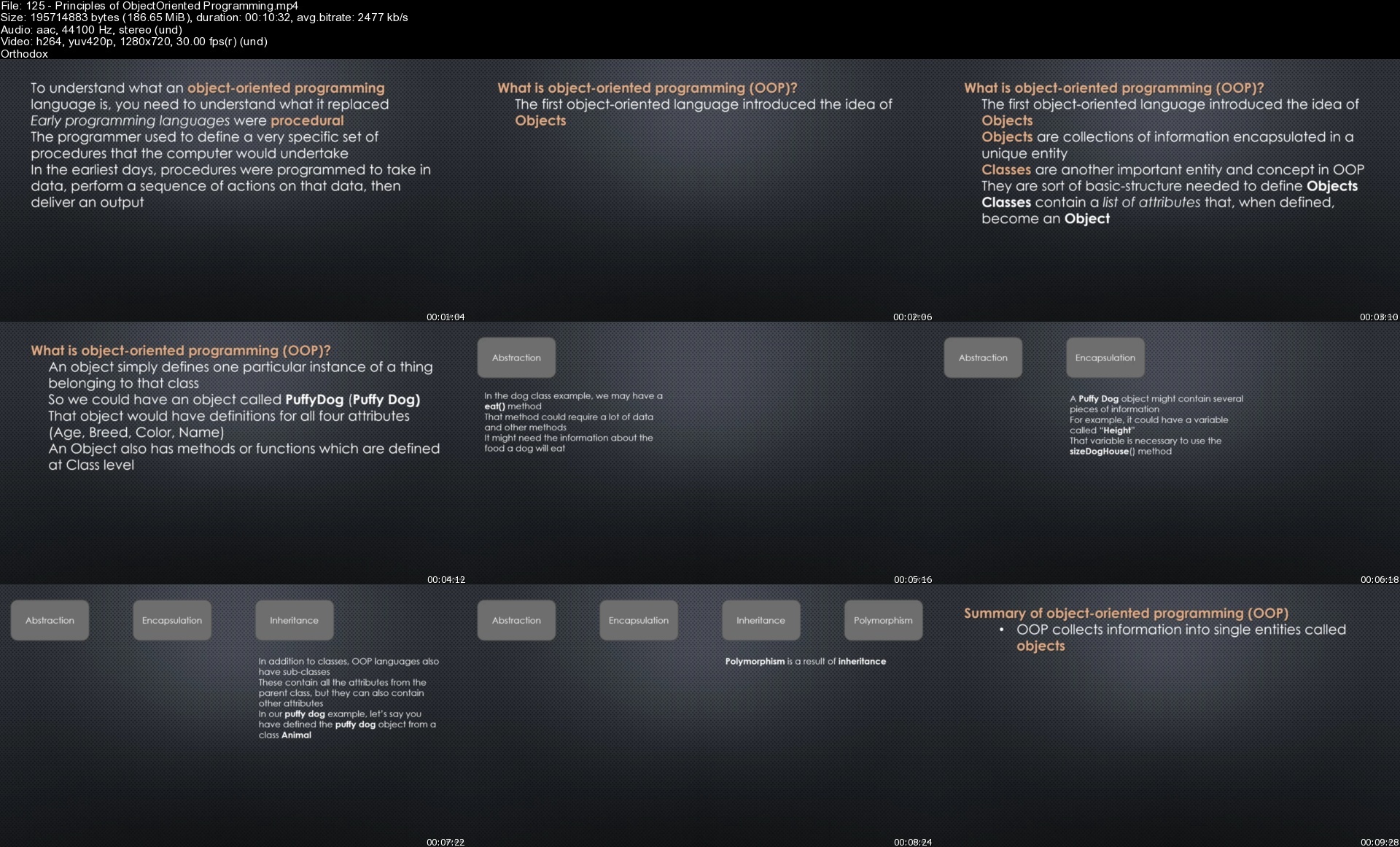
Lecture 125 Principles of Object-Oriented Programming

Lecture 126 Modern Programming Practices (MPP)

Lecture 127 Online resources for developers (stake Overflow,.)

Section 19: General Programming Guidelines

Lecture 128 Language-independent best practices

Lecture 129 Designing your software

Lecture 130 Version Control

Lecture 131 Coding Guidelines

Lecture 132 Continuous Integration

Lecture 133 Integrated Development Environment

Lecture 134 General Programming best practices

Lecture 135 General Guidelines for Programmers

Lecture 136 General Guidelines for Programmers (Guide)

Lecture 137 Example of General Software Development Standards and Guidelines

Section 20: Product Solution types

Lecture 138 CMS - what is a CSM and when to use a CSM

Lecture 139 CMS - Features

Lecture 140 CMS - Benefits

Lecture 141 CMS - Pros and Cons

Lecture 142 CMS - What Makes up a CMS?

Lecture 143 CMS - Functionalities

Lecture 144 CMS - How to Evaluate What CMS to Use

Lecture 145 CMS - Popular CMS - Introduction

Lecture 146 CMS - Popular CMS - Wordpress

Lecture 147 CMS - Popular CMS - Joomla

Lecture 148 CMS - Popular CMS - Drupal

Lecture 149 CMS - Popular CMS - Typo3

Lecture 150 CMS - Popular CMS - Bitrix24

Lecture 151 CMS - Popular CMS - Squarespace

Lecture 152 CMS - Popular CMS - Wix

Lecture 153 CMS - Popular CMS - Blogger

Lecture 154 CMS - Popular CMS: comparison

Lecture 155 CMS - eCommerce CMS

Lecture 156 CMS - Costs of CMS

Lecture 157 CMS - Why should you use standard CMSs?

Lecture 158 CMS - What Kinds of Websites Can You Build with a CMS?

Lecture 159 Desktop Apps

Lecture 160 Mobile Apps

Lecture 161 Mobile Apps Building Platforms (I)

Lecture 162 Mobile Apps Building Platforms (II)

Lecture 163 Mobile Apps Building Platforms (III)

Lecture 164 How to develop and launch a mobile app

Lecture 165 Tools for Mobile Designers (General)

Lecture 166 Tools for Mobile Designers (I)

Lecture 167 Tools for Mobile Designers (II)

Lecture 168 Tools for Mobile Designers (III)

Lecture 169 Tools for Mobile Designers (IV)

Lecture 170 Android vs. iOS - comparison of the platforms

Lecture 171 Web Applications

Lecture 172 Web sites

Section 21: The secret to success: Leverage

Lecture 173 Outsourcing

Lecture 174 Partnerships

Lecture 175 Types of partnerships

Lecture 176 Benefits of a partnership

Lecture 177 How to manage an effective partnership

Lecture 178 Steps to choose a partner

Lecture 179 The process to setup a successful partnership

Lecture 180 Outtasking

Lecture 181 Networking

Section 22: Tools for a StartUp

Lecture 182 Naming and Idea Generation tools

Lecture 183 Design tools

Lecture 184 Market Search tools

Lecture 185 Wireframing and Prototyping tools

Lecture 186 Development tools

Lecture 187 Testing tools

Lecture 188 Project Management tools

Lecture 189 Marketing tools

Lecture 190 Communication and collaboration tools

Lecture 191 SEO tools

Lecture 192 Social Media tools

Lecture 193 Productivity tools

Lecture 194 Presentation tools

Lecture 195 Data visualization tools

Lecture 196 Accounting and HR tools

Lecture 197 Customer Support tools

Lecture 198 Investor connection tools

Lecture 199 Office tools

Lecture 200 Launch tools

Lecture 201 CRM tools

Lecture 202 Directories of tools for StartUps

Section 23: Go to the next level

Lecture 203 What to consider when scaling your business

Lecture 204 How how to attract Top Talent from Big Businesses

Lecture 205 Critical questions a Business Plan should answer

Lecture 206 To-Have Habits for a successful Business

Lecture 207 How to transform your business model when it is time to change

Anyone who wants to launch a software business also without software or technical skills

Homepage


125principlesofobjectr9dza.jpg


Automated Cryptocurrency Portfolio Investing with Python A-Z

45255043c952hgit0.jpg


Automated Cryptocurrency Portfolio Investing with Python A-Z
Last updated 11/2022
Created by Alexander Hagmann
MP4 | Video: h264, 1280x720 | Audio: AAC, 44.1 KHz, 2 Ch
Genre: eLearning | Language: English + srt | Duration: 365 Lectures ( 32h 4m ) | Size: 8.7 GB

Create your automated Crypto Robo-Advisor | Portfolio Optimization & Rebalancing | Many Exchanges & Coins supported!


What you'll learn
How to boost your Crypto Investments with Portfolio Diversification and Rebalancing
How to build an automated Portfolio Investing and Rebalancing Bot (Python)
Crypto Portfolio Optimization, Management and Rebalancing
How to measure and improve the Performance of your Crypto Portfolio
How to load the complete Crypto Markets data from Coingecko
Truly Data-driven Crypto Investing
Basics on Cryptocurrencies, Investing and Trading
API Trading and Investing with Binance, Coinbase, ****** & many other Exchanges
How to get programmatic access to many Crypto Exchanges with the CCXT Library
Python Coding and Object Oriented Programming (OOP) in a way that everybody understands it
Coding with Numpy, Pandas, Matplotlib and Seaborn
Mean-Variance Portfolio Optimization
More advanced & practical Portfolio Optimization techniques
How to create Crypto Indices and Investment Benchmarks


Requirements
No Python experience needed. This course provides a Python Crash Course.
No Finance/Investment knowledge required. You will learn everything you need to know.
A desktop computer (Windows, Mac, or Linux) capable of storing and running Anaconda. The course will walk you through installing the necessary free software.
An internet connection capable of streaming HD videos.
Some high school level math skills would be great (not mandatory, but it helps).


Description
Welcome to the first-ever course on (Automated) Cryptocurrency Portfolio Investing. Investing in Cryptocurrencies has been highly profitable but also risky and volatile in the past.Did you know that you can substantially improve the performance of your Crypto Investments withPortfolio Diversification (there is more than just Bitcoin and Ethereum)Active and frequent Portfolio Rebalancing...leading to higher Profitability and/or lower Risk!This course provides practical and simple-to-use Python tools forPortfolio Optimizationautomated Portfolio Investing & Rebalancing for Exchanges like Binance, Coinbase, ****** & co. The course is structured in four Parts:part 1: Basics & Prerequisites Trading vs InvestingWhat you should know about Cryptocurrencies as an Asset ClassTrading and Investing on Exchanges like Binance, Coinbase, ****** & co. Loading tons of Crypto Market Data from Data AggregatorsAnalyzing the Cryptocurrency Market with Python and PandasPart 2: Crypto Portfolio Investing and Rebalancing with PythonBuilding and using a Portfolio Investing and Rebalancing BotAPI Trading with CCXTRequired Python skills (Error Handling, Object Oriented Programming)Part 3: Crypto Portfolio Management and OptimizationFinancial Data Analysis & Performance MeasurementCreating Crypto Indices and PortfoliosPortfolio Optimization (and its Pitfalls)Reverse Optimization & the Black-Litterman modelAdvanced Topics and TheoryPart 4 (Appendix): A Python Crash Course (optional)Everything you need to know about Python Coding for this Course - no more, no lessWhat else should you know about me and the course?The course shows how to do things right. But equally important, it highlights the most commonly made mistakes in (Crypto) Investing. There is hardly any other business where beginners make so many mistakes. Why is that? A lack of skills, expertise, and experience. And:Overconfidence and overreliance on intuition. As a finance professional with an extensive academic background (MSc in Finance, CFA) my clear message is: For Trading and Investing, intuition and common sense are not your best friends. Very often, the most intuitive solution is not the correct solution! This course is "not only" a crypto investing course but also an in-depth Python Course that goes beyond what you can typically see in other courses. Create hands-on Applications with Python and use it for your Crypto Investing Business!What are you waiting for? Join now!Thanks and looking forward to seeing you in the Course!
Who this course is for
Beginners who want to start with Cryptocurrencies and want to do it right straight way (avoiding common mistakes).
Cryptorcurreny Traders and Investors who want to professionalize and automate their Business.
Finance & Investment Professionals who want to step into Data-driven Finance.
Data Scientists and Machine Learning Professionals with an interest in Investing into Cryptos.

Homepage


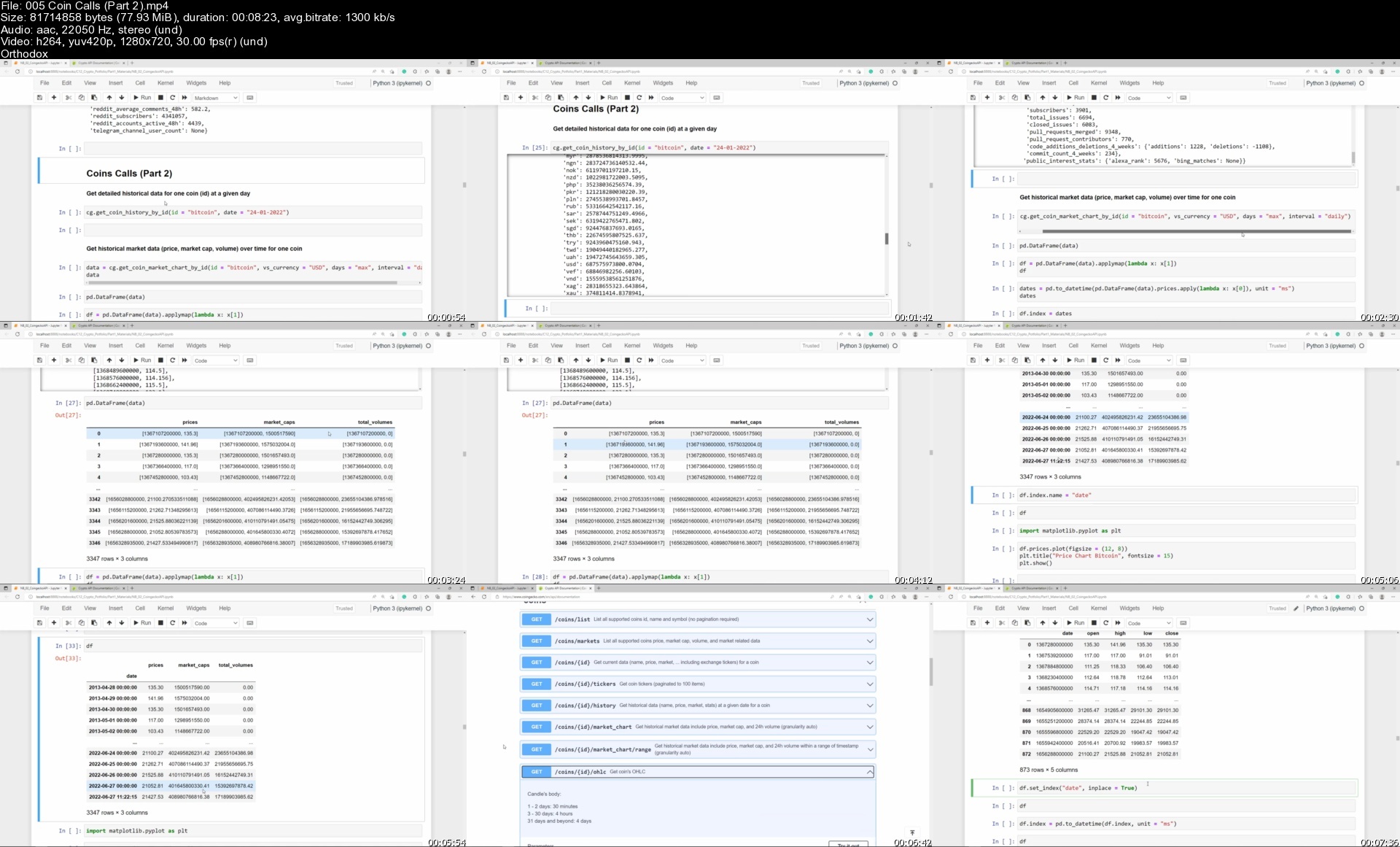
005coincallspart2s4jifs.jpg


How a Building is Designed and Built - Part 5 of 6

00884408hoif2.jpg


How a Building is Designed and Built - Part 5 of 6
MP4 | Video: h264, 1280x720 | Audio: AAC, 44.1 KHz
Language: English | Size: 3.34 GB | Duration: 5h 1m

Mechanical, Electrical and Plumbing (MEP) Systems - HVAC, IAQ, Thermal Comfort, Plumbing, Elec, AV, Tele-Data & Security


What you'll learn
Identify the Numerous Components, Materials and Systems in a Commercial Building
Describe the Sequence of Construction and Relationships Between Construction Activities
Identify the Roles of the Major Parties Involved in the Design and Construction of Building Systems & Materials
Describe the Numerous Considerations When Choosing Different Building Materials and Systems
Develop a Construction and Engineering Vocabulary
Evaluate Key Constraints and Select All of the Appropriate Major Systems and Materials in a Building

Requirements
You should have an interest in the way buildings are designed and built.

Description
No matter which role you have in a building construction project, it is vital that you understand the "guts" of a building in order to make a positive impact. For contractors, engineers, architects, real estate developers and facilities managers, it takes years or even decades to learn the materials and systems in a building. The typical source of this education is on-the-job because this material is not taught in schools. Young professionals spend an extraordinary amount of time trying to understand the complexities of a modern building. Every project is different and the materials and systems can change drastically from one building to the next. Time can be better spent by adding value to projects instead of learning terminology and construction sequencing. The lessons in the course have been developed to boil down years of on-the-job training into high-impact, bite-sized classes.


Who this course is for:
Anyone working or interested in building materials and systems. The typical audience includes general contractors, specialty contractors, architects, engineers, building owners, construction managers, real estate developers and managers, facility operators and managers, engineering students, first responders or anyone with curiosity related to the "guts" of a building!


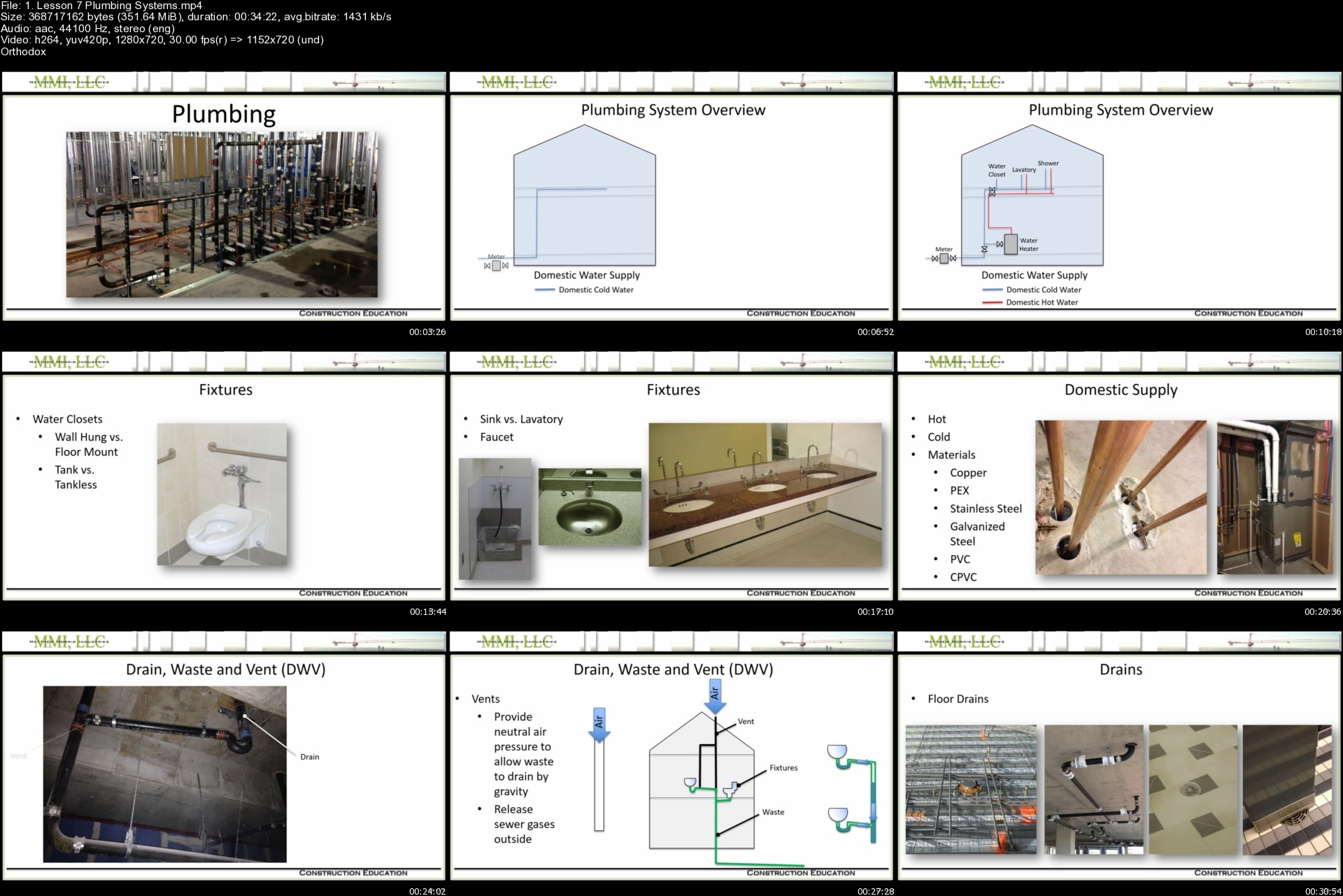
1.lesson7plumbingsystpfir0.jpg


How a Building is Designed and Built - Part 3 of 6

008863ca3fd0d.jpg


How a Building is Designed and Built - Part 3 of 6
MP4 | Video: h264, 1280x720 | Audio: AAC, 44.1 KHz
Language: English | Size: 384 MB | Duration: 4h 0m

The Enclosure - Curtain Wall, Cold-Formed Steel Studs, Cladding, Roofing, Doors, Windows, Glass and Glazing Construction


What you'll learn
Identify the Numerous Components, Materials and Systems in a Commercial Building
Describe the Sequence of Construction and Relationships Between Construction Activities
Identify the Roles of the Major Parties Involved in the Design and Construction of Building Systems & Materials
Describe the Numerous Considerations When Choosing Different Building Materials and Systems
Develop a Construction and Engineering Vocabulary
Evaluate Key Constraints and Select All of the Appropriate Major Systems and Materials in a Building

Requirements
You should have an interest in the way buildings are designed and built.

Description
No matter which role you have in a building construction project, it is vital that you understand the "guts" of a building in order to make a positive impact. For contractors, engineers, architects, real estate developers and facilities managers, it takes years or even decades to learn the materials and systems in a building. The typical source of this education is on-the-job because this material is not taught in schools. Young professionals spend an extraordinary amount of time trying to understand the complexities of a modern building. Every project is different and the materials and systems can change drastically from one building to the next. Time can be better spent by adding value to projects instead of learning terminology and construction sequencing. The lessons in the course have been developed to boil down years of on-the-job training into high-impact, bite-sized classes.


Who this course is for:
Anyone working or interested in building materials and systems. The typical audience includes general contractors, specialty contractors, architects, engineers, building owners, construction managers, real estate developers and managers, facility operators and managers, engineering students, first responders or anyone with curiosity related to the "guts" of a building!


1.lesson6curtainwallsd6d9u.jpg


How a Building is Designed and Built - Part 6 of 6

00879cafdif7h.jpg


How a Building is Designed and Built - Part 6 of 6
Genre: eLearning | MP4 | Video: h264, 1280x720 | Audio: aac, 44100 Hz
Language: English | Size: 1.90 GB | Duration: 2h 41m

Fire Suppression, Fire Alarm, Fire & Life Safety Systems, Conveying Equip, MEP Trim, Startup, Commissioning, Closeout


What you'll learn
Identify the Numerous Components, Materials and Systems in a Commercial Building
Describe the Sequence of Construction and Relationships Between Construction Activities
Identify the Roles of the Major Parties Involved in the Design and Construction of Building Systems & Materials
Describe the Numerous Considerations When Choosing Different Building Materials and Systems
Develop a Construction and Engineering Vocabulary
Evaluate Key Constraints and Select All of the Appropriate Major Systems and Materials in a Building

Requirements
You should have an interest in the way buildings are designed and built.

Description
No matter which role you have in a building construction project, it is vital that you understand the "guts" of a building in order to make a positive impact. For contractors, engineers, architects, real estate developers and facilities managers, it takes years or even decades to learn the materials and systems in a building. The typical source of this education is on-the-job because this material is not taught in schools. Young professionals spend an extraordinary amount of time trying to understand the complexities of a modern building. Every project is different and the materials and systems can change drastically from one building to the next. Time can be better spent by adding value to projects instead of learning terminology and construction sequencing. The lessons in the course have been developed to boil down years of on-the-job training into high-impact, bite-sized classes.


Who this course is for:
Anyone working or interested in building materials and systems. The typical audience includes general contractors, specialty contractors, architects, engineers, building owners, construction managers, real estate developers and managers, facility operators and managers, engineering students, first responders or anyone with curiosity related to the "guts" of a building!


1.lesson4conveyingequ1yemh.jpg


Construction Management Fundamentals - Part 2 of 4

3590236bebazrery.jpg


Construction Management Fundamentals - Part 2 of 4
MP4 | Video: h264, 1280x720 | Audio: AAC, 44.1 KHz, 2 Ch
Genre: eLearning | Language: English + srt | Duration: 26 lectures (2h 19m) | Size: 2.64 GB

The foundation to build your career in construction. Learn about Project Delivery Systems, Payment and Procurement


What you'll learn
Construction management fundamentals


Requirements
No prerequisites are required


Description
In Part 2 of 4 in the Construction Management Fundamentals course series, you'll learn about the major project delivery systems, payment and procurement options. Specific topics include Design-Bid-Build, Design-Build, CM at Risk, Multiple Prime and Integrated Project Delivery. You'll learn about Lump Sum, Cost Plus, Unit Price and Time & Materials payment methods. Wrapping up this part of the series, you'll be able to distinguish the difference between low bid, best value and qualifications based selection. This course is the foundation for the contract relationships between major parties.

Who this course is for
Anyone interested in the construction industry - contractors, engineers, architects, owners, students

Homepage


2.examplesoftheprocur7kil4.jpg


Construction Management Fundamentals - Part 1 of 4

3589266cf7770cha.jpg


Construction Management Fundamentals - Part 1 of 4
MP4 | Video: h264, 1280x720 | Audio: AAC, 44.1 KHz, 2 Ch
Genre: eLearning | Language: English + srt | Duration: 13 lectures (1h 33m) | Size: 1.96 GB

The foundation to build your career in construction. Learn about the construction industry, major parties and planning


What you'll learn
The foundation to build your career in construction. Learn about the construction industry, major parties and planning


Requirements
No prerequisites are required


Description
In Part 1 of 4 in the Construction Management Fundamentals course series, you'll learn the overview of construction, the key parties involved and how projects are planned. Specific topics include industry sectors, design versus construction, life in the industry, master planning and project financing which kicks off a construction project. This course will set you up for success in the remaining courses in the series.

Who this course is for
Anyone interested in the construction industry - contractors, engineers, architects, owners, students

Homepage


2.componentsofamasterejc1l.jpg


Zurück
Oben Unten