• Regeln für den Video-Bereich:

    In den Börsenbereich gehören nur Angebote die bereits den Allgemeinen Regeln entsprechen.

    Einteilung

    - Folgende Formate gehören in die angegeben Bereiche:
    - Filme: Encodierte Filme von BluRay, DVD, R5, TV, Screener sowie Telesyncs im Format DivX, XviD und x264.
    - DVD: Filme im Format DVD5, DVD9 und HD2DVD.
    - HD: Encodierte Filme mit der Auflösung 720p oder darüber von BluRay, DVD, R5, TV, Screener sowie Telesyncs im Format x264.
    - 3D: Encodierte Filme von BluRay, die in einem 3D Format vorliegen. Dies gilt auch für Dokus, Animation usw.
    - Serien: Cartoon/Zeichentrick, Anime, Tutorials, Dokumentationen, Konzerte/Musik, Sonstiges sind demnach in die entsprechenden Bereiche einzuordnen, auch wenn sie beispielsweise im High Definition-Format oder als DVD5/DVD9/HD2DVD vorliegen. Ausnahme 3D.
    - Bereich Englisch: Englische Releases gehören immer in diesen Bereich.
    - Bereich Talk: Der Bereich, in dem über die Releases diskutiert werden kann, darf, soll und erwünscht ist.


    Angebot/Beitrag erstellen

    - Ein Beitrag darf erst dann erstellt werden, wenn der Upload bei mindestens einem OCH komplett ist. Platzhalter sind untersagt.
    - Bei einem Scenerelease hat der Threadtitel ausschließlich aus dem originalen, unveränderten Releasenamen zu bestehen. Es dürfen keine Veränderungen wie z.B. Sterne, kleine Buchstaben o.ä. vorgenommen werden. Ausnahme Serienbörse:
    - Bei einem Sammelthread für eine Staffel entfällt aus dem Releasename natürlich der Name der Folge. Beispiel: Die Simpsons S21 German DVDRip XviD - ITG
    - Dementsprechend sind also u.a. verboten: Erweiterungen wie "Tipp", "empfehlenswert", "only", "reup", usw. / jegliche andere Zusatzinformation oder Ergänzung, welche nicht in obiger Beschreibung zu finden ist.

    Aufbau des Angebots und Threadtitel

    Der Titel nach folgendem Muster erstellt zu werden. <Name> [3D] [Staffel] [German] <Jahr> <Tonspur> [DL] [Auflösung] <Quelle> <Codec> - <Group>
    Beispiel: The Dark Knight German 2008 AC3 DVDRip XviD - iND
    Beispiel: The Dark Knight 2008 DTS DL BDRip x264 - iND
    Beispiel: The Dark Knight 2008 AC3 DL BDRip XviD - iND
    Beispiel: The Dark Knight German 2008 AC3 720p BluRay x264 iND
    Beispiel: The Dark Knight 2008 DTS DL 1080p BluRay x264 iND
    Beispiel: Die Simpsons S01 German AC3 DVDRip XviD iND
    Beispiel: Die Simpsons S20 German AC3 720p BluRay x264 iND
    Beispiel: Sword Art Online II Ger Sub 2014 AAC 1080p WEBRip x264 - peppermint
    Entsprechend sind also u.a. verboten: Sonderzeichen wie Klammern, Sterne, Ausrufezeichen, Unterstriche, Anführungszeichen / Erweiterungen wie "Tipp", "empfehlenswert", "only", "reup", usw. / jegliche andere Zusatzinformation oder Ergänzung, welche nicht in obiger Beschreibung zu finden ist
    Ausnahmen hiervon können in den Bereichen geregelt sein.

    Die Beiträge sollen wie folgt aufgebaut werden:
    Überschrift entspricht dem Threadtitel
    Cover
    kurze Inhaltsbeschreibung
    Format, Größe, Dauer sind gut lesbar für Downloader außerhalb des Spoilers zu vermerken
    Nfo sind immer Anzugeben und selbige immer im Spoiler in Textform.
    Sind keine Nfo vorhanden z.B. Eigenpublikationen, sind im Spoiler folgende Dateiinformationen zusätzlich anzugeben :
    Quelle
    Video (Auflösung und Bitrate)
    Ton (Sprache, Format und Bitrate der einzelnen Spuren)
    Untertitel (sofern vorhanden)
    Hosterangabe in Textform außerhalb eines Spoiler mit allen enthaltenen Hostern.
    Bei SD kann auf diese zusätzlichen Dateiinformationen verzichtet werden.

    Alle benötigten Passwörter sind, sofern vorhanden, in Textform im Angebot anzugeben.
    Spoiler im Spoiler mit Kommentaren :"Schon Bedankt?" sind unerwünscht.


    Releases

    - Sind Retail-Release verfügbar, sind alle anderen Variationen untersagt. Ausnahmen: Alle deutschen Retail-Release sind CUT, in diesem Fall sind dubbed UNCUT-Release zulässig.
    - Im Serien-Bereich gilt speziell: Wenn ein Retail vor Abschluss einer laufenden Staffel erscheint, darf diese Staffel noch zu Ende gebracht werden.62
    - Gleiche Releases sind unbedingt zusammenzufassen. Das bedeutet, es ist zwingend erforderlich, vor dem Erstellen eines Themas per Suchfunktion zu überprüfen, ob bereits ein Beitrag mit demselben Release besteht. Ist dies der Fall, ist der bereits vorhandene Beitrag zu verwenden.
    - P2P und Scene Releases dürfen nicht verändert oder gar unter einem iND Tag eingestellt werden.


    Support, Diskussionen und Suche

    - Supportanfragen sind entweder per PN oder im Bereich Talk zu stellen.
    - Diskussionen und Bewertungen sind im Talk Bereich zu führen. Fragen an die Uploader haben ausschließlich via PN zu erfolgen, und sind in den Angeboten untersagt.
    - Anfragen zu Upload-Wünschen sind nur im Bereich Suche Video erlaubt. Antworten dürfen nur auf Angebote von MyBoerse.bz verlinkt werden.


    Verbote

    - Untersagt sind mehrere Formate in einem einzigen Angebotsthread, wie beispielsweise das gleichzeitige Anbieten von DivX/XviD, 720p und 1080p in einem Thread. Pro Format, Release und Auflösung ist ein eigener Thread zu eröffnen.
    - Grundsätzlich ebenso verboten sind Dupes. Uploader haben sich an geeigneter Stelle darüber zu informieren, ob es sich bei einem Release um ein Dupe handelt.
    - Gefakte, nur teilweise lauffähige oder unvollständige Angebote sind untersagt. Dies gilt auch für eigene Publikationen, die augenscheinlich nicht selbst von z.B. einer DVD gerippt wurden. Laufende Serien, bei denen noch nicht alle Folgen verfügbar sind, dürfen erstellt und regelmäßig geupdatet werden.
    - Untersagt sind Angebote, welche nur und ausschließlich in einer anderen Sprache als deutsch oder englisch vorliegen. Ausnahmen sind VORHER mit den Moderatoren zu klären.


    Verstoß gegen die Regeln

    - Angebote oder Beiträge, die gegen die Forenregeln verstoßen, sind über den "Melden"-Button im Beitrag zu melden.
  • Bitte registriere dich zunächst um Beiträge zu verfassen und externe Links aufzurufen.

*** Bestes IPTV *** bester Preis *** gratis Test ***


Englische Tutorials

83101356-a914-4d27-8f1a-a25a327acadf.png

Build an ERC-20 Token Generator with React.js and Solidity
Genre: eLearning | MP4 | Video: h264, 1280x720 | Audio: AAC, 44.1 KHz
Language: English | Size: 747 MB | Duration: 1h 5m
Learn Blockchain while Creating an ERC-20 Token Generator Project!

What you'll learn
How to query the Ethereum Blockchain with the Solidity Programming Language
How to call Solidity Functions in React code.
How to create an ERC-20 Token.
How to create an ERC-20 Token Generator.
Requirements
Knowledge of JavaScript; React and some Solidity. Also should know Tailwindcss and MUI.
Description
In this Course I will instruct how to build a ERC-20 Token Generator project! This project will enable users to create their own Tokens on the Rinkeby Test network! This project may be used for other Blockchains if deployed with real assets.
In this video an openzeppelin erc20 contract is deployed to the Ethereum Rinkeby Test Network. Material ui is used as styling as well as TailwindCSS for css. Learn React in this course and be able to create a website for deploying erc20 tokens!
There will be several sections of the course covering
Smart Contract Development.
Querying the Ethereum Rinkeby Test Network.
Using Solidity Functions with JavaScript.
Calling the JavaScript Functions with React.
Front-End Development with TailwindCSS and MUI.
Some of the Blockchains that the project can be deployed on include
Ethereum Mainnet
Binance Smart Chain
Avalanche
Polygon
Fantom
More topics include how to build a bsc token (just deployed on a different blockchain). As well as creating a bsc token generator. If you are interested in creating your own crypto token and want to learn how to create crypto token then your in for a wild ride!
If you are interested in Learning React.js or Solidity and Ethereum Blockchain Development than this is the course for you!
Who this course is for
React Developers looking to get into Crypto.
Screenshots


acb298c7-29b4-4ea8-b7a4-fcc3e206a4d4.png

Building Complete IoT Solution with ESP32 and AWS
Genre: eLearning | MP4 | Video: h264, 1280x720 | Audio: AAC, 48.0 KHz
Language: English | Size: 1.87 GB | Duration: 4h 32m
Build an IoT prototype from 0 to 100 (using ESP32 for IoT sensors, Raspberry Pi as the Hub, and AWS for cloud computing)

What you'll learn
Develop complete IoT solution
Build ESP32-based electronic sensors
Register and build Amazon Web Service (AWS)
Develop Arduino IDE programs
Setup a Raspberry Pi with Raspbian OS
Introduction to python programming in Raspberry Pi
Understand wireless communications WIFI and MQTT
Implement AWS-IoT solution such as IoT Core, IoT Analytics, and Quick Sight
Prototype IoT solutions as Entrepreneurs as fast as possible
Requirements
Familiarity with programming languages (Arduino IDE programming and Python) would be helpful, however, most of the presented work is going to be an integration of existing codes, so individuals with no prior knowledge will still benefit from the course
Description
This is an introductory course that covers the development of an IoT solution using ESP32, Raspberry Pi and AWS.
Throughout the course, you will be introduced to
- Developing IoT sensors using ESP32 and Arduino IDE.
You will learn about IoT sensor implementation (both hardware and software). In particular, you will see the use of a Temperature/Humidity Sensor, an Ultrasonic sensor and a PIR Motion sensor as examples for the development of IoT Sensor. All the mentioned sensors will be integrated with a microcontroller known as ESP32 which is capable to establish Wi-Fi and Bluetooth communications.
- Developing an IoT gateway (Hub) using Raspberry Pi and Python in Raspbian Operating System.
You will learn about Raspberry Pi. You will learn how to set up a Linux-based operating system known as Raspbian for Raspberry Pi. You will also learn how to configure the Raspberry Pi and install a python IDE.
You will use the ESP32 in Arduino IDE to send sensor data, and python in Raspberry Pi to receive the sensor data, through a WIFI based communication known as MQTT
- Developing cloud computing using AWS IoT Core, AWS IoT Analytics and AWS Quick Sight
You will learn about cloud computing, in particular Amazon Web Service (AWS).
You will learn how to set up an AWS account and use the solutions within the service.
In particular, you will learn about AWS IoT solutions which is a basket of services defined by AWS for IoT solutions.
You will learn to set up AWS IoT Core, AWS IoT Analytics and AWS Quick sight, and to connect them together to receive the sensor data from the gateway (Raspberry Pi) and display it in a dashboard.
Who this course is for
Beginner IoT developers who are curious to learn about ESP32, MQTT, AWS, Raspberry Pi to architect an IoT solution
Companies who want to adopt IoT solutions to their existing services
Electrical and Electronic Engineers/Students
IoT Hobbyists
Arduino developers interested in building IoT solutions
Entrepreneurs building IoT check companies
Screenshots


3017df2b-3722-44e9-abef-9aaa2ea869ee.png

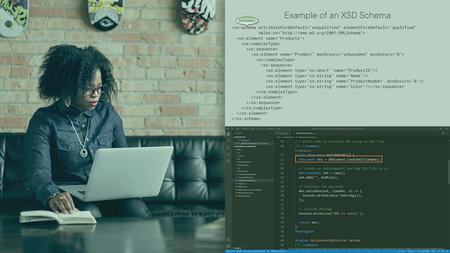
Working with XML in .NET 6
Duration: 2h 24m | .MP4 1280x720, 30 fps(r) | AAC, 48000 Hz, 2ch | 410 MB
Genre: eLearning | Language: English​

This course will teach you to create, load, save, and query XML files using the classes within the System.Xml.Linq namespace in .NET 6.
To query and manipulate XML documents, .NET provides several great technologies. In this course, Working with XML in .NET 6, you'll learn to create, load, save, and query XML documents. First, you'll explore creating and modifying XML documents. Next, you'll discover loading, saving, validating, and various methods of querying data within XML files. Finally, you'll learn how to serialize C# objects as XML. When you're finished with this course, you'll have the skills and knowledge of XML needed to effectively and efficiently process XML files.
Screenshots


70e668a4-058a-41ec-a773-7cd790875493.png

E-Clip - Psychedelic Tips, Vol.1
Marko Radovanovic | Duration: 4h 04m | Video: H264 1920x1080 | Audio: AAC 44,1 kHz 2ch | 8,54 GB | Language: English​

Covering all processes for making a psytrance
Learn to make psytrance with courses that are containing the project of this course, Drums Template, and a lot of presets that have been used for making a track in this course. This Course contains recording from an empty project to the final result of making the track with a full explanation of all processes that are included for making a psytrance track from scratch. Designing your Kick & Bass, making your drum template, adding the atmospheric sounds, writing arps, melodies, making psychedelic sequences, full synthesis with Serum, arrangement, mixing, mastering. Everything you need for your own production.​
Homepage


e3d22ca0-614f-4303-a860-e055f9626b42.png

E-Clip - Psychedelic Tips, Vol.2
Marko Radovanovic | Duration: 9h 56m | Video: H264 1920x1080 | Audio: AAC 44,1 kHz 2ch | 5,68 GB | Language: English​

Covering all processes for making a psytrance
Learn to make psytrance with courses that are containing the project of this course, Drums Template, and a lot of presets that have been used for making a track in this course. This Course contains recording from an empty project to the final result of making the track with a full explanation of all processes that are included for making a psytrance track from scratch. Designing your Kick & Bass, making your drum template, adding the atmospheric sounds, writing arps, melodies, making psychedelic sequences, full synthesis with Serum, arrangement, mixing, mastering. Everything you need for your own production.​
Homepage


e08ae38f-d094-486a-8846-d679132bda21.png

Flutter & Dart - Build Chrome Dinosaur Game, Dino Runner
Genre: eLearning | MP4 | Video: h264, 1280x720 | Audio: AAC, 44.1 KHz
Language: English | Size:530 MB | Duration: 1h 30m
Learn Flutter 2.8 with Flutter Null Safety - Build Dino Runner Game Clone, Dodo Runner Game - without Flare

What you'll learn
Fully Function Flutter Dinosaur Game Runner App
Build 2D Games in Flutter
How to Create Barricades in Flutter Game
How to Create and Add Player Character in Flutter Game
Program Score Card for Players
Program Best Score Card for Players
and much more
Description
In this course you will learn how to develop games using flutter and dart with Flutter 2.8. In this course you will learn and build fully functional dino runner game clone with flutter null safety code.
The Flutter framework lets you build apps for Android, iOS, web and even desktop platforms, all using a single codebase. Flutter is an open-source UI software development kit created by Google. It is used to develop cross platform applications for Android, iOS, Linux, Mac, Windows, Google Fuchsia, Web platform, and the web from a single codebase.
Game Development is the art of creating games and describes the design, development and release of a game. It may involve concept generation, design, build, test and release. Game Development can be undertaken by a large Game Development Studio or by a single individual. It can be as small or large as you like. If you are doing it for a hobby, it can be as easy or as difficult as you want to make it. If you are doing it for a living, video game programming is difficult. That is because the field is very competitive. There are a lot of video games already out there, more being developed all the time. Sometimes game development is a challenging, painful process - but nothing compares to seeing the pure elation of someone experiencing your game for the first time. We spoke to game developers and boiled down the game development process to the following five stages: Prototyping, progress, ship, watch, and repeat. With access to thousands of online resources, it is certainly possible to learn game development on your own. In fact, many game developers have taught themselves. From online courses to communities of game developers, learning this skill can become beneficial both as a hobby and as a career.
Who this course is for
Anyone who wants to become Flutter Game App Developer
Anyone who wants to build Fully Functional 2D Games
Screenshots


05a9270c-93fb-42c1-be3e-6bab5a71789f.png

Create and Manage Workspaces with Power BI
Duration: 56m | .MP4 1280x720, 30 fps(r) | AAC, 48000 Hz, 2ch | 3.95 GB
Genre: eLearning | Language: English​

The Power BI app makes it so much easier to share and collaborate on your reports. This course will teach you how to leverage the workspaces feature of the Power BI app, as preparation for the DA-100 exam.
Power BI Workspaces make it easy to share and collaborate on your reports and dashboards. In this course, Create and Manage Workspaces with Power BI, you'll learn to leverage the workspaces feature of Power BI. First, you'll explore how to create and configure workspaces. Next, you'll discover manage assets and security within workspaces. Finally, you'll learn how to work with more advanced features, such as deployment pipelines, sensitivity labels and content promotion and certification. When you're finished with this course, you'll have the skills and knowledge of Power BI workspaces needed for the exam DA-100.
Screenshots


6a58969b-c0b4-49d7-957b-b867bf448f99.png

Rust Fundamentals
Duration: 3h 34m | .MP4 1280x720, 30 fps(r) | AAC, 48000 Hz, 2ch | 386 MB
Genre: eLearning | Language: English​

With its low overhead and high performance cross platform development, Rust is a great language for systems programming, embedded development and web programming. This course will teach you everything you need to know to become a Rust developer.
The Rust programming language helps you write faster, more reliable software. Developer friendly programming and low-level control are often at odds in a given language. Rust balances technical capacity with ease of development. Rust gives you the option to control low-level details (such as memory usage) without the hassle traditionally associated with such control. This course, Rust Fundamentals, will help you be comfortable with fundamental programming concepts on any platform. First, you'll explore the syntax and fundamental principles of Rust. Next, you'll discover how to go about building high performance applications with Rust. Finally, you'll learn how to combine and publish projects. When you're finished with this course, you'll have the skills and knowledge of Rust needed to develop real world applications.
Screenshots


127125f5-178a-49cf-9c80-421cd90f42b7.png

API Design Patterns, video edition
MP4 | Video: h264, 1280x720 | Audio: AAC, 44.1 KHz, 2 Ch
Genre: eLearning | Language: English | Duration: 117 Lessons (16h 38m) | Size: 1.31 GB

A collection of best practices and design standards for web and internal APIs
In API Design Patterns you will find
Guiding principles for API patterns
Fundamentals of resource layout and naming
Handling data types for any programming language
Standard methods that ensure predictability
Field masks for targeted partial updates
Authentication and validation methods for secure APIs
Collective operations for moving, managing, and deleting data
Advanced patterns for special interactions and data transformations
API Design Patterns reveals best practices for building stable, user-friendly APIs. These design patterns can be applied to solve common API problems and flexibly altered to fit your specific needs. Hands-on examples and relevant use-cases illustrate patterns for API fundamentals, advanced functionalities, and even uncommon scenarios.
about the technology
APIs are contracts that define how applications, services, and components communicate. API design patterns provide a shared set of best practices, specifications and standards that ensure APIs are reliable and simple for other developers to use. This book collects and explains the most important patterns from both the API design community and the experts at Google.
about the book
API Design Patterns lays out a set of design principles for building internal and public-facing APIs. Google API expert JJ Geewax presents patterns that ensure your APIs are consistent, scalable, and flexible. You'll improve the design of the most common APIs, plus discover techniques for tricky edge cases. Precise illustrations, relevant examples, and detailed scenarios make every pattern clear and easy to understand.
about the audience
For developers building web and internal APIs in any language.
about the author
JJ Geewax is a software engineer at Google, focusing on Google Cloud Platform, API design, and real-time payment systems. He is also the author of Manning's Google Cloud Platform in Action.
The right way to build APIs.
Jorge Ezequiel Bo, Naranjax
If API design or refactoring is in your future, this book is a great investment!
Yul Williams, U.S. Department of Defense
Makes the complex puzzle of designing APIs into a delightful learning experience.
Akshat Paul, McKinsey & Company
NARRATED BY SARAH DAWE
Screenshots


1a8aca60-b504-4ab0-9905-d189bc1deb9f.png

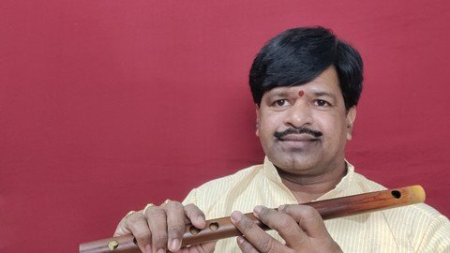
Learn Carnatic Flute | Sri.Thyagaraja Krithis - Vol 2
MP4 | Video: h264, 1280x720 | Audio: AAC, 44.1 KHz
Language: English | Size: 931 MB | Duration: 41m
An advanced level course of Krithis composed by Sri.Thyagaraja in Various Raagas.
What you'll learn​

Students will get to learn the simple notations to understand and practice.
Students can easily pick up the fingering skills by learning line by line of the Krithis.
Students can practice and play along while watching the fingering and notations simultaneously.
Students can learn the Half Notes on Flute.
Students get to know the actual method of playing Krithis.
Requirements
Students need 2 and half (D#) pitch, 8 holes Carnatic Flute to practice the Krithis.
Students need to note down the notations physically which helps their offline practice.
Students can understand 12 different notes known as "Dwadasa Swara Sthanas" of Carnatic Classical Music.
Description
Tyagaraja (4 May 1767 - 6 January 1847), also known as Tyāgayya, was a composer and vocalist of Carnatic music, a form of Indian classical music. He was prolific and highly influential in the development of India's classical music tradition. Tyagaraja and his contemporaries, Shyama Shastri and Muthuswami Dikshitar, are regarded as the Trinity of Carnatic music. Tyagaraja composed thousands of devotional compositions, most in Telugu and in praise of Lord Rama, many of which remain popular today. Of special mention are five of his compositions called the Pancharatna Kritis (English: "five gems"), which are often sung in programs in his honour.
Tyāgarāja was born Kakarla Tyagabrahmam in 1767 to a Telugu Vaidiki Mulakanadu Brahmin family in Tiruvarur in present-day Tiruvarur District of Tamil Nadu. There is a school of thought led by musicologist B. M. Sundaram that contests this and proposes Tiruvaiyaru as his birthplace. He is a famous musician and his family name 'Kakarla' indicates that they were originally migrants from the village of the same name in the Cumbum taluk of Prakasam district, Andhra Pradesh. His family belonged to the Smarta tradition and Bharadvaja gotra. Tyagaraja was the third son of his parents, and Panchanada Brahmam and Panchapakesha Brahmam are his elder brothers. He was named Tyagabrahmam/Tyagaraja after Tyagaraja, the presiding deity of the temple at Thiruvarur, the place of his birth. Tyagaraja's maternal uncle was Giriraja Kavi. Giriraja Kavi was a poet and musician. Giriraja was born in Kakarla village, Cumbum taluk in Prakasam district, Andhra Pradesh. He is believed to have belonged to the Mulakanadu sect. Tyagaraja's maternal grandfather was named Kalahastayya, but was frequently addressed as Veena Kalahastayya as he was a noted veena player. Tyagaraja learned to play the veena in his childhood from Kalahastayya. After Kalahastayya's death Tyagaraja found Naradeeyam, a book related to music. Tyagaraja hero-worshipped the celestial sage Narada, a reference to this is Tyagaraja's krithi Vara Nārada (rāga Vijayaśrī, Ādi tāḷam). Legend has it that a hermit taught him a mantra invoking Narada, and Tyagaraja, meditating on this mantra, received a vision of Narada and was blessed with the book Svarārnavam by the sage. During his last days, Tyagaraja took vows of Sannyasa.
Tyagaraja died on a Pushya Bahula Panchami day, 6 January 1847, at the age of 79. His last composition before his death was Giripai Nelakonna (rāga Sahāna, Ādi tāḷam). He was buried at the banks of the Kaveri river at Thiruvaiyaru.
Tyāgarāja began his musical training at an early age under Sonti Venkata Ramanayya, a music scholar, after the latter heard his singing and was impressed by the child prodigy. Tyagaraja regarded music as a way to experience God's love. His compositions focused on expression, rather than on the technicalities of classical music. He also showed a flair for composing music and, in his teens, composed his first song, "Namo Namo Raghavayya", in the Desika Todi ragam and inscribed it on the walls of the house. His compositions are mainly of a devotional (bhakti) or philosophical nature. His songs feature himself usually either in an appeal to his deity of worship (primarily the Avatar Rama), in musings, in narratives, or giving a message to the public. He has also composed krithis in praise of Krishna, Shiva, Shakti, Ganesha, Muruga, Saraswati, and Hanuman.
Sonti Venkataramanayya informed the king of Thanjavur of Tyagaraja's genius. The king sent an invitation, along with many rich gifts, inviting Tyagaraja to attend the royal court. Tyagaraja, however, was not inclined towards a career at the court, and rejected the invitation outright. He was said to have composed the krithi Nidhi Chala Sukhama (English: "Does wealth bring happiness?") on this occasion. He spent most of his time in Tiruvaiyaru, though there are records of his pilgrimages to Tirumala and Kanchipuram. When he was in Kanchipuram, he met Upanishad Brahmayogin at the Brahmendral Mutt at Kanchipuram.
Carnatic musicTanjavur-style Tambura Concepts
Śruti
Svara
Rāga
Tāḷa
Mēḷakarta
Asaṃpūrṇa Mēḷakarta
Compositions
Gītaṃ
Svarajati
Varṇaṃ
Kr̥ti
Kīrtana
Rāgaṃ Tānaṃ Pallavi
Tillana
Tyagaraja, who was immersed in his devotion to Rama and led a spartan way of life, did not take any steps to systematically codify his vast musical output. Rangaramanuja Iyengar, a leading researcher on Carnatic music, in his work Kriti Manimalai, has described the situation prevailing at the time of the death of Tyagaraja. It is said that a major portion of his incomparable musical work was lost to the world due to natural and man-made calamities. Usually, Tyagaraja used to sing his compositions sitting before deity manifestations of Lord Rama, and his disciples noted down the details of his compositions on palm leaves. After his death, these were in the hands of his disciples, then families descending from the disciples. There was not a definitive edition of Tyagaraja's songs.
About 700 songs remain of the 24,000 songs said to have been composed by him; however, scholars are skeptical about numbers like these, as there is no biographical evidence to support such claims. In addition to nearly 700 compositions (kritis), Tyagaraja composed two musical plays in Telugu, the Prahalada Bhakti Vijayam and the Nauka Charitam. Prahlada Bhakti Vijayam is in five acts with 45 kritis set in 28 ragas and 138 verses, in different metres in Telugu. Nauka Charitam is a shorter play in one act with 21 kritis set in 13 ragas and 43 verses. The latter is the most popular of Tyagaraja's operas, and is a creation of the composer's own imagination and has no basis in the Bhagavata Purana. Tyagaraja also composed a number of simple devotional pieces appropriate for choral singing.
Tyagaraja Aradhana, the commemorative music festival is held every year in Thiruvaiyaru in Thanjavur district of Tamilnadu, during the months of January to February in Tyagaraja's honor. This is a week-long festival of music where various Carnatic musicians from all over the world converge at his resting place. On the Pushya Bahula Panchami, thousands of people and hundreds of Carnatic musicians sing the five Pancharatna Kritis in unison, with the accompaniment of a large bank of accompanists on veenas, violins, flutes, nadasvarams, mridangams and ghatams.
Who this course is for
Those who are curious to learn Classical Carnatic Music.
Students who want to know the Key tips of practicing.
Students who are interested in advanced level of Classical compositions
Screenshots


a5be358e-4d21-4498-a67f-9e4eca71199f.png

Mega Course - VMware vSphere 7.0 Boot Camp - Part 3
Genre: eLearning | MP4 | Video: h264, 1280x720 | Audio: AAC, 44.1 KHz
Language: English | Size: 4.70 GB | Duration: 9h 51m
VM Migration, Load Balanced & Failure Recovery Clusters, VM Fault Tolerance, Lifecycle Manager, Performance, and more.

What you'll learn
Learn how configure VMs, ESXi hosts and networks for VMotion
Configure, build and test Distributed Resource Scheduling compute Load Balanced clusters
Deliver better than 99.99% VM uptime with High Availability clusters
Deliver ZERO unplanned VM down time with VMware Fault Tolerance
Patch and update ESXi hosts with VMware Lifecycle Manager
Avoid and respond skillfully to performance concerns before they become production issues
Requirements
You have a basic understanding of computer hardware including CPUs, Memory, Networking and Storage
You have a good understanding of Operating Systems including how to install and configure them
You have a working understanding of networks, TCP/IP and storage
Your vSphere experience is similar to what you would know if you attended our vSphere 7.0 Boot Camp Part-1 and Part 2 courses
Description
This Course Is An Affordable Alternative to Official VMware vSphere 7.0 Training
Do you need to ramp up on VMware vSphere 7.0 quickly and efficiently? Do you need thorough, detailed and in-depth training that covers both the theoretical and practical sides of vSphere 7.0? If so, you've probably looked at official VMware vSphere training - only to be put off by the price...
Q: What do you do if you need in depth VMware vSphere 7.0 training, but can't afford the $4,000+ cost of an official VMware VMware vSphere Install, Configure, Manage[v7.0] class or the $6,000+ cost of an official VMware vSphere Fast Track[v7.0] training class?
A: Sign up for this course instead!
This course (the third in a 3-part series) was originally developed as a 5-day intensive VMware vSphere 7.0 boot camp class. It provides a complete introduction to VMware vSphere™ 7.0 including ESXi™ 7 and vCenter™ 7. This course has been fully updated to reflect the changes introduced in vSphere 7.0 Update 1.
What Do You Get?
This course includes over 47 presentations totalling 10+ hours of recorded lectures and hands-on lab demo videos. Every lecture video and every hands-on lab demo video is fully downloadable, so you can continue to learn while you travel.
You also get a free 150pg PDF ebook sample of our course.
Is This Course Right For Me?
Good question! The easiest way to tell for sure is to check out the Free Preview Lectures and hands-on Lab Demo videos we offer. With free previews, you can take your time and be certain that this course is right for you before you buy.
Worried you might change your mind? No problem! Udemy offers a 30-day money back guarantee on each course sale so you can always change your mind later.
You Will Learn How To Build An Entire vSphere 7 System From Scratch
In this course I provide both lecture (Power Point) and hands-on lab demo video coverage of the following topics
Virtual Machine Migration - cold migrate, hot VMotion migrate and storage VMotion migrate VMs
Load Balanced DRS Clusters - create and administer DRS clusters so your VMs always get the compute resources they need
High Availability Clusters - use vSphere HA to gracefully recover from server, storage network, SAN and VM failures
Fault Tolerance - deliver Zero Unplanned VM down time with this VM replication feature
Lifecycle Manager - configure and update Lifecycle Manager and use it to patch / update your ESXi hosts
Distributed vSwitches - learn features and benefits that dvSwitches offer over Standard vSwitches
Performance - work with ESXi to maximize your ESXi host's compute and storage network resources
Final Thoughts - a course wrap up covering topics that didn't fit into previous chapters
You Get Both Lecture and Lab Demo Videos
This course includes both detailed lecture presentations and fully explained hands-on lab demos. Our lectures introduce you to, and motivate each topic including what it is, what it does, why you need it, how it works, what to watch out for, best practices, design tips, sizing limits and much more. After each lecture section you'll see a detailed hands-on lab demonstration that takes you through exactly how to perform the tasks we introduced in the lectures including how to install, configure, administer, etc. each vSphere component.
Total class time is roughly 60% lecture and 40% lab demos.
Note that while we provide step-by-step hands-on lab demo video presentations, access to live hands-on labs is not included in this course.
Get The vSphere 7.0 Skills You Need to Get Ahead
By the end of the class, attendees will have learned the skills, and best practices needed to become an effective vSphere 7.0 administrator. With the information provided in this class and follow on classes, attendees will be able to design, implement, deploy, configure, monitor, manage and troubleshoot a vSphere 7.0 installation.
Who this course is for
You have basic vSphere administration skills and want to add VMware vSphere 7.0 skills to your skilset
Anyone who has worked with older versions of vSphere and want to see how things work in vSphere 7.0
People who are strong with some aspects of vSphere and who want the full picture on how to work with vSphere 7.0
VMware VCA / VCP / VCAP certification candidates who want to improve their knowledge / skills with objective, 3rd party training
Hyper-V, Xenserver or other virtualization administrators who want to learn how to work with vSphere 7.0
You would like to attend official VMware vSphere 7 training but can't afford the $4,000+ cost
Screenshots


69165e50-6d26-4b33-bfbf-9086b2e780e7.png

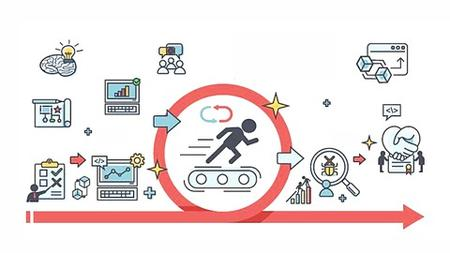
Scrum Certification Course 2022 (Based on Scrum Guide 2020)
Instructors: Prince Patni
13 sections • 29 lectures • 40m
Video: MP4 1280x720 44 KHz | English + Sub
Updated 1/2022 | Size: 760 MB​

Listen to the Scrum Guide 2020, understand Agile & prepare for Scrum certifications in 2022 - Get Scrum Certified Today
What you'll learn
Complete Audio book of the Scrum Guide 2020 version.
Master the basics of the Scrum Framework
Find out how to successfully implement Scrum in your team
Learn the fundamentals of Scrum
Understand the different Scrum roles (Product Owner, Scrum Master, Developer etc)
Scrum master role and responsibilities, and tools and techniques used by the scrum master to facilitate team efforts.
Discover the power of Scrum in complex project management
Prepare for different Scrum certifications like PSM, PSPO etc.
Requirements
Desire to learn Scrum framework from scratch.
No previous Scrum knowledge or experience required.
Description
Are you preparing for your Scrum certification and need to listen to the Official Scrum Guide 2020? Then this, is the right course.
Are you a software developer looking for your first job? You'll need to understand Scrum and you'll get that here.
Are you a program manager trying to move from traditional project management to agile project management? The latest Scrum principles taught in this course will help you do that.
Are you a student, trying to prepare for the real-world? Perfect, you'll get hands-on examples and all the theory you need to succeed.
<< What is Scrum? >>
Scrum is a framework in which people can deal with complex problems while delivering valuable products. Scrum is straightforward to understand but very difficult to master. Scrum has been used for managing work on complex products since the early 1990s. Scrum is the most popular Agile methodology for delivering projects. It's an iterative, time-boxed approach or framework to solve problems & deliver value.
Scrum focuses on speed, simplicity and continuous improvement whilst remaining completely customer centric.
Top Reasons why you should go through the Official Scrum Guide 2020
Scrum is the #1 Project Management framework used industry wide.
The demand for Scrum professionals is on the rise. Scrum Master is one of the most sought-after profession currently in the lines of Data Science.
There are multiple opportunities across the Globe for everyone with this skill.
Scrum has a large learning curve so the best time to start is today.
You don't have to get any paid or trial version of any software to learn Scrum. Adopting Scrum is absolutely free and available for everyone.
All the Scrum Exams are now based on Scrum Guide 2020 version. There are many differences in this version vs the old one (2017) that are also explained in the course.
Top Reasons why you should choose this Course on Scrum Guide 2020
This course will teach you ins and outs of Scrum. If you join this course you will be able to
Understand the different Scrum roles (Product Owner, Scrum Master, Developer).
Prepare for and pass the various Scrum certifications like PSM, CSM, PSPO etc.
Speak intelligently about Scrum at job interviews.
Be able to act as a Scrum Master.
Work in an agile workplace.
Find out how to successfully implement Scrum in your team.
Be competitive in any job market and ensure you remain relevant no matter what happens in the future.
Check out these stats that shows how valuable Scrum is in your upcoming career
Glassdoor includes Scrum in its list of highest-paying jobs, with an average of $97,000+, per year.
A study performed by Scrum. org in 2019 showed that the average salary of a Scrum Master is $98,000+, ranging up to $150,000+, per year.
LinkedIn included Scrum in its 2019 Most Promising Jobs list.
On which version of the Scrum Guide is this course based?
This course is compliant with the 2020 version of the Scrum Guide™. The Scrum Guide is NOT updated yearly and currently this is the latest version.
Does this course include everything I need to pass a Scrum certifications ?
Yes, all the information you need and the materials you can use are included in the course. You don't need to worry about searching for other resources or courses. Understanding the Scrum Guide is the best way to prepare for all your Scrum certifications.
You can take this course from the comfort of your home, and the convenience of your phone, in any location, and whenever you have a free moment. This allows you to add a valuable skill to your resume without having to spend an enormous sum of money returning to school. This also allows you the flexibility to add this skill to your resume on your own terms.
Course enrollment grants you lifetime access, with no expiration, to all the course lectures. In addition, you'll also receive 1-on-1 support for any questions or doubts that come up. And this all comes with a money-back guarantee. You have nothing to lose and so much knowledge to gain.
A Verifiable Certificate of Completion is presented to all students who undertake this course.
This is a derivative work by Prince Patni based on ScrumGuides .org - Official Scrum Guide 2020. The Audio content is exact replica is Scrum Guide V2020 and Videos are Free stock videos.
No endorsement is made by either Jeff Sutherland, Ken Schwaber, or any of their related commercial entities. The original Scrum Guide is offered for license under the Attribution Share-Alike license of Creative Commons.
This course is neither endorsed by, nor in partnership, nor affiliated with Scrum .org. All the content related to Scrum Guide is taken from scrumguides. org and is under the Attribution ShareAlike license of Creative Commons. Further information is accessible at
.org/licenses/by-sa/4.0/legalcode and also described in summary form at
.org/licenses/by-sa/4.0/.
Who this course is for
Beginners who want to learn Scrum
IT professionals interested in becoming a scrum master, and want to pursue this path
Experienced Scrum Masters who are looking to refresh and expand their knowledge
Project managers, or Developers looking to move into an agile workforce and increase their marketability
Agile and Scrum Coaches, Scrum Master, Product Owners, Product Managers, Project Manager, Managers, Directors, Developers, Architects
IT professionals looking to pass scrum master certifications
Anyone looking to get a job as Scrum Master, or Product Owner
Screenshots





 
Zurück
Oben Unten