• Regeln für den Video-Bereich:

    In den Börsenbereich gehören nur Angebote die bereits den Allgemeinen Regeln entsprechen.

    Einteilung

    - Folgende Formate gehören in die angegeben Bereiche:
    - Filme: Encodierte Filme von BluRay, DVD, R5, TV, Screener sowie Telesyncs im Format DivX, XviD und x264.
    - DVD: Filme im Format DVD5, DVD9 und HD2DVD.
    - HD: Encodierte Filme mit der Auflösung 720p oder darüber von BluRay, DVD, R5, TV, Screener sowie Telesyncs im Format x264.
    - 3D: Encodierte Filme von BluRay, die in einem 3D Format vorliegen. Dies gilt auch für Dokus, Animation usw.
    - Serien: Cartoon/Zeichentrick, Anime, Tutorials, Dokumentationen, Konzerte/Musik, Sonstiges sind demnach in die entsprechenden Bereiche einzuordnen, auch wenn sie beispielsweise im High Definition-Format oder als DVD5/DVD9/HD2DVD vorliegen. Ausnahme 3D.
    - Bereich Englisch: Englische Releases gehören immer in diesen Bereich.
    - Bereich Talk: Der Bereich, in dem über die Releases diskutiert werden kann, darf, soll und erwünscht ist.


    Angebot/Beitrag erstellen

    - Ein Beitrag darf erst dann erstellt werden, wenn der Upload bei mindestens einem OCH komplett ist. Platzhalter sind untersagt.
    - Bei einem Scenerelease hat der Threadtitel ausschließlich aus dem originalen, unveränderten Releasenamen zu bestehen. Es dürfen keine Veränderungen wie z.B. Sterne, kleine Buchstaben o.ä. vorgenommen werden. Ausnahme Serienbörse:
    - Bei einem Sammelthread für eine Staffel entfällt aus dem Releasename natürlich der Name der Folge. Beispiel: Die Simpsons S21 German DVDRip XviD - ITG
    - Dementsprechend sind also u.a. verboten: Erweiterungen wie "Tipp", "empfehlenswert", "only", "reup", usw. / jegliche andere Zusatzinformation oder Ergänzung, welche nicht in obiger Beschreibung zu finden ist.

    Aufbau des Angebots und Threadtitel

    Der Titel nach folgendem Muster erstellt zu werden. <Name> [3D] [Staffel] [German] <Jahr> <Tonspur> [DL] [Auflösung] <Quelle> <Codec> - <Group>
    Beispiel: The Dark Knight German 2008 AC3 DVDRip XviD - iND
    Beispiel: The Dark Knight 2008 DTS DL BDRip x264 - iND
    Beispiel: The Dark Knight 2008 AC3 DL BDRip XviD - iND
    Beispiel: The Dark Knight German 2008 AC3 720p BluRay x264 iND
    Beispiel: The Dark Knight 2008 DTS DL 1080p BluRay x264 iND
    Beispiel: Die Simpsons S01 German AC3 DVDRip XviD iND
    Beispiel: Die Simpsons S20 German AC3 720p BluRay x264 iND
    Beispiel: Sword Art Online II Ger Sub 2014 AAC 1080p WEBRip x264 - peppermint
    Entsprechend sind also u.a. verboten: Sonderzeichen wie Klammern, Sterne, Ausrufezeichen, Unterstriche, Anführungszeichen / Erweiterungen wie "Tipp", "empfehlenswert", "only", "reup", usw. / jegliche andere Zusatzinformation oder Ergänzung, welche nicht in obiger Beschreibung zu finden ist
    Ausnahmen hiervon können in den Bereichen geregelt sein.

    Die Beiträge sollen wie folgt aufgebaut werden:
    Überschrift entspricht dem Threadtitel
    Cover
    kurze Inhaltsbeschreibung
    Format, Größe, Dauer sind gut lesbar für Downloader außerhalb des Spoilers zu vermerken
    Nfo sind immer Anzugeben und selbige immer im Spoiler in Textform.
    Sind keine Nfo vorhanden z.B. Eigenpublikationen, sind im Spoiler folgende Dateiinformationen zusätzlich anzugeben :
    Quelle
    Video (Auflösung und Bitrate)
    Ton (Sprache, Format und Bitrate der einzelnen Spuren)
    Untertitel (sofern vorhanden)
    Hosterangabe in Textform außerhalb eines Spoiler mit allen enthaltenen Hostern.
    Bei SD kann auf diese zusätzlichen Dateiinformationen verzichtet werden.

    Alle benötigten Passwörter sind, sofern vorhanden, in Textform im Angebot anzugeben.
    Spoiler im Spoiler mit Kommentaren :"Schon Bedankt?" sind unerwünscht.


    Releases

    - Sind Retail-Release verfügbar, sind alle anderen Variationen untersagt. Ausnahmen: Alle deutschen Retail-Release sind CUT, in diesem Fall sind dubbed UNCUT-Release zulässig.
    - Im Serien-Bereich gilt speziell: Wenn ein Retail vor Abschluss einer laufenden Staffel erscheint, darf diese Staffel noch zu Ende gebracht werden.62
    - Gleiche Releases sind unbedingt zusammenzufassen. Das bedeutet, es ist zwingend erforderlich, vor dem Erstellen eines Themas per Suchfunktion zu überprüfen, ob bereits ein Beitrag mit demselben Release besteht. Ist dies der Fall, ist der bereits vorhandene Beitrag zu verwenden.
    - P2P und Scene Releases dürfen nicht verändert oder gar unter einem iND Tag eingestellt werden.


    Support, Diskussionen und Suche

    - Supportanfragen sind entweder per PN oder im Bereich Talk zu stellen.
    - Diskussionen und Bewertungen sind im Talk Bereich zu führen. Fragen an die Uploader haben ausschließlich via PN zu erfolgen, und sind in den Angeboten untersagt.
    - Anfragen zu Upload-Wünschen sind nur im Bereich Suche Video erlaubt. Antworten dürfen nur auf Angebote von MyBoerse.bz verlinkt werden.


    Verbote

    - Untersagt sind mehrere Formate in einem einzigen Angebotsthread, wie beispielsweise das gleichzeitige Anbieten von DivX/XviD, 720p und 1080p in einem Thread. Pro Format, Release und Auflösung ist ein eigener Thread zu eröffnen.
    - Grundsätzlich ebenso verboten sind Dupes. Uploader haben sich an geeigneter Stelle darüber zu informieren, ob es sich bei einem Release um ein Dupe handelt.
    - Gefakte, nur teilweise lauffähige oder unvollständige Angebote sind untersagt. Dies gilt auch für eigene Publikationen, die augenscheinlich nicht selbst von z.B. einer DVD gerippt wurden. Laufende Serien, bei denen noch nicht alle Folgen verfügbar sind, dürfen erstellt und regelmäßig geupdatet werden.
    - Untersagt sind Angebote, welche nur und ausschließlich in einer anderen Sprache als deutsch oder englisch vorliegen. Ausnahmen sind VORHER mit den Moderatoren zu klären.


    Verstoß gegen die Regeln

    - Angebote oder Beiträge, die gegen die Forenregeln verstoßen, sind über den "Melden"-Button im Beitrag zu melden.
  • Bitte registriere dich zunächst um Beiträge zu verfassen und externe Links aufzurufen.


Englische Tutorials

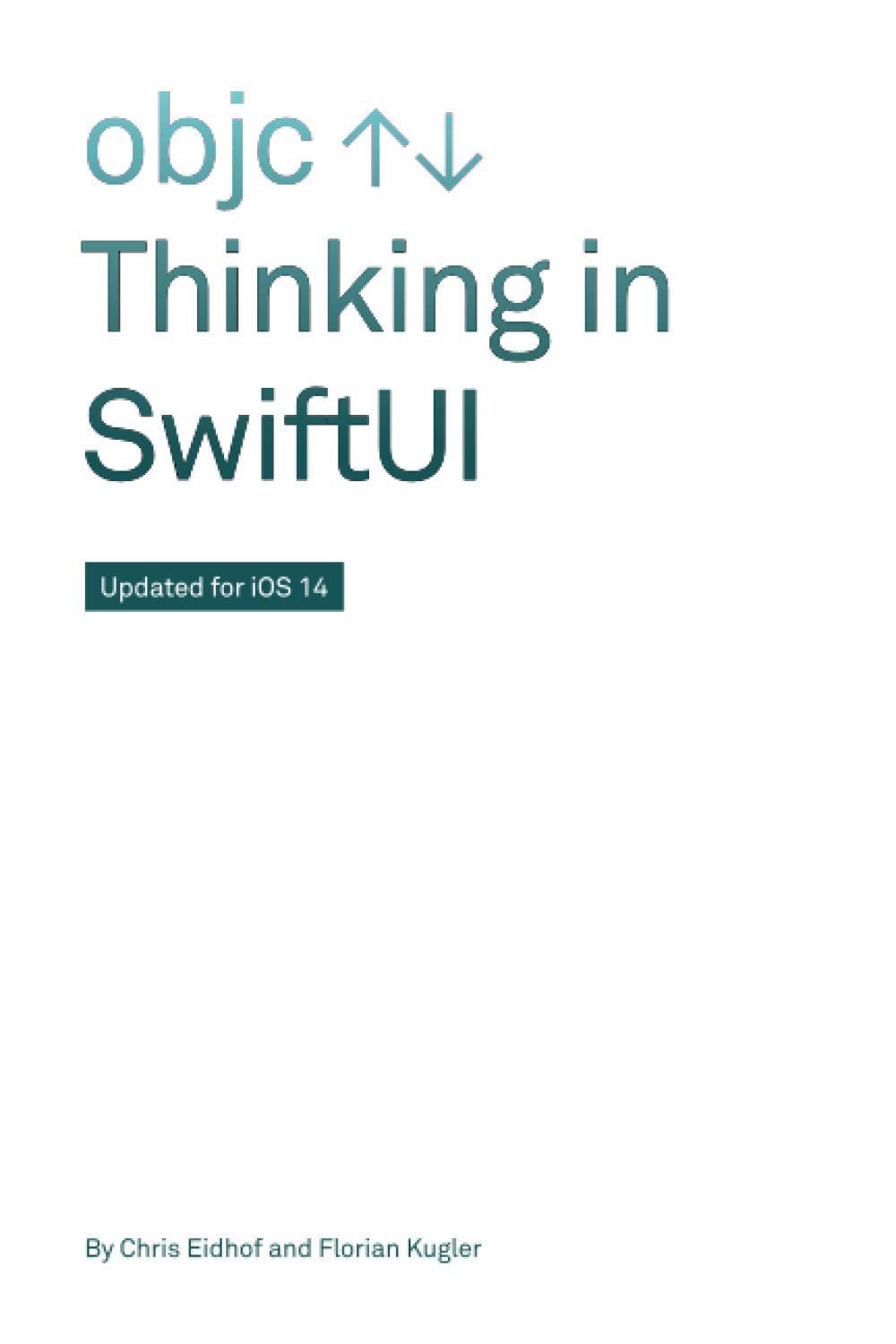
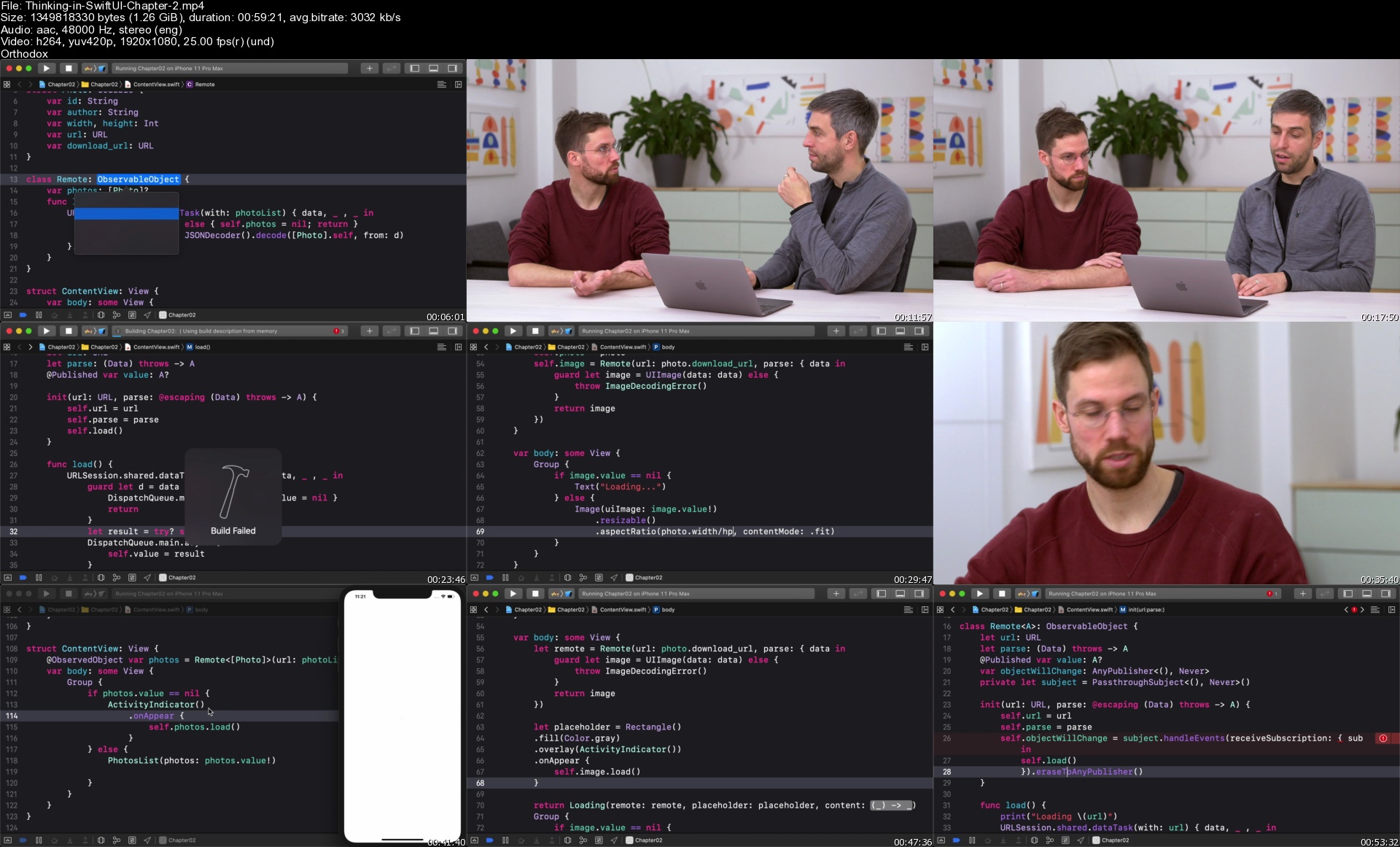
Objc - Thinking in SwiftUI

zujnqylzwbnsyirzmducsucj00.jpg


Objc - Thinking in SwiftUI
MP4 | Video: h264, 1280x720 | Audio: AAC, 44.1 KHz, 2 Ch
Genre: eLearning | Language: English | Duration: 9 Lessons (4h 38m) | Size: 5.9 GB

SwiftUI is radically different from UIKit. In this short book, we will help you build a mental model of how SwiftUI works. We explain the most important concepts in detail, and we follow them up with exercises to give you hands-on experience.

Since SwiftUI is still in its early days, the book focuses on the concepts behind the framework that we believe are essential to understand. It is not a reference for SwiftUI's platform-specific APIs, but rather a guide to honing your intuition about how SwiftUI works.

Thinking in SwiftUI is geared toward developers who have both prior experience with Apple's platforms and a good understanding of the Swift language.

Homepage

thinkinginswiftuichapcejs8.jpg


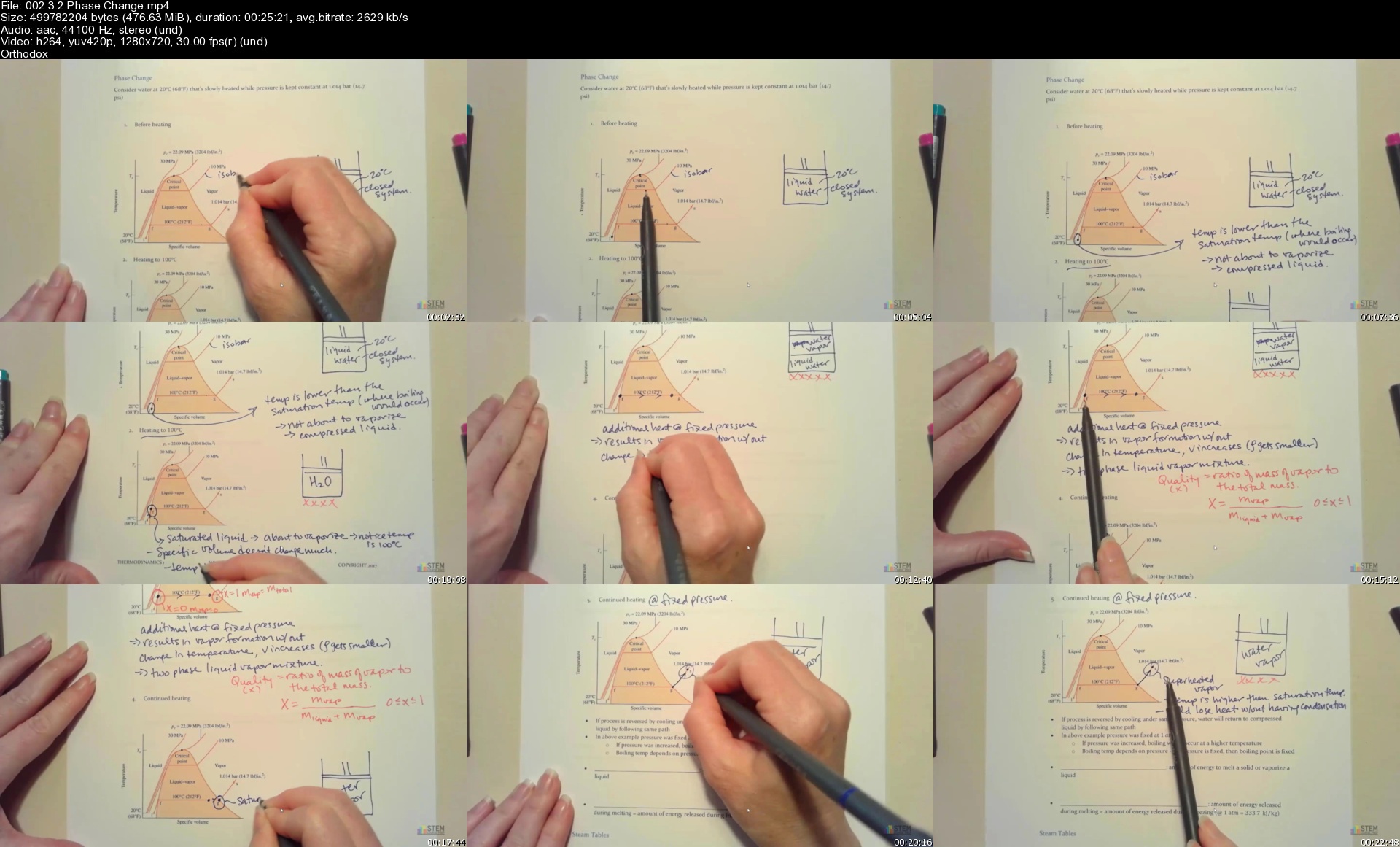
Thermodynamics for Engineering Students

aqnnjm13b1dq0jamf5vqhtzkf4.jpg


Thermodynamics for Engineering Students
MP4 | Video: h264, 1280x720 | Audio: AAC, 44.1 KHz, 2 Ch
Genre: eLearning | Language: English + srt | Duration: 93 lectures (19h 19m) | Size: 21.5 GB

A Detailed Introduction to Thermodynamics

What you'll learn:
Utilize the concepts of work and energy to evaluate control volumes as well as closed systems
Steam tables, entropy, enthalpy and more!

Requirements
Be able to use dervatives and integrals from Calculus
Be able to draw free body diagrams of simple systems


Description
What is Thermodynamics?

Thermo is the branch of physics that deals with temperature and pressure and how they are related to work and energy. Thermodynamics applies to a wide variety of applications such as combustion engines, heating and air conditioning systems, and jet propulsion, along with many, many others.

Who should enroll in this course?
Engineering students wanting to get a head start on an upcoming Thermo course

Students currently taking Thermo who need extra examples and explanations

Students and professionals who are preparing to take the Fundamentals of Engineering Exam

Anyone with an interest in learning about work and energy

How's this course different from the other online Thermo courses? Why should I enroll in this course?
This course covers all the topics needed to gain an understanding of the basics of thermodynamics. We will cover:

Pressure and temperature

Work and energy of closed systems

Steam Tables

Enthalpy

Compressibility charts

Ideal gas model

Mass flow rates

Work and energy of control volumes

Thermodynamic efficiencies

Entropy

And more!

What sets this course apart from others is the number of worked examples. Being an instructor of Thermodynamics for many years, I understand the need for examples. So many instructors simply show a solution to a problem or only solve it halfway and just assume the student knows how to finish it.

This used to be one of my biggest frustrations as a student so I can relate when I hear today's students complain about this. To prevent this frustration, this course has many, many fully-worked example problems in a range of difficulty levels. I also don't assume you know more than you do. We start with the basics and work our way up to more complex material.

Now, what good is learning material if you can't check your understanding, right? To assist with this, quiz problems are provided throughout the course. To check your work, video solutions of each quiz are provided.

In addition, the outline of the notes I use in the videos is provided as a downloadable file to help you follow along during the course.

Will the material taught prepare me for other courses?
The relationships between pressure, temperature, density, work and energy are fundamental to so many areas. As such, this course will prepare you for more advanced topics like
Combustion

Heat transfer

Fluid mechanics

Propulsion

Aerodynamics

And many others

How's the course structured and what prior knowledge is needed? Do I need a book?
You will have handwritten lectures followed by fully worked examples. There are NO PowerPoint slides used in this course. From my experience students learn best when following along and writing the notes versus just listening to someone talk while staring at a bunch of slides. And of course, throughout the class you will have the opportunity to test your knowledge using quizzes.

The examples we cover do use basic concepts from Calculus such as derivatives and integrals. In order to understand the material and examples you should know these concepts.

As for the textbook, I will be using the 8th Edition of Fundamentals of Engineering Thermodynamics by Moran, Shapiro, Boettner, and Bailey. ISBN: 978-1118412930. Although not required, this book is a great resource and I strongly encourage you to get a copy for yourself. We will be covering the first 6 chapters of this text.

Who this course is for
Beginner engineering students. This course is equivalent to an introductory Thermodynamics course.
Anyone interested in learning about the relationships between pressure, temperature, and fluid flow

Homepage

0023.2phasechangesi5jgr.jpg


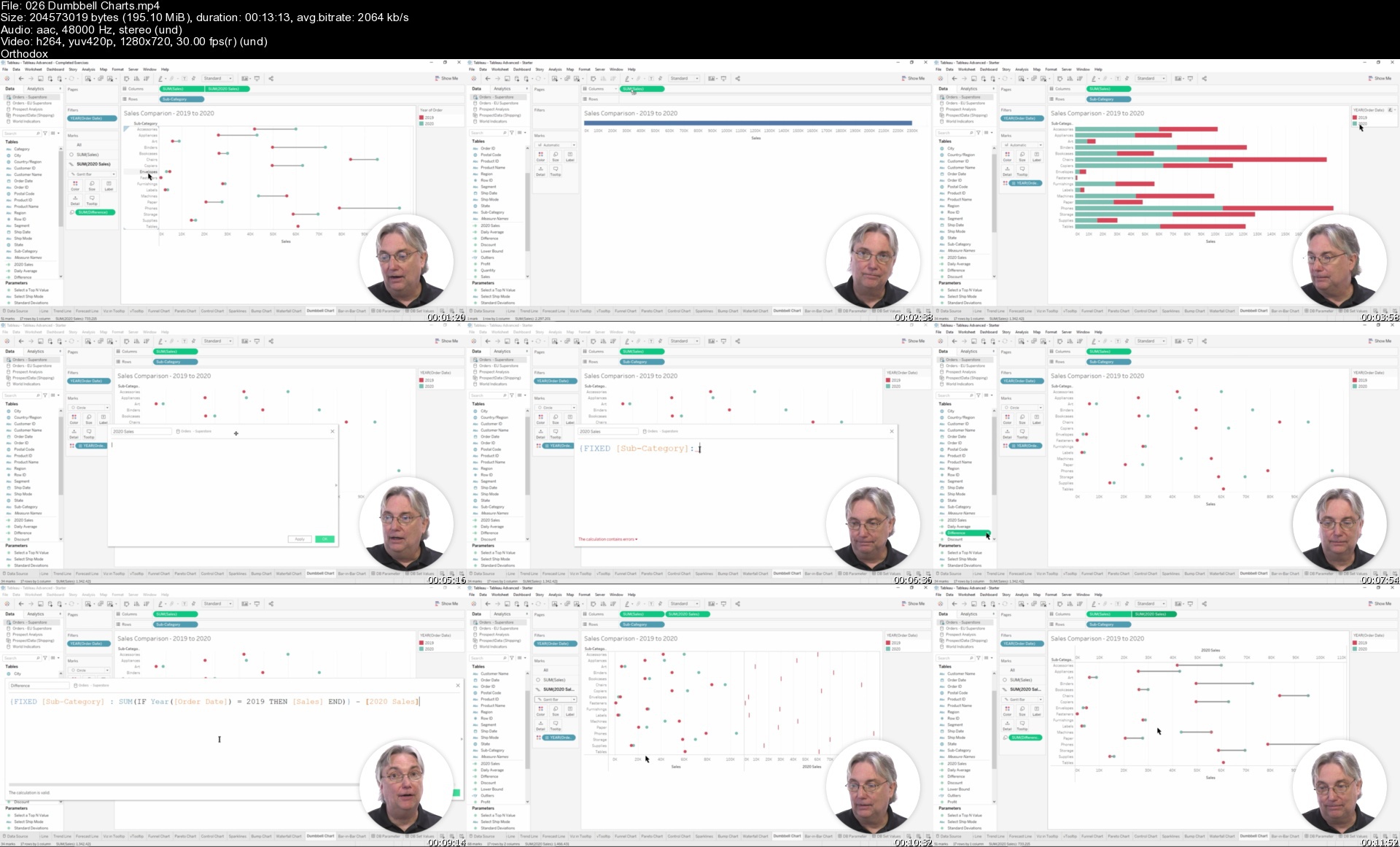
Tableau Desktop [3-Course Bundle]

n3mk6flg0sgfnactcczeg06jum.jpg


Tableau Desktop [3-Course Bundle]
MP4 | Video: h264, 1280x720 | Audio: AAC, 44.1 KHz, 2 Ch
Genre: eLearning | Language: English + srt | Duration: 97 lectures (10h 12m) | Size: 9.3 GB

Learn all of the fundamental knowledge and skills to use Tableau.

What you'll learn:
Learn the whole Tableau journey with this Intellezy full comprehensive bundle.

Requirements
Beginner Pre-Requisites: Basic Computer Skills, Excel Level 1
Intermediate Pre-Requisites: Basic Computer Skills, Excel Level 2, Tableau Desktop Beginner
Advanced Pre-Requisites: Basic Computer Skills, Excel Level 2, Tableau Desktop Intermediate


Description
Included in this Intellezy bundle:

Tableau Desktop - Beginner

Tableau Desktop - Intermediate

Tableau Desktop - Advanced

This Tableau Beginner course begins the Tableau journey. The basics are covered, including data sources, basic data prep, and many visualizations. Basic Dashboards and Stories are created at the conclusion.

In our Tableau Intermediate course, the journey continues where the beginner course ends. Multiple data sources are introduced as well as table calculations and formula construction. More sophisticated visualizations are introduced and some advanced dashboard techniques are introduced as well.

This Tableau Advanced course introduces advanced topics designed to push report creators passed the basic menu choices. Sets, Parameters, and LOD expressions work to provide analysts with answers to questions - answers that could not be found any other way. More sophisticated visualizations are built and then used on interactive dashboards that let users control what they see.

With nearly 10,000 training videos available for desktop applications, technical concepts, and business skills that comprise hundreds of courses, Intellezy has many of the videos and courses you and your workforce needs to stay relevant and take your skills to the next level. Our video content is engaging and offers assessments that can be used to test knowledge levels pre and/or post course. Our training content is also frequently refreshed to keep current with changes in the software. This ensures you and your employees get the most up-to-date information and techniques for success. And, because our video development is in-house, we can adapt quickly and create custom content for a more exclusive approach to software and computer system roll-outs.

Who this course is for
Those who want a complete training on all functionalities in Tableau Desktop.

Homepage

026dumbbellchartss9qj13.jpg


Python Django 2021 - Complete Course (Updated 07/2021)

audfzs79oeis5skfvp2zc15jy8.jpg


Python Django 2021 - Complete Course (Updated 07/2021)
MP4 | Video: h264, 1280x720 | Audio: AAC, 44.1 KHz, 2 Ch
Genre: eLearning | Language: English + srt | Duration: 45 lectures (15h 24m) | Size: 8.33 GB

Learn to build awesome websites with Python & Django!

What you'll learn:
How to Build a Django website from start to finish
User Registration and Authentication
Hosting a website on a live server
Building out a REST API
Build a review and voting system
Search & Pagination
Designing databases with Django
How to send emails with Django

Requirements
Basic understanding of HTML, CSS & Python


Description
About this course

Ready to learn Django? In this course we will start from the very basics of what Django is to completing and deploying a fully functional website.

The website we will build as we learn will be an online platform where developers from around the world can create a profile and share their work with others.

Who is this course for?

While this course is Beginner friendly, all skill levels can learn here. We wont just be learning the basics, we will be applying what we know to add awesome site features like messaging other users, leaving comments and rating projects and so much more. This course will leave all skill levels with a new load of knowledge and different approaches of completing tasks.

For those who are more advanced and maybe have already built out a few applications, you can simply skip through or fast-forward to get to the "good stuff". In the second half of the course we will work on a voting system, messaging, sending emails and even building out an API. Even if you have done these things already you can see a new approach and build an awesome website in the process.

Is Django the right framework for you?

Python is one of the worlds top programming languages, Django is the top framework for python, I think that says it all. While I can see the appeal to a more lightweight framework such as flask I think Django will be the right choice for you in most every case. Great for beginners to have structure and plenty of modules/packages to work with and highly customizable for more advanced developers. I think with companies such as Instagram, Pinterest, Spotify and Udemy using Django, that should be plenty enough proof of its capabilities and credibility.

Who this course is for
Beginner Python developers looking to build websites with django

Homepage

003databasequeriessiakui.jpg


Pandas Masterclass: Advanced Data Analysis with Pandas

igwnhifve3xhj8byrwh5e7mk5q.jpg


Pandas Masterclass: Advanced Data Analysis with Pandas
MP4 | Video: h264, 1280x720 | Audio: AAC, 48 KHz, 2 Ch
Genre: eLearning | Language: English + .srt | Duration: 72 lectures (8 hour, 57 mins) | Size: 6.29 GB

Master Pandas library to Analyze, Manipulate & Visualize Big Data. Data Analysis with Pandas using Multiple Projects


What you'll learn

Learn how to read different types of file formats using Pandas.
Learn about different data analysis functions in Pandas such as Melt, merge, pivot, cross tabulation etc.
Learn about handling missing values using Pandas.
Learn and excel handling Series and DataFrames using Pandas.
Learn about Pandas Arrays.
Learn handling Time data using Pandas.
Learn about Multi Indexing using Pandas.
Learn about Indexing in Pandas.
Learn about Rolling and Expanded Window Functions in Pandas.
Learn about Pandas Styling.
Learn about Andrew Curves, Autocorrelation plot, bootstrap plot, Lag plot, parallel coordinates.

Requirements

Python programming knowledge is must.


Description

Welcome to Pandas Masterclass: Advanced Data Analysis and Visualisation with Pandas.

Pandas is a fast, flexible, easy-to-use open source data analysis and data manipulation library built on top of the python programming language.

It offers data structures and many operations for manipulating data.

Pandas allow many data manipulation operations such as merging, reshaping, cleaning, and data wrangling features.

Pandas library is widely used for data science/data analysis and machine learning tasks.

If you want to master the data analysis library-pandas then this course is perfect for you.

You will gain complete knowledge on Pandas library.

From reading datasets to analyzing them using the different manipulation functions.

Everything is included in this course.

In this course, you will cover the following topics:-

Reading different file formats

General functions of pandas

Handling Series

Handling Dataframe

Introduction to Arrays in Pandas

Handling time data

Styling data frame

Window functions

Visualization and plotting

Index Objects in Pandas

This course is made by keeping in mind the requirements of data analysts and data scientists while working on any project.

After completing this course you will be able to work on any data analysis project efficiently using pandas.

You will definitely love this course.

You will have access to all the resources used in this course.

Enroll now and become a pandas pro!!!


Who this course is for:

Data Analysts
Data Scientists
Business Analysts
Python Developers

3.binaryoperationsindyhk5b.jpg


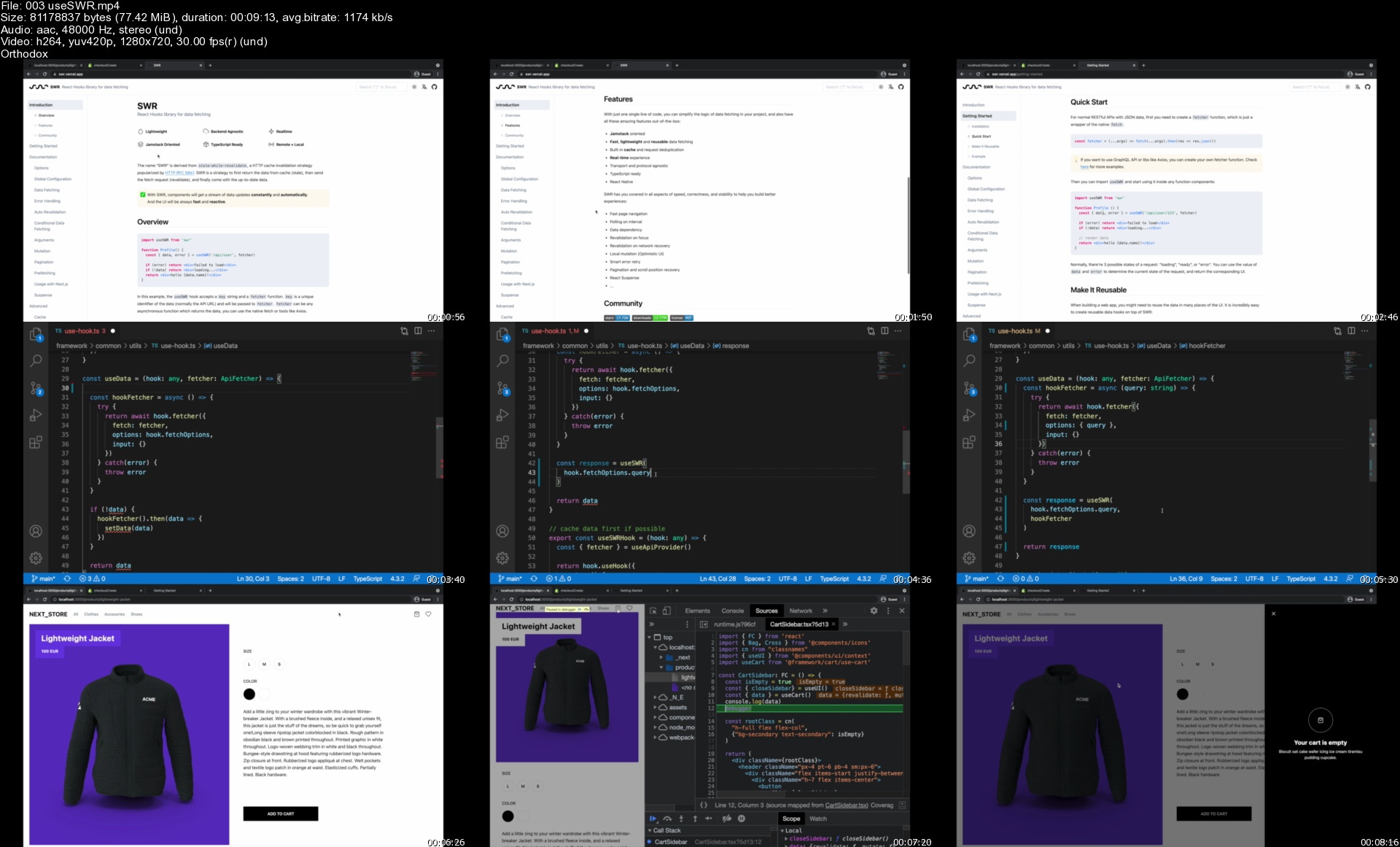
Next JS & Typescript with Shopify Integration - Full Guide

pq5iqfku8ttzv4vk9yocskdj9j.jpg


Next JS & Typescript with Shopify Integration - Full Guide
MP4 | Video: h264, 1280x720 | Audio: AAC, 44.1 KHz, 2 Ch
Genre: eLearning | Language: English + srt | Duration: 236 lectures (27h 54m) | Size: 12.6 GB

Learn modern Next JS(Next 10+). Code everything in Typescript and integrate with Shopify. Professional app architecture.

What you'll learn:
Build modern, well architectured apps from scratch
Get most of the JS with Typescript
Create applications with real use case
Create Shopify integration

Requirements
Basic Javascript knowledge is required
Fundamentals in React, HTML and CSS


Description
What is Next.js?

Next.js is a React-based framework that provides infrastructure and simple development experience for server-side rendered(SSR) & static page applications.

An intuitive page-based routing system (with support for dynamic routes)

Pre-rendering, both static generation (SSG) and server-side rendering (SSR) are supported on a per-page basis

What is Typescript?

TypeScript is an open-source language which builds on JavaScript, one of the world's most used tools, by adding static type definitions.

Is this course right for you?

If you plan to start your career as a developer or improve your programming skills, this course is right for you. Learn how to build a professional web application inspired by the project of Next JS developers.

Start with learning the Typescript language and progress into building your own e-commerce application.

This resource is the only thing you need to start Web Development with Next.js. During this course, you will get the confidence and skills required to start your own projects. In addition, you will get the right mindset to apply for a developer career and improve in modern frameworks like Next.js and React.js.

What are you going to work on?

You will build an e-commerce application from scratch. You will learn how to write code in Typescript language, a superset of Javascript providing additional features, and a static type checker.

Course is based

The course starts with an explanation and practical examples of the Typescript language. The typescript section is optional but it explains a lot of types of structures that will be used throughout the course.

After typescript lectures, you will start building your e-commerce app. You will learn how to structure the application in a modular and clean way.

You will build your own React components from the scratch. As the styling framework, the course is utilizing PostCSS and Tailwind CSS which is a great choice for every project.

Later in the course, you will learn the latest patterns on how to use hook functions efficiently. Entire checkout functionality is built on top of the hook functions. Hooks are reactive, modular, and easy to get tested.

At the end of the course, we will hook up the application with Shopify, and we will deploy it to the Vercel platform so anyone on the internet can access it.

Who this course is for
Beginners as well as experienced devs interested in modern frameworks.
People looking for the practical Next JS/Typescript development guide
This course is for everyone eager to understand how to build an app from scratch

Homepage

003useswrspgk0p.jpg


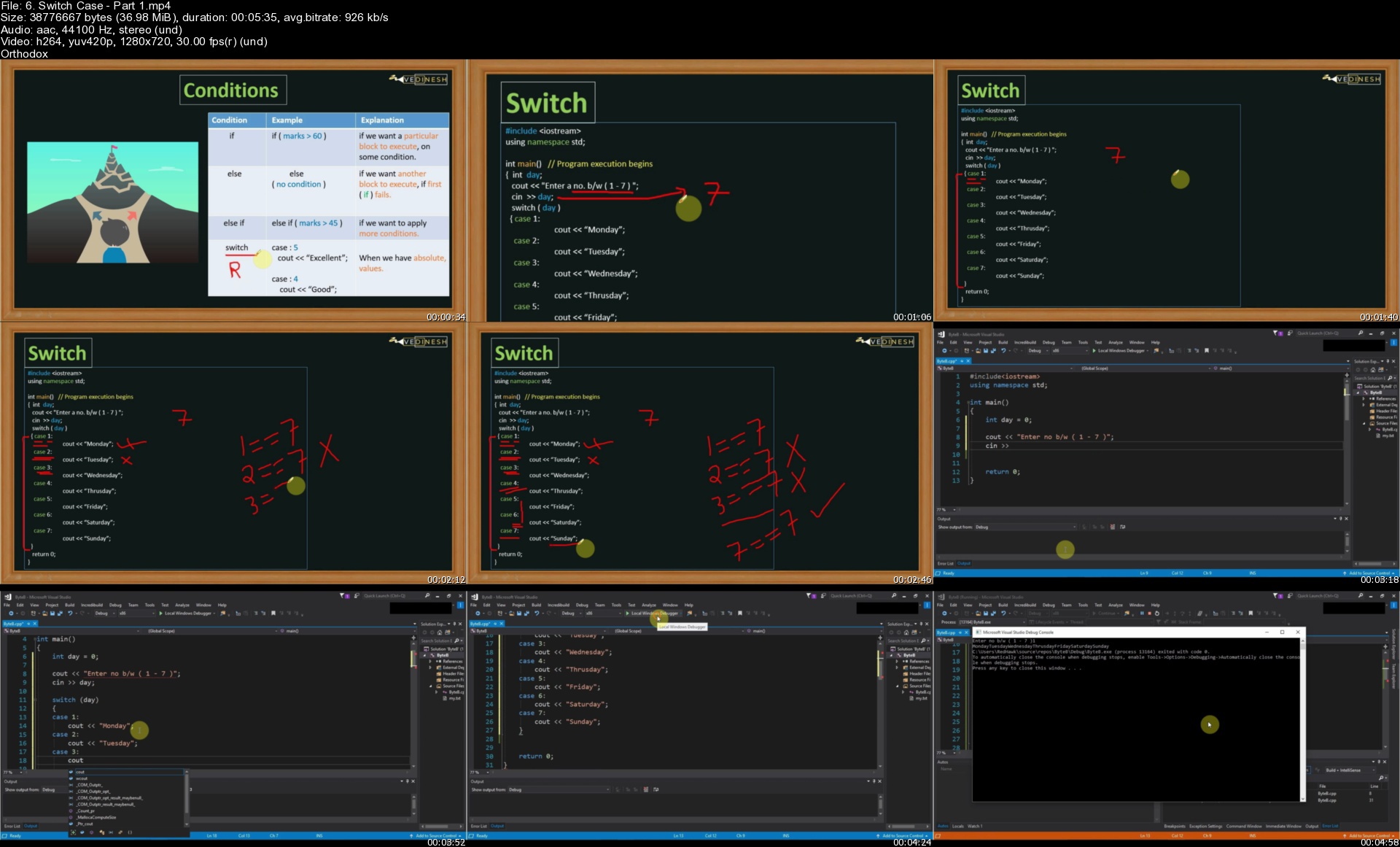
Master C++ Programming - From Beginner To Advance - 2021

hssl5p4dsxs1j2ooiwuczfkjr8.jpg


Master C++ Programming - From Beginner To Advance - 2021
MP4 | Video: h264, 1280x720 | Audio: AAC, 44100 Hz
Language: English | Size: 5.04 GB | Duration: 13h 4m


What you'll learn
Learn from basics of Programming in C++, Get Bigger Picture from What and Why of C++, Will discuss each component in program
Learn Decisions , Loops , Strings, Arrays in C++
Learn Object Oriented Programming Concepts in C++ with Examples
Learn Object , Classes , Operator Overloading, Inheritance, Pointers in C++
Learn virtual function, Streams and Files and finally Learn How to Develop an Application with project
Requirements
Computer or Laptop and C++ Compiler and IDE, Like Codeblocks , Visual Studio etc.
No Prior Programming knowledge is required.

Description
Master C++ Programming - From Beginner To Pro

C++, C++ Tutorial, C++ Lecture, C++ Course

Concepts of C++ programming are made very simple and easy.

Course Highlights

Explained each topic with help of picture and example.

Practical Session for each Topic

2-Projects - ATM system & Student Management

Mind-map

Notes - ppt

100 MCQ's

15 Assignments

Topics :

Introducing Basics Of Computer Mind-map

What is Computer ?

Computer Architecture

RAM - Random Access Memory

CPU - Central Processing Unit

Operating System

Computer Language

Recap - Basics Of Computer - Mind-Map

Quiz 1: Basics Of Computer Quiz

Introduction to Programming ( Mind Map )

What is Programming in general ?

Why we should learn C++ ?

What is C++ ?

What is Compiler and IDE ?

Quiz 2: Introduction to Programming Quiz

Compiler and IDE Setup

Best IDE's For C++

Installing Visual Studio for C++

Installing Codeblocks for C++

Introducing Program Structure in C++ Program ( Mind map )

Header

Namespace

Main Function

Block and Semicolon

Writing First C++ Program

User Input and Output in C++ Program

Recap Program Structure Mind-map

Quiz 3:program Structure Quiz

Identifiers

Keywords

Data Types

Variables

Operators

Arithmetic Operators

Assignment Operators

Logical Operator

Comparison Operator

Recap Important terminologies of C++ Programming ( Mind-map )

Quiz 4: Important terms Quiz

Introducing Important Terminologies in C++ Programming

Introduction Conditions in C++ Mind-map

Condition in C++

If Condition

If Else Condition

Else if Condition

Switch Case

Recap Conditions in C++ Mind-Map

Quiz 5:Condition in C++

Introducing String in C++ Programming Language ( Mind-map )

Why Strings are used in C++ ?

String concatenation

How to calculate string length ?

How to take string as input ?

Example on String

Recap String in C++ ( Mind-map )

Quiz 6: String Quiz

Introduction to Loops

What / why of Loop

For Loop

While Loop

Do While Loop

Break and Continue

Quiz 7: Loop Quiz

Why Array ?

What is Array ?

Creating , Initialize and Modify Array

Program of find Minimum no. in Array

Why Functions in C++?

Example Of Function

Function and Main Memory

Various Forms Of Function

What and Why Of Function Overloading?

1st Way Of Function Overloading

2nd Way Of Function Overloading

Drawback Of Function and inline Function

Quiz 8: Functions in C++

What is Function ?

What and Why Of Structure

Define Structure in C++

Example of Structure

Nesting Of Structure

Structure padding

Quiz 9:Structure in C++ Quiz

Why Object Oriented Programming

Example of OOP

Key Note on Member Function and Member Variable

Access Specifier

Characteristics of OOP

Quiz 10: OOP Quiz

Mini Project - ( ATM System in C++ )

Why Constructor?

Default Constructor

Parametrized Constructor

Copy Constructor

Constructor Overloading

Constructor Program

Quiz 11: Constructor in C++

Operator Overloading

Overloading Post and Pre Increment

Introduction Inheritance Mind-Map

What is Inheritance?

Why Inheritance ?

Inheritance Example

Constructor and Inheritance

Function Overriding

isA and hasA Relation

Types Of Inheritance

Ways of Inheritance

Quiz 12: Inheritance Quiz

What is Pointer?

Why Pointer is Used?

Program in Memory

Pointer Notation

Pointer and Array

Pointer and Function

Memory Management - NEW

Memory Management - DELETE

Pointer Application Program

Pointer Limitations

this Pointer

Quiz 13: Pointers Quiz

Introduction to Pointer - Mind-map

Introduction to Polymorphism

Base Class Pointer and Derived Class Object

What is Virtual Function?

Why Virtual Function with Example

Abstract Class and Pure Virtual Function

More about Polymorphism

Virtual Destructor

Quiz 14 : Polymorphism Quiz

What is friend in general?

What is Friend Function?

Question on Friend Function

What is Friend Class ? + practical

Overloading Comparison Operator - With Friend Function

Quiz 15:Friend Quiz

Introduction to Static Member - Mind map

Static Member Variable

Static Member Function

Quiz 16: Static Member Variable & Function Quiz

Introducing File Input- Output

What are Streams?

Classes and Object for Input-Output

How reading and writing is done in file?

Write data into FILE

Reading data from FILE

Tellg in C++

Tellp Function

Seekg Function

Seekp Function

Quiz 17:File handling Quiz

Exception Handling in C++

Exception Handling Program in C++

Quiz 18: Exception Quiz

Basics of Data Structure

Introduction to STL

Containers in STL & Classification

Array - Container in STL

Vector - Container in STL

List - Container in STL

Stack - Container in STL

Queue - Container in STL

Priority Queue - Container in STL

Map - Container in STL

Multimap - Container in STL

Unordered Map - Container in STL

Set - Container in STL

Multiset - Container in STL

Unordered Set - Container in STL

Algorithms in STL

Container in Container

Quiz 19: STL Quiz

Final Project - Student management in C++

ByteBoard - VeDinesh Academy provides smart classroom-type learning by breaking long lectures into short and crisp for each topic.

We explain concepts with examples and pictures for better understanding, moreover we apply the Mind-Map technique that would definitely help you in connecting the dots and remembering the concepts forever.

We are highly motivated and passionate to provide you high-quality, simplified, and in-depth training at an affordable price.

Thanks.


Who this course is for:
For Beginner C++ developers , Course covers C++ programming concepts in depth.


Homepage

6.switchcasepart1s66jmh.jpg


Machine Learning with Python: SVM, Kmeans, KNN, LinReg, PCA, DBS

0085b702rtkc5.jpg


Machine Learning with Python: SVM, Kmeans, KNN, LinReg, PCA, DBS
Created by Shrirang Korde | Last updated 5/2021
Duration: 14h 30m | 4 sections | 55 lectures | Video: 1280x720, 44 KHz | 6.67 GB
Genre: eLearning | Language: English + Sub

Hands-on Machine Learning


What you'll learn
Applications of Machine Learning to various data, Unsupervised Learning, Supervised Learning

Requirements
simple programming knowledge is added advantage

Description
The course covers Machine Learning in exhaustive way. The presentations and hands-on practical are made such that it's made easy. The knowledge gained through this tutorial series can be applied to various real world scenarios.
UnSupervised learning does not require to supervise the model. Instead, it allows the model to work on its own to discover patterns and information that was previously undetected. It mainly deals with the unlabeled data. The machine is forced to build a compact internal representation of its world and then generate imaginative content.
Supervised learning deals with providing input data as well as correct output data to the machine learning model. The goal of a supervised learning algorithm is to find a mapping function to map the input with the output. It infers a function from labeled training data consisting of a set of training examples.
UnSupervised Learning and Supervised Learning are dealt in-detail with lots of bonus topics.
The course contents are given below:
Introduction to Machine Learning
Introductions to Deep Learning
Installations
Unsupervised Learning
Clustering, Association
Agglomerative, Hands-on
DBSCAN, Hands-on
Mean Shift, Hands-on
K Means, Hands-on
Association Rules, Hands-on
(PCA: Principal Component Analysis)
Supervised Learning
Regression, Classification
Train Test Split, Hands-on
k Nearest Neighbors, Hands-on
kNN Algo Implementation
Support Vector Machine (SVM), Hands-on
Support Vector Regression (SVR), Hands-on
SVM (non linear svm params), Hands-on
SVM kernel trick, Hands-on
SVM mathematics
Linear Regression, Hands-on
Gradient Descent overview
One Hot Encoding (Dummy vars)
One Hot Encoding with Linear Regr, Hands-on
Info about Datasets

18.numpywithpracticalujkrw.jpg


Coding with Mitch - Kotlin Multiplatform Mobile

bi4ug70fiegjwykyxvu5da5kcs.png


Coding with Mitch - Kotlin Multiplatform Mobile
MP4 | Video: h264, 1280x720 | Audio: AAC, 44.1 KHz, 2 Ch
Genre: eLearning | Language: English | Duration: 83 Lessons (10h 7m) | Size: 5.64 GB

What is this course?
Learn how to use Kotlin Multiplatform Mobile (KMM) to build both an Android client and an iOS client with a shared Kotlin codebase.

Shared Components
Ktor (Network Client)
SQL Delight (Caching Client)
Kotlinx.datetime
Kotlinx.serialization
Android Specific Components
Jetpack Compose
Jetpack Compose Navigation
(Single activity, zero fragments)
Accompanist Coil
Hilt
I decided to use AAC ViewModel because it gives so much state management stuff for free. Maybe in the future a shared viewmodel will be more practical. I'll talk about this in detail in the course.
Compose-Only navigation system
Single Activity, Zero Fragments
iOS Specific Components
SwiftUI

Homepage

2.gettingstartedwithk3dkn0.jpg


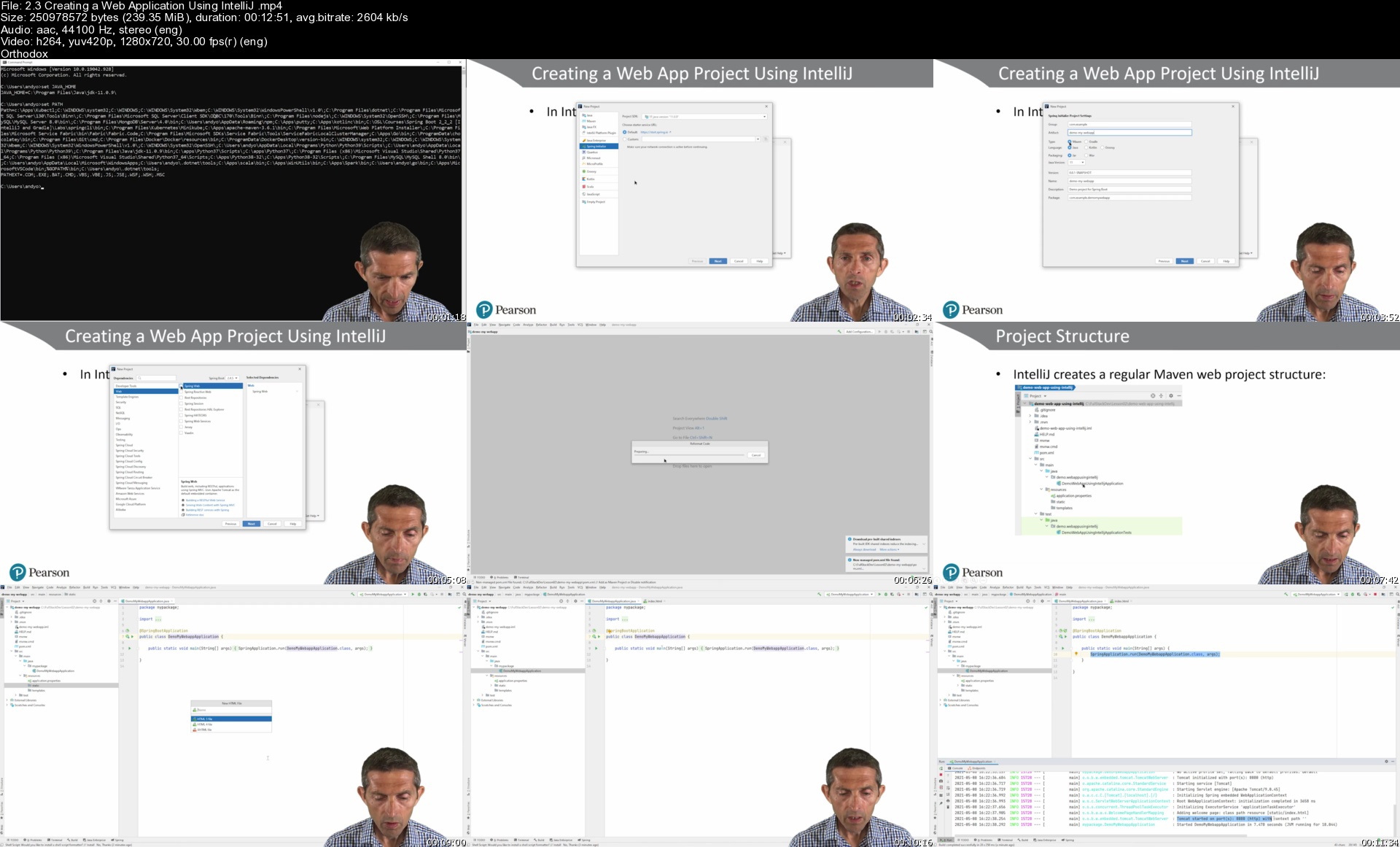
Full-Stack React with Spring Boot

t2enuvgehvyocksbb8uzcvgk2v.jpg


Full-Stack React with Spring Boot
MP4 | Video: h264, 1280x720 | Audio: AAC, 44.1 KHz, 2 Ch
Genre: eLearning | Language: English | Duration: 74 Lessons (11h 40m) | Size: 8.7 GB

Overview:

In recent years, React has emerged as a popular lightweight framework for implementing compelling web-based user interfaces. Using React you can easily integrate with back-end services via REST APIs, and Spring Boot is an excellent framework for implementing REST services. Spring Boot also provides an extremely efficient way to implement data-access logic to access a wide range of relational and NoSQL databases.

This course explains how to dovetail React and Spring Boot to implement solid, performant, and extensible full-stack solutions. It is full of hands-on demos with in-depth explanations so you can see first-hand how to successfully build full-stack applications using React and Spring Boot.

Taught by experienced trainer and author, Andy Olsen, this course is your complete guide to mastering React and Spring Boot systems to enable you to create enticing user interfaces with a solid and well-structured back end.

Download the code files associated with this LiveLesson from Happy Learning

2.3creatingawebapplicbejfe.jpg


Dave Kettner - Etsy Profits Generator - How To Make $11,453+ Per Month On Etsy

tabp8vs1d85roarvjt5aw4gkxq.png


Dave Kettner - Etsy Profits Generator - How To Make $11,453+ Per Month On Etsy
MP4 | Video: 1920x1080 | Audio: AAC 44.1 Khz , 2ch | Duration: 28h 15 min | Language: English | 10.6 GB

Dear Future Online Business Owner,

If you're looking for the best and safest way to start your own online business & replace (or supplement) your full-time job income, then you should pay close attention to every word on this page.

Read this page very carefully, because you're going to discover how you can build a successful online business, even if you fail, 98% of the time.

Specifically, I'm going to share with you a simple, easy and proven system to build a business capable of generating $11,453 a month, selling just one product.

Let me ask you...

That's the possibility before you today.

Which is why I want you to make sure that you review this entire letter to discover the opportunity you have to completely change your life.

In it, you're going to discover what I call the success myth - how it's possible to fail 98% of the time, and still be able to make thousands of dollars a month. As much as $11,453, with the examples, I'm going to show you.

I'm going to reveal to you the contrarian business model that makes this all possible. I'm also going to tell you the hidden truth about traffic...The fact that you don't have to use any traffic source, free or paid, to generate thousands of dollars a month of income.

I'm also going to explain why trying to do everything perfectly will actually kill your chances for success.

And how being willing to embrace failure can help you leverage the same system that saved the Japanese car industry decades ago, to build a successful online business.

qatrainingcallsd2kly.jpg


Classical Physics: how to solve advanced mechanics problems

stpq514goiufymcg6amajy6jt6.jpg


Classical Physics: how to solve advanced mechanics problems
MP4 | Video: h264, 1280x720 | Audio: AAC, 44100 Hz
Language: English | Size: 5.47 GB | Duration: 7h 5m


What you'll learn
How to tackle graduate-level problems in classical mechanics
the kinematics of rigid bodies
How to deal with non-inertial frames of reference
How to calculate the angular velocity of a rigid body
How to calculate the frequency of small oscillations
How to analyze the dynamics of rigid bodies
How to calculate the inertia matrix and moments of inertia
How to construct a Lagrangian in classical mechanics
The importance of the Lagrange formalism
How to derive the Hamiltonian (energy) of a system
Requirements
how to calculate multiple integrals (this is necessary for the calculation for the moments of inertia for example)
derivatives
vector notation (dot and cross product)
matrix multiplication

Description
This course is about solving advanced mechanics problems. This set of problems is taken from the first volume of the course of theoretical physics by Landau and Lifshitz. I have selected some problems from this book and provided a thorough step-by-step solution in the course; the solutions to these problems are also given in the book but they are usually quite terse, namely not many details are provided. Therefore, what we will do in the course is to first construct the necessary theory to deal with the problems, and then we will solve the problems. Some theory is also discussed while solving the problems themselves. Every single formula in this course is motivated/derived.

We will start from the action principle, whose main constituent is the Lagrangian, which is fundamental to dealing with advanced problems in all branches of physics, even if we restrict ourselves to mechanics in this case. We will solve several problems related to how to construct a Lagrangian of a (possibly complex) system, and we will also derive the Hamiltonian from the Lagrangian, which represents the energy of a system, and do some problems on that.

We will also study the kinematics of rigid bodies, and derive formulae for the velocities of points which belong to the bodies, as well as formulae for accelerations. Accelerations are important not just for kinematics, but also for the dynamics of rigid bodies.

As regards the motion of rigid bodies, we will discuss the kinetic energy, which is necessary to obtain the Lagrangian, and solve several problems in three dimensions related to how to find the kinetic energy of a body in motion.

The expression of the kinetic energy is dependent on the angular velocity (which is a concept that we will derive in kinematics), and also depends on the inertia matrix (or inertia tensor), which we will also derive. The formulae will be therefore written in a very general form, and this is useful when tackling difficult problems, since knowing a general method will provide the means to solve them.

The inertia tensor will appear in the expression for the kinetic energy, and it will also appear in dynamics, in the formula for moments; we will see why it appears, and use the theory to solve problems.

We will also discuss non-inertial frames, and find the deflection of a freely falling body from the vertical caused by the Earth's rotation (which makes the Earth a non-inertial frame).


Who this course is for:
Students who would like to learn the most general formalism to tackle advanced problems in classical mechanics


Homepage

1.problem29findingthe1ekhh.jpg


Zurück
Oben Unten