• Regeln für den Video-Bereich:

    In den Börsenbereich gehören nur Angebote die bereits den Allgemeinen Regeln entsprechen.

    Einteilung

    - Folgende Formate gehören in die angegeben Bereiche:
    - Filme: Encodierte Filme von BluRay, DVD, R5, TV, Screener sowie Telesyncs im Format DivX, XviD und x264.
    - DVD: Filme im Format DVD5, DVD9 und HD2DVD.
    - HD: Encodierte Filme mit der Auflösung 720p oder darüber von BluRay, DVD, R5, TV, Screener sowie Telesyncs im Format x264.
    - 3D: Encodierte Filme von BluRay, die in einem 3D Format vorliegen. Dies gilt auch für Dokus, Animation usw.
    - Serien: Cartoon/Zeichentrick, Anime, Tutorials, Dokumentationen, Konzerte/Musik, Sonstiges sind demnach in die entsprechenden Bereiche einzuordnen, auch wenn sie beispielsweise im High Definition-Format oder als DVD5/DVD9/HD2DVD vorliegen. Ausnahme 3D.
    - Bereich Englisch: Englische Releases gehören immer in diesen Bereich.
    - Bereich Talk: Der Bereich, in dem über die Releases diskutiert werden kann, darf, soll und erwünscht ist.


    Angebot/Beitrag erstellen

    - Ein Beitrag darf erst dann erstellt werden, wenn der Upload bei mindestens einem OCH komplett ist. Platzhalter sind untersagt.
    - Bei einem Scenerelease hat der Threadtitel ausschließlich aus dem originalen, unveränderten Releasenamen zu bestehen. Es dürfen keine Veränderungen wie z.B. Sterne, kleine Buchstaben o.ä. vorgenommen werden. Ausnahme Serienbörse:
    - Bei einem Sammelthread für eine Staffel entfällt aus dem Releasename natürlich der Name der Folge. Beispiel: Die Simpsons S21 German DVDRip XviD - ITG
    - Dementsprechend sind also u.a. verboten: Erweiterungen wie "Tipp", "empfehlenswert", "only", "reup", usw. / jegliche andere Zusatzinformation oder Ergänzung, welche nicht in obiger Beschreibung zu finden ist.

    Aufbau des Angebots und Threadtitel

    Der Titel nach folgendem Muster erstellt zu werden. <Name> [3D] [Staffel] [German] <Jahr> <Tonspur> [DL] [Auflösung] <Quelle> <Codec> - <Group>
    Beispiel: The Dark Knight German 2008 AC3 DVDRip XviD - iND
    Beispiel: The Dark Knight 2008 DTS DL BDRip x264 - iND
    Beispiel: The Dark Knight 2008 AC3 DL BDRip XviD - iND
    Beispiel: The Dark Knight German 2008 AC3 720p BluRay x264 iND
    Beispiel: The Dark Knight 2008 DTS DL 1080p BluRay x264 iND
    Beispiel: Die Simpsons S01 German AC3 DVDRip XviD iND
    Beispiel: Die Simpsons S20 German AC3 720p BluRay x264 iND
    Beispiel: Sword Art Online II Ger Sub 2014 AAC 1080p WEBRip x264 - peppermint
    Entsprechend sind also u.a. verboten: Sonderzeichen wie Klammern, Sterne, Ausrufezeichen, Unterstriche, Anführungszeichen / Erweiterungen wie "Tipp", "empfehlenswert", "only", "reup", usw. / jegliche andere Zusatzinformation oder Ergänzung, welche nicht in obiger Beschreibung zu finden ist
    Ausnahmen hiervon können in den Bereichen geregelt sein.

    Die Beiträge sollen wie folgt aufgebaut werden:
    Überschrift entspricht dem Threadtitel
    Cover
    kurze Inhaltsbeschreibung
    Format, Größe, Dauer sind gut lesbar für Downloader außerhalb des Spoilers zu vermerken
    Nfo sind immer Anzugeben und selbige immer im Spoiler in Textform.
    Sind keine Nfo vorhanden z.B. Eigenpublikationen, sind im Spoiler folgende Dateiinformationen zusätzlich anzugeben :
    Quelle
    Video (Auflösung und Bitrate)
    Ton (Sprache, Format und Bitrate der einzelnen Spuren)
    Untertitel (sofern vorhanden)
    Hosterangabe in Textform außerhalb eines Spoiler mit allen enthaltenen Hostern.
    Bei SD kann auf diese zusätzlichen Dateiinformationen verzichtet werden.

    Alle benötigten Passwörter sind, sofern vorhanden, in Textform im Angebot anzugeben.
    Spoiler im Spoiler mit Kommentaren :"Schon Bedankt?" sind unerwünscht.


    Releases

    - Sind Retail-Release verfügbar, sind alle anderen Variationen untersagt. Ausnahmen: Alle deutschen Retail-Release sind CUT, in diesem Fall sind dubbed UNCUT-Release zulässig.
    - Im Serien-Bereich gilt speziell: Wenn ein Retail vor Abschluss einer laufenden Staffel erscheint, darf diese Staffel noch zu Ende gebracht werden.62
    - Gleiche Releases sind unbedingt zusammenzufassen. Das bedeutet, es ist zwingend erforderlich, vor dem Erstellen eines Themas per Suchfunktion zu überprüfen, ob bereits ein Beitrag mit demselben Release besteht. Ist dies der Fall, ist der bereits vorhandene Beitrag zu verwenden.
    - P2P und Scene Releases dürfen nicht verändert oder gar unter einem iND Tag eingestellt werden.


    Support, Diskussionen und Suche

    - Supportanfragen sind entweder per PN oder im Bereich Talk zu stellen.
    - Diskussionen und Bewertungen sind im Talk Bereich zu führen. Fragen an die Uploader haben ausschließlich via PN zu erfolgen, und sind in den Angeboten untersagt.
    - Anfragen zu Upload-Wünschen sind nur im Bereich Suche Video erlaubt. Antworten dürfen nur auf Angebote von MyBoerse.bz verlinkt werden.


    Verbote

    - Untersagt sind mehrere Formate in einem einzigen Angebotsthread, wie beispielsweise das gleichzeitige Anbieten von DivX/XviD, 720p und 1080p in einem Thread. Pro Format, Release und Auflösung ist ein eigener Thread zu eröffnen.
    - Grundsätzlich ebenso verboten sind Dupes. Uploader haben sich an geeigneter Stelle darüber zu informieren, ob es sich bei einem Release um ein Dupe handelt.
    - Gefakte, nur teilweise lauffähige oder unvollständige Angebote sind untersagt. Dies gilt auch für eigene Publikationen, die augenscheinlich nicht selbst von z.B. einer DVD gerippt wurden. Laufende Serien, bei denen noch nicht alle Folgen verfügbar sind, dürfen erstellt und regelmäßig geupdatet werden.
    - Untersagt sind Angebote, welche nur und ausschließlich in einer anderen Sprache als deutsch oder englisch vorliegen. Ausnahmen sind VORHER mit den Moderatoren zu klären.


    Verstoß gegen die Regeln

    - Angebote oder Beiträge, die gegen die Forenregeln verstoßen, sind über den "Melden"-Button im Beitrag zu melden.
  • Bitte registriere dich zunächst um Beiträge zu verfassen und externe Links aufzurufen.

++ Premium IPTV ++ 7000 Live Sender ++ UHD Qualität ++ Mediathek mit 18.000 Inhalten ++


VenneTV


Englische Tutorials

Hands on ASP.NET Core 3.1 production grade API Development

0081cbb9tqkoa.jpg


Hands on ASP.NET Core 3.1 production grade API Development
Duration: 18h 14m | .MP4 1280x720, 30 fps(r) | AAC, 44100 Hz, 2ch | 7.23 GB
Genre: eLearning | Language: English

asp.net core 3.1 production grade API with next generation technology (Oauth2, elastic search, redis, mongodb, rabitmq )


What you'll learn
Hot!! Docker and Docker Compose Updated today (NEW)
Hot!! Oauth2 and JWT (Upcomming)
Build real-world applications with ASP .NET Core 3.1
Service Repository Pattern
Unit Of Work Implementation
MongoDB for reporting
Elastic Search Implementation
Global Exception Handling
JWT and Oauth2 implemention for tokne base authendication and authorization
Microservice Architecture of RabbitMQ
Implement filtering, sorting and pagination
Firebase implementation for notifications
Docker for development environment and production publish
Hosting application in nginx server
Redis cache implementation
Test API with Postman and tricks for using postman
Implement a clean and decoupled architecture
Understand and apply the Dependency Inversion Principle (DIP)
Dependency injection feature in ASP .NET Core
Troubleshoot common runtime errors
Write clean, maintainable and reliable code
Refactor bad code into good code
Better understand software development lifecycle

Requirements
c#
basic web programming knowledge


Description
ASP.NET core 3.1 is a fantastic framework to developed rest API. but most of the course teach you only basic part, when they enter practical life or job life when they see various technology needed to developed a production grade application . Then they frustrated to think that what they teach.

In this course I try my best to teach my student a production grade application and developed their basement . All the latest technology i try to implement this course.

After completing this course every developer make them ninja in software development.

I always told people programming is nothing cause every problem you solved using condition , loop using variable. but main theme part of a good programmer is understand the architecture and life cycle of software. Scaling, single responsibility when u understand then you can easily develop production grade application


Who this course is for:
asp .net core lover
Microsoft lover
rest api developer
beginners
advance
.net developer
asp net core

More Info

8.identityfinalpartsq0k8q.jpg


Boost your pronunciation

0081cd33otj1m.jpg


Boost your pronunciation
Created by Ahmad Rabiee | Last updated 3/2021
Duration: 5h 8m | 7 sections | 68 lectures | Video: 1280x720, 44 KHz | 5.6 GB
Genre: eLearning | Language: English + Sub

Speak English exactly like a native and Learn the right tips and techniques


What you'll learn
Speak English words with confidence.
Use rules to guess the pronunciation of most words.
Hear the difference between words that are almost the same.
Apply what you have learned about English pronunciation to your English accent
How to speak American English dynamically and with intention
Have a deeper knowledge of the American rhythm

Requirements
A basic understanding of English vocabulary and grammarA commitment to your practice to improve your American English

Description
Improve your English pronunciation skills and learn about speaking English in today's globalized world.
\nMany foreigners have a wide variety of speaking patterns that seem strange to Americans. This course can help you understand these potential areas of difficulty. You'll learn a wide variety of tones that help you to put the right feeling behind the things you say.
In this course, you will learn the pronunciation of single English sounds. We will go over both how to make the sounds and examples of those sounds in common English words and phrases.
The ONLY way we can master the American Accent with American English Conversation and Pronunciation is to retrain our tongue and soft palette muscles to create these American English pronunciation sounds and rhythms that your body is just not used to making. I will be providing you with specific exercises focusing on the sound and feel of specific American English conversation "Targeted" sounds and how they link to each and every consonant. In addition, I will share specific singing techniques to help create reliable muscle memory that you can call upon instantly. This technique has helped so may of my accent reduction students master the American Accent a lot faster.
By the end of this course you would have gone through every possible combination of sounds. There will be nothing you will come across that we haven't covered in your practice. Our goal is to make sure these improvements are retained, so you can call upon them when you need them. That will involve practicing on your end. If you commit to the practice exercises you will improve your American English Pronunciation skills much more rapidly.
You will be able to see my face and mouth clearly in each video lesson
Each lesson focuses on a single idea, and each is comprehensive. You can go at your own pace and should take your time, with lots of practice between videos. Replaying each lesson is highly recommended.
\n

Who this course is for:Anyone whose first language isn't EnglishAnyone who want to master the American AccentAnyone who wants to improve their communication skillsAnybody who wants to speak English clearly and confidently should take this course.

1.1consonantspbfvandw7zjbi.jpg


TTC - Think like a Stoic: Ancient Wisdom for Today's World

tkgpmbrif15yzhxb6mynrqbjdu.jpg


TTC - Think like a Stoic: Ancient Wisdom for Today's World
h264, yuv420p, 1280x720 | ENGLISH, 44100 Hz, 2channels | 11h 13mn | 9.45 GB

Distilled to its essence, the ancient Greco-Roman philosophy known as Stoicism is a philosophy of personal betterment. It aims to help us navigate the challenges of our everyday existence and reflect on the broader meaning and direction of our lives. Unlike standard ethics, which focuses on answering questions about actions ("Is human cloning right or wrong?"), virtue ethics focus on our character ("How can I become a better person?"). Examining virtue ethics makes any exploration of Stoicism not just illuminating-but also incredibly personal, and possibly life-changing.

The Stoic life is defined by three fundamentals:

We do not control as much as we think we do about the world and our lives.
We can recover from calamity and disaster by focusing on what is in our power.
We should live by the light of reason and community, rather than by wealth and fame.

And if you think this school of philosophy is relegated to ancient figures like Zeno, Marcus Aurelius, Epictetus, and Seneca, think again. We see Stoic ideals reflected in real-life heroes like Nelson Mandela and fictional ones like Spider-Man, as well as in the life of Massimo Pigliucci, the K.D. Irani Professor of Philosophy at the City College of New York, who knows first-hand just how transformative a Stoic approach to life can be.

Professor Pigliucci has designed Think like a Stoic: Ancient Wisdom for Today's World as an enlightening introduction to the basics of Stoic philosophy, the history of Stoicism, and ways to incorporate its lessons in your own life. Over the course of 25 lessons, you'll review the lasting influence of Stoic ideas through time, from Christianity to modern philosophy. You'll explore the three parts of the classic Stoic curriculum and consider what it means to be a Stoic in the 21st century. Best of all, you'll get to participate in workshops and exercises that make up a how-to manual for the modern Stoic. Yes, you'll come away with an incredible wealth of knowledge about the history and principles of one of the most enduring philosophies of life-but you may also find your way to a more meaningful life for yourself.

503006thestoicsondesidtj47.jpg


TTC - The Great Revolutions of Modern History

owdvyivz2oydpjsfof2k8bdk8j.jpg


TTC - The Great Revolutions of Modern History
h264, yuv420p, 1280x720 | ENGLISH, 44100 Hz, 2channels | 12h 34mn | 10.59 GB

The great revolutions of the past 300 years have profoundly shaped the social, cultural, political, and military landscape of the 21st century. These epic changes tore down established orders and built new ones in their place. What drives individuals and groups to embrace revolution? At what point does a society decide to revolt? Is there such a thing as a peaceful revolution? Why have some revolutions failed while others changed the world?

Delve into these questions and more in The Great Revolutions of Modern History. Taught by Professor Lynne Ann Hartnett of Villanova University, these 24 eye-opening lessons will give you new insights into the forces that have shaped the political and cultural landscape of our world. You will travel back in time and across the globe to examine some of history's most momentous and influential political transformations. Starting with the American Revolution and the French Revolution, covering world-changing movements in China, Mexico, India, Haiti, Africa, Russia, and more, Professor Hartnett surveys the shifting tides that inspired each of these revolutions.

From religious movements to economic overhauls, you will get an insider's view of radicals, revolutionaries, and ideological visionaries, as well as the rulers and systems they sought to overthrow. You will also consider revolutions as a distinctly modern phenomenon. Riots, rebellions, and other forms of uprisings are inextricable parts of human history, but revolutions are something different. As you will learn, revolutions systematically alter the dynamic between the state, authorities, elites, and the people-and they attempt to fundamentally transform power relationships.

We live in a precarious time in the 21st century, with uprisings constantly in the news. What you will learn in The Great Revolutions of Modern History is that revolutions often follow a similar pattern and arise from a similar source: masses of people dissatisfied with the status quo who decide they will sacrifice everything to affect fundamental change. Join Professor Hartnett for an exploration of political and cultural change-and see how our modern world was formed.

Reflect on Revolutions of Ideology

As you will discover, revolutions as political movements are often rooted in ideology, such as the idea that humans are born with inalienable rights and that democracy enables freedom, or that wealth should be redistributed to the masses, or that national cultural identity is more important than unquestioned tradition. Professor Hartnett walks you through some of the most stunning-and at times horrific-products of ideological revolution.

One of the most tragic examples is the revolution in Russia in 1917, when the masses overthrew the tsars and the old aristocracy. This uprising by the people seemed to have great promise, but it soon led to a second revolution that brought about an authoritarian state under Vladimir Lenin and the Bolsheviks before devolving into a totalitarian system ruthlessly led by Joseph Stalin. How did this transition happen? What went wrong? And what was it like to live under the Soviet totalitarian state?

Professor Hartnett then shifts her attention to another totalitarian state on the opposite end of the ideological spectrum. Nazi Germany, driven by extreme nationalism and racism, has become the emblem for everything that went wrong in the 20th century. You will trace the post-World War II trajectory of Soviet and German totalitarianism, through the cascading events that led to the fall of the Berlin Wall in 1989.

Despite these horrific examples, not every revolution leads to a totalitarian state. The revolution in Mexico, for instance, demonstrates the romance of an uprising by the people. There, the likes of Pancho Villa-made famous because of his outreach to Hollywood-show how revolutions are driven by a complex quest for freedom, and how the desires of the human heart can outmatch the powers of the state.

Witness Revolutions in Action

Along with revolutions being a distinctly modern phenomenon, they tend to follow a similar pattern, from the shaky instability of the old system to the groundswell of support from the people to the revolution itself, with its ever-present threat of violence. To show this pattern in action, Professor Hartnett walks you through some of the most important revolutions in history, including:

The Glorious Revolution: Delve into the realities of 17th-century England, a period in which the country transformed into a constitutional monarchy and which established the justification and legitimacy of future revolutions.
The American Revolution: Meet Samuel Adams and other liberty-loving rabble-rousers who overthrew the most powerful empire in the world to overcome the tyranny of taxation without representation.
The French Revolution: Reflect on the spirit of liberty, equality, and fraternity, which inspired the French masses to take on the aristocracy. Although the revolution led to a time of terror, the spirit of freedom and unity binds the people of France today.
The Cuban Revolution: Consider the geopolitical elements of revolution as you examine one of the most captivating transformations in the 20th century. See how Fidel Castro and Che Guevara took on capitalist hegemony.
Gandhi's Non-Violent Revolution: Not every revolution required explicit violence. Reflect on the tactics of non-violence that Gandhi used to defeat the British Raj-a tactic that would inspire future revolutionaries, including Martin Luther King Jr.

830001whomakesarevoluhjj44.jpg


RA: Retail Planning,Assortment Analytics with Excel & Python

iebrlevmjthvrwz0nile5jujft.jpg


RA: Retail Planning,Assortment Analytics with Excel & Python
MP4 | Video: h264, 1280x720 | Audio: AAC, 44100 Hz
Language: English | Size: 10.5 GB | Duration: 16h 56m


What you'll learn
Make a retail Budget from A-Z
Master OTB planning
Learn Python and Analytics
merchandising
Assortment planning
Optimization
Python
Excel
Metrics
Operations
Conversion rate
Merchandise
Retail
Inventory
Consignment
Requirements
Motivation to Learn
No Need to know Python from Before.

Description

Master Retail planning and analytics with Excel and Python

Retailers face fierce competition every day and keeping up with the new trends and customer preferences is a guarantee for excellence in the modern retail environment. one Keyway to excel in retail management is utilizing the data that is produced every day. It is estimated that We produce an overwhelming amount of data every day, roughly 2.5 quintillion bytes. According to an IBM study, 90% of the world's data has been created in the last two years.

Retail analytics is the field of studying the produced retail data and making insightful data-driven decisions from it. as this is a wide field, I have split the Program into three parts.

Retail Planning and assortment analytics with Excel & Python.

1- Retail Metrics

2- Metrics in Python.

3- Budgeting.

4- Retail Planning in Python.

5- Retail Buying.

6- Assortment Optimization.

7- Managing Retail Inventory with Python.

8- Managing stocks based on Types.

Don't worry If you don't know how to code, we learn step by step by applying retail analysis!

*NOTE: Full Program includes downloadable resources and Python project files, homework and Program quizzes, lifetime access, and a 30-day money-back guarantee.

Who this Program is for:

· If you are an absolute beginner at coding, then take this Program.

· If you work in Retail and want to make data-driven decisions, this Program will equip you with what you need.

· If you are switching from Excel to a data science language. then this Program will fast-track your goal.

· If you are tired of doing the same analysis again and again on spreadsheets and want to find ways to automate it, this Program is for you.

Program Design
the Program is designed as experiential learning Modules, the first couple of modules are for retail metrics followed by Python programming fundamentals, this is to level all of the takers of this Program to the same pace. and the third part is retail applications using Data science which is using the knowledge of the first two modules to apply. while the Program delivery method will be a mix of me explaining the concepts on a whiteboard, Presentations, and Python-coding sessions where you do the coding with me step by step. there will be assessments in most of the sections to strengthen your newly acquired skills. all the practice and assessments are real retail use cases.


Who this course is for:
Retail Managers
Retail Buyers
Analysts
Supply chain
Planners
merchandiser


Homepage

089assignmentanswersczk2o.jpg


Python in a Weekend: The Easiest Python for Beginners Course

0u9vxkefa9pcygbn6h8ayb3jn9.jpg


Python in a Weekend: The Easiest Python for Beginners Course
MP4 | Video: h264, 1280x720 | Audio: AAC, 44100 Hz
Language: English | Size: 5.27 GB | Duration: 4h 23m


What you'll learn
You will learn the fundamentals of Python programming
You will build 3 Python-based apps from scratch, and have the knowledge to start building your own
Learn Python Basics: Variables, Strings, Comments, Booleans and If Statements
Learn Python Fundamentals: Loops, Lists, Functions, Parameters and Dictionaries
Learn Python Next Steps: Inputs, Imports and Object Oriented Programming with Classes

Requirements
Access to a computer with an internet connection
Everything you need to learn Python is in the course
Just a few hours of your time to watch the lessons and practice

Description
You're here because you want to learn Python, right?

And you're looking for a Python course that can quickly teach you the basics?

Perfect - this is the Python for Beginners course for you!

Whether you want to be a data scientist or do app development, web development, or automation & machine learning - Python is the most popular programming language in the world and is essential to becoming a modern programmer.

What makes this Python course different?

We realized that there are many Python courses and tutorials out there. But many of them are daunting for absolute beginners - and don't make Python as fun and easy as it can be.

That's why we've created Python in a Weekend, the Easiest Python for Beginners Course.

We truly believe the best way to learn Python is to just get started. You don't need to watch dozens of hours of lessons to learn the basics. For many of you, it's better to start with something a little more simple, and a lot more fun.

That's what this Python course is.

What do you get with this course?

Instant access to 4+ hours of easy-to-watch video lessons

Practice files to follow along with

Instructor feedback and support if you ever get stuck

Lifetime access to course updates

Key concepts of this course?

Python Basics: Variables, Strings, Comments, Booleans and If Statements

Python Fundamentals: Loops, Lists, Functions, Parameters and Dictionaries

Python Next Steps: Inputs, Imports and Object Oriented Programming with Classes

Bringing together concepts to create user friendly software

Who is your instructor?

Your lead instructor for this Python course is Nick Walter, one of the most popular and engaging instructors on Udemy.

Nick has partnered with Phil Ebiner and the Video School team to create this beginner Python course, and is super excited to share his knowledge with you.

If you want to quickly and easily learn Python, this is the course for you.

Remember, there is a 100% money-back guarantee. There is no reason to hesitate. Enroll now, see if you enjoy the course, and start your programming dreams today!

Cheers,

Nick Walter & Phil Ebiner


Who this course is for:
Anyone who wants to learn Python from scratch
Absolute beginners with NO programming experience
Anyone who has experience with other programming languages, wanting to learn Python
Anyone who wants to start a career in data science, machine learning, app development, web development, automation


Homepage

022parametersandreturdvjta.jpg


Python Hands-On 40 Hours, 210 Exercises, 5 Projects, 2 Exams (updated)

srqukv5narw9l47j9q9q7uujhv.jpg


Python Hands-On 40 Hours, 210 Exercises, 5 Projects, 2 Exams (updated)
MP4 | Video: h264, 1280x720 | Audio: AAC, 48000 Hz
Language: English | Size: 5.29 GB | Duration: 24h 2m


What you'll learn
Learn & Master Programming Fundamentals, Coding Algorithms and Computer Science Concepts.
Go from Beginner to Expert in Python with hands-on approach.
Do exercises on all fundamental topics of Python with 17 Quizzes and 170 Coding Exercises.
Build 5 Real-World Project with Python and do 5 Assignments related to these projects.
Take 2 Exams on Python; Midterm and Final Exam with 20 questions each.
Learn Python Modules and Packages and how to use them.
Build Python applications with Anaconda and PyCharm and master them.
Build a GUI application with tkinter.
Learn all Python you need for Machine Learning, Deep Learning, Data Science and Application Development.
Gain solid and profound Python Programming skills needed for a Python career.

Requirements
The first thing you need is a computer and an internet connection.
Second, you need to be prepared for doing hundreds of Python coding exercises :)

Description
Python Hands-On Course, will cover Python from Beginner to Expert level.

We will start from absolute zero, 'Hello World!', and end up with OOP (Object Oriented Programming).

This course is an in-depth Python introduction with 40 hours duration, including both the theory and practice.

Theory:

In each topic, we will cover all the Theoretical Details with example coding.

Tests (42 Questions):

We will have Test Questions at the end of sub-topics.

Coding Exercises (170 Questions):

We will have Coding Exercise (Quiz) with 10 Questions.

You will try to solve these questions by your own, then we will solve them together.

Projects (5):

We will have 5 Projects during the course.

These are Real-World Projects and you will see how Python concepts are being applied on real world problems.

Assignments (5):

After each project, you will have an Assignment.

These assignments will let you build the project from scratch by your own.

Exams (2):

During the course, we will have 2 Assignments: Midterm and Final Exam.

These are multiple choice exams with 20 Questions each and a limited duration.

You will be able to test your Python level via these pleasant exams.

All the Documents and Coding:

You will get all the documents and coding files we cover during our course.

These files will give you an in-depth resource for future use.

Please feel free to ask me any question during the course or after the course.

As you may see, this course was prepared with serious and meticulous effort.

Join us, if you want to learn & master Python by doing and real coding.

* * * * * * * * * * * * * * * * * * * * * * * * * * * *

All the videos will be uploaded by 14.04.2021.

Sections 17/33 have already been uploaded, which is 24 hours.

The finished Turkish version is: "Temel Python : 46 hours, ..."

English contents will be the same.

* * * * * * * * * * * * * * * * * * * * * * * * * * * *


Who this course is for:
People who are new to computer science and programming.
People who are new to Python.
People who want to gain solid Python Skills.
People who want to learn Python by doing Projects, Quizzes, Coding Exercises, Tests and Exams.
People who want need Python for Machine Learning, Deep Learning, Data Science and Software Development.
Anyone who wants to learn real Python.


Homepage

131quizdictionarysoluamj8u.jpg


Microsoft Excel Basic to Advanced Learning

00822476c4kpn.jpg


Microsoft Excel Basic to Advanced Learning
MP4 | Video: h264, 1280x720 | Audio: AAC, 44.1 KHz, 2 Ch
Genre: eLearning | Language: English + srt | Duration: 15 lectures (8h 22m) | Size: 5.26 GB

Basic - Advanced learning of Functions and Formulas


What you'll learn:
Microsoft Excel from Beginner level to Advanced Level

Requirements
Basic Knowledge of computers


Description
Definition of MicroSoft Excel

Hello friends, Let me introduce myself first. My name is Mohd.Yunus Quadri, I am the founder and owner of Sharp Solutions ( A training Institute par excellence ). We are in the business of training the students / job holders / CA's, / Bank Mangers and Work from Home people in OFFICE AUTOMATION. Now you may ask what is Office Automation. As you all must be aware in today's world every Office, Organization, Schools, Colleges, Govt. Office even Individuals use Computers in getting their work done. This work is done using Microsoft Office. MS-Office includes packages like, Word, Excel, Powerpoint, Access, Outlook.

Out of this Microsoft Excel is used the most. I Can say you cannot be working in Office, Organization, Schools, Colleges, Govt. Office without the knowledge of MS-EXCEL. It is that important. Lets know MS-Excel in detail.

Introduction.

MS-Excel is a spreadsheet developed by Microsoft. Its widely used in the world for most of the office automation work. It is mainly used for Data Management / Analysis.

MS-Excel as most of people know it as a calculation tool. Addition, Subtraction, Multiplication and Division.

No friends MS-Excel is much, much more than this. It can be used for most complex calculation based on various conditions and scenarios.

Nowadays, any company, firm or institute or for the matter the whole world relies on the Data to get their analysis done. Even though there is data available it will be not in organized manner of how you want it to be. A data without a proper tool to analyze it is like having a car without an engine. You can see a car but you can't drive it.

This is where MS-EXCEL comes in. You all are in the stage where you will be either working for companies, firms or will be doing your own business. In today's world companies depend too much on the digital data they have to get their goals achieved. You should be well versed in MS-Excel to get this data analysed for the companies you are working for.

So my dear friends we will learning MS-Excel right from the Beginning to Advanced function of MS-Excel.

INDEX

1. What is a Spreadsheet ?

2. What is a Cell ?

3. How many Rows and Columns are there in a spreadsheet ?

4. What is the Extension name for a MS-Excel File.

5. Creating a Simple Excel Worksheet.

HOME SCREEN MENU

6. Copy, Paste, Format Painter, Wraping Text, Merging Columns & Rows

7. Formatting Rows and Columns

8. Conditional Formatting, Formatting as Table

9. Inserting Rows and Columns

10. Deleting Rows and Columns

11. Auto Sum, Auto Fill

12. Data Sorting

13. Find and Replace

INSERT MENU

14. Inserting Pivot Table, Picture, Shapes, Graph Chart, Slicer, Hyperlink, Text Box, Header & Footer

PAGE LAYOUT MENU

15. Margings, Print Area, Page Breaks, Print Titles

FORMULAS MENU

16. Simple Formulas Addition, Subtraction, Multiplication and Division formula

17. Conditional Formulas - IF, OR, AND, COUNT, COUNTIF, VLOOKUP, INDEX,

DATA MENU

18. Sort, Filters, Text to Columns, Remove Duplicates, Data Validation ( Explain )

a. Allow - Any Value

b. Allow - List

c. Allow - Date

d. Allow - Whole Number

e. Allow - Decimal

19. Subtotal

REVIEW MENU

20. Protect Sheet, Protect Workbook, Share Workbook

VIEW MENU

21. Normal, Page Layout, Page Break, Grid Lines, Formulas, Headings, Zoom, Freeze Panes, Arrange Windows, Macros

Who this course is for
Students, Office Workers, Data Analysts, Financial Advisors, Insurance Advisors, House Wives, Govt employees, Commerce Graduates, CA's Bank Manager


6.06datasortvalidatioxjjfr.jpg


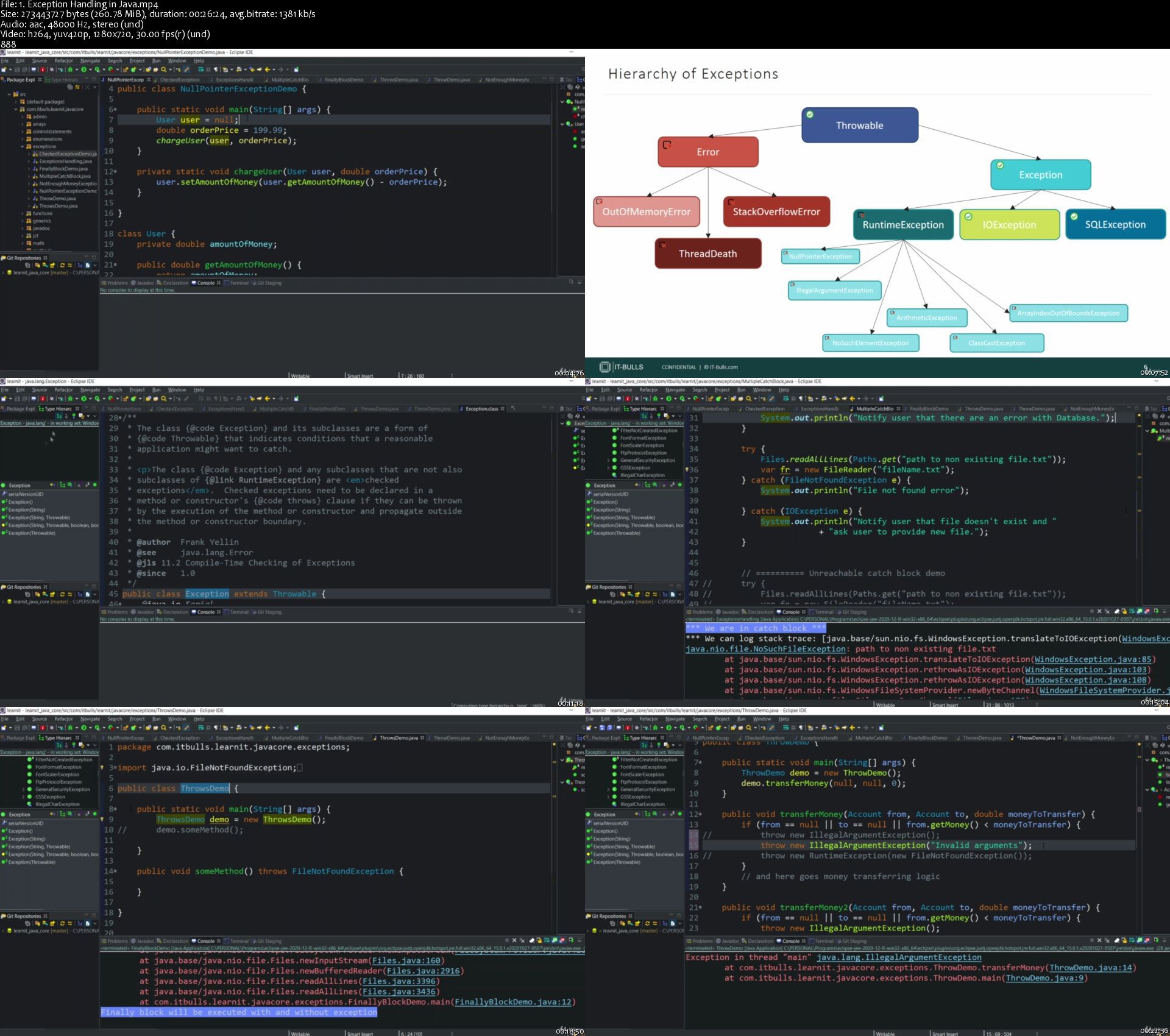
Java from Zero to First Job: Part 1 - Practical Guide (Updated 3/2021)

007f99f4xqk9y.jpg


Java from Zero to First Job: Part 1 - Practical Guide (Updated 3/2021)
Created by Andrii Piatakha, Learn IT University | Last updated 3/2021
Duration: 21h 14m | 29 sections | 122 lectures | Video: 1280x720, 44 KHz | 11.6 GB
Genre: eLearning | Language: English + Sub

Learn Java from scratch and become Java Software Engineer: Basics, OOP, Interview questions, Git, Java Collections etc


What you'll learn
Java :)
Students will learn programming basics which will help them to understand any other programming language
Interview practice tests
In this course you will get knowledge which is needed to proceed with understanding of Android, Spring Framework and other enterprise frameworks
Object-oriented programming
Learn the Java basics, including syntax and primitive data types
Get necessary knowledge to demonstrate your skills of Java to future employers
Understand difference between Java 8, 9, 11, 13
Learn best practices from true programmer
Learn how to write scalable, readable and maintainable clean code
30+ coding exercises
You will learn source code of the tutor. All homework is completed with the Trainer
Learn how to use integrated development environments to create Java programs
Debugging tools
Eclipse IDE
SOLID principles
Git
Java Collections Framework
Implementations of the List interface
Map Interface and Implementations
Set Interface and Implementations
Best practices of using collections
Performance comparision of different collections
Functional programming in Java
Lambda functions
Method references
Show more
Show less

Requirements
You want to learn Java while having fun :)

Description
This is the first part of fundamental training program 'Java from Zero to First Job'. As it's declared in the course name, it's created for people who want to learn programming from scratch. You need to know how to turn on your computer, no other knowledge is required for this course :)The rest will be covered in lessons.
Before starting creation of this course, our team attentively investigated feedbacks for existing courses on Udemy platform and tried to focus on the feedbacks for the top-rated courses to understand what can be improved in this course and make it even more better from the quality standpoint. After analysis, we understand what will help students to learn Java in more efficient way. In this course:
- High concentration of useful material in each lesson
Sometimes you can notice that watching of 5 minutes of our lesson is equivalent to watching of other 30 minutes lesson.
This is because time spent for preparation for the lesson (script for the lesson, lesson structure) and video editing (to cut boring pieces of the lesson, or time when program loads) sometimes 10 times as much (sometimes even 20) as final lesson duration after video editing.
Only your homework and coding exercises including EXAMtask might take approximately 20 hours to implement.
Also each topic is separated from another. In case some concept will be explained in the next lesson and you don't need to worry about understanding this in scope of this lesson - instructor will make announcement when specific topic will be covered.
Go and try it yourself!We will appreciate your feedback.
- Relevant knowledge
After our team investigated other Java courses on Udemy we realized that most of them has nothing in common with real life. Information which is shared there is very old and significantly out of date. For example, instructor teaches framework which is not used already for 15 years. Or instructor do a stress on the programming design which is not used anymore at all!
Instructor of this course is consultant in the top-rated IToutsourcing company and helps to bring cutting-edge solutions in IT for all his clients. Feel free to check LinkedIn page of instructor and check skills endorsement. More than 18 thousand people acrooss all over the world (BTWmost of them are from top 100 companies of the world) evaluated skills of Andrii Piatakha.
With this course you can be sure that you will spend your time learning the right things from the one of the best ITconsultants in the world.
- Sequence of lessons
After the years of teaching offline, and based on the feedbacks of students who are passing online courses we realized how important the sequence of lessons while teaching Java. The same issue is with the books where information is completely unstructured what makes things even more complex. For example, how students can learn object oriented programming from the first lesson if they don't know yet the java syntax basics?Or how student can implement hometask if he/she doesn't aware of java methods specifics, or doesn't know yet how to read program input?
So in this course you can be sure, that you will not get hometask to implement without having enough information to implement it. The program which is in this course is proven by many students who completed it offline and now work as software engineers in outsourcing companies and as a freelancers.
- Interview practice tests\n\nBeing an IT consultant in different companies, tutor of this course was in charge ot driving interview process in companies to make sure, that company selects the best people. That's why the first interview is always test. In case test is completed, candidate is invited to have a conversation. That's why, in this course we want to prepare you to complete tests sucessfully!
Specially for our students, we prepared tests which could be used to evaluate your knowledge during the interview process.
2 tests. 90 questions each (180 interview tests in total). 120 minutes each.
You can read explanation to answers! That also can help you to learn material better. Don't wait, try it now!
- Q&A support
The significant difference between online and offline learning process is instructor's availability. If you are in the one room with tutor he always can help you to get understanding specific concept or to help fix your code on your computer. \nIn this course, we are supporting students with answers to any questions flagged in Q&A section. In case there will be recurring questions - separate video lessons will be created to show how to address issue.
So with this course you are not just getting video materials, code exercises, source code, access to free mobile application without limits (which is still pretty cool, huh?:)) , but you also get tutor support and answers to your questions along with this course.
- Open source code
We hide nothing from our students!Including the source code for the hometask solutions and source code of examples which were shared during the lesson. Having the source code you can just copy and paste it to run it on your local computer to understand how things work better.
- Free mobile App without limits for our students
Knowing Java is one skill. Be able to pass interview in company - that is another skill :)Nowadays a lot of companies use tests to select candidates on the first level of interview. We developed application to practice skills specifically for such purposes.
In this course we will provide you link to download our FREEmobile app for android. (soon it will be also available for iOS platforms)
Instructor of this course come up with hundreds tests which are used to test knowledge of candidates. With this application you will be well-prepared for the interview.
Also, only for our students - there is no limit on attempts to pass certification. In the course we will tell you how to set up special bonus code which will remove restrictions for our students inside the app.
- Coding exercises
To learn programming it is not enough just watching videos and reading books. You also need to have a lot of practice. In this training course you will have different practical tasks which will help you learn and understand Java better.
One of the key tasks where you can practice your knowledge is implementation of backend system for online store. Also you have a lot of tasks that use domain specific terminology:accounts, transactions, users, carts, menu, services etc. So that means you are learning programming without abstract concepts like it is written in the books or in other courses. You learn domain specific terminology and during the lessons we investigate specific extracts from code that can give you clear vision how you can apply the knowledge in real life.
- Captions
Almost all training courses on Udemy has auto-generated captions. And you know how auto-generated captions looks like - words are written incorrectly, timeline is not perfect. We saw feedbacks of international students who would like to have captions properly written. And also taking into account you are learning new domain it is nice to understand how new words spelled to be able to google them if needed.
For this course tutor create Java program (you would be able to do the same after you complete the course :))which helps to create perfect captions that can help you a lot in your education. We are not using auto-generated captions. We use scripts written by tutor and which is mapped against the video.
\n
As you can see from curriculum, in this part of fundamental training programyou will learn how to install JDKon your computer, you will learn a lot about IDE where you can write you programs, you will learn Java syntax, primitive types of data, loops, control statements, arrays, operations with primitive and reference types of data, String, Enum, how to write methods in Java, different number systems, tips and tricks, practical coding exercises, debugging tools, Object-Oriented Programming, Git , Java Collections Framework, Collections, Maps, functional programming, lambda functions, method references and lots more.
\n
So don't wait! Take a look at lessons' preview if you still have doubts!
Buy this course today, and you will get all updates for FREE!
Right now our team keep working on the next lessons for this course. We are preparing for you a lot of other topics and coding exercises! Our goal - to create web application together with you. Buy this course today, and you will receive all updates for free! Isn't that cool?:)
\n
For those who successfully passed this training course, or for students who was recognized for asking amazing questions, there is a special offer from IT-Bulls company! The creator of this course is IT-Bulls company CEOand Founder. We always in search of talents to run our amazing startups together with you. Probably you always dreamed about running your own startup?In this course you will be able to find the team who will teach you how to do that and (in particular cases) will be glad to help with implementation!
Hope you enjoy this course! And remember, we appreciate all your feedbacks! Your feedbacks will help us to become even more better!Your feedbacks will help us to create to best Java course ever!
See you on the lessons!:)
\n

Who this course is for:Everyone who wants to learn java from scratchPeople who wants to learn programming basicsFuture software engineers of web applicationsFuture android developersFuture test automation engineers


1.exceptionhandlingin1rji9.jpg


How Networks Really Work

00822047tzk3g.jpg


How Networks Really Work
MP4 | Video: AVC 1280 x 720 | Audio: AAC 48 Khz 2ch | Duration: 07:04:34 | 12.06 GB

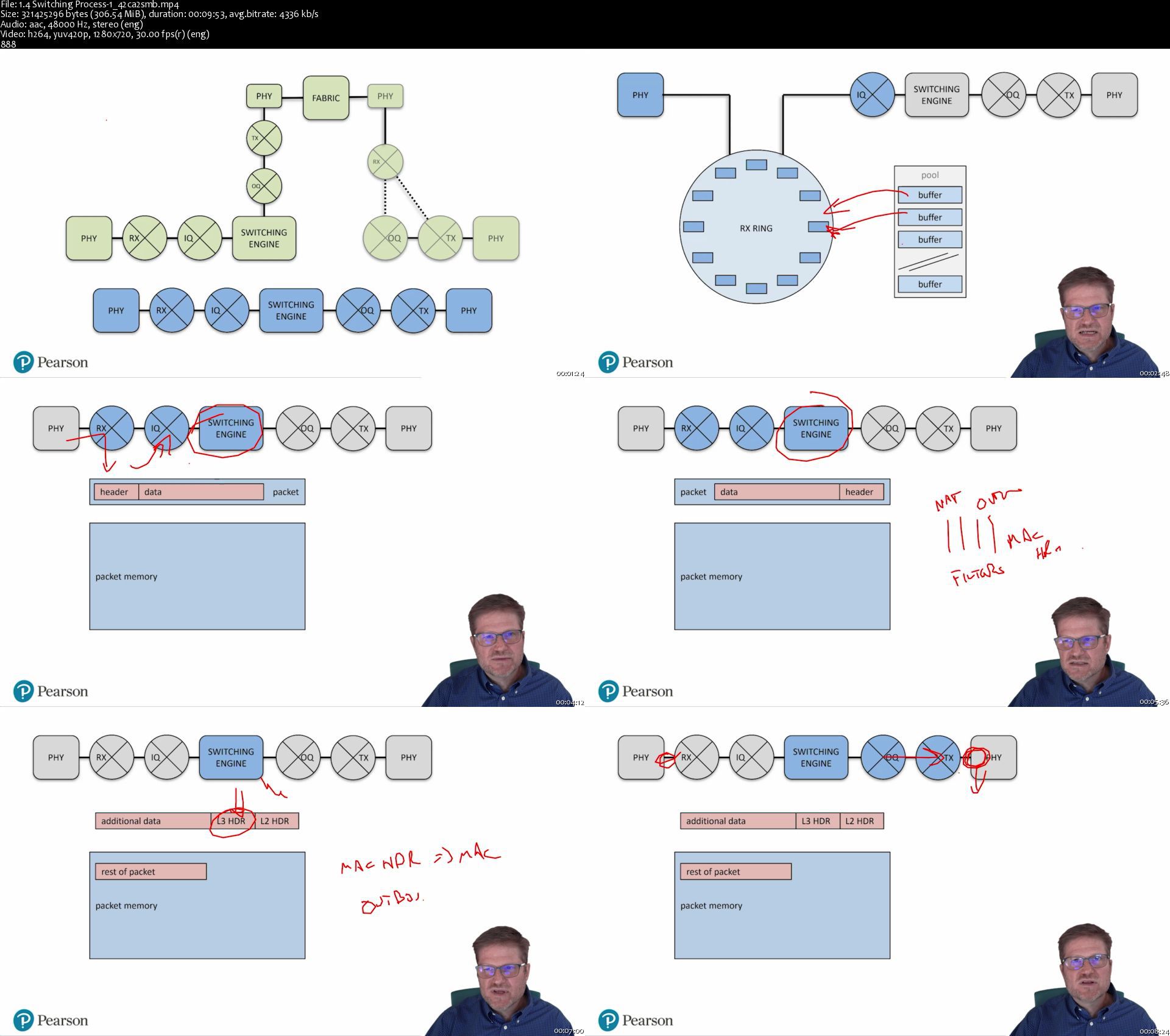
There are many elements to a networking system, including hosts, virtual hosts, routers, virtual routers, routing protocols, discovery protocols, etc.

Each protocol and device (whether virtual or physical) is generally studied as an individual "thing." It is not common to consider all these parts as components of a system that works together to carry traffic through a network. To show how all these components work together to form a complete system, this video course presents a series of walk throughs showing the processing involved in various kinds of network events, and how control planes use those events to build the information needed to carry traffic through a network.

One of the foremost internetworking experts, Russ White leverages his decades of experience in building and troubleshooting large scale networks at the likes of Cisco, LinkedIn, and Juniper to present you with a proven methodology that will help you understand why and how networking technologies work. You will learn to consider the specific problems being solved, why specific solutions are chosen, and how solutions relate to one another. In addition to providing a solid overview of many common protocols and solutions, this valuable insight helps you develop the ability to understand why you should make particular implementation decisions and what the tradeoffs are in each situation, enhance your troubleshooting skills by understanding how each technology works and what problems might arise with any solution, and finally to quickly understand new technologies as they are released by relating them to previously developed technologies.

The course begins with the discovery of the information a host needs to send traffic and the forwarding process within a network device. The first walk through is simple, but they will build in complexity until traffic carried in an overlay through a hardware optimized forwarding plane is explained. Along the way, the four problems a control plane must solve will be exposed along with the solutions commonly used to solve these problems. After this basic information is covered, more advanced situations will be considered, including network resilience from a control plane perspective and fast reroute techniques.

About the Instructor

Russ White began working with computers in the mid-1980s, and computer networks in 1990. He has experience in designing, deploying, breaking, and troubleshooting large scale networks, and is a strong communicator from the white board to the board room. Across that time, he has co-authored more than forty software patents, participated in the development of several Internet standards, helped develop the CCDE and the CCAr, and worked in Internet governance with the Internet Society. Russ has a background covering a broad spectrum of topics, including radio frequency engineering and graphic design, and is an active student of philosophy and culture.

Russ is a co-host at the Network Collective, serves on the Routing Area Directorate at the IETF, co-chairs the BABEL working group, and serves on the Technical Services Council as a maintainer on the open source FR Routing project. His most recent works are Computer Networking Problems and Solutions, The Art of Network Architecture, Navigating Network Complexity, and Intermediate System to Intermediate System LiveLessons.

Skill Level

Beginner to Intermediate

Learn the problems and solutions associated with transporting packets through networks, including:
Transport solutions
Routing protocol basics
Abstraction
Control plane examples and convergence
Control plane resilience
Who Should Take This Course

This video course addresses fundamental concepts in a way that is applicable for many kinds of students in a wide variety of learning situations, including:
Beginning learners just starting a career in network engineering
Intermediate level network engineers who have some experience, and perhaps an associates or professional level certification, who would like to take their career to the next level
Experienced network engineers who would like to fill in their knowledge, or understand why things work the way they do, rather than simply how they work
Programmers who would like to understand the operation of networks in order to improve their ability to write network-based applications
Development operations engineers who would like to understand why networks operate the way they do, and possibly migrate into full time network engineering roles
College students who are taking courses in or majoring in information technology who would like to supplement their learning in the network engineering space
College students taking a course that uses the Problems and Solutions in Network Engineering book as course material, and would like additional knowledge to help them to better understand the material
Course Requirements

This video course requires no previous knowledge or experience, although a basic understanding of IP addressing and network operation will help the candidate absorb this information.

Lesson Descriptions

Lesson 1: Transport

Networks are primarily designed to do one thing-transport data, in the form of packets, from one device to another. This lesson covers the process, beginning with information starting within the host and carrying that data across the network. Basic concepts such as multiplexing, marshaling, error control, and flow control will be covered.

Lesson 2: Routing Protocol Basics

Carrying information across a network requires there to be a path through the network-but not just "any old path" will do. Instead, the path chosen must be loop-free, so traffic is delivered quickly, in order, and without loss. This lesson will explore the concept of a loop-free path, and explain several methods used in computer networks for computing loop-free paths.

Lesson 3: Abstraction

Networks contain a lot of information about each destination that can be reached (devices attached to the network), links between network devices, metrics, topology changes, etc. The amount of information in a network can quickly overwhelm network devices, causing them to fail, or simply making the network run inefficiently. This lesson will explore the concept of abstraction in network control planes. Two specific kinds of abstraction will be considered, summarization and aggregation, and the tradeoffs involved in removing information through abstraction thought through.

Lesson 4: Control Plane Examples

Understanding the theory behind how to discover the network's topology and reachable destinations is important, but how are these things implemented in real protocols? This lesson uses widely deployed protocols as an example, showing how the theory in the last three lessons is used to implement real-world solutions.

Lesson 5: Control Plane Convergence

Control planes must not only discover the network topology and compute loop-free paths through the network, they must also react to changes in the topology of the network quickly and efficiently. This lesson considers the convergence properties of the three major kinds of control planes: distance-vector, path-vector, and link-state.

Lesson 6: Control Plane Resilience

Faster convergence is often better. The fewer packets a network drops in response to link or device failures, the more reliable the network will be for the applications and services relying on it. This lesson will explore fast convergence technologies in relation to network control planes.

1.4switchingprocess1432j3t.jpg


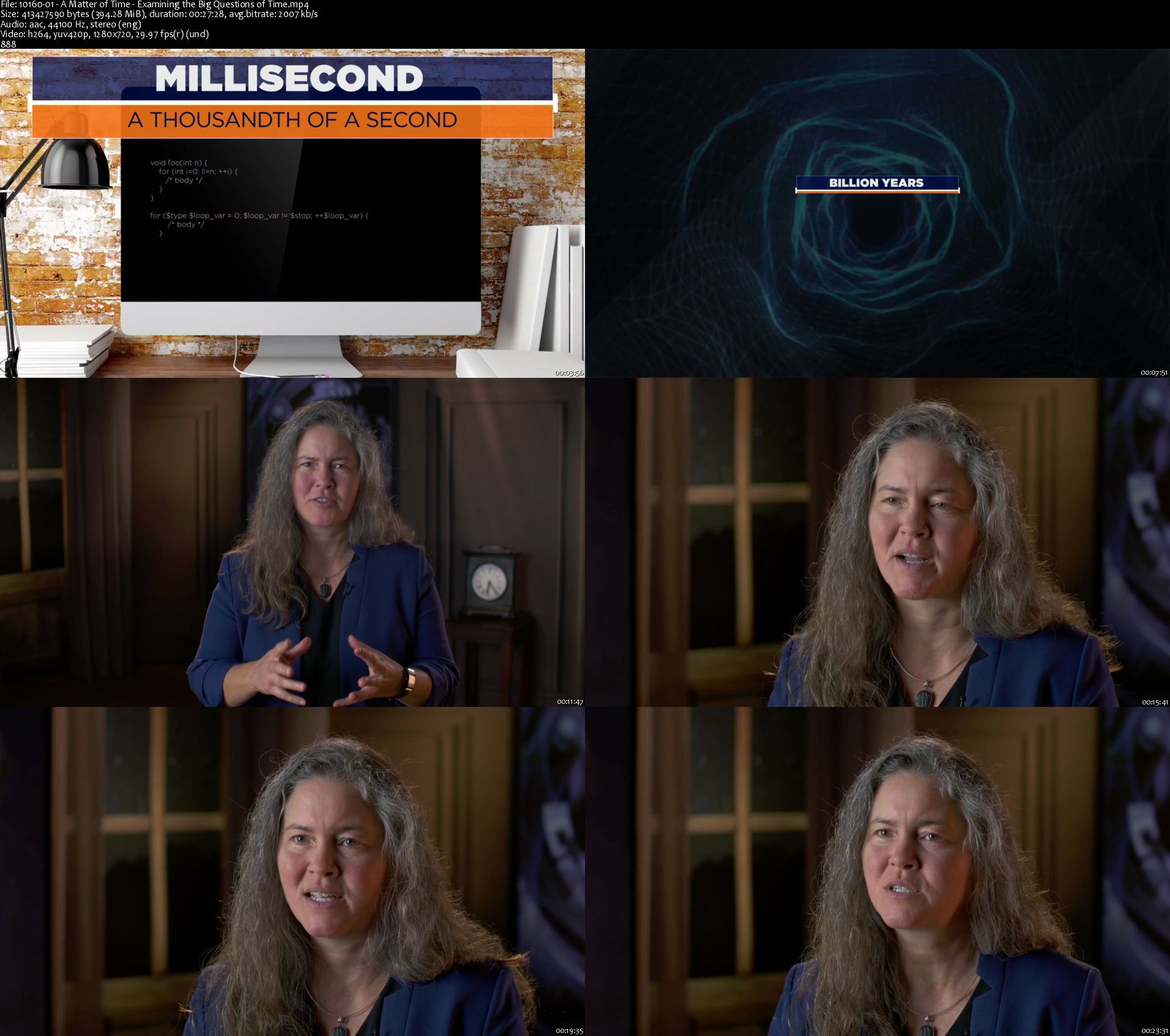
TTC - Examining the Big Questions of Time

lqzsf30lmipnc5nykorz9tbk7d.jpg


TTC - Examining the Big Questions of Time
h264, yuv420p, 1280x720 | ENGLISH, 44100 Hz, 2channels | 5h 19mn | 4.49 GB

In the first century CE, theologian and philosopher Augustine of Hippo said, "What is time? If no one asks me, I know; if I want to explain it to someone who does ask me, I do not know." In the intervening 2,000 years, most of us, if asked, would have to give the same reply as St. Augustine. After all, for the aspects of past, present, and future, we think in terms of them all day long. In many ways, these elements of time are the building blocks of how we perceive the events of our lives. We feel confident we know what it means to measure our lives as an element of time through the past, present, and future. But beyond this, what is "time" really? Or, does it even exist at all?

Produced in partnership with the venerable Scientific American magazine, the 12 eye-opening lessons of Examining the Big Questions of Time explain how philosophers, physicists, cosmologists, and neuroscientists have wrestled with the deeper meanings of time and what their research has contributed to our collective understanding of it. With Laura Helmuth, Editor-in-Chief of Scientific American, as your guide, this course challenges you to leave your assumptions about your personal temporal existence at the door and to allow your mind to be pushed to the farthest frontiers of the past and future-even to the edge of the universe.

Throughout the 12 lessons of this course, you'll explore topics drawn directly from the pages of Scientific American as you explore some of the greatest scientific questions of the last few centuries. You may be surprised to discover truths you had never before considered possible-and you'll never think about time in the same way again.

Primed for Time

Some of the first concepts we teach our children are aspects of life related to time. Before, after, later, now, not now-those are all terms we use to help our children learn to navigate the world around them, the temporal world we've built for them. But more significant than the schedules we set for ourselves to organize our days, the evolution of humanity occurred in a diurnal environment, where time seems to be an integral part of our existence. In fact, experiments reveal that even infants can differentiate between certain periods of time.

In this course, you'll learn about the several different types of time we experience as humans, including:

Body Time. The nerve structure in the brain called the suprachiasmatic nucleus is the "master clock" that syncs up all the body's clocks, hardwired in every cell of the body. Even in a petri dish under constant lighting, human cells still follow 24-hour cycles of gene activity, hormone secretion, and energy production.
Mind Time. Separate from our physiology, the brain must organize the chronology of events in our lives-creating memories and affecting our ability to recall them-and also determine how we experience the subjective passage of time.
Cultural Time. Around the world, cultures vary widely with respect to their expectations of time. How is it that in some cultures, timekeeping is of primary importance, while in others, it plays a lesser role?

What We Wish We Knew

Long before humans were concerned with understanding the nature of time, we were concerned with its measurement. When should we plant? When should we move the animals to the higher pasture? Today, our use of cell phones, digital television, GPS driving directions, and navigation between the planets all rely on our ability to precisely measure time. In this course, you will learn about the fascinating history of timekeeping machinery through the ages-up to the latest optical clocks that can keep time to within one second in roughly 3.7 billion years.

But while we've exponentially increased our ability to measure time, how much progress have we made in understanding the nature of time itself? Galileo and Newton both worked with the concept of time, but assumed it was an absolute, the same for everyone, everywhere. Einstein's theories showed that time is relative, dependent on the motion of its observers.

In this course, studies from Scientific American will guide you through many of humanity's most exciting questions about time, including:

Is time real, or is it an illusion?
Could the universe have existed before the Big Bang?
What can the quantum world teach us about time?
Must time always move from the past to the present?
Could wormholes help us travel through time?

1016001amatteroftimeeplkbp.jpg


TTC - Colored Pencil Basics

klwth5agwfvtgk95yjloj03kmd.jpg


TTC - Colored Pencil Basics
h264, yuv420p, 1280x720 | ENGLISH, 44100 Hz, 2channels | 10h 44mn | 9 GB

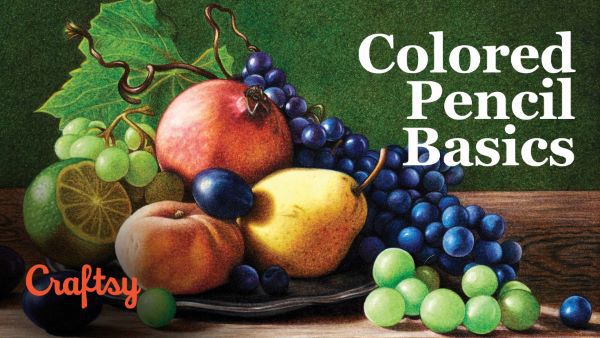
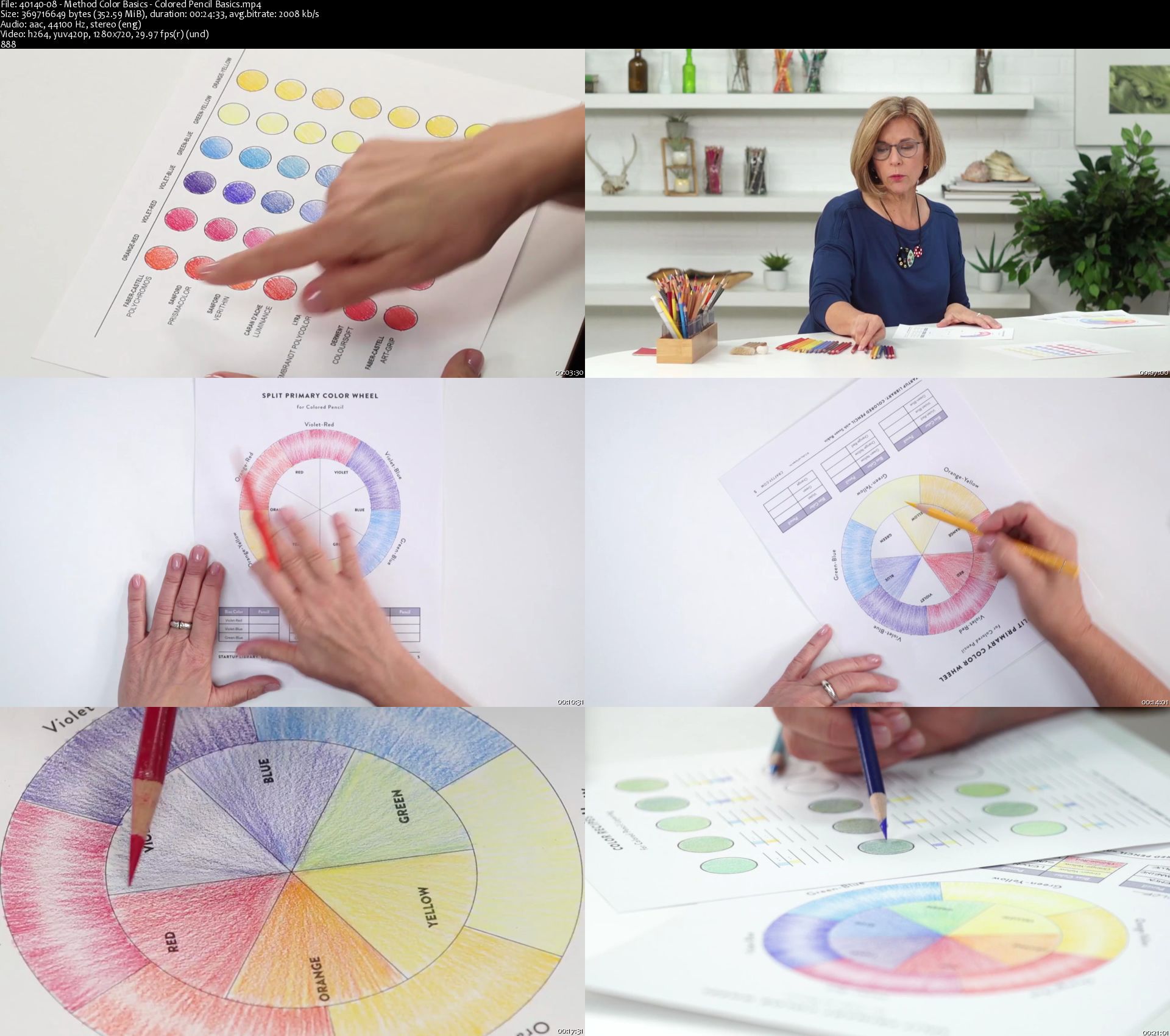
Did you know that there is an affordable and accessible medium that combines the techniques of drawing with the power of vibrant color? In Colored Pencil Basics, you will be able to follow along step by step with illustrators Susan Rubin and Cynthia Knox as they help you discover the astonishing range of colored pencils. Susan shows you how to get started with the right materials, how to work with color, how to create an ideal workspace, and more. Then, Cynthia helps you take your basic skills to the next level with a focus on realistic textures and shows you how to put your techniques into practice through a series of flower drawings. Divided into four modules that cover both essentials and more detailed projects, this course is the perfect place to start if you are just beginning and a great resource for more experienced colored pencil artists to discover new techniques.

Module 1: Startup Library: Colored Pencil

In this first module, get an overview of the most important tools and techniques you will need to begin creating colorful, dynamic images in colored pencil. You will learn about the history of colored pencils and the different types available to you, as well as what kinds of papers work for different outcomes, and how to employ tools like erasers, blenders, and other helpful resources. Susan then leads you through several projects, including drawing various flowers and fruits to put your new skills into practice.

Module 2: Colored Pencil Essentials

Dive further into the essential tools and techniques of colored pencil as Susan introduces you to the importance of a good workspace and then leads you with hands-on demonstrations through the basics of using color, creating dimension, developing atmosphere, and more.

Module 3: Realistic Textures in Colored Pencil

Cynthia leads you in discovering how to create different textures that can bring your drawings to vivid life. You will learn how to work from reference photos as you practice blending and burnishing, creating value, adding shadow and dimension, and much more. By the end of this module, you will be able to recreate natural and man-made textures that are so convincing, you can almost feel them.

Module 4: Vivid Flowers in Colored Pencil

Put your new skills to the test with a series of flower drawings that use bold colors and realistic textures to bring the floral projects to life. Cynthia helps you apply everything you have learned and adds new skills to your repertoire so you can create detailed, vibrant works of art.

With the skilled and practical guidance of these two experienced illustrators, you will be able to discover the unlimited potential of colored pencils and create amazing drawings that you can be proud of.

4014008methodcolorbas7qkgp.jpg


Zurück
Oben Unten