




• Regeln für den Video-Bereich:

    In den Börsenbereich gehören nur Angebote die bereits den Allgemeinen Regeln entsprechen.

    Einteilung

    - Folgende Formate gehören in die angegeben Bereiche:
    - Filme: Encodierte Filme von BluRay, DVD, R5, TV, Screener sowie Telesyncs im Format DivX, XviD und x264.
    - DVD: Filme im Format DVD5, DVD9 und HD2DVD.
    - HD: Encodierte Filme mit der Auflösung 720p oder darüber von BluRay, DVD, R5, TV, Screener sowie Telesyncs im Format x264.
    - 3D: Encodierte Filme von BluRay, die in einem 3D Format vorliegen. Dies gilt auch für Dokus, Animation usw.
    - Serien: Cartoon/Zeichentrick, Anime, Tutorials, Dokumentationen, Konzerte/Musik, Sonstiges sind demnach in die entsprechenden Bereiche einzuordnen, auch wenn sie beispielsweise im High Definition-Format oder als DVD5/DVD9/HD2DVD vorliegen. Ausnahme 3D.
    - Bereich Englisch: Englische Releases gehören immer in diesen Bereich.
    - Bereich Talk: Der Bereich, in dem über die Releases diskutiert werden kann, darf, soll und erwünscht ist.


    Angebot/Beitrag erstellen

    - Ein Beitrag darf erst dann erstellt werden, wenn der Upload bei mindestens einem OCH komplett ist. Platzhalter sind untersagt.
    - Bei einem Scenerelease hat der Threadtitel ausschließlich aus dem originalen, unveränderten Releasenamen zu bestehen. Es dürfen keine Veränderungen wie z.B. Sterne, kleine Buchstaben o.ä. vorgenommen werden. Ausnahme Serienbörse:
    - Bei einem Sammelthread für eine Staffel entfällt aus dem Releasename natürlich der Name der Folge. Beispiel: Die Simpsons S21 German DVDRip XviD - ITG
    - Dementsprechend sind also u.a. verboten: Erweiterungen wie "Tipp", "empfehlenswert", "only", "reup", usw. / jegliche andere Zusatzinformation oder Ergänzung, welche nicht in obiger Beschreibung zu finden ist.

    Aufbau des Angebots und Threadtitel

    Der Titel nach folgendem Muster erstellt zu werden. <Name> [3D] [Staffel] [German] <Jahr> <Tonspur> [DL] [Auflösung] <Quelle> <Codec> - <Group>
    Beispiel: The Dark Knight German 2008 AC3 DVDRip XviD - iND
    Beispiel: The Dark Knight 2008 DTS DL BDRip x264 - iND
    Beispiel: The Dark Knight 2008 AC3 DL BDRip XviD - iND
    Beispiel: The Dark Knight German 2008 AC3 720p BluRay x264 iND
    Beispiel: The Dark Knight 2008 DTS DL 1080p BluRay x264 iND
    Beispiel: Die Simpsons S01 German AC3 DVDRip XviD iND
    Beispiel: Die Simpsons S20 German AC3 720p BluRay x264 iND
    Beispiel: Sword Art Online II Ger Sub 2014 AAC 1080p WEBRip x264 - peppermint
    Entsprechend sind also u.a. verboten: Sonderzeichen wie Klammern, Sterne, Ausrufezeichen, Unterstriche, Anführungszeichen / Erweiterungen wie "Tipp", "empfehlenswert", "only", "reup", usw. / jegliche andere Zusatzinformation oder Ergänzung, welche nicht in obiger Beschreibung zu finden ist
    Ausnahmen hiervon können in den Bereichen geregelt sein.

    Die Beiträge sollen wie folgt aufgebaut werden:
    Überschrift entspricht dem Threadtitel
    Cover
    kurze Inhaltsbeschreibung
    Format, Größe, Dauer sind gut lesbar für Downloader außerhalb des Spoilers zu vermerken
    Nfo sind immer Anzugeben und selbige immer im Spoiler in Textform.
    Sind keine Nfo vorhanden z.B. Eigenpublikationen, sind im Spoiler folgende Dateiinformationen zusätzlich anzugeben :
    Quelle
    Video (Auflösung und Bitrate)
    Ton (Sprache, Format und Bitrate der einzelnen Spuren)
    Untertitel (sofern vorhanden)
    Hosterangabe in Textform außerhalb eines Spoiler mit allen enthaltenen Hostern.
    Bei SD kann auf diese zusätzlichen Dateiinformationen verzichtet werden.

    Alle benötigten Passwörter sind, sofern vorhanden, in Textform im Angebot anzugeben.
    Spoiler im Spoiler mit Kommentaren :"Schon Bedankt?" sind unerwünscht.


    Releases

    - Sind Retail-Release verfügbar, sind alle anderen Variationen untersagt. Ausnahmen: Alle deutschen Retail-Release sind CUT, in diesem Fall sind dubbed UNCUT-Release zulässig.
    - Im Serien-Bereich gilt speziell: Wenn ein Retail vor Abschluss einer laufenden Staffel erscheint, darf diese Staffel noch zu Ende gebracht werden.62
    - Gleiche Releases sind unbedingt zusammenzufassen. Das bedeutet, es ist zwingend erforderlich, vor dem Erstellen eines Themas per Suchfunktion zu überprüfen, ob bereits ein Beitrag mit demselben Release besteht. Ist dies der Fall, ist der bereits vorhandene Beitrag zu verwenden.
    - P2P und Scene Releases dürfen nicht verändert oder gar unter einem iND Tag eingestellt werden.


    Support, Diskussionen und Suche

    - Supportanfragen sind entweder per PN oder im Bereich Talk zu stellen.
    - Diskussionen und Bewertungen sind im Talk Bereich zu führen. Fragen an die Uploader haben ausschließlich via PN zu erfolgen, und sind in den Angeboten untersagt.
    - Anfragen zu Upload-Wünschen sind nur im Bereich Suche Video erlaubt. Antworten dürfen nur auf Angebote von MyBoerse.bz verlinkt werden.


    Verbote

    - Untersagt sind mehrere Formate in einem einzigen Angebotsthread, wie beispielsweise das gleichzeitige Anbieten von DivX/XviD, 720p und 1080p in einem Thread. Pro Format, Release und Auflösung ist ein eigener Thread zu eröffnen.
    - Grundsätzlich ebenso verboten sind Dupes. Uploader haben sich an geeigneter Stelle darüber zu informieren, ob es sich bei einem Release um ein Dupe handelt.
    - Gefakte, nur teilweise lauffähige oder unvollständige Angebote sind untersagt. Dies gilt auch für eigene Publikationen, die augenscheinlich nicht selbst von z.B. einer DVD gerippt wurden. Laufende Serien, bei denen noch nicht alle Folgen verfügbar sind, dürfen erstellt und regelmäßig geupdatet werden.
    - Untersagt sind Angebote, welche nur und ausschließlich in einer anderen Sprache als deutsch oder englisch vorliegen. Ausnahmen sind VORHER mit den Moderatoren zu klären.


    Verstoß gegen die Regeln

    - Angebote oder Beiträge, die gegen die Forenregeln verstoßen, sind über den "Melden"-Button im Beitrag zu melden.
  • Bitte registriere dich zunächst um Beiträge zu verfassen und externe Links aufzurufen.

*** Bestes IPTV *** bester Preis *** gratis Test ***


Englische Tutorials

783ed74d87293dc020f8551f93c3d066.jpg


TTC - Underwater Archaeology: Mysteries of the Deep
Released 4/2025
By Ashley Lemke, PhD Professor, University of Wisconsin-Milwaukee
MP4 | Video: h264, 1280x720 | Audio: AAC, 44.1 KHz, 2 Ch
Genre: eLearning | Language: English | Duration: 12 Lessons ( 5h 47m ) | Size: 4.83 GB

The work of archaeology uncovers fascinating remnants of humanity's past, greatly enlarging our knowledge of our ancestors and ourselves. Since the field's inception in the 18th century, archaeologists digging in the earth have revealed spectacular tombs, lost cities, battlefields, religious architecture, trade routes, buried sculpture and art, and more.

But Earth's landscapes are not the only places that human past is preserved. Over the last century, archaeologists have increasingly traveled underwater, making spellbinding finds and opening an incredible new context for archaeological discovery. Underwater Archaeology: Mysteries of the Deep, taught by Professor Ashley Lemke of the University of Wisconsin-Milwaukee, invites you to travel the globe on the trail of the latest and most remarkable underwater finds. In 12 delightful and adventurous lectures, you'll venture into the underwater world with the outstanding archaeologists of this growing field discovering the treasure trove of human history that lies beneath the waves.

Along the way, you'll learn how underwater archaeologists work, using cutting-edge technology such as sonar and other forms of acoustic surveying, radiocarbon ******, surface and underwater robotic vehicles, and a range of underwater excavation methods, as well as diving, photography, and video.

Professor Lemke is an award-winning teacher, author, Fellow of the Explorers Club, and an expert underwater archaeologist working in the field. Her spirited and richly detailed presentation makes these lectures a superb introduction to an exciting and innovative field.

A Thrilling New Frontier

Using advanced technology with traditional diving and excavation methods, underwater archaeologists have brought to light amazing treasures of history, such as

The wreck of the Antikythera, near Crete, the largest ancient shipwreck ever found, called "the Titanic of the ancient world."
The sunken prehistoric settlement of Atlit Yam (Israel), an astoundingly detailed window into life in Neolithic times.
The submerged Roman resort town of Baiae, containing shops, baths, and luxury villas with ornate mosaics and multicolored marble floors-all underwater.
The cenote at Chichén Itzá in Mexico, where the Mayans deposited thousands of richly fashioned devotional objects in water.
From the American Civil War, the recovered Monitor, the Union's first ironclad ship, and the Hunley, the Confederate Navy's trailblazing submarine.
Underwater archaeologists explore former coastal landscapes that are now underwater, in addition to the oceans, rivers, lakes, and other inland waterways. One of the core benefits of the work is that the underwater environment preserves both inorganic and organic materials astonishingly well, leaving us artifacts of wood, leather, textiles, and even paper, as well as plant, animal, and human remains, providing many details of life that are not found at archaeological sites on land.

In work taking place around the world, underwater archaeologists are making a wealth of extraordinary discoveries, from phenomenally intact shipwrecks, containing things such as ancient trade goods, weaponry, navigational items, ships' journals, and travelers' personal belongings, to historic ports and harbors, sunken cities, prehistoric villages, and a vast range of physical artifacts-bringing striking new dimensions to our knowledge of the past and of the details of human life in earlier times.

Submerged Gems of History
As the course unfolds, you'll travel to underwater sites where archaeologists are at work on groundbreaking excavations, such as

Cities beneath the Waters. Discover sunken cities like Antirhodos (Egypt), revealing a submerged royal palace, a temple to Isis, columns, and sphinxes; the drowned city of Port Royal in Jamaica, a nest of privateers and pirates and an extraordinary time capsule of 17th century life; and more.
The Stunning Lore of Shipwrecks. Throughout the course, explore ships underwater as archaeologists study and sometimes raise them from the deep; encounter the Uluburun, a Bronze Age ship laden with luxury objects; the massive 17th century Swedish warship Vasa; the Queen Anne's Revenge, vessel of the feared pirate Blackbeard; and many others.
In Search of Early Humans. Uncover evidence that Neanderthals and prehistoric Asian peoples traveled by boat; visit underwater sites in Australia and the Americas that tell the story of ancient human migration; and find stone tools left by our ancestor Homo erectus in areas that were once dry land.
Archaeology in Cold Water. Learn how work is done in the coldest and deepest water. Follow archaeologists using side-scan and multibeam sonar who uncovered stone hunting blinds used by Ice Age caribou hunters; and the team that used remotely operated vehicles to find the Endurance, a ship lost in the Antarctic in 2743 meters of water.
Life in Mesolithic and Neolithic Times. Among underwater archaeology's rich finds of Stone Age cultures, visit the submerged Mesolithic villages of Tybrind Vig in Denmark and Bouldnor Cliff in England, both showing a mind-boggling range of artifacts. Also, discover Neolithic-era wooden boats found underwater in Italy.
Underwater Finds of the Modern Era. Study discoveries at key 20th century sites. Among many, consider the technological hurdles and ethical issues in the excavation of the Titanic and track major archaeological work in the Pacific, recovering submerged aircraft, amphibious landing craft, and shipwrecks from the World War II battle of Saipan.

A Phenomenal Window into the Past
As you explore the amazing sites where underwater archaeologists are working, you'll encounter the human artifacts the underwater environment so remarkably preserves, offering us a detailed and intimate view of life in earlier times.

At the Neolithic village of Atlit Yam, you'll find stone wells, flint and stone tools, domestic crops and animals, and human remains showing ear pathologies and tuberculosis. Jamaica's Port Royal, submerged by an earthquake, is a 17th century city hauntingly frozen in time, with sunken houses, some with kitchenware and plates still stacked in cabinets. And the ancient Antikythera ship has given us the "Antikythera mechanism," a metal, geared machine that could accurately track solar and lunar eclipses-said to be the world's oldest computer.

In Underwater Archaeology: Mysteries of the Deep, you'll venture into a new domain for archaeological work, finding lost worlds and compelling perspectives on our shared human past.

What Will You Learn?
Look at the cutting-edge technology underwater archaeologists use, such as sonar and robotics, and how underwater research is conducted

Explore underwater sites revealing artifacts, settlements, and human remains

Learn how coastlines have changed markedly over the millennia and how many early humans lived in areas that are now underwater


596453583_underwater_archaeology_mysteries_of_the_deep.jpg


Download from RapidGator


Premium Links

 
791e4be2a3952d0f3c2495d3aab8fbaf.jpg


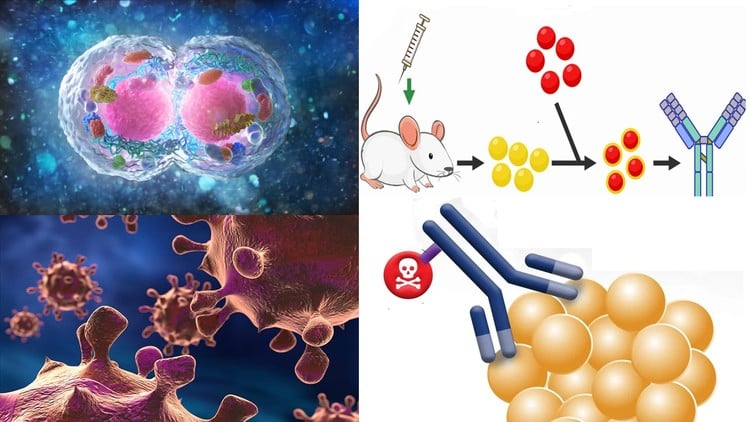
Understanding Cell Cycle, Cancer And Monoclonal Antibodies
Published 3/2024
MP4 | Video: h264, 1920x1080 | Audio: AAC, 44.1 KHz
Language: English | Size: 4.32 GB | Duration: 5h 38m

Cell Cycle, Machinery and Control System, Benign and Malignant Tumor, Monoclonal Antibodies. Treatment of Cancer


What you'll learn
Understand the intricate processes of the cell cycle, including key checkpoints and regulatory mechanisms.
Understand the concept of tumors, benign and the malignant one, the differences between the benign and the malignant tumor and the nomenclature of both
Understand the differences between the normal and the cancer cells and the staging of cancer
The molecular biology of the Cancer; the protooncogenes, the oncogenes, the tumor suppressor genes and mutations
How monoclonal antibodies are made, separated and purified using the HAT media and the hybridoma technology
Identify the role of monoclonal antibodies in cancer therapy, including their mechanism of action and specific targeting strategies.

Requirements
Basic Biology

Description
Enroll in our course, "Understanding Cell Cycle, Cancer and Monoclonal Antibodies," and open the door to a world of invaluable knowledge and skills. As a student, you'll benefit in numerous ways from this engaging learning experience. Firstly, you'll gain a comprehensive understanding of the fundamental processes governing cell growth, division, the machinery, and the control system of the cell cycle, laying a solid foundation for your studies in biology and related fields. Understanding the cell cycle is crucial for grasping many biological concepts, and this course will provide you with clear explanations.Furthermore, delving into the complexities of cancer biology will equip you with essential insights into one of the most pressing health challenges of our time. You'll learn about the molecular mechanisms driving cancer development, the hallmarks of cancer cells, and the latest advancements in cancer research and treatment. This knowledge will not only deepen your understanding of biology but also foster critical thinking and problem-solving skills that are applicable across various scientific disciplines.Moreover, exploring the innovative field of monoclonal antibodies will introduce you to cutting-edge biotechnological approaches in medicine. By understanding how monoclonal antibodies are designed, produced, and utilized in cancer therapy, you'll be at the forefront of biomedical innovation. This knowledge can inspire future research endeavors, career pathways, and contributions to improving human health.Don't miss out on this transformative learning opportunity - enroll now and unlock your full potential in understanding the intricate interplay between the cell cycle, cancer, and monoclonal antibodies.

Overview
Section 1: Introduction

Lecture 1 Introduction

Section 2: Cell Cycle/Cell Division

Lecture 2 An overview of cell cycle/cell division/Summary of the cell division

Lecture 3 Machinery of the cell cycle /Cell Division

Lecture 4 Cyclins and Cyclin-dependent Kinases (CDKs); Cell Cycle Control System

Lecture 5 Cyclin Dependent Kinase 4 (CDK-4) and Cyclin; G1 phase of the cell cycle

Lecture 6 p53, a tumor suppressor protein (cell cycle regulation & prevention of cancer)

Lecture 7 Functions of Cyclin-Dependent Kinases (CDKs); G1-S and S-CDK

Lecture 8 Function of S-CDK and M-CDK; S and G2 phase

Lecture 9 How the M-CDK (complex of Cyclin-dependent Kinase-1 and Cyclin B) gets activated

Lecture 10 Functions of M-CDK (CDK1+ Cyclin B)

Lecture 11 Metaphase of the Cell cycle

Lecture 12 Role of spindle assembly checkpoint in Mitosis

Lecture 13 Functions of Anaphase promoting complex & contractile ring; Anaphase &telophase

Lecture 14 Ubiquitin Proteasome System Explained/ Ubiquitin Proteasome Pathway in eukaryote

Section 3: Cancer: Understanding Tumor Classification, Carcinogenesis & molecular biology

Lecture 15 Definition of Cancer and Benign Tumor

Lecture 16 What are Malignant Tumors/ Understanding Malignant Tumor

Lecture 17 Differences between benign and malignant tumor

Lecture 18 Carcinogens, Co Carcinogens and Methods of Carcinogenesis

Lecture 19 Proto oncogene, Oncogenes and tumor suppressor genes; Molecular Basis of Cancer

Lecture 20 Differences Between Normal and Cancer Cells; Part 1

Lecture 21 Differences Between Normal and Cancer Cells; Part 2

Lecture 22 Different Stages of Cancer/ Cancer Stages and Staging System

Section 4: Mastering Monoclonal Antibodies: From Discovery to Application"

Lecture 23 Hybridoma Technology/ Production of Monoclonal Antibodies

Lecture 24 Monoclonal Antibodies: Separation of a mixture of hybridomas and their screening

Lecture 25 How Monoclonal Antibodies Treat Cancer/ Types of Monoclonal Antibodies

Undergraduate and postgraduate students


597922957_understanding_cell_cycle_cancer_and_monoclonal_antibodies.jpg


Download from RapidGator


Premium Links

 
273b51c3d5e75c9a71a9ac936c21907c.jpg


AutoCAD Mastery: Your Path to Professional Design
Last updated 7/2024
MP4 | Video: h264, 1920x1080 | Audio: AAC, 44.1 KHz, 2 Ch Language: English | Duration: 48h 47m | Size: 30 GB

Unlock the full potential of AutoCAD with step-by-step training from beginner to professional levels


What you'll learn
AutoCAD Interface Mastery: Understand the workspace, navigation panel, and setting units and limits in your drawings.
Basic Drawing Commands: Gain proficiency in creating and editing basic shapes such as lines, polylines, circles, arcs, rectangles, polygons, and ellipses.
Advanced Editing Commands: Learn to manipulate objects using commands like move, copy, rotate, mirror, offset, scale, stretch, fillet, explode, and erase.
Text and Dimensioning: Master the techniques of adding text and dimensions to your drawings for clear communication and documentation.
Layer Management: Organize your drawings efficiently by using layers to control the visibility and properties of objects.
3D Modeling Introduction: Transition from 2D to 3D by learning about the 3D workspace, visual styles, and basic 3D shapes and commands like extrude, revolve.
Advanced 3D Techniques: Develop complex 3D models using advanced commands and techniques, including 3D rotate, move, and other critical tools.
Project-Based Learning: Apply your skills through hands-on projects, such as creating architectural layouts, furniture designs
Practical Case Studies: Engage with real-world scenarios through case studies like supermarket layouts, corporate office designs, and apartment lighting setups
Comprehensive Skill Development: Enhance your proficiency in AutoCAD through detailed lectures and practical exercises


Requirements
Basic Computer Skills: Familiarity with operating a computer, including using a mouse, keyboard, and basic navigation of software applications.
Access to AutoCAD Software: Students should have AutoCAD installed on their computer. A trial version is acceptable if they don't own a licensed copy.
Operating System Knowledge: Basic understanding of the Windows or macOS operating system for installing and managing software.
Internet Connection: A stable internet connection is necessary for accessing online lectures, downloading course materials, and participating in any online discussions or assignments.
Eagerness to Learn: A willingness to practice and apply the concepts taught in the course, as hands-on experience is crucial for mastering AutoCAD.
Basic Drafting Knowledge (Optional): While not mandatory, a fundamental understanding of drafting or design principles can be beneficial.
Notebook and Pen: For taking notes during the course and jotting down important tips and commands.
Time Commitment: Dedication to complete the course, including lectures, exercises, and projects, which will help in fully grasping the material.
Curiosity and Patience: An open mind and the patience to work through complex drawings and projects, which are key to becoming proficient in AutoCAD.


Description
Welcome to our comprehensive AutoCAD Training course, designed to take you from a complete beginner to an advanced user. Whether you are an aspiring architect, engineer, or designer, this course will equip you with the essential skills to create precise and professional designs using AutoCAD. Starting with the basics, you will learn how to navigate the AutoCAD interface, set up your workspace, and execute fundamental drawing commands. As you progress, you will delve into more advanced topics such as 3D modeling, detailed project layouts, and real-world case studies. Each section is meticulously structured to build your knowledge step-by-step, ensuring a solid foundation in both 2D and 3D design. By the end of this course, you will be proficient in using AutoCAD for a wide range of applications, ready to tackle any design challenge with confidence and expertise.Section 1: AutoCAD Training - Beginner LevelThis section introduces beginners to the fundamentals of AutoCAD, providing a strong foundation in using this powerful design tool. Students will start with the basics, such as understanding the workspace and navigation panel. They will learn how to set units and limits in their drawings, use the cursor for selections, and understand the toggle bar. The section covers essential drawing commands like Line, Polyline, Circles, Arcs, Rectangles, and Polygons, as well as editing commands such as Move, Copy, Rotate, Mirror, Offset, Scale, Stretch, Fillet, Explode, and Erase. By the end of this section, students will be proficient in creating basic shapes, modifying them, and adding text and dimensions to their drawings.Section 2: AutoCAD Training - Intermediate LevelBuilding on the basics, this section introduces students to the 3D workspace and the essential commands for 3D modeling in AutoCAD. Students will learn about units, toggle keys, visual styles, and views. They will explore commands such as Box, Shapes, Extrude, Revolve, and PressPull, which are fundamental for creating 3D objects. Additionally, the section covers other important commands for enhancing 3D models and techniques for rotating and moving objects in a 3D space. This intermediate training equips students with the skills needed to start working on more complex 3D projects.Section 3: AutoCAD Training - Advanced LevelIn this section, students will apply their knowledge to create comprehensive 2D and 3D designs. The training covers advanced techniques for preparing plans, creating walls, and making detailed models. Students will learn how to design slabs and continue developing their modeling skills. This section emphasizes practical application, ensuring that students can handle real-world design challenges effectively.Section 4: AutoCAD Case Study - Supermarket LayoutThis case study guides students through a practical project, designing a supermarket layout. Starting with an introduction to the project, students will create architectural layouts, structural details, and sections with aisle areas. The training covers all aspects of supermarket design, including administrative areas, service areas, ramps, and detailed sections. By the end of this section, students will have hands-on experience in applying their AutoCAD skills to a comprehensive layout project.Section 5: Project on AutoCAD Basement Parking LayoutThis project-based section focuses on designing a basement parking layout. Students will start with a basic architectural layout, adding structural details, ramps, driveways, car parking blocks, and staircases. They will learn space planning and how to distribute given areas effectively. The section also covers multilevel car parking areas and provides a sectional view of the design. Additionally, students will learn about fire protection measures for car parking areas, ensuring they can create safe and efficient parking designs.Section 6: Project on AutoCAD Corporate Office Furniture LayoutIn this section, students will work on designing a corporate office furniture layout. The project starts with basic architecture, including cabin partitions and furniture layout. Students will develop detailed plans for different areas of the office, ensuring efficient use of space and optimal placement of furniture. This section provides practical experience in creating functional and aesthetically pleasing office layouts.Section 7: Project on AutoCAD Architectural Layout for a BungalowThis section involves designing an architectural layout for a bungalow. Students will begin with land mapping and area plotting, then move on to creating detailed architectural layouts. The training covers furniture layout and front elevation design. By completing this project, students will gain experience in residential design, learning to create detailed and accurate plans for a bungalow.Section 8: Project on AutoCAD Interior Layout for Restaurant - LoungeFocusing on interior design, this section teaches students how to create a detailed layout for a restaurant lounge. The project includes basic architectural layouts, area markups, and furniture layout. Students will also learn about false ceiling layouts, lighting locations, and flooring patterns. This section ensures that students can create inviting and functional interior designs for hospitality spaces.Section 9: Project on AutoCAD Corporate Office LayoutThis project involves designing a comprehensive layout for a corporate office, including ground floor plans, basement car parks, building front elevations, floor levels, and typical floor layouts. Students will learn to create detailed and functional office layouts, ensuring efficient use of space and compliance with architectural standards.Section 10: Project on AutoCAD Apartment Lighting LayoutIn this section, students will focus on creating a lighting layout for an apartment. The project covers different areas such as the living room, bedroom, balcony, kitchen, and passage areas. Students will learn about LED light setups and typical floor layouts, ensuring they can design effective and aesthetically pleasing lighting plans.Section 11: AutoCAD Case Study - Architectural Design and PlanningThe final section involves a comprehensive case study on architectural design and planning. Students will brush up on the basics of AutoCAD, conduct site analysis, and create detailed area statements. The training covers single and double-line planning, quotation making, and detailed design processes. By the end of this section, students will have a complete understanding of the architectural design process, from initial planning to final execution.This course provides a thorough training program that covers all aspects of AutoCAD, from beginner to advanced levels, ensuring students are well-equipped to handle various design projects efficiently.

Who this course is for
Beginners in CAD: Those new to computer-aided design who want to learn the fundamentals of AutoCAD from scratch.
Students and Graduates: Individuals studying architecture, engineering, interior design, or related fields who need to develop AutoCAD skills for their academic projects.
Professionals Seeking Skill Enhancement: Engineers, architects, draftsmen, and designers looking to upgrade their skills or transition to using AutoCAD in their professional work.
Hobbyists and DIY Enthusiasts: People interested in design and drafting as a hobby who wish to learn how to create precise and professional-quality drawings.
Career Changers: Individuals from different industries considering a shift to design, engineering, or architecture and need to learn AutoCAD as a new skill.
Freelancers and Consultants: Professionals offering CAD services who want to add AutoCAD to their toolkit to expand their service offerings.
Technical and Vocational Students: Learners in technical and vocational schools who need AutoCAD proficiency for their course requirements.
Project Managers and Team Leads: Managers overseeing design and engineering projects who need a basic understanding of AutoCAD to communicate effectively with their teams.
Corporate Training Programs: Companies that wish to train their staff in AutoCAD for in-house design and drafting needs.
Anyone Interested in Design: Individuals with a general interest in learning how to use one of the leading CAD software tools in the industry.


Homepage

597748650_autocad_mastery_-_your_path_to_professional_design.jpg


Download from RapidGator


Premium Links


b75c31035385910027323c630bebd681.jpg


MasterClass - Skin Health
Released 5/2025
By Dr. Shereene Idriss, Dr. Michelle Henry, Ron Robinson, and Dr. April Armstrong
MP4 | Video: h264, 1920x1080 | Audio: AAC, 44.1 KHz, 2 Ch
Genre: eLearning | Language: English | Duration: 20 Lessons ( 2h 16m ) | Size: 4.3 GB

Healthy skin starts with real facts. Skip the trends and get science-backed advice from top skin doctors.

Welcome to your no-BS guide to better skin. This class gives you science-backed facts-straight from board-certified dermatologists and a cosmetic chemist. Whether you're battling breakouts, fine lines, eczema, or just overwhelmed by products, these 20 bite-size episodes cover every skin type and concern. Learn what works, what's hype, and how to build a routine that actually delivers.


597208217_skin_health.jpg


Download from RapidGator


Premium Links
 
889d4e30cc706adf1dcf95d198af25d4.jpg


Crea tu SISTEMA DE INVENTARIO con LARAVEL 11 + VUE 3 y AWS
Last updated 4/2025
Created by Jose Jaico
MP4 | Video: h264, 1280x720 | Audio: AAC, 44.1 KHz, 2 Ch Level: Beginner | Genre: eLearning | Language: Spanish + subtitle | Duration: 241 Lectures ( 73h 46m ) | Size: 37.7 GB

Sistema De Gestión de Productos MULTISUCURSAL con LARAVEL, VUE 3, Lambda, S3, EC2 , API GATEWAY ,Cronjob, + Deploy


What you'll learn
Uso de servicios de Aws como Lambda, S3, Api Gateway, EC2, SNS (Para el envio de mensaje de texto)
Autenticación por JWT.
Gestión de Roles y Permisos.
Modulo de configuraciones.
Gestión de productos.
Importación y exportación de los productos en Excel.
Manejo de diferentes sucursales y almacenes para los productos.
Modulo de Ventas (Cotización y Ventas).
Filtro avanzado para todas las ventas.
Exportación de todas las ventas en excel.
Modulo de devolución de productos por incidencias.
Modulo de compras para el abastecimiento de productos.
Modulo de transporte de productos en almacenes.
Modulo de movimientos de productos dentro de un almacén.
Kardex de los productos (Método del promedio ponderado)
Reportes gráficos de las ventas.

Requirements
Conocimientos Básico de programación
Laravel Básico (Modelo ,Relaciones HasMany + Has One, Controladores , Rutas)
Vue 3 Básico (Componentes, Vistas, Composition Api, Rutas)
PostgreSql Básico (Relaciones, Modelado, Sql)
Cuenta de AWS para utilizar algunos de sus servicios.

Description
En este curso aprenderás a desarrollar desde cero tu propio Sistema De Gestión de Productos MULTISUCURSAL , crearemos un sistema donde se gestiona todo el proceso de gestión de productos , desde la creación hasta el abastecimiento de stock por medio de las compras, aparte de considerar un entorno MULTISUCURSAL, utilizando LARAVEL, Vue 3, Postgresql, SNS, CRON JOBS , Lamdda, S3, EC2 , API GATEWAY , ENVIO DE MENSAJE DE TEXTO + Deploy AWS, el cual podrás utilizar como base para tus proyectos personales o vendérselo a muchas personas a la medida de tus clientes.Características del Sistema de Inventario:programación de Backend(Laravel + 11) y Administrador (Vue 3).Múltiple sucursales.Gestión de Roles y Permisos.Cron Jobs , tareas en automático para la automatización de procesos.Base de datos Postgresql.Seguridad de API con Tokens JWT.Validación con middleware de los permisos en el backend.Modulo de Accesos al sistema con permisos definidos. Módulo de Clientes separados por su tipo y ubigeo.Módulo de Productos con stock por sucursales y unidades .Precios múltiples para cada tipo de cliente .Importar los productos de un archivo Excel , así como exportarlos. Activación y desactivación automática de los productos sin stock.Módulo de gestión de Ventas.Filtro avanzado con múltiples campos.Exportación en excel de las ventas y impresión en pdf.Módulo de gestión de Devoluciones por incidencias.Módulo de compras , para abastecer los diferentes almacenes registrados.Módulo de transporte y movimientos.Reportes kardex (Método promedio ponderado).Modulo de Kpis de las ingresos mensuales, por sucursal.Control de proyectos con GITHUB en producción.Despliegue de proyectos a producción en servidor VPS.Crear y configurar droplets con (Ubuntu y Linux).Configuración de DNS para los subs dominios.Mucho mas .Herramientas que aprenderás a usar:plantilla Administradora en VueJs 3.SNS servicio de AWS para el envió de mensaje de texto.Lambda servicio de AWS para las funciones en segundo plano.S3 para subir las imágenes a la nube.Api Gateway para integrar los servicios de Lambda y SNS.Base de datos Postgresql.GITHUB.AWS EC2 para el despliegue de los proyectos.Este proyecto es probablemente que pueda llevarte al siguiente nivel con los conocimientos básicos adquiridos. Domina el arte de crear aplicaciones FullStack inscribiéndote en este curso. Usaremos los servicios AWS para el despliegue y también subdominios para la configuración de los entornos.

Who this course is for
Desarrolladores que quieres llevar su conocimientos básicos a otro nivel.
Programadores autodidactas que deseen aprender a crear un sistema de inventario.
Aumentar los proyectos en tu portafolio.


597208221_crea_tu_sistema_de_inventario_con_laravel_11_-_vue_3_y_aws.jpg


Download from RapidGator


Premium Links



8df5ecdcfc1eaa00dbb8aac9913d224a.jpg


TTC - American Revolution
Last updated 4/2025
MP4 | Video: h264, 1280x720 | Audio: AAC, 44.1 KHz, 2 Ch
Genre: eLearning | Language: English | Duration: 24 Lessons ( 12h 14m ) | Size: 10.2 GB

Has there ever been a more unlikely war than the Revolution that won America its independence?

Why did those 13 colonies, with nothing resembling a unified and trained army and with no navy to speak of, believe they could defeat the most powerful nation on the planet?

And why was Britain, no matter how powerful, confident that it could prevail, even though burdened with a 3,000-mile supply line for troops and provisions, a "circuit of command" for time-critical orders that could consume three months or more, and the constant need to divert its forces, whether to protect against slave uprisings in the Caribbean or against the looming threat of the French on both sides of the Atlantic?

Considerations like these are indicative of just how unlikely this conflict was, Professor Allen C. Guelzo notes in his gripping new course The American Revolution. And they are far from the only ones.

Why did the British fight the way they did, "served up by seemingly unthinking generals in solid rows of walking targets while the Americans crouched Indian-style behind rocks and trees"? Why did the Americans end up fighting this same way?

Why did George Washington, in an uncharacteristically fractious move, lash out angrily at his troops, labeling them misfits and mutineers?

What moved King George III, even after Cornwallis had surrendered at Yorktown, to ask his secretary of state for America to put on paper the "mode which seems most feasible for conducting the war," clinging to a belief that the Americans might yet be subdued?

And, finally, who really deserves the credit for defeating the British army?

Was it the Continentals, gamely overcoming all odds? Was it the French, entering on the American side not purely out of friendship but also as a first step in converting Britain's colonies into their own? Or was it perhaps both of these factors-along with weather, terrain, timing, and sheer luck? Above all, why was the American Revolution really won not in America at all, but in the Caribbean?

As Professor Guelzo explains the answers to these and many other questions, you find yourself gaining a fresh understanding of the factors that made America's victory possible.

You see how issues such as logistics and the human factor can influence strategy, tactics, and the course of battle. Or how happenstance can prove even more important than either of those key factors. And you gain an appreciation of how opposing sides can experience completely different perceptions of the same conflict-with key decisions influenced by those differing perceptions.

Beginning with a clear presentation of what Jefferson referred to in the Declaration of Independence as "the causes which impel[the Colonies] to the separation," Professor Guelzo presents a startlingly vivid narrative about the war for independence.

Although built on a solid foundation of the principles and politics underlying the conflict, The American Revolution is primarily about what Professor Guelzo calls the conflict's "actual mechanics as a Revolution-an armed uprising against the most dominant military power in the world."


Homepage


596453505_the_american_revolution.jpg


Download from RapidGator


Premium Links


cebd4ee38f9f1721f143175106bc981c.jpg


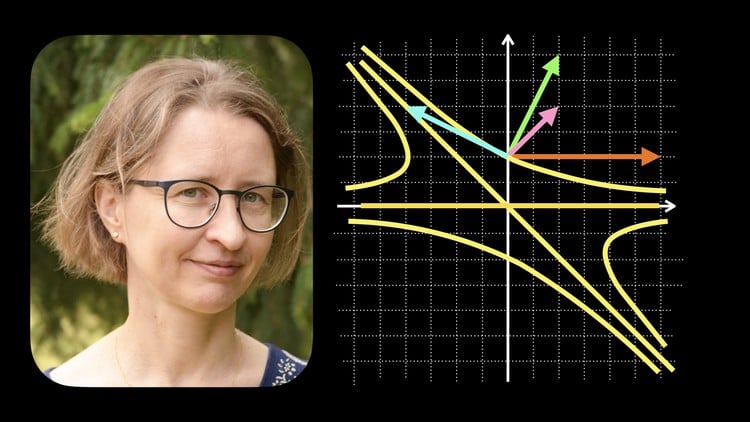
Calculus 3 (Multivariable Calculus), Part 1 Of 2
Last updated 4/2025
MP4 | Video: h264, 1920x1080 | Audio: AAC, 44.1 KHz
Language: English | Size: 53.25 GB | Duration: 47h 52m

Towards and through the vector fields, part 1 of 2: Functions of several real variables and vector-valued functions


What you'll learn
How to solve problems in multivariable calculus (illustrated with more than 200 solved problems) and why these methods work.
Parameterize some curves (straight lines, circles, ellipses, graphs of functions of one variable, intersections of two surfaces).
Describe position, velocity, speed and acceleration; compute arc length of parametric curves; arc length parametrization.
Limits, continuity and differentiability for functions of several variables. Theory, geometric intuitions, and lots of problem solving.
Several variants of the Chain Rule, involving different kinds functions. You will also learn how to apply these variants of the Chain Rule for problem solving.
Several variants of the Implicit Function Theorem, with various geometrical interpretations; problem solving.
Optimization of functions of several variables, both on open domains and on compact domains (Lagrange multipliers on the boundary, etc.).

Requirements
Calculus 1 and 2
Some Linear Algebra (a brief summary of some topics is contained in Section 2 of this course)
You are always welcome with your questions. If something in the lectures is unclear, please, ask. It is best to use QA, so that all the other students can see my additional explanations about the unclear topics. Remember: you are never alone with your doubts, and it is to everybody's advantage if you ask your questions on the forum.

Description
Calculus 3 (multivariable calculus), part 1 of 2Towards and through the vector fields, part 1 of 2(Chapter numbers in Robert A. Adams, Christopher Essex: Calculus, a complete course. 8th or 9th edition.)C0: Introduction to the course; preliminaries (Chapter 10: very briefly; most of the chapter belongs to prerequisites) S1. About the courseS2. Analytical geometry in R^n (n = 2 and n = 3): points, position vectors, lines and planes, distance between points (Ch.10.1)S3. Conic sections (circle, ellipse, parabola, hyperbola)S4. Quadric surfaces (spheres, cylinders, cones, ellipsoids, paraboloids etc) (Ch.10.5)S5. Topology in R^n: distance, open ball, neighbourhood, open and closed set, inner and outer point, boundary point (Ch.10.1)S6. Coordinates: Cartesian, polar, cylindrical, spherical coordinates (Ch.10.6)You will learn: to understand which geometrical objects are represented by simpler equations and inequalities in R^2 and R^3, determine whether a set is open or closed, if a point is an inner, outer or boundary point, determine the boundary points, describe points and other geometrical objects in the different coordinate systems.C1: Vector-valued functions, parametric curves (Chapter 11: 11.1, 11.3)S7. Introduction to vector-valued functionsS8. Some examples of parametrisationS9. Vector-valued calculus; curve: continuous, differentiable and smoothS10. Arc lengthS11. Arc length parametrisationYou will learn: Parametrise some curves (straight lines, circles, ellipses, graphs of functions of one variable);if r(t) = (x(t), y(t), z(t)) is a function describing a particle's position in R^3 with respect to time t, describe position, velocity, speed and acceleration; compute arc length of parametric curves, arc length parametrisation.C2: Functions of several variables; differentiability (Chapter 12) S12. Real-valued functions in multiple variables, domain, range, graph surface, level curves, level surfacesYou will learn: describe the domain and range of a function, Illustrate a function f(x,y) with a surface graph or with level curves.S13. Limit, continuityYou will learn: calculate limit values, determine if a function has limit value or is continuous at one point, use common sum-, product-, ... rules for limits.S14. Partial derivative, tangent plane, normal line, gradient, JacobianYou will learn: calculate first-order partial derivatives, compute scalar products (two formulas) and cross pro- duct, give formulas for normals and tangent planes; understand functions from R^n to R^m, gradients and Jacobians.S15. Higher partial derivatesYou will learn: compute higher order partial derivatives, use Schwarz' theorem. Solve and verify some simple PDE's.S16. Chain rule: different versionsYou will learn: calculate the chain rule using dependency diagrams and matrix multiplication.S17. Linear approximation, linearisation, differentiability, differentialYou will learn: determine if a function is differentiable in a point, linearisation of a real-valued function, use linearisation to derive an approximate value of a function, use the test for differentiability (continuous partial derivatives), and properties of differentiable functions.S18. Gradient, directional derivativesYou will learn: calculate the gradient, find the direction derivative in a certain direction, properties of gradients, understand the geometric interpretation of the directional derivative, give a formula for the tangent and normal lines to a level curve.S19. Implicit functionsYou will learn: calculate the Jacobian determinant, derive partial derivatives with dependent and free variables of implicit functions.S20. Taylor's formula, Taylor's polynomialYou will learn: derive Taylor's polynomials and Taylor's formula. Understand quadratic forms and learn how to determine if they are positive definite, negative definite, or indefinite.C3: Optimisation of functions of several variables (Chapter 13: 13.1-3)S21. Optimisation on open domains (critical points)S22. Optimisation on compact domainsS23. Lagrange multipliers (optimisation with constraints)You will learn: classify critical points: local max and min, saddle points; find max and min values for a given function and region; use Lagrange multipliers with one or more conditions.Make sure that you check with your professor what parts of the course you will need for your midterms. Such things vary from country to country, from university to university, and they can even vary from year to year at the same university.A detailed description of the content of the course, with all the 255 videos and their titles, and with the texts of all the 216 problems solved during this course, is presented in the resource file "001 Outline_Calculus3.pdf" under video 1 ("Introduction to the course"). This content is also presented in video 1.

University and college engineering


598216208_calculus_3_multivariable_calculus_part_1_of_2.jpg


Download from RapidGator


Premium Links


3d3ba497246f5b2335b74d059111f333.jpg


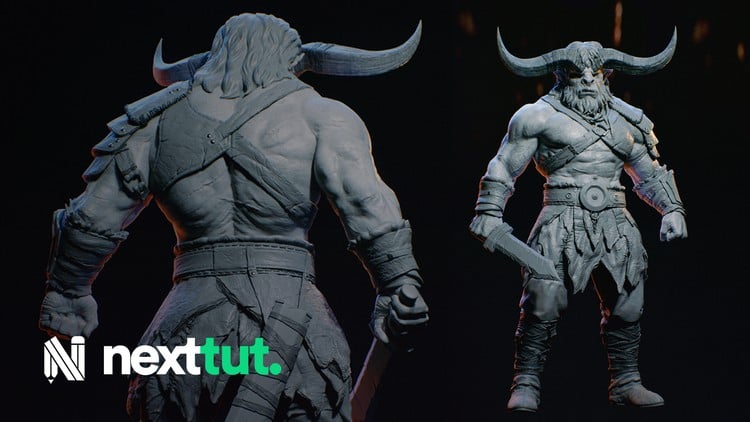
Zbrush Advance Creature Sculpting for Production
Published 5/2025
Created by Nexttut Education Pvt.Ltd.
MP4 | Video: h264, 1280x720 | Audio: AAC, 44.1 KHz, 2 Ch Level: Intermediate | Genre: eLearning | Language: English | Duration: 121 Lectures ( 40h 45m ) | Size: 34 GB

Sculpt highly detailed and believable creature anatomy in ZBrush.


What you'll learn
Sculpting Detailed Creature
Sculpting Leather Details
Sculpting Hair for Characters
Sculpting Detailed Metal Armor
Creating Dynamic Character Poses
Character Rendering and Presentation

Requirements
A basic understanding of the ZBrush interface and sculpting tools is required. You should be comfortable with navigation, basic brushes, and basic sculpting techniques.

Description
Do you find it challenging to sculpt believable creature, intricate details, and dynamic poses in ZBrush? This course will equip you with the skills to overcome these obstacles and create stunning creature designs.About Me:My name is Mahdi Khouei, and I have been a 3D character artist for a decade now. I have worked in VFX and the game industry, as well as 3D printing. Currently, I'm working as a freelance 3D character artist.By the End Of This Course, You Will Be Able To:Sculpt highly detailed and believable creature anatomy in ZBrush.Create dynamic and engaging creature poses for compelling storytelling.Present your creature in cinematic quality renders using Marmoset Toolbag.What You Will Learn:Sculpting Detailed CreatureSculpting Leather DetailsSculpting Hair for CharactersSculpting Detailed Metal ArmorCreating Dynamic Character PosesCharacter Rendering and PresentationCourse Project Overview:In this course, we will begin with a base mesh and sculpt the creature's overall form. We will then block out the creature's assets and any cloth elements. Following this, we will refine the design, making minor concept adjustments as needed, and proceed to develop the high-poly sculpt. After establishing the high-poly, we will refine the creature's body proportions and anatomy, and add detailed skin features. Finally, we will pose the character, decimate the mesh for optimization, and conclude by setting up lighting and creating a final render presentation.Who is This Course For?This course is designed for intermediate 3D artists and character artists. Specifically, it will benefit those who want to improve their sculpting skills and learn character modeling.Who is Not The Ideal Student For This Course?This course is not designed for absolute Zbrush beginners.What Are The Requirements Or Prerequisites For Taking This Course?A basic understanding of the ZBrush interface and sculpting tools is required. You should be comfortable with navigation, basic brushes, and basic sculpting techniques.Familiarity with fundamental anatomy principles is recommended. This includes knowledge of basic skeletal structure and major muscle groups.a basic understanding of Marmoset Toolbag is helpful for the rendering and presentation section of the course.Join Me Now:If you've always wanted to create stunning creatures in ZBrush but felt unsure where to start, this course provides the guidance and techniques you need. Take the leap and invest in your creative potential - you won't regret it!

Who this course is for
This course is designed for intermediate 3D artists and character artists. Specifically, it will benefit those who want to improve their sculpting skills and learn character modeling.


598173344_zbrush_advance_creature_sculpting_for_production.jpg


Download from RapidGator


Premium Links


a280023eda20dd0c2a50e669d25946b9.jpg


Learn Chinese language(New HSK1~HSK4) |162 Hours
Published 5/2025
Created by Lei Chen
MP4 | Video: h264, 1280x720 | Audio: AAC, 44.1 KHz, 2 Ch
Level: Beginner | Genre: eLearning | Language: English | Duration: 111 Lectures ( 162h 33m ) | Size: 107 GB

(New HSK1~HSK4) Complete Chinese learning materials


What you'll learn
Vocabulary & Grammar: Acquire 1200+ Chinese words/phrases and essential grammar, enabling basic conversations and understanding of New HSK 1-4 content.
You will master common Chinese Mandarin characters, vocabulary and sentences
Communicate with Chinese people in various topics
Chinese listening, reading, writing and speaking required for daily life or study

Requirements
A certain level of English is required.

Description
Hello everyone, welcome to learn Chinese with me (New HSK1~HSK4). In order to enable you to learn Chinese knowledge accurately and comprehensively, I have prepared detailed teaching videos and a large number of learning tutorials for you. Please read these tutorials carefully. These tutorials will be of great help to you in learning Chinese.1. Video teaching: The entire video is 162 hours long, in order to help you master more Chinese knowledge, rather than just touching on it2. Chinese teaching textbook (PDF): If you haven't bought a printed Chinese textbook yet, it doesn't matter, you can check it on your phone3. Chinese vocabulary manual (PDF): The entire course content requires mastering 1200+ Chinese vocabulary. With this PDF, you can learn these vocabulary at any time4. Teaching PPT: Each class will have a PPT that summarizes the key points of each class. You can open and review these contents on your phone5. 17 reference textbooks (PDF): If you are preparing to take the HSK exam, then the reference textbooks I prepared for you will help you pass the exam very well6. Word recognition cards: This is different from the vocabulary manual. Each Chinese character has a picture. Try to read their pronunciation and recall in what scenarios they can be used. This is very helpful and interesting for you to learn Chinese characters7. Mock test paper: Do you want to know how effective your learning is? Print a random test paper to see if you can get a full score

Who this course is for
People who are interested in learning Chinese or preparing to take the HSK test


Homepage


598821715_1-lesson-1-1--what-are-your-plans-for-the-weekend_.jpg


29018598efd433c396e24f3640dc862d.jpg


Hard-Surface Modeling In Blender by Blender Craft
Published 5/2025
MP4 | Video: h264, 1920x1080 | Audio: AAC, 44.1 KHz
Language: English | Size: 26.77 GB | Duration: 17h 37m

Hard Surface Modeling a Luger P08 pistol in Blender


What you'll learn
Building a 3D model from scratch
Creating models based on drawings and references
Basic modeling tools in Blender
Working with basic modifiers
Model blocking
Hard Surface retopology of any complexity

Requirements
It is enough to know the basics of the program
Several weeks of work in Blender

Description
Hard Surface Modeling a Luger P08 in Blender - Step-by-Step CourseThis course is dedicated to creating a realistic hard surface model of a handgun using Blender - one of the most powerful and accessible 3D tools available. Designed for beginners and intermediate users alike, the course focuses on mastering essential hard surface techniques through a practical, hands-on project.You will learn how to approach technical modeling with confidence by working directly from real-world references and blueprints. From blocking out the initial shapes to adding fine mechanical details, every step is explained clearly and logically.Throughout the course, you will:Learn how to find, import, and align technical drawings and blueprints for accurate modeling;Understand the fundamentals of shape blocking and proportion building;Use powerful Blender modifiers like Subdivision Surface, Boolean, Shrinkwrap and Mirror to create clean, non-destructive geometry;Gain insight into proper topology practices for hard surface modeling with the help of n-gons;Learn techniques for maintaining edge sharpness and controlling surface flow.Each lesson is focused on a specific part of the handgun, making the workflow easy to follow and apply to other mechanical models. By the end of the course, you'll have a complete, high-quality 3D model suitable for your portfolio or further texturing and animation.If you're looking to strengthen your hard surface modeling skills and build a solid foundation in Blender, this course is the perfect starting point.

Overview
Section 1: Blocking

Lecture 1 Setting up references

Lecture 2 Let's start blocking

Lecture 3 Blocking with Boolean modifier

Lecture 4 Blocking lower part of the handle

Lecture 5 Additional cutouts on the side

Lecture 6 Spin tool and top elements

Lecture 7 Cutout on the top cylinder and small details

Lecture 8 Side and top elements

Lecture 9 Multiple cutouts on top parts

Lecture 10 Working with the handle and Shrinkwrap modifier

Lecture 11 Small elements around the perimeter

Lecture 12 Additional cutouts and magazine base

Lecture 13 Front sight and trigger

Lecture 14 Minor improvements and elements

Lecture 15 Inner cutout of the top part and bolts

Lecture 16 Modeling the bullet and cutting out the barrel

Lecture 17 Magazine modeling

Lecture 18 Upper part of the magazine and trigger spring

Section 2: Retopology

Lecture 19 Preparing for retopology and first steps

Lecture 20 Retopology of the rear part of the pistol

Lecture 21 Lower part of the handle and trigger

Lecture 22 The interior of the magazine and minor improvements

Lecture 23 Front and rear parts modifications

Lecture 24 Working out cylindrical cutouts

Lecture 25 Retopology of small elements in the rear part of the pistol

Lecture 26 Connections of the rear element to the pistol grip and alignment

Lecture 27 Re-creating the cutouts on the right side of the gun

Lecture 28 Retopology of the trigger area and newly created cutouts

Lecture 29 Alignment with Loop Tools addon and Shrinkwrap modifier

Lecture 30 Retopology of the cutout for the screw

Lecture 31 Retopology of the pistol barrel and front sight

Lecture 32 Start of retopology of the larger upper part

Lecture 33 We continue retopology of the larger upper part

Lecture 34 Aligning the top and connecting the cylinders to the base at the back

Lecture 35 Additional cutouts and alignments at the back

Lecture 36 Small cutout and its retopology

Lecture 37 Retopology of a large detail on the left side of the gun

Lecture 38 Creating many small details

Lecture 39 Retopology of the pistol handle

Lecture 40 Refinement of the pistol handle and small cutouts

Lecture 41 Refinement before retopology of the upper element in the rear part of the pistol

Lecture 42 Retopology of the upper complex part (part 1)

Lecture 43 Retopology of the upper complex part (part 2)

Lecture 44 Retopology of the upper middle part

Lecture 45 Retopology of the upper front part

Lecture 46 Reworking a couple of small details and creating two additional cutouts

Lecture 47 Retopology of the bolt and the bottom of the magazine

Lecture 48 Magazine retopology

Lecture 49 Trigger retopology (part 1)

Lecture 50 Trigger retopology (part 2)

Lecture 51 Final touches, improvements and completion of the pistol retopology

For those who want to create models of any complexity,Hard Surface artists,Anyone who wants to improve their level of modeling


Homepage


598600526_27-recreating-the-cutouts-on-the-right-side-of-the-gun_s.jpg


271ef53b274f47c0a76d80073e017c2d.jpeg


MindValley - Smart Money : Your Roadmap to Financial Success
Released 5/2024
By Jaspreet Singh
MP4 | Video: h264, 1920x1080 | Audio: AAC, 44.1 KHz, 2 Ch
Genre: eLearning | Language: English | Duration: 14 Lessons ( 3h 33m ) | Size: 4.46 GB

Embark on your journey to financial success with Jaspreet Singh, where no-nonsense wisdom meets actionable strategies. This Quest offers practical guidance to elevate your financial prowess and build a robust foundation for future wealth. Immerse yourself in insights and purposeful exercises to level up your finances and master strategies for navigating and mitigating financial risks. This isn't just education; it's a practical roadmap to financial empowerment and lasting success.

For anyone seeking a richer financial future.

Do you find yourself constantly worrying about money?

Does the thought of retirement, investments, or even just monthly budgeting fill you with a sense of dread?

If you ever thought there must be more straightforward ways to manage your finances, ways that the experts and the wealthy seem to know but aren't sharing, you're not alone.

Unfortunately, the majority of us have been left in the dark when it comes to truly understanding money, leading to a cycle of debt, stress, and financial uncertainty for countless individuals.

But should you really bear the blame for a system that fails to equip you with crucial skills we all deserve?

The truth is, financial literacy is a right, not a privilege.

And under the guidance of Jaspreet Singh, the power to change your financial destiny is now firmly in your grasp.

'Smart Money: Your Roadmap to Financial Success' is a rapid transformational experience that radically redefines how you interact with money.

In just 14 days, dedicating mere minutes each day, you'll dive into a world where managing money, investing wisely, and growing your wealth becomes second nature.

Every strategy, tool, and mindset shift you learn is designed to enhance one of what Jaspreet calls The 3 Keys to Financial Fitness, namely

Spend Less
Earn More
Invest like crazy

Whether you're overwhelmed by debt, confused about investing, or simply seeking a more secure financial future, Jaspreet's clear, step-by-step approach helps you make intelligent money choices that set you and your family up for life.


600110756_smart_money_your_roadmap_to_financial_success.jpg


Download from RapidGator


Premium Links

 
dacbcc6ca4fe47c97514c3cb9f99da4d.jpg


MasterClass - Business Rebels
Last updated 5/2025
By Mike Cessario and Laura Modi
MP4 | Video: h264, 1920x1080 | Audio: AAC, 44.1 KHz, 2 Ch
Genre: eLearning | Language: English | Duration: 1h 23m | Size: 3.13 GB

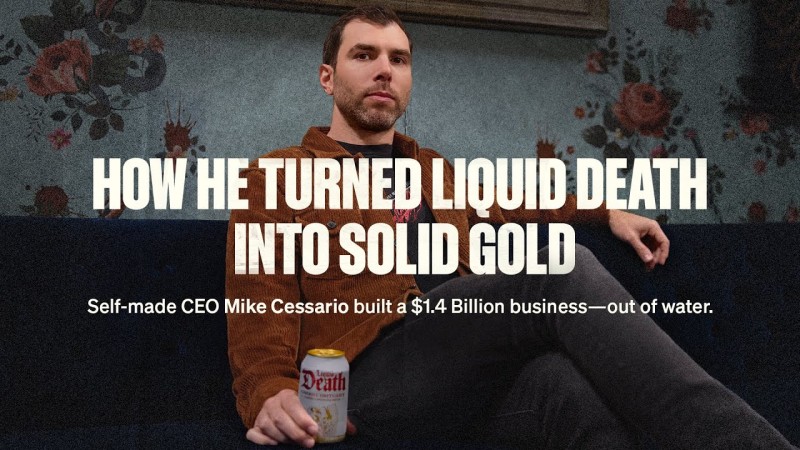
Use billion-dollar strategies to get ahead faster. Liquid Death CEO Mike Cessario and Bobbie Formula CEO Laura Modi show you how disruption is done.

These self-made CEOs broke into billion-dollar industries by doing things differently. Skip the corporate ladder, outsmart industry insiders, and build a culture-shifting brand. Learn how Liquid Death CEO Mike Cessario disrupted the beverage industry for $1.4 billion and how Bobbie Formula CEO Laura Modi disrupted Big Pharma. If you're ready to fight business as usual and come out on top, this series is for you.


600110818_masterclass_-_business_rebels.jpg


Download from RapidGator


Premium Links
 
Zurück
Oben Unten