• Regeln für den Video-Bereich:

    In den Börsenbereich gehören nur Angebote die bereits den Allgemeinen Regeln entsprechen.

    Einteilung

    - Folgende Formate gehören in die angegeben Bereiche:
    - Filme: Encodierte Filme von BluRay, DVD, R5, TV, Screener sowie Telesyncs im Format DivX, XviD und x264.
    - DVD: Filme im Format DVD5, DVD9 und HD2DVD.
    - HD: Encodierte Filme mit der Auflösung 720p oder darüber von BluRay, DVD, R5, TV, Screener sowie Telesyncs im Format x264.
    - 3D: Encodierte Filme von BluRay, die in einem 3D Format vorliegen. Dies gilt auch für Dokus, Animation usw.
    - Serien: Cartoon/Zeichentrick, Anime, Tutorials, Dokumentationen, Konzerte/Musik, Sonstiges sind demnach in die entsprechenden Bereiche einzuordnen, auch wenn sie beispielsweise im High Definition-Format oder als DVD5/DVD9/HD2DVD vorliegen. Ausnahme 3D.
    - Bereich Englisch: Englische Releases gehören immer in diesen Bereich.
    - Bereich Talk: Der Bereich, in dem über die Releases diskutiert werden kann, darf, soll und erwünscht ist.


    Angebot/Beitrag erstellen

    - Ein Beitrag darf erst dann erstellt werden, wenn der Upload bei mindestens einem OCH komplett ist. Platzhalter sind untersagt.
    - Bei einem Scenerelease hat der Threadtitel ausschließlich aus dem originalen, unveränderten Releasenamen zu bestehen. Es dürfen keine Veränderungen wie z.B. Sterne, kleine Buchstaben o.ä. vorgenommen werden. Ausnahme Serienbörse:
    - Bei einem Sammelthread für eine Staffel entfällt aus dem Releasename natürlich der Name der Folge. Beispiel: Die Simpsons S21 German DVDRip XviD - ITG
    - Dementsprechend sind also u.a. verboten: Erweiterungen wie "Tipp", "empfehlenswert", "only", "reup", usw. / jegliche andere Zusatzinformation oder Ergänzung, welche nicht in obiger Beschreibung zu finden ist.

    Aufbau des Angebots und Threadtitel

    Der Titel nach folgendem Muster erstellt zu werden. <Name> [3D] [Staffel] [German] <Jahr> <Tonspur> [DL] [Auflösung] <Quelle> <Codec> - <Group>
    Beispiel: The Dark Knight German 2008 AC3 DVDRip XviD - iND
    Beispiel: The Dark Knight 2008 DTS DL BDRip x264 - iND
    Beispiel: The Dark Knight 2008 AC3 DL BDRip XviD - iND
    Beispiel: The Dark Knight German 2008 AC3 720p BluRay x264 iND
    Beispiel: The Dark Knight 2008 DTS DL 1080p BluRay x264 iND
    Beispiel: Die Simpsons S01 German AC3 DVDRip XviD iND
    Beispiel: Die Simpsons S20 German AC3 720p BluRay x264 iND
    Beispiel: Sword Art Online II Ger Sub 2014 AAC 1080p WEBRip x264 - peppermint
    Entsprechend sind also u.a. verboten: Sonderzeichen wie Klammern, Sterne, Ausrufezeichen, Unterstriche, Anführungszeichen / Erweiterungen wie "Tipp", "empfehlenswert", "only", "reup", usw. / jegliche andere Zusatzinformation oder Ergänzung, welche nicht in obiger Beschreibung zu finden ist
    Ausnahmen hiervon können in den Bereichen geregelt sein.

    Die Beiträge sollen wie folgt aufgebaut werden:
    Überschrift entspricht dem Threadtitel
    Cover
    kurze Inhaltsbeschreibung
    Format, Größe, Dauer sind gut lesbar für Downloader außerhalb des Spoilers zu vermerken
    Nfo sind immer Anzugeben und selbige immer im Spoiler in Textform.
    Sind keine Nfo vorhanden z.B. Eigenpublikationen, sind im Spoiler folgende Dateiinformationen zusätzlich anzugeben :
    Quelle
    Video (Auflösung und Bitrate)
    Ton (Sprache, Format und Bitrate der einzelnen Spuren)
    Untertitel (sofern vorhanden)
    Hosterangabe in Textform außerhalb eines Spoiler mit allen enthaltenen Hostern.
    Bei SD kann auf diese zusätzlichen Dateiinformationen verzichtet werden.

    Alle benötigten Passwörter sind, sofern vorhanden, in Textform im Angebot anzugeben.
    Spoiler im Spoiler mit Kommentaren :"Schon Bedankt?" sind unerwünscht.


    Releases

    - Sind Retail-Release verfügbar, sind alle anderen Variationen untersagt. Ausnahmen: Alle deutschen Retail-Release sind CUT, in diesem Fall sind dubbed UNCUT-Release zulässig.
    - Im Serien-Bereich gilt speziell: Wenn ein Retail vor Abschluss einer laufenden Staffel erscheint, darf diese Staffel noch zu Ende gebracht werden.62
    - Gleiche Releases sind unbedingt zusammenzufassen. Das bedeutet, es ist zwingend erforderlich, vor dem Erstellen eines Themas per Suchfunktion zu überprüfen, ob bereits ein Beitrag mit demselben Release besteht. Ist dies der Fall, ist der bereits vorhandene Beitrag zu verwenden.
    - P2P und Scene Releases dürfen nicht verändert oder gar unter einem iND Tag eingestellt werden.


    Support, Diskussionen und Suche

    - Supportanfragen sind entweder per PN oder im Bereich Talk zu stellen.
    - Diskussionen und Bewertungen sind im Talk Bereich zu führen. Fragen an die Uploader haben ausschließlich via PN zu erfolgen, und sind in den Angeboten untersagt.
    - Anfragen zu Upload-Wünschen sind nur im Bereich Suche Video erlaubt. Antworten dürfen nur auf Angebote von MyBoerse.bz verlinkt werden.


    Verbote

    - Untersagt sind mehrere Formate in einem einzigen Angebotsthread, wie beispielsweise das gleichzeitige Anbieten von DivX/XviD, 720p und 1080p in einem Thread. Pro Format, Release und Auflösung ist ein eigener Thread zu eröffnen.
    - Grundsätzlich ebenso verboten sind Dupes. Uploader haben sich an geeigneter Stelle darüber zu informieren, ob es sich bei einem Release um ein Dupe handelt.
    - Gefakte, nur teilweise lauffähige oder unvollständige Angebote sind untersagt. Dies gilt auch für eigene Publikationen, die augenscheinlich nicht selbst von z.B. einer DVD gerippt wurden. Laufende Serien, bei denen noch nicht alle Folgen verfügbar sind, dürfen erstellt und regelmäßig geupdatet werden.
    - Untersagt sind Angebote, welche nur und ausschließlich in einer anderen Sprache als deutsch oder englisch vorliegen. Ausnahmen sind VORHER mit den Moderatoren zu klären.


    Verstoß gegen die Regeln

    - Angebote oder Beiträge, die gegen die Forenregeln verstoßen, sind über den "Melden"-Button im Beitrag zu melden.
  • Bitte registriere dich zunächst um Beiträge zu verfassen und externe Links aufzurufen.

*** Bestes IPTV *** bester Preis *** gratis Test ***


Englische Tutorials

1e3a12b5f2723268ad1166225eafcf77.jpg


TTC - Geometry: An Interactive Journey to Mastery
Last updated 10/2024
MP4 | Video: h264, 1280x720 | Audio: AAC, 44.1 KHz, 2 Ch
Genre: eLearning | Language: English | Duration: 36 Lessons ( 18h 18m ) | Size: 15.3 GB


Inscribed over the entrance of Plato's Academy were the words, "Let no one ignorant of geometry enter my doors." To ancient scholars, geometry was the gateway to gaining a profound knowledge of the world.$1#$ Today, geometry's core skills of logic and reasoning are essential to success in school, work, and many other aspects of life.

Like other math fields, geometry teaches us how to think. It leads students to uncover new truths based on already established ideas and facts. It requires us to test and examine the conclusions of others. It teaches us to lay out our thinking clearly, describing each step so that others can follow along and verify our results.

This systematic way of thinking is essential in many fields. Drawing conclusions from experimental data is the basis of scientific discovery. Our justice system depends on compelling evidence to render a verdict in a court of law. And we use logical reasoning in everyday conversations to win friends over to our point of view.

In fact, the great Greek scholar Euclid demonstrated just how much you can do with logic. He worked out that basically all of geometry stands on just 10 core principles. You can build the rest using straightforward, logical reasoning.

In short, geometry is among the great intellectual feats of humankind. However, geometry goes far beyond being just an intellectual exercise. Its real-world applications extend to navigation, architecture, engineering, physics, technology, and even art.

Botanists use the geometry of triangles to estimate the heights of trees.
Astronomers use an understanding of ellipses to describe the orbits of planets.
Quantum physicists use the mathematics of rotation to explain aspects of subatomic physics.
Architects use principles of symmetry to develop aesthetically pleasing buildings.
Engineers use the properties of parabolas to design headlights and satellite dishes.
With its powerful blend of intellectual accomplishment and practical application, it's no wonder that most schools consider geometry a core subject. Yet as award-winning Professor James Tanton of The Mathematical Association of America shows in Geometry: An Interactive Journey to Mastery, geometry can be an exciting adventure at any age. Those who will benefit from his 36 clear and accessible lectures include

high school students currently enrolled in a geometry class;
their parents, who seek an outstanding private tutor for their students;
home-schooled students and others wishing to study high school geometry on their own;
collegestudents who are struggling with math requirements and who need to strengthen their grasp of this fundamental subject; and
anyone curious about the intellectual challenge of logic and reasoning that underlies mathematics, the sciences, and our technological world.
Professor Tanton's excellent teaching style makes the course ideal for those students who have ever believed they're "not good at math" or have had challenges understanding geometry in the past.

A Different Way to Learn Geometry

Even students who have done well in other math courses such as algebra can sometimes find geometry a challenge. More so than algebra and other equation-based math, geometry places particularly strong focus on making logical inferences from facts and building a story of reasoning. Plus, geometry involves a more visual approach-working with shapes and patterns from the real world.

Many geometry courses begin by teaching the results of geometric thinking-by listing a set of beginning rules first. But how can one build the foundations of a house without first having a sense of what the house should be? Professor Tanton encourages students to start by playing with ideas of the mind (and acts of the hand!) to develop a feel for geometric rules and a context for those rules.

In Geometry: An Interactive Journey to Mastery, Professor Tanton guides students as they build an understanding of geometry from the ground up. With this approach, the instruction focuses on the intellectual play of the subject and its beauty as much as its utility and function. Students begin with elementary building blocks like points, lines, and angles and observe how those basic units interact.

From a clear understanding of the fundamental principles, students use logical reasoning to expand their understanding of geometry. Like building a house brick by brick, each new discovery stands upon the others-without any sudden or confusing jumps.

In the first part of the course, students

develop an intuitive context for thinking about terms like point, line, angle, plane, and flat;
grasp how to create logical proofs; and
uncover the three deep and fundamental assumptions of geometry-the Pythagorean theorem, the parallelism postulate, and the similarity principles.
In the second part, students

study common geometric shapes and their properties (such as triangles, polygons, and circles);
explore the intersection of geometry and algebra;
examine the basics of trigonometry; and
learn how to calculate areas.
Once students understand the core principles, they are set loose to play in the third part of the course. Students ponder a range of fascinating and sometimes counterintuitive applications for geometry. They

combine two seemingly disparate fields: geometry and probability;
dive into the wild world of fractals;
investigate conics and their many practical applications;
use complex numbers to solve tricky geometry problems; and
contemplate spherical and even "taxi-cab" geometry.
Delightful Real-World Examples A beauty of geometry is its wide variety of fascinating and unexpected applications. Some of the examples students explore in this course include these

Width of a river: You're on a walk and come across a river. Can you estimate how wide it is? See how you can-with no more than a bit of geometry and a baseball cap.
Geometry and nature: From the orbits of planets to the shape of your small intestine, geometric shapes appear in some surprising places throughout nature. See how geometry helps us better understand the marvels and mysteries of the world around us.
Modern cell phones: Swiping the screen on a cell phone seems to be an ordinary activity. But did you know your phone is actually relying on some clever geometry? Find out exactly what your phone is doing and the mathematics behind it.
Works of art: When people think of applications for mathematics, they often mention the fields of science or engineering. But geometry also has its place in the visual arts. See how great artists like M.C. Escher used geometric shapes and principles to create masterpieces.
A game of pool: If you're playing pool and want to play a trick shot against the side edge, how do you need to hit the ball? See how you can determine this and more using the reflection principle.
A Teacher of Teachers

Professor Tanton is committed to sharing the delight and beauty of geometry and works with teachers across North America to develop more effective teaching methods for geometry and other math courses.

He is not only a teacher of math, but a teacher of the best ways to teach math. His experience has taught him where students most frequently flounder, which has given him the skills to explain mathematical concepts in a way that removes mental roadblocks to success.

Making each example come to life, Geometry: An Interactive Journey to Mastery engages students in a visual adventure. Professor Tanton uses bright and colorful slides, easy-to-understand whiteboard drawings, and interactive demonstrations to make his explanations crystal clear. And to help students better understand geometric principles, a workbook complete with sample problems and solutions accompanies the course.

Equipped with a firm understanding of geometry, students walk away from the course with the tools and knowledge to continue on to greater challenges in mathematics, school, and life. Your journey into this world of joy and wonder has only begun.


525484018_geometry_an_interactive_journey_to_mastery.jpg


Download from RapidGator


Download from Keep2Share


Premium Links


Archive password: largest_country_in_the_world_by_population

 
5c2c4208230ac60a34dde2111fb62d2f.jpg


TTC - How to Play Chess: Lessons from an International Master
Last updated 5/2024
MP4 | Video: h264, 1280x720 | Audio: AAC, 44.1 KHz, 2 Ch
Genre: eLearning | Language: English | Duration: 24 Lessons ( 12h 34m ) | Size: 10.5 GB


Chess is a sport, a science, and an art. For more than a thousand years, people around the world have enjoyed this game of skill and tactics and intellectual prowess. From Parisian nightclubs to Hollywood films to everyday dining rooms and dens, you can find people furrowing their brows in concentration over their next strategic move. The fun of the game is that anyone can play, and there is always something more to learn-especially with the right guide.

From the basics of the game to advanced strategy and tactics, and everything in between, How to Play Chess: Lessons from an International Master is any chess enthusiast's opportunity to enhance your understanding of the game. Taught by International Master and renowned chess teacher Jeremy Silman, these 24 engaging lessons walk you through every aspect of the game. After grounding you in the rules of chess, Mr. Silman offers strategic insight into openings and endgames, shows you typical pitfalls to avoid, and examines an array of famous gambits, positions, defenses, mates, and more.

One of the most rewarding aspects of chess is that amateurs and professionals alike can unlock new secrets, discover fresh patterns, and sharpen their skills as players. Amateurs may wonder

Where do I even begin?
How do all the pieces move?
Which pieces are more valuable?
What are the key "rookie mistakes" to avoid?
The rules are simple to learn, but the game is vastly complex. Therefore, even seasoned players with many years of experience always have more to learn. For instance

When does the en passant rule apply?
How do I make more effective combinations?
How does pawn structure point toward the best next move?
Is it possible to secure a checkmate with just a king and a pawn?
Whether you're a chess novice or a long-time player, this course will help you see the game in a whole new way. Striking visual examples from some of the most famous-and infamous-matches in history offer a wealth of strategic insight. You'll also explore the game's history and meet some noted and flamboyant players, from André Philidor to Bobby Fischer to Garry Kasparov. How to Play Chess: Lessons from an International Master is your guide to becoming a formidable chess opponent.

Improve Your Game-No Matter Your Skill Level

From kings to commoners and coast to coast around the world, chess is a universal game that anyone can enjoy, regardless of language or nationality or social class. And it's a game that anyone can learn. Mr. Silman reviews everything from how pieces move and basic notation to advanced strategy and complex combinations. Players at all levels will find something of value here, and a wealth of interactive examples make every lesson worth revisiting to mine key information.

Among the many topics Mr. Silman covers are

Game Fundamentals: Review how all the pieces move, and discover a few surprises-such as that the humble pawn is actually the most complex piece on the board. Then examine the basics of notation and etiquette during the game.
Tactical Patterns: Pins, skewers, forks, decoys, double attacks, and more-build your skills with every piece to help you trap your opponent and unleash carnage on the board.

Strategic Planning: From pawn structure to imbalances in position to cat-and-mouse combinations, learn to read the board and determine the best series of moves-for you and your opponent.

Open vs. Closed Positions: Should you play in the center or go for the wings? When should you rely on knight,s or bishops? When should you sacrifice a pawn? Find out how to navigate any mid-game setup.

Statics vs. Dynamics: Chess relies on strategic thinking and long-term planning, but it also requires the ability to strike at weaknesses and wage battle. Hone your skills in all types of play.

Endgames: It might not be as sexy as tactical strikes, but learning a few basic endgame strategies can give you a powerful edge over your competition. With a wealth of examples, Mr. Silman shows you how to win-and makes the study of endgames fun.

Study Classic Games for Lessons in Technique and Style

One of the joys of this course is that Mr. Silman takes you beyond the board and explores the history of the game. He transports you to old-time chess clubs (which were known in 18th century Paris as "dens of iniquity") and introduces you to many of the game's colorful characters and International Masters-players who changed the game and serve as models for today's aspiring players. Among others, you will meet

Alexander Alekhine
André Philidor
Vera Menchik
José Raúl Capablanca
Bobby Fischer
Garry Kasparov
In addition to revealing personalities and presenting biographical details, Mr. Silman reviews many classic-often heated-games, offering a play-by-play to show how these chess heroes have trapped and mated each other and forced resignations. You'll delight in discovering different styles of play, from cautious development to hyper-aggressive tactics to surprising mates-and learn much from studying these games. And you'll come away with a trove of masters you can look to as models for your own game.

Indeed, one of the most important ways to improve your game is to play often. Mr. Silman gives you plenty of opportunities to spot the next best move or discover weaknesses in these fast-paced games. Thanks to detailed custom graphics that make each chess move come alive, you'll learn to spot patterns and make connections. You also learn to read the board and become fluent in chess notation, which will change the way you view the game.

Learn from an International Master

As an International Master and a well-regarded author of numerous chess books and articles, Mr. Silman is an ideal guide to help you build your skills. Using clear examples and a step-by-step approach, these lessons feel more like an intimate tutorial than a series of lectures. The course is intensively illustrated, helping you follow each move as it plays out.

With his deep knowledge of chess history and the chess community, Mr. Silman also gives you an insider's take on many of the more intriguing aspects of the game, including simultaneous exhibitions, blindfolded chess, computers, and chess engines. Computers in particular play an intriguing role in today's game. Mr. Silman offers recommendations for how to use chess engines to improve your tactical abilities, but he also gives a useful perspective on the limits of artificial intelligence.

Ultimately, chess is a human game, and an enjoyable pastime. It's about more than rote memorization and brute-force calculations. In How to Play Chess: Lessons from an International Master, you'll encounter more than a prescription for better play. You'll discover the romance and joy of the game-and become a better thinker to approach any chess match or strategic thinking challenge with confidence.


525489720_how_to_play_chess_lessons_from_an_international_master.jpg


Download from RapidGator


Download from Keep2Share


Premium Links


Archive password: largest_country_in_the_world_by_population

 
dd79fdde081ce621a652b1d11db0875d.jpg


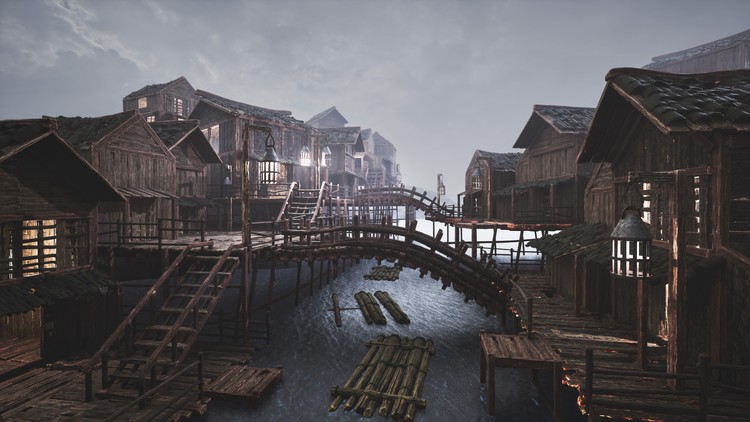
Efficient Environment Creation For Games
Published 11/2024
MP4 | Video: h264, 1920x1080 | Audio: AAC, 44.1 KHz
Language: English | Size: 39.93 GB | Duration: 26h 10m

Create Modular environments for games.


What you'll learn
Modular environment creation
Translate current day references to old environments
Learn Primitive Geometry Nodes Setup for Fast Procedural Meshes
Learn Primitive UE5 Blueprint for Fast Iteration

Requirements
I expect you to have some prior knowledge in game environment art

Description
Do you want to create environments for games without creating everything from scratch?Then I welcome you to Efficient Environment Creation For Games.About Me:My name is Arash Aref and I teach 3d game environment art with a love for Lighting And Prop and Material creation. I have had lots of happy students who enjoy learning new techniques.By the End Of This Course, You Will Be Able To:Create Environments EfficientlyRe-use What You Have Already Created To Save TimeLearn Primitive Geometry Nodes Setup for Fast Procedural MeshesLearn Primitive UE5 Blueprint for Fast IterationWhat You Will Learn:Translate current day references to old environmentsKit-Based workflow for fast iterationModular environment creationRe-using what you already have to save time and energy in productionCourse Project Overview:We will start with taking a look at our reference board to get an idea, but since our reference board belongs to the current day and our goal is to create an ancient environment; we will use our imagination. Then using the knowledge gained from the references we start the blokcout process to test our ideas to make sure they work. The next step is to start creating the kits and using the existing kits we will create a complete environment. We finish the course by creating a simple water material and lighting and post processing.Who is This Course For?The course is for those who want to learn fast environment creation techniques.The course is also for artists who want to speed up their workflow in environment art.Who is Not The Ideal Student For This Course?This course is not designed for absolute Blender beginners.What Are The Requirements or Prerequisites For Taking This Course?I expect you to have some prior knowledge in game environment artJoin Me Now:So if you want to learn more techniques to efficient environment creation, then join me now, and take your skills to the next level. Don't forget that investing in yourself will pay for the rest of your life. Hope to see you in the course.

Overview
Section 1: Introduction

Lecture 1 Introduction

Lecture 2 Download Project Files

Section 2: Chapter 2 _ Modular Environment Creation

Lecture 3 Planning And References

Lecture 4 Gaea Terrain Creation

Lecture 5 Testing The Composition

Lecture 6 Intro To Midpoly Modeling

Lecture 7 Finishing The Mid-Poly Phase

Lecture 8 Intro To Kit-Based Workflow

Lecture 9 First Pass Of Wood Sculpt

Lecture 10 Mid-Level Wood Sculpt

Lecture 11 Finishing Wood Sculpting

Lecture 12 Unwrapping The Wood Meshes

Lecture 13 Baking And Testing Textures

Lecture 14 Start With Modular Kits

Lecture 15 Attic And More Kits

Lecture 16 Finish The First Building

Lecture 17 Variation For Existing Kits

Lecture 18 Finishing The First Level

Lecture 19 Export Modular Kits To Ue5

Lecture 20 Finishing Buildings In Ue5

Lecture 21 Creating The Platform

Lecture 22 Creating The Connections

Lecture 23 The Stairs And Variations

Lecture 24 Blockout The Bridge

Lecture 25 Finishing The Bridge

Lecture 26 Railings On The Platforms

Lecture 27 Roof Shingles Kit Sculpting

Lecture 28 Shingles Sculpt Finalized

Lecture 29 Bake And Texture Shingles

Lecture 30 Geometry Nodes For Rooftops

Lecture 31 Rooftops Continued

Lecture 32 Procedural Shadow Catchers

Lecture 33 Variation In Modular Kits

Lecture 34 More Variation For Building

Lecture 35 Rooftop Variations

Lecture 36 Finishing The Rooftops

Lecture 37 Create The Building Frames

Lecture 38 Wood Texture Completed

Lecture 39 Master Material Creation

Lecture 40 Material Instances

Lecture 41 Second Uv Channel Explained

Lecture 42 Second Uv Channel And Id

Lecture 43 Testing Second Uvs In Ue5

Lecture 44 Variations In The Materials

Lecture 45 Completing The Setup

Section 3: Chapter 3 _ Details, Lighting And Post Processing

Lecture 46 Creating The Rafts

Lecture 47 Lantern And Rgb Masking

Lecture 48 Water Material Surface

Lecture 49 Water Color Blend

Lecture 50 Initial Lighting Setup

Lecture 51 Completing The Lighting

Section 4: Chapter 4 _ Conclusion

Lecture 52 Thank You

The course is for those who want to learn fast environment creation techniques.


531538791_efficient_environment_creation_for_games.jpg


Download from RapidGator


Download from Keep2Share


Premium Links


579fc92aacf6a8d13465bfc160ffd5b4.jpg


TTC - Introduction to Cognitive Science
Released 7/2024
MP4 | Video: h264, 1280x720 | Audio: AAC, 44.1 KHz, 2 Ch
Genre: eLearning | Language: English | Duration: 24 Lessons ( 13h 3m ) | Size: 10.8 GB

For millennia, philosophers and scientists have been trying to unlock the secrets of the mind with only limited success-until now. Today, with modern technologies, including the best in neuroscience, medical imaging, and recent advances in artificial intelligence, we are making more progress than ever before.

InIntroduction to Cognitive Science, Professor Thad A. Polk takes you on a fascinating tour of the latest discoveries in the relatively new field of cognitive science. The goal is nothing less than understanding every interaction working in the human brain to produce all forms of cognition. Computer scientists, engineers, linguists, physicians, psychologists, and more are all pursuing the mysteries of the most complex structure in the known universe: the human brain.

But how do we learn about the mechanisms underlying human cognition? Unlike scientists studying other parts of the body, hands-on examination of the brain yields limited results. We can certainly learn about the brain's structure, but where is the "thinking"? How can we best use our mind to learn about the mind?

In 24 exciting lectures, Professor Polk will share dozens of the most challenging questions in cognitive science today: How do humans process language? How do we make decisions, and why do we so often regret them later? What are emotions, and why do we feel them? How does the brain affect our visual perception of the world? In this course, Professor Polk gives the latest, exciting answers for these questions, and many more.

Getting around the Black Box

Since we cannot directly see how the objective, measurable activity in the brain becomes our subjective world, scientists often describe the mind as hidden in a "black box." Cognitive scientists use a variety of interdisciplinary methods to get around this fundamental problem. In Introduction to Cognitive Science, you'll learn about contributions from

Psychologists. Beginning in the 1980s, research psychologists began using violation-of-expectation experiments with infants and young children, discovering that the children had a much deeper understanding of the world at an earlier age than we realized.
Neurologists/Neurosurgeons. Scientists would like to know more about how the brain represents the sounds of human speech. Recent studies by neurosurgeons implanting electrodes in the left temporal lobes of epilepsy patients showed that specific populations of neurons respond to very specific sounds of human speech.
Artificial Intelligence (AI) Engineers. Recent developments in AI such as convolutional neural networks and generative pretrained transformer (GPT) models provide new tools for cognitive scientists to better model and investigate brain functions, including visual perception, language, and reasoning.

Join In the Experiments Yourself

In this course, you'll participate in some fascinating experiments. It's one thing to learn from lectures or books about different types of memory, for example, but in this course, you will learn firsthand about

Expectations and Perception. We assume that we see the reality of the world around us, but that is just not the case. In this exercise, you'll realize how significantly your expectations and assumptions influence what you see. Looking at a picture of dents and bumps on the side of a battleship, you'll discover that your perception is controlled by your unacknowledged assumption that the light source is at the top of the picture. But even when you're made aware of that assumption, it feels impossible to change that expectation.
Working Memory. This is the memory you use to remember something for a short period of time for a particular purpose, e.g., a telephone number (just until you can write it down) or a grocery list (just until you finish your shopping). In this experiment, you'll be asked to remember a very short list of words. Within a few minutes, you'll discover whether your working memory stores the meanings of words-or just their sounds.
Vision and Perception. In this experiment, you'll watch a ball moving across a screen, and you'll notice a blank space where the ball disappears. You've discovered your blind spot in that eye, the place on your retina without any photoreceptors, the place where the optic nerve passes from the eye to the brain. But when you watch the same ball with stripes above and below, you don't see a blind spot in the stripes. Why not? And what does that tell you about the role the brain plays in visual perception and conscious experience more generally?

When Things Go Wrong

As much as we might like to "tinker around" with the brain as if it were a regular physical machine, that's just not possible with human beings. But sometimes, an accident or disease creates a specific change in the brain that scientists can study. The damaged brains of many such patients have led to profound changes in our understanding of the healthy brain and cognition. In this course, you will also learn about

Louis Victor Leborgne. At age 30, Leborgne suddenly lost his ability to speak, with the exception of one syllable. Despite that profound deficit, his mental and physical abilities seemed to be relatively normal. Based on the work of his physician, Paul Broca, the hypothesis that different functions were localized in different brain regions began to be taken much more seriously.
Phineas Gage. Gage suffered a catastrophic injury when a piece of metal hit his head in an explosion, going through the left frontal lobe of his brain and out the top of his head. Amazingly, Gage survived, but was left with permanent brain damage. From this widely discussed case, scientists began to propose that the frontal lobes play a major role in personality, which has since been substantiated.
"SM." SM is a woman who was generally fearless due to an extremely rare genetic disorder that led to the deterioration of her brain's amygdala. She also couldn't recognize fear in other people, even though her other cognitive functions were fine. Scientists who worked with her were able to learn much more about the neural basis of emotion than had been known at the time, including the fact that the brain contains specialized circuits for fear and multiple fear pathways.
As you make your way through this engaging course, you'll find many answers to questions about your memory, your baby's development, vision, illusions, artificial intelligence, and much more. But some questions will remain: What are the mechanisms underlying consciousness? Can artificial intelligence produce consciousness? And if that is possible, what does it mean for us?

It's all right that we haven't answered all the questions yet. After all, cognitive science is trying to understand and model nothing less than the most sophisticated structure we know.

What Will You Learn?
Learn how your brain affects what you see

Explore the many types of memory

Discover new modeling tools provided by artificial intelligence


Homepage


525500400_introduction_to_cognitive_science.jpg


Download from RapidGator


Download from Keep2Share


Premium Links


Archive password: largest_country_in_the_world_by_population
 
40005b0577bf96fd9a79009ea9db6a43.jpg


Java Spring Framework 6 with Spring Boot 3
Last updated 10/2024
MP4 | Video: h264, 1920x1080 | Audio: AAC, 44.1 KHz
Language: English | Size: 46.55 GB | Duration: 46h 14m

Master Java, Spring 6 and Spring Boot 3 with JDBC, JPA, Security, Docker and Microservices with Telusko


What you'll learn
Core Java
Spring Boot
Spring Core - IoC
Spring MVC
Spring AOP
Spring Data JPA
Spring REST
Spring Security
Docker
Microservices


Requirements
Knowledge of SQL and databases is helpful
Basic Knowledge of HTML is helpful


Description
Spring 6
is a functional web framework for back-end development and is quite famous among Java developers when it comes to designing an enterprise-based application.
It consists of lots of modules and projects, which makes it very huge.
The
Spring Framework
and
Spring Boot
enable developers to create high-performing, reusable, easily testable, and loose-coupling enterprise Java applications
It can be used to develop any Java application.
Knowledge of Spring Framework has a huge demand in the enterprise market, and Spring Framework developers are paid handsomely.
Having Spring Framework on your resume will highlight you among other Java developers.
This course offers hands-on experience building Spring Framework apps using Spring Boot.
This course will be interactive and fun, as I will code all the projects from scratch.
By taking this course, you will have the latest skills that you need to build real apps using the Spring Framework.

Requirements for this Course

Basic Knowledge of HTML is helpful
Knowledge of SQL and databases is helpful
Learn these important topics
Java
JDBC
Maven
Spring Boot
Spring Core (IoC)
Spring MVC
Spring AOP
Spring Data JPA
Spring REST
Spring Security
Docker
Microservices
Who this course is for

The course is for all Java developers, from beginners to advanced, who want to master Spring framework modules with Spring Boot
This learning path is for developers who wish to create their own web apps with Spring 6
This course is ideal for developers who wish to use the Spring Frameworks for enterprise application development
Who this course is for
The course is for all Java developers: beginners to advanced who want to master Spring framework modules with Spring Boot
This learning path is for developers who wish to create their own web applications with Spring 5
This course is ideal for developers who wish to use the Spring Frameworks for enterprise application development


Homepage

532203657_java_spring_framework_6_with_spring_boot_3.jpg


Download from RapidGator


Download from Keep2Share


Premium Links


89d37255d3cc52bf6ff851edbdd2194d.jpg


TTC - History of Ancient Rome
Last updated 10/2024
MP4 | Video: h264, 1280x720 | Audio: AAC, 44.1 KHz, 2 Ch
Genre: eLearning | Language: English | Duration: 48 Lessons ( 24h 12m ) | Size: 20.2 GB

There are many reasons to study ancient Rome. Rome's span was vast. In the regional, restless, and shifting history of continental Europe, the Roman Empire stands as a towering monument to scale and stability. At its height, the Roman Empire, unified in politics and law, stretched from the sands of Syria to the moors of Scotland, and it stood for almost 700 years.

Rome's influence is indelible. Europe and the world owe a huge cultural debt to Rome in so many fields of human endeavor, such as art, architecture, engineering, language, literature, law, and religion. In this course you see how a small village of shepherds and farmers rose to tower over the civilized world of its day and left an indelible mark on history.

Rome's story is riveting. Professor Garrett G. Fagan draws on a wealth of primary and secondary sources, including recent historical and archaeological scholarship, to introduce the fascinating tale of Rome's rise and decline. You learn about all the famous events and personalities

Horatius at the bridge
Hannibal crossing the Alps during Rome's life-or-death war with Carthage
Caesar assassinated before a statue of his archrival Pompey
Doomed lovers Antony and Cleopatra
Mad and venal emperors Nero and Caligula
The conversion of Constantine, and more.
From pre-Roman Italy through the long centuries of Republican and then Imperial rule, Professor Fagan interweaves narrative and analysis. Chronologically, the focus is on the years from 200 B.C.E. to 200 A.D., when Roman power was at its height.

The narrative of the rise and fall of Rome is itself compelling, and Professor Fagan's richly detailed and often humorous discussions of Roman life are uniquely memorable. You study women and the family, slaves, cities, religious customs, the ubiquitous and beloved institution of public bathing, the deep cultural impact of Hellenism, and such famous Roman amusements as chariot racing and gladiatorial games.

"Images and themes derived from or rooted in ancient Rome continue to exert an influence on the modern mind," says Professor Fagan. "Unlike many ancient states, Rome changed hugely in many spheres over the course of its 1,500-year history, and thus the history of Rome is an engaging, complex, and challenging subject."

From Village to Monarchy to Republic

The first 10 lectures of this course map the development of a group of preliterate hamlets into the Roman Republic. In them, you learn about

The nature of the historical evidence for antiquity
The geopolitical and cultural shape of pre-Roman Italy
The foundation legends of Rome itself
The cycle of stories that surrounds the kings of Rome
The shape of early Roman society
The fall of the monarchy at Rome and the foundation, in its wake, of the Republic (traditionally dated to 509 B.C.E.).
These lectures examine two major forces that shaped the early Republic: the Struggle of the Orders and Roman military expansion in Italy. The lectures also explain how the Romans ruled their conquered territories in Italy, setting the foundations for the later acquisition and maintenance of the Empire.

Early Expansion and Rapid Collision

Moving outside of Italy, you next explore the expansion of Roman power in the 3rd and 2nd centuries B.C.E.

In two lectures Professor Fagan charts the course of the Romans' first two titanic struggles with their archrival in the west, Carthage.

In these wars, the Romans developed a large-scale navy, sent armies overseas, acquired foreign territories, and displayed what was to become one of their chief characteristics: a dogged determination to prevail, even in the face of seemingly impossible odds. This was particularly clear in the Second Punic War, when the gifted Carthaginian general Hannibal roamed freely in Italy, threatening the city of Rome itself.

Greek Influence and Roman Government

In Lectures 16-19, Professor Fagan pauses the narrative to examine the influence of Greek culture on Rome and the nature of the Roman Republican system of government.

This latter system-complex and replete with archaisms and redundancies-has influenced the form of several modern policies, including that of the United States.

Finally, Professor Fagan examines the pressures of empire on Roman society, charting considerable social, economic, and political changes brought about by Rome's overseas expansion. On the rocks of these pressures, the Republic was destined to founder.

The Roman Revolution
Lectures 20-27 follow the course of what modern scholars have termed the "Roman Revolution."

In the century between 133 and 31 B.C.E., the Roman Republic tore itself apart. It is a period of dramatic political and military developments, of ambitious generals challenging the authority of the state, of civil wars and vicious violence, and of some of the first great personalities of European history: Marius, Sulla, Pompey, and Julius Caesar.

The story is intriguing, complicated, and at times horrendous, and it illustrates perfectly the historical principle of contingency. With a few exceptions, each protagonist in the drama of the Revolution acted within the bounds of necessity or precedent, and thereby set new and dangerous precedents for later protagonists to follow.

In this way, the Roman Revolution was not a staged or planned event, but a cumulative snowball of crises that combined to shatter the system of Republican government.

After pausing to examine the social and cultural life of the Late Republic, you return to the last phases of the Revolution and the rise to power of the man who was to become Rome's first emperor, Augustus.

The Roman Empire
Lectures 31-33 examine the long reign of Augustus (31 B.C.E.-14 A.D.) and his new political order, the Principate. The Principate stood for centuries and brought stability and good government in a way that the old Republic could not.

Augustus's solution to the Republic's problems was clever and subtle. It also had a flaw at its core-the issue of succession-and what happened when an emperor died was to prove the single most destabilizing factor in the Principate's existence.

The next three lectures cover the early Imperial period, from the death of Augustus to the instability of the 3rd century. This is the era of such familiar Roman historical figures as Caligula, Claudius, Nero, and Hadrian.

Finally, Professor Fagan shows how the problem of the succession combined with ominous developments among Rome's external enemies in the 2nd and 3rd centuries A.D. to generate a period of great crisis, indeed near-collapse, in the mid-3rd century A.D.

Life in Classical Rome
Leaving the Empire under pressure, Professor Fagan considers life in classical Roman civilization in nine lectures. He explores the broad shape of Roman society, slavery, the Roman family, the role of women in Roman society, urbanism, public leisure and mass entertainment, paganism, and the rise of Christianity.

The End and a New Beginning
To conclude the course, the final three lectures return to the Empire's last centuries. The Empire is restored to order and stability at the end of the 3rd century, but under an increasingly oppressive government.

The institutionalization of Christianity to legitimize Imperial power and a more openly autocratic regime created, in many ways, a Roman Empire closer to medieval Europe than to the Empire of Augustus. As such, the later Empire is treated only in general terms here, since it warrants closer study by itself.

The course ends with one of the great questions in history: Why did the Roman Empire fall? We see how, in the eyes of most modern scholars, the Empire did not fall at all but just changed into something very different, a less urbanized, more rural, early medieval world.

Homepage


528214814_the_history_of_ancient_rome.jpg


Download from RapidGator


Download from Keep2Share


Premium Links


Archive password: largest_country_in_the_world_by_population
 
d007fb9584381c5d0f09fa3543129c65.jpg


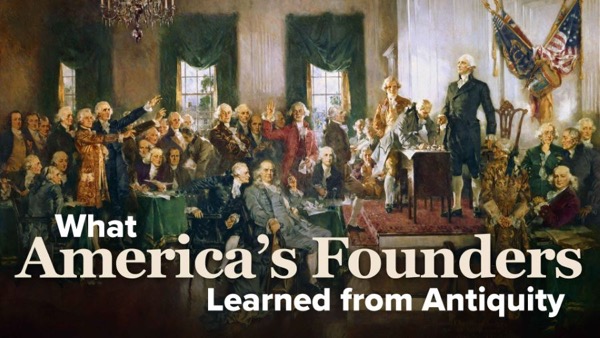
TTC - What America's Founders Learned from Antiquity
Released 7/2024
MP4 | Video: h264, 1280x720 | Audio: AAC, 44.1 KHz, 2 Ch
Genre: eLearning | Language: English | Duration: 24 Lessons ( 13h 1m ) | Size: 10.8 GB

The founding of the United States was a daring and revolutionary political experiment. In a radical break from the historical past, American colonists threw off the yoke of monarchy and aristocracy to declare a completely new form of government.

In creating this new regime, the founders took inspiration from the political systems of ancient Rome and Greece. But what exactly were these influences? And how deep did they go? What were the founders' sources, and what precisely did they take from them? And did the founders' interface with the ancient world shape the new nation in far-reaching ways?

To grapple with these questions is to uncover a complex and revealing story-One that sheds a profound light on the political, philosophical, and human issues that surrounded the American conflict with Britain, and which blazed a new system of government that would change the world.

What America's Founders Learned from Antiquity reveals the influences of the ancient world on the American founders. In 24 lectures, taught by Professor Caroline Winterer of Stanford University, you'll explore the thought and actions of the American revolutionaries to see how classical antiquity shaped every aspect of the revolutionary and founding era. You'll better understand why it was natural for American revolutionary thinkers to turn to classicism to make sense of their growing disunity with the British, and to envision and forge a new kind of government.

As you'll witness throughout the course, the founders dug deeply into classical texts, from Homer, Virgil, and Cato to the writings of historians such as Tacitus, Sallust, and Livy, with particular focus on the political theory and philosophy that surrounded the ancient Roman republic and the subsequent and corrupt Roman empire.

A Profoundly Transformative Epoch

As a backdrop to the story, the world of classicism deeply permeated the culture of the founding era. And, ancient political ideology, as revealed in specific texts, figured integrally in the thinking of the revolutionaries as they charted a new course and a new republic. Consider

At critical moments in his military and political life, George Washington modeled the actions of the Roman general Fabius and the soldier Cincinnatus.
In his essays defending the new federal Constitution, Alexander Hamilton used examples from Roman history to argue for a powerful central government and presidency.
The Louisiana Purchase of 1803, the signature achievement of Thomas Jefferson, was undertaken to keep the United States as a republic of farmers, modelling the ancient Roman republic.
In James Madison's essay Federalist #63, he wrote of his admiration for the balancing effects of the Senate of ancient Carthage.
In drafting the Massachusetts Constitution of 1780, John Adams spoke of the purpose of government in terms laid out by Aristotle.
As the course unfolds, you'll look in detail at the thinking of many of the iconic figures in the story, such as James Madison, Thomas Jefferson, Benjamin Franklin, and Thomas Paine, and how the influences of classicism were different for each founder. And you'll note that the lessons they took from ancient thinkers bore both on what to do to create a viable and stable republic and equally on what not to do.

You'll trace how fears of tyranny, decline, and fall, harking back to ancient Rome and Greece, motivated revolutionary calls for a truly representative government by the people and for the people; how ancient political ideas shaped the new US Constitution in 1787; and, most remarkably, how the founders went far beyond classical examples to create a government that was truly revolutionary and unique, which no Greek or Roman would have dared to imagine.

In What America's Founders Learned from Antiquity, you'll experience the thrilling atmosphere of the revolutionary era, as you gain extraordinary insight into both the founding and the unfolding of the American republic.

Thinking That Changed the World

Professor Winterer demonstrates an astonishingly comprehensive knowledge of the era, together with a keen skill at unpacking the currents of thought and experience that drove the revolutionaries. In a multilayered look at the founders' epoch, you'll investigate key features of the story, such as

A Culture of Classicism. Explore the ethos of classicism that deeply imbued the world of the founders, as Americans of the Colonial era surrounded themselves with the Greek and Roman classical world, which, in John Adams's words, offered "models to all mankind" for education, beauty, art, architecture, and politics. Following the Revolution, see how the architecture and design of Neoclassicism became an expression of the republican ideals of the new nation.
The Clash with Britain. Discover that, for founding-era thinkers, Roman and Greek political philosophy became a framework for understanding their own turbulent times. In the wake of oppressive British taxation, track the ways in which Roman history served as a guide, as revolutionaries identified with the virtues of the Roman republic of farmers, viewing the British as a monarchical empire veering into tyranny, as had the Roman empire.
Revolutionary Spirits. Over five lectures, dig deeply into the thought of iconic founders Washington, Adams, Madison, Jefferson, and Franklin. Observe how influences such as Adams's study of Cicero, Franklin's reading of Socrates, and Jefferson's "classical republicanism" shaped their public actions. Note the ways in which American women passionately embraced classicism, using it to work for political freedoms, broader equality, and human rights.
Classicism, Christianity, and the Enlightenment. In grasping the mindset of the Revolutionary era, uncover the synthesis of Christian values with the ethical precepts of classical philosophers that characterized the ideals of the founders; also assess key currents of Enlightenment thought, such as the novel conception of progress, which countered the earlier cyclical view of history, deeply informing the founders' vision of a republic which could endure through time.
Surpassing the Ancients: The US Constitution. Take account of the integral classical influences in the US Constitution, including Aristotle's ideas about "mixed government" and the views of Polybius on the fragility of republics. Then see how the framers, going far beyond the ancients, created a radically new political model based in the unprecedented conception of equality, separating the branches of government, and placing all power in the hands of one element: the people.
A Revolutionary Possibility

In a wide-ranging view of these amazing times, you'll explore matters such as the interface of classicism with both enslaved Africans and Native Americans. You'll learn that the revolutionaries' immersion in classicism extended beyond Rome and Greece to encompass Carthage, Germania, and even ancient Egypt. And you'll discover that classical painting, architecture, and interior design aided Americans in crafting a new identity, distinct from the European world.

What America's Founders Learned from Antiquity offers you a unique and penetrating look at the thinking that forged a truly revolutionary form of government-a system that remains a major force in today's world. Within this extraordinary series, you'll discover a new way of appreciating the exciting history of the birth of the American republic.

What Will You Learn?
Discover how the revolutionaries identified with the ancient Roman republic

Dig deeply into the classical thought of five of the iconic founders

Learn how the Founding Fathers created a radically new political model based in the conception of equality

See how classicism affected women's rights, the enslaved in America, and Native peoples of the Americas


Homepage


525496754_what_america-s_founders_learned_from_antiquity.jpg


Download from RapidGator


Download from Keep2Share


Premium Links


Archive password: largest_country_in_the_world_by_population
 
e5cd0ec6cb0704510ae1fa299f456324.jpg


The Complete Guide to Defense and Counterattack in Chess
Published 11/2024
Created by Tryfon Gavriel
MP4 | Video: h264, 1280x720 | Audio: AAC, 44.1 KHz, 2 Ch
Genre: eLearning | Language: English | Duration: 102 Lectures ( 22h 0m ) | Size: 26.5 GB

Master Defense and Counterattack Strategies: Learn Korchnoi's Techniques in Defense, Counterplay, and Attacker Psycholog


What you'll learn
Ability to analyze attacking moves with a defensive mindset
Ability to neutralize aggressive opponents through precise defense
Ability to capitalize on opponent overextensions in attacks
Ability to exploit weaknesses created by opponents' aggressive play
Ability to maintain control of the board while under pressure
Ability to provoke opponents into making risky sacrifices
Ability to identify and exploit soft spots in the opponent's position
Ability to leverage defensive positions into counterattacking opportunities
Ability to use Korchnoi's strategies to handle relentless attackers
Ability to find creative defensive resources in difficult positions
Ability to recognize key moments to transition from defense to offense
Ability to defend accurately against complex tactical threats
Ability to exploit the "weakness of the last move" principle
Ability to turn defensive maneuvers into positional advantages
Ability to employ patience as a strategic weapon in defense
Ability to create favorable endgame transitions through defense
Ability to counterattack by exploiting opponent's lack of coordination
Ability to neutralize the opponent's strongest attacking pieces
Ability to manage complex pawn structures with defensive foresight
Ability to see defensive exchanges that create counterplay
Ability to use defensive sacrifices to stabilize the position
Ability to anticipate and block key attacking routes
Ability to create threats that discourage opponent's aggression
Ability to leverage quiet, solid openings as black to frustrate attackers
Ability to exploit weaknesses in the opponent's pawn structure
Ability to use the f-file as a counterattacking resource
Ability to hold positions with minimal material disadvantage
Ability to counterattack with precise and disciplined moves
Ability to apply Korchnoi's mindset of calculated defense
Ability to balance safety with activity in defensive play
Ability to weaken the opponent's king position through accurate defense
Ability to turn pawn weaknesses into strengths in endgames
Ability to defend without compromising positional integrity
Ability to convert defensive play into a winning strategy
Ability to manage piece imbalances with defensive skill
Ability to exploit opponent's lack of endgame knowledge
Ability to recognize and create long-term defensive plans
Ability to create opportunities for central counterplay
Ability to find positional sacrifices that neutralize attacks
Ability to leverage exchange sacrifices to weaken attacks
Ability to defend against multiple threats with limited resources
Ability to use "thorn pawns" as a defensive asset
Ability to retain king safety while defending aggressively
Ability to minimize the impact of opponent's strong pieces
Ability to evaluate whether the king is safe in the center
Ability to employ blockades to counter pawn majorities
Ability to counterattack with control of semi-open files
Ability to manage double-edged positions defensively
Ability to disrupt opponent's plans with well-timed defenses
Ability to counterattack by utilizing the center effectively
Ability to use defensive exchanges to simplify the position
Ability to identify potential counterplay in complex positions
Ability to find unexpected counterattacks against aggressive plans
Ability to force exchanges that weaken opponent's position
Ability to leverage the queen's flexibility in defense and attack
Ability to defend and thrive under time pressure
Ability to maximize piece activity in defensive situations
Ability to recognize when to exchange bishops for safety
Ability to absorb attacks while preparing counterplay
Ability to identify and control key squares for defense
Ability to exploit temporary king exposure in counterattack
Ability to defuse attacks through king evacuation strategies
Ability to exploit diagonal weaknesses in opponent's defense
Ability to counterattack by breaking opponent's pawn chains
Ability to recognize when to prioritize piece activity over structure
Ability to develop a defensive mindset under pressure
Ability to defend dynamically with mobile pawn structures
Ability to utilize active rooks in defense and counterplay
Ability to create imbalances to unsettle opponent's attack
Ability to counter opponent's castling plans with targeted play

Requirements
Basic Understanding of Chess Rules and Concepts: Familiarity with fundamental chess rules (such as piece movement and castling) and basic tactical patterns (like forks, pins, and skewers) will enhance your learning experience.
Interest in Strategic and Positional Play: While tactical awareness is useful, a willingness to explore strategic and positional concepts in chess will help you fully appreciate Korchnoi's style of defense and counterattack.

Description
Unlock the secrets of resilient chess defense and powerful counterattack with this in-depth course inspired by the legendary Viktor Korchnoi, renowned for his masterful defensive skills and razor-sharp counterattacks. Whether you're a beginner or an intermediate player looking to solidify your defensive strategies, this course provides you with the tools to handle attacks, build counterplay, and turn your defensive positions into winning opportunities.What You'll Learn in This Course:Master Defensive Chess Strategies: Discover essential techniques to safeguard your position, neutralize threats, and maintain control even under pressure. You'll explore how to use patience, anticipation, and strategic foresight to absorb attacks without losing ground.Counterattack Techniques: Korchnoi's games are filled with instructive counterattacks, where he turns seemingly passive defenses into decisive blows against his opponents. Learn how to transition from defense to offense and capitalize on opponent weaknesses with precision.Attacker Psychology and Exploitation: Understand the psychology of aggressive players and learn to use it to your advantage. By coaxing opponents into overextending, you'll exploit weaknesses and create counterplay opportunities that turn their attack into your advantage.Positional and Tactical Defense: This course covers both positional defense-using well-placed pieces to counteract opponent plans-and tactical maneuvers that disrupt attacks and win material. From pawn structure management to piece coordination, you'll have a complete toolkit for defensive success.Endgame Defense and Transition: Explore how defensive techniques extend to the endgame, where Korchnoi's expertise shines. Learn when to simplify into a favorable endgame, neutralize threats, and create winning chances even with limited material.Course Highlights:In-Depth Analysis of Korchnoi's Games: Study real-game examples and analyze Korchnoi's moves, decisions, and mindset as he defends and counterattacks against world-class opponents.Structured Defense and Counterplay Sections: Each section is dedicated to a specific aspect of defense and counterattack, from handling open files and central pawn structures to defending with the "bad" French bishop.Real-World Scenarios for Immediate Improvement: Each lecture focuses on practical, real-world scenarios you can apply directly to your own games. This isn't just theory-it's hands-on chess improvement that will elevate your game.Lessons on Strategic Depth and Positional Play: Embrace a new level of positional understanding by studying Korchnoi's unique perspective on chess defense, and apply these insights to gain control of the board.Who Should Enroll in This Course?This course is perfect for chess players of all levels, especially those looking to build a solid defensive foundation, learn the art of counterattacking, or expand their understanding of positional play. Whether you're an attacking player seeking balance, a defensive player needing new techniques, or a fan of Korchnoi's legendary style, this course has something to offer.By the end of this course, you'll have developed the mindset and skills needed to transform your chess game, handle even the most aggressive opponents, and turn defense into a powerful weapon.Enroll today to discover Korchnoi's techniques and bring a new level of resilience and strategy to your chess game!

Who this course is for
Defensive-Minded Players who want to deepen their understanding of patient, calculated defense and learn how to turn defensive positions into winning opportunities.
Aggressive Players interested in balancing their style by learning how to handle counterattacks and capitalize on opponents' overextensions.
Fans of Korchnoi's Unique Style who want to explore his powerful approach to defense and counterattack, studying his games and mindset to unlock new strategic insights.
Players Looking to Build a Strong Psychological Game who want to master the mental aspects of defense, using patience, discipline, and strategic foresight to turn pressure into control.


532363591_the_complete_guide_to_defense_and_counterattack_in_chess.jpg


Download from RapidGator


Download from Keep2Share


Premium Links


6ddd8aa9a1258f2f010607200c3f2930.jpg


ROBLOX Studio 2024: The Ultimate Scripting Mastery Course
Last updated 10/2024
MP4 | Video: h264, 1280x720 | Audio: AAC, 44.1 KHz, 2 Ch Language: English + All subtitles | Duration: 56h 0m | Size: 30.8 GB

A guided Lua scripting journey to go from ZERO to HERO in ROBLOX Studio!


What you'll learn
Become competent in Lua / Luau scripting!
Be able to solve and debug problems in your scripts!
Understand and use ROBLOX studio efficiently!
Understand and utilize the many services available to scripters from the ROBLOX API.
Plan out and create ROBLOX games.
Store and retrieve player data in DataStoreService.
Understand the Client-Server communication model.
Create and script your first games!
Once you learn one programming language, you can learn them all!
Get support in the Q&A section!


Requirements
No previous programming experience required!
Motivation, determination, and self-discipline to learn and create.
Computer & internet connection.


Description
USE CODE LUAU_CODING FOR A SWEET DISCOUNT!Thank you for viewing this course!Are you a newbie looking for guidance in the world of ROBLOX game development? Or perhaps are you a seasoned developer who wants to learn new skills?Then this complete mastery course is the perfect guide for you to learn the many important tools in ROBLOX Studio that you'll need to become a highly skilled ROBLOX developer!You will learn all of the essentials of the Luau programming language to script games, create tools, handle player data, create game passes, and much more!If you've always desired to create games on ROBLOX, but you had no idea where to begin, then this is the ultimate mastery course for you!Perfect for Developers in All Skill RangesWhether you're just a beginner starting your journey or someone who has already developed in ROBLOX Studio, absolutely no prior experience in programming is required!Comprehensive Foundation into the World of ScriptingThis course will first introduce you to all of the essential tools of Studio and Lua scripting, and then we'll move into more advanced topics so you will develop a well-rounded skillset in ROBLOX Studio crucial for game creation.Over 50 Hours of Curated LecturesThe ROBLOX API is vast and full of many features, and this course will make sure you understand how to utilize these many useful features in your games with an abundance of high-quality lectures to guide you the entire way. You won't be left behind!Work Together with me on Many ProjectsThis course includes many projects to help you understand and learn how to practically implement the knowledge you've gained from previous lectures to allow you to unleash your creative drive. This includes working with me on two complete game projects, and not just a boring obby or simulator game, but a zombie-apocalypse wave game and a horror game!Strong Community Support and Instructor CommunicationOnce enrolled, you can join our online community of students in many skill ranges and get scripting assistance from me, your instructor, as well as other students in the classroom. This is an opportunity to engage and share your projects with us and get help when you need it the most!All Resources Made Available to YouAll resources used during the lectures, including code, models, plugins, and documentation will be attached with their associated lectures, so it's easy for you to look back at anything you didn't understand the first time. You'll never be left in the dark!Learn Useful Services Crucial for Game DevelopmentWe will be taking a look at many useful services and features not commonly taught among ROBLOX developers, such as the DataStoreService, PathfindingService, ContextActionSerivce, MemoryStoreService, developer products, raycasting, instance streaming, and much, much more!And with more than 200+ hours spent prepping, scripting, recording, editing, and curating this mastery course, you are spending less than 25 cents (USD) for one hour of my time!Whether you've been thinking about ROBLOX game development for a while or you're already a seasoned developer, this course will push you to your limits and open up new doors of game development to help you create whatever you imagine! Who knows, maybe YOU can be the next front-page ROBLOX developer! With all of that out of the way, I'm excited to work with you and I'll see you in the classroom soon!USE CODE LUAU_CODING FOR A SWEET DISCOUNT!

Who this course is for
Beginner Lua / Luau programmers
Aspiring ROBLOX game developers
Programmers that do not know Luau syntax or ROBLOX studio
Programmers already on ROBLOX who may want extra help or insight


Homepage

533936512_roblox_studio_2024_the_ultimate_scripting_mastery_course.jpg


Download from RapidGator


Download from Keep2Share


Premium Links


351edfac25fe60e0716c3707865f0873.jpg


Data Science Marathon: 120 Projects To Build Your Portfolio
Last updated 11/2024
Created by Pianalytix • 75,000+ Students Worldwide
MP4 | Video: h264, 1280x720 | Audio: AAC, 44.1 KHz, 2 Ch
Genre: eLearning | Language: English + subtitle | Duration: 796 Lectures ( 133h 30m ) | Size: 64.6 GB

Build 120 Projects in 120 Days- Data Science, Machine Learning, Deep Learning (Python, Flask, Django, AWS, Heruko Cloud)


What you'll learn
Real life case studies and projects to understand how things are done in the real world
Implement Machine Learning algorithms, Present Data Science projects to management
Use SciKit-Learn for Machine Learning Tasks
Explore how to deploy your machine learning models.
Have a great intuition of many Machine Learning models
Learn which Machine Learning model to choose for each type of problem
Learn best practices when it comes to Data Science Workflow
Learn to pre process data, clean data, and analyze large data
Learn to use NumPy for Numerical Data
Use Matplotlib to create fully customized data visualizations with Python.
Explore large datasets and wrangle data using Pandas
Learn to use Seaborn for statistical plots

Requirements
Basic knowledge of Data Science

Description
In This Course, Solve Business Problems Using Data Science Practically. Learn To Build & Deploy Machine Learning, Data Science, Artificial Intelligence, Auto Ml, Deep Learning, Natural Language Processing (Nlp) Web Applications Projects With Python (Flask, Django, Heroku, AWS, Azure, GCP, IBM Watson, Streamlit Cloud).Data science is the field of study that combines domain expertise, programming skills, and knowledge of mathematics and statistics to extract meaningful insights from data. Data science practitioners apply machine learning algorithms to numbers, text, images, video, audio, and more to produce artificial intelligence (AI) systems to perform tasks that ordinarily require human intelligence. In turn, these systems generate insights which analysts and business users can translate into tangible business value.More and more companies are coming to realize the importance of data science, AI, and machine learning. Regardless of industry or size, organizations that wish to remain competitive in the age of big data need to efficiently develop and implement data science capabilities or risk being left behind.In This Course, We Are Going To Work On 120 Real World Projects Listed Below:project-1: Pan Card Tempering Detector App -Deploy On HerokuProject-2: Dog breed prediction Flask AppProject-3: Image Watermarking App -Deploy On HerokuProject-4: Traffic sign classificationProject-5: Text Extraction From Images ApplicationProject-6: Plant Disease Prediction Streamlit AppProject-7: Vehicle Detection And Counting Flask AppProject-8: Create A Face Swapping Flask AppProject-9: Bird Species Prediction Flask AppProject-10: Intel Image Classification Flask AppProject-11: Language Translator App Using IBM Cloud Service -Deploy On HerokuProject-12: Predict Views On Advertisement Using IBM Watson -Deploy On HerokuProject-13: Laptop Price Predictor -Deploy On HerokuProject-14: WhatsApp Text Analyzer -Deploy On HerokuProject-15: Course Recommendation System -Deploy On HerokuProject-16: IPL Match Win Predictor -Deploy On HerokuProject-17: Body Fat Estimator App -Deploy On Microsoft AzureProject-18: Campus Placement Predictor App -Deploy On Microsoft AzureProject-19: Car Acceptability Predictor -Deploy On Google CloudProject-20: Book Genre Classification App -Deploy On Amazon Web ServicesProject 21 : DNA classification for finding E.Coli - Deploy On AWSProject 22 : Predict the next word in a sentence. - AWS - Deploy On AWSProject 23 : Predict Next Sequence of numbers using LSTM - Deploy On AWSProject 24 : Keyword Extraction from text using NLP - Deploy On AzureProject 25 : Correcting wrong spellings - Deploy On AzureProject 26 : Music popularity classification - Deploy On Google App EngineProject 27 : Advertisement Classification - Deploy On Google App EngineProject 28 : Image Digit Classification - Deploy On AWSProject 29 : Emotion Recognition using Neural Network - Deploy On AWSProject 30 : Breast cancer Classification - Deploy On AWSProject-31: Sentiment Analysis Django App -Deploy On HerokuProject-32: Attrition Rate Django ApplicationProject-33: Find Legendary Pokemon Django App -Deploy On HerokuProject-34: Face Detection Streamlit AppProject-35: Cats Vs Dogs Classification Flask AppProject-36: Customer Revenue Prediction App -Deploy On HerokuProject-37: Gender From Voice Prediction App -Deploy On HerokuProject-38: Restaurant Recommendation SystemProject-39: Happiness Ranking Django App -Deploy On HerokuProject-40: Forest Fire Prediction Django App -Deploy On HerokuProject-41: Build Car Prices Prediction App -Deploy On HerokuProject-42: Build Affair Count Django App -Deploy On HerokuProject-43: Build Shrooming Predictions App -Deploy On HerokuProject-44: Google Play App Rating prediction With Deployment On HerokuProject-45: Build Bank Customers Predictions Django App -Deploy On HerokuProject-46: Build Artist Sculpture Cost Prediction Django App -Deploy On HerokuProject-47: Build Medical Cost Predictions Django App -Deploy On HerokuProject-48: Phishing Webpages Classification Django App -Deploy On HerokuProject-49: Clothing Fit-Size predictions Django App -Deploy On HerokuProject-50: Build Similarity In-Text Django App -Deploy On HerokuProject-51: Black Friday Sale ProjectProject-52: Sentiment Analysis ProjectProject-53: Parkinson's Disease Prediction ProjectProject-54: Fake News Classifier ProjectProject-55: Toxic Comment Classifier ProjectProject-56: IMDB Movie Ratings PredictionProject-57: Indian Air Quality PredictionProject-58: Covid-19 Case AnalysisProject-59: Customer Churning PredictionProject-60: Create A ChatBotProject-61: Video Game sales AnalysisProject-62: Zomato Restaurant AnalysisProject-63: Walmart Sales ForecastingProject-64 : Sonic wave velocity prediction using Signal Processing TechniquesProject-65 : Estimation of Pore Pressure using Machine LearningProject-66 : Audio processing using MLProject-67 : Text characterisation using Speech recognitionProject-68 : Audio classification using Neural networksProject-69 : Developing a voice assistantProject-70 : Customer segmentationProject-71 : FIFA 2019 AnalysisProject-72 : Sentiment analysis of web scrapped dataProject-73 : Determining Red Vine QualityProject-74 : Customer Personality AnalysisProject-75 : Literacy Analysis in IndiaProject-76: Heart Attack Risk Prediction Using Eval ML (Auto ML)Project-77: Credit Card Fraud Detection Using Pycaret (Auto ML)Project-78: Flight Fare Prediction Using Auto SK Learn (Auto ML)Project-79: Petrol Price Forecasting Using Auto KerasProject-80: Bank Customer Churn Prediction Using H2O Auto MLProject-81: Air Quality Index Predictor Using TPOT With End-To-End Deployment (Auto ML)Project-82: Rain Prediction Using ML models & PyCaret With Deployment (Auto ML)Project-83: Pizza Price Prediction Using ML And EVALML(Auto ML)Project-84: IPL Cricket Score Prediction Using TPOT (Auto ML)Project-85: Predicting Bike Rentals Count Using ML And H2O Auto MLProject-86: Concrete Compressive Strength Prediction Using Auto Keras (Auto ML)Project-87: Bangalore House Price Prediction Using Auto SK Learn (Auto ML)Project-88: Hospital Mortality Prediction Using PyCaret (Auto ML)Project-89: Employee Evaluation For Promotion Using ML And Eval Auto MLProject-90: Drinking Water Potability Prediction Using ML And H2O Auto MLProject-91: Image Editor Application With OpenCV And TkinterProject-92: Brand Identification Game With Tkinter And Sqlite3Project-93: Transaction Application With Tkinter And Sqlite3Project-94: Learning Management System With DjangoProject-95: Create A News Portal With DjangoProject-96: Create A Student Portal With DjangoProject-97: Productivity Tracker With Django And PlotlyProject-98: Create A Study Group With DjangoProject-99: Building Crop Guide Application with PyQt5, SQLiteProject-100: Building Password Manager Application With PyQt5, SQLiteProject-101: Create A News Application With PythonProject-102: Create A Guide Application With PythonProject-103: Building The Chef Web Application with Django, PythonProject-104: Syllogism-Rules of Inference Solver Web ApplicationProject-105: Building Vision Web Application with Django, PythonProject-106: Building Budget Planner Application With PythonProject-107: Build Tic Tac Toe GameProject-108: Random Password Generator Website using DjangoProject-109: Building Personal Portfolio Website Using DjangoProject-110: Todo List Website For Multiple UsersProject-111: Crypto Coin Planner GUI ApplicationProject-112: Your Own Twitter Bot -python, request, API, deployment, tweepyProject-113: Create A Python Dictionary Using python, Tkinter, JSONProject-114: Egg-Catcher Game using pythonProject-115: Personal Routine Tracker Application using pythonProject-116: Building Screen -Pet using Tkinter & CanvasProject-117: Building Caterpillar Game Using Turtle and PythonProject-118: Building Hangman Game Using PythonProject-119: Developing our own Smart Calculator Using Python and TkinterProject-120: Image-based steganography Using Python and pillowsTip: Create A 60 Days Study Plan Or 120 Day Study Plan, Spend 1-3hrs Per Day, Build 120 Projects In 60 Days Or 120 Projects In 120 Days.The Only Course You Need To Become A Data Scientist, Get Hired And Start A New CareerNote (Read This): This Course Is Worth Of Your Time And Money, Enroll Now Before Offer Expires.

Who this course is for
Beginners in Data Science


533161128_data_science_marathon_120_projects_to_build_your_portfolio.jpg


Download from RapidGator


Download from Keep2Share


Premium Links


cc33a432ae8c3d77282717f84363af34.jpg


Java 17 Masterclass: Start Coding in 2024
Last updated 11/2024
Created by Tim Buchalka,Tim Buchalka's Learn Programming Academy,Edwin Einsen Vásquez Velásquez,Igor Popovic,Eddie Chiang
MP4 | Video: h264, 1280x720 | Audio: AAC, 44.1 KHz, 2 Ch
Genre: eLearning | Language: English + subtitle | Duration: 735 Lectures ( 135h 29m ) | Size: 50.2 GB

Acquire Key Java Skills: From Basics to Advanced Programming and Certification - Start Your Dev Career


What you'll learn
Learn the core Java skills needed to apply for Java developer positions in just 14 hours.
Be able to sit for and pass the Oracle Java Certificate exam if you choose.
Be able to demonstrate your understanding of Java to future employers.
Learn industry "best practices" in Java software development from a professional Java developer who has worked in the language for close to 25 years.
Acquire essential java basics for transitioning to the Spring Framework, Java EE, Android development and more.
Obtain proficiency in Java 17, as well as older versions incluing Java 11 and Java 8.
Java 21 features coming soon!

Requirements
A computer with either Windows, Mac or Linux to install all the free software and tools needed to build your new apps (I provide specific videos on installations for each platform).
A strong work ethic, willingness to learn, and plenty of excitement about the awesome new programs you're about to build.
Nothing else! It's just you, your computer and your hunger to get started today.

Description
Step into the world of programming with our Java Programming Masterclass, meticulously updated for 2024. Since its inception in 2016, this course has evolved continuously, ensuring you receive the latest and most relevant Java education. Purchase once and gain access to a lifetime of updates without any additional cost.Join an expansive community of over 832,000 students who have chosen my in-depth Java programming course for its thorough and detailed curriculum. Like Benhur G., who appreciates that "all lessons helpful in your Java Programming journey are included," you'll find our course suitable for all levels of expertise.Whether you're aiming to:Secure your first Java programming jobAdvance to a senior software developer rolePrepare for the Oracle Java certification examDevelop your own Java applicationsOur Java Masterclass is your comprehensive resource for achieving these goals and more.Why Java?Its enduring presence in the tech world is unmatched, making it a wise choice for both budding and experienced programmers. Its popularity, as evidenced by Java's top 3 ranking in language use worldwide, promises abundant career opportunities.Our course is designed to provide a real-world perspective on programming. As Pallala gowtham R. notes, "Tim's emphasis on coding over theory is exceptional," enabling you to build practical coding skills that are rare to find alongside theoretical knowledge.Bemnet Bekele B. finds the course "very good" and appreciates that "every topic is explained in detail," making it accessible for beginners. Similarly, Suyash praises the "detailed explanation of JAVA language," highlighting the instructor's dedication to ensuring students grasp each concept through repetition and clarity.This Masterclass isn't just about quantity but quality. With over 100 hours of content, the course is structured to facilitate learning at your own pace. Devansh R. finds the course "very helpful," noting that even with intermediate Java knowledge, there were many new things to learn.The course is curated to give you a solid grounding in Java essentials in just the first 14 hours. Bhuvanendra's experience is a testament to this: "After completing the first 8 sections, I can see myself improved a lot in the way I write code."With Java 17 as the focal point, you're learning a version with long-term support and current industry relevance. Moreover, as new versions like Java 21 emerge, this course will adapt, providing you with the most contemporary and robust Java education available.Choose this course for its bestseller status and join a thriving learning community backed by exceptional reviews. My commitment to quality and continuous improvement means you receive an education that's both current and comprehensive.You're not just enrolling in a course; you're gaining a partner in your learning journey. With support to address your questions from myself, teaching assistants, and the community, and regular updates to the content, you'll never feel stuck.Take the leap today with our 30-day, full money-back guarantee. Whether you seek to develop remarkable programs or embark on a transformative career, you have everything to gain.Enroll now and become part of a legacy of success. Your Java journey begins here.

Who this course is for
New coders seeking to start a career in tech with foundational Java skills.
Software devs aiming to update their Java knowledge to the latest version.
Professionals targeting the Oracle Java Certification for career growth.
Self-taught programmers looking to formalize and deepen their Java expertise.
Tech enthusiasts interested in building Java applications for personal or professional use.


532968130_java_17_masterclass_start_coding_in_2024.jpg


Download from RapidGator


Download from Keep2Share


Premium Links


4ac6cc76277e5d1a0c1a4dc86b4b57d3.jpg


TTC - Great Battles of the Ancient World
Last updated 10/2024
MP4 | Video: h264, 1280x720 | Audio: AAC, 44.1 KHz, 2 Ch
Genre: eLearning | Language: English | Duration: 24 Lessons ( 12h 25m ) | Size: 10.4 GB

Hollywood has gone to elaborate lengths to recreate the violence and mayhem of ancient warfare in movies such as Gladiator and Troy. But what were ancient battles really like? What weapons, tactics, armor, training, and logistics were used? And what were the crucial factors that could turn the tide of battle, giving one side victory and consigning the other to slaughter, capture, or, at best, escape to fight another day?

A professor of classics and history at The Pennsylvania State University and the teacher of our immensely popular course, The History of Ancient Rome, Dr. Garrett G. Fagan has devoted extensive study to ancient warfare. In these 24 lectures he takes you into the thick of combat in some of the most notable battles fought in the Mediterranean region from prehistoric times to the 4th century A.D.

Great Battles-Crucibles of History
"Battles, for all their madness, are worthy of study if for no other reason than that they are the crucibles of history," says Professor Fagan, who notes that a few hours of hard fighting can determine the fates of entire empires. Among the many fateful battles you study are
Marathon: This clash between Athenians and the invading Persian army in 490 B.C.E. demonstrated the fearsome effectiveness of Greek hoplite phalanxes against Persian arms. Later European history would have looked very different had the Greeks lost at Marathon.
Gaugamela: In 331 B.C.E., Alexander the Great crushed a vastly superior Persian force in a classic hammer-and-anvil battle, in which his cavalry (the hammer) outflanked the enemy to drive it onto the spear-wielding phalanx (the anvil). When the dust had settled, King Darius III was in flight, and Achaemenid Persia, which had dominated Asia for three centuries, was at an end.
Masada: The Romans showed their mastery of the difficult art of siege warfare by breaching the virtually impregnable Jewish fortress of Masada, which fell on April 16, A.D. 73. The defenders took their own lives rather than surrender, ending the last chapter of the Jewish Revolt against Rome.
Famous Generals
You also follow celebrated confrontations between commanders of ancient times, including Hannibal versus Scipio, the 3rd-century B.C.E. equivalent of Lee versus Grant during the American Civil War, or Rommel versus Montgomery during World War II. At the head of a Carthaginian army, Hannibal nearly broke the back of Roman power in Italy, inflicting the worst Roman defeat ever at the horrendous Battle of Cannae in 218 B.C.E. But he met his match in P. Cornelius Scipio, who lured him to Africa for a killing blow at the Battle of Zama. Scipio was known ever afterward as Scipio "Africanus."

Other generals you study include
Alexander the Great: Arguably the greatest general ever, Alexander was heir to the tactical innovations of his father, Philip II of Macedon, who, in turn, had learned new battle techniques from Epaminondas of Thebes. Alexander's stunning victories are marked by his maximally efficient use of military tools.
Julius Caesar: A brilliant tactician and master chronicler of his own exploits, Caesar won battles against barbarian armies and Roman rivals alike. He was preparing to conquer the Parthian Empire when he was struck down in the Roman Forum on the Ides of March in 44 B.C.E.
Xenophon: Elected general after the massacre of his commanding officers, this soldier of fortune led a beleaguered army of 10,000 Greek mercenaries on a daring retreat from deep within Persian territory.
What You Will Learn
This course focuses on warfare in the ancient Mediterranean world, encompassing the region from Mesopotamia to Western Europe, including Egypt and North Africa.
The first eight lectures chart the development of warfare from prehistoric times to the glory days of the great states of the ancient Near East and Egypt. After examining theories about how to define war, you survey different models for the origins of warfare in the Upper Paleolithic (c. 37,000-12,000 years ago) and Neolithic (c. 10,000-5,000 years ago), testing them against the archaeological evidence, which provides our only clues to organized violence among prehistoric peoples.
Then you move into the historical era, starting with the first battles for which we have written accounts. These took place between the city-states of early Sumer (c. 3000-2350 B.C.E.), when armies of infantry that used rudimentary chariots clashed over honor, irrigation rights, and boundaries. Next you travel to Egypt and survey the changing nature of warfare in the Old to New Kingdoms (c. 2700-1070 B.C.E.), including the first fully recorded battle in history: the Battle of Megiddo between Pharaoh Thutmose III and a coalition of Syrian lords, fought outside the walls of a town in Palestine. You examine the fearsome Assyrian war machine as it developed c. 900-612 B.C.E., and the sophisticated army that allowed the Assyrians to forge the largest empire yet seen in the region. You also address disputed matters of the Trojan War and Homeric warfare.
In the next eight lectures you cover warfare among the Greeks and their distinctive form of combat using hoplites, a type of armored infantry that fought in close formation called the phalanx. You study the Persian invasions of Greece (490-479 B.C.E.), examining the battles of Marathon, Thermopylae, Salamis, and Plataea that decided this titanic clash. The disastrous Athenian expedition against Sicily (415-413 B.C.E.) during the Peloponnesian War is next, followed by the military revolution in the 4th century B.C.E., which saw the creation of a new and formidable fighting unit spearheaded by the cavalry and a reformed phalanx. This integrated and flexible army reached its pinnacle of efficiency under Alexander the Great, and you survey the battles at the Granicus River, Issus, and Gaugamela that made Alexander king of Persia.
In the third part of the course you study the legions of Rome, which evolved brutally effective tactics that gave them dominion over the entire Mediterranean basin. It is unclear how Roman legionary armies actually fought, and you explore various theories before following the legions into combat in their colossal struggles with Hannibal in the Second Punic War (218-202 B.C.E.). Then you compare the Roman legion and Macedonian phalanx-the two most efficient killing machines of the day-in duels fought in Italy in the 3rd century B.C.E. and in the Balkans and Asia Minor in the 2nd century. Next you consider Roman skill in siege warfare as exemplified by Julius Caesar's siege of Alesia (52 B.C.E.) and the siege of Masada in Judea in A.D. 72-73. The final two battles covered are Roman defeats and introduce the German tribal warrior. These are the battles of the Teutoburg Forest in A.D. 9, considered one of the most important battles in European history, and Adrianople in A.D. 378, which heralded the decline of Roman imperial power.
In the final lecture, Professor Fagan considers the recent proposal by scholar Victor Davis Hanson that there is a distinctively "Western way of war" traceable from the Greeks to the modern age. This intriguing view represents hoplite warfare as a unique development of Greek conditions that casts its shadow down to the present. Despite the theory's attractive simplicity, it has problems that Dr. Fagan details in a fascinating glimpse of scholarly debate in action.

Clash of Theories
The battles you study were fought so long ago, and accounts of them are so incomplete, that what happened involves considerable controversy. Professor Fagan presents contending theories and often his own hypotheses about how events unfolded during these bloody encounters. For example
The standard view of battle mechanics adopted by opposing armies of Greek hoplites is that they advanced shoulder-to-shoulder in close-ordered formation and crashed into each other head-on. Then they sought, quite literally, to shove their opponents off the field, all the while stabbing with their spears. The minority view is that hoplite battle was more open, with hoplites standing up to six feet apart and fighting individually rather than as a mass. Dr. Fagan demonstrates how this minority view "is a lot more plausible and is supported by the ancient evidence better than the strange business of ritualized shoving."
Similarly, it is far from clear how Roman legionaries fought their battles. The principal ancient source, the historian Livy, is so confused on the point that it is obvious he never witnessed a legion in action. After considering various schools of thought, Professor Fagan draws on clues from different battle narratives to conclude that flexibility lay at the heart of the Roman system, so that no one "battle deployment" fit all.
On the issue of whether the Greek hoplites at Marathon charged the Persians across the one-mile gap separating the armies, as described by the ancient historian Herodotus, Professor Fagan notes that experiments carried out at The Pennsylvania State University with physical education majors suggest that Herodotus was wrong. Wearing weighted jackets and carrying mock nine-pound shields, only one of the Penn State athletes could run the mile-long course, and he was utterly exhausted-certainly not in a position to fight 24,000 Persians!

War's Grim Reality
Dr. Fagan ends by reminding us of the grim reality of war: Throughout history many millions have died on battlefields. "We owe it to them," he concludes, "and to the thousands who continue to perish in our planet's wars, to understand as fully as possible what it was that killed them. If this course has advanced its audience's comprehension of war even a little, then it has amply fulfilled its purpose."


534036746_great_battles_of_the_ancient_world.jpg


Download from RapidGator


Download from Keep2Share


Premium Links


Password: Most populated continent?
 
Zurück
Oben Unten