



• Regeln für den Video-Bereich:

    In den Börsenbereich gehören nur Angebote die bereits den Allgemeinen Regeln entsprechen.

    Einteilung

    - Folgende Formate gehören in die angegeben Bereiche:
    - Filme: Encodierte Filme von BluRay, DVD, R5, TV, Screener sowie Telesyncs im Format DivX, XviD und x264.
    - DVD: Filme im Format DVD5, DVD9 und HD2DVD.
    - HD: Encodierte Filme mit der Auflösung 720p oder darüber von BluRay, DVD, R5, TV, Screener sowie Telesyncs im Format x264.
    - 3D: Encodierte Filme von BluRay, die in einem 3D Format vorliegen. Dies gilt auch für Dokus, Animation usw.
    - Serien: Cartoon/Zeichentrick, Anime, Tutorials, Dokumentationen, Konzerte/Musik, Sonstiges sind demnach in die entsprechenden Bereiche einzuordnen, auch wenn sie beispielsweise im High Definition-Format oder als DVD5/DVD9/HD2DVD vorliegen. Ausnahme 3D.
    - Bereich Englisch: Englische Releases gehören immer in diesen Bereich.
    - Bereich Talk: Der Bereich, in dem über die Releases diskutiert werden kann, darf, soll und erwünscht ist.


    Angebot/Beitrag erstellen

    - Ein Beitrag darf erst dann erstellt werden, wenn der Upload bei mindestens einem OCH komplett ist. Platzhalter sind untersagt.
    - Bei einem Scenerelease hat der Threadtitel ausschließlich aus dem originalen, unveränderten Releasenamen zu bestehen. Es dürfen keine Veränderungen wie z.B. Sterne, kleine Buchstaben o.ä. vorgenommen werden. Ausnahme Serienbörse:
    - Bei einem Sammelthread für eine Staffel entfällt aus dem Releasename natürlich der Name der Folge. Beispiel: Die Simpsons S21 German DVDRip XviD - ITG
    - Dementsprechend sind also u.a. verboten: Erweiterungen wie "Tipp", "empfehlenswert", "only", "reup", usw. / jegliche andere Zusatzinformation oder Ergänzung, welche nicht in obiger Beschreibung zu finden ist.

    Aufbau des Angebots und Threadtitel

    Der Titel nach folgendem Muster erstellt zu werden. <Name> [3D] [Staffel] [German] <Jahr> <Tonspur> [DL] [Auflösung] <Quelle> <Codec> - <Group>
    Beispiel: The Dark Knight German 2008 AC3 DVDRip XviD - iND
    Beispiel: The Dark Knight 2008 DTS DL BDRip x264 - iND
    Beispiel: The Dark Knight 2008 AC3 DL BDRip XviD - iND
    Beispiel: The Dark Knight German 2008 AC3 720p BluRay x264 iND
    Beispiel: The Dark Knight 2008 DTS DL 1080p BluRay x264 iND
    Beispiel: Die Simpsons S01 German AC3 DVDRip XviD iND
    Beispiel: Die Simpsons S20 German AC3 720p BluRay x264 iND
    Beispiel: Sword Art Online II Ger Sub 2014 AAC 1080p WEBRip x264 - peppermint
    Entsprechend sind also u.a. verboten: Sonderzeichen wie Klammern, Sterne, Ausrufezeichen, Unterstriche, Anführungszeichen / Erweiterungen wie "Tipp", "empfehlenswert", "only", "reup", usw. / jegliche andere Zusatzinformation oder Ergänzung, welche nicht in obiger Beschreibung zu finden ist
    Ausnahmen hiervon können in den Bereichen geregelt sein.

    Die Beiträge sollen wie folgt aufgebaut werden:
    Überschrift entspricht dem Threadtitel
    Cover
    kurze Inhaltsbeschreibung
    Format, Größe, Dauer sind gut lesbar für Downloader außerhalb des Spoilers zu vermerken
    Nfo sind immer Anzugeben und selbige immer im Spoiler in Textform.
    Sind keine Nfo vorhanden z.B. Eigenpublikationen, sind im Spoiler folgende Dateiinformationen zusätzlich anzugeben :
    Quelle
    Video (Auflösung und Bitrate)
    Ton (Sprache, Format und Bitrate der einzelnen Spuren)
    Untertitel (sofern vorhanden)
    Hosterangabe in Textform außerhalb eines Spoiler mit allen enthaltenen Hostern.
    Bei SD kann auf diese zusätzlichen Dateiinformationen verzichtet werden.

    Alle benötigten Passwörter sind, sofern vorhanden, in Textform im Angebot anzugeben.
    Spoiler im Spoiler mit Kommentaren :"Schon Bedankt?" sind unerwünscht.


    Releases

    - Sind Retail-Release verfügbar, sind alle anderen Variationen untersagt. Ausnahmen: Alle deutschen Retail-Release sind CUT, in diesem Fall sind dubbed UNCUT-Release zulässig.
    - Im Serien-Bereich gilt speziell: Wenn ein Retail vor Abschluss einer laufenden Staffel erscheint, darf diese Staffel noch zu Ende gebracht werden.62
    - Gleiche Releases sind unbedingt zusammenzufassen. Das bedeutet, es ist zwingend erforderlich, vor dem Erstellen eines Themas per Suchfunktion zu überprüfen, ob bereits ein Beitrag mit demselben Release besteht. Ist dies der Fall, ist der bereits vorhandene Beitrag zu verwenden.
    - P2P und Scene Releases dürfen nicht verändert oder gar unter einem iND Tag eingestellt werden.


    Support, Diskussionen und Suche

    - Supportanfragen sind entweder per PN oder im Bereich Talk zu stellen.
    - Diskussionen und Bewertungen sind im Talk Bereich zu führen. Fragen an die Uploader haben ausschließlich via PN zu erfolgen, und sind in den Angeboten untersagt.
    - Anfragen zu Upload-Wünschen sind nur im Bereich Suche Video erlaubt. Antworten dürfen nur auf Angebote von MyBoerse.bz verlinkt werden.


    Verbote

    - Untersagt sind mehrere Formate in einem einzigen Angebotsthread, wie beispielsweise das gleichzeitige Anbieten von DivX/XviD, 720p und 1080p in einem Thread. Pro Format, Release und Auflösung ist ein eigener Thread zu eröffnen.
    - Grundsätzlich ebenso verboten sind Dupes. Uploader haben sich an geeigneter Stelle darüber zu informieren, ob es sich bei einem Release um ein Dupe handelt.
    - Gefakte, nur teilweise lauffähige oder unvollständige Angebote sind untersagt. Dies gilt auch für eigene Publikationen, die augenscheinlich nicht selbst von z.B. einer DVD gerippt wurden. Laufende Serien, bei denen noch nicht alle Folgen verfügbar sind, dürfen erstellt und regelmäßig geupdatet werden.
    - Untersagt sind Angebote, welche nur und ausschließlich in einer anderen Sprache als deutsch oder englisch vorliegen. Ausnahmen sind VORHER mit den Moderatoren zu klären.


    Verstoß gegen die Regeln

    - Angebote oder Beiträge, die gegen die Forenregeln verstoßen, sind über den "Melden"-Button im Beitrag zu melden.
  • Bitte registriere dich zunächst um Beiträge zu verfassen und externe Links aufzurufen.

*** Bestes IPTV *** bester Preis *** gratis Test ***


Englische Tutorials

Architectural Rendering With Sketchup And D5 Render

btzjsy2g2rtzzk9w8qorm5pc42.jpg


Architectural Rendering With Sketchup And D5 Render
Published 9/2022
MP4 | Video: h264, 1280x720 | Audio: AAC, 44.1 KHz
Language: English | Size: 6.44 GB | Duration: 7h 26m

A Project Based Approach to ArchViz


What you'll learn
You will learn a complete project based workflow for architectural rendering utilizing SketchUp, D5 Render and Photoshop.
You will complete two projects in their entirety; a stlish interior and an natural exterior render.
Be introduced to D5 Render and will learn the various elements of the program.
You will become familiar with a professional workflow and learn the skills required to produce your own renders.
How to export your finished renders, and the best settings to use.
Use Photoshop for post-production of your D5 renders.
Make adjustments to your renders to improve the visual look and the overall quality of your renders.

Requirements
A basic knowledge of SketchUp is required; how to navigate and use the beginner tools.
An understanding of basic 3D terms and concepts will be helpful
Access to the software that we use and a PC Desktop or Laptop that can run D5 (An RTX enabled graphics card is a must)

Description
Welcome to Architectural Rendering with SketchUP and D5 Render!This course is also suitable for students who wish to understand a complete, project based ArchViz workflow, from start to end. Additionally, this course will be useful for those artists switching from another rendering program to D5 Render, but do not know where to start.We will be using a fantastic and modern rendering software D5 Render, which provides stunning visuals and has an accessible learning curve. We will cover two projects; an interior based on the Modern French style, and an exterior small home built with organic shapes. We will discuss the modeling workflow, rendering process and settings required to set up visually stunning renders.Once a student completes the course, they will have the skills they need to complete their own projects utilizing the workflow demonstrated.Finally: this course is designed to grow; with projects three and four planned out, and these will be added as soon as they are done. These projects will add new tools and new project topics to the course; including urban renders and use of additional resources like the Megascans Library.I hope you have a great experience with this course, and that you learn something of value!
Overview
Section 1: Introduction
Lecture 1 Introduction
Lecture 2 Software Used
Lecture 3 Software Part II
Section 2: Project I
Lecture 4 Creation of the Floor
Lecture 5 Cration of the Walls
Lecture 6 Crating Panel I
Lecture 7 Creating Panel 2 Part I
Lecture 8 Panel 2 Part II
Lecture 9 Adding Decoration or Trim to the Panels
Lecture 10 Panel Detail with Follow Me Tool
Lecture 11 Groups
Section 3: Project I The Room
Lecture 12 Windows Part I
Lecture 13 Windows Part II
Lecture 14 Placing the Window
Lecture 15 Color Coding the Parts
Lecture 16 Panel Placement I
Lecture 17 Panel Placement II
Lecture 18 Panel Placement III
Lecture 19 Final Decorative Element
Lecture 20 Adding a Ceiling
Section 4: Project I Finishing Touches
Lecture 21 Making a Fireplace
Lecture 22 Making a Fireplace Part II
Lecture 23 Adding a Door via the Warehouse
Lecture 24 Adding a Door Part II
Lecture 25 Crosscheck
Section 5: D5 Render
Lecture 26 Intro to D5
Lecture 27 D5 Materials and adding a floor Material
Lecture 28 Making a Few Changes
Lecture 29 Wall Materials
Lecture 30 Additional Materials
Lecture 31 Fireplace Materials
Section 6: D5 Render Continued
Lecture 32 The Asset Library and Furniture
Lecture 33 Furniture Part II And Changing The View
Lecture 34 Furniture Part III Plants and Decor
Lecture 35 Decoration Part I
Lecture 36 Decoration Part II and Sampling Asset Materials
Section 7: D5 Lighting
Lecture 37 Lighting
Lecture 38 Light Types and a Teddy Bear
Lecture 39 Setting up the Lighting for Our Scene
Lecture 40 The Effects Tab and Scenes
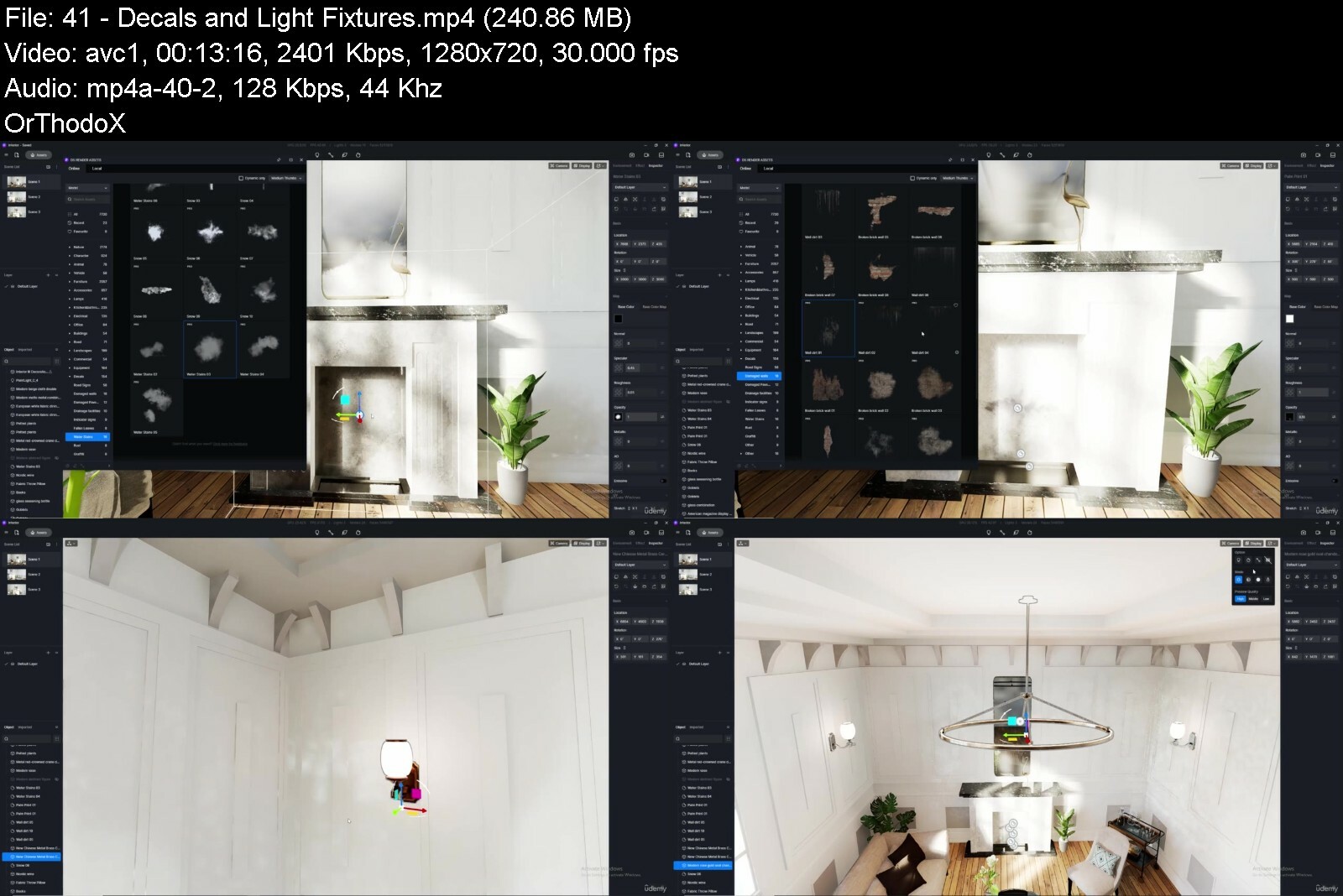
Lecture 41 Decals and Light Fixtures
Lecture 42 Field of View (FOV)
Lecture 43 Setting up The Render
Section 8: Photoshop Post Production
Lecture 44 Introduction to Photoshop
Lecture 45 Layer Elements
Lecture 46 Masks
Lecture 47 Layer Groups
Lecture 48 Levels
Lecture 49 Camera Raw I
Lecture 50 Camera Raw II Basic Adjustments
Lecture 51 Camera Raw III Texture and Vibrance
Lecture 52 Color Adjustments (Very Important for the Final Images to Look Good!)
Lecture 53 Adding Light
Lecture 54 Final Alterations, Noise and High Pass
Lecture 55 Finishing the Render Chromatic Abberation
Section 9: Project II
Lecture 56 Required Plugins For Project II
Lecture 57 Creating the Floor of the Small Build
Lecture 58 Adding an Interior Floor
Lecture 59 Adding the Windows
Lecture 60 Lattice Windows
Lecture 61 Adding a Lattice Roof
Lecture 62 Side Walls I
Lecture 63 Side Walls II
Lecture 64 Cleaning the Model Up and Deleting Stray Edges
Lecture 65 Adding the Bathroom
Lecture 66 Cross Check and Final Changes
Lecture 67 Sandbox Enviroment
Lecture 68 Landscape Part I
Lecture 69 Landscape Part II
Lecture 70 Landscape Part III
Lecture 71 Fixing the Water
Section 10: D5 Enviroment Creation
Lecture 72 Landscape Materials
Lecture 73 Trees and Layers
Lecture 74 Painting Assets
Lecture 75 Making Layers for Elements
Lecture 76 Checking the Trees
Lecture 77 Adding the Grass
Lecture 78 Grass Updates for 2.3
Lecture 79 Rocks
Lecture 80 Continuing the Landscape
Lecture 81 Small Build Materials
Lecture 82 Fixing the Roof with SketchUV
Lecture 83 Fixing the Roof with SketchUV Part II
Lecture 84 Cross Check
Section 11: Project II Lighting and Rendering
Lecture 85 HDRI Lighting
Lecture 86 Lighting and Fog
Lecture 87 Lighting and Fog Fixing Errors
Lecture 88 Effects Tab and Test Render
Lecture 89 Critical Looking and Making Changes
Lecture 90 Fixing the Horizon
Section 12: Project II Photoshop Post Production
Lecture 91 Initial Adjustments
Lecture 92 Project II Camera Raw
Lecture 93 Project II Color Mixer
Lecture 94 Project II Depth of Field
Lecture 95 Project II Final Steps
Lecture 96 Project II Second Scene View
Lecture 97 Project II Final Touches to Render II
This course is geared towards learners who have a basic understanding of SketchUp, but want to develop their rendering skills.,This course is suitable for students who wish to understand a complete, project based ArchViz workflow, from start to end.


architecturalrenderink6e8t.jpg


Download from RapidGator


Download from DDownload



All About Fashion Illustration

l0ofn1yrxevklt8dxjbjnzedq0.jpg


All About Fashion Illustration
Last updated 2/2022
MP4 | Video: h264, 1280x720 | Audio: AAC, 44.1 KHz
Language: English | Size: 9.09 GB | Duration: 7h 16m

From basic to advanced - learn how to draw and design using various techniques and tools to create a realistic fashion i

What you'll learn
Sketch garments considering a range of factors - hairstyle, expressions, gestures, and movements
Draw 11.5 head mechanical croquis
Sketch garments according to different poses - hands and legs variations
Sketch fitted and loose garments
Rendering apparels for different purposes - seasonal collection, ethnic wear, wedding wear, lehenga, saree, casuals, etc.

Requirements
NO

Description
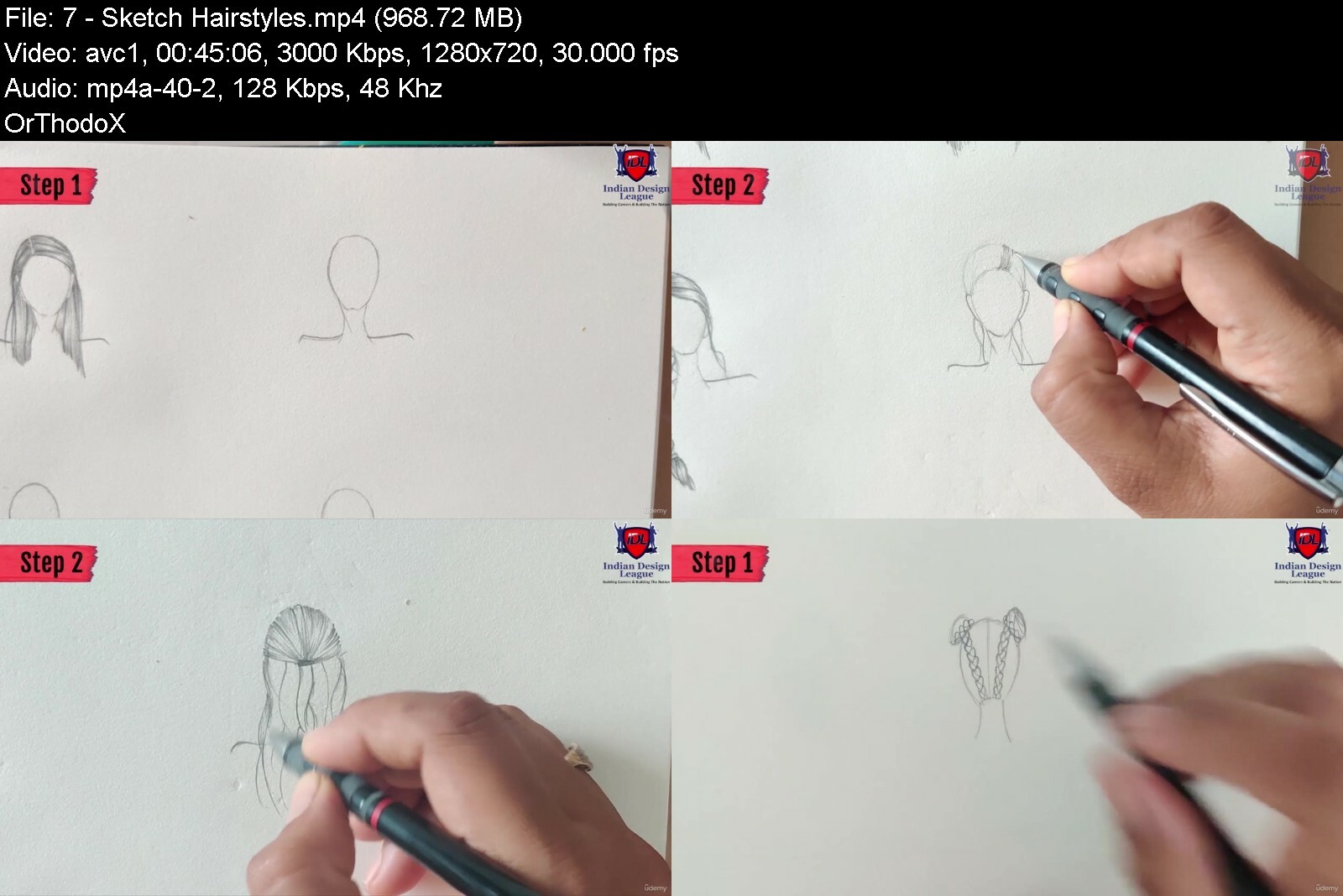
Every artist wants to draw realistic sketches, especially Fashion Designers. From rough drafts to final drafts to taking measurements to final execution - everything needs to be illustrated for a concrete reference to the bigger picture.This course is beneficial for anyone who wants to learn how to sketch and illustrate professionally. The course is bifurcated into different modules like Mechanical Croquis that covers drawing 11.5 head croquis, sketching, impact of light and shadow in illustration, etc.Every apparel is different and so, illustrating each type of garment can pose a challenge in itself. Along with a variety of apparels available today, showcasing various materials like knitwear, leather, fur, silk, wool, etc. through illustrations, (colours, highlights, folds, crease, texture, shades, etc.) can be a difficult task. Similar is the case for hairstyles and the varying human profiles and poses. Learners will understand all the minute details required to illustrate with such details through the video tutorials.In this course, you will learn how to draw the garments according to the human body in various proportions (11.5 head croquis), how to draw various body shapes using given tools, how to sketch garments according to different poses, how to draw facial expressions, how to illustrate distinct hairstyles, how to render a variety of apparels that include ethnic wear, wedding wear, casual wear, beach wear, layered clothes, etc. and how to draw loose and fitted clothes.Who is this course for?1. Anyone Who Wants to Learn Fashion designing2. Aspiring and professional artists, students, and fashion designers, fashion stylists, fashion managers, and fashion bloggers3. Aspiring Fashion Illustrators4. Anyone who wants to learn how to sketch types of apparels realistically5. For anyone who wants to learn to sketching professionally
Overview
Section 1: Introduction
Lecture 1 Introduction and Overview
Lecture 2 History of Fashion Illustration and 11.5 Head Mechanical Croquis
Lecture 3 Fleshing in Mechanical Croquis
Lecture 4 Draw Side Poses
Lecture 5 Sketch 3/4th Poses
Lecture 6 Sketch Poses - Hands and Legs Variation
Lecture 7 Sketch Hairstyles
Lecture 8 Sketching Facial Features
Lecture 9 Draw a Face in Different Angles and Poses
Lecture 10 Sketching Fitted Clothes
Lecture 11 Sketching Loose Clothes
Lecture 12 Sketching Indian Ethnic Wear
Lecture 13 Rendering Casual Wear
Lecture 14 Rendering BeachWear
Lecture 15 Rendering Layered Clothes
Lecture 16 Rendering Ethnic Wear
Lecture 17 Rendering Winter Wear
Lecture 18 Rendering White Wedding Dress
Lecture 19 Rendering a Saree
Lecture 20 Rendering Evening Wear
Lecture 21 Rendering Lehenga
1. Anyone Who Wants to Learn Fashion designing 2. Aspiring and professional artists, students, and fashion designers, fashion stylists, fashion managers, and fashion bloggers 3. Aspiring Fashion Illustrators 4. Anyone who wants to learn how to sketch types of apparels realistically 5. For anyone who wants to learn to sketching professionally


allaboutfashionillust02dqt.jpg


Download from RapidGator


Download from DDownload



Zuletzt bearbeitet:
Draping in Fashion Design

dahtujzxd0lrqmnklipooflevr.jpg


Draping In Fashion Design
Last updated 6/2022
MP4 | Video: h264, 1280x720 | Audio: AAC, 44.1 KHz
Language: English | Size: 5.27 GB | Duration: 4h 21m

Learn various draping techniques from basics to advanced


What you'll learn
1. Understanding draping
2. Understanding dress form basics, types, and terminologies
3. How to handle muslin and its variety for draping
4. Draping of 1 and 2 dart basic bodice and dartless bodice
5. Draping a variety of patterns like basic dress, cowl neckline, circular skirt, cascade top, etc.

Requirements
Open To All Learners

Description
Understanding draping.Understanding dress form basics, types, and terminologies.How to handle muslin and its variety for draping.Draping of 1 and 2 dart basic bodice and dartless bodice.Draping a variety of patterns like basic dress, cowl neckline, circular skirt, cascade top, etc.Course DescriptionDraping is an easy and a difficult task at the same time. Draping is a process which gives designers the idea about how the final product or garment will look like. It is a part of the production process.Once you have ideas on paper and understand pattern making, the next step is draping. This course is intricately designed to equip students with the necessary details on draping from basics to advanced.To understand draping, firstly, an individual needs to be acquainted with dress forms, its types, and different terminologies associated with it. The course is divided into four sections across 15 topics including the introduction video to IDL.The four sections are -Dress FormMuslin Types and UseBasic DrapingAdvanced DrapingThe first section will introduce you to dress forms, its types, and terminologies associated with it. The second section will provide practical insights on muslin, its properties, its types, and its use in context to draping. The third section covers draping in 1 and 2 dart basic bodice. The fourth section covers draping of dartless bodice, basic dress, cascade top cowl neckline, and so on.The topics are explained through demo videos. Additional tips on measurements and pinning while draping are given as and when necessary.
Overview
Section 1: Introduction
Lecture 1 Introduction and Overview
Lecture 2 Dress Form Basics
Lecture 3 Dress Form Terminology and Preparing Dress Forms
Lecture 4 Muslin Types and Uses
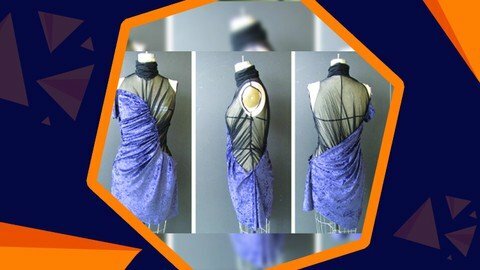
Lecture 5 Draping of 1-Dart Basic Bodice
Lecture 6 Draping of Back Basic Bodice
Lecture 7 Draping of Basic Skirt
Lecture 8 Draping of Princess Seam Bustier
Lecture 9 Draping of Circular Skirt
Lecture 10 Draping of Cowl Neckline
Lecture 11 Draping of 2-Dart Basic Bodice
Lecture 12 Draping of Dartless Bodice
Lecture 13 Draping of Cascade Top
Lecture 14 Draping of Basic Dress
Lecture 15 Draping of Wrap Top
Lecture 16 Draping of Bias Dress
1. Anyone who wants to learn draping,2. Anyone who wants to learn a new skill,3. Aspiring and professional artists, students, and fashion designers, fashion stylists, fashion managers, and fashion bloggers,4. Enthusiasts who want to pursue a career in different domains of Fashion Design


drapinginfashiondesig16fyq.jpg


Download from RapidGator


Download from DDownload


 
Quintessential Interior Styling

gca7lr56z4qpinhtobgs5zlff4.jpg


Quintessential Interior Styling
Last updated 3/2022
MP4 | Video: h264, 1280x720 | Audio: AAC, 44.1 KHz
Language: English | Size: 5.57 GB | Duration: 5h 0m

Learn about various elements, aspects, and essentials of Interior Styling, Home Staging, and Property Styling.


What you'll learn
1. What is Interior Styling, its significance and applications
2. What is the difference between Interior Designing and Interior Styling
3. What are Elements and Principles of Styling, Types of Styling - Residential and Commercial
4. What are Interior Styling Essentials - Color Selection, Materials, Finishes, Visual Communication
5. What is the significance of Interior Styling in Home Staging and Property Styling

Requirements
Open to all learners

Description
Did you know that the use of natural elements like plants, flowers, stones, pebbles, and soil in a space can improve your productivity!?"Monday Blues," is a term which is a commonly used term by corporate professionals. However, did you know blue is one of the most preferred colours that boosts productivity, creativity, and happiness at work as well as at home!?Adding furniture and accessories to any space may not beautify it. To make aesthetically pleasing and usable, it needs diligent attention to detail and knowledge of what fits best where. Only then can we say that a space has achieved its maximum productivity and then, can it benefit the users and give the space its perfect look and feel.Do you know what is the difference between Interior Designing and Interior Styling and what is its scope of career? Do you want to learn how important visual communication is in Styling, and how to be present your ideas effectively to a client? Do you want to help clients in staging a property for resale or rent? Have you ever found yourself asking the question what are the different types of interior design styles?May be you want to switch up your style but can't decide which direction to go in. A good foundation in interior design and styling basics and principles can have a huge effect on the look and feel of a space. Throughout this module, students will learn Quintessential Interior Styling.
Overview
Section 1: Introduction
Lecture 1 Introduction and Overview
Lecture 2 What is Interior Styling
Lecture 3 Difference between Interior Designing and Interior Styling
Lecture 4 Elements and Principles
Lecture 5 Colour Selection
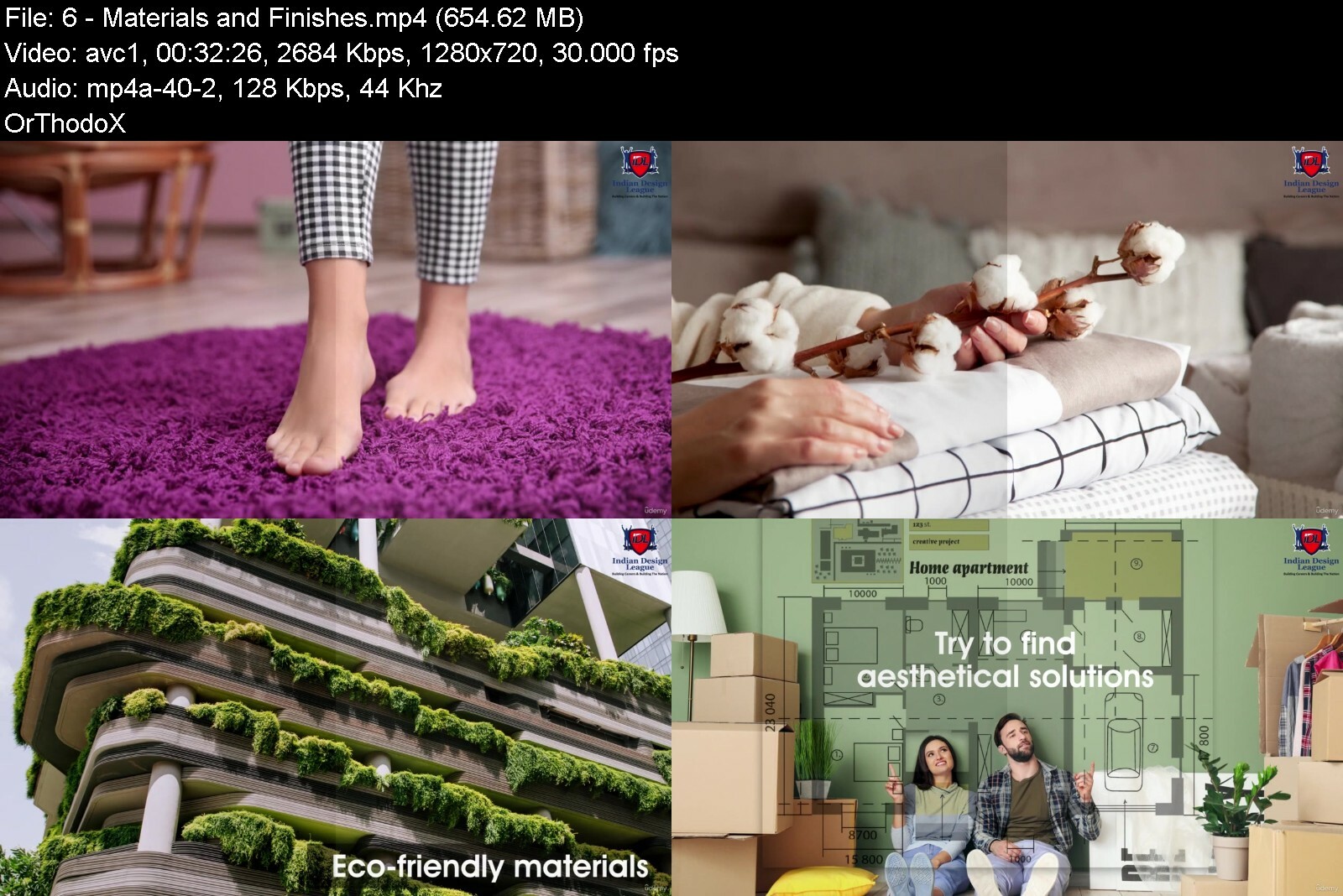
Lecture 6 Materials and Finishes
Lecture 7 Seasonal Styling
Lecture 8 Design Styles
Lecture 9 Visual Communication
Lecture 10 Planning for Interior Styling
Lecture 11 Home Staging and Property Styling
Lecture 12 Residential Styling
Lecture 13 Commercial Styling
Lecture 14 Difference Between Residential and Commercial Styling
1. Anyone who wants to learn about Interior Styling and its various applications,2. Aspiring and professional artists, students, architects, interior decorators, interior designers, interior stylists, art directors and set designers,3. Enthusiasts who want to pursue a career in different domains of Interior Design,4. For all entry level to advanced Interior Designers, Interior Stylists, Interior Decorators, Architects, Set Designers, and other enthusiasts


quintessentialinteriouye8e.jpg


Download from RapidGator


Download from DDownload

 
Garment Construction For Beginners ( Cutting & Stitching )

y6t8fwgvbuwee9lw8hbkvcndw1.jpg


Garment Construction For Beginners ( Cutting & Stitching )
Last updated 1/2022
MP4 | Video: h264, 1280x720 | Audio: AAC, 44.1 KHz
Language: English | Size: 6.36 GB | Duration: 5h 10m

Learn about Garment construction- terminology of garment construction, stitching tools, seam and finishes.


What you'll learn
Introduction to Garment construction
Garment construction terminology
Garment construction tools
Seams and finishes
Fabric cutting
Fabric stitching

Requirements
Nothing

Description
Garment construction is a technical accomplishment that requires the knowledge and skills of basic sewing techniques that includes application of stitches, seams, darts, gathers, pleats and edge finishing, etc.To construct the garment, various types of the seam are also used such as flat seam, lapped seam, French seam, slot seam, etcGarment production is an organized activity consisting of sequential processes such as laying, marking, cutting, stitching, checking, finishing, pressing and packaging. This is a process of converting raw materials into finished products.This course is beneficial for anyone who wants to learn and loves to style themselves or others.The course is strategically designed to equip aspiring and professional fashion designs and other artists to understand various processes related to garment construction. Each topic is categorized according to make the content easy to consume. Additionally, various tips, do's and don'ts have been given which makes the course more interesting.What You'll LearnIntroduction to Garment constructionGarment construction terminologyGarment construction toolsSeams and finishesFabric cuttingFabric stitchingWho is this course for?1. Anyone who wants to learn Fashion designing2. Anyone who wants to learn about Garment Construction in Fashion Designing3. Enthusiasts who want to pursue a career in different domains of Fashion Design4. For all entry level to advanced Fashion Designers5. Aspiring and professionals, students, and fashion designers, fashion stylists, fashion managers, and fashion bloggersWhat is Primarily Taught in your courseTerminology of garment constructionRequired stitching toolsSeams and finishesLaying, cutting and stitching
Overview
Section 1: Introduction
Lecture 1 Introduction and Overview
Lecture 2 Garment Construction Terminology
Lecture 3 Stitching Tools
Lecture 4 Seams and Finishes
Lecture 5 How to Cut and Stitch Basic Kurta
Lecture 6 Neckline and Its finishing
Lecture 7 Basic Sleeves
Lecture 8 How to Cut and Stitch Basic Salwar
Lecture 9 How to Cut and Stitch Basic Chudidar
Lecture 10 How to Cut and Stitch Patiyala
Lecture 11 How to cut and Stitch Palazzo
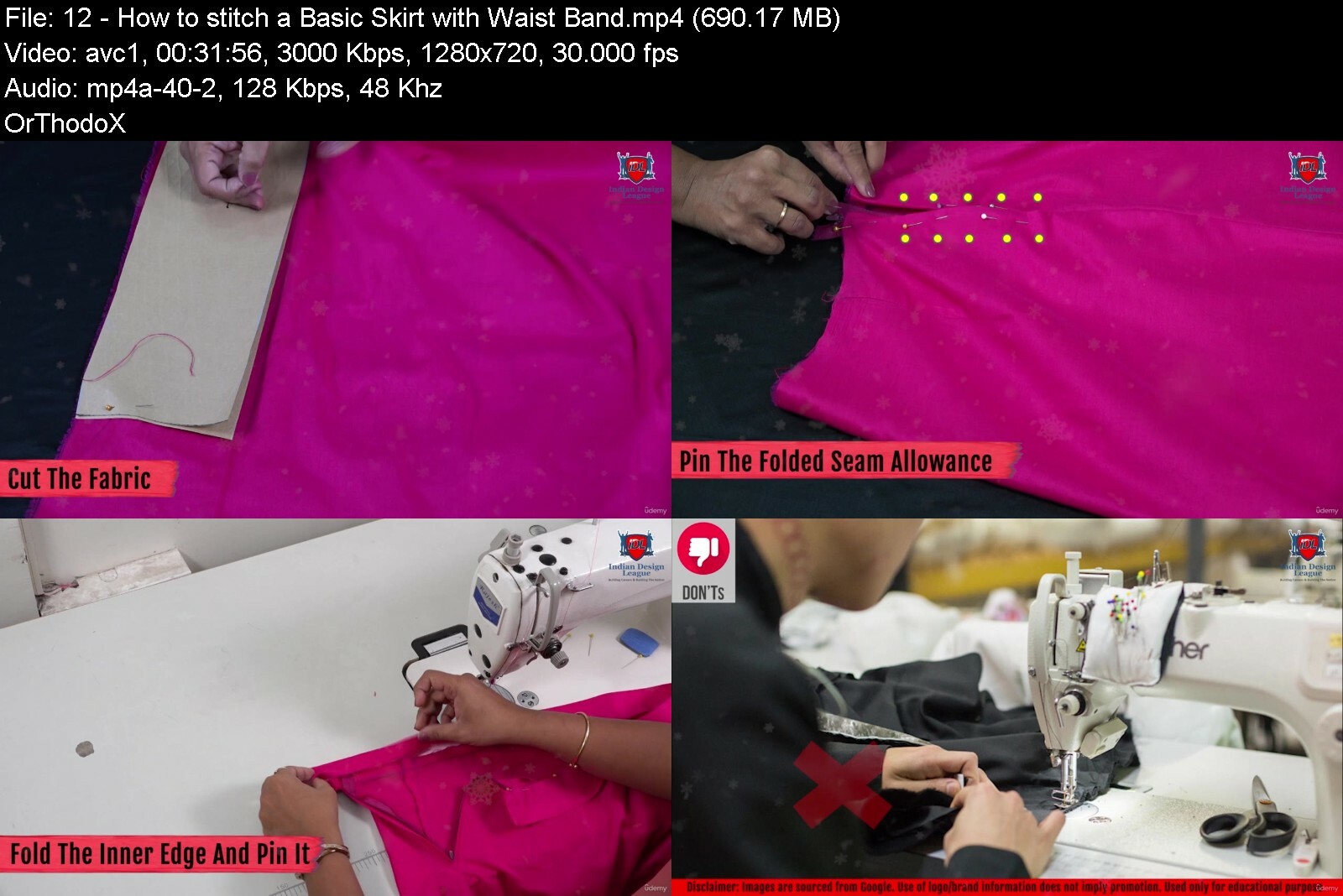
Lecture 12 How to stitch a Basic Skirt with Waist Band
Lecture 13 Pleated Skirt with Yoke
Lecture 14 Circular Skirt
Lecture 15 Cape
Lecture 16 Anarkali
Lecture 17 How to stitch a Four Tuck Blouse
Anyone who wants to learn Fashion designing,2. Anyone who wants to learn about Garment Construction in Fashion Designing,Enthusiasts who want to pursue a career in different domains of Fashion Design,For all entry level to advanced Fashion Designers


garmentconstructionfo6md6w.jpg


Download from RapidGator


Download from DDownload


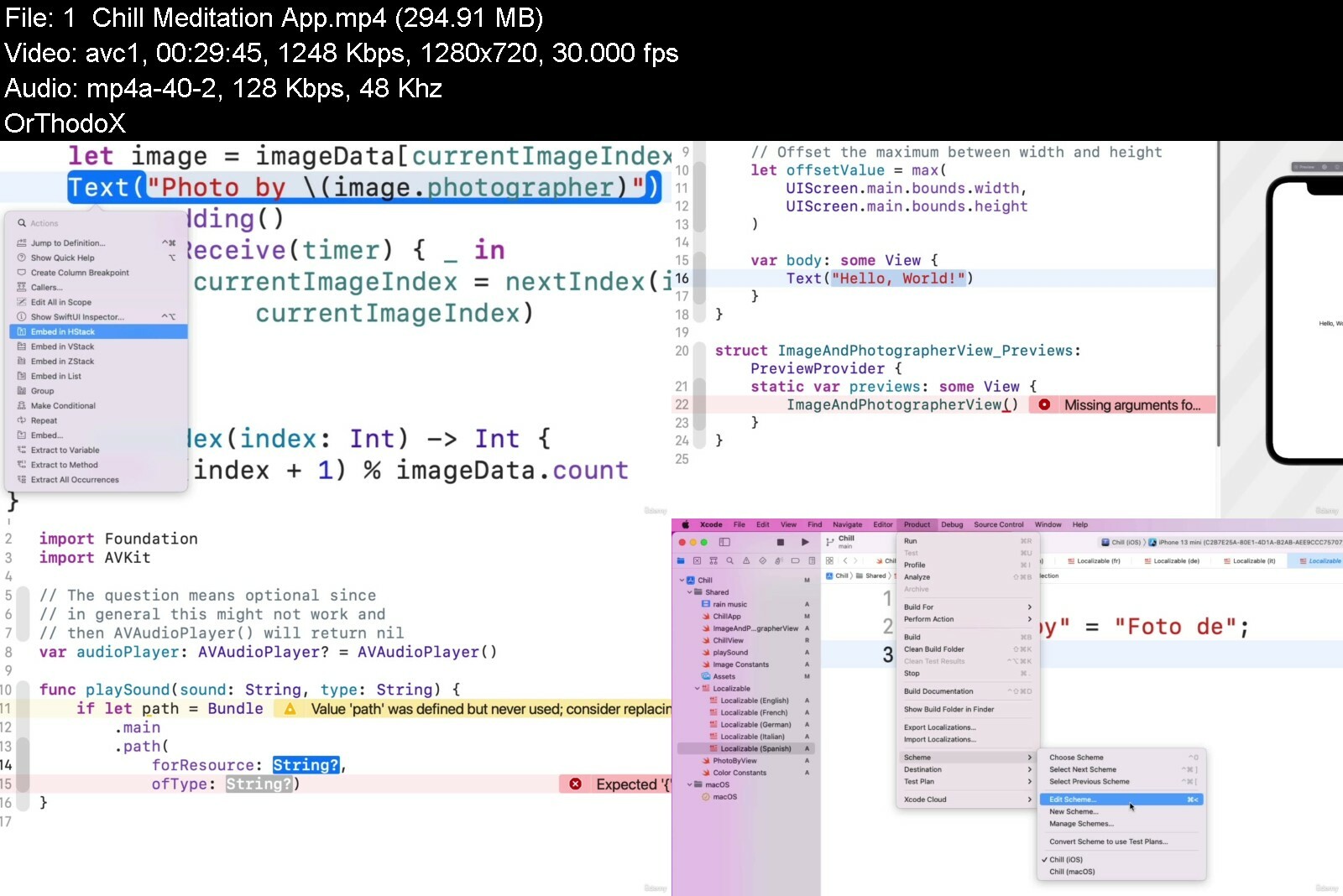
Deep Dive iOS 16 SwiftUI Programming

43440323c5330vctt.jpg


Deep Dive iOS 16 SwiftUI Programming
Published 09/2022
MP4 | Video: h264, 1280x720 | Audio: AAC, 44.1 KHz, 2 Ch
Genre: eLearning | Language: English | Duration: 153 lectures (13h 34m) | Size: 6.51 GB


A project-based approach to the MVVM design pattern using SwiftUI


What you'll learn
Learn to build an iOS 16 App
Learn good programming practices
Learn MVVM design pattern
Have fun programming and exploring
Requirements
There are no prerequisites besides wanting to learn
Description
This course focuses on iOS 16 programming using SwiftUI. You will learning programming fundamentals of the Swift programming. This is a project based course. In each project you will learn about more features of the language and gain more experience. The Apps will be written using the MVVM software design pattern which goes hand in hand with SwiftUI.
We will start by learning SwiftUI Essentials. Then we will move on to creating projects. We will create a Tip Calculator based on a design from the site Dribble. We will create a quote a day app that uses a quote API, in other words we will learn how too grab data off the internet. We will learn how to create a flash card/trivia game with an emphasis on drag, magnify and tap gestures. We will create amazing frontend user interfaces of a task manager, a finance app and a meditation app. We will learn how to create code snippets to speed up our app development process. We will learn about text to speech and speech to text. We will learn how to apply filters to images.
Moreover this course is dynamic in the sense that I will regularly post more material of my own and/or in response to specific requests from students.
Happy programming and have a Great day
Who this course is for
Beginner-intermediate programmers or anyone wanting to learn to program iOS 15 and iOS 16 using SwiftUI


deepdiveios16swiftuipe2cz9.jpg


Download from RapidGator


Download from DDownload


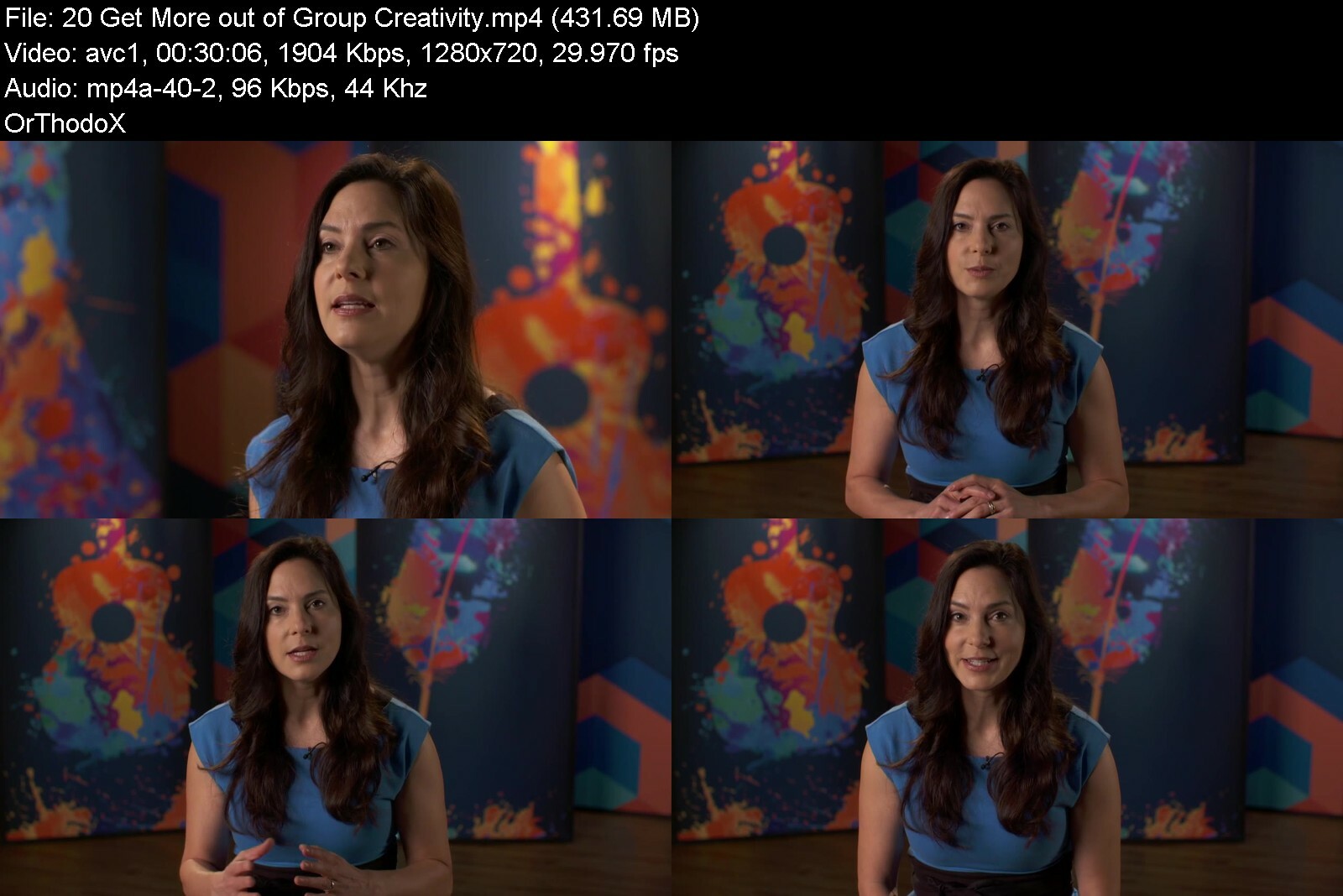
TTC - Creativity and Your Brain

40d77a0fc4604fe48e23klivu.jpeg


TTC - Creativity and Your Brain
Released 09/2022
MP4 | Video: h264, 1280x720 | Audio: AAC, 44.1 KHz, 2 Ch
Genre: eLearning | Language: English | Duration: 24 Lessons (10h) | Size: 8.5 GB


What is creativity? Is it a composer writing a symphony or a scientist inventing the light bulb? An innovative solution to a human need or a way of thinking outside the box, in any area of life? Is creativity a magical ability or talent that only some people have? Or is...

What is creativity? Is it a composer writing a symphony or a scientist inventing the light bulb? An innovative solution to a human need or a way of thinking outside the box, in any area of life?
Is creativity a magical ability or talent that only some people have? Or is it a process that we can comprehend, analyze, and intentionally develop?
Recent neuroscience gives us compelling answers to these questions, and many more about the creative process. By shedding light on what creative people do and how they do it, scientists studying creativity are mapping the regions of the brain that come into play during creative work. Understanding the brain physiology of creativity can reveal deep insights into the creative process and help us build tools for developing creativity.
Researchers in human creativity have also broken the creative process down into recognizable elements and stages, showing that creativity is a skill set, one that all of us can cultivate. Along the way, the scientific study of creativity has produced many intriguing and revealing discoveries about the human creative brain
The popular notion that the right brain is the seat of creativity, while the left brain controls rational thinking is inaccurate: Cutting-edge neuroscience shows that the left brain makes critical contributions to creativity.
When jazz musicians improvise-a classic example of spontaneous creativity-the rostral prefrontal cortex of the brain is activated, a region involved in self-expression and narrative autobiography, while the dorsolateral prefrontal cortex is quieted, a region that controls deliberate thinking-allowing improvisers to ride their feelings and create music in the moment.
Emotions and creativity are interrelated; studies show that if you're in a positive mood, you're more likely to reach creative insights and that emotions drive certain types of creativity. But the link between mood disorders and creative output is more tenuous.
By understanding the brain "signature" of the states of creative thinking, neuroscientists can stimulate the brain directly to enhance solution rates for insightful problem-solving.
Neuroscience also points to compelling reasons for learning about creativity. Beyond question, all the greatest discoveries, inventions, and works of art in history-including breakthroughs in engineering, technology, science, and medicine-have been brought about through creative work. Advances in understanding the creative brain, then, offer us highly valuable knowledge about an essential human ability.
Uncover the Workings of Human Creativity
In Creativity and Your Brain, you'll take a deep dive into the human creative faculty, in a detailed and wide-ranging exploration of the neuroanatomy of creativity, state-of-the-art knowledge about the creative process, and how we can develop creativity in work and living. Your guide is Professor Indre Viskontas of the University of San Francisco, a neuroscientist, musician, opera stage director, and creativity researcher, who brings a passionate spirit of inquiry and multi-level expertise to this fascinating subject.
In 24 eye-opening lectures, drawing on decades of research and studies on creativity, you'll learn the brain science relating to creative work and delve into a wide spectrum of illuminating subjects-from the internal elements of creativity, such as imagination, insight, and the "flow" state to the influence of environment, social context, stress, and the surrounding factors that aid creativity. And, throughout the course, you'll meet noteworthy creative people in many disciplines who serve as inspiration and points of reference for your own creative undertakings.
Dig Deeply into the Creative Process
In a penetrating look at the creating brain, you'll explore core themes, such as
How Creative Work Activates the Brain. Study the regions of the brain that shape creativity, such as the hippocampus (correlated with imagination) and the anterior cingulate (active before sudden insight), as well as the synchronized activity across brain regions that characterizes creative thinking. Also, learn about personality traits, such as openness to new experiences, which seem to predispose a person to thinking creatively.
Stages and Types of Creativity. Study two practical models of the creative process: One which breaks down recognizable steps or stages in creative work-from preparation and incubation to illumination and verification-and one which defines different kinds of creativity, involving two types of mental processing-deliberate and spontaneous. Observe how these stages of creativity and types of mental processing function in creative work, using examples from many settings.
Myths about Creative People. Evaluate whether popular conceptions about creatives are valid. Assess notions linking mental aberrations and illnesses with creative people; investigate whether depression drives creativity, or the reverse; see whether mind-altering substances, from coffee and stimulants to psychedelics, aid creativity; and observe how some neurological conditions or developmental differences, such as dyslexia, may benefit creative work.
Core Features of the Creative Process. Grasp how motivation for creative work is shaped by the brain's reward system; study the phenomenon of creative insight (the "Aha moment"), the brain activity involved, and how to increase the likelihood of insight; take account of the brain regions correlated with imagination, and how imagination can be stimulated; and study the flow state (being "in the zone"), what occurs in the brain during flow, and nine key features of flow.
Mastering Creative Skills, Thinking, and Improvisation. Grasp the process of mastering a skill, whether in sports, the arts, or any setting, the core types of practice involved, and how a skill moves from conscious thinking to unconscious integration. Study the steps of design thinking as a practical aid to creativity. And learn the rules of creative improvisation, whether musical or verbal, noting how the skill of improvisation can be learned and improved.
The Creative Context. Study factors in the physical environment that affect creative work; note how an open exchange of ideas and a collaborative dynamic fosters a culture of creativity; investigate principles of creativity in groups, as well as the challenges, and see how we can maximize group creativity; and observe how interaction between human cultures and social ecosystems makes creativity and innovation blossom.
Gain Practical Knowledge for Creative Endeavors
Professor Viskontas's amazingly detailed knowledge of the field and her probing, investigative teaching style make these lectures rich with insight and provocative perspectives. In a remarkable dual career, Professor Viskontas is also an opera singer and stage director, who brings a wealth of experience with artistic creativity to the table. In one segment of the course, through data from an original research project, she demonstrates how the dynamics between musicians playing together teach vital lessons about group creativity.
As an additional resource, you'll gain valuable insights into the creative process through studying the life and work of poet Sylvia Plath, painter Georgia O'Keeffe, choreographer Martha Graham, and architect Frank Gehry, among others.
One of the course's integral themes is to challenge the idea that, to do valuable creative work, you must be "born" creative. Through the many areas of knowledge within the course-from the key elements of the creative process and skill mastery to the principles of design thinking, creative improvisation, and the many factors that aid the creative process-Creativity and Your Brain offers empowering and inspiring guidelines for developing your own creativity.
What Will You Learn?
Learn about the synchronized brain activity that underlies creative thinking and examine key stages in the creative process
Discover how to stimulate creative insight, imagination, and the flow state
Take a deep dive into the process of mastering a skill, the steps of design thinking, the rules of improvisation, and more


creativityandyourbrai3wcv8.jpg


Download from RapidGator


Download from DDownload



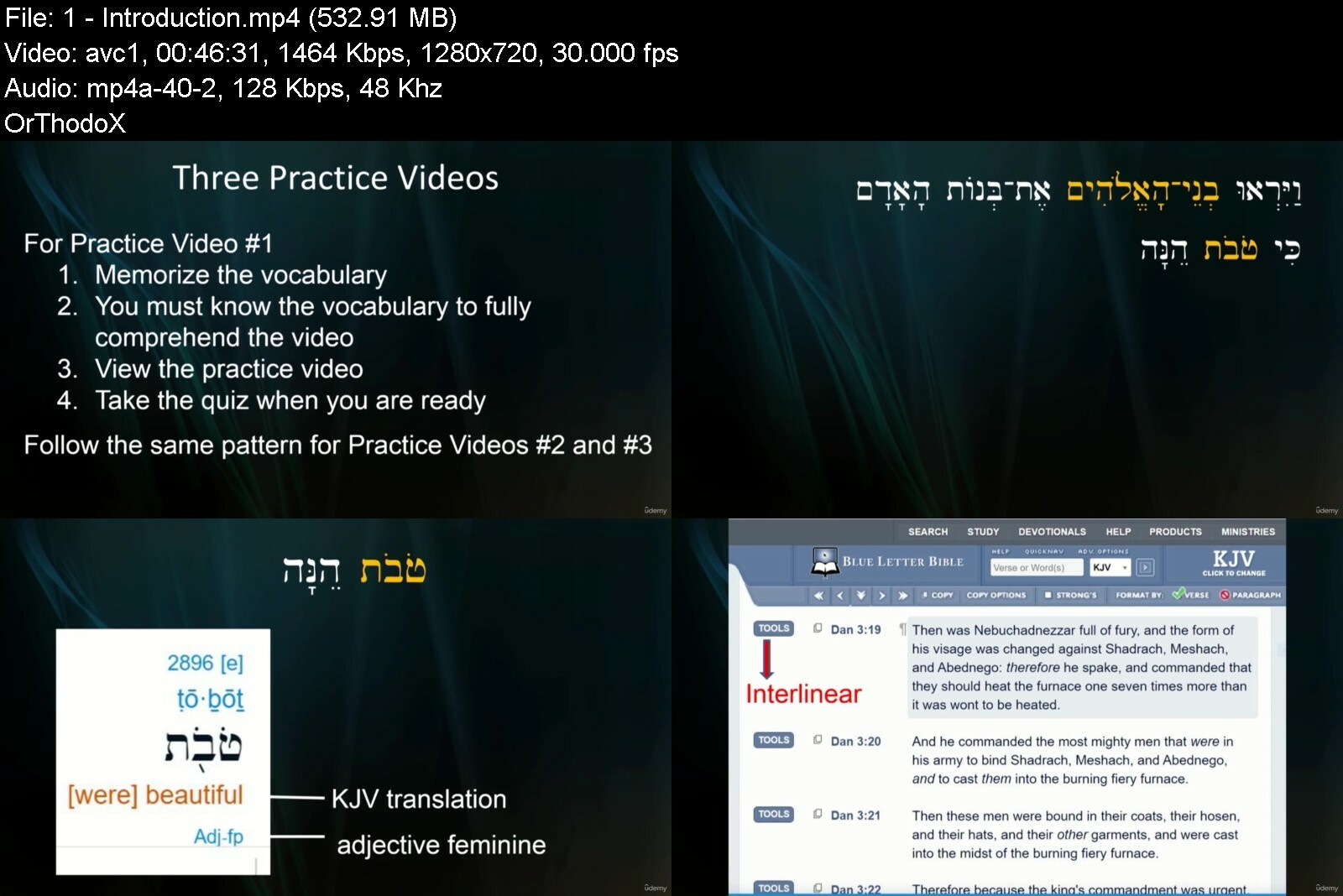
Advanced Biblical Hebrew

bcauauihcrcq1yix9r08ocperb.jpg


Advanced Biblical Hebrew
Published 9/2022
MP4 | Video: h264, 1280x720 | Audio: AAC, 44.1 KHz
Language: English | Size: 9.36 GB | Duration: 13h 13m

Continue your Biblical Hebrew education at an advanced level


What you'll learn
Understanding of complex Hebrew verb forms
Use of the command form of a verb in Biblical Hebrew
Use of the infinitive and participle in Biblical Hebrew
Understanding of symbolism of Hebrew numbers

Requirements
Completion of Intermediate Biblical Hebrew or an intermediate-level knowledge of Biblical Hebrew

Description
Continue your Biblical Hebrew education at an advanced level with this quality course from Dr. Anne Davis, a Biblical languages professor. In this course, Dr. Davis will start where her Intermediate Biblical Hebrew course left off, increasing the amount of vocabulary, as well as covering the different types of Hebrew verbs.Lesson 1 covers the Hebrew number system and the depth of meaning of each number beyond their literal meaning.Lesson 2 introduces hollow verbs and how to recognize a verb root even when two letters appear in cases where the middle letter drops out.Lesson 3 explains the command in Hebrew, both the unique word structure and the abrupt sound.Lesson 4 teaches how to recognize the Hebrew infinitive.Lesson 5 explores the Hebrew infinitive and the provocative meaning it carries in ongoing action.Lesson 6 introduces the passive niphal verb form, where there is no direct object.Lesson 7 explains the intensity of action in the pile verb form.Lesson 8 continues with the emotion carried by the Hebrew hiphil verb form.Lesson 9 concludes with the reflexive hithpiel verb form.By the end of the course, you will be able to parse Hebrew verbs and discern their meaning through a solid knowledge of each verb form. Each lesson will add to your vocabulary as well. You will also have all the tools you need to do a Hebrew word study.
Overview
Section 1: Introduction
Lecture 1 Introduction
Section 2: Lesson 1
Lecture 2 Lesson 1 Video
Lecture 3 Practice Video 1
Lecture 4 Practice Video 2
Lecture 5 Practice Video 3
Section 3: Lesson 2
Lecture 6 Lesson 2 Video
Lecture 7 Practice Video 1
Lecture 8 Practice Video 2
Lecture 9 Practice Video 3
Section 4: Lesson 3
Lecture 10 Lesson 3 Video
Lecture 11 Practice Video 1
Lecture 12 Practice Video 2
Lecture 13 Practice Video 3
Section 5: Lesson 4
Lecture 14 Lesson 4 Video
Lecture 15 Practice Video 1
Lecture 16 Practice Video 2
Lecture 17 Practice Video 3
Section 6: Lesson 5
Lecture 18 Lesson 5 Video
Lecture 19 Practice Video 1
Lecture 20 Practice Video 2
Lecture 21 Practice Video 3
Section 7: Lesson 6
Lecture 22 Lesson 6 Video
Lecture 23 Practice Video 1
Lecture 24 Practice Video 2
Lecture 25 Practice Video 3
Section 8: Lesson 7
Lecture 26 Lesson 7 Video
Lecture 27 Practice Video 1
Lecture 28 Practice Video 2
Lecture 29 Practice Video 3
Section 9: Lesson 8
Lecture 30 Lesson 8 Video
Lecture 31 Practice Video 1
Lecture 32 Practice Video 2
Lecture 33 Practice Video 3
Section 10: Lesson 9
Lecture 34 Lesson 9 Video
Lecture 35 Practice Video 1
Lecture 36 Practice Video 2
Lecture 37 Practice Video 3
Biblical Hebrew students with a solid intermediate knowledge of Biblical Hebrew


advancedbiblicalhebrelvdo8.jpg


Download from RapidGator


Download from DDownload


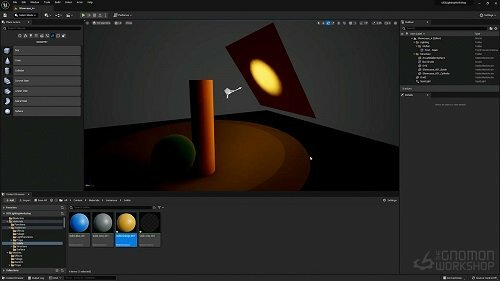
Unreal Engine 5 Lighting Fundamentals

tpzxrumlpxrc5kiqbw4qdsrfsb.jpg


Unreal Engine 5 Lighting Fundamentals
MP4 | Video: h264, yuv420p, 1920x1080 | Audio: aac, 48000 Hz | Duration: 3h 12m | 18.1 GB
Genre: eLearning | Language: English

Unreal Engine 5 has dramatically improved the quality of real-time lighting through its implementation of real-time global illumination, through the new Lumen lighting engine. However, there remain myriad lighting tools, techniques and workflows that must be well understood to fully maximize one's experience designing and optimizing the lighting in a scene or level. In this fundamental overview of Unreal's lighting system, Charleston Silverman demonstrates his production proven processes that will be critical to any artist aspiring to master Unreal's lighting toolset.
This workshop covers a range of tools, from static lighting techniques to fully dynamic lighting techniques such as RTX, and Lumen. Charleston walks through some of the more advanced tools in Unreal that are essential to know, including the Light Mapper and Path Trace Render, as well as Volumetric Lighting, Particle Lights, Light functions, IES Profiles, Reflections, skylights and HDRI backdrops, and post-processing techniques. Additionally, Charleston covers his workflow for improving the optimization, quality, and performance of UE5 projects.
This tutorial is designed to offer valuable insight, tips, and techniques for those new to Unreal Engine, or those migrating from UE4 to UE5. Project files provided with this workshop include Charleston's chamber/cave Unreal project.
For a comprehensive look at UE5's Material System, check out Charleston's Unreal Engine 5 Material System Overview workshop.

Homepage

unrealengine5lightingezcav.jpg


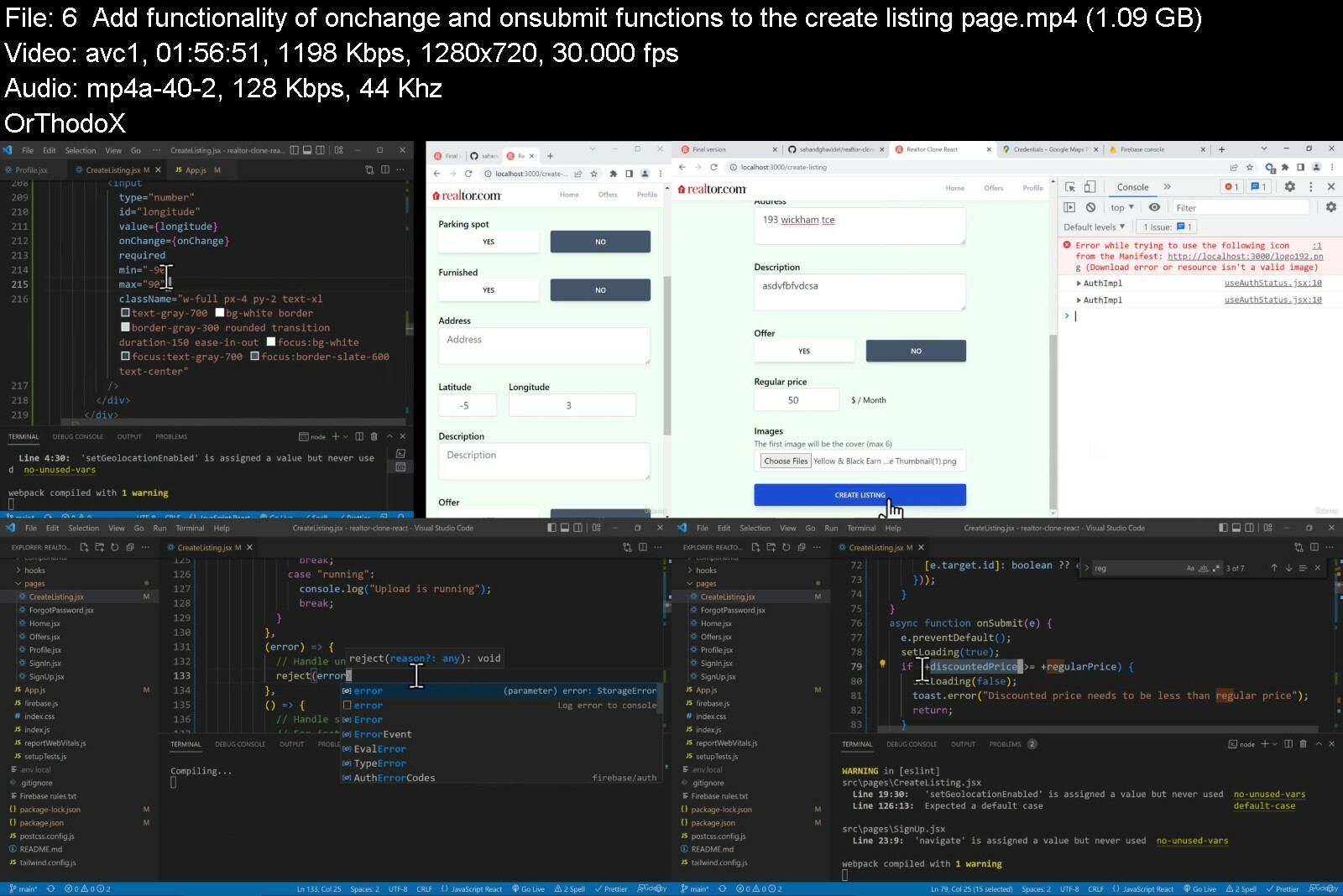
React.js & Firebase Project - ReactJS 18, Firebase 9 Project

48152522b452zxfoh.jpg


React.js & Firebase Project - ReactJS 18, Firebase 9 Project
Published 09/2022
MP4 | Video: h264, 1280x720 | Audio: AAC, 44.1 KHz, 2 Ch
Genre: eLearning | Language: English | Duration: 29 lectures (17h 48m) | Size: 10.2 GB


React.js and Firebase portfolio project. Build Realtor (Real estate) clone using React js 18, Firebase 9, Tailwind CSS 3


What you'll learn
Create a React js project from scratch
Use Firebase auth for complete authentication
Use Firebase Firestore to store and fetch data
Learn how to sign up/in the users using username/password and Google oAuth using Firebase auth
Add forgot password functionality using Firebase auth
Work with latest versions like React js 18, Firebase 9 and Tailwind CSS 3
Learn the CRUD operations including create, read, update and delete using Firebase Firestore
Learn react router version 6 (latest version) to create routes, get the params and redirect
Learn how to create pages and routes in a react project
Learn how to use react toastify to create nice notifications
Learn to create private route and custom hook for protecting the user profile page
Learn how to create a beautiful spinner and loader
Learn important react event listeners like onChange and onSubmit
Create a reusable component such as listing cards
Create an image slider using Swiper js latest version
Add map to the page using leaflet and react leaflet packages
Learn how to deploy to vercel
Learn Google geolocation api and how to convert address to latitude and longitude
Learn how to use Tailwind CSS 3 to style a react project
Learn useEffect and useState react hooks
Requirements
Basic knowledge of HTML, CSS, and JavaScript
Description
NEW React.js 18 and Firebase 9 project.
Build Realtor (Real estate) clone using React js 18, Firebase 9, Tailwind CSS 3, and React router 6.
The best course to learn React.js, Firebase and Tailwind CSS creating a real estate website. In this brand new course, you are going to learn how to build the realtor clone using ReactJS version 18, Firebase version 9 and tailwind CSS version 3.
Welcome to the project where you'll build and deploy a realtor clone application using the newest version of react, Firebase and tailwind CSS. You'll learn how to develop a professional website and deploy it to the internet so that you can share it with your friends and potential clients or put it on your portfolio. In this brand new project, we going to create an stunning new listing section, custom categories, responsive design, listings cards, rent and sale pages, and most importantly listing pages where you can see the map and image slider. Realtor clone is the best modern fully functional real estate application that you can currently find. By building this single web app, you'll get the knowledge needed to build any website that uses CRUD operations including create, read, update and delete in react using Firebase Firestore database. You are going to learn Firebase auth for complete authentication and learn how to sign up or sign in the users using username and password and Google oAuth. Also, we going to add forgot password functionality using Firebase auth to let the users get the email with the link to change their password.
you'll be able to develop this website using the most in demand technologies today such as react.js, Firebase, tailwind CSS and with just a couple of other dependencies like leaflet and swiper js. We are going to add a map using leaflet packages, and use Google geolocation API to convert addresses to latitude and longitude values. We are going to learn how to use Swiper.js latest version to add a super amazing image slider. and you will learn how to use react toastify package to create nice and customized notifications. and like all modern websites, you are going to create a beautiful spinner component and use it in all pages requiring loading effects. We are going to learn how create a reusable component such as a listing card that we can use in different parts of the website.
You'll build everything from scratch by watching this course. We're going to start simple and then we're going to move to more complex topics as we go alongside building this application. you'll learn react functional components and their re-usability, react file and folder structure. You are going to learn important react events like onChange and onSubmit event listeners. We are going to learn how to use useEffect and useState react hooks to control the states and fetch data from the Firestore database. Also, you are going to learn how to create routes, use useParams and useNavigate hooks using react router latest version version 6. We are going to work on creating private routes and custom hooks for protecting the important pages like user profile page. You'll achieve mastery using tailwind CSS version 3. and learn how to style the project using Tailwind CSS including how to add custom classes. And finally, we are going to deploy the website to Vercel to be able to share it with others or put it on your portfolio.
You might be wondering what are the prerequisites for building such an amazing website. You just need to know a bit of HTML CSS and JavaScript it would be great.
My name is Sahand, and I have over 15 years of programming experience.
I will be your instructor and answer any questions you may have in the comment section.
Who this course is for
React developers who want to have a portfolio project


react.jsfirebaseproje8lcb5.jpg


Download from RapidGator


Download from DDownload



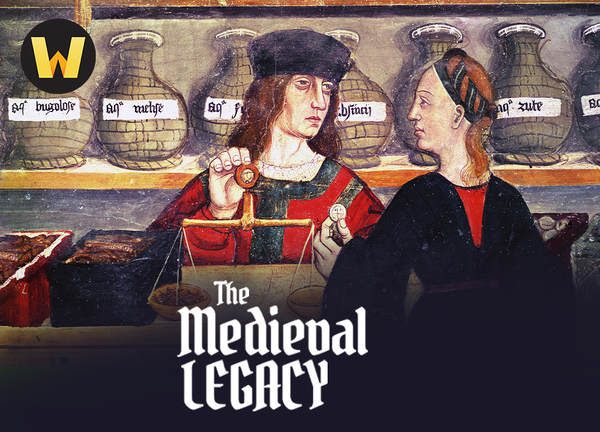
TTC - The Medieval Legacy

101022thumb1nc59.jpg


TTC - The Medieval Legacy
Released 09/2022
MP4 | Video: h264, 1280x720 | Audio: AAC, 44.1 KHz, 2 Ch
Genre: eLearning | Language: English | Duration: 36 Lessons (18h 20m) | Size: 15.7 GB


Though it ended five centuries ago, the medieval era continues to reverberate through our world in far-reaching ways. The influences and imprints of the Middle Ages are all around us, sometimes in obvious incarnations and sometimes in much less immediately noticeable ways. Perhaps the most visible legacies of the Middle Ages...

Though it ended five centuries ago, the medieval era continues to reverberate through our world in far-reaching ways. The influences and imprints of the Middle Ages are all around us, sometimes in obvious incarnations and sometimes in much less immediately noticeable ways.
Perhaps the most visible legacies of the Middle Ages are the majestic cathedrals, palaces, castles, and cityscapes that still stand, as well as the era's glorious paintings, sculpture, decorative arts, and enduring works of literature, music, and scholarship. We also see the impact of the Middle Ages in the medieval games we play, such as tennis and chess, and in a plethora of current novels, TV dramas, and movies.
But beyond these glowing reminders of bygone times, the medieval world influences our modern world in numerous other ways-a legacy that reveals itself in our institutions, our cultural pursuits, and some habits of life and thought that can be directly traced to the medieval period
Although the framers of the US Constitution studied ancient Greek and Roman government, they were influenced more directly by medieval models, as Jefferson acknowledged when he praised "the Saxon chiefs from whom we claim the honor of being descended, and whose political principles and form of government we have assumed."
Our sense of personal identity as being citizens of nations came into being through the long debate over statehood and national sovereignty that raged during the Middle Ages.
Within Christianity, the religious doctrines and tenets of belief that define the Roman Catholic Church, the Eastern Orthodox Church, and the many Protestant faiths were forged during the medieval world.
Intolerance of prostitution and LGBTQ sexual orientations, which are still divisive issues in the 21st century, originated as specific forces within later medieval society, following centuries of remarkable sexual diversity and tolerance, which included the incorporation of sex workers' guilds.
The use of crusading rhetoric by Western conservatives and Islamic militarists in the decades following September 11, 2001, is the living heritage of the medieval ideology of "holy war," both Christian and Muslim, and is a particularly thorny instance of the medieval legacy.
But these are only some of the areas in which the medieval world influences ours and shapes our collective consciousness. If we look with discernment, we can see the mark of the Middle Ages in the codes of honor that we value; the national narratives that undergird ideas of identity and belonging; how we make money and manage financial risk; our standards of justice; our notions of race; and our methods of scientific proof; as well as in features of daily life such as how we tailor our clothes, the languages we speak, and how we structure our time.
To find these remarkable connections in the medieval world and to see their enduring impact on ours is to deeply enrich your understanding of both the unfolding of history and the complex processes that gave us the world we know today.
Travel Deeply into the Ethos of the Medieval World
In the 36 eye-opening lectures of The Medieval Legacy, you'll delve into our rich and colorful medieval heritage in compelling depth and detail. Your guide is celebrated medieval scholar Professor Carol Symes of the University of Illinois at Urbana-Champaign, whose diverse and informed commentary shines a light on both the visible and the less obvious links between the medieval world and our own.
In this unique inquiry, you'll learn how to recognize medieval impacts on the modern world, and to grasp their significance and implications. In doing so, you'll delve into aspects of the medieval legacy that we may prize and want to keep, as well as its shadow side-features of the legacy that we struggle with. Among the latter, you'll see that anti-Semitism arose specifically within the medieval world, and you'll witness how its familiar and destructive tropes developed.
Throughout the course, you'll take a careful look at the ideas, claims, and fantasies about the medieval past that have had a profound impact on modern culture and society. And you'll investigate how the medieval past has been co-opted over the last two centuries to bolster claims of nationalism and to justify wars, territorial aggression, and modern movements of white supremacy.
You'll come to grips with the scope of the medieval era's influence on our own era, and, in Professor Symes's words, "the extent to which our own deeply held, often unconscious ideas about identity, tradition, order-what is normal, what is immutable-are part of the medieval legacy." Bolstered by her challenging and incisive perspective, this is a historical inquiry of extraordinary relevance and meaning.
Explore Medieval Connections with Our Ways of Life and Thought
You will embark on a wide-ranging immersion into the medieval world, uncovering significant ties to our contemporary lives. Among these, you'll investigate
Representative Government and Organized Labor. Find the origins of the forms of representative government that we now take for granted in the general assemblies and councils that emerged in many medieval societies. Observe how medieval trade guilds evolved, prefiguring our own labor unions, both in the protections they offered and the social dialogues they fostered.
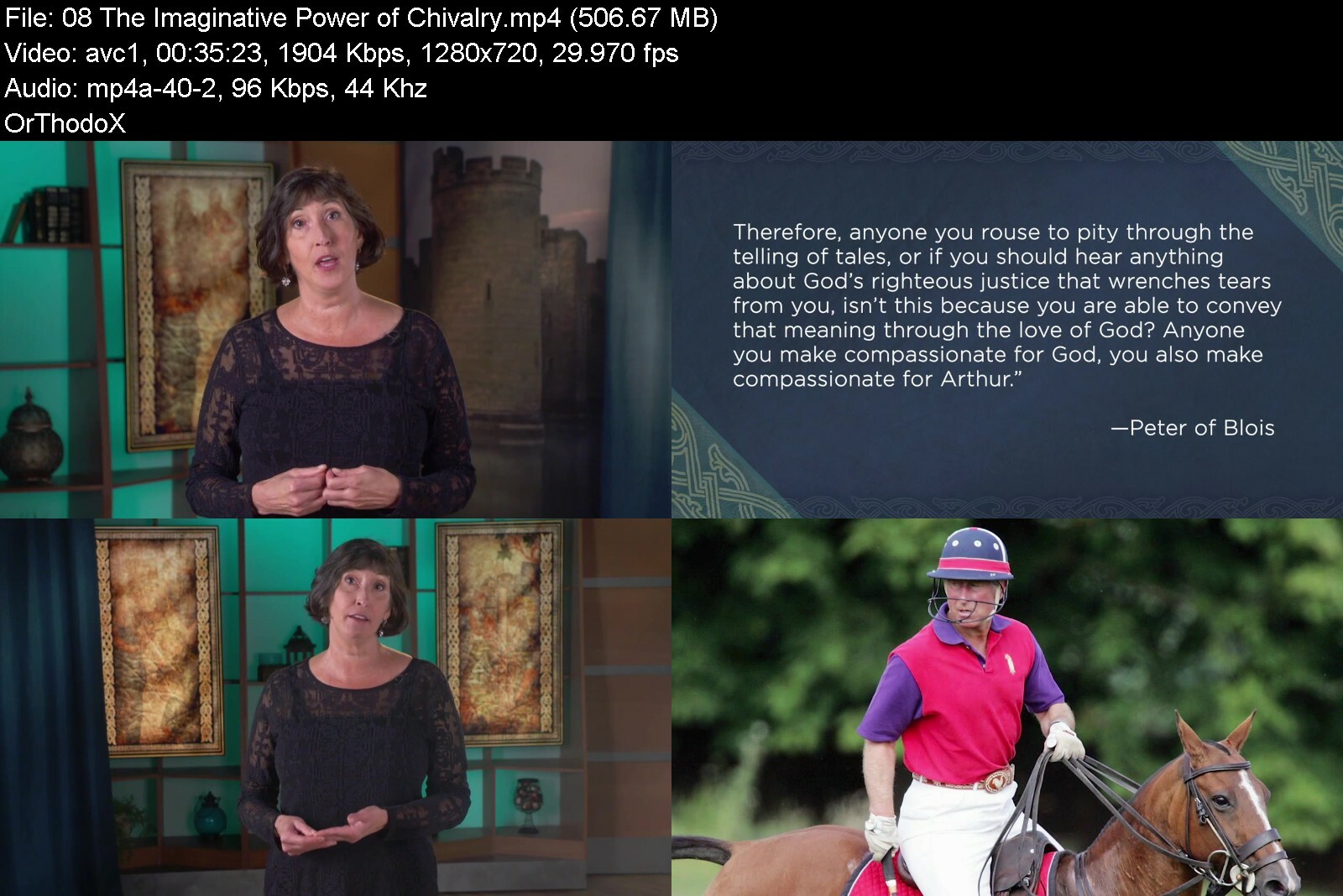
Romance and Chivalry. Delve into the powerful and enduring culture of chivalry, whose moral ideals and codes of valor still resonate strongly today in literature and popular culture. See how these ideals took shape in medieval epics, chivalric romance literature, song, and storytelling, often under the patronage and authorship of women. And observe how and why these codes were adopted by warring knights and carried forward by aristocracies into the 20th century.
The Scientific Method. Learn why, contrary to many popular perceptions, the origins of the scientific method are found in the Middle Ages, not the early modern era. Study the work of the great medieval scientists from al-Haytham and Avicenna to Ockham and Copernicus. Consider their integral contributions to the inductive-deductive method and the experimental science that gave us the modern world.
The Roles of Medieval Women. Within the fabric of medieval societies, take account of the remarkable and often forgotten contributions of women. Learn about pioneering medieval authors Christine de Pisan, Margery Kempe, and Hildegard of Bingen. Uncover the lost legacy of medieval women artists and encounter Jeanne d'Arc, Eleanor of Aquitaine, and other women who took leading roles in politics and war.
Race Thinking and Racism. Trace how the notion of race arose in the 14th and 15th centuries, following an earlier medieval culture in which prejudice was not usually based on physical differences. Observe the workings of religious ideology, travel literature, and the racialization of slavery in constructing concepts of "white" European superiority, and the passing down of those concepts to our own time.
Currents of Medieval Theology. Over three lectures, track the origins of key elements of Christian theology that form an important part of many church traditions. Follow how medieval Christian leaders crystallized both orthodoxy of doctrine and its counterpart, heresy. See how the still-current cult of the Virgin Mary arose and locate the medieval origins of the doctrine of Purgatory.
The Phenomenon of Medievalism. Examine the ways in which the medieval past-or popular ideas about it-have been claimed and appropriated in more recent times. Find medievalism in 19th-century British movements in art and decorative arts; European and American architecture; nationalist movements, and both World Wars; as well as in our own era's literature, film, and popular culture.
Savor the Richness of a Magnificent Epoch
Throughout the course, individual lectures highlight our heritage from the Middle Ages as it affects daily experience: in the kinds of paperwork we live with every day; the ways we read and publish texts; the medieval inventions we use, such as clocks and eyeglasses; how we compose poetry and novels; the universities we attend; and more.
Finally, in her gripping commentary, Professor Symes brings the medieval world vividly alive through remarkable specificity and detail. In a lecture on medieval finance, you'll enjoy a sumptuously detailed look at the colorful accounting system of the English Exchequer-a huge table that functioned like a giant abacus. In studying medieval trade guilds, you'll witness the extravagant York theatrical pageants and elaborate outdoor Passion plays, for which a myriad of trades created the staging. And, in exploring medieval pastimes, you'll study a richly detailed image of a chess match, portraying the complex social ceremony of the game and the distinctive costumes of the players and watchers-forms of dress that persisted until the early 20th century and live on in modern formal wear.
The Medieval Legacy offers a deep look at a stunning millennium of change and innovation which continues to inform our contemporary world.
What Will You Learn?
Track the various factors that gave rise to the medieval concept of "holy war," undergirding the call to arms of the Crusades
Trace the origins of representative government in the medieval era, in the phenomena of councils, general assemblies, and the Norse tradition of the "Thing" (public assembly)
Examine the social, political, and economic factors that caused hospitals and prisons to emerge as prominent civic institutions in the Middle Ages
Learn about the symbolism of colors and other markers of class in medieval clothing, and track the burgeoning uses of silk, velvet, and cotton
Assess the contribution of medievalist authors J. R. R. Tolkien and C. S. Lewis


themedievallegacyole03.jpg


Download from RapidGator


Download from DDownload


Simple Structured Trading Masterclass 2.0

ok4445mjwfu3w9zrzhuysrgefm.jpg


Simple Structured Trading Masterclass 2.0
Published 9/2022
MP4 | Video: h264, 1280x720 | Audio: AAC, 44.1 KHz
Language: English | Size: 6.50 GB | Duration: 9h 16m

Learn To Trade The Stock Market, using this simple structured trading technique


What you'll learn
Completely understand how the stock market works. Have indepth understanding on how this current market works, best trading hours, best trading times of the day
Understand the secret to the structure of the Stock Market and how to take advantage of some of the tendencies that repeat, to make passive or main income
Master Technical Analysis: Candlestick Patterns, including 2hrs of profitable Chart Pattern presentation, VWAP, Volume and Technical Indicators
Learn how to identify potential trade ideas, Apply best practices and techniques to make better stock choices
Learn how to stalk stocks and place a trade using free or paid professional platforms or social trading mobile apps
Learn How to send Orders and different Order Types. such as placing actual orders such as Market Orders, Stops Loss Order, Limit Orders, etc. .
Learn Risk Management: how to reduce losses and manage overall portfolio risk
Money Management: How to manage risk on each position, how many shares to buy, and where to take a loss. Sizing chart provided
Trading Psychology: become an Expert in human Emotions and the different Biases that affect people when Money is involved. How to manage yourself in trading.
Learn techniques in managing your emotional swings
Trade any Stock with a step by step approach. Make Maximum Profit at Minimum Risk.
Practical Exercises included to speed up your learning curve

Requirements
An Open Mind & Willingness to Learn
Speaks, reads and understand English
Notepad, preferably headphones, and distraction free environment

Description
In this course, you will learn how the Stock Market works, how to make money trading stocks, techniques needed to trade the stock market. This course is designed for beginners up to advance level traders looking to join the market and setup their trading business with goals to make passive income or participants who are looking to trade the market actively on a daily basis.We are aware of long boring courses that students have gone through and still cannot place their first trade.We aware of courses that make you an expert on paper (Theoretical guru), knowing all the big terms, technical words, analytical jargon, but never translates to actual success or profitIn this course, we start off by covering basic concepts and work our way up to more advanced level material in a simplified, organized and practical format.The stock market can be overwhelming, technical and sometimes challenging when you are trying to grasp everything at once before starting. You do not need to know everything before you start profiting in the stock market. We have proof of this concept; hence we have crafted something very different, structured, simple and straightforward for everyone to understand and benefit from.By the end of this course, you will completely understand how the Stock Market works structurally with over 300 charts examples. You will understand what a Stock is, you will understand the different sizes of companies listed on the stock exchange and how to take advantage of these classifications to make money every day. You will understand why you need a Broker, how the Brokers make money, what Exchanges are and how you can select the right exchanges. There are recommendations provided in the course resource sectionYou will learn about Orders to buy and sell stocks, stop strategies and profit taking strategies.We then cover the only Technical Analysis component you need to know as a beginner. intermediate or Advanced trader including Charts and Candlesticks, Trends, Supports & Resistances, Chart Patterns, Volume, and Volume average weighted price (VWAP).I provide a Simple Structured Trading Strategy that I have used in making a lot of money, based on a very simple, repeatable pattern in the stock market. A lot of traders successful traders use this pattern, this course teaches you the techniques to be ahead of the curveIn this course we go into the concept of Deep Work. A technique that is designed to cut your learning curve from months into weeks if not days. Deep work is a subject that is never explained in any stock trading course (We Checked). SST Masterclass 2.0 is the only stock trading course that acknowledges the learning curve and is designed to speed up or cut your learning curve significantly.We have provides 3000 stock tickers and 600+ ETFs and a workbook that will be used to practice the strategies taught in this course.Our goal is to create profitable traders not expert theoretical analyst, who are only good on paperWe go on to cover other important aspects in trading: Risk Management, Personality Management and Money Management. Here we teach you the concept of managing your risk, managing your portfolio while effectively managing your emotions, your biases and teach you the psychology behind managing yourself.This course takes some time to add another concept that is not taught in any other stock trading course, which is the concept of organization. After doing extensive testing and working with various individuals, we created a section in this course teaching you the best techniques for organizing your trading business, and your trading platform to enable you trade seamlessly.This course is a complete course with many excellent lessons covering all areas of stock trading. This course is designed to go from being a beginner or intermediate level trader to a profitable and successful trader at your own pace, all in one course!At the end of the course, you will gain confidence, avoid mistakes, set yourself up for success and place your first trade.Trading the stock market and making money can be addictive, fun and rewarding when you do it the right way.Please click the button in the upper right corner and let's get started!This course has been crafted with care. I appreciate your interest and hope to see you in the course!
Overview
Section 1: Introduction to Simple Structured Trading Masterclass 2.0
Lecture 1 Introduction To SST Masterclass 2.0
Lecture 2 Introduction to the stock market
Lecture 3 How the stock market works and how to make money trading stocks
Lecture 4 Section Recap
Section 2: Technical Analysis, Charts and Trends
Lecture 5 Technical Analysis, charts and trends explained. Important points to note
Lecture 6 Let the chart Tell the Story
Section 3: Support and Resistance
Lecture 7 Support and resistance as a concept
Lecture 8 3.1 How to properly draw support and resistance
Section 4: Chart Indicators
Lecture 9 Chart indicators
Section 5: Scanners, Stock Screeners
Lecture 10 Scanners/Stock Screeners. How to filter stocks to narrow down to the best stocks
Lecture 11 How to set Stock Scanners
Section 6: Trading Strategy
Lecture 12 The most profitable trading strategy for beginners to advanced traders
Lecture 13 How to enter a trade
Lecture 14 Mental Break
Lecture 15 Where to place entries and exits
Section 7: Mastering This Setup (Deep Work/Deep Dives)
Lecture 16 How to develop confidence in your trading setups and methods
Lecture 17 How to perform deep work. step by step guide to mastering my trading setup
Lecture 18 Section Recap
Section 8: Trade Management, Entry techniques and Organization
Lecture 19 How to look for stocks to trade
Lecture 20 How to stalk a potential stock trade idea and when to place the trade
Lecture 21 Organization - Setting up the right process for success in trading
Lecture 22 Useful resources to improve your trading
Section 9: Personality Management
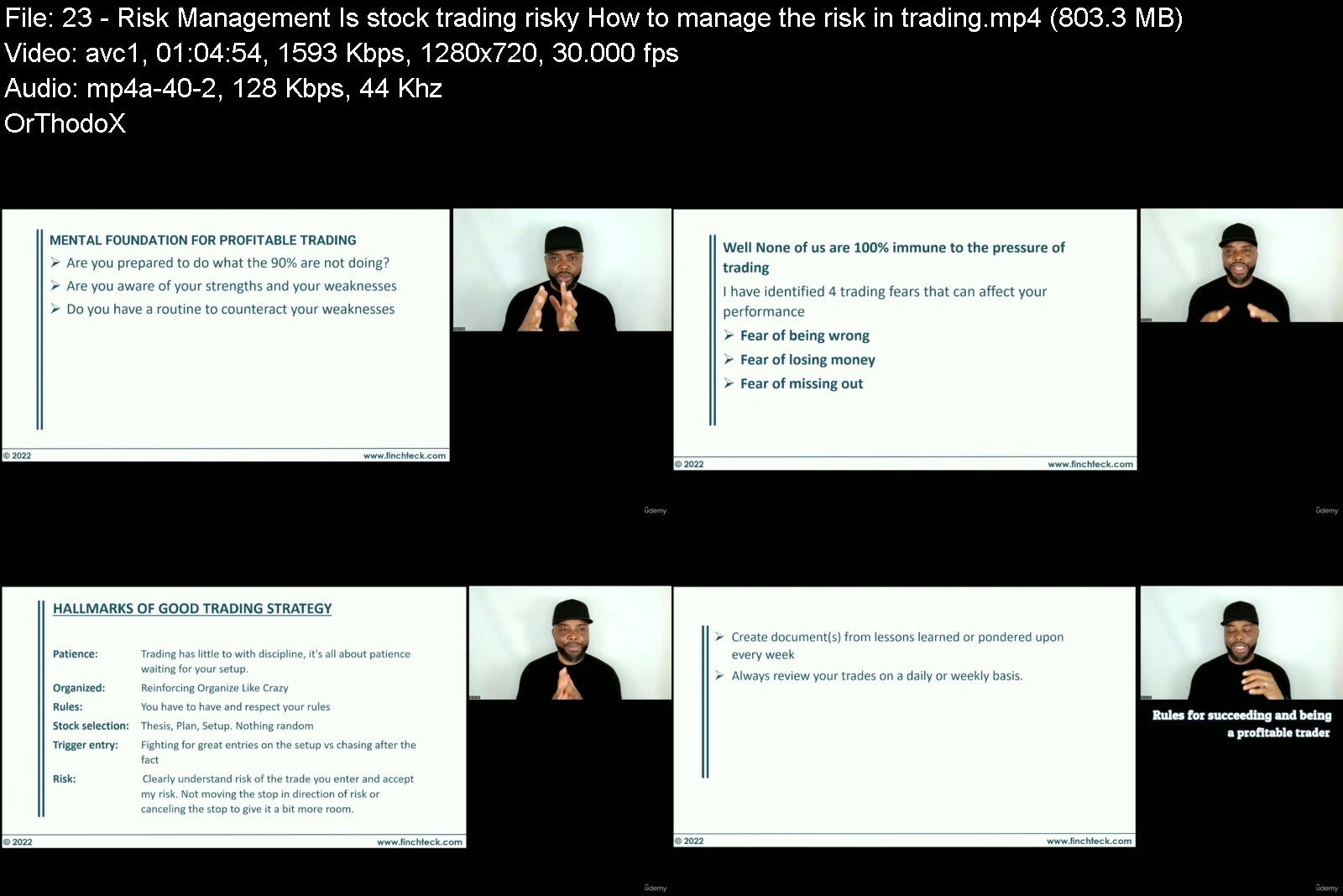
Lecture 23 Risk Management - Is stock trading risky? How to manage the risk in trading
Lecture 24 Rules for Daily Market Environment Analysis
Lecture 25 Trading psychology - How to manage your emotions and biases related to trading
Lecture 26 Section recap
Section 10: Where do we go from here? Step by step guide to placing your first trade
Lecture 27 Step by step guide on how to place your first trade
Course is perfect for the Beginner or Newer Investor who wants to learn all the key practical aspects when investing in stocks as they will become proficient by the end of the course,Excellent for more experienced investors who want to improve their skills, learn new methods, or gain more confidence when it comes to investing in stocks,Beginners who want to speed up their learning curve,Anyone not looking to get rich quick. This is not a get rich quick course. This course contains lifetime wealth creation skills,Beginners who dont want all the boring lengthy technical jargons and learn only key concepts to become profitable,Traders who are starting out and Intermediary level Traders who want to learn profitable and consistent methods of trading,Anyone who wants to Trade the Stock Market and make passive income or actively trade the market,Anyone who want to learn the most important concepts that are needed to be successful in stock trading,Traders who want to better time their entries and exits. Specific tested and proven secrets shared in this presentation


simplestructuredtradi3sfrq.jpg


Download from RapidGator


Download from DDownload



Zurück
Oben Unten