



• Regeln für den Video-Bereich:

    In den Börsenbereich gehören nur Angebote die bereits den Allgemeinen Regeln entsprechen.

    Einteilung

    - Folgende Formate gehören in die angegeben Bereiche:
    - Filme: Encodierte Filme von BluRay, DVD, R5, TV, Screener sowie Telesyncs im Format DivX, XviD und x264.
    - DVD: Filme im Format DVD5, DVD9 und HD2DVD.
    - HD: Encodierte Filme mit der Auflösung 720p oder darüber von BluRay, DVD, R5, TV, Screener sowie Telesyncs im Format x264.
    - 3D: Encodierte Filme von BluRay, die in einem 3D Format vorliegen. Dies gilt auch für Dokus, Animation usw.
    - Serien: Cartoon/Zeichentrick, Anime, Tutorials, Dokumentationen, Konzerte/Musik, Sonstiges sind demnach in die entsprechenden Bereiche einzuordnen, auch wenn sie beispielsweise im High Definition-Format oder als DVD5/DVD9/HD2DVD vorliegen. Ausnahme 3D.
    - Bereich Englisch: Englische Releases gehören immer in diesen Bereich.
    - Bereich Talk: Der Bereich, in dem über die Releases diskutiert werden kann, darf, soll und erwünscht ist.


    Angebot/Beitrag erstellen

    - Ein Beitrag darf erst dann erstellt werden, wenn der Upload bei mindestens einem OCH komplett ist. Platzhalter sind untersagt.
    - Bei einem Scenerelease hat der Threadtitel ausschließlich aus dem originalen, unveränderten Releasenamen zu bestehen. Es dürfen keine Veränderungen wie z.B. Sterne, kleine Buchstaben o.ä. vorgenommen werden. Ausnahme Serienbörse:
    - Bei einem Sammelthread für eine Staffel entfällt aus dem Releasename natürlich der Name der Folge. Beispiel: Die Simpsons S21 German DVDRip XviD - ITG
    - Dementsprechend sind also u.a. verboten: Erweiterungen wie "Tipp", "empfehlenswert", "only", "reup", usw. / jegliche andere Zusatzinformation oder Ergänzung, welche nicht in obiger Beschreibung zu finden ist.

    Aufbau des Angebots und Threadtitel

    Der Titel nach folgendem Muster erstellt zu werden. <Name> [3D] [Staffel] [German] <Jahr> <Tonspur> [DL] [Auflösung] <Quelle> <Codec> - <Group>
    Beispiel: The Dark Knight German 2008 AC3 DVDRip XviD - iND
    Beispiel: The Dark Knight 2008 DTS DL BDRip x264 - iND
    Beispiel: The Dark Knight 2008 AC3 DL BDRip XviD - iND
    Beispiel: The Dark Knight German 2008 AC3 720p BluRay x264 iND
    Beispiel: The Dark Knight 2008 DTS DL 1080p BluRay x264 iND
    Beispiel: Die Simpsons S01 German AC3 DVDRip XviD iND
    Beispiel: Die Simpsons S20 German AC3 720p BluRay x264 iND
    Beispiel: Sword Art Online II Ger Sub 2014 AAC 1080p WEBRip x264 - peppermint
    Entsprechend sind also u.a. verboten: Sonderzeichen wie Klammern, Sterne, Ausrufezeichen, Unterstriche, Anführungszeichen / Erweiterungen wie "Tipp", "empfehlenswert", "only", "reup", usw. / jegliche andere Zusatzinformation oder Ergänzung, welche nicht in obiger Beschreibung zu finden ist
    Ausnahmen hiervon können in den Bereichen geregelt sein.

    Die Beiträge sollen wie folgt aufgebaut werden:
    Überschrift entspricht dem Threadtitel
    Cover
    kurze Inhaltsbeschreibung
    Format, Größe, Dauer sind gut lesbar für Downloader außerhalb des Spoilers zu vermerken
    Nfo sind immer Anzugeben und selbige immer im Spoiler in Textform.
    Sind keine Nfo vorhanden z.B. Eigenpublikationen, sind im Spoiler folgende Dateiinformationen zusätzlich anzugeben :
    Quelle
    Video (Auflösung und Bitrate)
    Ton (Sprache, Format und Bitrate der einzelnen Spuren)
    Untertitel (sofern vorhanden)
    Hosterangabe in Textform außerhalb eines Spoiler mit allen enthaltenen Hostern.
    Bei SD kann auf diese zusätzlichen Dateiinformationen verzichtet werden.

    Alle benötigten Passwörter sind, sofern vorhanden, in Textform im Angebot anzugeben.
    Spoiler im Spoiler mit Kommentaren :"Schon Bedankt?" sind unerwünscht.


    Releases

    - Sind Retail-Release verfügbar, sind alle anderen Variationen untersagt. Ausnahmen: Alle deutschen Retail-Release sind CUT, in diesem Fall sind dubbed UNCUT-Release zulässig.
    - Im Serien-Bereich gilt speziell: Wenn ein Retail vor Abschluss einer laufenden Staffel erscheint, darf diese Staffel noch zu Ende gebracht werden.62
    - Gleiche Releases sind unbedingt zusammenzufassen. Das bedeutet, es ist zwingend erforderlich, vor dem Erstellen eines Themas per Suchfunktion zu überprüfen, ob bereits ein Beitrag mit demselben Release besteht. Ist dies der Fall, ist der bereits vorhandene Beitrag zu verwenden.
    - P2P und Scene Releases dürfen nicht verändert oder gar unter einem iND Tag eingestellt werden.


    Support, Diskussionen und Suche

    - Supportanfragen sind entweder per PN oder im Bereich Talk zu stellen.
    - Diskussionen und Bewertungen sind im Talk Bereich zu führen. Fragen an die Uploader haben ausschließlich via PN zu erfolgen, und sind in den Angeboten untersagt.
    - Anfragen zu Upload-Wünschen sind nur im Bereich Suche Video erlaubt. Antworten dürfen nur auf Angebote von MyBoerse.bz verlinkt werden.


    Verbote

    - Untersagt sind mehrere Formate in einem einzigen Angebotsthread, wie beispielsweise das gleichzeitige Anbieten von DivX/XviD, 720p und 1080p in einem Thread. Pro Format, Release und Auflösung ist ein eigener Thread zu eröffnen.
    - Grundsätzlich ebenso verboten sind Dupes. Uploader haben sich an geeigneter Stelle darüber zu informieren, ob es sich bei einem Release um ein Dupe handelt.
    - Gefakte, nur teilweise lauffähige oder unvollständige Angebote sind untersagt. Dies gilt auch für eigene Publikationen, die augenscheinlich nicht selbst von z.B. einer DVD gerippt wurden. Laufende Serien, bei denen noch nicht alle Folgen verfügbar sind, dürfen erstellt und regelmäßig geupdatet werden.
    - Untersagt sind Angebote, welche nur und ausschließlich in einer anderen Sprache als deutsch oder englisch vorliegen. Ausnahmen sind VORHER mit den Moderatoren zu klären.


    Verstoß gegen die Regeln

    - Angebote oder Beiträge, die gegen die Forenregeln verstoßen, sind über den "Melden"-Button im Beitrag zu melden.
  • Bitte registriere dich zunächst um Beiträge zu verfassen und externe Links aufzurufen.

*** Bestes IPTV *** bester Preis *** gratis Test ***


Englische Tutorials

Paradise Process: 4 Steps To Self-Healing

usuase8irbdisognlvgcrhjii4.jpg


Paradise Process: 4 Steps To Self-Healing
Published 9/2022
MP4 | Video: h264, 1280x720 | Audio: AAC, 44.1 KHz
Language: English | Size: 7.00 GB | Duration: 5h 23m

Heal Your Inner Child, Deepen Your Relationships and Become The Best Version Of Yourself In 4 Steps


What you'll learn
Notice when and what triggers or activates you with others.
Identify a pattern of behavior, thought or emotion that is holding you back.
Understand your personal template of a romantic relationship and how that influences your beliefs and behaviors in the present.
Identify your Attachment Style and learn about how it affects your life.
Release the past with compassion for yourself by understanding the way you learned to survive in childhood
Meet, accept and forgive your Inner Child with compassion and non-judgment.
Learn how to reconnect to and trust your gut.
Learn how to set boundaries without fear of the outcome (and identify where in your life you need to set a boundary)
Learn how to release stress and anxiety easily.
Communication skills: Learn compassionate communication techniques to help you deepen your trust and relationship with others
Learn how to 'sit' with your emotions, get information from them and allow them to pass.
Develop deeper consciousness and awareness for Self, so that you can start to shed the past and make better decisions that honor YOU in the present.

Requirements
No requirements to take this course! But this course IS for you if
You have never tried therapy or self-healing and are ready to take the next step into knowing yourself and healing from the past;
OR you have tried therapy, but it didn't feel actionable or impactful enough. This course is grounded in practical tools and techniques you can bring into your every day life;
OR you are currently in some form of therapy and would like additional support and the opportunity to dive deeper into your healing.

Description
--> Is your lack of confidence holding you back in your work life and relationships?--> Does your relationship have unnecessary conflict or misunderstandings that leaves you feeling exhausted and confused?--> Are you ever kept awake at night by stressful thoughts over your relationship, financial situation, career or your health?--> Do you bottle up emotions?--> Do you feel like your partner doesn't hear you or respect you in the way you deserve?--> Do you say "Yes" when you really want to say "No"--> Did you experience emotional pain as a child that you haven't worked through?--> Does imposter syndrome and feeling "not good enough" hold you back in your career?--> Is your relationship taking a toll on your mental health?--> Do you ever get a lump in your throat when trying to express your feelings and set a boundary?--> Do you feel stuck in a pattern within your relationship and family?The truth is -We all experience levels of this in our daily lives.The behaviors and the ways of thinking that make us who we are TODAY are based on past traumas, experiences and childhood survival mechanisms.When we don't heal these, we hold onto patterns, behaviors, and ways of thinking that no longer serve us.In order to unlock our own power for deeper joy, greater love, freedom in our choices and the confidence to ask for what we truly desire,We have to face ourselves and begin the process of self-healing.The Paradise Process is a self-paced self-healing journey complete with educational video modules, actionable activities and downloadable resources.The Paradise Process is designed to guide and stimulate the inner child work we need to gain emotional awareness of our thoughts, patterns and behaviours; to find freedom from the modes of thinking and being that have served us in the past, but are now holding us back; and ultimately to bring healed and compassionate choices into our present.This course came in a timely manner. It has helped me so much in knowing and choosing a better life for myself .I am activated to put less emphasis on external validation and at this point of my life go internal to find my authentic self and engage in self care. It is because of this course. Thank you so very much! - PatThis course is excellent and presented really well by Michelle to give people the knowledge skills to ensure that they understand what might be contributing to their issues. It provides an opportunity to work with Michelle in the healing space, gives you time and energy to look in the mirror and take care of you by being honest with yourself and help you understand why you do what you have done all these years. It helps you understand what decisions and actions that need to happen or what changes you need to implement to make you feel better because you are worth it!! Michelle has a great way of validating your experience but also challenging you to see beyond your past experiences to improve yourself and your future! Gives you Hope - KWhat You Can Expect...Four repeatable steps: Awareness, Acceptance, Consciousness and Choice.Video modules to walk you through each step in detail.Resources and more to help you integrate your new knowledge into your life.Empower yourself with the knowledge and insights you need to embark on your own Self-healing journey & receive personalised advice on the unique problems you face.Move from resentment to contentment with greater awareness, the power and tools to set boundaries and the freedom to make better choices for yourself.Find deeper love in your relationships through knowing and appreciating yourself more and communicating with compassion.Create peace and presence in your life and prioritize what matters most - YOU."Through your work you certainly helped me to find my voice and speak my truth and realise that it was me that was holding me back, not him. I'm so happy to tell you that he finally gave me the bonus I earned over the past 5 years, bought me my dream vintage Jaguar and we were married 2 months ago. I can't believe that after 15 years of being together, all it took was to realise my patterns that lead to my behaviours and forgive my younger self for keeping me safe all these years but stuck. I've never been happier and I never thought I would ever BE in this place of love and peace. Thank you." - Marina 57"Thank you so much for your help with my relationships. Thanks to you, I realized what mistake I was making in every relationship I had! It feels so good and so powerful to finally be able to see and understand why they didn't work out. I feel very excited about the new beginning. I understand how much I can give and I truly believe in myself this time." Magda 29Frequently Asked QuestionsFAQ 1: How does it work?Michele walks you through the process of connecting to Self, identifying past experiences that created unconscious beliefs and behaviours that are holding you back and making you feel broken and not good enough. Through compassionate acceptance and awareness, she guide you to start to change the narrative you have about yourself, and give you the tools and techniques to create the change you need in your own life.FAQ 2: Who is it for?The Paradise Process is for you if you feel "not good enough", stuck in your job, relationship and life in general, or lonely and anxious. The Paradise Process is a unique solution to help you gain the awareness, tools and techniques to turn inwards, recognise your patterns and 'learned behaviours', and start to overcome the things that are holding you back. and in doing so ultimately achieve greater peace, confidence and freedom from the past.FAQ 3: What if it doesn't work for me?Michele and her team have spent the past year crafting this self-healing course based on 20+ years of experience of working 1:1 with clients to transform their lives and relationships, working as Wellness Expert with Deepak Chopra and her training by the best in the field: Dr Richard Brandler, Dr Gabor Maté, Dr Richard Schwartz and Paul McKenna. She also has years of experience in Neuro-Linguistic Programming, Havening and Hynotherapy, all of which are incorporated into Paradise Process. So the course is designed to walk you through your own healing step-by-step in a way that will work for you if you put in the time and effort to complete the course.

Overview

Section 1: The first step in your self-healing journey: Awareness

Lecture 1 Introduction to Awareness

Lecture 2 Notice when and what triggers or activates you with others

Lecture 3 Identify a pattern that is holding you back

Lecture 4 Understand your romantic relationship template

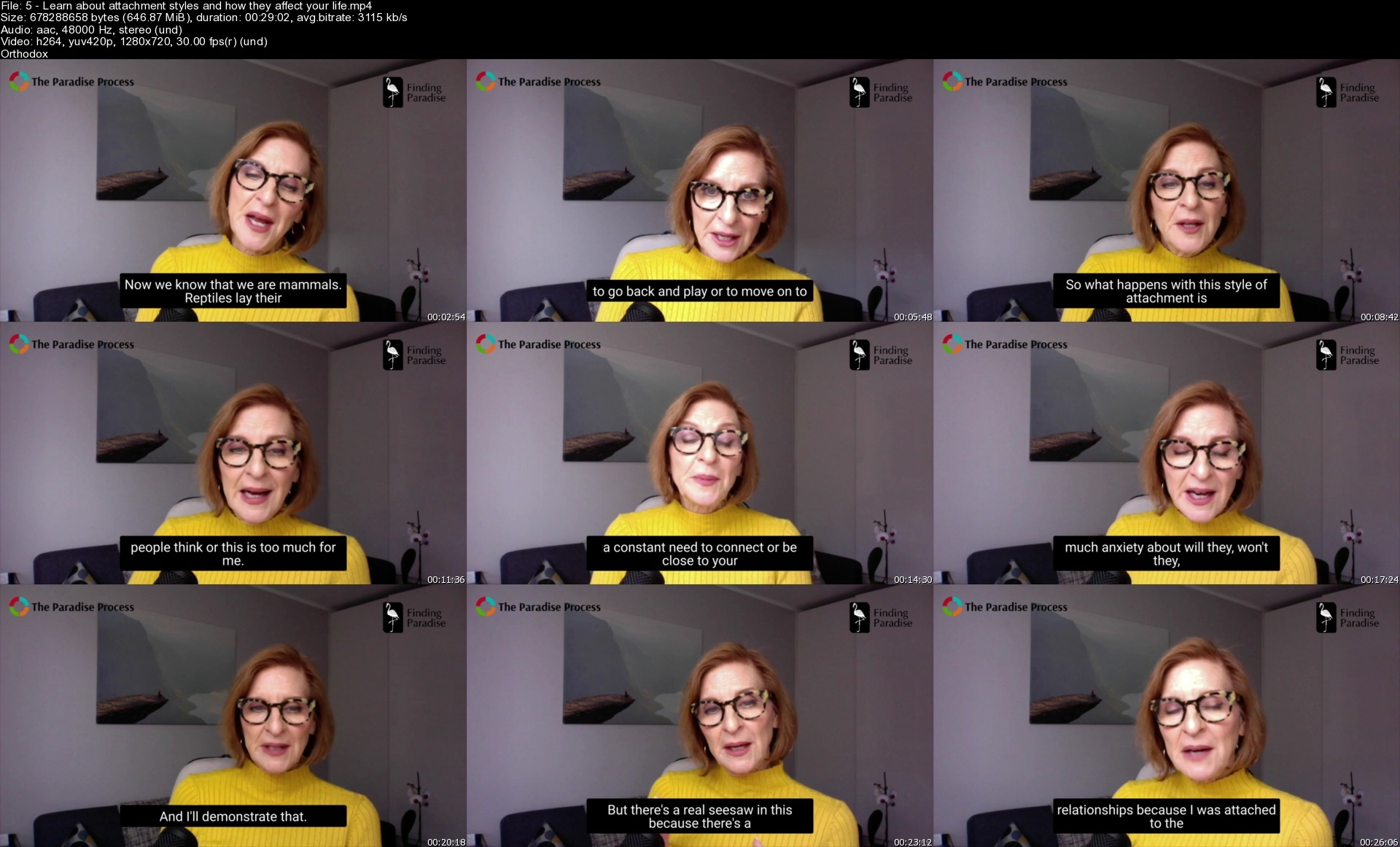
Lecture 5 Learn about attachment styles and how they affect your life

Lecture 6 Awareness Resources

Section 2: The second step in your self-healing journey: Acceptance

Lecture 7 Understand the ways you learned to survive in childhood, with compassion.

Lecture 8 Learn that you did nothing wrong.

Lecture 9 Learn how to integrate what you now know into your life

Lecture 10 Accept and forgive your younger self with compassion and non-judgement.

Lecture 11 Acceptance Resources

Section 3: The third step in your self-healing journey: Consciousness

Lecture 12 Recognise that 95% of our day we are unconsciously making decisions...

Lecture 13 Learn how to be present in the moment with your emotions...

Lecture 14 Learn how to become aware of when you need to set boundaries.

Lecture 15 How to compassionately communicate with people who activate you

Lecture 16 Consciousness Resources

Section 4: The fourth step in your self-healing journey: Choice

Lecture 17 Set boundaries without fear of the outcome

Lecture 18 Reconnect with Self and trust your gut

Lecture 19 Release stress and anxiety easily

Lecture 20 Understand post-traumatic growth and wisdom

Lecture 21 Choice Resources

Women and men with the desire to deepen your connection with yourself and heal from the inside out so that you can have deeper, more meaningful and loving relationships with others.

Homepage

5learnaboutattachmenty4e5g.jpg


CompTIA Pentest+ (PT0-002) Cert Prep: 2 Information Gathering and Vulnerability Scanning (2022)

1662662514112e2147483w8ct4.jpg


CompTIA Pentest+ (PT0-002) Cert Prep: 2 Information Gathering and Vulnerability Scanning (2022)
Released 09/2022
MP4 | Video: h264, 1280x720 | Audio: AAC, 44.1 KHz, 2 Ch
Skill Level: Intermediate | Genre: eLearning | Language: English + srt | Duration: 3h 24m | Size: 2.61 GB /info]

If you really want to launch a successful attack, you need to map out the relevant network vulnerabilities beforehand so you know when, where, and how to structure the attack. That's why getting certified by CompTIA gives you the skills you need to be a well-informed pen tester. In this course, instructor Michael Solomon helps you prepare for the second domain of the CompTIA PenTest+ (PT0-002) certification exam, walking you through the best practices for information gathering and vulnerability scanning in order to find out what's at stake with a particular engagement--long before you even start testing. Along the way, learn how to use key testing techniques for scanning and enumeration, demos, packet investigations, passive and active reconnaissance, vulnerability scanning, target considerations, Nmap scoping and timing, credential attacks, and more.

Homepage


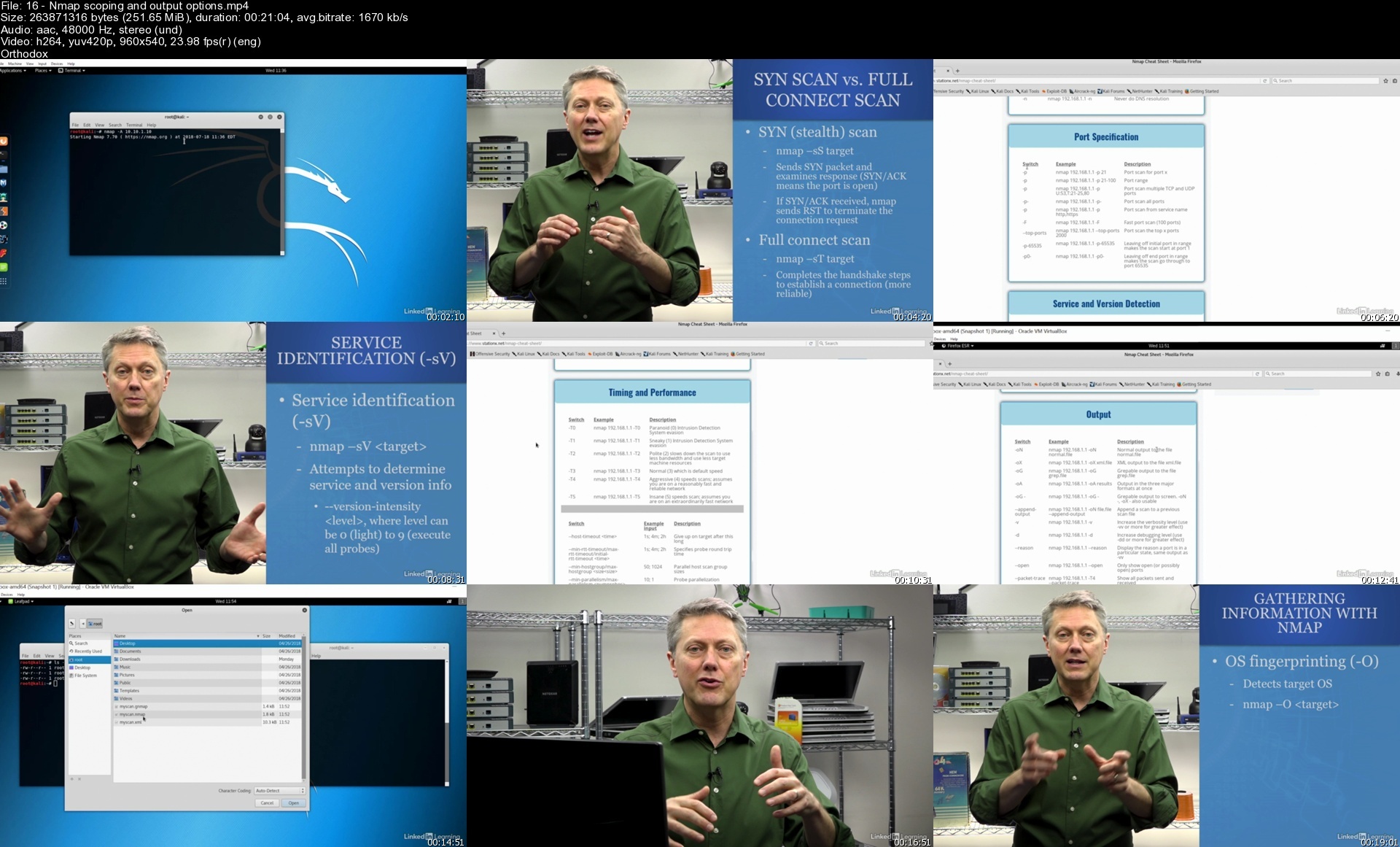
16nmapscopingandoutpubxdhx.jpg


Advanced Accounting A Complete Study For Ca/Cma/Cfa/Acca/Cs

2xeqejwnidklknsuteutju2ftr.jpg


Advanced Accounting A Complete Study For Ca/Cma/Cfa/Acca/Cs
Last updated 12/2021
MP4 | Video: h264, 1280x720 | Audio: AAC, 44.1 KHz
Language: English | Size: 34.07 GB | Duration: 69h 36m

Prepare yourself for Advanced Accountancy Paper on CA / CMA / CS / B.Com Courses as well to acquire practical knowledge


What you'll learn
Understand Branch Accounts
Understand Departmental Accounts
Understand Self Balancing Ledger
Understand Accounting for Consignment
Understand Accounting for Joint Venture
Understand Accounting for Investments
Understand Accounting for Insurance Claims
Understand Accounting for Bills of Exchange
Understand Accounting for Sale of Goods on Approval / Return Basis
Understand Depreciation Accounting
Understand Average Due DAte
Understand Account Current
Understand Accounting For Construction Contract
Understand Revenue Recognition
Understand Accounting for Computer Software
Understand Accounting for Banking Companies.
Understand Accounting For Hospitals
Understand Accounting for Royalties
Understand Accounting for Hire Purchase Transactions
Understand Inventory Valuation
Understand Final Accounts of Sole Proprietors
Understand Accounting for Not-for-Profit Organisations

Requirements
Basics of Accounting

Description
Who should take this course?Are you struggling in understanding Accounting concepts and techniques related to Branch Accounts, Departmental Accounts, Royalty Accounts, Hire Purchase Accounts, Accounting for Bills of Exchange, Consignment Accounting, Joint Venture Accounting, Investment Accounting, Insurance Claim Accounting, Accounting for Banking and Insurance Companies, Average Due Date, Account Current, etc? Are you a student pursuing professional courses like CA / CMA / CS / CFA /CPA / ACCA / CIMA / MBA Finance or are you a Finance Professional / Banker aspiring to excel in Accounting Techniques and rise to top in your career? Then this course is for you - Advanced Accounting A Study.Why you should take this course?By taking this course, you will be able to see practical side of Accounting concepts with lot many case studies to solve. Approaching complex topics through case studies is the best way to understand them and you will find lot many in this course.Theoretical back ground for each and every topic will be explained followed by numerous case studies and most of them will be past examination tested problems which will help you to excel in Academic Examinations as well as in real life.If you are an Accounting or Finance or Cost Accounting Executive, this course will help you to brush up your basics in Accounting and all the contents have immediate practical relevance and application. What you will learn by taking this course? This is a comprehensive course, covering each and every topic in detail. In this course,you will learn the Advanced Accounting concepts, theories, and techniques which deals with conceptual frame work. You will be exposed to following concepts and Techniques through various video lectures, quizzes and presentations: a) Branch Accounts b) Departmental Accounts c) Accounting for Royaltiesd) Accounting for Hire Purchase Transactionse) Self Balancing Ledgersf) Sectional Balancing Ledgersg) Accounting for Service Sectors, Project Accounting, etc.h) Accounting for Service Sectors like Software, ITES, Telecommunication, Entertainment, Hospital, Educational Institutions.i) Accounting for Special Transactions - Bill of Exchangej) Accounting for Special Transactions - Consignmentk) Accounting for Special Transactions - Joint Venturel) Accounting for Special Transactions - Sale of goods on Approval or Return Basism) Accounting for Special Transactions - Account Currentn) Accounting for Special Transactions - Investment Accountso) Accounting for Special Transactions - Insurance Claim (Loss of Stock and Loss of Profit)p) Accounting for Banking, Electricity and Insurance Companies.How this course is structured?This course is structured in self paced learning style. Each and every section of this course is broken down as various micro lectures and then they are substantiated with examples and case studies. Several real world examples are used in this course through case studies. You'll gain authority on each and every topic as i take you through lectures one by one. This course is presented in simple language with examples. This course has video lectures (with writings on Black / Green Board / Note book / Talking head, etc). You would feel you are attending a real class. What are the pre-requisites for taking this course?You should have basic knowledge of Accounting. You would require good internet connection for interruption free learning process. How this course will benefit you?At the end of the course, you will be able to solve various case studies in Advanced Accounting at ease with high level of confidence. This course will equip you for approaching above listed professional examinations with confidence as well hand real life problems with clarity. Happy Learning and Best Wishes!

Overview

Section 1: Branch Accounts

Lecture 1 Welcome Lecture

Lecture 2 Introduction to Branch Accounts

Lecture 3 Dependent Branches and Features

Lecture 4 Accounting for dependents branches

Lecture 5 Debtors system in branch accounts

Lecture 6 Accounting Entries Debtors System

Lecture 7 Dependent Branches Problem 1

Lecture 8 Dependent Branches Problem 2

Lecture 9 Dependent Branches Problem 3

Lecture 10 Dependent Branches Problem 4

Lecture 11 Dependent Branches Problem 5

Lecture 12 Goods invoiced at SP to Branches & Its Accounting Aspects

Lecture 13 Dependent Branches Problem 6 (invoice @ SP)

Lecture 14 Dependent Branches Problem 7 (invoice @ SP)

Lecture 15 Dependent Branches Problem 8 (invoice @ SP)

Lecture 16 Case Study Branch Account Gross Profit

Lecture 17 Stock and Debtors system

Lecture 18 Problem 9 Stock and Debtors System

Lecture 19 Problem 10 Stock and Debtors System

Lecture 20 Problem 11 stock and Debtors System

Lecture 21 Final Accounts Method

Lecture 22 Problem 12 Branch Trading & P&L A/c (cost)

Lecture 23 Problem 13 Branch Trading A/c (Invoice Price)

Lecture 24 Problem 14 Branch Trading P&L A/c (Invoice Price)

Lecture 25 Case Study Debtors method and Final Accounts

Lecture 26 Problem 15 on stock and Debtors system

Lecture 27 Problem 16 Stock and Debtors System

Lecture 28 Case Study Stock & Debtors Method

Lecture 29 Whole Sale Branch system

Lecture 30 Problem 17 Whole Sale Branch system

Lecture 31 Problem 18 Whole Sale Branch system

Lecture 32 Problem 19 Whole Sale Branch system

Lecture 33 Independent Branches Introduction

Lecture 34 Independent Branches Accounting Entry Part 1

Lecture 35 Independent Branches Accounting Entry Part 2

Lecture 36 Independent Branches Problem 20

Lecture 37 Independent Branches Problem 21

Lecture 38 Independent Branches Problem 22

Lecture 39 Independent Branches Problem 23

Lecture 40 Incorporation of Branch Trial Balance

Lecture 41 Incorporation of Branch Trial Balance Problem 24

Lecture 42 How to Close Books of Branches

Lecture 43 Closure of Branch books Problem 25

Lecture 44 Closure of Branch books Problem 26

Lecture 45 Closure of Branch books Problem 27

Lecture 46 Integral and Non Integral Foregin Branch

Lecture 47 Indicators of Non Integral Foreign Operation

Lecture 48 Techniques for Foreign Currency Translation Integral Foreign Operation

Lecture 49 Techniques for Foreign Currency Translation Non Integral Foreign Operation

Lecture 50 Case 1 Integral Foreign Operation Trial Balance

Lecture 51 Case 2 Integral Foreign Operation P&L and Balance Sheet

Section 2: Departmental Accounts

Lecture 52 Departmental Accounts Introduction

Lecture 53 Apportionment of Expenses

Lecture 54 Departmental Accounts Problem 1

Lecture 55 Departmental Accounts Problem 2

Lecture 56 Inter Departmental Transfers

Lecture 57 Inter Departmental Transfers Problem 3

Lecture 58 Inter Departmental Transfers Problem 4

Lecture 59 Inter Departmental Transfers Problem 5

Lecture 60 Inter Departmental Transfers Problem 6

Lecture 61 Departmental Accounts Problem 7

Lecture 62 Departmental Accounts Problem 8

Lecture 63 Departmental Accounts Problem 9

Lecture 64 Case Study Departmental Trading and P&L Account

Lecture 65 Case Study Departmental Trading and P&L Account (with Stock Adjustment and Profi

Section 3: Self Balancing Ledger

Lecture 66 Introduction to Self Balancing Ledger System

Lecture 67 Self Balancing Ledger Problem 1

Lecture 68 Self Balancing Ledger Problem 2

Lecture 69 Self Balancing Ledger Problem 3

Lecture 70 Contra Transactions

Lecture 71 Entries to be Passed in Credit purchase

Lecture 72 Self Balancing Ledger Problem 4

Lecture 73 Transfer entries

Lecture 74 self Balancing Ledger Problem 5

Lecture 75 self Balancing Ledger Problem 6

Lecture 76 self Balancing Ledger Problem 7

Section 4: Accounting for Consignment

Lecture 77 Consignment Accounting Introduction

Lecture 78 Accountiong Aspects in Consignment

Lecture 79 Accounting Entries in books of consignor

Lecture 80 Consignment Accounting Problem 1

Lecture 81 Consignment Accounting Problem 2

Lecture 82 Consignment Accounting Problem 3

Lecture 83 Accounting Entries in the Book of Consignee

Lecture 84 Consignment Account Problem 4

Lecture 85 Consignment Account Problem 5 (Goods Lost in Fire)

Lecture 86 Consignment Account Problem 6

Lecture 87 Normal Loss

Lecture 88 Consignment Problem 7 with Normal Loss

Lecture 89 Consignment Problem 8 Computation of Cost and Invoice Price

Lecture 90 Consignment Problem 9 Computation of Profit Percentage on Cost and Selling Price

Lecture 91 Consignment Problem 10 Computation of Invoice Value of Goods Sent Out

Lecture 92 Consignment Problem 11 Computation of Abnormal Loss

Lecture 93 Consignment Problem 12 With Del Credre Commission and Bad Debts

Lecture 94 Consignment Problem 13 Computation of Commission

Lecture 95 Consignment Problem 14 Computation of Commission

Lecture 96 Consignment Problem 15 Computation of Stock Reserve

Section 5: Accounting for Joint Venture

Lecture 97 Joint Venture Introduction

Lecture 98 Separate set of Books Method

Lecture 99 Problem 1 Separate set of Books Method

Lecture 100 Problem 2 Separate set of Books Method

Lecture 101 No Separate Set of Books Maintained

Lecture 102 Problem 1 No Separate Set of Books Maintained

Lecture 103 Problem 2 No Separate Set of Books Maintained

Lecture 104 Memorandum Joint Venture A/c Method

Lecture 105 Problem 1 Memorandum Joint Venture A/c Method

Section 6: Accounting for Investments

Lecture 106 Investment Accounting

Lecture 107 Problem 1 Investment Accounting

Lecture 108 Problem 2 Investment Accounting

Lecture 109 Problem 3 Investment Accounting

Lecture 110 Accounting for Fixed Investment Securities

Lecture 111 Problem 4 Accounting for Fixed Investment Securities

Lecture 112 Problem 5 Accounting for Fixed Investment Securities

Section 7: Accounting for Insurance Claims

Lecture 113 Insurance Claim Problem 1

Lecture 114 Insurance Claim Problem 2

Lecture 115 Insurance Claim Problem 3

Lecture 116 Insurance Claim Problem 4

Lecture 117 Insurance Claim for loss of Profit Part 1

Lecture 118 Insurance Claim for loss of Profit Part 2

Lecture 119 Insurance Claim for loss of Profit Problem 1

Lecture 120 Insurance Claim for loss of Profit Problem 2

Section 8: Accounting for Bills of Exchange

Lecture 121 Introduction to Bills of Exchange

Lecture 122 Accounting Aspects in Bills of Exchange

Lecture 123 Methods of Drawing Bills of exchnage

Lecture 124 Computation of Bill Due Date

Lecture 125 Endorsement of Bill of Exchange

Lecture 126 Problem on Endorsement of Bill of Exchange

Lecture 127 Discounting of Bill

Lecture 128 Problem on Discounting of Bill

Lecture 129 Retirement of Bill

Lecture 130 Problem on Retirement of Bill

Lecture 131 Dishonour of Bill

Lecture 132 Problem on Dishonour of Bill

Lecture 133 Dishonour of Bill - Different Scenarios

Lecture 134 Renewal of Bill of Exchange

Lecture 135 Problem 1 on Renewal of Bill of Exchange

Lecture 136 Problem 2 on Renewal of Bill of Exchange

Lecture 137 Insolvency of Customer

Lecture 138 Problem on Insolvency of Customer

Section 9: Accounting for Sale of Goods on Approval / Return Basis

Lecture 139 Introduction to Sale on Approval or Return Basis

Lecture 140 Method I Sale on Approval and Problem

Lecture 141 Method II Sale on Approval and Problem

Lecture 142 Method I Sale on Approval and Problem 2

Lecture 143 Method I Sale on Approval and Problem 3

Lecture 144 Method I Sale on Approval and Problem 4

Lecture 145 Method I Sale on Approval and Problem 5

Lecture 146 Method I Sale on Approval and Problem 6

Section 10: Depreciation Accounting

Lecture 147 Depreciation Introduction

Lecture 148 Straight Line Method of Depreciation

Lecture 149 Problem 1 Straight Line Method of Depreciation

Lecture 150 Problem 2 Straight Line Method of Depreciation

Lecture 151 Machine Hour Depreciation Method and Problem

Lecture 152 Production Units Method of Depreciation and Problem

Lecture 153 Depletion Method of Depreciation and Problem

Lecture 154 Written Down Value Method

Section 11: Average Due Date

Lecture 155 Average Due Date Introduction

Lecture 156 Due Date

Lecture 157 Types of Problems

Lecture 158 Average Due Date Problem 1

Lecture 159 Average Due Date Problem 2

Lecture 160 Average Due Date Problem 3

Lecture 161 Average Due Date Problem 5

Section 12: Account Current

Lecture 162 Introduction to Account Current

Lecture 163 Account Current Problem 1

Lecture 164 Product Method

Lecture 165 Account Current Problem 2 Product Method

Lecture 166 Account Current Problem 3 Forward Method

Lecture 167 Account Current Problem 4 Backward Method

Lecture 168 Account Current Problem 5 Interest Method

Lecture 169 Account Current Problem 6 Product Method

Lecture 170 Red Ink Interest Method

Lecture 171 Account Current Problem 7 Red Ink Interest Method

Lecture 172 Account Current Problem 8 Different Interest Rates

Section 13: Accounting For Construction Contract

Lecture 173 Construction Contract and its Type

Lecture 174 Objectives of Accounting for Construction Contract

Lecture 175 Applicability of AS7

Lecture 176 Measurement of Contract Revenue

Lecture 177 Contract Costs - Inclusion and Exclusions

Lecture 178 Basic Principles of Recognition of Revenue and Expenses

Lecture 179 Composition of Contract Revenue

Lecture 180 Provision for Expected Losses

Lecture 181 Effect of change in estimate in Construcition Contract

Lecture 182 Accounting Disclosures by Construction Contractors as per AS 7

Lecture 183 Contract Accounting Case Study 1

Lecture 184 Contract Accounting Case Study 2

Lecture 185 Contract Accounting Case Study 3

Section 14: Revenue Recognition

Lecture 186 Revenue Recognition - Introduction

Lecture 187 Item excluded in Revenue Definition

Lecture 188 Timing of Revenue Recognition

Lecture 189 Conditions of Revenue Recognition

Lecture 190 Revenue Recognition when goods are sold subject to conditions

Lecture 191 Revenue from Rendering of service

Lecture 192 Special Treatment of Revenue Recognition

Lecture 193 When Revenue from sale of goods can berecognised?

Lecture 194 Treatment of interdepartmental Transfer

Lecture 195 Revenue Recognition Case Study 1

Lecture 196 Revenue Recognition Case Study 2

Lecture 197 Revenue Recognition Case Study 3

Lecture 198 Revenue Recognition Case Study 4

Lecture 199 Revenue Recognition Case Study 5

Lecture 200 Revenue Recognition Case Study 6

Lecture 201 Revenue Recognition Case Study 7

Lecture 202 Revenue Recognition Case Study 8

Section 15: Accounting for Computer Software

Lecture 203 Introduction to Computer Software Accounting

Lecture 204 Software Acquired for Internal Use

Lecture 205 Internally Generated Computer Software

Section 16: Accounting for Banking Companies.

Lecture 206 Introduction -Banking

Lecture 207 Banking, Banking Companies & Exceptions

Lecture 208 Important Provisions of Banking Regulation Act

Lecture 209 Important Provisions of Banking Regulation Act Part 2

Lecture 210 Banks Book Keeping System

Lecture 211 Case 1 Accounting Treatment of Interest Income - Bank Loans

Lecture 212 Case 2 Accounting Treatment of Interest Income - Bank Loans

Lecture 213 Case 3 Accounting Treatment of Interest Income - Bank Loans

Lecture 214 Case 4 Computation of Provision

Lecture 215 Case 5 Computation of Provision

Lecture 216 Case 6 Computation of Provision

Lecture 217 Case 7 Computation of Provision

Lecture 218 Case 8 Computation of Provision

Lecture 219 Case 9 Computation of Provision

Section 17: Accounting For Hospitals

Lecture 220 Introduction Accounting for Hospitals

Lecture 221 Expenses Recognitionby Hospitals

Lecture 222 Allocation of Revenue

Lecture 223 Realisation of Revenue

Section 18: Accounting for Royalties

Lecture 224 What is Royalty?

Lecture 225 What is Minimum Rent / Dead Rent in Royalty?

Lecture 226 Short workings / Excess Workings and Ground Rent

Lecture 227 Recoupment of Shortworkings

Lecture 228 Accounting treatment of Shortworkings

Lecture 229 Accounting entries in the books of lessee / licencee

Lecture 230 Case Study 1 - Royalty Account - with Shortworking Adjustments

Lecture 231 Case Study 2 - Royalty Account -with Shortworking Adjustments

Section 19: Accounting for Hire Purchase Transactions

Lecture 232 Hire Purchase and Installment sale

Lecture 233 situation I - When Rate of Interest, Cash Price & Interest given

Lecture 234 Situation II-When Rate of Int. & Inst. given but cash price not given

Lecture 235 Situation III-When only Inst. are given but cash price & rate of Int. not given

Lecture 236 Situation IV-Ref. to annuity table,rate of Int.&inst. given but not cash price

Lecture 237 Accounting Treatment in Hire Purchaser Books

Lecture 238 Accounting effect of HP default and Repossession

Lecture 239 Case Study - Hire Purchase Default and Repossession

Lecture 240 Case Study - Hire Purchase Default and Partial Repossession

Section 20: Inventory Valuation

Lecture 241 Introduction to Inventory

Lecture 242 Significance of Inventory Valuation

Lecture 243 Valuation of Inventory

Lecture 244 Components of Cost

Lecture 245 Exclusion from Cost

Lecture 246 Net Realisable Value

Lecture 247 Techniques for Inventory Valuation

Lecture 248 Specific Identification Method

Lecture 249 FIFO Method of Valuation

Lecture 250 LIFO Method of Valuation

Lecture 251 Case Study for FIFO Method

Lecture 252 Case Study FIFO Method

Lecture 253 Simple Average Price Method

Lecture 254 Case Study Average Price Method

Lecture 255 Weighted Average Price Method

Lecture 256 Case Study on Simple Average and Weighted Average Method

Lecture 257 Case Study Weighted Average Price Method

Lecture 258 Case Study Weighted Average Price Method Inventory Ledger

Lecture 259 Retail or Adjusted Selling Price Method

Lecture 260 Case Study on Retail or Adjusted Selling Price Method

Lecture 261 Case Study 1 Adjusted Selling Price Method

Lecture 262 Case Study 2 Adjusted Selling Price Method

Section 21: Final Accounts of Sole Proprietors

Lecture 263 Introduction to Final Accounts of Sole Proprietors

Lecture 264 Introduction to Final Accounts of Non Manufacturing Entities

Lecture 265 Income Statement and Position Statement

Lecture 266 Preparation of Final Accounts - fundamental aspects

Lecture 267 Inter-relationship between two statements

Lecture 268 Matching Principle

Lecture 269 Exceptions to Matching Principle

Lecture 270 Trading Account

Lecture 271 Trading Account Items

Lecture 272 Closing entries in Trading Account

Lecture 273 Trading Account Case Study 1

Lecture 274 Trading Account Closing Entries Case Study 2

Lecture 275 Profit and Loss Account

Lecture 276 Treatment of Specific items

Lecture 277 Closing entries related to Profit and Loss account

Lecture 278 Profit and Loss Account Case Study 2

Lecture 279 Adjustments in Final Accounts

Lecture 280 Provision for Doubtful Debts Case Study 4

Lecture 281 Other Adjustments in Final Accounts

Lecture 282 Abnormal Loss of Inventory by accident or fire

Lecture 283 Goods Sent on Approval Basis

Lecture 284 Goods used other than for Sale

Lecture 285 Accounting Entry for Sales Tax

Lecture 286 Commission based on Profit

Lecture 287 Preparation of Final Accounts - Case Study 5

Lecture 288 Arrangements of Assets and Liabilities

Lecture 289 Classifications of Assets and Liabilities

Lecture 290 Preparation of Balance Sheet - Case Study 6

Lecture 291 Preparation of Revised P&L and Balance Sheet - Case Study 7

Lecture 292 Determination of Outstanding Salaries and related adjustments

Lecture 293 Opening Entry and Case Study

Lecture 294 Provisions and Reserves

Lecture 295 Provisions and Reserves Case Study 8

Lecture 296 Final Accounts of Manufacturing Entities - Introduction

Lecture 297 Manufacturing Cost

Lecture 298 Direct Manufacturing Expenses

Lecture 299 Indirect Manufacturing Expenses

Lecture 300 By Products

Lecture 301 Structure of Manufacturing Account

Lecture 302 Manufacturing Account Case Study 8

Lecture 303 Manufacturing Account Case Study 9

Section 22: Accounting for Not-for-Profit Organisations

Lecture 304 Introduction to Accounting for Non Profit Organisations

Lecture 305 Characteristics of Not-for-Profit Organisation

Lecture 306 Accounting Records of Not-for-Profit Organisations

Lecture 307 Nature of Receipts and Payment Account

Lecture 308 Case 1 Receipts and Payment Account

Lecture 309 Income and Expenditure Account

Lecture 310 Main Sources of Income

Lecture 311 Difference between Receipts and Payments Account

Lecture 312 Preparation of Income and Expenditure Account from Receipts and Payments Account

Lecture 313 Preparation of Balance Sheet

Lecture 314 Peculiar Items and its Accounting Treatment

Lecture 315 Case 2 Subscription Accounting in Income and Expenditure Account

Lecture 316 Case 3 Salaries Accounting in Income and Expenditure Account

Lecture 317 Accounting treatment of Donations

Lecture 318 Accounting treatment of Entrance and Admission Fees

Lecture 319 Accounting for Subscriptions

Lecture 320 Accounting for life members fees

Lecture 321 Case 4 Preparation of Income and Expenditure Account and Balance Sheet

Lecture 322 Case 5 Preparation of Income and Expenditure Account and Balance Sheet

Lecture 323 Case 6 Preparation of Receipts and Payment Account and Subscription Account

Lecture 324 Problem-1 Receipts and Payments

Lecture 325 Problem -2 Subscription and Related Ledgers

Lecture 326 Problem -3 Salary Account and Related Ledgers

Section 23: Advanced Partnership Accounts

Lecture 327 Partnership and Appropriation of Profits

Lecture 328 Fixed Capital and Fluctuating Capital

Lecture 329 Appropriation of Profits

Lecture 330 Fixed Capital and Fluctuating Capital Format

Lecture 331 Case 1 Fixed and Fluctuating Capital Method

Lecture 332 Difference between Fixed Capital and Fluctuating Capital Method

Lecture 333 Case 2 Fluctuating Capital Method

Lecture 334 Case 3 Fixed Capital Method

Lecture 335 Accounting Treatment for Interest on Capital

Lecture 336 Case 4 Interest on Capital

Lecture 337 Calculation of Interest on Drawings

Lecture 338 Case 1 Interest on Drawings

Lecture 339 Case 2 Comprehensive Case Study Interest on Drawings and other adjustments

Lecture 340 Case 3 Interest on Drawings uniformly at the end of every quarter

Lecture 341 Case 4 Interest on Drawings and Adjustment Entry

Lecture 342 Case 5 Adjustment for Wrong Distribution of Profits

Lecture 343 Guaranteed Partnership - Guarantee by One Partner

Lecture 344 Case 6 Guarantee by One Partner

Lecture 345 Guarantee given by Firm

Lecture 346 Case 7 Guarantee by Firm

Lecture 347 Case 8 Cross Guarantee

Lecture 348 Case 9 Guarantee by One Partner

Lecture 349 Case 10 Guarantee with retrospective effect

Lecture 350 Adjustments at the time of admission of new partner

Lecture 351 Adjustments regarding Profit Sharing Ratio and Case Study 11

Lecture 352 Adjustments regarding Profit Sharing Ratio and Case Study 12

Lecture 353 Sacrifice only by few Partners and New Profit Sharing Ratio Case Study 13

Lecture 354 Adjustment regarding Valuation of Assets and Liabilities - Revaluation Method

Lecture 355 Adjustment regarding Valuation of Assets & Liabilities-Memorandum Revaluatio Mtd

Lecture 356 Goodwill

Lecture 357 Various Scenarios for Accounting treatment of Goodwill

Lecture 358 Valuation methods of Inherent Goodwill

Lecture 359 Average Profits Method

Lecture 360 Super Profits Method

Lecture 361 Capitalisation of Profits Method

Lecture 362 Annuity Method

Lecture 363 Valuation of Goodwill Case Study 14

Lecture 364 Valuation of Goodwill Super Profit Method Case Study 15

Lecture 365 New Partner cannot pay premium and Goodwill account is raised Case 16

Lecture 366 New Partner pays for Goodwill but Goodwill appearing in Balance Sheet in Full Va

Lecture 367 Premium for Goodwill Paid Privately Case 18

Lecture 368 Premium for Goodwill in True Sense

Lecture 369 Adjustment for Accumulated Profits / Losses

Lecture 370 Adjustment Regarding Capital

Lecture 371 Case 19 Adjustment Regarding Capital

Lecture 372 Case 20 Adjustment Regarding Capital

Lecture 373 Case 21 Adjustment Regarding Capital

Lecture 374 Case 22 Adjustment Regarding Capital using Memorandum Revaluation A/c

Lecture 375 Case 23 Adjustment Regarding Capital

Lecture 376 Retirment of Partner

Lecture 377 Case 24 Retirment of Partner

Lecture 378 Rights to Share of Profit after Retirment

Lecture 379 Case 25 Right to Share of Profit after Retirement

Lecture 380 Case 26 Right to Share of Profit after Retirement

Lecture 381 Death of Partner and Accounting Implications

Lecture 382 Accounting treatment for Joint Life Policy

Lecture 383 Case 27 Accounting treatment for JLP

Lecture 384 Dissolution of Partnership Firm

Lecture 385 Settlement of Accounts on Dissolution

Lecture 386 Realisation of Assets and Liabilities

Lecture 387 Settlement of Dues of the Partners

Lecture 388 Case 28 Settlement of Dues to the Partners

Lecture 389 Case 29 Settlement of Dues to the Partners

Lecture 390 Insolvency of Partner

Lecture 391 Highest Relative Capital Method

Lecture 392 Case 1 Highest Relative Capital Method

Lecture 393 Case 2 Highest Relative Capital Method

Lecture 394 Case 3 Highest Relative Capital Method

Section 24: Amalgamation

Lecture 395 Amalgamation Introduction

Lecture 396 Difference between Amalgamation Absortpion and External Reconstruction

Lecture 397 Types of Amalgamation

Lecture 398 Purchase Consideration

Lecture 399 Case 1 Purchase Consideration

Lecture 400 Case 2 Purchase Consideration

Lecture 401 Methods of Accounting for Amalgamation

Lecture 402 Case 3 Amalgamation in nature of Merger

Lecture 403 Case 4 Amalgamation in nature of Purchase

Lecture 404 Case 5 Purchase Consideration

Lecture 405 Case 6 Purchase Consideration

Lecture 406 Journal Entries to be passed in Books of Selling Company

Lecture 407 Journal Entries to be passed in Books of Buying Company

Lecture 408 Intercompany Owings in Amalgamation

Lecture 409 Intercompany Owings - Adjustment in Value of Stock in Amalgamation

Lecture 410 Case 7 Intercompany Owings and Amalgamation

Lecture 411 Case 8 Amalgamation Closing Ledger in Selling Companies

Lecture 412 Case 9 Amalgamation Closing Ledger in Buying Company

Section 25: Profit or Loss Pre and Post Incorporation

Lecture 413 Introduction to Profit or Loss Pre and Post Incorporation

Lecture 414 Methods of Computing Profir or Loss Prior to in Incorporation

Lecture 415 Basics of Apportionment of Pre and Post Incorporation Items

Lecture 416 Case 1 Time Ratio and Sales Ratio

Lecture 417 Case 2 Preparation of Balance Sheet involving acquistion during mid of the year

Lecture 418 Case 3 Apportionment of Expenses and calculate Pre and Post Incorportion Profits

Lecture 419 Case 4 Apportionment of Cost and Revenue between Pre and Post Incorp Periods

Lecture 420 Case 5 Allocation of Expenses & Calculation of Pre and Post Incorporation Profit

Section 26: Internal Reconstruction

Lecture 421 Introduction to Internal and External Reconstruction

Lecture 422 Difference between Internal and External Reconstruction

Lecture 423 Methods of Internal Reconstruction

Lecture 424 Alteration of Share Capital

Lecture 425 Conversion of fully paid shares into stock and vice versa

Lecture 426 Variation of Share holders Rights

Lecture 427 Reduction of Share Capitals

Lecture 428 Compromise / Arrangements

Lecture 429 Surrender of Shares

Lecture 430 Entries in case of internal Reconstruction

Lecture 431 Case 1 Alteration of Share Capital

Lecture 432 Case Study 2 Conversion of Fully Paid Shares into Stock and Stock into Shares

Lecture 433 Case Study 3 Journal Entries for Scheme of Reconstruction

Lecture 434 Case Study 4 Journal Entries & Balance Sheet for Scheme of Reconstruction Part 1

Lecture 435 Case Study 4 Journal Entries & Balance Sheet for Scheme of Reconstruction Part 2

Section 27: Financial Statements of Companies

Lecture 436 What is Company?

Lecture 437 Different Types of Companies

Lecture 438 Government Company

Lecture 439 Private Company and Public Company

Lecture 440 Holding Company and Subsidiary Company

Lecture 441 Maintenance of Books of Accounts

Lecture 442 Statutory Books

Lecture 443 Annual Return

Lecture 444 Final Accounts

Lecture 445 Managerial Remuneration and Sec 197 & 198

Lecture 446 Schedule V of Companies Act 2013

Lecture 447 Sec I & II of Part II of Schedule V Companies Act 2013

Lecture 448 Sec III of Part II of Schedule V Companies Act 2013

Lecture 449 Sec IV of Part II of Schedule V Companies Act 2013

Lecture 450 Effective Capital

Lecture 451 Section V Remuneration payable to a Managerial Person in two companies

Lecture 452 Ascertainment of Profit for Managerial Remuneration

Lecture 453 Divisible Profits, Dividend and Provision for Depreciation

Lecture 454 Declaration and Payment of Dividend

Lecture 455 Transfer to Reserves

Lecture 456 Capital Reserves

Lecture 457 Declaration of Dividend

Lecture 458 Dividend on Preference and Partly Paid Shares

Lecture 459 Payment of Dividend

Lecture 460 Dividend Distribution Tax - Meaning, Accounting, Disclosure and Presentation

Section 28: Ind AS 1 Presentation of Financial Statements

Lecture 461 Introduction to Ind AS 1

Lecture 462 Scope of Ind AS 1

Lecture 463 What are General Purpose Financial Statements?

Lecture 464 What are complete set of Financial Statements?

Lecture 465 Presentation of True and Fair View and its compliance with Ind AS

Lecture 466 Whether departure from requirements of Ind AS is permissible / possible?

Lecture 467 Case 1 Deviation from Ind AS

Lecture 468 Going Concern Assumption

Lecture 469 Going Concern Case Study

Lecture 470 Accrual Basis of Accounting

Lecture 471 Materiality and Aggregation

Lecture 472 Offsetting with Case Study

Lecture 473 Frequency of Reporting

Lecture 474 Comparitive Information in Financial Statements

Lecture 475 Change in Accounting Policies, retrospective restatement or reclassification

Lecture 476 Consistency of Presentation of Financial Statements

Lecture 477 Structure and Content of Financial Statements as per Ind AS 1

Lecture 478 Balance Sheet minimum requirements as per Ind AS 1

Lecture 479 Distinction between Current and Non Current Items

Lecture 480 What are Current Assets (as per Ind AS 1) ?

Lecture 481 Current Asset Examples

Lecture 482 What is Operating Cycle (as per Ind AS 1)?

Lecture 483 What are Current Liabilities? (as per Ind AS 1)

Lecture 484 Classification of liability in case of refinance / rollover

Lecture 485 Case Study on Classification of liability in case of refinance / rollover

Lecture 486 Classification of Liability in case of breach of provision of long term contract

Lecture 487 Case study on Classification of liability in case of breach of provision of long

Lecture 488 Case Study 1 on Current Asset Classification as per Ind AS 1

Lecture 489 Case Study 2 on Current Asset Classification as per Ind AS 1

Lecture 490 Case Study 3 on Current Asset Classification as per Ind AS 1

Lecture 491 Electiricty Deposit - Current Asset or Non Current Asset?

Lecture 492 Tender Deposit / EMD - Current or Non Current?

Lecture 493 GST Deposit in dispute - Current or Non Current?

Lecture 494 Income received in advance - Current or Non Current?

Lecture 495 Information required io be presented in Balance Sheet

Lecture 496 Information required io be presented in Statement of Profit and Loss

Section 29: Computerised Accounting System

Lecture 497 Introduction to Computerised Accounting System

Lecture 498 Significance of Computerised Accounting System'

Lecture 499 Codification and Grouping of Accounts

Lecture 500 Maintaining the Hierarchy of Ledgers

Lecture 501 Accounting Packages

Lecture 502 Spread sheet Advantages and Disadvantages

Lecture 503 Prepackaged Accounting Softwares

Lecture 504 Advantages and Disadvantages of Prepackaged Accounting Software

Lecture 505 Consideration for selection of Pre-packaged Accounting Software

Section 30: Accounting of Insurance Companies

Lecture 506 Introduction to Insurance and types of Policies

Lecture 507 Principles of Insurance

Lecture 508 Difference between Life and Non Life Insurance

Lecture 509 Important Provisions of Insurance Act 1938

Lecture 510 Amendments by Insurance Regulatory and Development Authority Act 1999

Lecture 511 Books to be maintained by Insurance Companies

Lecture 512 Important Provisions of LIC Act 1956

Lecture 513 Annuity Business, Surrender Value and Paid Up Policy

Lecture 514 Bonus and Bonus in Reduction of Premium

Lecture 515 Claims and Accounting Aspects

Lecture 516 Commission, Re-Insurance, Double Insurance and Ceding Company

Lecture 517 Life Assurance Fund

Lecture 518 Valuation Balance Sheet

Lecture 519 Case Study on Life Assurance Fund

Lecture 520 Case Study 1 on Valuation Balance Sheet

Lecture 521 Case Study 2 on Valuation Balance Sheet

Section 31: Accounts from Incomplete Records

Lecture 522 Introduction to Single Entry System

Lecture 523 Features of Single Entry System

Lecture 524 Types of Single Entry

Lecture 525 Techniques of obtaining complete accounting information

Lecture 526 Derivation of Information from Cash Book

Lecture 527 Analysis of Sales Ledger & Purchase Ledger

Lecture 528 Distinction between Business Expenses & Drawings

Lecture 529 Fresh Investment by Proprietors / Partners

Lecture 530 Ascertainment of Profit by Capital Comparison - Single Entry System

Lecture 531 Methods of Capital Comparison

Lecture 532 Statement of Affairs Format for Ascertaining Capital Position

Lecture 533 Difference between Statement of Affairs and Balance Sheet

Lecture 534 Statement of Affairs & Profit Computation Case 1

Lecture 535 Statement of Affairs & Profit Compuation Case 2

Lecture 536 Suppressed Income Case 3

Lecture 537 Case Study - Prepare Trading P&L and Balance Sheet

Section 32: Liquidation of Companies

Lecture 538 Liquidation / Winding Up of Company

Lecture 539 Circumstance for Winding Up Company by Tribunal

Lecture 540 Petition for Winding Up to Tribunal

Lecture 541 Voluntary Winding Up (Sec 59 of Insolvency & Bankruptcy Code 2016)

Section 33: Issue of Bonus Shares

Lecture 542 Issue of Bonus Shares - An Introduction

Lecture 543 Bounus Issue - Companies Act related provisions

Lecture 544 Case study - Journal Entries after bonus issue (Part 1/2)

Lecture 545 Case study - Extract of Balance Sheet after bonus issue (Part 1/2)

Section 34: Q&A Compedium

Lecture 546 How to arrive at value of unfinished goods

Section 35: FINAL SECTION

Lecture 547 Bonus Lecture

CA IPCC / CMA Inter / CS Inter / B.Com., BBA Students

Homepage


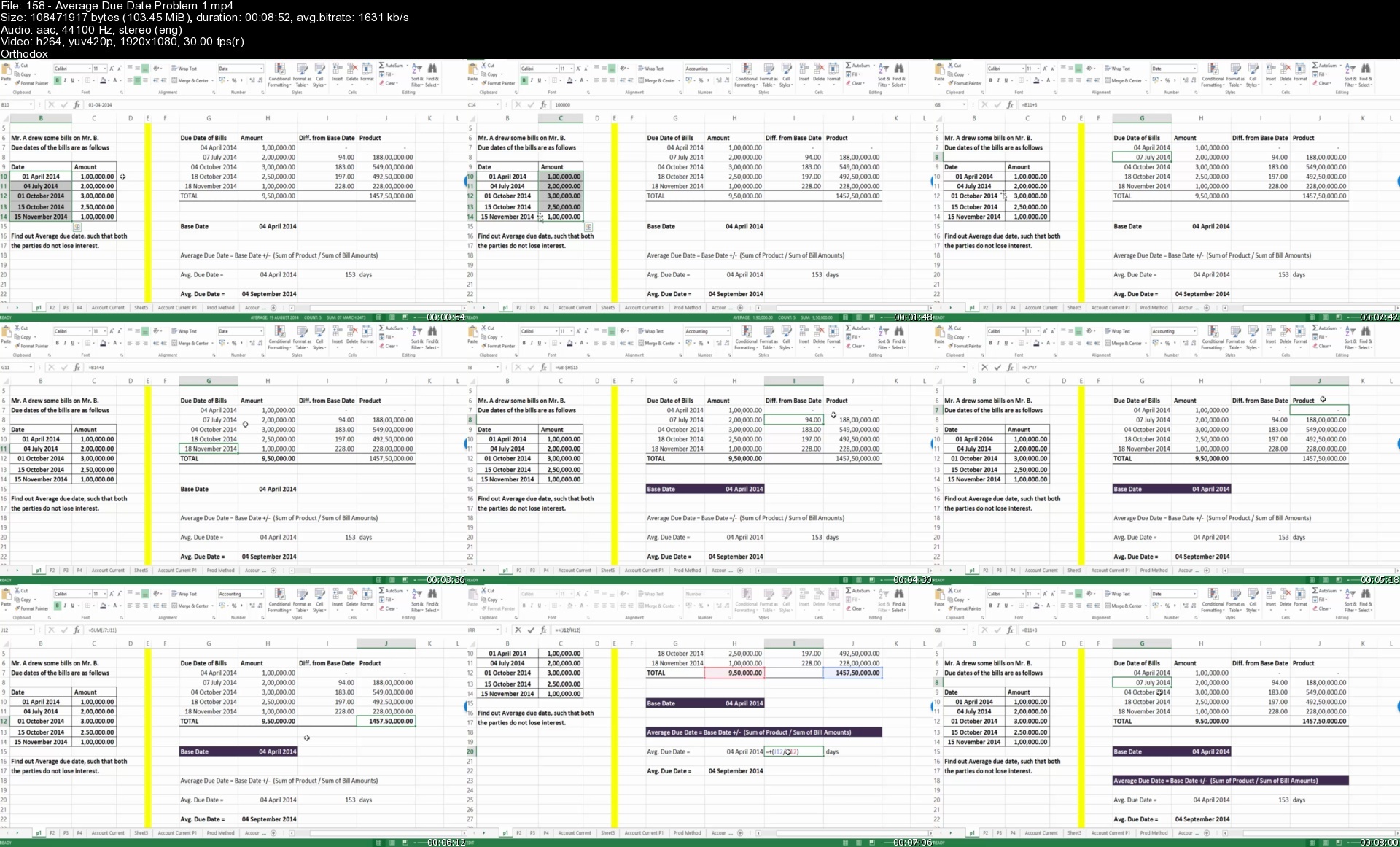
158averageduedateprobfpe1w.jpg


Python Programming & Cybersecurity - Web Attacks/Hacking

iai5yedyaef2nndym2pok6lifk.jpg


Python Programming & Cybersecurity - Web Attacks/Hacking
Published 9/2022
MP4 | Video: h264, 1280x720 | Audio: AAC, 44.1 KHz
Language: English | Size: 5.63 GB | Duration: 7h 48m

Learn python, web application basics, web vulnerabilities and use python programming in creating web attacks


What you'll learn
Careers in Python Programming
Python Basics
HTTP Basics
Kali Linux Basics
Web Attacks
Web Attacks using Python

Requirements
Computer Basics
Linux Basics

Description
Welcome to Python Programming & Cybersecurity - Web AttacksIn this course will be focusing on Python, Web Vulnerabilities and Web Attacks/Hacking.The approach of this course is to learn Web Technologies, then understand how we apply automation Web Attack automation using Python scripts.Learn the basics of Python and web vulnerabilities based on OWASP Top 10 ! This course provides you at least 30 python sample scripts design for aspiring Web Application Firewall specialist and Web Application Penetration TestersThe course consist of whiteboarding discussions and lots of hands-on lab demonstrations.The lab includes Kali Linux which is attackers and couple of target websites that we will hack. One is PHP Hack it Auction Site and Sytx Show Blog/Vlog web site.This is course also prepares student for F5 303 ASM Specialist Exam. The course requires you to have not just F5 BIG-IP knowledge but also understand the concepts of web technologies, different web vulnerabilities and web attacksTarget AudiencePython Programmers (Aspiring)Web Application SpecialistF5 ASM/Adv WAF SpecialistSecurity EngineersPenetration TestersExpectationsWill cover basic PythonWill cover basic HTTPWill cover basic web attacksYou won't become a professional HackerNeed to learn many thingsSoftware TechnologiesLinux - Kali, UbuntuDockerPython 3.XWeb Applications - HackIT Auction and Styx Show Blog/Vlog siteSectionsIntroductionF5 BIG-IP, Python and Docker Security LabPython ProgrammingPython BasicsWeb Technologies BasicsWeb Application VulnerabilitiesPython for Web ApplicationsWeb Attacks using Python ScriptsCompletion

Overview

Section 1: Introduction

Lecture 1 Course Introduction

Lecture 2 About the Course

Lecture 3 About the Instructor

Lecture 4 Course Flow

Section 2: F5 BIG-IP, Python and Docker Security Lab

Lecture 5 Python and Docker Security Lab Overview

Lecture 6 Python Web Security Lab Resources

Lecture 7 Python Web Security Topology

Lecture 8 Python Web Security Lab Details

Section 3: Python Programming

Lecture 9 Python Programming Overview

Lecture 10 Introduction to Python

Lecture 11 Careers in Python Programming

Lecture 12 CyberSecurity

Lecture 13 Web Application Attacks

Section 4: Python Basics

Lecture 14 Python Basics Overview

Lecture 15 Python Concepts

Lecture 16 Executing Python

Lecture 17 String

Lecture 18 Integers

Lecture 19 List

Lecture 20 List vs Tuples

Lecture 21 Dictionaries

Lecture 22 Python Basic Demo Part 1

Lecture 23 Python Basics Demo Part 2

Lecture 24 Booleans

Lecture 25 Conditional Statement

Lecture 26 Loops

Lecture 27 Python Basic Demo Part 3

Lecture 28 Input

Lecture 29 Function

Lecture 30 Modules

Lecture 31 Project 1

Lecture 32 Project 1 Demo

Lecture 33 Project 2

Lecture 34 Project 2 Demo

Section 5: Web Technologies Basics

Lecture 35 Web Technologies Basics and Lab Overview

Lecture 36 Network and Internet

Lecture 37 HTTP Basics

Lecture 38 Demo - HTTP Basics

Lecture 39 HTTP Connections

Lecture 40 Demo - HTTP Connections

Lecture 41 Web Development Stack

Lecture 42 Demo - Web Development Stack

Lecture 43 HTTP Messages

Lecture 44 Demo - HTTP Messages

Lecture 45 HTTP Basics and Status Codes

Lecture 46 Demo - HTTP Status Codes

Lecture 47 Web Forms - HTTP Methods

Lecture 48 Web Forms - Fields and Selections

Lecture 49 Demo - Web Forms

Section 6: Web Application Vulnerabilities

Lecture 50 Web Attacks Basics and Lab Overview

Lecture 51 Open Web Application Security Project (OWASP)

Lecture 52 Parameter Tampering

Lecture 53 Demo - Parameter Tampering

Lecture 54 Hidden Field Manipulation

Lecture 55 Demo - Hidden Field Manipulation

Lecture 56 Forceful Browsing

Lecture 57 Demo - Forceful Browsing

Lecture 58 Sensitive Data Exposure

Lecture 59 Demo - Sensitive Data Exposure

Lecture 60 SQL Injection

Lecture 61 Demo - SQL Injection

Lecture 62 Broken Authentication & Session Management

Section 7: Python Automation for Web Applications

Lecture 63 Python Automation for Web Applications Overview

Lecture 64 Python Revisit

Lecture 65 Demo - Python Revisit

Lecture 66 Python Web Modules

Lecture 67 Demo - Python Web Modules

Lecture 68 Find Function

Lecture 69 Demo - Find Function

Lecture 70 Automating Web Registration

Lecture 71 Demo -Automating Web Registration

Lecture 72 Automating Web Log in

Lecture 73 Demo - Automating Web Log in

Lecture 74 Accessing Files

Lecture 75 Demo - Accessing Files

Section 8: Web Attacks using Python Scripts

Lecture 76 Web Attacks using Python Scripts and Lab Overview

Lecture 77 Cross Site Scripting (XSS)

Lecture 78 Demo - Cross Site Scripting (XSS)

Lecture 79 Broken Access Control / IDOR

Lecture 80 Demo - Broken Access Control / IDOR

Lecture 81 Brute Force Attack

Lecture 82 Demo - Brute Force Attack

Section 9: Completion

Lecture 83 Wrap Up

Lecture 84 Moving On

Lecture 85 Message from the Instructor

Lecture 86 Course Completion

Beginner Python,Curious about Web Attacks,Curious about Penetration Testing

Homepage


45httpbasicsandstatusocfch.jpg


Next.js: El framework de React para producción

451067818446keu5.jpg


Next.js: El framework de React para producción
Last updated 08/2022
MP4 | Video: h264, 1280x720 | Audio: AAC, 44.1 KHz, 2 Ch
Genre: eLearning | Language: Spanish + srt | Duration: 392 lectures (45h 56m) | Size: 14.4 GB

SSR, SSG, CSR, ISR, Middlewares, Rutas dinámicas, Next API, Next Auth, Material UI, despliegues, Cookies y más.


What you'll learn
Aprenderas Next-js desde cero
Comprender cómo trabajar con Next + TypeScript
Diferentes técnicas de renderizado: SSR, SSG, CSR, ISR
Next Middlewares para APIs y Páginas
Rutas dinámicas y estáticas
Next Auth
Material UI
Introducción a Next UI
Cookies
Pagos con PayPal y Tarjetas de crédito
Despliegues en varias plataformas


Requirements
Conocimiento básico de React con Hooks es necesario
NO es necesario saber TypeScript (pero será útil)
NO es necesario saber Node (pero será útil)
NO es necesario saber Next para empezar este curso


Description
Next.js: El framework de React para producción (Versión de Next.js 12+)

Next.js te brinda una excelente experiencia de desarrollo con todas las funciones que necesita para la producción: renderizado híbrido estático y de servidor, compatibilidad con TypeScript, agrupación inteligente, precarga de rutas y más.

Este curso está enfocado para las personas con conocimiento básico de React que desean aprender Next.js de forma completa e ir más allá.

Estos son algunos de los temas que aquí veremos

Next.js desde cero

TypeScript + React + Next.js

Migración de proyectos de Next.js de JavaScript a TypeScript

Diferentes estrategias de renderizado

SSR: Server Side Rendering

SSG: Static Site Generation

CSR: Client Side Rendering

ISR: Incremental Static Regeneration

Rutas dinámicas y segmentos

Next.js restful API

Autenticación personalizada

Despliegues en varias plataformas

Generación de imagen de docker optimizada

Autenticación personalizada con JWT

MongoDB

NextAuth

Proveedores de autenticación

Drag&Drop en React

CRUD

Material UI y Next UI

Re-despliegues automáticos

Pagos con PayPal y Tarjeta de crédito

Diseño responsivo

Sitio de venta de artículos con

Búsquedas

Cookies

ISR + SSR + SSG + CSR según la necesidad para optimizar tiempos de respuesta

Manejo de usuarios

Dashboard administrativo

Carga de imágenes

Validación de pagos

React Hook Form

Cookies

Middlewares de Next.js (Nuevo en Next.js 12)

Para autenticación

Protección de rutas

Redirecciones

Respuestas

Tanto para APIs como para solicitudes de páginas

Y mucho más

Este curso tiene por objetivo enseñarte Next.js de forma completa con muchas tareas y ejercicios. El curso es en 95% TypeScript, pero cuenta con las referencias propias para reforzar esta parte que es opcional, el curso se puede hacer en JavaScript pero recomiendo que le den la oportunidad a TypeScript.

Se crean varios ejercicios dentro de este curso

Introducción a Next: Ejercicio pequeño para el manejo de generalidades de Next,js

PokemonApp: Aplicación pequeña para el manejo de ISR y SSG

OpenJira: Aplicación intermedia para el manejo de tareas y SSR

CookieMaster: Aplicación pequeña para aprender sobre el manejo de Cookies

TesloShop: Aplicación completa y bastante grande para el manejo y venta de productos

Al final del curso no solo aprenderás Next.js, si no que también habrás desarrollado una tienda electrónica con cobros, mantenimientos, carga, optimizaciones para SEO, desplegarla y tenerla en tu portafolio de proyectos.

Es un curso enorme totalmente enfocado en Next.js para prepararte mejor como desarrollador de React.

Who this course is for
Programadores de React
Programadores que quieran realizar renderizado del lado del servidor
Personas que quieran crear su propia tienda virtual
Personas que quieran implementar características nuevas de Next en sus aplicaciones

Homepage


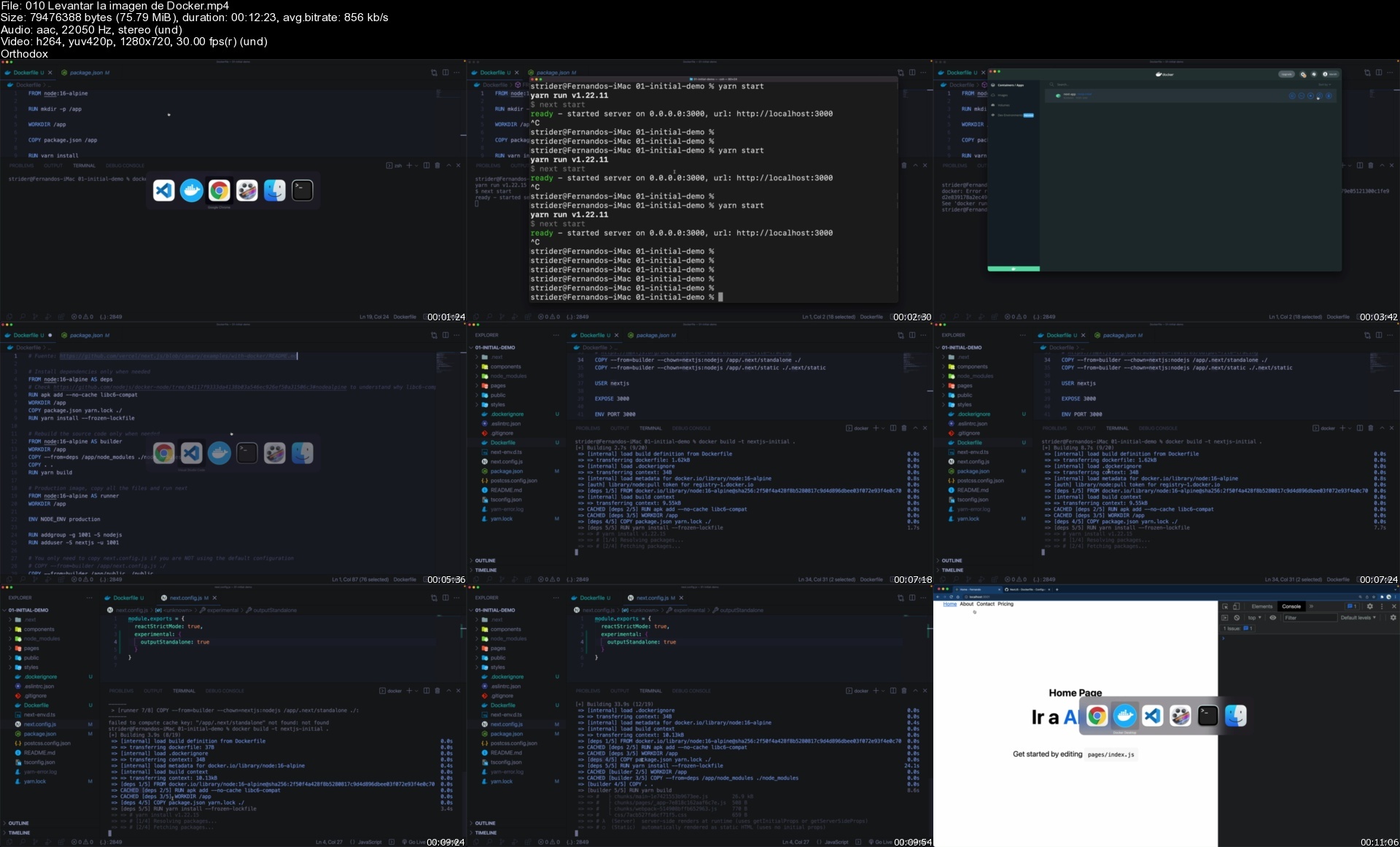
010levantarlaimagende2gdkv.jpg


Business Coach Practitioner Accreditation

jdwrremminshamkyvuyrcl0iaq.jpg


Business Coach Practitioner Accreditation
Published 9/2022
MP4 | Video: h264, 1280x720 | Audio: AAC, 44.1 KHz
Language: English | Size: 5.51 GB | Duration: 4h 38m

Become an Accredited Business Coach Practitioner & Grow Your Marketability and Business Skills.


What you'll learn
Ability to register with ICR (International Coach Register) as a Business Coach Practitioner
How to become a world class Business Coach
How to create a High-Performance Culture
How to cut through underperformance
How to create an Innovative Culture
How to remove roadblocks to success
How to apply Psychology into business for results

Requirements
A desire to be a more "effective" manager of people and self in the workplace

Description
On completion of this course, you are authorized to register with International Coach Register (ICR) as a Business Coach Practitioner.Our Training Program provides new and seasoned people of influence in the business environment with leading-edge coaching and business development skills to naturally ensure your long-term success.This course is aimed at working professionals and aspiring coaches who wish to see themselves as a Professional Business Coach Practitioner.Business Coaches are highly in demand everywhere in the world, businessmen prefer to hire an ICR Certified Business Coach as ICR coaches are highly reliable in terms of coaching skills as ICR itself is best known for its coaching standards.As a Business Coach you will be partnering with your client in growing their business/self by helping them clarify their purpose and how it fits in with their personal goals. Aligning personal goals to the business helps business owners/employees to be more motivated and provides them a more focused direction.This program aims to introduce students to some fundamental coaching competencies, as well as how to draw on learnings from an Applied Psychology framework. The learning is focused on tapping into potential and removing barriers.This program includes practical downloadable exercises in order to learn how to apply the principles into the business place for maximum effect.This is a world class best-selling course with a proven track record and excellent reviews.
Overview
Section 1: Welcome & Introduction
Lecture 1 Welcome & Introduction
Section 2: Accreditation & Certification
Lecture 2 Accreditation & Certification
Section 3: Course Outline
Lecture 3 Course Outline
Lecture 4 Purpose
Section 4: The Role of Coaching
Lecture 5 The Role of Coaching
Section 5: What is Coaching
Lecture 6 What is Coaching
Section 6: Mindset & Maslow
Lecture 7 Mindset & Maslow
Section 7: Creating High Performance Culture
Lecture 8 Creating High-Performace Culture 1
Lecture 9 Creating High-Performance Culture 2
Section 8: A Coaching Style
Lecture 10 Coaching Style
Section 9: Powerful Questions
Lecture 11 Powerful Questions
Section 10: Active Listening
Lecture 12 Active Listening
Section 11: Performance Appraisal
Lecture 13 Performance Appraisal
Section 12: Innovative Culture
Lecture 14 Innovative Culture
Section 13: 6 Hats
Lecture 15 6 Hats
Section 14: Emotional Intelligence
Lecture 16 Intro
Lecture 17 Self Awareness
Lecture 18 Self Regulation
Lecture 19 Self Motivation
Lecture 20 Social Awareness/Empathy
Lecture 21 Social Skills
Lecture 22 Emotional Intelligence Conclusion
Section 15: Change Management
Lecture 23 Change Management
Section 16: Business Coach Practitioner
Lecture 24 Download Workbook
Section 17: Purpose
Lecture 25 Purpose
Section 18: Life/Corporate Wheel
Lecture 26 Life Wheel
Lecture 27 Corporate Wheel
Section 19: Beliefs
Lecture 28 Beliefs
Section 20: Values
Lecture 29 Values
Lecture 30 Values
Section 21: Needs/Motivation
Lecture 31 Needs/motivation
Section 22: The GROW Model
Lecture 32 GROW
Section 23: Roadblocks to Success
Lecture 33 Roadblock to Success
Section 24: Visualisation
Lecture 34 Visualisation
Section 25: Conclusion
Lecture 35 Conclusion
Beginners to advanced


businesscoachpractitincfpa.jpg


Download from RapidGator


Download from DDownload


Pranayama (Breathwork) Teacher Training (Yoga Alliance)

467781019f9nfddo.jpg


Pranayama (Breathwork) Teacher Training (Yoga Alliance)
Published 09/2022
MP4 | Video: h264, 1280x720 | Audio: AAC, 44.1 KHz, 2 Ch
Genre: eLearning | Language: English | Duration: 151 lectures (19h 10m) | Size: 21.2 GB


Yoga Alliance Continuing Education Approved Course


What you'll learn
14 Different types of Pranayama (Breathwork) Techniques and their Variations
Introduction to Pranayama & its Philosophy - The Yogic Breathwork
Practical Pranayama Classes combined with Yoga & Meditation
Learn basic and advanced breathwork and meditation techniques. Tap into the power of your breath!
Four aspects of Pranayama and the Five Koshas (sheaths)
Learn to use the breath to relax, focus and bring health and vitality in your life.
Five types of Prana and Pranayama's health benefits
Ancient Pranayama/ Breathing Techniques as per Yogic Texts
How to Practice and teach Pranayama
Relevance of Pranayama in modern life
Learn the important guidelines for teaching Pranayama
Anatomy & Physiology of Pranayama
How to setup and structure a class
Do's and Don'ts of breathwork & Pranayama
Advanced Techniques of Pranayama (Breath Retentions)
Requirements
This Breathing/ Pranayama Teacher Training Course is for anyone wanting to learn profound breathing techniques. From people that are new to breathing practices to Yoga instructors or Professional athletes. It is open for all!
Description
Welcome to the Bodsphere's 50-Hrs Pranayama (Breathwork) Teacher Training Certificate Course! (Yoga Alliance Approved Continuing Education Course)
The BIGGEST Pranayama (Breathwork) course available on Udemy! Get a profound understanding of the ancient art of Pranayama and learn how to use your breath like a wonderful tool to start controlling all systems in your body. This course delivers all of the need-to-know information about guiding groups and individuals through Pranayama practices.
For Yoga Teachers: This course can be added to your YACEP - for 50 hours of Yoga Alliance Continuing Educational Points. You can find this course on the Yoga Alliance website to add points there.
"Anybody can breathe. Hence, Anyone can practice Yoga, Meditation & Pranayama"
Samarthya & Preetika Bhatnagar, Founders of Bodsphere
In this Pranayama Teacher Training Course, You will learn
14 Different types of Pranayama (Breathwork) Techniques and their Variations
Full Yogic Breath - Open up the energy systems
Ujjayi Pranayama (Ocean's Breath) - Create inner silence
Breath of fire (Bhastrika Pranayama) - Awaken the fire within
Kapalbhati Pranayama (Skull Shining Breath) - Cleanse your body and mind
Kaki Pranayama (Crow's Beak Breath) - Focus the mind
Nadi Shodhana Pranayama (Alternate Nostril Breathing) - Bring balance in your life
Bhramari Pranayama (Humming Bee Breath) - Soak in bliss
Surya Bhedana Pranayama (Right Nostril Breathing) - Activate the solar energy
Chandra Bhedana Pranayama (Left Nostril Breathing) - Activate the lunar energy
Kumbhaka Pranayama (Breath Retention Techniques)
Sheetali Pranayama (Cooling Breath) - Cool down the body and mind
Sheetkari Pranayama (The Hissing Breath) - Experience the cooling effect
Sama Vritti (Equal/ Box Breathing) - Reduce the stress levels
Viloma Pranayama (Reverse Breathing) - Control the Natural Flow of Breath
Ashtanga Yoga & Pranayama
Practical Pranayama Classes combined with Guided Yoga & Meditation Sessions
Four aspects of Pranayama and the Five Koshas (sheaths)
Chakras and their influence in life
Secrets of Respiration and Nervous System
Five types of Prana and Pranayama's health benefits
Ancient Pranayama/ Breathing Techniques as per Yogic Texts
How to Practice and teach Pranayama
Relevance of Pranayama in modern life
Important guidelines for teaching Pranayama
Anatomy & Physiology of Pranayama
How to setup and structure a class
Do's and Don'ts of Pranayama (Breathwork)
By taking this course, You will learn how to use the power of the breath to
Clear you mind and sharpen your awareness
Increase energy, health and mental balance
Energize or calm your body and mind
Become aware of the deeper layers of the self
Boost your immune system
A boost in energy levels
Deep & restorative sleep
Brain empowerment & better focus
Relieves stress, anxiety & depression
Heal mind & body
You will also receive wonderful resources with this course
100+ Pages Pranayama Teacher Training Manual
Knowledge of Pranayama in the Ancient Scriptures
Ashtanga Yoga
Prana Vidya: Knowledge of the Lifeforce
5 Keys of Prana Vidya
Pancha Koshas (Transcending the Self)
Mudras for Pranayama
Record of all the Pranayama Techniques
Scheme of Practice: Sample Schedule
Recommended Books
What is included in this Pranayama (Breathwork) Teacher Training Course?
VIDEO TUTORIALS - Access to over 150+ online guided breathwork and mind training sessions accessible anywhere, at any time.
GUIDED MEDITATION & PRANAYAMA (BREATHWORK) SESSIONS - A great variety of different Pranayama and Meditation Sessions
WARMUP & EXERCISE VIDEOS - Practice Warm Up stretches & Yoga Flows videos to open up, strengthen and prepare the body for the breathing practices.
DOWNLOADABLE RESOURCES AND EBOOKS - Tons of High Quality Resources for your further studies
LIFETIME ACCESS - Learn these wonderful mind training and breathing techniques at your own pace, you will have a lifetime access to this course, So please take your time.
YOGA ALLIANCE ACCREDITED CERTIFICATION UPON COMPLETION - Once you complete this online Pranayama Teacher Training Course, You will receive the 50-Hrs Yoga Alliance Certification (YACEP) that can be used on Yoga Alliance.
All of our resources are exclusive to Bodsphere! This course will provide you with all of the skills, tools and knowledge you need to confidently and safely teach Pranayama (Breathwork) classes.
Happy learning and continue growing on this beautiful path of Yoga!
Who this course is for
For complete beginners and advanced practitioners.
A perfect course for Yoga practitioners & teachers, Meditation practitioners & teachers to deepen their practice.
Essential for athletes, athletes, healers, life coaches.
Those who who want to treat insomnia, depression, overthinking, low energy, addiction restlessness and someone who wants to train the mind and awareness.
Everyone who wants to get stronger, healthier and happier


pranayamabreathworkte18fga.jpg


Download from RapidGator


Download from DDownload


Read Construction & Structural Drawing Like Expert - Etabs

3697944b6dd8yfdsz.jpg


Read Construction & Structural Drawing Like Expert - Etabs
Last updated 6/2022
MP4 | Video: h264, 1280x720 | Audio: AAC, 44.1 KHz, 2 Ch
Genre: eLearning | Language: English + srt | Duration: 91 lectures (28h 43m) | Size: 17.8 GB


2022 Full course on Reading Civil Engineering Construction Drawing I Structural Engineering I Architectural & Etabs


What you'll learn
Learn to Read Architectural & Structural Drawings of House Plans, Residential Buildings ( G+3 to G+10 Buildings ),Industrial Buildings
At the End of the course, Students Will be able to Plan a Building According to vastu
Understand The Theory Behind All The Structural Drawings & Code books
Learn to read the plumbing drawings, Sewage drawings & Storm water drawings
Requirements
Students Should be Passionate about Learning Architectural & structural Drawings with Basic Vastu Logic
The lectures will be long for 20 minutes minimum, but they are explained with concepts and pratical things and nothing is skiped in the lectures. Should Have Patience to listen them !
Description
This course deals with understanding of Architectural, Vastu & Structural Drawings of various projects with Real Site Photos & Videos
1) G+3 Residential Building
Contents-
Footing Layout & Footing Reinforcement Details
Column Layout & Column Reinforcement Details,
Plinth Beam Layout & Reinforcement Details
All structural Drawings Of Ground Floor, 1st Floor, 2nd Floor , 3rd Floor ,Terrace Floor & Reinforcement Details.
Learn to Plan a G+3 Residential Building with vastu concepts and Theory.
This section also Explains about How a Building has to be Planned with Auto cad Drawing Considering the Vastu Principles.
2) G+2 Hostel Building
Contents-
Footing Layout & Footing Reinforcement Details
Column Layout & Column Reinforcement Details
Plinth Beam Layout & Reinforcement Details
All structural Drawings Of Ground Floor, 1st Floor, 2nd Floor Floor Reinforcement Details.
Staircase Details & Reinforcement Details Explained ( Practical Video shown )
Electrical Drawings of G+2 Hostel Building Explained
Slab Details & staircase details have been covered with Practical Approach & Real Site videos Explaining Them.
3) G+2 House Building
Contents-
Footing Layout & Footing Reinforcement Details
Column Layout & Column Reinforcement Details
Plinth Beam Layout & Reinforcement Details
All structural Drawings Of Ground Floor, 1st Floor, 2nd Floor Reinforcement Details.
Staircase Details & Reinforcement Details Explained
4) G+1 House Plan according to vastu
Contents -
Footing Layout & Footing Reinforcement Details
Column Layout & Column Reinforcement Details
Plinth Beams Layout & Reinforcement Details
Ground Floor shuttering ,Beam & Slab Details
6) 35,000 sq. Mtr Industrial Building with Steel Structures
Contents-
Site Layout Plan
Factory Layout of Steel Structure & Ground & 1st Floor Office Building
Footing & pedestal Details
Plinth Beam Details
Beam & Slab Details
Underground Water Tank , Scrap Shed & Utility Area
7) Miscellaneous Topics
a) Sewage & plumbing Drawings
b) Flag pole Foundation Drawing
c) Storm water & Box Culvert Drawings
d) PEB Structure & Anchor Bolt Drawings
Who this course is for
Civil Engineers , Structural Engineers, Structural Consultants, Architects, Civil Contractor, Real Estate Agents & Freshers those who are Intrested to learn Architectural & Structural drawings with clear understanding to Topics
Quantity surveyors, Project Management consultants, Planning Engineers & Vastu Consultants
Structural Engineers those who are looking for Entry Level Jobs in Design Companies
Civil Engineers Looking to Change Carrer in Structural Firm
Vastu Consultants those who are Curious to Learn Structural Drawings
Interior Designers


readconstructionstruc5wcu1.jpg


Download from RapidGator


Download from DDownload


Visual Merchandising

401203472df3iwial.jpg


Visual Merchandising
Last updated 5/2021
MP4 | Video: h264, 1280x720 | Audio: AAC, 44.1 KHz
Language: English | Size: 5.39 GB | Duration: 4h 24m

A comprehensive visual merchandising course for aspiring interior designers and retailers


What you'll learn
Introduction to visual merchandising
How to attract customers to your store
How to select themes, styles, lighting, materials, and understanding retail layouts
Branding and budgeting in visual merchandising
Key attributes of a stunning retail store

Requirements
No Requirement

Description
Has it ever happened that you come across a shop in a mall or an independent building, some elements in the window of a store like a mannequin or any other design captures your attention, you take a peek inside and enter the store?It has happened with nearly all of us. Have you ever noticed what led you to the store in the first place? The Visual Merchandising basics course is strategically designed to make you aware about such elements.The course is categorized into four main sections which are explained in 12 independent topics. The four categories are -Introduction to Visual MerchandisingElements of Visual MerchandisingBranding and SignageBudgeting and PreparationThe first section introduces you to the concept of visual merchandising, its importance, its history, roles and responsibilities of a visual merchandiser, and principles of design in VM. The second section covers different elements of VM that will help you elevate the appearance of a store like themes, style, materials, lighting, mannequin styling, and layout. This section will guide you through the same.The third section will help you understand key details and significance of branding and signage. Case studies of national and international brands have been provided to make learners understand the importance of different elements in VM.One of the most vital aspects in any field is budgeting. The last and the fourth section throws light on the same.The purpose of this course is to acquaint amateur, aspiring, and professional individuals, retailers, entrepreneurs, and interior designers with practical and theoretical insights on visual merchandising.
Overview
Section 1: Introduction
Lecture 1 Introduction and Overview
Lecture 2 Introduction to Visual Merchandising
Lecture 3 History of Visual Merchandising
Lecture 4 Role of a Visual Merchandiser
Lecture 5 Principles of Design and Composition in VM
Lecture 6 Themes and Styles
Lecture 7 Layouts and Elevation in VM
Lecture 8 Materials
Lecture 9 Mannequin Styling
Lecture 10 Lighting
Lecture 11 Branding and Signage
Lecture 12 Case Studies
Lecture 13 Budget, Sourcing and Preparation
Anyone who wants to learn a new skil,Retailers who wants to update their team on visual merchandising,Anyone who wants to know how to attract customers to their retail store through visual merchandising,Aspiring and professional artists, students, interior designers and retailers,Enthusiasts who want to pursue a career in different domains of Interior Design


visualmerchandising6bcve.jpg


Download from RapidGator


Download from DDownload


Intermediate Biblical Hebrew

lr27gtkvsx5esmmqxehk3e1c5p.jpg


Intermediate Biblical Hebrew
Last updated 8/2022
MP4 | Video: h264, 1280x720 | Audio: AAC, 44.1 KHz
Language: English | Size: 10.85 GB | Duration: 17h 0m

Take your basic Biblical Hebrew skills to the next level.


What you'll learn
Derive meaning from Biblical Hebrew words from the verb root.
Modify nouns and verbs to convey meaning and tense.
Parse Hebrew words to find the meaning.
Recognize Hebrew words by listening.
Pronounce Hebrew words correctly.

Requirements
Know the Hebrew alphabet - the sounds and names of each letter.
Know how to read basic Hebrew words.
Know the Hebrew vowels and their sounds.

Description
This is an online, self-grading course with ample opportunity to practice what you learn in each of the twelve lessons. There is over eleven hours of teaching in this course, 12 full-length video lessons and four practice videos for each lesson, with a brief quiz so you can review your progress.In this course, you will learn how to derive the meaning of a word from the verb root. You will learn how to pronounce the words correctly by listening and repetition. Each lesson has instructional videos, as well as PDF study guides for additional practice. Lesson 1 covers basic vocabulary and how to compose a Hebrew noun sentence. Lesson 2 studies the feminine noun and contains more simple sentence practice. It also includes how to recognize the interrogative and ask a question.Lesson 3 adds new vocabulary and explores plural nouns in the Hebrew language.Lesson 4 covers Hebrew pronouns - how to recognize, memorize, and use them.Lesson 5 studies adjectives and how they modify nouns in Hebrew.Lesson 6 builds on the Hebrew pronouns by adding them to nouns as possessive noun suffixes.Lesson 7 explores the complete verb tense and demonstrates how to build on the three-letter verb root to convey action.Lesson 8 covers Hebrew prepositions and how they are combined with nouns and pronouns.Lesson 9 explores the incomplete verb tense.Lesson 10 studies the reversing vav and word pairs.Lesson 11 adds the vocabulary for "this" and "these", and how they can modify nouns.Lesson 12 covers prepositions with suffixes, the participle, and the verb "to be".
Overview
Section 1: Introduction
Lecture 1 Introduction
Section 2: Lesson 1
Lecture 2 Intermediate Biblical Hebrew Lesson 1
Lecture 3 Practice Video #1
Lecture 4 Practice Video #2
Lecture 5 Practice Video #3
Lecture 6 Practice Video #4
Section 3: Lesson 2
Lecture 7 Intermediate Biblical Hebrew Lesson 2
Lecture 8 Practice Video #1
Lecture 9 Practice Video #2
Lecture 10 Practice Video #3
Lecture 11 Practice Video #4
Section 4: Lesson 3
Lecture 12 Intermediate Biblical Hebrew Lesson 3
Lecture 13 Practice Video #1
Lecture 14 Practice Video #2
Lecture 15 Practice Video #3
Lecture 16 Practice Video #4
Section 5: Lesson 4
Lecture 17 Intermediate Biblical Hebrew Lesson 4
Lecture 18 Practice Video #1
Lecture 19 Practice Video #2
Lecture 20 Practice Video #3
Lecture 21 Practice Video #4
Section 6: Lesson 5
Lecture 22 Intermediate Biblical Hebrew Lesson 5
Lecture 23 Practice Video #1
Lecture 24 Practice Video #2
Lecture 25 Practice Video #3
Lecture 26 Practice Video #4
Section 7: Lesson 6
Lecture 27 Intermediate Biblical Hebrew Lesson 6
Lecture 28 Practice Video #1
Lecture 29 Practice Video #2
Lecture 30 Practice Video #3
Lecture 31 Practice Video #4
Section 8: Lesson 7
Lecture 32 Intermediate Biblical Hebrew Lesson 7
Lecture 33 Practice Video #1
Lecture 34 Practice Video #2
Lecture 35 Practice Video #3
Lecture 36 Practice Video #4
Section 9: Lesson 8
Lecture 37 Intermediate Biblical Hebrew Lesson 8
Lecture 38 Practice Video #1
Lecture 39 Practice Video #2
Lecture 40 Practice Video #3
Lecture 41 Practice Video #4
Section 10: Lesson 9
Lecture 42 Intermediate Biblical Hebrew Lesson 9
Lecture 43 Practice Video #1
Lecture 44 Practice Video #2
Lecture 45 Practice Video #3
Lecture 46 Practice Video #4
Section 11: Lesson 10
Lecture 47 Intermediate Biblical Hebrew Lesson 10
Lecture 48 Practice Video #1
Lecture 49 Practice Video #2
Lecture 50 Practice Video #3
Lecture 51 Practice Video #4
Section 12: Lesson 11
Lecture 52 Intermediate Biblical Hebrew Lesson 11
Lecture 53 Practice Video #1
Lecture 54 Practice Video #2
Lecture 55 Practice Video #3
Lecture 56 Practice Video #4
Section 13: Lesson 12
Lecture 57 Intermediate Biblical Hebrew Lesson 12
Lecture 58 Practice Video #1
Lecture 59 Practice Video #2
Lecture 60 Practice Video #3
Lecture 61 Practice Video #4
Students who have completed beginner-level Biblical Hebrew instruction and want to learn more.


intermediatebiblicalhjofch.jpg


Download from RapidGator


Download from DDownload


Flutter- The 2022 Guide To Build Android, Ios And Web Apps

h5k1sgegagqogpzinbbtznhfxi.jpg


Flutter- The 2022 Guide To Build Android, Ios And Web Apps
Published 9/2022
MP4 | Video: h264, 1280x720 | Audio: AAC, 44.1 KHz
Language: English | Size: 10.21 GB | Duration: 18h 12m

The ultimate guide to Google flutter in developing high performance production grade apps for Android, IOS and Web.


What you'll learn
Develop high performance, production grade Android, IOS apps and websites with Flutter.
Develop back-end with Firebase and deploy web apps to Firebase hosting
Start from scratch and understand all fundamental concepts of Flutter.
Build beautiful, appealing and responsive apps that fits every device size.
Become an industry standard Flutter developer
Portfolio of apps to impress your recruiters and clients.
Latest codes and it will be updated.

Requirements
Willingness to learn and grow!
No programming or coding experience needed
At-least windows 7 for Windows setup

Description
Welcome to the best and most industry-oriented course on Google Flutter with the ultimate practical hands-on videos, the formula for you to get the salary or job you deserve.Here you'll learn to use Flutter, Dart, and Firebase to build beautiful, high-performance production-grade apps for Android, iOS, and the web.Flutter's central concept is that it aims to simultaneously address the "write once, run anywhere" issue and the "re-think the app design" issue. It has made the process of delivering apps to many platforms incredibly simple and time-saving.By the end of this course, you will be able to master topics like Layouts, animations, responsive handling, Streams, Future, Riverpod, Firebase, design patterns, and much more to develop apps that meet industry standards.Major companies such as BMW, Ali baba, eBay, Tencent, Toyota, Google and many more are using Flutter for developing their apps. The demand is high but the supply of developers is low, so this creates the perfect opportunity for you to learn about this trending topic which is Flutter!Having compiled over 2000 job descriptions, we are fully aware of the qualifications needed to become a skilled and well-paid Flutter developer. We created this course for anyone who wants to develop and release high-performance production-grade apps for Android, iOS, and the web all at once.What distinguishes this course from others is its industry standards. Your app may not be collaboration-friendly or may consume excessive power with OS shutting the app down, making the app useless. However, similar disasters can be avoided with the right industry standards.The difference between a good developer and a great developer is how you code your apps to consume less power and that is exactly where we help you to stand out. It's a commendable skill in the Flutter community. But it's also a highly neglected skill.Fortunately, it's one of the major topics you'll master here.With the amount of research we have done for a year, it ensures that you'll not just be able to develop an app but develop it with industry standards and meet the requirements of most recruiters or clients. The apps you'll build will meet proper standards and make your portfolio stand out. Without a shadow of a doubt, this is the best course on Google Flutter.In this course, we will teach you all you need to know about Flutter, right from scratch, to begin your technical journey in creating mind-blowing mobile applications. The projects we will create will have user interfaces that are designed to take advantage of the advanced features of the platform.You will learn how to use Flutter's tooling to design apps, develop their layouts and logic, and write their code. Discover how to write Flutter apps, from high-level principles to code samples at the Flutter level, across iOS and Android.We begin right from setting up your code editors and build it from there onwards, so even as a beginner, you do not feel intimidated by the information overload.All the projects we will create in this course are selected in a way to demonstrate how you can create different user interactions and how important it is to have nested flows in Flutter apps. It is important that you understand the hierarchical nature of your logic when defining the Flutter app.Further, we will look at some more advanced UI widgets that we can use for our apps. We will deal with accessibility and styling all while incorporating the hit and trial approach.To test your skills and help you in revising concepts, the course has quite a few challenges here and there so you know exactly what areas you need to work upon.We have illustrative videos to ensure the best learning experience for you. Our comprehensive videos and curriculum are built keeping in mind a beginner's perspective. We have tried to answer as many questions and doubts you might have throughout the course.We have structured this course in a manner that is not about mugging concepts but practically implementing all ideas for an assigned project that are required in an actual job setting.Our extensive study over the past year guarantees that you won't simply create projects, but do so in accordance with industry standards and satisfy the needs of the majority of employers or clients. The apps you create will be up to code standards and will distinguish your portfolio. This is without a doubt the best Google Flutter training available. Period.We are eager to have you enroll in this course!
Overview
Section 1: Introduction
Lecture 1 What is flutter?
Lecture 2 How easy it is to create an app with flutter?
Lecture 3 How exactly flutter works?
Section 2: Setup and installation
Lecture 4 Install Java (Windows)
Lecture 5 Install git (Windows)
Lecture 6 Install Flutter (Windows)
Lecture 7 Install Android Studio
Lecture 8 Emulator/Physical device setup
Lecture 9 Android licenses
Lecture 10 Firebase installation
Lecture 11 Firebase installation bug
Lecture 12 Desktop app Development Setup for windows (Optional)
Lecture 13 Mac installation Part 1
Lecture 14 Mac installation Part 2
Lecture 15 Bugs
Section 3: Start with the basics- My Dashatar app
Lecture 16 Creating flutter app -1
Lecture 17 Creating flutter app - 2
Lecture 18 Coding my dashatar app with flutter part 1
Lecture 19 Adding images[Coding my dashatar app - 2 ]
Lecture 20 Changing launcher Icon[Coding my dashatar app - 2]
Lecture 21 Open new page error.
Lecture 22 Bugs
Section 4: Ninja Challenge 1
Lecture 23 What is the challenge?
Lecture 24 Solution to the challenge.
Lecture 25 Bugs
Section 5: Understanding layouts
Lecture 26 Introduction and emulator settings
Lecture 27 Hot reload vs Hot restart
Lecture 28 Lists and Column
Lecture 29 Rows and Columns
Lecture 30 LIstView and SingleChildScrollView
Lecture 31 Wrap and Stack
Lecture 32 Bugs
Section 6: Dart Programming
Lecture 33 Class and object part 1
Lecture 34 class and object part 2
Lecture 35 loop, lists and map
Lecture 36 Challenges set 1
Lecture 37 Challenges set 2
Section 7: State management- Basics
Lecture 38 Stateful vs Stateless widgets
Lecture 39 State management in action
Lecture 40 AudioPlayers package.
Lecture 41 Playing the beats.
Section 8: Ninja challenge 2
Lecture 42 The problem
Lecture 43 Solution- Introduction
Lecture 44 LaunchPad decorations
Lecture 45 Add delay and play audio
Lecture 46 Adding sound path
Lecture 47 Bugs
Section 9: Portfolio- Landing page web
Lecture 48 Creating a new project
Lecture 49 Change app icons
Lecture 50 App icon customization
Lecture 51 Change favicon
Lecture 52 coding main.dart
Lecture 53 analysis.yaml || Linters
Lecture 54 const vs final
Lecture 55 mouse region
Lecture 56 CircleAvatar
Lecture 57 padding
Lecture 58 sansBold
Lecture 59 contact details
Lecture 60 about section
Lecture 61 third section
Lecture 62 decorating the card
Lecture 63 adding more cards
Lecture 64 contact me
Lecture 65 textFields
Lecture 66 making a stateless widget
Lecture 67 Finishing textFormFields
Lecture 68 Exploring new properties
Lecture 69 Using RegExp
Lecture 70 How to validate the text
Lecture 71 Integers and double
Lecture 72 Animations
Lecture 73 Practical use of AnimationController
Lecture 74 Finishing the animated cards
Lecture 75 Firebase hosting
Lecture 76 Creating a project in Firebase
Lecture 77 Further exploring Firebase
Lecture 78 SVG Image Asset
Lecture 79 Adding social media
Lecture 80 Designing the web app
Lecture 81 Async, await and functions 1
Lecture 82 Async, await and functions 2
Section 10: Navigation
Lecture 83 First way
Lecture 84 Second way
Lecture 85 Third way
Lecture 86 Routes 1
Lecture 87 Routes 2
Section 11: Mobile Landing Page
Lecture 88 Routes
Lecture 89 Adding AppBar
Lecture 90 Adding Drawer
Lecture 91 Tabs mobile
Lecture 92 Social media link button
Lecture 93 Adding circle avatar
Lecture 94 Contact information
Lecture 95 Contact information 2
Lecture 96 About section
Lecture 97 Experience section
Lecture 98 Contact section
Lecture 99 Navigations
Section 12: Contact Page
Lecture 100 Routes and links
Lecture 101 Sliver AppBar
Lecture 102 Tabs Web
Lecture 103 CanvasKit vs HTML
Lecture 104 Adding TextForms
Lecture 105 Contact Mobile View
Lecture 106 SliverAppBar mobile
Lecture 107 Text Form Mobile
Section 13: About Page
Lecture 108 AppBar and Drawer
Lecture 109 Introduction section
Lecture 110 Back-End section
Lecture 111 About Web
Lecture 112 About me first section web
Lecture 113 Ending About page
Section 14: Blog and Works Page
Lecture 114 Creating Routes and adding Drawer
Lecture 115 Custom Text widgets
Lecture 116 Sliver appBar
Lecture 117 Blog Post widget
Lecture 118 Blog Post 2
Lecture 119 Blog Post 3
Lecture 120 Re-think design
Lecture 121 Works appBar
Lecture 122 Showcasing apps
Lecture 123 Coding the Drawer- works
Section 15: Firebase setup
Lecture 124 Android and IOS
Lecture 125 kIsWeb
Lecture 126 Web
Section 16: Firebase for blog
Lecture 127 Introduction to Cloud Firestore
Lecture 128 Fetching data
Lecture 129 Streams
Lecture 130 Displaying blog from Firestore
Lecture 131 Displaying blog from Firebase part 2
Lecture 132 Adding data to Blog
Section 17: Firebase for contact
Lecture 133 Stream articles function
Lecture 134 Text-editing controller
Lecture 135 Validator
Lecture 136 Add response function
Lecture 137 Upload response
Lecture 138 Deploy to web
Section 18: Firebase security rules
Lecture 139 Introduction
Lecture 140 Message rules
Lecture 141 Articles and testing
Lecture 142 Domain name transfer (Optional)
Section 19: Advance State management
Lecture 143 Introduction
Lecture 144 Provider part 1
Lecture 145 Provider part 2
Lecture 146 Riverpod part 1
Lecture 147 Riverpod part 2
Section 20: Budget app
Lecture 148 Introduction
Lecture 149 Creating our Firebase project
Lecture 150 Adding the SHA files
Lecture 151 Adding the IOS app
Lecture 152 Web setup
Lecture 153 Google O_Auth
Lecture 154 Using the responsive handler
Lecture 155 Using the responsive handler 2
Lecture 156 Using the responsive handler 3
Lecture 157 Log in mobile UI
Lecture 158 Adding the app logo and the fields
Lecture 159 What is the obscure property?
Lecture 160 Using the isObscure variable
Lecture 161 Creating a custom reusable widget
Lecture 162 Rows and user registration
Lecture 163 Error pop-ups
Lecture 164 RegExp
Lecture 165 Creating the log in button
Lecture 166 Registering and logging in to the app
Lecture 167 Creating the Google Sign-In button
Lecture 168 Sign in with Google Web and mobile
Lecture 169 Correcting Google Sign-In to Firebase auth
Lecture 170 Coding the Login View web
Lecture 171 Adding image assets
Lecture 172 Email field
Lecture 173 Password field
Lecture 174 Register and Sign in buttons
Lecture 175 Creating ' Sign in with Google' button on web
Lecture 176 Google sign in successful
Lecture 177 Security rules
Lecture 178 Drawer
Lecture 179 Log out button
Lecture 180 Social media links
Lecture 181 Dashboard
Lecture 182 TODO comments
Lecture 183 Container for the variable names
Lecture 184 Variable names and divider
Lecture 185 Add expense mobile
Lecture 186 Add expense function
Lecture 187 TextForm widget
Lecture 188 TextForm widget 2
Lecture 189 User collection
Lecture 190 How to add data to Cloud Firestore
Lecture 191 Creating the Add income button
Lecture 192 Add income function
Lecture 193 Name and amount fields
Lecture 194 Save button function
Lecture 195 The expenses list
Lecture 196 The expenses list 2
Lecture 197 Incomes list
Lecture 198 Extracting the docs from Firebase & clean lists
Lecture 199 Running the functions
Lecture 200 Reset function
Lecture 201 Web AppBar
Lecture 202 Add expense web
Lecture 203 Add income web
Lecture 204 Total calculations
Lecture 205 Expenses list
Lecture 206 Incomes list
Your age is in between 16 to 26 years old,You want to develop high performance production grade apps.,You are a beginners, intermediate or professional curious about learning the in-trend topic Flutter and Dart,You want to developer apps for Android IOS and Web in with one code base.,Want to learn Firebase,Connect any backend server with flutter


flutterthe2022guideto7mc56.jpg


Download from RapidGator


Download from DDownload


Stock Market Course: Basic To Expert Level By Nism Certified

dauvpiubwbzo0aykko7wz60chx.jpg


Stock Market Course: Basic To Expert Level By Nism Certified
Last updated 9/2021
MP4 | Video: h264, 1280x720 | Audio: AAC, 44.1 KHz
Language: English | Size: 5.89 GB | Duration: 11h 28m

Learn about complete Stock Market from Basic to Expert level by NISM (SEBI) certified Instructor


What you'll learn
How to make money from stock market?
Understand how Stock market operates?
Know about various participants & intermediaries involved in securities market.
Understand the various types of equity & debt instruments for investments.
Understand what is primary market & secondary market
Understand about Mutual fund: types, operations, AMCs, SIP, STP & SWP
Live order placing of stocks & know about Stoploss, resistance, support level etc
What are Futures & options in derivative market?
How Settlement of trade occurs inside the stock market?
How to invest in Mutual Funds & make a good return from Mutual funds.
What are Intraday & delivery trade?
Get NISM certification to work in Leading Broking firms of India

Requirements
No requirement

Description
The Course is for entry-level professionals, who wish to make a career in the securities markets. This course can also help those aspirants preparing for NISM exams conducted by SEBI for becoming the financial market participants. This course will also be useful to all those individuals who are interested in acquiring a basic knowledge of the Indian Securities markets, What you will LearnFundamental Analysis Course1. UNDERSTANDING SECURITIES MARKET,PERFORMANCE & PARTICIPANTS.2. Securities Market: Meaning & Participants3. Regulators & Role of Securities market.4. PRIMARY MARKET5. Meaning & Types of Primary Market6. Public Issue Process: Book building, Prospectus &Debenture Trustees.7. SECONDARY MARKET8. Trade settlements & Margins9. Role & functions of Secondary Market.10. Client Acquisition Process & Trading orders of stockexchange11. MUTUAL FUND12. SIP, STP & SWP13. Types of Mutual Funds14. DERIVATIVE MARKET15. Forwards, Futures & Options: Meaning & its features16. Swaps, Expiry & Trading of Derivative Instruments17. FINANCIAL PLANNING & STRATEGYThe purpose of this course is to impart basic knowledge of the Indian securities markets to the participants and related rules and regulations.
Overview
Section 1: COURSE OVERVIEW
Lecture 1 WHAT IS A STOCK MARKET ?
Lecture 2 CLEARING & SETTLEMENT PROCESS
Lecture 3 Candlestick Chart Analysis
Lecture 4 Five Tips for Beginners to avoid losses in Stock Market.
Section 2: UNDERSTANDING SECURITIES MARKET, PERFORMANCE & PARTICIPANTS.
Lecture 5 Securities Market: Meaning & Participants
Lecture 6 Regulators & Role of Securities market.
Section 3: SECURITIES-TYPES, FEATURES & CONCEPTS
Lecture 7 Equity & Debt Capital
Lecture 8 Features of Debt Capital
Lecture 9 Govt Securities: ADR, GDR & IDR.
Section 4: PRIMARY MARKET
Lecture 10 Meaning & Types of Primary Market
Lecture 11 Public Issue Process: Book building, Prospectus & Debenture Trustees.
Section 5: SECONDARY MARKET
Lecture 12 Role & functions of Secondary Market.
Lecture 13 Client Acquisition Process & Trading orders of stock exchange
Lecture 14 Trade settlements & Margins
Section 6: MUTUAL FUND
Lecture 15 Meaning & features of Mutual Fund
Lecture 16 Types of Mutual Funds
Lecture 17 SIP, STP & SWP
Section 7: DERIVATIVE MARKET
Lecture 18 Forwards, Futures & Options: Meaning & its features
Lecture 19 Swaps, Expiry & Trading of Derivative Instruments
Lecture 20 MARK TO MARK MARGIN CASE STUDY
Section 8: FINANCIAL PLANNING & STRATEGY
Lecture 21 STEPS IN FINANCIAL PLANNING & INVESTMENT OBJECTIVES.
Lecture 22 Course on Technical Analysis of Stock Market
Lecture 23 MEAN REVERSION STRATEGY
Students,Homemaker,Trader,Professionals,Investors,Retired person,Self employed entrepreneurs


stockmarketcoursebasiydf9m.jpg


Download from RapidGator


Download from DDownload


Zurück
Oben Unten