• Regeln für den Video-Bereich:

    In den Börsenbereich gehören nur Angebote die bereits den Allgemeinen Regeln entsprechen.

    Einteilung

    - Folgende Formate gehören in die angegeben Bereiche:
    - Filme: Encodierte Filme von BluRay, DVD, R5, TV, Screener sowie Telesyncs im Format DivX, XviD und x264.
    - DVD: Filme im Format DVD5, DVD9 und HD2DVD.
    - HD: Encodierte Filme mit der Auflösung 720p oder darüber von BluRay, DVD, R5, TV, Screener sowie Telesyncs im Format x264.
    - 3D: Encodierte Filme von BluRay, die in einem 3D Format vorliegen. Dies gilt auch für Dokus, Animation usw.
    - Serien: Cartoon/Zeichentrick, Anime, Tutorials, Dokumentationen, Konzerte/Musik, Sonstiges sind demnach in die entsprechenden Bereiche einzuordnen, auch wenn sie beispielsweise im High Definition-Format oder als DVD5/DVD9/HD2DVD vorliegen. Ausnahme 3D.
    - Bereich Englisch: Englische Releases gehören immer in diesen Bereich.
    - Bereich Talk: Der Bereich, in dem über die Releases diskutiert werden kann, darf, soll und erwünscht ist.


    Angebot/Beitrag erstellen

    - Ein Beitrag darf erst dann erstellt werden, wenn der Upload bei mindestens einem OCH komplett ist. Platzhalter sind untersagt.
    - Bei einem Scenerelease hat der Threadtitel ausschließlich aus dem originalen, unveränderten Releasenamen zu bestehen. Es dürfen keine Veränderungen wie z.B. Sterne, kleine Buchstaben o.ä. vorgenommen werden. Ausnahme Serienbörse:
    - Bei einem Sammelthread für eine Staffel entfällt aus dem Releasename natürlich der Name der Folge. Beispiel: Die Simpsons S21 German DVDRip XviD - ITG
    - Dementsprechend sind also u.a. verboten: Erweiterungen wie "Tipp", "empfehlenswert", "only", "reup", usw. / jegliche andere Zusatzinformation oder Ergänzung, welche nicht in obiger Beschreibung zu finden ist.

    Aufbau des Angebots und Threadtitel

    Der Titel nach folgendem Muster erstellt zu werden. <Name> [3D] [Staffel] [German] <Jahr> <Tonspur> [DL] [Auflösung] <Quelle> <Codec> - <Group>
    Beispiel: The Dark Knight German 2008 AC3 DVDRip XviD - iND
    Beispiel: The Dark Knight 2008 DTS DL BDRip x264 - iND
    Beispiel: The Dark Knight 2008 AC3 DL BDRip XviD - iND
    Beispiel: The Dark Knight German 2008 AC3 720p BluRay x264 iND
    Beispiel: The Dark Knight 2008 DTS DL 1080p BluRay x264 iND
    Beispiel: Die Simpsons S01 German AC3 DVDRip XviD iND
    Beispiel: Die Simpsons S20 German AC3 720p BluRay x264 iND
    Beispiel: Sword Art Online II Ger Sub 2014 AAC 1080p WEBRip x264 - peppermint
    Entsprechend sind also u.a. verboten: Sonderzeichen wie Klammern, Sterne, Ausrufezeichen, Unterstriche, Anführungszeichen / Erweiterungen wie "Tipp", "empfehlenswert", "only", "reup", usw. / jegliche andere Zusatzinformation oder Ergänzung, welche nicht in obiger Beschreibung zu finden ist
    Ausnahmen hiervon können in den Bereichen geregelt sein.

    Die Beiträge sollen wie folgt aufgebaut werden:
    Überschrift entspricht dem Threadtitel
    Cover
    kurze Inhaltsbeschreibung
    Format, Größe, Dauer sind gut lesbar für Downloader außerhalb des Spoilers zu vermerken
    Nfo sind immer Anzugeben und selbige immer im Spoiler in Textform.
    Sind keine Nfo vorhanden z.B. Eigenpublikationen, sind im Spoiler folgende Dateiinformationen zusätzlich anzugeben :
    Quelle
    Video (Auflösung und Bitrate)
    Ton (Sprache, Format und Bitrate der einzelnen Spuren)
    Untertitel (sofern vorhanden)
    Hosterangabe in Textform außerhalb eines Spoiler mit allen enthaltenen Hostern.
    Bei SD kann auf diese zusätzlichen Dateiinformationen verzichtet werden.

    Alle benötigten Passwörter sind, sofern vorhanden, in Textform im Angebot anzugeben.
    Spoiler im Spoiler mit Kommentaren :"Schon Bedankt?" sind unerwünscht.


    Releases

    - Sind Retail-Release verfügbar, sind alle anderen Variationen untersagt. Ausnahmen: Alle deutschen Retail-Release sind CUT, in diesem Fall sind dubbed UNCUT-Release zulässig.
    - Im Serien-Bereich gilt speziell: Wenn ein Retail vor Abschluss einer laufenden Staffel erscheint, darf diese Staffel noch zu Ende gebracht werden.62
    - Gleiche Releases sind unbedingt zusammenzufassen. Das bedeutet, es ist zwingend erforderlich, vor dem Erstellen eines Themas per Suchfunktion zu überprüfen, ob bereits ein Beitrag mit demselben Release besteht. Ist dies der Fall, ist der bereits vorhandene Beitrag zu verwenden.
    - P2P und Scene Releases dürfen nicht verändert oder gar unter einem iND Tag eingestellt werden.


    Support, Diskussionen und Suche

    - Supportanfragen sind entweder per PN oder im Bereich Talk zu stellen.
    - Diskussionen und Bewertungen sind im Talk Bereich zu führen. Fragen an die Uploader haben ausschließlich via PN zu erfolgen, und sind in den Angeboten untersagt.
    - Anfragen zu Upload-Wünschen sind nur im Bereich Suche Video erlaubt. Antworten dürfen nur auf Angebote von MyBoerse.bz verlinkt werden.


    Verbote

    - Untersagt sind mehrere Formate in einem einzigen Angebotsthread, wie beispielsweise das gleichzeitige Anbieten von DivX/XviD, 720p und 1080p in einem Thread. Pro Format, Release und Auflösung ist ein eigener Thread zu eröffnen.
    - Grundsätzlich ebenso verboten sind Dupes. Uploader haben sich an geeigneter Stelle darüber zu informieren, ob es sich bei einem Release um ein Dupe handelt.
    - Gefakte, nur teilweise lauffähige oder unvollständige Angebote sind untersagt. Dies gilt auch für eigene Publikationen, die augenscheinlich nicht selbst von z.B. einer DVD gerippt wurden. Laufende Serien, bei denen noch nicht alle Folgen verfügbar sind, dürfen erstellt und regelmäßig geupdatet werden.
    - Untersagt sind Angebote, welche nur und ausschließlich in einer anderen Sprache als deutsch oder englisch vorliegen. Ausnahmen sind VORHER mit den Moderatoren zu klären.


    Verstoß gegen die Regeln

    - Angebote oder Beiträge, die gegen die Forenregeln verstoßen, sind über den "Melden"-Button im Beitrag zu melden.
  • Bitte registriere dich zunächst um Beiträge zu verfassen und externe Links aufzurufen.


Englische Tutorials

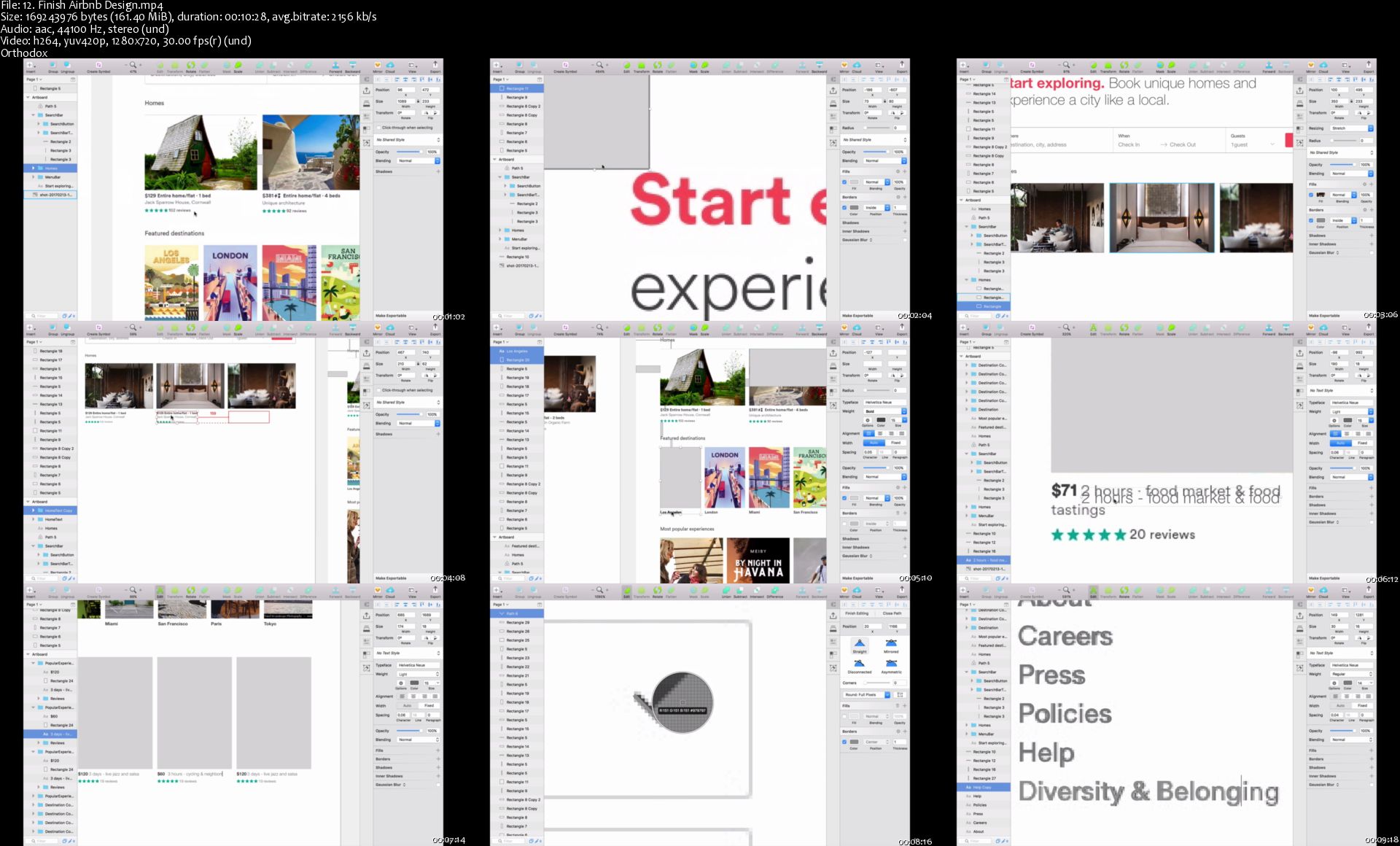
Travel Developer Course - Work Remotely as a Digital Nomad
W7-OMC1-Z3r1r-Xymytypfk-WKGZccw-ABXly.png


Travel Developer Course - Work Remotely as a Digital Nomad
h264, yuv420p, 1280x720 |ENGLISH, aac, 44100 Hz, 2 channels, s16 | 11h 10 mn | 5.76 GB
Instructor: PJ Manning

Learn how to design and build websites while working around the world
What you'll learn

Build any website you can think of
Design any mobile app, website, logo, flyer etc.
Work while traveling
Run your own highly successful business from home
Become a successful 'digital nomad'

Requirements

You should know the basics of operating a computer
You need a computer (Mac if you plan on designing with Sketch)

Description

Have you ever dreamed about working while you travel around the world?

Ever wanted to build your own business as a freelancer and become your own boss?

Or maybe you have the next big idea and want to get started designing and building websites...

The Complete Travel Developer course will teach you how to become a profitable freelance web designer and developer.

In the course, you'll learn how to start your own freelance business and take your skills ANYWHERE in the world.

Becoming a digital nomad is one of the most desirable lifestyles today.

You set up a freelancing business in your home country, limit your expenses, and head out on the road.

You work by doing all of your marketing, sales, finances, and customer service straight from your computer.

You get paid just like a normal 9-5 job except you get to TRAVEL THE WORLD AS YOU WANT.

SO what's the best way to make money as a digital nomad?

This course, based on over a 5+ years of personal research and interviews with other digital nomads, reveals how to become a profitable remote worker.

This isn't a get rich quick scheme, but it IS a lifestyle change - from letting your life pass you by to loving what you do.

Nothing is kept secret - I reveal all I know ... and as I test even more things, those that are successful are added to the course - at no extra cost to you! This is a course that will continue to grow as the months and years go by.

Over 14 sections you will learn:

Section 1: Create Your First Website

Section 2: HTML 5

Section 3: CSS

Section 4: Javascript

Section 5: Create Your Portfolio Website

Section 6: Domain Names and Hosting

Section 7: Wordpress

Section 8: Search Engine Optimization (SEO)

Section 9: Design with Sketch

Section 10: Freelance Marketing

Section 11: Getting Clients

Section 12: Managing Clients

Section 13: Billing and Finances

Section 14: Working Abroad

What else will you get?

Personal contact with me

Ebooks and financial statements

Lifetime access to course materials

Unconditional Udemy 30 day money-back guarantee

Regular free surprise bonuses

Hands-on learning to lock that knowledge in

A deep understanding of how to code, design and build websites

The are tons of other courses, ebooks, and seminars on how to become a digital nomad - don't waste your time trying to piece all these sources together.

If you want my personal "insider" information - I've spent almost 6 years working and traveling freely around the world - then get this course.

About the instructor:

PJ Manning is a self-taught, full-stack developer and small-business consultant. Over the past 5+ years, he has worked with 30+ businesses creating websites and iOS applications while also providing business consultant services from SEO and digital marketing to strategy and pricing. He has a unique perspective having worked with boutique hotels in Costa Rica, to the fastest growing e-commerce website in the world - Jet.

What makes me the right teacher for this class?

I've had my own design and development freelance business for 5+ years

I've worked with over 30+ clients in 10+ different countries.

I teach more than 100 other students on my TravelDeveloper platform

When I was first learning design and development, I had to take many courses, bootcamps, and tutorials to make sense of everything. I put this course together so you didn't have to do the same.

Who is this class for?

People who want to make websites. I will not be teaching super technical computer science 'theory'. I will be teaching you the basics how to make websites that you can charge REAL MONEY to REAL CLIENTS!

Beginners. You don't need any programming experience to take this class. I have been the absolute beginner before and I want you to get to my level as quickly as possible.

Those who want to start their own business. Becoming a freelancer is one of the easiest ways to create your own business and has tax benefits as well.

Entrepreneurs who have an idea for a website/app. Don't pay somebody thousands to build your website. Do it yourself. Having the ability to create something you can think of is extremely powerful.

Career development professionals who want to earn money professionally via contract work, consulting, full-time employment, and so on.

This is the class I wish I had when I was trying to learn how to become a digital nomad. I have a unique perspective to teach this class because I've been the newb that didn't understand anything and had no idea where to start with design or code.

This courses covers EVERYTHING you need to become a digital nomad.

By the end of this course, you'll be a web designer, developer, SEO consultant and remote freelancer.

Start NOW with ZERO Experience and end working for yourself anywhere in the world!
Who this course is for:

Anyone looking to become a digital nomad
Anyone wanting to learn how to design and build websites
Anyone looking to become a freelancer
People who want to make a living (or side-income) from web development
Please - if you're looking for "instant easy get rich quick" money, don't take this course. You'll need to study the course and do as it shows for success. It will take you a month or two to get set up, but you can be earning good money within months. But only if you follow the course fully!
Anyone, any age, anywhere in the world

Homepage
12-Finish-Airbnb-Design-s.jpg


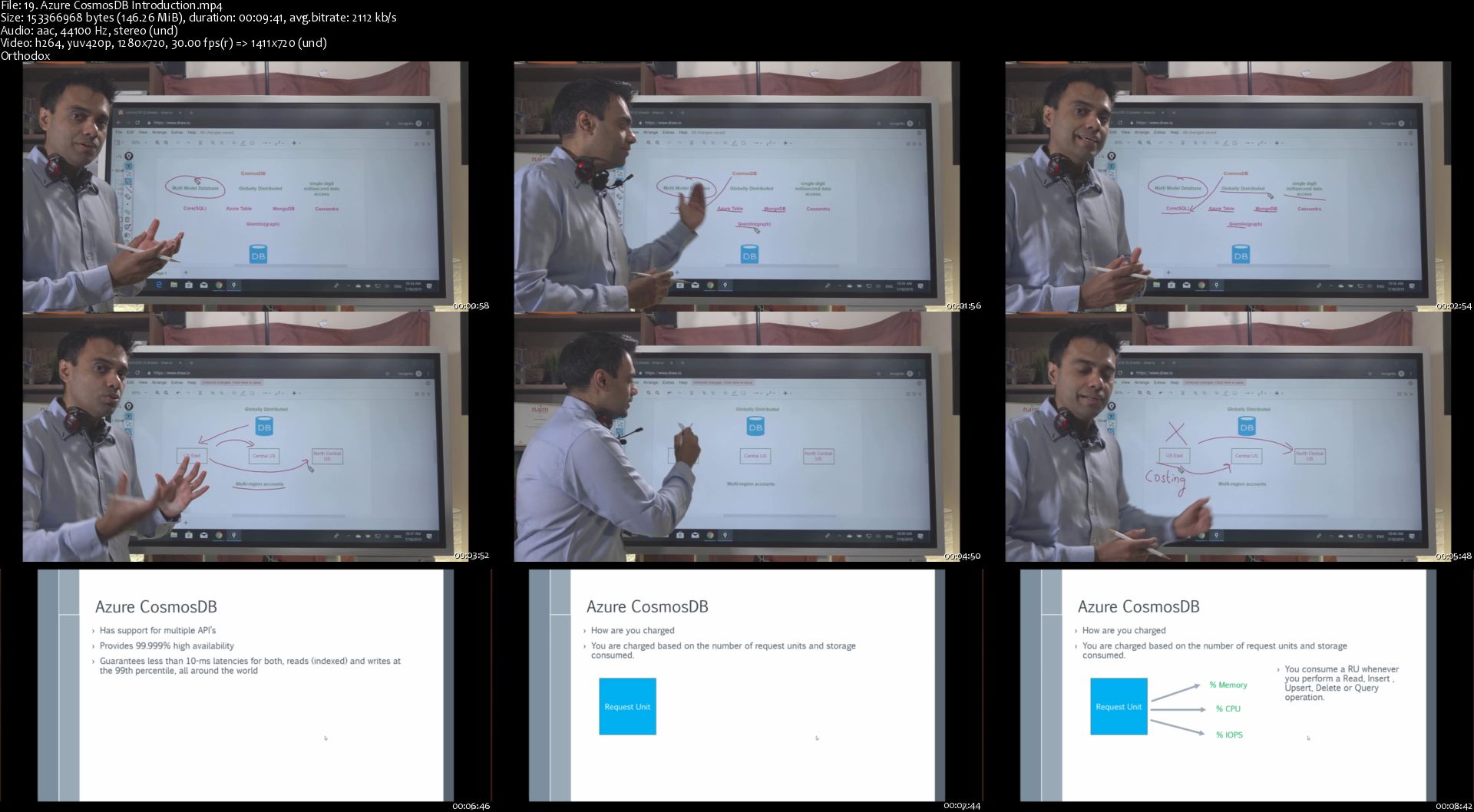
Microsoft Azure - Beginner's Guide + AZ-900 preparation

ALb-Ff2-Yxw6-Y5d-Kv-Bi-Je-ETPIl-TWvd-YRHy.png


Microsoft Azure - Beginner's Guide + AZ-900 preparation
h264, yuv420p, 1280x720 |ENGLISH, aac, 44100 Hz, 2 channels, s16 | 8h 46 mn | 6 GB
Instructor: Alan Rodrigues

Beginning your journey on Microsoft Azure + 165 practice questions on AZ-900 certification exam
What you'll learn

Ability to understand how to start working with Azure
Spin up Virtual Machines
Work with Storage options such as BLOB , SQL Server
Basic Understanding of services such as Azure Functions, Azure Web apps etc
Be prepared when taking the AZ-900 certification exam

Requirements

Basic IT knowledge on Networks , databases
Basic understand on what is a cloud platform
Basic understanding on how Web servers work
Basic understanding on developing web applications

Description

v 3.0 October

Refresh on existing topics to reflect Azure changes

Added chapters on cloud concepts

Added chapters on security, privacy and compliance

Added chapters on pricing and support

v 2.0 June - Update

Added practice 140 questions for the AZ-900 certification exam

Feedback from Students

"Perfectly what need for beginner's in azure"

"I got exactly what I wanted, an overview of Azure services to the perfect level of details, not too high level and not too detailed. The instructor was methodical and straight to the point."

Cloud Computing is the next big thing , just look around you at how the digital world is evolving. Big players such as Amazon , Microsoft , Google are working towards the goal of allowing customers to embrace cloud computing.

Microsoft has made big strides in this domain , and its no surprise as to why they are one of the leaders when it comes to Cloud Computing.

This course is designed to help students get themselves familiar with Microsoft's Cloud platform , Microsoft Azure.

In this course you will learn the following

1. Creating a Free Account in Azure

2. Working with Virtual Machines

3. Working with Azure Storage - BLOB , Table , Queues , Files

4. Introduction to Azure SQL Databases and CosmosDB

5. Basic Networking concepts in Azure

6. A Basic understanding on various services such as Azure Functions , Azure Logic Apps , Azure Scale Sets etc.

Don't get left behind. DIGITAL TRANSFORMATION is the need of the hour and Cloud computing is one of the backbone for empower the world towards this goal.
Who this course is for:

Students who wish to start learning how to use the Azure Platform
Students who want to get a head start to the Microsoft Azure Cloud Certifications

Homepage

19-Azure-Cosmos-DB-Introduction-s.jpg


LiveLessons - Python Fundamentals (Full)

RNutt-ERlr0lw52-Ukkehmm-D1x0-LQRCp-Uu.jpg


LiveLessons - Python Fundamentals (Full)
Video: .MP4, 1152x720 30 fps | Audio: AAC, 44.1 kHz, 2ch | Duration: 44h 52m
Genre: eLearning | Language: English | Size: 17.7 GB

The professional programmer's Deitel® video guide to Python development with the powerful IPython and Jupyter Notebooks platforms. Python Fundamentals LiveLessons with Paul Deitel is a code-oriented presentation of Python-one of the world's most popular and fastest growing languages. In the context of scores of real-world code examples ranging from individual snippets to complete scripts, Paul will demonstrate coding with the interactive IPython interpreter and Jupyter Notebooks. You'll quickly become familiar with the Python language, its popular programming idioms, key Python Standard Library modules and several popular open-source libraries. In the Intro to Data Science videos, Paul lays the groundwork for later lessons in which he'll introduce some of today's most compelling, leading-edge computing technologies, including natural language processing, data mining Twitter® for sentiment analysis, cognitive computing with IBM® Watson™, supervised machine learning with classification and regression, unsupervised machine learning with clustering, computer vision through deep learning and convolutional neural networks, sentiment analysis through deep learning with recurrent neural networks, big data with Hadoop®, Spark™ streaming, NoSQL databases and the Internet of Things.

Download the code examples for this LiveLesson from
This repository will be updated with the additional lessons' examples as the lessons are completed.

About the Instructor

Paul J. Deitel, CEO and Chief Technical Officer of Deitel & Associates, Inc., is a graduate of MIT, where he studied Information Technology. He holds the Sun (now Oracle) Certified Java Programmer and Certified Java Developer certifications, and is an Oracle Java Champion. Through Deitel & Associates, Inc., he has delivered Java, C#, Visual Basic, C++, C and Internet programming courses to industry clients, including Cisco, IBM, Sun Micro systems, Dell, Siemens, Lucent Technologies, Fidelity, NASA at the Kennedy Space Center, the National Severe Storm Laboratory, White Sands Missile Range, Rogue Wave Software, Boeing, SunGard Higher Education, Stratus, Cambridge Technology Partners, One Wave, Hyperion Software, Adra Systems, Entergy, CableData Systems, Nortel Networks, Puma, iRobot, Invensys and many more. He and his co-author, Dr. Harvey M. Deitel, are the world's best-selling programming-language textbook/professional book authors.

Skill Level

Beginner-to-Intermediate

What you Will Learn in Part I

Before You Begin-Configure your system for Python, obtain the code examples, Python package managers, Paul's contact info
Lesson 1-Test-Drives: Using IPython and Jupyter Notebooks-Work with snippets and scripts in the context of IPython and Jupyter Notebooks
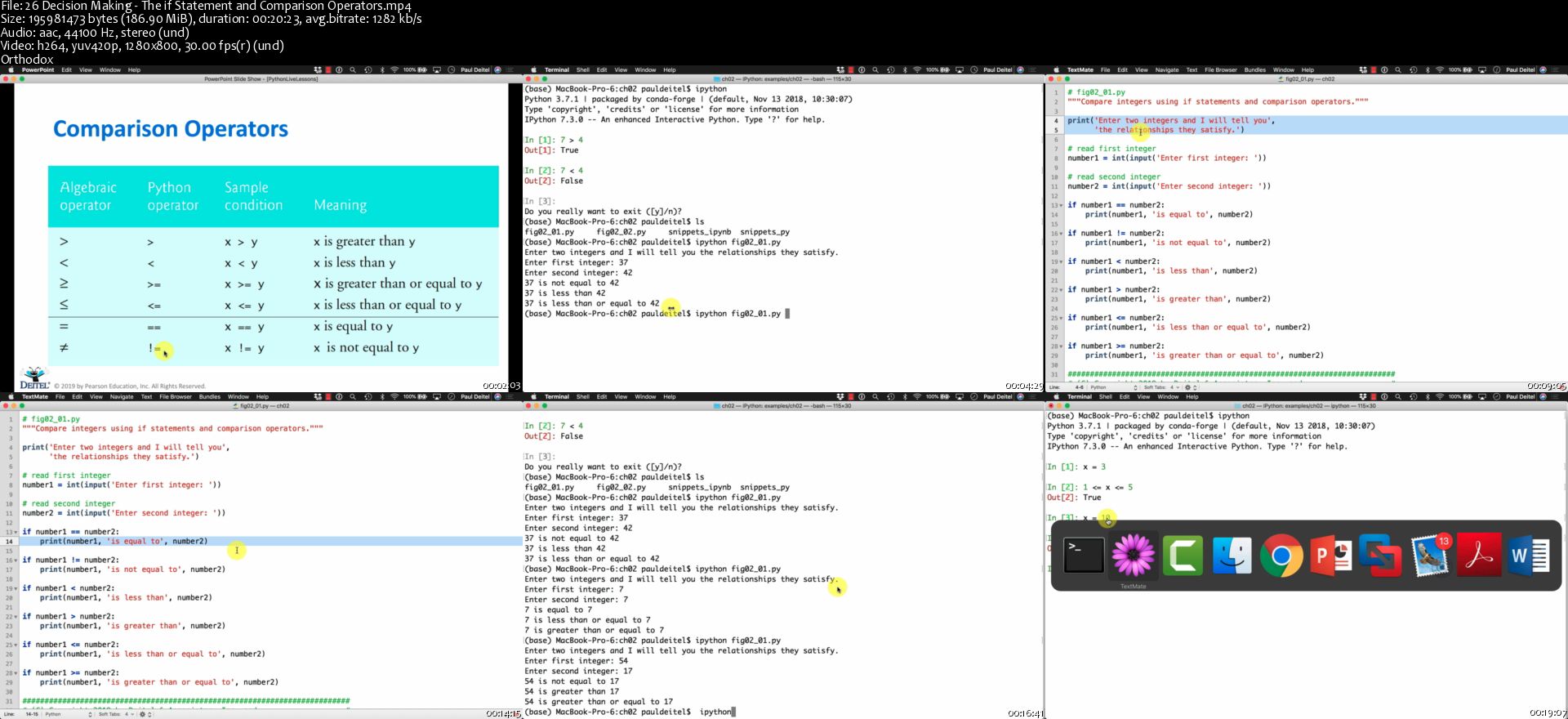
Lesson 2-Intro to Python Programming-Variables, types, operators, strings, I/O, decisions, objects and dynamic typing
Lesson 3-Control Statements-if, if.else, if.elif.else, for, while, break, continue, augmented assignments, boolean operators, intro to lists
Lesson 4-Functions-Custom function definitions, importing libraries, simulation with random-number generation, scope, default parameter values, keyword arguments, arbitrary argument lists, methods, intro to tuples, intro to functional-style programming
What you will learn in Part II:

Lesson 5-Sequences: Lists and Tuples-Create, initialize and access the elements of lists and tuples; sort and search lists, and search tuples; pass lists and tuples to functions and methods; list methods; functional-style programming (lambdas, filter, map, reduce, list comprehensions, generator expressions, 2D lists); static visualization with the Seaborn and Matplotlib visualization libraries.
Lesson 6-Dictionaries and Sets-Dictionaries of key-value pairs; sets of unique values; iterating through keys, values and key-value pairs; adding, removing and updating key-value pairs; dictionary and set comparison operators; set operators and methods; operators in and not in for membership testing; mutable set operations; dictionary and set comprehensions; dynamic visualization with the Seaborn and Matplotlib visualization libraries.
Lesson 7-Array-Oriented Programming with NumPy-numpy module's high-performance ndarrays; how ndarrays differ from lists; comparing list vs. ndarrayperformance with the IPython %timeit magic; one-dimensional and multidimensionalndarrays; common ndarray manipulations; introduction to the pandas data manipulation library; one-dimensional Series and two-dimensional DataFrames; custom Series and DataFrame indices; basic descriptive statistics for data in aSeries and a DataFrame; customizing pandas output formatting.
What you will learn in Part III:

Lesson 8-Strings: A Deeper Look-String methods; string formatting; concatenating and repeating strings; stripping whitespace; string comparisons; search strings for substrings and replacing substrings; tokenizing strings; regular expressions for pattern matching, replacing substrings and validating data; manipulating data in pandas.
Lesson 9-Files and Exceptions-Text-file processing; serializing objects into the JSON with the json module; with statement for avoiding "resource leaks"; exception handling; try.except statement; else clause; executing code when no exceptions occur in a try suite; finally clause; raise exceptions; more details on tracebacks; stack unwinding; CSV file processing via the csv module; loading and manipulating CSV files in pandas.
Lesson 10-Object-Oriented Programming-Custom classes; controlling access to attributes; properties for data access; simulating "private" attributes; Python special methods for customizing string representations; inheritance, duck typing and polymorphism; class object; Python special methods for overloading operators; named tuples; Python 3.7 data classes; unit testing with doctest; namespaces and how they affect scope; Introduction to time series and simple linear regression.
What you will learn in Part IV:

Lesson 11-Natural Language Processing (NLP)-Install and use the TextBlob, NLTK, Textatistic and spaCy NLP libraries;, tokenize text into words and sentences; parts-of-speech tagging (noun, verb, etc.); sentiment analysis (positive, negative or neutral); detect the language of text; translate between languages; get word roots via stemming and lemmatization; spell checking and correction; word definitions, synonyms and antonyms; remove stop words from text; create word-cloud visualizations; determine text readability.
Lesson 12-Data Mining Twitter®-Access tweets and other information on Twitter with Tweepy-a popular Python Twitter API client; search past tweets with the Twitter Search API; sample the live tweet stream with the Twitter Streaming API; work with tweet object meta data; use NLP techniques to clean and preprocess tweets for analysis; perform sentiment analysis on tweets; spot trending topics with Twitter's Trends API; map tweets using folium and OpenStreetMap.
Lesson 13-IBM Watson® and Cognitive Computing-Intro to Watson and its free Lite tier services; demos of several Watson services; registering for an IBM Cloud account; set up and get credentials for Watson services; install the Watson Developer Cloud Python SDK; build a Traveler's companion language translator app that mashes up the Watson Speech to Text, Language Translator and Text to Speech services.
What you will learn in Part V's case studies:

Lesson 14-Machine Learning: Classification, Regression and Clustering-Use scikit-learn with popular datasets to perform machine learning studies; Use Seaborn and Matplotlib to visualize and explore data; Perform supervised machine learning with k-nearest neighbors classification and linear regression; Perform multi-classification with Digits dataset; Divide a dataset into training, testing and validation sets; Tune hyperparameters with k-fold cross-validation; Measure model performance; Display a confusion matrix showing classification prediction hits and misses; Perform multiple linear regression with the California Housing dataset; Perform dimensionality reduction with PCA and t-SNE on the Iris and Digits datasets to prepare them for two-dimensional visualizations. Perform unsupervised machine learning with k-means clustering and the Iris dataset.

Lesson 15-Deep Learning-What a neural network is and how it enables deep learning; Create Keras neural networks;Keras layers, activation functions, loss functions and optimizers; Use a Keras convolutional neural network (CNN) trained on the MNIST dataset to build a computer vision application that recognizes handwritten digits; Use a Keras recurrent neural network (RNN) trained on the IMDb dataset to create a sentiment analysis application that performs binary classification of positive and negative movie reviews.

Lesson 16-Big Data: Hadoop, Spark, 17-Manipulate a SQLite relational database using SQL; Understand the four major types of NoSQL databases; Store tweets in a MongoDB NoSQL JSON document database and visualize them on a Folium map; Apache Hadoop and how it's used in big-data batch-processing applications; Build a Hadoop MapReduce application on Microsoft's Azure HDInsight cloud service; Apache Spark and how it's used in high-performance, real-time big-data applications; Process mini-batches of data with Spark streaming; Internet of Things (IoT) and the publish/subscribe model; Publish messages from a simulated Internet-connected device and visualize messages in a dashboard; Subscribe to PubNub's sample live streams and visualize the data.

26-Decision-Making-The-if-Statement-and-Comparison-Operators-s.jpg


Introduction to Consulting

B9yfogynh-M2-F3q-GCy-Cl0t-Ysd-Cvj-NVbkx.png


Introduction to Consulting
h264, yuv420p, 1280x720 |ENGLISH, aac, 48000 Hz, 2 channels, s16 | 4h 12 mn | 5 GB
Instructor: David Firth

Want to become a consultant? Designed by an experienced industry professional who is also an award winning professor
What you'll learn

You will understand what consulting is, how consulting firms make money, how you are evaluated at a consulting firm, how to write powerful proposals, how to properly budget consulting engagements, and how to run highly effective consulting meetings

Requirements

All you need is an interest in business and helping other businesses succeed

Description

This course is based on Dr. Firth's personal experience teaching new consultants for KPMG's national consulting practice for over six years, in addition to over ten years teaching the University of Montana's College of Business undergraduates and graduate students all about consulting. Hundreds of Dr Firth's consulting class students have found very well paid positions with consulting firms locally and nationally. Dr. Firth is recognized nationally by several very well known consulting firms for his role in preparing students for great careers in consulting.

The course is primarily aimed at those wanting to join a consulting firm, rather than start their own consulting firm. This can be college undergraduates, college graduates, or experienced practitioners out in the workforce. That said, all the topics are 100% practically applicable and would help tremendously those starting their own firms.

The course covers critical, practical issues including:

First impressions, and how to make them better both during the hiring process, and as a consultant

How a consulting firm makes money. Knowing this helps you play your role and be more valued as a result if you work for a firm, or are wanting to work for a consulting firm

Why chargeability is the #1 metric for a consultant, how it gets calculated, and how you can change it

Why realization is the #1 metric for a consulting firm, how it gets calculated, and your role in it

The immutable consulting triangle of scope-cost-schedule

All aspects of a real consulting proposal. We work through a detailed example and explain all the parts

A real budget for a consulting project. We work through every piece of a real budget for a consulting project, explaining why each part is there and how the parts interact

All aspects of a consulting meeting from planning, to where to sit in the meeting room, to how to take notes and ask great questions

What to avoid when running a consulting meeting, including poor types of questions and issues such as avoiding social desirability

Who this course is for:

Anyone who as an interest in helping companies and organizations succeed
This course is more focused on joining an existing consulting company rather than setting up your own consulting company, but most of the principals covered can be applied if your are starting your own consulting business

Homepage

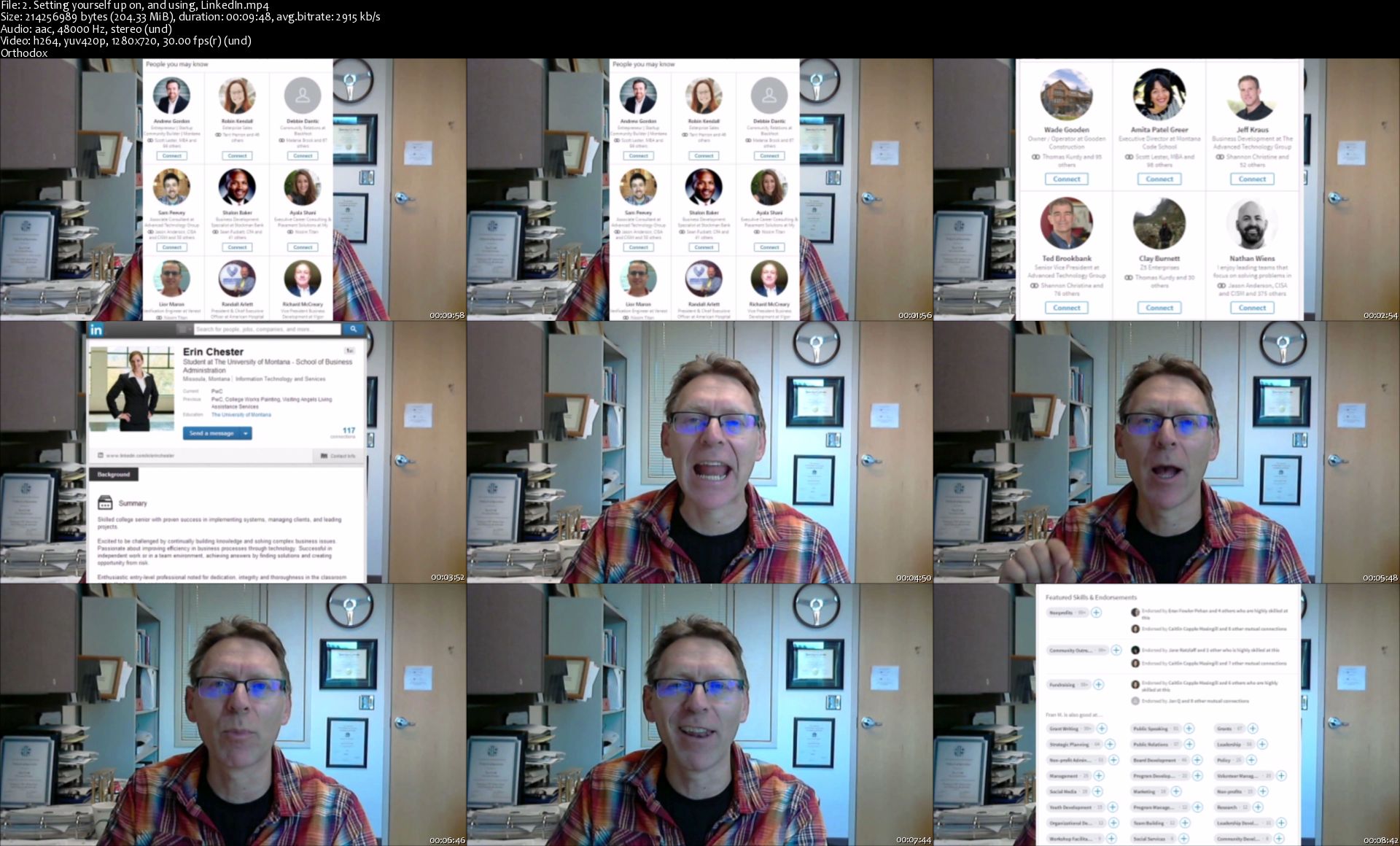
2-Setting-yourself-up-on-and-using-Linked-In-s.jpg


Project Management: Best Practices From 12 Years Consulting

c-AWVa6-Iwdqlfq8-UT2-EAWMBpt-Gz-Fx-S5-I4.png


Project Management: Best Practices From 12 Years Consulting
h264, yuv420p, 1280x720 |ENGLISH, aac, 44100 Hz, 2 channels, s16 | 9h 33 mn | 5.12 GB
Instructor: Sebastian Glöckner

Learn How to Increase Your Job Productivity on Projects Without Certification! Use Unique Time Management Techniques.
What you'll learn

Learn how to increase your job productivity to the max. This course is designed particularly for project managers and project members.
You will be able to work much more efficiently on your projects. That includes having more time to be creative or do multiple projects at a time.
Learn and understand some intuitive ways to work fast and effectively on projects.
You will be able to see behind the curtains of team dynamics, i.e. why those are often the reasons of missing deadlines or failing projects.

Requirements

There are no pre-requisites. I will explain you all the tools and techniques - and very important - the mindset to be a successful project manager.

Description

*** This course is constantly being updated ***

BEWARE: This course is not for everybody! Join the course and learn a complete new approach to project management which is totally different from memorizing hundreds of pages in a text book that often won't help you at all. If you want to hear an honest aproach which is proven in dozens of projects (which I personally finished since 2007) then this is your course.

The course is designed to save you hundreds of hours being frustrated with the traditional project management methods. Especially if you figured out already that PMP, PRINCE2 and IPMA certifications will not necessarily help you reach project milestones because most of the classical methods are either not really applicable or you are not told how exactly to use them.

The key of successful project management is not memorizing dozens of models and processes: the key is organizing yourself while motivating and communicating with others.

This course is designed to give you genuine advice and tools to set up your projects and deliver them on time and in quality. I will tell you enough of my best practices to outperform most traditional project managers you know.

I have been a project manager for around 10 years and delivered dozens of projects on time and in quality. I also took many classes / am certified on project management (PRINCE2) and other areas of expertise (i.e. ITIL, TOGAF).

However, the problem is that I see huge gaps between theory and practice. In other words: In the seminar everything seemed so practical and later it turned out it's not.

This course is for Project Managers, Developers, Managers, Software Engineers, Team Leads as well as Team Members who want to substantially succeed in their project work.
Who this course is for:

People who are fed up with standard project management tools and methods.
Project managers or members who tried the book methods before (i.e. MS Project / Gantt charts as 'problem solvers') and figured out they often won't work or at least don't solve the actual problems.
Someone who wants to understand the team dynamics which often are the main cause of issues in projects.

Homepage

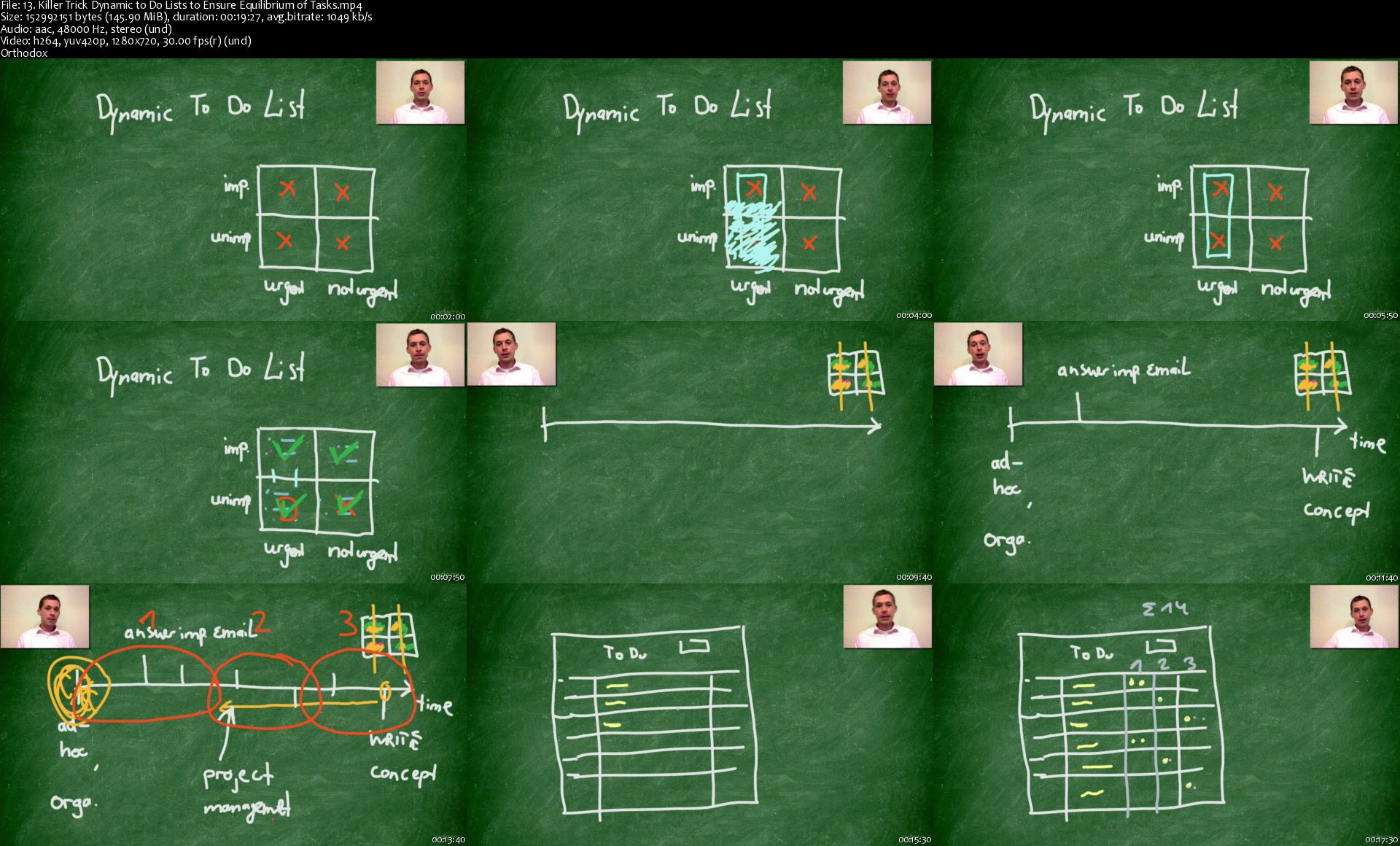
13-Killer-Trick-Dynamic-to-Do-Lists-to-Ensure-Equilibrium-of-Ta.jpg


Cisco ICND1 - CCENT (100-105) - A Complete Guide

bv-Qq-Dcyq-Ur-L60-Zy8-A25-H0-YMq59uy6gfh.png


Cisco ICND1 - CCENT (100-105) - A Complete Guide
h264, yuv420p, 1280x720 |ENGLISH, aac, 48000 Hz, 2 channels, s16 | 11h 35 mn | 5.71 GB
Instructor: Marious Kuriata

Pass the ICND 1 (100-105) exam easily. Recorded in Full HD! Challenges and Quizzes included! Great for CCNA students too
What you'll learn

Identify Network Devices
Work With Network Protocols
Configure a Cisco Router and Switch
Implement Basic Security Solutions
Understand Routing Protocols
Work With IPv6
Master Subnetting Techniques
Secure your Network Using Access Lists
Implement NAT
Learn How to Troubleshoot Cisco Networks

Requirements

Basic IT skills
Access to the Internet
Willingness to learn new topics

Description

Join one of the few IT courses on Udemy recorded in Full HD using mobile friendly presentations and a high quality dynamic microphone.

Cisco has announced the new CCENT exam (100-105). Do not worry, you ARE covered! This course has been updated to cover new exam topics.

Pass the CCENT (CCNA ICND1, 100-105) exam first time and master all skills. Short lectures help you find a topic that you need to review. There are labs, challenges and quizzes to make it as interesting as possible.

You can download all presentations as a PDF e-book as well (more than 100 pages!).

CCENT (ICND1, 100-105) is an entry level certificate from Cisco. Do you want to start your career in networking? This certificate is perfect for you! It is easier than CCNA but covers all basic terms and shows you how to configure a Cisco device.

In this course you will learn all you need to know to pass the exam and apply your skills in real world scenarios.

Networking Terms and Definitions
The OSI Model
Subnetting
Cisco Routers and Switches
Network Security
IP Services and Protocols
IPv6
Access Lists
Network Address Translation
Troubleshooting Cisco Networks
Labs Showing You How to Configure Cisco Devices
Challenges and Quizzes
Exam tips

Contents and Overview

In over 4 hours of content including more than 100 lectures, this course covers the basics of networking and Cisco devices. Each chapter closes with a quiz to allow you to practice exam questions and test your knowledge before moving to the next section.

We start by defining some basic terms (LAN, WAN, DNS, DHCP, IP Address) and then move to The OSI Model. There is a section dedicated to Routing, Switching and Network Security.

It is all recorded and edited in FullHD using mobile friendly presentations and high quality audio.

Pass the ICND1 exam. Join now!
Who this course is for:

Anyone who is interested in networking
Students studying towards CCENT and CCNA exams

Homepage

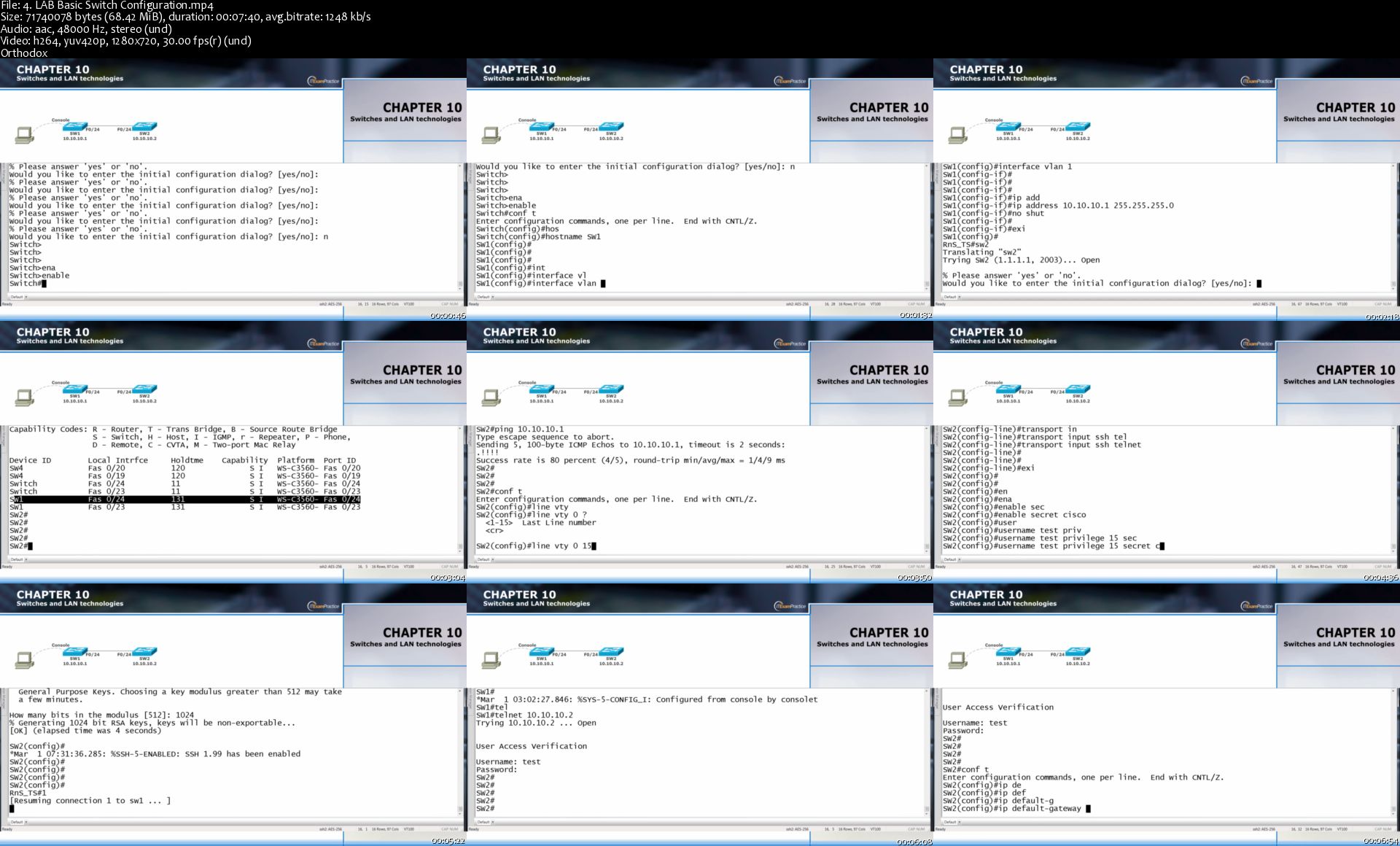
4-LAB-Basic-Sw-itch-Configuration-s.jpg


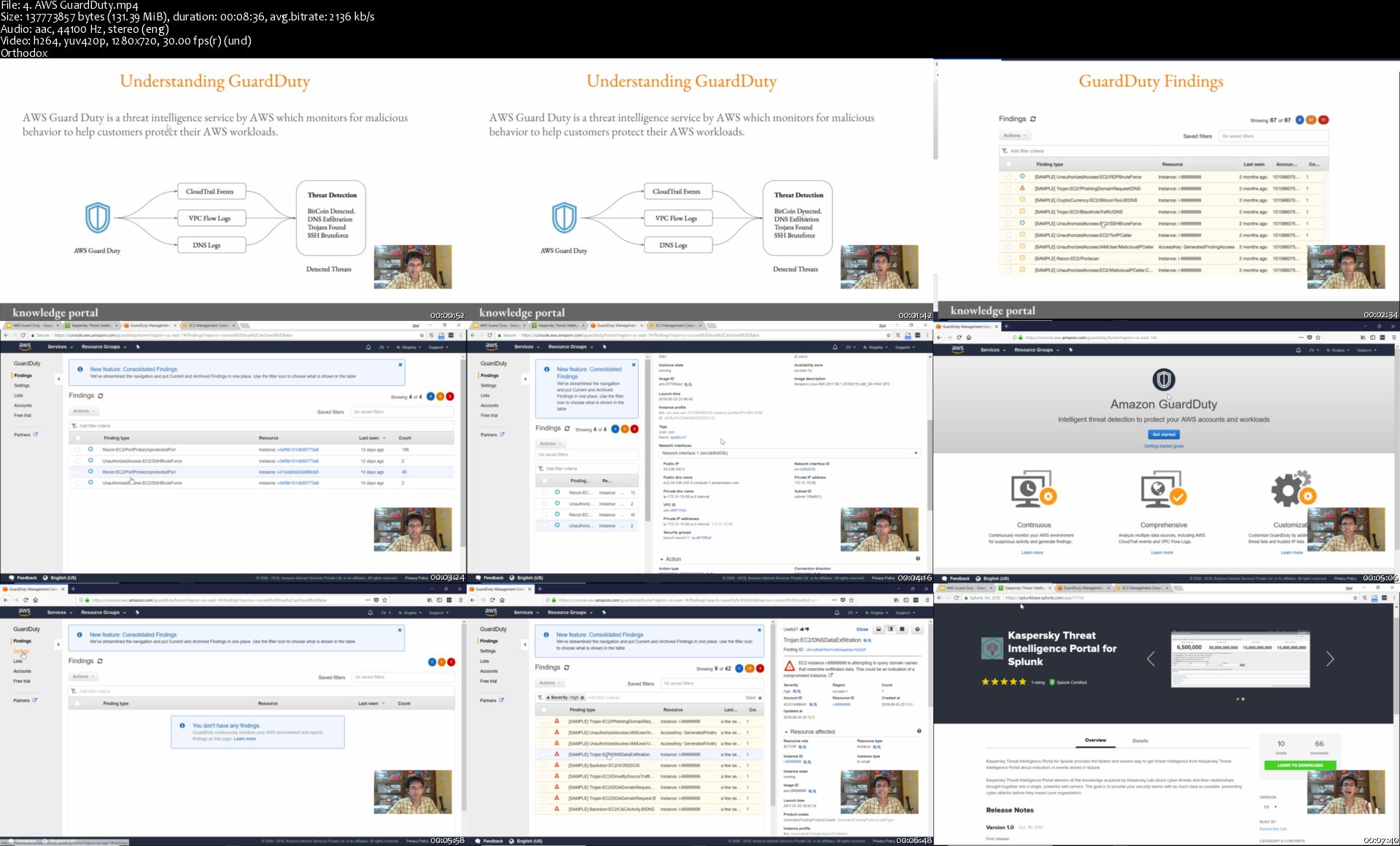
AWS Certified Security Specialty 2020

Mo-Bx-LVCx-Net-KYTt6p-Tq-Ml-RVk-DQKr4cb-R.png


AWS Certified Security Specialty 2020
BestSeller | h264, yuv420p, 1280x720 |ENGLISH, aac, 44100 Hz, 2 channels, s16 | 22h 11 mn | 10.14 GB
Instructor: Zeal Vora

All you need to master AWS Certified Security Specialty certification.
What you'll learn

Will be prepared to give AWS Certified Security Specialty Exam
You will be able to Master the Security aspect of AWS
Gain deep insights about Enterprise grade Security implementation.
Will be able to detect attacks and protect the AWS infrastructure from Hackers.

Requirements

Basics of AWS
AWS Solutions Architect Associate or Equivalent Knowledge

Description

This course is specially designed for the aspirants who intend to give the AWS Certified Security Specialty 2018 certification and as well for those who wants to master the AWS Security as well.

Throughout the course, we look into various Real World scenario and look into why do website gets hacked, what could had been done to prevent it and learn the best practices related to Security for your AWS environment.

With tons of quizzes in order to prepare you for exams, Real world scenario and great Support from our Instructor in-case of doubts, this course is all you need to master the Security side of AWS and gain the Certification.
Who this course is for:

Those interested in gaining the AWS Security Specialty Certification
Those who wants to gain deep security insights related to AWS

Homepage

4-AWS-Guard-Duty-s.jpg


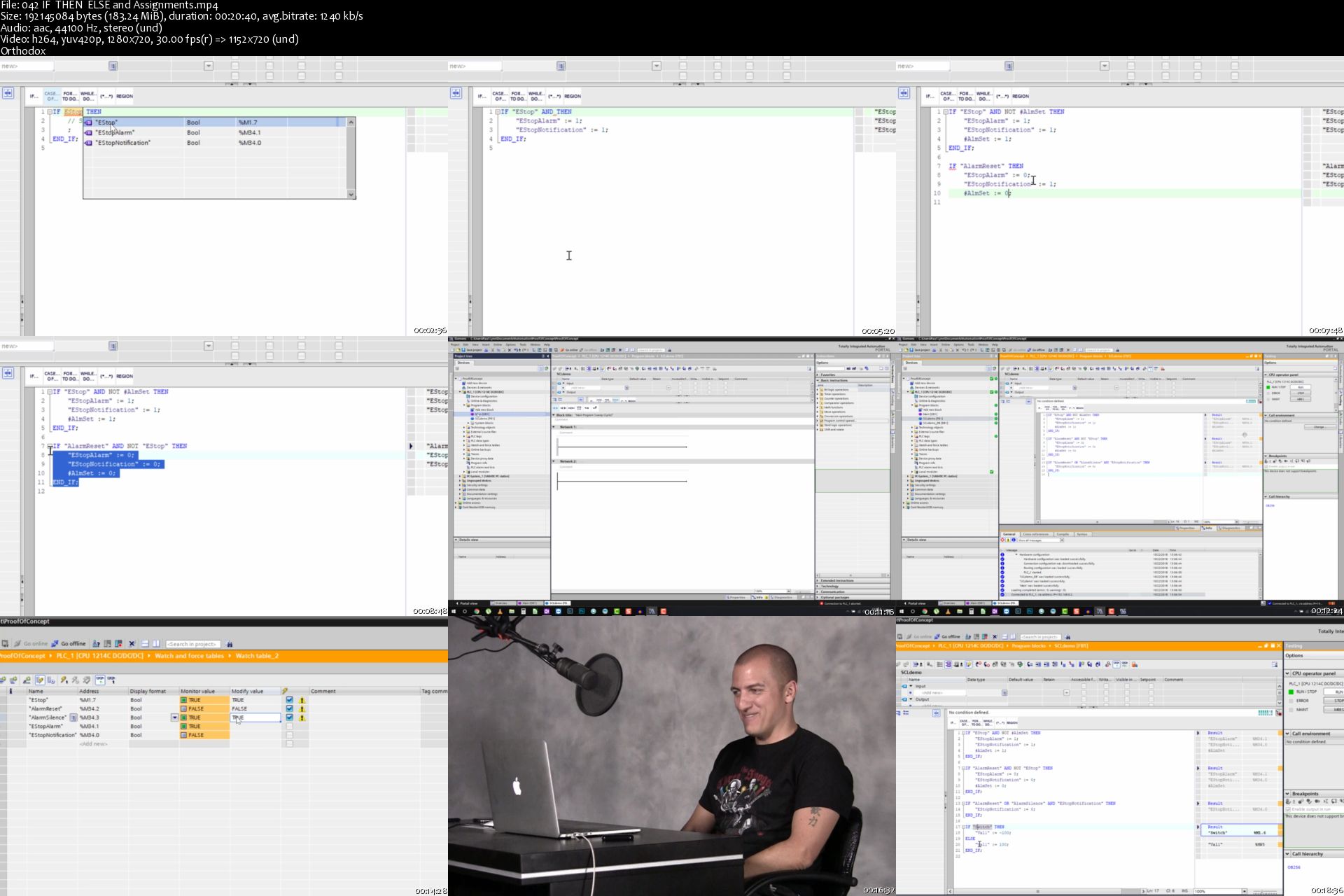
Siemens TIA Portal Step 7 WinCC PLC HMI (PLC-S)

v-RRez-Rf-CT8ut-Cu1-Q8xag-Y64-ULQ39-Lo-Oh.png


Siemens TIA Portal Step 7 WinCC PLC HMI (PLC-S)
BestSeller | h264, yuv420p, 1280x720 |ENGLISH, aac, 44100 Hz, 2 channels, s16 | 29h 19 mn | 19 GB
Instructor: Paul Lynn

Learn (hands-on) to create complete PLC and HMI solutions from absolute zero in TIA Portal.
What you'll learn

By the end of this course, you will be able to program Siemens PLCs using ALL of the IEC programming languages supported in TIA Portal.
You will know how to create complete HMI projects using WinCC RT Professional.
At your next interview, you'll be able to bring your laptop with a fully functional PLC program and HMI both running live to actually demonstrate everything you've learned in this course (which will be quite a lot).

Requirements

Coming into this course, you should already have a basic understanding of PLC / HMI terminologies and basic computer literacy.
If you don't think you're quite ready, check out my beginner's PLC course, "PLC Programming from Scratch (PLC I)."

Description

By now, you already know the basics. You know what digital and analog signals are. You know what "PLC" and "HMI" mean. You know what an INT and a BOOL and a FLOAT are. As long as you're at LEAST that far, you'll be able to handle this course. If you aren't quite there yet, I strongly recommend you check out my first PLC programming course which teaches from the most elementary fundamentals all the way up to creating complete solutions with best practices.

For those of you who are still here and think you're ready, you're about to learn Siemens PLC and HMI programming end-to-end and top-to-bottom. There will be some familiar info covered such as alarm programming and HOAs, but we aren't going remedial here. Most of the focus will be on creating a complete program for a theoretical system and doing so with LAD, FBD, SCL, STL and GRAPH programming paradigms. If you've already completed my PLC IV course, this should be a piece of cake.

But no PLC is complete without an HMI, right? No worries! We're getting into all of that as well and best of all - you'll be able to follow along in your own (fully-functional 21-day trial version) copy of the software. So you'll be creating PLC programs, creating HMI projects, simulating both and making them talk to each other. It's everything you need and want to develop a HIGH comfort level with Siemens technology!

For those of you who might not think you're ready, you can always take a look at my other PLC programming courses. There are four courses that take a person from knowing nothing about anything to being able to program anything that walks (or doesn't).

PLC I teaches you how to program with the focus on ladder logic, which is the most popular PLC programming language. The goal is to teach you everything you need to know to make a PLC do what you want it to do. You are also given all the software necessary to both CREATE and RUN your own programs live - right on your own computer.

PLC II forces you to take what you've learned and solve problem after progressively harder problem unassisted. You get a spec and are told simply: "Make it work, and don't progress until you have." After, you get to watch me solve each one as well. By the end, you don't just know how to program - you are a PROGRAMMER.

PLC III gives you both knowledge and experience in FIVE different HMI / SCADA development environments. By the end, you've created several COMPLETE visualization (screen) projects that you can actually run on your own computer (and SHOW PEOPLE in an interview) with no additional hardware.

PLC IV is only for the heavyweights. This course teaches you how to program using all five IEC programming languages (plus one more) in multiple environments. There are projects as well, so by the end, you have seen it all and DONE it all as well. There won't be anything anybody can show you that you won't already be familiar with.
Who this course is for:

This course is perfect for anybody wanting to learn PLC / HMI development using the latest Siemens development platform(s).

Homepage

042-IF-THEN-ELSE-and-Assignments-s.jpg


Qt Quick and QML For Beginners : The Fundamentals

Yz-VObgm-Kj-Jao-NDpt-EKSw-Px-JXkivex-XIv.png


Qt Quick and QML For Beginners : The Fundamentals
h264, yuv420p, 1280x720 |ENGLISH, aac, 48000 Hz, stereo | 14h 34 mn | 10.11 GB
Instructor: Daniel Gakwaya

Build Cross Platform Fluid And Dynamic UIs. Run Them on Windows, Mac, Linux, Android,iOS and Embedded.
What you'll learn

The basics of working with the QML language
Working with Qt Quick basic elements and building your own in QML
Signals and slots in QML
Working with input elements
Working with Javascript in QML
Positioning elements in QML
Running your QML Apps on Android
Qt Quick Controls 2 framework
Working with Dialogs in QML
Models,Views and Delegates
Transforms,Transitions and Animations
Networking : Fetching HTTP Data and JSON(REST) APIs
Settings and Local Storage

Requirements

Open mind and strong willingness to learn
A basic understanding of Javascript will be useful but not required
An eye for design

Description

Qt Quick (QML) is the latest and greatest technology from the Qt Framework, to build slick looking , fluid, dynamic and cross platform User Interfaces that can run mobile devices(Android,IoS, touch devices (embedded) and any major desktop platform out there(Linux,Windows,Mac). Qt Quick can be used to build stand-alone applications, but it can also be interfaced and/or extended with a C++ back end.

The main aim of this course is to help you succeed in becoming a Qt Quick/QML GUI Designer and do so in the most effective amount of time possible. The course is packed with lots of straight to the point, easy to understand demos, that are carefully designed to help you master a given Qt Quick UI development topic at hand.

The target student is anyone willing to add Qt Quick/QML UI design to their stack of skills. While Qt Quick is built on top of Qt and C++, no knowledge of Qt or C++ is required. The course will equally be useful to both designers willing to jump into Qt Quick and existing C++ developers willing to level up their skills in fluid UI design.

We start by getting your development environment set up and get you to run your first Qt Quick application. We then jump into topics like

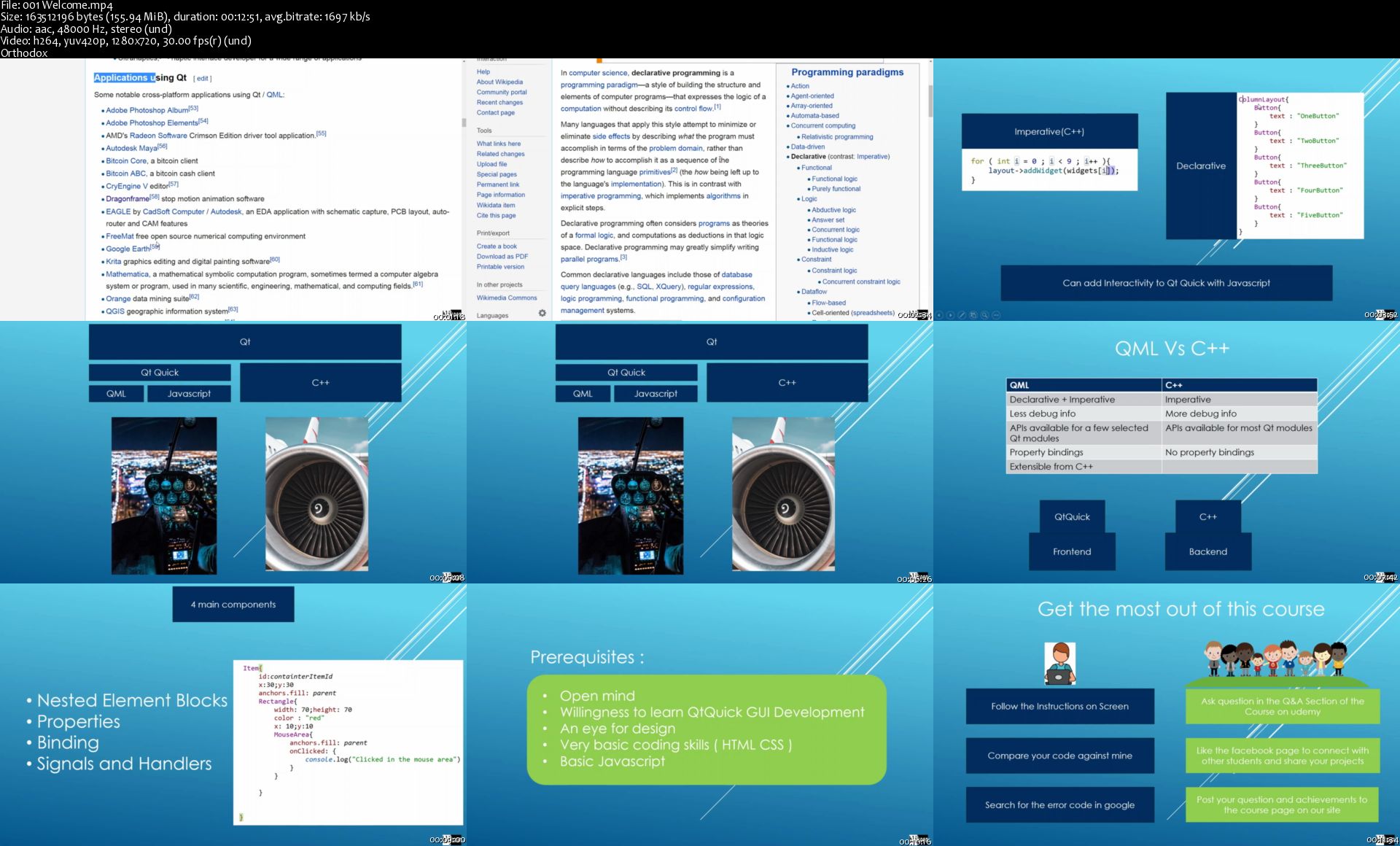
Dissecting the QML Syntax , where we explore subjects like the QML syntax, Basic Types of QML, Properties and Handlers,Property Binding and the Qt Quick Global Object;

Qt Quick Basic Elements, and look at elements like Rectangle,Text, Image and Item;

Signals and Slots;

Working with Javascript, where we explore the javascript environment available to you in QML, where and how to type your Javascript code in QML files, functions and scope and importing external Javascript files;

User Input Elements : TextInput, TextEdit, MouseArea and drag and drop, Keys Attached Properties, KeyNavigation and FocusScope

Qt Quick Positioning and explore subjects like Anchors, Positioners, Layouts and Flow

Qt Quick on Mobile Devices : we take you on a detailed journey on how to run your Qt Quick Apps on Android and guide you on how you would do the same on IoS.

Qt Quick Controls where we explore a host of Ui Components available and ready to be consumed by your awesome apps ;

Dialogs : ColorDialog, FileDialog,FontDialog, MessageDialog and Custom Dialogs

Model , View and Delegate where we explore the pieces of the puzzle needed to take advantage of the Model View Delegate Architeture in Qt Quick

Transitions, Transforms and Animations : Oooh Animations! This is the most fun and captivating subject for me in Qt Quick. We take you on a tour of how you animate your Qt Quick Components and bring your designs to life using tricks like states and transitions.

Network : We show you how to download HTTP data using XmlHttpRequest and how to consume REST APIs in your Qt Quick apps using the same Javascript Object

Storage : We first use the Settings component from the Qt.labs module to save and load your applications settings and do the same thing using the LocalStorage module that is backed by an embedded SQLite database.

Qt is the platform of choice for thousands of software projects and some of the most successful companies on the planet. Learning Qt Quick will certainly level up your abilities in taking advantage of this rich and awesome framework. Please check out some of the preview videos and lets get you STARTED building slick and fluid User Interfaces with Qt Quick.
Who this course is for:

Designers willing to jump into Qt Quick Prototyping and UI Design
Existing Qt C++ Programmers willing to add Qt Quick to their Arsenal
Anyone willing to build Fluid and Dynamic User Interfaces capable of running on desktop, mobile and embedded devices

Homepage

001-Welcome-s.jpg


How to Become a DJ - Learn How to Start DJing Online Today

hye-B4-UO57j1hklm-JNBq-SU3-Mxw-Tg-GKz92.png


How to Become a DJ - Learn How to Start DJing Online Today
BestSeller | h264, yuv420p, 1280x720 |ENGLISH, aac, 48000 Hz, 2 channels, s16 | 10h 46 mn | 7.16 GB
Instructor: Ross Palmer

Professional DJ School - 11 hours of high-quality content. Former students on: Armada, Spinnin, Ultra, Revealed, & more!
What you'll learn

How to DJ - Learn how to become a DJ online: This best-selling, top-rated online DJ school is a complete masterclass with 11 hours of high quality video.
You will have EVERY skill needed to play in front of the largest crowds and win. You won't have to rely on a pre-recorded set to play like a virtuoso.

Requirements

You should own or have access to Pioneer DJ Equipment, XDJ-RX, CDJ1000/DJM800 or better. NO LAPTOP DJS HERE, USB ONLY!
Recommended (but not necessary) software: Ableton Live, Rekordbox, Mixed In Key

Description

Learn how to become a DJ online: This best-selling, top-rated Udemy DJ course is a complete masterclass with 11 hours of original, high quality instruction.

Hi there everyone!

My name is Ross Palmer, and I'm going to show you how to become a DJ online, at a world-class level.

Here's a demo mix of me showing off some of the skills you'll learn in my online DJ school: vimeo dot com /274562678/eadfd0b470

I spent 13 years building my DJ technique, starting from vinyl turntables and moving all the way up through CDJs. I've been passionate about dance music since I was 11 years old, and I started professionally DJing when I was 18.

After years of honing my craft, I was fortunate enough to get a job at Armada Music*. During my time there, I worked alongside some of the best DJ's in the world of dance music today. I witnessed that my own ideas and theories of DJing were superior to those of many signed artists, and it was a complete validation of the skills I had built over so many years. I had some tricks up my sleeve that even top people had never thought of!

Today, former students of my DJ school and direct mentors are currently playing to packed crowds at festivals, in stadiums, and at the world's most prestigious clubs, including Tomorrowland, EDC, and more. And I can say with 100% confidence, these are the skills the world's top DJ's use to crush it in front of any crowd, every time. How you execute these skills is all about how often you practice, but these are definitely the technical foundations on which you can learn how to become a DJ online, at the highest level.

Sections 1 and 2 will cover all the basics of how to DJ - everything you need to get started. I'll even give you some advice on purchasing your first deck and how to book your first show.

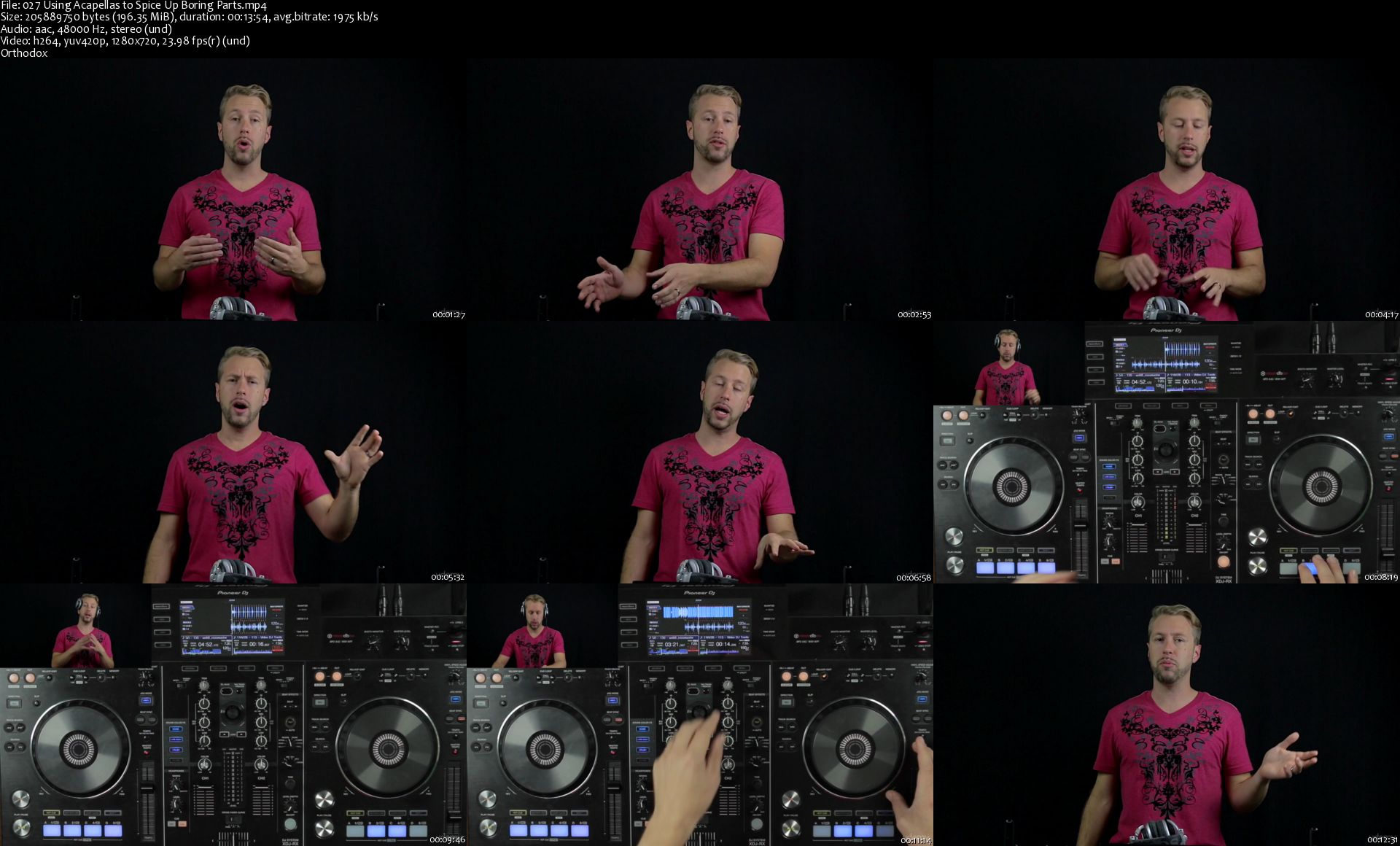
In Section 3, the DJ classes dive deeper into the different tools needed to create a really engaging show, including how to make seamless transitions in a pinch and a super easy way to spice up even the most boring sections of a track. I will even walk you through creating a playlist to fill a 1-hour set, which is a lot longer than it seems if you're doing it right.

Section 4 will focus in on advanced techniques that will help you learn how to be a DJ like the pros. In addition, you will learn how to mix faster and more precise, as well as secret tricks the pros use to make their show sound larger than life. Finally, we will talk about showmanship and how to really polish your performance to take your DJ'ing to the highest level.

My former students and good friends are signed to the world's best labels right now, Spinnin', Ultra, Revealed and more. I've been very fortunate to learn how to DJ from professionals at the highest level, and now you can learn to DJ online, anytime, anywhere.

But don't take my word for it: have a look at the reviews of my DJ school and see for yourself - thousands and thousands of happy students have already taken the course and left their reviews.

And it's not just the course itself, many students have already asked hundreds of questions in the Q&A section, and I do my best to answer every single one. We've built a community where all can learn how to improve, and that's the massive value of this course.

Thanks for reading,

Ross

*Note: This course is not affiliated with or endorsed by Armada Music. All the music used in this course is royalty-free music for the purposes of demonstration!
Who this course is for:

Anyone who wants to know what it takes to REALLY DJ like a professional. I've taught and learned from real-life, major DJs playing shows like: Tomorrowland, Ultra, and more.
People who want to know what the top tier of DJs actually do, including closely guarded industry secrets.

Homepage

027-Using-Acapellas-to-Spice-Up-Boring-Parts-s.jpg


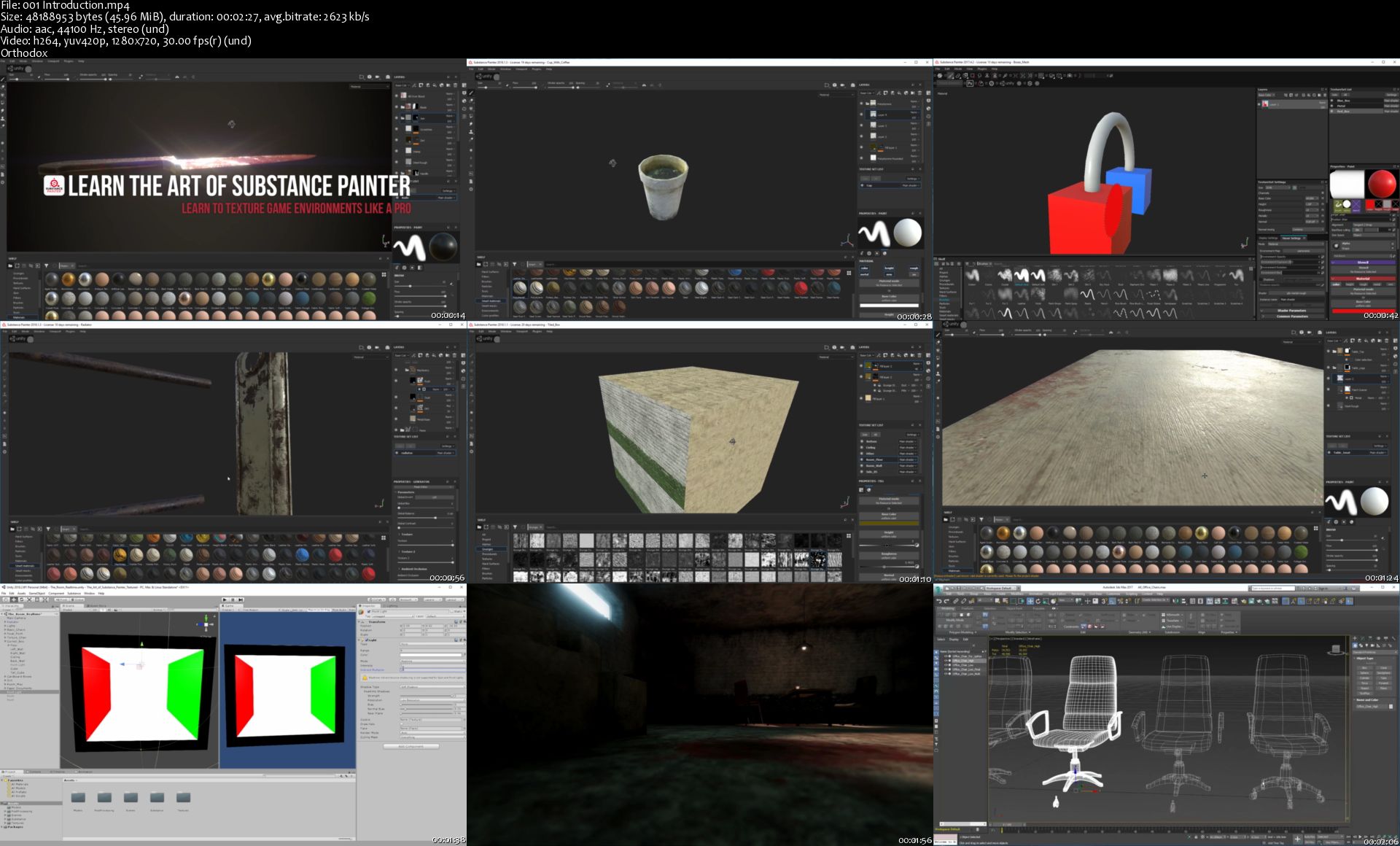
Learn the ART of Substance Painter

IA0tm-Hz-OXZX7-A5-M7x3-HZMp-Qsdupxbd-XU.png


Learn the ART of Substance Painter
h264, yuv420p, 1280x720 |ENGLISH, aac, 44100 Hz, 2 channels, s16 | 19h 29 mn | 15.41 GB
Instructor: Kevin Oxland

Learn to use the latest Substance Painter (and Designer) and become a professional game environment texture artist.
What you'll learn

Once you complete the course, you will be able to use Substance Painter confidently, and tetxure your models to a standard that is fit for game production.

Requirements

A desire to learn Substance Painter, and a PC / Mac is required in order to take this course.

Description

Course updated November 2019.

*** NOW FEATURING SUBSTANCE DESIGNER ***

A whole new section, consisting of 12 new Substance Designer tutorials, has been added to the Substance Painter course. This section will teach you how to use Designer. It will also show you how to take your materials from Substance Designer into Substance Painter, and consequently exported into Unity where we will replace our floor textures with the texture material we create in Substance Designer.

*******************************************

*** NOW FEATURING SUBSTANCE ALCHEMIST ***

A whole new section, consisting of 5 new Substance Alchemist tutorials, has been added to the Substance Painter course. This section will teach you how to use Alchemist. It will also show you how to take your materials from Alchemist into Substance Painter, and consequently exported into Unity.

*******************************************

WHAT YOU ARE GOING TO DO IN SUBSTANCE PAINTER:

Creating textures for video games is an art form in its own right. Simply pulling assets from an online store, and dropping them into an off the shelf game engine isn't enough in today's competitive industry. You need fundamental art skills, and if you want to stand out from the crowd, you need to create your own art, and present your skills to potential clients / employers.

With 30 years of game development experience in art and design, I will show you how to create your own game ready textures from scratch. You will begin with the basics within Substance Painter, and move onto texturing a stunning 3D game environment presented in Unity. I WILL SUPPLY ALL THE MODELS for the course to remove any anxiety of modelling the assets first so you can focus solely on texture creation. You WILL NOT be using library assets.

DESIGN / STORY / EMOTION:

Creating video game art is at the heart of this course, but creating visuals is not just about the art, it's also about the ideas and the design that spawn the art. The story you can tell through visual interpretation and the emotion your scene can invoke through textures and lighting, is also key to creating a successful scene. I will show you techniques on how you can convey this in your texture work, lighting and your scene layout.

THE TECHNICAL STUFF:

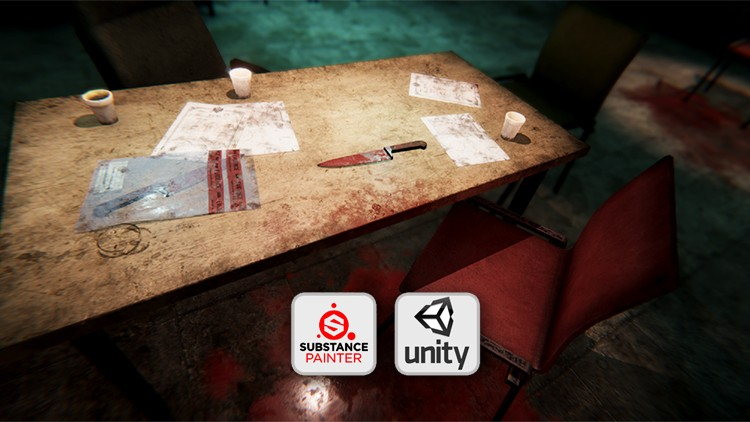
We'll create PBR (Physically Based Rendering) textures in Substance Painter, and drop them into Unity where we'll build the scene using the textures you have created. I will then take you through lighting in Unity and give you thorough understanding of how it works and how to set it up, and show you how to create stunning portfolio shots from within Unity and Substance Painter.

This course is perfect for anybody seriously wishing to pursue a career as a texture / environment artist in the games industry and would like to follow the process of texturing an entire scene with varying materials and techniques.

It's suitable for beginners to Intermediate levels. The more advanced artists may find that you're going over old ground in some areas, but it can still be a worthy refresher course. Over time, the course will get regular updates and keep on trend with industry techniques and standards. New content will also be added in the future.

This IS NOT a modelling or character animation course. These are very specific disciplines within the games industry, and here we are primarily focusing on highly detailed, texture creation for environments.
Who this course is for:

If you're interested in becoming a texturing Ninja in the video games industry while using all the latest industry standard tools and techniques, then this course is for you.

Homepage

001-Introduction-s.jpg


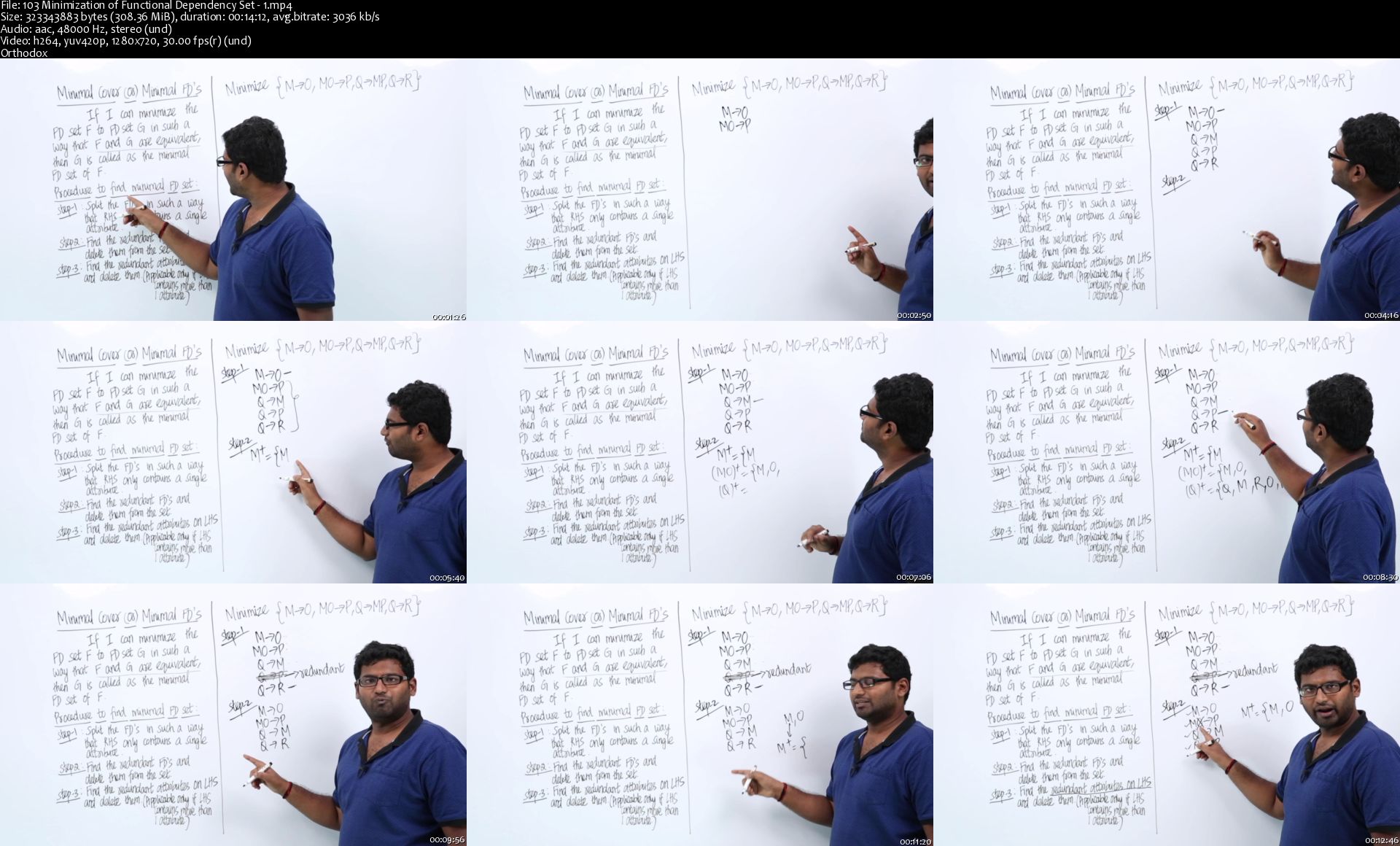
Database Management System from scratch - Part 1

G1-Xo-HHDo-HTUoso-NPWKx-Hzc-RXb-Ky-HHgbn.png


Database Management System from scratch - Part 1
h264, yuv420p, 1280x720 |ENGLISH, aac, 48000 Hz, 2 channels, s16 | 11h 52 mn | 15.24 GB
Instructor: Vignesh Sekar

Learn Database Management Systems from scratch as Database Management System forms the core of computer science
What you'll learn

You will become very familiar with the core concepts of Database Management Systems
You will be able to challenge the interviewer on questions related to Database Management Systems
You will view Computer Science in a different dimension
You will be able to answer all questions of exams like GATE,PGEE,ISRO
You will be able to get a top grade in your Database Management Systems course in your Bachelor's degree
Understand how Database Management Systems work

Requirements

Have a PC with internet connection
Even ZERO knowledge in Database Management Systems is fine - I'll teach you everything you need to know

Description

Welcome to the course Database Management system from scratch !!!

Mastering the concepts of Database Management System is very important to get started with Computer Science because Database Management System is the program which is responsible for the ease with which we are able to fetch the data from the database and that is the backbone of internet today. The concepts which we are going to study is going to give a very good understanding of Database Management System and by the end of it you will be able to answer any interview question on Database Management System.

Without using Database Management Systems ,it is extremely difficult to communicate with the data in the server. Every server today has Database Management System installed in it. Through this course you will not only master the basics of Database Management Systems but also get ready for venturing into advanced concepts of Database Management Systems.

In this course ,every concept of Database Management System is taught in an easy-to-understand manner such that anybody without any prerequisites will be able to master the concepts of Database Management System in the easiest way.

Come and join me, I assure you that you will have the best learning experience of not just Database Management Systems but also the core of Computer Science in a different dimension.
Who this course is for:

Anybody who needs to learn Database Management System from scratch
Anybody who wants to pursue a career in Computer Science
Anybody who has Database Management System in the Bachelor's degree
Anybody who is preparing for interview in product based companies
If you are preparing for exams like GATE , PGEE , BITS HD , ISRO ,..etc
If you are a Computer Science Engineer

Homepage

103-Minimization-of-Functional-Dependency-Set-1-s.jpg


Zurück
Oben Unten