

• Regeln für den Video-Bereich:

    In den Börsenbereich gehören nur Angebote die bereits den Allgemeinen Regeln entsprechen.

    Einteilung

    - Folgende Formate gehören in die angegeben Bereiche:
    - Filme: Encodierte Filme von BluRay, DVD, R5, TV, Screener sowie Telesyncs im Format DivX, XviD und x264.
    - DVD: Filme im Format DVD5, DVD9 und HD2DVD.
    - HD: Encodierte Filme mit der Auflösung 720p oder darüber von BluRay, DVD, R5, TV, Screener sowie Telesyncs im Format x264.
    - 3D: Encodierte Filme von BluRay, die in einem 3D Format vorliegen. Dies gilt auch für Dokus, Animation usw.
    - Serien: Cartoon/Zeichentrick, Anime, Tutorials, Dokumentationen, Konzerte/Musik, Sonstiges sind demnach in die entsprechenden Bereiche einzuordnen, auch wenn sie beispielsweise im High Definition-Format oder als DVD5/DVD9/HD2DVD vorliegen. Ausnahme 3D.
    - Bereich Englisch: Englische Releases gehören immer in diesen Bereich.
    - Bereich Talk: Der Bereich, in dem über die Releases diskutiert werden kann, darf, soll und erwünscht ist.


    Angebot/Beitrag erstellen

    - Ein Beitrag darf erst dann erstellt werden, wenn der Upload bei mindestens einem OCH komplett ist. Platzhalter sind untersagt.
    - Bei einem Scenerelease hat der Threadtitel ausschließlich aus dem originalen, unveränderten Releasenamen zu bestehen. Es dürfen keine Veränderungen wie z.B. Sterne, kleine Buchstaben o.ä. vorgenommen werden. Ausnahme Serienbörse:
    - Bei einem Sammelthread für eine Staffel entfällt aus dem Releasename natürlich der Name der Folge. Beispiel: Die Simpsons S21 German DVDRip XviD - ITG
    - Dementsprechend sind also u.a. verboten: Erweiterungen wie "Tipp", "empfehlenswert", "only", "reup", usw. / jegliche andere Zusatzinformation oder Ergänzung, welche nicht in obiger Beschreibung zu finden ist.

    Aufbau des Angebots und Threadtitel

    Der Titel nach folgendem Muster erstellt zu werden. <Name> [3D] [Staffel] [German] <Jahr> <Tonspur> [DL] [Auflösung] <Quelle> <Codec> - <Group>
    Beispiel: The Dark Knight German 2008 AC3 DVDRip XviD - iND
    Beispiel: The Dark Knight 2008 DTS DL BDRip x264 - iND
    Beispiel: The Dark Knight 2008 AC3 DL BDRip XviD - iND
    Beispiel: The Dark Knight German 2008 AC3 720p BluRay x264 iND
    Beispiel: The Dark Knight 2008 DTS DL 1080p BluRay x264 iND
    Beispiel: Die Simpsons S01 German AC3 DVDRip XviD iND
    Beispiel: Die Simpsons S20 German AC3 720p BluRay x264 iND
    Beispiel: Sword Art Online II Ger Sub 2014 AAC 1080p WEBRip x264 - peppermint
    Entsprechend sind also u.a. verboten: Sonderzeichen wie Klammern, Sterne, Ausrufezeichen, Unterstriche, Anführungszeichen / Erweiterungen wie "Tipp", "empfehlenswert", "only", "reup", usw. / jegliche andere Zusatzinformation oder Ergänzung, welche nicht in obiger Beschreibung zu finden ist
    Ausnahmen hiervon können in den Bereichen geregelt sein.

    Die Beiträge sollen wie folgt aufgebaut werden:
    Überschrift entspricht dem Threadtitel
    Cover
    kurze Inhaltsbeschreibung
    Format, Größe, Dauer sind gut lesbar für Downloader außerhalb des Spoilers zu vermerken
    Nfo sind immer Anzugeben und selbige immer im Spoiler in Textform.
    Sind keine Nfo vorhanden z.B. Eigenpublikationen, sind im Spoiler folgende Dateiinformationen zusätzlich anzugeben :
    Quelle
    Video (Auflösung und Bitrate)
    Ton (Sprache, Format und Bitrate der einzelnen Spuren)
    Untertitel (sofern vorhanden)
    Hosterangabe in Textform außerhalb eines Spoiler mit allen enthaltenen Hostern.
    Bei SD kann auf diese zusätzlichen Dateiinformationen verzichtet werden.

    Alle benötigten Passwörter sind, sofern vorhanden, in Textform im Angebot anzugeben.
    Spoiler im Spoiler mit Kommentaren :"Schon Bedankt?" sind unerwünscht.


    Releases

    - Sind Retail-Release verfügbar, sind alle anderen Variationen untersagt. Ausnahmen: Alle deutschen Retail-Release sind CUT, in diesem Fall sind dubbed UNCUT-Release zulässig.
    - Im Serien-Bereich gilt speziell: Wenn ein Retail vor Abschluss einer laufenden Staffel erscheint, darf diese Staffel noch zu Ende gebracht werden.62
    - Gleiche Releases sind unbedingt zusammenzufassen. Das bedeutet, es ist zwingend erforderlich, vor dem Erstellen eines Themas per Suchfunktion zu überprüfen, ob bereits ein Beitrag mit demselben Release besteht. Ist dies der Fall, ist der bereits vorhandene Beitrag zu verwenden.
    - P2P und Scene Releases dürfen nicht verändert oder gar unter einem iND Tag eingestellt werden.


    Support, Diskussionen und Suche

    - Supportanfragen sind entweder per PN oder im Bereich Talk zu stellen.
    - Diskussionen und Bewertungen sind im Talk Bereich zu führen. Fragen an die Uploader haben ausschließlich via PN zu erfolgen, und sind in den Angeboten untersagt.
    - Anfragen zu Upload-Wünschen sind nur im Bereich Suche Video erlaubt. Antworten dürfen nur auf Angebote von MyBoerse.bz verlinkt werden.


    Verbote

    - Untersagt sind mehrere Formate in einem einzigen Angebotsthread, wie beispielsweise das gleichzeitige Anbieten von DivX/XviD, 720p und 1080p in einem Thread. Pro Format, Release und Auflösung ist ein eigener Thread zu eröffnen.
    - Grundsätzlich ebenso verboten sind Dupes. Uploader haben sich an geeigneter Stelle darüber zu informieren, ob es sich bei einem Release um ein Dupe handelt.
    - Gefakte, nur teilweise lauffähige oder unvollständige Angebote sind untersagt. Dies gilt auch für eigene Publikationen, die augenscheinlich nicht selbst von z.B. einer DVD gerippt wurden. Laufende Serien, bei denen noch nicht alle Folgen verfügbar sind, dürfen erstellt und regelmäßig geupdatet werden.
    - Untersagt sind Angebote, welche nur und ausschließlich in einer anderen Sprache als deutsch oder englisch vorliegen. Ausnahmen sind VORHER mit den Moderatoren zu klären.


    Verstoß gegen die Regeln

    - Angebote oder Beiträge, die gegen die Forenregeln verstoßen, sind über den "Melden"-Button im Beitrag zu melden.
  • Bitte registriere dich zunächst um Beiträge zu verfassen und externe Links aufzurufen.


Englische Tutorials

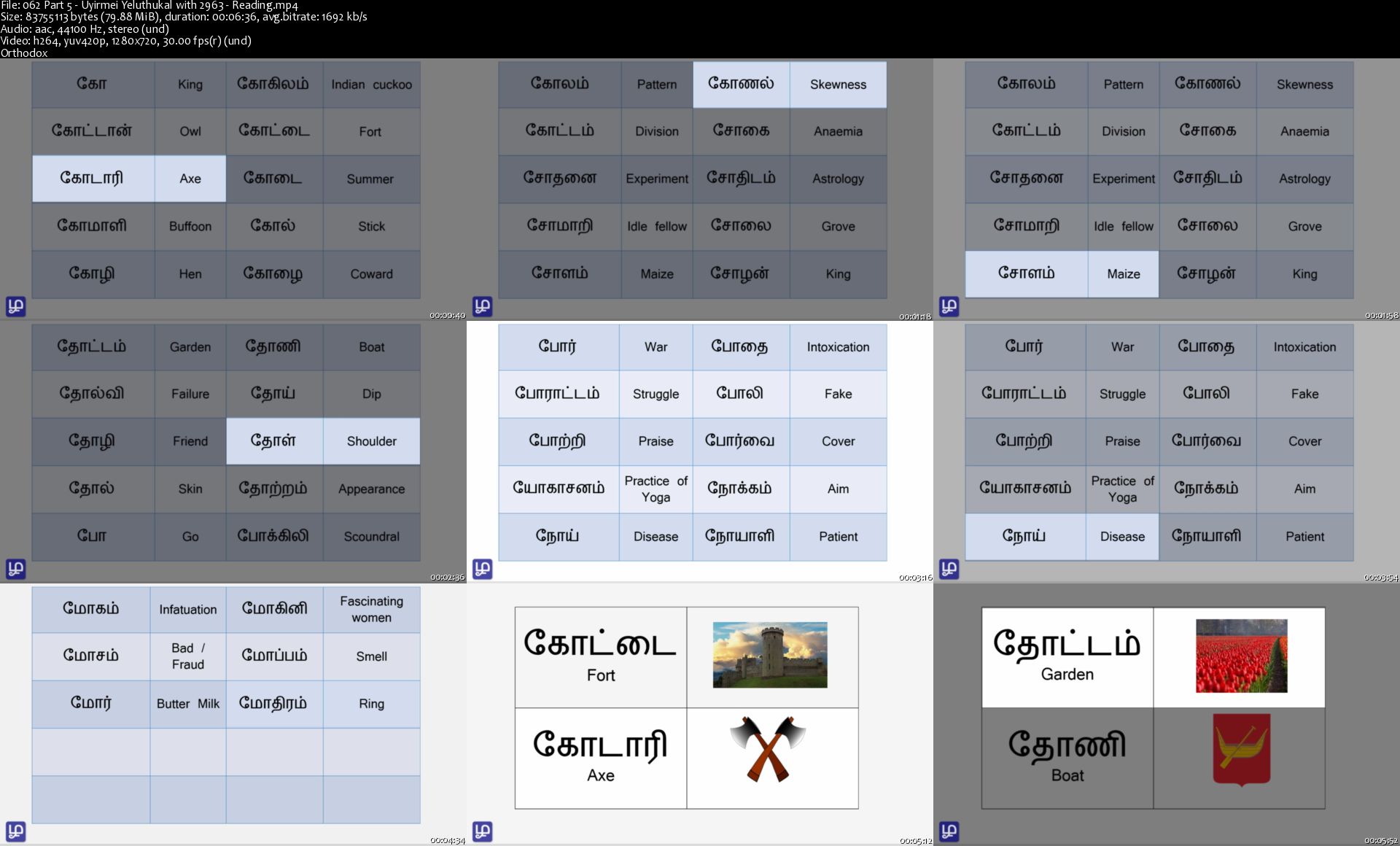
Learn Tamil Through English|Read, Write, Speak |130 lectures

Iy-SBb87-E0-Tr-Xy-Lf-Jjy-NRDRBs-WN6c-LRit.png


Learn Tamil Through English|Read, Write, Speak |130 lectures
BestSeller | h264, yuv420p, 1280x720 |ENGLISH, aac, 44100 Hz, 2 channels, s16 | 14h 01 mn | 5.02 GB
Instructor: Lakshmi Gurusamy

Learning Tamil Through English. Basic to Advanced. For **** and adults. Learn to read & write. +500 pages of worksheets
What you'll learn

The students will get to know how to read, write and speak Tamil.
Can recognize all the letters in Tamil language
Can understand , read and write basic essential words
Learn 90% of the vocabulary used on daily basis
More than 500 pages of worksheets with solutions
தமிழ் வார்த்தைகளை எழுத்து கூட்டி படிக்க இயலும்
நடைமுறை வார்த்தைகளுடன் பல புதிய வார்த்தைகளை கற்றுக் கொள்ள இயலும்

Requirements

No previous knowledge of this language is required.
Voice over is through English. Basic understanding of English helps

Description

அகர முதல எழுத்தெல்லாம் ஆதி
பகவன் முதற்றே உலகு

A, as its first of letters, every speech maintains;
The "Primal Deity" is first through all the world's domains

Users feedback on this course

It is very thorough and pedagocical - Bengt Eric Pell

It is very easy to understand. Methodically lessons are arranged in a way enhancing the interest of the student on the study materials. - Thusara Wijesena

Easy to follow and required repetition makes it simpler. - Revashni Moodley

They are going step by step with me and it is becoming very easy to learn this language. - Chandra Sekhar

Learn more than 1000 words in more than 14 hours of video and 500 pages of worksheets, Learn to read, write.

More than 10 story reading have been provided to practice reading

Updated every month with additional contents : Recent update : January 2019

Learning a new language is always a challenge. We can overcome any challenge when we are curious and passionate about it.

In today's world, least importance is given to Tamil language. Still, many parents likes to teach Tamil to their ****. Even if they don't know Tamil, with the help of technologies, they teach or the learn Tamil.

Tamil language is more than 2000 years old. It has Alphabets, Consonants, Mix of Alphabets and Consonants and few borrowed consonants. We will be learning the basic simple letters and slowly increasing the complexity and learn all letters.

While learning we will learn many vocabulary and phrases.

Each and every letter and words will will be written for better understanding.

Practice worksheets have been provided for each and and every section. Please do download and make use of it.

இன்றைய நவீன உலகத்தில், தமிழ் மொழிக்கு முக்கியத்துவம் குறைந்து வருகிறது. இருப்பினும் இன்றும் பல பெற்றோர்கள் தங்கள் பிள்ளைகளுக்கு தமிழைக் கற்றுக் கொடுக்கவே விரும்புகிறார்கள். தங்களுக்கு தமிழ் தெரியவில்லை என்றாலும், தொழில்நுட்ப வசதிகளுடன் தமிழைக் கற்றுக் கொள்கிறார்கள் அல்லது கற்றுக் கொடுக்கிறார்கள்.

Who this course is for:

Anybody who is curious and passionate about learning Tamil
Parents /Grand Parents can gift their **** to learn Tamil Language
This course is for beginners and not for well versed person.
**** who wants to learn Tamil Language
தமிழை பேச மட்டுமே தெரிந்தவர்கள், அதனை எழுதவும், படிக்கவும் கற்றுக் கொள்ளலாம்.
தமிழ் மொழி மேல் பற்றும் ஆர்வமும் உள்ளவர்கள்.

Homepage
062-Part-5-Uyirmei-Yeluthukal-with-2963-Reading-s.jpg


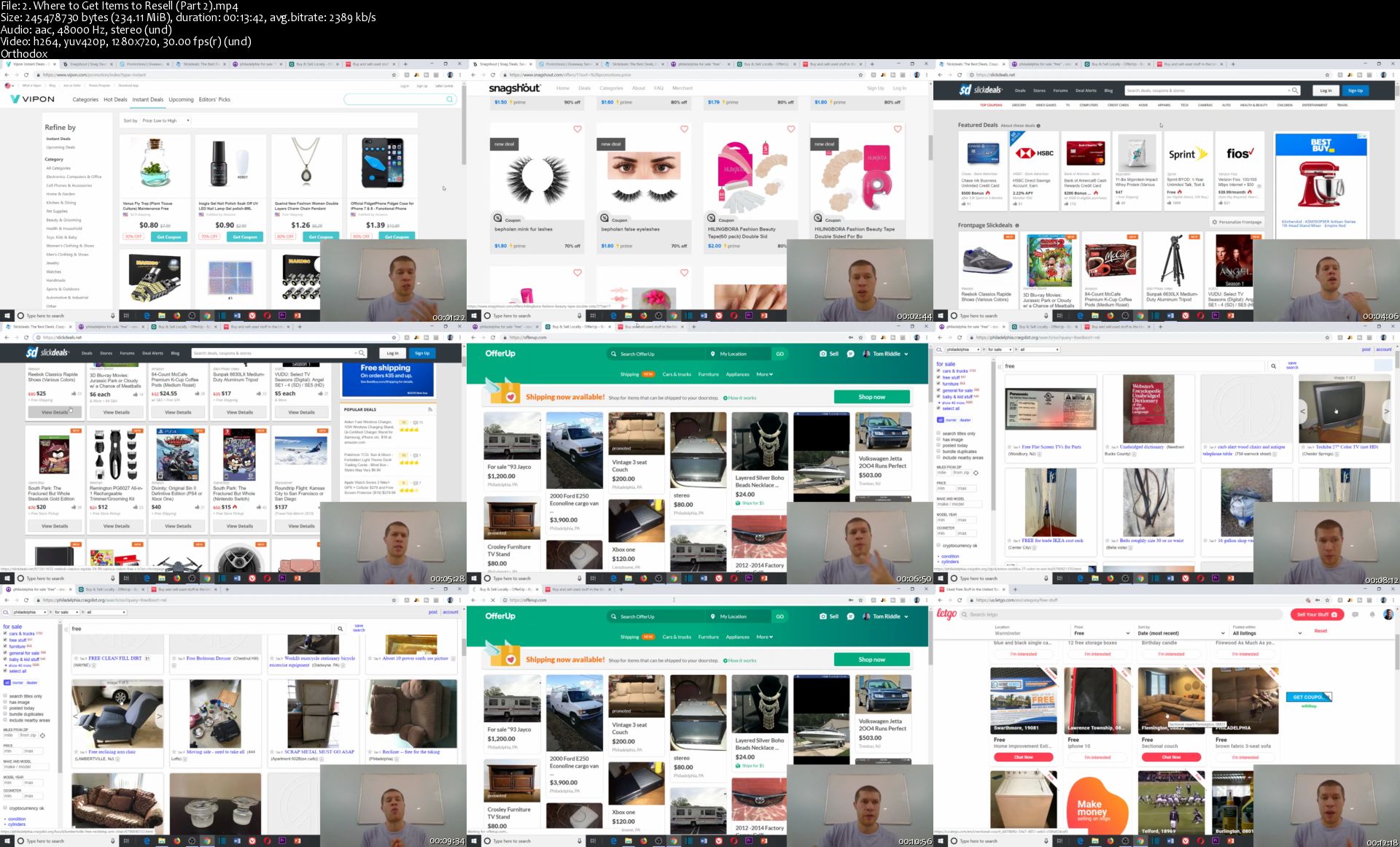
The Complete Online Arbitrage Masterclass (updated 2/2020)

A5ay-Eyr-T3-Vu-Ww-Sc0wbki-Qbvt-Ck-V6-W6-Rw.png


The Complete Online Arbitrage Masterclass (updated 2/2020)
Genre: eLearning | MP4 | Video: h264, 1280x720 | Audio: aac, 48000 Hz
Language: English | VTT | Size: 7.23 GB | Duration: 8 hours


What you'll learn
online arbitrgae
coupon arbitrage
how to flip products online
how to resell products online
how to flip liquidation pallets
how to bulk in bulk & sell individually
how to buy low & sell high
and so much more...!

Requirements
internet access
a willingness to learn arbitrage
Description
Online Arbitrage is hands down the best Online Business for Beginners.

It's a low risk, high reward, high return on your investment Business.

It's time the internet started to work for you.

You can use whatever you have to start (yes, you can start with nothing!) & I'll show you how to continuously flip products to double, triple, & even 10X your money...over & over again.

No, that is NOT a typo! I've taught thousands of people to do this & still do this myself EVERY SINGLE DAY.

We'll run through where to source profitable products (& even get some for Free).

We'll also talk about all the different marketplaces you can sell those products, the benefits of each one, & the best places to sell specific products. That way you can begin with the end in mind (b/c the profit is made in the purchase...given you know where to Sell for a Higher Margin).

By enrolling in The Complete Online Arbitrage Masterclass you'll learn how & where to Buy products ridiculously cheap Online, how to Resell those products back Online, & get a MAJOR RETURN on Your Investment....all RIGHT FROM YOUR COMPUTER.

You have NOTHING to lose, but time. Why postpone your dreams? Enroll now.

Who this course is for:
anyone looking to learn online arbitrage
anyone looking to learn how to flip products online
anyone looking to work from home
anyone looking to escape their 9-5 corporate job
anyone looking to learn how to resell products
anyone looking to become an Entrepreneur

Homepage

2-Where-to-Get-Items-to-Resell-Part-2-s.jpg


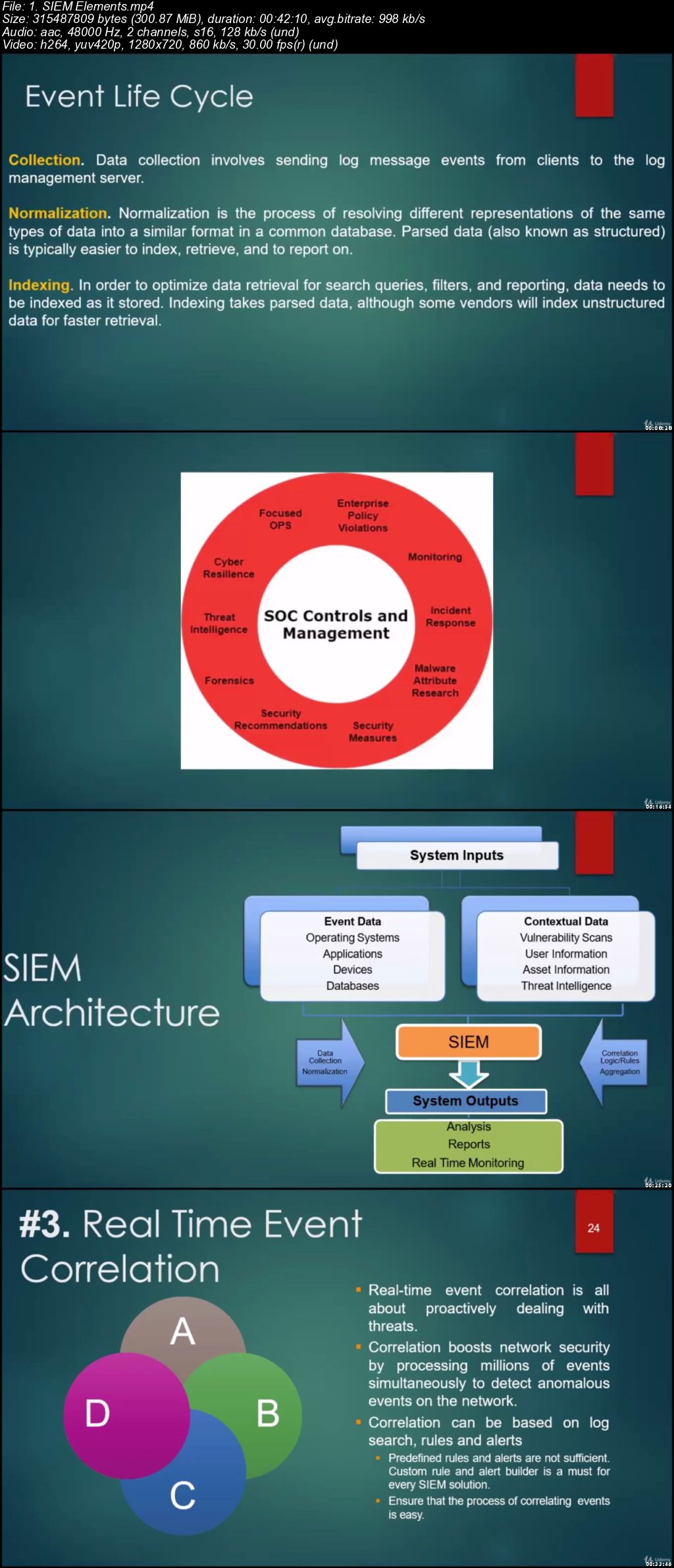
The Absolute Beginners Guide to Cyber Security and Hacking (Updated 2/2020)

0072686c.jpg


The Absolute Beginners Guide to Cyber Security and Hacking (Updated 2/2020)
MP4 | Video: h264, 1280x720 | Audio: AAC, 48 KHz, 2 Ch
Genre: eLearning | Language: English | Duration: 32 lectures (16 hour, 51 mins) | Size: 7.08 GB

2020 Launch! Become a Cyber Security Specialist, Build technical capability in ethical hacking &web application security

What you'll learn

You will learn the background of Cybersecurity & Hacking. You will learn what is cyber-security and the growing demand for professionals. You will have clarity on what is a basic network, cia triad,essential terminologies used etc. You will go through an introduction to kali linux operating system.
You will have an increased awareness of hacking as a profession, You will go through data breaches occurring in Yahoo, Quifax, Target stores, Sony's playstation network etc
You will go through an introduction of what a security operations center is, what are the branches within cyber security and the various job roles available within cyber security
You will understand network concepts, network topologies and layered communication in this course
You will start using Maltego Tool after you go through a demo of the Maltego community edition 4.2.4.
You can formulate various mitigation strategies, phishing & firewalls, intrusion detection and prevention systems.
You can give insightful talks on zero-day exploit, malware and its types and man in the middle (mitm) attack
You will learn the OSI Model, various mnemonics, protocol data units etc. You will go through the various layers in detail with real time examples and caselets. You will also learn the TCP/IP protocol suite, range of IPv4 & IPv6 and domain name system hierarchy.
You will learn the different components of Hacking: Reconnaissance, Scanning, Gaining access, Maintaining access & Clearing tracks. You will have a firm understanding of places of hacking and mind map apart from gaining insights of denial of service, distributed denial of service, syn flooding attach using hping3, counter measures and Metasploit test.
You will feel confident and comfortable with cyber kill chain methodology and how a traditional kill chain model works: recon,weaponize, deliver, exploit, install, c2, actions.
You will build your capability in information security attack vectors, phishing techniques, whaling and phishing mitigation.
Introduction to SIEM: You will gain real time insights on Security information and event management and Security event manager
You will identify threats and possible breaches and collect audit logs for security and compliance. You will be able to conduct investigations and provide evidence.
You will learn that Defense in Depth (DiD) is an approach to cybersecurity in which a series of defensive mechanisms are layered in order to protect valuable data and information.
You can understand how an attacker can come in and tries to understand how a corporate environment is setup of a target.
You will learn what SIEM and Log Management mean for businesses & how to use them more effectively to mitigate risk for your company.
You will learn that SIEM is necessary because of the rise in data breaches and to meet stringent compliance requirements
Learn the right approach to building SIEM use cases, how to organize and prioritize use cases effectively.
You will learn the SIEM elements, Big 3, Process flow, Features, Event life cycle, SOC controls and mgmt, SIEM architecture, Dashboards and Use cases
You will revisit features of SIEM and learn SIEM deployment options like self-hosted, self-managed to Hybrid-model, Jointly-managed. You will understand the business benefits of SIEM.
SIEM Essentials Quiz
You will learn the fundamentals of IP using a network simulation tool demo
You will have a Complete Hands-on on Exploit Database, Online Cameras, People Search, DNS Search, Pastebin etc
You will go through a demo on how to install and use Splunk Enterprise Security

Requirements

You should have the enthusiasm to learn new concepts and have a drive towards a career in cyber security domain

Description

Have you ever wondered exactly how hackers 'hack'? Do words like firewalls, encryption, bio-metrics and malware sound confusing to you? Have you been looking for a course that teaches you all the basics of both information and cyber security in a fun relaxed manner? If so then you are going to find this course absolutely perfect for you.

This is a course that is perfect as an introductory one for individuals and students who are interested in becoming cyber security or information security professionals. It is also ideal for students who just want to have a well rounded knowledge about the basic concepts used in the world of information security.

Actual Feedback from Enrolled Participants:

Perfect Beginning for a new learner - Sairam Chaganti

The resource links shared are very useful - Mohammed M. Goni

PERFECT FOR COMPLETE BEGINNERS

This course is intended primarily for students who have little to no prior background or knowledge about the field of cyber security.

Course Curriculum

In the very first section, we will cover the basic terminologies used and discuss topics like the trinity of IT security and computer protocols.

Section 1:

You will learn the background of Cybersecurity & Hacking. You will learn what is cyber-security and the growing demand

for professionals. You will have clarity on what is a basic network, cia triad,essential terminologies used etc. You will go through an introduction to kali linux operating system in this section

Section 2:

You will gain insights on what is cyber security, what are the components, why you should choose this as a career. You will understand that cyber security is about protecting systems, networks, programs, data and money.

Section 3:

You will have an increased awareness of hacking as a profession, they will go through data breaches occurring in Yahoo, Equifax, Target stores, Sony's play station network etc. You can understand how hacking can be as a profession, types of hackers, what is information risk management regime, companies with data breaches.

Section 4:

You will go through an introduction of what a security operations center is, what are the branches within cyber security

and the various job roles available within cyber security

Section 5:

You will understand network concepts, network topologies and layered communication in this course

Section 6:

We start off where we left, in the previous section 5 we dealt with the fundamental concepts such as Basic Network, CIA Triad, Network concepts, Security Operations Center and Job Roles. Section 6 starts with a refresher on network concepts, topologies etc and connects you to the previous section.

Section 7&8:

These two sections give a good insight on the OSI Model and all the Layers:

a)Physical layer b)Data link layer c)Network layer d)Transport layer e)Layered packet format f)Flow control g)Error control

f)Connection-orientedness vs connectionless g)Session layer and responsibilities h)Presentation layer and its

responsibilities i)Summary of layers

Section 9:

In this section you will learn important concepts like TCP/IP protocol suite and Domain name system hierarchy.

Section 10: Components of Hacking:

Reconnaissance

Scanning

Gaining access

Maintaining access

Clearing tracks

Section 11: Ethical hacking Mindmap

Ethical hacking

Places of ethical hacking

Mind map

Section 12: DoS and DDoS

Denial of services

Symptoms of dos attack

Slow performance

Increase in spam emails

Unavailability of a resource

Loss of access to a website

Denial of access to any internet services

Distributed denial of services (DDoS)

DoS/DDoS attack techniques

Land and flood attacks

Service request floods

Section 13: SYN flooding attach using hping3

Section 14: Hacking : Counter Measures Strategies

Counter-measures

DoS/DDoS countermeasure strategies

Detech and neutralize handlers

Monitoring the activities running on a system of network

Deflect attacks by load balancing

Mitigate attacks disabling unnecessary services

Intrusion detection systems

Wavelet analysis

Section 15: Metasploit test

Metasploit is so popular is the wide range of tasks that it can perform to ease the work of penetration testing to make

systems more secure. Metasploit is available for all popular operating systems.

Vulnerability

Exploit

Payload

Meterpreter

Section 16: Maltego Tool Demo

You will go through a demo of the maltego community edition 4.2.4

Section 17: Cyber kill chain methodology

You will gain insights on cyber kill chain methodology and how a traditional kill chain model works: recon,weaponize, deliver, exploit, install, c2, actions.

Section 18:

You will build their capability in information security attack vectors, phishing techniques, whaling and phishing mitigation. You will understand the types of ransom-wares, how crypto ransomware works, you will go through a real world example of a ransomware attack on the Bristol airport screens.

Section 19 & 20:

You will understand the various mitigation strategies, phishing & firewalls, intrusion detection and prevention systems. You will gain knowledge on zero-day exploit, malware and its types, man in the middle (mitm) attack and web application security.

Section 21:

You will gain real time insights on Security information and event management and Security event manager

Section 22:

You will identify threats and possible breaches and collect audit logs for security and compliance. You will be able to conduct investigations and provide evidence.

Section 23:

You will learn that Defense in Depth (DiD) is an approach to cybersecurity in which a series of defensive mechanisms are layered in order to protect valuable data and information.

Section 24:

You can understand how an attacker can come in and tries to understand how a corporate environment is setup of a target.

Section 25:

You will learn what SIEM and Log Management mean for businesses & how to use them more effectively to mitigate risk for your company.

Section 26:

You will learn that SIEM is necessary because of the rise in data breaches and to meet stringent compliance requirements

Section 27:

Learn the right approach to building SIEM use cases, how to organize and prioritize use cases effectively.

Section 28:

You will learn the SIEM elements, Big 3, Process flow, Features, Event life cycle, SOC controls and mgmt, SIEM architecture, Dashboards and Use cases

Section 29:

You will revisit features of SIEM and learn SIEM deployment options like self-hosted, self-managed to Hybrid-model, Jointly-managed. You will understand the business benefits of SIEM.

Section 30:

SIEM Essentials Quiz

Who this course is for:

Students who want to learn the basics of computer and cyber security

Students who want to become IT or Cyber Security Experts

Who this course is for:

Those who are interested in a career in cyber security and ethical hacking
This course is for Beginners and not for advanced audience. Hence the faculty explains each concept in detail and demonstrates with relevant tools where required.

0072686b.jpg


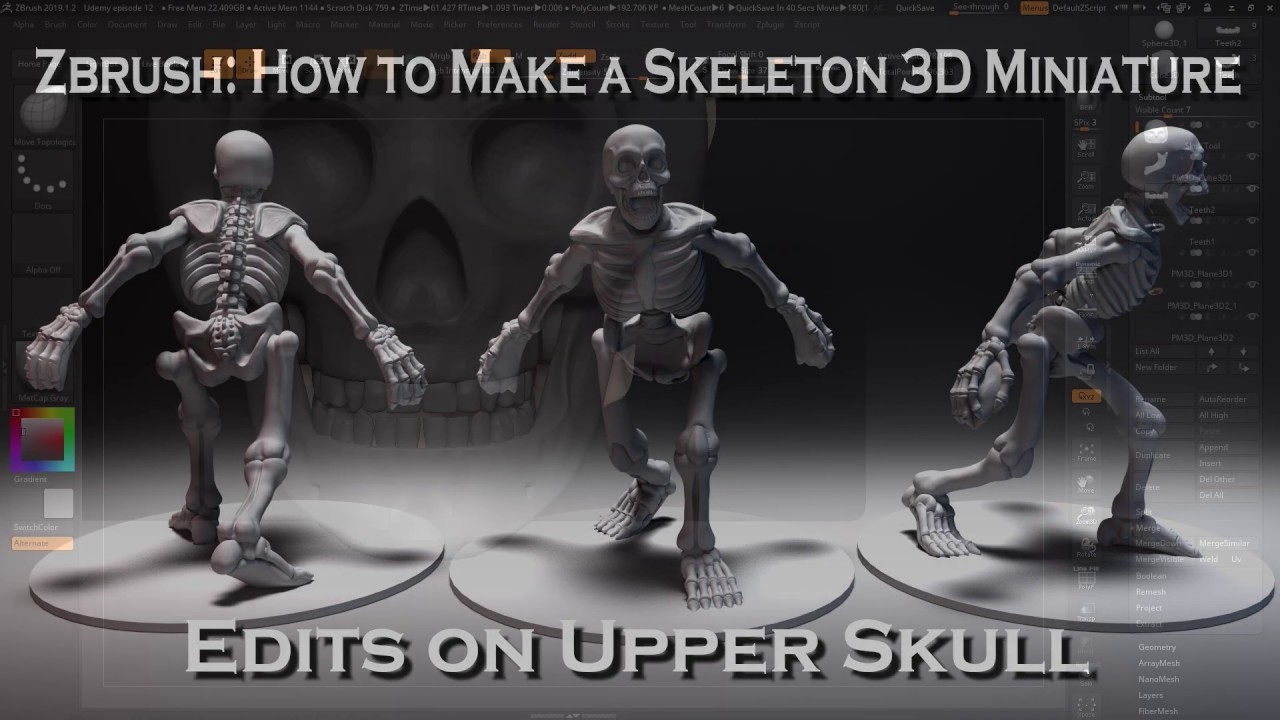
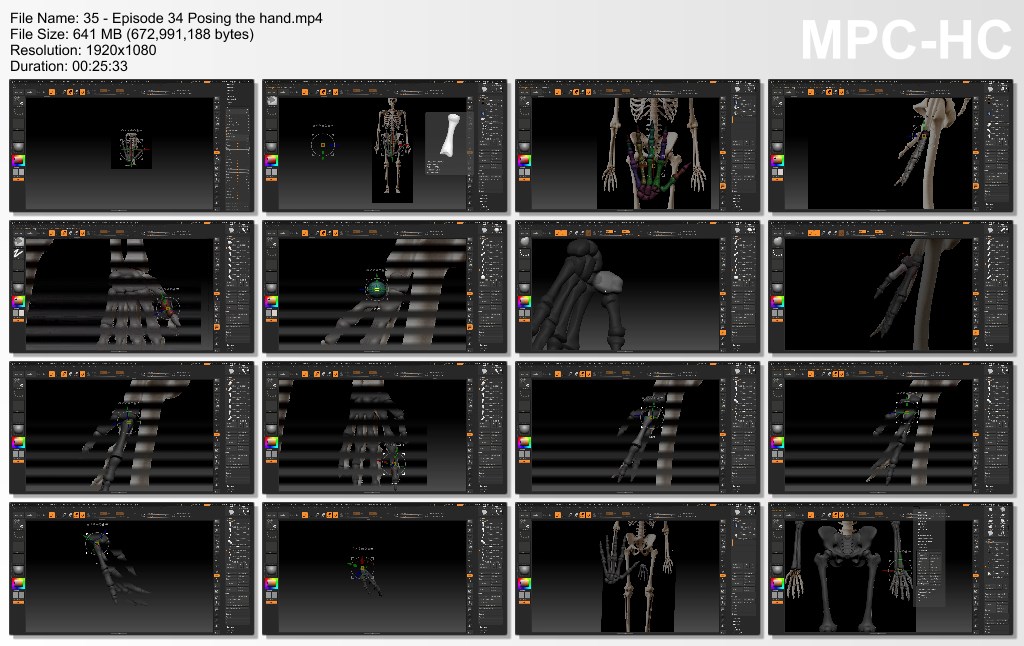
Sculpt a 3D printable Skeleton model in Zbrush

maxresdefault.jpg


Sculpt a 3D printable Skeleton model in Zbrush
Video: .MP4, 1920x1080, 30 fps | Audio: AAC, 48 kHz, 2ch | Duration: 13h
Genre: eLearning | Language: English | Size: 8.74 GB

Created with the absolute first timer in mind, this course will teach you to become proficient in many of Zbrush's more complex features - many of which are unknown to more advanced users. By the end of this course, you will have the knowledge and skills to create professional-quality 3D models fit for 3D printing and sales.
Join our lead 3D Modeler Josh O'hala as he recreates the exact same skeleton model that we sell to consumers. You will be guided through our professional production pipeline:

You will learn how to become comfortable navigating Zbrush.
You will learn how to add simple geometry to your project which will be used later.
You will learn how to import reference images into your project.
You will learn how to make your "clay" transparent and use your reference images to sculpt more accurately.
You will learn how to use many commonly used brushes as well as specialized brushes to create beautiful and accurate sculpts.
The lessons learned will be reinforced as Josh guides you through creating the entire skeleton model.
You will learn how to pose your skeleton to create many variation models.
You will learn how to optimize your model for 3D printing.
You will learn the process of making your model 3D printable.
and much more! visit us on youtube for examples of our models and tutorials.

35-Episode-34-Posing-the-hand-mp4-thumbs.jpg


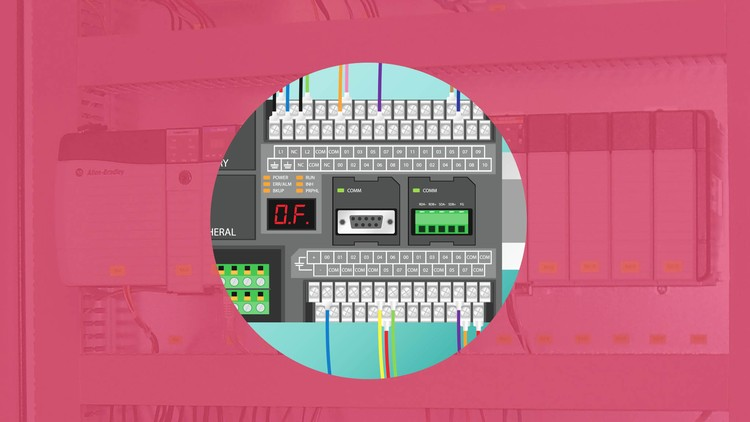
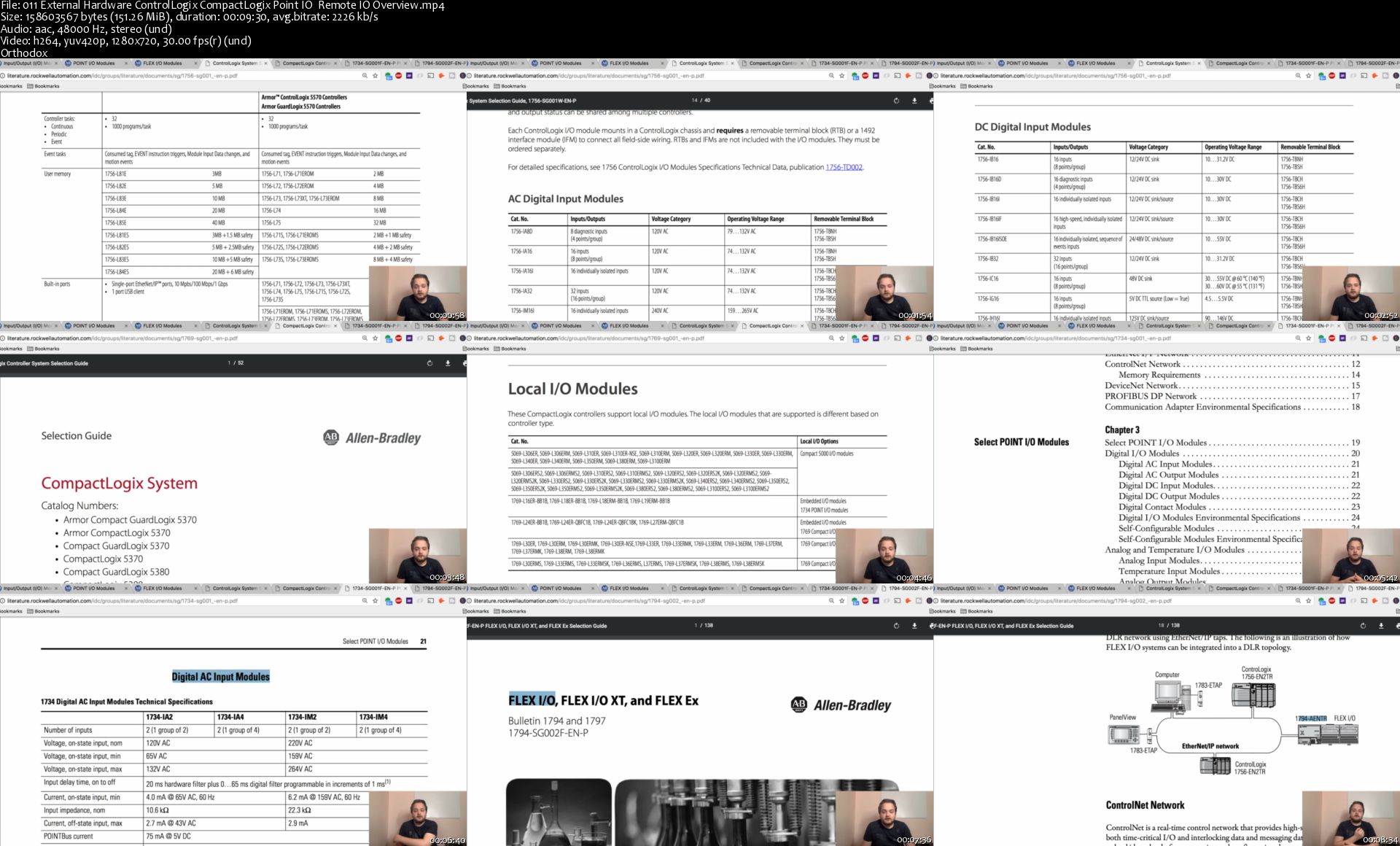
PLC Programming - Training from Scratch on RSLogix500 & 5000

3938gq-Hc-Ln-AR9n-Sdu0o-As1-Nzv-Gp717-D5.png


PLC Programming - Training from Scratch on RSLogix500 & 5000
h264, yuv420p, 1280x720 |ENGLISH, aac, 48000 Hz, 2 channels, s16 | 14h 27 mn | 15.77 GB
Instructor: Vladimir Romanov

PLC programming from scratch training class by a controls engineer equipped with PLC systems - Allen Bradley RSLogix 500
What you'll learn

Understand how a Programmable Logic Controller (PLC) works
Understand how to programm a PLC
Showcase several completed projects to an employer
Pass a technical PLC interview

This course includes

14.5 hours on-demand video
6 articles
5 downloadable resources
Full lifetime access
Access on mobile and TV

Certificate of Completion

Requirements

Basic Computer Skills
Basic Hardware Understanding
Basic Mathematics

Description

In this class, you will learn absolutely everything necessary to land a job as an entry level PLC technician (engineer, etc.).

We will cover basic topics such as what a PLC is used for, how it is able to receive and process Inputs & Outputs. We will take a much deeper dive with hands on labs and practice sessions during which I will give you specific real world scenarios to work with and give you tips and common pitfalls. These lessons are designed to strengthen your knowledge of PLCs and give you an edge during interviews.

At the end of each section, you will face a quiz which will allow you to test yourself on the material you have learned before moving to the next section. As some one who has administered interviews to PLC technicians, these questions are crucial in making sure that you've understood the material presented.

What are the requirements for the class?

You don't need any hardware or software to follow the lectures, however, it is highly recommended to get some practice before going into an interview. If that's not possible, I would advise spending some time working with an emulator and browsing through data sheets and manuals which will be presented to you in the course.

What can I expect from this class?

The main objective of this course is to get you job-ready by the time you finish the last lecture.
You will have a good understanding of what a PLC does, how it does it as well as what the outcomes of those actions are.
You will be comfortable creating basic ladder logic programs and troubleshoot complex existing ones.
You will be able to create simple Human Machine Interface (HMI) screens and controlling them via a PLC.
You will have a good understanding of manufacturing systems as a whole.

What is the target audience for the class?

Electrical Engineers looking for a crash course on PLCs.
Electrical Technicians / Electricians looking to expand their knowledge into controls.
Software Engineers who are seeking to learn about controlling hardware.
Manufacturing Operators looking to progress in their career.
Anyone interested in how manufacturing processes are executed.

Who this course is for:

Electrical Engineers
Electricians
Technicians
Anyone interested in learning how an industrial process works

Homepage

011-External-Hardware-Control-Logix-Compact-Logix-Point-IO-Remote.jpg


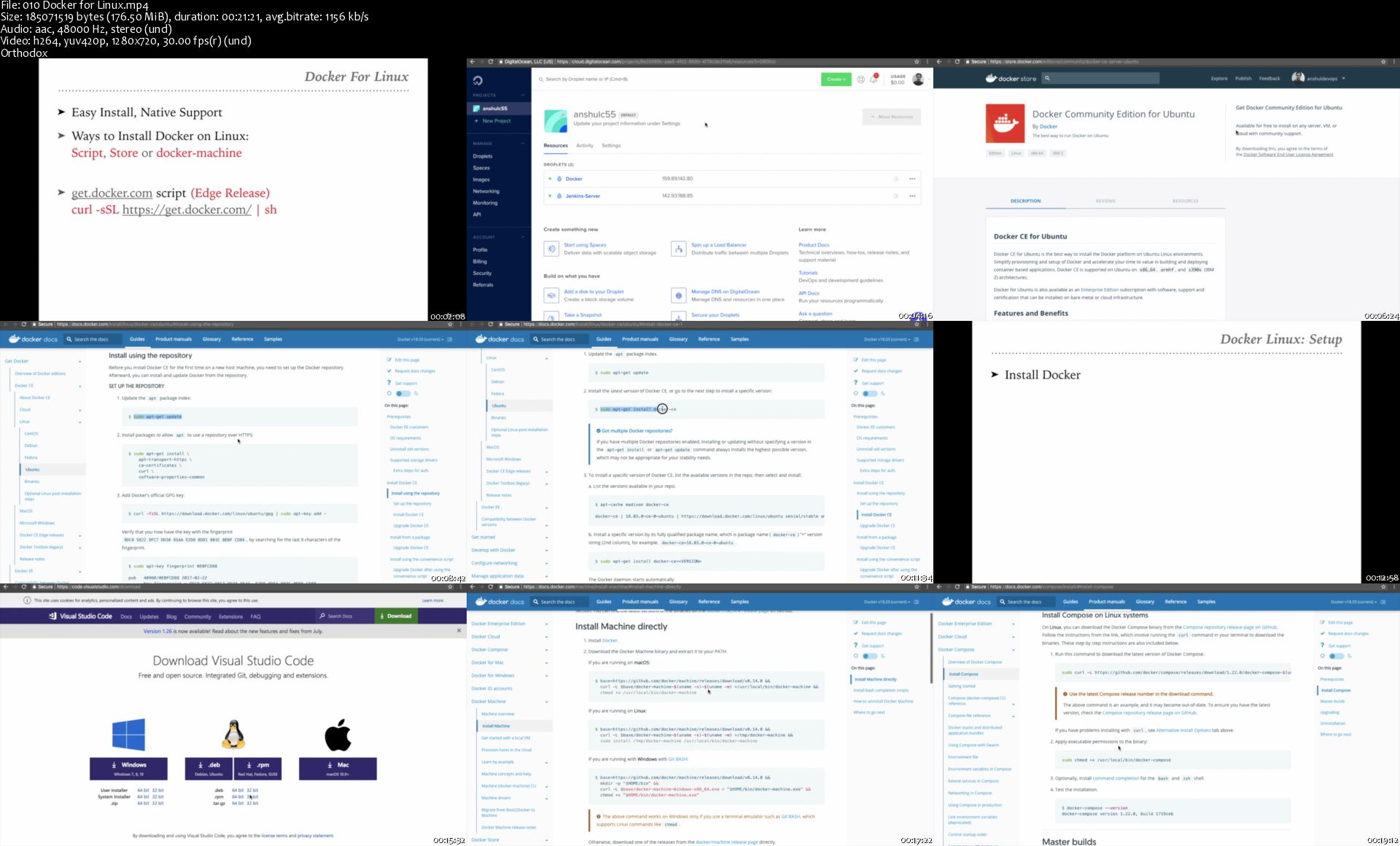
Kubernetes and Docker MasterClass :HandsOn Kubernetes 2 in 1

atwr-Qt-Bp-A9-JNt1-Wouiby60pp3u-QWF8p-Q.png


Kubernetes and Docker MasterClass :HandsOn Kubernetes 2 in 1
h264, yuv420p, 1280x720 |ENGLISH, aac, 48000 Hz, 2 channels, s16 | 29h 02 mn | 11.5 GB
Created by: LevelUp360° DevOps

Learn Kubernetes and Docker, Docker Compose, Swarm, HELM, K8S Cluster in simple way with hands-on for Kubernetes DevOps
What you'll learn
How to use Docker, Swarm & Kubernetes on your machine for better better DevOps.
Create a multi-node highly-available K8S cluster on Linux.
Hand's-on with best practices for making Dockerfiles and Compose files like a Pro!
Build and publish your own custom images & Execute on Docker & Kubernetes as DevOps.
Install and configure K8S on Premise & Cloud.
Package applications with Helm and write your own Helm charts for your applications.
Add users, set quotas/limits, do node maintenance, setup monitoring on K8S.
Learn Administration of K8S.

Requirements
No paid software required - Just install your favorite text editor and browser!
Have a GitHub and Docker Hub account.
Knowledge of Git and Linux will be preferred but NOT required.
No prior Knowledge of Kubernetes Required.
Description
Longest Docker and Kubernetes Training Course on Udemy.

Course Focus on building efficient computing infrastructures using Kubernetes and Docker.

Help you to be Pro in Kubernetes and Achieving Carrer Changing Goals.

Help you to get Kubernetes Certified Engineer and Pay Hike.

After taking this course, you'll be able to:

Use Docker in your daily developer and/or sysadmin roles

Make Dockerfiles and Compose files

Build multi-node Swarm clusters and deploying H/A containers

Build a workflow of using Docker in dev, then test/CI, then production with YAML

Protect your keys, TLS certificates, and passwords with encrypted secrets

Keep your Dockerfiles and images small, efficient, and fast

Develop locally while your code runs in a container

Protect important persistent data in volumes and bind mounts

Lead your team into the future with the latest Docker container skills!

Docker & Kubernetes Training: Become Job Ready in Docker Containerization by learning Docker Ecosystem, creating Docker images using Dockerfiles, Installing Ubuntu Linux and CentOS Linux, Granting Docker Control to Non-root Users, Security, Orchestration, Network Configuration Files, etc. You will also get an exposure to industry based real-time projects in various verticals.

This course will help you to gain an understanding of how to deploy, use, and maintain your applications on Kubernetes. If you are into DevOps, this is a technology you need to master. Kubernetes has gained a lot of popularity lately and it is a well-sought skill by companies.

This course is updated frequently to include the features of the latest releases!

Be ready for the Dockerized future, where nearly all software is developed and deployed in containers. Welcome to the most complete and up-to-date course for learning and using Docker end-to-end, from development and testing to deployment and production.

Just starting out with Docker? Perfect. This course starts out assuming you're new to containers.

This is a living course and will be updated as Docker features and workflows change.

Why DevOps skills?

Nowadays DevOps engineers are in great demand in the IT industry. Companies are looking for developers who can both develop and deploy the applications.

The average salary of a DevOps engineer is about $145,000 per year in the Silicon Valley area which is 20% higher than the salary of a software engineer.

Master DevOps Skills means you will be staying ahead in the competitive job market!

Some of the many cool things you'll do in this course:

Edit web code on your machine while it's served up in a container

Lockdown your apps in private networks that only expose necessary ports

Create a 3-node Swarm cluster in the cloud

Use Virtual IP's for built-in load balancing in your cluster

Optimize your Dockerfiles for faster building and tiny deploys

Build/Publish your own custom application images

Create your own image registry

Use Swarm Secrets to encrypt your environment configs, even on disk

Deploy container updates in a rolling always-up design

Create the config utopia of a single set of YAML files for local dev, CI testing, and prod cluster deploys

And so much more...

30-day money-back guarantee!

You will get a 30-day money-back guarantee from Udemy for this course.

If not satisfied simply ask for a refund within 30 days.

Are you ready to take your DevOps skills and career to the next level, take this course now!

Who this course is for:
Software developers, sysadmins, IT pros, and operators at any skill level.
Anyone who makes, deploys, or operates software on servers.

Homepage

010-Docker-for-Linux-s.jpg


Coding Interview Question : Data Structures & Algorithm 2020 (Updated 2/2020)

0073cd03.jpg


Coding Interview Question : Data Structures & Algorithm 2020 (Updated 2/2020)
MP4 | Video: h264, 1280x720 | Audio: AAC, 48 KHz, 2 Ch
Genre: eLearning | Language: English + .srt | Duration: 72 lectures (20 hours) | Size: 9.5 GB

Ace your next C++ coding interview by mastering data structures and algorithm. Solve important leetcode problems

What you'll learn

Solve Easy to Medium Difficulty problems that address different data strutures
Have an understanding of how to systematically approach coding problems in a step by step manner

Requirements

Basic Knowledge of DS & Algo

Description

As you prepare for your next coding interview, have you ever thought:

"I wish someone could just walk me through these problems and explain what's going on."

"I wish there was a preselected set of the most important coding interview problems so I can practice them easily."

If so, this course is for you!

In this course:

First, I'm going to give you a few problem solving techniques you'll be able to use right away in your next coding interview.

Then, I'm going to walk you through the essential coding interview questions and their answers.

I've picked these particular questions because they are the types of questions that are asked most often in programming interviews.

I'm going to cover problems that use concepts such as arrays, strings, two-dimensional arrays, linked lists and trees.

If you want to use any other language to follow this course, that's fine too! Just remember to run your solution on your computer to make sure it works.

If you think you're ready for this course, watch the preview videos and see if you can solve those problems!

Who this course is for:

Any one who is preparing for a coding interview

BCfro9w-WL5-BQJg-Sc9-KIVgr4-Dde-SJg-U1-S.jpg


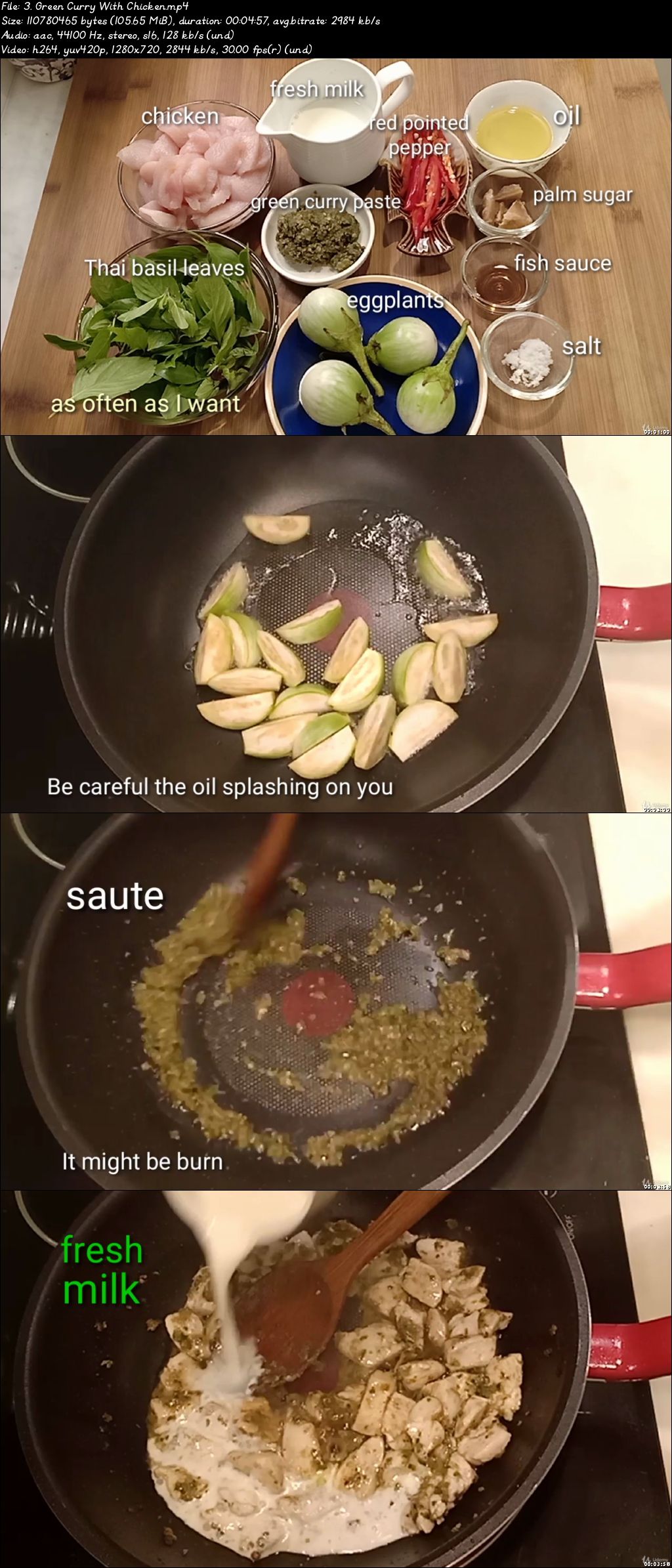
46 Best Thai Food Easy Recipe Thai Kitchen Eat Like Thai

00740a30.jpg


46 Best Thai Food Easy Recipe Thai Kitchen Eat Like Thai
Video: .mp4 (1280x720, 30 fps(r)) | Audio: aac, 44100 Hz, 2ch | Size: 7.63 GB
Genre: eLearning Video | Duration: 87 lectures (6 hours, 7 mins) | Language: English

Easy to understand and cook, popular Thai food recipes. Thai Cooking Classes that you want to learn to cook for yourself.


What you'll learn

Step by step to cook simple Thai food for a balanced diet with detailed recipes which are delicious for your family to enjoy.
Use up availability ingredients in your kitchen or local supermarket to create new dishes that you and your family will love.
How to use Asian herbs and condiments to prepare everyday Thai home cooked easy recipes.
Stock up essential dry ingredients and condiments to compliment fresh food in order to create tasty Thai dishes
Store fresh food in the fridge to extend shelf life

Requirements

Please prepare basic kitchen tools as the following: Knife, cutting board, measuring cup and spoon, plates and bowls, a pan or work.
No prior knowledge or experience about Thai Cooking is required

Description

Hi there, my name is Tipyapar Pla Traisombat. Welcome to my course and my kitchen.


Are you a fan of Thai Food ?

I know you may like to cook Thai Food at home sometimes. But what is Thai home cooking for everyday meals?


Here are some questions that might interest you or be in your mind:


- Is Thai Food only curry ?

- Do Thai people cook and eat curries every day ?

- Have you ever struggled to find all ingredients in one place for one meal ?

- Have you bought an ingredient only for cooking one dish and never used it again ?


I sometimes struggle with my shopping list at my local supermarket and cannot complete my cooking plan and almost run out of time for shopping. Our busy daily schedules running against the clock, I find it is so boring and exhausting when my meal plan is not going well. I still have to feed the family. So this is the idea of this course, the basic concept of core ingredients to have in kitchen cabinets and get fresh supply meat and simple vegetables from local supermarkets or what would have left in kitchen cabinets from weekly shopping.


My course will help you to make simple, easy to cook meals that are budget-conscious but delicious. They are the really tasty meals that will become regulars at your family table. Besides, these recipes are the meals that we eat at home every day in Thailand and some of the dishes are famous street food that the locals eat every day such as Stir-Fried Pork Garlic Pepper, Stir-Fried Minced Pork with Holy Basil Leaves and Thai style Omelet.


The course is based on a simple concept for creating a good meal plan, easy recipes and will help you to extend the variety of your weekly meal plan with home cooking recipes of Thai Food.


I also added some recipes in this course that you can try to cook when you have more time at the weekend. It is nice to cook something different and delicious sometimes although it will consume a bit more time but is not too tricky.


Each recipe in my course is provided with step by step clear instructions with subtitles. In addition, there is a downloadable bonus provided at the end of the course which will be a very helpful guide for your cooking.


This course gives you easy to make recipes with basic ingredients for Thai cooking that you can make at home bringing the authentic local Thai to your kitchen.


See you in the kitchen.

Who this course is for:

This course is a good resource for anyone interested in Thai cooking that will help you make the most out of your time and your weekly shopping.
This course is good for beginners. You do not need any experience or knowledge about Thai Cooking or Thai Food. The course will guide you in basic preparation, ingredients introduction and step by step cooking.

00740a31.jpg


QuickBooks Online vs Xero Accounting Software 2020

2797342-60f8.jpg


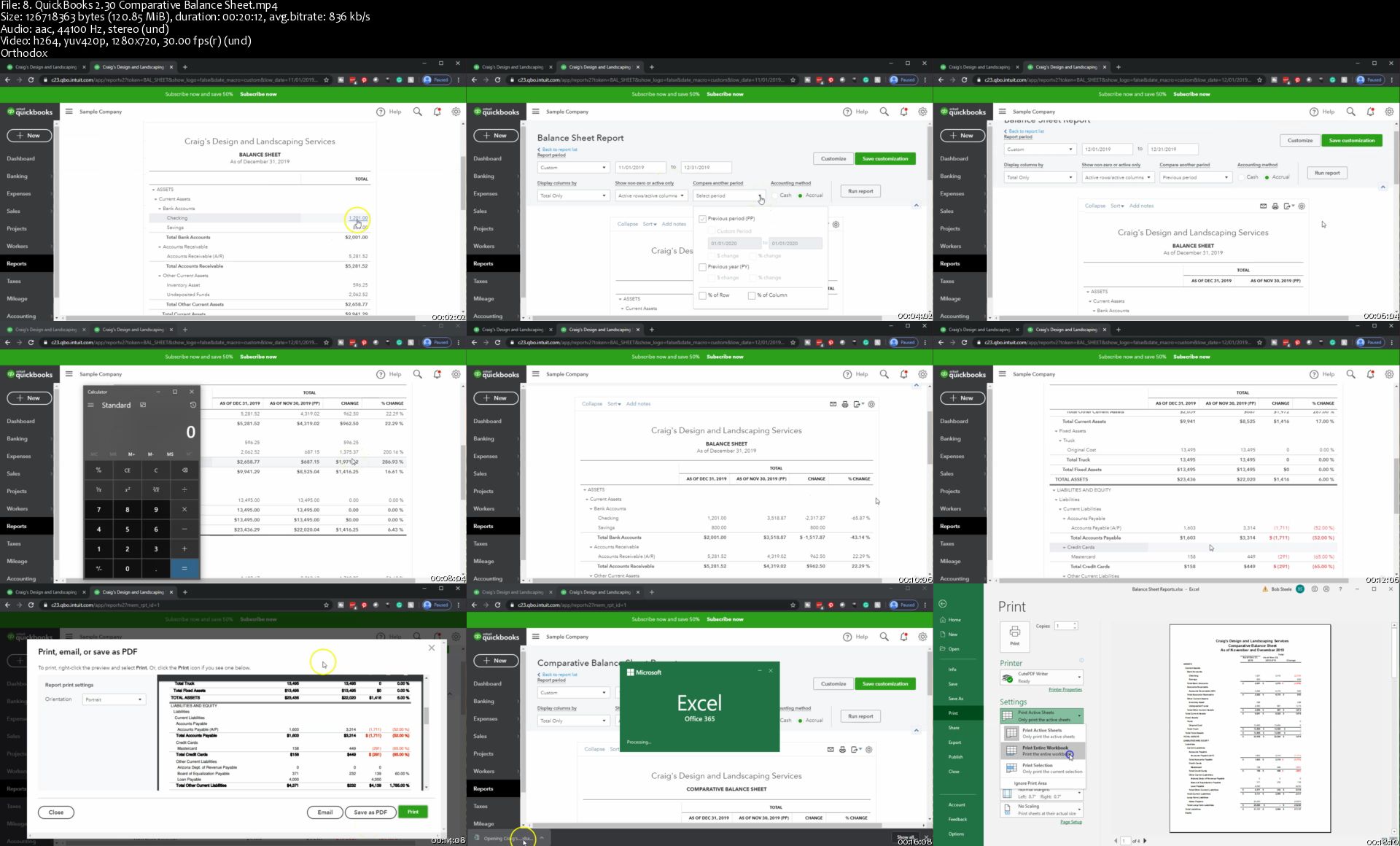
QuickBooks Online vs Xero Accounting Software 2020
Video: .MP4, 1280x720 30 fps | Audio: AAC, 44.1 kHz, 2ch | Duration: 53:20:50
Genre: eLearning | Language: English + Subtitles | Size: 18 GB

Compare leading online software packages with a practicing Certified Public Accountant (CPA)
What you'll learn

Set up QuickBooks Online & Xero accounting software
Navigate QuickBooks Online & Xero accounting software
Enter normal business transaction into accounting software
Reconcile bank accounts using accounting software
Generate and analyze reports including a balance sheet, an income statement, and supporting reports
Export Reports to Excel

Requirements
None
Description
This course will compare two leading online accounting software applications, QuickBooks Online and Xero, in a step by step format.
This is a comprehensive accounting course.
We will discuss the purchasing options and the best tools to learn these accounting software packages at the lowest cost.
Learners will understand how to set up a new company file in each software package.
The course will demonstrate how to navigate each software package and how to generate, analyze, and customize common financial reports.
We will learn how to create inventory and service items and how they are used to create invoices, purchase orders, and sales receipts.
The course will show how to enter two months of data in a step by step process, comparing the two accounting software packages at every level along the way.
The course will demonstrate how to complete bank reconciliations and enter adjusting and reversing entries.
We will also learn how bank feeds work. Bank feeds are the ability to connect directly to the bank and download financial information into the accounting software.
The course will provide practice data to learn how bank feeds work. Learners will also understand how to make bank rules to automate the bookkeeping process further.
Who this course is for:
Business owners
Accounting professionals
Accounting students
Anybody who wants to learn accounting software

Homepage

8-Quick-Books-2-30-Comparative-Balance-Sheet-s.jpg


Master Planning v3.0 (2020): Plan Your Week, Month and Year

5-Yf-SNdklz-Nc-Yu0-Qw-DEGifmd-GHth-Bcnah.png


Master Planning v3.0 (2020): Plan Your Week, Month and Year
h264, yuv420p, 1280x720 |ENGLISH, aac, 48000 Hz, 2 channels, s16 | 25h 59 mn | 20.31 GB
Created by: Timothy Kenny, Kenny Media

9-in-1 Course Bundle: Get the Ultimate System for Planning Your Week, Month, Quarter and Year in 60 Minutes Each.
What you'll learn
Get full 24 hour metrics on where you spend your time each day of the week
Learn how to master your daily schedule
Enjoy the feeling of full engagement for 80+% of your day
Plan your days better so you are more efficient and spend more time in the flow
Plan buffer time so that one mistake doesn't ruin your whole day or week of plans
Create a time budget so you know how much free time you really have each week
Plan out their entire month in just 60 minutes
See their progress month over month is the unique "story view" perspective offered with this planning system
Integrate their weekly and monthly planning in a seamless system
Requirements
Google Calendar
Greenshot (for easy screenshotting)
Description
Description for v3.0 (2020):

This course represents a paradigm shift in productivity, personal development and planning that is the biggest since Getting Things Done was first published by David Allen in 2001. There will be more details to come for implementing it, but the big picture is shared for the first time here in this course. The big idea is called "Personal Governance" and you can learn about it in the section called "Personal Governance." This idea is the missing piece that integrates Mastering Planning, Mastering Organization (and to a lesser extent, End Game).

I am also adding for free 3 other courses to this bundle for v3.0:

Mastering Long Term Planning (how to plan at the 5, 10, 20, 40 and 100 year scales)

Structured Note Taking Vol 50 - Subjective Well Being (How to optimize for happiness/well being, not just traditional performance or financial metrics)

Mastering Planning v1.5 - The Visual Upgrade (Includes details on how to create a planning poster)

With everything above, Mastering Planning 2020 v3.0 is now a 9-in-1 course. It's a bundle of Mastering Planning v3.0 plus 8 other courses that were originally sold separately.

You can find the new v3.0 content starting in Section 8 of the course. Mastering Planning v2.0 starts in section 2. I recommend going through it in the order it's now in. Mastering Planning v1.0 videos are useful only to get a deeper understanding of some theoretical aspects that are not needed to implement the system but will be interesting to some, like the theoretical basis in AI research and other aspects like computational complexity theory.

Timothy

---------------------------------------

Description for v2.0 (2019):

In this course you get a complete system for planning your life.

This course is based off a best selling course, the original Mastering Planning, which has been a front page featured course in the Productivity section of Udemy.

Here are the improvements over the first version:

1. The course includes 9 downloadable templates for implementing the system in a purely digital system. The previous version was based on hand-written templates that you had to print out.

2. The drawings have been re-done and significantly improved in detail and color. The previous version had only hand-drawn papers which were not downloadable and the handwriting was hard to read.

3. There are several new templates/sub-systems that were not included in the previous version. These include the process, project and task management systems.

4. You get access to the complete life organization taxonomy (213 sub folders [aka sub-categories) within the "Big 4" System of Professional, Personal, Relationship and Health life sections) for FREE. This previously required buying my separate Mastering Organization course. I decided to include this to improve integration of the systems.

5. You get access to the Routines manager and Weekly planning digital templates, which were previously sold separately as a course. These didn't exist in the first version.

6. You get access to shared "Google Calendar"-calendars (also properly color coded) that you can copy and instantly use to structure your planning without recreating everything in the course from scratch. This didn't exist in version 1.0.

7. I cut a lot of fluff out of the course. This includes the theoretical stuff I spent too much time one relating to the innovative aspect of this system which is based off theory from the field of Artificial Intelligence on the computational complexity of planning problems. If you are interested in the theoretical innovations and basis of this system, you can see it in the first version which you be able to get access to via a link from this course, even if I take it offline at some point. I aimed to take the previous 12 hour course and bring it down to 2-3 hours.

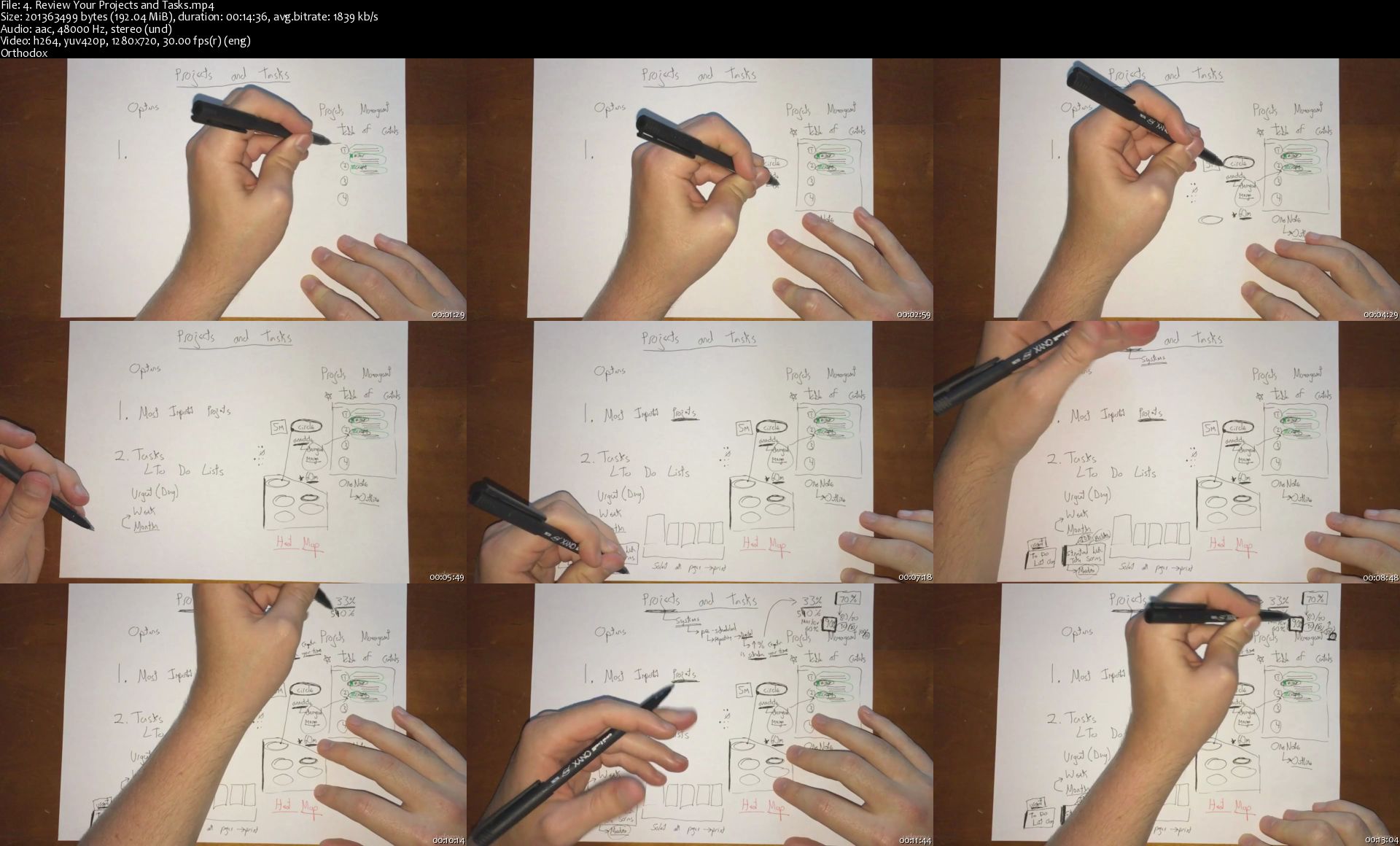
The overarching idea is that you plan at multiple levels and keep track of all tasks, projects and processes in a single system so that nothing falls through the cracks. You review these portfolios of tasks, projects and processes at regular intervals so that all those things you want to do "someday" actually get reviewed at weekly, monthly, quarterly etc levels so you can remind yourself that you might want to do them.

You will be able to ask me questions about the system and how to implement it in the course.

Timothy

-------------------------------

Description for v1.0

The Most Successful Personal Planning Course Series of All Time -- Now All in One Course

5 Courses, covering every stage of the planning process (hourly, daily, weekly, monthly, quarterly, yearly), now combined into one Massive Course.

12+ Hours of high quality, 1080p video

The #1 planning system in the world.

What makes this planning system different?

1. It's the only learning system built around LEARNING to become a better planner at every time scale through consistent feedback.

2. It's build around the idea of measuring how you ACTUALLY spend your time each day so you can compare it with how you panned it.

3. The system is INTEGRATED at all the important time scales, and uses very similar documents at each level so it's easy to remember how to implement the system at each level.

4. You'll Learn a VISUAL system for seeing where your time is going at every level: Day, Week, Month, Quarter and Year.

5. Manage your time in terms of PROJECTS, not just tasks, so that you can avoid information overwhelm when you have hundreds of tasks.

6. Manage huge to do lists of 100s of items effortlessly with an ADVANCED TO DO LIST system that organizes and sorts tasks by time cost and urgency.

7. Integrate BUFFER TIME into your schedule so that going over your scheduled time doesn't ruin your schedule for the rest of the day.

8. Track KPIs so that you can get consistent long term data on your most important projects and habits.

9. Get a STORY-VIEW perspective on your reviews at the Weekly, Monthly, Quarterly and Yearly scales so that you can easily see how you progress from period to period.

10. Use COLOR CODING to get a better view of where your time is going in the Big 4 areas of your life: Professional, Personal, Relationships and Health.

11. Optimize your time IN THE FLOW each day by removing the constant stress and overwhelm that comes with under planning and over-allocation.

This course, and really, this system, has the potential to really transform how you organize your time.

Try it for 30 days and watch how it changes your experience of time.

See you inside the course,

Timothy

Who this course is for:
Professionals who want to increase their productivity
Entrepreneurs who want to get a better handle on where they are investing their valuable time
Students who want to study hard but still have time for everything else

Homepage

4-Review-Your-Projects-and-Tasks-s.jpg


PLC Programming From Scratch (PLC I) (Updated 1/2020)

ypww9y-IS6-S5-NOEWZUj-En-RUm-Tpc-RXOann.jpg


PLC Programming From Scratch (PLC I) (Updated 1/2020)
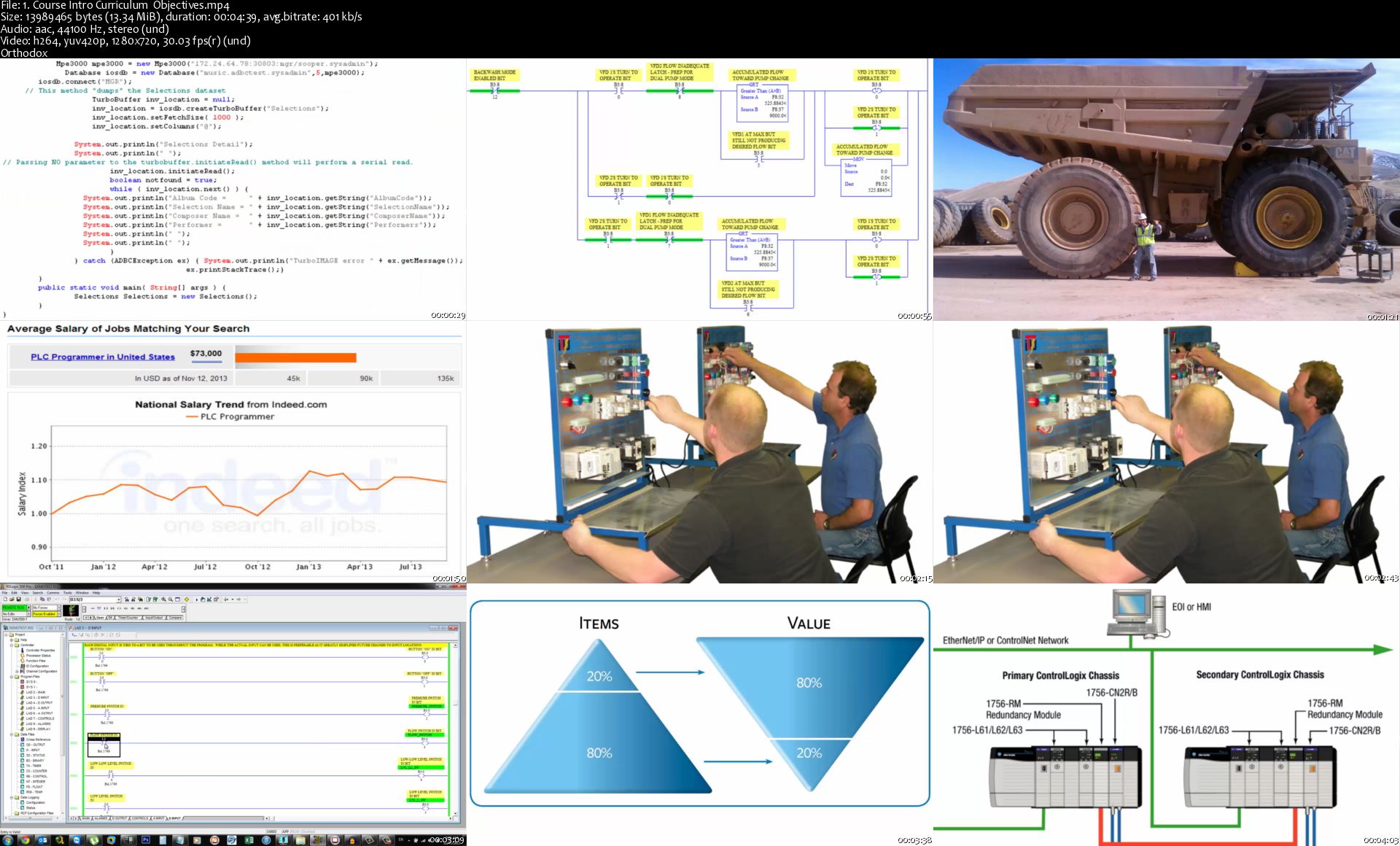
BESTSELLER | Created by Paul Lynn | Video: h264, 1280x720 | Audio: AAC 48KHz 2ch | Duration: 21:19 H/M | Lec: 98 | 1.24 GB | Language: English | Sub: English

This course will give a person with no prior experience the basic tools necessary to create a PLC program from scratch.

What you'll learn
By the end of this course, you will be able to create a PLC program from scratch.
The primary and overall objective of this course is to give a novice an understanding of PLC programming, ladder logic, and the inner workings of a standard HMI (Human-Machine Interface).
Students will learn the difference between digital and analog signals and how to bring them into a PLC, process them, and send them back out.
Students will be familiarized enough with a sufficient variety of ladder logic instructions to create a complete PLC program from scratch.
Students will explore basic, standard controls techniques for things like HOA control, level control, pump control, and (on at least an introductory level) PID control loops.
Students will develop an understanding of alarm and notification programming, and the relevant considerations to safety and operator usability.
Students will be introduced to HMI development and given a general understanding of how an HMI program works.

Requirements
There is no software, hardware or experience required in order to complete this course, but practicing the techniques discussed on an emulator or live PLC are necessary steps toward eventual mastery.

Description
This course is designed to equip the novice with no prior PLC programming experience with the basic tools necessary to create a complete PLC program using ladder logic common to most current platforms.

Using the Rockwell software RSLogix 500 and FactoryTalk View Studio, we will be covering such topics as general controls, digital and analog IO, ladder logic programming, alarm / notification handling, HMI, emulation, best practices and more.

In the end, we will go through an entire, working PLC program and HMI line by line to solidify comprehension of the learning objectives.

Why Are There Four PLC Courses?

PLC I teaches you how to program with the focus on ladder logic, which is the most popular PLC programming language. The goal is to teach you everything you need to know to make a PLC do what you want it to do. You are also given all the software necessary to both CREATE and RUN your own programs live - right on your own computer.

PLC II forces you to take what you've learned and solve problem after progressively harder problem unassisted. You get a spec and are told simply: "Make it work, and don't progress until you have." After, you get to watch me solve each one as well. By the end, you don't just know how to program - you are a PROGRAMMER.

PLC III gives you both knowledge and experience in FIVE different HMI / SCADA development environments. By the end, you've created several COMPLETE visualization (screen) projects that you can actually run on your own computer (and SHOW PEOPLE in an interview) with no additional hardware.

PLC IV is only for the heavyweights. This course teaches you how to program using all five IEC programming languages (plus one more) in multiple environments. There are projects as well, so by the end, you have seen it all and DONE it all as well. There won't be anything anybody can show you that you won't already be familiar with.

Who this course is for?
This course is written for anybody who wants to become functional with ladder logic as quickly as possible.

Homepage

1-Course-Intro-Curriculum-Objectives-s.jpg


Zuletzt bearbeitet:
Practical PLC Programming (PLC II)

UWo-If2m-Mci-S3v-GCg-Nj-Md-Yc0mb-OXky-ZIs.png


Practical PLC Programming (PLC II)
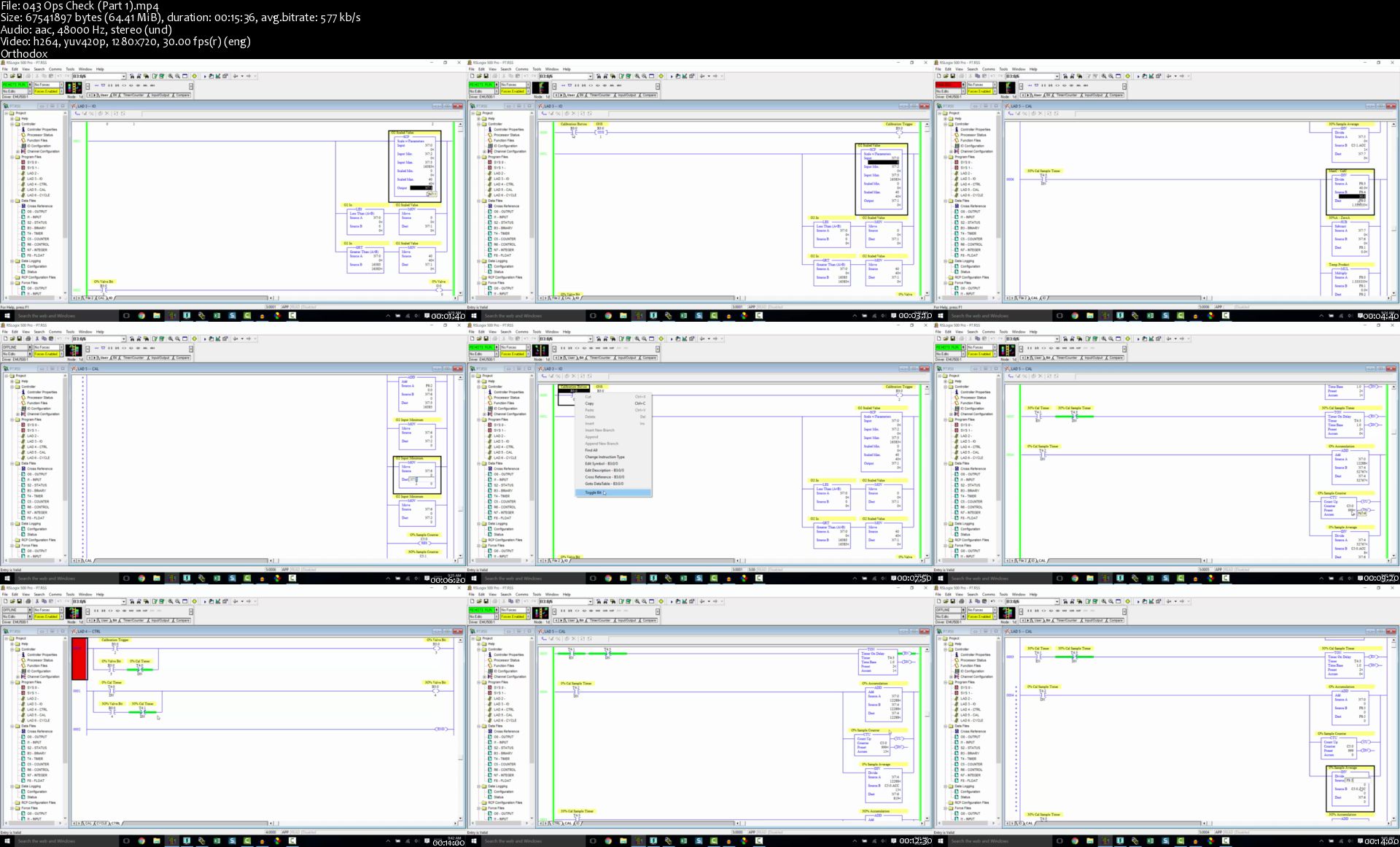
Highest Rated | h264, yuv420p, 1280x720 |ENGLISH, aac, 48000 Hz, 2 channels, s16 | 8h 00 mn | 1.68 GB
Instructor: Paul Lynn

This course will give an intermediate-level student the experience necessary to originate complex, logical solutions.
What you'll learn

By the end of this course, you will be both able and practiced at originating complex ladder logic applications.
The primary and overall objective of this course is to give an INTERMEDIATE PLC programming student, rigorous, practical experience in creating unguided, original ladder logic.
Students will build on the knowledge and understanding of PLC programming they got from "PLC Programming from Scratch" by using those instructions and environments and techniques to create real-world solutions to problems defined throughout this course.
Upon completion of this course, students will have the requisite skill set to translate a description of a process into a functioning logical solution.

Requirements

All software required for this course is available for free and links will be provided.
The only OPTIONAL tool we will use in this course which is not free is Microsoft Excel.
You should have already completed "PLC Programming from Scratch (PLC I)" before taking this course.

Description

As a PLC programmer, you will usually find yourself working alone, unsupported and with nobody to help you but Google. Your boss or client will tell you what they need, and the only thing they want to hear from you is, "Here it is." And when you deliver, it goes without saying that the expectation is - that it WORKS!

This is the course the acclimates you to the real world. This isn't the classroom anymore; this is war! You vs the PLC.

In this course, we hit the ground RUNNING. I designed this course to build upon the theoretical training students received in "PLC Programming from Scratch" by taking that knowledge (plus a few new pieces) and constructing original ladder logic applications to solve everyday, industrial problems.

Using the Rockwell software RSLogix 500, RSLinx and RSLogix 500 Emulate, you will be given various descriptions / specifications for programs and then expected to write each one from scratch. After, I will walk everybody through my own approach to each problem step-by-step. Lastly, we'll run each project on the emulator and debug as required before moving on to the next section.

This course is 100% practical! It is expected and assumed that you got the theoretical in my previous PLC course, and as such, this course contains NO REFRESHERS. This is all new material! There ARE a few new instructions used in this course, and those will be properly introduced, but you should already know how to use blocks like XIC, XIO, OTE, ONS, SCP, JSR and etc.. Again - this is an INTERMEDIATE course. It has a PREREQUISITE course before it. Don't try to walk before you crawl and then get all sour and mad about it when you fall down.

Let me be clear: you WILL struggle in this course. That's the whole point. My first PLC course has a lot of group hugs, hand-holding, warm bottles of milk and hippie drum circles all in a safe, friendly, positive learning environment. This course is NOT like that. This is boot camp. This is you being thrown into the deep end of the swimming pool... with a shark. If you want to get frustrated, wrack your brain trying to solve hard problems and learn what it's like being a PLC programmer - this is your course! You'll come out of it better, faster and smarter. If you're not ready for that yet, take my first course.

Why Are There Four PLC Courses?

PLC I teaches you how to program with the focus on ladder logic, which is the most popular PLC programming language. The goal is to teach you everything you need to know to make a PLC do what you want it to do. You are also given all the software necessary to both CREATE and RUN your own programs live - right on your own computer.

PLC II forces you to take what you've learned and solve problem after progressively harder problem unassisted. You get a spec and are told simply: "Make it work, and don't progress until you have." After, you get to watch me solve each one as well. By the end, you don't just know how to program - you are a PROGRAMMER.

PLC III gives you both knowledge and experience in FIVE different HMI / SCADA development environments. By the end, you've created several COMPLETE visualization (screen) projects that you can actually run on your own computer (and SHOW PEOPLE in an interview) with no additional hardware.

PLC IV is only for the heavyweights. This course teaches you how to program using all five IEC programming languages (plus one more) in multiple environments. There are projects as well, so by the end, you have seen it all and DONE it all as well. There won't be anything anybody can show you that you won't already be familiar with.
Who this course is for:

This course is a follow-up to "PLC Programming from Scratch (PLC I)" and builds upon the knowledge and techniques imparted in that course with NO reviews or primers.
If you have not already completed my course titled "PLC Programming from Scratch (PLC I)", you are probably NOT ready for this one. If you have taken it but you've forgotten anything, it would behoove you to go back through it before taking this course.
This course assumes you already know the basic instruction set of RSLogix 500 and are ready to start programming.

Homepage

043-Ops-Check-Part-1-s.jpg


Zurück
Oben Unten