


• Regeln für den Video-Bereich:

    In den Börsenbereich gehören nur Angebote die bereits den Allgemeinen Regeln entsprechen.

    Einteilung

    - Folgende Formate gehören in die angegeben Bereiche:
    - Filme: Encodierte Filme von BluRay, DVD, R5, TV, Screener sowie Telesyncs im Format DivX, XviD und x264.
    - DVD: Filme im Format DVD5, DVD9 und HD2DVD.
    - HD: Encodierte Filme mit der Auflösung 720p oder darüber von BluRay, DVD, R5, TV, Screener sowie Telesyncs im Format x264.
    - 3D: Encodierte Filme von BluRay, die in einem 3D Format vorliegen. Dies gilt auch für Dokus, Animation usw.
    - Serien: Cartoon/Zeichentrick, Anime, Tutorials, Dokumentationen, Konzerte/Musik, Sonstiges sind demnach in die entsprechenden Bereiche einzuordnen, auch wenn sie beispielsweise im High Definition-Format oder als DVD5/DVD9/HD2DVD vorliegen. Ausnahme 3D.
    - Bereich Englisch: Englische Releases gehören immer in diesen Bereich.
    - Bereich Talk: Der Bereich, in dem über die Releases diskutiert werden kann, darf, soll und erwünscht ist.


    Angebot/Beitrag erstellen

    - Ein Beitrag darf erst dann erstellt werden, wenn der Upload bei mindestens einem OCH komplett ist. Platzhalter sind untersagt.
    - Bei einem Scenerelease hat der Threadtitel ausschließlich aus dem originalen, unveränderten Releasenamen zu bestehen. Es dürfen keine Veränderungen wie z.B. Sterne, kleine Buchstaben o.ä. vorgenommen werden. Ausnahme Serienbörse:
    - Bei einem Sammelthread für eine Staffel entfällt aus dem Releasename natürlich der Name der Folge. Beispiel: Die Simpsons S21 German DVDRip XviD - ITG
    - Dementsprechend sind also u.a. verboten: Erweiterungen wie "Tipp", "empfehlenswert", "only", "reup", usw. / jegliche andere Zusatzinformation oder Ergänzung, welche nicht in obiger Beschreibung zu finden ist.

    Aufbau des Angebots und Threadtitel

    Der Titel nach folgendem Muster erstellt zu werden. <Name> [3D] [Staffel] [German] <Jahr> <Tonspur> [DL] [Auflösung] <Quelle> <Codec> - <Group>
    Beispiel: The Dark Knight German 2008 AC3 DVDRip XviD - iND
    Beispiel: The Dark Knight 2008 DTS DL BDRip x264 - iND
    Beispiel: The Dark Knight 2008 AC3 DL BDRip XviD - iND
    Beispiel: The Dark Knight German 2008 AC3 720p BluRay x264 iND
    Beispiel: The Dark Knight 2008 DTS DL 1080p BluRay x264 iND
    Beispiel: Die Simpsons S01 German AC3 DVDRip XviD iND
    Beispiel: Die Simpsons S20 German AC3 720p BluRay x264 iND
    Beispiel: Sword Art Online II Ger Sub 2014 AAC 1080p WEBRip x264 - peppermint
    Entsprechend sind also u.a. verboten: Sonderzeichen wie Klammern, Sterne, Ausrufezeichen, Unterstriche, Anführungszeichen / Erweiterungen wie "Tipp", "empfehlenswert", "only", "reup", usw. / jegliche andere Zusatzinformation oder Ergänzung, welche nicht in obiger Beschreibung zu finden ist
    Ausnahmen hiervon können in den Bereichen geregelt sein.

    Die Beiträge sollen wie folgt aufgebaut werden:
    Überschrift entspricht dem Threadtitel
    Cover
    kurze Inhaltsbeschreibung
    Format, Größe, Dauer sind gut lesbar für Downloader außerhalb des Spoilers zu vermerken
    Nfo sind immer Anzugeben und selbige immer im Spoiler in Textform.
    Sind keine Nfo vorhanden z.B. Eigenpublikationen, sind im Spoiler folgende Dateiinformationen zusätzlich anzugeben :
    Quelle
    Video (Auflösung und Bitrate)
    Ton (Sprache, Format und Bitrate der einzelnen Spuren)
    Untertitel (sofern vorhanden)
    Hosterangabe in Textform außerhalb eines Spoiler mit allen enthaltenen Hostern.
    Bei SD kann auf diese zusätzlichen Dateiinformationen verzichtet werden.

    Alle benötigten Passwörter sind, sofern vorhanden, in Textform im Angebot anzugeben.
    Spoiler im Spoiler mit Kommentaren :"Schon Bedankt?" sind unerwünscht.


    Releases

    - Sind Retail-Release verfügbar, sind alle anderen Variationen untersagt. Ausnahmen: Alle deutschen Retail-Release sind CUT, in diesem Fall sind dubbed UNCUT-Release zulässig.
    - Im Serien-Bereich gilt speziell: Wenn ein Retail vor Abschluss einer laufenden Staffel erscheint, darf diese Staffel noch zu Ende gebracht werden.62
    - Gleiche Releases sind unbedingt zusammenzufassen. Das bedeutet, es ist zwingend erforderlich, vor dem Erstellen eines Themas per Suchfunktion zu überprüfen, ob bereits ein Beitrag mit demselben Release besteht. Ist dies der Fall, ist der bereits vorhandene Beitrag zu verwenden.
    - P2P und Scene Releases dürfen nicht verändert oder gar unter einem iND Tag eingestellt werden.


    Support, Diskussionen und Suche

    - Supportanfragen sind entweder per PN oder im Bereich Talk zu stellen.
    - Diskussionen und Bewertungen sind im Talk Bereich zu führen. Fragen an die Uploader haben ausschließlich via PN zu erfolgen, und sind in den Angeboten untersagt.
    - Anfragen zu Upload-Wünschen sind nur im Bereich Suche Video erlaubt. Antworten dürfen nur auf Angebote von MyBoerse.bz verlinkt werden.


    Verbote

    - Untersagt sind mehrere Formate in einem einzigen Angebotsthread, wie beispielsweise das gleichzeitige Anbieten von DivX/XviD, 720p und 1080p in einem Thread. Pro Format, Release und Auflösung ist ein eigener Thread zu eröffnen.
    - Grundsätzlich ebenso verboten sind Dupes. Uploader haben sich an geeigneter Stelle darüber zu informieren, ob es sich bei einem Release um ein Dupe handelt.
    - Gefakte, nur teilweise lauffähige oder unvollständige Angebote sind untersagt. Dies gilt auch für eigene Publikationen, die augenscheinlich nicht selbst von z.B. einer DVD gerippt wurden. Laufende Serien, bei denen noch nicht alle Folgen verfügbar sind, dürfen erstellt und regelmäßig geupdatet werden.
    - Untersagt sind Angebote, welche nur und ausschließlich in einer anderen Sprache als deutsch oder englisch vorliegen. Ausnahmen sind VORHER mit den Moderatoren zu klären.


    Verstoß gegen die Regeln

    - Angebote oder Beiträge, die gegen die Forenregeln verstoßen, sind über den "Melden"-Button im Beitrag zu melden.
  • Bitte registriere dich zunächst um Beiträge zu verfassen und externe Links aufzurufen.

*** Bestes IPTV *** bester Preis *** gratis Test ***


Englische Tutorials

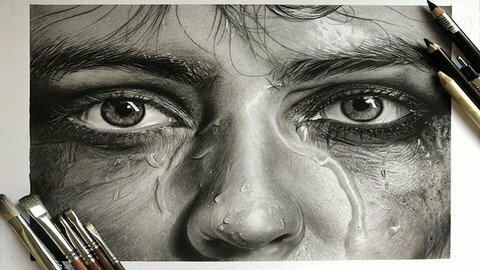
Realistic Pencil Drawing: How To Drawing A Wet Portrait
bb0tlhkvkkflkg1pvkeyz6ripz.jpg


Realistic Pencil Drawing: How To Drawing A Wet Portrait
Last updated 11/2020
MP4 | Video: h264, 1280x720 | Audio: AAC, 44.1 KHz
Language: English | Size: 14.09 GB | Duration: 11h 11m

Learn How to Draw Realistic Portrait with Conte and Charcoal Pencil. The Secret to Drawing a hyperreal Portrait


What you'll learn
Learning how to draw skin textures, wetness on the face, creating water drops
The student will become very familiar with how to create eyes, nose, and face volume in the chiaroscuro technique
The student should be able to perform a textured and wet face with the chiaroscuro technique

Requirements
Fabriano Eller cardboard 220 grams
Hard and Soft Conte Fabriccastle pencils
Paris Carbonic Conte B2 or B3 Pencil
Flat and piped Cretacolor charcoal
Fader
Etude eraser
Faber dough eraser
Brush eraser
Electronic eraser
Sanding
Small cutter
Rough and flat tip brush in different sizes
Soft small brush
Printed picture of the model with adequate quality

Description
In this course, you'll learn how to draw realistic portrait with Conte and charcoal pencil from the ground up. The course is supported with over 11 hours of clear content that I walk you through each step of the way.Here's what you get with the course:- To create the model taught in this course, familiarity with the design principles and the basic steps of the chiaroscuro will definitely be useful.- This training consists of about 11 hours of the instructional video, including each step, which is the minimum time that the student must spend to achieve the desired result in creating the volume of the face and wet skin texture.- The following training course has been prepared with the aim of teaching how to draw skin textures, wetness on the face, creating water drops. In addition, the student will become very familiar with how to create eyes, nose, and face volume in the chiaroscuro technique.- In this course, we will teach you how to create eyes, eyebrows, nose, skin textures, wet textures on the skin, and water droplets using Conte pencils, charcoal powder, and a variety of brushes and erasers.- Students are taught how to create volume first and then model textures and water droplets on the work.- The student also gets acquainted with the use of different types of erasers in chiaroscuro and how to use them.- At the end of this course, the student should be able to perform a textured and wet face with the chiaroscuro technique. What else will you get?- Personal contact with me, the course tutor- Lifetime access to course materials- Understanding of how professional art is created- This all comes under one convenient easy to use platform. Plus you will get fast, friendly, responsive support on the Udemy Q&A section of the course or direct message. I will be here for you every step of the way!So what are you waiting for? Sign up now and change your art world today!
Overview
Section 1: Introduction
Lecture 1 Introduction
Lecture 2 Main Picture
Section 2: Sketching the right eye
Lecture 3 Drawing the right eye with a pencil
Lecture 4 Completing the iris of the right eye
Lecture 5 Shading the eye with brush and charcoal
Section 3: A foundation for eye's textures
Lecture 6 Creating a dark volume under the right eyelid
Lecture 7 Continue subcutaneous texture of the right eye
Section 4: Creating volume for the right side of the face
Lecture 8 Creating the volume of right side of the face
Section 5: Foundation of the eyebrow
Lecture 9 Subcutaneous of eyebrow
Section 6: Volume and textures for the right side of the face
Lecture 10 Completing the right eyebrow and creating the right volume of the forehead and u
Lecture 11 Creating a shiny texture on the eyelid
Lecture 12 Creating light inside the right eye and around the eye
Lecture 13 Creating shiny texture right side of forehead
Lecture 14 Drawing the inner corner texture of the right eye
Lecture 15 Drawing drop of water and completing the texture of the inner corner of the righ
Lecture 16 Start creating the linear texture under the right eye
Lecture 17 Creating fine lines under the right eye
Lecture 18 Creating volume and exposure to the eye texture in the lower right eye
Lecture 19 Learn to create fine linear textures under the eyes and drawing the right eyela
Lecture 20 Completing eyelashes and fine textures of the right eye
Section 7: Creating the water droplets and water texture
Lecture 21 Completing the texture created in the previous step by adding darkness
Lecture 22 Creating the subcutaneous of drops of running water on the right side of the fac
Lecture 23 Completing running water drops and water gender
Section 8: Completing the textures of the right side of the face and cheek
Lecture 24 Learn how to make a paper funnel and use it to create textures
Lecture 25 Continue creating the right cheek and lip texture
Lecture 26 Completing light and dark textures of cheek
Lecture 27 Creating the texture of the inner part of the right cheek with the eraser
Lecture 28 Continue to create the texture of the inner part of the right cheek with an el
Lecture 29 Lightening of right cheek texture
Section 9: Creating the volume and the texture of the nose
Lecture 30 Drawing the darkness of the tip of the nose with a charcoal pencil
Lecture 31 Shading and shaping the volume of the tip of the nose
Lecture 32 Shading subcutaneous of the nose blade volume
Lecture 33 Completing the darkness of the nose volume with charcoal and a brush
Lecture 34 Creating light to create nasal textures
Lecture 35 Creating intense light and subcutaneous of the drops on the nose
Lecture 36 Work with an fader to shape water droplets on the nose
Lecture 37 Completing the texture and drops on the nose
Section 10: Sketching the left eye
Lecture 38 Drawing the left iris with pencil
Lecture 39 Continue the left eye with a pencil
Lecture 40 Completing the iris of the left eye
Lecture 41 Completing the left eyelid
Section 11: Creating the left eyebrow, creating the volume of the eyelid and the forehead
Lecture 42 Create volume behind the eyelid and start drawing eyebrow hair
Lecture 43 Drawing the left eyebrow
Lecture 44 Drawing the left side of forehead
Lecture 45 Create a dark texture behind the left eyelid with a pencil
Lecture 46 Erasing the texture behind the eyelids and drawing the eyebrow hairs
Lecture 47 Completing the left eyebrow
Section 12: Creating wet hair on the forehead
Lecture 48 Completing the darkness of the forehead and draw the hair with a pencil
Lecture 49 Completing the wet hair on the forehead
Section 13: Creating the volume for the left side of the face
Lecture 50 Creating lower subcutaneous of left eye
Lecture 51 Volume the left side of the face
Section 14: Creating the skin texture on the forehead
Lecture 52 Creating skin lights on the forehead
Section 15: Completing the eyelashes and the foundation for water droplets on the left side
Lecture 53 Completing eyelashes and whiteness of the left eye
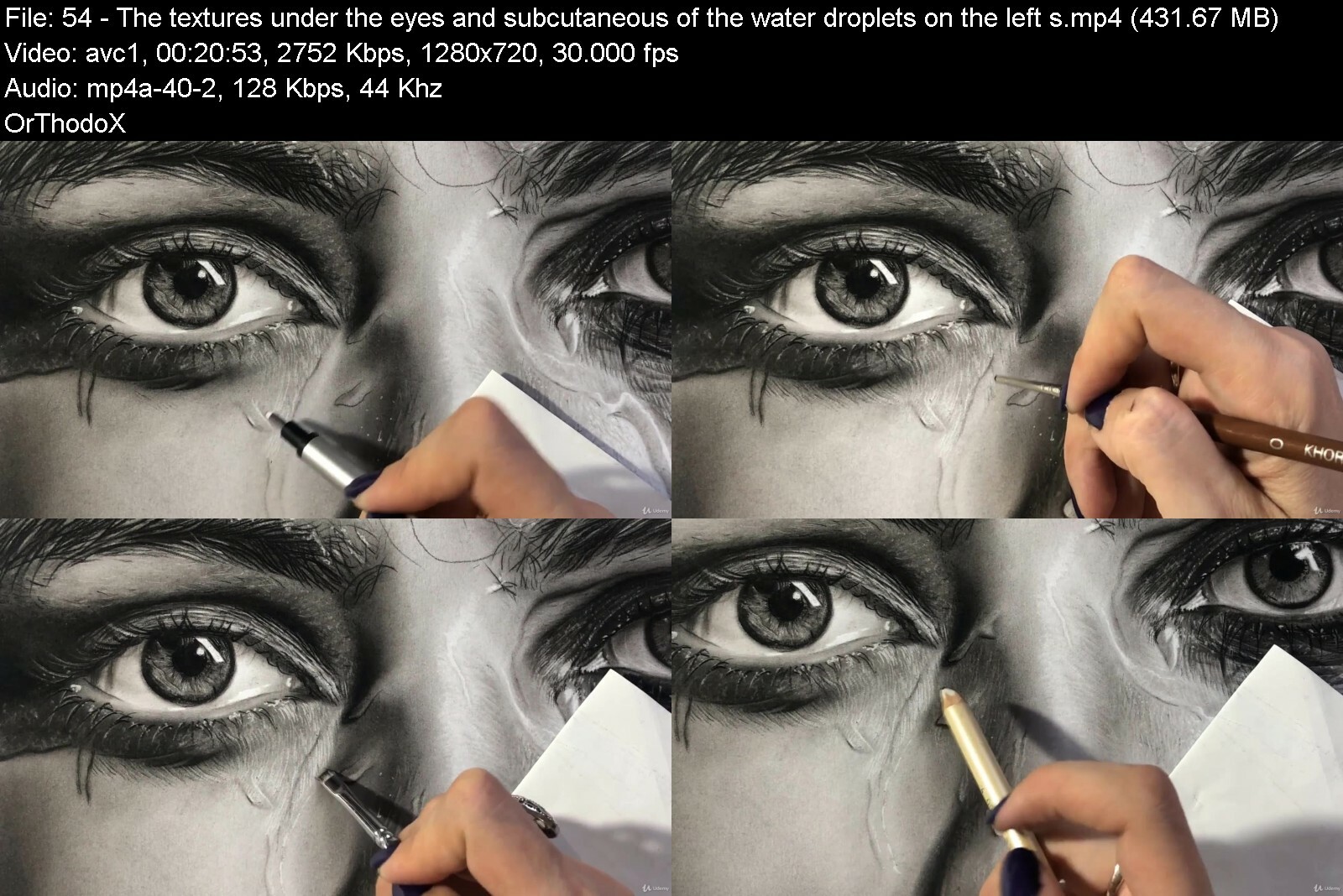
Lecture 54 The textures under the eyes and subcutaneous of the water droplets on the left s
Section 16: Completing the textures of the nose
Lecture 55 Completing the texture and darkness of the blade of the nose
Lecture 56 Final completion of nose texture
Section 17: Creating the textures for the left cheek
Lecture 57 Creating texture next to the nose on the left side of the face
Lecture 58 Create left cheek texture with eraser
Lecture 59 Continue to create textures on the left side of the face with a brush eraser an
Lecture 60 Completing the darkness and lightness of textures on the left side of face
Section 18: Completing the lights using different erasers and the white pen
Lecture 61 Completing the lights using a variety of erasers and white pens
Section 19: Final explanations and finishing the work
Lecture 62 Final explanations and completion of work
This course is suitable for students who have passed the beginner course of chiaroscuro or have a background in other painting techniques,This course is at a level that is suitable for students over 13 years old who can have a correct understanding of volume and texture,All students who are relatively familiar with drawing or who have already taken our sketching course can use the training in this course and be able to improve their artistic level by using more advanced levels of charcoal drawing course.


realisticpencildrawin0mfhe.jpg


Download from RapidGator


Download from DDownload



Realistic Pencil Drawing Course: Art Of Realistic Eye Draw

o13qkdenxwqukzddvftvp8feq3.jpg


Realistic Pencil Drawing Course: Art Of Realistic Eye Draw
Last updated 7/2021
MP4 | Video: h264, 1280x720 | Audio: AAC, 44.1 KHz
Language: English | Size: 5.88 GB | Duration: 4h 31m

Learn How to Draw Realistic Old Eye with Colored Pencil. Drawing and sketching with Colored Pencil is a Cool Art


What you'll learn
students are expected to be able to recognize color and analyze skin color from the images and also know how to mix colors
They learn about the color of skin and how to create volume in drawing of wrinkled skin
Students learn some tools like cutter in drawing the tissues of the skin.

Requirements
Color pencil ( Marc Faber-Castell Polychrome is recommended)
Types of erasers ( Chargeable, Pencil Sharpener)
Cutter
Steinbach or Fabriano drawing paper ( low gram and tissue less)

Description
In this course, you'll learn how to draw realistic old eye with colored pencil from the ground up. The course is supported with over 4.5 hours of clear content that I walk you through each step of the way.Here's what you get with the course:- in the first step, students learn how to draw iris and internal tissues using color pencils.- next drawing the skin with all of its details and wrinkles is taught. Also, two crucial areas that are challenges of students are covered: creating skin color using different combinations and drawing wrinkles and tissues of the skin. Also, we get acquaintance with drawing eyelash with color pencils.- By the end of this course, students are expected to be able to recognize color and analyze skin color from the images and also know how to mix colors. Also, they learn about the color of skin and how to create volume in drawing of wrinkled skin. Additionally, students learn some tools like cutter in drawing the tissues of the skin.What else will you get?- Personal contact with me, the course tutor- Lifetime access to course materials- Understanding of how professional art is created- This all comes under one convenient easy to use platform. Plus you will get fast, friendly, responsive support on the Udemy Q&A section of the course or direct message.- I will be here for you every step of the way!So what are you waiting for? Sign up now and change your art world today!
Overview
Section 1: Introduction
Lecture 1 Introduction
Lecture 2 Main Picture
Lecture 3 Faber castell polychrome and classic color chart
Section 2: Iris
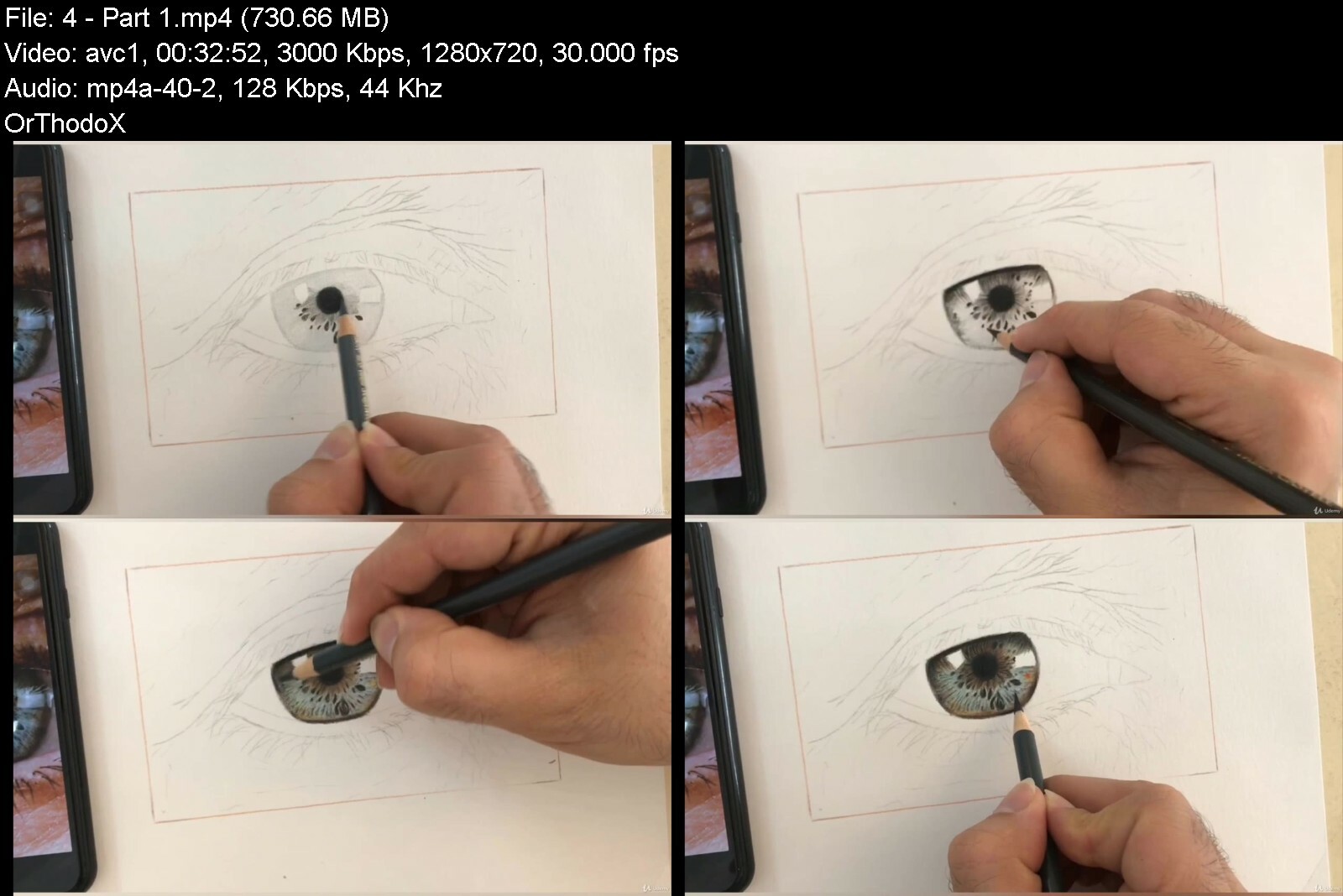
Lecture 4 Part 1
Lecture 5 Part 2
Section 3: Sclera
Lecture 6 Part 3
Lecture 7 Part 4
Section 4: Volume creation and creating the tissue of eyelid and eyelash
Lecture 8 Part 5
Lecture 9 Part 6
Lecture 10 Part 7
Section 5: Skin and wrinkles
Lecture 11 Part 8
Lecture 12 Part 9
Lecture 13 Part 10
Lecture 14 Part 11
Lecture 15 Part 12
Lecture 16 Part 13
Section 6: Lighting the tissue
Lecture 17 Part 14
Section 7: Skin and tissue of the wrinkles under the eye
Lecture 18 Part 15
Lecture 19 Part 15
Lecture 20 Part 17
Section 8: lighting and painting the lower eyelash
Lecture 21 Part 18
Lecture 22 Part 19
Section 9: Completing skin wrinkles tissue
Lecture 23 Part 20
Lecture 24 Part 21
This course was designed for those who are interested in painting and coloring techniques and students of all three levels (Primary, intermediate and advanced)


realisticpencildrawini8csa.jpg


Download from RapidGator


Download from DDownload


 
Illustrate & Draw Birds Characters With Pencil

ccjk7yifzofmldoqbfu2st3das.jpg


Illustrate & Draw Birds Characters With Pencil
Last updated 2/2022
MP4 | Video: h264, 1280x720 | Audio: AAC, 44.1 KHz
Language: English | Size: 5.39 GB | Duration: 4h 15m

How to character illustration and character drawing of Birds with pencil


What you'll learn
During the course the student is trained to draw more professional birds characters.
And he finds the mental ability to create the works he has in his mind.
Students get acquainted with the rules and principles of work and are guided step by step to draw birds character.
Students to be able to draw a character in different bird.

Requirements
B and B2 Pencil
Pencil etude and suitable tip of etude
Eraser
Etude Eraser
Colored pencils from any brand but Faber-Castell are recommended
Pencil etude and suitable tip of etude
large brush for removing erasers

Description
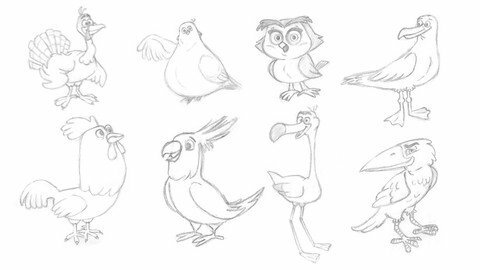
If you decide to become a professional character designer or illustrator, and you can easily design different bird characters.This course is for you.This course is suitable for those who like to work in the field of character design, animation, illustration, comics, and making computer games.In the animal character design course, we give everyone the ability to create the works they have in mind. In this course, the student learns quite fundamentally how to draw a animal character. The student learns how to design different parts of a animal character, using geometric shapes.You do not need expensive tools to start this course and you can become a character designer with a few pencils, paper, and accessories.In this course you will learn the following topics:Section 1: Required tools and basics of animal illustration.Section 2: Illustration and design of Parrot and Toucan.Section 3: Illustration and design of Seagull and pigeon.Section 4: Illustration and design of Turkey.Section 5: Illustration and design of Owl.Section 6: Illustration and design of Crow.Section 7: Illustration and design of Flamingo and StorkSection 8: Illustration and design of Hen and RoosterSection 9: Illustration and design of DuckI hope that by teaching this course, you will gain the ability to create your favorite character.
Overview
Section 1: Introduction
Lecture 1 Introduction
Lecture 2 Introducing the tools
Lecture 3 Basic principles of animal illustration
Section 2: Parrot and Toucan
Lecture 4 General illustration of the first Bird
Lecture 5 Drawing the details of the first Bird
Lecture 6 General illustration of the Parrot
Lecture 7 Drawing the details of the Parrot
Lecture 8 General illustration of the Toucan
Lecture 9 Drawing and Painting the details of the Toucan
Section 3: Seagull and Pigeon
Lecture 10 General illustration of the Seagull
Lecture 11 Drawing the details of the Seagull
Lecture 12 Illustration and drawing the Angry Pigeon
Lecture 13 General illustration of the Fat Pigeon
Lecture 14 Drawing the details of the Fat Pigeon
Section 4: Turkey
Lecture 15 General illustration of the Turkey
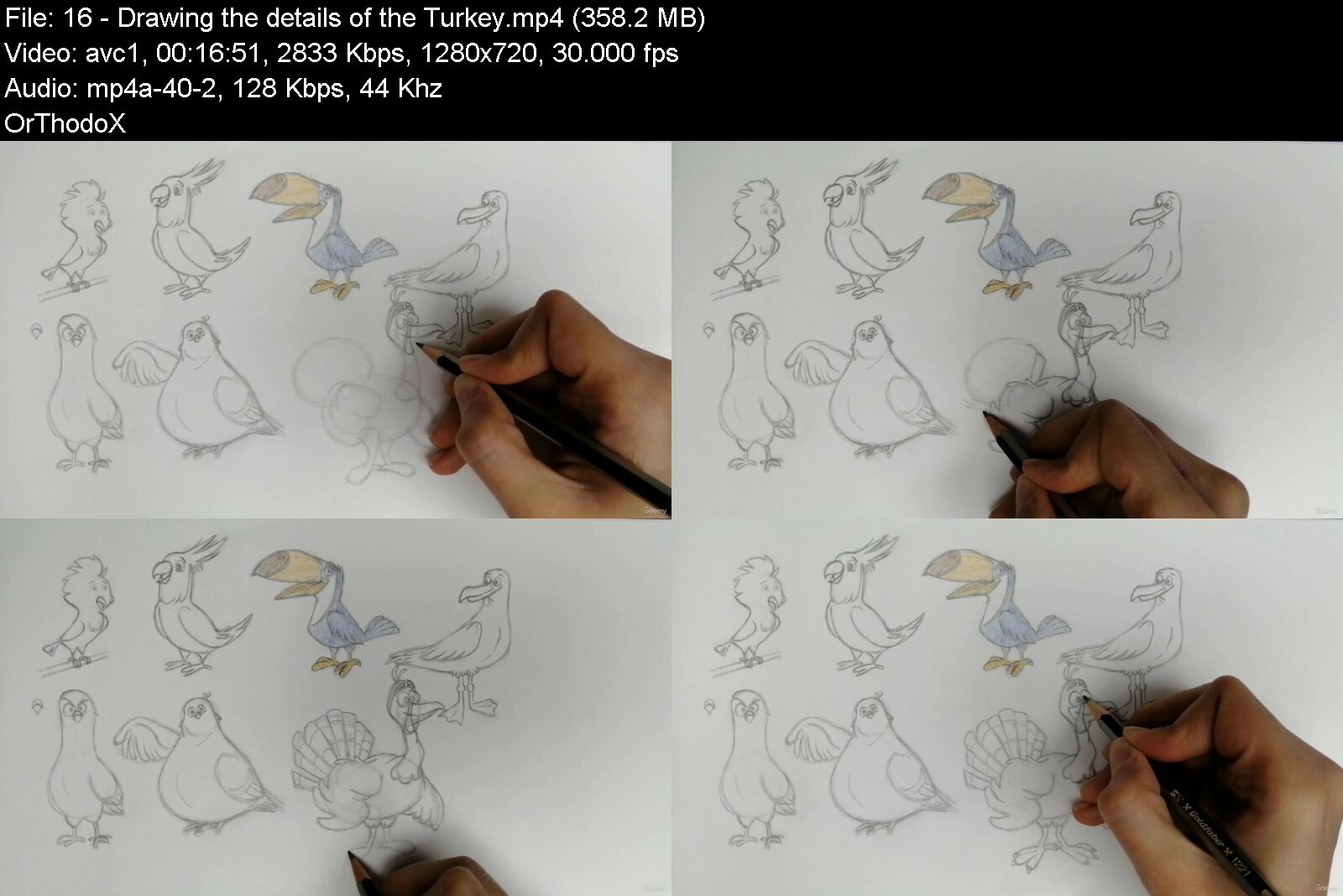
Lecture 16 Drawing the details of the Turkey
Section 5: Owl
Lecture 17 General illustration of the first Owl
Lecture 18 Drawing the details of the first Owl
Lecture 19 General illustration of the second Owl
Lecture 20 Drawing the details of the second Owl
Lecture 21 General illustration of the third Owl
Lecture 22 Drawing the details of the third Owl
Section 6: Crow
Lecture 23 General illustration of the Crow
Lecture 24 Drawing the details of the Crow
Section 7: Flamingo and Stork
Lecture 25 General illustration of Flamingo
Lecture 26 Drawing the details of the Flamingo
Lecture 27 General illustration of the Stork
Lecture 28 Drawing the details of the Stork
Section 8: Hen and Rooster
Lecture 29 General illustration of the Hen
Lecture 30 Drawing the details of the Hen
Lecture 31 General illustration of the Rooster
Lecture 32 Drawing the details of the Rooster
Lecture 33 Illustration and drawing of a Chicken
Section 9: Duck
Lecture 34 General illustration of the Duck
Lecture 35 Drawing the details of the Duck
Lecture 36 General illustration of the Duckling
Lecture 37 General illustration of the Duckling
Suitable for those who do character design,Who want to illustrate different characters according to the real photo,For those who characterize, those who are in the field of animation, animators,Cartoonists,Those who do video advertising,Those who make computer game characters,Those who do children's book illustrations are suitable.


illustratedrawbirdschxed91.jpg


Download from RapidGator


Download from DDownload


Complete Ielts Four Skills : Academic And General

hjnaiky2tfikbd30k9usvjiejd.jpg


Complete Ielts Four Skills : Academic And General
Last updated 2/2021
MP4 | Video: h264, 1280x720 | Audio: AAC, 44.1 KHz
Language: English | Size: 5.58 GB | Duration: 17h 34m

In this course you learn everything about IELTS writing, IELTS reading, IELTS speaking and IELTS listening


What you'll learn
Tips and Techniques of Speaking and Writing
How to write an essay (Task 2)
How to write a report (Task 1 Academic)
How to write a letter (Task 1 General)
How to develop ideas for speaking and writing
How to analyze questions and do brainstorming
question types of writing task 1 and 2 (Academic and General)
Question types of speaking part 1,2,3

Requirements
How to spell and pronounce IELTS  * LOL* (There is no requirement of IELTS)
Pre-intermediate and intermediate level of English
Passion and motivation

Description
Are you going to study abroad or live in another country? You need IELTS But you cannot find a comprehensive and applicative course? Don't worry; Complete IELTS Four Skills: Academic and General is here to help you!International English Language Testing System (IELTS) is one of the most important tests and the main condition of entering universities for international students and living in English-speaking countries. So, if you want to learn it and join your friends in the universities of the world, it is highly recommended to join Complete IELTS Four Skills: Academic and General.The method is based on three principles:1. I teach essential concepts, techniques, and tips and avoid useless concepts2. I teach through the samples and real questions3. I teach clearlyThis course was designed for those who do not have any or much knowledge of IELTS but want to learn everything needed about IELTS. In this course, you will learn about the criteria of IELTS writing and speaking. Also, some useful resources of IELTS are introduced to you. Further, you will learn essential concepts, general tips, and techniques of IELTS. There are also many challenges and exercises which can help you understand how real-world projects are. Totally, in this course, there are four main sections: Writing, Speaking, reading, and listening. Some of the things you learn in the writing section are as the following:Writing section: • Criteria• Question type• Question analysis• Brainstorming• Idea developing• Question types• How to analyze charts and graphs• How to write a good overview• How to write a good introduction• How to write a good conclusion• How to write the body paragraphs• How to write about a graph or chart• How to write about a diagram• Types of letter• How to start and end your letter• How to write a good letterThen, in the speaking section you will learn:• Criteria of IELTS speaking• General tips and techniques• Major topics of part 1,2, 3,• Idea developing• Question types of Part 1,2, 3• Special tips and techniques of Part 1,2, 3• Presentation skills• Body languageReading section : • General reading sections• Reading question types• Special reading techniques Listening section: • Question types • Techniques Therefore, by the end of this course:• You know all the question types of IELTS Writing and Speaking• You will learn how to get at least 6.5 in reading and listening • You will learn how to speak and how to write very well• You know all the essential tips and techniques which are highly important to achieve a high score in writing and speaking• You can speak more fluent and coherent• You Have a better idea of developing• You can cover almost all question of the examiner very well• You learn some presentation skills which are indirectly effective in your band score• Achieve at least 6.5 in your speakingWhy this course:• It is a combination of academic background and 15 years of in-field experience.• All questions of students all answered as soon as possible (less than 12 hours).• All applicative and essential tips and techniques of IELTS have been covered completely.• Clear explanation• Several projects and exercises were designed for students to take a deep dive into IELTS writing and speaking• Short videos (Generally less than 8 min) but essential and applicative concepts and techniques• All episodes are taught PRACTICALLY.Who this course is for:All IELTS candidate (Academic and General training) who want to achieve 6.5+ in IELTS All Academic and General Candidates
Overview
Section 1: Writing (Introduction)
Lecture 1 Introduction
Section 2: Introduction
Lecture 2 Introduction
Lecture 3 Writing overview
Section 3: Task 2 (Academic and General)
Lecture 4 Criteria
Lecture 5 Task Response
Lecture 6 Coherence and Cohesion
Lecture 7 Lexical Resources
Lecture 8 Grammar
Lecture 9 Task 2 (Composition)
Lecture 10 Breaking the task
Lecture 11 Introduction
Lecture 12 question types 1
Lecture 13 Idea Task
Lecture 14 Point of View question
Lecture 15 Important Points in Writing Essays
Lecture 16 How to Do Brainstorming
Lecture 17 Sample
Lecture 18 question analysis
Lecture 19 Analyzing part 2
Lecture 20 Point of view question
Lecture 21 Analyzing Point of View Question
Lecture 22 Sample Point of View
Lecture 23 Problem and Solution
Lecture 24 Problem and Solution Sample
Lecture 25 Cause and Effect
Lecture 26 Cause and Effect Sample
Lecture 27 Two-Part Question
Lecture 28 Two-part Question Sample
Lecture 29 How to Write the Body?
Lecture 30 Body paragraph sample
Lecture 31 How to Develop Your Ideas
Lecture 32 Conclusion
Lecture 33 Conclusion-Sample 1
Lecture 34 Conclusion-Sample 2
Lecture 35 Conclusion-Sample 3
Lecture 36 Conclusion-Sample 4
Lecture 37 Essay Planning
Lecture 38 Time Management
Lecture 39 Band Score Analysis 5-6.5
Lecture 40 Band Score Analysis 7-9
Section 4: Grammar (Punctuation)
Lecture 41 What is punctuation?
Lecture 42 Types of Punctuation
Lecture 43 Full Stop
Lecture 44 Comma 1
Lecture 45 Comma 2
Lecture 46 Colon
Lecture 47 Semi-colon
Section 5: Sample and Exercise (Task 2)
Lecture 48 Sample analysis 1
Lecture 49 Sample analysis 1.1
Lecture 50 Sample Analysis 2
Lecture 51 Sample analysis 2.1
Lecture 52 Sample Analysis 3
Lecture 53 Sample analysis 3.1
Section 6: Task 1 (Academic)
Lecture 54 Task 1 Introduction (Academic)
Lecture 55 Question Types
Lecture 56 Report Structure
Lecture 57 Introduction Task 1
Lecture 58 Overview
Lecture 59 Line Graph
Lecture 60 Line Graph Sample
Lecture 61 Overview Line Graph
Lecture 62 Body Line Graph
Lecture 63 Vocabulary
Lecture 64 Bar Chart
Lecture 65 Bar Chart Question analysis
Lecture 66 Bar Chart Introduction
Lecture 67 Bar Chart Overview
Lecture 68 Body Bar Chart
Lecture 69 Vocabulary
Lecture 70 Pie Chart
Lecture 71 Pie Chart Question Analysis
Lecture 72 Pie Chart Introduction
Lecture 73 Pie Chart Overview
Lecture 74 Body Pie Chart
Lecture 75 Vocabulary
Lecture 76 Tips
Lecture 77 What are Tables?
Lecture 78 Table 1
Lecture 79 Table 2
Lecture 80 Tables 3
Lecture 81 Table 4
Lecture 82 Table 5
Lecture 83 Two-Chart Question
Lecture 84 Tow Chart question sample
Lecture 85 Two-Chart Question Overview
Lecture 86 Two Chart Question Detail
Lecture 87 Two-Chart Question Vocabulary
Lecture 88 Process Diagram
Lecture 89 Process Diagram 2
Lecture 90 Process Diagram 3
Lecture 91 Process Diagram 4
Lecture 92 Process Diagram 5
Lecture 93 Process diagram 6
Lecture 94 Process diagram 6
Lecture 95 Diagram Comparing 1
Lecture 96 Diagram Comparing 2
Lecture 97 Diagram Comparing 3
Lecture 98 Diagram Comparing 4
Lecture 99 Diagram Comparing 5
Lecture 100 Diagram Comparing 6
Section 7: Sample and Exercise Task 1 (Academic)
Lecture 101 Line Graph sample 1
Lecture 102 Line Graph sample 2
Lecture 103 Line Graph sample 3
Lecture 104 Bar charts sample 1
Lecture 105 Bar charts sample 2
Lecture 106 Bar charts sample 3
Lecture 107 Second Bar Chart Sample 1
Lecture 108 Second Bar Chart Sample 2
Lecture 109 Second Bar Chart Sample 3
Lecture 110 pie charts sample 1
Lecture 111 pie charts sample 2
Lecture 112 pie charts sample 3
Lecture 113 Line Graph and Bar chart 1
Lecture 114 line graph and pie chart 2
Lecture 115 line graph and pie chart 3
Lecture 116 Table and Pie chart sample 1
Lecture 117 Table and Pie chart sample 2
Lecture 118 Table and Pie chart sample 3
Lecture 119 Diagram Process 1
Lecture 120 Diagram process sample 2
Lecture 121 Diagram process sample 3
Lecture 122 Table 1
Lecture 123 Table 2
Lecture 124 Table 3
Section 8: Task 1 (General Training)
Lecture 125 Introduction
Lecture 126 How letters are marked?
Lecture 127 How to Write a letter?
Lecture 128 Beginning and Ending
Lecture 129 Question Sample
Lecture 130 Sample Task 1
Lecture 131 How to state the purpose of the letter?
Lecture 132 How to end in a 'formal, way?
Lecture 133 Main points in writing a letter
Lecture 134 Formal Question
Lecture 135 Beginning and Ending (Informal)
Lecture 136 How state the purpose of the letter? (Informal)
Lecture 137 How to end in an informal way?
Lecture 138 Informal Sample
Lecture 139 Semi-formal letter
Section 9: Sample and Exercise Task 1 (General)
Lecture 140 Formal letter 1
Lecture 141 Formal letter 2
Lecture 142 Formal letter 3
Lecture 143 Formal letter 2- Part one
Lecture 144 Formal letter two- part two
Lecture 145 Formal letter sample two- Part three
Lecture 146 Formal letter sample 3- Part one
Lecture 147 Formal letter sample 3- Part two
Lecture 148 Formal letter sample 3- Part three
Lecture 149 Informal letter 1
Lecture 150 Informal letter 2
Lecture 151 Informal letter part 3
Section 10: Criteria of Speaking and General Tips & Techniques
Lecture 152 Fluency and Coherence
Lecture 153 Vocabulary
Lecture 154 Grammar
Lecture 155 Pronunciation
Lecture 156 General Tips and Techniques
Section 11: Speaking Part 1
Lecture 157 Introduction
Lecture 158 Question Types
Lecture 159 Key Tips and Techniques
Section 12: Speaking Part 2
Lecture 160 Introduction
Lecture 161 General Tips and Techniques
Lecture 162 Idea Developing
Lecture 163 Key Tips and Techniques
Lecture 164 Sample 1
Lecture 165 Sample 1/1
Lecture 166 Sample 2
Lecture 167 Sample 3
Section 13: Speaking Part 3
Lecture 168 Introduction
Lecture 169 Question Types
Lecture 170 Key Tips and Techniques
Section 14: Article
Lecture 171 100 phrases
Section 15: Introduction Reading
Lecture 172 Introduction
Section 16: Question Types
Lecture 173 Question types
Section 17: General Techniques
Lecture 174 General Techniques
Section 18: Gap-filling question
Lecture 175 Gap-filling overview
Lecture 176 Gap-filling sample
Section 19: True/False/Not Given
Lecture 177 Overview
Lecture 178 Techniques
Lecture 179 Sample
Section 20: Paragraph Matching
Lecture 180 Overview & Techniques
Lecture 181 Sample
Lecture 182 Review
Section 21: Paragraph Contains
Lecture 183 Overview & Techniques
Lecture 184 Sample
Section 22: Multiple Choice Questions
Lecture 185 Overview & Techniques
Lecture 186 Sample
Section 23: Matching Names
Lecture 187 Overview & Techniques
Lecture 188 Sample
Section 24: Short Answer Questions
Lecture 189 Overview & Techniques
Lecture 190 Sample
Section 25: Introduction Listening
Lecture 191 Introduction
Lecture 192 General information
Lecture 193 Question types
Section 26: Section 1
Lecture 194 Section 1
Lecture 195 Techniques of section 1
Section 27: Section 2
Lecture 196 Section 2
Lecture 197 Question types of section 2
Lecture 198 Techniques of section 2
Section 28: Section 3
Lecture 199 Section 3
Lecture 200 Section 3 question types
Lecture 201 Techniques for matching questions
Section 29: Section 4
Lecture 202 Section 4
Lecture 203 Section 4 question types
Lecture 204 Key tips for IELTS listening
Lecture 205 Names and Numbers
All IELTS candidate (Academic and General training) who want to achieve 6.5+ in IELTS Writing and Speaking but do not have any background or knowledge on IELTS.,Those who want to have better presentation.


completeieltsfourskil03iun.jpg


Download from RapidGator


Download from DDownload

 
How To Drawing Face: Children Character (Fundamental Guides)

b4ysuhucynwpdsxogmgt45id6k.jpg


How To Drawing Face: Children Character (Fundamental Guides)
Last updated 6/2022
MP4 | Video: h264, 1280x720 | Audio: AAC, 44.1 KHz
Language: English | Size: 5.80 GB | Duration: 4h 38m

How to Draw head and face character with pencil step by step


What you'll learn
Students to be able to draw a face in different shapes for boy and girl.
Gain the ability to draw a variety of hairstyles for boy and girl characters.
Drawing all kinds of facial expressions (sadness, happiness, anger, etc.)
Increase creativity in drawing a variety of boy and girl characters

Requirements
B and B2 Pencil
Etude and tip Etude
Dough eraser and etude eraser
Sharpener
Paper
Basic level of drawing

Description
If you decide to become a professional character designer or illustrator, and you can easily design different human characters.This course is for you.I have seen people who often decide to draw an interesting idea of ​​a person but do not have the ability to transfer the idea to paper. In this course, we give everyone the ability to create the works they have in mind. In this course, the student learns quite fundamentally how to draw a boy or girl face character. The student learns how to design different parts of head child character, including head, face, neck and etc. using geometric shapes, and then add details to them.In the first section, I will introduce the tool.In the second section, I will teach drawing different types of faces and heads of boy characters in different states of laughter, sadness, surprise, anger, and different hairstyles.And in the third section, I will teach you to draw different types of faces and heads of girl characters in different states of laughter, sadness, surprise, as well as different hairstyles.I hope this course will help increase your creativity in designing different types of faces for children and teenagers. Stay tuned for my other courses.Good luck.
Overview
Section 1: Introduction
Lecture 1 Introduction
Lecture 2 Tools
Section 2: Boy's Head
Lecture 3 Smiling boy face
Lecture 4 Boy face with large teeth (three quarter view face)
Lecture 5 Funny boy face
Lecture 6 Nutty boy's face
Lecture 7 Chubby boy face (three quarter view face)
Lecture 8 Charming boy face (three quarter view face)
Lecture 9 Polite boy face (three quarter view face)
Lecture 10 Chubby boy face with hat (three quarter view face)
Lecture 11 Boy face with freckled face
Lecture 12 Boy face with long hair
Lecture 13 Boy face with big eyes and attractive hair (three quarter view face)
Lecture 14 Surprised boy face
Lecture 15 Smiling boy face with hat and curly hair
Lecture 16 Boy face with big glasses
Section 3: Girl's Head
Lecture 17 Little cute girl face
Lecture 18 Smiling girl face with long hair
Lecture 19 Smiling girl face with curly hair
Lecture 20 Smiling girl face with short bangs
Lecture 21 Surprised girl face with long hair
Lecture 22 Funny smiling girl face with short hair
Lecture 23 Little girl face with big eyes
Lecture 24 Beautiful girl face with glasses and bangs hair
Lecture 25 Beautiful girl face with big eyes and long hair
Lecture 26 The face of a cute little girl with a freckled face
This course is suitable for those who work in the field of animation, animators, character design, cartoonists, computer game character making, children's book illustration work.


howtodrawingfacechildm8fge.jpg


Download from RapidGator


Download from DDownload

 
Beginners Guide to the Particle System in Blender 2.9

p3jbf1iecdgwegfyqlwuf45esi.jpg


Beginners Guide to the Particle System in Blender 2.9
.ts | Video: h264, yuv420p, 1920x1080 | Audio: aac, 48000 Hz | Duration: 5h 06m | 5.06 GB
Genre: eLearning | Language: English

Do you want to learn how to use the Particle System in Blender to create awesome renders or animations? Do you want to feel confident while using particles? By the end of this course you will have an understanding of the functions in the particle system. In the first couple sections we will be focusing on the settings and what each one does. All the videos are labeled so it's very easy to find a specific setting or value that you are wanting to learn.
One of the best ways to learn is to practice it yourself. That is why I have included 5 full tutorials in which we use the Particle System to create different renders and animations! The first one being on grass. We will be using hair particles to create the shape and from there we will learn how to create a realistic grass material.
The second tutorial is on fluid particles. After a basic overview we will jump straight into Blender and create a fluid particle animation together using the render engine Eevee.
Next up is low poly fire. For this one we will be using a trick in the particle system to change the size as the particle rises. We will also learn about materials and how to change the color overtime.
Hair is the next tutorial that we tackle in this course. You will learn from scratch how to add hair, style it the way you want and create a nice material.
Finally the last section of this course is on the smoke simulation and how you can emit smoke from the particles themselves.
Learning Blender can be very hard when you first start that's why I built this course for all levels beginner to advanced. I will be showing you step by step on what to do and why we do it. From the basics of modeling to advanced techniques like creating grass with particle systems.
Song Used Jake Wolfe - Believer
Soundcloud - jakewolfemusic
Instagram - jakewolfemusic
Youtube - Jake Wolfe
Twitter - @jakewolfemusic
The program that is used in this course is Blender 3D.
Blender 3D is a free open source program that allows you to create literally anything on the computer!
You can download by going to their website.
I can't wait to see the renders and animations you create!
Thanks
Stephen

Homepage

beginnersguidetothepabgd7q.jpg


Download from RapidGator


Download from DDownload

 
Litigation (Civil)

dtoxqmwr8z1xsdhbzxqscm6ip2.jpg


Litigation (Civil)
Last updated 2/2022
MP4 | Video: h264, 1280x720 | Audio: AAC, 44.1 KHz
Language: English | Size: 7.45 GB | Duration: 11h 48m

A to Z of learnings and skills required as litigation or disputes lawyer


What you'll learn
Determination of Jurisdiction
Determination of Cause of Action
Determination of Reliefs
Drafting Plaint
Proceedings under Commercial Courts Act
Drafting Affidavits
Drafting Written Statement
Drafting Writ Petition
Court Filings
Drafting Memorandum of Appeal
Drafting List of Dates (LOD)
Discovery, Inspection and Interrogatories
Cross-examination
Framing of Issues
Admission & Denial
Oral Arguments
Execution Proceedings
Appeals
Writ Proceedings

Requirements
No qualification is required, this course will teach you from very basics to advanced levels

Description
Agarwal Law Associates, a leading dispute resolution law firm, members of Bench & Bar, and SkillxPro have partnered to bring to you a comprehensive course on Civil Litigation.You will be tutored and trained by experts from the Bench and the Bar i.e. by Hon'ble Judges, Senior Counsels, and members of Agarwal Law Associates (ALA). This course has been designed to accelerate your understanding via experiential learning i.e., you will experience, learn and understand every stage and element of a typical civil suit proceeding starting from filing of the pleadings to proceedings to the trial proceedings to the appeal stage. At each stage, the focus shall be placed on training on in-demand skills like drafting of pleadings, framing of issues, conducting of cross-examination and oral hearings, etc. You will be trained on very basics like determination of jurisdiction, determination of adequate reliefs, preparation of papers for counsel meetings & oral hearings, and advising your client. Apart from Suit proceedings, this course will also take into consideration the proceedings of a Writ and a SLP.When you finish, you will adapt to sector-specific skills like drafting of pleadings and other miscellaneous documents, skills involved in trial proceedings, and oral hearing and advising your company or client.For the projects and assessments, you will apply the taught skills and knowledge in real-time projects through drafting, case studies, reasoning, Q&As, etc. The projects will strengthen your learning and acquired skill sets. You'll be able to apply the acquired skills to handle civil litigation proceedings as well as advise your clients on disputes related matters.
Overview
Section 1: Course Overview & Instructions
Lecture 1 Overview of the Course
Lecture 2 Course Info
Lecture 3 Course Instructions
Lecture 4 Course Completion Guide
Lecture 5 Glossary
Section 2: Module 1 | Introduction to Civil Proceedings
Lecture 6 Preliminary Approach & Considerations - before filing a Case
Lecture 7 Recap: Preliminary Approach
Lecture 8 Introduction to Reliefs; Ingredients of Interim Reliefs
Lecture 9 Nature of Interim Reliefs
Lecture 10 Interim reliefs
Lecture 11 Final Reliefs
Lecture 12 Final Reliefs
Lecture 13 Damages for breach of contract (English Law)
Lecture 14 Specific performance (English Law)
Lecture 15 Judiciary System
Lecture 16 Indian legal System- Hierarchy of Courts
Lecture 17 Jurisdiction
Lecture 18 Explained: Jurisdiction
Lecture 19 Burden of Proof
Section 3: Module 2 | Commercial Courts Act
Lecture 20 Introduction to Commercial Courts Act; Concept of Commercial Disputes
Lecture 21 Legislative History: Commercial Courts Act
Lecture 22 Commercial Disputes of Specified Value
Lecture 23 Hierarchy of Courts under Commercial Courts Act
Lecture 24 Commercial Courts
Lecture 25 Overview of lifecycle of Proceedings under Commercial Courts Act
Lecture 26 Recap: Lifecycle of Proceedings under Commercial Courts Act
Lecture 27 Drafting & Filing of Statement of Truth required under Commercial Courts Act
Lecture 28 Statement of Truth
Lecture 29 'Summary Judgment' under Commercial Courts Act
Lecture 30 Summary Judgment
Section 4: Module 3 | Pre-requisites | Pre-Trial Proceedings (Part I)
Lecture 31 Prior notice to government before filing Suit under Section 80 of CPC
Lecture 32 Explained: Prior notice under Section 80 of CPC
Lecture 33 Pre-institution mediation under Section 12A of the Commercial Courts Act
Lecture 34 Explained: Pre-institution Mediation
Lecture 35 Civil Proceedings against Indian & Foreign State
Lecture 36 Overview of lifecycle of Civil Litigation (Suit)
Lecture 37 Recap: Overview of lifecycle of Civil Litigation
Section 5: Module 4 | Pleadings | Pre-Trial Proceedings (Part II)
Lecture 38 Essence of Pleadings
Lecture 39 History: Pleadings in classical period of Roman Law vis-a-vis Pleadings today
Lecture 40 History: Pleadings in early period of English Law vis-a-vis Pleadings in today's
Lecture 41 Pleadings in early period of Roman & English Law
Lecture 42 Landmark Judgment of Justice Pradeep Nandrajog on Pleadings
Lecture 43 Evolutions of Pleadings in India
Lecture 44 Fundamentals of Pleadings
Lecture 45 Rules under CPC: Pleadings & Plaint
Lecture 46 Pleadings: Basics; & Rules under CPC
Lecture 47 Landmark Judgment on Pleadings vis-a-vis CPC: Bharat Singh vs. State of Haryana
Lecture 48 Particulars to be contained in Plaint provided under Order 7 Rule 1 of CPC
Lecture 49 Illustration - Drafting of Pleading via-a-vis Cause of Action
Lecture 50 Learning drafting of Plaint - discussing template of Plaint
Lecture 51 Template & Drafting Notes: Plaint
Lecture 52 Introduction to Written Statement; Explanation to Denials
Lecture 53 Illustration: Understanding the four categories of pleas/denials
Lecture 54 Learning drafting of Plaint - discussing template of Written Statement - I
Lecture 55 Template & Drafting Notes: Written Statement - I
Lecture 56 Learning drafting of Written Statement II
Lecture 57 Template & Drafting Notes: Written Statement & Counterclaim - II
Lecture 58 Replication / Rejoinder
Lecture 59 Template: Affidavit in Rejoinder
Lecture 60 Endnote: Pleadings
Section 6: Module 5 | Exhibits & Filing Process | Pre-Trial Proceedings (Part III)
Lecture 61 Supplemental Documents attached to Pleadings
Lecture 62 Template: Supporting Documents to Plaint
Lecture 63 Learning drafting of Vakalatnama - discussing template of Vakalatnama
Lecture 64 Template: Vakalatnama
Lecture 65 What documents to be attached as Exhibit?
Lecture 66 Failure to disclose documents alongwith Pleadings
Lecture 67 Disclosure of Documents
Lecture 68 Certificate under Section 65-B of the Indian Evidence Act for electronic record
Lecture 69 Proving Electronic Evidence: Certificate u/s 65B of Indian Evidence Act
Lecture 70 Template: 65B Certificate
Lecture 71 Essentials of Filing (as applicable in the DHC) - Drafting Requirement
Lecture 72 Essentials of Filing (as applicable in the Delhi High Court) - Miscellaneous
Lecture 73 Essentials of Filing (as applicable in the Delhi High Court)
Lecture 74 List of Dates (LOD)
Lecture 75 Template: List of Dates (LOD)
Section 7: Module 6 | Framing of Issues & Evidence Stage | Trial Proceedings (Part I)
Lecture 76 Introduction: Trial & Framing of Issues
Lecture 77 Kinds of Issues
Lecture 78 Process of framing Issues
Lecture 79 Important rules pertaining to framing Issues
Lecture 80 Explained- Framing of Issues
Lecture 81 Framing of Issue vis-a-vis Framing of charge under CrPC (Criminal Proceedings)
Lecture 82 Illustration: Skill of Framing of Issues
Lecture 83 Recap: Illustration- Skill of Framing of Issues
Lecture 84 Discovery, Inspection and Interrogatories
Lecture 85 Non-compliance of Discovery processes
Lecture 86 Summary: Discovery, Inspection and Interrogatories
Lecture 87 Learning drafting of Affidavit of Admission & Denial
Lecture 88 Template: Affidavit of Admission/ Denial
Lecture 89 Basics of Cross-examination
Lecture 90 Rules: Examination under Indian Evidence act 1872 (Evidence Act)
Lecture 91 Art of Cross-examination
Section 8: Module 7 | Final Argument and Judgment | Trial Proceedings (Part II)
Lecture 92 Final Arguments
Lecture 93 Basics- Final Arguments
Lecture 94 Practical, skill-oriented pointers for making final arguments & oral arguments
Lecture 95 Recap: Practical Tips- Final Arguments
Lecture 96 Judgment
Lecture 97 Procuring copy of the Judgment
Lecture 98 Decree
Lecture 99 Explained- Decree & Judgment
Lecture 100 Caveat
Lecture 101 Explained: Caveat
Lecture 102 Template: Caveat
Lecture 103 Execution Petition
Lecture 104 Execution Petition- Rules & Drafting
Section 9: Module 8 | Appeal & Revision
Lecture 105 Introduction to Appeal; First & Second Appeal
Lecture 106 Who can file an Appeal?
Lecture 107 Appealable Orders and Judgments
Lecture 108 Limitation Period vis-a-vis Appeals
Lecture 109 Explained: Appeal
Lecture 110 Remand of case by Appellate Court
Lecture 111 Drafting: Memorandum of Appeal
Lecture 112 Learning drafting of Memorandum of Appeal
Lecture 113 Drafting Pointers: Memorandum of Appeal
Lecture 114 Template: Memorandum of Appeal
Lecture 115 Revision
Lecture 116 Concept: Revision
Lecture 117 Illustration: Revision vis-a-vis Appeal
Lecture 118 Difference: Appeal & Revision
Section 10: Module 9 | Writ Petition & SLP
Lecture 119 Introduction to Writs; Writ vis-a-vis Suit
Lecture 120 Introduction to Writ Jurisdiction; Against whom can Writ Petition be filed?
Lecture 121 Types of Writs: Certiorari
Lecture 122 Writ of Mandamus
Lecture 123 Writ of Prohibition
Lecture 124 Writ of Quo warranto
Lecture 125 Writ of Habeas Corpus
Lecture 126 Writ: Jurisdiction and Types
Lecture 127 Where can the Writ Petition be filed? - Article 32 vis-a vis Art 226
Lecture 128 Article 32 & 226
Lecture 129 Drafting: Writ Petition
Lecture 130 Learning drafting of Writ Petition - discussing template of Writ Petition
Lecture 131 Template & Drafting Notes- Writ Petition
Lecture 132 Drafting: Counter Affidavit
Lecture 133 Special Leave Petition (SLP)
Lecture 134 Explained: Special Leave Petition (SLP)
Lecture 135 Drafting: Special Leave Petition (SLP)
Lecture 136 Learning drafting of Special Leave Petition (SLP)
Lecture 137 Template: SLP
Lecture 138 Document management in Disputes practice
Law Student,Lawyer,Attorney,Counsel,In-house Counsel,Advocates


litigationcivil9zi8c.jpg


Download from RapidGator


Download from DDownload



BIG-IP Local Traffic Manager(LTM) V16 Training

483841617ba2gxcba.jpg


BIG-IP Local Traffic Manager(LTM) V16 Training
Last Updated 08/2022
MP4 | Video: h264, 1280x720 | Audio: AAC, 44.1 KHz, 2 Ch
Genre: eLearning | Language: English | Duration: 89 lectures (19h 15m) | Size: 11.4 GB


Learn Local Traffic Manager LTM V16 with Step by Step Lab Workbook


What you'll learn
Learn the Basic Functions of an F5 Load Balancer.
Understand the F5 Terminologies for the real world.
Provide you the confidence to navigate the F5 LTM.
Learn to create an F5 load balancer cluster for High Availability.
Deployment and Configuration Virtual servers.
Deployment and Configuration Profiles, Pools, Nodes & other Components.
Setup and Administer F5 BIG IP Appliance.
Achieve Certified F5 BIG-IP Administrator Certification Exam 201
Learn how to setup and install a Virtual F5 Lab.
Learn the Basics of Nodes, Pools, and Virtual Servers.
Configure NAT, SNAT, SNAT pool and AutoMap.
Learn Monitor, Different Type of Monitor.
Requirements
Basic IP and security knowledge is nice to have.
Students need to understand basic networking.
Students needs to understand Networking Fundamentals.
Description
F5 Big IP LTM is deployed in most large organizations as it provide a great end-user experience for the websites and applications. If you are in an IT infrastructure or Consulting role, you should learn this technology to boost your growth prospects
My step-by-step training will initiate you into F5 load balancers installation, licensing, best practice configuration, maintaining and basic troubleshooting for such technology. My hope is that my training will motivate you to become f5 certified administrator.
In this F5 Load Balancer Training course, you will learn an introduction to the F5 Local Traffic Management Device. If you would like to learn and gain knowledge of how to load balance using an F5 LTM, this F5 load balancer Training course is for you. This Course has been designed to enable you configure and setup BIG-IP appliance, design and configure load balancing requirements of server / application teams, the course will cover exam requirements (F5 Exam 201) and also cover all the knowledge you need to administrator the BIG IP appliance. It goes through the basic appliance setup, then load balancing basics, load balancing algorithms, Profiles, Backup, CLI, NAT, Routing, HA, Users & Partitions, logging, iHleath, TCPDump and QKView.
If you would like to learn and gain knowledge of how to load balance using an F5 LTM, this F5 load balancer tutorial course is for you.
Who this course is for
This course is for students trying to obtain the Exam 101 and 201
This course is for students trying to learn the F5 LTM.
Any Network or Security Engineer want to learn or polish their Skills.
Course has been designed for anyone who wants to start learning about F5 LTM
This course is intended for anyone that is going to deploy an F5 LTM.
This course is intended for anyone is interested in learning about the F5 LTM.


bigiplocaltrafficmanak9evz.jpg


Download from RapidGator


Download from DDownload


Drawing A Caricature With Procreate 2019 On The Ipad

haoitl7ksgaqot16ctew33ye3l.jpg


Drawing A Caricature With Procreate 2019 On The Ipad
Last updated 4/2019
MP4 | Video: h264, 1280x720 | Audio: AAC, 44.1 KHz
Language: English | Size: 10.15 GB | Duration: 7h 46m

Learn how to draw beauty Caricatures with Procreate app on the iPad


What you'll learn
How to Draw Beauty Caricatures with Procreate App
How to Use Procreates Brushes, Layers and Selections for your Art
How to Paint and Blend on iPad with the Procreate App
Create video timelapses of your drawings
How to create nice cartoons by the Pro-create application after learning how the tools work

Requirements
You will need an iPad, preferably a newer one (iPad air, iPad Pro or a recent iPad Mini)
You will need the Procreate application from the app store
Some basic familiarity with the iPad would be useful
An Apple Pencil or Apple Pencil 2 Stylus for your iPad
You must have the knowledge of techniques of drawing, body anatomy, and colorology

Description
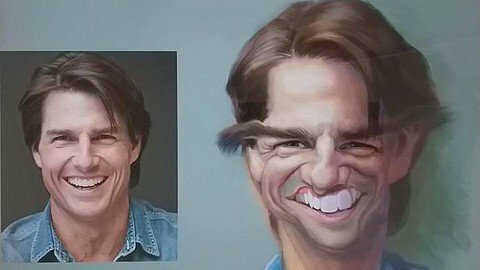
Procreate is a powerful digital sketching and painting app designed specifically for the iPad. Procreate offers exceptional performance, an elegant user interface, powerful layers support, stunning filters, hundreds of brush presets (including pens, pencils, and abstract tools), and the ability to import, create, and share custom brushes. The app supports Apple Pencil and iCloud Drive, and it records each brushstroke as you work, so sharing your work by video is seamless.My main purpose is to create passion among talented youngsters applying the latest and most advanced human technology at the present time. Moreover, using this tool instead of pen and paper is a tactful and big step toward protecting the trees and environment as a whole. The next purpose, is answering to the question on how to use special image illustration softwares which contain unlimited and varied options. In this course, I have dawning of Tom Cruz's caricature just in 7 hours which can be very helpful for those who are master in portrait. For beginners, also, the course opens a new bright perspective to enjoy caricature and learn all the portrait techniques to be a caricaturist in the near future. In my next course which will be published soon, I've taught face anatomy (profile, semi profile and full-faced) which can be helpful for those who want to be a caricaturist, painter and sculpture. Also, the course provides many practices, so students can learn how to see well paint well.
Overview
Section 1: Introduction
Lecture 1 Introduction
Section 2: Getting Acquaintance with Procreate App and Its Tools
Lecture 2 Part 1
Lecture 3 Part 2
Section 3: Designing, Molding and Specifying New Spots of Facial Components
Lecture 4 Part 1
Lecture 5 Part 2
Lecture 6 Part 3
Section 4: Working on Face Context as well as Background and Space Creation
Lecture 7 Part 1
Lecture 8 Part 2
Lecture 9 Part 3
Section 5: Determining The Exact Color and Texture
Lecture 10 Part 1
Lecture 11 Part 2
Lecture 12 Part 3
Section 6: Elimination of Existing Colors for Better Displaying of Dark and Light Parts
Lecture 13 Part 1
Lecture 14 Part 2
Lecture 15 Part 3
Section 7: Creating more Precious and High Quality Shades for more Contrast
Lecture 16 Part 1
Lecture 17 Part 2
Lecture 18 Part 3
Section 8: Gender Determination with Coloring and Highlighting Parts of Forehead
Lecture 19 Part 1
Section 9: Gender Determination of Middle Facial Components
Lecture 20 Part 1
Lecture 21 Part 2
Lecture 22 Part 3
Section 10: Architectural Design Size and Contrasting on Lower Parts of Face
Lecture 23 Part 1
Lecture 24 Part 2
Lecture 25 Part 3
Section 11: Coordinating the Face and Nose Through Elimination
Lecture 26 Part 1
Lecture 27 Part 2
Lecture 28 Part 3
Section 12: Coordinating for Texture Clarification and Different Levels of Face and Ear
Lecture 29 Part 1
Lecture 30 Part 2
Lecture 31 Part 3
Section 13: Architectural Design Size and Sex DP on Hair and Neck
Lecture 32 Part 1
Lecture 33 Part 2
Lecture 34 Part 3
Section 14: Continuing to Work on Hair, Eyes and Sex DP
Lecture 35 Part 1
Lecture 36 Part 2
Lecture 37 Part 3
Section 15: General Editing of Face for more Coordination and Final Clarification
Lecture 38 Part 1
Lecture 39 Part 2
Lecture 40 Part 3
Section 16: Designing Cloth and Its Ultimate Coordination with Head and Shoulders
Lecture 41 Part 1
Section 17: Time-lapse video
Lecture 42 Time-lapse video
Anyone who wants to sketch and draw caricature on an iPad,People who have an iPad and want to learn how to draw,Anyone who Wants to Draw and Paint on iPad Casually or Professionally


drawingacaricaturewitzfctz.jpg


Download from RapidGator


Download from DDownload


Complete iOS 16 Developer with swift UI and 10 apps

470619099ab8tepl.jpg


Complete iOS 16 Developer with swift UI and 10 apps
Published 08/2022
MP4 | Video: h264, 1280x720 | Audio: AAC, 44.1 KHz, 2 Ch
Genre: eLearning | Language: English + srt | Duration: 102 lectures (15h 23m) | Size: 8 GB


Learn iOS development with swift UI and building lots of apps


What you'll learn
Learn Swift programming language from the scratch.
Practice Swift programming language with interesting assignments attached along
Learn to create basic app with SwiftUI framework
Create your profile design with SwiftUI layouts and framework
Basic mobile application design
Gorgeous in-app interactions and animations
Learn how to fetch data from JSON file using web APIs
Learn to implement Lottie Animations and higher designing skills
Learn to integrate various iOS frameworks (AVFoundation, MapkKit etc)
Learn to integrate core data with REALM
Learn Firebase fundamentals including saving data, real-time sync, authentication, user status and offline support
Build unparalleled augmented reality experiences with ARKit
Leran how to save and load data on your iPhone with Firebase and SwiftUI
Create a top-notch portfolio of real apps and apply for iOS developer jobs
Master Apple's greatest and latest user interface framework - SwiftUI 3
The Complete iOS App Development Course with SwiftUI 3
Requirements
Xcode 13 from Apple
macOS Monterey from Apple
You do not need any other prior coding experience or knowledge
Determination to create wonderful projects with tutor step by step
Description
Welcome to complete iOS 16 developer course.
A course that does not just add a few sections of Swift UI rather teaches you complete iOS development fully in swift UI. We truly understand that it can be frustrating to learn from resources that just add a few sections and call it a new course. This course is not like that.
We have designed and recorded this course entirely on the new Swift UI.
We will start with the basics of programming with a swift programming language. We will go through concepts of programming like variables, operators, range, optional binding, forced unwrapping, control flows, functions, class, structs, protocols and error handling. Once the programming basics are complete we will start with building apps. There is nothing like learning while building apps. Each app is designed and planned in such a way that it teaches you 1 concept at a time.
Profile app
This app will teach you the basics of creating apps and will make you familiar with ZStack, HStack and VStack. Within very 1st app you will learn to design beautiful apps.
Slot machine
This app will teach you about custom shape design in iOS. We will learn about the concept of rawValue and creating any shape that you want. Again a beautiful app with some logic as well.
Calculator app
Calculator seems really simple to people but it is not. This calculator is full of animations and tricks for designing a layout. How to calculate screen dimensions and more.
Splash screen
Although this app is small in implementation, but it is very much fun. In this app you will learn about creating a splash screen that usually acts as a branding screen for most apps.
Shopping app
This app focuses more on the UI part. With a beautiful UI, we will learn about creating models and travelling of data between multiple screens. Horizontal scroll view and Vertical scrolling is also covered in this app.
Linkedin UI Clone
Linkedin has got one of the cleanest and most user friendly apps. Building an app like this teaches you a lot about clear design and gives you confidence that you can also build a complex app.
Todo app - User defaults
Todo apps like everyone can do it but don't take it easy, it's not that easy. Todo app teaches you about the CRUD operations and that too with UserDefaults. We will also learn about app state management in this app.
API handling with Pokemon app
Handling API is one of the most important jobs as a developer and during your journey as an iOS developer you will be handling a ton of API. In this section we will learn about making a web call to API, handling clean response, handling dirty response and creating a model based on response. Further there will be a small assignment in this section.
Currently we are rolling out this course with these apps. As I get more time, I will surely add more apps to this course.
Who this course is for
Beginner iOS developer who are curious about iOS development
For advance iOS developers eager to learn SwiftUI framework
Best course for the engineers looking for job as an App Developer
People willing to publishing their app on App Store, then jump straight into the course


completeios16developexqcxq.jpg


Download from RapidGator


Download from DDownload


Finish Your Degree - 6 Key Lessons For Completing Your Study

vahyyigscxh03l7qx3uf3oefrq.jpg


Finish Your Degree - 6 Key Lessons For Completing Your Study
Last updated 5/2022
MP4 | Video: h264, 1280x720 | Audio: AAC, 44.1 KHz
Language: English | Size: 7.23 GB | Duration: 10h 50m

Learn & apply practical, top-rated techniques to avoid stress & confidently get your research degree


What you'll learn
Develop a habit of reading, thinking & writing which will set a very important foundation for success in your degree
Set up your weekly supervisor status report so that you keep a regular discipline of progress and streamlined communications
Plan and master your tasks throughout your studies from "To-Do" to "Done" to drive momentum and benefit from Kanban principles
Support your study with a good proposal that sets the foundation for your degree and learn how to fix an existing proposal
Learn writing practices that help you write for your reader and complete your reports & discussion papers with meaning & clarity
Write & pass your final report, thesis or dissertation which will be your single biggest measure of success in your degree
Principles and practices of Kanban boards and how to set yours up either physically or digitally to maximise your progress
How to limit work in progress & achieve cadence in managing tasks to maintain consistent weekly focus on what matters most
The 3 key objectives that a good proposal needs to achieve: The what, the why and the how of your study
Learn writing practices like real nouns, real subjects, old before new, complexity last and how these make your writing clearer
The 5 main sections of a final report, thesis or dissertation: Introduction, Literature Review, Methodology, Results, Conclusion
The importance of writing early, often and well; practical techniques to making this an important part of your daily student life
Learn which content from your proposal can go into your final report so that you "think with the end in mind" and start early
The importance of writing discussion papers as a practical technique for writing often to document academic progress as you go
What goes into your weekly supervisor status report: The 5 tasks you completed last week and the 5 planned for the next week
Practicalities & benefits of a weekly progress report: How it helps improve your own discipline and improve supervisor interaction
How to plan key phases of your degree on a week by week basis; see a demonstration of how I planned and wrote my thesis
Demonstrations of each major section in my own final report; see a walk through of exactly what I put in my document
How to write a good thesis statement as a north star that guides your study; I teach you an example from the wipeboard
Download and see demos of my own successful PhD documents: Proposal, Proposal Presentation and Final Report / Thesis / Dissertation

Requirements
There are no course requirements or prerequisites

Description
"Thank you for all the tips and techniques that you have provided in this course. It really helped me in completing my research proposal for my masters degree." - Rensche E."This course sounds fantastic just from looking at the introduction. I am confident that it will definitely build my success." - Jenna M."I thoroughly enjoyed this course! I am beginning a Masters's degree and the tips and advice presented in this course gave me food for thought and a structured study plan for me to use going forward. The demonstration/wipeboard lessons helped cement and clarify concepts or study tools. I feel more confident now moving forward with my degree having completed this course. Thank you very much!" - Caitlin V."This course was phenomenal. The content was high quality and practical, and I found a lot of value in the time I spent working through it. After completing it I feel more confident and excited about my academic journey. Thank you for this wonderful experience, I would recommend this course to every student!" - Chanel CloeteThis course is a premium masterclass in which I will teach you everything you need to know and prepare to get through your research based qualification with confidence and success. Avoid the stress that is often associated with a demanding period of your life, especially if you are studying part time or doing research for the first time. Achieve confidence today by enrolling, learning and applying these 6 steps and then enjoy your degree rather than be stressed by worrying about whether you are well prepared. I've coached and taught postgrad students for 5 years and I draw on all my experience, as well as my own PhD, to provide everything in one place. These are the top 6 most important aspects of academic student life that I see students struggling with and you can gain the advantage of my experience by going through these lessons. Learn what actually works from my experience and thousands of other students before you learn it the hard way with mistakes that can delay and significantly impact your studies.In this course you will learn these 6 steps that will give you the confidence to complete your research based degree successfully:Step 1:*Develop a habit of reading, thinking & writing >> take actionStep 2:*Set up your weekly supervisor status report >> take actionStep 3:*Plan and master your tasks from to-do to done >> take actionStep 4:*Support your study with a good proposal >> take actionStep 5:*Learn writing practices for meaning & clarity >> take actionStep 6:*Write & pass your final report, thesis or dissertation >> take actionThe course also includes a downloadable PDF*guide that highlights the key actions, insights and learnings for each of these steps. You will also be able to download my own PhD*Research Proposal, PhD Research Proposal Presentation as well as my PhD*Final Report / Thesis / Dissertation.There are activities for each step so that you can take action and apply what you have learnt as you go to achieve your goals. Each step builds on the previous one so although you can select individual steps to focus on, it is also valuable to go through the steps in sequence. You will get the best results if you complete the entire course all together and put the principles and practices into action as soon as possible.Review of Peter Alkema's course, Double Your Academic Writing:*"I wish I had this course last year when I wrote my English papers and assignments. This has however assisted me now in emails and getting my point across better within my environment. The videos were interesting and captivated through the course. Very clear and precise."Review of Peter Alkema's course, Finish Your Proposal: "Peter brings a wealth of experience from his PhD and presents it in a way that is easily accessible. Focusing on the fundamentals and then drawing those principles through to the final proposal. Especially useful are the real life examples from his own studies."Review of Peter Alkema's course, Pass*Your Thesis: "Thanks Peter, this is excellent. I have just completed my MBA, I so wish I had this lesson when I started my research project. I am contemplating a PhD, your lessons will definitely help me to decide whether or not I give it a go."Review of Peter Alkema's course, Get Kanban Organised: "I have learned to compartmentalize and work systematically on tasks. It's less daunting when you tackle a task by breaking it down and tracking the progress rather than looking at it in its entirety"Review of Peter Alkema's course, Transform Your Academic Performance: "This course was such a perfect match for my needs. Simple and practical, but yet contains so many useful techniques that i can see myself using as i embark on my PhD research journey. Thanks Peter"
Overview
Section 1: Introduction
Lecture 1 Introduction To 6 Steps To Student Success & Confidently Completing Your Degree
Lecture 2 Let's Celebrate Your Progress In This Course: 25% > 50% > 75% > 100%!!
Lecture 3 Start Here: Introduce Yourself, Hear A Lecturer's Perspective On Student Success
Lecture 4 Overview And Introduction To Each The 6 Steps To Student Success
Lecture 5 Overview Article And PDF Guide To 6 Steps To Student Success
Lecture 6 Wipeboard Lesson: Overview Of The Key Insights In The 6 Steps To Student Success
Section 2: Step 1: Develop A Habit Of Reading, Thinking & Writing (Early Often & Well)
Lecture 7 Introduction To Developing A Habit Of Reading, Thinking & Writing
Lecture 8 Learn To Write Early As Part Of The Habit Of Reading, Thinking & Writing
Lecture 9 Learn To Write Often As Part Of Developing A Habit Of Reading, Writing, Thinkin
Lecture 10 Learn To Write Well As Part Of The Habit Of Reading, Thinking And Writing
Lecture 11 Conclusion To Step 1 And Your Activity To Achieve Your Student Success
Section 3: Step 2: Set Up A Weekly Status Report With Your Supervisors Or A Colleague
Lecture 12 Step 2 Introduction To The Weekly Status Report & What It's All About
Lecture 13 How I Implemented The Weekly Status Report In My PhD And The Practicalities
Lecture 14 Learn What Goes Into Your Weekly Status Report: 5 Things You Completed & 5 To-Do
Lecture 15 You've Achieved 25% >> Let's Celebrate Your Progress And Keep Going To 50% >>
Lecture 16 Timing Of Your Weekly Status Report And How It Streamlines Communication
Lecture 17 Your Activity For This Step Is To Set Up A Weekly Status Report
Section 4: Step 3: Master Your Tasks From TO-DO To DONE & Plan Your Study Milestones
Lecture 18 Introduction To Step 3: Plan And Manage Your Tasks Using A Kanban Board
Lecture 19 What Is A Kanban Board And How Can They Be Set Up Such As Physically Or Digital
Lecture 20 Wipeboard Lesson: Practical Overview And Demonstration Of Kanban Boards
Lecture 21 Demonstration Of Kanban Practices Using Trello As A Free Digital Tool
Lecture 22 Demonstration Lesson Of My 6 Month Planning Process To Finish My PhD Thesis
Section 5: Step 4: Learn To Develop A Good Proposal As An Ongoing Foundation For Your Study
Lecture 23 Introduction To Step 4: Learn Research Proposals And How They Answer 3 Questions
Lecture 24 How To Do Meaningful Background Reading Using Guiding Questions And A Notebook
Lecture 25 What Goes Into A Proposal; The What, The Why And The How Of Your Study
Lecture 26 Walk Through Of My Own PhD Research Proposal As An Example Of This Step
Lecture 27 Wipeboard Lesson: Your Proposal Must Answer Three Main Questions
Lecture 28 Define What You Are Going To Do In Your Study, What Problem Will It Solve?
Lecture 29 Define Why You Are Doing Your Study: What Is The Motivation Of The Research
Lecture 30 You've Achieved 50% >> Let's Celebrate Your Progress And Keep Going To 75% >>
Lecture 31 Define How You Are Going To Do Your Study Which Links To Your Methodology
Lecture 32 Wipeboard Lesson: How To Develop A Good Thesis Statement To Support Your Study
Lecture 33 Learn How To Present Your Proposal And Take Some Actions To Make More Progress
Section 6: Step 5: Learn 4 Practices To Double Your Academic Writing Quality
Lecture 34 Wipeboard Lesson: Double Your Academic Writing Quality
Lecture 35 Learn Abstract Subjects And How To Make Your Sentences Much Clearer
Lecture 36 Learn The Writing Practices Old Before New And Complexity Last
Lecture 37 Learn About Nominalising Actions So You Can Write Clearly With Real Verbs
Lecture 38 My Writing Workshops At Wits University In Johannesburg, South Africa
Section 7: Step 6: Learn How To Pass Your Thesis, Final Report Or Dissertation
Lecture 39 Introduction To Step 6: Learn To Pass Your Thesis / Final Report / Dissertation
Lecture 40 Learn How To Write The Introduction Section Of Your Thesis Or Dissertation
Lecture 41 Demonstration Lesson: Walk Through The Introduction Of My Final Report
Lecture 42 Learn How To Write The Literature Review Section Of Your Dissertation
Lecture 43 Demonstration Lesson: My Literature Review In The Final Report Document
Lecture 44 Learn How To Write The Methodology Section Of Your Thesis Or Dissertation
Lecture 45 You've Achieved 75% >> Let's Celebrate Your Progress And Keep Going To 100% >>
Lecture 46 Demonstration Lesson: The Methodology Section Of My Final Report
Lecture 47 Learn How To Write The Results Section Of A Final Report / Thesis / Dissertation
Lecture 48 Demonstration Lesson: The Results Section, A Walk Through Of My Final Report
Lecture 49 Learn How To Write The Conclusion & Discussion Sections Of Your Thesis
Lecture 50 Demonstration Lesson: My Final Report - The Discussion & Conclusion Sections
Lecture 51 Conclusion Of The 6th Step, Course, Brief Explanation Of The Front & Back Matter
Lecture 52 Front Matter & Back Matter: Demonstration Of My Own Final Report
Section 8: Conclusion
Lecture 53 Get More Student Success, Coaching, Courses, Community And Inspiration
Section 9: Live Conversation and Q&A With Peter Alkema
Lecture 54 Six steps to students success
Lecture 55 Develop a habit of reading, thinking and writing
Lecture 56 Set up your weekly supervisor status report
Lecture 57 Plan and master your tasks from to-do to done and Support your study
Lecture 58 Learn writing practices for meaning and clarity
Lecture 59 Full 1 Hour Live Coaching Webinar Q&A: Student Success Masterclass
Section 10:[Extra Insights] Full live webinar learn writing skills
Lecture 60[Extra Insights] Full live webinar learn writing skills
Lecture 61 You've Achieved 100% >> Let's Celebrate! Remember To Share Your Certificate!!
Section 11:[Optional] Extra Insights From A Live Q&A Coaching Webinar: "Write Your Thesis"
Lecture 62 Introduction and overview on the course and other details
Lecture 63 What does in introduction of the course and examiners focus on disertation
Lecture 64 How do i ensure that my data answer my research questions and other factors
Lecture 65 Does the length of dissertation affect your grade on masters?
Lecture 66 the difference between motivation and significance of the study on masters
Lecture 67 Who determines the topic of your thesis? Your institution or yourself
Lecture 68 Is a thesis a continuation of work research from honours level and other factors
Lecture 69 Perform Feasibility and correct analysis and who owns the IP product
Lecture 70 Continuing the discussion on the introduction and percentage on ownership
Lecture 71 Tips and advise on honors if they are good to use the research again
Lecture 72 In layman's term/language what literature review-what is it about?
Lecture 73 Does consultation with statistician on apply in research and discuss results
Lecture 74 Learn what is meant by framework
Lecture 75 Combination of deductive and inductive for identifying gaps and theories
Lecture 76 What goes in discussion and conclusion
Lecture 77 What goes in front and back matter
Lecture 78 Laptop giveaway winners and Introducing the CFA course
Lecture 79 Other courses that you should take
Lecture 80[Full 1 Hour Webinar] Write Your Thesis- Live Coaching Webinar & Ask Questions
Students are typically doing research based study at any level,Students who want to avoid stress during their degree,Students that want to get prepared as early on as possible in their studies,Students who need to address weaknesses in their academic performance,Students who want a roadmap to know what they must do to be successful


finishyourdegree6keylwqeba.jpg


Download from RapidGator


Download from DDownload


The Complete Drawing Course: Colored Pencil Drawing Art

mdizgkoipr7bspsznbn59axeaq.jpg


The Complete Drawing Course: Colored Pencil Drawing Art
Last updated 7/2021
MP4 | Video: h264, 1280x720 | Audio: AAC, 44.1 KHz
Language: English | Size: 9.60 GB | Duration: 7h 18m

Complete Drawing Course from Beginner to Advanced. Ultimate Drawing & Sketching Art with Colored Pencils Drawing


What you'll learn
Getting familiar with coloring techniques like how to work with colored pencil , colored ballpoint pen , pencil and you'll know the necessary tools.
Tonalities(Introduction of shadows and how to use them to make volume).
Chromatics (itten circle color)
Introduction of basic colors , How to combine them to reach secondary and combination colors
How to make volume
Getting familiar with darkness and brightness in drawing
Blend colored pencils
Color highlights and shadows
Learn how to become a pro with colored pencils
Mix colors and understand color theory
How to draw and color an eye with colored pencils
How to draw and paint a bird with colored pencils

Requirements
No prerequisite is necessary
Colored pencils
Pencil sharpener
Paper

Description
In this course, you'll get access to the 6 sections of the course that will teach you different techniques of coloring in the least time and cost as well as creating beautiful models from the ground up. The course is supported with over 7.5 hours of clear content that I walk you through each step of the way.Here's what you get with the course:- At the beginning of this course, you will understand the techniques and different tools that are suitable for drawing and coloring.- Then you will learn about Tonality subject that is about knowing the shadows and how to use them to make volume.- Next you will learn about Chromatics which is about introducing the basic colors, learn how to combine the colors to reach the secondary and combination colors on the Itten color circle.- We have two designs for the main project that taught completely. First one is an eye that will be taught with colored pencil technique and the next one is a bird which most of the basic and important techniques will taught in this educational design.- At the end of this course, you'll know and learn colored pencil technique and you'll learn how to create beautiful designs.- What else will you get?- - Personal contact with me, the course tutor- - Lifetime access to course materials- - Understanding of how professional art is created- This all comes under one convenient easy to use platform. Plus you will get fast, friendly, responsive support on the Udemy Q&A section of the course or direct message.- I will be here for you every step of the way!- So what are you waiting for? Sign up now and change your art world today!
Overview
Section 1: Introduction
Lecture 1 introduction
Lecture 2 Faber castell polychrome and Classic color chart
Section 2: The Necessary Tools for Drawing
Lecture 3 introduction to necessary tools for drawing
Lecture 4 Introduction to necessary side tools for drawing
Lecture 5 Introduction to kinds of customary papers for drawing
Lecture 6 Performance a kind of work with colored pencil technique
Section 3: Shadows and How Make a Volume
Lecture 7 Introduction to shadows and How to use them to make volume
Lecture 8 Concept of Tonality, darkness and Brightness
Lecture 9 Tonality chart
Section 4: Itten color circle
Lecture 10 Introduction to itten color circle
Lecture 11 Combination of three basic color with each other
Lecture 12 Creation of combination colors
Lecture 13 Combination of Basic colors and Secondary colors with each other
Section 5: Coloring an Eye with Colored Pencil Technique
Lecture 14 Getting started the eye with colored pencil
Lecture 15 coloring the inner part of the eye (Part 1)
Lecture 16 coloring the inner part of the eye (Part 2)
Lecture 17 coloring the inner part of the eye (Part 3)
Lecture 18 coloring the inner part of the eye (Part 4)
Lecture 19 Coloring the inner part of the eye (Part 5)
Lecture 20 Coloring the eyelashes and back of the eyelid
Lecture 21 Coloring the back of the upper eyelid (Part 1)
Lecture 22 Coloring the back of the upper eyelid (Part 2)
Lecture 23 Coloring the lower part of the lower eyelid
Lecture 24 Coloring the eyebrows and the skin areas under the eyebrows (Part 1)
Lecture 25 Coloring the eyebrows and the skin areas under the eyebrows (Part 2)
Lecture 26 Coloring the eyebrows and the skin areas under the eyebrows (Part 3)
Lecture 27 Completing the Project of eyebrows
Lecture 28 Completing the project of eyelashes and white color inside the eye
Lecture 29 Join The Colored Pencil drawing Techniques Facbook Group
Section 6: Coloring a Bird with Colored Pencil Technique
Lecture 30 Getting started the project and coloring on the bird's tip
Lecture 31 Completing the bird's tips and start coloring the bird's head
Lecture 32 Introduction to necessary colors and continue coloring on the bird's head
Lecture 33 Coloring the bird's head and eye
Lecture 34 Completing the project of the bird's head and eye part 1
Lecture 35 Completing the project of the bird's head and eye part 2
Lecture 36 Continue coloring on the lower part of the bird's throat (Part 1)
Lecture 37 Continue coloring on the lower part of the bird's throat (Part 2)
Lecture 38 Continue coloring on the lower part of the bird's throat (Part 3)
Lecture 39 Coloring the bird's wing (Part 1)
Lecture 40 Coloring the bird's wing (Part 2)
Lecture 41 Coloring the bird's feet
Lecture 42 Coloring the upper part of the faucet (Part 1)
Lecture 43 Coloring the upper part of the faucet (Part 2)
Lecture 44 Coloring the lower part of the faucet (Part 1)
Lecture 45 Coloring the lower part of the faucet (Part 2)
Lecture 46 Continue coloring the upper part of the faucet (Part 1)
Lecture 47 Continue coloring the upper part of the faucet (Part 2)
Lecture 48 Continue coloring the upper part of the faucet (Part 3)
Lecture 49 Continue coloring the upper part of the faucet (Part 4)
Lecture 50 Coloring the middle part of faucet
Lecture 51 Coloring the lower part of faucet
Lecture 52 Coloring the head of faucet
Lecture 53 Coloring the background (Part 1)
Lecture 54 Coloring on the background (Part 2) and finishing the bird project
Section 7: Bonus
Lecture 55 Bonus lecture
Students who want to learn how to work with colored pencil,Students who decided to create wonderful works with colored pencil,Students who don't have knowledge or have little knowledge,Artists who want to increase their skills with colored pencil,Students who want to make money through their creation with colored pencil


thecompletedrawingcouojfp1.jpg


Download from RapidGator


Download from DDownload
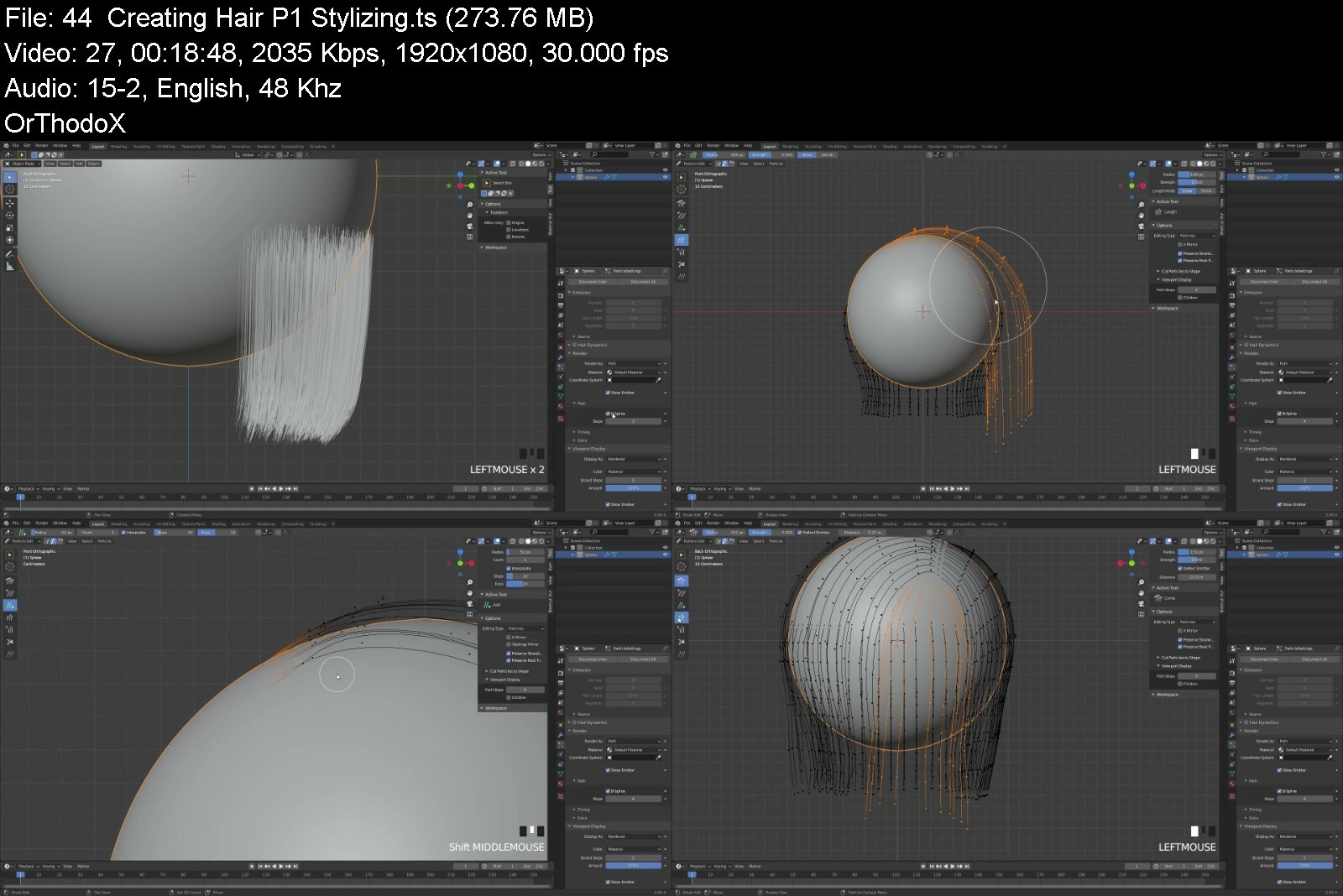


Zurück
Oben Unten