• Regeln für den Video-Bereich:

    In den Börsenbereich gehören nur Angebote die bereits den Allgemeinen Regeln entsprechen.

    Einteilung

    - Folgende Formate gehören in die angegeben Bereiche:
    - Filme: Encodierte Filme von BluRay, DVD, R5, TV, Screener sowie Telesyncs im Format DivX, XviD und x264.
    - DVD: Filme im Format DVD5, DVD9 und HD2DVD.
    - HD: Encodierte Filme mit der Auflösung 720p oder darüber von BluRay, DVD, R5, TV, Screener sowie Telesyncs im Format x264.
    - 3D: Encodierte Filme von BluRay, die in einem 3D Format vorliegen. Dies gilt auch für Dokus, Animation usw.
    - Serien: Cartoon/Zeichentrick, Anime, Tutorials, Dokumentationen, Konzerte/Musik, Sonstiges sind demnach in die entsprechenden Bereiche einzuordnen, auch wenn sie beispielsweise im High Definition-Format oder als DVD5/DVD9/HD2DVD vorliegen. Ausnahme 3D.
    - Bereich Englisch: Englische Releases gehören immer in diesen Bereich.
    - Bereich Talk: Der Bereich, in dem über die Releases diskutiert werden kann, darf, soll und erwünscht ist.


    Angebot/Beitrag erstellen

    - Ein Beitrag darf erst dann erstellt werden, wenn der Upload bei mindestens einem OCH komplett ist. Platzhalter sind untersagt.
    - Bei einem Scenerelease hat der Threadtitel ausschließlich aus dem originalen, unveränderten Releasenamen zu bestehen. Es dürfen keine Veränderungen wie z.B. Sterne, kleine Buchstaben o.ä. vorgenommen werden. Ausnahme Serienbörse:
    - Bei einem Sammelthread für eine Staffel entfällt aus dem Releasename natürlich der Name der Folge. Beispiel: Die Simpsons S21 German DVDRip XviD - ITG
    - Dementsprechend sind also u.a. verboten: Erweiterungen wie "Tipp", "empfehlenswert", "only", "reup", usw. / jegliche andere Zusatzinformation oder Ergänzung, welche nicht in obiger Beschreibung zu finden ist.

    Aufbau des Angebots und Threadtitel

    Der Titel nach folgendem Muster erstellt zu werden. <Name> [3D] [Staffel] [German] <Jahr> <Tonspur> [DL] [Auflösung] <Quelle> <Codec> - <Group>
    Beispiel: The Dark Knight German 2008 AC3 DVDRip XviD - iND
    Beispiel: The Dark Knight 2008 DTS DL BDRip x264 - iND
    Beispiel: The Dark Knight 2008 AC3 DL BDRip XviD - iND
    Beispiel: The Dark Knight German 2008 AC3 720p BluRay x264 iND
    Beispiel: The Dark Knight 2008 DTS DL 1080p BluRay x264 iND
    Beispiel: Die Simpsons S01 German AC3 DVDRip XviD iND
    Beispiel: Die Simpsons S20 German AC3 720p BluRay x264 iND
    Beispiel: Sword Art Online II Ger Sub 2014 AAC 1080p WEBRip x264 - peppermint
    Entsprechend sind also u.a. verboten: Sonderzeichen wie Klammern, Sterne, Ausrufezeichen, Unterstriche, Anführungszeichen / Erweiterungen wie "Tipp", "empfehlenswert", "only", "reup", usw. / jegliche andere Zusatzinformation oder Ergänzung, welche nicht in obiger Beschreibung zu finden ist
    Ausnahmen hiervon können in den Bereichen geregelt sein.

    Die Beiträge sollen wie folgt aufgebaut werden:
    Überschrift entspricht dem Threadtitel
    Cover
    kurze Inhaltsbeschreibung
    Format, Größe, Dauer sind gut lesbar für Downloader außerhalb des Spoilers zu vermerken
    Nfo sind immer Anzugeben und selbige immer im Spoiler in Textform.
    Sind keine Nfo vorhanden z.B. Eigenpublikationen, sind im Spoiler folgende Dateiinformationen zusätzlich anzugeben :
    Quelle
    Video (Auflösung und Bitrate)
    Ton (Sprache, Format und Bitrate der einzelnen Spuren)
    Untertitel (sofern vorhanden)
    Hosterangabe in Textform außerhalb eines Spoiler mit allen enthaltenen Hostern.
    Bei SD kann auf diese zusätzlichen Dateiinformationen verzichtet werden.

    Alle benötigten Passwörter sind, sofern vorhanden, in Textform im Angebot anzugeben.
    Spoiler im Spoiler mit Kommentaren :"Schon Bedankt?" sind unerwünscht.


    Releases

    - Sind Retail-Release verfügbar, sind alle anderen Variationen untersagt. Ausnahmen: Alle deutschen Retail-Release sind CUT, in diesem Fall sind dubbed UNCUT-Release zulässig.
    - Im Serien-Bereich gilt speziell: Wenn ein Retail vor Abschluss einer laufenden Staffel erscheint, darf diese Staffel noch zu Ende gebracht werden.62
    - Gleiche Releases sind unbedingt zusammenzufassen. Das bedeutet, es ist zwingend erforderlich, vor dem Erstellen eines Themas per Suchfunktion zu überprüfen, ob bereits ein Beitrag mit demselben Release besteht. Ist dies der Fall, ist der bereits vorhandene Beitrag zu verwenden.
    - P2P und Scene Releases dürfen nicht verändert oder gar unter einem iND Tag eingestellt werden.


    Support, Diskussionen und Suche

    - Supportanfragen sind entweder per PN oder im Bereich Talk zu stellen.
    - Diskussionen und Bewertungen sind im Talk Bereich zu führen. Fragen an die Uploader haben ausschließlich via PN zu erfolgen, und sind in den Angeboten untersagt.
    - Anfragen zu Upload-Wünschen sind nur im Bereich Suche Video erlaubt. Antworten dürfen nur auf Angebote von MyBoerse.bz verlinkt werden.


    Verbote

    - Untersagt sind mehrere Formate in einem einzigen Angebotsthread, wie beispielsweise das gleichzeitige Anbieten von DivX/XviD, 720p und 1080p in einem Thread. Pro Format, Release und Auflösung ist ein eigener Thread zu eröffnen.
    - Grundsätzlich ebenso verboten sind Dupes. Uploader haben sich an geeigneter Stelle darüber zu informieren, ob es sich bei einem Release um ein Dupe handelt.
    - Gefakte, nur teilweise lauffähige oder unvollständige Angebote sind untersagt. Dies gilt auch für eigene Publikationen, die augenscheinlich nicht selbst von z.B. einer DVD gerippt wurden. Laufende Serien, bei denen noch nicht alle Folgen verfügbar sind, dürfen erstellt und regelmäßig geupdatet werden.
    - Untersagt sind Angebote, welche nur und ausschließlich in einer anderen Sprache als deutsch oder englisch vorliegen. Ausnahmen sind VORHER mit den Moderatoren zu klären.


    Verstoß gegen die Regeln

    - Angebote oder Beiträge, die gegen die Forenregeln verstoßen, sind über den "Melden"-Button im Beitrag zu melden.
  • Bitte registriere dich zunächst um Beiträge zu verfassen und externe Links aufzurufen.

*** Bestes IPTV *** bester Preis *** gratis Test ***


Englische Tutorials

Kryptowährungen 'Einsteigerkurs Für Beginner'

k6j4rqw8tgrosktd0hlvc2if7x.jpg


Kryptowährungen 'Einsteigerkurs Für Beginner'
MP4 | Video: h264, 1280x720 | Audio: AAC, 44.1 KHz
Language: German | Size: 9.73 GB | Duration: 10h 3m

Eine einmalige Gelegenheit für Dich von einem Paradigmenwechsel zu profitieren! Die Chance ist JETZT da!


What you'll learn
Was ist Geld (Geschichte, Inflation).
Was sind Kryptowährungen und wie unterscheiden sie sich. Was ist Bitcoin.
CBDC's vs. Kryptowährungen (Vor- und Nachteile).
Was ist eine Blockchain und wie ist die Funktionsweise.
Full Nodes und Light Nodes (Unterschiede).
Konsensmechanismus in Blockchain Systemen.
Die Zukunft von Blockchains.
Smart Contracts (Nutzen, Vor- und Nachteile, Anwendungen).
Wie und Wo kann ich Kryptowährungen kaufen. Börsen, Broker und DEX.
Online Pay Bill und Kauf von Bitcoin und Ethereum ohne Account
Was ist eine Wallet und welche Arten gibt es. Welche Wallets sind zu empfehlen und welche eher nicht.
Wie schütze ich mich und meine Kryptos (Verlustrisiko, Back Up's etc.)
Marktinformationen (Coin Gecko, Coin Market Cap, Coin 360 Heat Map)
News und Tech Support bei Fragen und Hilfe sowie News und Trends rechtzeitig zu erkennen.
Was erwartet einen sonst im Krypto Space (DeFi / Decentralized Finance)
Professionelle Krypto Spekulation durch einen Profi im Markt
Indirektes Krypto Investment (Krypto und Bitcoin Proxys)

Requirements
Du möchtest wissen was Kryptowährungen sind.
Du möchtest verstehen was Bitcoin ist.
Du möchtest wissen was eine Blockchain ist und wie sie funktioniert.
Du möchtest Kryptowährungen kaufen und wissen wie man sie sichert.
Du willst eine gesunde Grundlage haben, um sicher in den Krypto Markt einsteigen zu können.
Du möchtest wissen was man alles benötigt um im Krypto Markt starten zu können.

Description
Die Welt in der wir aktuell leben, steht vor einem grossen Wandel. Wir befinden uns mitten drin im grössten Paradigmenwechsel unserer Zeit. Unser Finanzsystem, was auch als Fiatmoney bezeichnet wird, steht kurz vor dem Ende seiner Laufzeit. Die fortwährende Schuldenexplosion, seit Aufhebung der Deckung des US Dollars an physisches Gold, muss und wird irgendwann dazu führen, dass ein neues Geldsystem entsteht. Die Entscheidung wird dann getroffen zwischen Digitalen Zentralbankwährungen (kurz: CBDC's) auf der einen Seite oder Dezentralen Kryptowährungen, wie z.B. Bitcoin auf der anderen Seite.Du hast die Wahl......Dich jetzt vor Inflation zu schützen!...Souverän mit deinem Geld und Assets zu werden!...Dir ein passives Einkommen aufzubauen!...mit der richtigen Strategie, ein Vermögen mit Kryptowährungen zu verdienen!Du kannst jetzt von dieser neuen Technologie, die erst seit 2009 besteht, profitieren, indem du dir jetzt das Wissen aneignest. Dazu dient dieser Videokurs! Ich möchte dich sanft in den Kryptomarkt 'reinholen' und dir zeigen...Was sind Kryptowährungen?Worin unterscheiden sich Kryptowährungen gegenüber Fiat Geld?Was ist Bitcoin?Was ist eine Blockchain?Desweitern erkläre ich dir sämtliche Fachbegriffe wie Nodes, Konsensmechanismus, Web 3.0 usw.Du wirst ebenfalls lernen, wie und wo du Kryptowährungen kaufen kannst. Ich zeige dir meine Analyse div. Anbieter und worauf du achten solltest, bevor du kaufst...und wenn du gekauft hast.Ein wesentlicher Bestandteil des Videokurses wird aber das Thema SICHERHEIT sein. Kaufen ist einfach...Kryptos sicher verwahren und verhindern das man 'beklaut' wird, ist schwerer.Wir schauen uns also genau an, was Wallet's sind, also digitale Brieftaschen. Du wird jedes Element und Merkmal von Wallet's lernen und am Ende genau wissen welche für dich optimal ist, um deine Kryptos sicher zu verwahren.DU bist mit Kryptowährungen souverän und selbst verantwortlich (eng. Self Custody), bedeutet, hier legen wir einen starken Fokus drauf!Neben div. Anbietern für Wallet's, werde ich dir auch meine 4-stufige All-in-One Lösungsstrategie zeigen, damit du von vorne bis hinten abgesichert bist und dir keine Fehler passieren.Ich zeige dir meine 4 Goldenen Regeln im vermeiden eigener Fehler und die 7 Level optimaler Krypto Sicherheit.Nachdem du nun sicher im Umgang mit Kryptos bist, sollst du auch wissen, wo und wie du dich optimal über Kryptos und den Markt informieren kannst. Wie du vorgehen musst, wenn du technische Fragen hast und welche One-Stop-Shops ich dir empfehle. Auch entführe ich dich in die Welt des dezentralen Finanzwesens, genannt Decentralized Finance (kurz: DeFi).Als Besonderheit in diesem Kurs, habe ich dir weiterhin 6 Golden Nugget's versteckt, die mit Insider Informationen Rund um den Kryptomarkt darauf warten von dir entdeckt zu werden.Wir sehen und hören uns gleich.Kryptografische Grüsse, Robert ;)

Who this course is for
Jeder, der Kryptowährungen verstehen, nutzen und kaufen will.,Jeder, der sich vor Inflation schützen möchte.,Jeder, der investieren möchte und eine lukrative Anlageklasse sucht.,Jeder, der dezentrale Währungen wie Kryptos Digitalen Zentralbankwährungen (CBDCs) vorzieht.,Jeder, der frei und selbstbestimmt mit seinem Geld agieren möchte.,Jeder, der Angst hat in den Krypto Markt ohne gute Vorbereitung zu gehen.,Jeder, der Kryptos kaufen will aber nicht weiss wie.

Homepage


36walletanbieterbeurtsye4m.jpg


Java Enterprise Edition 8 For Beginners Course

gc1kfcgt5ntbh1wzdfgfkunibj.jpg


Java Enterprise Edition 8 For Beginners Course
Last updated 8/2021
MP4 | Video: h264, 1280x720 | Audio: AAC, 44.1 KHz
Language: English | Size: 23.62 GB | Duration: 29h 49m

Understand Jakarta EE, JPA, CDI, JAX-RS, REST, JWT, JSON-P and JSON-B and more. Add "JEE Developer" to your résumé!


What you'll learn
Understand the theoretical underpinnings of Java Enterprise Edition (JEE)
Understand what JEE specifications and implementations are and how to use them
Learn to create applications using JEE!
Learn to write loosely coupled code using dependency injection API (CDI)
Learn how the various Java EE APIs work together to make you a productive developer
Learn to write powerful web services using the Java API Restful Web Services (JAX-RS)
Master a set of web services that can facilitate rapid development of strong enterprise level applications
Build complex database applications based on platforms using its services and APIs
Write integration tests for Java EE components
And much more!

Requirements
Basic knowledge in Java programming
Enthusiasm and a willingness to take your Java skills to the next level

Description
Are you ready to take your Java skills to the next level and finally understand Java Enterprise Edition (JEE) ?The fact is, that Java Enterprise Edition is in use by companies around the world, including many of the Fortune 500 companies. Because of this there a lots of JEE opportunities and as a JEE developer you will be among the highest paid of all Java developers.This course will get you up to speed quickly and give you the real world skills you need to add "Java Enterprise Edition 8 developer" to your résumé fast!What's this course about?Java Enterprise edition has changed and evolved a lot over the years. This course is about teaching you what JEE is, and how to use it and become a productive JEE developer.The course focuses on JEE 8 (also known as Jakarta EE).By taking this course you will avoid learning about obsolete versions of Java EE, and learn best practices along the way.The course starts at a theoretical level helping you to understand the underpinnings of JEE 8, including understanding the JEE specifications and implementations (which is a very important for a Java Enterprise Edition developer to understand).But then you will dive into understanding JEE 8 at a developmental level with practical hands-on development. Ultimately, this is a hands-on course, so you will be doing a lot of coding as you learn how to use JEE 8.Your instructor in this course is Luqman Saeed, an experienced software developer who has vast knowledge in a number of programming languages including Python, C# and of course Java. He also has extensive Java Enterprise Edition (JEE) experience and has created a great course to pass on his skills with JEE to you.Some of the highest paid jobs in the industry for Java developers are available to those people who know and understand JEE, so here is your chance to dramatically increase your salary and future career opportunitues.What topics are covered in this course?General JEE conceptsContexts and Dependency Injection (CDI 2.0)Java Persistence API (JPA 2.2)Java API for Restful Web Services (JAX-RS 2.1)JWT (Json Web Token)Java API for Web SocketsTesting with Arquillian Framework and JUnit.And a lot more. Why take this course?This is the most comprehensive Java EE/Jakarta EE course on the internet with 340+ HD video lectures!Learn how to write full working Java EE code that is portable across various JEE vendors.The course has a pure standard Java EE API usage focus on app portability across vendors. This is an important skill to master.In-depth coverage of database persistence with JPA.This is the only online course that teaches the Contexts and Dependency Injection API in detail!In-depth coverage of developing REST web services using standards based JAX-RS.Course constantly updated to reflect latest update with Jakarta EE.What skills do you need to enrol?This course assumes you have a basic understanding of the Java programming language. If you have taken a Java course on Udemy such as Tim Buchalka Java Masterclass you will be more than ready for this course.Ready to start?If you're ready to start the Java Enterprise Edition 8 for Beginners Course, then click the enrol button to get started. Feel free to try some of the free video previews on this page as well.

Overview

Section 1: Introduction

Lecture 1 Introduction to the Course

Section 2: The Theory of Java EE

Lecture 2 What is Java EE?

Lecture 3 What is an Application Server?

Lecture 4 Examples of Java EE App Servers

Lecture 5 What is a JSR?

Lecture 6 Java Specification Request Examples

Lecture 7 Java Specification Request Examples - JAX-RS

Lecture 8 What is a Reference Implementation?

Lecture 9 What is Jakarta EE?

Lecture 10 Java EE and Spring Framework

Lecture 11 Summary What is Java EE?

Section 3: Setup

Lecture 12 Intro to Software Setup

Lecture 13 How to Install JDK on Windows

Lecture 14 How to Install NetBeans IDE On Windows

Lecture 15 A Note on IDEs

Lecture 16 A Note on Eclipse IDE

Lecture 17 How to Install GIT SCM on Windows

Lecture 18 How to Install Insomnia REST Client

Lecture 19 How to Install Apache Maven on Windows

Lecture 20 Downloading Payara Micro Server

Lecture 21 A Simple Hello World with Java EE 8

Section 4: Getting Your Feet Wet

Lecture 22 Getting Your Feet Wet - Introduction

Lecture 23 Project Creation

Lecture 24 Creating the Todo Object

Lecture 25 Transforming the Todo Object into a JPA Entity

Lecture 26 Entity Lifecycle Callback

Lecture 27 Persistence Unit

Lecture 28 Todo Service

Lecture 29 Todo REST Endpoints

Lecture 30 Overview of What Has Been Done so Far

Lecture 31 Packaging and Deployment

Lecture 32 Testing our Todo Endpoints

Lecture 33 Testing our Todo Endpoints cont'd

Lecture 34 Validating our Todo Entity

Lecture 35 Marking a Todo Object as Complete

Lecture 36 Packaging and Deployment

Lecture 37 Testing Bean Validation

Lecture 38 Java EE Uber Jar

Lecture 39 Packaging and Deploying with Payara Micro

Lecture 40 Outro

Lecture 41 What is Your Understanding of Java EE?

Lecture 42 The 3 Secret APIs to Java EE Mastery

Lecture 43 Secret API 1 - Java Persistence API

Lecture 44 Secret API 2 - Java API for RESTful Web Services

Lecture 45 Secret API 3 - Contexts and Dependency Injection

Section 5: Contexts and Dependency Injection (CDI 2.0)

Lecture 46 Introduction to CDI

Lecture 47 What is Dependency Injection

Lecture 48 CDI Features - Typesafe Dependency

Lecture 49 CDI Features - Lifecycle Contexts

Lecture 50 CDI Features - Interceptors

Lecture 51 CDI - Features - Events

Lecture 52 CDI Features - Service Provider Interface

Lecture 53 CDI Bean Discovery Mode

Lecture 54 What is the CDI Container?

Lecture 55 What are Beans and Contextual Instances?

Lecture 56 CDI Injection Point - Field

Lecture 57 CDI Injection Point - Constructor

Lecture 58 CDI Injection Point - Method

Lecture 59 CDI Lifecycle callback - PostConstruct

Lecture 60 CDI Lifecycle callback - PreDestroy

Lecture 61 Let's Run the Code!

Lecture 62 Managed Beans and Bean Types

Lecture 63 Introduction to CDI Qualifiers

Lecture 64 CDI Qualifiers Part 2

Lecture 65 CDI Qualifiers Part 3

Lecture 66 CDI Qualifiers Part 4

Lecture 67 Let's Run the Code!

Lecture 68 Let's Run the Code! cont'd

Lecture 69 CDI Stereotypes - What are they?

Lecture 70 Introduction to CDI Scopes and Contexts

Lecture 71 CDI Scopes and Contexts - Dependent Scope

Lecture 72 CDI Scopes and Contexts - Request Scope

Lecture 73 CDI Scopes and Contexts - Session Scope

Lecture 74 CDI Scopes and Contexts - Application and Conversation Scope

Lecture 75 CDI Scopes and Contexts - Recap

Lecture 76 CDI Scopes and Contexts - Let's Run the Code!

Lecture 77 Summary of CDI Scopes and Contexts

Lecture 78 CDI Producers - An Introduction

Lecture 79 CDI Producers - Scoping Returned Beans

Lecture 80 CDI Producers - Field Producers

Lecture 81 CDI Producers - Qualifying Beans

Lecture 82 CDI Producers - Let's Run the Code!

Lecture 83 CDI Producers - Disposers

Lecture 84 CDI Producers - Summary

Lecture 85 CDI Interceptors - An Introduction

Lecture 86 CDI Interceptors - Interceptor Binding Code

Lecture 87 CDI Interceptors - Activating Using Priority Annotation

Lecture 88 CDI Interceptors - Let's Run the code!

Lecture 89 CDI Events - An Introduction

Lecture 90 CDI Events - The Event Interface API Docs

Lecture 91 CDI Events - The Event Interface

Lecture 92 CDI Events - Simple Events

Lecture 93 CDI Events - Qualifying Events

Lecture 94 CDI Events - Conditional Observers

Lecture 95 CDI Events - Async Events

Lecture 96 CDI Events - Prioritizing Observer Method Invocation

Lecture 97 CDI Events- Let's Run the Code

Lecture 98 Chapter Summary

Section 6: Java Persistence API (JPA 2.2)

Lecture 99 Java Persistence API - Overview

Lecture 100 JPA - Caveat

Lecture 101 ORM Manifesto - Objects, not Tables

Lecture 102 ORM Manifesto - Convenience, not Ignorance

Lecture 103 ORM Manifesto - Unobtrusive, not Transparent

Lecture 104 ORM Manifesto - Legacy Data, New Objects

Lecture 105 ORM Manifesto - Just Enough, Not Too Much

Lecture 106 ORM Manifesto - Local, but Mobile

Lecture 107 ORM Manifesto - Standard API, Pluggable Implementation

Lecture 108 JPA and the ORM Manifesto Tenets

Lecture 109 JPA Database Setup

Lecture 110 Setting up Payara Server

Lecture 111 JPA Entity - An Introduction

Lecture 112 JPA Entity - Customizing Table Mapping

Lecture 113 JPA Entity - Using Super Classes

Lecture 114 JPA Entity - Super Class Field Overriding

Lecture 115 JPA Entity - Mapping Simple Java Types

Lecture 116 JPA Entity - Customizing Database Colums

Lecture 117 JPA Entity - Transient Fields

Lecture 118 JPA Entity - Field Access Type

Lecture 119 JPA Entity - Property Access Type

Lecture 120 JPA Entity - Mixed Access

Lecture 121 JPA Mapping Types

Lecture 122 JPA - Mapping Enum Types

Lecture 123 JPA - Mapping Large Objects (Eg images)

Lecture 124 JPA - Lazy and Eager Fetching of Entity State

Lecture 125 JPA - Mapping Java 8 Date/Time Types

Lecture 126 JPA - Mapping Embeddable Classes

Lecture 127 Recap

Lecture 128 Code Run

Lecture 129 JPA - An Intro to Mapping Primary Keys

Lecture 130 JPA - Auto Primary Key Generation Strategy

Lecture 131 JPA - Identity Primary Key Generation Strategy

Lecture 132 JPA - Sequency Primary Key Generation Strategy

Lecture 133 JPA - Table Primary Key Generation Strategy

Lecture 134 JPA - Table Primary Key Generation Strategy cont'd

Lecture 135 Primary Key Generation Strategies - Summary

Lecture 136 JPA - An Intro to Entity Relationship Mapping

Lecture 137 JPA Entity Relationship Mapping - Roles

Lecture 138 JPA Entity Relationship Mapping - Directionality

Lecture 139 JPA Entity Relationship Mapping - Cardinality

Lecture 140 JPA Entity Relationship Mapping - Ordinality

Lecture 141 Introduction to JPA Entity Relationship Mapping

Lecture 142 Single Valued Relationships

Lecture 143 Many to One Entity Relationship Mapping

Lecture 144 One to One Entity Relationship Mapping

Lecture 145 Bidirectional One to One Entity Relationship Mapping

Lecture 146 Collection Valued Relationships

Lecture 147 One to Many Entity Relationship Mapping

Lecture 148 Many to Many Entity Relationship Mapping

Lecture 149 Many to Many Entity Relationship Mapping - Join Tables

Lecture 150 JPA Fetch Mode

Lecture 151 Sample Code Run

Lecture 152 JPA Collection Mapping of Embeddable Objects and Collection Table

Lecture 153 JPA Collection Mapping of Strings (Or other Simple Java types)

Lecture 154 Persistable Collection Types

Lecture 155 Ordering the Contents of a Persistable Collection

Lecture 156 Ordering the Contents of a Persistable List using Order Column

Lecture 157 Mapping Persistable Maps

Lecture 158 Customizing Persistable Maps with Collection Table

Lecture 159 Using Enums as Persistable Map Keys

Lecture 160 Mapping Persistable Maps - Run the Code

Lecture 161 Keying Persistable Maps by Basic Type

Lecture 162 Keying Persistable Maps by Entity

Lecture 163 Keying Persistable Maps by Embeddable Type

Lecture 164 Recap

Lecture 165 Enterprise JavaBeans (EJBs) - What Are They?

Lecture 166 Features of EJB - Declarative Metadata

Lecture 167 Features of EJB - Configuration by Exception

Lecture 168 Features of EJB - Dependency Management

Lecture 169 Features of EJB - Lifecycle Management

Lecture 170 Features of EJB - Scalability

Lecture 171 Features of EJB - Transactionality

Lecture 172 Features of EJB - Security

Lecture 173 Features of EJB - Portability

Lecture 174 Architecture of EJB

Lecture 175 EJB Component Model - Stateless Session Beans

Lecture 176 EJB Component Model - Stateless Session Beans cont'd

Lecture 177 EJB Component Model - Stateful Session Beans

Lecture 178 EJB Component Model - Singleton Beans

Lecture 179 EJB Component Model - Lifecycle

Lecture 180 EJB Component Model - Message Driven Beans

Lecture 181 The EJB Container - What Is it?

Lecture 182 What are Transactions?

Lecture 183 ACID Transactions - Atomicity

Lecture 184 ACID Transactions - Consistency

Lecture 185 ACID Transactions - Isolation

Lecture 186 ACID Transactions - Durability

Lecture 187 ACID Transactions - Summary

Lecture 188 Transactions Management - Bean vs Container

Lecture 189 CMT Transactions Management Attributes

Lecture 190 Persistence Unit and Persistence Context - Intro

Lecture 191 What is a Persistence Unit?

Lecture 192 What is a Persistence Context?

Lecture 193 Entity Manager - How to Get Access

Lecture 194 Entity Manager - Persist

Lecture 195 Entity Manager - Find

Lecture 196 Entity Manager - Remove

Lecture 197 Cascade Operations

Lecture 198 Cascade Operations - Remove

Lecture 199 Entity Detachment

Lecture 200 Entity Merging

Lecture 201 Elements of a Persistence Unit - Name

Lecture 202 Elements of a Persistence Unit - Transaction Type

Lecture 203 Elements of a Persistence Unit - Persistence Provider

Lecture 204 Elements of a Persistence Unit - Datasource

Lecture 205 Elements of a Persistence Unit - Entity Classes

Lecture 206 Elements of a Persistence Unit - Schema & Script Generation

Lecture 207 Recap

Lecture 208 Java Persistence Query Language - An Introduction

Lecture 209 JPQL - A Simple Select Statement

Lecture 210 JPQL - Named Queries

Lecture 211 JPQL - Selecting Entities

Lecture 212 JPQL - Identification Variables/Aliasing

Lecture 213 JPQL - Passing Query to Entity Manager

Lecture 214 JPQL - Path Expressions

Lecture 215 JPQL - Path Expressions cont'd

Lecture 216 JPQL - Combined Path Expressions

Lecture 217 JPQL - Constructor Expressions

Lecture 218 JPQL - From Clause

Lecture 219 JPQL From Clause - Joining Maps

Lecture 220 JPQL From Clause - Fetch Join

Lecture 221 JPQL Where Clause

Lecture 222 JPQL Where Clause - Passing Parameters

Lecture 223 JPQL Where Clause - Between Operator

Lecture 224 JPQL Where Clause - Like Operator

Lecture 225 JPQL Where Clause - Subqueries

Lecture 226 EntityManager Interface - GetSingleResult Method

Lecture 227 JPQL Where Clause - In Operator

Lecture 228 JPQL Where Clause - IS EMPTY Operator

Lecture 229 JQPL Where Clause - Member OF Operator

Lecture 230 JPQL Where Clause - ANY, ALL Operator

Lecture 231 JPQL Order By

Lecture 232 JPQL Aggregate Functions Intro

Lecture 233 JPQL Aggregate Functions - Sum

Lecture 234 JPQL Aggreagate Functions - Average

Lecture 235 JPQL Aggregate Functions - Count

Lecture 236 JPQL Aggregate Functions - Max/Min

Lecture 237 JPQL Aggregate Functions - Having

Lecture 238 Summary and Recap - JPQL

Lecture 239 JPA Criteria Query

Lecture 240 Validation - Intro

Lecture 241 JPA Validation - Bean Validation

Lecture 242 JPA Validation - Bean Validation cont'd

Lecture 243 Bean Validation Other Constraints

Lecture 244 Entity Lifecycle Callbacks

Lecture 245 Entity Lifecycle - Other Callbacks

Lecture 246 Entity Listeners

Lecture 247 Entity Listeners - How to Create Them

Lecture 248 Entity Listeners - Associating Entities with Listeners

Lecture 249 JPA Native Queries

Lecture 250 JPA Native Queries - Named Native Queries

Lecture 251 JPA Native Queries - Dynamic Native Queries and Warning Suppression

Lecture 252 JPA - Equals and Hashcode Overriding Intro

Lecture 253 JPQ -Equals and Hashcode Methods Overriding

Lecture 254 JPQ -Equals and Hashcode Methods Overriding cont'd

Lecture 255 JPA Outro

Section 7: Java API for Rest Web Services (JAX-RS 2.1)

Lecture 256 JAX-RS Client - Insomnia

Lecture 257 REST Architecture Constraints - Client and Server

Lecture 258 REST Architecture Constraints - Stateless

Lecture 259 REST Architecture Constraints - Cacheable

Lecture 260 REST Architecture Constraints - Uniform Interface

Lecture 261 REST Architecture Constraints - Layered Interface

Lecture 262 JAX-RS Root Resource - Application Class

Lecture 263 JAX-RS - Hello World!

Lecture 264 JAX-RS Class Resources with @Path Annotation

Lecture 265 JAX-RS REST Resource Methods

Lecture 266 JAX-RS - HTTP GET

Lecture 267 JAX-RS - HTTP POST

Lecture 268 JAX-RS - HTTP PUT

Lecture 269 JAX-RS - HTTP DELETE

Lecture 270 JAX-RS In Practice - The Employee Resource GET Methods

Lecture 271 JAX-RS In Practice - Injecting the Service Layer

Lecture 272 JAX-RS In Practice - The Employee Resource POST Method

Lecture 273 An Introduction To Content Types

Lecture 274 An Introduction To Content Types cont'd

Lecture 275 JAX-RS in Practice - Declaring Content Types with @Produces

Lecture 276 JAX-RS Context Types - Sample Code Run

Lecture 277 JAX-RS In Practice - Class Level @Produces

Lecture 278 JAX-RS in Practice - Declaring Content Types with @Consumes

Lecture 279 JAX-RS in Practice - Path Params with @PathParam

Lecture 280 JAX-RS in Practice - Restricting Path Templates with Regex

Lecture 281 JAX-RS in Practice - Setting Default Value for Path Params

Lecture 282 JAX-RS in Practice - Query Params with @QueryParams

Lecture 283 JAX-RS Recap

Lecture 284 JAX-RS in Practice - An Intro to the Response Object

Lecture 285 JAX-RS in Practice - The Response Object

Lecture 286 JAX-RS in Practice - The @Context Annotation

Lecture 287 JAX-RS in Practice - Using the UriInfo to Create Meaningful Responses

Lecture 288 JAX-RS Response Object - Sample Code Run

Lecture 289 JAX-RS Recap

Lecture 290 JAX-RS in Practice - Intro to Exception Mappers

Lecture 291 JAX-RS in Practice - Exception Mappers

Lecture 292 JAX-RS Exception Mappers - Sample Code Run

Lecture 293 JAX-RS in Practice - Consuming Form Fields with @FormParam

Lecture 294 JAX-RS in Practice - Consuming Form Fields with @FormParam cont'd

Lecture 295 JAX-RS in Practice - Consuming Form Fields with MultivaluedMaps

Lecture 296 JAX-RS in Practice - Consuming Form Fields with @BeanParam

Lecture 297 JAX-RS in Practice - Getting headers info with @HeaderParam

Lecture 298 JAX-RS in Practice - Some Injection Annotations

Lecture 299 JAX-RS in Pracetice - Caching

Lecture 300 JAX-RS in Practice - Caching with CacheControl and Etags

Lecture 301 Content Negotiation - An Introduction

Lecture 302 JAX-RS in Practice - Client Content Negotiation

Lecture 303 JAX-RS in Practice - Content Negotiation via HttpHeaders

Lecture 304 JAX-RS in Practice - Content Negotiation via QS

Lecture 305 JAX-RS in Practice - File Upload

Lecture 306 JAX-RS in Practice - File Download

Lecture 307 JAX-RS in Practice - Injecting a Logger

Lecture 308 JAX-RS in Practice - Setting Cookies on the Client

Lecture 309 JAX-RS in Practice - An Introduction to Filters

Lecture 310 JAX-RS in Practice - Static Container Response Filter

Lecture 311 JAX-RS in Practice - Static Response Filter Sample Code Run

Lecture 312 JAX-RS in Practice - Dynamic Container Response Filters

Lecture 313 JAX-RS in Practice - Dynamic Container Response Filters cont'd

Lecture 314 JAX-RS in Practice - Dynamic Response Filter Code Run

Lecture 315 JAX-RS in Practice - Pre-Matching Container Request Filters

Lecture 316 JAX-RS in Practice - Pre-Matching Container Request Filter Code Run

Lecture 317 JAX-RS in Practice - Intro to Security with Request Filters

Lecture 318 JAX-RS in Practice - Third Party Libraries

Lecture 319 JAX-RS in Practice - JWT Security Sample Code Run

Lecture 320 JAX-RS in Practice - Authentication with JWT and Filters Part 1

Lecture 321 JAX-RS in Practice - Authentication with JWT and Filters Part 2

Lecture 322 JAX-RS in Practice - Authentication with JWT and Filters Part 3

Lecture 323 JAX-RS in Practice - Authentication with JWT and Filters Part 4

Lecture 324 JAX-RS in Practice - Authentication with JWT and Filters Part 5

Lecture 325 JAX-RS in Practice - Authentication with JWT and Filters Part 6

Lecture 326 JAX-RS in Practice - JWT Authentication Summary

Lecture 327 JAX- RS in Practice - Asynchrounous Resources

Lecture 328 JAX- RS in Practice - Asynchrounous Resources cont'd

Lecture 329 JAX-RS in Practice - JSON-B Integraion

Lecture 330 JAX-RS in Practice - JSON-P Integration and Hypermedia

Lecture 331 JAX-RS in Practice - JSON Processing Sample Code Run

Lecture 332 JAX-RS in Practice - Synchronous Client API

Lecture 333 JAX-RS in Practice - Async Client API

Lecture 334 JAX-RS in Practice - Client Sample Code Run

Lecture 335 JAX-RS in Practice - An Intro to Server Sent Events

Lecture 336 JAX-RS in Practice - Implementing SSE with JAX-RS

Lecture 337 JAX-RS in Practice - Sample Code Run and SSE Summary

Lecture 338 Java EE in Practice - Docker Deployment

Section 8: Websockets

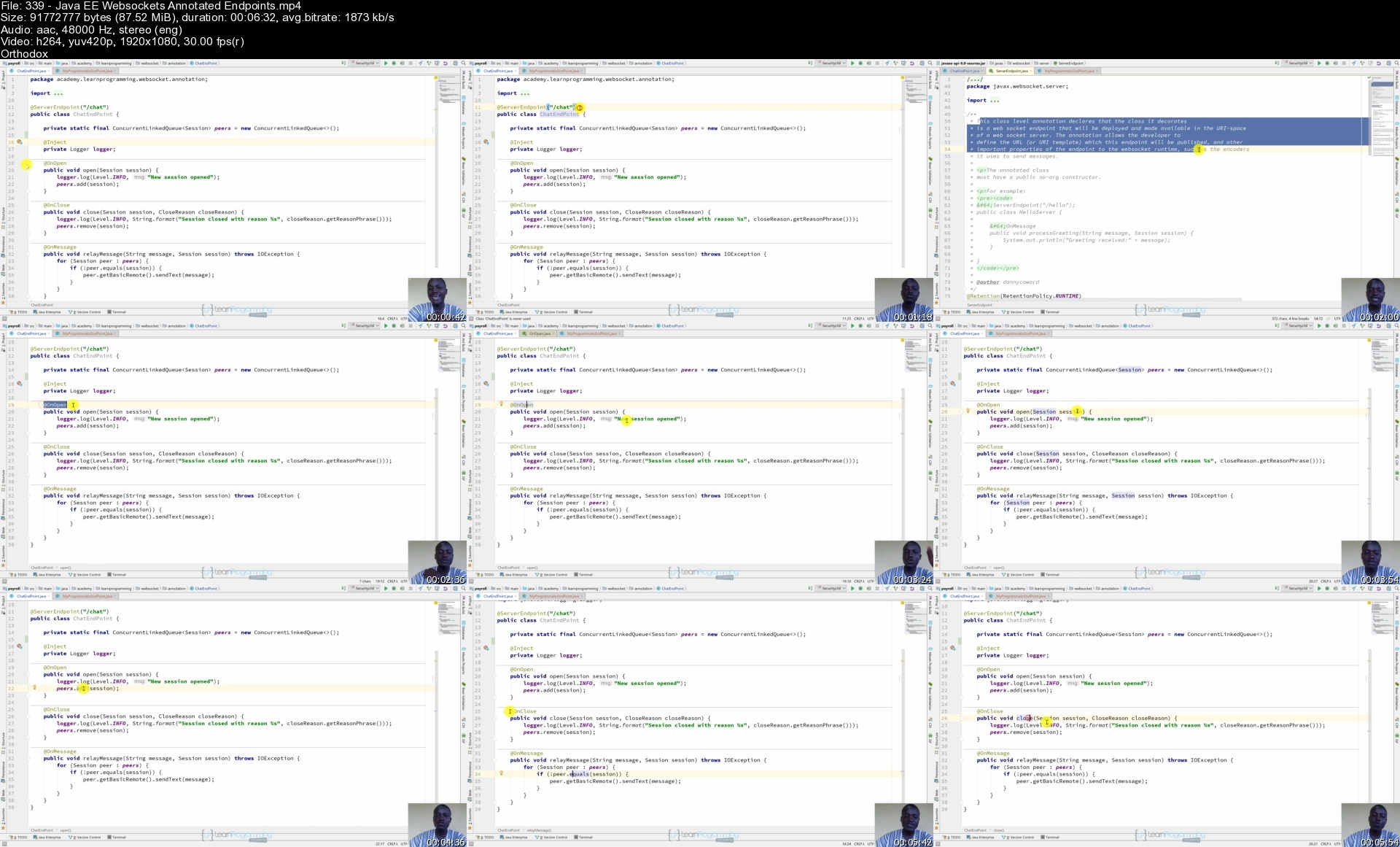
Lecture 339 Java EE Websockets - Annotated Endpoints

Lecture 340 Java EE Websockets - Programmatic Endpoints

Lecture 341 Java EE Websockets - URI Templates

Lecture 342 Java EE Websockets - Encoders and Decoders

Lecture 343 Java EE Websockets - Summary

Lecture 344 Java EE Websockets - Sample Code Run

Section 9: Testing Java EE

Lecture 345 Java EE Testing - An Introduction

Lecture 346 Java EE Testing - Introducing Arquillian

Lecture 347 Java EE Testing - Dependency Setup

Lecture 348 Java EE Testing - Failing a Test

Lecture 349 Java EE Testing - Passing a Test

Lecture 350 Java EE Resources

Section 10: Capstone Project 1 - Todo App

Lecture 351 Introduction to Capstone Project

Lecture 352 Introductiont to Testing with Arquillian Part 1

Lecture 353 Introductiont to Testing with Arquillian Part 2

Lecture 354 Running our First Test Part 1

Lecture 355 Running our First Test Part 2

Lecture 356 Modelling the Todo User

Lecture 357 Modelling the Todo User Basic Attributes

Lecture 358 Adding Validation Constraints to TodoUser

Lecture 359 Querying the TodoUser

Lecture 360 Querying the Todo Entity

Lecture 361 The Todo Service Class

Lecture 362 The Todo Service Class - Save TodoUser Method Impl Part 1

Lecture 363 The SecurityUtil Class

Lecture 364 The Todo Service Class - Save TodoUser Method Impl Part 2

Lecture 365 Todo Service Test

Lecture 366 Preventing Double Signups with an Email

Lecture 367 Find Todo By Id Method Implementation

Lecture 368 Get List of Todos Method Implementation

Lecture 369 Get Todos By Task Method Implementation

Lecture 370 Stateless Security with JWT - The Authz Annotation and Filter Implementation

Lecture 371 Adding the JWT Library to the Project

Lecture 372 Stateless Security with JWT - ContainerRequestFilter Implementation Part 1

Lecture 373 Stateless Security with JWT - ContainerRequestFilter Implementation Part 2

Lecture 374 Stateless Security with JWT - ContainerRequestFilter Implementation Part 3

Lecture 375 Stateless Security with JWT - ContainerRequestFilter Implementation Part 4

Lecture 376 Stateless Security with JWT - ContainerRequestFilter Implementation Part 5

Lecture 377 Stateless Security with JWT - ContainerRequestFilter Implementation Part 6

Lecture 378 Stateless Security with JWT - Recap

Lecture 379 REST Web Service - The Save User Resource Method

Lecture 380 Refactoring the Old TodoRest Resource Class

Lecture 381 Let's Run Our App

Lecture 382 Packaging with Docker - Primer

Lecture 383 Packaging with Docker

Section 11: Extra Information - Source code, and other stuff

Lecture 384 Source Code

Lecture 385 Bonus Lecture and Information

This is course is suitable for those who have basic knowledge in Java, who wish to enhance their knowledge,Anyone wanting to enhance their résumé and learn about Java Enterprise Edition

Homepage


339javaeewebsocketsantpejb.jpg


Complete Bootstrap & React Bootcamp With Hands-On Projects

ggnvg9q2sutpoa82bxegvqzcb1.jpg


Complete Bootstrap & React Bootcamp With Hands-On Projects
Published 8/2022
MP4 | Video: h264, 1280x720 | Audio: AAC, 44.1 KHz
Language: English | Size: 5.90 GB | Duration: 13h 6m

Learn to Build Responsive, Interactive Web Apps using Bootstrap and React.


What you'll learn
Learn the Bootstrap Grid System
Learn to work with Bootstrap Three Column Layouts
Learn to Build Bootstrap Navigation Components
Learn to Style Images using Bootstrap
Build Advanced, Responsive Menus using Bootstrap
Build Stunning Layouts using Bootstrap Themes
Learn the Foundations of React
Work with JSX, and Functional Components in React
Build a Calculator in React
Learn the React State Hook
Debug React Projects
Learn to Style React Components
Build a Single and Multi-Player Connect-4 Clone with AI
Learn React Lifecycle Events
Learn React Conditional Rendering
Build a Fully Custom E-Commerce Site in React
Learn the Foundations of JSON Server
Work with React Router

Requirements
No programming experience needed. You will learn everything you need to know.
Basic computer skills.
Basic knowledge of HTML and CSS

Description
Welcome to the Complete Bootstrap and React Bootcamp. This course teaches students how to create modern, interactive web pages using the Bootstrap framework and React JavaScript library. The course starts with an introduction into Bootstrap with a focus on its reputation in the development community as the number one choice for mobile-first front-end web frameworks. Bootstrap is a well documented collection of reusable code written in HTML, CSS, and JavaScript. We start with exploring the foundations of Bootstrap, including embedding it into projects, and building out the basic Bootstrap page structure. From there we catapult into the infamous Bootstrap grid system, along with the commonly used three column web page layout. After the introductory topics, students learn to work with a number of components from typography, tables and image styling right up to wells, alerts, and buttons. As part of the course we demonstrate how to build out intricate navigation menus using dropdown, collapse, accordion, and pill menus. We will also cover form styling, carousels, modals, scrollspy and just about every other Bootstrap component that's instrumental to your journey as a front-end developer. The module concludes with a hands-on project, where students will use a Bootstrap theme to build a stunning web page from scratch.In the second section of the course, we explore React. React, also known as React JS, is a powerful JavaScript library used for building custom, interactive user interfaces using UI components. Similar to Bootstrap, React is a well documented free and open source library. The project was founded by Meta and a network of independent developers. In this section, students learn how to use the React library through a series of hands-on projects. The React section of this course starts off with a hands-on project where you'll learn how to work with functional React components, props, Callback functions, OnClick Events, and the React State hook to build a fully functional calculator. From there we will dive into project number two, where you will build a connect-4 clone. Here we will cover more intermediate concepts including passing props, destructuring, passing arguments to click events, various styling methods, and handling callbacks. You will also learn about the React key property, React lifecycle events, and conditional rendering. By the end you will have built a complete multi and single player connect-4 game board with built-in AI capabilities. In the final section of the course we further unleash the power of React by building out a complete e-commerce site with multiple product categories, a product showcase, shopping cart feature, and much more. Here, we introduce a number of integral new concepts including: JSON server, Fetch API, and installing React router. These essential building blocks will be used to render the product categories, style the product list, and configure the product details page. From there we dive into styled components, refactoring the shop layout, and exploring the concept of "context" in React. In the final stages of the project students will configure the shopping cart basket, and the checkout feature. We will also implement a product search feature, followed by in-depth exercises on validating input forms in React.As you can see this course covers a tremendous bit of ground. Best of all it features Tim Maclachlan - a renowned senior full-stack developer with over 20 years of commercial development experience. As a multi-faceted developer, Tim specializes in algorithmic, analytical and mobile development. To date, he's written hundreds of applications and worked in a number of industries from commercial aviation and military, to banking and finance. Tim has a genuine passion for teaching others how to become better coders and looks forward to interacting with his students.With that said, we hope you're just as excited about this course as we are, if so - hit that enroll button and let's get started.

Overview

Section 1: The Bootstrap Framework

Lecture 1 Introduction to Bootstrap

Lecture 2 Embedding Bootstrap

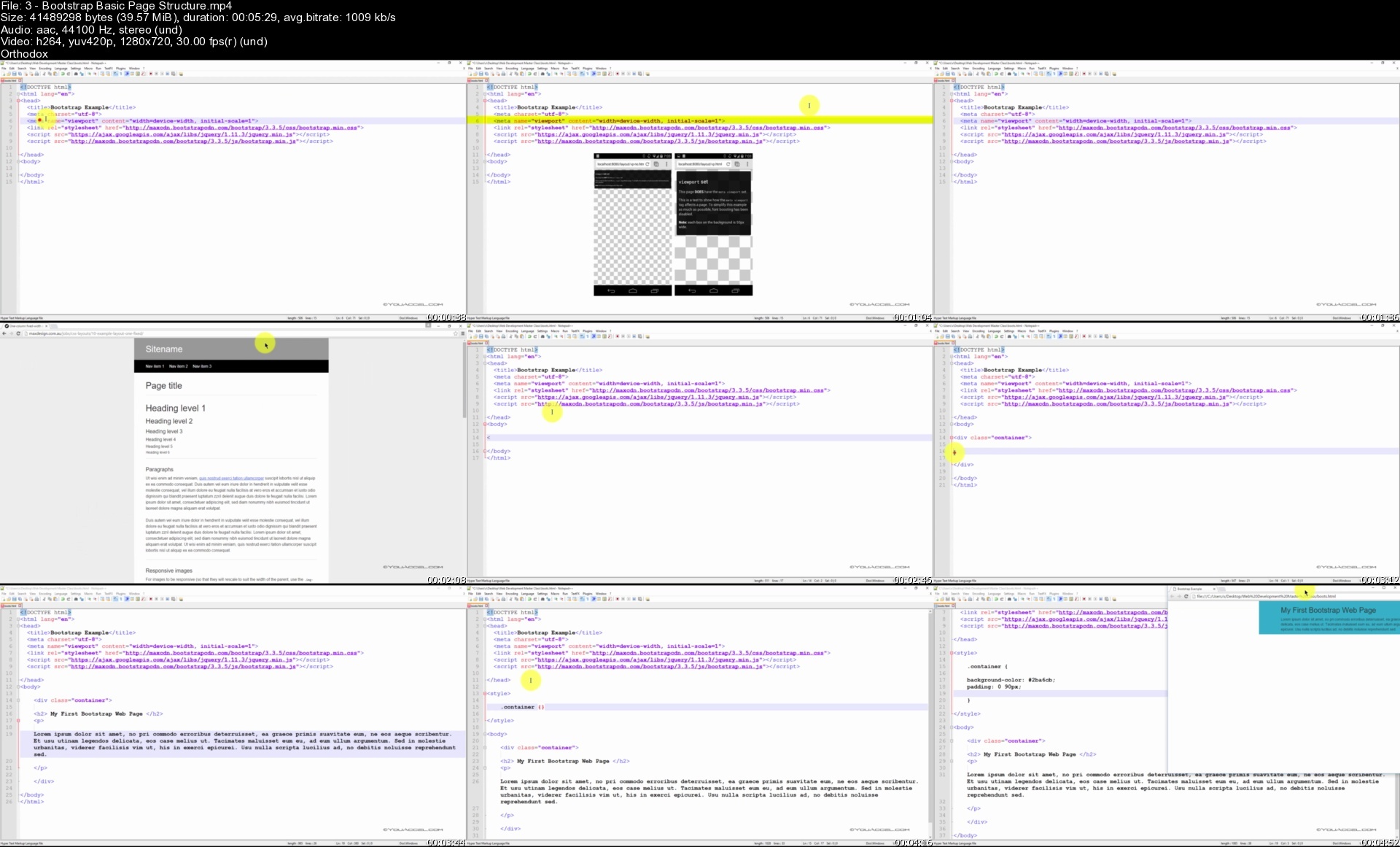
Lecture 3 Bootstrap Basic Page Structure

Lecture 4 Bootstrap Grid System

Lecture 5 Bootstrap Three Column Layouts

Lecture 6 Bootstrap Typography

Lecture 7 Bootstrap Tables

Lecture 8 Bootstrap Styling Images

Lecture 9 Bootstrap Jumbotron

Lecture 10 Bootstrap Wells

Lecture 11 Bootstrap Alerts

Lecture 12 Bootstrap Buttons

Lecture 13 Bootstrap Button Groups

Lecture 14 Bootstrap Justified Button Groups

Lecture 15 Bootstrap Glyphicons

Lecture 16 Bootstrap Badges and Labels

Lecture 17 Bootstrap Progress Bars

Lecture 18 Bootstrap Pagination

Lecture 19 Bootstrap Pager Pagination

Lecture 20 Bootstrap List Groups

Lecture 21 Bootstrap Panels

Lecture 22 Bootstrap Dropdown Menus

Lecture 23 Bootstrap Collapsibles

Lecture 24 Bootstrap Collapse Panel

Lecture 25 Bootstrap Collapse List Group

Lecture 26 Bootstrap Accordion

Lecture 27 Bootstrap Tab Menus

Lecture 28 Bootstrap Pill Menus

Lecture 29 Bootstrap Dynamic Tabs and Pills

Lecture 30 Bootstrap Navigation Bar

Lecture 31 Bootstrap Collapsible Navigation Bar

Lecture 32 Bootstrap Forms - Vertical and Inline

Lecture 33 Bootstrap Inputs

Lecture 34 Bootstrap Form Control States

Lecture 35 Bootstrap Input Sizing

Lecture 36 Bootstrap Carousel

Lecture 37 Bootstrap Modal

Lecture 38 Bootstrap Tooltip

Lecture 39 Bootstrap Popover

Lecture 40 Bootstrap Scrollspy

Lecture 41 Bootstrap Project - Themes Intro

Lecture 42 Bootstrap Project - File Overview

Lecture 43 Bootstrap Project - Script Overview

Lecture 44 Bootstrap Project - Script Overview Cont.

Section 2: React

Lecture 45 Skills Required

Lecture 46 What is React?

Section 3: React Project: Build a Calculator

Lecture 47 Project Overview

Lecture 48 Hello React

Lecture 49 Tools Needed

Lecture 50 Code Pen

Lecture 51 Intro to JSX

Lecture 52 Functional Components in React

Lecture 53 Why Components?

Lecture 54 Intro to Props in React

Lecture 55 React Components, Props and Callbacks

Lecture 56 Building the calculator visuals

Lecture 57 OnClick Events in React

Lecture 58 Passing Parameters in Callback Functions

Lecture 59 Using React State Hook

Lecture 60 Implementing the calculator - Display

Lecture 61 Implementing the calculator - Operators

Lecture 62 Debugging in React

Lecture 63 Project Summary

Section 4: React Project: Connect-4 Clone

Lecture 64 Project Overview

Lecture 65 Tools Needed

Lecture 66 Creating the Game Board

Lecture 67 Game Circle - OnClickEvent

Lecture 68 Passing Props - Destructing - React Children

Lecture 69 Passing Arguments to Click Events

Lecture 70 Inline Styling

Lecture 71 Square to Circle Component

Lecture 72 Global Styling

Lecture 73 Dynamic Styling

Lecture 74 Dynamic Classes

Lecture 75 Handling Callbacks

Lecture 76 Using React State Hook (again)

Lecture 77 Updating the Player Circle

Lecture 78 Initializing the Game Board

Lecture 79 React Key Property

Lecture 80 Styling the Game Board - Header and Footer

Lecture 81 Calculating the Winner

Lecture 82 Displaying the Winner

Lecture 83 Determining a Draw Condition

Lecture 84 React Lifecycle Events

Lecture 85 Initializing the Game

Lecture 86 Suggesting a Move - Implementing a Computer Player

Lecture 87 Smart Computer Player (Basic AI)

Lecture 88 CSS Variables

Lecture 89 Conditional Rendering

Lecture 90 Deploy to Netlify

Lecture 91 Deploy to Surge

Lecture 92 Project Summary

Section 5: React Project: Build an E-Commerce Site in React

Lecture 93 Project Overview

Lecture 94 Scaffolding the Project

Lecture 95 Intro to JSON Server

Lecture 96 Fetch API

Lecture 97 Styling the Store

Lecture 98 Rendering the Categories

Lecture 99 Binding the Products

Lecture 100 Refactor the Fetch API call

Lecture 101 Dealing with errors in Fetch API

Lecture 102 Tidy the Fetch API call

Lecture 103 Styling the Product List

Lecture 104 Installing React Router

Lecture 105 Fixing the Key Warning

Lecture 106 React Router - Detail Page

Lecture 107 Fetch API - Get Product By Id

Lecture 108 Product Description

Lecture 109 Intro to Styled Components

Lecture 110 Styled Components - Product Description

Lecture 111 Dangerously Set HTML (yeah really)

Lecture 112 Refactor the Categories

Lecture 113 Refactor the Layout

Lecture 114 Refactor the Home Page

Lecture 115 Intro to Context in React

Lecture 116 UseContext Hook and UseReducer Hook in React

Lecture 117 Basket Layout

Lecture 118 Implementing the Basket

Lecture 119 Implementing Basket Icons

Lecture 120 Implementing Basket Total

Lecture 121 Finishing the Checkout

Lecture 122 Checkout - Fixing the State

Lecture 123 Implementing the Order Confirmation

Lecture 124 Intro to Local Storage

Lecture 125 Implementing Search Results

Lecture 126 Better Searching with Debouncing

Lecture 127 Validating Forms in React - Part 1

Lecture 128 Validating Forms in React - Part 2

Lecture 129 Validating Forms in React - Part 3

Lecture 130 Validating Forms in React - Part 4

Lecture 131 Project Summary

Students interested in building mobile responsive websites using Bootstrap,Students interested in front-end web development,Students interested in learning React,Students interested in building UI components using React library

Homepage


3bootstrapbasicpagestc8d9o.jpg


Learn Step-By-Step How To Make A Track.

viyxaacjvifvoaymmsavdj6f1k.jpg


Learn Step-By-Step How To Make A Track.
Last updated 8/2022
MP4 | Video: h264, 1280x720 | Audio: AAC, 44.1 KHz
Language: English | Size: 8.87 GB | Duration: 14h 3m

A Simple But Effective Exclusive Step-By-Step Guide How To Make A Track Using Music Production.


What you'll learn
Learn How To Make A Track Step-By-Step.
Learn The Simple Process Of Making Music.
Learn How To Make Music Effectively.
Learn How To Produce Music.

Requirements
Ableton Live 10 - or free trial from website

Description
Are you Interested in Making A Track In Music Production ???This is the right place to be !!!Omar Meho is an Mentor, producer, Mixing and Mastering Engineer He has BBC Radio 1 Plays, his own record label and 100's of his own releases on Beatport reaching No. 8 In the Top selling charts!Advance your Music Production game today!Learn everything you need to know from Omar Meho.This course breaks down step-by-step the hierarchy of a Dance Record and the secrets to making a track flow, groove and move exactly how you want it to!This is something every producer struggles with, so join today and make the music you want to be making !!!5-Star Reviews1. RandyOmar has a lot of experience as a DJ and a good understanding of the music business side of things. He's helpful in any regard and is practical when explaining ideas. Overall great session.2. BrettOmar knows his stuff - both as a DJ and producer!3. HarryOmar changed the way i see ableton. Big recommends for anyone looking to expand their profile, up their work flow or master ableton! Big up4. SamOmar was incredibly inspiring and helpful. I'm looking forward to continuing to progress towards a career in music with his direction.5. JamieA truly experienced professional in the music industry, knowledgeable in all areas from production to marketing and distribution. Each lesson I take away valuable information and advice that accelerates my career. Thank you Omar6. KyleOmar is an very experienced and well rounded DJ, with knowledge of a wide variety of genres. He has massively improved my mixing within a matter of weeks. Furthermore, I look forward to his coaching regarding music production and self promotion in the future. Overall, I have come on leaps and bounds under his guidance.7. DavidOmar is very knowledgeable about music production. More importantly he knows how to save a lot of time and time saves money and that's a good thing. You'll make his fees back because you'll be able to produce much faster. Save your time and your money with Omar.8. ShannonOmar is a trustworthy tutor He taught me how to DJ from scratch and I now play on the radio He is an expert and very professional9. YasminOmar is a trustworthy tutor as he is always on time and very patient with his clients, he helped me start up on my producing and getting to grips with the software I use as well as some important tips and tricks.10. NicoleOmar is a fantastic tutor, a passionate dj who taught me how to start up on my decks, transitions and bpm through to producing my own records and signing to record labels. I recommend him 100%.Learn how to make a track in Music Production todayThis course is easy and will help your dreams!See you in Lesson 1!Thank you,Omar.

Overview

Section 1: Introduction

Lecture 1 Step 1

Lecture 2 Step 2

Lecture 3 Step 3

Lecture 4 Step 4

Lecture 5 Step 5

Lecture 6 Step 6

Lecture 7 Finishing Touches *TEMPLATE INCLUDED FOR ARRANGEMENT*

Lecture 8 Full Track Building with Breakdown

Lecture 9 How to Mixdown

Lecture 10 Mastering

Lecture 11 4 Track Breakdown

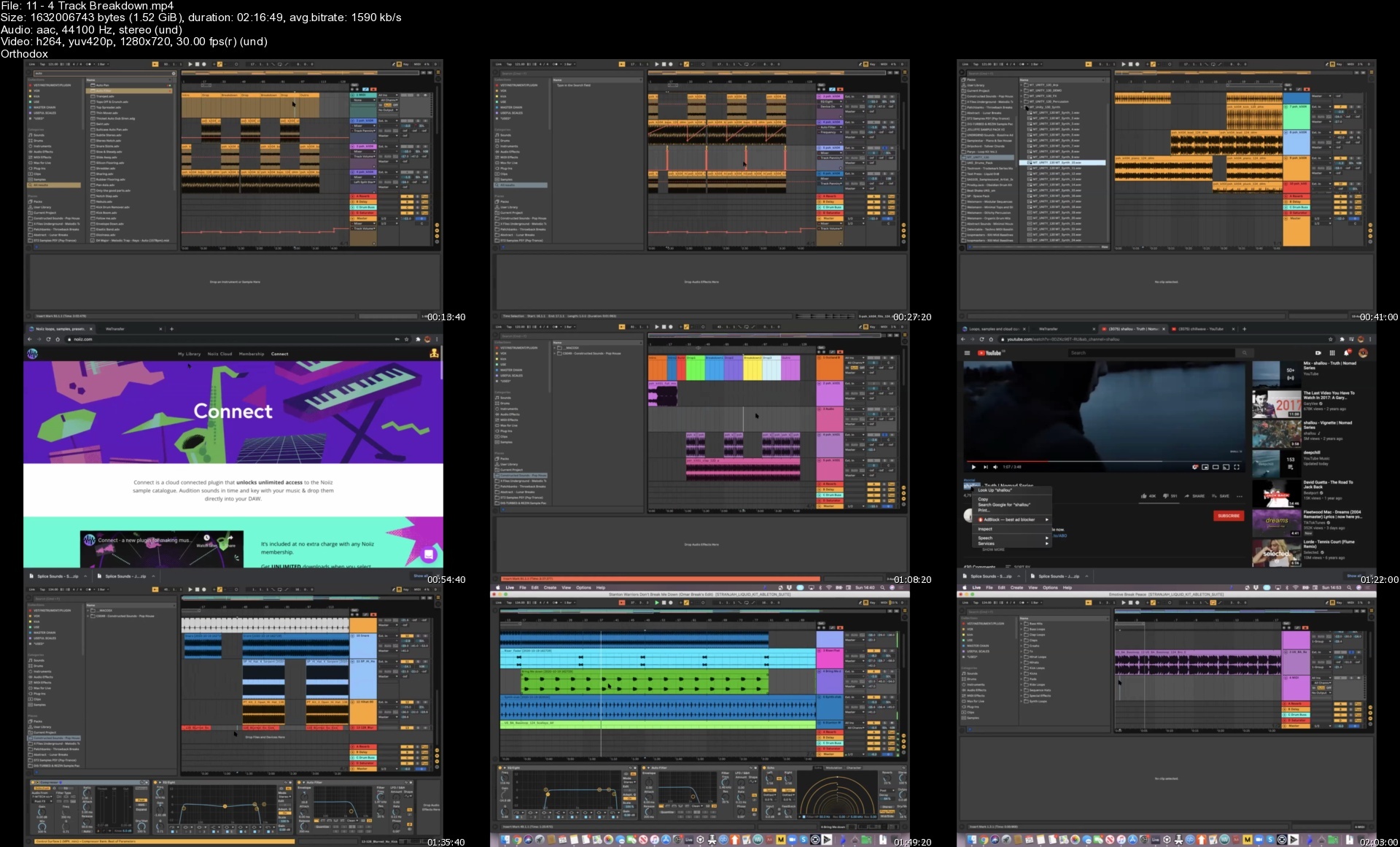
Lecture 12 Making A Track For The Radio

Section 2: 2 Hour Masterclass

Lecture 13 2 hour's masterclass

Lecture 14 1 Hour Project Breakdown

Lecture 15 Multi Genre Experimentation

Lecture 16 Remixing Old Tracks

Lecture 17 Making Good Samples

Lecture 18 1 hour ableton workflow workshop

Anyone looking to make music

Homepage


114trackbreakdowns4sfr6.jpg


Functional Principles Of Oracle Erp - Ebs And Saas(Scm)

irjzxzjvgcfr68pzxhetr2xifr.jpg


Functional Principles Of Oracle Erp - Ebs And Saas(Scm)
Last updated 8/2021
MP4 | Video: h264, 1280x720 | Audio: AAC, 44.1 KHz
Language: English | Size: 6.10 GB | Duration: 6h 6m

The course provides details about underlying functional principles in SCM - Oracle EBS and Oracle Cloud ERP(Saas)


What you'll learn
Overview Functional principles and concepts on R12.x Oracle E-Business Suite - Supply chain modules
Overview about Oracle ERP Platforms
An overview about Supply chain Functional and Business flows
Testing basic functional knowledge of Oracle ERP - SCM through Quiz and Practice tests

Requirements
Access to Oracle E-Business suite Application would be beneficial but not mandatory

Description
In last two decade Enterprise Resource Planning (ERP) has thrown plethora of career opportunities for consultant. However ERP is an evolving field starting with client server technology and then progressed into 3-tier architecture with advent of internet and now to cloud as Software as a service application.So, if one is looking for a career in ERP particularly Oracle ERP and not sure where to start and that to without investing huge money as investment in training, then this course would be the right one. It has the relevant flavor to make a good start and progress further in your endeavor. More importantly, it provide short and crisp functional overview about Oracle ERP Supply chain modules and associated business flows.This unique course not only cover critical functional principles and concepts in Oracle EBS suite On-premise but also provide you with relevant information on the latest Oracle cloud ERP offering.The Key functional principles and concept covered are in following.1. Introduction about ERP.2. Business flows - Order to cash, Procure to Pay.3. Oracle Order Management.4. Oracle Purchasing5. Oracle Inventory.6. Oracle Sourcing.7. Oracle Self service modules - iProcurement, iExpenses, iSupplier.8. Quick comparison of functionality in Oracle cloud ERPs.9. Quiz and practice tests - To test your knowledge at appropriate place Happy Learning!cheers!Note : The course does not contain Oracle ERP product demonstration, however screen shoots are provided wherever needed.

Overview

Section 1: Introduction

Lecture 1 Topics - Course Coverage Details

Section 2: Introduction to Enterprise Resource Planning

Lecture 2 Business application evolution and introduction to Enterprise resource planning

Lecture 3 Technical Architecture of ERP system - An Overview

Lecture 4 On - Premise vs Cloud Application - Real Life Analogy

Lecture 5 Cloud - Saas, Paas, Iaas - An overview and solution providers

Lecture 6 Which ERP to choose - On-Premise or Software as a Service (cloud)?

Lecture 7 Oracle ERP product and platform variant

Lecture 8 Oracle ERP Environments types

Section 3: Oracle E-Business Suite overview and Business flows

Lecture 9 Oracle E-Business Suite Overview and Business flows

Lecture 10 Business flow - Order to Cash in Oracle ERP

Lecture 11 Business flow - Procure to Pay in Oracle ERP

Lecture 12 Business flow - Accounting to General Ledger

Section 4: An overview - Oracle EBS Navigation, Responsibility and Concurrent processing

Lecture 13 Navigation and Responsibility - Overview

Lecture 14 Conconcurrent Processing - Overview

Section 5: What are flex fields, Multi Org in Oracle ERP?

Lecture 15 What are flex fields in Oracle ERP?

Lecture 16 What is MultiOrg in Oracle ERP?

Lecture 17 What is Trading communicity Architecture in Oracle ERP

Section 6: Oracle E-Business Suite R12.x Order Management - Overview

Lecture 18 Order Management process overview

Lecture 19 Different Order fulfillment types

Lecture 20 Sales Order entry

Lecture 21 ATP and Scheduling

Lecture 22 Shipping Execution

Lecture 23 Drop Shipment Orders

Lecture 24 Return Material Authorization (RMA)

Lecture 25 Assemble to Order, Configure to Order with Bill of Material - Order types

Lecture 26 Oracle Pricing Overview

Lecture 27 Trading Community Architecture - Overview

Lecture 28 Customer Profile class

Section 7: Oracle E-Business Suite R12.x Purchasing Functional - Overview

Lecture 29 Oracle Purchasing Overview - User, Employee, Jobs - Relationship

Lecture 30 Purchase Requisitions

Lecture 31 Supplier, RFQ, Quote

Lecture 32 Purchase Orders -Overview

Lecture 33 Purchase - Item Receipts

Section 8: Oracle E-Business Suite R12.x Inventory Functional - Overview

Lecture 34 Oracle Inventory - Overview

Lecture 35 Defining and Maintaining Items

Lecture 36 LOT, Serial number and Unit of Measure

Lecture 37 Inventory Transactions

Lecture 38 Inventory Replenishment

Section 9: Oracle E-Business Suite R12.x Self service and other SCM modules - Overview

Lecture 39 Oracle E-Business Suite R12.x - Self service modules - SCM Overview

Lecture 40 Oracle E-Business Suite R12.x Sourcing - Overview

Section 10: Oracle Cloud Saas- ERP - Overiew

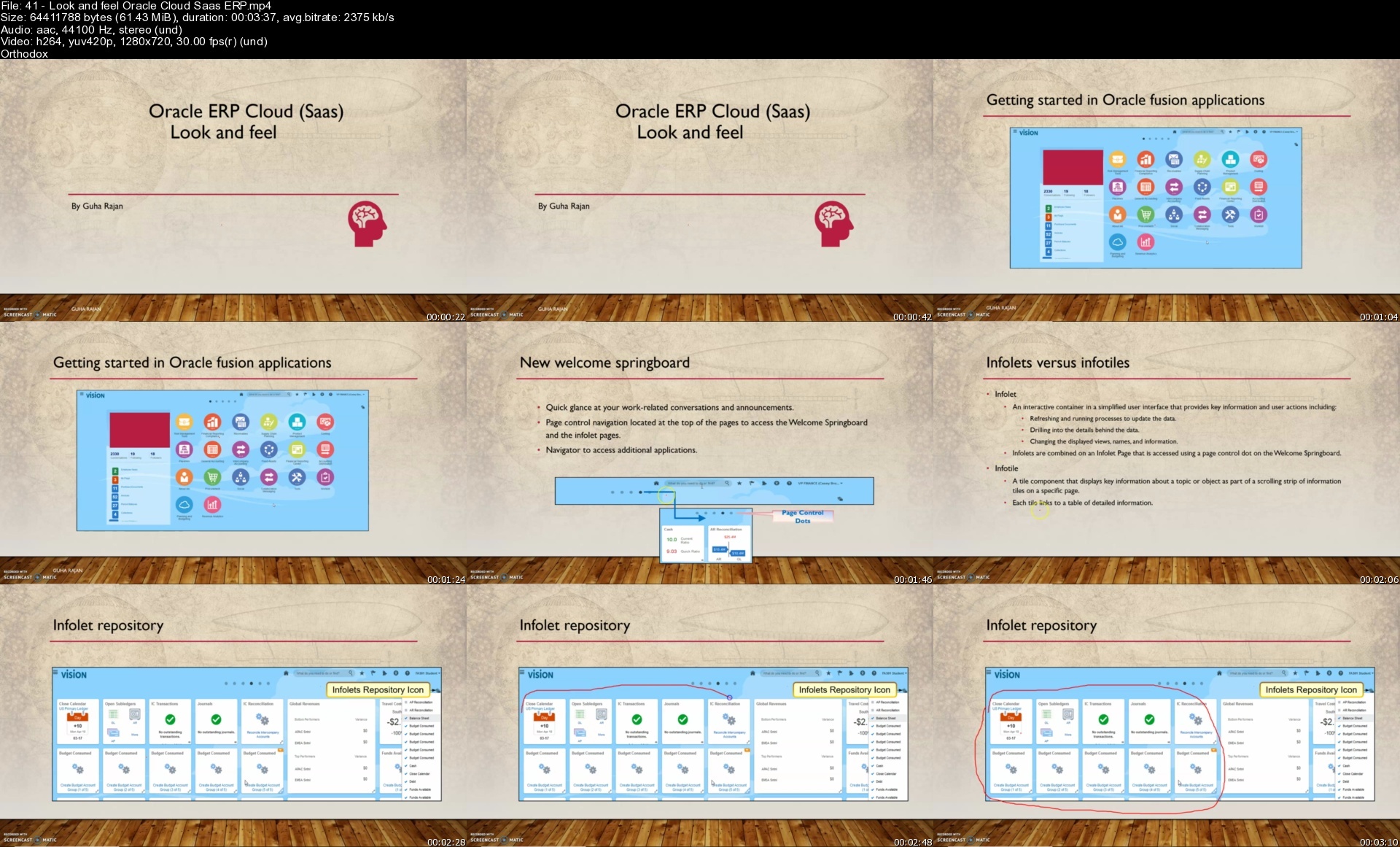
Lecture 41 Look and feel - Oracle Cloud Saas ERP

Lecture 42 Functional Process similarities between Oracle EBS and Oracle Saas Cloud - ERP

Section 11: Approach to further Learning - ERP

Lecture 43 Approach to further Learning - ERP

Section 12: Bonus Lecture

Lecture 44 Bonus Lecture

Those interested to start career in Oracle ERP,SCM Domain consultant who are looking for career in Oracle ERP,Students in Management OR Engineering OR Commerce OR Business interested in Oracle ERP career

Homepage


41lookandfeeloracleclypiqc.jpg


Python TOTAL - Programador Avanzado en 16 días

418916897043bhivj.jpg


Python TOTAL - Programador Avanzado en 16 días
Last Updated 08/2022
MP4 | Video: h264, 1280x720 | Audio: AAC, 44.1 KHz, 2 Ch
Genre: eLearning | Language: Spanish + srt | Duration: 243 lectures (30h 36m) | Size: 9.6 GB

Un proyecto REAL x día. Desde 0 hasta Reconocimiento Facial. Machine Learning, Data Science, Django, IGU, Juegos y más!


What you'll learn
Dominarás la programación profesional en Python
Crearás programas sólidos, avanzados y útiles
Trabajarás en programas del mundo real todos los días. Cada sección finaliza con un proyecto que podrás completar con lo aprendido en el día
Aplicarás Python en aplicaciones como: Juegos, Inteligencia Artificial, Machine Learning, Data Science, Gestión Administrativa y mucho más
Comprenderás la Programación Orientada a Objetos (OOP)
Aprenderás con claridad los temas más complejos


Requirements
Acceso a un ordenador con conexión a internet
Deseo de crecimiento rápido y ganas de aprender con alegría


Description
Aprende TODO PYTHON en 16 días.

Nuestro programa intensivo fue diseñado para que aprendas y practiques, en un calendario de 16 días de estudio

Cada día crearás un programa real y completo

Cada concepto incluye un PDF descargable para tener todo a mano

Cada video tiene una introducción teórica y una demostración práctica

Cada lección viene con 3 ejercicios de código para que practiques lo aprendido

Cada tema se cierra con un cuestionario para afianzar lo aprendido

Cada jornada termina con un momento para reflexionar y celebrar lo aprendido

El programa se divide en 3 partes

Desde el día 1 al día 6: Entrenamiento básico. Los conceptos fundamentales de Python para ser un programador robusto y con la base bien firme

Desde el día 7 al día 9: Fase avanzada. Ingresa a la Programación Orientada a Objetos (OOP), para crear programas ágiles, sólidos, económicos, repetibles, y fáciles de mantener.

Desde el día 10 en adelante: Evoluciona a Experto. Ya eres un programador avanzado de python, y ha llegado la hora de conocer sus principales aplicaciones en el mundo real. Profundizarás en áreas de desarrollo como

Juegos

Interfaces Gráficas

Web Scraping

Inteligencia Artificial

Desarrollo Web

Data Science

Reconocimiento Facial

Machine Learning

y mucho (pero mucho) más.

¿Por qué puedo ayudarte?

Mi nombre es Federico Garay y soy instructor Best Seller, con las mejores calificaciones en Udemy. He ayudado a más de 140.000 personas a lograr aprendizajes que cambiaron sus vidas. Mis cursos de programación en C#, VBA y Pandas/Python llevaron a muchos estudiantes a lograr ese trabajo soñado o esa promoción tan merecida. Mira lo que dicen

***** ***** *****

"Este programa es perfecto, las clases bien explicadas y el profesor transmite animo y muy profesional sobre todo, después de tomar el curso estoy bastante seguro para aprender mas y continuar mi camino en el mundo de la programación y los videojuegos." (Ares Xavier Aren)

***** ***** *****

"Hasta ahora me ha parecido un curso excelente, bastante detallado, pero no me sorprende ya que he tomado otro curso anteriormente con el profe Fede y la verdad aprendes porque aprendes, de los mejores profesores que he visto que realmente se interesa en que te quede claro el tema, en cuanto vi que el profe impartía este tema no dude en comprarlo.." (Erika Raquel Gutiérrez Aguilar)

***** ***** *****

"Como un novato quería aprender C# para poder tener un hobby mas, pero como lo explica este tipo, como lo enseña, como sabe lo que dice, me esta convenciendo de convertirlo en una profesión real" (Carlos David Villamarin Marrugo)

***** ***** *****

Por qué aprender PYTHON

Python es uno de los lenguajes más buscados del mundo. Por su sencillez, su ductilidad y su flexibilidad, se ha transformado en el lenguaje favorito. Sus instrucciones son lo más cercanas posible al lenguaje humano, lo cual hace que sea más fácil de aprender, y esto hace que sea ideal para personas que se están iniciando en el mundo de la programación.

Además de sencillo es poderoso: con unas pocas líneas de código puedes realizar tareas que en otros lenguajes de programación ocuparían cientos de líneas, y esto hace que aumente considerablemente tu productividad.

Por otro lado es uno de los lenguajes de programación más versátiles que existen, y puede ser usado en muchos campos diferentes. Es decir, permite programar desde videojuegos hasta sitios web y aplicaciones móviles.

Razones para NO tomar este curso

A mí no se me ocurren. Pero si quieres tomar el curso SIN RIESGOS, recuerda que cuentas con la garantía de Udemy de devolución del 100% del dinero dentro de los 30 días. No me preocupa, sé que vas a amar a Python Total.

Nos vemos en la lección #1

Fede

Who this course is for
Principiantes que no saben nada de programación
Iniciados que desean llevar sus habilidades al máximo
Usuarios avanzados de Python que quieren aplicarlo en áreas específicas de desarrollo
Programadores de otros lenguajes que quieren incluir a Python en su CV
Emprendedores que quieren crear sus propias aplicaciones para sus negocios
Soñadores que quieren dar un giro a sus vidas y dijeron: "voy a ser programador, ¿por donde comienzo?"

Homepage


017resumatedia6s8rdzp.jpg


Paul'S Pastoral Letters To Timothy And Titus

j72yhahm7tn3pngyvmkgvxzdma.jpg


Paul'S Pastoral Letters To Timothy And Titus
Last updated 7/2022
MP4 | Video: h264, 1280x720 | Audio: AAC, 44.1 KHz
Language: English | Size: 6.53 GB | Duration: 11h 58m

Paul's Letter to His Two Sons in the Faith


What you'll learn
Discuss the basic outline and content of the Pastoral Letters.
Explain how the Pastoral Letters relate to the rest of the New Testament.
Describe the basic priorities of the work of a Pastor.
Recognize and avoid errors that are similar to those which existed in the church during the time Paul wrote to Timothy and Titus
Explain what the pastoral letters teach of the essential nature of the Gospel.
Identify what Paul instructed Timothy and Titus to teach to the various groups in their churches.
How the principles in Paul's instructions to Timothy and Titus relate to your own situation.
Pursue your ministry as a servant of the Lord Jesus Christ with a stronger desire to be faithful to His calling on your life.

Requirements
There are no prerequisites that will be needed for the course. You will get to learn and understand everything that is necessary from this course.

Description
In this course, we will explore what Paul wrote in the two letters that he has written to Timothy and in the letter that he has written to Titus. As we study these three letters, we will explore all the Biblical truths that God has in store for us. As we discuss each Principle, we will also discover how we can apply these Biblical truths in our own personal lives and in a way that will result in effective ministry. I promise that you will not be sorry once you have enrolled for this course. Not only will you enjoy yourself as we dive into God's Word, but you will also get to refresh your memory if you have done a similar course in a previous qualification. My prayer is that you will develop a love for God's Word that is even deeper than it was from before you enrolled. My prayer is also that you will apply everything that you learn from this course. Even though the circumstances might be slightly different than what it was in Paul's day, the principles that was taught to Timothy and Titus respectively is still applicable in today's age as God's Word is eternal and the message of the Gospel is universal.

Overview

Section 1: Introduction

Lecture 1 Introduction to the course

Section 2: The Church and How it should be ordered.

Lecture 2 Introduction to the Pastoral Letters.

Lecture 3 Dealing with Error in the Church

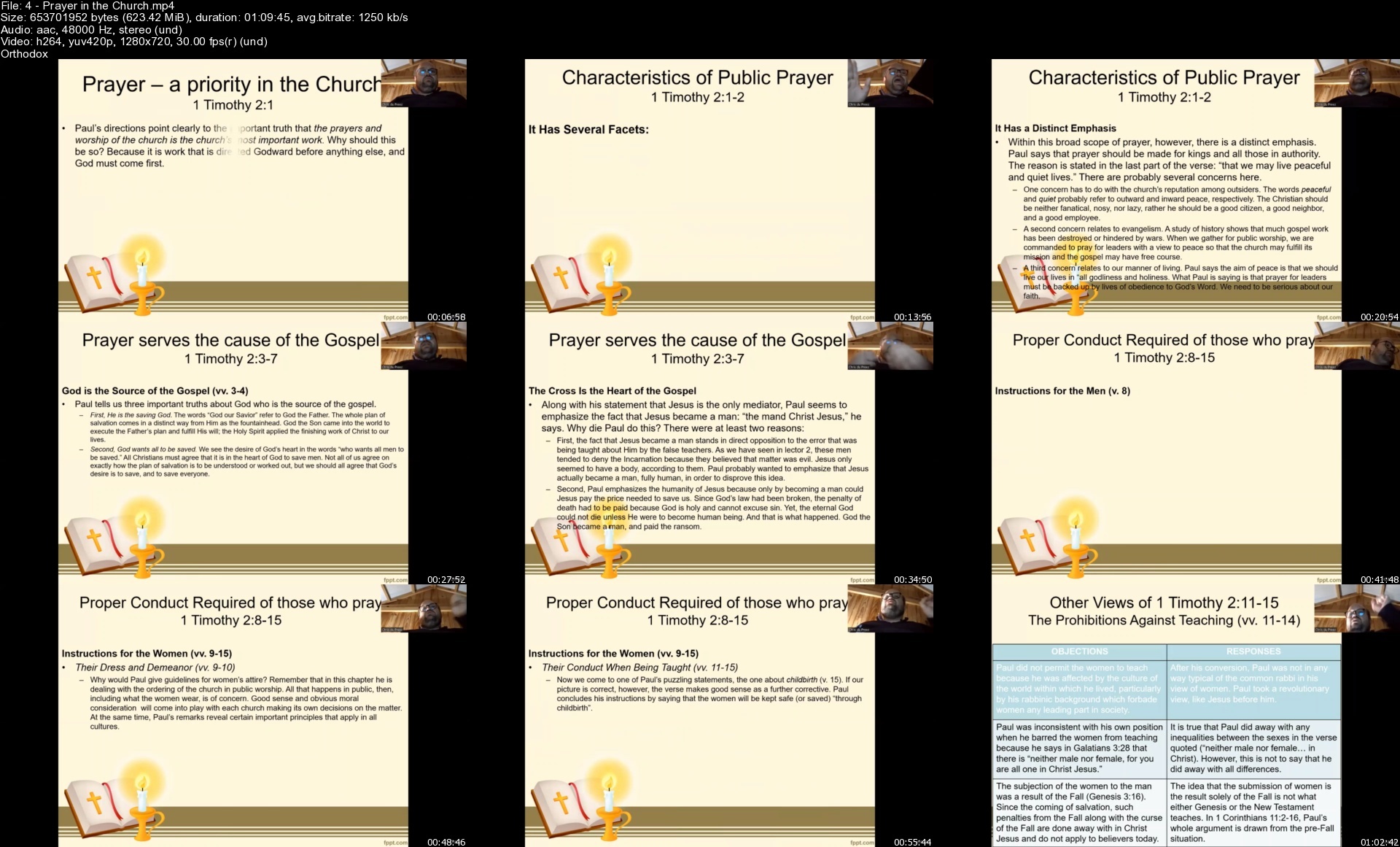
Lecture 4 Prayer in the Church

Lecture 5 Leadership in the Church

Section 3: The Church and How the Minister should serve it.

Lecture 6 The Church and its Minister

Lecture 7 Treat God's Family with Care

Lecture 8 Teach God's Values to Everyone

Section 4: The Congregation and what it should be

Lecture 9 The Source of Godliness

Lecture 10 Instructions of Godliness

Lecture 11 The Outworkings of Godliness

Section 5: God's Ministers and what they should be

Lecture 12 on Being Bold and Unashamed

Lecture 13 on Being Strong and Steadfast

Lecture 14 Reverencing the Word

Lecture 15 Preaching the Word

Student pastors, lay preachers, reverends, pastors, evangelists, missionaries, ministry leaders.

Homepage


4prayerinthechurchsopcuk.jpg


MasterClass - Futura Teaches Spray-Painting & Abstract Art

yj9gx5fdznx8uqzeuhwhviyf2n.jpg


MasterClass - Futura Teaches Spray-Painting & Abstract Art
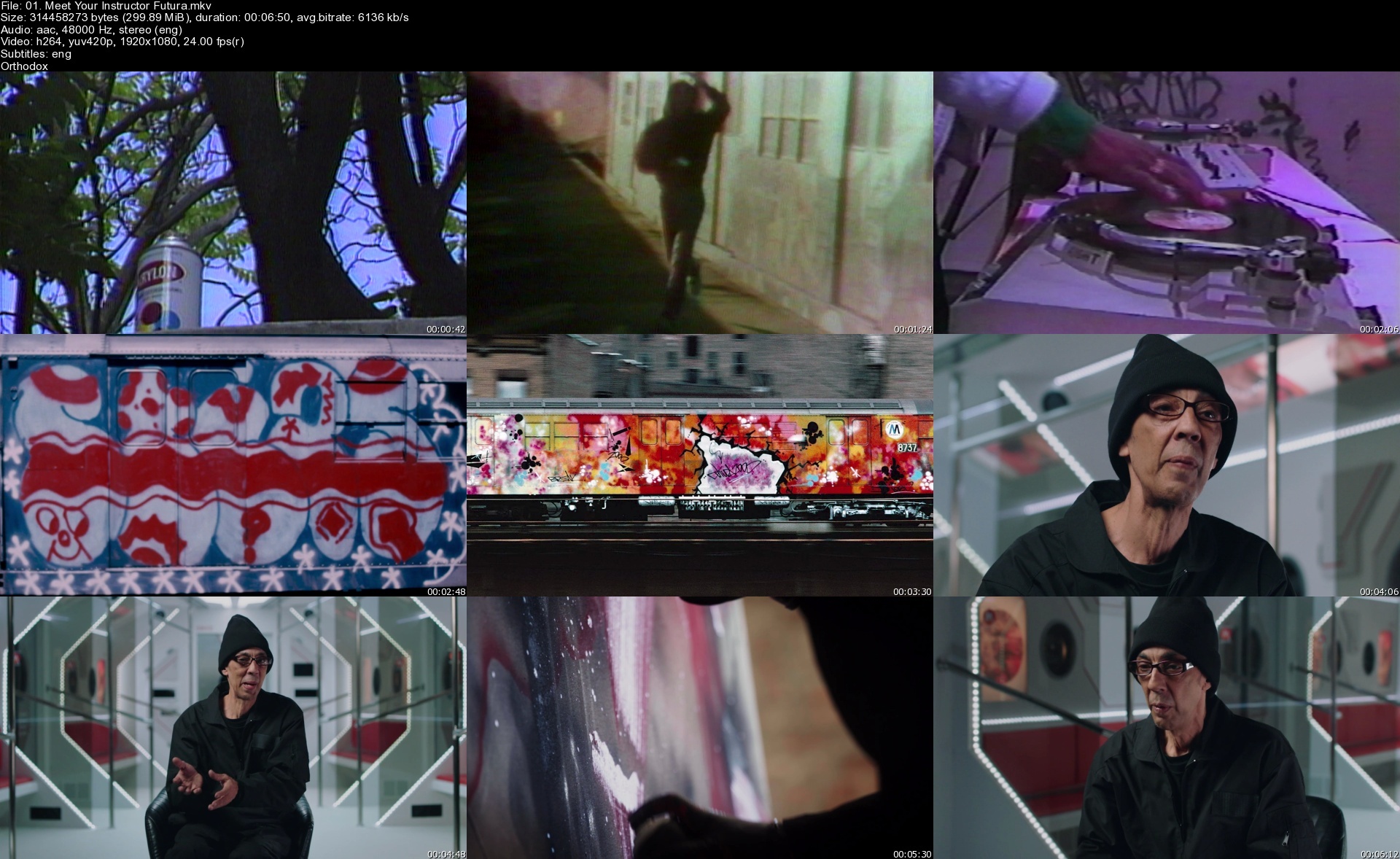
Futura | Duration: 2:33 h | Video: H264 1920x1080 | Audio: AAC 48 kHz 2ch | 6,67 GB | Language: English

Pioneering abstract graffiti artist, Futura teaches you how to create art with a can of spray paint and an idea.

A pioneering painter and street artist, Futura has exhibited at institutions like the Museum of Contemporary Art in Los Angeles, collaborated with Louis Vuitton and Supreme, and created album art for The Clash. Now he's teaching you his signature, kinetic approach to abstract art. Learn how to express yourself and paint with color, dimension, and detail. All you need to create art is an idea and a can of spray paint.

Homepage


01.meetyourinstructor5aces.jpg


Forgiveness, Letting Go, Emotional Integration-HoʻOponopono

pzs8o8pd9cnb2l3f0nu786mcmr.jpg


Forgiveness, Letting Go, Emotional Integration-HoʻOponopono
Last updated 8/2021
MP4 | Video: h264, 1280x720 | Audio: AAC, 44.1 KHz
Language: English | Size: 5.01 GB | Duration: 3h 49m

Hooponopono, Gestalt therapy and releasing


What you'll learn
Techniques of emotional integration. How to apply gestalt therapy principles and techniques in self imporovement and working with clients for professionals
Letting go techniques and principles. Sedona method, six ways of releasing and release technique. How to apply in self imporovement and healing and facilitate
Successfuly integrating these approaches into most effective emotional healing ever!
Hooponopono, forgiveness and heart chakra self healing, activation and trauma self healing

Requirements
No requirements, no conditions its suitable for all levels. Everyone can benefits from this, these are basic skills that can always be necessary to improve and work on. at
Just be motovated to learn and practice✨!

Description
In this course we are learning 3 most effective techniques in order to reach:psychological maturity, integrity, autentic personality with Gestalt therapy. Learn how to forgive and heal with your own heart through power of compassion and love heal all deseases, emotional blocks and karmic patternsLearn how to let go, remove ego identification and reach your full Spiritual and creative potential, awake intuition and master emotional literacy. Be happier, healthier and more abundant with sedona method and releasing technique! Theory, although takes small space on this course I explained it briefly, because it is necessary for you to understand practices deeper. So make sure you download all resources I uploaded, among them are e books and power point presentations. Watch it, reflect on that and enjoy your video lessions at your own pace. Ideal time for finishing course is a week. Watching and practicing 1 or 1,5 hours a day 4 times per week, by making pause a day in between. Also I am going to show you ways of creatively mixing those techniques. There is a lot of practice time during course and you Will be able to apply all those techniques and principles. No matter if you are therapist, light worker, parent, teacher, client or simply student of life wanting to achieve emotional freedom, psychological maturity, emotional literacy and manifest more abundant, healthoer life with effortless Flow and joyful Soul expansion. Take your ticket to freedom, emotional stability and rediscover your uniqueness!

Overview

Section 1: Hooponopono

Lecture 1 Introduction

Lecture 2 Cleansing heart and energy field

Lecture 3 Heart and crown activation

Lecture 4 Removing traumas and heal your body

Lecture 5 Different ways of utilizing Hooponopono in everyday life

Section 2: Gestalt psychotherapy - Emotional integration

Lecture 6 Mirror exercise--contact solo exercise

Lecture 7 Mirror solo exercise on contact example

Lecture 8 Contact exercise for working with client or partner

Lecture 9 Projection and reflection--Traits that annoys me in others

Lecture 10 Polarities in gestalt - Two ways of dealing with it

Lecture 11 Addictional processes and writing essays application

Lecture 12 Language of responsibility

Section 3: Sedona method and releasing technique. Let go and let God?

Lecture 13 Sedona method 1st way- strainght forward

Lecture 14 Sedona method triple welcoming

Lecture 15 Diving in

Lecture 16 Undoing polarities into nothingness

Lecture 17 Fifth way-Recognizing what is

Lecture 18 Sixth way-free way looking at the issue AS the Source

Lecture 19 Wants- Root of All suffering, basocs programs of ego

Lecture 20 Let go of negative emotions - AGFLAP

Lecture 21 Combining the ways of Sedona--exercise

Lecture 22 Letting go of problem

Lecture 23 Identity conflict

Lecture 24 Goals

Lecture 25 Dissolving resistance

Lecture 26 Release technique 1

Lecture 27 Release technique 2

For People on path of self improvement, Spiritual development, energy healers and Psychotherapist and counselors

Homepage


4removingtraumasandhemlcsg.jpg


Ecommerce & Marketing Course: Agency, Marketer, Affiliate

eoygxd7ttyode6zdczqvcflf7l.jpg


Ecommerce & Marketing Course: Agency, Marketer, Affiliate
Last updated 11/2021
MP4 | Video: h264, 1280x720 | Audio: AAC, 44.1 KHz
Language: English | Size: 62.82 GB | Duration: 50h 58m

Best Ecommerce & Digital Marketing course, social media marketing, sales funnels, WordPress website, SEO, Ads, ...


What you'll learn
Selling a product online as a freelancer, agency, business owner or affiliate
Designing an advanced structure of a successful eCommerce and Marketing plan
Finding, analyzing and driving traffic online
Social media marketing on platforms like Instagram, Facebook, Youtube, Pinterest
Advanced advertisement strategies that increase the revenue
Advertisement on platforms, like Facebook, Instagram, Google, Youtube, Pinterest
Creating a complete website from scratch to advance with an online store
Email marketing with 3 different platforms
Designing powerful funnels to drive the traffic into and increase sales and revenue
Starting and building a successful company
21 Marketing cognitive biases and customer characteristics analyzation

Requirements
Join the course with an open mind to learn new things
Be able and willing to practice what we talk about inside the program
Have access to a computer or laptop to be able to use the tools we have a long the course

Description
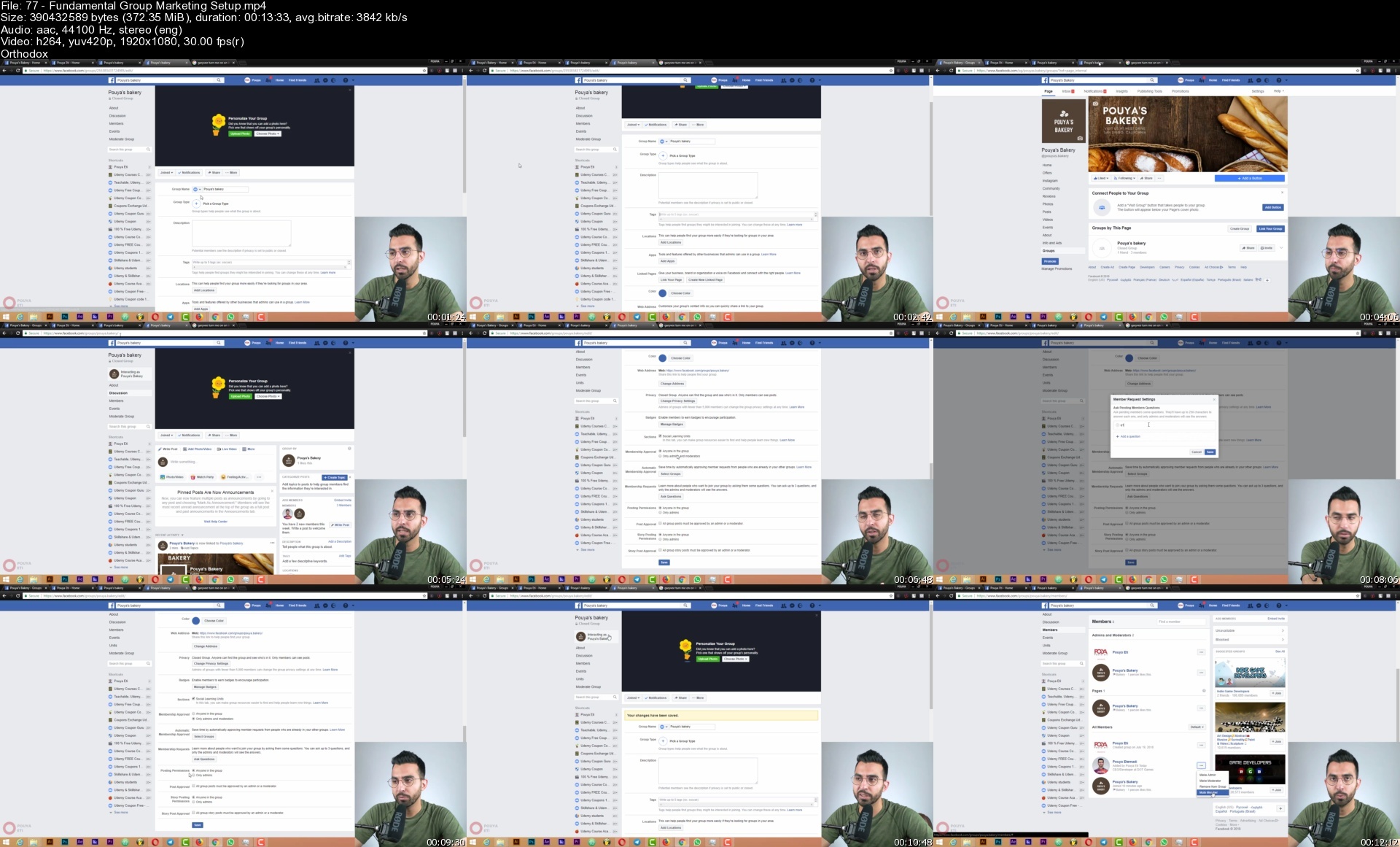
Ecommerce & Marketing course: For agency, freelancer, product owner and affiliate to sell any product online.By the end you will be able to start and grow a business from any step by locating the customers, delivering higher quality product using advanced strategies and finally selling any product online using sales funnels.In this eCommerce & Marketing course You will learn how to:Create and plan an advanced eCommerce structure for any businessAudience research and analyzationProduct research and analyzationThe advanced traffic blueprintInstagram marketingFacebook marketingYoutube marketingPinterest marketingContent creation for each social media with specific strategiesAdvanced advertisement:Fundamentals of advertisementFacebook adsFacebook retargetingInstagram adsGoogle adsYoutube adsPinterest adsConnector marketing (Advanced strategies)How to create full and advanced website with online store for your businessEmail marketingHook, Story, Offer strategyFundamentals and structure of funnels for sales and leadsHow to start a companyMarketing cognitive biasesCustomer characterizing and much more ...This program is designed for people who want to grow a business using eCommerce and marketing. We start learning from fundamental steps and little by little we get to advanced strategies which most people are not aware of.This eCommerce and Marketing course is so complete that include everything you may need along the way and from time to time we update the course and add new lectures and materials to the course.Student WorkstationThis course include a very complete Student Workstation which includes all of the information inside the course as written documents, with links to the needed tools. It also has each section as a PDF for students who are interested to download it and keep it for themselves offline.The student workstation also include featured marketing and design tools that can very useful to grow a business. And finally we have the student's community to increase the learning experience by engaging students, sharing about issues and problems you face a long the way with others.------------Important!The course includes a section about 21 marketing cognitive biases which are very effective in persuading others.Not everyone knows about digital marketing cognitive biases, and please please use them in ethical way. With cognitive biases you will have the ability to convince people toward your goals and it is extremely important to use it for ethical purposes !!! if you are not sure you can do it, please do not join the course.------------Important!The course include about 50 hours of content, all videos inside the course are recorded with full hd quality in a recording studio, so the audio and video quality is very good. Along the course we have assignments, exercises, and quiz to increase your learning experience by doing the tasks we learn along each lecture.Also by the end of the course you will receive your "eCommerce and Marketing" certificate, mentioning you have completed this course, so you can use it on your resume to increase your salary.If you really want to achieve everything said above join this course NOW! , master eCommerce and digital marketing, take your business to the next level with "Ecommerce & Marketing course: Agency, Marketer, Affiliate" course.Ecommerce & Marketing course: Agency, Marketer, Affiliate by Pouya Eti

Overview

Section 1: Introduction

Lecture 1 Student Workstation - important !

Lecture 2 Access to Workstation

Lecture 3 Best tips to use the course

Section 2: Ecommerce Blueprint

Lecture 4 Ecom process

Lecture 5 Business goal

Lecture 6 Ecom agency & Freelancing

Lecture 7 Ecom for business owners

Lecture 8 Ecom affiliates

Section 3: Planning

Lecture 9 Planning structure

Lecture 10 Ecom planning

Section 4: Audience

Lecture 11 Introduction to audience

Lecture 12 Who is your audience

Lecture 13 Competitor mining

Lecture 14 Product to competitor

Lecture 15 Competitor analyzation

Lecture 16 Search mindset

Section 5: Product

Lecture 17 Introduction to Product

Lecture 18 Why your product?

Lecture 19 Product evaluation

Lecture 20 Product value secret

Lecture 21 Stay ahead of competitors

Section 6: Traffic

Lecture 22 Introduction to Traffic

Lecture 23 The 5 Types

Lecture 24 Cold, Warm, Hot

Section 7: Traffic - Social Media

Lecture 25 What we have

Section 8: Instagram

Lecture 26 Introduction & IG mindset

Lecture 27 A winning page intro

Lecture 28 Username and Keywords

Lecture 29 Image is an ID

Lecture 30 Advanced bio

Lecture 31 CTA Landing page

Lecture 32 Page theme

Lecture 33 Analytics + Ads

Lecture 34 Know your PF

Lecture 35 The List

Lecture 36 Marketing strategies intro

Lecture 37 Instagram traffic source

Lecture 38 Hashtags

Lecture 39 Hashtag marketing structure

Lecture 40 Hashtag research

Lecture 41 Follow - unfollow

Lecture 42 Credit marketing

Lecture 43 Fan promotion

Lecture 44 Shoutouts

Lecture 45 Like and cm contest

Lecture 46 Contest marketing

Lecture 47 Story intro

Lecture 48 Tags

Lecture 49 Increase engagement

Lecture 50 CTA/Swipe up

Lecture 51 Live intro

Lecture 52 Live planning

Lecture 53 Practice and tips

Lecture 54 Highlights

Lecture 55 Instagram success ingredients

Section 9: Facebook

Lecture 56 Intro

Lecture 57 Introduction to Facebook Fan Page

Lecture 58 Establish Your Facebook Page

Lecture 59 Golden Keywords For Business

Lecture 60 Appear in Search Result

Lecture 61 Profile Picture Perfection

Lecture 62 Cover Photo Perfection

Lecture 63 Call To Action!

Lecture 64 Modify Tabs & Learn From Insights

Lecture 65 Post Types to Use

Lecture 66 !!! Golden Bonus - Business Advice !!!

Lecture 67 Introduction to Fan Page Marketing Strategies

Lecture 68 All Connections

Lecture 69 Invite Potential Followers

Lecture 70 Shoutout Rules

Lecture 71 Distributer Pages For Your Content

Lecture 72 Competitions: Rules & Steps

Lecture 73 How To Create Network Effect

Lecture 74 Notification Challenge

Lecture 75 Introduction To Facebook Groups

Lecture 76 Start Your Group

Lecture 77 Fundamental Group Marketing Setup

Lecture 78 Group Monetization

Section 10: YouTube

Lecture 79 Introduction to YouTube marketing

Lecture 80 YouTube fundamentals

Lecture 81 YouTube marketing

Section 11: Pinterest

Lecture 82 Introduction to Pinterest marketing

Lecture 83 Start your business page

Lecture 84 Name & Description

Lecture 85 Claim your website

Lecture 86 Competitor's notes

Lecture 87 Photo pin rules

Lecture 88 Video pin rules

Lecture 89 Create content

Lecture 90 Follow unfollow

Lecture 91 3 Marketing strategies

Section 12: Content Production

Lecture 92 Introduction

Lecture 93 Content production diagram

Lecture 94 Instagram post

Lecture 95 Instagram video structure

Lecture 96 YouTube videos

Lecture 97 Pinterest post

Lecture 98 Photoshop environment

Lecture 99 Selecting tools part 1

Lecture 100 Selecting tools part 2

Lecture 101 Patching and merge

Lecture 102 Brush and shadow

Lecture 103 Gradiant and text

Lecture 104 Layer setting

Lecture 105 Coolors

Lecture 106 Canva environment

Lecture 107 Edit page

Lecture 108 Resource pack

Lecture 109 Camtasia environment

Lecture 110 Video edit

Lecture 111 Audio edit

Lecture 112 Subtitle

Lecture 113 Export

Lecture 114 Video leap

Section 13: Advertisement

Lecture 115 Introduction to ads

Lecture 116 Structure of ads

Lecture 117 retargeting

Section 14: Facebook Ads

Lecture 118 Introduction to Facebook ads

Lecture 119 Ads manager

Lecture 120 Billing

Lecture 121 Campaigns

Lecture 122 Ad set

Lecture 123 Ad

Lecture 124 Audience

Section 15: Facebook Retargeting

Lecture 125 Facebook Pixel

Lecture 126 Facebook events

Lecture 127 Audience based on events

Lecture 128 Conversion ad

Lecture 129 Prospecting ads

Lecture 130 A/B testing

Section 16: Instagram Ads

Lecture 131 The importance of ads on Insta

Lecture 132 4 type of Instagram ads

Lecture 133 Facebook ads manager

Lecture 134 Billing and payment

Lecture 135 Instagram ads documents

Lecture 136 Instagram ads structure

Lecture 137 Define your target

Lecture 138 Instagram ads planning

Lecture 139 Create your instagram ads by Facebook ads manager

Lecture 140 Promote your posts from Instagram

Lecture 141 Scarcity, reward & curiosity tendency

Lecture 142 Viral posts in practice

Lecture 143 The 4 energy on Instagram

Section 17: Google and Youtube Ads

Lecture 144 Introduction to Google ads

Lecture 145 Google ads environment

Lecture 146 Keyword planner

Lecture 147 Creating campaigns

Lecture 148 Linking accounts

Lecture 149 Tips to write a better ad

Lecture 150 Responsive ads & audiences

Lecture 151 Section douments

Section 18: Pinterest Ads

Lecture 152 Introduction to Pinterest ads

Lecture 153 Create the ad set

Lecture 154 Create the ad

Section 19: Build your Website

Lecture 155 Introduction to Website

Lecture 156 Website documents

Lecture 157 The general plan

Lecture 158 Domain

Lecture 159 Host

Lecture 160 Free host & domain

Lecture 161 Important Issues

Lecture 162 WordPress environment

Lecture 163 WordPress theme

Lecture 164 Theme analyzation

Lecture 165 Importing demos

Lecture 166 Neve options issue

Lecture 167 Important notes

Lecture 168 Logo

Lecture 169 Font

Lecture 170 Html

Lecture 171 Css

Lecture 172 Header

Lecture 173 Footer

Lecture 174 Colors

Lecture 175 Layouts

Lecture 176 Customize

Lecture 177 Classic page

Lecture 178 Elementor

Lecture 179 Elementor environment

Lecture 180 Container

Lecture 181 Editor tabs

Lecture 182 Headline & text

Lecture 183 Image and video

Lecture 184 Buttons

Lecture 185 Divider & spacer

Lecture 186 Google map & icon

Lecture 187 Image & icon box

Lecture 188 Gallery

Lecture 189 Counter & progress

Lecture 190 Tabs

Lecture 191 Accordion & toggle

Lecture 192 Alert, sidebar & more

Lecture 193 Shape divider

Lecture 194 Responsive

Lecture 195 Inspect element

Lecture 196 Reading inspect element

Lecture 197 Inspect element style

Lecture 198 Search mindset

Lecture 199 Design inspiration

Lecture 200 Design resources

Lecture 201 Introduction to Canva

Lecture 202 Canva editor

Lecture 203 Canva practice

Lecture 204 Assignment - Clickfunnels (1)

Lecture 205 Assignment - Clickfunnels (2)

Lecture 206 Assignment - Clickfunnels (3)

Lecture 207 Override

Lecture 208 Posts

Lecture 209 Menus

Lecture 210 Widgets

Lecture 211 Clean dashboard

Lecture 212 Assignment - Shopify (1)

Lecture 213 Assignment - Shopify (2)

Lecture 214 Plugin analyzation

Lecture 215 Essential plugins

Lecture 216 Duplicate page

Lecture 217 Elementor addons

Lecture 218 Warning

Lecture 219 Custom header

Lecture 220 Wp-Optimize

Lecture 221 Autoptimize

Lecture 222 Yoast - SEO

Lecture 223 WooCommerce

Lecture 224 WooCommerce settings

Lecture 225 Add product

Lecture 226 Create store

Lecture 227 WooCommerce customization

Lecture 228 Ultimate members

Lecture 229 UM settings

Lecture 230 Slider revolution 6

Lecture 231 WPforms intro

Lecture 232 WPforms - Creating forms

Lecture 233 Mailster

Lecture 234 Campaigns

Lecture 235 Forms

Lecture 236 Lists

Lecture 237 Setting SMTP

Lecture 238 Google analytics

Lecture 239 SSL certificate

Section 20: Website Optimization

Lecture 240 Introduction

Lecture 241 Optimization fundamentals

Lecture 242 Travel agencies

Lecture 243 Restaurant

Lecture 244 Dentists

Lecture 245 Typography

Section 21: SEO

Lecture 246 Intro to SEO

Lecture 247 the 3 major SEO steps

Lecture 248 SEO full documents

Lecture 249 Keywords conversion & Bounce

Lecture 250 The 2 type of keywords

Lecture 251 Create the list

Lecture 252 Competitor keyword research

Lecture 253 Google keyword planner

Lecture 254 Google trend

Lecture 255 Possibility to rank #1

Lecture 256 Keyword validation

Lecture 257 Intro To Building Web Page

Lecture 258 Page Title, URL & Headline

Lecture 259 Yoast

Lecture 260 Body Rules

Lecture 261 BackLinks

Lecture 262 Google Search Console

Lecture 263 Sitemap

Lecture 264 Indexing

Lecture 265 Queries

Lecture 266 Page Speed

Lecture 267 SSL Certificate

Lecture 268 Free SSL Certificate

Lecture 269 Data Highlighter

Lecture 270 Intro To Drive Traffic

Lecture 271 Quora

Lecture 272 Social Media & resources

Lecture 273 Competitors Traffic Channels

Lecture 274 SEO Documents

Section 22: Connector Marketing

Lecture 275 Intro to connector marketing

Lecture 276 Who is the connector

Lecture 277 Find connectors

Lecture 278 Create the list

Lecture 279 Step 1 engagement

Lecture 280 Contact connectors

Lecture 281 Fan and offer

Lecture 282 Own your list

Section 23: Email Marketing

Lecture 283 What you will learn in "Email Marketing"

Lecture 284 Section Documents

Lecture 285 4 Stages of email marketing

Lecture 286 Cheapest ways to capture email leads

Lecture 287 Setup Mailchimp

Lecture 288 Mailchimp Audience

Lecture 289 Sign up forms: builder, embeded & pop up

Lecture 290 Import signup form into Facebook page

Lecture 291 Content, report & template

Lecture 292 Email campaigns

Lecture 293 Email automation - Get Response

Lecture 294 Section Article

Section 24: Hook, Story, Offer

Lecture 295 Introduction

Lecture 296 Section documents

Lecture 297 Hook structure

Lecture 298 Story structure

Lecture 299 Offer structure

Section 25: Funnel

Lecture 300 Introduction to funnels

Lecture 301 Section documents

Lecture 302 What is sales funnel

Lecture 303 Funnel types

Lecture 304 Squeeze page

Lecture 305 Application funnel

Lecture 306 Trip wire funnel

Lecture 307 Sales letter

Lecture 308 Product lunch funnel

Lecture 309 Webinar funnel

Lecture 310 Auto webinar funnel

Lecture 311 Winning offer

Lecture 312 Reverse engineer

Lecture 313 Funnel article

Section 26: Building a company

Lecture 314 Introduction to company

Lecture 315 Entrepreneur mindset

Lecture 316 Company registration

Lecture 317 Budget

Lecture 318 Business partner

Lecture 319 Management tips

Lecture 320 Business owner characteristics

Lecture 321 Keep records

Section 27: Cognitive biases of Marketing

Lecture 322 Introduction to Cognitive Biases

Lecture 323 The List & Lollapalooza Tendency

Lecture 324 Scarcity - Part 1

Lecture 325 Scarcity - Part 2

Lecture 326 Reward & Punishment Tendency

Lecture 327 Liking/Loving Tendency & Disliking/Hating Tendency

Lecture 328 Contrast Misreaction Tewndency

Lecture 329 Reciprocation Tendency

Lecture 330 Inconsistency-Avoidance Tendency

Lecture 331 Exercise - A woman from Poland

Lecture 332 Doubt-Avoidance Tendency

Lecture 333 Influence-from-Mere Association Tendency

Lecture 334 Simple, Pain-Avoidance Psychological Denial

Lecture 335 Excessive self regard tendency

Lecture 336 Overoptimism Tendency

Lecture 337 Social Proof

Lecture 338 Curiosity Tendency

Lecture 339 Stress-Influence Tendency

Lecture 340 Availability-Misweighing tendency

Lecture 341 Authority-Misinfluence Tendency

Lecture 342 Twaddle Tendency

Lecture 343 Reason-Respecting Tendency

Lecture 344 Booking hotel - part1

Lecture 345 Booking hotel - part2

Lecture 346 Amazon vs ebay

Lecture 347 Udemy

Lecture 348 Additional information on cognitive biases

Section 28: The 4 Business Energy

Lecture 349 Introduction to 4 business Energy

Lecture 350 The 4 type of business energies

Lecture 351 Calculation of the 4 energies

Lecture 352 Understanding our lead business energy

Lecture 353 Ways to improve our weakest energy

Lecture 354 The lead energy of your customer

Lecture 355 How to act against each lead energy

Lecture 356 The effect of colors on customers

Section 29: Web Persuasion

Lecture 357 Turkish airline vs Austrian airline

Lecture 358 Dave dolle

Lecture 359 Apple vs Microsoft

Lecture 360 Mcdonalds, Subway & KFC

Lecture 361 Berkshire hathaway

Section 30: Finalizing

Lecture 362 Final talk

People who want to work in marketing field as a freelancer or agency,People who want to sell their own product online as a business owner,People who want to start an affiliate business

Homepage


77fundamentalgroupmarufduh.jpg


Embedded Systems With Avr Atmega32 Microcontroller

kwfoithyisvurnfufgfk2qliee.jpg


Embedded Systems With Avr Atmega32 Microcontroller
Published 9/2022
MP4 | Video: h264, 1280x720 | Audio: AAC, 44.1 KHz
Language: English | Size: 23.58 GB | Duration: 36h 52m

An In - Depth Approach


What you'll learn
Detailed theoretical aspects of ATMEGA32 MCU (Architecture, Clock Sources, Programming Techniques, Fuse and Lock Bits, etc.)
Detailed concepts of MCU programming and thorough understanding of ATMEGA32 peripherals.
Programming of Basic ATMEGA32 peripherals (GPIO, UART, ADC, External Interrupts, On - Board NVS, Analog Comparator).
Working and programming of critical ATMEGA32 peripherals (Timers, Timer CTC Mode, Counter Mode, Timer Input Capture Mode, PWM)
Some more important topics in MCU programming (Watchdog Timer and Low - Power Modes).
Implementation of embedded system communication protocols (SPI and I2C) along with interfacing of related external peripherals and MCU to MCU communication.
Theory and interfacing of Basic external peripherals (LEDs, Pushbuttons, SPDT Relay, 16x2 LCD, DC Motors with L293D / L298N Motor Drivers, Servo Motors).
More basic peripheral programming (Stepper Motor, Dot Matrix Display, 7 Segment Display).
Complex peripheral programming (KS0108, ST7920, Nokia 5110 Graphical LCDs and SSD1306 OLED Display).
Extraction of vital information from datasheet and other relevant technical documents for programming / interfacing on - board or external peripherals.
Hands - On implementation / testing of each and every circuit and program explained in this course.
Methods for remote control of standard bench equipment like DSO, Signal Generator and Bench Top DC Power Supply.

Requirements
Complete clarity in "C programming concepts" like Input - Output Statements, Control Statements, Looping Statements, Decision Making Statements, Arithmetic and Bitwise Operations, Types of Operators, Operator Precedence, Typecasting, Pre - Processors and Macros, Arrays, Pointers, Structures, User - Defined Functions, etc.
Sound Knowledge about Basics of Digital Electronics along with brief idea about the working of basic electronic components like resistor, inductor, capacitor, diode, transistor, FET, logic gate ICs, etc.
Basic software like "One Note for Windows 7", MS Word" and "Adobe Acrobat PDF Reader" must be pre - installed in your computer.
Programming software that must be installed are Atmel Studio 7.0, Sina Prog Hex Downloader, Real Term / Tera Term VT.
Latest version of CP210x and FTDI drivers, Libusb driver and USB - asp driver.
Additional assisting software that must also be installed are LCD Assistant, GIMP v2.10.24 and Zadig v2.5.

Description
"Embedded Systems with AVR ATMEGA32 Microcontroller - An In - Depth Approach" - As the name suggests, this course contains an in - depth analysis of the ATMEGA32 microcontroller along with the absolute fundamentals of microcontroller programming. Now, you must be thinking that, in this modern world where electronics are being powered up using ARM cortex processors and controllers, FPGA's, etc., what is the need for learning an old school controller like ATMEGA32? A very simple answer to this is, if you want to learn the advanced controllers, then it is imperative that you possess a thorough understanding of the fundamental controllers used in embedded system applications and now - a - days, ATMEGA32 is the most beginner friendly microcontroller because it is relatively easy to program and easy to understand.This course contains a total of 136 lectures divided into 14 sections but I'll layout the entire game plan of this course in 4 major parts: -You'll be introduced to the ATMEGA32 MCU and its features, followed by detailed discussions about its architecture, memory organization, clock sources, programming techniques, etc. Also you'll know about the various parts, equipment and software that are required and how to work with them.You'll be beginning your microcontroller programming journey starting with programming and testing of basic ATMEGA32 peripherals like GPIO, UART, ADC, External Interrupts, Analog Comparators and On - Board Non - Volatile Storage. Also you'll be knowing how to interface external peripherals like LED's, pushbuttons, LCDs, relays, dot matrix displays, 7 segment displays, DC motors, Stepper motors, etc.You'll be dealing with some critical concepts in microcontroller programming like timers, various modes of timers like Counter, CTC, Input Capture and PWM modes. Also you'll be knowing about some less discussed yet important topics like low power modes and watchdog timers along with generation of interrupts by them in the MCU.You'll be understanding 2 of the most commonly used communication protocols in embedded systems namely SPI and I2C protocols in great details followed by interfacing different external peripherals with the microcontroller using these protocols along with generation of protocol based interrupts in this MCU. Also, towards the end, you'll be dealing with interfacing of complex peripherals like Graphical LCDs and OLED displays with this MCU.The pattern to learn a given concept in this course is a 5 step process :-You'll gain an in - depth theoretical background about the concept.You'll be provided with detailed explanations of vital information present in technical documents / datasheets of the MCU and associated components / peripherals because it is very essential for coding the MCU.You'll be understanding related circuit connections for testing the concept and the circuit will be explained in schematic and breadboard formats.You'll be explained each and every line of the programs for testing the concept and the program configurations will be explained with reference to the datasheets of the MCU and its associated components.You'll be implementing circuit connections on the bench and testing the programs on those circuits.Now, why should you choose my course at all?There are 3 good reasons:-The sheer amount of detail in which each concept of the ATMEGA32 microcontroller has been explored.Circuits have not been simulated using simulation software because there are times when simulations can fool you completely.More than 80 programs have been analyzed and implemented practically on the bench.This course has been designed for beginners in the field of embedded systems programming and also for those who are very enthusiastic about electronics but have absolutely no idea how or where to start from. However, I would recommend having previous knowledge about C programming concepts, fundamentals of digital electronics along with a basic idea of how basic electronic components like resistor, inductor, capacitor, diode, transistor, FET, logic gate ICs, etc. work.Finally, I'll be truthful and honest with you. I can't guarantee that this course is going to be a fun one or like its going to be a walk in the park but I can definitely guarantee that this course is a powerhouse of knowledge and information about microcontroller programming using ATMEGA32 MCU. Once you have successfully completed this arduous journey of 136 lectures, your knowledge, skill and confidence in embedded systems will be boosted to the next level. So please take this interesting course and I assure you that it'll be worth your every penny. Also please leave a genuine feedback in the end as it will only help me improve more and more. Happy learning!!!

Overview

Section 1: Introduction

Lecture 1 Introducing the Course

Lecture 2 Overview of ATMEGA32 Controller

Lecture 3 Architecture of ATMEGA32 Controller

Lecture 4 Memory Organization of ATMEGA32 Controller

Lecture 5 Fuse and Lock Bits of ATMEGA32 Controller

Lecture 6 Clock Sources and Distribution in ATMEGA32 Controller

Lecture 7 Programming Techniques of ATMEGA32 Controller

Lecture 8 Parts Equipment and Software Needed

Lecture 9 Working with ATMEL Studio 7

Lecture 10 Setup and Downloading Test Program into the Controller

Lecture 11 Controlling Signal Generator and DC Power Supply using PC

Lecture 12 Controlling and Monitoring DSO using PC

Section 2: GPIO Programming

Lecture 13 The Concept of GPIO

Lecture 14 GPIO Registers in ATMEGA32

Lecture 15 Circuit Diagram for Testing GPIO Programs

Lecture 16 GPIO Program - Dancing LED's

Lecture 17 GPIO Program - Pushbutton Interface

Section 3: Interfacing Basic Peripherals

Lecture 18 Theory of SPDT Relay

Lecture 19 Interfacing SPDT Relay with ATMEGA32 MCU

Lecture 20 Theory of DC Motor

Lecture 21 L293D and L298N Motor Drivers

Lecture 22 Interfacing DC Motor with ATMEGA32 MCU - Part 1

Lecture 23 Interfacing DC Motor with ATMEGA32 MCU - Part 2

Lecture 24 Theory of Stepper Motors

Lecture 25 Interfacing Stepper Motor with ATMEGA32 MCU - Part 1

Lecture 26 Interfacing Stepper Motor with ATMEGA32 MCU - Part 2

Lecture 27 Theory of 7 Segment Display

Lecture 28 Interfacing 7 Segment Display with ATMEGA32 MCU - Part 1

Lecture 29 Interfacing 7 Segment Display with ATMEGA32 MCU - Part 2

Lecture 30 Interfacing 7 Segment Display with ATMEGA32 MCU - Part 3

Lecture 31 Theory of 8x8 Dot Matrix Display

Lecture 32 Interfacing 8x8 Dot Matrix Display with ATMEGA32 MCU - Part 1

Lecture 33 Interfacing 8x8 Dot Matrix Display with ATMEGA32 MCU - Part 2

Lecture 34 Theory of 16 x 2 Alphanumeric LCD

Lecture 35 Interfacing 16 x 2 Alphanumeric LCD with ATMEGA32 MCU - Part 1

Lecture 36 Interfacing 16 x 2 Alphanumeric LCD with ATMEGA32 MCU - Part 2

Lecture 37 Interfacing 16 x 2 Alphanumeric LCD with ATMEGA32 MCU - Part 3

Lecture 38 Interfacing 16 x 2 Alphanumeric LCD with ATMEGA32 MCU - Part 4

Lecture 39 Theory of 4x4 Hex Keypad

Lecture 40 Interfacing 4x4 Hex Keypad with ATMEGA32 MCU - Part 1

Lecture 41 Interfacing 4x4 Hex Keypad with ATMEGA32 MCU - Part 2

Section 4: External Interrupt Programming

Lecture 42 Concept and Working of Interrupts

Lecture 43 External Interrupts in ATMEGA32

Lecture 44 Programming External Interrupts in ATMEGA32

Section 5: UART Programming

Lecture 45 Concept of Serial Communication

Lecture 46 Details of Asynchronous Serial Communication

Lecture 47 UART Registers in ATMEGA32 MCU

Lecture 48 Circuit Diagram and RS232 Interface

Lecture 49 Testing UART in ATMEGA32 MCU - Part 1

Lecture 50 Testing UART in ATMEGA32 MCU - Part 2

Lecture 51 Testing UART in ATMEGA32 MCU - Part 3

Lecture 52 Testing UART Based Interrupts in ATMEGA32 MCU

Section 6: ADC Programming

Lecture 53 Concept of ADC

Lecture 54 ADC Registers in ATMEGA32 MCU

Lecture 55 Testing Single Channel ADC in ATMEGA32 MCU

Lecture 56 Testing Multi Channel ADC in ATMEGA32 MCU

Lecture 57 Testing Differential Channel ADC in ATMEGA32 MCU

Lecture 58 ADC using Interrupts in ATMEGA32 MCU

Lecture 59 Interfacing 4 x 4 Keypad using ADC in ATMEGA32 MCU

Section 7: Analog Comparator and On - Board Non - Volatile Storage Programming

Lecture 60 Understanding Analog Comparator

Lecture 61 Testing Analog Comparator in ATMEGA32 MCU

Lecture 62 Analog Comparator using Interrupts in ATMEGA32 MCU

Lecture 63 Theory of On-Board NVS

Lecture 64 Testing API's for On-Board NVS in ATMEGA32 MCU

Section 8: Timers and Counters

Lecture 65 Concept of Timers

Lecture 66 Timer 0 Registers in ATMEGA32 MCU

Lecture 67 Testing Timer 0 Programs in ATMEGA32 MCU

Lecture 68 Timer 1 Registers in ATMEGA32 MCU

Lecture 69 Testing Timer 1 Programs in ATMEGA32 MCU

Lecture 70 Concluding Timers and Counters

Section 9: Timer CTC Mode and Input Capture Mode

Lecture 71 Timer 0 CTC Mode Registers in ATMEGA32 MCU

Lecture 72 Testing Timer 0 CTC Mode in ATMEGA32 MCU

Lecture 73 Timer 1 CTC Mode Registers in ATMEGA32 MCU

Lecture 74 Testing Timer 1 CTC Mode in ATMEGA32 MCU

Lecture 75 Understanding Timer 1 Input Capture Mode

Lecture 76 Basic Testing of Input Capture Mode in ATMEGA32 MCU

Lecture 77 Input Capture Mode Application Program 1

Lecture 78 Input Capture Mode Application Program 2

Section 10: PWM Programming

Lecture 79 Concept of PWM

Lecture 80 Testing PWM using Timer 0 in ATMEGA32 MCU

Lecture 81 Testing PWM using Timer 1 in ATMEGA32 MCU

Lecture 82 PWM Application - Simple LED Dimmer

Lecture 83 PWM Application - DC Motor Speed Control

Lecture 84 Theory of Servo Motors

Lecture 85 Interfacing Servo Motors with ATMEGA32 MCU - Part 1

Lecture 86 Interfacing Servo Motors with ATMEGA32 MCU - Part 2

Section 11: Watchdog Timer and Low Power Mode Programming

Lecture 87 Understanding and Testing Watchdog Timer in ATMEGA32 MCU

Lecture 88 Concept of Low power Modes

Lecture 89 Testing Low power Modes in ATMEGA32 MCU

Section 12: SPI Protocol Programming

Lecture 90 An Overview of Embedded System Communication Protocols

Lecture 91 Understanding SPI Protocol - Part 1

Lecture 92 Understanding SPI Protocol - Part 2

Lecture 93 SPI Protocol Registers in ATMEGA32 MCU

Lecture 94 Interfacing NOR Flash Memory with ATMEGA32 MCU - Part 1

Lecture 95 Interfacing NOR Flash Memory with ATMEGA32 MCU - Part 2

Lecture 96 Interfacing NOR Flash Memory with ATMEGA32 MCU - Part 3

Lecture 97 Interfacing MAX7219 based 8 x 8 DMD with ATMEGA32 MCU - Part 1

Lecture 98 Interfacing MAX7219 based 8 x 8 DMD with ATMEGA32 MCU - Part 2

Lecture 99 Interfacing MAX7219 based 8 x 8 DMD with ATMEGA32 MCU - Part 3

Lecture 100 ATMEGA32 to ATMEGA32 Communication using SPI Protocol - Part 1

Lecture 101 ATMEGA32 to ATMEGA32 Communication using SPI Protocol - Part 2

Section 13: I2C Protocol Programming

Lecture 102 Understanding I2C Protocol - Part 1

Lecture 103 Understanding I2C Protocol - Part 2

Lecture 104 Understanding I2C Protocol - Part 3

Lecture 105 Understanding I2C Protocol - Part 4

Lecture 106 Understanding I2C Protocol - Part 5

Lecture 107 ATMEGA32 Registers for I2C Protocol

Lecture 108 Interfacing External EEPROM with ATMEGA32 MCU - Part 1

Lecture 109 Interfacing External EEPROM with ATMEGA32 MCU - Part 2

Lecture 110 Interfacing RTC with ATMEGA32 MCU - Part 1

Lecture 111 Interfacing RTC with ATMEGA32 MCU - Part 2

Lecture 112 Interfacing RTC with ATMEGA32 MCU - Part 3

Lecture 113 Interfacing 16 x 2 LCD with ATMEGA32 MCU using I2C - Part 1

Lecture 114 Interfacing 16 x 2 LCD with ATMEGA32 MCU using I2C - Part 2

Lecture 115 ATMEGA32 to ATMEGA32 Communication using I2C - Part 1

Lecture 116 ATMEGA32 to ATMEGA32 Communication using I2C - Part 2

Lecture 117 I2C Device Address Scanner using ATMEGA32 MCU

Section 14: Interfacing Graphical LCDs (GLCDs) and OLED Display

Lecture 118 Overview of Graphical LCDs

Lecture 119 Theory of KS0108 (128 x 64) GLCD

Lecture 120 Programs for KS0108 (128 x 64) GLCD

Lecture 121 Theory of ST7920 (128 x 64) GLCD - Part 1

Lecture 122 Theory of ST7920 (128 x 64) GLCD - Part 2

Lecture 123 Theory of ST7920 (128 x 64) GLCD - Part 3

Lecture 124 Theory of ST7920 (128 x 64) GLCD - Part 4

Lecture 125 Theory of ST7920 (128 x 64) GLCD - Part 5

Lecture 126 Programs for ST7920 (128 x 64) GLCD

Lecture 127 Theory of Nokia 5110 (84 x 48) GLCD - Part 1

Lecture 128 Theory of Nokia 5110 (84 x 48) GLCD - Part 2

Lecture 129 Theory of Nokia 5110 (84 x 48) GLCD - Part 3

Lecture 130 Programs for Nokia 5110 (84 x 48) GLCD

Lecture 131 Theory of SSD1306 (128 x 64) OLED Display - Part 1

Lecture 132 Theory of SSD1306 (128 x 64) OLED Display - Part 2

Lecture 133 Theory of SSD1306 (128 x 64) OLED Display - Part 3

Lecture 134 Theory of SSD1306 (128 x 64) OLED Display - Part 4

Lecture 135 Theory of SSD1306 (128 x 64) OLED Display - Part 5

Lecture 136 Programs for SSD1306 (128 x 64) OLED Display

Students who are currently pursuing their "Bachelors or Masters Degree" in the field of Electrical Engineering / Embedded Systems / Electrical and Electronics Engineering / Instrumentation Engineering / Electronics and Communication Engineering.,Students who have completed their "Under - Graduation or Post - Graduation" in the above mentioned fields and are looking to gain the knowledge and skills to join a company based on embedded systems.,Working professionals in the fields of "Computer science and IT " who are interested to switch their career into the field of embedded systems.,Beginners, enthusiasts and researchers in the "field of electronics", who want to gain an absolutely detailed knowledge about embedded systems and build / innovate projects in this field.

Homepage


59interfacing4x4keypat9fpe.jpg


Advanced Conversational Hypnosis Videos (Demonstrations)

euovnfgobyxbhnswy93nlxbfgb.jpg


Advanced Conversational Hypnosis Videos (Demonstrations)
Last updated 8/2021
MP4 | Video: h264, 1280x720 | Audio: AAC, 44.1 KHz
Language: English | Size: 8.11 GB | Duration: 8h 31m

Speed-Training system to master conversational hypnosis, therapy and coaching within just a few hours!


What you'll learn
How to use conversational hypnosis naturally - without scripts
How to used advanced therapeutic strategies
How to master covert hypnosis
How to work with client problems, pains, phobias, and fears.

Requirements
Experience with hypnosis, NLP or coaching

Description
Speed-Training system to master conversational hypnosis, therapy and coaching within just a few hours!Imagine just by watching me (Scott Jansen) breakdown complete therapy interventions using advanced conversational hypnosis principles, your unconscious mind could start developing your skills for you - while consciously you can sit back and relax and just enjoy the videos. Welcome to this program. A transformational video course that allows you the observer to watch some fun and intriguing demonstrations of advanced conversational hypnosis and install - unconsciously- the mind of a truly advanced practitioner of conversational hypnosis. You know, some people think hypnosis is hard and will say things like:"You need years of studying!""You gotta bust your brains to remember techniques and scripts."You must have masters in every modality before you start working with clients"You have to fight tooth and nail to induce trance."What garbage!Fact is, I've created a process that shaves years off the learning, and allows you to master conversational hypnosis in hours instead of months or years.Now I'm not saying you can actually start treating clients - what I am saying is you can put the scripts down, the books down and the lectures down and actually see this style of hypnosis in action and learn it unconsciously. It requires no memorisation of scripts, clunky techniques, timelines or imagination routines that require you to say thousands of words just for your clients to relax - this is REAL therapy in action - NOT hypnosis in action.No figuring out how to make hypnosis work. No guessing what to say and when to say it. It's knowing what to do with less effort and less work. The Secret To Becoming An advanced Conversational Hypnotherapist in no time with the advanced skills to therapeutically change your clients and solve their deepest problems. You're going to love this!
Overview
Section 1: Introduction
Lecture 1 Problem: Covid breathing problems/health issues
Lecture 2 Breakdown: Covid breathing problems/health issues
Lecture 3 Problem: Control/family problems
Lecture 4 Breakdown: Control/family problems
Lecture 5 Problem: Starting a new business/time management - Brian Demo
Lecture 6 4. Breakdown: Starting a new business/time management - Demo breakdown
Lecture 7 Problem: Starting a new career/confidence in therapy skillset
Lecture 8 Breakdown: Starting a new career/confidence in therapy skillset
Hypnotherapists,Hypnotists,NLPs,Coaches,Therapists,Healers


advancedconversationa44dov.jpg


Download from RapidGator


Download from DDownload


Zurück
Oben Unten