


• Regeln für den Video-Bereich:

    In den Börsenbereich gehören nur Angebote die bereits den Allgemeinen Regeln entsprechen.

    Einteilung

    - Folgende Formate gehören in die angegeben Bereiche:
    - Filme: Encodierte Filme von BluRay, DVD, R5, TV, Screener sowie Telesyncs im Format DivX, XviD und x264.
    - DVD: Filme im Format DVD5, DVD9 und HD2DVD.
    - HD: Encodierte Filme mit der Auflösung 720p oder darüber von BluRay, DVD, R5, TV, Screener sowie Telesyncs im Format x264.
    - 3D: Encodierte Filme von BluRay, die in einem 3D Format vorliegen. Dies gilt auch für Dokus, Animation usw.
    - Serien: Cartoon/Zeichentrick, Anime, Tutorials, Dokumentationen, Konzerte/Musik, Sonstiges sind demnach in die entsprechenden Bereiche einzuordnen, auch wenn sie beispielsweise im High Definition-Format oder als DVD5/DVD9/HD2DVD vorliegen. Ausnahme 3D.
    - Bereich Englisch: Englische Releases gehören immer in diesen Bereich.
    - Bereich Talk: Der Bereich, in dem über die Releases diskutiert werden kann, darf, soll und erwünscht ist.


    Angebot/Beitrag erstellen

    - Ein Beitrag darf erst dann erstellt werden, wenn der Upload bei mindestens einem OCH komplett ist. Platzhalter sind untersagt.
    - Bei einem Scenerelease hat der Threadtitel ausschließlich aus dem originalen, unveränderten Releasenamen zu bestehen. Es dürfen keine Veränderungen wie z.B. Sterne, kleine Buchstaben o.ä. vorgenommen werden. Ausnahme Serienbörse:
    - Bei einem Sammelthread für eine Staffel entfällt aus dem Releasename natürlich der Name der Folge. Beispiel: Die Simpsons S21 German DVDRip XviD - ITG
    - Dementsprechend sind also u.a. verboten: Erweiterungen wie "Tipp", "empfehlenswert", "only", "reup", usw. / jegliche andere Zusatzinformation oder Ergänzung, welche nicht in obiger Beschreibung zu finden ist.

    Aufbau des Angebots und Threadtitel

    Der Titel nach folgendem Muster erstellt zu werden. <Name> [3D] [Staffel] [German] <Jahr> <Tonspur> [DL] [Auflösung] <Quelle> <Codec> - <Group>
    Beispiel: The Dark Knight German 2008 AC3 DVDRip XviD - iND
    Beispiel: The Dark Knight 2008 DTS DL BDRip x264 - iND
    Beispiel: The Dark Knight 2008 AC3 DL BDRip XviD - iND
    Beispiel: The Dark Knight German 2008 AC3 720p BluRay x264 iND
    Beispiel: The Dark Knight 2008 DTS DL 1080p BluRay x264 iND
    Beispiel: Die Simpsons S01 German AC3 DVDRip XviD iND
    Beispiel: Die Simpsons S20 German AC3 720p BluRay x264 iND
    Beispiel: Sword Art Online II Ger Sub 2014 AAC 1080p WEBRip x264 - peppermint
    Entsprechend sind also u.a. verboten: Sonderzeichen wie Klammern, Sterne, Ausrufezeichen, Unterstriche, Anführungszeichen / Erweiterungen wie "Tipp", "empfehlenswert", "only", "reup", usw. / jegliche andere Zusatzinformation oder Ergänzung, welche nicht in obiger Beschreibung zu finden ist
    Ausnahmen hiervon können in den Bereichen geregelt sein.

    Die Beiträge sollen wie folgt aufgebaut werden:
    Überschrift entspricht dem Threadtitel
    Cover
    kurze Inhaltsbeschreibung
    Format, Größe, Dauer sind gut lesbar für Downloader außerhalb des Spoilers zu vermerken
    Nfo sind immer Anzugeben und selbige immer im Spoiler in Textform.
    Sind keine Nfo vorhanden z.B. Eigenpublikationen, sind im Spoiler folgende Dateiinformationen zusätzlich anzugeben :
    Quelle
    Video (Auflösung und Bitrate)
    Ton (Sprache, Format und Bitrate der einzelnen Spuren)
    Untertitel (sofern vorhanden)
    Hosterangabe in Textform außerhalb eines Spoiler mit allen enthaltenen Hostern.
    Bei SD kann auf diese zusätzlichen Dateiinformationen verzichtet werden.

    Alle benötigten Passwörter sind, sofern vorhanden, in Textform im Angebot anzugeben.
    Spoiler im Spoiler mit Kommentaren :"Schon Bedankt?" sind unerwünscht.


    Releases

    - Sind Retail-Release verfügbar, sind alle anderen Variationen untersagt. Ausnahmen: Alle deutschen Retail-Release sind CUT, in diesem Fall sind dubbed UNCUT-Release zulässig.
    - Im Serien-Bereich gilt speziell: Wenn ein Retail vor Abschluss einer laufenden Staffel erscheint, darf diese Staffel noch zu Ende gebracht werden.62
    - Gleiche Releases sind unbedingt zusammenzufassen. Das bedeutet, es ist zwingend erforderlich, vor dem Erstellen eines Themas per Suchfunktion zu überprüfen, ob bereits ein Beitrag mit demselben Release besteht. Ist dies der Fall, ist der bereits vorhandene Beitrag zu verwenden.
    - P2P und Scene Releases dürfen nicht verändert oder gar unter einem iND Tag eingestellt werden.


    Support, Diskussionen und Suche

    - Supportanfragen sind entweder per PN oder im Bereich Talk zu stellen.
    - Diskussionen und Bewertungen sind im Talk Bereich zu führen. Fragen an die Uploader haben ausschließlich via PN zu erfolgen, und sind in den Angeboten untersagt.
    - Anfragen zu Upload-Wünschen sind nur im Bereich Suche Video erlaubt. Antworten dürfen nur auf Angebote von MyBoerse.bz verlinkt werden.


    Verbote

    - Untersagt sind mehrere Formate in einem einzigen Angebotsthread, wie beispielsweise das gleichzeitige Anbieten von DivX/XviD, 720p und 1080p in einem Thread. Pro Format, Release und Auflösung ist ein eigener Thread zu eröffnen.
    - Grundsätzlich ebenso verboten sind Dupes. Uploader haben sich an geeigneter Stelle darüber zu informieren, ob es sich bei einem Release um ein Dupe handelt.
    - Gefakte, nur teilweise lauffähige oder unvollständige Angebote sind untersagt. Dies gilt auch für eigene Publikationen, die augenscheinlich nicht selbst von z.B. einer DVD gerippt wurden. Laufende Serien, bei denen noch nicht alle Folgen verfügbar sind, dürfen erstellt und regelmäßig geupdatet werden.
    - Untersagt sind Angebote, welche nur und ausschließlich in einer anderen Sprache als deutsch oder englisch vorliegen. Ausnahmen sind VORHER mit den Moderatoren zu klären.


    Verstoß gegen die Regeln

    - Angebote oder Beiträge, die gegen die Forenregeln verstoßen, sind über den "Melden"-Button im Beitrag zu melden.
  • Bitte registriere dich zunächst um Beiträge zu verfassen und externe Links aufzurufen.

*** Bestes IPTV *** bester Preis *** gratis Test ***


Englische Tutorials

Travel English | A Complete Guide for English Learners

4906048bbe4x2fcu.jpg


Travel English | A Complete Guide for English Learners
Published 10/2022
MP4 | Video: h264, 1280x720 | Audio: AAC, 44.1 KHz, 2 Ch
Genre: eLearning | Language: English | Duration: 95 lectures (12h 7m) | Size: 14 GB


Master all the English you need to handle any travel situation fluently and confidently (including English role-plays)!


What you'll learn
Give preferences and requirements to a booking or travel agent (full dialogue)
Book accommodations and flights over the phone or in person
Check in at the airport counter (full dialogue)
Go through the security check efficiently and understand all commands
Confirm important details with agents at the departure gate
Make requests to the cabin crew during the flight and understand instructions
Ask for help both casually and formally (as well as directly and indirectly)
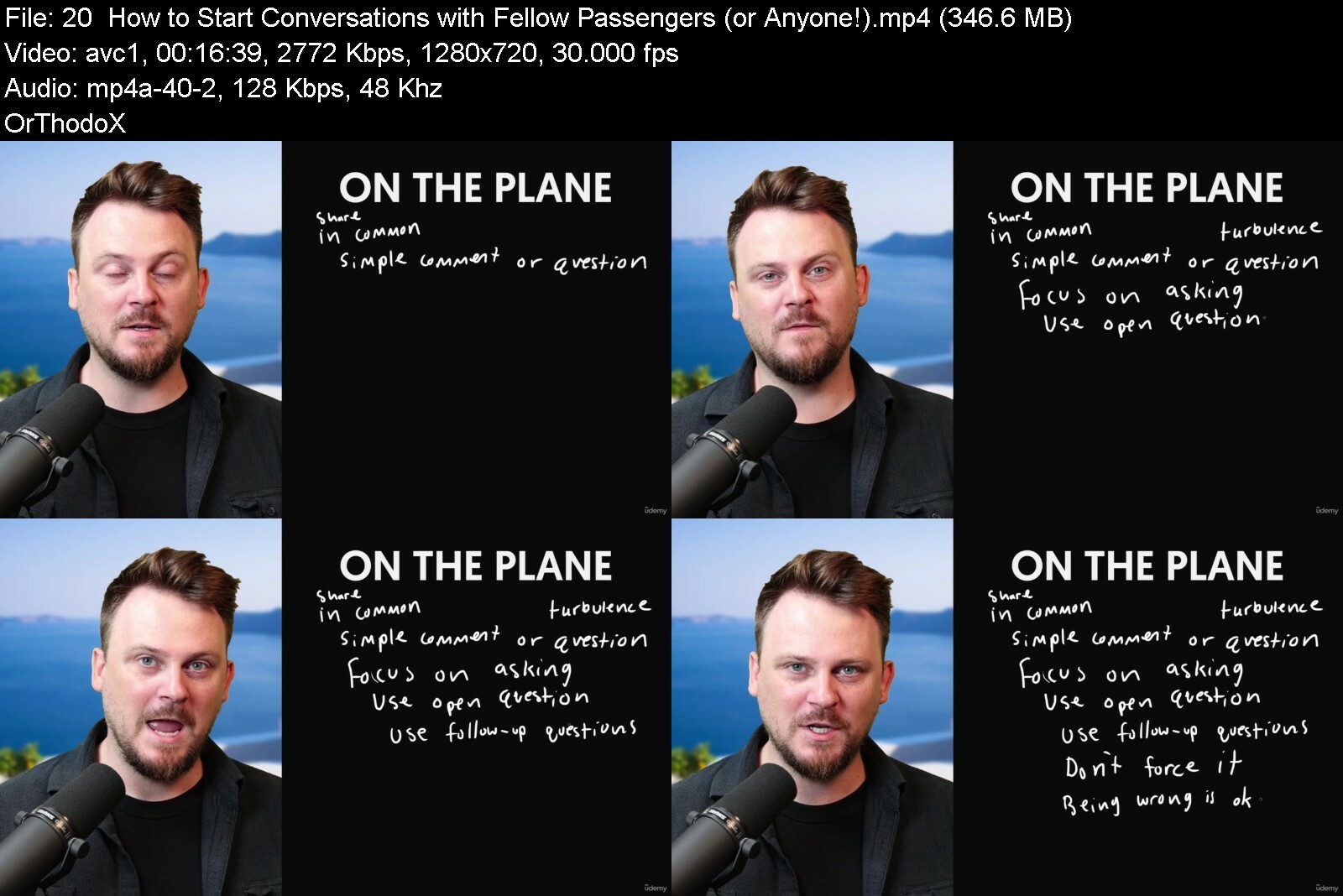
Start conversations with someone next to you on the flight
Answer all immigration questions when you arrive (full dialogue)
Handle customs questions and requirements (sample form)
Check in at the hotel front desk (full dialogue)
Call reception from your room to make requests
Complain (politely and directly) when something goes wrong
Ask for local recommendations from hotel staff and locals
Check out from your room and make comments about your stay
Tell taxi drivers (or Uber/Lyft) where you need to go
Ask for and give directions if you ever get lost
Talk about getting around using different types of transportation
Get help from others (strangers or people you know) when things go wrong
Talk about your trip with your friends once you get home
Give personalized recommendations based on travel experiences
Requirements
A basic understanding of spoken and written English
A desire to learn and a positive attitude
Description
Travel is supposed to be fun, not stressful.
But if you travel internationally, whether for vacation or business, English is everywhere. And, if English isn't your first language, that can be a major challenge. Stressful! Scary!
Wouldn't it be great if there were one course that covered all the common travel situations and how to handle them naturally in English? Well, good news! That's what this course is all about.
I've been traveling around the world for nearly half my life. I've been to more countries than I can count. That experience, along with my 10+ years of helping millions of English learners around the world improve their English skills, allows me to say with confidence that THIS IS THE ONLY TRAVEL ENGLISH COURSE YOU WILL EVER NEED.
In this course, you'll learn useful and common English expressions (and English vocabulary) for any situation you may encounter on a trip. More importantly, you'll get to see how they are used in real life, with full examples, role-plays, and complete dialogues. By the end of the course, you won't have to worry about misunderstandings or awkward situations. You'll feel confident going into any travel situation, whether it's as intense as going through immigration or as casual as striking up a conversation with a fellow passenger.
In addition to everything covered in the course, I'll be with you every step of the way. This course is meant to be interactive, so if you have questions as you go along, just ask!
In this course, you'll learn all the English needed to
Discuss and plan for upcoming trips
Give preferences and requirements to a booking or travel agent (full dialogue)
Book accommodations and flights over the phone or in person
Check in at the airport counter (full dialogue)
Go through the security check efficiently and understand all commands
Confirm important details with agents at the departure gate
Make requests to the cabin crew during the flight and understand instructions
Ask for help both casually and formally (as well as directly and indirectly)
Start conversations with someone next to you on the flight
Answer all immigration questions when you arrive (full dialogue)
Handle customs questions and requirements (sample form)
Check in at the Hotel front desk (full dialogue)
Call reception from your room to make requests
Complain (politely and directly) when something goes wrong
Ask for local recommendations from hotel staff and locals
Check out from your room and make comments about your stay
Tell taxi drivers (or Uber/Lyft) where you need to go
Ask for and give directions if you ever get lost
Talk about getting around using different types of transportation
Get help from others (strangers or people you know) when things go wrong
Talk about your trip with your friends once you get home
Give personalized recommendations based on travel experiences
You'll also learn
Thousands of English vocabulary and phrases for all travel situations
Strategies for communicating efficiently in English to avoid misunderstandings and awkward situations
Real-life dialogues to give you a feel for the most common travel-related interactions
Pro-tips for getting the most out of any trip (including getting to know other travelers)
Much more!
If you've ever felt anxious about traveling because you aren't confident about your English.what are you waiting for!? Sign up for the course and learn to communicate in English fluently with confidence in any travel situation.
See you in the course!
Who this course is for
English learners who travel (or want to travel) internationally
English learners who regularly need to communicate in English
This course is not meant for native English speakers


travelenglishacompleta5evm.jpg


Download from RapidGator


Download from Keep2Share



CBTNuggets - Cisco CCIE Routing and Switching - 400-101 - Cisco Training

ccnproutingandswitchid5fa8.png


CBTNuggets - Cisco CCIE Routing and Switching - 400-101 - Cisco Training
Released 07/2018
MP4 | Video: h264, 1280x720 | Audio: AAC, 44.1 KHz, 2 Ch
Genre: eLearning | Language: English | Duration: 248 Lessons (46h) | Size: 10.9 GB


In this expert Cisco routing and switching training, Keith Barker prepares network technicians to advance their skills to the highest possible levels

The exam associated with this course has been retired. However, this course still retains value as a training resource.
Cisco replaced the CCIE R&S with the CCIE Enterprise Infrastructure certification in February 2020. Despite the CCIE R&S retiring, expert-level expertise in routing and switching still looks the same: designing, deploying, operating and optimizing enterprise networks. For that reason, this training still serves as a valuable training resource for expert-level Cisco topics and still covers much of the newly combined CCIE Enterprise Infrastructure exams.
Whether certifying or not, gaining expert-level mastery of routing and switching for enterprise networks is an enormous career accomplishment. It opens doors to roles like network architect or senior engineering jobs. However, to be certified as an expert by Cisco will mean passing a qualifying exam and a hands-on lab exam.
Cisco recommends at least seven years of experience before certifying as an expert in enterprise networking. With that level of experience and this CCIE training, you'll have no gaps in your knowledge about programmability, automation, multi-domain solutions and APIs - and be ready to take on the advanced networking principles in any expert-level networking exam.
CCIE Routing and Switching: What You Need to Know
For network technicians using this training to advance or validate their expert knowledge of enterprise networks, our CCIE Routing and Switching course maps to the exam objectives for Cisco's previous expert-level routing and switching certification, CCIE R&S. It covers topics such as
IPv4 and IPv6: Addressing Technologies, Addressing Formats, EUI-64 and Multicast, Neighbor Discovery, Configuration, PIM-Dense Mode (PIM-DM), PIM-Sparse Mode (PIM-SM)
The Internet of Things: IoT Technologies, IoT Technology Stacks, The Common IoT Model, IoT Security, IoT Edge, and Fog Computing
Cloud Benefits and Vendors, Deployment and Service Models, Performance in the Cloud, Scalability in the Cloud
OSPF: Neighbor Formation, Packet Types, Network Types, Areas and Router Types, Path Preference, Filtering and Summarization, Optimizations
Port Security, Security Automation and Virtual Machines
RIPv2: Concepts, Basic Configuration & Authentication, Unicast Updates, Redistribution, Filtering, Admin Distance
Who Should Take CCIE Routing and Switching Training?
This Cisco routing and switching training is considered expert-level Cisco training, which means it was designed for highly experienced network engineers. This Cisco routing and switching course will validate the extensive experience most network engineers have with routing and switching.
Experienced network technicians. For network engineers who want to earn Cisco's expert-level routing and switching certification, this course provides a thorough education of all the aspects of the job - even those aspects you may not touch on a daily basis. That's important because Cisco's certifications are deep technical dives. If you've spent your entire career on anything but a large, complex network, you may encounter technical topics on this exam you've never seen in the wild. From security to routing protocols, from configurations to packet control - this certification validates that you're an expert in each and every aspect of a large, complex network.


ciscoccieroutingandswcycj0.jpg


Download from RapidGator


Download from Keep2Share



Guía Completa de Docker & Kubernetes con Spring Boot 2022

4627048cee03mqc04.jpg


Guía Completa de Docker & Kubernetes con Spring Boot 2022
Last updated 8/2022
MP4 | Video: h264, 1280x720 | Audio: AAC, 44.1 KHz, 2 Ch
Genre: eLearning | Language: Spanish | Duration: 198 lectures (32h 43m) | Size: 13.7 GB

Construye Microservicios Spring Boot, Docker, Kubernetes, Spring Cloud, LoadBalancer, Security JWT, Amazon AWS ECS y EKS


What you'll learn
Aprende a crear y consumir servicios web RESTful con Spring Boot
Aprende Docker desde cero
Aprende Kubernetes desde cero
Conecta y consume otros microservicios utilizando cliente HTTP con Feign Spring Cloud
Aprende a crear y usar imágenes y contenedores con Docker
Aprende sobre las redes de contenedores con Docker Networks y DNS Service Discovery
Aprende qué es Docker y Kubernetes y por qué podría querer utilizarlos en sus microservicicos
Centraliza las configuraciones de los microservicios con Kubernetes Config Map
Aprende a establecer comunicación entre microservicios, habilitar balanceo de carga (LoadBalancer)
Auto-escalamiento dinámico hacia arriba y hacia abajo de instancias de los microservicios, balanceo de carga (LoadBalancer) con Kubernetes y Spring Cloud
Implementa Autenticación y Autorización con Spring Security OAuth2, JWT y Spring Authorization Server
Despliegues en producción contenedores Docker y Kubernetes en AWS, EC2 (Elastic Computing), ECS (Elastic Container Service) y EKS (Elastic Kubernetes Service)

Requirements
Dominio de Java y programación orientada a objetos
Conocimientos de Spring Framework e Spring Boot
Conocimientos de Bases de Datos y SQL


Description
Bienvenido al curso de Microservicios, aprenderás línea a línea y desde cero a construir un arquitectura de microservicios con Spring Boot 2, Docker, Docker Compose, Multi-Container, Kubernetes y Spring Cloud Kubernetes, desde los conceptos más básicos hasta un completo ecosistema de servicios interconectados mediante el registro y escalamiento dinámico con Kubernetes (Integrado con Spring Cloud), Spring Cloud Gateway (puerta de enlace), balanceo de carga con LoadBalancer. Además de automatizar, escalar y desplegar en producción los microservicios en contenedores Docker y Kubernetes en Amazon AWS ECS y EKS.

También aprenderás a dar seguridad y proteger las rutas endpoints de los diferentes microservicios con Spring Security OAuth2, JWT y nuevo Spring Authorization Server. Además aprenderás a centraliza toda la configuración de los microservicios utilizando Kubernetes ConfigMap y Secrets y muchos mas.

Durante el curso también trabajaremos con varios componentes del ecosistema de Spring como IoC, Spring Boot, RestController, Servicios Web RESTful, cliente HTTP con Feing, Spring Data JPA e Hibernate para la persistencia y CRUD (crear, leer, actualizar y eliminar), usaremos bases de datos MySQL 8 y PostgreSQL, entre otros temas más.

El curso es completamente funcional con versiones de Java 8 y 11, 12, 13, 14, 15, 16, 17, 18 y superiores.

¿Qué son los microservicios?

Son un enfoque de arquitectura y organización para el desarrollo de aplicaciones compuestas por pequeños servicios autónomos que se comunican a través de API RESTful, en otras palabras, nos permiten dividir nuestro gran sistema en una serie de componentes más pequeños e independientes que colaboran entre si.

La arquitectura de microservicios hace que las aplicaciones sean más simples de escalar, más rápidas de desarrollar y más fácil de reutilizar. Donde cada servicio está diseñado para un conjunto de funciones y se enfoca en resolver un problema específico, por ejemplo un servicio desarrollado para una determinada función se puede usar como un componente básico en otro microservicio.

¿Porqué elegir nuestros cursos?

Acceso 7 x 24 a nuestra Plataforma e-learning.

Soporte online con profesor Java

Al finalizar recibes un certificado digital

Somos pioneros en brindarte este tipo de acceso para darte la libertad que necesitas para estudiar, donde quiera que te encuentres.

Excelente relación calidad-precio.

Conocimiento aplicable a proyectos reales del mercado laboral.

Atención rápida y satisfactoria a las dudas por parte del profesor.

Interactividad del curso ya que contiene foros y comunicación para resolver dudas.

Todos los materiales del curso están en español y al finalizar recibes un diploma UDEMY digital certificando tu aprobación con validez internacional y LinkedIn.

Si quieres ser un desarrollador de arquitecturas de microservicios con Spring Boot 2 y Spring Cloud y avanzar al siguiente nivel, es casi obligatorio este curso, te invito a que te inscribas, nos vemos adentro.

Who this course is for
Desarolladores que dominan Spring y quieran actualizar y profundizar sus conocimientos con Docker y Kubernetes
Desarolladores que manejan Spring Boot y necesitas aprender Docker y Kubernetes para miscroservicios
Personas que dominan Spring y quieran introducirse en la arquitectura de microservicios
Personas que estudian informática y/o ingeniería que estén estudiando o han estudiado Java y spring
Personas interesadas en el desarrollo backend que dominan Java y spring
Personas que quieran aprender desde cero Docker y Kubernetes como un ecosistema de miscroservicios

Homepage


4.instalaciondockerwi4zigi.jpg


Character Design Monster Lab

shbrdw2m5sbpx0qquehv307iie.jpg


Character Design Monster Lab
MP4 | Video: h264, yuv420p, 1920x1080 | Audio: aac, 48000 Hz | Duration: 11h 3m | 16.5 GB
Genre: eLearning | Language: English

Learn how to design monsters from the ground up! This character concept course teaches you the process of going from a sheet of brainstormed ideas to a compelling piece of digital art. Along with learning the fundamentals of monster design I'll also be focusing on teaching you my shapecarving technique. You'll get to see how I iterate on concepts and choose specific elements to zero in on and learn why the devil is in the details. Finally, there's advice sprinkled throughout the course to help you adapt this process so you can make it your own for any concept design jobs you tackle in the industry.

Homepage

01.harvesthulksdgi33.jpg


Complete Blender Creator: Learn 3D Modelling for Beginners

438522500f7m1c3b.jpg


Complete Blender Creator: Learn 3D Modelling for Beginners
Last Update: 9/2022
Duration: 48h 31m | Video: .MP4, 1280x720 30 fps | Audio: AAC, 48 kHz, 2ch | Size: 43.4 GB
Genre: eLearning | Language: English

Use Blender to Create Beautiful 3D models for Video Games, 3D Printing & More. Beginners Level Course


What you'll learn
Use Blender and understand it's interface
Understand the principles of modelling
Create 3D models with simple colors
Learn the basics of animation
Create your own materials
UV map and unwrap your models
Create animations for your objects & characters

Requirements
Mac or PC capable of Running Blender Version 3.2 or above
No previous experience with 3D modelling or Blender is required.


Description
This course is in the process of being completely remastered in Blender 3.2. Currently both the new and original content are in this course, once the remaster is complete students will be able to access the original 2.8 content in a separate archive course.
Blender is a fantastic platform which enables you to make AAA-quality models which can be exported to any game engine, 3D printer, or other software. Here are some of the reasons why you want to learn Blender with this online tutorial...
Create assets for video games.
Make unique 3D printed gifts.
Design your dream house, car, etc
Express yourself through 3D artwork.
Learn how to create 3D Models and Assets for games using Blender, the free-to-use 3D production suite. We start super simple so you'll be ok with little or no experience. With our online tutorials, you'll be amazed what you can achieve.
The GameDevtv team has created some of the world's most popular online game development training courses. This Blender course has been enjoyed by hundreds of thousands of students and, with more than 30,000 5 star reviews, is consistently ranked the #1 Blender course on Udemy in terms of rating and popularity.
The course is project-based, so you will applying your new skills immediately to real 3D models. All the project files will be included, as well as additional references and resources - you'll never get stuck. There are talking-head videos, powerful diagrams, quality screencasts and more.
For each of the models that you build you will follow this process...
Be challenged to build the entire model yourself.
Be shown step-by-step how to build it.
Apply your knowledge regularly.
Have a more specific focus? Check out our other Blender courses which focus on characters and environments. Want to bring your models to life in a video game engine? Check out our Complete Unity Developer 3D course. Just look for our green leaf logo - a sign of passion & quality.
You will get full lifetime access for a single one-off fee. The creators are qualified and experienced with modelling and coding, so are able to explain complex concepts clearly, as well as entertain along the way. By the end of the course, you'll be very confident in the basics of 3D modelling and rendering, and hungry to learn more.
If you're a complete beginner, we'll teach you all the modelling fundamentals you'll need. If you're an artist, we'll teach you to bring your assets to life. If you're a coder, we'll teach you modelling and design principles.
Get plugged into our communities of amazing developers on Facebook (around 20k), in our own Community curated by our supportive and knowledgeable Teaching Assistants (17k views/day), and our student Discord chat group (10k live at any one time).
Dive in now, you won't be disappointed!

Who this course is for
Complete beginners who are looking to learn something new.
Artists who want to learn to bring their assets alive.
Game Developers who wish to expand their Skill Set.

Homepage

55basicuvmappingsa9fqn.jpg


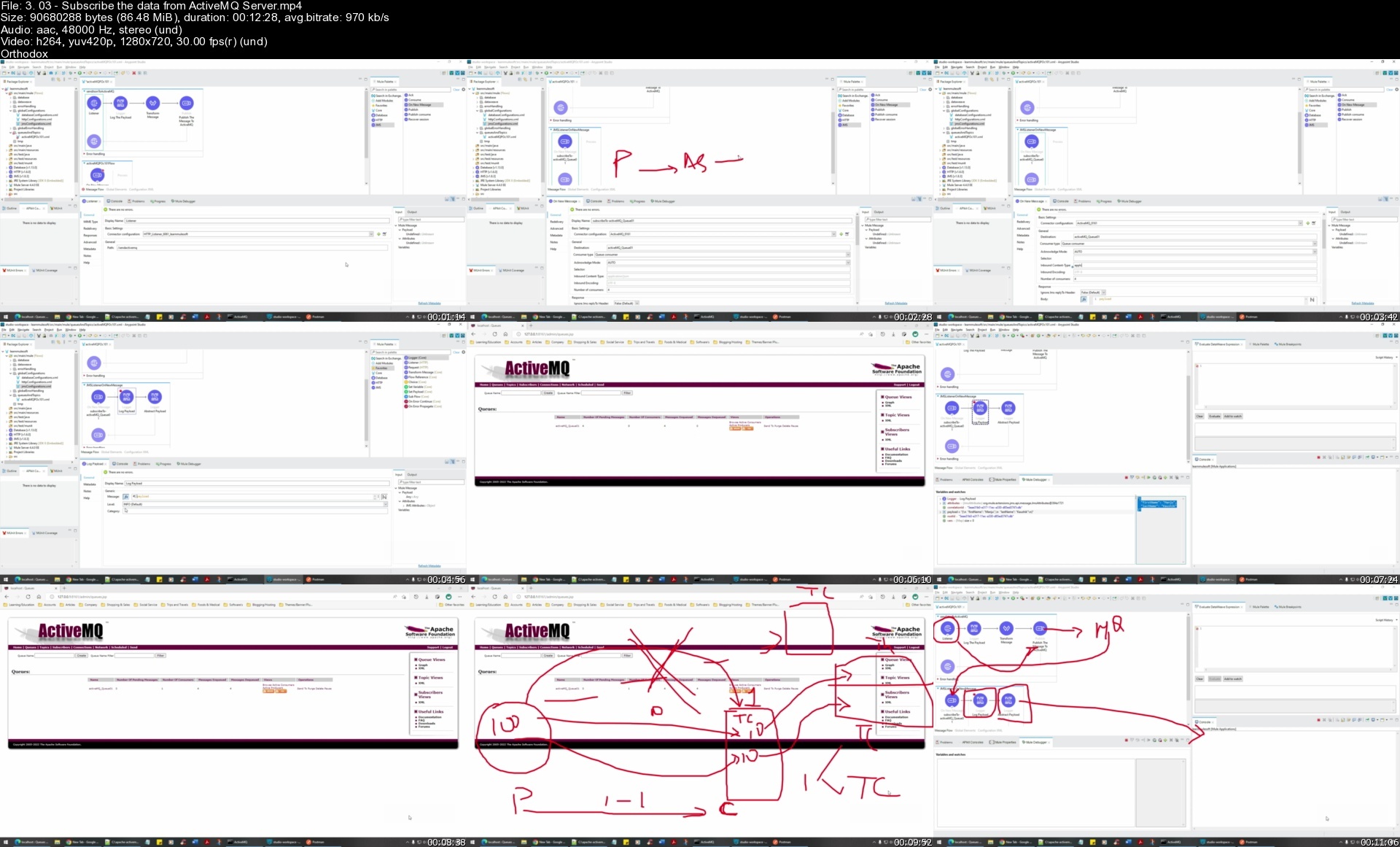
Mulesoft | An "In-depth & Extensive" Tutorial for Beginners

46477343fff3c8dlg.jpg


Mulesoft | An "In-depth & Extensive" Tutorial for Beginners
Published 09/2022
MP4 | Video: h264, 1280x720 | Audio: AAC, 44.1 KHz, 2 Ch
Genre: eLearning | Language: English | Duration: 185 lectures (56h 56m) | Size: 23 GB

A One-Stop tutorial on Mulesoft for those who really seek to "Learn" Mulesoft - "In a Right Way"


What you'll learn
This course is primarily focused on the Mulesoft, version 4.X. Mulesoft version 3.X is out of scope for this course
A Smooth transition will be done from very granular level of concepts to advanced concepts on Mulesoft and Programming Languages
Course covers Topics On: - HTTP Request & Response, HTTP Methods/Headers/Securities and more
Course covers Topics On: - ActiveMQ, JMS, Pub/Sub Model, Queues and Topics
Course covers Topics On: - Database Installation, Queries, Error Handling, Mule Structure
Course covers Topics On: - Dataweave (Simple to Complex Higher Order functions), Functional Programming
Course covers Topics On: - Mulesoft Components, Object Store, Watermarking, Batch Processing
Course covers Topics On: - Anypoint Platform and it's configurations, Security and Deployment (Cloud hub & Onprem)
Course covers Topics On: - Salesforce integration, RAML, Maven
Course covers Topics On: - CICD, Policies, WebService SOAP/XML, Programming Module like Python, Java and Groovy

Requirements
A basic understanding on the concepts like:- CSV, JSON, XML, XSD, EDI, Flat Files;
Fundamental Concepts on Database & Anyone of the Object oriented programming language (Java/Python)
Good To have knowledge on anyone of the Scripting Language (Shell/JavaScript/Groovy)[Not Mandatory]
Basic Understanding on GIT/GIT Hub, Maven, Regular Expression[Not Mandatory]
A sincere dedication, effort, commitment and time.[ Very Mandatory :) ]


Description
Do note:[ This training material is purely dedicated to freshers/beginners alone ]

The way I see to learn anything in this universe is: "How do you learn". While you are in the process of learning, then comes the question: "What are you learning" and "How the learning" can be benefited in then real world. The focus should not be in clearing the exam, it should be in "Learning" alone. With this in mindset, you are going to learn the following concepts in Mulesoft: -

Module 101 talks about basic on the Mulesoft which are:-

Marrying the Anypoint Studio and Platform

Mulesoft Dependencies

The folder structure and some of the important links

The next Module, 102 the content we deal with includes:-

HTTP Invocation and invoking some of the external API

Dealing with HTTP Query parameters and URI Parameters and some of the various HTTP Methods that we use in day to day IT life

As we progress a little bit further, then we start dealing with Database and Mulesoft Structures like:-

Installation and Configuration of Oracle and MySQL database

How to make use of the database component in anypoint studio and playing around with various set of database operations

Executing the Queries(SQL and MySQL)

How to create a variable, set a variable

Understanding MEL

Sending HTTP Response back to the calling service & HTTP Overriding

Debugging in Anypoint Studio

As we get along with the above said concepts then we start narrowing down to the concepts like:-

Dataweave, a powerful data transformation. The dataweave itself is divided into 4 modules and it talks about

Operators

Selectors

DataTypes

Arrays, Objects, Strings

Coercions, Casting, Numbers, XML

Higher Order Functions & Functions

Functional Programming

Lambda expression

Anonymous function

Pattern Matching

Error handling

Core Module and more. A complete treat for dataweave lovers

Database and error handling which includes:-

Database operations

OnerrorContinue, OnerrorPropagate, Sub flows and flows

Raise error and error handler

As we further progress in our course we start to see the following modules like:-

ActiveMQ

Installation of ActiveMQ

Publish & Subscribe Data

JMS Concepts

Queues and Topic

Request Reply

Acknowledgement Mode

Object Store, Water Marking and Batch Processing

Security and Deployment

Creation of YAML file

Securing yaml and properties file

Externalizing the properties file

Deployment to cloudhub

Mulesoft Components

Scatter Gather

For each

Parallel Foreach

HTTP Request

Caching

Async

Choice

Until Successful, File connector

Round Robin and First Successful

Once we gained the above knowledge, our depth for mulesoft has increased more. With these we will start to learn on more powerful concepts like: -

Munit

Query Parameters & Assert That

Assert That, Assert Expression, Maven, Folder Path, Extract Report and What is Munit

Mock when, HTTP Error handle and ReadURL

Handle HTTP Error, Spy Call, Externalize Dataweave, Parametrized - Set Parameters

List of flows, Munit Recorder, Before and After Scopes

RAML

Create Sample Spec, Publish and Download To Studio

Define QueryParameter and uriParamter | Define Request and Response

Types & Examples | Create Example within DataType

RecourseTypes

Traits

Library

Adding Module Dependencies

CICD

Usage of Maven

Git & Visual Studio

Jenkins

Nexus

SonarQube

Policies

Auto Discovery

Proxy Endpoint

Basic End Point & JSON Threat Protection

Client ID and Client Sec - QueryParams & Headers - How to share the API to other users

ClientID Enforce Basic Authentication & Public Portal Request Access

Message Logging, Header Injection and Removal

Rate Limiting - Policy Order

Rate Limit SLA

HTTP Caching

Custom Policy - Maven Archetype & Automated Policies

Along with the above said concepts we also deal with:-

Salesforce integration with Mulesoft

Web Service SOAP/XML

About Maven

Usage of Anypoint Platform

Usage of Python, Java Module and Groovy within Anypoint Studio

As mentioned earlier, this is an extensive course work on Mulesoft. As rest assured, there are more modules to be added as we get along with the mulesoft journey. I wish you all a very best in your Mulesoft Journey.

Who this course is for
This course is intended for those, who wants to begin their journey in Mulesoft
Passionate learner and a religious seeker in the world of "Integration"

Homepage


3.03subscribethedataf1ui5b.jpg


AWS Certified Cloud Practitioner (CLF-C01) - Hands On

48406502a6arkeww.jpg


AWS Certified Cloud Practitioner (CLF-C01) - Hands On
Published 09/2022
MP4 | Video: h264, 1280x720 | Audio: AAC, 44.1 KHz, 2 Ch
Genre: eLearning | Language: English | Duration: 191 lectures (14h 50m) | Size: 6 GB

Start your preparation for AWS Cloud Practitioner CLF-C01 exam with hands-on learning and high quality practice exam


What you'll learn
Learn the fundamentals and advanace concepts of AWS with customized diagrams and hands on
Fully updated for AWS Certified Cloud Practitioner ( (CLF-C01) exam
Two Full Practice Exams
Quizes at the end of sections

Requirements
No prior knowledge required! We will provide detailed explanation of the topics within the AWS Certified Cloud Practitioner exam


Description
AWS Certified Cloud Practitioner (CLF-C01) - Hands On course will start from cloud computing overview and step by step will take you to the various concepts required for preparing the exam. This course is going to be lengthy but very interesting and useful.

There are more than 200 services in AWS, but we are going to cover those which are required for preparation of exam. Some services will be covered in details while others will be given passing reference.

This course cover most of the topics required for the AWS Certified Cloud Practitioner (CLF-C01).

We will be adding new material from time to time in the course to make it more useful with the passage of time. The course is designed in such a way that it will impart the knowledge, So that you can deploy resources in the cloud. The main feature of course are

Theory as well as Hands on

Quizes

Practice Tests

Customized Diagrams

Why to join this course ?

- More focus on making your fundamentals strong.

- How to properly set up the Labs (State of Art Labs) for learning the concepts has been covered (Hands-On Approach).

- Customized Diagrams (We strongly believe that a picture is worth a thousand words).

- Unique innovative style of teaching.

- More than 27 years of experience in Hands-on training.

What you will learn in this course

- Cloud Computing overview

- What is Infrastructure As A Service (IAAS)

- What is Platform As A Service (PAAS)

- What is Software As A Service (SAAS)

- Cloud computing Models

- Advantages of using Cloud

- AWS Global Infrastructure

- AWS Shared Responsibility Model

- AWS Elastic Cloud Compute (EC2)

- AWS Pricing Calculator

- Create Linux Instance

- Using Putty to connect to Linux Instance

- Implement Apache Web Server on Linux Instance

- Create Windows Instance

- Tools Used For Accessing Cloud

- Elastic Block Storage (EBS)

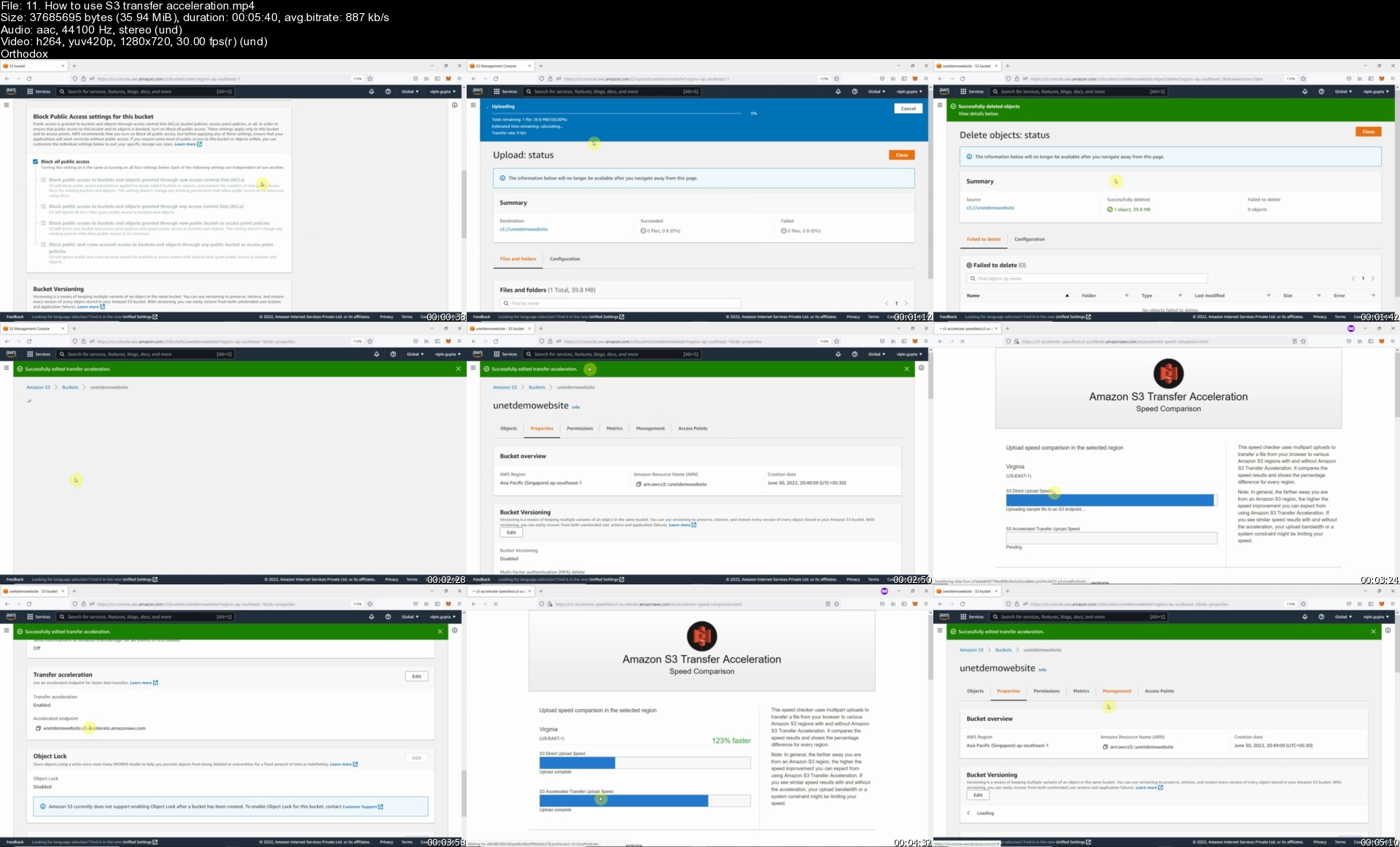
- Simple Storage Service (S3)

- Elastic File System (EFS)

- Relational Database Service (RDS)

- Security and Compliance concepts

- DynamoDB

- Create and Use Custom AMI

- Virtual Private Cloud (VPC)

- Deploy Application in Custom VPC using best practices

- Elastic Load Balancer (ELB)

- Application Load Balancer (ALB)

- Network Load Balancer (NLB)

- Identity and Access Management (IAM)

- Well-Architected Framework

- AWS CloudWatch and SNS

- AWS CloudFront

- Auto Scaling

- AWS Route 53

Who this course is for
For those who are preparing for AWS Certified Cloud Practitioner exam (CLF-C01)
For those who wants to learn about Amazon Web Service (AWS) basics and advance concepts with hands on labs

Homepage


11.howtouses3transfercsixu.jpg


Beachbody - Yoga52: Transform Your Life With a Year of Yoga

7sj5mjx8lutyhapuskyqbc7fow.jpg


Beachbody - Yoga52: Transform Your Life With a Year of Yoga
Odette Hughes (et al.) | Duration: 28:18 h | Video: H264 1280x720 | Audio: AAC 48 kHz 2ch | 20,1 GB | Language: English

It's no secret that yoga is good for you. It can increase strength, improve flexibility, balance, and reduce stress - and it can help you reshape your body and lose weight.

But to get the most out of your yoga practice - to realize the benefits that can make a real difference in your daily life - you have to be consistent.

That's where Yoga52 comes in.

Beachbody On Demand handpicked not one, but five world-class certified instructors, and put together three flexible schedules to choose from, so you can get all the benefits of yoga - on your terms.

You decide when and how often to practice. You can even pick a favorite yoga instructor and dedicate yourself to their classes if that's what keeps you motivated.

The 30-Day Yoga Challenge encourages you to build a strong yoga practice from the start by challenging you to a class every day of the month.

If you're looking to progress quickly with a more results-driven track, the 8-Week Yoga Challenge is for you.

And if you want something a little more flexible, the 52-Week Class Schedule lets you practice just once a week.

Homepage


class29level3powervinpwc3e.jpg


Most Complete Teaching of CCNP/CCIE ENCOR (350-401)

48974401002l1ivt.jpg


Most Complete Teaching of CCNP/CCIE ENCOR (350-401)
Published 09/2022
MP4 | Video: h264, 1280x720 | Audio: AAC, 44.1 KHz, 2 Ch
Genre: eLearning | Language: English | Duration: 142 lectures (138h 42m) | Size: 58 GB

Implementing and Operating Cisco Enterprise Network Core Technologies


What you'll learn
ENCOR - Packet Forwarding - Network Device Communication
ENCOR - Packet Forwarding - Forwarding Architectures
ENCOR - Spanning Tree Protocol - STP Fundamentals
ENCOR - Spanning Tree Protocol - Advanced STP Tuning
ENCOR - Spanning Tree Protocol Protection
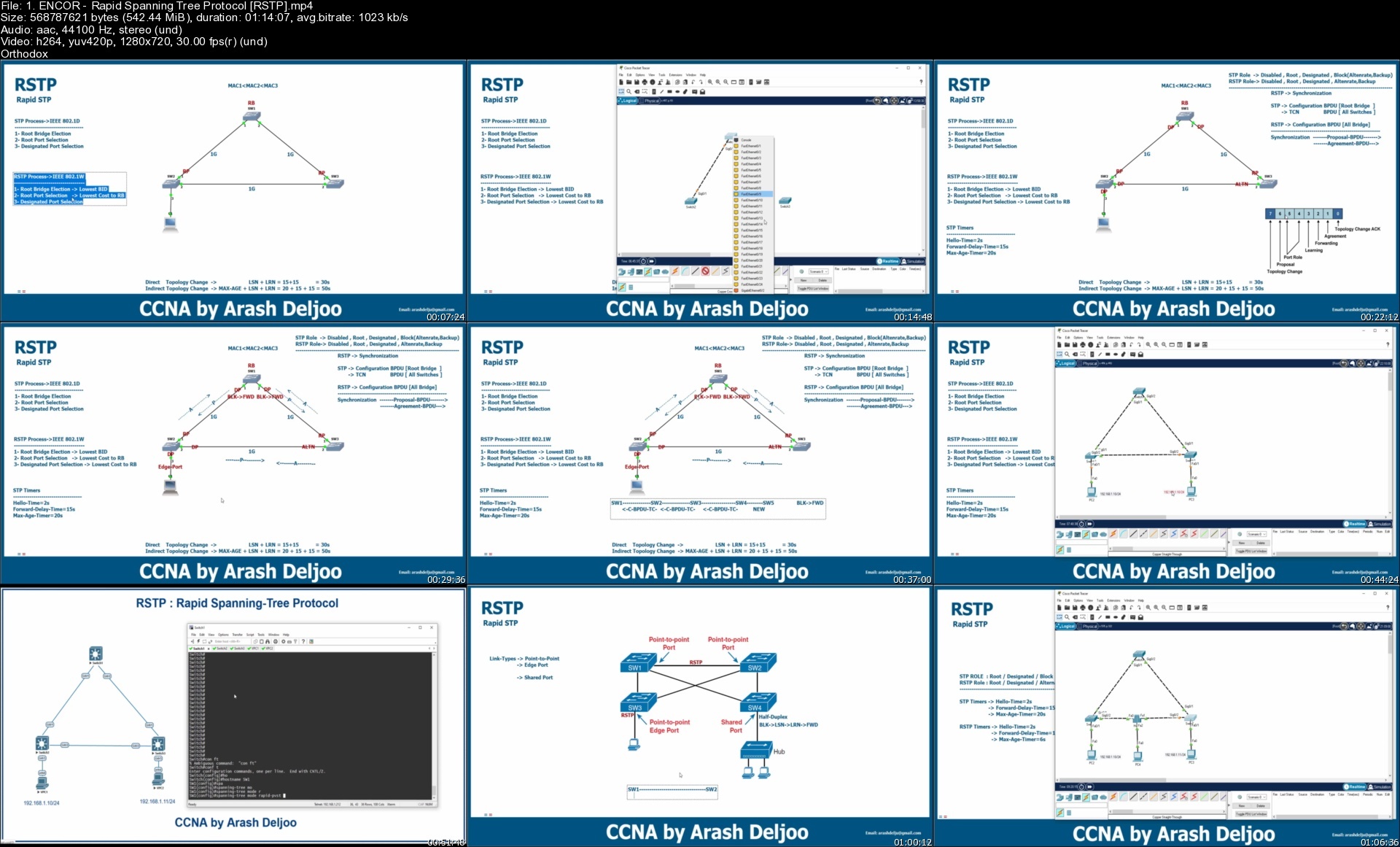
ENCOR - Rapid Spanning Tree Protocol[RSTP]
ENCOR - Multiple Spanning Tree Protocol[MST]
ENCOR - Dynamic Trunking Protocol[DTP]
ENCOR - VLAN Trunking Protocol[VTP]
ENCOR - Etherchannel Bundle or Aggregation Fundamentals
ENCOR - Etherchannel Bundle or Aggregation Advanced Features
ENCOR - IP Routing Essentials - Static Routing
ENCOR - IP Routing Essentials - Routing Protocols Fundamentals
ENCOR - Virtual Routing and Forwarding[VRF]
ENCOR - EIGRP Fundamentals and Basic Configuration
ENCOR - EIGRP Neighborship Process
ENOCR - EIGRP Path Metric Calculation
ENCOR - EIGRP Convergence
ENCOR - EIGRP Load-Balancing
ENCOR - EIGRP Summarization
ENCOR - OSPF Fundamentals
ENCOR - OSPF Basic Configuration and Verification
ENCOR - OSPF Dynamic Neighborship
ENCOR - OSPF Packets and States and Static Neighborship
ENCOR - OSPF DR and BDR
ENCOR - OSPF LSA TYPE-1 ( Router LSA )
ENCOR - OSPF LSA TYPE-2 ( Network LSA )
ENCOR - OSPF LSA TYPE-3 ( Summary LSA )
ENCOR - OSPF Special Rule
ENCOR - OSPF Default Route Advertisement
40 ENCOR - OSPF Cost and Path Selection Rules
ENCOR - OSPF Summarization
ENCOR - OSPF Network Types
ENCOR - OSPF Route Filtering
ENCOR - OSPFv3 Fundamentals and Basic Configuration
ENCOR - OSPFv3 LSA Types
ENCOR - OSPFv3 Address Family Configuration
ENCOR - BGP Fundamentals and Basic Configuration
ENCOR - BGP Neighborship and States
ENCOR - BGP Injecting Routes into BGP Table
ENCOR - BGP Summarization
ENCOR - Multiprotocol BGP for IPv6
ENCOR - Conditional Matching with Access Control List[ACL]
ENCOR - Conditional Matching with IP Prefix List
ENCOR - Conditional Matching with Route-Map
ENCOR - BGP Route Filtering
ENCOR - BGP Clearing
ENCOR - BGP Community
ENCOR - BGP Path Selection Using the Longest Match
ENCOR - BGP Best Path Selection - Weight
ENCOR - BGP Best Path Selection - Local Preference
ENCOR - BGP Best Path Selection - Preference of Locally Injected Path
ENCOR - BGP Best Path Selection - AIGP
ENCOR - BGP Best Path Selection - AS-Path
ENCOR - BGP Best Path Selection - Origin Code
ENCOR - BGP Best Path Selection - MED
ENCOR - BGP Best Path Selection - Prefer eBGP to iBGP Path
ENCOR - BGP Best Path Selection - Lowest IGP Metric to Next-Hop
ENCOR - BGP Best Path Selection - Prefer Oldest eBGP Path
ENCOR - BGP Best Path Selection - Lower BGP Router ID
ENCOR - BGP Best Path Selection - Lowest Neighbor IP Address
ENCOR - BGP Path Attributes Types
ENCOR - BGP Remove Private AS Number
ENCOR - BGP Multihoming
ENCOR - Multicast Fundamentals and Addresses
ENCOR - IGMP and IGMP Snooping
ENCOR - Protocol Independent Multicast Dense Mode (PIM-DM)
ENCOR - Protocol Independent Multicast Sparse Mode (PIM-SM)
ENCOR - PIM Designated Router (DR) and PIM Forwarder
ENCOR - Rendezvous Points Static and Dynamic Learning
ENCOR - QoS necessity and Characteristics
ENCOR - QoS Implementation Models
ENCOR - QoS Classification and L3 Marking
ENCOR - QoS Classification and L2 Marking
ENCOR - QoS Classification and Marking Wrap Up
ENCOR - Network Time Protocol[NTP]
ENCOR - Hot Standby Router Protocol[HSRP]
ENCOR - Virtual Router Redundancy Protocol[VRRP]
ENCOR - Gateway Load Balancing Protocol[GLBP]
ENCOR - Network Address Translation[NAT]
ENCOR - Overlay Tunnels - Generic Routing Encapsulation (GRE) Tunnels
ENCOR - Overlay Tunnels - Location-ID Separation Protocol[LISP] Introduction
ENCOR - Overlay Tunnels - LISP Components and Packets and Processes
ENCOR - Overlay Tunnels - LISP Packet Format
ENCOR - Overlay Tunnels - LISP IPv4 Unicast Routing with Non-Lisp Site
ENCOR - Understanding Basic Wireless Theory
113 ENCOR - Carrying Data Over an RF Signal
ENCOR - IEEE 802.11 Standards
ENCOR - Free Space Path Loss
ENCOR - Antenna Characteristics
ENCOR - Antenna Types
ENCOR - Cisco Wireless Architectures
ENCOR - Understanding Controller Discovery and High Availability
ENCOR - Roaming Overview
ENCOR - Roaming Between Centralized Controllers
ENCOR - Locating Devices in a Wireless Network
ENCOR - Troubleshooting Client Connectivity
ENCOR - Troubleshooting AP Connectivity
ENCOR - Hierarchical LAN Design Model
ENCOR - Enterprise Network Architecture
ENCOR - Fabric Technologies - Software-Defined Access (SD-Access) Overview
ENCOR - Fabric Technologies - Software-Defined Access (SD-Access) Details
ENCOR - Fabric Technologies - Software-Defined WAN (SD-WAN)
ENCOR - Network Assurance - Ping
ENCOR - Network Assurance - Traceroute
ENCOR - Network Assurance - SNMP
ENCOR - Network Assurance - Syslog
ENCOR - Network Assurance - IP SLA
ENCOR - Cisco DNA Center Assurance
ENCOR - Next-Generation Endpoint Security
ENCOR - Network Access Control (NAC)
ENCOR - Standard Access Control List[ACL]
ENCOR - Extended Access Control List[ACL]
ENCOR - Port ACL[PACL]
ENCOR - VLAN ACL[VACL]
ENCOR - PACL , VACL and RACL Interaction
ENCOR - Terminal Lines and Password Protection
ENCOR - Privilege Levels and RBAC
ENCOR - Remote Management with Telnet and SSH
ENCOR - Zone Based Firewall[ZBFW]
1850 ENCOR - Control Plane Policing[CoPP]
ENCOR - Server Virtualiztion Introduction
ENCOR - Server Virtualiztion Overview
ENCOR - Network Functions Virtualization
ENCOR - Network Automation - Understanding REST and JSON
ENCOR - Network Automation - Foundational Network Programmability Concepts
ENCOR - Understanding Ansible , Puppet , and Chef
ENCOR - Introduction to Automation Tools

Requirements
CCNA


Description
I congratulate you on entering the Most Complete Teaching of CCNP/CCIE ENCOR (350-401). In this course, all the materials related to Implementing and Operating Cisco Enterprise Network Core Technologies are given.

This course has been produced to teach Cisco Enterprise Network Core Technologies Concept and Configuration in CCNP/CCIE level topics. In this training course, in addition to presenting the basic concepts , intermediate and advanced topics are also fully taught.

In this training course, the materials are taught from basic to advanced levels. All contents are explained in detail both in concepts and in configuration. Many scenarios have been implemented in this training course, which help a lot to understand the contents deeper and more fully. All scenarios will be provided to you with this class.

In this lesson, I have used simulators and emulators to present the content and implement the scenarios, which you can easily build these labs at home and implement all the scenarios yourself.

It is possible to update the contents of this training course in the future. In fact, this course is a repository of topics that will be more complete over time.

After learning the topics of this training course, you can easily answer all questions related to CCNP/CCIE ENCOR (350-401) topics in job interviews or exams.

Who this course is for
Network Engineers

Homepage


1.encorrapidspanningtx4dy6.jpg


The Modern Javascript Bootcamp Course (2022)

2634490e3432xmi30.jpg


The Modern Javascript Bootcamp Course (2022)
Last Updated 09/2022
MP4 | Video: h264, 1280x720 | Audio: AAC, 44.1 KHz, 2 Ch
Genre: eLearning | Language: English | Duration: 483 lectures (51h 55m) | Size: 13.5 GB

The most up-to-date JS resource online! Master Javascript by building a beautiful portfolio of projects!


What you'll learn
Learn everything there is to know about Javascript - from scratch!
Build beautiful web apps to add to your portfolio
Get job ready with a deep understanding of the internals of JS
Work with Node JS and Express
Create a full E-Commerce app complete with authentication
Automate testing your code by creating your own custom testing framework!
Build your own physics-based JavaScript game
Understand how Javascript developers work on a day-to-day basis
Master the latest JS features like async and arrow functions

Requirements
A Windows, MacOS, or Linux-based computer is required


Description
Always bet on Javascript!

For years, top recruiters in industry have hired fresh engineers based solely on their knowledge of Javascript. If you want to get a programming job, this is the language to learn! But learning Javascript is complicated! There's fancy syntax, weird design patterns, and a billion resources online that might be giving you wrong - or even be out of date - information.

We built this course to solve your problems. This is the best and most up-to-date resource online for becoming a Javascript professional as quickly as possible. Every minute of this course has been created with one goal in mind: teaching you how to become a great engineer.

The Modern Javascript Bootcamp (2020) focuses on cutting through unnecessary information and giving you just the facts, plain and simple. You won't work with outdated frameworks, learn old styles of programming, or build boring apps. Instead, you'll only spend time writing practical code that can be used today and in the future on your own projects. You'll learn - from very early on in the course - how to write beautiful and reusable code that you'll be proud to show to a future employer.

Two of Udemy's greatest instructors - Colt Steele and Stephen Grider - collaborated to create this course. Between the two of us, we have taught over one million engineers how to program. Rest assured, you will be learning from the best. We know how challenging it can be to understand a new programming from scratch, so we designed this course to offer you a step-by-step, guaranteed approach to becoming a Javascript master.

------ Course Structure ------

This course is divided into two parts. The first half of the course focuses on teaching you the basic syntax of Javascript. Colt will walk you through core topics effortlessly, imparting jewels of JS wisdom along the way. Included in the first half of the course are many programming exercises and small projects, so you can test your new-found knowledge out. Each of these videos can be easily referenced in the future, so you can always come back and brush up on some topic whenever needed.

The second half of the course is focused on building some amazing projects. Stephen will show you how to build some production-ready Javascript applications, including a fully-featured E-Commerce web app! These projects are all styled to be absolutely beautiful, visually stunning apps that you will be proud to feature on your own personal portfolio. The main goal of these projects is to highlight design patterns, and show you the 'right' and 'wrong' ways of writing code. By the end, you'll be confident enough to work on your own personal projects with speed and finesse.

------ What You'll Learn ------

This is a long course, with just about every fact about Javascript you could ever hope to know. Here's a brief subset of the topics you'll cover

Master the basics of the language, easily understanding variables, objects, arrays, and functions

Understand how to design the structure of the code you write, leading to beautiful and easy-to-read programs

Leverage Javascript's built-in methods to increase your productivity regardless of what libraries or frameworks you use

Develop practical skills around higher-order functions that you will utilize for years to come

Observe how the Javascript and browser work together, and how to increase the performance of JS code

Build awesome projects to fill your personal portfolio

Build command line tools from scratch using Node JS

Fetch and manage information from third-party API's

Build a fully-featured E-Commerce application from scratch - including production-grade authentication!

This is the ultimate Javascript course. There are many resources online for learning Javascript, but this is the only one that covers everything you need to know, from 'A' to 'Z', and a couple letters after that. Master the basics with Colt, then build awesome projects with Stephen. We've taught a million other engineers how to code, and now it is your turn!

Who this course is for
Anyone looking to understand and master Javascript

Homepage


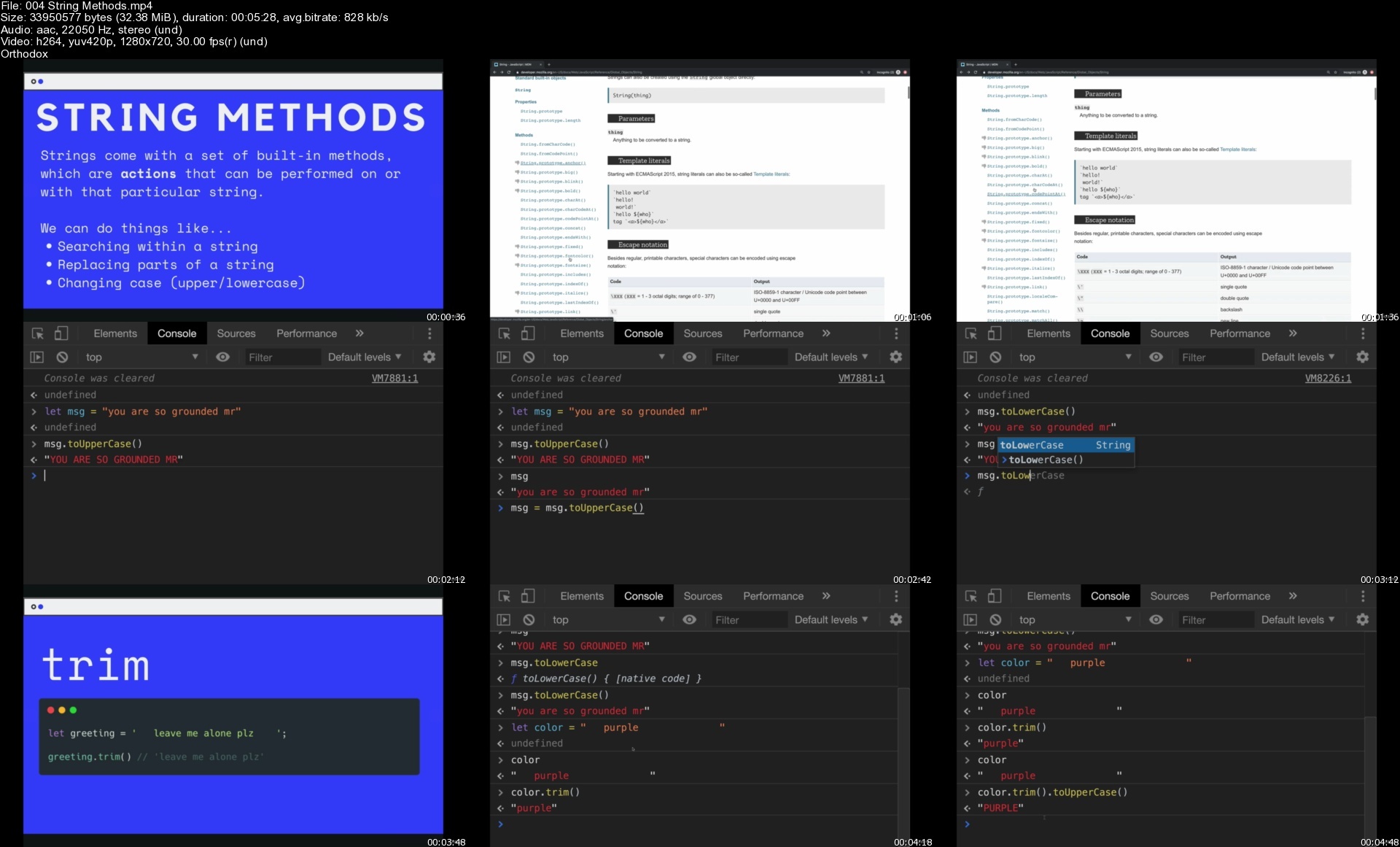
004stringmethodssl1f8w.jpg


Die WordPress Anleitung: Der komplette A bis Z Kurs 2022

cpifcqvnpxpbd2gxvbrc63zdme.jpg


Die WordPress Anleitung: Der komplette A bis Z Kurs 2022
Video: .mp4 (1280x720, 30 fps(r)) | Audio: aac, 48000 Hz, 2ch | Size: 11.2 GB
Genre: eLearning Video | Duration: 196 lectures (32 hour, 4 mins) | Language: Deutsch

In diesem Kurs: WordPress-Website erstellen, WordPress Grundlagen, Hosting, SEO, Themes, Plugins, Elementor, WooCommerce


What you'll learn

Lerne alles über WordPress, um eine professionelle Webseite zu erstellen!
WordPress Web-Hosting & Skalierbare Infrastruktur in der Cloud
Vollständige Erstellung, Optimierung und Vermarktung einer WordPress-Webseite
Marketing-relevante Informationen Theorie und Praxis

Course content
32 sections • 196 lectures • 32h 4m total length

Requirements

Keine Vorerfahrung nötig.
Keine Programmierkenntnisse nötig.


Description

Die WordPress Anleitung: Der komplette A bis Z Kurs 2022

In diesem Kurs: WordPress-Website erstellen, WordPress Grundlagen, Hosting, SEO, Themes, Plugins, Elementor, WooCommerce

Diese WordPress Anleitung ist genau das, was Einsteigern und Fortgeschrittenen dabei hilft, die eigene WordPress-Website zu erstellen, editieren, optimieren und perfektionieren. Der Kurs richtet sich daher an jeden - vom Anfänger, welcher seine erste Website in WordPress umsetzen will, bis zum erfahrenen WordPress-Nutzer, der sein Wissen auffrischen oder eine professionelle Website aufbauen möchten.

Die größten Vorteile zusammengefasst

- 30+ Stunden Video-on-Demand

- Theorie und Praxis vereint

- Anschauliche Beispiele

- Freundlicher Support

- Inkl. Quizfragen

Die wichtigsten Kernthemen im Kurs (Kurzfassung)

WordPress Grundlagen

Dashboard

Beiträge

Medien

Seiten

Kommentare

Design

Plugins

Benutzer

Werkzeuge

Einstellungen

Netzwerke

Plugins

Elementor

FluentCRM

Fluent Forms

Usercentrics

Gutenberg Editor

WooCommerce

YoastSEO

& mehr .

Suchmaschinenoptimierung (SEO)

Backlinks

Caching

Content Delivery Networks

Interne Linksstruktur

Keyword-Recherche

& mehr .

Themes

Astra Theme

Hello Elementor

Customizer

Theme-Editor

Theme-Builder

& mehr .

Alle Themen (Kapitel) in diesem Kurs

Niemand gibt gerne einfach so Geld für einen Kurs aus, ohne zu wissen, was ihn genau erwartet. Das wissen wir und möchten Dir deshalb in dem folgenden Abschnitt einen Überblick über alle Kapitel in diesem Kurs geben.

1. Kapitel: Einführung

Zu Beginn steht eine kurze Vorstellung unserseits, sowie das Bekanntmachen aller grundlegenden Prinzipien und Lernpraktiken in diesem Kurs. Wir freuen uns stets darauf, Eure eigenen Projekte zu begutachten und stehen ggf. bei Fragen zur Seite.

2. Kapitel: WordPress Grundlagen

Damit auch wirklich jeder von diesem umfangreichen Kurs profitiert, möchten wir Euch zu Beginn mit den Grundlagen von WordPress vertraut machen. Hierbei klären wir auch die Frage, ob sich Euer Projekt mit WordPress realistisch umsetzen lässt. Die Antwort hier lautet zwar fast immer ja, doch sollte es mal eine Ausnahme geben, stellen wir dafür auch alternative Lösungsoptionen bereit.

Nach dem Abschluss dieses Kapitel weißt Du, was WordPress ist, ob sich Dein Vorhaben damit umsetzen lässt und wie Du am besten mit dem Rest des Kurses fortfahren solltest, ob für Dich das optimale Ergebnis zu erzielen.

3. Kapitel: WordPress Updates

Hier sprechen wir über die aktuellen Neuerungen in WordPress. Vor kurzem kam mit WordPress 5.9 das Full-Site-Editing als komplett neue Funktion zu WordPress hinzu und erweitert somit nachhaltig die Funktionalität des Gutenberg-Editors.

4. Kapitel: WordPress Hosting & Installation (Einsteiger & Kleine Webseiten)

Jede Webseite braucht natürlich ein passendes Web-Hosting. In den Videos dieses Abschnitts lernst Du, welches Web-Hosting für Deine Bedürfnisse geeignet ist und wie Du dieses einrichten kannst. Dabei stellen wir u. a. die Option „Managed WordPress" vor, bei welcher der Web-Hosting-Provider Deine WordPress Installation auf dem neuesten Stand hält.

5. Kapitel: WordPress Hosting & Installation (Profis & Große Webseiten)

Du verbrauchst mehrere Terabyte oder gar Petabyte an Daten, hast viele Benutzer oder suchst einfach eine skalierbare Infrastruktur? Für diesen Fall stellen wir Dir nun ein Web-Hosting- und Server-Konstrukt vor, welches „unbegrenzt" viele TB an Daten speichern, Performance bei hunderttausenden Besuchern liefern und Skalierbarkeit garantieren kann. Auch zeigen wir Dir eine unkomplizierte Lösung für das Einbinden von Cloudflare als CDN (Content Delivery Network), um auch bei großen Nutzerzahlen stets eine stabile und sichere Web-Erfahrung für alle zu gewährleisten.

6. Kapitel: WordPress Dashboard

Alles muss irgendwo anfangen - so auch eine WordPress Journey. Zu Beginn werfen wir einen Blick auf das Dashboard, um einen schnellen und geplanten Einstieg in WordPress zu meistern.

7. Kapitel: WordPress Beiträge / Posts

Eines der grundlegendsten Features eines jeden CMS (Content-Management-System), wie WordPress, ist das Erstellen von digitalen Inhalten. In diesem Fall beschäftigen wir uns damit, wie Du Beiträge erstellen, optimieren und verwalten kannst. Auch bietet WordPress die Möglichkeit, unsere Inhalte direkt für das Frontend zu gestalten und anzuzeigen. Somit können wir einen funktionierenden Blog, Ratgeber oder sonstige Content-Distribution innerhalb von wenigen Minuten bereitstellen.

8. Kapitel: WordPress Gutenberg-Editor / Block-Editor

Der Gutenberg-Editor ist die Lösung, um mit WordPress jegliche Inhalte schnell und einfach zu gestalten. Seit WordPress 5.9 besteht zudem eine Full-Site-Editing Funktion im Gutenberg-Editor. Hiermit kannst Du Block-basiert Deine gesamte Webseite gestalten und umbauen. Wie genau das funktioniert, lernst Du in diesem Kapitel.

9. Kapitel: WordPress Medien / Media

Make it shine! Nun geht es um die Verwaltung und Darstellung aller hochgeladenen Medien & Dateien auf Deine Webseite. Wie dies möglichst effizient und Daten-sparend gelingt, erfährst Du in den Videos aus diesem Kapitel. Auch lernst Du die Optimierung der Dateneffizienz von Bildern für Web-Anwendungen.

10. Kapitel: WordPress Seiten / Sites

Jede Webseite besteht aus einzelnen Seiten, welche kombiniert die gesamte Web-Experience ergeben. In WordPress kannst Du spielend einfach neue Seiten anlegen, diese mit Inhalten füllen und als statischen Content veröffentlichen. Statisch meint, dass sich der Inhalt auf den Seiten nicht weiter verändert, sofern Du ihn nicht editiert. Anders ist es zum Beispiel bei einem Blog-Verzeichnis, in welchem die einzelnen Blog-Beiträge die Inhalte sind und somit das Verzeichnis (auch Archiv genannt) dynamisch werden lassen. Wie Du eine neue Seite anlegst und bestehende Seiten bearbeiten und organisieren kannst, erfährt Du in diesem Abschnitt.

11. Kapitel: WordPress Kommentare / Comments

Um soziale Interaktionen auf Deine Webseite einzubauen, ist die Kommentarfunktion die wohl einfachste Lösung. Wir zeigen Dir genau, wie Du mit Kommentaren umgehen kannst und Dich vor unerwünschten Spam-Inhalten schützt.

12. Kapitel: WordPress Design / Appearance

Der erste Eindruck zählt! Darum dreht sich dieses Kapitel. Du lernst alle gängigen Funktionen im WordPress Customizer kennen und erfährst zudem hilfreiche Tipps rund um die optimale Gestaltung Deiner Webseite und zur Anpassung Deines Themes.

13. Kapitel: WordPress Astra-Theme

Ergänzend zum Kapitel „WordPress Design / Appearance" geht es in diesem Teil des Kurses um eines der beliebtesten WordPress Themes - das Astra-Theme. Wir zeigen Dir alle relevanten Anpassungsmöglichkeiten und geben wir weiterführende Hilfen zur Optimierung Deiner WordPress Webseite.

14. Kapitel: WordPress Plugins

Ohne Plugins - ohne mich! So denken viele WordPress Benutzer, mit gutem Recht! Plugins erweitern den Funktionsumfang Deiner WordPress Webseite enorm. Daher liegt es nahe, dass auch Plugins einen großen Teil dieses Kurses ausmachen. Im ersten Kapitel bzgl. Plugins geht es einmal um die allgemeine Verwaltung, einzelne Plugins werden im Laufe des Kurses in jeweils eigenen Kapiteln vorgestellt.

15. Kapitel: WordPress Benutzer / User

Für wen geben wir uns hier überhaupt Mühe? Richtig - für die User! Daher wollen wir Dir auch zeigen, wie Du optimal mit Kunden umgehen kannst, Benutzerkonten erstellst, verwaltest und in weiteren Kapitel auch, wie Du ein Customer Relationship Management System (CRM) in WordPress integrierst.

16. Kapitel: WordPress Werkzeuge / Tools

Egal ob der Export personenbezogener Daten oder die Verwaltung von Dateiimporten, die WordPress Werkzeuge sind in vielerlei Hinsicht relevant, um die Rechtskonformität Deine Webseite zu stärken.

17. Kapitel: WordPress Einstellungen / Settings

Das globale Verhalten lässt sich über diesen Bereich definieren - welche Einstellungen Du treffen solltest, das zeigen wir Dir hier.

18. Kapitel - 30. Kapitel

Das waren einmal die Grundlagen, die nächsten Kapitel entdeckst Du lieber für Dich selbst! ;)

Schlusswort

Wenn Du bis hier hin gelesen hast, scheint Dein Interesse wirklich groß zu sein, also wünschen mein Team und ich Dir viel Erfolg bei Deinem aktuellen WordPress-Projekt!

Beste Grüße und bis gleich im Kurs

- Ole N. Mai

Who this course is for

Kleine und mittelständische Unternehmen (KMU)
Freelancer (Freiberufler)
Lokale Unternehmen
Blogger & Affilate-Marketer

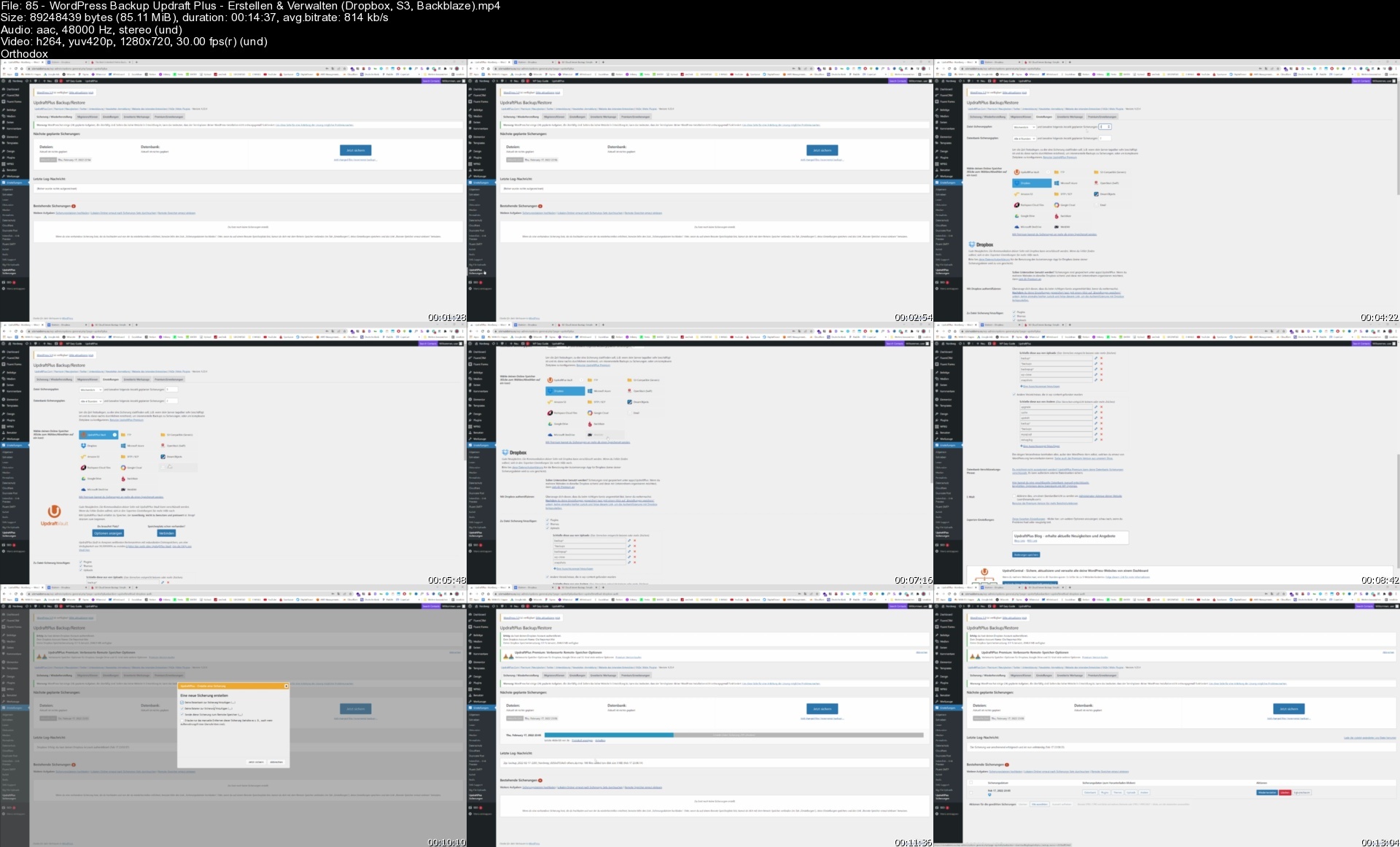
85wordpressbackupupdru4e60.jpg


How To Easily Use Ann For Prediction Mapping Using Gis Data?

z1eomtzsuox5uc8rlnnsjovfqi.jpg


How To Easily Use Ann For Prediction Mapping Using Gis Data?
Last updated 2/2022
MP4 | Video: h264, 1280x720 | Audio: AAC, 44.1 KHz
Language: English | Size: 7.03 GB | Duration: 7h 16m

First Simplified Step-by-Step Artificial Neural Network Methodology in R for Prediction Mapping using GIS Data


What you'll learn
With Step by step description we will be together facing the common software and code misleadings.
1. Produce training and testing data using automated tools in QGIS (Optional). Or jump this and using your own training/testing data directly.
2. Run NeuralNet function with training data and testing data. (use my QGIS tools as an option OR use your preferable data production technique directly)
3. Plot NN function network and get all the outputs like; Error rate, statistics, Pairwise and Generalized weight plot
4- Prediction and Validation Mapping Accuracy using AUC value of ROC plot
4. Produce and export prediction map using Raster data
Requirements
No prior knowledge in programming needed
Basic knowledge in R studio environment
Basic knowledge in GIS and QGIS is optional

Description
Artificial Neural Network (ANN) is one of the advanced Artificial Intelligence (AI) component, through many applications, vary from social, medical and applied engineering, ANN proves high reliability and validity enhanced by multiple setting options. Using ANN with Spatial data, increases the confidence in the obtained results, especially when it compare to regression or classification based techniques. as called by many researchers and academician especially in prediction mapping applications. Together, step by step with "school-bus" speed, will cover the following points comprehensively (data, code and other materials are provided) using NeuralNet Package in R and Landslides data and thematics maps.Produce training and testing data using automated tools in QGIS OR SKIP THIS STEP AND USE YOUR OWN TRAINING AND TESTING DATA Run Neural net function with training data and testing dataPlot NN function networkPairwise NN model results of Explanatories and Response DataGeneralized Weights plot of Explanatories and Response DataVariables importance using NNET Package functionRun NNET functionPlot NNET function networkVariables importance using NNETSensitivity analysis of Explanatories and Response DataRun Neural net function for prediction with validation dataPrediction Validation results with AUC value and ROC plotProduce prediction map using Raster dataImport and process thematic maps like, resampling, stacking, categorical to numeric conversion.Run the compute (prediction function)Export final prediction map as raster.tif

Overview

Section 1: Introduction

Lecture 1 Course outlines

Lecture 2 Expected Outcomes

Section 2: ANN basic background and used packages

Lecture 3 Introduction to ANN and used functions

Lecture 4 Introduction to NuralNet package

Lecture 5 Introduction Summary

Section 3: Create training and testing data in QGIS work environment

Lecture 6 Adding my developed Model tools to QGIS (version 3.14) processing library

Lecture 7 Create Land Cover map (convert string observations to numeric) in QGIS

Lecture 8 Run the tools Step 1

Lecture 9 Run the tools Step 2

Lecture 10 Run the tools Step 3

Section 4: Manage training and testing data in Excel

Lecture 11 Excel work step 1

Lecture 12 Excel work step 2

Section 5: Introduction to code settings and data processıng in R studio environment

Lecture 13 Outlines of the code contents

Lecture 14 Working directory settings and data input

Lecture 15 Convert Slope Aspect Categorical data into Numeric

Lecture 16 Convert Land-cover Categorical data into Numeric

Lecture 17 Data Scaling

Lecture 18 Testing Data processing

Section 6: Run ANN NeuralNet (nn) package and get results plots

Lecture 19 Run NeuralNet (nn) function

Lecture 20 Plot NeuralNet (nn) and get error estimation

Lecture 21 Adding NN function prediction output to training data frame

Lecture 22 How to convert values from scaled to original dataframe

Lecture 23 Pairwise plot of training dataframe and function output

Lecture 24 Generalized weight (GW) plot of training dataframe and function output

Section 7: (optional) Run NNET package and plot outputs

Lecture 25 Run NNET function and get variables importance plot

Lecture 26 Plot NNET function network

Lecture 27 Run Sensitivity test using NNET function

Section 8: Prediction map processing using NeuralNet (nn) function

Lecture 28 Run compute function (prediction function) and get cross tabulation results

Lecture 29 Update dataframe and run the previous step again

Lecture 30 Get cross tabulation for updated dataframe prediction

Lecture 31 Run compute function (prediction) with testing data and get cross tabulation

Lecture 32 Run ROC for function success and prediction rate results

Section 9: Final Prediction map production and visualization using NeuralNet

Lecture 33 Import raster files into R studio

Lecture 34 Rasters processing (extents, resampling and stacking)

Lecture 35 Scale Rasters stack data

Lecture 36 Run compute (prediction) function for Rasters stack data

Lecture 37 Produce final prediction Raster map

Lecture 38 Export prediction raster map to QGIS

Section 10: Code Conclusion and Summary

Lecture 39 Code Conclusion and Summary

All students, researchers and professionals that interested in using data mining with GIS Data,All students, researchers and professionals that work on: Health[viruses susceptibility, noise maps, Epidemic expansions, Infectious Disease, Famine ],All students, researchers and professionals that work on: Hazards[ flooding, landslides, geological based, drought, air pollution..]

Homepage


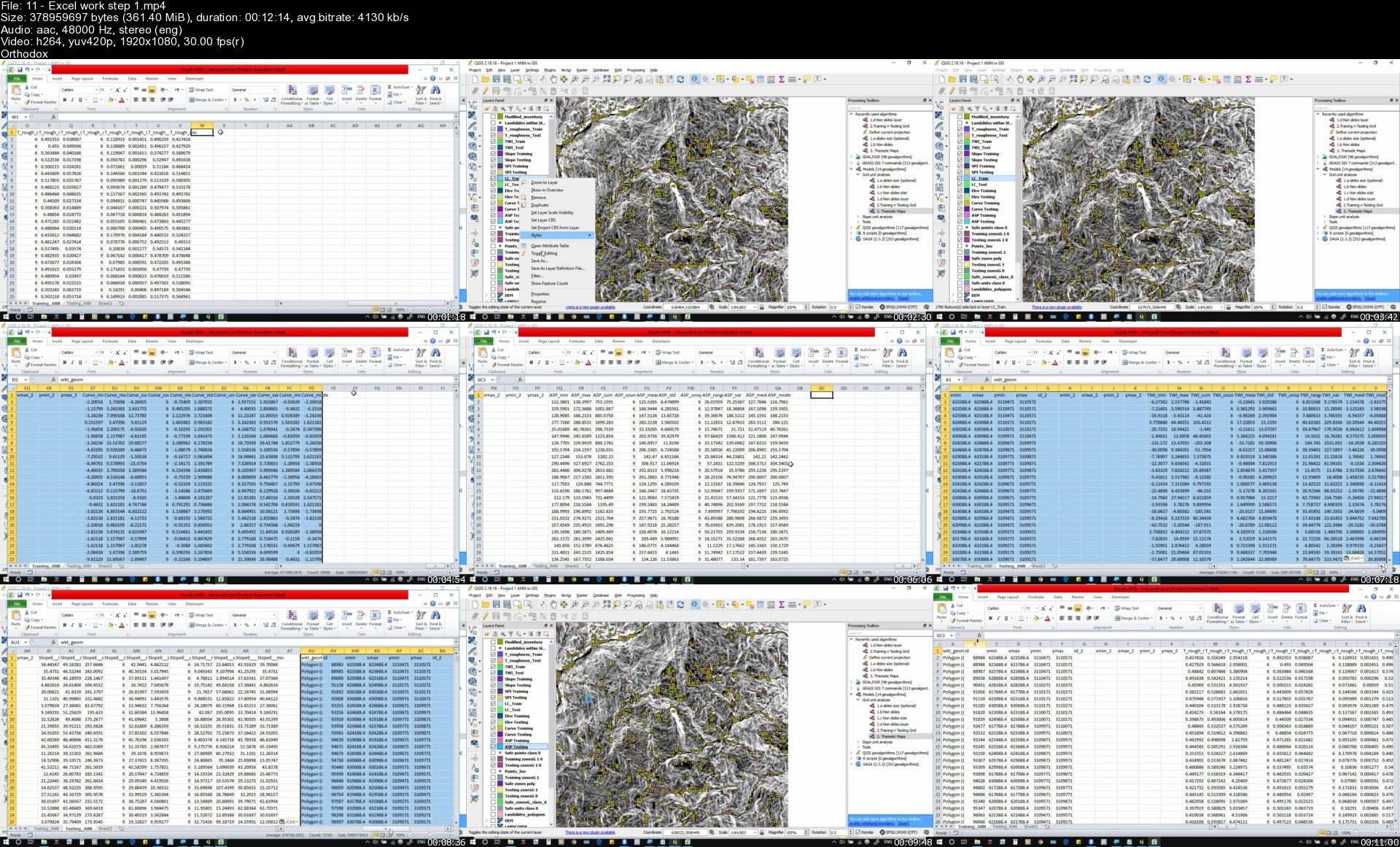
11excelworkstep1sl2c12.jpg


Zurück
Oben Unten