• Regeln für den Video-Bereich:

    In den Börsenbereich gehören nur Angebote die bereits den Allgemeinen Regeln entsprechen.

    Einteilung

    - Folgende Formate gehören in die angegeben Bereiche:
    - Filme: Encodierte Filme von BluRay, DVD, R5, TV, Screener sowie Telesyncs im Format DivX, XviD und x264.
    - DVD: Filme im Format DVD5, DVD9 und HD2DVD.
    - HD: Encodierte Filme mit der Auflösung 720p oder darüber von BluRay, DVD, R5, TV, Screener sowie Telesyncs im Format x264.
    - 3D: Encodierte Filme von BluRay, die in einem 3D Format vorliegen. Dies gilt auch für Dokus, Animation usw.
    - Serien: Cartoon/Zeichentrick, Anime, Tutorials, Dokumentationen, Konzerte/Musik, Sonstiges sind demnach in die entsprechenden Bereiche einzuordnen, auch wenn sie beispielsweise im High Definition-Format oder als DVD5/DVD9/HD2DVD vorliegen. Ausnahme 3D.
    - Bereich Englisch: Englische Releases gehören immer in diesen Bereich.
    - Bereich Talk: Der Bereich, in dem über die Releases diskutiert werden kann, darf, soll und erwünscht ist.


    Angebot/Beitrag erstellen

    - Ein Beitrag darf erst dann erstellt werden, wenn der Upload bei mindestens einem OCH komplett ist. Platzhalter sind untersagt.
    - Bei einem Scenerelease hat der Threadtitel ausschließlich aus dem originalen, unveränderten Releasenamen zu bestehen. Es dürfen keine Veränderungen wie z.B. Sterne, kleine Buchstaben o.ä. vorgenommen werden. Ausnahme Serienbörse:
    - Bei einem Sammelthread für eine Staffel entfällt aus dem Releasename natürlich der Name der Folge. Beispiel: Die Simpsons S21 German DVDRip XviD - ITG
    - Dementsprechend sind also u.a. verboten: Erweiterungen wie "Tipp", "empfehlenswert", "only", "reup", usw. / jegliche andere Zusatzinformation oder Ergänzung, welche nicht in obiger Beschreibung zu finden ist.

    Aufbau des Angebots und Threadtitel

    Der Titel nach folgendem Muster erstellt zu werden. <Name> [3D] [Staffel] [German] <Jahr> <Tonspur> [DL] [Auflösung] <Quelle> <Codec> - <Group>
    Beispiel: The Dark Knight German 2008 AC3 DVDRip XviD - iND
    Beispiel: The Dark Knight 2008 DTS DL BDRip x264 - iND
    Beispiel: The Dark Knight 2008 AC3 DL BDRip XviD - iND
    Beispiel: The Dark Knight German 2008 AC3 720p BluRay x264 iND
    Beispiel: The Dark Knight 2008 DTS DL 1080p BluRay x264 iND
    Beispiel: Die Simpsons S01 German AC3 DVDRip XviD iND
    Beispiel: Die Simpsons S20 German AC3 720p BluRay x264 iND
    Beispiel: Sword Art Online II Ger Sub 2014 AAC 1080p WEBRip x264 - peppermint
    Entsprechend sind also u.a. verboten: Sonderzeichen wie Klammern, Sterne, Ausrufezeichen, Unterstriche, Anführungszeichen / Erweiterungen wie "Tipp", "empfehlenswert", "only", "reup", usw. / jegliche andere Zusatzinformation oder Ergänzung, welche nicht in obiger Beschreibung zu finden ist
    Ausnahmen hiervon können in den Bereichen geregelt sein.

    Die Beiträge sollen wie folgt aufgebaut werden:
    Überschrift entspricht dem Threadtitel
    Cover
    kurze Inhaltsbeschreibung
    Format, Größe, Dauer sind gut lesbar für Downloader außerhalb des Spoilers zu vermerken
    Nfo sind immer Anzugeben und selbige immer im Spoiler in Textform.
    Sind keine Nfo vorhanden z.B. Eigenpublikationen, sind im Spoiler folgende Dateiinformationen zusätzlich anzugeben :
    Quelle
    Video (Auflösung und Bitrate)
    Ton (Sprache, Format und Bitrate der einzelnen Spuren)
    Untertitel (sofern vorhanden)
    Hosterangabe in Textform außerhalb eines Spoiler mit allen enthaltenen Hostern.
    Bei SD kann auf diese zusätzlichen Dateiinformationen verzichtet werden.

    Alle benötigten Passwörter sind, sofern vorhanden, in Textform im Angebot anzugeben.
    Spoiler im Spoiler mit Kommentaren :"Schon Bedankt?" sind unerwünscht.


    Releases

    - Sind Retail-Release verfügbar, sind alle anderen Variationen untersagt. Ausnahmen: Alle deutschen Retail-Release sind CUT, in diesem Fall sind dubbed UNCUT-Release zulässig.
    - Im Serien-Bereich gilt speziell: Wenn ein Retail vor Abschluss einer laufenden Staffel erscheint, darf diese Staffel noch zu Ende gebracht werden.62
    - Gleiche Releases sind unbedingt zusammenzufassen. Das bedeutet, es ist zwingend erforderlich, vor dem Erstellen eines Themas per Suchfunktion zu überprüfen, ob bereits ein Beitrag mit demselben Release besteht. Ist dies der Fall, ist der bereits vorhandene Beitrag zu verwenden.
    - P2P und Scene Releases dürfen nicht verändert oder gar unter einem iND Tag eingestellt werden.


    Support, Diskussionen und Suche

    - Supportanfragen sind entweder per PN oder im Bereich Talk zu stellen.
    - Diskussionen und Bewertungen sind im Talk Bereich zu führen. Fragen an die Uploader haben ausschließlich via PN zu erfolgen, und sind in den Angeboten untersagt.
    - Anfragen zu Upload-Wünschen sind nur im Bereich Suche Video erlaubt. Antworten dürfen nur auf Angebote von MyBoerse.bz verlinkt werden.


    Verbote

    - Untersagt sind mehrere Formate in einem einzigen Angebotsthread, wie beispielsweise das gleichzeitige Anbieten von DivX/XviD, 720p und 1080p in einem Thread. Pro Format, Release und Auflösung ist ein eigener Thread zu eröffnen.
    - Grundsätzlich ebenso verboten sind Dupes. Uploader haben sich an geeigneter Stelle darüber zu informieren, ob es sich bei einem Release um ein Dupe handelt.
    - Gefakte, nur teilweise lauffähige oder unvollständige Angebote sind untersagt. Dies gilt auch für eigene Publikationen, die augenscheinlich nicht selbst von z.B. einer DVD gerippt wurden. Laufende Serien, bei denen noch nicht alle Folgen verfügbar sind, dürfen erstellt und regelmäßig geupdatet werden.
    - Untersagt sind Angebote, welche nur und ausschließlich in einer anderen Sprache als deutsch oder englisch vorliegen. Ausnahmen sind VORHER mit den Moderatoren zu klären.


    Verstoß gegen die Regeln

    - Angebote oder Beiträge, die gegen die Forenregeln verstoßen, sind über den "Melden"-Button im Beitrag zu melden.
  • Bitte registriere dich zunächst um Beiträge zu verfassen und externe Links aufzurufen.

*** Bestes IPTV *** bester Preis *** gratis Test ***


Englische Tutorials

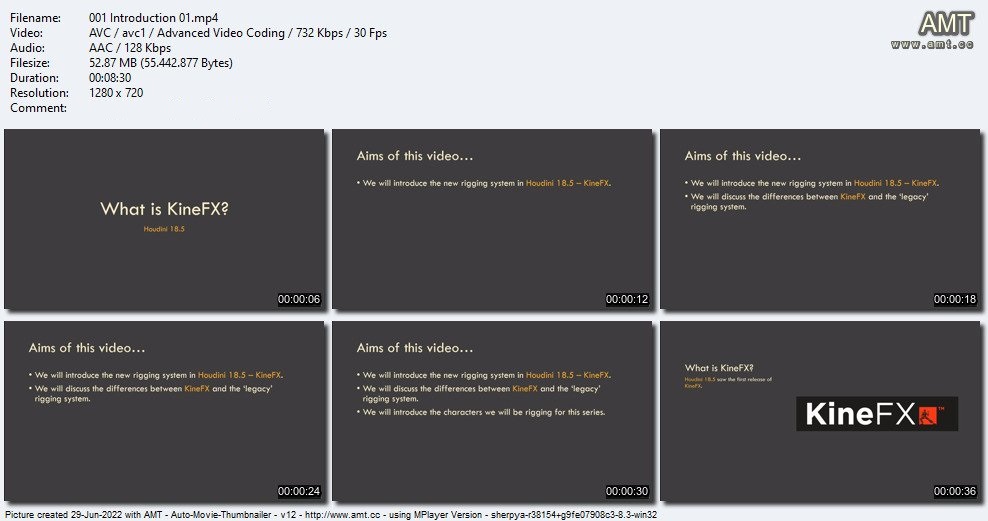
Rigging with Houdini 18.5 - KineFX

23140062def3cukhl.jpg


Rigging with Houdini 18.5 - KineFX
Last Updated 07/2021
MP4 | Video: h264, 1280x720 | Audio: AAC, 44.1 KHz, 2 Ch
Genre: eLearning | Language: English + srt | Duration: 89 lectures (12h 26m) | Size: 6.8 GB


Learn to create custom, game ready animation rigs in Houdini 18.5 with KineFX


What you'll learn
Learn to create a custom game ready animation rig in Houdini
Requirements
A basic understanding of Houdini and its interface
Description
Updated for Houdini 18.5 KineFX
**** Volume 02 ****
This update includes over 4 hours of new video introducing the new Houdini rigging workflow KineFX.
We will create 2 complete game ready rigs using the new KineFX tools, a tentacle and a zombie; introducing the new workflows along the way.
Not a single step is skipped, we go from zero to fully rigged, skinned and animated assets, with versatile, animator friendly user interfaces.
This course is ideal for beginner animators or someone who is looking to translate their rigging knowledge from another 3D package and leverage the awesome power of Houdini in their game development projects.
**** Volume 01 ****
Learn to create an animation ready zombie character rig with Houdini.
In this course we cover the fundamentals of the role of the Technical Animator or Rigger. We will create, node by node, a game ready animation rig ready to deploy into the Unity Game Engine. Along the way we will cover the fundamental concepts of rigging inside Houdini, and create a range of reusable rigging tools using Python and Houdini Digital Assets.
After completion you will have an animation ready zombie asset - and for Houdini Indie users we will explore exporting the finalized rig into Unity for testing.
Not a single step is skipped, we go from zero to a fully rigged, skinned and animated asset, with a versatile user interface.
This course is ideal for beginner animators or someone who is looking to translate their rigging knowledge from another 3D package and leverage the awesome power of Houdini in their game development projects.
Who this course is for
Game Developers, Animators, Technical Animators, Riggers, 3D Animators, 3D Modellers


qevxmkqpfcchoo2qa2hjskkj5v.jpg


Download from RapidGator


Download from Keep2Share


RockzFX Academy - Masterclass 5.0

206c6092ac291a829d82783b31337e39.jpg

RockzFX Academy - Masterclass 5.0
MP4 | Video: 1320x720 | Audio: AAC 44.1 Khz , 2ch | Duration: 6h 21 min | Language: English | 3.6 GB​
LEARN HOW TO INSTANTLY START MAKING PROFITS TODAY SIMPLE STRATEGIES, EASY APPLICATION, ZERO NOISE
Follow my lead, I do not promise overnight success, but I promise I will teach you how to become a consistent and profitable trader.

Tested, Proven and Improved
The information comprised in the Masterclasses are field proven by over 2500 students in our community on any timeframe, whether we are talking about intra-day or swing trading. Our programs are used with extraordinary results day by day, proved by our active community who continues to strive in this competing business of trading.

Day 1 - Fundamentals
Day 2- Currency Strength
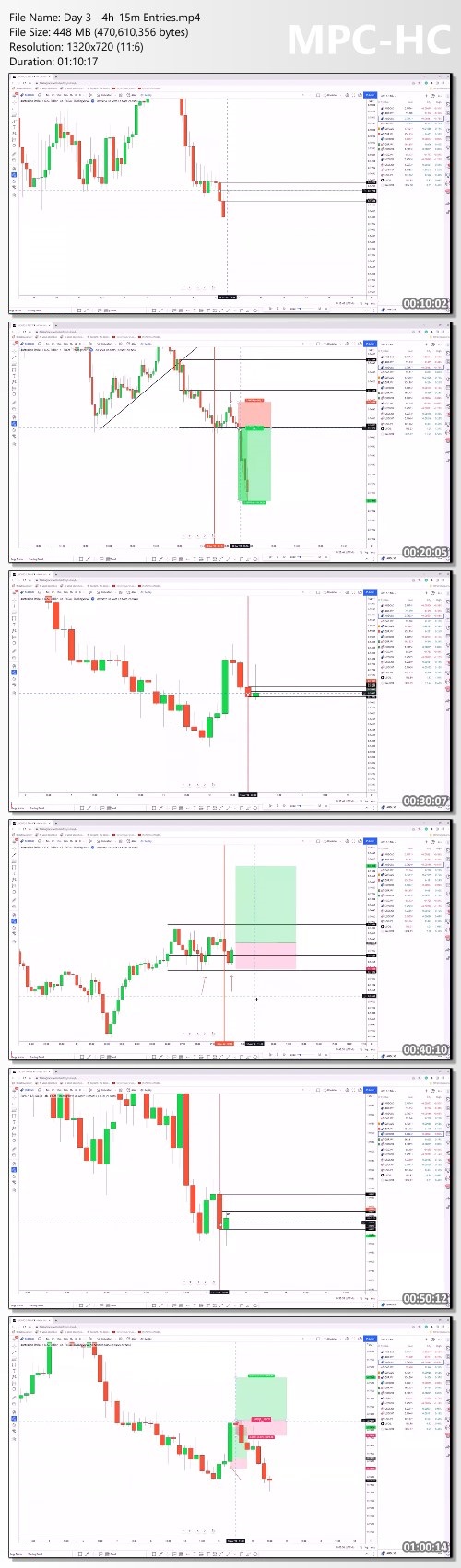
Day 3 - 4h-15m Entries
Day 4- 1h-5m Entries
Day 5 - 15m-1m Entries

Screenshots
c7a9babed79b07437314748ca42b7c85.jpg


Link Download
Extract files with WinRar 5 or Latest !
 
Make Her Love You For Life by Dan Bacon - The Modern Man

b19937940c966e75c183ce837375bc5d.png

The Modern Man - Dan Bacon - Make Her Love You For Life | 2.8 GB
Make Her Love You For Life: Video Version
How to make a woman feel sexually attracted to you, respect you and be totally in love with you when in a relationship.

The Easy Way to Get Her to Love You Again
Getting her to love you, respect you, touch you and want you the way she did in the beginning, isn't difficult at all.
In fact, it's one of the easiest things you'll ever do.
So, if your woman isn't showing you the respect, love and affection you deserve, watch this eye-opening, life-changing video by Dan Bacon to find out what you've been missing.
You will discover what she has been WAITING for you to do, but will probably never tell you about.
It's so simple and it works.
Watch the video now to find out more.
If you create the sort of dynamic where she wants to please you, she wants to make you happy, she wants to get down on her knees and suck you off, she wants to cook for you and things like that, then she's going to do that and she's going be so happy.
If you want to learn my secrets for having an amazing, happy, sexual relationship with a woman that lasts for life, I recommend that you watch or listen to Make Her Love You for Life.
If you'd like to learn how to flip that switch in a woman's mind where she wants to be the best woman for you at all times, I recommend that you watch or listen to Make Her Love You for Life right now.

Homepage:

Screenshots
ad18c02cf7013452d330162c8eea370b.jpg


Link Download
Extract files with WinRar 5 or Latest !
 
The Ultimate Guide to Conversation by Dan Bacon - The Modern Man

b9259c3e56bceaa4e25e3f6044963b01.jpg

The Modern Man - Dan Bacon - The Ultimate Guide to Conversation | 553 MB
The Ultimate Guide to Conversation
How to talk to women in a way that makes them want you sexually and romantically. Unique, attractive and enjoyable ways to start conversations with women, keep conversations going and keep them interesting.

Dan Bacon used to be hopeless with women. He lacked confidence in himself and couldn't get women to like him. Despite being a good, honest guy, women just weren't interested.
When he created the controversial attraction techniques that he now teaches here at The Modern Man, beautiful women began flooding into his life and wanting to be with him.
Dan has already helped 1,000s of guys to get instant results with women (success stories) and he would love to help you too.
So, if you are sick and tired of not getting results with women and would like to try something new that is absolutely guaranteed to work for you, then get started here.

- Audio.
- 10 hours.
- Download to a phone, tablet or computer or listen online from within your Modern Man account at any time.
- Lifetime access to re-download or listen online.

HOmepage:

Link Download
Extract files with WinRar 5 or Latest !
 
The Fastest Way to Get Your Ex Back by Dan Bacon - The Modern Man

711451ef9e3026d67c1eb6d264d2aa58.jpg

The Modern Man - The Fastest Way to Get Your Ex Back | 2.86 GB
The fastest way to get your ex back is to actively make her have feelings for you again whenever you interact with her.

Don't waste time ignoring her if she currently doesn't have feelings for you. In most cases, a woman will simply move on when a guy (that she doesn't have feelings for) actively ignores her.
Likewise, don't waste your time and energy trying to convince her to give you another chance (e.g. telling her that things will be different now, you promise to change, you will do anything, etc) if she doesn't have feelings for you.
She's not going to care about how much you care, until you trigger her feelings for you again. At this point, all she really cares about is how she feels.
The only way to get her to change her mind NOW is to make her have some feelings for you NOW.
You've got to flick that switch inside of her.
Once you spark her feelings for you again, everything changes. Her guard comes down and you can guide her through the rest of the ex back process.
100s of guys that I've helped have already used this approach to get their woman back immediately or very quickly and you can do it too.
Trigger Her Feelings and She Will Want You Back
Right now, she might be saying that she doesn't want anything to do with you, but don't worry - pretty much every guy starts at that point when getting a woman back.
She is only saying that because what you are offering her now isn't making her have enough feelings for you to want to be with you.
The negatives of your relationship are far outweighing the positives and unless you change that, she will continue on without you.
The secret is to begin saying and doing the things that naturally trigger her feelings of respect and attraction and love for you.
When you do that, she will automatically change how she thinks, feels and behaves in response to you.
She will feel drawn to you and you simply then need to follow the rest of the ex back process and she will be back in your arms again.
Turning Her Off or Turning Her On?
Have you been turning her off lately, or have you been saying and doing things that turn her on, make her feel attracted, make her feel respect for you, make her miss you and make her want to be with you?
All that matters to her is how she feels, so if you want to get her back, you MUST begin to make her have feelings that draw her to you and make her want to be around you.
The good news is that you (yes, you) can do that.
Other guys have done it and you can too.

HOmepage:

Screenshots
aeb08f5f23f04de569e2eaf9e51b9e19.jpg


Link Download
Extract files with WinRar 5 or Latest !
 
Confidence Booster Package - The Wing Girl Method

8c11a20bc25051f10727242521c65050.jpg

The Wing Girl Method - Confidence Booster Package | 106 MB
In nature, when weakness is displayed it is attacked. The lion hunts the slowest gazelle, the one that is the easiest prey.

The shark attacks the fish that has erratic swimming movement or looks injured.
**** in school often pick on the kid who won't fight back or shows weakness. Humans are also wired to attack weakness by nature.How often does the jock or the Prom queen get bullied? Never.
Confidence is nature's signal that "I am not weak."
When you display body language and speak with certainty like a man, you are sending females a primal signal that "I am not weak and when things become difficult, I will have them under control." Confidence can also come in the form of Pseudo-Confidence. Pseudo means "false."
Women can sense false confidence, nature teaches them that too. So, it has to be REAL confidence.
So, ask yourself: "Do I look like the slowest gazelle?" If the answer is "yes", then you have made the right choice by getting this program!
Be yourself, be real, and don't look like the weakest Gazelle and remember, women LOVE a man with confidence!

CONTENT
1. Introduction To The Confidence Booster Package
When asked, women often respond the number one thing they want in a man is confidence! I asked Ms. USA 2004, Shandi Finnessey this question twice and she kept saying "confidence." So, I explored the root of this common answer among women.

2. The 3 Discovery Guidebooks
I always say "You can't turn anyone else on until you can turn yourself on." So let's find out how to turn yourself on
The Confidence Booster Package contains 3 Guidebooks.
In each guidebook you will work on discovering YOU. The more you know about YOU, the more clear you can be on what you want from others, especially women. Discovering you helps you own your character, your beliefs, your wants and your boundaries.

3. BONUS MATERIALS!!!!
As promised I have put together some amazing bonus materials to further help you boost your confidence levels.

Homepage:

Link Download
Extract files with WinRar 5 or Latest !
 
Friend Zone Get Out Stay Out - The Wing Girl Method

d81dab5f0fe90d34f046bde14d34c765.png

The Wing Girl Method - Friend Zone Get Out Stay Out | 476 MB
Discover My Step-By-Step Method To Getting Out of The Friend Zone.And STAYING Out.So You Can Get Any Girl You Want From Now On
Now You Can Get OUT Of The Friend Zone and Stay Out.FOR GOOD!

Even if she has a boyfriend.usually only goes for the cocky, arrogant type.and EVEN if she already told you she's not interested in you.
After this program.SHE'LL WANT YOU!

This program contains exclusive tips to help get you out TONIGHT.including:
The common traps that most men fall into.and how to spot them awhile away to avoid falling into the Friend Zone
The one unique difference between coming off as a "friend" and a guy she wants
A simple trick to start stepping out of the Friend Zone without coming off as too forward or even creepy
Why most guys mess up and lose the girl when they try to get out of the Friend Zone.and how to avoid these common mistakes
How to leverage your friendship to getting closer without getting creepy
How to create an instant SPARK attraction with a woman you see almost every day
How to make her see you as sexy and irresistible.to the point where SHE starts chasing YOU

. and much much more + Bonuses

Homepage:

Screenshots
ebd631a2586e49929c5a50ea29a3eabc.jpg


Link Download
Extract files with WinRar 5 or Latest !
 
45 Real World Java Development Projects Bootcamp Course 2022

5yvlnrj37ybishlntszrrytj30.jpg


45 Real World Java Development Projects Bootcamp Course 2022
Updated 06/2022
Genre: eLearning | MP4 | Video: h264, 1280x720 | Audio: AAC, 44.1 KHz
Language: English | Size: 36.4 GB | Duration: 397 lectures • 75h 28m

Java Programming Course: Learn Development Of JAVA Projects Using JSP,JDBC, Servlets, Swing, Spring Boot,Maven,Hibernate


What you'll learn
Gain in-depth understanding of core & advanced features of Java
Master design principles, best practices and coding conventions for writing well-designed, professional Java code
Get real-world experience by developing an Java based Web application using technologies like JSP, Servlets
Master Object-Oriented Programming concepts by using a real-world application as a case study

Requirements
Knowledge Of JAVA


Description
What is Java?

Java is a cross-platform object-oriented programming language that was released by Sun Microsystems in the year 1995. Today, Java is needed to run various applications such as games, social media applications, audio and video applications, etc.

What is Java used for?

Before I go ahead with this, let me brief you about why you should choose Java. It is highly popular and has dominated this field from early 2000's till the present 2022.

Some of the applications are listed below

Banking: To deal with transaction management.

Retail: Billing applications that you see in a store/restaurant are completely written in Java.

Information Technology: Java is designed to solve implementation dependencies.

Android: Applications are either written in Java or use Java API.

Financial services: It is used in server-side applications.

Stock market: To write algorithms as to which company they should invest in.

Big Data: Hadoop MapReduce framework is written using Java.

Scientific and Research Community: To deal with huge amount of data.

In This Course We Are Going To Work On 45 Java Projects

Project-1 : Electricity Billing System - Java Core, Swing, JDBC, MySQL

Project-2 : Hotel Management System - Java Core, Swing, JDBC, MySQL

Project-3 : Airlines Management System - Java Core, Swing, JDBC, MySQL

Project-4 : University Management System - Java Core, Swing, JDBC, MySQL

Project-5 : Travel and Tourism Management System - Java Core, Swing, JDBC, MySQL

Project-6 : Store Billing System - Java Core, Swing, JDBC, MySQL

Project-7 : Bank Management System - Java Core, Swing, JDBC, MySQL

Project-8 : Application World - Java Core, Swing, AWT

Project-9 : Payroll System - Java Core, Swing, JDBC, MySQL

Project-10 : Cab Booking System - Java Core, Swing, JDBC, MySQL

Project-11 : Simple Playlist Application In java - Java SE & OOPS

Project-12 : Simple Web Browser Application - Java SE, Maven & OpenJFX

Project-13 : Pentominoes Game In java - Java SE, Swing API

Project-14 : Number Puzzle Game In Java - Java SE, Swing API

Project-15 : Currency Converter API - Java SE, Maven, Swing

Project-16 : Bridge game in Java - Java SE, Swing & Java AWT

Project-17 : Rock Scissor Paper Game in java - Java SE, Maven, Swing

Project-18 : Dungeon: The Adventure Game In Java - Java SE & OOPS

Project-19 : Minesweeper Game in Java - Java SE, Swing API

Project-20 : Sokoban: A video puzzle game in Java - Java SE, Swing API

Project-21 : Create a School Payment Management System in JAVA-Core java

Project-22 : Build Your Own Notepad Clone using JAVA-Core java

Project-23 : Create a Game of Feeding the Snake using JAVA GUI-Core JAVA, JAVA Swing, JAVA AWT

Project-24 : Create a Music Playlist Library using JAVA-Core JAVA, JAVA Swing, JAVA AWT

Project-25 : Create an Interesting Game of Noughts and Crosses in JAVA-Core java

Project-26 : Create a Food Ordering System in JAVA-Core JAVA, JAVA Swing, JAVA AWT

Project-27 : Create a Download Manager in JAVA-Core JAVA, JAVA Swing, JAVA AWT

Project-28 : Create an ATM Machine Interface using JAVA-Core java

Project-29 : Create A Contact Repository Interface Using JAVA-Core JAVA, JAVA Swing, JAVA AWT

Project-30 : Build A Painting Canvas Tool Using JAVA Swing-Core java

Project-31 : Build An Interactive BST Visualizer Application In JAVA-Core JAVA, JAVA Swing, JAVA AWT

Project-32 : Build A File Browser Interface Using JAVA Swing-Core JAVA, JAVA Swing, JAVA AWT

Project-33 : Create A Time And Task Management System In Java -Core java

Project-34 : Email Administration System - Java core

Project-35 : Event Management System - Java servlet

Project-36 : Online Quiz system - JDBC, JSP

Project-37 : E library System - Java servlet, JDBC

Project-38 : TCP Chat Application - Java networking, java swing

Project-39 : Covid Information Tracker - Java spring boot, jdbc

Project-40 : Blog & Report System - Java, JSP, AJAX

Project-41 : Email System Web App - Java Servlet, JSP

Project-42 : Network Packet Tracer Using Java - Java Swing, Maven

Project-43 : Symmetric Encryption Cryptography in Java

Project-44 : Employee Management System - Java, Spring framework, Hibernate, Heroku development

Project-45 : Breakout Ball Game - Java, OOPs, Java AWT swing

Who this course is for
Beginners In JAVA

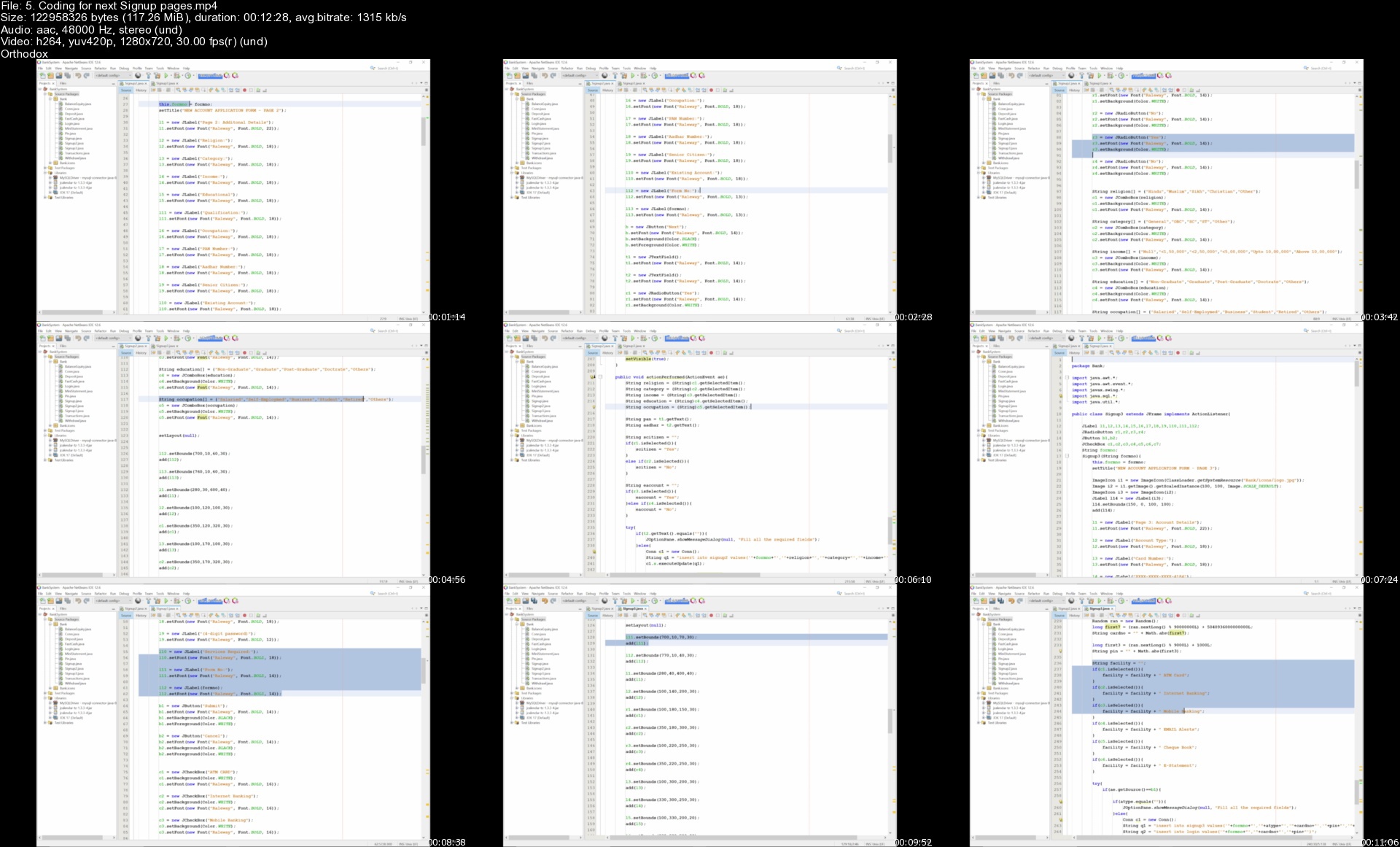
Homepage


5.codingfornextsignupdyki0.jpg


Python Programming Triumph Class

th4njvtdhteg4u7vwrqkbtekn2.jpg


Python Programming Triumph Class
Published 06/2022
MP4 | Video: h264, 1280x720 | Audio: AAC, 44.1 KHz, 2 Ch
Genre: eLearning | Language: English + srt | Duration: 47 lectures (28h 55m) | Size: 15.3 GB

Become a PRO in python . Get a grasp in basics and advanced versions of python!!


What you'll learn
You will learn Selenium, Beautiful Soup, Request, Flask, Pandas, NumPy, Scikit Learn, Plotly, and Matplotlib.
You will be able to program in Python professionally
Be able to use Python for data science and machine learning
Have the skills and understanding of Python to confidently apply for Python programming jobs.
Learn Python from experienced professional software developers.
Learn to Test, Debug and Handle Errors in your Python programs
Use Python to process: Images, CSVs, PDFs, and other Files

Requirements
A computer (Windows/Mac/Linux).
No prior knowledge of python required , we'll provide everything here!
No paid software required - We'll teach you how to use PyCharm and other compilers.


Description
Python offers various extraordinary diagramming libraries that come loaded with bunches of various elements. Regardless if you have any desire to make intelligent, live, or profoundly altered plots python has a fantastic library for you.

Python programming language has various sorts of libraries for all sorts of activities. In like manner, python has different libraries for the representation of Data, with the goal that the client can comprehend the dataset in an exceptional nitty-gritty way and dissect it appropriately.

Python is at present the most generally utilized multi-reason, undeniable-level programming language.

Python permits programming in Object-Oriented and Procedural ideal models.

Python programs by and large are more modest than other programming dialects like Java. Software engineers need to type generally less and the space necessity of the language, makes them coherent constantly.

Every library of perception has its own particular. Involving the specific libraries for explicit undertaking assists the client with finishing the job in a more simple and precise manner. Some frees work better compared to the others. Build the skills you need to get your first Python programming job

- move to a more senior software developer position

- get started with Machine Learning, Data Science, Django, or other hot areas that Python specializes in

- or just learn Python to be able to create your own Python apps quickly.

Who this course is for
Beginners with no previous programming experience looking to obtain the skills to get their first programming job.
Existing programmers who want to improve their career options by learning the Python programming language.

Homepage


2.decisionmakinginpyt3dkyi.jpg


Marketing for Developers

justinjacksone28093mai3jhv.png


Marketing for Developers
New Release
MP4 | Video: h264, 1920x1080 | Audio: AAC, 44.1 KHz, 2 Ch
Genre: eLearning | Language: English | Duration: 43 Lessons (20h 32m) | Size: 15.3 GB

A book and course for programmers who want to learn marketing

Only one factor predict's a product's success
It's not the quality of your code.

It's not "scratching your own itch."

It's not the programming framework you chose.

It's not test-driven development or continuous integration.

What makes an app successful? Having product/market fit!

Programmers who earn significant revenue from their products validate demand before they start coding.

One of the biggest mistakes developers make is they think they know what people need. But building something that meets a need isn't enough. You have to create something people want.

Marketing for Developers is the guide you've been waiting for
The book and course will teach you everything you need to know.

The beginning: everyone starts with no audience, no product, and no revenue. It's OK if you're just starting out!
Build something people want: you'll learn how to choose your target market, understand what motivates them, and pick a product idea.
Use the lean marketing stack: identify the right tools, configure them, and track the right analytics events.
Pre-launch: design a landing page that converts, write blog posts, optimize for search and build buzz.
Launch and grow: promote your application with confidence, get more traffic, creating campaigns that convert, and get your first paying customers.

Who is this for?
Marketing for Developers is for programmers who want to earn an income from the products they create. I wrote it specifically for these three stages

"I want to build a product, but haven't found an idea."
"I'm building a product, but haven't yet launched."
"I've launched, and I'm looking for my first 100 customers."
These tactics will also be useful for startups and teams to review together.

My friend Patrick Mckenzie has this great quote

"As developers, you can create things, which is magical."

You can build the application; this Marketing for Developers will help you to launch it to paying customers.

Homepage


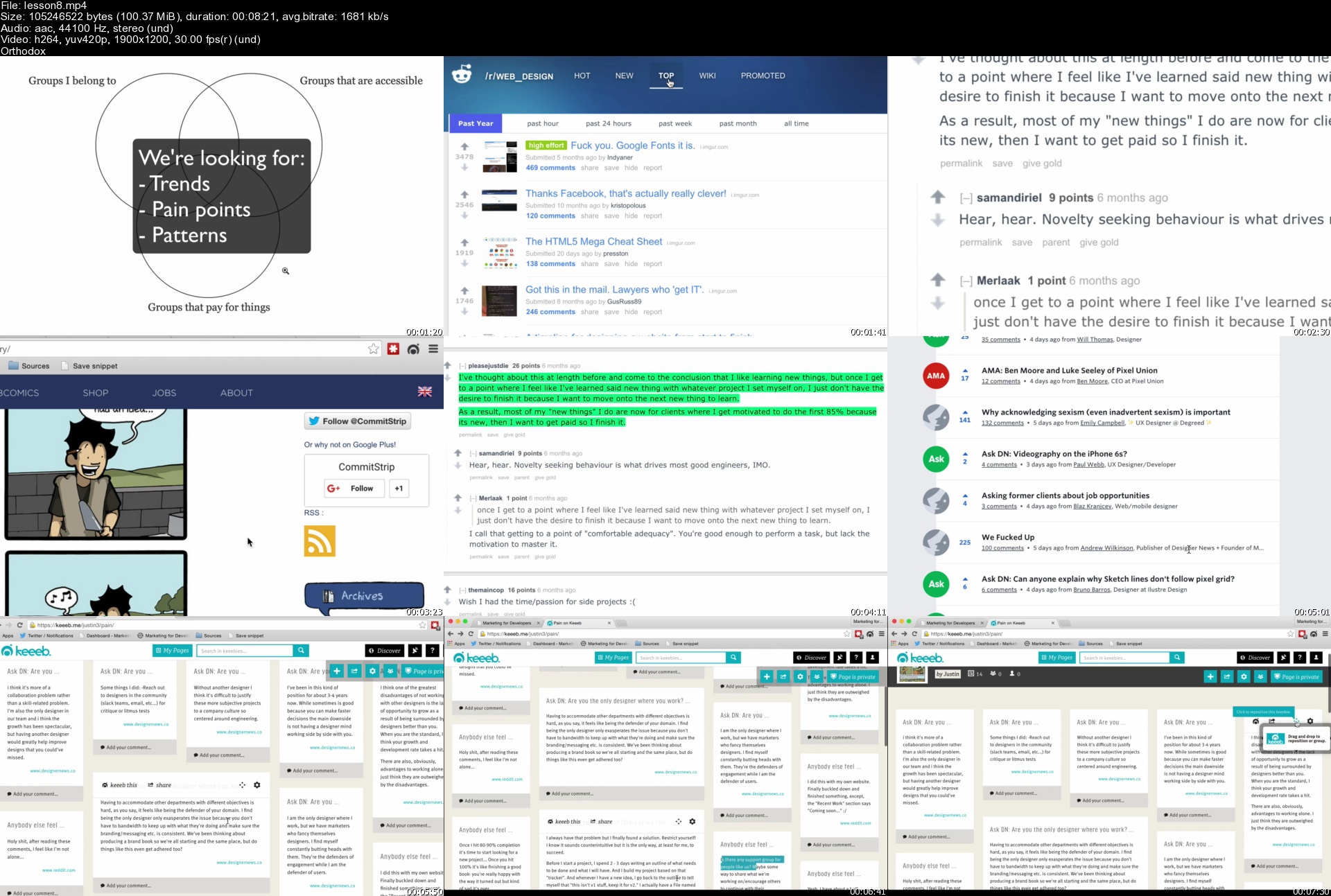
lesson8sswkzl.jpg


Level 1 Cfa® Exam Prep Bootcamp (Part 1/2)

r5kqnabe5iiw4a2zxbingapj0n.jpg


Level 1 Cfa® Exam Prep Bootcamp (Part 1/2)
Last updated 3/2022
MP4 | Video: h264, 1280x720 | Audio: AAC, 44.1 KHz
Language: English | Size: 5.68 GB | Duration: 26h 3m

Level 1 CFA® Bootcamp: Ethics, Quantiative Methods, Corporate Finance, Economics, and Alternative Investments


What you'll learn
Prepare for the CFA® Level 1 exam
Earn one of the most prestigious designations in finance and investment management
Acquire a solid understanding of key business and finance disciplines
Impress interviewers by showing a strong an understanding of finance fundamentals and advanced topics concepts
Study Ethics, Quantitative Methods (Statistics and Probability), Corporate Finance, Economics, and Alternative Investments
Understand the Global Investment Performance Standards (GIPS)
Learn about the time value of money, discounted cash flow applications, statistical concepts and market returns, probability and probability distributions, sampling and estimation, hypothesis testing, and technical analysis
Acquire an understanding of corporate governance, capital budgeting, cost of capital, measures of leverage, and working capital management
Gain an understanding of fundamental topics like demand and supply, firm and market structure, economic growth, business cycles, monetary trade and capital flows, and currency exchange rates
Requirements
No prior experience is required. We will start from the very basics

Description
We will help you prepare for the CFA® Level 1 Exam.A record number of candidates register to take the CFA® exams. Pursuing the credential is a rigorous process, which requires a lot of time and effort. And yet, many people around the world sign up for the CFA® exams. The reason is that a CFA® designation can move your resume to the top of the pile in a competitive job market.We are proud to present you a training bootcamp created by 365's team that aims to prepare you for the CFA® Level 1 exam provided by CFA Institute.The five topics we will cover here are:· Ethical and Professional Standards· Portfolio Management· Economics· Corporate Finance· Alternative InvestmentsThis Bootcamp has been designed as a supplement to the official study materials provided by the CFA Institute and should not be seen as a substitute for these materials. Our goal is to make your life a bit easier. The lessons we have prepared are consistent with the current CFA® Level 1 curriculum and exam structure (and will continue to be updated to ensure consistency over time). We cover all Learning Outcome Statements (LOS), and we have dedicated a separate video to each LOS. This ensures that together we will study the concepts that are likely to be tested on the exam.Why take our Bootcamp?· A successful track record on Udemy - over 1,750,000 students have enrolled in our courses· Experienced team - the authors of this course are finance professionals who have acquired significant practical experience (they have worked for companies like HSBC, Morgan Stanley, PwC, Coca Cola, etc.)· Carefully scripted and animated tutorials with plenty of real-world examples· A variety of practice questions at the end of each Reading to test your progress· Extensive case studies that will help you reinforce what you have learned· Excellent support: If you don't understand a concept or you simply want to drop us a line, you'll receive an answer in one or two business days· Dynamic: We don't want to waste your time! The instructors keep up a very good pace throughout the whole course.We will cover a wide variety of topics, including:EthicsEthics and trust in the investment profession, Code of Ethics and Standards of Professional Conduct, the Global Investment Performance Standards (GIPS)Quantitative MethodsThe time value of money, Discounted cash flow applications, Statistical concepts and market returns, Probability concepts, Common probability distributions, Sampling and estimation, Hypothesis testing, Technical analysisCorporate FinanceCorporate governance, Capital budgeting, Cost of capital, Measures of leverage, Working capital managementEconomicsDemand and supply analysis, The firm and market structures, Aggregate output and economic growth, Understanding business cycles, Monetary and fiscal policy, International trade and capital flows, Currency exchange ratesAlternative InvestmentsCategories of alternative investments, Potential benefits of alternative investments, Issues in valuing and calculating returns on alternative investmentsEach of these topics builds on the previous ones. And this is one of the considerable benefits you will gain by taking our Bootcamp. You will acquire valuable theoretical and practical skills that are necessary for a successful career in the world of investment management, investment banking, and corporate finance.Moreover, our focus is to teach topics that flow smoothly and complement each other. The course covers exam concepts at a fraction of the cost of traditional programs (not to mention the amount of time you will save).We are happy to offer an unconditional 30-day money-back in full guarantee. No risk for you. The content of the course is excellent, and this is a no-brainer for us, as we are certain you will love it.Why wait? Every day is a missed opportunity.Click the "Buy Now" button and become a part of our program today.*CFA Institute does not endorse, promote, review or warrant the accuracy or quality of the products or services offered by 365 Careers or Udemy. The CFA Institute Logo, CFA®, and Chartered Financial Analyst® are just a few of the trademarks owned by CFA Institute.** *Please note that the Bootcamp will be split into two courses on Udemy. The reason is that the sheer length of topics we have covered does not allow us to have a single course;

Overview

Section 1: What Does the Course Cover?

Lecture 1 What Does the Course Cover?

Lecture 2 Welcome Gift

Section 2: How to Use a Financial Calculator

Lecture 3 Introduction

Lecture 4 Setting Up the Financial Calculator

Lecture 5 Basic Calculations

Lecture 6 Time Value of Money

Lecture 7 Cash Flow Analysis

Lecture 8 Statistics

Lecture 9 Depreciation and Breakeven

Section 3: 365 Formula Sheet

Lecture 10 365 Formula Sheet

Section 4: Ethics - Ethics and Trust in the Investment Profession

Lecture 11 LOS Overview

Lecture 12 Ethics Explained

Lecture 13 The Role of a Code of Ethics for Defining a Profession

Lecture 14 Challenges to Ethical Behavior

Lecture 15 The Need for High Ethical Standards in the Investment Industry

Lecture 16 Ethical vs. Legal Standards

Lecture 17 CFA® Ethical Decision-Making Framework

Section 5: Ethics - Code of Ethics and Standards of Professional Conduct

Lecture 18 LOS Overview

Lecture 19 Structure of the CFA® Institute Professional Conduct Program

Lecture 20 Components of the Code of Ethics® and the Standards of Professional Conduct®

Lecture 21 Ethical Responsibilities Required by the Code and Standards

Lecture 22 Practice Questions (Code of Ethics and Standards of Professional Conduct)

Lecture 23 Practice Questions with Answers (Code of Ethics and Standards of Professional..)

Section 6: Ethics - Guidance for Standard I-VII

Lecture 24 LOS Overview

Lecture 25 Professionalism, I A Knowledge Of The Law

Lecture 26 Professionalism, I B Independence and Objectivity

Lecture 27 Professionalism, I C Misrepresentation

Lecture 28 Professionalism, I D Misconduct

Lecture 29 Integrity of Capital Markets, II A Material Non-Public Information

Lecture 30 Integrity of Capital Markets, II B Market Manipulation

Lecture 31 Duties to Clients, III A Loyalty, Prudence, and Care

Lecture 32 Duties to Clients, III B Fair Dealing

Lecture 33 Duties to Clients, III C Suitability

Lecture 34 Duties to Clients, III D Performance Presentation

Lecture 35 Duties to Clients, III E Preservation of Confidentiality

Lecture 36 Duties to Employers, IV A Loyalty

Lecture 37 Duties to Employers, IV B Additional Compensation Arrangements

Lecture 38 Duties to Employers, IV C Responsibilities of Supervisors

Lecture 39 Investment Analysis, Recommendations, and Actions, V A Diligence and Reasonable

Lecture 40 Investment Analysis, Recommendations, and Actions, V B Communication With Client

Lecture 41 Investment Analysis, Recommendations, and Actions, V C Record Retention

Lecture 42 Conflicts of Interest, VI A Disclosure of Conflicts

Lecture 43 Conflicts of Interest, VI B Priority of Transactions

Lecture 44 Conflicts of Interest, VI C Referral Fees

Lecture 45 Responsibilities as a CFA® Institute Member or CFA® Candidate, VII A

Lecture 46 Responsibilities as a CFA® Institute Member or CFA® Candidate, VII B

Lecture 47 Standards of Professional Conduct - Overview

Section 7: Ethics - Introduction to the Global Investment Performance Standards®

Lecture 48 LOS Overview

Lecture 49 The Global Investment Performance Standards®

Lecture 50 Composites Construction

Lecture 51 Requirements for Verification

Section 8: Ethics - Global Investment Performance Standards (GIPS®)

Lecture 52 LOS Overview

Lecture 53 Key Features of GIPS®

Lecture 54 Fundamentals of Compliance

Lecture 55 Scope of GIPS®

Lecture 56 GIPS® Implementation

Lecture 57 Overview of the Global Investment Performance Standards®

Lecture 58 Practice Questions (Global Investment Performance Standards®)

Lecture 59 Practice Questions with Answers (Global Investment Performance Standards®)

Lecture 60 GIPS® Overview

Section 9: Quantitative Methods - Time Value of Money

Lecture 61 LOS Overview

Lecture 62 Time Value of Money

Lecture 63 How to Use a Timeline to Depict Time Value of Money Problems

Lecture 64 How to Interpret Interest Rates

Lecture 65 Interest Rates as the Sum of Several Components

Lecture 66 Calculate and Interpret an Investment's Effective Annual Rate

Lecture 67 The Relationship between PV and FV

Lecture 68 Solving Different Time Value of Money Problems

Lecture 69 The Importance of Compounding Frequencies

Lecture 70 Ordinary Annuity

Lecture 71 Annuity Due

Lecture 72 Perpetuity

Lecture 73 FV and PV of Unequal Cash Flows

Lecture 74 Calculate the Monthly Payment of a Mortgage Loan

Lecture 75 Let's Calculate the Number of Years it Takes to Achieve a Financial Goal

Lecture 76 What is the Rate of Return of an Investment?

Lecture 77 The Cash Flow Additivity Principle

Lecture 78 Practice Questions (Quantitative Methods - Time Value of Money)

Lecture 79 Practice Questions (Answers with explanations)

Section 10: Bonus-Discounted Cash Flow Applications-Not Included in Level 1 2020 Curriculum

Lecture 80 LOS Overview

Lecture 81 How to Interpret the Net Present Value (NPV)

Lecture 82 Calculate NPV

Lecture 83 Calculate an Investment's Internal Rate of Return (IRR)

Lecture 84 Compare NPV and IRR

Lecture 85 The Holding Period Return

Lecture 86 The Money-Weighted Rate of Return

Lecture 87 The Time-Weighted Rate of Return

Lecture 88 Evaluate the Performance of Money Market Instruments

Lecture 89 Alternatives to the Bank Discount Yield

Lecture 90 Convert Among Yield Measures

Lecture 91 Practice Questions (Quantitative Methods - Discounted cash flow applications)

Lecture 92 Practice Questions (Answers with explanations)

Section 11: Quantitative Methods - Statistical concepts and Market returns

Lecture 93 LOS Overview

Lecture 94 Fundamental Concepts of Statistics

Lecture 95 Measurement Scales

Lecture 96 Parameter, Sample statistic, and Frequency Distribution

Lecture 97 Interpret Frequency Distributions

Lecture 98 Graphical Representation

Lecture 99 Measures of Central Tendency

Lecture 100 Measures of Central Tendency - Mean, Median, Mode

Lecture 101 Quartiles, Quintiles, Deciles and Percentiles

Lecture 102 Range and Mean Absolute Deviation

Lecture 103 Variance and Standard Deviation

Lecture 104 Semi-variance and Semi-deviation

Lecture 105 Chebyshev Inequality

Lecture 106 Coefficient of Variation and Sharpe Ratio

Lecture 107 Explain Skewness

Lecture 108 Behavior of the Mean, Median, and Mode

Lecture 109 Sample Skewness

Lecture 110 Kurtosis

Lecture 111 Compare the Use of Arithmetic and Geometric Means

Section 12: Quantitative Methods - Probability Concepts

Lecture 112 LOS Overview

Lecture 113 Probability Definitions

Lecture 114 The Two Defining Properties of Probability

Lecture 115 Defining Probabilities as Odds

Lecture 116 Dependent Events vs. Independent Events

Lecture 117 Conditional Probability

Lecture 118 The Addition Rule

Lecture 119 The Multiplication Rule

Lecture 120 The Total Probability Rule

Lecture 121 Summary Lesson: Addition, Multiplication, and Total Probability Rules

Lecture 122 Practical example: Total Probability Rule

Lecture 123 Conditional Expectation in Investment Applications

Lecture 124 The Relationship between Financial Securities

Lecture 125 Calculating Covariance

Lecture 126 Correlation

Lecture 127 Expected Value

Lecture 128 Calculating the Variance of a Random Variable

Lecture 129 Portfolio Expected Returns and Variance

Lecture 130 Covariance Based on a Joint Probability Function

Lecture 131 Bayes Formula

Lecture 132 Principles of Counting

Section 13: Quantitative Methods - Common probability distributions

Lecture 133 LOS Overview

Lecture 134 Defining a Random Variable

Lecture 135 Discrete and Continuous Random Variable

Lecture 136 Cumulative Distribution Function

Lecture 137 Practical Exercise

Lecture 138 Uniform, Bernoulli, and Binomial Random Variables

Lecture 139 Discrete Distribution Functions

Lecture 140 Discrete Uniform Distribution

Lecture 141 Binomial Distribution

Lecture 142 Practical Exercise

Lecture 143 Continuous Uniform Distribution

Lecture 144 Properties of the Normal Distribution

Lecture 145 Univariate vs. Multivariate Distributions

Lecture 146 Comparison between Conclusions Draw with Chebyshev and Normal Distribution

Lecture 147 Standard Normal Distribution

Lecture 148 Using Z-values to Calculate Probabilities

Lecture 149 Safety-first Ratio, Roy's Criterion for Portfolio Optimization

Lecture 150 Lognormal Distribution

Lecture 151 Discrete vs. Continuous Compounding

Lecture 152 Monte Carlo Simulation

Lecture 153 Historical Simulation

Section 14: Quantitative Methods - Sampling and Estimation

Lecture 154 LOS Overview

Lecture 155 Statistical Inferences

Lecture 156 Sampling Error

Lecture 157 Stratified Random Sampling

Lecture 158 Time Series vs. Cross-sectional Data

Lecture 159 Central Limit Theorem

Lecture 160 Standard Error of the Sample Mean

Lecture 161 Estimator of a Population Parameter

Lecture 162 Confidence Intervals

Lecture 163 Student's T-distribution

Lecture 164 Calculating Confidence Intervals - Known Variance

Lecture 165 Calculating Confidence Intervals - Unknown Variance

Lecture 166 Calculating Confidence Intervals - Variance Unknown, Large Sample Size

Lecture 167 Sampling Bias

Section 15: Quantitative Methods - Hypothesis Testing

Lecture 168 LOS overview

Lecture 169 Defining Hypothesis Testing

Lecture 170 One and Two-sided Hypothesis Tests

Lecture 171 What Is a Test Statistic?

Lecture 172 The Type I and Type II Errors. Definition of Significance Level

Lecture 173 What Is a Decision Rule?

Lecture 174 How Do We Measure the Power of a Test?

Lecture 175 The Relation Between Confidence Intervals and Hypothesis Tests

Lecture 176 Statistically vs. Economically Meaningful Results

Lecture 177 How Do We Measure and Use P-values?

Lecture 178 Hypothesis Testing - Variance Known

Lecture 179 Hypothesis Testing - Variance Unknown

Lecture 180 Hypothesis Testing - Equality of Means (Equal and Unknown Variances)

Lecture 181 Hypothesis Testing - Equality of Means (Unequal and Unknown Variances)

Lecture 182 Hypothesis Testing - The Difference of Two Means

Lecture 183 Testing for the Variance - Chi-Square Test

Lecture 184 Parametric vs. Nonparametric Tests

Section 16: Corporate Finance - Corporate Governance and ESG: An Introduction

Lecture 185 LOS Overview

Lecture 186 Corporate Governance: Description

Lecture 187 Stakeholder Groups and Their Interests

Lecture 188 Stakeholder Conflicts

Lecture 189 Stakeholder Management

Lecture 190 Governance Mechanisms

Lecture 191 Board of Directors

Lecture 192 Board of Directors Committees

Lecture 193 Factors Influencing Corporate Governance

Lecture 194 Corporate Governance: Risks and Benefits

Lecture 195 Principles of Corporate Governance Analysis

Lecture 196 Environmental Factors and Social Considerations in Investment Analysis

Lecture 197 ESG Investing

Lecture 198 ESG Investing vs Fiduciary Duties

Lecture 199 Practice Questions (Corporate Governance and ESG: An Introduction)

Lecture 200 Practice Questions (Answers with explanations)

Section 17: Corporate Finance - Capital Budgeting

Lecture 201 LOS Overview

Lecture 202 The Capital Budgeting Process

Lecture 203 Basic Principles of Capital Budgeting

Lecture 204 Engaging with Multiple Projects at a Time

Lecture 205 Net Present Value (NPV)

Lecture 206 Net Present Value: Example

Lecture 207 Internal Rate of Return (IRR)

Lecture 208 Payback Period

Lecture 209 Discounted Payback Period (DPBP)

Lecture 210 Average Accounting Rate of Return (AAR)

Lecture 211 Profitability Index (PI)

Lecture 212 NPV Profile

Lecture 213 Compare the NPV and IRR Methods

Lecture 214 Problems Associated with IRR

Lecture 215 The Relation Between NPV and Share Price

Lecture 216 Practice Questions (Capital Budgeting)

Lecture 217 Practice Questions (Answers with explanations)

Section 18: Corporate Finance - Cost of Capital

Lecture 218 LOS Overview

Lecture 219 The Weighted Average Cost of Capital (WACC)

Lecture 220 Effect of Taxes on the Cost of Capital

Lecture 221 Use of Target Capital Structure in Estimating WACC

Lecture 222 Marginal Cost of Capital (MCC)

Lecture 223 The MCC's Role in Determining the NPV

Lecture 224 Calculate the Cost of Debt

Lecture 225 Cost of Preferred Stock

Lecture 226 Calculate the Cost of Equity

Lecture 227 Components of CAPM

Lecture 228 Calculate the Cost of Equity with the Dividend Discount Model

Lecture 229 Bond Yield Plus Risk Premium Approach

Lecture 230 Calculate and Interpret Beta

Lecture 231 Calculate a Project's Beta

Lecture 232 Estimate the Cost of Equity for Developing Countries

Lecture 233 Marginal Cost of Capital Schedule

Lecture 234 Flotation Costs

Lecture 235 Practice Questions (Cost of Capital)

Lecture 236 Practice Questions (Answers with explanations)

Section 19: Corporate Finance - Measures of Leverage

Lecture 237 LOS Overview

Lecture 238 Measures of Leverage

Lecture 239 Business and Financial Risk

Lecture 240 Calculate the Degree of Operating Leverage (DOL)

Lecture 241 Calculate the Degree of Financial Leverage (DFL)

Lecture 242 Calculate the Degree of Total Leverage (DTL)

Lecture 243 The Effect of Financial Leverage on a Company's NI and ROE

Lecture 244 Calculate the Breakeven Quantity of Sales

Lecture 245 Calculate the Operating Breakeven Quantity of Sales

Lecture 246 Practice Questions (Measures of Leverage)

Lecture 247 Practice Questions (Answers with explanations)

Section 20: Corporate Finance - Working Capital Management

Lecture 248 Working Capital Management (Overview)

Lecture 249 Working Capital Management (Definition)

Lecture 250 Liquidity Management

Lecture 251 Liquidity Measures

Lecture 252 Asset Management Ratios

Lecture 253 Payables Turnover Ratio

Lecture 254 Liquidity Analysis (Example)

Lecture 255 Operating and Cash Conversion Cycles

Lecture 256 Net Daily Cash Position

Lecture 257 Yields on Short-Term Securities

Lecture 258 Investment Policy Statement

Lecture 259 Accounts Receivable Management

Lecture 260 Inventory Management

Lecture 261 Accounts Payable Management

Lecture 262 Short-term Bank Funding Sources

Lecture 263 Short-term Non-bank Funding Sources

Lecture 264 Practice questions (Working Capital Management)

Lecture 265 Practice questions (Working Captial Management)-answers

Section 21: Economics - Topics in Demand and Supply Analysis

Lecture 266 LOS Overview

Lecture 267 Basic Concepts

Lecture 268 Elasticity

Lecture 269 Income and Substitution Effects

Lecture 270 Exceptions to the Law of Demand

Lecture 271 Diminishing Marginal Returns

Lecture 272 Break-even and Shutdown Analysis

Lecture 273 Economies and Diseconomies of Scale

Lecture 274 Practice Questions (Demand and Supply Analysis)

Lecture 275 Practice Questions with Answers (Demand and Supply Analysis)

Section 22: Economics - The Firm and Market Structures

Lecture 276 LOS Overview

Lecture 277 Market Structures

Lecture 278 Perfect Competition

Lecture 279 Monopolistic Competition

Lecture 280 Oligopoly

Lecture 281 Monopoly

Lecture 282 Concentration Measures

Lecture 283 Summary of Market Structures

Lecture 284 Practice Questions (The Firm and Market Structures)

Lecture 285 Practice Questions with Answers (The Firm and Market Structures)

Lecture 286 Supplemental Materials

Section 23: Economics - Aggregate Output, Prices, and Economic Growth

Lecture 287 LOS Overview

Lecture 288 GDP Calculation

Lecture 289 GDP Calculation (Continued)

Lecture 290 Nominal and Real GDP

Lecture 291 The Expenditure Approach

Lecture 292 The Income Approach

Lecture 293 Fiscal Balance and Trade Balance

Lecture 294 Aggregate Demand

Lecture 295 Aggregate Supply

Lecture 296 Shifts in Aggregate Demand

Lecture 297 Shifts in Aggregate Supply

Lecture 298 The Macroeconomic Equilibrium

Lecture 299 The Effect of Combined Changes in AD and AS

Lecture 300 Sources of Economic Growth

Lecture 301 The Production Function

Lecture 302 Practice Questions (Aggregate Output, Prices, and Economic Growth)

Lecture 303 Practice Questions with Answers (Aggregate Output, Prices, and Economic Growth)

Section 24: Understanding Business Cycles

Lecture 304 LOS Overview

Lecture 305 Business Cycle Phases

Lecture 306 Resource Use and the Business Cycle

Lecture 307 Housing Market and the Business Cycle

Lecture 308 External Trade Sector and the Business Cycle

Lecture 309 Theories of the Business Cycle

Lecture 310 Types of Unemployment

Lecture 311 Unemployment Measures

Lecture 312 Inflation

Lecture 313 Indexes Used to Measure Inflation

Lecture 314 Uses and Limitations of Inflation Measures

Lecture 315 Cost-Push and Demand-Pull Inflation

Lecture 316 Economic Indicators

Lecture 317 Practice Questions (Understanding Business Cycles)

Lecture 318 Practice Questions with Answers (Understanding Business Cycles)

Section 25: Monetary and Fiscal Policy

Lecture 319 LOS Overview

Lecture 320 Introduction to Monetary and Fiscal Policy

Lecture 321 Functions of Money

Lecture 322 Definitions of Money

Lecture 323 The Money Creation Process

Lecture 324 The Quantity Theory of Money

Lecture 325 Theories of Money Demand and Supply

Lecture 326 The Fisher Effect

Lecture 327 Roles and Objectives of Central Banks

Lecture 328 Costs of Expected and Unexpected Inflation

Lecture 329 Monetary Policy Tools

Lecture 330 The Monetary Transmission Mechanism

Lecture 331 Qualities of Effective Central Banks

Lecture 332 Monetary Policy and Economic Growth

Lecture 333 Inflation, Interest Rate and Exchange Rate Targeting

Lecture 334 Expansionary vs Contractionary Monetary Policy

Lecture 335 Monetary Policy Limitations

Lecture 336 Roles and Objectives of Fiscal Policy

Lecture 337 Fiscal Policy Tools

Lecture 338 Effective Tax Policy

Lecture 339 Modeling the Impact of Taxes and Government Spending

Lecture 340 The Ricardian Equivalence

Lecture 341 National Debt-to-GDP Indicator

Lecture 342 Fiscal Policy Limitations

Lecture 343 Expansionary vs Contractionary Fiscal Policy

Lecture 344 Monetary and Fiscal Policy Interaction

Lecture 345 Practice Questions (Monetary and Fiscal Policy)

Lecture 346 Practice Questions with Answers (Monetary and Fiscal Policy)

Section 26: International Trade and Capital Flows

Lecture 347 LOS Overview

Lecture 348 Gross Domestic Product vs Gross National Product

Lecture 349 Costs and Benefits of International Trade

Lecture 350 Absolute vs. Comparative Advantage

Lecture 351 Ricardian and Heckscher-Ohlin Models of Trade

Lecture 352 Trade Restrictions

Lecture 353 Trading Blocs

Lecture 354 Capital Restrictions

Lecture 355 Balance of Payments

Lecture 356 Balance of Payments (continued)

Lecture 357 International Trade Organizations

Lecture 358 Practice Questions (International Trade and Capital Flows)

Lecture 359 Practice Questions with Answers (International Trade and Capital Flows)

Section 27: Introduction to Alternative Investments

Lecture 360 LOS Overview

Lecture 361 Alternative Investments vs. Traditional Investments

Lecture 362 Categories of Alternative Investments

Lecture 363 Hedge Funds

Lecture 364 Private Equity

Lecture 365 Real Estate

Lecture 366 Other Types of Alternative Investments

Lecture 367 Benefits of Alternative Investments

Lecture 368 Hedge Funds - Fees and Returns

Lecture 369 Valuation of Alternative Investments

Lecture 370 Risk Management of Alternative Investments

Lecture 371 Practice Questions (Introduction to Alternative Investments)

Lecture 372 Practice Questions with Answers (Introduction to Alternative Investments)

Lecture 373 Completing 100%

CFA® Level 1 candidates,People interested in taking the CFA® exams,Individuals who are interested in a career in finance,Anyone who wants to learn Ethics, Quantitative Methods, Corporate Finance, Economics, Alternative Investments

Homepage


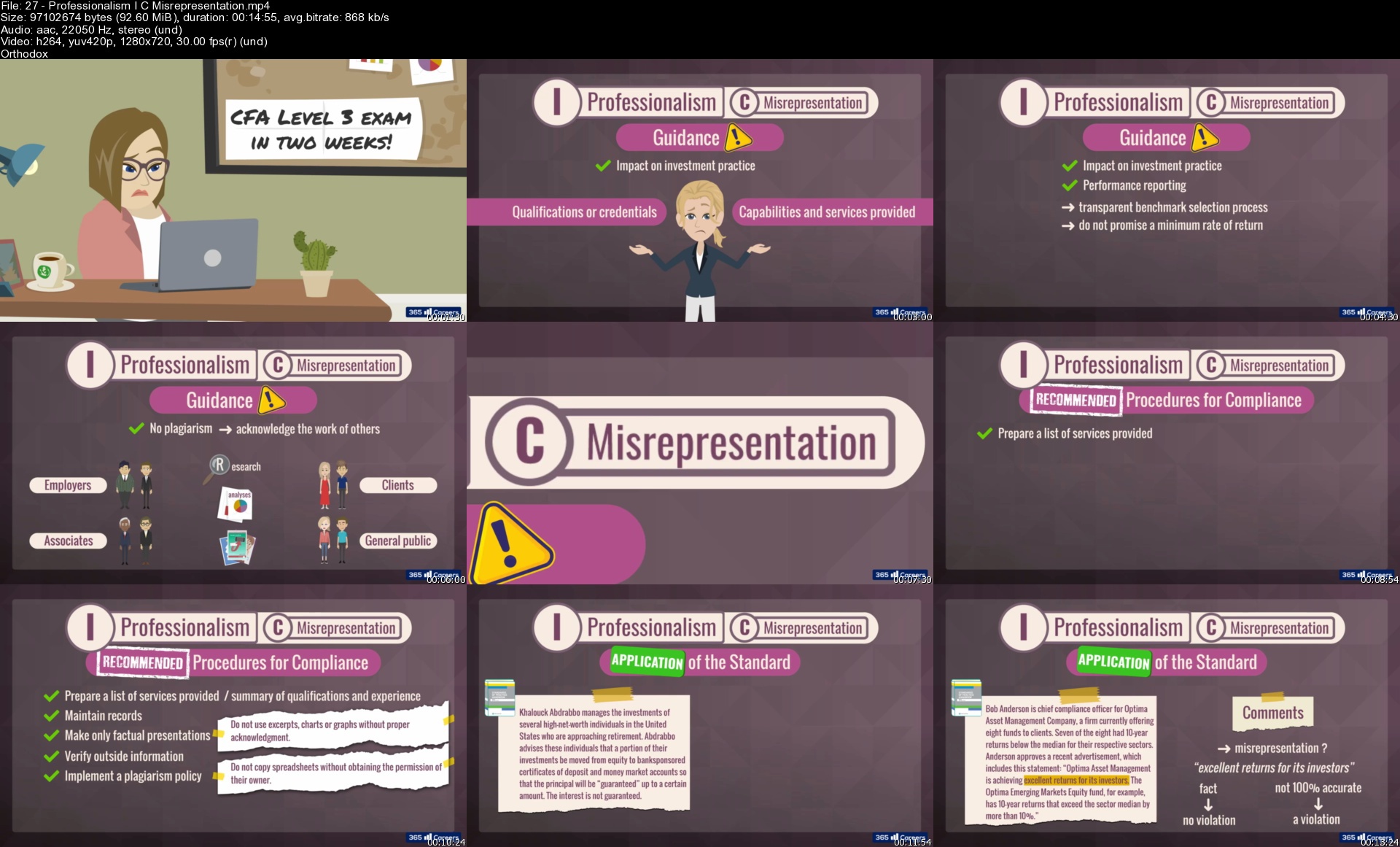
27professionalismicmin9k6w.jpg


SAP TRM - Master Class

5amayr6w9pmtwf6gdyearyykvf.jpg


SAP TRM - Master Class
Published 06/2022
Genre: eLearning | MP4 | Video: h264, 1280x720 | Audio: AAC, 44.1 KHz
Language: English | Size: 10.6 GB | Duration: 29 lectures • 17h 44m

TREASURY AND RISK MANAGEMENT application module's core functionality will be covered.


What you'll learn
Students will learn treasury management along with knowledge of financial risks
Importance of finance in business
SAP consulting in TRM
Risk management in business

Requirements
An unwavering commitment to learning and implementing new things.

Description
A united depository framework with proficient cycles is expected to fulfill the rising need for complete ongoing monetary data.

A large number of dangers and difficulties are dealt with by the depository consistently, for example, item exchanging, market vulnerability, and evolving guidelines. They influence organizations in various areas of the market in various ways, putting expanded strain on CFOs to keep steady over current and arising issues. Associations need to grasp the significance of hazard the board and different variables that influence monetary execution.

SAP TRM furnishes the depository chief with a moment preview of money impacts and empowers brief conveyance of money to the essential regions and various divisions of the organization. Simultaneously, the supervisor can secure money in the midst of hardship from the most capable and reasonable source. A coordinated arrangement helps in creating cash and working on tasks. The coordinated depository and money the board cycle will give extra advantages to the organization's money capability, prompting more precise expectations of money influence on the organization. The framework likewise works with better association and viability of the corporate depository capability and joining with functional and venture money and bookkeeping frameworks. With the SAP Treasury and Risk Management application, you can incorporate incomes, exchanges, item positions, and market information, and streamline straight-through handling with full-view and ongoing examination, review trails, and consistence revealing.

On-premise, cloud, or hybrid deployment

Comprehensive support for treasury workflows

Integration with core data processes

Advanced real-time analytics

Treasury and Risk Management is a coordinated arrangement wherein the different parts are firmly associated with one another. The monetary exchanges oversaw in the Transaction Manager can be assessed and observed utilizing the analyzer parts. As well to be connected to the TRM analyzer Market Risk Analyzer, Portfolio Analyzer, Credit Risk Analyzer, and Accounting Analyzer, the Transaction Manager is likewise connected to SAP Cash Management.

Who this course is for
SAP consultants who wish to learn about Treasury and Risk Management
End-users who wish to understand the SAP Treasury and Risk Management tools in SAP S/4HANA.

Homepage


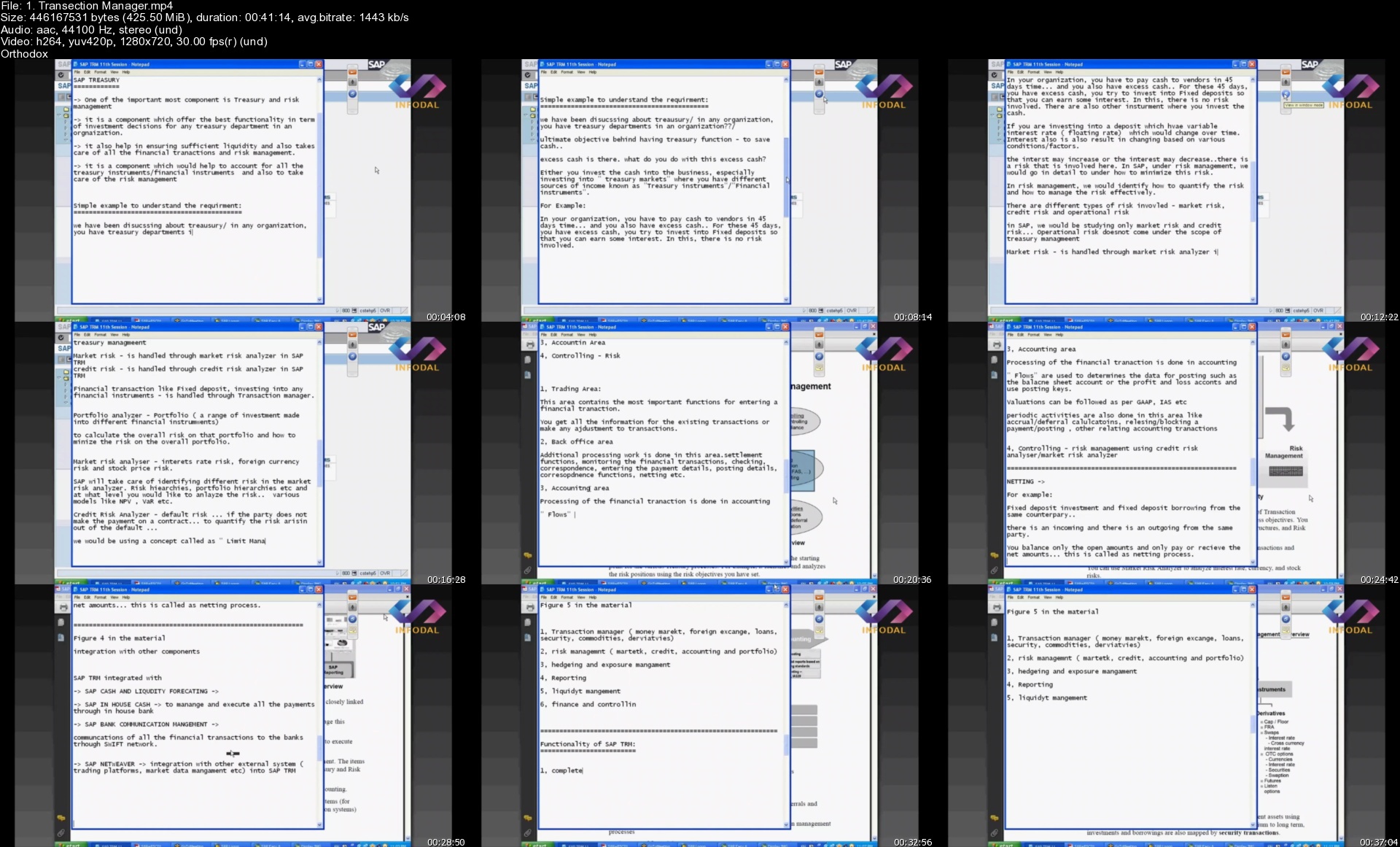
1.transectionmanagersm7jf3.jpg


Zurück
Oben Unten