



• Regeln für den Video-Bereich:

    In den Börsenbereich gehören nur Angebote die bereits den Allgemeinen Regeln entsprechen.

    Einteilung

    - Folgende Formate gehören in die angegeben Bereiche:
    - Filme: Encodierte Filme von BluRay, DVD, R5, TV, Screener sowie Telesyncs im Format DivX, XviD und x264.
    - DVD: Filme im Format DVD5, DVD9 und HD2DVD.
    - HD: Encodierte Filme mit der Auflösung 720p oder darüber von BluRay, DVD, R5, TV, Screener sowie Telesyncs im Format x264.
    - 3D: Encodierte Filme von BluRay, die in einem 3D Format vorliegen. Dies gilt auch für Dokus, Animation usw.
    - Serien: Cartoon/Zeichentrick, Anime, Tutorials, Dokumentationen, Konzerte/Musik, Sonstiges sind demnach in die entsprechenden Bereiche einzuordnen, auch wenn sie beispielsweise im High Definition-Format oder als DVD5/DVD9/HD2DVD vorliegen. Ausnahme 3D.
    - Bereich Englisch: Englische Releases gehören immer in diesen Bereich.
    - Bereich Talk: Der Bereich, in dem über die Releases diskutiert werden kann, darf, soll und erwünscht ist.


    Angebot/Beitrag erstellen

    - Ein Beitrag darf erst dann erstellt werden, wenn der Upload bei mindestens einem OCH komplett ist. Platzhalter sind untersagt.
    - Bei einem Scenerelease hat der Threadtitel ausschließlich aus dem originalen, unveränderten Releasenamen zu bestehen. Es dürfen keine Veränderungen wie z.B. Sterne, kleine Buchstaben o.ä. vorgenommen werden. Ausnahme Serienbörse:
    - Bei einem Sammelthread für eine Staffel entfällt aus dem Releasename natürlich der Name der Folge. Beispiel: Die Simpsons S21 German DVDRip XviD - ITG
    - Dementsprechend sind also u.a. verboten: Erweiterungen wie "Tipp", "empfehlenswert", "only", "reup", usw. / jegliche andere Zusatzinformation oder Ergänzung, welche nicht in obiger Beschreibung zu finden ist.

    Aufbau des Angebots und Threadtitel

    Der Titel nach folgendem Muster erstellt zu werden. <Name> [3D] [Staffel] [German] <Jahr> <Tonspur> [DL] [Auflösung] <Quelle> <Codec> - <Group>
    Beispiel: The Dark Knight German 2008 AC3 DVDRip XviD - iND
    Beispiel: The Dark Knight 2008 DTS DL BDRip x264 - iND
    Beispiel: The Dark Knight 2008 AC3 DL BDRip XviD - iND
    Beispiel: The Dark Knight German 2008 AC3 720p BluRay x264 iND
    Beispiel: The Dark Knight 2008 DTS DL 1080p BluRay x264 iND
    Beispiel: Die Simpsons S01 German AC3 DVDRip XviD iND
    Beispiel: Die Simpsons S20 German AC3 720p BluRay x264 iND
    Beispiel: Sword Art Online II Ger Sub 2014 AAC 1080p WEBRip x264 - peppermint
    Entsprechend sind also u.a. verboten: Sonderzeichen wie Klammern, Sterne, Ausrufezeichen, Unterstriche, Anführungszeichen / Erweiterungen wie "Tipp", "empfehlenswert", "only", "reup", usw. / jegliche andere Zusatzinformation oder Ergänzung, welche nicht in obiger Beschreibung zu finden ist
    Ausnahmen hiervon können in den Bereichen geregelt sein.

    Die Beiträge sollen wie folgt aufgebaut werden:
    Überschrift entspricht dem Threadtitel
    Cover
    kurze Inhaltsbeschreibung
    Format, Größe, Dauer sind gut lesbar für Downloader außerhalb des Spoilers zu vermerken
    Nfo sind immer Anzugeben und selbige immer im Spoiler in Textform.
    Sind keine Nfo vorhanden z.B. Eigenpublikationen, sind im Spoiler folgende Dateiinformationen zusätzlich anzugeben :
    Quelle
    Video (Auflösung und Bitrate)
    Ton (Sprache, Format und Bitrate der einzelnen Spuren)
    Untertitel (sofern vorhanden)
    Hosterangabe in Textform außerhalb eines Spoiler mit allen enthaltenen Hostern.
    Bei SD kann auf diese zusätzlichen Dateiinformationen verzichtet werden.

    Alle benötigten Passwörter sind, sofern vorhanden, in Textform im Angebot anzugeben.
    Spoiler im Spoiler mit Kommentaren :"Schon Bedankt?" sind unerwünscht.


    Releases

    - Sind Retail-Release verfügbar, sind alle anderen Variationen untersagt. Ausnahmen: Alle deutschen Retail-Release sind CUT, in diesem Fall sind dubbed UNCUT-Release zulässig.
    - Im Serien-Bereich gilt speziell: Wenn ein Retail vor Abschluss einer laufenden Staffel erscheint, darf diese Staffel noch zu Ende gebracht werden.62
    - Gleiche Releases sind unbedingt zusammenzufassen. Das bedeutet, es ist zwingend erforderlich, vor dem Erstellen eines Themas per Suchfunktion zu überprüfen, ob bereits ein Beitrag mit demselben Release besteht. Ist dies der Fall, ist der bereits vorhandene Beitrag zu verwenden.
    - P2P und Scene Releases dürfen nicht verändert oder gar unter einem iND Tag eingestellt werden.


    Support, Diskussionen und Suche

    - Supportanfragen sind entweder per PN oder im Bereich Talk zu stellen.
    - Diskussionen und Bewertungen sind im Talk Bereich zu führen. Fragen an die Uploader haben ausschließlich via PN zu erfolgen, und sind in den Angeboten untersagt.
    - Anfragen zu Upload-Wünschen sind nur im Bereich Suche Video erlaubt. Antworten dürfen nur auf Angebote von MyBoerse.bz verlinkt werden.


    Verbote

    - Untersagt sind mehrere Formate in einem einzigen Angebotsthread, wie beispielsweise das gleichzeitige Anbieten von DivX/XviD, 720p und 1080p in einem Thread. Pro Format, Release und Auflösung ist ein eigener Thread zu eröffnen.
    - Grundsätzlich ebenso verboten sind Dupes. Uploader haben sich an geeigneter Stelle darüber zu informieren, ob es sich bei einem Release um ein Dupe handelt.
    - Gefakte, nur teilweise lauffähige oder unvollständige Angebote sind untersagt. Dies gilt auch für eigene Publikationen, die augenscheinlich nicht selbst von z.B. einer DVD gerippt wurden. Laufende Serien, bei denen noch nicht alle Folgen verfügbar sind, dürfen erstellt und regelmäßig geupdatet werden.
    - Untersagt sind Angebote, welche nur und ausschließlich in einer anderen Sprache als deutsch oder englisch vorliegen. Ausnahmen sind VORHER mit den Moderatoren zu klären.


    Verstoß gegen die Regeln

    - Angebote oder Beiträge, die gegen die Forenregeln verstoßen, sind über den "Melden"-Button im Beitrag zu melden.
  • Bitte registriere dich zunächst um Beiträge zu verfassen und externe Links aufzurufen.

*** Bestes IPTV *** bester Preis *** gratis Test ***


Englische Tutorials

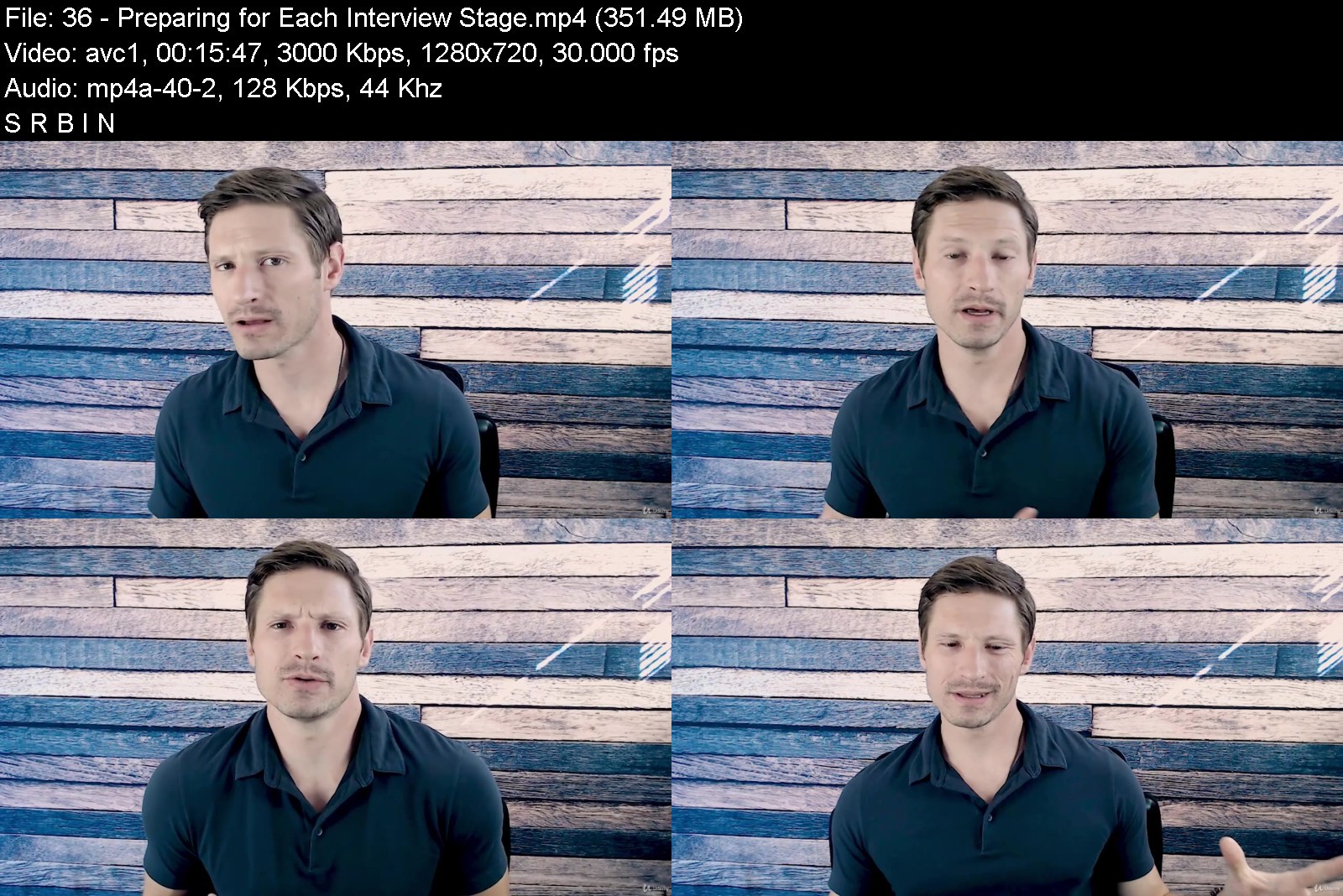
Job Search, Career Development And Career Change Masterclass

vw6n0lmbrbmuxafiemnpqxvkfe.jpg


Job Search, Career Development And Career Change Masterclass
Last updated 7/2022 MP4 | Video: h264, 1280x720 | Audio: AAC, 44.1 KHz
Language: English | Size: 6.71 GB | Duration: 5h 31m

Career coaching secrets to a successful job search, resume, interviewing skills, LinkedIn networking & a career you love


What you'll learn
Waste no time landing your dream job and making more money
Adopt a winning mindset: Manage the highs and lows of a job search by learning how to build confidence while reducing stress and anxiety.
Change your career: determine the role that is the best fit for your talents and personality.
Interview with the best companies: learn how to network into any company that you're interested in.
Land any role: learn how to adapt your skills and experience to any role that you're interested in despite what your resume might say.
Beat the competition: gain an unfair advantage over the competition by having a playbook for every aspect of interview preparation.
Get the best possible offer: learn strategies that will make sure that you aren't leaving any money on the table ones you've gotten your offer.
Requirements
Ability to print exercises or take notes.

Description
Are you feeling stuck in a dead-end job?Tired of feeling unfulfilled or that you're wasting your potential?Feeling overwhelmed by the job search?Not getting the position or the salary you know you deserve?Or, afraid of how the changing economy will impact your career?Adults spend most of their waking hours working. It's no secret that having a fulfilling career is vital for a happy, successful life. If you're like most people, you have either never really considered the career you REALLY want, or you've been in your career a long time and don't even know where to begin to make a change.Plus, the job market is changing, the economy is changing, and the whole process of searching for a job or re-careering can feel overwhelming.And that's exactly why we created this program!Are you unhappy at work or not sure what you want to do when you grow up? We have an entire section about choosing a career you love! You will:Determine your dream careerIdentify an ideal position based on your talents, passions and personalityImprove your position, pay and happiness in your current careerDo you know you want to change or you're being pushed to consider other options because of changes in your industry? We have an entire section dedicated to how to transition your career. You will:Strategize how to transition to a new careerRepurposing your skillsIdentify how to pivot due to current and future economic and technological changeAre you dreading having to search for a job? This program provides expert career coaching strategies that you can apply to yourself, including a simple step-by-step process for navigating the job search that has been proven to result in offers with the best companies for the best possible pay. You will:Generate referrals using powerful LinkedIn networking strategiesBrand yourself and craft your story to get any positionCraft a resume that stands out and gets you hiredNot only that but you'll learn a unique approach for how to land interviews with the best companies and how to win interviewers over that will give you a major advantage over the competition.And the best part is that you'll learn how to operate from a place of confidence and peace of mind throughout the entire process.Meet the Instructors: There are 3 instructors in this course.Adam Mitchell-Hardt is a professional career coach. After working for his share of demoralizing jobs and feeling stuck, Adam decided he was tired of being unhappy at his job and about his future. Despite having success throughout his career in tech sales, he felt a calling for something more. A lifelong student of psychology, personal growth and human potential, Adam applied what he learned about himself with his career coaching skills and launched into his dream career by creating his own career coaching business. Since 2016, Adam has been helping people find new positions or even entirely new careers getting paid to do what they love.Joeel & Natalie Rivera of Transformation Academy are life coach trainers over 700,000+ students from 200 countries at the time of this recording. Their content is based on their educational background in psychology and education and nearly 2 decades of experience in the fields of life coaching, social services and entrepreneurship, as well as Joeel's background as a psychology and career development instructor, his Master's Degree in Counseling and research on happiness for his dissertation for a PH.D. in Psychology.Copyright © Transformation Services, Inc. | All Rights Reserved
Overview
Section 1: GETTING STARTED
Lecture 1 Welcome and Introduction (Meet the Instructors)
Section 2: Part 1: CAREER CHANGE: Choosing a Career You Love
Lecture 2 Being the Career Detective (Career Design Blueprint)
Lecture 3 IMPORTANT DOCUMENT: Using the Career Design Blueprint
Lecture 4 Talents and a Growth Mindset
Lecture 5 Identifying Your Talents and Skills
Lecture 6 Identifying Your Passions and Interests
Lecture 7 How to Develop Your Passion (and Why Purpose is Better)
Lecture 8 Personality: Discover Your Type
Lecture 9 Archetype Roles
Lecture 10 Work Environment: What Is and Is Not Working
Lecture 11 Intuition: Making a Choice that Feels Right
Lecture 12 You've Got This! Facing the Fear and Following Through
Lecture 13 Using What You've Learned to Prepare for the Job Search (Preview of Part 3)
Section 3: PART 2: CAREER CHANGE STEP 2: Pivoting and Transitioning
Lecture 14 Growth Mindset: Yes, You Can Learn and Change
Lecture 15 Repurposing Skills
Lecture 16 Steppingstones to a New Career
Lecture 17 Making the Most of Your Current Position
Lecture 18 Utilizing Your Connections
Lecture 19 Skill Acquisition and Education
Section 4: The Future: Disruption and Opportunity
Lecture 20 Preparing for the Future Economy, Disruption and Opportunity Part 1
Lecture 21 The Gig Economy, Side Hustles and Entrepreneurship
Lecture 22 Planning for Financial Flexibility (and Knowing Your Baseline)
Lecture 23 The $200 Challenge
Section 5: PART 3: JOB SEARCH SECRETS! Generating Referrals, Resumes and Branding Yourself
Lecture 24 Healthy Habits for a Productive Job Search, Part 1
Lecture 25 Healthy Habits for a Productive Job Search, Part 2
Lecture 26 Why Networking on LinkedIn is So Effective
Lecture 27 How to Run a LinkedIn Networking Campaign, Part 1
Lecture 28 How to Run a LinkedIn Networking Campaign, Part 2
Lecture 29 How to Conduct Informational Interviews
Section 6: PART 4: RESUMES and Branding Yourself for a Role
Lecture 30 Getting Your Story Straight (Exit, Positioning and Accomplishment statements)
Lecture 31 Crafting Your Resume
Lecture 32 LinkedIn Best Practices
Lecture 33 How to Brand Yourself for a Role
Section 7: PART 5: NAILING THE INTERVIEW! Interview Preparation and Follow-Up
Lecture 34 Getting Your Story Strait (Exit, Positioning and Accomplishment Statements)
Lecture 35 Interview Preparation Overview
Lecture 36 Preparing for Each Interview Stage
Lecture 37 Common Interview Questions and Suggested Answers
Lecture 38 Questions to Ask the Interviewer
Lecture 39 How to Win Over Interviewers
Lecture 40 Post Interview and Follow-Up
Lecture 41 Negotiating for the Best Offer
Section 8: Wrap Up
Lecture 42 Wrap Up and Congratulations
Lecture 43 BONUS Content You Don't Want to Miss!
You want to LOVE what you do for a living,You want a better position (higher paying and/or more fulfilling),You need help with the job search,You want to help resume writing and developing interviewing skills,You want to change your career,You need to pivot your career due to economic changes


jobsearchcareerdevelor9kg3.jpg


Download from RapidGator


Download from Keep2Share



Learn Microsoft PowerPoint Online - PowerPoint Course Part 1

aa950168e3e70xk8g.jpg


Learn Microsoft PowerPoint Online - PowerPoint Course Part 1
Instructors: Skills On Demand
13 sections • 30 lectures • 7h 26m
Video: MP4 1280x720 44 KHz | English + Sub
Updated 7/2022 | Size: 5.1 GB

Learn Microsoft PowerPoint, Presentation Skills, PowerPoint 365. Master the art of Creating Impressive Presentations


What you'll learn
Create a fully-animated and transition-filled business presentation
Minimize text quantity on presentations by using graphs and images
Rapidly improve your workflow and design skills
Enhance PowerPoint Presentations with Graphical Elements
Build Effective PowerPoint Presentations
Create simple explainer videos ready to publish online
Leverage Advanced Text Editing Operations with PowerPoint
Get comfortable with basic and advanced PowerPoint features
Build PowerPoint templates quickly
Create engaging and well-designed slides and animations
Prepare to Deliver a PowerPoint Presentation
Get better as a graphic designer and digital artist
Be able to animate any kind of object and slide in PowerPoint
Show more
Show less

Requirements
PowerPoint 2010 / 2013 / 2016 / 2019Determination to improve your skills and learn easy-to-follow design practicesBasic knowledge of PowerPoint will be helpful but is not mandatory


Description
PowerPoint lessons that are easy to apply at work. Become the top PowerPoint user in your office. Work comfortably with PowerPoint and many of its advanced features

Do you want to create a fully-animated business presentation?
Do you want to feel more confident when delivering presentations to management
Do you want to create sophisticated and well-organized presentations
Do you want to get comfortable and confident with advanced animation features
Do you want to create custom animations, transitions and logo openers in PowerPoint

Homepage

learnmicrosoftpowerpoqvjql.jpg


Download from RapidGator


Download from Keep2Share


 
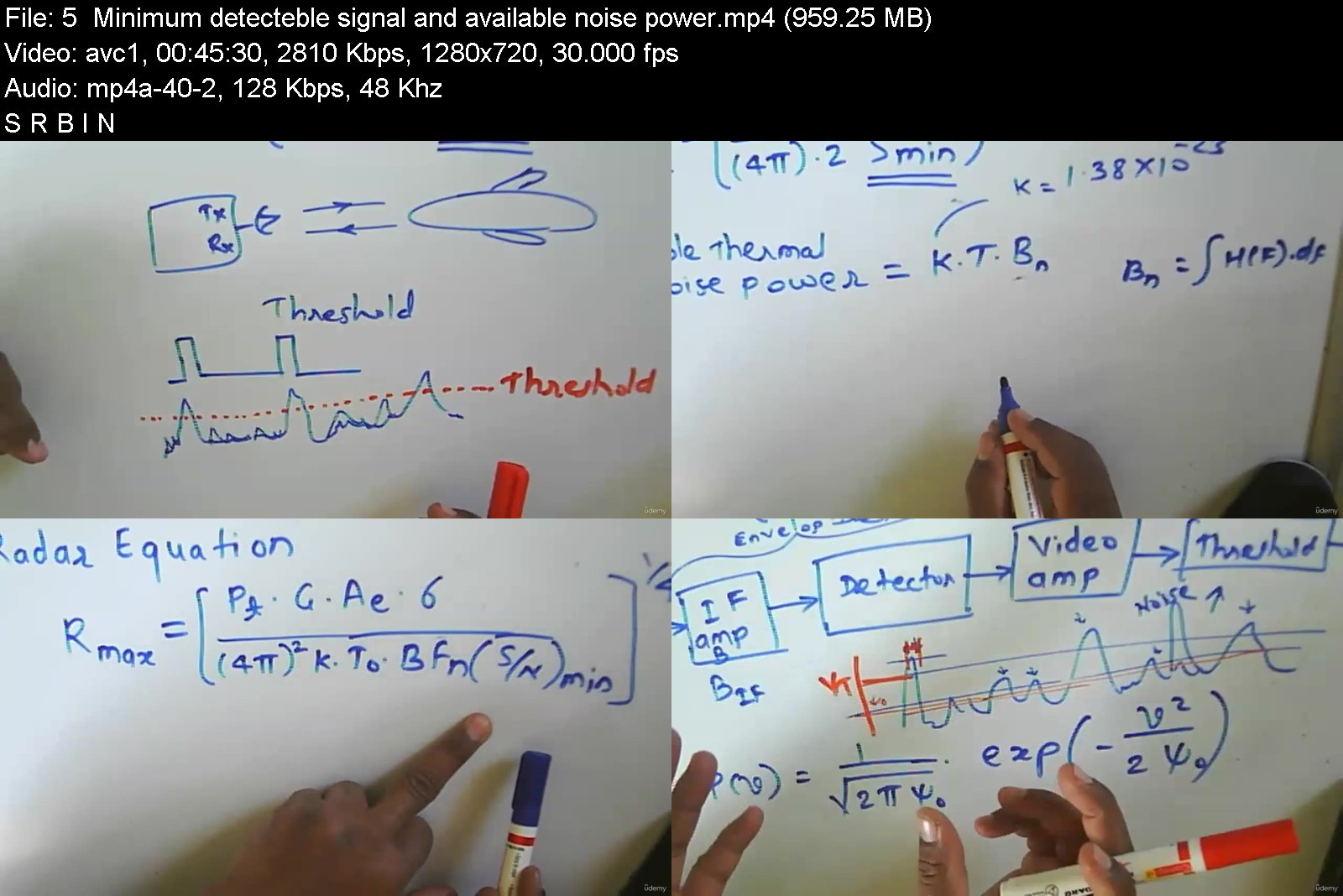
Radar System and Modified Radar Range Equation

a72390a595bo8jrf.jpg


Radar System and Modified Radar Range Equation
Published 07/2022
MP4 | Video: h264, 1280x720 | Audio: AAC, 44.1 KHz, 2 Ch
Genre: eLearning | Language: English + srt | Duration: 7 lectures (4h 28m) | Size: 5.55 GB


Radar cross section of targets


What you'll learn
Learn Radar fundamentals and analysis of the radar signals.
Understand the maximum ambiguous and unambiguous range.
Identify the factors affecting the radar performance using Radar Range Equation.
Illustrate the Radar cross section of targets.
Interpret various system losses quantitatively
Requirements
Basic knowledge of communcation system
Basic knowledge of the losses
Description
This course provides you to learning experience in the development of Radar equation for various conditions. It briefs on frequencies used for radar application. It proves the modification radar equation from basic to usable in the various application. This course differentiates the ambiguous and unambiguous range of radar. The basic building blocks of the radar is explained with suitable conditions, It consists radar transmitter and receiver. Radar transmitter and receivers elaborated in this course with various conditions. It explains the prediction of range performance at various condition. It explains the minimum detectable signal level required by the radar receivers. The signal received at radar receiver contains noise, to suppress the noise, apply the threshold level to remove noise. The noise removal process is discussed in this course. Receiver's noise consideration for development of radar equations is discussed in the course. It shows the level of signal to noise ratio requirement for the detection of the echo signal received from the target. It provides understanding of false alarm time and probability of echo signal received at receiver from the target. It demonstrates the radar cross section from the echo signal received at radar receiver. It elaborates transmitter power requirement suitable for echo signal reception from the target at various angle. It shows the requirement of pulse repetition frequency for ambiguities in the signal reception at radar receiver. It elaborates the system loss at radar from various conditions. This course is helpful for understanding the radar basic and range equations.
Who this course is for
Designer interested to develop radar system
Learner understand the concepts of Radar Cross Section.


radarsystemandmodifiei4ktn.jpg


Download from RapidGator


Download from Keep2Share


 
Acrylic paint step by step

asmqhgicxrb03ghjjh9qsr2k69.jpg


Acrylic Paint Step By Step
Published 7/2022
MP4 | Video: h264, 1280x720 | Audio: AAC, 44.1 KHz
Language: English | Size: 22.88 GB | Duration: 19h 52m

Learn to paint with acrylic technique with real works on nature, faces and animals


What you'll learn
Painting using acrylic technique
Step by step in real time
Specialized technique of the painter Keyla Morel
Step-by-step tips to develop creativity
Requirements
Tips in the step by step to develop creativity

Description
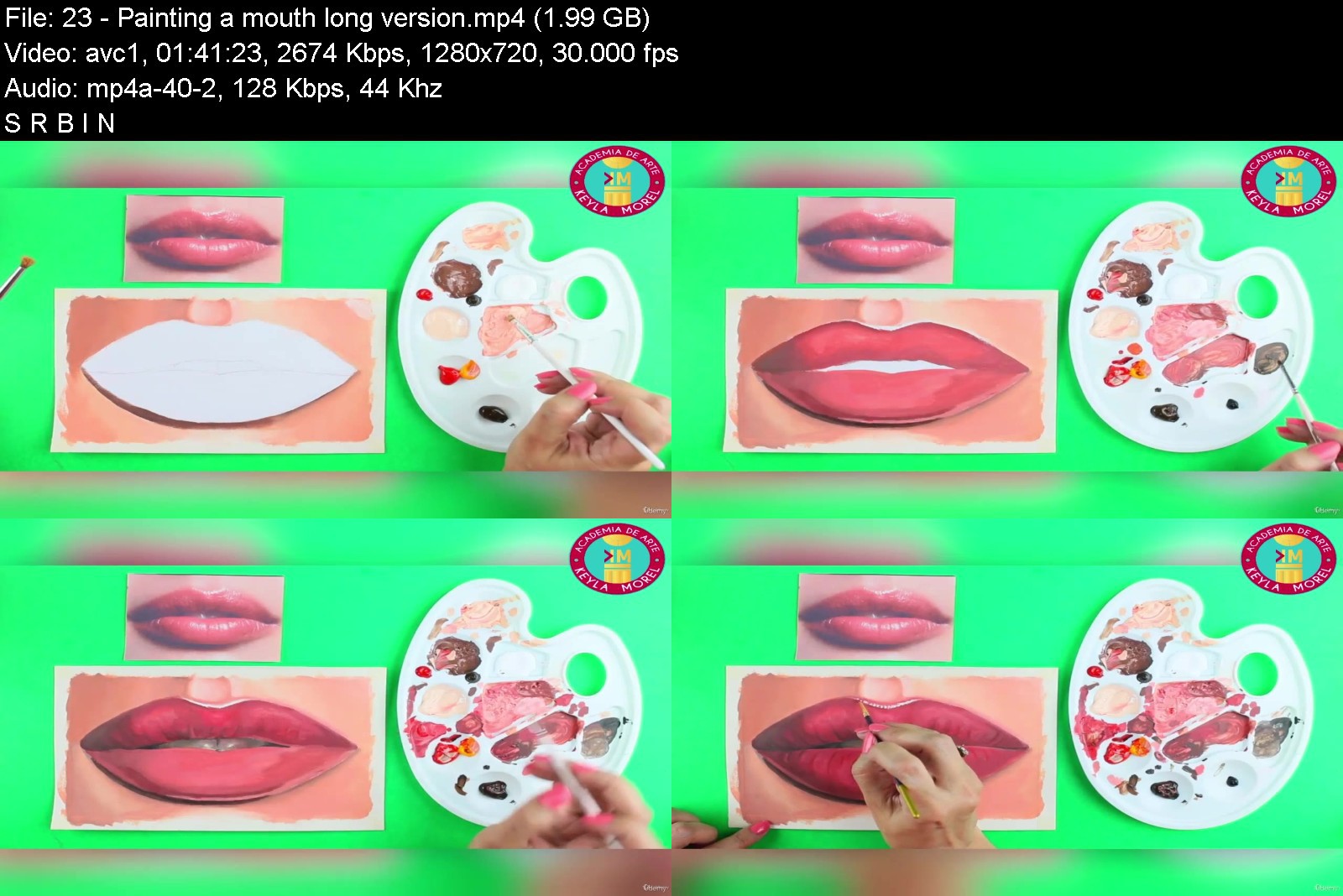
In this painting course, you will learn to paint faces, sketches, and human figures with the professional artist Keyla Morel.The technique applied in this course is Acrylic, in which you will work on basic aspects from the selection of materials and tools, to the application of techniques in work developed step by step.The course includes three modules. Each module includes a video in reduced time for the impatient, and to see everything done step by step, it includes the video in real-time.Module - NatureHere you will see practical work:painting a forestPainting a desertPainting mountainsPainting a beachModule - AnimalsThe following practical work is included here:painting a leopardPainting a beetlePainted a hummingbirdPainting a lionHuman face moduleThis includes:painting eyesPainting nosePainting mouthPainting hairWe recommend that you first see the course in its fast version. This usually lasts between 20 and 25 minutes, in which the work to be done can be dimensioned, emphasizing details but above all showing the final result in a short time. The video is sped up to facilitate this result.To develop the work, following every detail with your own materials, real-time video is recommended. Here the painter details things more extensively, thus being able to follow each brushstroke, including corrections on the fly. Finally, the same result is obtained but it will be very useful for beginners to know how each effect, line, and shadow was made.#AulaGEOThis is an art course for both beginners and fans of painting as well as for painters, who want to practice the acrylic technique through drawings that its final composition is complex but its step-by-step construction shows that it is simple.
Overview
Section 1: Module - Nature
Lecture 1 Painting forest short version
Lecture 2 Painting a forest - long version
Lecture 3 Painting a desert - short version
Lecture 4 Painting desert - long version
Lecture 5 Painting mountains - short version
Lecture 6 Painting mountains - long version
Lecture 7 Painting a beach - short version
Lecture 8 Painting a beach - long version
Section 2: Module - Animals
Lecture 9 Painting a Leopard - short version
Lecture 10 Painting a Leopard - long version
Lecture 11 Painting a beetle - short version
Lecture 12 Painting a beetle - long version
Lecture 13 Painting a hummingbird - short version
Lecture 14 Painting a hummingbird - long version
Lecture 15 Painting a Lion - short version
Lecture 16 Painting a Lion - long version
Lecture 17 Extra class - Blurring tutorial
Section 3: Module - Human face
Lecture 18 Painting eyes - short version
Lecture 19 Painting eyes - long version
Lecture 20 Painting a nose - short version
Lecture 21 Painting a nose - long version
Lecture 22 Painting a mouth - short version
Lecture 23 Painting a mouth -long version
Lecture 24 Painting hair - short version
Lecture 25 Painting hair - Long version
Drawing and painting enthusiasts,General public,Talented people who want to learn how to use acrylic technique,Art teachers who want to learn a practical teaching technique


acrylicpaintstepbyste1xkyg.jpg


Download from RapidGator


Download from Keep2Share
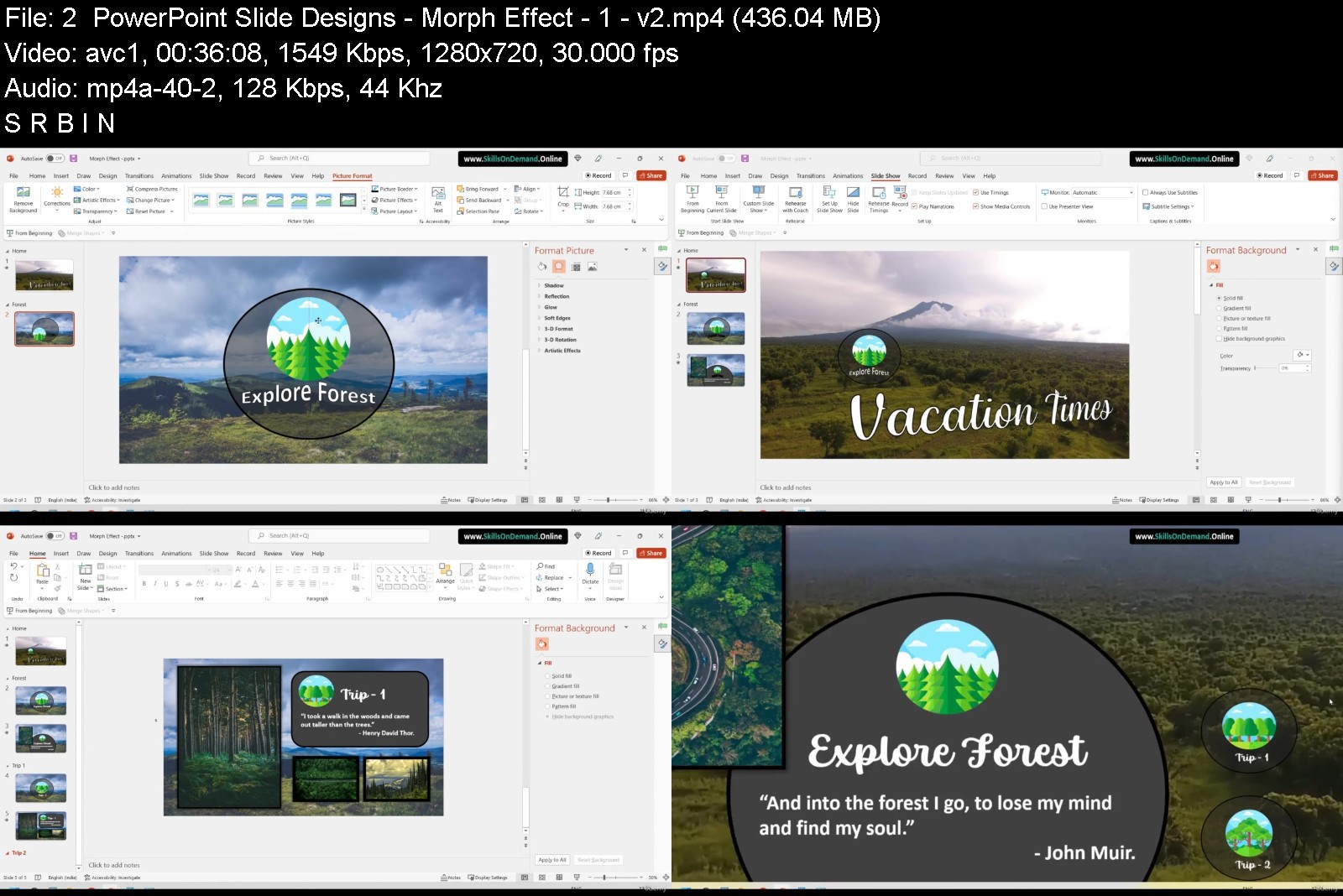


Data Science & Python: Maths, Python Libraries, Statistics

iqsarpfw7suho25ctmifn8nksv.jpg


Data Science & Python: Maths, Python Libraries, Statistics
Published 07/2022
Genre: eLearning | MP4 | Video: h264, 1280x720 | Audio: AAC, 44.1 KHz
Language: English | Size: 5.67 GB | Duration: 79 lectures • 13h 6m


What you'll learn
What is Python
Uses of Python
How to write code in Python
What are Python libraries
What is Anaconda
What is Jupyter Notebook
What is Numpy
What is Matplotllib
How to plot in Matplotlib
What is Scipy
What is Scikit
What is Pandas
How to import files in Jypyter notebook using Pandas
How to create files using Pandas
Basic math in Python
Linear Algebra in Pythom
Statistics in Python
2d and 3d plotting in Python
Linear regression in Python
differential and Integral calculus in Python
Development
Data Science
Data Science & Python: Maths, Python Libraries, Statistics
Learn Python, Numpy, Pandas, Matplotlib, Linear Regression, Algebra, Statistics, Calculus, Projects & Data Visualisation
Rating: 0.0 out of 5
0.0
(0 ratings)
2 students
Created by ,
Published 7/2022
English
English[Auto]


What you'll learn
What is Python
Uses of Python
How to write code in Python
What are Python libraries
What is Anaconda
What is Jupyter Notebook
What is Numpy
What is Matplotllib
How to plot in Matplotlib
What is Scipy
What is Scikit
What is Pandas
How to import files in Jypyter notebook using Pandas
How to create files using Pandas
Basic math in Python
Linear Algebra in Pythom
Statistics in Python
2d and 3d plotting in Python
Linear regression in Python
differential and Integral calculus in Python
Course content
13 sections • 79 lectures • 13h 6m total length
Preview
01:55
Preview
04:22
Introduce Yourself To Your Fellow Students And Tell Everyone What Are Your Goals
00:17
Let's Celebrate Your Progress In This Course: 25% > 50% > 75% > 100%!!
01:20
Download your project files: Pandas, NumPy & Matplotlib
00:14
Requirements
Internet connection
Laptop or PC or Mobile Phone
Motivation towards new learning

Description
Get instant access to a 73-page workbook on Data Science, follow along, and keep for reference
Introduce yourself to our community of students in this course and tell us your goals with data science
Encouragement and celebration of your progress every step of the way: 25% > 50% > 75% & 100%
Over 13 hours of clear and concise step-by-step instructions, lessons, and engagement
This data science course provides participants with the knowledge, skills, and experience associated with Data Science. Students will explore a range of data science tools, algorithms, linear programming and statistical techniques, with the aim of discovering hidden insights and patterns from raw data in order to inform scientific business decision-making.
What you will learn
Introduction to Python; what is Python, Anaconda, libraries, Numpy, Matplotlib, SciPy and SciKit Learn
Learn mathematics by coding in python; basic maths, variables. solutions of equations. logarithmic and exponential functions. polynomials, complex numbers and trigonometry
Statistics by coding in Python
Linear Algebra for data science: matrices. determinants, inverse, solutions, scalars and vectors
Detailed introduction and demo of Numpy
Linear algebra in Python as well as calculus. Matplotlib and more
Lear Data Science projects in Pandas: importing files, creating data frames
Regression analysis using SKLearn
Data science careers in a Q&A Webinar plus additional insights; learn from other students questions
Who are the Instructors?
Dr. Allah Dittah is your lead instructor - a PhD and lecturer making a living from teaching Python, advanced mathematics and data science. As a data science expert, he has joined with content creator Peter Alkema to bring you this amazing new course.
You'll get premium support and feedback to help you become more confident with data science!
We can't wait to see you on the course!
Enrol now, and we'll help you improve your data science skills!
Peter and Allah
Who this course is for
For those who love with learning
Data scientists
For those who want to apply Python in a practical way in their organization


datasciencepythonmathwxjeg.jpg


Download from RapidGator


Download from Keep2Share


 
Advanced Aura & Chakra Color Energy Healing Level- 3

eikgwicevoqzdv0ssirtug8jz9.jpg


Advanced Aura & Chakra Color Energy Healing Level- 3
Last updated 11/2021
MP4 | Video: h264, 1280x720 | Audio: AAC, 44.1 KHz
Language: English | Size: 5.34 GB | Duration: 4h 9m

Advanced Colour Energy Healing Therapy


What you'll learn
Advanced Energy Healing is filled with techniques and methods for using colour energy to produce very rapid healings.
You will learn to use 6 different color energy.
You'll learn to use the right proportion, and colour combinations and amount of coloured prana to increase the healing process.
You will learn Advanced scanning too.
You will learn Advanced techniques for Cleansing (General sweeping and localized sweeping) and Energizing
Instant healing of fresh cuts, wounds, burns.
You will learn Powerful specialized healing techniques.
You will learn Divine Healing technique to do Miraculous Healing. This Spiritual Healing Technique is Especially very useful in Emergency Cases.
Instructive healing: You'll learn to help accelerate healing and recovery by influencing and reprogramming the consciousness of diseased cells and organs.
Rapid healing of certain conditions like Headaches, Cuts, Wounds, Burns, Diarrhea and Stomach aches.
Requirements
Aura & Chakra Energy Healing Level- 1

Description
Advanced Colour Energy Healing represents a great revolution in energy healing technology. This very advanced healing system of use of color energy produces very rapid healing and treats a great range of diseases. Color Energy therapy uses color frequencies and vibrations to treat physical or mental health by balancing the body's energy centers, also known as chakras.Chakras have their own specific color and vibrations.This Color Energy therapy concept was also recognized by ancient Egyptians who used sun-activated solarium rooms constructed with colored glass for therapeutic purposes.The difference between Basic Energy Healing and Advanced Energy Healing is basically similar to the difference between a General Doctor and a Specialist. In this course you will learn how to use color energy effectively for rapid recovery. Advanced Colour Energy Healing is a specialized course for those who want to become more effective healers and want to effectively treat serious ailments by using color energy healing therapy.Advanced Energy Healing is filled with techniques and methods for using colour energy to produce very rapid healings. You'll learn to use the right proportion, and colour combinations and amount of coloured prana to increase the healing process.You will learn Advanced techniques for Cleansing (General sweeping and localized sweeping) and Energizing
Overview
Section 1: Introduction
Lecture 1 Introduction
Lecture 2 How To Get Your personal Certificate From Vidya Retreat
Section 2: COLOR ENERGY USES AND EFFECTS
Lecture 3 HOW TO USE COLOR PRANA
Lecture 4 RED COLOUR
Lecture 5 BLUE COLOUR
Lecture 6 GREEN COLOUR
Lecture 7 ORANGE COLOUR
Lecture 8 YELLOW COLOUR
Lecture 9 GOLDEN COLOUR
Lecture 10 VIOLET COLOUR
Lecture 11 ELECTRIC VIOLET COLOUR
Lecture 12 STILL DOUBT?
Section 3: RELATED CONCEPTS
Lecture 13 ENERGY REFINEMENT
Lecture 14 VITAL ENERGY ENTRY IN BODY
Lecture 15 Earth Energy Channeling
Lecture 16 Connecting With The Patient
Lecture 17 KARMA
Lecture 18 KARMA Explained Further
Lecture 19 CONNECTING FRONT AND BACK MERIDIANS
Lecture 20 LAW OF MERCY
Lecture 21 CONCEPT OF SPIRITUAL CORD
Lecture 22 LEG- TIME
Lecture 23 ENERY BODY VIBRATIONS
Lecture 24 Angels Role In Healing
Section 4: CHAKRAS
Lecture 25 MAJOR CHAKRAS
Lecture 26 CHAKRAS NETWORK
Lecture 27 DISEASES AND CHAKRAS
Lecture 28 MAJOR CHAKRAS SIZE
Section 5: Healing
Lecture 29 FIRST STEP
Lecture 30 SELF HEALING FOR STRESS
Lecture 31 PROPER DIET
Lecture 32 KNOW PREVENTIVE HEALING
Lecture 33 Increasing Energy Level
Lecture 34 ADVANCED ENERGY HEALING TECHNIQUES
Lecture 35 SCANNING
Lecture 36 FINGER TECHNIQUE
Lecture 37 ENERGY HEALING PRINCIPLES
Lecture 38 EYES
Lecture 39 ENERGIZING USING BASIC-HAND CHAKRAS
Lecture 40 ENERGIZING USING THROAT-HAND CHAKRAS
Lecture 41 ENERGIZING USING CROWN-HAND CHAKRAS
Lecture 42 HOW TO ENERGIZE CLOCKWISE
Lecture 43 PRANIC ENERGY & RELAXATION CO-RELATION
Lecture 44 HOW LONG TO ENERGIZE
Lecture 45 ADVANCED GENERAL SWEEPING
Lecture 46 ADVANCED LOCAL SWEEPING
Lecture 47 WHY TOUCH HEART
Lecture 48 USE OF FOREHEAD & HAND CHAKRAS
Lecture 49 WHY A FEW DON'T GET HEALED
Section 6: DEMO VIDEOS
Lecture 50 Basic Chakra Treatment Using Colour Energy
Section 7: Colour Aura & Chakra Energy Healing
Lecture 51 DELICATE ORGANS CLEANSING
Lecture 52 CHAKRA ACTIVATION
Lecture 53 STRENGTHENING
Lecture 54 TREATING INFANTS AND OLD PEOPLE
Lecture 55 INHIBITING ANY CHAKRA
Lecture 56 SOLAR PLEXUS CHAKRA CLEANSING TECHNIQUE
Lecture 57 LOCALIZING
Lecture 58 LEGS STRENGTHENING
Lecture 59 RELIEVING OF PAIN
Lecture 60 Advanced Breathing
Lecture 61 PROCESS TO CLEAN THE BLOOD
Lecture 62 SUPER ENERGY HEALING TECHNIQUE
Lecture 63 MASTER ENERGY TECHNIQUE
Lecture 64 HOW TO PURIFY BLOOD
Lecture 65 VENEREAL DISEASE
Lecture 66 RESPIRATORY DISEASES
Lecture 67 Treating Infants & Old Age People
Lecture 68 LEARN MASS HEALING
Lecture 69 HOW TO PERFORM DISTANT MASS HEALING
Section 8: Treatments Of Different Diseases With Colour Energy
Lecture 70 Treatments With Colour Energy
Energy Healers, Reiki, Pranic Energy Healers who are at beginning level.,Energy Healers


advancedaurachakracol61jxx.jpg


Download from RapidGator


Download from Keep2Share

 
Startup 101: Fundamentals For Starting A New Business

9lyjwrdty72geaayyuggizzk4b.jpg


Startup 101: Fundamentals For Starting A New Business
Last updated 7/2022
MP4 | Video: h264, 1280x720 | Audio: AAC, 44.1 KHz
Language: English | Size: 11.96 GB | Duration: 9h 13m

Startup Guide: Business Plan, Startup Costs, Legal Entity, Accounting, Insurance, Taxes, Sales Tax, Permits & Licenses


What you'll learn
Smart planning to start up your health or life coaching business so you can become financially independent and live your dream
Business taxes and deductions and what sales taxes apply in the US and internationally - if you are planning to go online with your services
How to get the necessary funds to start your coaching business by learning what is needed for investors, small business grants, or even bank loans if necessary
Register your business with the legal authorities, and about licenses, permits, trademarks and copyrights
What legal entity is best for your business to operate, based on your tax and liabilities protection needs, as well as the insurance necessary to have
Create your own business plan, in the format of your choice: traditional or simple, 1- page plan, and your strategic to project your business growth
Requirements
You will need a computer, laptop, tablet or smart phone on which you can see the instructional videos and download the materials attached to each lecture.
No prerequisites required, however, being a student in any of our certification courses will definitely give you an advantage

Description
+++++++++++++++++++++++++++++++++++++++++++++++We are top Udemy instructors in the personal development*category. Our courses have been taken by over 700,000+ happy students from 200 countries and territories.We have a thriving community in the course and we are actively involved and answer questions within 24h.The course also has a thriving Facebook networking group.*+++++++++++++++++++++++++++++++++++++++++++++++<<<<If you are or want to be a LIFE COACH, we have an advanced version of this course called "Business Fundamentals and Startup Life Coach Certification", which you can enroll in instead.>>>+++++++++++++++++++++++++++++++++++++++++++++++Welcome to the Startup Fundamentals for a Health or Life Coaching Business course!Are you passionate about starting and growing a successful business?Do you want to elevate your purpose and your desire of helping others to the next levels and would like to become an entrepreneur but don't know where to start?Do You want a hands-on, Practical guide to use to set-up your health or life coaching business?Do you want to learn what would be the best legal business structure to use, what accounting systems to employ and what you need to consider when opening a business bank account?Do you want to learn about different possible business loans and other business money options?Would you like to know how to choose your perfect health or life coaching business name and registering it with the authorities in your state or country?Do you want to learn about available Business Funding methods, both private and institutional, about business credit and creditworthiness, as specific necessary tools to your business success?Do you want to be prepared for business tax season and be aware of all the benefits and all small business tax deductions you can apply to your health or life coaching enterprise?Are you concerned about potential business Liability and are you interested in finding out more about the legal aspects of being in the business as a health or life coach?Do you want to set up healthy and strong roots for a successful business life coaching practice by knowing and implementing the correct business principles, by learning how and why to create a business plan - in any format: traditional or simple, as well as why a strategic plan is a must for your business's growth?You have a dream to own a profitable health or life coaching business and you would love the help of an A to Z course on how to make this happen and how to make money with it?DO you want to learn how you can create your legacy and protect your intellectual property, by understanding trademarks and copyrights?<<<<<<<<<<<<<<<<<<<<<<<<<<<<<<<<<<<<<<<<<<<<<<<<>>>>>>>>>>>>>>>>>>>>>>>>>>>>>>>Being a successful entrepreneur in a health and life coaching business becomes much easier and satisfying when you have the right knowledge and structure in place.IN THIS COURSE YOU WILL:Develop a strong foundation of business knowledge related to the health and life coaching enterprises especially focused on the details of setting up your business properly, planning for your success from the start, understanding business accounting and the importance of the numbers.Learn how and why to plan for your business's future, developing a strategic business plan, as well as financial projections for a traditional business plan and different business strategies.Develop a strong understanding and knowledge of the business legal aspects, taxes and insurance - needed in order to be successful and to grow your revenue and profits. Know to calculate your health or life coaching business startup costs, as well as your monthly personal livings costs so you are not take by surprise my unexpected expenses. Learn about business assets, liabilities and owner's equity, where to find them on the financial reports and why are they important.Learn the difference between sole proprietorships, corporations, partnerships and LLCs, how they are taxed and what advantages or disadvantages they offer in the long run. Preform your business SWOT Analysis to determine your strengths and where do you need improvement or help in your journey.Prepare for growth to overcome potential business challenges that may appear along the way.<<<<<<<<<<<<<<<<<<<<<<<<<<<<<<<<<<<<<<<<<<<<<<<<>>>>>>>>>>>>>>>>>>>>>>>>>>>>>>In summary, this Startup Fundamentals for a Health or Life Coaching Business course will provide the following:The necessary business tools needed for starting your own health or life coaching businessHow to build your Business Plan and which plan format to choose from as a coach entrepreneurHow to create and read financial statements for your life coaching businessHow to plan for success from the start and overcome personal fear and other obstaclesHow to structure your business entity and make it profitable<<<<<<<<<<<<<<<<<<<<<<<<<<<<<<<<<<<<<<<<<<<<<<<<>>>>>>>>>>>>>>>>>>>>>>>>>>Excerpts from the Course:Section 5: BUSINESS ESSENTIALS - Taxes and InsuranceLecture - Tax Deductions for a Small Business"...will talk about the write-offs commonly available to small businesses that are organized as sole proprietorships, partnerships, or limited liability companies (LLCs). Some of these are directly related to running a business, and some are more personal deductions that a small business owner should be aware of because making the most of all your available tax deductions can save you hundreds-even thousands-of dollars when is tax time. We'll get into details, but first, let's look at a real example.Jennifer is a self-employed, sole proprietor life coach who made $60,000 in self-employment taxable income in 2020. For simplicity we will say that she is single, not married with no children and no other types of taxable income to take in consideration. This is her full-time occupation. Based on her income, she must pay 15.3% self-employment tax plus income tax based on her individual tax rate - we're assuming she doesn't live in Florida or in another state without income tax. Therefore, the self-employment tax on $60,000 is $9,180 and the income tax is $4,865, for a total of $14,045 that she needs to pay in taxes at first glance. But Jennifer likes the idea of not paying in taxes more than necessary, therefore, in January 2021, Jennifer went to see an accountant for the first time and by looking at her books, the accountant identified $6,000 worth of contractor expenses that Jennifer's business had in 2020. These expenses count as tax deductions and reduce Jennifer's net self-employment income to $54,000 instead of the initial $60,000.00. Now, with $54,000 in taxable self-employment income, Jennifer has to pay $8,262 in self-employment tax and $4,200 in income tax, for a total of $12,462. That's $1,583 in savings after including the contractor tax deduction. What other tax deductions are there?***"***************************************************************************************************************************************Section 2: BUSINESS ESSENTIALS - Planning the BusinessLecture - The Executive Summary"Here's a suggested format for an executive summary:1. What's the business idea, what problem does it solve and how does it fit into the marketplace?You'll need to explain why your idea has merit and how it can solve a common problem by making things easier, faster, or cheaper for the prospective customer(s). No matter how brilliantly crafted, written and presented your business plan is, it will be difficult to win your investors, and customers, with a bad idea. Therefore, you want to wow them first with your idea! If they're not interested in your idea, no matter how well is all written or what your financials are, they won't help.2. How much will it cost, and how much financing are you seeking?Provide a short explanation of how you'll use any financing you seek. Tell investors why you need the money. Nobody wants to lend you money if they don't know exactly why you need it. It's not necessary to get into much detail here-just make it clear that you need it for this, this and that. You should also let the reader know how the investment will help the company grow and/or increase its profits. Why else would you be seeking funding? The best use of somebody else's money is to buy or build something that will make more money, both for you and for that person.3. What will the return be to the investor? Over what length of time?In your executive summary, consider the following:Friends and family want to get their money back, but often are not very interested in timing and returns.Bankers look for free cash flow to pay back the principal and interest of their loan. They also look closely at management experience and marketing. They may ask for collateral. By law they must be conservative, that is, risk averse, so they are not great candidates for risky financing.Angel investors look for moderate rates of return, usually above the prime rate, plus some capital appreciation. They sometimes want to be involved at a hands-on level.Venture capitalists seek annual compound rates of return in the area of 35 to 50 percent per year. They seldom want to go longer than three to five years to cash out. They always want to know what the exit strategy is.Don't forget yourself: It's a rare company that doesn't have any investment from the entrepreneur or entrepreneurs who started it."<<<<<<<<<<<<<<<<<<<<<<<<<<<<<<<<<<<<<<<<<<<<<<<<>>>>>>>>>>>>>>>>>>>>>>>>>>>>This Startup Fundamentals for a Health or Life Coaching Business course is taught by Sanda Kruger, Natalie and Joeel Rivera and the Transformation Academy. Sanda Kruger, is an entrepreneur with more than 20-year experience in business development and project management in the fields of life, health and fitness coaching. She is also a real estate investor and a banker, who learned outstanding adapted business strategies, sales and marketing techniques, communication, and goal setting skills, hands-on, through life and work experiences. All these she has applied successfully numerous times in her career. This practical expertise, her personal desire to continuously learn more, to grow and be better than yesterday, together with a business education achieved in both the United States and Europe and with a history of work in the American banking industry - offer Sanda a well-rounded perspective on business, finances and how to set herself up for success and bring her to the point in her life when she feels ready to live her purpose of sharing knowledge and guide others throughout their journey.
Overview
Section 1: Introduction
Lecture 1 Welcome & Introduction
Lecture 2 Why become an entrepreneur?
Lecture 3 Who is this Course for?
Lecture 4 What to Expect at the End of the Course
Lecture 5 Meet the instructor
Lecture 6 When You Grow, Your Business Grows
Section 2: Business Plans - the Why? How? and When?
Lecture 7 Believe in Yourself
Lecture 8 Do Your Research
Lecture 9 Why Write a Business Plan
Lecture 10 The Traditional Business Plan Format
Lecture 11 The One-page Simple Business Plan
Lecture 12 The Strategic Business Plan
Lecture 13 The Executive Summary
Lecture 14 The Mission Statement
Lecture 15 The Vision Statement
Lecture 16 The Purpose of Your Business
Lecture 17 The Description of Your Business
Lecture 18 Business Strategies
Lecture 19 Financial Projections
Lecture 20 Your Business's SWOT Analysis
Section 3: Legal Business Structure, Entity, Protection and Permits/Licenses
Lecture 21 Introduction to Different Business Legal Structures
Lecture 22 Sole Proprietorships
Lecture 23 Partnerships
Lecture 24 LLCs
Lecture 25 Corporations
Lecture 26 Choosing the Best Business Name
Lecture 27 Fictitious Name or DBA - Doing Business As
Lecture 28 Register Your Business
Lecture 29 Business Permits and Licenses
Lecture 30 Trademarks
Lecture 31 Copyrights
Section 4: Taxation, Taxes and Insurance
Lecture 32 Pass-Through Taxation
Lecture 33 Corporate Taxes and Double Taxation
Lecture 34 The US Income Tax System
Lecture 35 Value Added Tax (VAT)
Lecture 36 The US Sales Taxation
Lecture 37 US Sales Tax Application & Nexus
Lecture 38 Possible Tax Deductions
Lecture 39 Business Insurance
Lecture 40 Risk and Insurance for Home-Based Businesses
Section 5: Financial: Bank Accounts, Loans and Credit
Lecture 41 Personal Living Expense List
Lecture 42 Calculate Your Startup Costs
Lecture 43 Funding Your Business - part 1
Lecture 44 Funding Your Business - part 2
Lecture 45 Opening a Business Checking Account
Lecture 46 Business Savings
Lecture 47 Business Credit Cards
Lecture 48 Business Bank Loans
Lecture 49 Business Credit
Section 6: Essential Business Accounting Principles
Lecture 50 Accounting and Bookkeeping for a Small Business
Lecture 51 What is a Business Asset?
Lecture 52 What is a Business Liability?
Lecture 53 What is Owner's Equity?
Lecture 54 Profit or Loss - Income Statement
Lecture 55 The Balance Sheet
Lecture 56 The Cash- Flow Statement
Lecture 57 The Break-Even Analysis
Lecture 58 Business Profitability
Section 7: Congratulations! Get Started!
Lecture 59 Resources and Recommendations
Lecture 60 Congratulations! Ready to Get Started!
Lecture 61 BONUS Resources You Don't Want to Miss!
Startup entrepreneurs who want to be prepared for success in their coaching business,Entrepreneurs who want to maximize their profits by following their dream and knowing their numbers,Small Business Owners who need a boost in their path towards financial independence,Current employees who would like to start their own business and work for themselves,Self-employed individuals who operate as sole-proprietors and would like to take their business to the next level


startup101fundamentalo3jph.jpg


Download from RapidGator


Download from Keep2Share



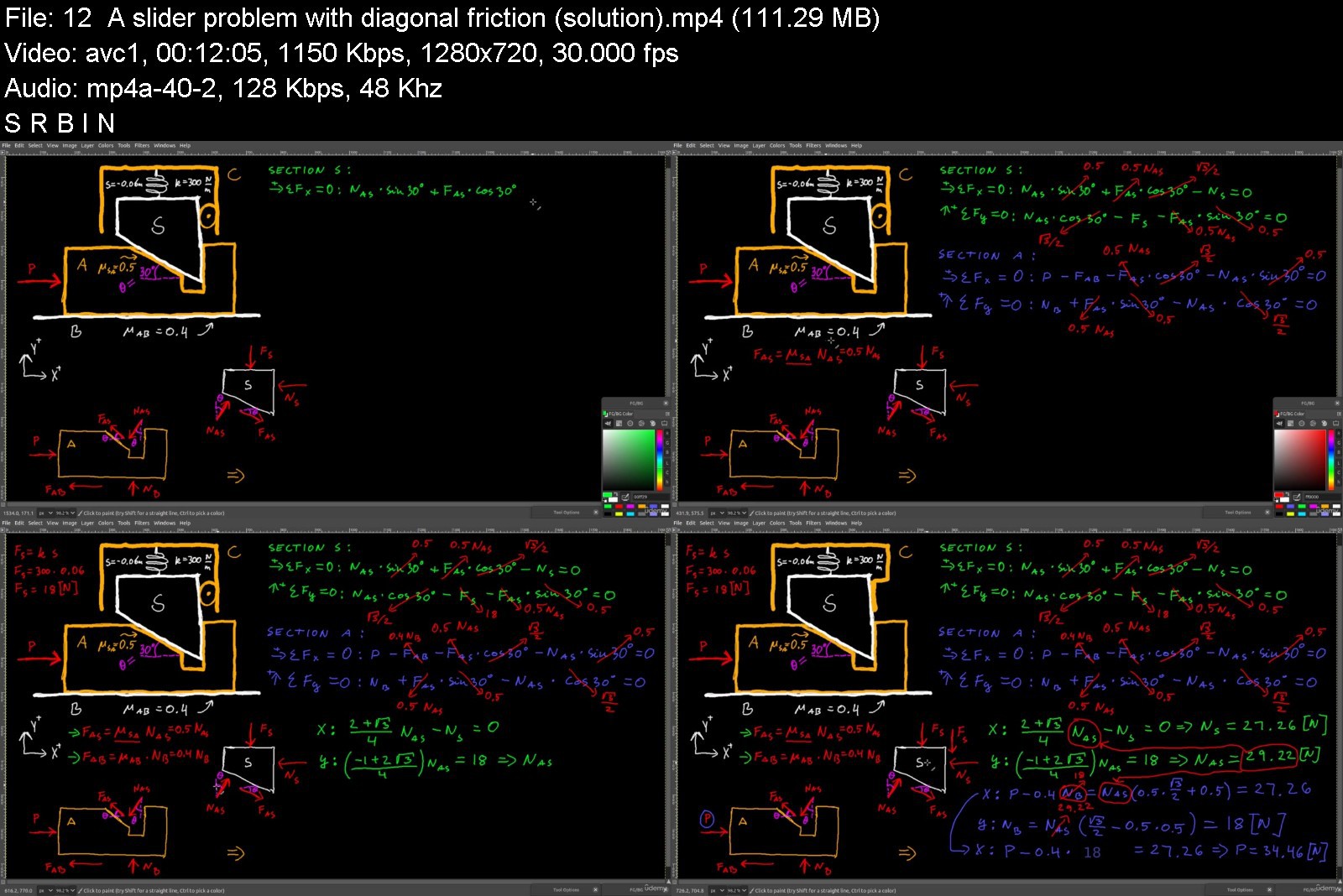
Engineering Mechanics: Statics 2 (Intuition + Application)

3qeq9exav7scpz29fcnd31ikob.jpg


Engineering Mechanics: Statics 2 (Intuition + Application)
Published 07/2022
Genre: eLearning | MP4 | Video: h264, 1280x720 | Audio: AAC, 48.0 KHz
Language: English | Size: 5.46 GB | Duration: 123 lectures • 11h 57m


What you'll learn
How to apply rigid body equilibrium principle in 2D & 3D to practical engineering problems in Statics
How to analyze frames & machines in 2D & 3D in practical engineering problems in Statics
How to apply the principle of virtual work in practical engineering problems in Statics
How to apply potential energy methods to determine the equilibrium and stability of systems in Statics
How to solve engineering problems involving dry friction between two surfaces, flat belts on surfaces, and rolling resistance of wheels
How to calculate tension and compression forces in 2D & 3D truss structures
How to draw shear force and moment diagrams for beams
How to calculate tension forces in cables that support a suspension bridge
Requirements
Functions, Derivatives and Integrals from Calculus
Udemy course: Engineering Mechanics: Statics 1 (Intuition + Application)

Description
How would you determine the forces and moments in the wing of an airplane to make sure that it's strong enough to fly? Or find internal forces in excavators, steer loaders, or, in structures like an oil pumping unit? How do you figure out friction forces between objects and rolling resistance that wheels experience? Would you like to know how to accurately map the internal loads of a travelling crane or calculate the tension forces in the cables of a suspension bridge?
My name is Mark. I'm an Aerospace & Robotics engineer and I will teach you all that here, in Engineering Mechanics: Statics Part 2. Rigid body equilibrium in 2D & 3D, Frames, Pulleys, & Machines, Virtual work, equilibrium stability in mass spring systems, friction between surfaces, friction between flat belts and fixed disks, rolling resistance of a wheel, trusses, internal loads, shear force and moment diagrams, cables for suspension bridges - you will not only receive immense amount of intuition in engineering mechanics, but also, proper applied Math, that's a promise. After this course, you will have strong engineering base to continue with more advanced topics such as Dynamics and structural analysis.
This course is a direct continuation to Engineering Mechanics: Statics Part 1. It is highly recommended that you cover that course first. The teaching style requires you to be very proactive. I give you a problem and the tools to solve it. Then, I ask you to solve it yourself, and only then, after at least trying it, you should see the solution videos. That's how you become a real PROBLEM SOLVER.
If you're looking for a career in Mechanical, Aerospace, Civil or Maritime engineering, then this Engineering Mechanics: Statics course is for you.
Before you buy, please watch the free preview videos, and if you like what you see, ENROLL NOW, and let's get started! Hope to see you inside!
Who this course is for
Engineering students in Mechanical, Civil, Aerospace, Maritime engineering
Professional engineers in Mechanics, Civil, Aerospace, Maritime engineering


engineeringmechanicsshlkgr.jpg


Download from RapidGator


Download from Keep2Share

 
Learn Digital Marketing (2022)

a7562a8092fa1sj05.jpg


Learn Digital Marketing (2022)
Published 07/2022
MP4 | Video: h264, 1280x720 | Audio: AAC, 44.1 KHz, 2 Ch
Genre: eLearning | Language: English + srt | Duration: 70 lectures (7h 22m) | Size: 8.6 GB


Learn the basic of digital marketing for free


What you'll learn
Learner will learn basics of digital marketing and what are the benefits of digital marketing
What is SEO and how to do it properly
How to create an SEO friendly website
How to create and optimize your content
Marketing strategy and many more
Requirements
No knowledge of marketing but interested to learn
Description
Since you have decided to learn Digital Marketing and start your career as a Digital Marketer, the main thing that you need to know is the digital marketing course content.
Before enrolling in any training program, the course content is given a lot of importance, so is the case with Digital Marketing as well.
This unit is designed to provide students with a foundation in digital marketing, assess some of the known methods for developing a digital marketing strategy, and explain how they relate to integrated digital marketing for engaging audiences and the dangers that come with it. It will also differentiate between traditional and digital marketing, as well as between digital marketing platforms, segmentation tactics, and the digital marketing plan. The concept of digital marketing, the importance of digital marketing and digital marketing platforms, and digital marketing segmentation techniques are explained.
Course Outcomes
After completion of this course, you will be able to
Translate some of the key marketing and business models that will help to shape your digital marketing strategy.
Review the history of digital marketing to give some perspective to your digital strategic plan.
Describes online market presence, segmentation, and the 4 Ps of marketing and their implications for digital marketing.
We will discuss the opportunities and risks of integrated digital marketing
outline an approach to developing a digital marketing plan.
I will explain the key digital marketing activities needed for competitive success.
Who this course is for
Beginner in marketing


learndigitalmarketingj5kp9.jpg


Download from RapidGator


Download from Keep2Share


Slvrspn - The Affiliate & Content Marketing Blueprint

0xuj7hr2fq6izhjgtlrtytaji4.jpg


Slvrspn - The Affiliate & Content Marketing Blueprint
Published 7/2022
MP4 | Video: h264, 1280x720 | Audio: AAC, 44.1 KHz
Language: English | Size: 7.64 GB | Duration: 7h 58m

Learn to monetize your strengths via content and affiliate marketing


What you'll learn
Turn your strengths into a fully functioning online business
Build content assets that are setup to make passive sales
Learn how to setup a simple email funnel that sells to existing buyer traffic
Understand how to get free traffic to your affiliate content using organic methods
Requirements
Internet Connection

Description
The SLVRSPN program is the most comprehensive, and easy-to-follow formula to building a content and affiliate marketing business onlineIt has been designed in a way whereby you don't need to do any thinking of your own"Give a man a fish he'll eat for a day. Teach a man to fish, he'll eat forever"Forget all that!I'm just going to give you the fish!I have bought TONNES of programs, and 99% of them fail to deliver on one major key ingredientTRAFFICMost products out there are unable to crack this piece of the code, yet they will still put out programs claiming extraordinary resultsI call these products "Theoretically Sound" ProgramsThey sound good in theory, and even adhere to certain fundamentals of making money, but when it comes to actually working in reality?It's the TRAFFIC they fall short onYou learn to build an E-Com store, install all the cool plugins and then?"Oh, but for traffic, you need to experiment with Facebook ads and you might fail a few times, throw money down the drain, but eventually it should work"You learn to build a freelancing business or agency, setup a neat profile, and get some nifty software that will automatically send out emails?"Oh, but you need to eventually get people on the phone and you might only close like 1 out of 20, and you'll get rejected a lot, and it's a time sink, and people are rude, but keep at it and it should pay off!"You build a basic affiliate marketing business and build a cool website and learn SEO?"So like, you might not rank for a 3-6 months because your site is new, but just keep at it and hopefully you should start ranking well!"You buy a social media building program, which promises free traffic from Twitter or IG?"You're going to have to engage with 20 bigger accounts a day, tweet 5 times a day, and reply 50 times a day, and then you should see your followers and sales increase... that's how I did it!""Ain't nobody got time for that!"SLVRSPN is the only program I've seen that doesn't have this "traffic-getting wall" that you hit with 99% of other programsIn fact, inside is a traffic method that works so well and so regularly that it even allows you to TAKE BACK from those that scammed youYou get to take $$ from the scammers!And that's just a tiny fraction of what is insideThe program is laid out with the SLVRSPN concept in mind, meaning you just need to follow along, do what I say, when I say it, and I can guarantee resultsSimple.What you get:Inside information on the nature of the industry, exposing it for what it isLearn how to position yourself amongst those who are winningLearn how to be a professional affiliate and content marketer (not just a guy with a link and no audience)Learn how to build assets that make you money passivelyGet access to an inner-circle discord so you can get on-demand help from myself and those on the same path as youLearn how to setup a simple backend funnel so you earn money while you sleepLearn to create written & video content that ranks and gets immediate traffic and salesLearn multiple GOLDEN, free traffic getting methods that allow you to get sales immediately (This is no joke)Learn to leech of scammer traffic and take back what they took from youGet Access to mini-courses, and other programs I've released in the past yearThere's simply nothing else out there that is going to get you results this fast and this easilyJust put in some work, and be spoon-fed your way to results!
Overview
Section 1: Industry Introduction
Lecture 1 Introduction
Lecture 2 Roadmap
Lecture 3 Shiny Object Syndrome
Lecture 4 Wolves, Sheep, And Heroes
Lecture 5 Being A Hero
Lecture 6 Managing Time So You Win
Section 2: Identifying Your Audience
Lecture 7 Uncovering Your Innate Strengths
Lecture 8 Niche Deep Dive: Finding Your Audience
Lecture 9 Finding PAIN & Creating Your Audience Avatar
Section 3: Positioning Yourself To Make Money
Lecture 10 How People Actually Make Money
Lecture 11 Your USP & One Sentence Formula
Lecture 12 Committing to Your Purpose
Section 4: Introduction To Building
Lecture 13 Milestone Welcome
Lecture 0 Program Scope & Overcoming Small Hurdles
Section 5: Building Assets
Lecture 0 Your Website
Lecture 0 Plug-ins & Google Site Listing
Lecture 0 Themes & Aesthetics
Lecture 0 Legal Pages
Lecture 0 Your Email Autoresponder & Mailing List
Lecture 0 Social Media Setup
Section 6: Content Overview
Lecture 0 Blog vs. YouTube
Lecture 0 Money Content vs. Value Content
Lecture 0 Revisiting Pain Points & Value Content
Lecture 0 How To Find Influencer Products
Lecture 0 How To Find Launching Marketing Products
Lecture 0 Launch Jacking & Reverse Launch Jacking
Lecture 0 Optimizing SEO & Keyword Research
Lecture 0 Using Bonuses & Bonus Pages
Lecture 0 Funnel Overview
Section 7: Email Funnels
Lecture 0 Why Email Is First?
Lecture 0 Creating Your First Backend Funnel
Lecture 0 How To Capture Emails With Forms & Landing Pages
Section 8: Blog Content
Lecture 0 How To Structure Content Correctly
Lecture 0 Powerful SEO Optimization & Call To Actions
Lecture 0 Implementing Bonus Pages
Section 9: Video Content
Lecture 0 YouTube Channel Setup
Lecture 0 Buying a Channel For A Head-start (Optional)
Lecture 0 Equipment Advice & Suggestion
Lecture 0 How To Structure Content
Lecture 0 Make Videos Without Being On Video
Lecture 0 YouTube SEO & Descriptions
Lecture 0 Description Hacks: Mini Funnels, Bonuses, CTAs
Section 10: Traffic
Lecture 0 Launch Jacking & Reverse Launch Jacking
Lecture 0 Organic SEO Traffic
Lecture 0 Quora Traffic
Lecture 0 Social Media: Twitter
Lecture 0 Social Media: Instagram
Section 11: Moving Forward
Lecture 0 Taking Stock & Program Review
Lecture 0 Checklist & Schedule
Those looking to build an online business revolving around their strengths/passions


slvrspntheaffiliatecoofjue.jpg


Download from RapidGator


Download from Keep2Share


An Introduction to the Feldenkrais® Method for Singers

a129972117d5pzj18.jpg


An Introduction to the Feldenkrais® Method for Singers
Published 07/2022
MP4 | Video: h264, 1280x720 | Audio: AAC, 44.1 KHz, 2 Ch
Genre: eLearning | Language: English | Duration: 14 lectures (8h 34m) | Size: 9.3 GB


Movement lessons for better posture, breathing, emotional range, and stamina; and less jaw, neck, and shoulder tension!


What you'll learn
Feldenkrais® Awareness Through Movement Lessons for Singers
Movement lessons for better posture, breathing, emotional range, and stamina; and less jaw, neck, and shoulder tension!
How movement lessons and acting technique can work WITH your vocal technique, not against it
Requirements
It's good to have a mat on the floor. My favourite setup is to have two yoga mats next to each other on the floor, so that you have a nice wide surface to play with, and then to have a blanket on top of the yoga mats. If you're on a rug or carpet, you might not need the yoga mats under the blanket. Have one or two folded towels or blankets at hand. The main thing is that they are fairly flat and firm. I have pieces of foam covered in fabric for my students. And kneeling pads used for canoeing are also great. Dress comfortably, in yoga pants or sweat pants, or any kind of pants that are stretchy, and really make sure you are warm enough.
Description
"The way Sarah ties in many different aspects of singing, acting, body movement is quite amazing. Sarah teaches lasting practical strategies for practicing and performing in a way that's fun and immersive. These lessons reminded me to allow my jaw and tongue tension to get out of the way and just let me sing. It's opened up better pronunciation, better stamina, and a more pleasant overall singing experience for me. Working with the eyes and the jaw both released a bunch of tension that I was holding during singing. By releasing that tension, I also felt a release in my lower breath support. I didn't realize how strongly tension in one local area of the body could inform or affect tension in the entire voice. Just by kindly showing curiosity towards one part of my body, a world of singing freedom opened up for me."
- Chris Mayell, M. Mus.
Hi! I'm Sarah Templeton. I'm a singer, singing teacher, and a practitioner of the Feldenkrais® Method. This course is based on the groundbreaking work of Dr. Moshe Feldenkrais, who was an engineer, physicist, martial artist, and pioneer in the field of human development. His work is taught all over the world, including university and college music departments and music conservatories.
When I discovered the Feldenkrais® Method, over 25 years ago, I tried it to help me with chronic pain. I was an injured pianist at the time. I thought I had tried everything. But Feldenkrais® worked for me, gradually and messily, but it worked. These lessons not only helped me find my way out of that pain; they have helped me with virtually every aspect of singing, ever since then. These lessons have helped me and many, many of my students, over the past 15 years of my teaching it, in the following ways
- to lessen or even eliminate tension and pain in the jaw, neck, and shoulders
- to have more relaxed, responsive, and fuller breathing
- to have improved, dynamic posture
- to embody a wider variety of characters onstage
- to express a fuller range of emotions
- to have more stamina as a singer
- to have clearer diction
- to have better stage presence
- to have more flexible and skillful feet
- to have an increased sense of spontaneity onstage
- to be better able to sing in a variety of positions with more ease: on knees, lying down, addressing the audience or other characters to the right or to the left of you; whatever the director wants
But, perhaps most important, to me anyway, is that I have a sense of greater control over myself, through this method. A sense of choice in how I behave. Of having many more tools that I can call upon, no matter what the song or the role or life requires.
So, I'm excited for you to try these lessons. Try them, and see how they affect your posture, your breathing, and your ability to communicate with your audience. And see how they may surprise you by affecting other areas of your life, outside of your singing.
I have been refining these lessons, adapting them to be of the most benefit to singers in particular, over the past 15 years. I have taught this work at major universities, colleges, and even the Stratford Festival of Canada. It is the thing I wake up thinking about, and what I am most excited about teaching to my singing students. Why? Because I find it can really empower you, putting you in control of your craft.
I've agonized over which lessons to include here, because there are so many good ones. But I'm proud of the choices I've made. And I've also thought very carefully about the order in which to present the lessons to you. As well, I've made sure that I show you throughout the series how these lessons relate to specific ACTING techniques. This 'bringing together' of these three aspects of performing: movement, vocal technique, and acting technique, has occupied my professional life for decades, as a teacher, and also as a performer.
Try the free preview lesson, which I call Triangle Arms. It's wonderful for posture, the mobility of the rib cage, and breathing function. It's a great way to get to know my teaching, and to see how these lessons can help you as a singer. Before you do that, though , check out my "How to do these lessons, and what to expect" video. Enjoy!
"I will continue to practice the jaw and tongue releasing class, as this greatly impacted the release in my jaw, and my singing was a new experience. Singing before and after classes showed me marked improvements in my awareness and ability to make corrections in my own practice. Sarah is a compassionate and realistic teacher that makes the classes clear, fun and educational! I look forward to recommending Sarah's classes to my voice students as well."
- Jessica Turje, B. Mus.
"After each lesson I just feel so aware but calm. I feel like this is what people mean when they talk about the benefits of meditation but I've never been able to keep focused on meditation. This is what I assume meditation is like for normal people! Not only was this non-judgemental and soothing, the main point is not just to be aware of yourself, but to have fun. And I had so much fun. It was such a joy and delight to be able to experience these lessons, and I'm very grateful for them."
- Brittony LeFever, BAH, Music
"Taking this course was my first experience with Feldenkrais technique - and I highly recommend it! I enjoyed experimenting with the subtle movements in these sessions and was pleased to see a direct application of these movements to my own singing. This course exceeded my expectations, I sensed an increase in my body awareness, easing of tensions, and found a greater sense of balance within my own body. At the end of each session, I felt greater freedom of movement within my own body as well as a more mindful and calm attitude."
-Danielle Cyr, M.Mus.
Here is the overview of the courses, if you are curious about how it all fits together
Here, I've chosen the three or four main benefits or ideas you will address in each lesson, to help you get an overview of how these movement lessons work together to improve your abilities as a singer. There are benefits other than those I mention here, and everyone will experience something different, but these are some of the concepts or improvements you may notice as you go through the lessons. As well, this is an explanation of how the lessons build on each other as they proceed. You can look at this list before and after each lesson, if you like, and you can see if you understand or relate to these concepts. As always, feel free to ask me questions in the group chat next to each video lesson, or email me at mailto:[email protected].][email protected].[/url] And please be aware that using this document is totally optional! You may like to see the theory I've used to design the course, here, or you may choose to just do the lessons, and see what you discover. It's your choice!
Lesson One: Triangle Arms
- Increasing options for movement through the rib cage, aiding your posture and breathing (because, instead of using the same option for how you arrange your rib cage, you use a greater variety of options, depending on what you are doing in the moment; imagine the rib cage, spine, and pelvis being able to come to rest in slightly different positions, depending on what you need, to be effective/comfortable in that moment)
- Beginning to learn how to calm 'parasitic activity' (which is what I think of as activity not needed for the movement; experienced as tension), so that you use a more appropriate level of activity for what you are doing; no more than that
- Learning to differentiate the movements of the upper torso from eye movements and pelvic movements, leading to greater freedom in relating to the audience (or other people on stage with you) to your right or your left, in standing and sitting
- Using the example of the 'constraint' of keeping arms in a triangle shape, discovering how movement relates to being specific as an actor, and how using a similar idea (the 'impediment') to create characters that are unlike you
Lesson Two: Hip and Shoulder Integration
- Building on the Triangle Arms lesson, increasing options for movement through the rib cage, this time lying on your side
- Sensing the difference between what we could call your habit and your new abilities
- Learning to use imaginary movements effectively
- Finding more coordination of oppositional movements of the shoulder and hip, which improves balance (and therefore easy breathing) in walking
Lesson Three: Jaw and Lips
- Using the more effortless quality of moving you discovered in Lessons One and Two, calming parasitic activity in your tongue, lips, and the muscles of the Temporal Mandibular Joint
- Increasing your ability to pronounce vowels and consonants more clearly
- Being able to express a wider variety of emotions, as your face is not 'stuck' in habitual patterns
Lesson Four: Rolling Fists
- Differentiating the movement of your shoulder blades from that of the rib cage, and from movements of the pelvis; first forward and back, and then right and left
- Lifting your pelvis with skill and power, which benefits your movement in standing and walking
- Finding more coordinated eye movements, in relation to bigger movements of the limbs
- Finding ways to balance (and even find elegant movement) in a challenging or new position, which we are often asked to do as singers, especially in stage shows
Lesson Five: Eyes on Horizon, Near and Far
- Calming parasitic activity in the muscles surrounding your eyes
- Identifying and learning how to use your 'non-dominant' eye to lead the movements smoothly, and how that ability affects overall posture and tonus of the muscles
- Calming parasitic activity of the whole person, as most movements are either initiated by the eyes or at least involve them; this leads to easier breathing and more elegant stance/movement
Lesson Six: Breathing, Relating to the Lower Ribs and Sternum
- Becoming aware of the anatomy of your own ribcage (including the floating ribs), clavicles, and shoulder blades
- Increasing options for how your rib cage can move in relation to your inhalations and exhalations, using gentle lifting and pressing of the lower ribs (making sure not to confuse them in your self image with the lumbar region of the back) to improve breathing; learning to initiate these movements with your lower ribs and your sternum
- Using 'seesaw' breathing and 'ring' breathing images to increase your choice of options for breathing; this can be helpful for decreasing stage fright
- Finding patience and an 'unambitious' way of approaching learning, as this is a complex lesson with great benefits if we are patient and skilled in noticing the movements of the rib cage and elsewhere; and if we are skilled in doing subtle, gentle movements that feel good to repeat, once the lesson is over
Lesson Seven: Edges of the Feet
- Using the arches of your feet to increase skill in standing
- Using 'tripods' of the feet in standing: awareness of the head of the 4th metatarsal and how it can help with posture and skilled movement in standing, and how the bones of the lower leg can be used to make standing easier and more spontaneous; further building on the Breathing, Relating to the Lower Ribs and Sternum (as these two complex lessons directly build on one another), and on Triangle Arms and Rolling Fists
- Relating how you stand on your feet to increase your easy breath capacity and spontaneity as an actor and singer
Lesson Eight: To Weld by Breathing
- Putting together what you've learning in Edges of the Feet, Triangle Arms, and Rolling Fists (about tripods, and driving the force of the movement up through the spine to the top of the head) to lift your pelvis with skill and power
- On your back with pelvis raised, and in a variety of other positions, using the image of 'welding' with the breath to change the perceived shape (from moment to moment) of your rib cage, sternum, shoulder blades, and clavicles; building on the breathing skills learned in Breathing Relating to the Lower Ribs and Sternum lesson
- Using the floor to provide resistance and awareness, to access movement throughout the entire rib cage; again, this can help posture in standing, as you continue to find options for the rib cage, spine, and pelvis to come to rest, depending on what you need for your singing in that moment
- Empowering yourself through the very concrete concept of the floor providing resistance, to find new options for movement while breathing; this can be calming, helping with stage nerves and even anxiety
Lesson Nine: Interlacing the Toes
- Using movements of the fingers to teach yourself greater dexterity of your toes
- Using your sense of humour to continue learning in a challenging situation; using the puzzles of the lesson to observe how you react to challenge, and whether you can still remain present to sensation and movement, and maybe even smile and laugh in the midst of it (as this can be a challenging lesson, but also a bit ridiculous, which helps!)
- Being able to react from moment to unanticipated moment in standing, and how that relates to acting while singing; keeping the performance 'fresh' and adding a grain of realism at the root of the song, even if it is a big moment, or a very extended phrase over a big orchestra or band
Lesson Ten: Equalizing the Nostrils
- Using the vowel 'a' and the nasal consonant 'ng' to equalize the resonance between your right and left nostrils
- Using your own judgement of sensations to increase skill, instead of relying on outside feedback (though I acknowledge, of course, that such feedback can be very helpful, as well)
- Using constraints of your jaw, tongue, and lips as a novel way to learn to express a text more clearly, and therefore to 'get what the character came for', or even create a character in the song or scene; using those constraints to challenge you to find new movements of the tongue, jaw, and lips that would might not have found without the limitation of the invitations in the lesson
- Using your imagination to constantly 'see' your imaginary scene partner, and whether you are 'winning', or getting what you set out to get from the partner; all the while using clear pronunciation to express the character's thoughts and emotions, discovering whether diction can help us with emotion and expressing thoughts, not get in the way of them.
Please note: The Feldenkrais® Method is gentle, but please consult with your doctor before beginning any new physical activity. Sarah Templeton will not be held liable for any injury or loss sustained during, or as a result of, these lessons.
Who this course is for
Singers who would like to take their singing to the next level through fun, innovative movement lessons.


anintroductiontothefef0jdg.jpg


Download from RapidGator


Download from Keep2Share


Ultimate Electrical Substations, Hv And Generation Bundle

uqjv5q1hrqxkyihkulsfcr1jzx.jpg


Ultimate Electrical Substations, Hv And Generation Bundle
Last updated 5/2022
MP4 | Video: h264, 1280x720 | Audio: AAC, 44.1 KHz
Language: English | Size: 6.56 GB | Duration: 17h 39m

This electrical engineering bundle consisting of electrical substation course, high voltage course and generation course


What you'll learn
Function, classification, and voltage of electrical substations
Main components like power transformers, conductors, insulators, switch gears, current transformer, capacitor voltage transformer, and voltage transformer
Different types of circuit breakers, relays, and their classification according to time, construction, and function
Learn the difference between circuit breaker and fuse, in addition to their applications
Understand the definition of IP or ingress protection
Grounding system including the effect of current on the human body and components of the grounding system
Types of electric hazards and classification of the earthing systems
Measuring the earthing resistance by Megger and the three-point method
Design of an earthing system using ETAP program
Ring main unit and its importance in the electrical power system
Types of switches used in the electrical power systems and substations
Overhead transmission lines, underground cables, and the difference between them
Busbars in the power system, their importance, their different schemes, and how to select them
Lightning arrester and wave trap which are used in substations
Air and gas-insulated substations
Overview of the design of an electrical substation and single line diagram of 66/11 kV substation
Types of high voltages occurring in an electrical system
​Methods used to generate high voltage AC at power frequency
How to generate high voltage AC at high frequency for simulating switching actions on our electrical equipment
Definition of impulse waveform in the electrical system
Methods of generating high voltage impulses to test our equipment
Different methods used to generate very high DC voltage in electrical systems in addition to voltage doubler circuits and multiplier circuits
How electricity is generated
Different types of electrical generators
Types of induction and synchronous generators used
Types of electrical power plants such as hydroelectric, wind, solar, geothermal, and nuclear power plant
Principle of operation of each generating power plant
Types of wind turbines
Rotor solidity and selection of the number of rotor blades
Gearbox in wind turbines
The power extracted by the turbine from the wind
Betz limit and maximum rotor efficiency
Factors affecting wind speed and density
Applied force on the wind turbine, torque coefficient, and the importance of the TSR
Wind turbine generator characteristics
Effect of the rotor diameter and generator size on power
Wind turbines spacing
The fundamentals of solar energy
Components and design of on-grid and off-grid solar systems
Types and selection of solar modules
Types of charge controllers
Types of different solar inverters
Selection of suitable tilt angle and shading effect in PV systems
Requirements
Just passion and patience for learning
No requirement, only your PC or tablet or mobile for viewing lectures online

Description
"Ultimate Electrical Substations, Generation and High Voltage Course Bundle for Electrical Engineering"The only course bundle out there with everything you need to know about electrical substations, generation of electricity, and high voltage generationIf you've been looking for ONE COURSE BUNDLE with in-depth insight into the basics of electrical substations, electrical generators, and high voltage generation, take this bundle.First Course "Complete Electrical Substations For Electrical Power Engineering" What are you going to learn?​Function, classification, and voltage of electrical substationsMain components like power transformers, conductors, insulators, switch gears, current transformer, capacitor voltage transformer, and voltage transformerDifferent types of circuit breakers, relays, and their classification according to time, construction, and functionLearn the difference between circuit breaker and fuse, in addition to their applicationsUnderstand the definition of IP or ingress protectionGrounding system including the effect of current on the human body and components of the grounding systemTypes of electric hazards and classification of the earthing systemsMeasuring the earthing resistance by Megger and the three-point methodDesign of an earthing system using ETAP programRing main unit and its importance in the electrical power systemTypes of switches used in the electrical power systems and substationsOverhead transmission lines, underground cables, and the difference between themBusbars in the power system, their importance, their different schemes, and how to select themLightning arrester and wave trap which are used in substationsAir and gas-insulated substationsOverview of the design of an electrical substation and single line diagram of 66/11 kV substationSecond Course "High Voltage Generation For Electrical Engineering" What are you going to learn in this course?Types of high voltages occurring in an electrical system.​Methods used to generate high voltage AC at power frequency.​How to generate high voltage AC at high frequency for simulating switching actions on our electrical equipment.​Definition of impulse waveform in the electrical system.​Methods of generating high voltage impulses to test our equipment.​Different methods used to generate very high DC voltage in electrical systems in addition to voltage doubler circuits and multiplier circuits.Third Course "Complete Generation Course For Electrical Engineering" How electricity is generated.Different types of electrical generatorsTypes of induction and synchronous generators usedTypes of electrical power plants such as hydroelectric, wind, solar, geothermal, and nuclear power plantsPrinciple of operation of each generating power plantTypes of wind turbinesRotor solidity and selection of the number of rotor bladesGearbox in wind turbinesThe power extracted by the turbine from the windBetz limit and maximum rotor efficiencyFactors affecting wind speed and densityApplied force on the wind turbine, torque coefficient, and the importance of the TSRWind turbine generator characteristicsEffect of the rotor diameter and generator size on powerWind turbines spacingThe fundamentals of solar energyComponents and design of on-grid and off-grid solar systemsTypes and selection of solar modulesTypes of charge controllersTypes of different solar invertersSelection of suitable tilt angle and shading effect in PV systemsThank you and hope to see you in our course bundle :)
Overview
Section 1: Electrical Substation Course
Lecture 1 Introduction to Electrical Substation
Lecture 2 Very Important
Lecture 3 Construction of Electrical Substation
Lecture 4 Instrument Transformers and Principle of Operation of Trip Circuit
Lecture 5 Types of Circuit Breakers and Fuses Comparison
Lecture 6 Types of Relays According to Function, Construction, and Time Characteristics
Lecture 7 Definition of Busbar and Different Busbar Schemes
Lecture 8 Construction of Underground Cables
Lecture 9 Construction of Overhead Transmission Lines
Lecture 10 Comparison between Underground Cables and Overhead Transmission Lines
Lecture 11 Types of Switches in Power System and Substations
Lecture 12 Importance of Capacitor Banks in Power System
Lecture 13 Important Components in Electrical Substation
Lecture 14 Classification of Substations
Lecture 15 Relation between Voltage and Substations
Lecture 16 Air Insulated Substation and Gas Insulated Substation
Lecture 17 Importance of Ring Main Unit in Power System
Section 2: Earthing System Design
Lecture 18 Introduction to Grounding System
Lecture 19 Effect of Current on Human Body
Lecture 20 Types of Electric Hazards
Lecture 21 Classification of Earthing Systems
Lecture 22 Components of Earthing System
Lecture 23 Design and Resistance of Earthing Electrode
Lecture 24 Design and Resistance of Earthing Conductor
Lecture 25 Measurement of Earth Resistance by Megger and Three Point Method
Lecture 26 Design Earthing or Ground Grid Using ETAP
Section 3: Introduction to Design of Electrical Substation
Lecture 27 What is IP?
Lecture 28 Selection of Busbars
Lecture 29 Introductory Example on Design of Substation
Lecture 30 Single Line Diagram of 66 kV to 11 kV Substation
Section 4: High Voltage Generation for Electrical Engineering Course
Lecture 31 Introduction to Electrical Power System and Why do we Need High Voltage
Lecture 32 Types of High Voltage
Lecture 33 Generation of High Voltage AC at Power Frequency
Lecture 34 Generation of High Voltage High Frequency AC
Lecture 35 Generation of High Voltage Impulse Part 1
Lecture 36 Generation of High Voltage Impulse Part 2
Lecture 37 Generation of High Voltage DC Part 1
Lecture 38 Generation of High Voltage DC Part 2
Section 5: Introduction to Electricity Generation
Lecture 39 Introduction to Generation of Electrical Power
Lecture 40 Definition of Generation
Lecture 41 Why do we Generate Electricity?
Lecture 42 How do we Generate Electricity?
Lecture 43 Difference between Synchronous and Induction Generators
Lecture 44 Principle of Operation of Synchronous Generator
Lecture 45 Types of Synchronous Generators
Lecture 46 Principle of Operation of Induction Motor
Lecture 47 Types of Induction Machine Rotors
Lecture 48 Principle of Operation of Double fed Induction Generator
Lecture 49 Self Excited Induction Generator
Section 6: Basics of Wind Energy Systems
Lecture 50 Introduction to Wind Energy
Lecture 51 Selection of Type of Wind Turbine
Lecture 52 Rotor Solidity and Selection of Number of Rotor Blades
Lecture 53 Gearbox in Wind Turbines
Lecture 54 Power Available in the Wind Spectra
Lecture 55 Power Extracted by the Wind Turbine
Lecture 56 Betz Limit and Maximum Rotor Efficiency
Lecture 57 Factors Affecting Wind Speed and Density - Height of Tower
Lecture 58 Factors Affecting Air Density
Lecture 59 Example 1
Lecture 60 Example 2
Lecture 61 Applied Force on Wind Turbine, Torque Coefficient and the Importance of the TSR
Lecture 62 Example 3
Lecture 63 Wind Turbine Generator Characteristics
Lecture 64 Example 4
Lecture 65 Effect of Rotor Diameter and Generator Size on Power
Lecture 66 Wind Turbines Spacing
Section 7: Basics of Solar Energy Systems
Lecture 67 Introduction to PV System Construction
Lecture 68 Solar Heating, Solar Irradiation and Panels
Lecture 69 Effect of Temperature and Insolation on V-I Curve in Solar Energy
Lecture 70 PV Installation, Short Circuit and Open Circuit Tests Using Avometer
Lecture 71 Solar Wires and Cables Installation Process
Lecture 72 Mounting of PV System
Lecture 73 Shading and Tilt angle in Solar Energy
Lecture 74 Half Cell Technology in PV System
Lecture 75 Importance of Charge Controller in Solar Energy System
Lecture 76 PWM and MPPT Charge Controllers
Lecture 77 Understanding More About MPPT Charge Controller
Lecture 78 Junction Box in Solar Energy System
Lecture 79 Wiring of Junction Box in Solar Energy System
Lecture 80 Function, Types and Data Sheet of Inverter
Lecture 81 Determining PV Array Maximum System Voltage
Section 8: Extra Lectures on Generation
Lecture 82 Introduction to Generating Power Plants
Lecture 83 Hydroelectric Power Plant
Lecture 84 Types of Hydro Electric Power plant
Lecture 85 Advantages and Disadvantages of Hydro Power Plants
Lecture 86 Nuclear Power Plant
Lecture 87 Geothermal Power Plant and it's Types
Lecture 88 Bonus Lecture
Anyone who wants to learn about Electrical Engineering Power Systems.,Anyone interested in learning about high voltage in electrical system,Electrical engineering students especially electrical power engineers interested in learning about high voltage,Anyone who wants to learn about electrical generating power stations.


ultimateelectricalsubatjed.jpg


Download from RapidGator


Download from Keep2Share


Zurück
Oben Unten