• Regeln für den Video-Bereich:

    In den Börsenbereich gehören nur Angebote die bereits den Allgemeinen Regeln entsprechen.

    Einteilung

    - Folgende Formate gehören in die angegeben Bereiche:
    - Filme: Encodierte Filme von BluRay, DVD, R5, TV, Screener sowie Telesyncs im Format DivX, XviD und x264.
    - DVD: Filme im Format DVD5, DVD9 und HD2DVD.
    - HD: Encodierte Filme mit der Auflösung 720p oder darüber von BluRay, DVD, R5, TV, Screener sowie Telesyncs im Format x264.
    - 3D: Encodierte Filme von BluRay, die in einem 3D Format vorliegen. Dies gilt auch für Dokus, Animation usw.
    - Serien: Cartoon/Zeichentrick, Anime, Tutorials, Dokumentationen, Konzerte/Musik, Sonstiges sind demnach in die entsprechenden Bereiche einzuordnen, auch wenn sie beispielsweise im High Definition-Format oder als DVD5/DVD9/HD2DVD vorliegen. Ausnahme 3D.
    - Bereich Englisch: Englische Releases gehören immer in diesen Bereich.
    - Bereich Talk: Der Bereich, in dem über die Releases diskutiert werden kann, darf, soll und erwünscht ist.


    Angebot/Beitrag erstellen

    - Ein Beitrag darf erst dann erstellt werden, wenn der Upload bei mindestens einem OCH komplett ist. Platzhalter sind untersagt.
    - Bei einem Scenerelease hat der Threadtitel ausschließlich aus dem originalen, unveränderten Releasenamen zu bestehen. Es dürfen keine Veränderungen wie z.B. Sterne, kleine Buchstaben o.ä. vorgenommen werden. Ausnahme Serienbörse:
    - Bei einem Sammelthread für eine Staffel entfällt aus dem Releasename natürlich der Name der Folge. Beispiel: Die Simpsons S21 German DVDRip XviD - ITG
    - Dementsprechend sind also u.a. verboten: Erweiterungen wie "Tipp", "empfehlenswert", "only", "reup", usw. / jegliche andere Zusatzinformation oder Ergänzung, welche nicht in obiger Beschreibung zu finden ist.

    Aufbau des Angebots und Threadtitel

    Der Titel nach folgendem Muster erstellt zu werden. <Name> [3D] [Staffel] [German] <Jahr> <Tonspur> [DL] [Auflösung] <Quelle> <Codec> - <Group>
    Beispiel: The Dark Knight German 2008 AC3 DVDRip XviD - iND
    Beispiel: The Dark Knight 2008 DTS DL BDRip x264 - iND
    Beispiel: The Dark Knight 2008 AC3 DL BDRip XviD - iND
    Beispiel: The Dark Knight German 2008 AC3 720p BluRay x264 iND
    Beispiel: The Dark Knight 2008 DTS DL 1080p BluRay x264 iND
    Beispiel: Die Simpsons S01 German AC3 DVDRip XviD iND
    Beispiel: Die Simpsons S20 German AC3 720p BluRay x264 iND
    Beispiel: Sword Art Online II Ger Sub 2014 AAC 1080p WEBRip x264 - peppermint
    Entsprechend sind also u.a. verboten: Sonderzeichen wie Klammern, Sterne, Ausrufezeichen, Unterstriche, Anführungszeichen / Erweiterungen wie "Tipp", "empfehlenswert", "only", "reup", usw. / jegliche andere Zusatzinformation oder Ergänzung, welche nicht in obiger Beschreibung zu finden ist
    Ausnahmen hiervon können in den Bereichen geregelt sein.

    Die Beiträge sollen wie folgt aufgebaut werden:
    Überschrift entspricht dem Threadtitel
    Cover
    kurze Inhaltsbeschreibung
    Format, Größe, Dauer sind gut lesbar für Downloader außerhalb des Spoilers zu vermerken
    Nfo sind immer Anzugeben und selbige immer im Spoiler in Textform.
    Sind keine Nfo vorhanden z.B. Eigenpublikationen, sind im Spoiler folgende Dateiinformationen zusätzlich anzugeben :
    Quelle
    Video (Auflösung und Bitrate)
    Ton (Sprache, Format und Bitrate der einzelnen Spuren)
    Untertitel (sofern vorhanden)
    Hosterangabe in Textform außerhalb eines Spoiler mit allen enthaltenen Hostern.
    Bei SD kann auf diese zusätzlichen Dateiinformationen verzichtet werden.

    Alle benötigten Passwörter sind, sofern vorhanden, in Textform im Angebot anzugeben.
    Spoiler im Spoiler mit Kommentaren :"Schon Bedankt?" sind unerwünscht.


    Releases

    - Sind Retail-Release verfügbar, sind alle anderen Variationen untersagt. Ausnahmen: Alle deutschen Retail-Release sind CUT, in diesem Fall sind dubbed UNCUT-Release zulässig.
    - Im Serien-Bereich gilt speziell: Wenn ein Retail vor Abschluss einer laufenden Staffel erscheint, darf diese Staffel noch zu Ende gebracht werden.62
    - Gleiche Releases sind unbedingt zusammenzufassen. Das bedeutet, es ist zwingend erforderlich, vor dem Erstellen eines Themas per Suchfunktion zu überprüfen, ob bereits ein Beitrag mit demselben Release besteht. Ist dies der Fall, ist der bereits vorhandene Beitrag zu verwenden.
    - P2P und Scene Releases dürfen nicht verändert oder gar unter einem iND Tag eingestellt werden.


    Support, Diskussionen und Suche

    - Supportanfragen sind entweder per PN oder im Bereich Talk zu stellen.
    - Diskussionen und Bewertungen sind im Talk Bereich zu führen. Fragen an die Uploader haben ausschließlich via PN zu erfolgen, und sind in den Angeboten untersagt.
    - Anfragen zu Upload-Wünschen sind nur im Bereich Suche Video erlaubt. Antworten dürfen nur auf Angebote von MyBoerse.bz verlinkt werden.


    Verbote

    - Untersagt sind mehrere Formate in einem einzigen Angebotsthread, wie beispielsweise das gleichzeitige Anbieten von DivX/XviD, 720p und 1080p in einem Thread. Pro Format, Release und Auflösung ist ein eigener Thread zu eröffnen.
    - Grundsätzlich ebenso verboten sind Dupes. Uploader haben sich an geeigneter Stelle darüber zu informieren, ob es sich bei einem Release um ein Dupe handelt.
    - Gefakte, nur teilweise lauffähige oder unvollständige Angebote sind untersagt. Dies gilt auch für eigene Publikationen, die augenscheinlich nicht selbst von z.B. einer DVD gerippt wurden. Laufende Serien, bei denen noch nicht alle Folgen verfügbar sind, dürfen erstellt und regelmäßig geupdatet werden.
    - Untersagt sind Angebote, welche nur und ausschließlich in einer anderen Sprache als deutsch oder englisch vorliegen. Ausnahmen sind VORHER mit den Moderatoren zu klären.


    Verstoß gegen die Regeln

    - Angebote oder Beiträge, die gegen die Forenregeln verstoßen, sind über den "Melden"-Button im Beitrag zu melden.
  • Bitte registriere dich zunächst um Beiträge zu verfassen und externe Links aufzurufen.

*** Bestes IPTV *** bester Preis *** gratis Test ***


Englische Tutorials

Palo Alto Firewall Configuration

hdkjpirxmafx3d2eir39y02j9d.jpg


Palo Alto Firewall Configuration
Published 7/2022
MP4 | Video: h264, 1280x720 | Audio: AAC, 44.1 KHz
Language: English | Size: 10.27 GB | Duration: 11h 58m

Palo Alto Firewall Course


What you'll learn
Student will be to Design, deploy, configure,maintain, and troubleshoot Palo Alto Networks next-generation firewalls to protect networks from cutting edge cyber
Student will be able to Pass the Exam after this course .
Student will be able to manage a large scale infrastructure
Student will understand the core concept of the firewall
Requirements
Student need to have CCNA Course

Description
1- Palo Alto Course starting from Designing Network and introduce the PA*Firewall . 2- what are the different between Statless firewall and stateful firewall ?3- The Lap Setup in EVE-NG. 4- How to register your Firewall .5- How to assign the Polices ?6-Palo Alto Routing protocol. 7- How to configure the OSPF*Rouitng protocol .8-How to configure the Default Route .9- How to create the zones ?10- How to create DMZ*Zone to be used for Servers ?11- How to select the Appliance based on the Bandwidth utilization ?12- How to Configured the Interfaces and what are the differences between all interfaces ?13- How to configure the Nating Policy ?14- How to configure the Security Pollices ?15- How to configure the Security Profile ?16- How to Configure the PA as the Best Practice ?17- The Concept of High Availbility . 18- How to configure the Threat Prevention Profile ?19 - How to configure the Zone Protection ?20- How to assign the DoS Protection ?22- How to isloate your WIFI Network from your corperate Network .23- How to limit the Access to the Firewall Managemnt based on your Subnet and your IP*asddress ?24- How to Block the traffic based on the App ID*?25- How to monitor your firewall throuhg the ACC Dash Board ?
Overview
Section 1: Module 1- Introdution
Lecture 1 Course Introduction
Lecture 2 Module 1-1
Lecture 3 Module 1-2
Section 2: Module 2- Palo Alto Deployement
Lecture 4 Module 2-1
Lecture 5 Module 2-2
Lecture 6 Module 2-3
Section 3: Module 3
Lecture 7 Module 3-01
Lecture 8 Module 3-02
Lecture 9 Module 3-03
Lecture 10 Module 3-04
Section 4: Module 04
Lecture 11 Module4-01
Lecture 12 Module 4-03
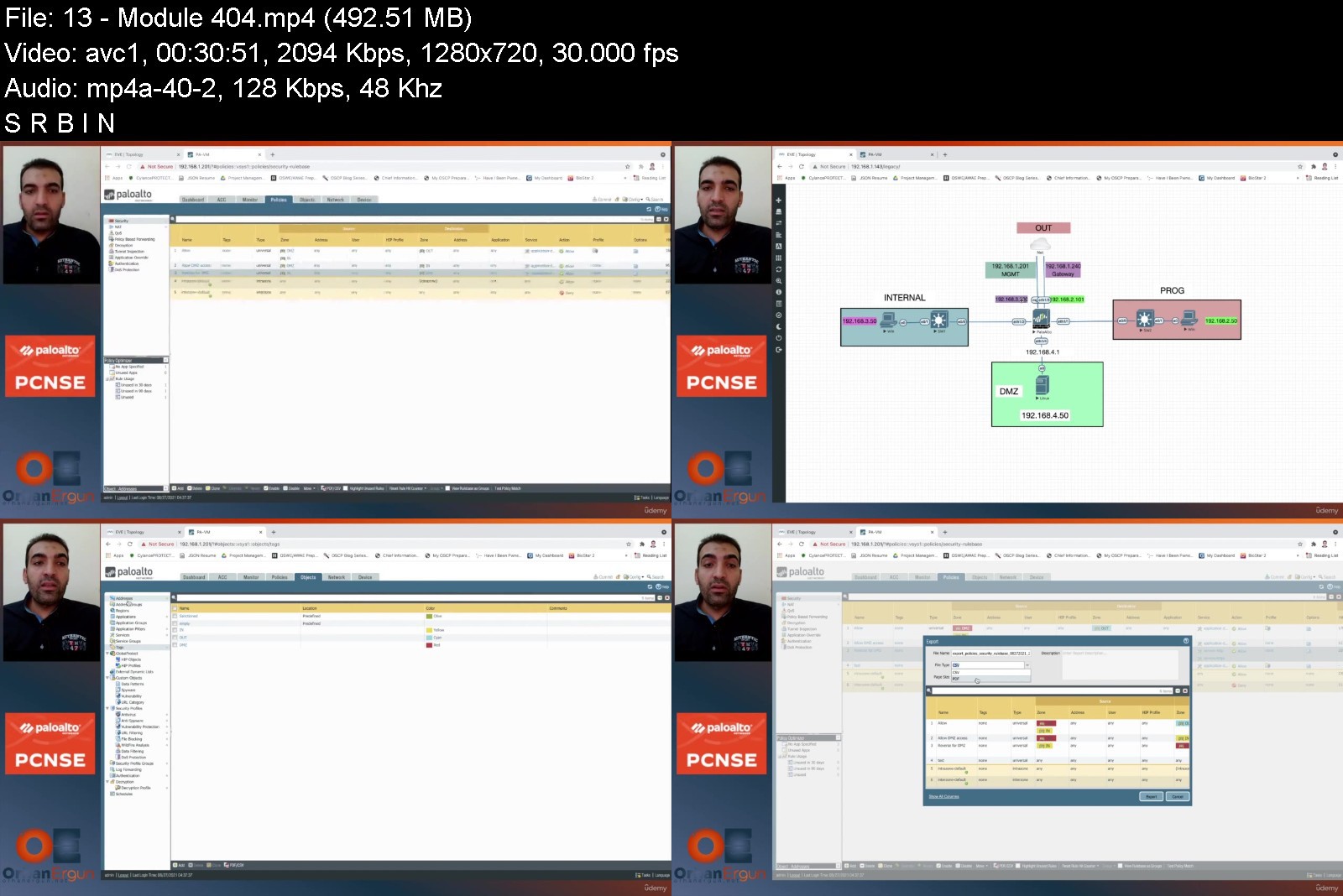
Lecture 13 Module 4-04
Lecture 14 Module 4-05
Section 5: Module 05
Lecture 15 Module 5-01
Section 6: Module 06
Lecture 16 Module 6-01
Lecture 17 Module 6-02
Lecture 18 Module 6-03
Lecture 19 Module 6-04
Section 7: Module 08
Lecture 20 Module 8-01
Lecture 21 Module 8-02
Lecture 22 Module 8-03
Section 8: Module 09
Lecture 23 Module 9-01
Lecture 24 Module 9-02
Lecture 25 Module 9-03
Lecture 26 Module 9-05
Lecture 27 Module 9-06
Section 9: Module 10
Lecture 28 Module 10-1
Lecture 29 Module 10-2
Lecture 30 Module 10-3
This Course designed for Network Engineer & Security Engineer and for Cyber Security Engineer


paloaltofirewallconfikhjeh.jpg


Download from RapidGator


Download from Keep2Share



CBTNuggets - Full-Stack Angular Development

angulardevelopmentkzkzf.png


CBTNuggets - Full-Stack Angular Development
MP4 | Video: h264, 1920x1080 | Audio: AAC, 44.1 KHz, 2 Ch
Genre: eLearning | Language: English | Duration: 176 Lessons (31h 17m) | Size: 10.5 GB


This entry-level Full-Stack Angular Development training prepares learners to build and deploy interactive applications and services that rely on angular development as well as the other tools of the MEAN stack

Angular is one pillar of the MEAN stack, which also includes MongoDB, Express.js, and Node.js. This Full-stack Angular Development training will make an application developer an expert in not just writing good code, but understanding how to make sure it's tested, deployed and used properly.
Writing a great web application is a good skill for an application developer, but this Full-Stack Angular Development training makes sure you're a fully rounded developer who can make use of all the elements of the MEAN stack.
For IT managers, this Angular training can be used to onboard new app developers, curated into individual or team training plans, or as a Angular reference resource.
Full-Stack Angular Development: What You Need to Know
This Full-Stack Angular Development training has videos that cover JavaScript libraries topics including
Developing in MongoDB, Express.js, Angular, and Node.js ("MEAN")
Coding an application, testing it, deploying your code, and storing its data
Developing applications that can scale up to enterprise network implementation
Reading and writing TypeScript, HTML, CSS, and more to implement Angular projects
Who Should Take Full-Stack Angular Development Training?
This Full-Stack Angular Development training is considered foundational-level Angular training, which means it was designed for new developers with at least a year of experience with JavaScript libraries and experienced app developers looking to brush up on their Angular skills.
New or aspiring app developers. If you're a brand new app developer or you're hoping to eventually become one, this Full-Stack Angular Development training is the best way to prove your knowledge of an application's full lifecycle. Set yourself apart from your peers by demonstrating you know how to develop, test, and deploy your applications, not simply write code in Angular.
Experienced app developers. It's assumed that an application developer with several years of experience can develop a scalable application in Angular. To advance in the career, you'll need to also show you can test the application on your own, deploy it to a live environment, and make sure the data it depends on and generates is accessible. That's what this Full-Stack Angular Development training makes sure you know how to do, and taking it will make you a highly qualified app developer.


fullstackangulardevelsbkky.jpg


Download from RapidGator


Download from Keep2Share



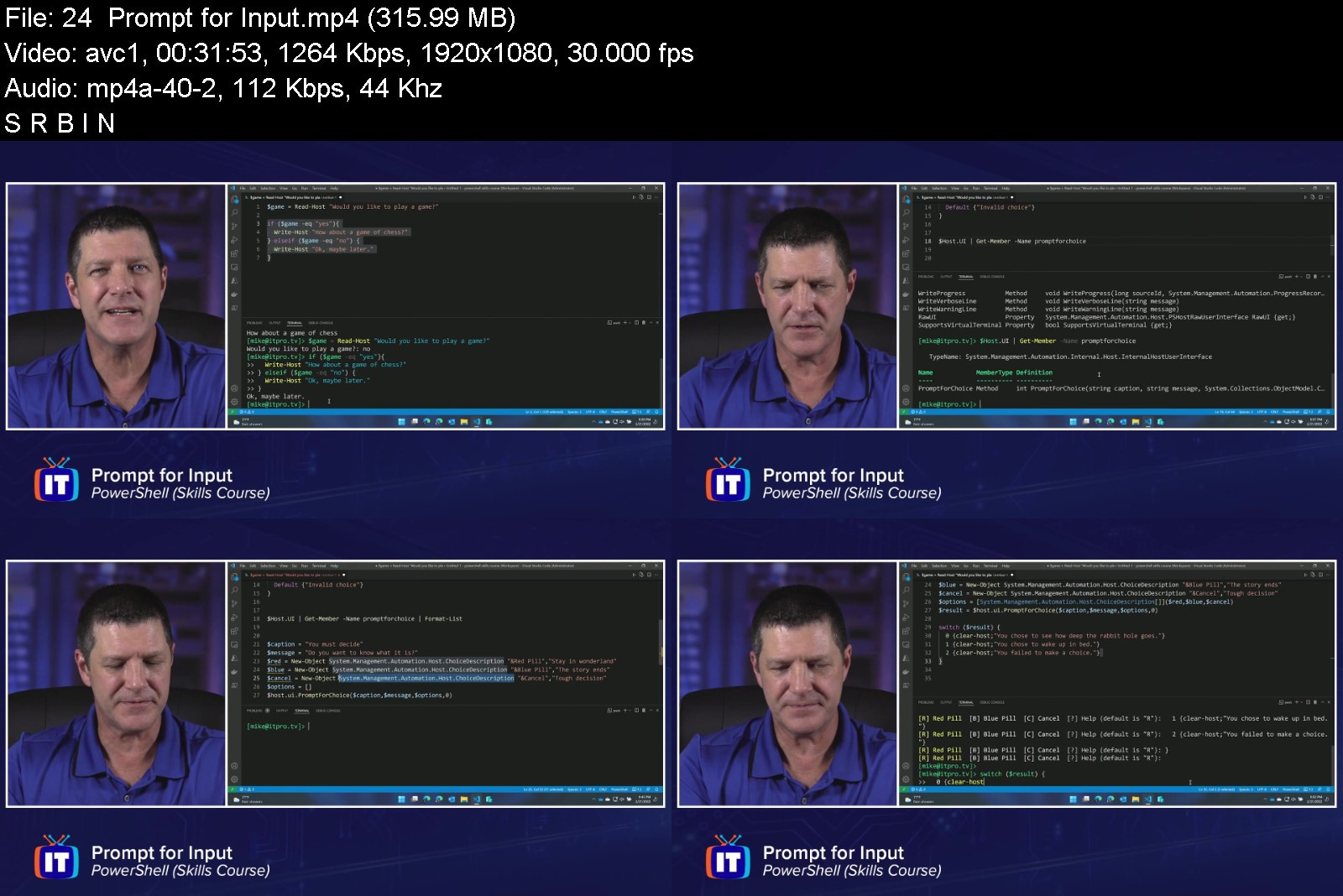
ITProTV - PowerShell Skills

35be6d288c2daba0bba51zpk2p.png


ITProTV - PowerShell Skills
Released 04/2022
MP4 | Video: h264, 1920x1080 | Audio: AAC, 44.1 KHz, 2 Ch
Genre: eLearning | Language: English | Duration: 26 Lessons (7h 31m) | Size: 5 GB


Introduction to PowerShell Scripting

PowerShell scripting is an amazing way to automate tasks. In this episode, we will provide a course overview, introduce learners to the course, and provide course expectations.


powershellskillsxcjht.jpg


Download from RapidGator


Download from Keep2Share


 
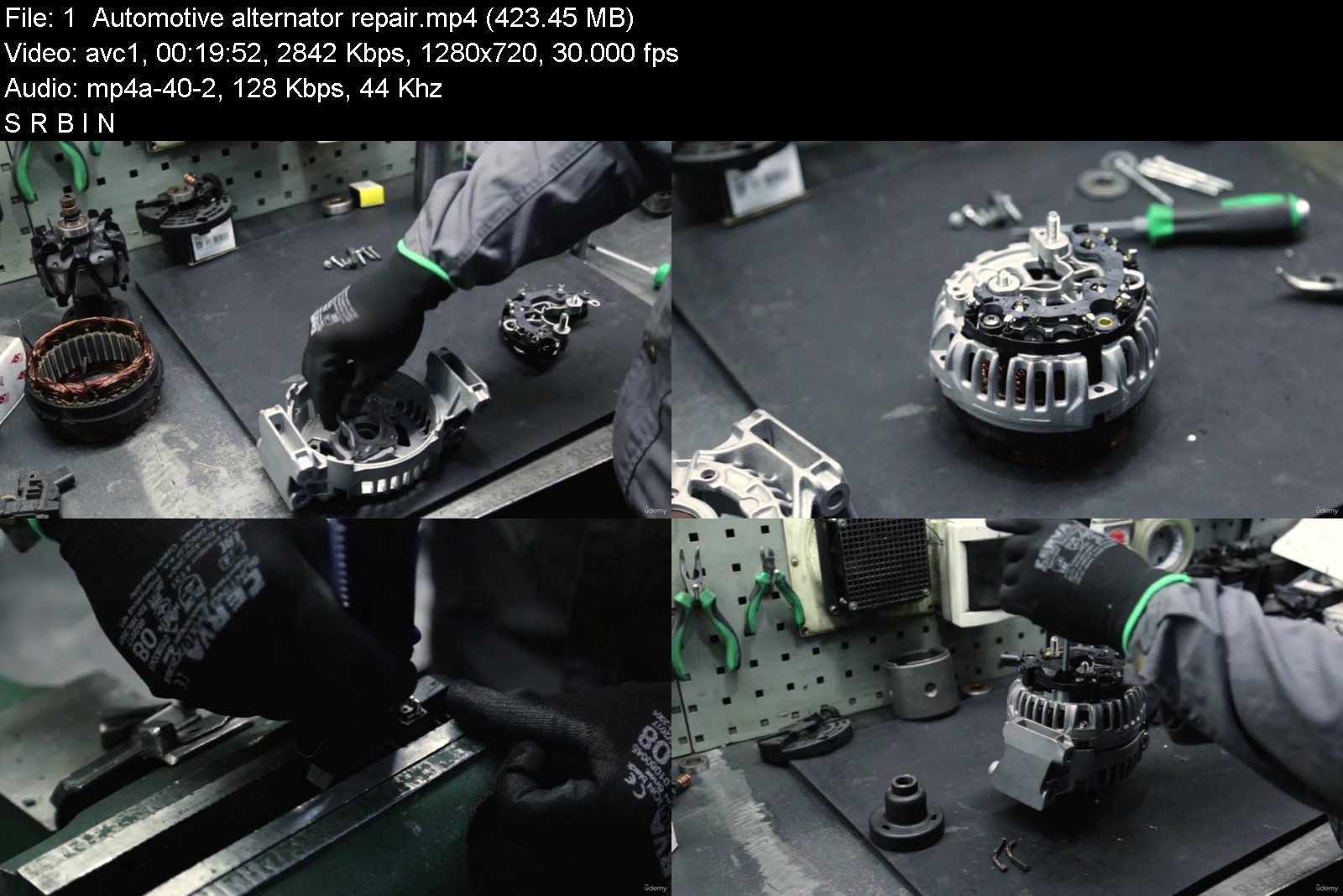
Automotive starters and alternators: diagnose and repair

a733a5a0edf3qwjb7.jpg


Automotive starters and alternators: diagnose and repair
Published 07/2022
MP4 | Video: h264, 1280x720 | Audio: AAC, 44.1 KHz, 2 Ch
Genre: eLearning | Language: English + srt | Duration: 26 lectures (4h 13m) | Size: 5 GB


Learn to carry out high-quality diagnostics and repair of starters and car alternators


What you'll learn
Pinciple of operation of the alternator and starter
Diagnostics of the alternator and its components
Automotive alternator repair
Starter repair
Requirements
Basic knowledge of electronics and mechanics
Description
Training in diagnostics and repair of starters and alternators from MSG Equipment
Repair of starters and alternators is a fairly common service on the market for two reasons: the repair of these units is economically beneficial for the client and the number of failures of these units is quite high, for the most part caused by untimely maintenance of the car and monitoring its technical condition. After completing the course of mechanics for the repair of starters and alternators from MSG Equipment, you will learn how to assess the technical condition of the power supply and start-up system of a car using modern equipment and maintain these units in a quality manner. If you already have requests for the repair of a car generator, but you cannot provide this service, the course will solve this problem.
This course includes the following topics
1. Overview of the vehicle's electrical system
2. Principles of operation of the alternator
Classification of mechanical malfunctions of the generator - causes, consequences, remedies.
- Excitation winding: device, diagnostics.
- Stator winding: device, classification, diagnostics.
- Diode bridge: device, classification, diagnostics.
Electric circuits of generators
Voltage regulators: device, classification, diagnostics;
- tube regulators and regulators with feedback (MFR);
- PWM regulators
- Regulators with LIN control.
Typical malfunctions of generators and methods for their detection.
Checking generators of various types on a diagnostic stand.
3. Start-Stop alternators: device, operating principle, diagnostics.
4. Starters: purpose, principle of operation
Starter design and operation
Operation and maintenance of starters
Typical malfunctions of starters and methods for their detection
Repair of starters using modern equipment
Who this course is for
Mechanics wishing to upgrade their skills
Service station owners who want to expand the range of services


automotivestartersandvykw4.jpg


Download from RapidGator


Download from Keep2Share


 
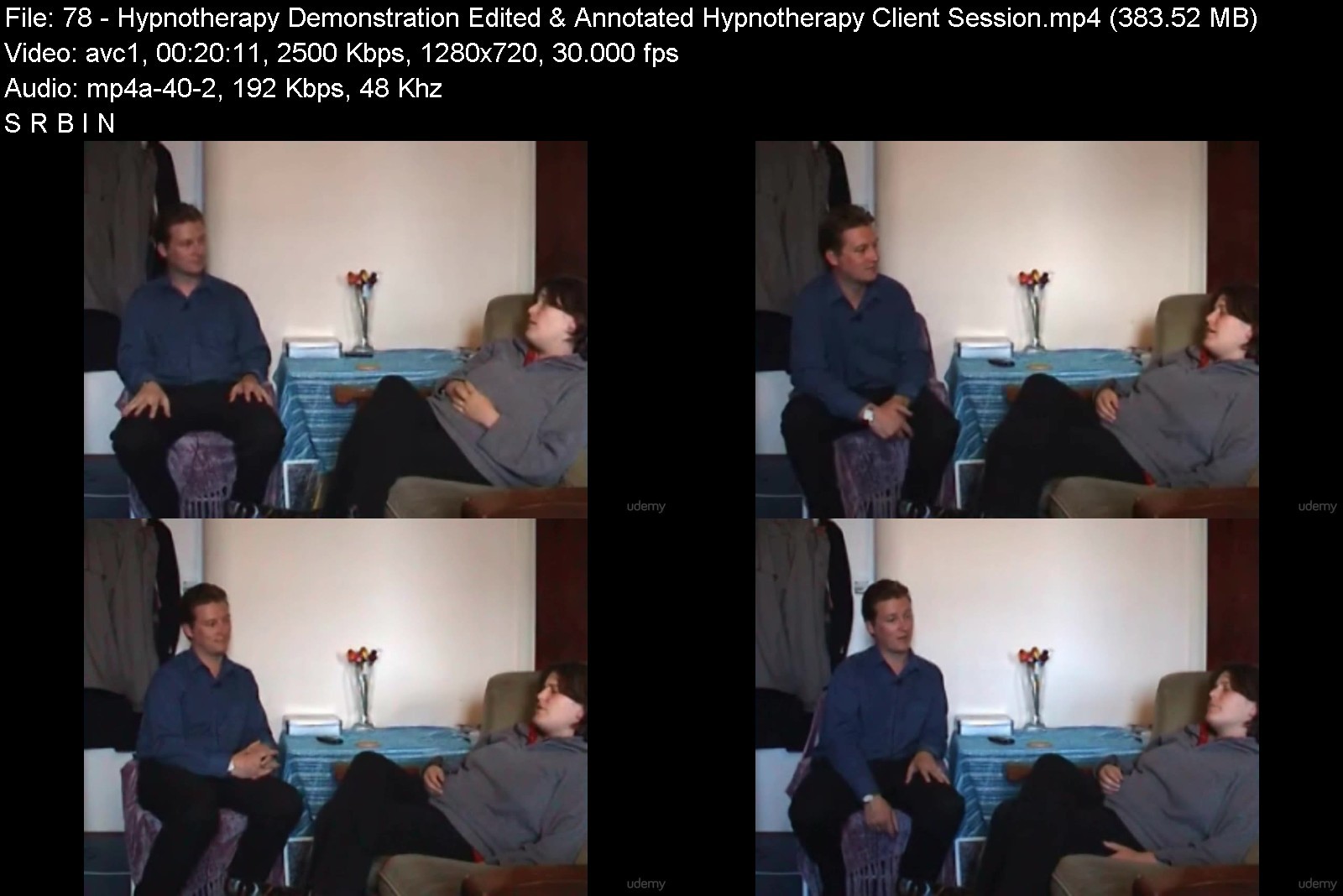
Certificate In Ericksonian Hypnotherapy (Hypnosis Training)

ovlqywuzdacsfrsepjffsoqjxi.jpg


Certificate In Ericksonian Hypnotherapy (Hypnosis Training)
Last updated 9/2021
MP4 | Video: h264, 1280x720 | Audio: AAC, 44.1 KHz
Language: English | Size: 5.36 GB | Duration: 10h 36m

Learn The Secrets Behind Milton Erickson's Approach To Hypnosis & Therapy & Ericksonian Hypnotic Language Patterns


What you'll learn
How to do client-responsive hypnotherapy
How to utilise your observations successfully
How to do hypnotherapy without needing hypnotherapy scripts
How to do hypnotherapy without needing structured inductions
How to utilise almost any response clients give you to help them achieve their goals in hypnosis and therapy
How to use Ericksonian, conversational, indirect hypnosis language patterns
How to structure hypnotherapy sessions
Requirements
Software for playing Mp3's may be required if you are downloading the mp3's
PDF viewer may be required to view the PDF's, especially if you are downloading them
Printer, if you want to print out the handouts or other written material

Description
This course is for those who want to quickly and easily*learn how to do Ericksonian*Hypnotherapy. Join over 10,000 students on this hypnosis course learning from*Dan Jones, one of the UK's foremost Ericksonian hypnosis*instructors. Dan*is committed to supporting you through this hypnotherapy*course. He*reads every comments and replies to every question (usually within 24 hours - depending on time zone differences).Learn the simple principles which hide behind the complexities seen in Ericksonian hypnotherapy. People often say that the Ericksonian approach to hypnosis and hypnotherapy is too difficult to learn. This isn't the case. There is a lot of complex language patterns, techniques and creative interventions, but, as you will learn in this course, these are all built on really simple principles which I have uncovered from over two decades of studying and clinical practice with the Ericksonian approach.To help you with your learning this course includes:*Over 8.5 hours of video lecturesA 119-page PDF workbook of supporting information20 hypnosis inductions and hypnotherapy demonstrationsPDF's of the slides from the video lecturesSix quizzes to check your knowledge as you work through the courseSussex Hypnotherapy Centre completion certification which can be helpful to evidence CPDThis hypnotherapy course will take you on a journey from:The history of hypnosis and why you should use hypnosisTo the work of Milton H EricksonTo the underpinning foundations of Ericksonian HypnotherapyHow to do Ericksonian Hypnotherapy language patternsAnd finally on to how to structure hypnotherapy sessionsBy the time you complete this course you will know how to do hypnotherapy:Without the need for structured hypnotic inductionsWithout the need for hypnotherapy scriptsWithout the need to just do 'suggestion therapy' hypnotherapyYou will know: How to work with clients as unique, individual human beingsHow to tailor what you do to each person as an individualThis Ericksonian hypnosis and hypnotherapy course contains clearly laid out content which is explained well in a calm, relaxing manner allowing you to fully absorb and integrate the concepts and ideas you are learning. To get the most out of this training it is recommended that you take time to absorb and learn from each lesson by going and practising with friends, family and like-minded people, as well as going and observing people and reading books from the recommended reading list to broaden your knowledge. Curiosity is the key to developing mastery and success. It is also good to ask questions and interact with others in the discussion areas of the lectures to get others understandings and views and experiences on different elements of the training. Current students on the course have describe it as:Valuable, easy to comprehend informationVery high-level teaching and thorough information, you won't find any course or certification out there like thisEasy to understand and well presentedTeaches what is usually complicated material in an easy and comfortably way to help with solid acquisition and retentionTaught in normal, down-to-Earth languageInformative and interestingGreat information I can immediately implement in my practiceThis course is ideal for:Those that are new to hypnosis and keen to learn about how to do hypnosisThose with experience with hypnosis who perhaps use hypnosis scripts or structured inductions and just suggesting problems away, that want to develop their skill and knowledge at being able to do hypnotherapy with people without the need for structured inductions and just the use of suggestion therapyIt is also ideal for hypnotherapist that perhaps don't have much knowledge or experience with Ericksonian Hypnotherapy and want to take a course for continued professional development (CPD)Life-Coaches, NLP Practitioners, Coaches, Counsellors and other therapists that want to learn about Ericksonian Hypnotherapy to add this skill to the therapy or coaching you already offer(Different places in the world have different rules around who can practice as a hypnotherapist. My view is to practice as a hypnotherapist you should undertake extensive live classroom tuition (minimum 120 hours of classroom tuition and minimum 450 hours total training)*which teaches therapy and then only work with those client groups you have been trained to work with. If you are totally untrained but have an interest in learning Ericksonian hypnotherapy this course will teach you what you need to know, but I would recommend you shouldn't work as a hypnotherapist based on just taking this course. This course will still teach you advanced communication skills which can be helpful in a wide range of life situations. If you have trained in hypnotherapy, counselling, coaching, or NLP or other similar fields then Ericksonian hypnotherapy should make great additional skills for your tool-box to use with clients you have been trained to work with, and this course should also give you a greater understanding about your use of language and other skills with clients even if you aren't doing hypnosis)Autistic Hypnotherapy instructor Dan Jones, is one of the UK's leading experts on Ericksonian Hypnotherapy with over 20 years experience. He has also authored and contributed to many books and articles on the subject.
Overview
Section 1: Introduction
Lecture 1 About The Course
Lecture 2 119-Page, 42,000+Word Ericksonian Hypnotherapy eCourse PDF Workbook
Lecture 3 PDF's of Course Slides and Handouts as Two Documents
Lecture 4 Hypnosis Demonstration of the Ericksonian Hypnosis You'll Be Learning
Lecture 5 To Get The Most Out Of This Course
Lecture 6 Recommended Reading To Enhance Your Knowledge
Section 2: History of Hypnosis
Lecture 7 A Pre-History of Hypnosis
Lecture 8 The Beginning of Modern Hypnosis
Lecture 9 Hypnosis: The Root of Modern Psychotherapy
Lecture 10 Milton H Erickson MD
Section 3: What is Trance & Hypnosis
Lecture 11 Trance & Focus of Attention
Lecture 12 Trance Behaviours
Lecture 13 Hypnosis Demonstration: Focusing Attention Demonstration
Lecture 14 Hypnosis Demonstration: Focusing Attention Two
Lecture 15 Hypnosis - The Optimal Learning State
Lecture 16 Inducing Hypnosis
Lecture 17 Guiding Attention
Lecture 18 Hypnosis Demonstration: Guiding Attention
Lecture 19 Ultradian Rhythms
Section 4: Why Use Hypnosis
Lecture 20 Why Use Hypnosis Lecture Part 01
Lecture 21 Why Use Hypnosis Lecture Part 02
Lecture 22 Why Use Hypnosis Lecture Part 03
Lecture 23 Positive Communication
Lecture 24 Trance Depth
Section 5: Observation & Utilisation
Lecture 25 Observation
Lecture 26 Hypnosis Demonstration: Observation
Lecture 27 Utilisation
Lecture 28 Hypnosis Demonstration: Utilisation
Lecture 29 Using Client Feedback
Lecture 30 The Three Pillars
Lecture 31 Hypnosis Demonstration: 'My Friend John' (Three Pillars Demonstration)
Section 6: Introducing Hypnotic Inductions
Lecture 32 Introduction
Lecture 33 Doing Hypnosis Without Calling It Hypnosis
Lecture 34 Pattern Interrupt Inductions
Lecture 35 Hypnosis Demonstration: Pattern Interrupt
Lecture 36 Other Types Of Inductions
Lecture 37 Hypnosis Demonstration: Arm Movement Confusion Induction
Lecture 38 Hypnosis Demonstration: Direct Hypnotic Induction
Lecture 39 Naturalistic and Creating Your Own Inductions
Lecture 40 How To Guide Someone's Thinking
Lecture 41 Naturalistically Creating Responses
Lecture 42 Working Metaphorically
Lecture 43 Making The Client Always Correct
Lecture 44 Hypnotic Rhythm And Fractionation
Lecture 45 Hypnosis Demonstration: Fractionation Induction
Lecture 46 Self Hypnosis Demonstration: Learn To Relax
Section 7: Ericksonian Language Patterns
Lecture 47 Ericksonian Language Patterns Introduction
Lecture 48 Agreement Set
Lecture 49 Agreement Set - Examples
Lecture 50 Hypnosis Demonstration: Agreement Set Induction
Lecture 51 Linking Suggestions
Lecture 52 Linking Suggestions - Examples
Lecture 53 Hypnosis Demonstration: Linking Suggestions Induction
Lecture 54 Presuppositions
Lecture 55 Presuppositions - Examples
Lecture 56 Vague Language
Lecture 57 Vague Language - Examples
Lecture 58 Hypnosis Demonstration: Vague Language (Self Hypnosis Mp3)
Lecture 59 Binds
Lecture 60 Binds - Examples
Lecture 61 Hypnosis Demonstration: Double Binds
Lecture 62 Commands & Suggestions
Lecture 63 Commands & Suggestions Examples
Lecture 64 Hypnosis Demonstration: Direct Suggestions and Commands
Lecture 65 Hypnosis Demonstration: Indirect Suggestions and Commands
Lecture 66 Metaphors & Analogies
Lecture 67 Metaphors & Analogies - Examples
Lecture 68 Ericksonian Language Patterns Summary
Lecture 69 Hypnosis Demonstration: Putting It All Together
Lecture 70 Ericksonian Hypnotherapy Demo - Self-Hypnosis Mp3 'Innner Wellbeing & Serenity'
Lecture 71 Examples of Ericksonian Hypnotic Language Use
Lecture 72 Hypnotherapy Demonstration: Therapeutic Client Session
Section 8: Structuring Hypnotherapy Sessions
Lecture 73 Structuring Hypnotherapy Sessions - RIGAAR Model
Lecture 74 Hypnotherapy Session Structure, The RIGAAR Model
Lecture 75 Hypnosis Demonstration: Transcribed Full Hypnotherapy Session
Section 9: Summary
Lecture 76 Summing Up What You Have Learnt
Lecture 77 Certificate of Completion
Section 10: Bonus Lessons
Lecture 78 Hypnotherapy Demonstration: Edited & Annotated Hypnotherapy Client Session
Lecture 79 Motivating Clients
Beginners with little or no experience with hypnosis and hypnotherapy, but holding a keen interest to learn about the mind and to learn how to effectively help others overcome problems or achieve success,Hypnotherapists or those with hypnosis training that would like to learn about Ericksonian Conversational, Indirect Hypnotherapy,Hypnotherapists and other therapists, coaches, NLP Practitioners and counsellors that want to do this training as continued professional development (where your relevant organisations allow it to count towards your CPD)


certificateinericksont3jxe.jpg


Download from RapidGator


Download from Keep2Share


 
Python, Matrices, and Linear Algebra for Data Science and ML

a7577a255e9huj10.jpg


Python, Matrices, and Linear Algebra for Data Science and ML
Published 07/2022
MP4 | Video: h264, 1280x720 | Audio: AAC, 44.1 KHz, 2 Ch
Genre: eLearning | Language: English + srt | Duration: 55 lectures (8h 31m) | Size: 10.5 GB


This course introduces students to essential concepts of linear algebra and python


What you'll learn
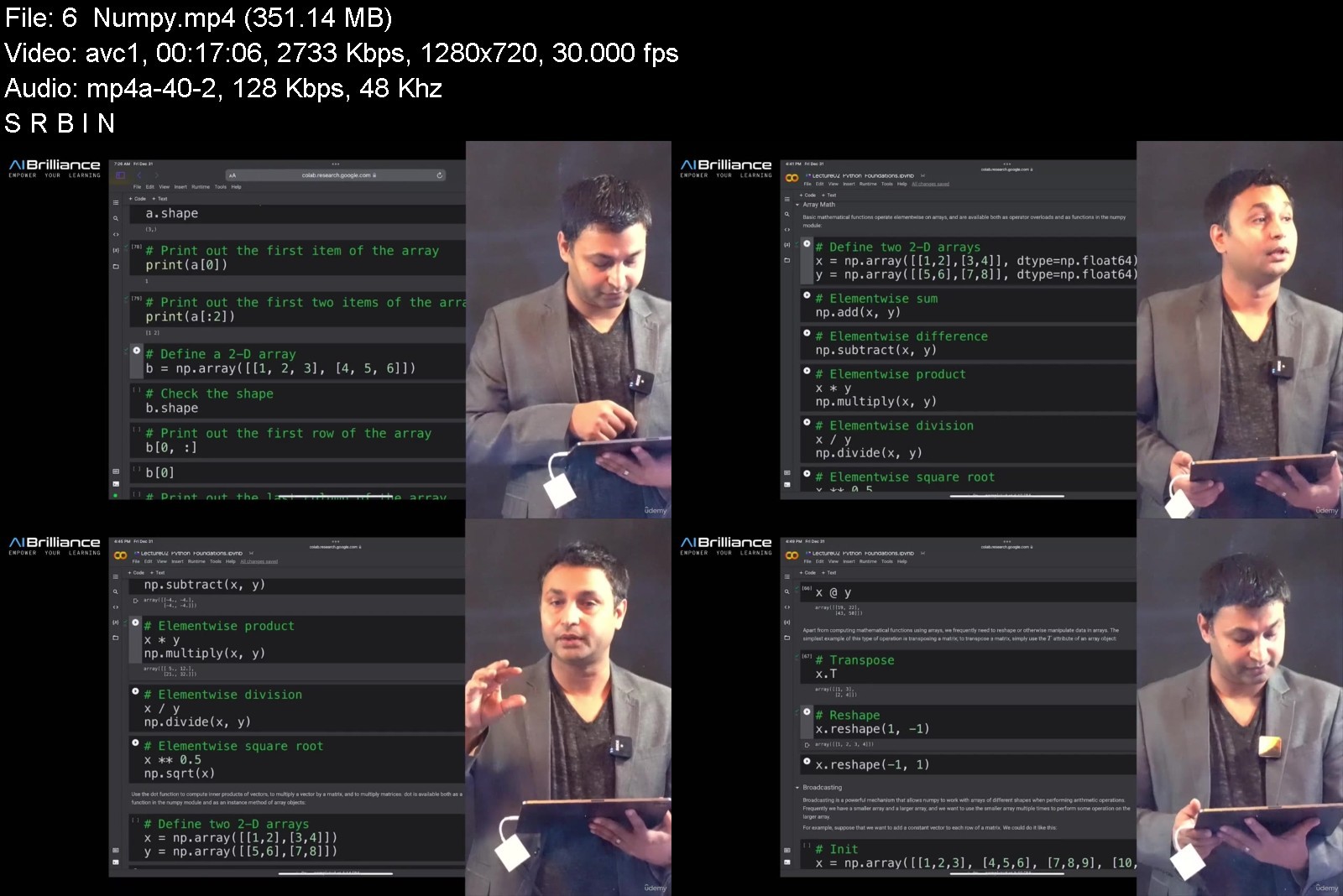
1. Introduction to Python
2. Vector and Matrices in Data Science and Machine Learning
3. Vector and Matrices Operations
4. Computing Eigenvalues
5. Computing Singular Values
6. Matrix Operations in Machine Learning Algorithm
7. Python Data Science and Machine Learning Libraries
Requirements
no prerequisites
Description
Python, Matrices, and Linear Algebra for Data Science and Machine Learning
Course Description
This course introduces students to essential concepts of linear algebra and python that are necessary as a foundation for learning concepts in data science and machine learning. The emphasis has been on creating lectures in a format that provides both geometrical intuitions and computational implementation of all the important concepts in linear algebra. Additionally, all the covered concepts are implemented and discussed in the python programming context. The following topics will be covered
1. Introduction to Python
2. Vector and Matrices in Data Science and Machine Learning
3. Vector and Matrices Operations
4. Computing Eigenvalues
5. Computing Singular Values
6. Matrix Operations in Machine Learning Algorithm
7. Python Data Science and Machine Learning Libraries
Who this course is for
Students who want to learn linear algebra and python programming concepts
Students who want to develop foundations in linear algebra for Data Science, Machine Learning, and Deep Learning domains
Anyone who is interested in learning python and wants to have a conceptual understanding of linear algebra concepts.
Data scientists and machine learning students who want to review their basics in the linear algebra domain
Anyone who wants to learn Python for data science, machine learning, and AI domain
This course is taught by professor Rahul Rai who joined the Department of Automotive Engineering in 2020 as Dean's Distinguished Professor in the Clemson University International Centre for Automotive Research (CU-ICAR). Previously, he served on the Mechanical and Aerospace Engineering faculty at the University at Buffalo-SUNY (2012-2020) and has experience in industrial research center experiences at United Technology Research Centre (UTRC) and Palo Alto Research Centre called as (PARC).
Who this course is for
Students who want to learn linear algebra and python programming concepts.
Students who want to develop foundations in linear algebra for Data Science, Machine Learning, and Deep Learning domains
Anyone who is interested in learning python and wants to have a conceptual understanding of linear algebra concepts.
Data scientists and machine learning students who want to review their basics in the linear algebra domain.
Anyone who wants to learn Python for data science, machine learning, and AI domains


pythonmatricesandliner9kbf.jpg


Download from RapidGator


Download from Keep2Share



Neck Treatment Using Hands for Therapists and Patients

1kkys5ssisgmemqdrxvqs5ajr2.jpg


Neck Treatment Using Hands For Therapists And Patients
Last updated 5/2020
MP4 | Video: h264, 1280x720 | Audio: AAC, 44.1 KHz
Language: English | Size: 5.09 GB | Duration: 3h 58m

To find the healer within, so that you can use your hands in a more purposeful therapeutic way


What you'll learn
To unlock the 'healer within' so that you can use your hands in a more purposeful and therapeutic way.
Treat Neck Pain
Fix Neck Pain
Upskill Neck Pain Treatment
Neck Pain Treatment Techniques
Sarah Key Method of Neck Pain Treatment
Treat Your Own Neck Pain
Requirements
No

Description
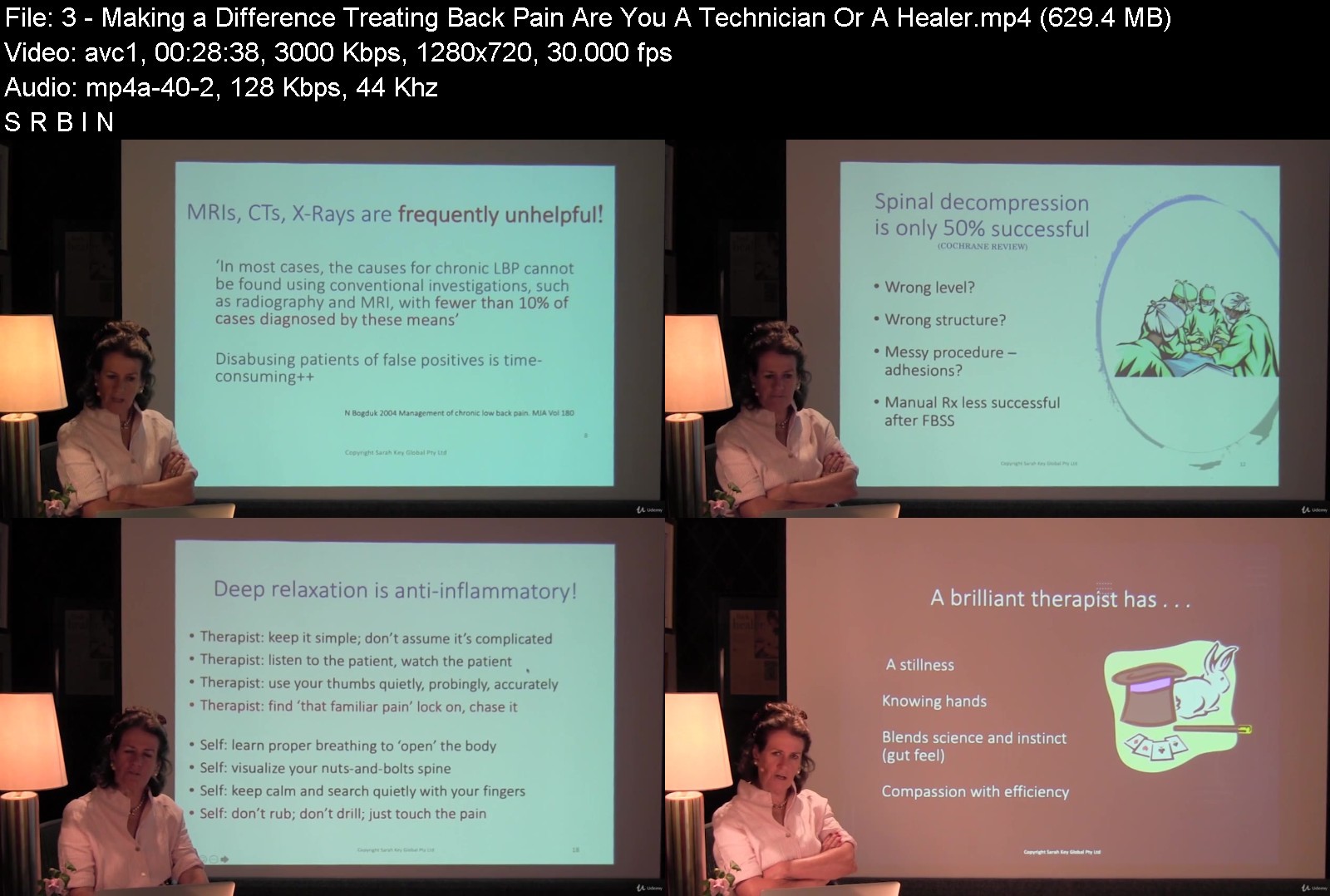
As part of the Healer Within series Sarah Key enjoins caring professionals to recognise the potent subtlety of using hands to mobilize cervical vertebrae to relieve neck pain. This course also covers self-mobilization of the neck and the 6 important exercises that help bring home the cure. The first part*covers basic anatomy, biomechanics and physiology of the spine, the neck in particular, and then how things go wrong. The second part of the course covers the important spinal mobilization techniques, with Sarah first showing on the plastic model spine and then on a living patient.
Overview
Section 1: INTRODUCTION TO SPINAL MOBILIZATON: GETTING IN TOUCH WITH YOUR INSTINCTS
Lecture 1 Course Overview
Lecture 2 Sarah Key: The Back Story
Lecture 3 Making a Difference Treating Back Pain: Are You A Technician Or A Healer
Section 2: THE SPINE AS A WHOLE
Lecture 4 Basic Anatomy and Biomechanics of the Human Spine
Lecture 5 The Spine's Miracle Shock Absorbers: The Intervertebral Discs
Lecture 6 The Importance of Spinal Decompression
Lecture 7 What Causes a Stiff Spinal Segment?
Lecture 8 Why a Stiff Segment Responds To Mobilizing Pressures (touch)
Lecture 9 Muscle Spasm: The Wild Card
Section 3: FOCUSING ON THE NECK
Lecture 10 Neck Anatomy Simplified
Lecture 11 The Cervical Spine: The Bottleneck to Wider Good Health
Section 4: OBSERVING A TYPICAL NECK
Lecture 12 Posture & Surface Anatomy of the Neck
Lecture 13 Bony Anatomy Of The Jointed Cervical Column on Spine Model
Lecture 14 Typical Ranges of Neck Movement
Section 5: MANUAL MOBILIZATION OF THE NECK - ON PLASTIC AND THEN ON LIVING SPINE
Lecture 15 Postero-anterior Pressures (PA's) to Spinous Processes on Spine Model
Lecture 16 Postero-anterior Pressures (PA's) to Spinous Processes on Living Spine
Lecture 17 Unilateral Pressures to Facet Joints in Prone to Spine Model
Lecture 18 Unilateral Pressures to Facet Joints in Prone to Living Neck
Lecture 19 Facet Pressures in Supine in Cervical Rotation in Supine to Spine Model
Lecture 20 Facet Pressures in Supine in Cervical Rotation in Supine to Living Neck
Lecture 21 Traction to Spine Model
Lecture 22 Traction to Living Neck
Section 6: MOBILIZING YOUR OWN NECK
Lecture 23 PA pressures to Spinous Processes on Living Neck
Lecture 24 Transverse Pressures on Spinous Processes on Living Neck
Lecture 25 Central Pressures to Transverse Processes on Living Neck
Lecture 26 Facet Joint Pressures in Prone
Lecture 27 Facet Joint Pressures in Supine in Cervical Rotation
Lecture 28 Self-Traction
Section 7: EXERCISES FOR A BAD NECK
Lecture 29 Thoracic BackBlock
Lecture 30 Up-the-Wall Bridging
Lecture 31 Swastika
Lecture 32 Sideways Neck Stretch Sitting on Chair
Lecture 33 Chair Twist for Neck and Thorax
Lecture 34 Crown Rolling
Lecture 35 TheMa Roller
Section 8: CLOSING MESSAGE
Lecture 36 A message from Sarah for the way forward
Neck pain sufferers, physiotherapists, doctors, chiropractors, osteopaths, masseuses, yoga therapists, reiki practitioners, Alexander practitioners, Bowen therapists, informed patients, people curious about the science of healing.


necktreatmentusinghan7ejj2.jpg


Download from RapidGator


Download from Keep2Share

 
Learn Professional Photography Diploma Course

m9qsiunuppnwcy90nbhz00xk8f.jpg


Learn Professional Photography Diploma Course
Published 7/2022
MP4 | Video: h264, 1280x720 | Audio: AAC, 44.1 KHz
Language: English | Size: 5.20 GB | Duration: 4h 9m

Photography Masterclass: A Complete Guide to Photography


What you'll learn
1. Photography Intro
2. Camera accessories
3. Concept of ISO
4. Aperture & depts of field
5. Shutterspeed intro
6. ISO exposure settings
7. Exposure triangle
8. Whitebalance & Colour
9. Depth of field
10. RAW vs JPEG
11. Understanding Light
12. Compositions
13. Landscape Photography
14. Macro photography
15. Portrait Photos Intro
16. Child & Baby Photography
17. Wate, Ice & Reflections
18. Night Photography
19. Shooting in Black & White
20. Brief History DSLR & Mirrorless
21. Focal Lengths Affects Aperture
22. Motion Blur & Camera Shake
Requirements
No requirements

Description
Answering the question, "What is photography?"is sort of like seeking to solution the question, "What's the that means of life?"That's due to the fact photography is quite complex. It has many aspects and types. There are technical components to images in addition to innovative ones.The way wherein images is used is even different, regularly from one individual to the next. Moreover, there's a vast range withinside the pleasant of photos.In that regard, seeking to give an explanation for the distinction among an regular image and a piece of artwork is a completely tough job.You can inform with the aid of using searching at images which one is which, however conveying the way to get from being an beginner to a seasoned isn't an smooth task.But, you need to begin somewhere, so on this guide, I provide some foundational thoughts to help you solution the question, "What is photography?"What will students learn in your course?1. Photography Intro2. Camera accessories3. Concept of ISO4. Aperture & depts of field5. Shutterspeed intro6. ISO exposure settings7. Exposure triangle8. Whitebalance & Colour9. Depth of field10. RAW vs JPEG11. Understanding Light12. Compositions13. Landscape Photography14. Macro photography15. Portrait Photos Intro16. Child & Baby Photography17. Wate, Ice & Reflections18. Night Photography19. Shooting in Black & White20. Brief History DSLR & Mirrorless21. Focal Lengths Affects Aperture22. Motion Blur & Camera Shake
Overview
Section 1: Nature Photography Ideas for Beginners Course
Lecture 1 1. Photography Intro
Lecture 2 2. Camera accessories
Lecture 3 3. Concept of ISO
Lecture 4 4. Aperture & depts of field
Lecture 5 5. Shutterspeed intro
Lecture 6 6. ISO exposure settings
Lecture 7 7. Exposure triangle
Lecture 0 8. Whitebalance & Colour
Lecture 0 9. Depth of field
Lecture 0 10. RAW vs JPEG
Lecture 8 11. Understanding Light
Lecture 0 12. Compositions
Lecture 0 13. Landscape Photography
Lecture 0 14. Macro photography
Lecture 9 15. Portrait Photos Intro
Lecture 10 16. Child & Baby Photography
Lecture 0 17. Wate, Ice & Reflections
Lecture 0 18. Night Photography
Lecture 11 19. Shooting in Black & White
Lecture 0 20. Brief History DSLR & Mirrorless
Lecture 0 21. Focal Lengths Affects Aperture
Lecture 12 22. Motion Blur & Camera Shake
Beginner amateur photographers


learnprofessionalphot5ujt9.jpg


Download from RapidGator


Download from Keep2Share

 
Number System Masterclass

ux1culo1b9byqf6ioforusek56.jpg


Number System Masterclass
Last updated 7/2022
MP4 | Video: h264, 1280x720 | Audio: AAC, 44.1 KHz
Language: English | Size: 5.75 GB | Duration: 6h 25m

Number Theory Math Masterclass. Ace Quantitative Aptitude of CAT & MBA Exams. Solution of Past 20 Years CAT Papers.


What you'll learn
Gain In-depth Knowledge of Number Theory
Basics and Advanced Concepts of the number system for Quantitative Aptitude Exams
Mastering the concept of digits
Tricks and techniques for doing large numerical calculations in a snap
Numerical calculation based on percentages
Perfect squares
Pythagorean triplets
Cyclicity
Digital Sum
Remainder
Basic Remainder theorem
Chinese Remainder Theorem
Euler's Theorem
Fermat's Theorem
HCF and LCM
Divisibility rules
Factorials
Requirements
A laptop with internet connection to follow along lessons
Motivation to learn

Description
Number System is the most important topic in the Quantitative Aptitude section of any competitive examination. If you are appearing for any MBA entrance examination such as Common Admission Test (CAT), XAT, MAT, or any other entrance exam conducted by any IIM or prestigious management Institute, scoring well in the number system segment is a must for ensuring your success. The number system is also an important topic for competitive examinations such as CSAT (UPSC), Bank/PO, SSC, and various other state-level and central government examinations.Considering its importance, this course offers comprehensive coverage of the number system topic covering the following:· Basics of the number system· Mastering the concept of digits· Tricks and techniques for doing large numerical calculations in a snap· Numerical calculation based on percentages· Perfect squares· Pythagorean triplets· Cyclicity· Digital Sum· Remainder· Basic Remainder theorem· Chinese Remainder Theorem· Euler's Theorem· Fermat's Theorem· HCM· LCM· Divisibility rules· FactorialsMaster Number System Math Questions for Quantitative Aptitude Exams Like CAT, MAT, XAT, UPSC CSAT, GMAT, GRE, GATEThis course has been designed to help you gain mastery over the topic of the number system. The instructor offers you all the fundamental concepts along with their practical applications that will be required to build your confidence for the Number System questions in any exam you appear. This course offers complete coverage of the topic of Number System. The course content has been prepared based on thorough research of the previous year's questions of CAT and scholarly sources.
Overview
Section 1: Introduction
Lecture 1 Introduction
Section 2: Basic of Number System
Lecture 2 Introduction to Number System
Lecture 3 Types of Number: Real Vs. Imaginary
Lecture 4 Types of Real Numbers: Rational Vs. Irrational Numbers
Lecture 5 How to Convert a Recurring Irrational Number into Fraction?
Lecture 6 How to Convert a Recurring Irrational Number into Fraction in 10 Seconds?
Section 3: Mastering the Game of Digits
Lecture 7 Concept of Unit Digit, Even and Odd Digits
Lecture 8 The Logic of the Last Two Digits
Lecture 9 The Logic of Perfect Squares: Part 1
Lecture 10 The Logic of Perfect Squares: Part 2
Lecture 11 Quick Solution of a Number System Question Using Vedic Math
Section 4: Percentages and Perfect Squares
Lecture 12 Solving a Percentages Question: Fundamentals
Lecture 13 Solving a Percentages Question Using Unit Digit Logic
Lecture 14 Solving a Percentages Question Using Digital Sum Logic
Lecture 15 The Perfect Square Logic: Fast Solution
Lecture 16 Practice Question on Perfect Squares Logic
Section 5: Pythagorean Triplet Logic
Lecture 17 Solving a Question Using the Logic of Pythagorean Triplet
Lecture 18 Understanding Pythagorean Triplet: Part 1
Lecture 19 Understanding Pythagorean Triplet: Part 2
Section 6: Practice Questions
Lecture 20 Practice Question with Solution: Part 1
Lecture 21 Practice Question with Solution: Part 2
Lecture 22 Practice Questions: Solution Using Remainder Trick
Lecture 23 Practice Question: Multiplying Two Numbers Ending With 5 - Part 1
Lecture 24 Practice Question: Multiplying Two Numbers Ending With 5 - Part 2
Lecture 25 Practice Question: Last Two Digit Logic With Five Power- Part 1
Lecture 26 Practice Question: Multiplying Two Numbers Ending With 5 - Part 2
Lecture 27 CAT 2008 Question with Solution
Section 7: Concept of Cyclicity
Lecture 28 Concept of Cyclicity: Part 1
Lecture 29 Concept of Cyclicity: Part 2
Lecture 30 Concept of Cyclicity: Part 3
Lecture 31 Cyclicity of Last Two Digits
Lecture 32 Cyclicity Last 2 Digits of 2 and 5 and Its Reciprocal: Part 1
Lecture 33 Cyclicity Last 2 Digits of 2 and 5 and Its Reciprocal: Part 2
Lecture 34 Cyclicity Last 2 Digits of 2 and 5 and Its Reciprocal: Part 3
Section 8: Understanding and Applying Digital Sum
Lecture 35 Concept of Digital Sum: Part 1
Lecture 36 Concept of Digital Sum: Part 2
Lecture 37 Concept of Digital Sum: Part 3
Lecture 38 Concept of Digital Sum: Part 4
Lecture 39 Practice Question 1 on Digital Sum
Lecture 40 Practice Question 2 on Digital Sum: Part 1 - Question Analysis
Lecture 41 Practice Question 2 on Digital Sum: Part 2 - Solution
Lecture 42 Digital Sum of Any Base System
Section 9: Remainder Theorems: Negative Remainder and Chinese Remainders
Lecture 43 Negative Remainder Theorem
Lecture 44 Practice Question on Negative Remainder: Addition and Multiplication
Lecture 45 Negative Remainder and Digital Sum; Combined Question
Lecture 46 Negative Remainder Exercise When Numerator has Addition and Subtraction
Lecture 47 Negative Remainder Exercise When Numerator has Multiplication
Lecture 48 Calculation Remainder When Numerator has Power
Lecture 49 Exercise: Calculating Remainder when Numerator has Power
Lecture 50 Practice Question on Negative Remainder: Part 1
Lecture 51 Practice Question on Negative Remainder: Part 2
Lecture 52 Chinese Remainder Theorem
Lecture 53 How to Calculate Remainder of Higher Powers: Exercise 1
Lecture 54 How to Calculate Remainder of Higher Powers: Exercise 2
Lecture 55 How to Calculate Remainder of Higher Powers: Exercise 3
Lecture 56 How to Calculate Remainder of Higher Powers: Exercise 4
Lecture 57 Solving a CAT Question on Remainder Theorem With Algebra Concepts: Part 1
Lecture 58 Solving a CAT Question on Remainder Theorem With Algebra Concepts: Part 2
Lecture 59 Proof: x^n+y^n is always divisible with x+y if n is odd
Lecture 60 Which Remainder Method to Choose?
Section 10: Other Remainder Theorems and Their Prerequisites
Lecture 61 Euler's Theorem
Lecture 62 Fermat's Theorem
Lecture 63 Chinese Remainder Theorem
Lecture 64 Wilson's Theorem
Lecture 65 What are Totient Functions?
Lecture 66 What are Co-Prime Numbers?
Lecture 67 Why and When To Use Euler and Fermat's Theorems?
Lecture 68 What is Prime Factorization?
Lecture 69 What are Totient Functions and Co-Primes? Part 1
Lecture 70 What are Totient Functions and Co-Primes? Part 2
Lecture 71 Understanding the Formula of Totient Function
Section 11: Euler's Theorem
Lecture 72 Basics of Euler's Theorem and Checkpoints
Lecture 73 Formula and Examples of Euler's Theorem
Lecture 74 Euler's Theorem: Type 1
Lecture 75 Euler's Theorem: Type 2
Lecture 76 Euler's Theorem: Type 3
Lecture 77 Euler's Theorem: Type 3 With Higher Power
Lecture 78 Euler's Theorem Type 4: Finding Last Two Digits
Lecture 79 Euler's Theorem Type 4: Finding Last Three Digits
Lecture 80 Euler's Theorem Type 5: Higher Powers as Dividend
Lecture 81 Euler's Theorem Type 5: Higher Powers as Dividend - Practice Question
Lecture 82 Euler's Theorem: Type 6
Lecture 83 Euler's Theorem: Type 7
Lecture 84 Euler's Theorem Type 6: Practice Question 1
Lecture 85 Euler's Theorem Type 6: Practice Question 2
Lecture 86 Euler's Theorem: Type 8(A)
Lecture 87 Euler's Theorem: Type 8(B)
Section 12: Fermat's Theorem
Lecture 88 Fermat's Theorem for Prime Divisor
Lecture 89 Totient Function of Prime Number
Lecture 90 Explaining Fermat's Theorem
Lecture 91 Fermat's Theorem: Types of Application
Lecture 92 Fermat's Theorem: Application Type 1
Lecture 93 Fermat's Theorem: Application Type 2
Lecture 94 Fermat's Theorem: Application Type 3
Lecture 95 Fermat's Theorem: Application Type 4
Lecture 96 Fermat's Theorem: Application Type 4 Choose Between Negative Remainder or
Lecture 97 Fermat's Theorem: Application Type 4 Negative Remainder Practice
Lecture 98 Fermat's Theorem: Application Type 5 Higher Power Fundamental
Lecture 99 Fermat's Theorem: Application Type 5 Higher Power Practice
Lecture 100 Fermat's Theorem: Application Type 5 CAT Replica
Lecture 101 Fermat's Theorem: Application Type 5 CAT Replica Questions
Lecture 102 Conclusion Applying Fermat's Theorem Part 1
Lecture 103 Conclusion Applying Fermat's Theorem Part 2
Anyone looking to knowledge of number theory,Learners looking to master Quantitative Aptitude Exams for CAT and Other Test preparation


numbersystemmasterclalej2c.jpg


Download from RapidGator


Download from Keep2Share


 
Complete MySQL DBA Training on Linux

oownmce1vvrfeth5jhxbkp2j63.jpg


Complete Mysql Dba Training On Linux
Published 7/2022
MP4 | Video: h264, 1280x720 | Audio: AAC, 44.1 KHz
Language: English | Size: 9.66 GB | Duration: 26h 49m

MySQL DB Training for Data Analysis to get your Dream IT Job


What you'll learn
You will be able to apply for SQL developer, Database administrator, Business Analyst, and Business Intelligence job opportunities
You will learn 150+ SQL queries
Administration of SQL database through Linux Operating System
You will manage SQL servers in a corporate environment
Troubleshoot everyday SQL database related issues
Know how to answer specific business questions by using SQL's aggregate functions
Requirements
Positive attitude and desire to learn
Passion to become SQL database administrator
A PC or MAC with at least 4-8G of RAM

Description
MySQL Server continues to be one of the world's most popular, FREE and top databases. Database*is a heart of IT which is needed to stored all critical data and information. MySQL is a DBMS, or database management system. It is developed, supported and distributed by Oracle, but since it is open-source it is freely available to anyone. MySQL databases are relational, meaning that the data is split up between tables. MySQL is very fast and lightweight so you can run it alongside your other applications on a desktop or laptop. It can also be scaled up to take advantage of all the CPU power and memory available on a dedicated machineIf you want to become an expert in SQL*database administration then this is the course for YOU.This training course will provide you all the necessary skills you need to be a successful database administrator.Here is the course outline:Course SyllabusSection 1:Introduction to DatabaseRDBMSWhat is SQL?Top 5 RDBMSIntroduction to MySQL ServerDifferent editions of MySQLSection 2:MySQL Server pre-requisiteLab designWhat is virtualization?Download and Install VMWare Workstation PlayerOptional - Download and Install Oracle VirtualBoxCreate a Virtual MachineDownload and Install Linux ServerVirtual Machine ManagementSection 3:Important things to remember in LinuxLinux navigation commandsWhat is root?Directory listing attributesLinux command syntaxCreating files and directories and its permissionsChanging passwordHelp commandsAdding text to filesPipes (|)File maintenance commandsFile display commandsLinux file editorUser account management and sudo accessProcess monitor commandsCrontabLinux network files and commandsSecure copy (SCP)System updates and repos (rpm and yum).Section 4:Forks of MySQL and Cloud ComputingMySQL installationDownload, Install and Configure MySQLInstall MySQL WorkbenchDownload and restore sample Sakila DBQuizSection 5:What is Data and Database and RDBMS?How is data stored?How is data saved in MySQL (Linux)MySQL Storage engine and TypesWhat is a Table, COLUMN and ROW ?What is a Key?What is Primary Key, Foreign Key, Unique Key etc.What is a Transaction and ACID properties?Database Normalization AND its different formsCreate your first Database, Table and Populate table with dataQuizSection 6:SQL Statement and TypesDML Statement with examplesDDL Statements with examplesDCL Statements with examplesTCL Statements with examplesQuizSection 7:Create TABLE(s) and Temp Table(s)SELECT Statement in detailOperators, Expressions and ConditionsWHERE Clause, ORDER BY, HAVING BY, GROUP BY ClauseSelect from two tables - JOINS and different Types of JOINSWhat is a Sub Query?INSERT, UPDATE, and DELETE statementsLoad data from a CSV file to MySQL and vice versaStored procedureWhat is view, function, trigger and indexClustered, non-clustered Indexes and Index Design considerationsINDEX Cardinality, Table Fragmentation, USE INDEX, FORCE INDEX and LABQuizSection 8:MySQL Architecture OverviewMySQL Programs and invocationSpecifying Program Options and Option FilesHow to edit the configuration file (.cnf)Options scopeWhat options are in affect?QuizSection 9:MySQL Backups, why we need backup, RTO and RPOType of Backups in MySQL, offsite storage, encryption and restore testingBinary logsThe mysqldump utilityRestore of database using mysql and WorkbenchTable level Backup and RestorePoint In Time Recovery in MySQLXtraBackup Utility by Percona, Functionality and InstallationFull Backup and Restore using Percona XtraBackupLab for mysqldump and Backups using MySQL WorkbenchIncremental Backup and Restore using Percona XtraBackupSchedule backups (cronjobs)QuizSection 10:Understanding MySQL SecurityRoot User in MySQLCREATE USER and ALTER USER StatementCreate New User (MySQL Workbench)MySQL Privileges , Privileges Control and Some important Privileges in MySQLGRANT Statement , WITH GRANT Option and Granting Privileges to MySQL UserGRANT Tables and Checking PrivilegesREVOKE Statement and Revoking PrivilegesDROP USER StatementRoles in MySQLQuizSection 11:MySQL Server Performance Monitoring BasicsThe General Query LogThe Slow Query LogThe Error LogOptimizing configuration for MySQL performanceDB Engine StatusQuery Optimization TIPS, EXPLAIN Statement and Execution PlansQuery Optimization DemoQuizSection 12:MySQL Replication and its AdvantagesMySQL Replication MethodsSynchronization TypesReplication FormatsMySQL Replication Setup DemoQuiz
Overview
Section 1: Introduction
Lecture 1 Introduction
Lecture 2 Course overview
Lecture 3 Introduction to database
Lecture 4 What is RDBMS?
Lecture 5 What is SQL?
Lecture 6 Top 5 RDBMS using SQL
Lecture 7 Introduction to MySQL Server
Lecture 8 Editions of MySQL Server
Section 2: Lab design and setup
Lecture 9 Welcome to the lab design and setup
Lecture 10 Lab Setup Pre-requisite
Lecture 11 Lab design
Lecture 12 What is Virtualization?
Lecture 13 Download and Install VMWare Workstation Player
Lecture 14 Optional - Download and Install Oracle Virtualbox
Lecture 15 Create a Virtual Machine
Lecture 16 Download and Install Linux server
Lecture 17 Virtual machine management
Section 3: Linux Basics for a DB Administrator
Lecture 18 Welcome to Linux basic administration
Lecture 19 Important Things to Remember in Linux
Lecture 20 Linux navigation commands (cd, pwd and ls)
Lecture 21 What is root?
Lecture 22 Directory Listing Attributes
Lecture 23 Linux Command Syntax
Lecture 24 Creating Files and Directories (touch, cp, vi, mkdir)
Lecture 25 Changing Password
Lecture 26 Files and Directory Permissions (chmod)
Lecture 27 Help Commands
Lecture 28 Adding Text to Files
Lecture 29 Pipes ( | )
Lecture 30 File Maintenance Commands (cp, rm, mv, mkdir, rmdir)
Lecture 31 File Display Commands (cat, less, more, head, tail)
Lecture 32 Linux File Editor (vi)
Lecture 33 User Account Management (useradd, groupadd, usermod, userdel, groupdel)
Lecture 34 Switch Users and Sudo Access (su, sudo)
Lecture 35 Process monitor commands (ps and top)
Lecture 36 crontab command
Lecture 37 Linux network files and commands
Lecture 38 SCP - Secure Copy Protocol
Lecture 39 System Updates and Repos (rpm, yum)
Section 4: Download, Install and Configure MySQL
Lecture 40 Weclome To Download, Install and Configure MySQL Section
Lecture 41 Brief History, Forks of MySQL and Cloud Computing
Lecture 42 MySQL installation steps (prereq, distribution, versions etc)
Lecture 43 Download, Install and Configure MySQL
Lecture 44 Install MySQL Workbench
Lecture 45 Download and restore sample Sakila DB
Section 5: Database Fundamentals and Design
Lecture 46 Welcome To Database Fundamentals and Design Section
Lecture 47 What is Data?
Lecture 48 What is Database?
Lecture 49 What is Relational Database and Relational Database Management System (RDBMS) ?
Lecture 50 How is data stored ?
Lecture 51 How is Data Saved in MySQL (linux)
Lecture 52 MySQL Storage engine and Types
Lecture 53 What is a Table, COLUMN and ROW ?
Lecture 54 What is a Key?
Lecture 55 What is Primary Key , Foreign Key, Unique Key etc ?
Lecture 56 What is a Transaction and ACID properties?
Lecture 57 Database Normalization AND Different forms of Database Normalization
Lecture 58 Create your first Database, Table and Populate table with data
Section 6: Introduction to SQL Commands
Lecture 59 Welcome to Basic SQL Commands Section
Lecture 60 SQL Statement and Types
Lecture 61 DML Statement with examples
Lecture 62 DDL Statements with examples
Lecture 63 DCL Statement with examples
Lecture 64 TCL Statement with examples
Section 7: Query and Data Manipulation
Lecture 65 Welcome to Query and Data Manipulation Sections
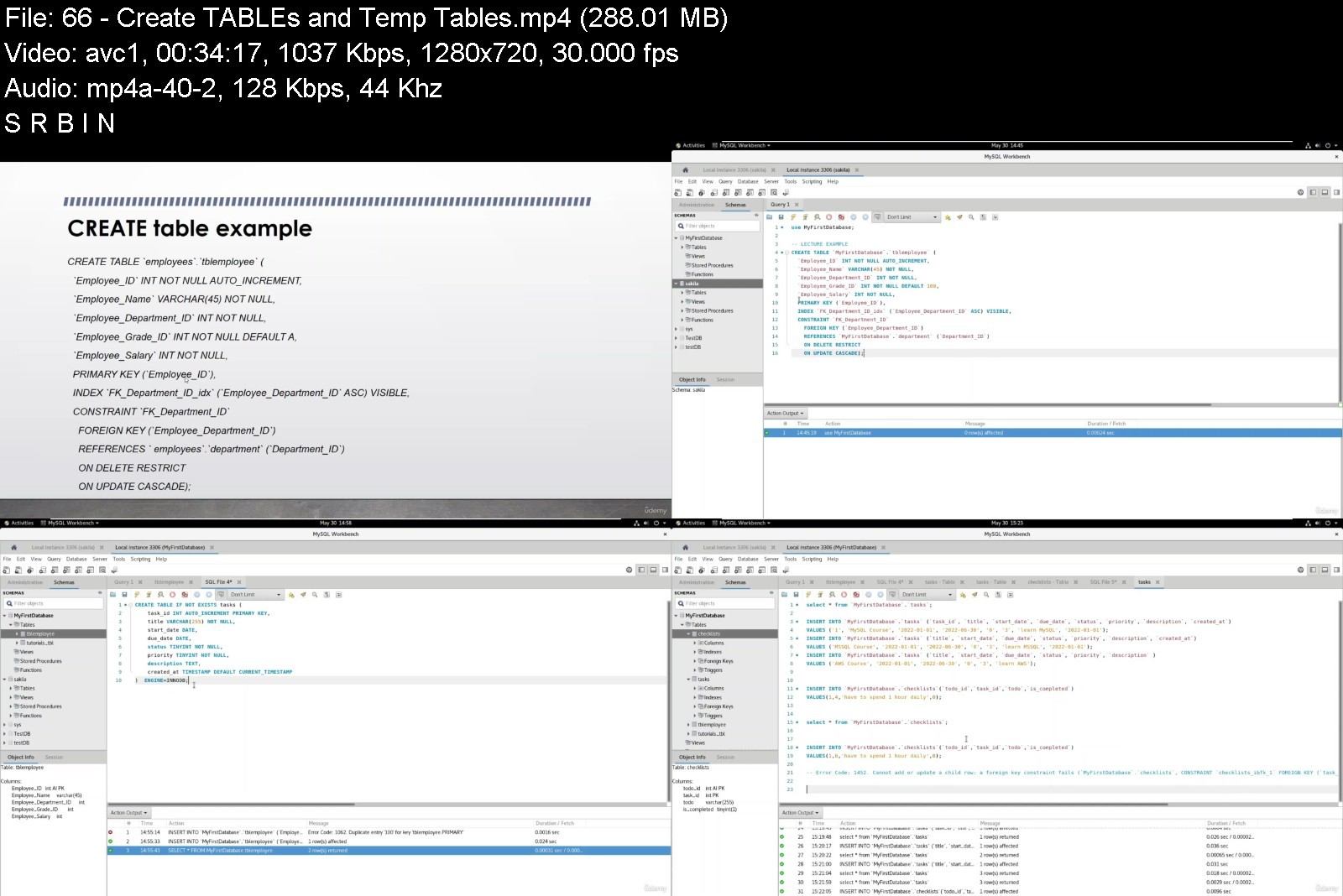
Lecture 66 Create TABLE(s) and Temp Table(s)
Lecture 67 SELECT Statement in detail
Lecture 68 Operators, Expressions and Conditions
Lecture 69 WHERE Clause, ORDER BY Clause , HAVING By Clause, GROUP BY Clause
Lecture 70 Select from two tables - JOINS
Lecture 71 Different Types of JOINS
Lecture 72 What is a Sub Query?
Lecture 73 INSERT Statement in detail
Lecture 74 Load Data from a CSV file to MySQL
Lecture 75 Export data from MySQL to a CSV
Lecture 76 UPDATE Statement in detail
Lecture 77 DELETE Statement in detail
Lecture 78 What is a Stored Procedure
Lecture 79 What Is a View?
Lecture 80 What is a Function?
Lecture 81 What is a Trigger?
Lecture 82 What is an INDEX?
Lecture 83 Clustered ,NonClustered Indexes and Index Design considerations
Lecture 84 INDEX Cardinality, Table Fragmentation, USE INDEX, FORCE INDEX and LAB
Section 8: MySQL Architecture and Option Files
Lecture 85 Welcome to MySQL Architecture and Option Files Section
Lecture 86 MySQL Architecture Overview
Lecture 87 MySQL Programs and invocation, Specifying Program Options and Option Files
Lecture 88 my.cnf file and How to edit my.cnf (LAB)
Lecture 89 Options Scope and What options are in affect ?
Section 9: MySQL Backups and Recovery
Lecture 90 Welcome to MySQL Backups and Restore Section
Lecture 91 MySQL Backups, why we need backup, RTO and RPO
Lecture 92 Type of Backups in MySQL, Offsite Storage, Encryption and Restore Testing
Lecture 93 Binary Logs
Lecture 94 The mysqldump Utility
Lecture 95 Restore of database using mysql and Workbench
Lecture 96 Table level Backup and Restore
Lecture 97 Point In Time Recovery in MySQL and Lab
Lecture 98 XtraBackup Utility by Percona, Functionality and Installation
Lecture 99 Full Backup and Restore using Percona Xtrabackup
Lecture 100 Lab for mysqldump and Backups using MySQL Workbench
Lecture 101 Incremental Backup and Restore using Percona XtraBackup
Lecture 102 Schedule backups (cronjobs)
Section 10: Users and Privileges Management
Lecture 103 Welcome to Users and Privileges Management Section
Lecture 104 Understanding MySQL Security
Lecture 105 Root User in MySQL
Lecture 106 CREATE USER and ALTER USER Statement
Lecture 107 Create New User (MySQL Workbench)
Lecture 108 MySQL Privileges , Privileges Control and Some important Privileges in MySQL
Lecture 109 GRANT Statement , WITH GRANT Option and Granting Privileges to MySQL User
Lecture 110 GRANT Tables and Checking Privileges
Lecture 111 REVOKE Statement and Revoking Privileges
Lecture 112 DROP USER Statement
Lecture 113 Roles in MySQL
Section 11: Monitoring MySQL Server
Lecture 114 Welcome to Monitoring MySQL Server Section
Lecture 115 MySQL Server Performance Monitoring Basics
Lecture 116 The General Query Log
Lecture 117 The Slow Query Log
Lecture 118 The Error Log
Lecture 119 Optimizing my.cnf for MySQL performance
Lecture 120 InnoDB Engine Status
Lecture 121 Query Optimization TIPS, EXPLAIN Statement and Execution Plans
Lecture 122 Query Optimization Demo
Section 12: MySQL Replication
Lecture 123 Welcome to MySQL Replication Sections
Lecture 124 MySQL Replication and Its Advantages
Lecture 125 MySQL Replication Methods , Synchronization Types and Replication Formats
Lecture 126 MySQL Replication Setup Demo
Lecture 127 Congratulations
Anyone who wants to start a career in SQL database administration,Anyone who wants to have complete SQL database training to get a job in IT,Anyone who wants to advance his/her career,Anyone who wants to master the SQL command line skills,College students,IT professionals, teachers and instructors


completemysqldbatrainxnjs2.jpg


Download from RapidGator


Download from Keep2Share



Sap Wm : Begin Here To Advance

r3sjt1dfkvrvq0smxnqu1s0j8b.jpg


Sap Wm : Begin Here To Advance
Published 7/2022
MP4 | Video: h264, 1280x720 | Audio: AAC, 44.1 KHz
Language: English | Size: 10.03 GB | Duration: 22h 12m

Learn SAP WM module with practical scenarios


What you'll learn
SAP WM Module (Warehouse Management) in a real SAP environment
The use of the module along with its working
Carry out blue printing for your warehouse
Understand in detail regarding picking and put-away strategies
Concepts on good receipts, good issue, stock transfer, stock removal, transfer orders
Requirements
No pre-requisites other than the zeal to work hard !

Description
SAP Warehouse Management (WM) is a significant SAP module that gives the stockroom the board usefulness. This module gives devices and cycles to keep up with stock at an ideal level.SAP WM course covers all parts of the stockroom and the executives and will give you abilities to turn into a fruitful distribution center chief with complete control over the SAP WM module.SAP WM is warehousing the executives' application apparatus of SAP ERP, which gives basic enlightening scientific announcing information of warehousing tasks like Goods getting and giving, group and quality administration in the stockroom, kinds of development in the distribution center, and so on which helps in the controlling and the board of development and capacity of merchandise and unrefined components inside a distribution center with extraordinary recognizability.The points covered are not just important to the people who work straightforwardly with the WM module of SAP. It will bear some significance with every one of the people who work in connection with it, like the Material Management (or MM) module, the Production Planning (or PP) module, or the Quality Management (or QM) module.It ought to likewise hold any importance with stockroom directors, bosses, or supervisors in the circulation business who might want to comprehend top to bottom the functionalities that are now carried out in their organization, or the functionalities that they ought to consider for the future, as the product offers such countless conceivable outcomes.Since this course covers the nuts and bolts important to comprehend the whole module, individuals wishing to make a vocation change in IT and all the more explicitly in SAP are gladly received.The course will cover:The basic function of a warehouseInventory ManagementStock movementsGoods and Receipt ProcessGood Issue ProcessStock Transfer / Bin to BinPicking strategiesPutaway strategiesIntegration with other modules (PP / QM)The different inventory proceduresStorage unit management and many more real-life examples!
Overview
Section 1: Significance of WM
Lecture 1 Significance of WM part - 1
Lecture 2 Significance of WM part - 2
Section 2: Overview of SAP WM
Lecture 3 Overview of SAP WM Part - 1
Lecture 4 Overview of SAP WM Part - 2
Lecture 5 Overview of SAP WM Part - 3
Section 3: Structural Element
Lecture 6 Structural Element - Part 1
Lecture 7 Structural Element - part 2
Lecture 8 Structural Element - part 3
Lecture 9 Structural Element - part 4
Section 4: Interface between IM and WM
Lecture 10 Interface between IM and WM
Section 5: Material Master influence in SAP WM
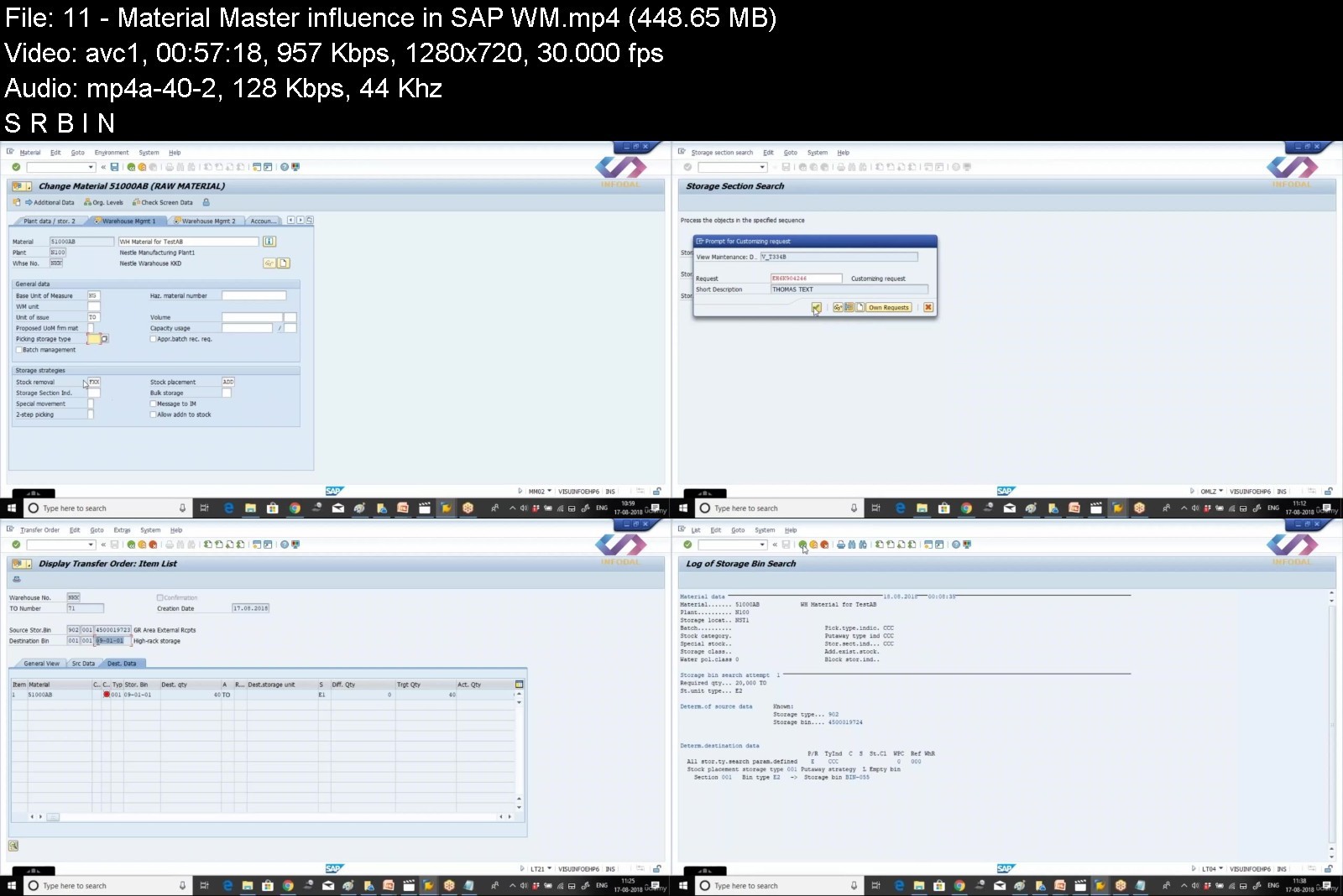
Lecture 11 Material Master influence in SAP WM
Section 6: Warehouse Products
Lecture 12 Warehouse Products
Section 7: Putaway Picking Strategies
Lecture 13 Putaway Picking Strategies
Section 8: Put Away in SAP WM
Lecture 14 Put Away in SAP WM
Section 9: Simple Inbound Processes in SAP WM
Lecture 15 Simple Inbound Processes Part - 1
Lecture 16 Simple Inbound Processes Part - 2
Section 10: Simple Outbound Process
Lecture 17 Simple Outbound Process part - 1
Lecture 18 Simple Outbound Process pat - 2
Section 11: Warehouse Management Views
Lecture 19 Warehouse Management Views
Section 12: Transfer Requirements and Transfer Order in SAP WM
Lecture 20 Transfer Requirements and Transfer Order in SAP WM
Section 13: WM Customization
Lecture 21 WM Customization Part - 1
Lecture 22 WM Customization Part - 2
Section 14: Fixed Bin Strategy for Picking
Lecture 23 Fixed Bin Strategy for Picking
Section 15: Fixed Bin Strategy for Stock Putaway
Lecture 24 Fixed Bin Strategy for Stock Putaway
Section 16: Putaway for Inbound Delivery in SAP WM
Lecture 25 Putaway for Inbound Delivery in SAP WM
Section 17: Bin to Bin Movement in SAP WM
Lecture 26 Bin to Bin Movement in SAP WM
Section 18: IM and WM Linkage
Lecture 27 IM and WM Linkage
Section 19: Stock Placement Control in SAP WM
Lecture 28 Stock Placement Control in SAP WM
Section 20: Sock Removal Control in SAP WM
Lecture 29 Sock Removal Control in SAP WM
Section 21: Batch Determination
Lecture 30 Batch Determination
Section 22: WM Driven Operations
Lecture 31 WM Driven Operations
Section 23: WM Movement Types
Lecture 32 WM Movement Types
Section 24: Physical Inventory Difference in SAP WM
Lecture 33 Physical Inventory Difference in SAP WM
Section 25: Posting Process in SAP WM
Lecture 34 Posting Process in SAP WM
Section 26: Capacity Check Control in SAP WM
Lecture 35 Capacity Check Control in SAP WM
Section 27: Warehouse Implementation and Blueprinting
Lecture 36 Warehouse Implementation and Blueprinting
Anyone aspiring to become SAP WM/EWM Consultant / Manager,Anyone looking forward to start SAP career,Potential Project Managers & Supervisors,Warehouse Management Support Consultants


sapwmbeginheretoadvanqzjei.jpg


Download from RapidGator


Download from Keep2Share


Complete Data Structures And Algorithms: Software Interviews

qudv46o2tum9rrlskotlc9pjc8.jpg


Complete Data Structures And Algorithms: Software Interviews
Published 7/2022
MP4 | Video: h264, 1280x720 | Audio: AAC, 44.1 KHz
Language: English | Size: 6.01 GB | Duration: 16h 4m

Learn data structures and algorithms with Python. Solve technical questions by Google, Amazon, Meta, Netflix and more!


What you'll learn
Data Structures
Algorithms
Technical Interview Question Solutions
Python
Requirements
Knowledge in any programming language

Description
Welcome to the Complete Data Structure &*Algorithms:*Technical Interviews courseData structures and algorithms is not just a subject which every programmer should master but also a major topic in technical interviews by giant technology companies such as Google, Amazon, Microsoft, Netflix, Uber, Tesla etc.Not only we will learn about the theory and practical implementations of the data structures & algorithms but also we will solve many technical interview questions and practice what we learn in each section.During the course we will use Python programming language for all implementations and question solutions. However if you are sufficient in any other programming language before, you would be fine. We have a quick Python Refresher section where you can learn about the fundamentals if you want to adapt. Alternatively you can learn all the algorithms and solutions and implement them in your own preferred language as well.This course is brought to you by Atil Samancioglu, teaching more than 300.000 students worldwide on programming and cyber security along with the Codestars, serving more than 1 million students!*Atil also teaches mobile application development in Bogazici University and he is founder of his own training startup Academy Club. Some of the topics that will be covered during the course:Technical Interview QuestionsBig O NotationStackQueueDequeArraysLinked ListHeapGraphTreeHashTableAfter you complete the course you will be able to solve technical interview questions, improve your programming skills and implement ideas in real life problems. You will be given many opportunities to solve questions on your own during the training and it will be vital for you to follow these instructions.If you are ready, let's get started!
Overview
Section 1: Introduction
Lecture 1 Introduction
Lecture 2 Course Outline
Section 2: Big O Notation
Lecture 3 Big O Introduction
Lecture 4 What is Big O?
Lecture 5 Big O Code Examples
Lecture 6 Space Complexity
Lecture 7 Big O GitHub Link
Section 3: Lists & Arrays
Lecture 8 Lists Introduction
Lecture 9 Arrays 101
Lecture 10 Lists
Lecture 11 Arrays & Lists GitHub Link
Lecture 12 Contains Duplicate
Lecture 13 Contains Duplicate Solution
Lecture 14 Contains Duplicate GitHub Link
Lecture 15 Find Single
Lecture 16 Single Number Solution
Lecture 17 Find Single GitHub Link
Lecture 18 Majority Element
Lecture 19 Boyer Moore
Lecture 20 Majority Element GitHub Link
Section 4: Stack, Queue & Deque
Lecture 21 Stack, Queue, Deque Introduction
Lecture 22 What is Stack, Queue, Deque?
Lecture 23 LifoQueue
Lecture 24 Stack Implementation
Lecture 25 Queue Implementation
Lecture 26 Deque Implementation
Lecture 27 Stack, Queue, Deque GitHub Link
Lecture 28 Implement Stack Using Queue
Lecture 29 Writing the Stack
Lecture 30 Implement Stack GitHub Link
Lecture 31 Baseball Game
Lecture 32 Baseball Solution
Lecture 33 Baseball GitHub Link
Lecture 34 Daily Temperatures
Lecture 35 Daily Temperatures Solution
Lecture 36 Daily Temperatures GitHub Link
Section 5: Linked List
Lecture 37 Linked List Introduction
Lecture 38 What is Linked List?
Lecture 39 Doubly Linked List
Lecture 40 Linked List O Notation
Lecture 41 Linked List GitHub Link
Lecture 42 Remove nth Node
Lecture 43 Remove nth Node Solution
Lecture 44 Remove nth Node GitHub Link
Lecture 45 Linked List Intersection
Lecture 46 Intersection Solution
Lecture 47 Intersection GitHub Link
Lecture 48 Duplicate
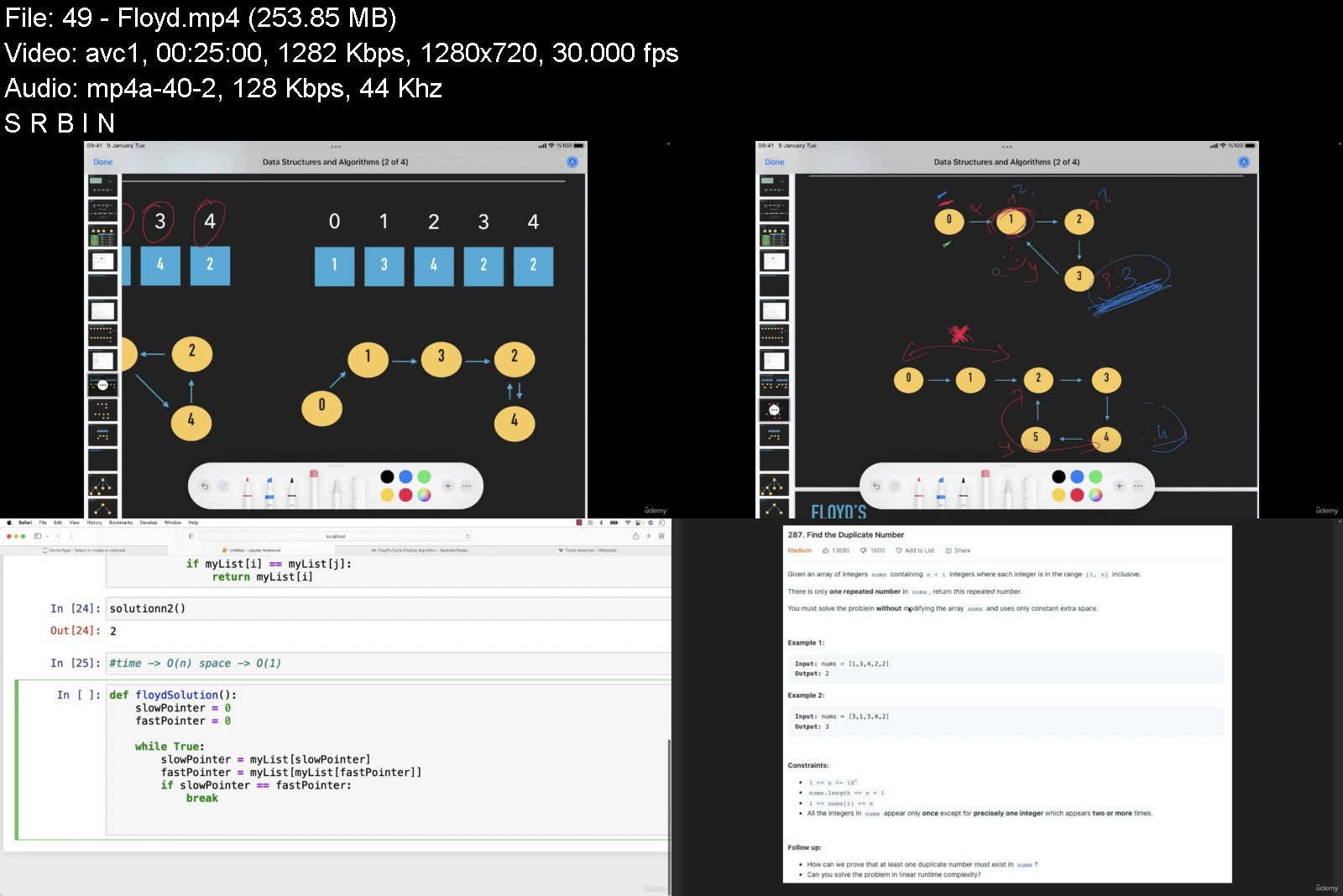
Lecture 49 Floyd
Lecture 50 Duplicate GitHub Link
Section 6: Tree
Lecture 51 Tree Introduction
Lecture 52 What is Tree?
Lecture 53 Tree Big O Notation
Lecture 54 Insert Method
Lecture 55 Finishing BST
Lecture 56 Tree GitHub Link
Lecture 57 Recursion
Lecture 58 Recursion GitHub Link
Lecture 59 Reverse String
Lecture 60 Reverse String Recursion
Lecture 61 Reverse String GitHub Link
Lecture 62 Fibonacci
Lecture 63 Recursion vs Iteration
Lecture 64 Memoization
Lecture 65 Fibonacci GitHub Link
Lecture 66 Invert Binary Tree
Lecture 67 Invert Tree Solution
Lecture 68 Invert Binary GitHub Link
Section 7: Tree Traversal
Lecture 69 Tree Traversal Introduction
Lecture 70 BFS vs DFS
Lecture 71 BFS Implementation
Lecture 72 DFS Implementation
Lecture 73 DFS Other Methods
Lecture 74 Tree Traversal GitHub Link
Lecture 75 BST to Tree
Lecture 76 DFS Solution
Lecture 77 Greater BST GitHub Link
Lecture 78 Binary Tree Max Path Sum
Lecture 79 DFS Returning Solution
Lecture 80 Binary Tree Max GitHub Link
Section 8: Graph
Lecture 81 Graph Introduction
Lecture 82 What is Graph?
Lecture 83 Graph Implementation
Lecture 84 Graph GitHub Link
Lecture 85 Reorder Routes
Lecture 86 DFS Solution
Lecture 87 Reorder Routes GitHub Link
Lecture 88 Number of Islands
Lecture 89 BFS Solution
Lecture 90 Number of Islands GitHub Link
Lecture 91 Redundant Connection
Lecture 92 Union Find
Lecture 93 Redundant Connection GitHub Link
Section 9: Searching & Hash Tables
Lecture 94 Hash Tables Introduction
Lecture 95 Sequential vs Binary
Lecture 96 Search Implementation
Lecture 97 Search Algorithms GitHub Link
Lecture 98 What is Hash Table?
Lecture 99 Hash Function
Lecture 100 Hash Table Implementation
Lecture 101 HashTable GitHub Link
Lecture 102 Two Sum
Lecture 103 HashMap Solution
Lecture 104 Two Sum GitHub Link
Lecture 105 Encode Decode
Lecture 106 Tiny Url Solution
Lecture 107 Tiny Url GitHub Link
Lecture 108 Brick Wall
Lecture 109 Brick Wall Solution
Lecture 110 Brick Wall GitHub Link
Section 10: Sorting & Heap
Lecture 111 Heap Introduction
Lecture 112 Sorting Algorithms
Lecture 113 Bubble Sort
Lecture 114 Selection Sort
Lecture 115 Insertion Sort
Lecture 116 Merge Sort
Lecture 117 Merge Sort Implementation
Lecture 118 Quick Sort
Lecture 119 Quick Sort Implementation
Lecture 120 What is Heap?
Lecture 121 Heap Sort
Lecture 122 Sorting Algorithms GitHub Link
Lecture 123 K Closest Points
Lecture 124 Heap Solution
Lecture 125 K Closest GitHub Link
Lecture 126 Data Stream
Lecture 127 Max Heap Solution
Lecture 128 Data Stream GitHub Link
Section 11: Python Refresher
Lecture 129 Python Refresher Introduction
Lecture 130 Anaconda Installation (Windows)
Lecture 131 Anaconda Installation (MAC)
Lecture 132 Python Variables
Lecture 133 String Details
Lecture 134 Collections
Lecture 135 Dictionary
Lecture 136 Set and Tuple
Lecture 137 Conversions
Lecture 138 Error Handling
Lecture 139 Conditions and Loops
Lecture 140 Useful Functions
Lecture 141 Functions
Lecture 142 Classes
Lecture 143 Scope
Lecture 144 Python Refresher GitHub Link
Section 12: Closing
Lecture 145 Closing
Programmers trying to land a job in big technology companies,Programmers looking forward to improve their coding skills,Programmers looking to learn about data structures & algorithms


completedatastructurexyjml.jpg


Download from RapidGator


Download from Keep2Share



Zurück
Oben Unten