• Regeln für den Video-Bereich:

    In den Börsenbereich gehören nur Angebote die bereits den Allgemeinen Regeln entsprechen.

    Einteilung

    - Folgende Formate gehören in die angegeben Bereiche:
    - Filme: Encodierte Filme von BluRay, DVD, R5, TV, Screener sowie Telesyncs im Format DivX, XviD und x264.
    - DVD: Filme im Format DVD5, DVD9 und HD2DVD.
    - HD: Encodierte Filme mit der Auflösung 720p oder darüber von BluRay, DVD, R5, TV, Screener sowie Telesyncs im Format x264.
    - 3D: Encodierte Filme von BluRay, die in einem 3D Format vorliegen. Dies gilt auch für Dokus, Animation usw.
    - Serien: Cartoon/Zeichentrick, Anime, Tutorials, Dokumentationen, Konzerte/Musik, Sonstiges sind demnach in die entsprechenden Bereiche einzuordnen, auch wenn sie beispielsweise im High Definition-Format oder als DVD5/DVD9/HD2DVD vorliegen. Ausnahme 3D.
    - Bereich Englisch: Englische Releases gehören immer in diesen Bereich.
    - Bereich Talk: Der Bereich, in dem über die Releases diskutiert werden kann, darf, soll und erwünscht ist.


    Angebot/Beitrag erstellen

    - Ein Beitrag darf erst dann erstellt werden, wenn der Upload bei mindestens einem OCH komplett ist. Platzhalter sind untersagt.
    - Bei einem Scenerelease hat der Threadtitel ausschließlich aus dem originalen, unveränderten Releasenamen zu bestehen. Es dürfen keine Veränderungen wie z.B. Sterne, kleine Buchstaben o.ä. vorgenommen werden. Ausnahme Serienbörse:
    - Bei einem Sammelthread für eine Staffel entfällt aus dem Releasename natürlich der Name der Folge. Beispiel: Die Simpsons S21 German DVDRip XviD - ITG
    - Dementsprechend sind also u.a. verboten: Erweiterungen wie "Tipp", "empfehlenswert", "only", "reup", usw. / jegliche andere Zusatzinformation oder Ergänzung, welche nicht in obiger Beschreibung zu finden ist.

    Aufbau des Angebots und Threadtitel

    Der Titel nach folgendem Muster erstellt zu werden. <Name> [3D] [Staffel] [German] <Jahr> <Tonspur> [DL] [Auflösung] <Quelle> <Codec> - <Group>
    Beispiel: The Dark Knight German 2008 AC3 DVDRip XviD - iND
    Beispiel: The Dark Knight 2008 DTS DL BDRip x264 - iND
    Beispiel: The Dark Knight 2008 AC3 DL BDRip XviD - iND
    Beispiel: The Dark Knight German 2008 AC3 720p BluRay x264 iND
    Beispiel: The Dark Knight 2008 DTS DL 1080p BluRay x264 iND
    Beispiel: Die Simpsons S01 German AC3 DVDRip XviD iND
    Beispiel: Die Simpsons S20 German AC3 720p BluRay x264 iND
    Beispiel: Sword Art Online II Ger Sub 2014 AAC 1080p WEBRip x264 - peppermint
    Entsprechend sind also u.a. verboten: Sonderzeichen wie Klammern, Sterne, Ausrufezeichen, Unterstriche, Anführungszeichen / Erweiterungen wie "Tipp", "empfehlenswert", "only", "reup", usw. / jegliche andere Zusatzinformation oder Ergänzung, welche nicht in obiger Beschreibung zu finden ist
    Ausnahmen hiervon können in den Bereichen geregelt sein.

    Die Beiträge sollen wie folgt aufgebaut werden:
    Überschrift entspricht dem Threadtitel
    Cover
    kurze Inhaltsbeschreibung
    Format, Größe, Dauer sind gut lesbar für Downloader außerhalb des Spoilers zu vermerken
    Nfo sind immer Anzugeben und selbige immer im Spoiler in Textform.
    Sind keine Nfo vorhanden z.B. Eigenpublikationen, sind im Spoiler folgende Dateiinformationen zusätzlich anzugeben :
    Quelle
    Video (Auflösung und Bitrate)
    Ton (Sprache, Format und Bitrate der einzelnen Spuren)
    Untertitel (sofern vorhanden)
    Hosterangabe in Textform außerhalb eines Spoiler mit allen enthaltenen Hostern.
    Bei SD kann auf diese zusätzlichen Dateiinformationen verzichtet werden.

    Alle benötigten Passwörter sind, sofern vorhanden, in Textform im Angebot anzugeben.
    Spoiler im Spoiler mit Kommentaren :"Schon Bedankt?" sind unerwünscht.


    Releases

    - Sind Retail-Release verfügbar, sind alle anderen Variationen untersagt. Ausnahmen: Alle deutschen Retail-Release sind CUT, in diesem Fall sind dubbed UNCUT-Release zulässig.
    - Im Serien-Bereich gilt speziell: Wenn ein Retail vor Abschluss einer laufenden Staffel erscheint, darf diese Staffel noch zu Ende gebracht werden.62
    - Gleiche Releases sind unbedingt zusammenzufassen. Das bedeutet, es ist zwingend erforderlich, vor dem Erstellen eines Themas per Suchfunktion zu überprüfen, ob bereits ein Beitrag mit demselben Release besteht. Ist dies der Fall, ist der bereits vorhandene Beitrag zu verwenden.
    - P2P und Scene Releases dürfen nicht verändert oder gar unter einem iND Tag eingestellt werden.


    Support, Diskussionen und Suche

    - Supportanfragen sind entweder per PN oder im Bereich Talk zu stellen.
    - Diskussionen und Bewertungen sind im Talk Bereich zu führen. Fragen an die Uploader haben ausschließlich via PN zu erfolgen, und sind in den Angeboten untersagt.
    - Anfragen zu Upload-Wünschen sind nur im Bereich Suche Video erlaubt. Antworten dürfen nur auf Angebote von MyBoerse.bz verlinkt werden.


    Verbote

    - Untersagt sind mehrere Formate in einem einzigen Angebotsthread, wie beispielsweise das gleichzeitige Anbieten von DivX/XviD, 720p und 1080p in einem Thread. Pro Format, Release und Auflösung ist ein eigener Thread zu eröffnen.
    - Grundsätzlich ebenso verboten sind Dupes. Uploader haben sich an geeigneter Stelle darüber zu informieren, ob es sich bei einem Release um ein Dupe handelt.
    - Gefakte, nur teilweise lauffähige oder unvollständige Angebote sind untersagt. Dies gilt auch für eigene Publikationen, die augenscheinlich nicht selbst von z.B. einer DVD gerippt wurden. Laufende Serien, bei denen noch nicht alle Folgen verfügbar sind, dürfen erstellt und regelmäßig geupdatet werden.
    - Untersagt sind Angebote, welche nur und ausschließlich in einer anderen Sprache als deutsch oder englisch vorliegen. Ausnahmen sind VORHER mit den Moderatoren zu klären.


    Verstoß gegen die Regeln

    - Angebote oder Beiträge, die gegen die Forenregeln verstoßen, sind über den "Melden"-Button im Beitrag zu melden.
  • Bitte registriere dich zunächst um Beiträge zu verfassen und externe Links aufzurufen.

*** Bestes IPTV *** bester Preis *** gratis Test ***


Englische Tutorials


1811121227570085.jpg

Fundamentals of Azure and Powershell
.MP4 | Video: 1280x720, 30 fps(r) | Audio: AAC, 44100 Hz, 2ch | 1.65 GB
Duration: 3 hours | Genre: eLearning | Language: English​

Get started with Microsoft Azure in a nutshell
What you'll learn
Clear understanding of cloud computing ,services,models,benefits,disadvantages and analysis
Azure advantages, disadvantages, analysis, datacenters and pricing implementation
Azure marketplace and services concepts
Deploying virtual machines from Azure portal with explanation of each new terminology
Azure users and roles understanding
Azure storage concept and implementation
Azure backup and configuration
Azure powershell tools, context and modules
Azure powershell complex object properties
Step by step explanation and deployemnt of azure virtual machine from powershell
Automation with azure Runbook and Desired state configuration
Azure ARM template explanation and implementation
Requirements
Basic IT knowledge of Networks and Virtual machine
A free or paid subscription to Microsoft Azure
Excitement to learn constantly growing Microsoft Azure platform right from zero
Description
This course is designed to help you get started with Microsoft Azure with a clear understanding about the basics in a simple way. It is focused on providing key concepts of Azure Infrastructure solution to IT professionals.
It will help you to become comfortable with cloud concepts and Azure fundamentals to start developing solutions right away.
It touches both gui and powershell part of Azure cloud solution and will help you to prepare your base for understanding advanced and architect level of Azure solution. The concepts and demos are based on real world situation which IT professionals faces on Azure cloud platform and will provide you all the knowledge and tools necessary to get started with your job in Azure cloud platform right away.
Lecture 1 explains what is cloud computing in detail. It also explains the different types of cloud services i.e. Infrasturcture as a service (IaaS), Platform as a service (PaaS) and Software as a service (SaaS) with eamples.
Lecture 2 explains the different popular services available with cloud computing such as Communications, Data storage, Compute, Network, Platform, Software, Database, Desktop, Email, Identity and Security. Then it explains the different cloud deployement models i.e. Public cloud, Private cloud and Hybrid cloud.
Lecture 3 explains the different uses of cloud computing such as in storage, backup, disaster recovery, email, testing and development. Then it explains the benefits of cloud computing. the different disadvantages of cloud computing. At the end it explains the different analysis scenario that should be considered before moving infrastructure to cloud.
Lecture 4 introduces Azure. It explains what is Azure , the different benefits available with azure and the disadvantages of using Azure.
Lecture 5 explains the network of huge datacenter that is available with Microsoft Azure.
Lecture 6 explainins the cost implementation of using Azure. It explains the different cost that may occur initially once you move to cloud. So one should consider if these costs are affordable for their business or not before moving to cloud. Then it explains imporatnt factors which can help to calculate the cost of moving to Azure effectively. At the end it shows how to use Azure pricing calculator to get an estimate of monthly and yearly bill once you move to azure.
Lecture 7 shows the step by step process to open a free 30 days trial account with Microsoft Azure. At the end it introduces you to the Azure portal.
Lecture 8 explores the Azure portal. It shows the different menus, settings and options available in Azure portal and how you can use them. Then it explores the Azure marketplace website and explains how one can take Test drive in azure marketplace. At the end it again shows some options and settings in Azure portal.
Lecture 9 explains the different Azure services available in Azure portal and what one do with these services.
Lecture 10 shows the step by step process to deploy virtual machine using Azure portal. In the process it also explains the different new terms that appears while deploying virtual machine such as Azure resource manager, Classic deployment model, Premium SSD Disk, Standard HDD disk, Resource group, Availability zones, Availability set, Azure virtual network, Public IP address, Network security group etc.
Lecture 11 explains the Azure users and roles. It shows how you can add users in Azure portal and how to assign roles to users.
Lecture 12 explains Azure storage, the benefits of using azure storage. It explains the different azure storage account types and their sub types such as General-Purpose storage account (Standard storage and premium storage), Blob storage account. It then explains the different data services available in azure storage such as azure blob and the differnt types of azure blob such Block blobs, Append blobs and page blobs, then Azure files, azure queues and then azure tables. At the end shows a demo of how to add storage using Azure portal.
Lecture 13 explains azure backup and the benefits of using azure backup. At the end it shows a demo of how to configure backup in azure.
Lecture 14 introduces you to Azure powershell. It shows how you can use inbuilt powershell in your machine for managing azure.
Lecture 15 first explains the powershell version details needed to manage azure. Then it explains how to configure and use azure cloudshell.Then it shows step by step instructions to install AzureRM module in powershell. At the end it shows how to login and logout from azure in powershell and how to select azure subscription in powershell.
Lecture 16 explains azure context and shows how to use azure context in powershell.
Lecture 17 explains usage of azure powershell command lets and modules in powershell. It explains how to use cmdlets and how to get help with it. It also explains the usage of parameters in Azure powershell.
Lecture 18 explains the usage of objects properties of cmdlets in powershell. It explains how to find and explore the hidden and complex properties by expanding JSON code and how to use them.
Lecture 19 shows step by step process to deploy a virtual machine from azure powershell. It shows how to first create a resource group using powershell, then it goes on showing how to configure virtual network subnet, how to create virtual network, random public IP address, network security group rule, network security group, network interface card using powershell. Then it shows how to specify virtual machine configuration in powershell and how to retrieve and use information such as vm size, source image publisher name, offer details, sku image using powershell. At the end it shows how to create virtual machine using all the configurations previously setup using powershell.
Lecture 20 explains the benefits of automation in azure and the tools such as runbooks and desired state configurations that are available for automating workloads in azure.
Lecture 21 shows how to use a runbook for automating workloads in azure.
Lecture 22 shows how to use desired state configuration for automating workloads in azure.
Lecture 23 explains Azure ARM and ARM template. It explains how the parsing of JSON file of ARM template is done by microsoft to rest API operations. Then it gives a demo of how to create an azure resource manager template.
Who is the target audience?
IT professionals who wants to start their career in Azure cloud platform
IT professionals who wants to enhance their knowledge on azure cloud platforms in simple and practical way


1811121227590103.jpg


Recommend Download Link Hight Speed | Please Say Thanks Keep Topic Live

 

1812071856000111.jpg

RubberHose Animation with After Effects
MP4 | Video: AVC 1280x720 | Audio: AAC 44KHz 2ch | Duration: 1 Hour | 530 MB
Genre: eLearning | Language: English

RubberHose, a rigging script for Adobe After Effects, makes it easy to animate characters that are packed with personality. In this course, instructor Angie Taylor shares what you need to know to get up and running with this powerful software. Angie kicks off the course by explaining how to create a RubberHose arm and style it with shape layer operators. She then moves on to discuss how to create legs with RubberRig and RubberPin, as well as how to construct an easy walk cycle with RubberHose and the Motion Sketch tool in After Effects. She wraps up by detailing how to fine-tune your character animation and place a character into an animated scene.


1812071856030107.jpg


Recommend Download Link Hight Speed | Please Say Thanks Keep Topic Live
 

1812071856070091.jpg

TypeScript for Node.js Developers
MP4 | Video: AVC 1280x720 | Audio: AAC 44KHz 2ch | Duration: 1 Hour | 629 MB
Genre: eLearning | Language: English

As your development needs grow with your enterprise, you need better tools and syntax when working with Node.js. This is where using TypeScript with Node.js can be a perfect next step. TypeScript is a superset of JavaScript that offers optional static type checking, as well as support for the latest JavaScript features. In this course, Emmanuel Henri helps Node.js developers quickly get up to speed with TypeScript as he steps through how to best leverage this popular language in Node.js applications. To begin, he shows how to set up TypeScript and familiarizes you with its file conventions. He then discusses how to use types in Node.js, leverage TypeScript tools to organize your application, and use iterators and decorators. To wrap up, he shares resources that can help you further explore all that TypeScript has to offer.


1812071856100107.jpg


Recommend Download Link Hight Speed | Please Say Thanks Keep Topic Live
 
1811110459140108.jpg

Type Tips Weekly (Update 5.11.2018)
.MP4, AVC, 200 kbps, 1280x720 | English, AAC, 160 kbps, 2 Ch | 3h 51m | 684 MB
Instructor: Nigel French

Take your love of letterforms to the next level with this weekly series that explores all things, big and small, related to type and the practice of typography. These tips are aimed at people using Adobe Creative Cloud: primarily InDesign, Illustrator, and Photoshop. Some tips are specific to particular applications and some are purely conceptual and software agnostic. Tune in every Monday for another timely tip to improve your typographical skills and increase the efficiency of your design workflow.
More Info


1811110459150100.jpg


Recommend Download Link Hight Speed | Please Say Thanks Keep Topic Live
 
1811220506100113.jpg

TTC Video - Confucius, Buddha, Jesus, and Muhammad
WEBRip | AVI/XviD, ~801 kb/s | 640x480 | 18:59:53 | English: MP3, 128 kb/s (2 ch) | 7.63 GB
Genre: eLearning Video / Religion, History
Confucius. Buddha. Jesus. Muhammad. Four extraordinary sages who influenced world civilization more deeply than any other human beings in history. As just one measure of their importance, current rankings of the most influential people in history consistently put them at or near the top of the list. Four centuries after the rise of the scientific worldview, their influence in human affairs continues to be fundamental, underscoring issues ranging from questions of ethics and justice to religious and political conflicts to other issues that dominate today's headlines.​

In the 21st century, much of humanity still looks to the lives, teachings, and actions of these four sages for guidance on how to live, for their conceptions of morality, and for understanding the most crucial human values.
Never merely historical figures, as models of human living they remain dynamically alive for countless millions of people around the world, exemplifying the moral and spiritual precepts our civilizations are built on. Taken together, their influence extends over most of the human population, from Asia to the Middle East and from Europe to the New World.
No understanding of human life, individual or collective, could be complete without factoring in the role and contribution of these history-shaping teachers.
Now, in Confucius, Buddha, Jesus, and Muhammad, award-winning Professor Mark W. Muesse of Rhodes College takes you deep into the life stories and legacies of these four iconic figures, revealing the core, original teachings, and thoughts of each, and shedding light on the historical processes that underlie their phenomenal, enduring impact.
Two Compelling Streams of Knowledge

Speaking from multilevel personal experience with these teachings, Professor Muesse leads you in an inquiry with a dynamic double thrust.
First, in his presentation of the vital wisdom of each sage, he offers you the chance to reflect in depth on the most essential values of spirituality and the art of living, seen from four archetypal perspectives. Regardless of your own religious or philosophical orientation, you draw crucial distinctions from the teaching of the four sages that bear directly on the fundamental perception of selfhood and on what it is to live a meaningful life, both in thought and action.
Second, you complete the course with far-reaching insight into the historical contexts and individual lives of the four sages, and how the religious and philosophical traditions we associate them with came into being. The lectures serve as a unique window on the origins of these traditions, through their focus on the teachings, actions, and historical roles of the sages who inspired them.
Four Exemplars of Noble Living

Confucius, the Buddha, Jesus, and Muhammad were all born into ancient cultures in the midst of tumultuous changes. Each addressed fundamental existential problems within their societies, developing codes of ethics and behavior that broke with the past, and offering bold new visions of human life.
Grounding your inquiry in the dramatic historical settings of their teachings, you explore and define the unique contributions of each man:
Confucius: China's primordial philosopher/sage, whose teaching integrally shaped the Chinese constructs of government, human relations, culture, and history. You study the system of Confucian thought that formed the basis of Chinese education for 2,000 years, founded on the sage's core precepts of "uncommon" humaneness, reciprocity, and the creative power of virtue.
The Buddha: The high-born prince who turned his back on a life of privilege to follow an unrelenting quest for the "supreme state of sublime peace." You dig deeply into the Buddha's teachings on the nature of reality, the delusions of human perception, and the practical means for ending suffering.
Jesus of Nazareth: Beloved icon of Christianity, a revered prophet in Islam, and the dominant figure in Western culture for nearly two millennia. You explore his archetypal dual role as both harbinger of God's kingdom and spiritual teacher, and you see how his teachings revealed a liberating alternative to humanity's oppressive inequities.
Muhammad: Al-Lah's "last" prophet and the central example of the faithful Muslim. His teachings brought Islam into being even as he struggled with the roles of both political and military leader of his community. You study Muhammad's teachings on the oneness and inscrutability of the absolute, his dynamic vision of ethical action, and Islam's complex spiritual disciplines.
Teachings that Shaped Human Civilization

In uncovering the original wisdom and practices of each sage, you grapple with these key questions:
How did each man understand the nature of the universe and ultimate reality?
How did each envision the human self and the matter of human fulfillment?
What moral and ethical principles did each advocate, and why?
What spiritual disciplines did each practice and teach as a means of self-realization?
Drawing from texts including the Confucian Analects, the Buddhist Pali Canon, the Gospels, and the Hadith of Islam, Professor Muesse immerses you in the teachings, which include the following:
You see how Confucius's precepts, including ren (humaneness), humility, and filial piety, were inextricably tied to specific behavior-to disciplined actions, etiquette, and ritual. You probe the dialectical connection between external acts and internal states; the experiential shaping and transforming of character through conscious action.
You see how the Buddha located the source of suffering in a deceptive conception of reality-the human mind's reduction of the universe and its organic processes to an illusory world of "things" and a "self" that is perceived as separate and alone. You learn how his path of contemplation and compassion worked to transcend this perception.
You witness how Jesus's teaching challenged and disrupted his listeners' beliefs, especially in his use of parables that reversed the apparent order of the world-making clear that in God's kingdom, "what the world calls power will be revealed as weakness; the losers will be declared winners; the first shall be last."
You probe Muhammad's essential doctrine of human fulfillment through willing, devoted submission to al-Lah-the absolute, eternal ground of being prior to all existence. You observe how he submitted to the absolute through deliberate acts of witnessing to God's unity and revelation, generosity, ritual prayer, fasting, and pilgrimage.
Lives of Struggle and Revelation
A thrilling storyteller, Professor Muesse enriches the teachings with the historical background and the pivotal moments of insight that fired their development.
You learn about early Arabian religious and tribal culture, and how Muhammad's emergence threatened a centuries-old way of life. You track the evolution of Indian spirituality preceding the Buddha, including the cultural origins of belief in rebirth and karma. You study the culture and political struggles of the ancient Jews in Palestine, and the divine cosmology of the Zhou dynasty that informed Confucius's thinking.
You hear the words of Muhammad's revelations on the Mountain of Light, and the stories of his military leadership and his actions promoting the legal and marital rights of women. You follow Confucius through the trials of his years in exile, which refined his character and his insight into humanity.
In Jesus's conception of God's kingdom as present reality, you find evidence of deep spiritual experience. And you follow the Buddha's path of unyielding spiritual practice, leading to his final awakening and liberation from the conditioned mind.
Finally, you compare the sages' lives and teachings, finding the defining differences but also their common ground on the practice of contemplation and on the "self" as a prime factor in unhappiness.
This uniquely designed course takes you to the core of four majestic wisdom traditions within a single, penetrating inquiry. In words reflecting profound and compassionate insight, Professor Muesse brings the teachings vividly alive as they speak to their essential purpose-as a guide to the realities, challenges, and possibilities of life-and as they shed light on the critical and creative choices we all face, moment by moment, in living deliberately and savoring life to the fullest.
Take this rare chance, in Confucius, Buddha, Jesus, and Muhammad, to taste the authentic, living wisdom of these visionary sages and to understand the sources of their monumental role in our world.
Professor Mark W. Muesse, Ph.D.
Rhodes College

Lectures:
00. Professor Bio
01. A Quartet of Sages
02. Confucius's China
03. Becoming a Sage
04. A Gentleman and a Scholar
05. Heaven and Earth
06. Doing unto Others
07. How to Rule a Kingdom
08. What a Sage Does
09. Confucius and Confucianism
10. India at the Time of the Buddha
11. Siddhattha Gotama
12. The First and Second Great Awakenings
13. Knowing the World
14. Can't Get No Satisfaction
15. Getting to the Farther Shore
16. How the Buddha Taught
17. The Buddha and Buddhism
18. The Jewish and Roman Worlds of Jesus
19. The Son of Mary
20. The First 30 Years
21. The Kingdom of God
22. Back to the Future
23. Jesus's Christology
24. The Last Days in Jerusalem
25. How Jesus Became Christ
26. Arabia in the Days of Ignorance
27. The Trustworthy One
28. "I Am Only a Messenger"
29. Madinah
30. "There Is No God but al-Lah"
31. The Ethics of Islam
32. The Greater Jihad
33. The Conquest of Makkah
34. Their Lives Compared
35. Their Teachings Compared
36. Their Enduring Significance


1811220506120091.jpg


1811220506130093.jpg


1811220506140101.jpg


1811220506150096.jpg


1811220506160108.jpg


1811220506170080.jpg


1811220506180099.jpg


Recommend Download Link Hight Speed | Please Say Thanks Keep Topic Live
 

1811301420080092.jpg

MP4 | Video: h264, 1280x720 | Audio: AAC, 44.1 KHz, 2 Ch
Genre: eLearning | Language: English + .VTT | Duration: 14 hours | Size: 7.02 GB
Practice problem format comparing two methods to enter business and personal data in QuickBooks Desktop Pro 2019​

What you'll learn
How to set up a QuickBooks Desktop Pro 2019 file to track personal financial data
How to enter personal financial data into QuickBooks Desktop Pro 2019 from a bank statement
How to use one QuickBooks file to track both personal and business financial data with the use of class tracking
List and describe the pros and cons of using one QuickBooks file to track personal and business financial data to using two QuickBooks files
Enter personal balance sheet data into personal QuickBooks Desktop Pro 2019 files including home, auto, and home loan
Enter credit card data using multiple method into QuickBooks Pro Desktop 2019
Enter employee W-2 Income into QuickBooks Desktop Pro 2019 using multiple methods
Enter insurance and other prepaid expenses into QuickBooks Pro Desktop 2019 using multiple methods
Requirements
We should be familiar with QuickBooks and or accounting.
Description
QuickBooks Pro Desktop 2019, comparing two methods of tracking both business and personal records, one using two QuickBooks Desktop 2019 files, and one using a sing file to track both business and personal financial data using QuickBooks class tracking feature.
We will work with hands-on practical practice problems together under both methods, compare the results, and discuss the pros and cons of each approach.
The course will start with the method of using two separate QuickBooks files for business and personal records because this is the most widely recommended method and provides the greatest separation of business and personal data which is usually a good thing.
We will create new QuickBooks files for both business and personal records. The course will also provide backup files that can be used to jump forward in the course or to rework problems while using the same data set.
We will enter two months of data into our QuickBooks files using simulated bank statements we will provide in the course as PDF files. After we enter the data into QuickBooks, we will generate reports and compare the data in the personal and business files.
The next step will be to enter similar data into one QuickBooks file, a QuickBooks file that will be used to track both personal and business accounting data. To achieve this goal, we will start a new QuickBooks file and enter financial data from a simulated bank statement the course will provide in PDF format.
As we enter data into the joint QuickBooks file, we will assign a class to each transaction that will help to separate the data during financial reporting. After we have entered the data, we will generate reports including a profit and loss by class. The profit and loss by class report well separate business and personal expenses. We will also discuss other options for filtering reports by class.
We will then compare the two methods, the use of two separate QuickBooks files to the use of one QuickBooks file for both business and personal data, separating the content with the use of class tracking.
Next, we will discuss personal balance sheet items and how we can add them to our financial data including financial investments, our home, our mortgage, and our auto.
We will also discuss alternative methods for tracking credit cards, recording loan payments, and entering employee W-2 income.
In addition to the instructional videos, this course will include downloadable
* QuickBooks Pro Desktop 2019 Backup files
* Excel practice files
* Downloadable PDF Files
The QuickBooks Desktop 2019 backup files are a great tool that allows us to jump ahead in the material or to rework material if we choose.
Excel practice files will be preformatted and will generally have at least two tabs, one tab with the completed work and a second tab with a preformatted worksheet we can fill in as we watch the instructional videos.
Who is the target audience?
Business owners looking for the best QuickBooks system for them.
Bookkeepers looking to differentiate themselves from the competition by learning how to use QuickBooks to track personal finances and use the class tracking feature.
Accounting students leaning how to apply accounting concepts to practice.

1811301420080119.jpg


Recommend Download Link Hight Speed | Please Say Thanks Keep Topic Live
 
3b50437213b1754665d57aeb53c1b3fd.jpg

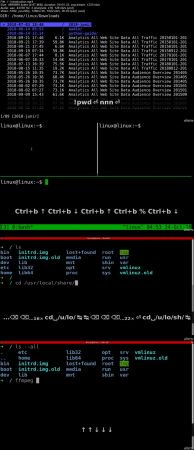
Linux Terminal Productivity
.MP4 | Video: h264, 1280x720 | Audio: AAC, 44.1 KHz, 2 Ch
Genre: eLearning | Language: English + .VTT | Duration: 44 mins | Size: 322 MB​

Boost your productivity on the command line
What you'll learn
Become faster with the Linux terminal
Work faster with screen or tmux. This will highly increase your productivity
Learn how to use Zsh. An alternative to Bash that makes your life easier
Tricks for Bash and Zsh like path expansion and command completion
Work faster with keyboard shortcuts
Requirements
You must have prior experience with Linux
You need a Linux terminal
Description
This course will help you become faster on the Linux terminal.
In this course you'll learn:
How to work faster in the terminal
Use shortcuts
Use windows, panes
Introduction to Zsh with tricks like path expansion, command completion
Programs that will make your life easier
Course includes overviews of commands and shortcuts
This course is for developers and sysadmins that want to boost their productivity. If you are using bash or have never heard about screen or tmux, this course is for you!
Join now and increase your terminal productivity!
Who is the target audience?
Developers
Linux users
Sysadmins
This is an intermediate course

a5838b0813d87744fc47d89157d8bcfa.jpg


Recommend Download Link Hight Speed | Please Say Thanks Keep Topic Live
 
d977406af71ee8b2362166219d2e86b7.jpg

Velocity Conference - London, UK 2018
MP4 | Video: AVC 1920x1080 | Audio: AAC 48KHz 2ch | Duration: 2 Hours 46M | 4.53 GB
Genre: eLearning | Language: English​

We'll make the Keynotes available here as soon as possible after they happen. Video of the sessions and tutorials will be available a few weeks after the end of the conference.
Velocity conferences, the O'Reilly symposiums devoted to web operations, DevOps, and systems engineering, always promise education with inspiration. Velocity London 2018 kept that promise. The inspiration portion came from keynote luminaries like World Economic Forum AI expert Omoju Miller, University of Cambridge distributed systems researcher Martin Kleppmann, and chaos engineering wizard Crystal Hirschorn (Condé Nast International). The education portion came in the form of the conference's sessions devoted to building, deploying, and running complex, distributed applications and systems. This video compilation offers a front row view for all of Velocity London's best keynotes, tutorials, and technical sessions. It contains hours of material to study and enjoy at your own pace.
Highlights include:
Kubernetes sessions, such as Bridget Kromhout's (Microsoft) intro level Kubernetes 101 tutorial; Bridget Lane's (Gannett|USA Today) look at the hidden costs of Kubernetes; and Lee Calcote's (SolarWinds) tutorial on building secure microservices with Istio and Kubernetes.
Distributed systems sessions, including Amy Boyle (New Relic) on building distributed real-time stream processing systems and José Carlos Chávez's (Typeform) explanation of distributed tracing.
Distributed data sessions, including Rafael Chacon (Slack) on sharding MySQL clusters using Vitess and Heidi Waterhouse (LaunchDarkly) on the risks of retaining deprecated codebases.
Monitoring, observability, and performance sessions, including Marcus Barczak (Fastly) on moving from push-based monitoring to pull-based with Prometheus and Constance Caramanolis (Lyft) on using Envoy's extensive metrics to identify the root cause of production incidents.
DevOps and SRE sessions, such as Ana Medina's (Gremlin) chaos engineering tutorial and Yaniv Aknin's (Google Cloud) how-to on applying metrics and data to architectural decision making.
Building secure systems sessions, including Sabree Blackmon's (Scytale) look at building trust between distributed systems with SPIFFE and Mandi Walls' (Chef) deep dive tutorial into security and compliance using InSpec.
Systems engineering and architecture sessions, including Siddharth Ram's (Intuit) review of how Intuit moved millions of customers from private infrastructure to the public cloud.
Serverless sessions, including Yan Cui's (DAZN) detailed tutorial on how to build observability into a serverless application.
Microservices and containers sessions, including Michael Kehoe's (LinkedIn) tutorial detailing the best practices in container monitoring.
Leadership and career growth sessions, including Rowan Cota (BuzzFeed) on using in-house apprenticeship programs to grow your own SREs

d56a43c7e93a73949d16773237f5ca75.jpg


Recommend Download Link Hight Speed | Please Say Thanks Keep Topic Live
 

1811051155380111.jpg


Professional Node.js
MP4 | Video: AVC 1280x720 | Audio: AAC 44KHz 2ch | Duration: 4.5 Hours | 1.06 GB

Genre: eLearning | Language: English

Through Professional Node.js, you will be presented with various sets of patterns that you can use to efficiently solve your everyday development and design problems. You will understand what different traditional design patterns look like in Node.js, and how to design modules that focus on performing a single task at a time. You will gain an understanding of the basic building blocks and principles of writing large and well-organized Node.js applications. You will be able to apply these principles to problems that don't fall within the scope of existing patterns.


1811051155390094.jpg


Recommend Download Link Hight Speed | Please Say Thanks Keep Topic Live
 

1812052243000109.jpg

Accounter Live - Master the Accounting Software
.MP4 | Video: 1280x720, 30 fps(r) | Audio: AAC, 44100 Hz, 2ch | 2.22 GB
Duration: 5 hours | Genre: eLearning | Language: English​

Learn using Accounter Live for all Accounting, Sales Invoicing, Purchase Tracking and Bank Account Tracking.
What you'll learn
Learn about User Interface, Company, Vendor, Inventory, Client, Banking, Tax, Accounting, Payroll and Reports.
This course will help in dealing with daily Accounting processes like creating Journal Entries, Income Expense Sheets, Balance Sheets
This course will help you to manage your business and financials in a greater way and increase Financial Strength for your business
You will learn A-Z of using Accounter Live for all Accounting, Sales Invoicing, Purchase Tracking, Bank Account Tracking
Requirements
Knowledge of basic Accounting Theory
Concept of Cloud Based Accounting and Software as a Service should be clear.
Description
This course will help you to manage your business and financials in a greater way and increase Financial Strength for your business. In short you will learn A-Z of using Accounter Live for all Accounting, Sales Invoicing, Purchase Tracking, Bank Account Tracking. This course is for Business Administration and Accounting Students and Corporate Employees who want to learn about Accounting with the powerful SAAS based Accounting and Invoicing software Accounter Live. This tool helps in dealing with daily Accounting processes like creating Journal Entries, Income Expense Sheets, Balance Sheets. You can also use Accounter Live to Create Invoices, Retainer Invoices and Sales Order for customers. You can also update your Banking Account Books with Accounter Live and keep track of Bank Account. The Topics we have covered in the Accounter Live Course are Cloud Accounting Concepts, Accounting Concepts, User Interface, Company, Vendor, Inventory, Client, Banking, Tax, Accounting, Payroll and Reports.
Who is the target audience?
Business Administration Students
Accounting Students
MBA Professionals
Accounting Professionals
Business Owners


1812052243030098.jpg


Recommend Download Link Hight Speed | Please Say Thanks Keep Topic Live
 
1811061343590086.jpg

eBay Dropshipping Hacking Sell more, Faster and Better
MP4 | Video: AVC 1280x720 | Audio: AAC 48KHz 2ch | Duration: 2.5 Hours | Lec: 25 | 968 MB
Genre: eLearning | Language: English​

Learn dropshipping with eBay in this easy, fast & simple step by step guide to dropshipping with eBay
eBay Dropshipping Hacking: Sell more, Faster and Better
This course teaches you how to do dropshipping with eBay. As the complete expert on eBay, in this course I will teach you how you can start making money with dropshipping by flipping existing eBay listings with using online arbitrage, without spending a dime of your own money up front! This is a complete system, method and step by step guide to doing it within eBay rules, what to watch out for and how to find the right listings to do this method on. All secrets, hacks and tricks on eBay given away exclusively in this course.
In this class I will cover how to
Find best listings on eBay to flip
Create a unique listing that will sell
Spy & Dominate your competition
Thousands of dollars of potential earning
Research price and find out selling value
How to hack eBay legally and profit
Conduct online arbitrage
Start to make money fast with this simple and easy course!
Ask yourself...
Do you need spare income?
Do you want to work for yourself?
Do you want to be your own boss?
If you answer yes to any or all of these questions, then this course is right for you! As an eBay expert I will guide you, step by step, to use arbitrage on eBay and flip listings, while investing nothing upfront.
Are you ready to make money? Are you interested in putting hard work that will pay off? Do you want to take the challenge? If so enroll in this course and I'll see you on the inside!
1811061343590086.jpg


Recommend Download Link Hight Speed | Please Say Thanks Keep Topic Live
 

1812071855300107.jpg

Learn How To Have an Attractive Looking Wordpress Site
MP4 | Video: AVC 1280x720 | Audio: AAC 44KHz 2ch | Duration: 1 Hours | Lec: 7 | 1.21 GB
Genre: eLearning | Language: English

If you're looking to create a website ready for the online marketplace then, this course will enable you to do that.
It is my aim for everyone who follows my course correctly to have appealing Wordpress sites. My techniques involves a straightforward process in getting the best out of the Wordpress library of FREE tools enabling you to make each future site you create aesthetically pleasing and also having the basic SEO in place for the Google bots and future indexing.
1. Dealing with the main components of look including, free themes, headers and background images.
2. Understanding permalinks and how to use it for domain extensions and better ranking.
3. Understanding the difference between a static site and latest post settings and what it means for you.
4. How to splice your pages for short post bursts on your homepage.
5. What plugins to upload and what they mean for your site.
6. Creating an effective main sidebar via the widget library for advertisement purposes.
7. The importance of basic SEO ref. your site title (keywords) and tag line (description).
If you follow my course correctly then, you should not only be able to create nice looking websites going forward, but also one's which have the necessary SEO in place ready for the search engines and in particular Google.


1812071855330120.jpg


Recommend Download Link Hight Speed | Please Say Thanks Keep Topic Live
 
Zurück
Oben Unten