• Regeln für den Video-Bereich:

    In den Börsenbereich gehören nur Angebote die bereits den Allgemeinen Regeln entsprechen.

    Einteilung

    - Folgende Formate gehören in die angegeben Bereiche:
    - Filme: Encodierte Filme von BluRay, DVD, R5, TV, Screener sowie Telesyncs im Format DivX, XviD und x264.
    - DVD: Filme im Format DVD5, DVD9 und HD2DVD.
    - HD: Encodierte Filme mit der Auflösung 720p oder darüber von BluRay, DVD, R5, TV, Screener sowie Telesyncs im Format x264.
    - 3D: Encodierte Filme von BluRay, die in einem 3D Format vorliegen. Dies gilt auch für Dokus, Animation usw.
    - Serien: Cartoon/Zeichentrick, Anime, Tutorials, Dokumentationen, Konzerte/Musik, Sonstiges sind demnach in die entsprechenden Bereiche einzuordnen, auch wenn sie beispielsweise im High Definition-Format oder als DVD5/DVD9/HD2DVD vorliegen. Ausnahme 3D.
    - Bereich Englisch: Englische Releases gehören immer in diesen Bereich.
    - Bereich Talk: Der Bereich, in dem über die Releases diskutiert werden kann, darf, soll und erwünscht ist.


    Angebot/Beitrag erstellen

    - Ein Beitrag darf erst dann erstellt werden, wenn der Upload bei mindestens einem OCH komplett ist. Platzhalter sind untersagt.
    - Bei einem Scenerelease hat der Threadtitel ausschließlich aus dem originalen, unveränderten Releasenamen zu bestehen. Es dürfen keine Veränderungen wie z.B. Sterne, kleine Buchstaben o.ä. vorgenommen werden. Ausnahme Serienbörse:
    - Bei einem Sammelthread für eine Staffel entfällt aus dem Releasename natürlich der Name der Folge. Beispiel: Die Simpsons S21 German DVDRip XviD - ITG
    - Dementsprechend sind also u.a. verboten: Erweiterungen wie "Tipp", "empfehlenswert", "only", "reup", usw. / jegliche andere Zusatzinformation oder Ergänzung, welche nicht in obiger Beschreibung zu finden ist.

    Aufbau des Angebots und Threadtitel

    Der Titel nach folgendem Muster erstellt zu werden. <Name> [3D] [Staffel] [German] <Jahr> <Tonspur> [DL] [Auflösung] <Quelle> <Codec> - <Group>
    Beispiel: The Dark Knight German 2008 AC3 DVDRip XviD - iND
    Beispiel: The Dark Knight 2008 DTS DL BDRip x264 - iND
    Beispiel: The Dark Knight 2008 AC3 DL BDRip XviD - iND
    Beispiel: The Dark Knight German 2008 AC3 720p BluRay x264 iND
    Beispiel: The Dark Knight 2008 DTS DL 1080p BluRay x264 iND
    Beispiel: Die Simpsons S01 German AC3 DVDRip XviD iND
    Beispiel: Die Simpsons S20 German AC3 720p BluRay x264 iND
    Beispiel: Sword Art Online II Ger Sub 2014 AAC 1080p WEBRip x264 - peppermint
    Entsprechend sind also u.a. verboten: Sonderzeichen wie Klammern, Sterne, Ausrufezeichen, Unterstriche, Anführungszeichen / Erweiterungen wie "Tipp", "empfehlenswert", "only", "reup", usw. / jegliche andere Zusatzinformation oder Ergänzung, welche nicht in obiger Beschreibung zu finden ist
    Ausnahmen hiervon können in den Bereichen geregelt sein.

    Die Beiträge sollen wie folgt aufgebaut werden:
    Überschrift entspricht dem Threadtitel
    Cover
    kurze Inhaltsbeschreibung
    Format, Größe, Dauer sind gut lesbar für Downloader außerhalb des Spoilers zu vermerken
    Nfo sind immer Anzugeben und selbige immer im Spoiler in Textform.
    Sind keine Nfo vorhanden z.B. Eigenpublikationen, sind im Spoiler folgende Dateiinformationen zusätzlich anzugeben :
    Quelle
    Video (Auflösung und Bitrate)
    Ton (Sprache, Format und Bitrate der einzelnen Spuren)
    Untertitel (sofern vorhanden)
    Hosterangabe in Textform außerhalb eines Spoiler mit allen enthaltenen Hostern.
    Bei SD kann auf diese zusätzlichen Dateiinformationen verzichtet werden.

    Alle benötigten Passwörter sind, sofern vorhanden, in Textform im Angebot anzugeben.
    Spoiler im Spoiler mit Kommentaren :"Schon Bedankt?" sind unerwünscht.


    Releases

    - Sind Retail-Release verfügbar, sind alle anderen Variationen untersagt. Ausnahmen: Alle deutschen Retail-Release sind CUT, in diesem Fall sind dubbed UNCUT-Release zulässig.
    - Im Serien-Bereich gilt speziell: Wenn ein Retail vor Abschluss einer laufenden Staffel erscheint, darf diese Staffel noch zu Ende gebracht werden.62
    - Gleiche Releases sind unbedingt zusammenzufassen. Das bedeutet, es ist zwingend erforderlich, vor dem Erstellen eines Themas per Suchfunktion zu überprüfen, ob bereits ein Beitrag mit demselben Release besteht. Ist dies der Fall, ist der bereits vorhandene Beitrag zu verwenden.
    - P2P und Scene Releases dürfen nicht verändert oder gar unter einem iND Tag eingestellt werden.


    Support, Diskussionen und Suche

    - Supportanfragen sind entweder per PN oder im Bereich Talk zu stellen.
    - Diskussionen und Bewertungen sind im Talk Bereich zu führen. Fragen an die Uploader haben ausschließlich via PN zu erfolgen, und sind in den Angeboten untersagt.
    - Anfragen zu Upload-Wünschen sind nur im Bereich Suche Video erlaubt. Antworten dürfen nur auf Angebote von MyBoerse.bz verlinkt werden.


    Verbote

    - Untersagt sind mehrere Formate in einem einzigen Angebotsthread, wie beispielsweise das gleichzeitige Anbieten von DivX/XviD, 720p und 1080p in einem Thread. Pro Format, Release und Auflösung ist ein eigener Thread zu eröffnen.
    - Grundsätzlich ebenso verboten sind Dupes. Uploader haben sich an geeigneter Stelle darüber zu informieren, ob es sich bei einem Release um ein Dupe handelt.
    - Gefakte, nur teilweise lauffähige oder unvollständige Angebote sind untersagt. Dies gilt auch für eigene Publikationen, die augenscheinlich nicht selbst von z.B. einer DVD gerippt wurden. Laufende Serien, bei denen noch nicht alle Folgen verfügbar sind, dürfen erstellt und regelmäßig geupdatet werden.
    - Untersagt sind Angebote, welche nur und ausschließlich in einer anderen Sprache als deutsch oder englisch vorliegen. Ausnahmen sind VORHER mit den Moderatoren zu klären.


    Verstoß gegen die Regeln

    - Angebote oder Beiträge, die gegen die Forenregeln verstoßen, sind über den "Melden"-Button im Beitrag zu melden.
  • Bitte registriere dich zunächst um Beiträge zu verfassen und externe Links aufzurufen.

*** Bestes IPTV *** bester Preis *** gratis Test ***


Englische Tutorials

e3e76d1c5b70097fe7c8a09a9f4815f5.jpg


IELTS Ultimate Writing Module Course - Task 1 + 2 (AC & GT)
Published 9/2025
Created by Mamta S Parwani
MP4 | Video: h264, 1280x720 | Audio: AAC, 44.1 KHz, 2 Ch Level: All | Genre: eLearning | Language: English | Duration: 33 Lectures ( 19h 48m ) | Size: 20 GB

The Only IELTS Writing Course You Will Ever Need! Academic & General Training - Updated August 2025


What you'll learn
Identify and approach each essay type in IELTS Writing Task 2
Step-by-step method to understand and format IELTS Writing Task 1 of both AC & GT
Understand the IELTS Band Descriptors and how to meet them
Use appropriate academic language, tone, and vocabulary
Analyze each question of task 1 and 2 correctly and avoid common writing errors
Write clear, well-structured answers using proper format and linking
Understand writing style with the help of multiple band 9 sample answers

Requirements
You need around A2 level English to take this IELTS course.
You don't need to know anything about IELTS Writing module - the course has everything you need to know - right from the basics.

Description
The Writing Module - The most difficult one to score. Right?Wrong!I promise you that after going through this course, you will start feeling that this actually is the easiest one.If you think writing for IELTS is hard, think again! This course will break down everything you need to know about the Writing module. This course gives you a complete, in-depth understanding of the IELTS Writing module, covering both Task 1 and Task 2. You will notice clear difference between Academic and General Training. You'll get a complete guide and perfect structure for every task of both Academic and General Training.But before you dive in, I need you to make a promise: commit to doing each task as soon as I ask you to throughout the course. If you stick with it, trust me, you'll see just how simple this module can be!What's included in the course:Easy explanation of all IELTS Writing Task 2 essay typesClear understanding of the difference between Academic and General TrainingIn-depth analysis of all types of diagrams in Academic WritingStep-by-step method to follow for General Training WritingEasy-to-follow structures and formats for each Task (AC & GT)Language, phrases, and vocabulary to use in formal writingHow to analyze questions and avoid common mistakesDeep dive into the IELTS Band Descriptors (with downloadable PDF)Multiple sample essays, explained in detailSamples of Live evaluations done of the Writing moduleWhy should you register?It's not just theory - you'll learn with real examples and clear breakdowns with lots of practiceYou'll stop feeling lost about "what to write" and "how to structure your answer"You'll gain insight into how IELTS writing is actually assessedThe course will give you templates, tips, and techniques that you can immediately applyWhy Go for this course:This course equips you with everything needed to excel in the Writing module-tips, techniques, and extensive practice! With targeted lessons and powerful strategies, you can turn writing into one of your strongest areas. Don't wait-start now and watch your band score rise!

Who this course is for
If you are planning to take the IELTS Exam (General or Academic), this is just the course you need.


638899123_ielts_ultimate_writing_module_course_-_task_1_-_2_ac__gt.jpg


Download from RapidGator


Premium Links



f4102d594e1127217ebdc5322a509922.jpg


TTC - Greece, Rome, and the Birth of Western Philosophy
Released 9/2025
By Margaret Scharle, PhD - University of California, Los Angeles
MP4 | Video: h264, 1280x720 | Audio: AAC, 44.1 KHz, 2 Ch
Genre: eLearning | Language: English | Duration: 24 Lessons ( 12h 7m ) | Size: 10.1 GB

From Hesiod to Seneca: Come face-to-face with the philosophical giants of ancient Greece and Rome.

Philosophy is one of the world's oldest intellectual disciplines. In the West, the philosophical tradition reaches back 2,700 years to the ancient Greeks who pioneered philosophy and inspired major philosophical thinkers of ancient Rome.

The ancient Greek and Roman philosophers thought deeply about virtually every aspect of human life, from the origins of the cosmos, the nature of divinity, and the physics and biology of the natural world to the nature of government, politics, law, and ethics, including thought on pleasure in living, happiness, and the ideal human life.

In Greece, Rome, and the Birth of Western Philosophy, celebrated philosopher Professor Margaret Scharle of Reed College invites you to join her in an extraordinary philosophical and human inquiry. In 24 highly engaging lectures, you'll come to grips with the lives, the essential thinking and the core influence of the great philosophers of the Greek and Roman traditions in a far-reaching exploration of the origins of philosophy

At the heart of this course, you'll encounter philosophy not as ivory tower abstraction, but, in the spirit of the philosophers themselves, as a bios, a hands-on way of life-philosophy as it interfaces with how we live, in the home, the marketplace, and the public and political spheres. In these compelling and delightful lectures, you'll gain penetrating insight into the Greek and Roman philosophers and their impact on Western thought.


639174983_greece_rome_and_the_birth_of_western_philosophy.jpg


Download from RapidGator


Premium Links

 
be5caa3b9e037a0d68c987a1d207a492.jpg


Lick Library - Jeff Buckley Guitar Lessons
Mitch Laddie, Rich Shaw | Duration: 0:54 h | Video: H264 1920x1080 | Audio: AAC 48 kHz 2ch | 1,27 GB | Language: English

In this guitar lesson, Mitch Laddie teaches you how to play the hauntingly beautiful guitar parts for the Jeff Buckley version of Hallelujah. Across two guitar tutorials, you'll learn the guitar chords and parts in detail. Before you get started, you will need your capo for this one!

Jeff Buckley's Grace is not only a landmark song in alternative rock and singer-songwriter circles, but it's also a goldmine of guitar technique and emotional expression. At LickLibrary.com, our note-for-note guitar lesson on Grace walks you through every nuance of Buckley's unique playing style, helping you capture both the technical brilliance and soul of this unforgettable track. Whether you're looking to expand your chord vocabulary, refine expressive techniques, or learn to blend melody and rhythm with finesse, this lesson delivers.

1. Hallelujah .[29:55]
2. Grace .[24:41]


639176983_jeff_buckley.jpg


Download from RapidGator


Premium Links

 
bb306de6d0c5e71f6f5ab83f963bf28f.jpg


MasterClass - Jeffrey Pfeffer Teaches Workplace Power
Released 8/2025
By Professor Jeffrey Pfeffer
MP4 | Video: h264, 1920x1080 | Audio: AAC, 44.1 KHz, 2 Ch
Genre: eLearning | Language: English | Duration: 1h 9m | Size: 1.7 GB

Stanford professor Jeffrey Pfeffer shares proven methods for gaining workplace power, building your brand, and becoming irreplaceable at work.

The corporate ladder isn't climbed by the most talented-it's conquered by those who understand how power actually works. Stanford professor Jeffrey Pfeffer has decoded the hidden rules of workplace success and will teach you the tactics usually reserved for future CEOs. Learn how to build executive presence, develop strategic relationships that open doors, and squash impostor syndrome.

639175383_jeffrey_pfeffer_teaches_workplace_power.jpg


Download from RapidGator


Premium Links

 
946df7dd2881f350be26ff47bbe08171.jpg


Blockchain: Build, Secure and Deploy Real-World Applications
Published 9/2025
Created by Uplatz Training
MP4 | Video: h264, 1280x720 | Audio: AAC, 44.1 KHz, 2 Ch Level: All | Genre: eLearning | Language: English | Duration: 58 Lectures ( 60h 5m ) | Size: 24.8 GB

Learn blockchain from fundamentals to smart contracts, security, Hyperledger, real-world applications across industries.


What you'll learn
Explain the fundamental concepts of blockchain including distributed ledgers, consensus mechanisms, and cryptographic principles.
Differentiate between types of blockchains (public, private, consortium, hybrid) and identify their use cases.
Describe the architecture of Bitcoin and understand how transactions, wallets, mining, and forks operate.
Compare Ethereum and Bitcoin, and explain the role of smart contracts, DApps, and gas fees in the Ethereum ecosystem.
Write, deploy, and test smart contracts in Solidity using Remix, Ganache, and the Ethereum Virtual Machine (EVM).
Evaluate security vulnerabilities in smart contracts (e.g., reentrancy, integer overflow) and apply mitigation techniques.
Understand the design and architecture of Hyperledger Fabric and contrast permissioned vs. permissionless blockchains.
Explore interoperability solutions such as Polkadot and Cosmos, and explain how different blockchain networks communicate.
Analyze emerging trends such as Decentralized Finance (DeFi), Layer-2 scaling, and AI-blockchain integration.
Assess blockchain security threats (51% attacks, Sybil attacks, eclipse attacks) and apply strategies for mitigation.
Implement cryptographic techniques such as RSA signing, hashing, and zero-knowledge proofs in blockchain contexts.
Build a simple blockchain prototype in Python, including block creation, proof-of-work, and transaction recording.
Develop blockchain-based applications in various domains such as voting, land registry, healthcare, supply chain, and identity management.
Apply decentralized identity and confidential transactions concepts to real-world scenarios.
Critically evaluate regulatory and legal challenges associated with cryptocurrencies and blockchain adoption in enterprises.

Requirements
Enthusiasm and determination to make your mark on the world!

Description
A warm welcome to the Blockchain Masterclass: Build, Secure, and Deploy Real-World Blockchain Applications course by Uplatz.Blockchain is a distributed ledger technology (DLT) that records transactions across a network of computers in a secure, transparent, and tamper-resistant way.Instead of storing data in a single central database, blockchain distributes identical copies of the ledger across all participants (called nodes). Every new transaction is validated by the network and grouped into blocks, which are then linked together in chronological order-forming a chain of blocks, hence the name blockchain.How Blockchain WorksTransaction InitiationA user requests a transaction (for example, sending cryptocurrency, recording a contract, or logging supply chain data).Transaction BroadcastThe transaction is broadcast to a network of computers (nodes).ValidationNodes validate the transaction using a consensus mechanism such as Proof of Work (PoW) or Proof of Stake (PoS).This ensures the transaction is legitimate and prevents fraud or double-spending.Block CreationValidated transactions are grouped together into a block.Each block contains:A list of transactionsA timestampA cryptographic hash of the previous block (linking it securely in the chain)Adding to the ChainOnce verified, the new block is added to the existing chain of blocks.Because every block links to the previous one, altering data in a block would break the chain, making it extremely tamper-resistant.Distributed Ledger UpdateThe updated blockchain is replicated across all nodes in the network.Every participant now has the same trusted copy of the ledger.Key Features of BlockchainDecentralization - No single central authority; control is distributed.Transparency - All participants share the same ledger and can view transactions.Immutability - Once data is recorded, it cannot easily be altered.Security - Cryptography protects data integrity and user identities.Consensus Mechanisms - Ensure agreement on valid transactions.Example in PracticeImagine Alice sends 1 Bitcoin to Bob:The transaction request is broadcast to the network.Nodes validate Alice has enough balance.The transaction is grouped with others into a block.The block is validated and added to the blockchain.Bob receives 1 Bitcoin, and the ledger is updated across the network.Blockchain Masterclass: Build, Secure, and Deploy Real-World Blockchain Applications - Course CurriculumTopic 1: Blockchain FundamentalsSession 1 - Overview of BlockchainSession 2 - Types of Blockchain - Public, Private, Consortium, HybridSession 3 - Distributed Ledger Technology (DLT) and HashingSession 4 - Consensus Mechanisms - POW, POS, Delegated POS, Byzantine Fault ToleranceSession 5 - Cryptographic Principles - Hash Functions, Digital Signatures, EncryptionTopic 2: Bitcoin and Early Blockchain SystemsSession 6 - Bitcoin Architecture and ProtocolSession 7 - Mining and the Role of MinersSession 8 - Bitcoin Transactions and WalletsSession 9 - Blockchain Forks - Hard Forks and Soft ForksTopic 3: Ethereum and Smart ContractsSession 10 - Ethereum vs Bitcoin - Smart Contracts and DAppsSession 11 - Other Cryptocurrencies (Litecoin, Ripple, Monero, etc.)Session 12 - Regulatory Challenges and Legal Aspects of CryptocurrenciesSession 13 - Introduction to Smart ContractsSession 14 - Ethereum Virtual Machine (EVM) and Solidity PART-1Session 15 - Ethereum Virtual Machine (EVM) and Solidity PART-2Session 16 - Writing a Simple Smart Contract in SoliditySession 17 - Deploying Smart Contracts Using Remix and GanacheSession 18 - Ethereum Gas and Transaction FeesSession 19 - Security Concerns in Smart Contracts (Reentrancy, Overflow, etc.)Topic 4: Enterprise Blockchain (Hyperledger & Permissioned Chains)Session 20 - Hyperledger Fabric - Introduction and ArchitectureSession 21 - Consensus in Hyperledger and Practical Byzantine Fault Tolerance (PBFT)Session 22 - Permissioned vs. Permissionless BlockchainsSession 23 - Interoperability of Blockchain Networks (Polkadot, Cosmos, etc.)Topic 5: Emerging Trends in BlockchainSession 24 - Decentralized Finance (DeFi) & Yield FarmingSession 25 - Layer-1 vs Layer-2 Scaling Solutions (Lightning Network, Rollups, Sidechains)Session 26 - Blockchain and Artificial Intelligence (AI) IntegrationTopic 6: Blockchain Security & PrivacySession 27 - 51 Percent Attack, Sybil Attack, Eclipse AttackSession 28 - Security Mechanisms and Threat Mitigation in BlockchainSession 29 - Zero-Knowledge Proofs and zk-SNARKsSession 30 - Private Blockchains and Confidential TransactionsSession 31 - Decentralized Identity and Self-Sovereign IdentitySession 32 - Practical RSA Document Signing using Private KeyTopic 7: Blockchain Development with PythonSession 33 - Block Creation and Hash Linking in Python to Create a Simple Blockchain StructureSession 34 - Block Creation with SHA-256 HashingSession 35 - Prototype Implementation of a Linked Blockchain Ledger with SHA-256Session 36 - Blockchain with Proof-of-Work (PoW) in PythonSession 37 - Recording a Transaction in a Block Using PythonSession 38 - Blockchain with Transactions and MiningTopic 8: Blockchain Applications - PrototypesSession 39 - Voting System Based on BlockchainSession 40 - Blockchain-Based Escrow Transaction System Using PythonSession 41 - Blockchain-Based Land Registry SystemSession 42 - Blockchain-Based Certificate Verification SystemSession 43 - Blockchain-Based Medical Record SystemSession 44 - Blockchain-Based Simple Banking LedgerSession 45 - Blockchain-Based Supply Chain TrackerSession 46 - Blockchain-Based Digital Identity ManagementSession 47 - Blockchain-Based Academic Transcript ManagementSession 48 - Blockchain-Based Advanced Healthcare Record SystemSession 49 - Blockchain-Based Skill Certificate Authentication SystemSession 50 - Blockchain-Based Vehicle Ownership History SystemSession 51 - Blockchain-Based Public Grievance Redressal SystemSession 52 - Blockchain-Based NGO Donation Tracking SystemSession 53 - Blockchain-Based Product Warranty SystemSession 54 - Blockchain-Based Loyalty Points and Rewards SystemSession 55 - Blockchain-Based Book Ownership RegistrySession 56 - Blockchain-Based Artwork Provenance TrackerSession 57 - Blockchain-Based Package Delivery TrackerSession 58 - Blockchain-Based Expense Recording and Verification System

Who this course is for
Aspiring Blockchain Developers - beginners and programmers who want to build blockchain-based applications and smart contracts.
Software Engineers and Web Developers - looking to expand into decentralized app (DApp) development with Ethereum and Solidity.
Data Scientists and Python Developers - interested in hands-on blockchain implementation and cryptographic concepts.
Enterprise IT Professionals and Architects - who want to understand blockchain platforms like Hyperledger for business use cases.
FinTech and DeFi Enthusiasts - keen to learn how blockchain underpins cryptocurrencies, decentralized finance, and yield farming.
Security Professionals - aiming to understand blockchain attacks, defenses, and cryptographic security mechanisms.
Students and Graduates - in computer science, IT, or finance who want to gain future-ready skills in blockchain technologies.
Entrepreneurs and Product Managers - exploring blockchain's potential for real-world applications such as supply chain, healthcare, and identity management.
Technology Consultants and Freelancers - who want to advise clients on blockchain adoption and implementation.
Anyone Curious About Blockchain - professionals or hobbyists eager to understand how decentralized systems work in practice.


639180757_blockchain_build_secure_and_deploy_real-world_applications.jpg


Download from RapidGator


Premium Links



b2f8610f57a496442bf6b4a010c2d8ef.jpg


API Restful Javascript com Node.js, Typescript, TypeORM etc
Last updated 4/2025
Created by Jorge Aluizio Alves de Souza
MP4 | Video: h264, 1280x720 | Audio: AAC, 44.1 KHz, 2 Ch
Level: Intermediate | Genre: eLearning | Language: Portuguese + subtitle | Duration: 350 Lectures ( 48h 33m ) | Size: 33.6 GB

Construindo uma API Restful de Vendas Javascript com Node.js, ExpressJS, Typescript, TypeORM, Postgres, Redis, etc.


What you'll learn
Construir API Restful Javascript Node com Express e Typescript
Implementar o TypeORM em projetos Node com Postgres
Configurar cache na API com o Redis
Usar o Docker em ambiente de desenvolvimento
Realizar o deploy em produção com servidor na Digital Ocean
Qualidade em código com Design Patterns, Domain Driven Design (DDD) e Princípios SOLID
Testes Automatizados com o framework Jest

Requirements
Conhecimento básico de desenvolvimento de aplicações web.
Comandos básicos de shell.
Conhecimento básico de Typescript.

Description
Bem-vindos ao curso: API RESTful com Node.js, TypeScript, TypeORM e muito mais!Prepare-se para uma jornada completa no desenvolvimento de APIs robustas e escaláveis, utilizando as tecnologias mais modernas e as melhores práticas do mercado. Neste curso, você aprenderá a construir uma aplicação backend completa para gestão de vendas, desde o planejamento até a implantação em produção_O que você vai construir:Uma API RESTful completa para gerenciar produtos, clientes, pedidos e usuários.Processamento de pedidos com controle dos itens de estoque.Gestão de usuários com autenticação JWT, recuperação de senha, atualização de perfil e avatar.Boas práticas e qualidade de código:Design Patterns para soluções elegantes e reutilizáveis.Domain Driven Design (DDD) para modelar o domínio da aplicação de forma eficiente.Princípios SOLID para garantir a flexibilidade, manutenibilidade e escalabilidade do código.Testes Automatizados com Jest para assegurar a qualidade e o funcionamento correto da aplicação.Tecnologias e ferramentas:Node.js: Ambiente de execução JavaScript para backend.ExpressJs: Framework web minimalista e flexível para Node.js.TypeScript: Superset do JavaScript que adiciona tipagem estática e recursos avançados.TypeORM: ORM para TypeScript que simplifica a interação com bancos de dados.PostgreSQL (via Docker): Banco de dados relacional robusto e escalável.Redis (via Docker): Armazenamento de dados em memória para cache e otimização de performance.Cloudflare R2/Amazon S3: Serviço de armazenamento de objetos escalável para armazenar arquivos de forma segura.Amazon SES: Serviço de envio de emails transacionais para comunicação com usuários.Recursos adicionais:CORS: Configuração para permitir o acesso à API de diferentes origens.Tratamento de erros: Estratégias para lidar com erros de forma eficiente e fornecer feedback adequado aos usuários.Sistema de roteamento: Organização das rotas da API de forma clara e intuitiva.Documentação dos Endpoints da API com Swagger (OpenAPI).Middlewares: Funções intermediárias para executar tarefas antes ou depois de uma requisição.Migrations: Controle de versão do banco de dados para facilitar a atualização e manutenção.Relacionamento Many-to-Many: Implementação de relacionamentos complexos entre entidades.Upload de arquivos: Funcionalidade para enviar e armazenar arquivos na API.Envio de email em ambiente de desenvolvimento e produção.Cache com Redis: Otimização de performance através do armazenamento em cache de dados frequentemente acessados.Proteção contra ataque DDoS: Medidas para proteger a API contra ataques de negação de serviço.Deploy em produção: Implantação da API em um ambiente de produção.Público-alvo:Este curso é ideal para desenvolvedoras e desenvolvedores que desejam aprimorar suas habilidades em desenvolvimento de APIs e construir aplicações backend robustas e escaláveis. É recomendado ter conhecimentos básicos em JavaScript, Node.js e TypeScript para aproveitar ao máximo o conteúdo.Próximos passos:Ao final do curso, você terá adquirido conhecimentos valiosos para desenvolver APIs de alta qualidade e estará pronto para enfrentar novos desafios no mundo do desenvolvimento backend.Nos vemos no curso!

Who this course is for
Desenvolvedores com pouca experiência no processo de construção de aplicações para web.
Profissionais em início de carreira na construção de softwares.

Homepage


638924997_001-middleware-rate-limiter_s.jpg


297e86d856368bbe146e34c123a87696.jpg


PMP Certification Exam Prep 2025 - Complete Guide
Published 9/2025
Created by Cyberdefense Learning
MP4 | Video: h264, 1280x720 | Audio: AAC, 44.1 KHz, 2 Ch
Level: Expert | Genre: eLearning | Language: English | Duration: 373 Lectures ( 39h 34m ) | Size: 24.6 GB

Complete PMP Training: Agile, Predictive, and Hybrid Approaches Simplified


What you'll learn
Apply project management principles, processes, and best practices from the PMBOK® Guide 7th Edition in real-world scenarios.
Master predictive, agile, and hybrid project management approaches to address different types of projects.
Solve complex, exam-style PMP questions with confidence using proven test-taking strategies and practice exercises.
Fulfill the 35 contact hours of project management education (PDUs) required to apply for the PMP certification exam.
Lead and manage teams effectively across all three PMP domains: People, Process, and Business Environment.
Develop a personalized study plan and exam strategy to ensure success on the first attempt.

Requirements
A basic understanding of project management concepts is helpful but not mandatory.
Familiarity with leading or working in projects or teams will make learning easier.
A strong commitment to study and practice regularly to prepare for the PMP exam.
To apply for the actual PMP exam, PMI requires: 36 months of project management experience + a 4-year degree, OR 60 months of project management experience + a secondary degree (high school diploma, associate's, etc.).
No prior PMP training is required - this course provides all 35 contact hours (PDUs) needed to meet PMI's education requirement.

Description
Are you ready to become a certified Project Management Professional (PMP®) and take your career to the next level?This PMP Certification Exam Prep 2025 - Complete Guide is designed to help you pass the PMP exam on your very first attempt, with confidence. Updated for the latest PMBOK® Guide (7th Edition) and aligned with the current PMP Exam Content Outline (ECO), this course covers everything you need - from predictive, agile, and hybrid approaches to real-world project management practices.Whether you're a beginner starting your PMP journey or an experienced project manager polishing your skills, this course gives you the knowledge, tools, and exam strategies to succeed. What You'll Learn:Master all PMP domains: People, Process, and Business Environment.Understand PMBOK® 7th Edition principles and performance domains.Get clear on Agile, Scrum, Kanban, and hybrid methodologies tested on the exam.Apply exam-focused strategies to answer tricky PMP-style questions.Practice with realistic questions and explanations to reinforce learning.Earn 35 contact hours (PDUs) required to apply for the PMP exam (if applicable).Develop the confidence to pass the PMP exam on your first attempt.The PMP credential is globally recognized as the gold standard for project managers. Certified professionals:Earn 20-30% higher salaries compared to non-certified peersStand out to employers across industriesGain advanced leadership and project delivery skillsIf you're serious about becoming a PMP-certified project management leader, this course is your ultimate preparation guide. By the end, you'll have the knowledge, confidence, and strategies to pass the exam and unlock new career opportunities.If you're ready to take your project management career to the next level, this course is designed for you." - Let's get started today!

Who this course is for
Project managers and team leaders preparing for the PMP® certification exam.
Aspiring project managers who want to strengthen their skills and gain a globally recognized credential.
Professionals from any industry (IT, construction, healthcare, finance, etc.) who manage projects and want to formalize their experience with PMP.
Students or career changers aiming to enter project management and build a strong foundation.
Anyone seeking higher-paying project management roles and recognition as a certified professional.

Homepage


639571536_11-project-manager-leadership-styles_s.jpg


bbba35b72667bfa1556f39910f13cabd.jpg


Best SAP FICO S/4HANA Tutorial For Beginners & Freshers 2025
Last updated 9/2025
MP4 | Video: h264, 1920x1080 | Audio: AAC, 44.1 KHz
Language: English | Size: 22.80 GB | Duration: 40h 39m

sap fico training , sap fico certification, sap fico tutorial, sap finance, sap s4 hana, sap fi, sap fico videos, S4HANA


What you'll learn
Configuration and Implementation of SAP FICO module according to the company's needs
Step-by-step guide with proper notes on SAP FICO End-User Activities
SAP FICO Requirements Gathering Using SAP Activate Methodology
Complete Accounts Payable Configuration & Testing
Complete Accounts Receivable Configuration & Testing
Complete G/L Accounting Configuration & Testing
Complete Direct (TDS) & Indirect (VAT/GST) Tax Configuration & Testing
FI-MM Integration (Configuration & End-user Testing) //P2P Process Mapping
FI-SD Integration (Configuration & End-user Testing) //O2C Process Mapping
SAP transaction and data analysis to make smarter, faster, and more accurate financial decisions in a company.
Understand How a Complete Business Process Runs on SAP
And there's much more. Everything can't be explained here

Requirements
No prerequisit for this course

Description
Dear Students,This course is designed in such a way that any beginners or freshers or candidates from any domain can learn SAP FICO Configuration, Implementation and End-User Activities pretty easily.If you observe, many faculties are putting more stress on explaining "how to do the configuration" but when you go for an interview, the interviewer will ask you about "why to do" i.e. logic behind configuration.Hence, In this Course i have explained both i.e. "how to do" and "why to do"To explore further ,please check preview videos.Who this course is for:Anyone who wants to learn SAP FICO configuration ,End-user Activities, implementation in detailSAP end Users who want to extend their knowledge by learning configuration to become SAP FICO consultantAny ERP Consultants who want to learn SAP FICO configuration and implementationThis Course is designed to become Successful SAP FICO Consultant with practical understanding of All Typical Business Process in SAP FICOThis tutorial will be extremely useful for professionals who aspire to learn the ropes of SAP FICO and implement it in practice. It is especially going to help consultants who are mainly responsible for implementing the finance module.Disclaimer SAP is a registered trademark of SAP AG in Germany and many other countries. I am NOT associated with SAP.Who this course is for:Any beginners or freshersCandidates from any domainSAP End UsersG/L Accountant / ControllerAP AccountantAsset AccountantsAR AccountantOther Finance Users - Accounting Manager/Finance Manager/ControllerCommerce Graduates -FresherAnyone who is interested in the subject

Every only from any domain


Homepage


640755342_31-document-posting1_s.jpg


6c8c2edce30e946896c3748cbb171c55.jpg


Laravel 12: Build a Multi-Vendor Ecommerce Website (2025)
Published 9/2025
Created by Web Solution US
MP4 | Video: h264, 1280x720 | Audio: AAC, 44.1 KHz, 2 Ch
Level: All | Genre: eLearning | Language: English | Duration: 353 Lectures ( 90h 40m ) | Size: 47 GB

Build an Advanced Multi-Vendor Ecommerce Marketplace Using Laravel 12, with Comprehensive Step-by-step Instructions


What you'll learn
Multi-Level Nested Drag & Drop Category Management
Physical and Digital Product Management
Advanced Product Variants System
Coupon and Discount Management
Order and Transaction Management
Dynamic Role & Permission System
Payment Gateway Integration (PayPal, Stripe, Razorpay)
KYC Verification Module for secure user/vendor onboarding
Large File Upload via Chunking & Multi-File Ajax Uploads
Multi-Authentication (Admin, Vendor, User)
Rating & Review System
Advanced Cart and Checkout Features
Dynamic Dashboards for Admin, User, and Author
Withdraw System for Vendors
Dynamic Page Builder
Site Settings & Newsletter Management
Email Sending & Notification System
Database Optimization & Query Best Practices
Advanced Database Relationships
Database Clear Module for maintenance
And more

Requirements
You have to know basic PHP/Laravel and OOP
Basic HTML, CSS, Bootstrap, jQuery
Local Server : XAMPP/WAMP/MAMP/Laragon/Laravel herd
Text Editor/IDE: Notepad++ / Sublime Text / Visual Studio Code / PhpStrom

Description
Are you ready to master Laravel 12 and create a real-world, advanced multi-vendor ecommerce platform from scratch? This hands-on, project-based course will take you from Laravel basics to advanced development techniques, giving you the skills and confidence to become a professional Laravel developer in 2025.Unlike basic tutorials, this course is designed to help you build a complete, production-ready multi-vendor marketplace that includes powerful features found in modern ecommerce platforms. By the end of this course, you'll not only master Laravel 12 but also gain practical experience with real-world best practices, optimization techniques, and advanced modules.Why Learn Laravel 12?Laravel 12 is the latest version of the world's most popular PHP framework, offering improved performance, modern syntax, and powerful features for building scalable applications. With its strong ecosystem, large community, and industry demand, Laravel 12 is the perfect choice for developers who want to build robust, secure, and high-performance web applications.By learning Laravel 12 now, you'll stay ahead of the curve in 2025 and be equipped with in-demand skills that make you stand out in the job market.Why Choose This Course?Project-Based Learning - You will build a complete, real-world project step by step.Advanced Features - From drag-and-drop categories to KYC verification, this course covers features that real ecommerce businesses use daily.Job-Ready Skills - Gain practical experience that employers value and use this project as part of your professional portfolio.Lifetime Access & Updates - Stay up to date with Laravel 12 and future improvements.Full Source Code - Download the complete project code and customize it for your own use.By the end of this course, you will have the confidence to build professional-grade Laravel applications and the skills to land better job opportunities or launch your own ecommerce marketplace.In this course, you will learn how to design, develop, and deploy a feature-rich multi-vendor ecommerce marketplace with advanced functionalities, including

Who this course is for
Beginners who want to go from Laravel basics to advanced level
Web developers who want to specialize in Laravel 12 and ecommerce development
Students working on academic or portfolio projects
Professionals who want to upgrade their Laravel/PHP skills for career growth
Entrepreneurs looking to build and launch their own ecommerce marketplace

Homepage


640851382_1-introduction_s.jpg


9b4d4eedf43185ca064ed6835b0f4fb8.jpg


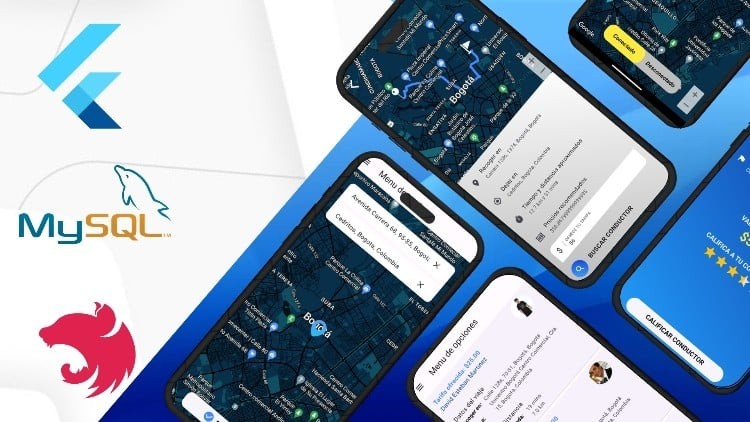
Crea una APP clone de InDriver UBER con Flutter NestJS MySQL
Last updated 3/2025
Created by Jonathan Goyes
MP4 | Video: h264, 1280x720 | Audio: AAC, 44.1 KHz, 2 Ch Level: All | Genre: eLearning | Language: Spanish + subtitle | Duration: 164 Lectures ( 33h 48m ) | Size: 24.2 GB

Google Maps | Android | iOS | NestJS | MySQL | Clean Architecture | BloC | MVVM | Inyeccion de dependencias | Socket IO


What you'll learn
Flutter
NestJS
MySQL
Gestor de estado BloC
Inyeccion de dependencias (Injectable)
Google Maps
Peticiones HTTP
Conexion Base de datos
Comunicar API REST con un APP
TypeORM
Clean Architecture
Socket IO (Tiempo real)
CRUD API
Base de datos espaciales

Requirements
Programacion orientada a objetos
Nociones de desarrollo de apps
Tener conocimiento en algun lenguaje de programacion como Kotlin, Dart, JAVA, Swift, Javascript

Description
Crea un Clon de InDriver y UBER desde ceroDesarrollo Multiplataforma Android y iOS utilizando Clean Architecture + BloC con Backend y Base de datosEn este curso te voy a enseñar como crear una aplicación de TRANSPORTE tipo InDriver O UBER utilizando FLUTTER junto con NESTJS, MYSQL, Inyeccion de dependencias y Socket IOAprende a programar con un Senior Developer combinando las mejores tecnologías que tiene Flutter actualmente para desarrollar apps Multiplataforma:APPGestor de estado BloCInyeccion de dependencias (Injectable)Clean Architecture (Presentation - Domain - Data)Peticiones HTTPSocket IO ClientMapas de GoogleTrazado de rutasLocalizacion en tiempo realNotificaciones PushBACKENDNestJS (Framework NodeJS)MySQL (Base de datos)TypeORMManejo de datos espacialesCRUD API (Create, Read, Update, Delete)JWT (Bearer Token)Proteccion de rutas por ROLES de usuarioSocket IO ServerFirebase AdminY MUCHO MAS!Espero que te suscribas a mi curso y poderte brindar todo mi conocimiento sobre este interesante mundo del desarrollo móvil profesional.Flutter:Es un framework de código abierto desarrollado por Google para crear aplicaciones nativas de forma fácil, rápida y sencilla. Su principal ventaja radica en que genera código 100% nativo para cada plataforma, con lo que el rendimiento y la UX es totalmente idéntico a las aplicaciones nativas tradicionales.NestJS:Nest.js es un framework de Node.js que nos servira para construir aplicaciones backend eficientes, escalables y de nivel empresarial utilizando Node.js

Who this course is for
Estudiantes de ingenieria de Software
Estudiantes de Ingeniería en Computación
Estudiantes de Ingeniería de Sistemas
Ingenieros de Sistemas
Ingenieros de Software
Desarrolladores Web, Movil
Programadores
Desarrolladores JAVASCRIPT
Desarrolladores KOTLIN
Desarrolladores SWIFT
Desarrolladores Flutter
Desarrolladores React Native


640568577_crea_una_app_clone_de_indriver_uber_con_flutter_nestjs_mysql.jpg


Download from RapidGator


Premium Links



ba82a126035bc76b267e7657a22fe130.jpg


Deploying Windows 11 in Modern Networks
Published 9/2025
Created by Wes Bryan
MP4 | Video: h264, 1280x720 | Audio: AAC, 44.1 KHz, 2 Ch Level: Intermediate | Genre: eLearning | Language: English | Duration: 71 Lectures ( 17h 25m ) | Size: 20 GB

Windows 11 Deployment


What you'll learn
Compare and Contrast traditional and modern Windows 11 deployment strategies
Implementing the appropriate Windows Assessment and Deployment Kit (ADK) tools, given a scenario
Deploying Windows 11 with Autopilot in Microsoft Intune
Deploying Windows 11 with cloud-based solutions
Troubleshooting Windows 11 deployments, given a scenario

Requirements
(Recommended, not required) Understanding of Windows 11 desktop environment, working knowledge basic networking and cloud skills

Description
Deploying Windows 11 in Modern Networks is a technical, hands-on course designed for IT professionals who plan, deploy, and manage enterprise Windows environments. The course spans traditional, modern, and cloud deployment models, ensuring learners understand how to align Windows 11 implementations with organizational requirements.The course begins by examining deployment models, enterprise requirements, and licensing considerations. Learners compare traditional imaging to modern provisioning, with an emphasis on when to choose each approach. Enterprise hardware standards, security baselines, and compliance requirements are highlighted to ensure deployments meet business needs. Licensing and activation models are also covered, giving IT professionals the ability to plan for scalability and cost efficiency.Next, the course introduces Windows ADK tools including Windows PE, DISM, and Sysprep. Learners gain practical skills in customizing and servicing Windows images to prepare them for large-scale deployments. Building on this foundation, modern deployment is explored through Windows Autopilot and Microsoft Intune. Participants will learn how to create and assign deployment profiles, enroll devices, and integrate identity management with Microsoft Entra ID and Hybrid Entra Join.Cloud-based deployments form a major focus, with lessons covering Windows 365 Cloud PCs, Azure Virtual Machines, and Azure Virtual Desktop. Learners compare persistent and non-persistent VMs, review provisioning processes, and explore licensing and cost optimization strategies. Advanced concepts such as control plane, data plane, and management plane are introduced to provide architectural context for cloud-hosted environments.The course concludes with structured troubleshooting strategies. Learners address common issues in Autopilot, Intune, and cloud deployments using tools like Event Viewer, SetupDiag, and more. Recovery and rollback methods are emphasized to minimize disruption in production environments.By course completion, learners will be better prepared to deploy, and maintain secure, efficient, and scalable Windows 11 infrastructures across traditional, hybrid, and cloud environments.

Who this course is for
This course is designed to give learners the ability to deploy Windows 11 operating systems using a variety of tools in various scenarios
Helpdesk Technicians
Support Teams
IT Administrators


639396268_deploying_windows_11_in_modern_networks.jpg


Download from RapidGator


Premium Links


cb52647a55963e405c64c1577e395701.jpg


Crea una APP clone de InDriver UBER con Flutter Django MySQL
Last updated 7/2025
Created by Jonathan Goyes
MP4 | Video: h264, 1280x720 | Audio: AAC, 44.1 KHz, 2 Ch Level: All | Genre: eLearning | Language: Spanish + subtitle | Duration: 177 Lectures ( 36h 16m ) | Size: 26.1 GB

Flutter | Django | MySQL | Google Maps | Clean Architecture | BloC | Inyeccion dependencias | Socket iO | Notificaciones


What you'll learn
Flutter
Django
MySQL
Gestor de estado BloC
Inyeccion de dependencias (Injectable)
Google Maps
Peticiones HTTP
Conexion Base de datos
Comunicar API REST con un APP
TypeORM
Clean Architecture
Socket IO (Tiempo real)
CRUD API
Base de datos espaciales

Requirements
Programacion orientada a objetos
Nociones de desarrollo de apps
Tener conocimiento en algun lenguaje de programacion como Dart, Kotlin ,JAVA, Swift, Javascript

Description
Crea un Clon de InDriver y UBER desde ceroDesarrollo Multiplataforma Android y iOS utilizando Clean Architecture + BloC con Backend y Base de datosEn este curso te voy a enseñar como crear una aplicación de TRANSPORTE tipo InDriver O UBER utilizando FLUTTER junto con Django, MYSQL, Inyeccion de dependencias y Socket IOAprende a programar con un Senior Developer combinando las mejores tecnologías que tiene Flutter actualmente para desarrollar apps Multiplataforma:APPGestor de estado BloCInyeccion de dependencias (Injectable)Clean Architecture (Presentation - Domain - Data)Peticiones HTTPSocket IO ClientMapas de GoogleTrazado de rutasLocalizacion en tiempo realAnimaciones en Localizacion y RutasNotificaciones PushBACKENDDjangoMySQL (Base de datos)TypeORMManejo de datos espacialesCRUD API (Create, Read, Update, Delete)JWT (Bearer Token)Proteccion de rutas por ROLES de usuarioSocket IO ServerFirebase AdminY MUCHO MAS!Espero que te suscribas a mi curso y poderte brindar todo mi conocimiento sobre este interesante mundo del desarrollo móvil profesional.Flutter:Es un framework de código abierto desarrollado por Google para crear aplicaciones nativas de forma fácil, rápida y sencilla. Su principal ventaja radica en que genera código 100% nativo para cada plataforma, con lo que el rendimiento y la UX es totalmente idéntico a las aplicaciones nativas tradicionales.Django:Django es un framework web gratuito y de código abierto que permite desarrollar aplicaciones web de forma rápida y eficiente. Está escrito en Python, uno de los lenguajes de programación más populares.

Who this course is for
Estudiantes de ingenieria de Software
Estudiantes de Ingeniería en Computación
Estudiantes de Ingeniería de Sistemas
Ingenieros de Sistemas
Ingenieros de Software
Desarrolladores Web, Movil
Programadores


640568576_crea_una_app_clone_de_indriver_uber_con_flutter_django_mysql.jpg


Download from RapidGator


Premium Links


Zurück
Oben Unten