• Regeln für den Video-Bereich:

    In den Börsenbereich gehören nur Angebote die bereits den Allgemeinen Regeln entsprechen.

    Einteilung

    - Folgende Formate gehören in die angegeben Bereiche:
    - Filme: Encodierte Filme von BluRay, DVD, R5, TV, Screener sowie Telesyncs im Format DivX, XviD und x264.
    - DVD: Filme im Format DVD5, DVD9 und HD2DVD.
    - HD: Encodierte Filme mit der Auflösung 720p oder darüber von BluRay, DVD, R5, TV, Screener sowie Telesyncs im Format x264.
    - 3D: Encodierte Filme von BluRay, die in einem 3D Format vorliegen. Dies gilt auch für Dokus, Animation usw.
    - Serien: Cartoon/Zeichentrick, Anime, Tutorials, Dokumentationen, Konzerte/Musik, Sonstiges sind demnach in die entsprechenden Bereiche einzuordnen, auch wenn sie beispielsweise im High Definition-Format oder als DVD5/DVD9/HD2DVD vorliegen. Ausnahme 3D.
    - Bereich Englisch: Englische Releases gehören immer in diesen Bereich.
    - Bereich Talk: Der Bereich, in dem über die Releases diskutiert werden kann, darf, soll und erwünscht ist.


    Angebot/Beitrag erstellen

    - Ein Beitrag darf erst dann erstellt werden, wenn der Upload bei mindestens einem OCH komplett ist. Platzhalter sind untersagt.
    - Bei einem Scenerelease hat der Threadtitel ausschließlich aus dem originalen, unveränderten Releasenamen zu bestehen. Es dürfen keine Veränderungen wie z.B. Sterne, kleine Buchstaben o.ä. vorgenommen werden. Ausnahme Serienbörse:
    - Bei einem Sammelthread für eine Staffel entfällt aus dem Releasename natürlich der Name der Folge. Beispiel: Die Simpsons S21 German DVDRip XviD - ITG
    - Dementsprechend sind also u.a. verboten: Erweiterungen wie "Tipp", "empfehlenswert", "only", "reup", usw. / jegliche andere Zusatzinformation oder Ergänzung, welche nicht in obiger Beschreibung zu finden ist.

    Aufbau des Angebots und Threadtitel

    Der Titel nach folgendem Muster erstellt zu werden. <Name> [3D] [Staffel] [German] <Jahr> <Tonspur> [DL] [Auflösung] <Quelle> <Codec> - <Group>
    Beispiel: The Dark Knight German 2008 AC3 DVDRip XviD - iND
    Beispiel: The Dark Knight 2008 DTS DL BDRip x264 - iND
    Beispiel: The Dark Knight 2008 AC3 DL BDRip XviD - iND
    Beispiel: The Dark Knight German 2008 AC3 720p BluRay x264 iND
    Beispiel: The Dark Knight 2008 DTS DL 1080p BluRay x264 iND
    Beispiel: Die Simpsons S01 German AC3 DVDRip XviD iND
    Beispiel: Die Simpsons S20 German AC3 720p BluRay x264 iND
    Beispiel: Sword Art Online II Ger Sub 2014 AAC 1080p WEBRip x264 - peppermint
    Entsprechend sind also u.a. verboten: Sonderzeichen wie Klammern, Sterne, Ausrufezeichen, Unterstriche, Anführungszeichen / Erweiterungen wie "Tipp", "empfehlenswert", "only", "reup", usw. / jegliche andere Zusatzinformation oder Ergänzung, welche nicht in obiger Beschreibung zu finden ist
    Ausnahmen hiervon können in den Bereichen geregelt sein.

    Die Beiträge sollen wie folgt aufgebaut werden:
    Überschrift entspricht dem Threadtitel
    Cover
    kurze Inhaltsbeschreibung
    Format, Größe, Dauer sind gut lesbar für Downloader außerhalb des Spoilers zu vermerken
    Nfo sind immer Anzugeben und selbige immer im Spoiler in Textform.
    Sind keine Nfo vorhanden z.B. Eigenpublikationen, sind im Spoiler folgende Dateiinformationen zusätzlich anzugeben :
    Quelle
    Video (Auflösung und Bitrate)
    Ton (Sprache, Format und Bitrate der einzelnen Spuren)
    Untertitel (sofern vorhanden)
    Hosterangabe in Textform außerhalb eines Spoiler mit allen enthaltenen Hostern.
    Bei SD kann auf diese zusätzlichen Dateiinformationen verzichtet werden.

    Alle benötigten Passwörter sind, sofern vorhanden, in Textform im Angebot anzugeben.
    Spoiler im Spoiler mit Kommentaren :"Schon Bedankt?" sind unerwünscht.


    Releases

    - Sind Retail-Release verfügbar, sind alle anderen Variationen untersagt. Ausnahmen: Alle deutschen Retail-Release sind CUT, in diesem Fall sind dubbed UNCUT-Release zulässig.
    - Im Serien-Bereich gilt speziell: Wenn ein Retail vor Abschluss einer laufenden Staffel erscheint, darf diese Staffel noch zu Ende gebracht werden.62
    - Gleiche Releases sind unbedingt zusammenzufassen. Das bedeutet, es ist zwingend erforderlich, vor dem Erstellen eines Themas per Suchfunktion zu überprüfen, ob bereits ein Beitrag mit demselben Release besteht. Ist dies der Fall, ist der bereits vorhandene Beitrag zu verwenden.
    - P2P und Scene Releases dürfen nicht verändert oder gar unter einem iND Tag eingestellt werden.


    Support, Diskussionen und Suche

    - Supportanfragen sind entweder per PN oder im Bereich Talk zu stellen.
    - Diskussionen und Bewertungen sind im Talk Bereich zu führen. Fragen an die Uploader haben ausschließlich via PN zu erfolgen, und sind in den Angeboten untersagt.
    - Anfragen zu Upload-Wünschen sind nur im Bereich Suche Video erlaubt. Antworten dürfen nur auf Angebote von MyBoerse.bz verlinkt werden.


    Verbote

    - Untersagt sind mehrere Formate in einem einzigen Angebotsthread, wie beispielsweise das gleichzeitige Anbieten von DivX/XviD, 720p und 1080p in einem Thread. Pro Format, Release und Auflösung ist ein eigener Thread zu eröffnen.
    - Grundsätzlich ebenso verboten sind Dupes. Uploader haben sich an geeigneter Stelle darüber zu informieren, ob es sich bei einem Release um ein Dupe handelt.
    - Gefakte, nur teilweise lauffähige oder unvollständige Angebote sind untersagt. Dies gilt auch für eigene Publikationen, die augenscheinlich nicht selbst von z.B. einer DVD gerippt wurden. Laufende Serien, bei denen noch nicht alle Folgen verfügbar sind, dürfen erstellt und regelmäßig geupdatet werden.
    - Untersagt sind Angebote, welche nur und ausschließlich in einer anderen Sprache als deutsch oder englisch vorliegen. Ausnahmen sind VORHER mit den Moderatoren zu klären.


    Verstoß gegen die Regeln

    - Angebote oder Beiträge, die gegen die Forenregeln verstoßen, sind über den "Melden"-Button im Beitrag zu melden.
  • Bitte registriere dich zunächst um Beiträge zu verfassen und externe Links aufzurufen.

*** Bestes IPTV *** bester Preis *** gratis Test ***


Englische Tutorials

def76bd54b7a23f27535d1ae19dc27dc.jpg


Physics - Intermediate/Class 11 | NEET | PYQs | Part-2
Published 9/2025
Created by Mala Kondaiah Gandham
MP4 | Video: h264, 1280x720 | Audio: AAC, 44.1 KHz, 2 Ch
Level: Beginner | Genre: eLearning | Language: English | Duration: 223 Lectures ( 46h 11m ) | Size: 26.8 GB

Learn, Practice & Excel: Physics Course for NEET Aspirants


What you'll learn
Gain exam-oriented preparation through PYQs, examples, and structured practice for better retention and performance.
Strengthen Physics fundamentals with step-by-step explanations for beginners advancing to complex NEET-level problem solving.
Learn Physics from basics to advanced with NEET topics & PYQs. Build concepts, boost problem-solving, and crack NEET confidently.
Develop speed, accuracy, and analytical skills to confidently solve NEET Physics questions under exam conditions.

Requirements
No specific requirements are needed. The course is designed from basics to advanced concepts, making it suitable for beginners as well as advanced learners.

Description
Physics plays a vital role in the NEET exam, and a strong understanding of this subject can significantly improve your overall score. This course is carefully designed to help NEET aspirants develop a solid foundation in Physics, beginning with the very basics and gradually progressing toward advanced concepts. Every topic is explained in a simple, structured manner, ensuring clarity for beginners as well as depth for advanced learners. The course not only explains core principles but also emphasizes their applications through Previous Year NEET Questions (PYQs), ensuring learners understand both theory and problem-solving approaches. With step-by-step explanations and well-structured practice, students can strengthen conceptual clarity and improve accuracy.By the end of this course, learners will:Master important Class 11 Physics concepts relevant for NEET.Gain confidence in solving numerical and conceptual problems.Be familiar with NEET exam trends through PYQ practice.Develop speed, accuracy, and exam-ready strategies.Through consistent practice, learners will gain confidence in problem-solving, improve speed and accuracy, and develop analytical thinking skills crucial for competitive exams. The course ensures that aspirants are not only exam-ready but also capable of applying Physics in real-life problem situations.The course is ideal for NEET aspirants who want to enhance their Physics preparation, build a strong base, and maximize their chances of success.Note:- This course is intended for students below 18 years so the course should be purchased by parents or guardians who will be supervising their learning through their credentials.

Who this course is for
This course is designed for intermediate students preparing for competitive exams and engineering aspirants who want to strengthen their physics foundation.

Homepage


637448802_18-8-17-moi-and-radius-of-gyration-for-some-standard-bodies-1_s.jpg


3e6ec6d6659d783996d98b44559e01d6.jpg


Oracle Fusion Techno Functional Master Class
Published 9/2025
Created by Adeel Aslam
MP4 | Video: h264, 1280x720 | Audio: AAC, 44.1 KHz, 2 Ch
Level: All | Genre: eLearning | Language: English | Duration: 42 Lectures ( 43h 38m ) | Size: 21.6 GB

Oracle Fusion Techno Functional Consultant - Complete Training (Security, BI, OIC, HCM & Financials)


What you'll learn
Understand Oracle Fusion technical architecture and core concepts.
Configure and manage Oracle Fusion Security Model effectively.
Build and customize BI Publisher reports with data models and layouts.
Develop advanced BI Publisher templates, bursting, and scheduling.
Design OTBI analyses and dashboards for real-time reporting needs.
Perform journal import processes and troubleshoot common issues.
Create and manage Data Access Sets in General Ledger.
Upload customers and automate AR Auto Invoice creation.
Work with HCM data loader and create employees via Worker.dat.
Use SOAP Web Services to extend and integrate Oracle Financials.
Develop integrations in Oracle Integration Cloud (OIC) step by step.
Import invoices into Oracle Fusion using FBDI with OIC.
Implement lookups, mappings, and transformations in OIC.
Call database packages and validate files from OIC integrations.
Automate AR invoice creation through OIC and DBCS integrations.
Work with OIC REST APIs for advanced integration scenarios.
Use Page Composer and Sandbox to personalize and extend Fusion apps.
Display and configure new pages on Oracle Fusion springboard.
Encrypt files and secure integrations using PGP keys.
Explore Hyperion Financial Reporting Studio for advanced reporting.

Requirements
Basic understanding of ERP concepts (Financials or HCM).
Familiarity with SQL and PL/SQL will be helpful but not mandatory.
No prior experience in Oracle Fusion required; beginners welcome.
Access to Oracle Fusion Cloud (trial or corporate) recommended.

Description
This course is designed for anyone who wants to build a strong career as an Oracle Fusion Technical Consultant. Whether you are a beginner exploring Oracle Cloud applications or an experienced professional looking to expand your technical skills, this course provides a complete, step-by-step guide to mastering Fusion technical concepts.You will start by understanding the Fusion Security Model, learning how roles, privileges, and data access are controlled. Then, you will dive into BI Publisher and OTBI reporting, where you will build data models, layouts, dashboards, and advanced templates to deliver powerful reports for business users.The course also covers Workflow and Approval Notifications, along with hands-on tutorials in Financials (GL, AR) and HCM (Data Loader, Worker.dat), giving you real-world exposure to critical business processes.You will then move into Web Services and Integrations, exploring SOAP and REST APIs for Oracle Financials, followed by a complete Oracle Integration Cloud (OIC) series. This includes lookups, mappings, FBDI import, database package calls, AR invoice creation, and REST API-based advanced integrations.Finally, you will learn Page Composer and UI personalization, file encryption with PGP Keys, and Hyperion Financial Reporting Studio for advanced reporting.By the end of this course, you will have the knowledge and confidence to implement, customize, and integrate Oracle Fusion applications, making you job-ready as a Fusion Technical Consultant.

Who this course is for
Beginners who want to start a career as Oracle Fusion Technical Consultant.
Functional consultants looking to expand into technical development.
Developers or DBAs transitioning to Oracle Fusion Cloud.
IT professionals interested in ERP Cloud integrations and reporting.
Students preparing for Oracle Fusion Technical Consultant interviews.

Homepage


637449003_6-bi-publisher-ess-job-job-definition-all-part-6-_s.jpg


d2804aa15e932041ecd1ff301f4d69c1.jpg


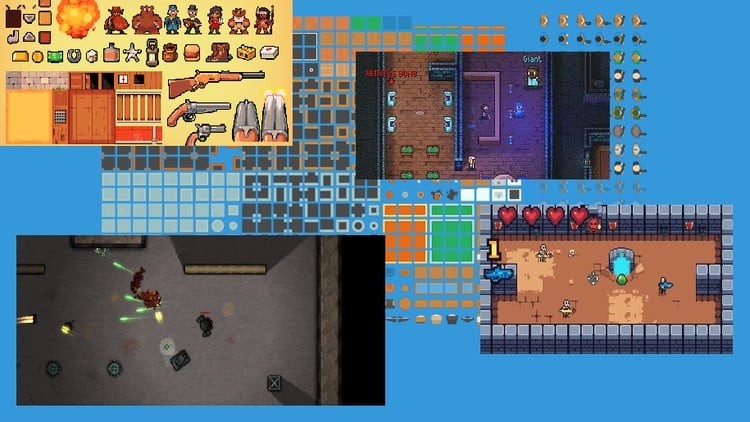
Unity | From Beginner To Professional | 3D & 2D Game Dev
Published 8/2025
MP4 | Video: h264, 1920x1080 | Audio: AAC, 44.1 KHz
Language: English | Size: 92.38 GB | Duration: 137h 28m

Take your first step into the world of game development. Learn from scratch and code your future.


What you'll learn
They will be able to develop and publish their own games from scratch
They will gain the competence to work in game development teams
They will be able to lay a solid foundation to establish their own game studios
They will be able to stand out in job or internship applications by building their portfolios

Requirements
Basic computer knowledge
A device with the hardware to run the Unity game engine and system

Description
Are you ready to turn your dream games into reality?This comprehensive training program is designed to take you from absolute beginner to professional level within the Unity ecosystem-even if you have no prior experience. We will start from the fundamentals of Unity and teach C# with game-focused examples. In addition to theoretical explanations, you will reinforce your learning by developing five complete projects from scratch.What Will You Learn in This Course?Unity interface and core systemsA solid introduction to C# programmingGame mechanics, physics engines, and animationsUI design, audio management, scene transitions, and moreFile handling and data operationsArtificial intelligence systemsOnline/multiplayer game mechanicsUnity Services5 complete game projects (compatible with Mobile and PC)Who Should Join?Those who dream of becoming game developersBeginners with no coding experienceDevelopers with basic knowledge who want to advanceAnyone wanting to master Unity through real-world projects--- GAMES ---3D Mobile Car Racing - Full Speed General Vehicle OperationsVehicle control systemBrake light and tire skid mark systemSpeedometerReverse gear system and reverse light operationGear systemNitro systemVehicle recovery/reset systemVehicle Assist SystemsSteering assist systemLinear friction assistAngular friction assistRoad grip assist systemTraction control assistSpin control systemAI Vehicle MechanicsLateral control systemCornering control systemSpeed control systemRoute targeting and following systemSelf-recovery system for AI vehicles3D sound system (vehicle sounds are audible when passing nearby and fade with distance.)- General Features and FunctionsData system (saving and reading data from a file)Car customization system (changing wheel and car color, saving and reading via file system)Settings section (controlling game, menu, and effect sounds; adjusting graphic quality)Who's ahead system (ranking control, tracking which car is in which position)Loading panelCheckpoint systemWrong-way warning system (reverse direction control)Countdown timerDestructible object systemObject pooling wherever necessary...and much more.3D Mobile FPS Game - Operation- General Character MechanicsMovementRotationJumpingCrouchingManual aimingAuto aiming- Enemy FeaturesDetection systemPatrol systemSound detection system (Can detect bullet and grenade sounds even outside range and react)Chase systemField of view systemPlayer memory systemHealth bar systemHit effect- Weapon MechanicsFire mode switch system (Single Shot, Burst Fire)Weapon switching systemReload systemEmpty shell ejectionBullet trail effectAuto aim correction assistant (Helps targeting enemies)Auto aim assist system (Automatically shoots when an enemy is targeted)Aim enlargement assistant (Automatically enlarges aim when targeting an enemy)- General FeaturesWeapon upgrade system (Weapon stats can be improved)Data system (Weapon data is saved using a file system and read back for use)Main menu settings section (Audio settings, aim assistants, and preferences can be adjusted, saved to and read from the file system)Mini map systemItem creation and collection systemHealth system and medkit usage systemHit direction indicator (Visually shows the direction of the received damage)Grenade throwing systemVibration system on damage takenLoading panelLevel scene welcome panelOcclusion culling systemObject pooling system wherever neededand much more...- General Character ControlsCharacter controlFruit and juice collecting systemSlot system (for carrying items)- General FeaturesData system (All data is saved to and read from the file system)Field system (Unlocking and managing tree slots in the field)Fruit generation and growth system for treesFruit capacity system for treesMachine system (All operations of machines that produce juice)Fruit capacity system for machinesJuice (glass) capacity system for machinesTree and machine upgrade system (Trees and machines can be upgraded)Office management system (Improvements for character and customer management)Order desk system (Desk where customers arrive)Trash bin system (Throwing away fruits and juices in hand)Settings menu (Audio and other settings can be configured)Object pooling system wherever needed- Customer SystemMovement systemNavMesh operationsOrder taking and movement systemCustomer slot systemCustomer management system (Automatically generates customers based on predefined settings and handles their technical processes)and much more... 3D PC - ONLINE - We Must Escape From HereThis is an online puzzle-type game where at least two players must work together to solve puzzles and advance through different levels. For example, one player presses a button to open a door, allowing the other player to move to the next area and pull a lever so the first player can proceed. All movement systems and the online structure are developed and explained from scratch.*** 2D Puzzle - Match-3 - Fruit World ***Game FeaturesDynamic Grid Generation SystemFruit SpawningSpecial Fruit SystemBomb Fruit SystemGame Mode System - (Time-Based - Move-Based)Win Condition System (Score Only - Fruit Only - Score and Fruit)Fruit Shuffling SystemSpecial Power SystemFruit Disappearance Effect PoolSettings Menu - Sound On/Off Systemand much more...THE ORIGINAL VIDEO NARRATION AND DESCRIPTION LANGUAGE OF THIS COURSE IS TURKISH. ALL VIDEOS HAVE BEEN DUBBED USING ARTIFICIAL INTELLIGENCE. THERE MAY BE ERRORS OR MISINTERPRETATIONS DUE TO TRANSLATION. PLEASE CONSIDER THIS BEFORE MAKING A PURCHASE.

Overview
Section 1: Introduction Videos

Lecture 1 3D Mobile Car Racing | Full Speed | Promo Video

Lecture 2 3D Mobile FPS | Operation | Promo Video

Lecture 3 3D Mobile | Juice Shop | Promo Video

Lecture 4 3D Online | We Must Escape | Promo Video

Lecture 5 2D Mobile | Fruit World | Promo Video

Section 2: General Information - Please watch before deciding to purchase.

Lecture 6 Course Introduction and Information

Lecture 7 Information about source codes

Lecture 8 Explanation about video and narration language - must watch.

Section 3: Installation | Editor Overview and Information

Lecture 9 Installation

Lecture 10 Editor Overview | Window Introduction #1

Lecture 11 Editor Overview | Window Introduction #2

Lecture 12 Editor Overview | Window Introduction #3

Section 4: Essential First Knowledge

Lecture 13 Debug Class

Lecture 14 Time Class

Section 5: Basic C# Lessons

Lecture 15 Variables | Declaration | Types

Lecture 16 Variable Modifiers

Lecture 17 If Else Usage | Comparison Operators | Equality Operators | #1

Lecture 18 If Else Usage | Logical Operators | Various Cases | #2

Lecture 19 Other Mixed Operators

Lecture 20 Arithmetic Operators

Lecture 21 For Loop

Lecture 22 Array Declaration | One-Dimensional Arrays | #1

Lecture 23 Array Declaration | Multidimensional and Jagged Arrays | #2

Lecture 24 Creating Lists | List Types | Other Various Operations

Lecture 25 Foreach Loop

Lecture 26 While | Do While Loop

Lecture 27 Switch Statement

Lecture 28 ArrayList Declaration | Various ArrayList Commands

Lecture 29 HashTable Declaration | Various HashTable Commands

Lecture 30 Dictionary Declaration | Various Dictionary Commands

Lecture 31 Stack Class | Declaration and Various Commands

Lecture 32 Queue Class | Declaration and Various Commands

Lecture 33 Try Catch Error Handling Block

Lecture 34 Jump Statements

Lecture 35 Enum Declaration | Multiple Choice Enum System

Lecture 36 Creating Properties | Usage

Lecture 37 Miscellaneous Commands

Section 6: C# Function Operations | Class Operations | Interface Operations | Various Examp

Lecture 38 Functions

Lecture 39 Class #1

Lecture 40 Class #2 | Static Class

Lecture 41 Class #3 | Constructors | Destructors | Initializing Different Classes

Lecture 42 Class #4 | Inheritance Example

Lecture 43 Class #5 | Defining Namespaces | Various Namespace Operations

Lecture 44 Class #6 | Override - Virtual Modifiers

Lecture 45 Class #7 | Abstract - Sealed | Types of Classes

Lecture 46 Class List Explanation and Sample Study

Lecture 47 Interface

Section 7: Other Unity Functions | Various Techniques | Functions | Classes

Lecture 48 Unity's Basic Functions and Execution Order

Lecture 49 Other Unity Functions

Lecture 50 Coroutine

Lecture 51 Invoke

Lecture 52 GameObject Operations #1

Lecture 53 GameObject Operations #2

Lecture 54 GameObject Operations #3

Lecture 55 Async / Await

Lecture 56 UniTask

Lecture 57 Delegate

Lecture 58 Action | Func

Lecture 59 Event | UnityEvent

Lecture 60 Extension Methods

Section 8: Transform & Vector & Quaternion Operations

Lecture 61 Vector Operations #1

Lecture 62 Vector Operations #2

Lecture 63 Vector Operations #3

Lecture 64 Vector Operations #4

Lecture 65 Transform Operations #1

Lecture 66 Transform Operations #2

Lecture 67 Quaternion Operations

Section 9: Various Classes & Methods | Frequently Used

Lecture 68 Instantiate | Object Creation Operations

Lecture 69 Mathf Class | Mathematical Operations

Lecture 70 Random Class

Lecture 71 Application Class

Lecture 72 Scene Operations | SceneManager Class

Lecture 73 Color Class | Color | Color32

Lecture 74 Various Inspector and Editor Operations

Lecture 75 Gizmos Operations

Lecture 76 GUI Operations

Lecture 77 GUI Event Operations

Lecture 78 Various Classes and Explanations

Section 10: Unity Physics | Physics Operations | PHYSICS | 2D‑3D

Lecture 79 3D | Physics Operations #1 | Introduction | First Collider Operations

Lecture 80 3D | Physics Operations #2 | Initial Collision Detection Operations | Other Earl

Lecture 81 3D | Physics Operations #3 | Component Explanations

Lecture 82 3D | Physics Operations #4 | Component Explanations

Lecture 83 3D | Physics Operations #5 | Component Explanations

Lecture 84 3D | Physics Operations #6 | Component Explanations

Lecture 85 3D | Physics Operations #7 | Component Explanations

Lecture 86 3D | Rigidbody Commands

Lecture 87 2D | Physics Operations #1 | Introduction | First Collider Operations | First Co

Lecture 88 2D | Physics Operations #2 | Component Explanations

Lecture 89 2D | Physics Operations #3 | Component Explanations

Lecture 90 2D | Physics Operations #4 | Component Explanations

Lecture 91 2D | Physics Operations #5 | Component Explanations

Lecture 92 2D | Physics Operations #6 | Component Explanations

Lecture 93 2D | Physics Operations #7 | Component Explanations

Lecture 94 2D | Physics Operations #8 | Component Explanations

Lecture 95 2D | Rigidbody Commands

Lecture 96 3D - Raycast #1

Lecture 97 3D - Raycast #2

Lecture 98 2D - Raycast #1

Lecture 99 3D‑2D | RaycastAll & RaycastNonAlloc Command | Multi‑object Detection

Lecture 100 3D - Other Cast Types

Lecture 101 3D | Overlap Commands | Creating Ranges | Detecting Objects by Range

Lecture 102 2D Overlap Commands | Cast Commands

Section 11: USEFUL SITES

Lecture 103 Useful sites for finding fonts, sounds, models, textures, and animations.

Section 12: Graphic | Lighting | Material | Textures | Shader | Rendering & Mesh Components

Lecture 104 Material | Shader | Texture explanations

Lecture 105 Camera

Lecture 106 LOD Group

Lecture 107 Skybox

Lecture 108 Mesh Renderer | Mesh Filter

Lecture 109 Light #1 | Types of lights and operations

Lecture 110 Light #2 | Light Probe | Light Probe Proxy Volume | Reflection Probe

Lecture 111 Light #3 | Light Settings | Lightmap explanation and application

Lecture 112 URP | Universal Render Pipeline | Setup and various operations

Lecture 113 URP | Universal Render Pipeline | Files and settings

Lecture 114 URP | Global Volume | Post Processing

Lecture 115 URP | Universal Render Pipeline | Component Explanations

Lecture 116 2D | URP | Universal Render Pipeline | Loading | Light types and operations

Lecture 117 HDRP | High Definition Render Pipeline | Setup and initial operations

Lecture 118 HDRP | High Definition Render Pipeline | Component Explanations

Lecture 119 HDRP | Water System | Water system | Creating ocean, pool, river scenarios

Section 13: 3D - 2D Miscellaneous Components and Operations

Lecture 120 Video Player | Playing videos in games

Lecture 121 Terrain #1 | Creating terrain and basic operations

Lecture 122 Terrain #2 | Continued terrain operations | Terrain settings

Lecture 123 Terrain #3 | Terrain Tools package

Lecture 124 Constraints | Component explanations

Lecture 125 2D | Sprite Renderer | Sprite Mask

Lecture 126 2D | Various Sprite Component explanations

Lecture 127 2D | Pixel Perfect Camera

Lecture 128 2D | Tilemap | Tile palette

Lecture 129 2D | Tilemap Component explanations

Section 14: Unity Effects

Lecture 130 Particle System

Lecture 131 Trail Renderer

Lecture 132 Line Renderer

Lecture 133 Visual Effect Graph

Lecture 134 Other Effects | Halo | Lens Flare | Projector | URP | Built-in pipeline

Section 15: Canvas | UI | User Interface | Interface Elements

Lecture 135 Canvas General Overview

Lecture 136 Canvas Component Explanations

Lecture 137 Visual Components #1 | Image Object and Component Explanation

Lecture 138 Visual Components #2 | Raw Image & Panel Object and Component Explanation

Lecture 139 Visual Components #3 | TextMeshPro Object and Component Explanation

Lecture 140 Interactive Components #1 | Button Object and Component Explanation

Lecture 141 Interactive Components #2 | Toggle Object and Component Explanation

Lecture 142 Interactive Components #3 | Dropdown Object and Component Explanation

Lecture 143 Interactive Components #4 | Input Field Object and Component Explanation

Lecture 144 Interactive Components #5 | Slider Object and Component Explanation

Lecture 145 Interactive Components #6 | ScrollBar Object and Component Explanation

Lecture 146 Interactive Components #7 | Scroll View Object and Component Explanation

Lecture 147 Auto Layout Components #1 | Horizontal Layout Group | Vertical Layout Group

Lecture 148 Auto Layout Components #2 | Grid Layout Group

Lecture 149 Auto Layout Components #3 | Content Size | Aspect Ratio | Layout Element

Lecture 150 Auto Layout | Example Project

Lecture 151 Effect Components | Shadow | Outline

Lecture 152 Event | Event Components

Section 16: Animation Operations

Lecture 153 Animation system overview | Creating animation windows and clips

Lecture 154 Animation window section descriptions | Various usages

Lecture 155 Animator Window #1 | General explanation | State types | Transitions

Lecture 156 Animator Window #2 | Parameter handling | Transition conditions

Lecture 157 Animator Window #3 | Transition properties and settings | State settings

Lecture 158 Animator Window #4 | Any State | SubState | Blend Tree explanation and example

Lecture 159 Animator Window #5 | Layer system

Lecture 160 Animator Window #6 | Animator Component | Animator Override Controller

Lecture 161 Animator Window #7 | Script integration

Lecture 162 Animator Window #8 | Event example

Lecture 163 Character Setup #1 | Importing characters | Avatar | Model and Rig settings

Lecture 164 Character Setup #2 | Animation and Material settings

Lecture 165 Character Animation System | Sample project

Lecture 166 2D Animation System

Lecture 167 UI Button Animation System

Section 17: Audio Operations

Lecture 168 Audio Source Component explanation | General overview of sound operations

Lecture 169 Audio Clip Inspector settings

Lecture 170 Audio Filters

Lecture 171 Audio Mixer

Lecture 172 Audio Random Container | Audio Reverb Zone

Lecture 173 Audio scripting operations

Section 18: AI | Artificial Intelligence | Navigation

Lecture 174 Package installation | Initial explanation | Adding basic components | First mov

Lecture 175 NavMesh Surface Component | Agent types and settings

Lecture 176 NavMesh Agent Component

Lecture 177 NavMesh Areas explanation | NavMesh Modifier Component

Lecture 178 NavMesh Modifier Volume Component

Lecture 179 Creating multiple NavMesh Surface areas

Lecture 180 NavMesh Obstacle Component

Lecture 181 NavMesh Link Component

Lecture 182 NavMesh Editor operations | Scripting operations

Lecture 183 EXAMPLE | Moving agent to mouse position

Lecture 184 EXAMPLE | Sending selected agent to mouse position

Lecture 185 EXAMPLE | Patrol system

Lecture 186 EXAMPLE | Agent generating its own path during gameplay | NavMesh Modifier

Lecture 187 EXAMPLE | Agent creating its own connections during gameplay | NavMesh Link

Lecture 188 EXAMPLE | Creating dynamic obstacles during gameplay | NavMesh Obstacle

Lecture 189 EXAMPLE | Using AI system with animation system

Lecture 190 EXAMPLE | AI traffic system | Pedestrians #1

Lecture 191 EXAMPLE | AI traffic system | Pedestrians #2

Lecture 192 EXAMPLE | AI traffic system | Cars

Lecture 193 EXAMPLE | AI traffic system | Traffic light system

Lecture 194 EXAMPLE | Integrating cars with traffic light system

Lecture 195 GAME | Guess the fast agent #1

Lecture 196 GAME | Guess the fast agent #2

Lecture 197 GAME | Guess the fast agent #3

Section 19: Input System | Control Methods

Lecture 198 Initial Setup | Introduction | First Movement

Lecture 199 Input Window Overview | Capturing Actions | Script Implementation

Lecture 200 Action Properties | Action Type | Control Type

Lecture 201 Interactions | Processors | Event-Driven Action Capture

Lecture 202 Types of Action Capturing

Lecture 203 Composite | Modifier Operations

Lecture 204 Workflow Methods | Direct Action Capturing

Lecture 205 Player Input | Player Input Manager | Input Settings | Input Debugger

Lecture 206 Input Action Assets | Input Action Asset System

Lecture 207 Input System Devices | Pointers | Touch | Mouse | Pen, etc.

Lecture 208 Input System Devices | Keyboard | GamePad

Lecture 209 Input System Devices | Joystick | HID | Sensors

Lecture 210 Example Building a Mobile Joystick from Scratch | Input System Integration #1

Lecture 211 Example Building a Mobile Joystick from Scratch | Input System Integration #2

Lecture 212 Example - Creating a UI Menu

Lecture 213 Example - Animated Character Movement System | Keyboard & Mouse | Gamepad

Lecture 214 Example - Animated Character Movement System | Mobile Joystick

Lecture 215 Example - Animated Character Movement System | Free Roam | Gamepad

Lecture 216 Using Input System in 2D Games | Character Control

Section 20: Unity Various Examples & Functions

Lecture 217 Scriptable Object

Lecture 218 File System - File Operations | Creating Files, Data Handling #1

Lecture 219 File System - File Operations | Creating Files, Data Handling #2

Lecture 220 File System | File Extensions | Encryption | Using Binary Format

Lecture 221 File System | Using JSON Format

Lecture 222 File System | Folder Operations

Lecture 223 JSON Handling

Lecture 224 Web Request | GET Method Explanation and Example

Lecture 225 Web Request | POST Method Explanation and Example

Lecture 226 Web Request | PUT Method Explanation and Example

Lecture 227 Web Request | EXAMPLE SESSION SYSTEM DATABASE OPERATIONS

Lecture 228 Ragdoll System

Lecture 229 Waypoint Function

Lecture 230 Object Pooling Method

Lecture 231 Multilingual System

Lecture 232 3D Object Dragging | Pick Up and Drop System

Lecture 233 2D Object Dragging | Pick Up and Drop System

Lecture 234 UI Object Dragging

Section 21: Unity Save Operations

Lecture 235 Data Handling with PlayerPrefs

Lecture 236 Data Handling via File System | Version _1

Lecture 237 Data Handling via File System | Version _2

Lecture 238 Data Handling via File System | Version _3

Section 22: Unity Optimization

Lecture 239 Script and Canvas Analysis

Lecture 240 Editor Operations - Window Tools | Profiler Window

Lecture 241 Occlusion Culling - Frustum Culling

Section 23: Project Management | Operational & Editorial Operations | Editor Tools Developme

Lecture 242 Addressable - Initial Setup | First Load

Lecture 243 Addressable - Useful Tips | Performance Testing | Using Delegates

Lecture 244 Addressable - Alternative File Loading Methods

Lecture 245 Addressable - Label Reference | Tag Usage and Loading Mechanisms

Lecture 246 Addressable - Remote Data Access | Unity Cloud Content Delivery

Lecture 247 AssetBundles

Lecture 248 AssetDatabase

Lecture 249 EditorWindow - Custom Unity Windows | Visual Element | Form Components

Lecture 250 EditorWindow - Custom Unity Windows | Style Definitions and Styling Operations

Lecture 251 EditorWindow - Reading Serialized Values

Lecture 252 EditorWindow - EXAMPLE - Editor Creation and Functionality

Section 24: Design Patterns | C# Patterns | ADVANCED TOPIC

Lecture 253 Please watch this before starting with the patterns

Lecture 254 What is a Design Pattern

Lecture 255 Singleton Pattern | Design Pattern

Lecture 256 Flyweight Pattern | Design Pattern

Lecture 257 Observer Pattern | Design Pattern

Lecture 258 Tuple Pattern | C# Pattern

Lecture 259 Property Pattern | C# Pattern

Lecture 260 Constant Pattern | C# Pattern

Lecture 261 Relational & Logical Pattern | C# Pattern

Section 25: Unity Services

Lecture 262 Authentication | Session System

Lecture 263 Cloud Save Data Operations - Save and Read

Lecture 264 Cloud Save Data Operations - Access Types

Lecture 265 Cloud Save Data Operations - Player File Management | Uploading and Downloading

Lecture 266 Leaderboards - Leaderboard System #1

Lecture 267 Leaderboards - Leaderboard System #2

Section 26: Multiplayer System Explanation | Photon Engine | Online Game

Lecture 268 Multiplayer Overview #1

Lecture 269 Multiplayer Overview #2

Lecture 270 Multiplayer Overview #3

Lecture 271 Multiplayer Overview #4

Lecture 272 Multiplayer Overview #5

Lecture 273 Multiplayer Overview #6

Lecture 274 Multiplayer Overview #7

Lecture 275 Multiplayer Overview #8

Lecture 276 Multiplayer Overview #9

Lecture 277 Multiplayer Overview #10

Section 27: Ad Integration | In-App Purchase System | Build Processes

Lecture 278 Ad Integration #1

Lecture 279 Ad Integration #2

Lecture 280 In-App Purchase Integration #1

Lecture 281 In-App Purchase Integration #2

Lecture 282 Building & Packaging | Android | iOS | Windows & Mac | Web (Browser)

Section 28: Sample Game | 3D Mobile Car Racing

Lecture 283 Full Speed | #1

Lecture 284 Full Speed | #2

Lecture 285 Full Speed | #3

Lecture 286 Full Speed | #4

Lecture 287 Full Speed | #5

Lecture 288 Full Speed | #6

Lecture 289 Full Speed | #7

Lecture 290 Full Speed | #8

Lecture 291 Full Speed | #9

Lecture 292 Full Speed | #10

Lecture 293 Full Speed | #11

Lecture 294 Full Speed | #12

Lecture 295 Full Speed | #13

Lecture 296 Full Speed | #14

Lecture 297 Full Speed | #15

Lecture 298 Full Speed | #16

Lecture 299 Full Speed | #17

Lecture 300 Full Speed | #18

Lecture 301 Full Speed | #19

Lecture 302 Full Speed | #20

Lecture 303 Full Speed | #21

Lecture 304 Full Speed | #22

Lecture 305 Full Speed | #23

Lecture 306 Full Speed | #24

Lecture 307 Full Speed | #25

Lecture 308 Full Speed | #26

Lecture 309 Full Speed | #27

Lecture 310 Full Speed | #28

Lecture 311 Full Speed | #29

Lecture 312 Full Speed | #30

Lecture 313 Full Speed | #31

Lecture 314 Full Speed | #32

Lecture 315 Full Speed | #33

Lecture 316 Full Speed | #34

Lecture 317 Full Speed | #35

Lecture 318 Full Speed | #36

Lecture 319 Full Speed | #37

Lecture 320 Full Speed | #38

Lecture 321 Full Speed | #39

Lecture 322 Full Speed | #40

Lecture 323 Full Speed | #41

Lecture 324 Full Speed | #42

Lecture 325 Full Speed | #43

Lecture 326 Full Speed | #44

Lecture 327 Full Speed | #45

Lecture 328 Full Speed | #46

Lecture 329 Full Speed | #47

Lecture 330 Full Speed | #48

Lecture 331 Full Speed | #49

Lecture 332 Full Speed | #50

Lecture 333 Full Speed | #51

Lecture 334 Full Speed | #52

Lecture 335 Full Speed | #53

Lecture 336 Full Speed | #54

Lecture 337 Full Speed | #55

Lecture 338 Full Speed | #56

Lecture 339 Full Speed | #57

Lecture 340 Full Speed | #58

Lecture 341 Full Speed | #59

Lecture 342 Full Speed | #60

Lecture 343 Full Speed | #61

Lecture 344 Full Speed | #62

Lecture 345 Full Speed | #63

Lecture 346 Full Speed | #64

Section 29: Sample Game | 3D Mobile FPS Game

Lecture 347 Operation | #1

Lecture 348 Operation | #2

Lecture 349 Operation | #3

Lecture 350 Operation | #4

Lecture 351 Operation | #5

Lecture 352 Operation | #6

Lecture 353 Operation | #7

Lecture 354 Operation | #8

Lecture 355 Operation | #9

Lecture 356 Operation | #10

Lecture 357 Operation | #11

Lecture 358 Operation | #12

Lecture 359 Operation | #13

Lecture 360 Operation | #14

Lecture 361 Operation | #15

Lecture 362 Operation | #16

Lecture 363 Operation | #17
and more......

Students and recent graduates aiming for a career in game development,Entrepreneurs who want to bring their own game projects to life,Those who want to earn income by working freelance


Homepage


637864438_1-3d-mobile-car-racing-full-speed-promo-video_s.jpg


f79dc6dcbd0e6d1f360a05b4fd23668e.jpg


Cyber Monday SDL3 Action RPG in C++
Published 8/2025
MP4 | Video: h264, 1280x720 | Audio: AAC, 44.1 KHz, 2 Ch Language: English | Duration: 41h 36m | Size: 36.2 GB

Learn Play and Discover Computer Science


What you'll learn
The Simple Directmedia Layer 3 is new but easy to learn for creating unqiue looking proffesional applications for all your software development needs.
The following course contains active links and offical documenatation with source code and legible document font.
Make a fun action RPG with minimal effort using the C++ Language.
Students will learn how to create a game using the SDL3 system and how to add assets such as images and sound effects and music to the game.

Requirements
A person may be a bit familar with C++ programming and Object Oriented Programming before begining this course. There will be some work with using data structures and the C++ programming langage to create game obects.
Computer Graphics Course , Understanding of Linear Algebra

Description
Watch Cyber Monday SDL3 Action Adventure Role Playing Game in C++. I am sure you love to play video games why not learn to program them instead. The Simple Directmedia Layer 3 is hot and new and has transition from an API to an ABI to go along with some of the modern standards of programming. In this course we will use some Data Structures in order to optimize the game performance. In this long course series learn how to create a 2D or 3D action adventure role playing game using SDL3 to create something similar to your favorite PC game titles. If you ever wondered how to make in inventory system in or make enemies follow the player in a map this video series is for you. The classes will be short and straight to the point with a presentation then some actual coding will take place and also talk about Object Oriented Programing for Game Design. Also learn how to add sound, music and online network server play for your game title. If you are tired of playing Hero Siege or Diablo 2 then make your own. The best place to start learning is right here so Join today.

Who this course is for
Mid-Level C++ Programmers.
Anyone wanting to make a fun game fast using C++.


637465922_cyber_monday_sdl3_action_rpg_in_c.jpg


Download from RapidGator


Premium Links


67cf4c006769f0f45302063a11fa580d.jpg


Master Interior 3D Design, Modelling & Rendering In Blender
Published 8/2025
MP4 | Video: h264, 1920x1080 | Audio: AAC, 44.1 KHz
Language: English | Size: 22.13 GB | Duration: 22h 0m

Ultimate Guide To 3D Modelling, Texturing, Photorealistic Renderings & Animation For Interior Design in Blender


What you'll learn
Learn efficient 3D modelling,
Learn To Create Procedural Textures
Learn To U,V map
Learn How To Apply HDRI Lighting to Your Scene
Learn How To Populate Your Scene By Importing Assets
Learn How To Create Texture Node Maps
Learn How To Render & Animate Your Final Scene
Learn How To Use Blenders Video Editor
Learn How To Have Moving Objects In Your Animations

Requirements
A Computer Capable Of Running Blender and Rendering
No Prior Knowledge Of Blender Is Required

Description
Unlock Your Interior Design Skills with Blender: A New Course for Beginners & Intermediates!Hey everyone! Hope you're all doing great. I'm super excited to announce the launch of my brand new course: "Learn Interior Design & Animation With Blender"-a comprehensive 22-hour course designed specifically for beginners and intermediates who are eager to level up their Interior design visualization skills.This course was created with one goal in mind: to help you create stunning Interior design renders with ease! Whether you're just starting out or you've dabbled in Blender before, I've broken down the process to make it as simple and efficient as possible. In no time, you'll be able to:Master Blender: I'll demystify this powerful tool and show you easy-to-follow techniques for beginners.Perfect Lighting: Learn how to create realistic lighting that will make your renders pop.Apply Textures: From basic textures to more advanced procedural textures that you can create yourself!Animate Your Projects: Impress potential clients with smooth animations that showcase your design in action.Throughout the course, I focus on actionable tips and tricks that will help you improve your projects quickly and effectively. Whether you're looking to improve your workflow or create animations to stand out, this course has got you covered.So, if you're ready to start creating renders that will make your work stand out, check it out! I can't wait to see what you create.

Overview
Section 1: Introduction

Lecture 1 Introduction

Section 2: Lets Learn the Basics

Lecture 2 Blender For The First Time

Lecture 3 Basic Commands

Lecture 4 Subdivision Surface Modifier

Lecture 5 Basic Modelling

Lecture 6 Final Tweaks To Blender

Section 3: Lets Model Our Kitchen

Lecture 7 Reference Images

Lecture 8 Walls Part 1

Lecture 9 Walls Part 2

Lecture 10 The Roof

Lecture 11 Bi Folding Doors Part 1

Lecture 12 Bi Folding Doors Part 2

Lecture 13 Side Door part 1

Lecture 14 Side Door Part 2

Lecture 15 Windows Part 1

Lecture 16 Windows Part 2

Lecture 17 Roof Lights

Lecture 18 Roof Beams Part 1

Lecture 19 Roof Beams Part 2

Lecture 20 The Chimney

Lecture 21 Island Cabinet Part 1

Lecture 22 Island Cabinet Part 2

Lecture 23 Island Cabinet Part 3

Lecture 24 Base Cabinets Part 1

Lecture 25 Base Cabinets Part 2

Lecture 26 Base Cabinets Part 3

Lecture 27 Wall Cabinets

Lecture 28 Tall Cabinets Part 1

Lecture 29 Tall Cabinets Part 2

Lecture 30 Tall Cabinets Part 3

Lecture 31 Tall Cabinets Part 4

Lecture 32 Crown Mouldings

Lecture 33 Wine Rack

Lecture 34 Splash Back

Lecture 35 Larder Cabinet Interior

Lecture 36 Kitchen Sink

Lecture 37 The Tap

Section 4: The Oven

Lecture 38 The Oven Part 1

Lecture 39 The Oven Part 2

Lecture 40 The Oven Part 3

Lecture 41 The Oven Part 4

Lecture 42 The Oven Part 5

Lecture 43 The Oven Part 6

Lecture 44 The Oven Part 7

Lecture 45 The Oven Part 8

Lecture 46 The Cooker Hood Part 1

Lecture 47 The Cooker Hood Part 2

Section 5: Last Bit Of Modelling

Lecture 48 The Drawer

Lecture 49 The Handles

Lecture 50 The Lamps Parts 1

Lecture 51 The Lamps Part 2

Lecture 52 Refine The Roof Beams

Lecture 53 The Power Sockets

Lecture 54 The Curtains

Lecture 55 Extra Trims

Lecture 56 The Exterior

Section 6: Texturing

Lecture 57 U.V Mapping

Lecture 58 Textures And H.D.R.I

Lecture 59 H.D.R.I Lighting

Lecture 60 Glass Material

Lecture 61 Windows And Door Frames

Lecture 62 Wall Material

Lecture 63 Floor And Worktops

Lecture 64 The Bricks

Lecture 65 Cabinet Material

Lecture 66 Handles And Others

Lecture 67 Texture The Small Stuff

Lecture 68 Texturing The Lamps

Lecture 69 The Beams And Columns Part 1

Lecture 70 The Beams And Columns Part 2

Lecture 71 The Oven

Lecture 72 The Curtains And Other Stuff

Lecture 73 The Drawer

Lecture 74 Last Few Tweaks

Lecture 75 Changes To The Table

Lecture 76 Lighting Part 1

Lecture 77 Lighting Part 2

Lecture 78 Parenting Objects

Lecture 79 Making The Project Your Own

Lecture 80 Ambient Occlusion

Section 7: Rendering Animating & Editing

Lecture 81 Still Renders

Lecture 82 Animation Part 1

Lecture 83 Animation Part 2 (Making Thing Move)

Lecture 84 Video Editing Part 1

Lecture 85 Video Editing Part 2

Lecture 86 Well Done

Beginners Who Have Not Used Blender Before,Students Who Want To Use Free & Open Source Software Professionally,Beginners Who Want To Create Jaw Dropping Architectural Designs,Architects Or Interior Designers who Want To Make Professional Animations


637555662_master_interior_3d_design_modelling_rendering_in_blender.jpg


Download from RapidGator


Premium Links


04230dc195923405fe71a7c83b8cc91e.jpg


Ayurvedic Psychology Part 1: 16 Personality Patterns
Published 9/2025
MP4 | Video: h264, 1280x720 | Audio: AAC, 44.1 KHz, 2 Ch Language: English | Duration: 23h 16m | Size: 30.1 GB

Discover Ayurveda's hidden science of personality types, beyond doshas, unlocking 16 secret mind archetypes


What you'll learn
Explain the core principles of Ayurvedic psychology and how it differs from body-type-based Ayurveda.
Identify and describe the 16 Ayurvedic personality archetypes, along with their key traits and behaviors.
Calculate and interpret your own personality type using structured self-assessment methods.
Recognize different personality patterns in others to better understand their motivations and actions.
Apply Ayurvedic psychology insights to make wiser decisions in relationships, work, and personal growth.
Use practical strategies to balance and refine your personality for greater mental clarity and well-being.

Requirements
Willingness and receptivity

Description
Ayurvedic Psychology: Unlocking the 16 Secret Personality Archetypes of the MindThe Forgotten Treasure of AyurvedaWhat if I told you Ayurveda has a secret chapter,one so powerful, so hidden, that even most Ayurvedic doctors rarely touch it?Not about doshas. Not about Prakriti.This is about your inner psychology,the very architecture of your mind.Over 5,000 years ago, the Charaka Samhita, along with Sushruta and Kashyap Samhita, described sixteen distinct archetypes of the human mind. Not body types. Not medical conditions. But the deep traits that shape how we think, feel, act, and even dream.These 16 archetypes are a hidden treasure,buried in plain sight in the ancient texts. Forgotten by most. Misunderstood by many. But once you see them, you cannot unsee them.And the best part? This course will not just speak in theory. Every archetype will be brought alive with real-world examples,famous leaders, artists, scientists, rebels, even celebrities you know today. You will laugh. You will recognize yourself. You will recognize your boss, your friend, your favorite actor. And you will finally understand,why people are the way they are.Why Join This CourseDiscover a 5,000-year-old system of psychology unknown to most modern thinkers.Learn how to identify personality types in real life, from colleagues to world leaders.Gain a new perspective on human behavior, relationships, and leadership.Understand how to apply this wisdom in self-growth, counseling, coaching, and conflict resolution.Experience an eye-opening, fun, and mysterious journey that changes how you see the world.Why This Matters NowLook around. The world is burning with conflict, confusion, endless division. Why? Because we don't understand the psychology of difference. We try to make everyone the same. But Ayurveda whispers a secret: people are not meant to be the same. There can be sixteen different types and more with countless mixtures of these primary 16 types.When leaders know this, they stop expecting a Vanaspatya to act like a Brahma. When teachers know this, they nurture the Gandharva differently from the Yamya. When you know this, your relationships, your career, even your sense of self,change forever.This is why this knowledge, hidden for millennia, is a solution to modern chaos. It gives us perspective. It gives us compassion. It gives us clarity.This isn't just a course. It's a revelation. A mirror that shows humanity's deepest patterns, and a lamp that lights up paths for healing, growth, and understanding.Why This Knowledge Feels Like Forbidden TreasureThink about it,modern psychology speaks of personality tests, MBTI, and many more. But Ayurveda described sixteen mind-archetypes thousands of years ago. Hidden in Sanskrit verses. Waiting.And here's the thrilling part: this knowledge is not abstract philosophy. When you study these archetypes with real-world lenses, you see them everywhere:The Brahma type in visionary leaders like Gandhi or Tesla.The Indra type in political figures commanding nations.The Gandharva type in musicians who mesmerize the world.The Aasur type in Fierce self-worshiping extremist leaders.The Sarp type in cruel criminals swinging between extreme anger and extreme paranoia.The Vanaspatya type in those who live without spark,drifting, existing.Once you know this framework, you begin to recognize people instantly. You know their drives, their flaws, their gifts. You begin to predict behavior. You begin to understand society itself.A Course That Brings Ancient Wisdom to LifeThis is not a dry recitation of Sanskrit shlokas. Nor is it shallow modern "typing." This course is a living experience.Every archetype explained with stories, celebrities, real-life examples.Discussions on how each archetype shapes relationships, careers, leadership, creativity, and even spirituality.Insights on how to identify your own mind-type,and work with it, not against it.Lessons on how to recognize the archetypes in others,so you can navigate life more wisely.Step in. Decode the hidden minds. See the world like the sages did.Here is a breakdown of the most incredible personality types described in Ayurveda -The Sattvic Archetypes: Light, Clarity, and VisionThe Sattvic personalities embody wisdom, purity, and higher order. They shine like guiding stars,each with a unique glow.Brahma (The Creator Mind)Expansive, nurturing, cosmic in outlook. The Brahma type builds worlds, systems, and visions. Think of founders who dream beyond themselves.Rishi (The Seer Mind)Silent, contemplative, deeply intuitive. They live in truth, often detached, often feared, but always respected. A Rishi sees before others believe.Indra (The Kingly Mind)Majestic, commanding, authoritative. Born to lead, yet tested by pride. The Indra type is the charismatic ruler everyone follows.Yamya (The Judge Mind)Firm, unwavering, just. Like Yama himself, they embody discipline, rules, and law. Their strength? Boundaries. Their gift? Order.Varun (The Oceanic Mind)Mysterious, vast, and deep. Like water, they flow, adapt, and cover hidden depths. A Varun mind sees the undercurrents others miss.Kuber (The Treasurer Mind)Guardians of wealth, prosperity, and security. Kuber types manage resources with uncanny skill. They attract abundance,but must balance generosity with control.Gandharva (The Artist Mind)Dreamy, musical, expressive. Masters of beauty and performance. A Gandharva mind turns life into art.The Rajasic Archetypes: Fire, Desire, and MotionThe Rajasic personalities are driven, restless, ambitious. They change the world,but not always gently.Asur (The Devil Mind)Rebellious, ambitious, commanding. Asur types break systems, defy limits, and reshape society. Both feared and admired.Rakshas (The Traitor Mind)Forceful, protective, sometimes destructive. Rakshas minds are warriors,loyal, aggressive, unstoppable.Paisach (The Ghoul Mind)Haunted, restless, never satisfied. Always craving, always searching. Their hunger is their drive, and their curse.Preta (The Ghost Mind)Obsessive, clinging, unable to let go. Preta minds live in attachments,of ideas, possessions, relationships.Sarp (The Serpentine Mind)Sharp, strategic, hypnotic. Like the serpent, they move with precision and subtlety,masters of timing, secrecy, and power.Shakun (The Vulture Mind)Mysterious, unpredictable, filled with signs and patterns. They live in coincidences, and others look to them for hidden meaning.The Tamasic Archetypes: Darkness, Instinct, and StillnessThe Tamasic personalities are heavy, instinct-driven, stagnant. They remind us of the primal layers of being.Pashav (The Animal-like Mind)Driven by survival and desire. They act on instinct, rarely reflecting. Purely primal,yet undeniably human at the core.Matsya (The Fish-like Mind)Fickle, scattered, unstable. Like a fish darting in water, they move without direction,easily influenced, easily lost.Vanaspatya (The Tree-like Mind)Still, rooted, immobile. Living, yet passive. The Vanaspatya mind exists, endures, but rarely evolves.Step Into the MysteryBy the end of this course, you will not only know the 16 archetypes,you will see them in action. Around you. Within you. Everywhere.This is not just knowledge. It is the sight. The kind of sight that cannot be unseen.Ayurveda hid this treasure in its deepest chambers. Now, for the first time, it is here,decoded, explained, made alive.Welcome to a map to the human mind, written in fire, mystery, and timeless truth!

Who this course is for
People curious about their personality
Individuals seeking self-awareness
People looking for spiritual growth
Self-improvement enthusiasts
Mindfulness seekers
Decision-making improvers
People journaling for self-reflection
Minimalists exploring clarity
Solo travelers reflecting on identity
Retirees seeking purpose or new direction
High school students
College students
Psychology students (all branches)
Sociology students
Philosophy students
Management students
Medical students
Law students
Arts students
PhD students in psychology
Comparative literature researchers
Mythology students
Cultural history learners
Human development researchers
Consciousness studies learners
Psychologists
Counselors
Psychotherapists
Social workers
Psychiatry students
Clinical psychology learners
Positive psychology enthusiasts
Emotional intelligence coaches
CBT practitioners
Trauma healers
Addiction recovery coaches
Mental health advocates
Support group facilitators
War veterans in recovery
People overcoming burnout
Ayurvedic doctors
Ayurveda students
Naturopaths
Herbal medicine practitioners
Wellness retreat facilitators
Spa therapists
Reiki practitioners
Energy healers
Sound healers
Yoga teachers
Meditation trainers
Holistic health coaches
Breathwork instructors
Integrative medicine professionals
Physiotherapists
Nutritionists
Sleep coaches
Stress management specialists
Cancer survivors exploring inner healing
Caregivers of patients
School teachers
College professors
Spiritual teachers
Leadership trainers
Corporate trainers
Soft skills trainers
Educational counselors
Life purpose coaches
Parenting coaches
Youth mentors
HR professionals
Recruiters
Corporate leaders
Entrepreneurs
Startup founders
Business consultants
Team managers
Organizational psychologists
Executive mentors
Career counselors
Workplace mediators
Performance coaches
Diversity & inclusion trainers
Workplace psychologists
Corporate wellness officers
Negotiators
Lawyers using personality insights
Judges interested in decision-making
Police officers
Military officers
Writers
Journalists
Actors
Filmmakers
Storytellers
Scriptwriters
Artists
Dancers
Musicians
Poets
Podcasters in self-help space
Documentary filmmakers
Radio hosts covering wellness
YouTubers in personal growth
Retreat organizers
Software developers
UX/UI designers
Data scientists
AI ethicists
Game developers
Digital nomads
Remote workers
Online community managers
Cyberpsychology researchers
Wellness app creators
Couples wanting better understanding
Parents studying children's personalities
Marriage therapists
Pre-marital counselors
Teen counselors
Homemakers
Community leaders
****** app users seeking deeper connection
Introverts curious about patterns
Extroverts balancing energy
People recovering from breakups/divorce
Elder care coaches
Family counselors
Child psychologists
Relationship coaches
Bhagavad Gita enthusiasts
Vedanta students
Upanishad learners
Comparative religion students
Monastics in training
Interfaith dialogue leaders
Mysticism researchers
Pastoral counselors
Seminary students
Spiritual podcasters
Astrology students
Tarot readers
Dream interpretation enthusiasts
Shamanic practitioners
Spiritual psychologists
Anthropologists
Cultural studies students
Intercultural communication trainers
Diplomats
International NGO workers
Travelers studying Ayurveda-based psychology
Peace-building facilitators
Language teachers
Global leadership students
Cross-cultural researchers
Chess players curious about psychology
Mindset-focused gamers
Martial arts students
Adventure sports enthusiasts
Gardeners reflecting on self-nature connections
Minimalists
Biohackers exploring ancient wisdom
Health influencers
Bloggers writing on wellness
Personal growth podcasters
Cultural historians
Archivists
Librarians curating psychology books
Journal editors
NGO education officers
Policy makers
Futurists
Gamification designers
MBTI coaches
Enneagram practitioners
Archetypal psychology enthusiasts
Stress relief workshop organizers
People in midlife transitions
People struggling with career choices
People exploring confidence-building
Success strategists
Motivational speakers
Self-help authors
Productivity coaches
Conscious parenting groups
Hospice volunteers
Trauma survivors
People in grief recovery
Burnout recovery seekers
Addiction survivors
NGO leaders
Policy researchers
Community health officers
Sound therapy facilitators
Martial arts coaches
Leadership development experts
Spiritual anthropologists
Archetype researchers
Human behavior bloggers
People building online communities
Anyone curious about the mind-personality connection in Ayurveda

637639797_ayurvedic_psychology_part_1_16_personality_patterns.jpg


Download from RapidGator


Premium Links


a4b49274c6ea5ba28adef4c18e9a1c69.jpg


Master Product Management By Actually Building A Product
Last updated 8/2025
MP4 | Video: h264, 1920x1080 | Audio: AAC, 44.1 KHz
Language: English | Size: 20.30 GB | Duration: 16h 42m

Most Practical course for Product Managers. 16.5+ hours. Real-life project. AI tips. With Certificate


What you'll learn
Understand the end-to-end product development process and the role of a Product Manager
Understand and apply key frameworks and tools used in Product Management, including Design Thinking, Agile, Customer Journey mapping, Impact mapping, etc.
Develop relevant Product Management skills by building a product, from idea to launch
Use modern no-code tools like Glideapps to create functional products
Understand how to find a good problem to solve
Know how to do user research, from formulating a problem hypothesis and searching for a target audience to analysing findings and creating a problem statement.
Planning and conducting user interviews that bring insights about a problem and solution
Learn how to do competitor analysis, including Value Curve, Competitive Landscape, and Feature analysis
Understand how to gather market insights and size up a market
Learn about the role of product stakeholders and how to create an alignment with them around a product opportunity.
Get to know what is a company's business model and what are some common business model types used in tech today
Practice solution ideation
Learn problem and solution prioritization techniques such as RICE, Critical path, KANO model, etc.
Manage risks associated with solution design and development by building Minimum Viable Experiments
Understand how to plan and conduct a Minimum Viable Experiment for your solutions
Get to know ten common prototyping techniques, from fake door tests to no-code prototypes
Practice building your first no-code solution prototype with Glideapps
Know how to get feedback on your solution from target users and product stakeholders and iterate
Understand what is a dual product development process
Learn about iterative software development frameworks, such as Scrum
Know how to scope Minimum Viable product with User Story mapping technique
Understand how to plan, execute and analyze product launch to market
Understand the role of product vision, strategy, and strategic product roadmap in the end-to-end product development process
Know how to set up product goals using the OKRs framework
Know what to expect when interviewing for a product manager role
Know how to demonstrate the relevance of your skills to a product role, even if you have never worked as an actual product manager.
Know how to prepare for your first (or next) PM interview process
Understand how to make your PM job application stand out among other candidates
Understand what Generative AI is and how it impacts a product manager's productivity
Understand how to automate routine product management tasks with Generative AI tools

Requirements
No product management experience needed - I'll teach you everything you need to know
A computer with access to the internet
No paid software required

Description
Last Update: Aug 2025 - added new Section 13: Generative AI and Product Manager's Productivity, plus 2+ PM AI assistants free to use for course students.To date, just 22 months after the course was launched, at least 800+ students have secured their first product manager jobs at companies such as MasterCard, Adobe, Internshala, Grab, Canva, Miro, and more. Refer to one of these success stories below:```Hello guys, extremely delighted to thank Anna and her product management course on Udemy to help me crack product manager interview and get my 1st job as Product Manager @ MasterCard. I had been working/stuck as a product owner, scrum master and didnt have enough product background to become a product manager. But Anna's Product management course helped me refine my product skills, taught me key frameworks/mindsets that product managers across multiple domains use hence helped me upskill into a Product manager.The way Anna simplifies complex product concepts and frameworks and ties it to real-life case studies is truly brilliant and helped me in enriching my product management journeyThanks Anna again```It is an Interactive Course!To date I've answered more than 300+ student questions both using Udemy Q&A section and in our learner community in Discord. Don't hesitate to ask for a deeper learning experience!Transitioning to and growing a new career, especially one as demanding as a Product Management career, is challenging.Here are just some of the questions that may come to your mind:What do I need to get started as a Product Manager?Do I need a product certification to get into Product Management?Is an MBA required to become a PM?What skills do I need to transition to a Product role?Do I have to learn how to code to transition to Product?What projects can I join to learn product management?Everyone says to build a product to get skills. But I don't even know where to start!How do I make my application stand out and get hired?How do I test my business ideas quickly, without hiring a CTO and technical team? Sounds familiar?I've also been there when I walked my way to a Product Manager role from being an IT and management consultant.Hi, I'm Anna - Founder and Head of Product at Futureversity - an Edutech platform helping people advance their product management skills.Before starting FutureVersity, I was a Product Director of a series B AI startup based in Singapore, where I relocated six years back to do an MBA program.In my role, I built the product function from scratch and launched an alpha version of the no-code platform as a service for non-tech people to create AI applications with minimum effort and cost.I'm also a Product Management mentor who helped over 20 000 (and counting!) students and mentees to move to Product Management from various backgrounds, including Consulting, Engineering, Design, Operations, Finance, and more, or start their own ventures. After working 10+ years in Product and mentoring aspiring Product Managers and Entrepreneurs, I learned that lack of relevant product experience is the biggest obstacle to starting in Product Management. That's why I decided to develop this course to help you solve this challenge.I invite you on a journey to create your Product, from idea to launch, as your educational side project by following along the structured curriculum of the course. And unlike the other programs where instructors only teach things and provide recommendations, I'll work hand in hand with you. I'll be creating my brand new Product, following the program with you, and asking for your early product feedback to decide on the next product directions.You will get as close to building a Product as you possibly can after enrolling in the course.And you don't need to learn how to code to start - we will use no-code software development tools to create a functional Product in a matter of days or weeks. These tools allow you to create working software without necessarily knowing how to write code in a traditional software engineering sense. Creating products with no code will not only let you test your product ideas faster but also strengthen your first or next application for a Product Manager role and make you stand out from other candidates.In addition, you will also get the following resources when you enroll in the course:15.5+ hours of lessons on Product Management, including a comprehensive overview of frameworks and methodologies that Product Managers use daily so that you are fully equipped for the role. We will cover Design Thinking, Lean, Agile and Scrum, Customer Journey Mapping, Impact Mapping, Business Model Canvas, Amazon Working Backward method, and much more. The course also has a separate module on how to get ready for your PM interviews. Here, I'll share with you such things as what to expect from the interview process and how to prepare for the interviews, including crafting your perfect Resume, optimizing your LinkedIn profile and working on your Product Portfolio. We will also talk about how to use ChatGPT as your writing assistant when it comes to describing your transferable skills for a Product Manager role and speaking about your achievements.100+ downloadable pdf resources with lectures summary and additional articles you can refer to so that you can quickly refresh the course content and further expand your knowledge.Learners community where you can connect with me and the other students of the course to ask questions, give and receive support, and get an extra hit of accountability.New course lessons and updates. As building a good product is all about continuous improvements, I will be adding new materials and resources to the course - to reflect your feedback, my new experience, and industry trends.Certificate. Upon request, you will receive a signed Certificate of Completion from FutureVersity School for this course!

Aspiring Product Managers planning to transition to a Product Manager role but lacking relevant experience,Junior Product Managers (0-2 years) who want to systemise their knowledge and grow in their career,Working professionals planning to transition to a Product Manager role,Software Engineers looking to transition to Product Management,Data scientists looking to transition to Product Management,UX Designers looking to transition to Product Management,Sales and Marketing team members looking to transition to Product Management,Customer Support team members looking to transition to Product Management,Project Managers looking to transition to Product Management,Business Analysts looking to transition to Product Management,Graduates looking to start or continue their career,Side-hustlers who want to launch their side project and want to know how to test and visualize their ideas quickly,Non-technical founders and entrepreneurs who want to learn how to validate and visualize their ideas prior to hiring their first engineer / CTO


637555906_master_product_management_by_actually_building_a_product.jpg


Download from RapidGator


Premium Links


9d5aaec11c3d4db68f41e1294c8afff4.jpg


Complete German A1: Best Method for Beginners (A1.1, A1.2+)
Last updated 5/2025
Created by Maarten Wiersma
MP4 | Video: h264, 1280x720 | Audio: AAC, 44.1 KHz, 2 Ch
Level: Beginner | Genre: eLearning | Language: English + subtitle | Duration: 250 Lectures ( 27h 43m ) | Size: 23.4 GB

Learn German with an immersive method: Start speaking and pass the German A1 exam - taught by a university lecturer!


What you'll learn
All you need to know to pass the A1 exam
All A1 grammar with detailed explanations
Learn skills to express yourself in basic real life dialogs
Learn how to read and write basic German.
Communicate more effectively thanks to real life example sentences
Succeed in everyday situations (meeting people, talking about hobbies, shopping, restaurant visits, phone calls etc.)

Requirements
You don't need any previous knowledge to start this course - we will start from from scratch and gradually build up your knowledge!

Description
Welcome to the Complete A1 German Course, your one-stop solution to mastering the German A1 level with ease created by a native speaker and professional with over ten years of experience as a university lecturer and content creator.Do you want to develop from zero knowledge to a confident speaker in German? Then this course is absolutely designed for you and I will guide you all the way to mastering the A1 level!What's included?You will learn everything you need to pass an A1 exam. You will learn to understand basic spoken and written German and speak and write it yourself! This course contains 24 lessons with over 240 video lectures, exercises at the end of each section, real life examples, tips and tricks, traps to avoid and pronunciation tips. We will dive deep into ALL aspects essential to mastering the basics of German: vocab, grammar concepts, listening comprehension, pronunciation, reading and writing - all of which is taught through real-life scenarios. You will see your confidence sky-rocket so that you can finally reach your goals. How does this course work?Each lesson starts with a text - mostly a dialog. You will listen to it first, read by professional speakers. Then, I will guide you through the text, explaining all new concepts in an easy-to-understand way. This will provide you with a clear understanding of what is being said. This will then be followed by several more video lectures where we will analyze all new grammar and vocab topics much deeper with lots of real-life examples. You will then have a much clearer understanding of how to actually use the new concepts. At the end of each lesson, it will be time to test your knowledge: you will get lots of interactive exercises in various formats to accelerate your progress and activate the new phrases and forms even more.Who is this course for?Our course was created specifically for A1 learners, with the needs of absolute beginners in mind. It is also suitable for re-starters and those who have failed with other methods in the past.Do you have a busy schedule? You can learn 100% at your own pace, as fast or as slowly as you like.Do you need to pass the A1 exam? After finishing this course, you will be able to do so with ease! If you are serious about learning German and are looking for an intuitive, efficient and natural learning method, join me now, and let's unlock your potential together!Start now!So, if you're ready to learn German and change your life, join me now, I will see you inside the course!

Who this course is for
You are an absolute beginner who is eager to quickly progress in German and reach the A1 level.
You are a re-starter and you want to catch up and finally build a solid foundation.
You've been using apps or other courses that lack structure.
You feel frustrated with theoretical grammar taught in isolation.

Homepage


638437763_6-oral-comprehension-and-dictation_s.jpg


17b85f2d16f6b7dab1478e7dbb3d3d0a.jpg


SAP S/4 HANA MDG (Master Data Governance) Training Course
Published 9/2025
Created by Vin WC
MP4 | Video: h264, 1280x720 | Audio: AAC, 44.1 KHz, 2 Ch Level: All | Genre: eLearning | Language: English | Duration: 100 Lectures ( 67h 26m ) | Size: 31.6 GB

SAP MDG Online Bootcamp: From Basics to Advanced


What you'll learn
Introduction to SAP MDG
SAP MDG Configuration & Setup
Master Data Management in SAP MDG
UI Modelling, Data Modelling, Process Modelling
Process Workflows & UI Customization
Business Rules
SMT, DRF
Mass Processing

Requirements
Freshers who want to learn SAP MDG
Knowledge on SAP functional modules
ABAP & SAP Workflow (Optional)

Description
SAP MDG Online Course: Master Data Governance Made EasyCourse Overview:Master the art of SAP Master Data Governance (MDG) with this comprehensive online course. Whether you're an SAP consultant, data analyst, or business professional, this course will equip you with the skills to manage, govern, and optimize master data effectively within SAP systems. You'll gain hands-on experience with data modeling, validation, replication, workflows, and integration with SAP S/4HANA and other systems.What You Will Learn:Fundamentals of SAP MDG and its role in enterprise data management.Setting up and configuring MDG for materials, business partners, and finance data.Creating workflows, approvals, and role-based access, business rules, process modelling, and UI modelling.Data quality management, validations, and duplicate checks, mass processing, DRF, SMT.Integration with SAP S/4HANA, ECC, and external systems.Customizing SAP MDG using BAdIs and UI enhancements.Performance optimization, troubleshooting, and real-world case studies.Who Should Take This Course?SAP Consultants (MDG, MM, SD, FICO, EAM/PM)Data Analysts and Governance ProfessionalsBusiness Process Owners and ManagersIT & ERP AdministratorsAnyone looking to master SAP MDG from scratchPrerequisites:Basic understanding of SAP ERP and master data conceptsFamiliarity with business processes in SAP (MM, SD, FI)Optional: Knowledge of SAP configuration, workflows, or ABAP for customizationWhy Take This Course?Practical Hands-on Training - Real-world case studies and hands-on exercisesCertification-Ready Content - Prepare for SAP MDG certificationCareer Boosting Skills - High-demand expertise in data governance and SAPJoin today and take control of your enterprise master data governance like a pro!

Who this course is for
Freshers who want to learn SAP MDG
SAP Consultants (MM, SD, FI, MDG, etc.)
Data Analysts & Data Governance Professionals
IT & ERP Administrators
Business Process Owners & Managers


637703473_sap_s4_hana_mdg_master_data_governance_training_course.jpg


Download from RapidGator


Premium Links


afffc90750d8f3a4c3828adf7065e02d.jpg


Azure Data Engineering Masters: Build Scalable Solutions
Published 9/2025
Created by Zep Tech Solutions,Praveen Kumar
MP4 | Video: h264, 1280x720 | Audio: AAC, 44.1 KHz, 2 Ch Level: All | Genre: eLearning | Language: English | Duration: 214 Lectures ( 50h 34m ) | Size: 26.3 GB

Master Data Engineering Essentials for Azure


What you'll learn
Fundamentals of Data Engineering: Understand the core concepts, roles, and responsibilities within data engineering, including data lifecycle management.
SQL Proficiency: Master both basic and advanced SQL techniques for querying, data modeling, and optimizing database performance.
Python Programming: Gain hands-on experience in Python, focusing on essential programming concepts, data manipulation, and file handling.
Databricks & PySpark Skills: Learn to use Databricks for data processing and transformations with PySpark, including building efficient ETL pipelines.
Azure Services Expertise: Explore various Azure services, including Azure Data Factory, Azure Synapse, and Azure Storage, for data integration and analytics.
Data Visualization with Power BI: Create interactive dashboards and reports using Power BI, integrating data from multiple sources and leveraging AI tools.
Real-World Project Experience: Apply learned skills in practical projects that simulate industry scenarios, enhancing problem-solving and project management abi

Requirements
Basic Understanding of Data Concepts: Familiarity with fundamental data concepts and terminology.
Basic SQL Knowledge: Introductory knowledge of SQL is helpful but not mandatory.
Familiarity with Programming: Basic experience in any programming language, preferably Python.
Interest in Data Engineering: A keen interest in data engineering and cloud technologies.
Computer with Internet Access: A reliable computer and internet connection for accessing course materials and participating in hands-on labs.
Willingness to Learn: A proactive attitude towards learning and engaging with new technologies.

Description
Join our Azure Data Engineering Masters: Build Scalable Solutions to gain hands-on experience and in-depth knowledge in the field of data engineering on the Azure platform. Azure is currently recognized as one of the leading cloud service providers, and many companies are actively exploring Azure solutions to drive their data initiatives. This makes Azure an ideal foundation for this course, enabling you to learn relevant skills that are in high demand.Throughout this bootcamp, participants will explore key concepts and technologies essential for modern data engineering. The curriculum covers:Data Engineering Fundamentals: Understand the roles, responsibilities, and lifecycle of data engineering, including the differences between data warehouses and data lakes.SQL Mastery: Learn to write basic to advanced SQL queries, including data modeling, JOINs, and optimization techniques, while integrating SQL with Power BI for dynamic dashboard creation.Python for Data Engineering: Gain proficiency in Python programming, focusing on core concepts, data structures, file handling, and object-oriented programming to manage data workflows effectively.Databricks & PySpark: Dive into the essentials of Databricks, including workspace management and data transformations using PySpark. Learn to orchestrate ETL pipelines and utilize Delta Lake for efficient data storage.Azure Cloud Services: Get introduced to Azure storage solutions, Azure Data Factory for data integration, and Azure Synapse for analytics, covering ingestion, transformation, and orchestration of data pipelines.Microsoft Fabric & Power BI: Explore Microsoft Fabric's unified analytics platform and learn to create impactful data visualizations with Power BI, leveraging AI tools for enhanced insights.Real-World Projects: Apply your skills through hands-on projects that simulate real-world scenarios, including end-to-end data engineering projects in retail and insurance sectors.Career Preparation: Prepare for data engineer interviews and learn version control with Git and GitHub to streamline your development process.Upon completion, participants will be equipped with the practical skills and theoretical knowledge needed to excel in data engineering roles, making them valuable assets in today's data-driven landscape. Join us to transform your career and master data engineering on Azure!

Who this course is for
Aspiring Data Engineers: Individuals looking to start a career in data engineering and analytics.
IT Professionals: Current IT professionals seeking to upskill and transition into data engineering roles.
Data Analysts: Data analysts who want to deepen their technical skills and expand their knowledge of data engineering.
Students in Related Fields: University students studying computer science, information technology, or data science.
Business Analysts: Professionals interested in leveraging data engineering to enhance business insights and decision-making.
Career Changers: Individuals from non-technical backgrounds who are motivated to enter the data engineering field.
Anyone Interested in Azure Solutions: Those looking to understand and utilize Azure as a cloud service provider for data solutions.


637718175_azure_data_engineering_masters_build_scalable_solutions.jpg


Download from RapidGator


Premium Links


d7dd193a14025ae9e5b16fce5ad5fc7d.jpg


SAP S/4 HANA Controlling 2023-Solid groundwork-Training
Last updated 5/2025
MP4 | Video: h264, 1280x720 | Audio: AAC, 44.1 KHz, 2 Ch Language: English | Duration: 75h 24m | Size: 33.5 GB

Solid Foundation in SAP S/4 HANA On-Premise Controlling 2023 & End-to-End SAP CO Training for Practical Expertise


What you'll learn
Strong basics of SAP CO
End to end flow of SAP CO-Product costing scenarios
End to end flow of SAP CO-Actual Costing
End to end flow of SAP CO-Marginal Costing
End to end flow of SAP CO-Over head costing

Requirements
Domain and SAP basics of FI

Description
Comprehensive Guide to SAP S/4HANA 2023 Controlling (CO) & Practical Training1. Mastering SAP CO - End-to-End Training SessionsOver head Accounting (CCA & IO)Product CostingMaterial Ledger & Actual CostingCOPA (Account-Based Margin Analysis)2. Product Costing - Techniques & MethodologiesA. Order-Based Costing ApproachesMake-to-Stock (MTS) - Costing based on manufacturing orders for standard production.Make-to-Order (MTO) - Specific cost allocation per sales order for customized products.B. Sales Order Controlled CostingVaulted Stock with Sales Order Control - Costs are tracked when stock is anticipated for sales orders.Non-Vaulted Stock with Sales Order Control - Direct production against sales orders without stock anticipation.C. Period-Based & Repetitive Production CostingProduct Costing by Period - Periodic valuation for cost tracking independent of orders.Repetitive Manufacturing (Without Reporting Points) - Continuous production costing without intermediate checkpoints.Repetitive Manufacturing (With Reporting Points) - Costs captured at specific production checkpoints.D. Special Scenarios in Product CostingJoint Production Costing - Multiple main products from a single production order.Co-Product & By-Product Costing - Differentiation of primary and secondary outputs.Mixed Costing (Split Valuation) - Handling multiple procurement or production methods for the same material.Subcontracting & External Operations Costing - Costing when external vendors contribute to the manufacturing process.Cross-Plant Special Procurement Costing - Inter-plant cost allocation within the same company.Additive Cost Estimation - Incorporation of additional materials and costs in the final product valuation.3. Material Ledger & Actual Costing in SAP S/4HANAA. Multiple Currencies in CostingCompany Code Currency - Primary financial reporting currency.Group Currency - Used for consolidated financial reporting.Index-Based Currency - Adjustments based on inflation indices.B. Parallel Valuations for Cost TransparencyLegal Valuation - As per statutory requirements.Group Valuation - Consolidated financial perspective.Profit Center Valuation - Cost tracking based on internal profitability structures.C. Transfer Pricing & Cost AllocationInter-Company Pricing - Transactions between different legal entities.Intra-Company Pricing - Transactions within the same company but across business units.D. Additional Costing FunctionalitiesWork in Process (WIP) Integration with Actual Costing - Semi-finished goods valuation.Physical Inventory Count & Actual Costing Integration - Adjustments based on physical stock verification.Usage Variance Analysis - Discrepancies in planned vs. actual consumption of resources.Activity Types & Variances - Comparison of planned vs. actual activity cost allocations.Material Ledger Execution & CKM3 Analysis - Detailed cost flow and material price fluctuations.Account-Based COPA in S/4HANA: Value Flows for Margin AnalysisOperating Concern Creation with Margin Analysis (Account-Based COPA) - Defining operating concern with account-based characteristics.COGS Split Accounting in S/4HANA - Breakdown of COGS components for better margin transparency.Price Difference Split Accounting - Distribution of price variances at different levels (Material Ledger integration).Predictive Accounting: Incoming Sales Order - Real-time revenue and cost prediction for unbilled orders.Creating an Extension Ledger for Profitability Analysis (Predictive Accounting: Incoming Sales Order) - Using extension ledgers to store and analyze predictive data.S/4HANA Real-Time COPA / Margin Analysis without Periodic Settlement Jobs - Eliminating settlement dependency with direct posting to ACDOCA.Activate Derivation for Items without Profitability Segment (Attributed Profitability) - Assigning profitability characteristics dynamically.Items Assigned to Internal Orders (without Internal Order Settlement Updating in ACDOCA) - Direct FI-CO integration for real-time reporting.Items Assigned to Production Orders (without Production Order Settlement Updating in ACDOCA) - Posting production variances without traditional settlement runs.Universal Allocations in SAP S/4HANA , through Fiori AppsManage Allocation - Configuration and execution of universal allocation cycles for cost distribution.Run Allocation - Performing actual allocation runs Allocation Results - Analysis of allocation postings and their impact on profitability reporting.

Who this course is for
All Commerce, Accounts, Finance and Management accounting back ground persons as CA,CMA,CPA,ACCA,CIMA etc..


638377466_sap_s4_hana_controlling_2023-solid_groundwork-training.jpg


Download from RapidGator


Premium Links


b9f780440fa248e26a3dd26e0642b713.jpg


DevOps Engineer: Docker, Kubernetes, Jenkins, Terraform, AWS
Published 9/2025
Created by Uplatz Training
MP4 | Video: h264, 1280x720 | Audio: AAC, 44.1 KHz, 2 Ch Level: All | Genre: eLearning | Language: English | Duration: 94 Lectures ( 49h 46m ) | Size: 21.5 GB

Master DevOps with Docker, Kubernetes, Jenkins, AWS & Terraform through hands-on projects and real-world workflows


What you'll learn
Explain the core principles of DevOps and its impact on modern software development and delivery.
Work confidently with Linux and WSL, mastering essential shell commands, scripting, and system administration.
Use Git for version control, branching, merging, and resolving conflicts in collaborative workflows.
Design and implement CI/CD pipelines using Jenkins to automate builds, tests, and deployments.
Containerize applications with Docker, understanding images, containers, Dockerfiles, volumes, and networking.
Apply best practices in Dockerfile creation and manage real-world containerized development environments.
Orchestrate containerized workloads with Kubernetes, including Pods, Deployments, Services, and ConfigMaps.
Implement scalability and reliability in Kubernetes through ReplicaSets, Horizontal Pod Autoscaling, and Probes.
Secure Kubernetes clusters using RBAC and Network Policies to enforce least-privilege access control.
Package and manage applications on Kubernetes with Helm charts for efficient deployments.
Leverage AWS services (EC2, S3, RDS, CloudWatch) for cloud-native infrastructure and DevOps pipelines.
Implement Infrastructure as Code (IaC) with Terraform to provision and manage cloud resources consistently.
Monitor and visualize systems using Prometheus and Grafana to ensure observability and proactive issue resolution.
Integrate Jenkins with Docker, Kubernetes, and Git for end-to-end automated DevOps workflows.
Build and deploy real-world projects that demonstrate a complete DevOps toolchain from development to production.

Requirements
Enthusiasm and determination to make your mark on the world!

Description
A warm welcome to The Complete DevOps Engineer Course: Docker, Kubernetes, Jenkins, AWS & Terraform course by Uplatz.The Complete DevOps Engineer Course: Docker, Kubernetes, Jenkins, AWS & TerraformModern software development demands speed, reliability, and collaboration. This comprehensive course takes you from the foundations of DevOps to mastering the tools and practices that power today's most successful technology companies.You'll start by understanding DevOps concepts-why it matters, how it transforms the Software Development Life Cycle (SDLC), and the culture of collaboration it creates. From there, you'll build a strong foundation with Linux and WSL, essential for any DevOps professional, and manage source code using Git for version control.Next, you'll dive into Continuous Integration and Continuous Delivery (CI/CD) with Jenkins, automating builds, testing, and deployments. You'll then step into the world of Docker, learning to containerize applications for consistency and scalability, before progressing to Kubernetes, the industry standard for orchestrating containerized workloads in production.Cloud skills are essential for DevOps engineers, so you'll gain hands-on experience with Amazon Web Services (AWS)-from compute (EC2) and storage (S3) to databases (RDS) and monitoring (CloudWatch). You'll also learn to deliver reliable and repeatable infrastructure with Terraform, mastering Infrastructure as Code across multiple cloud environments.The course goes further with observability tools like Prometheus and Grafana to monitor and visualize system performance, and Helm to simplify Kubernetes application management.By the end of this course, you'll be able to:Design and automate CI/CD pipelines with Jenkins.Build and run applications in Docker containers.Deploy, scale, and manage workloads with Kubernetes.Work confidently with AWS services for cloud-native DevOps.Implement Infrastructure as Code using Terraform.Monitor and secure your systems with Prometheus, Grafana, and RBAC.Whether you are a beginner entering DevOps or an IT professional looking to upskill, this course equips you with end-to-end DevOps expertise through hands-on projects, real-world examples, and best practices.Take the step toward becoming a skilled DevOps Engineer ready for high-demand roles in today's cloud-driven world.DevOps ConceptsDevOps is a culture and set of practices that bridge the gap between software development and IT operations. It focuses on collaboration, automation, continuous integration, and continuous delivery (CI/CD). The goal is to deliver software faster, more reliably, and with higher quality by combining development, testing, deployment, and monitoring into a unified workflow.Linux and WSLLinux is the backbone of most DevOps environments, providing powerful tools for automation, scripting, and system administration. Windows Subsystem for Linux (WSL) allows running Linux distributions on Windows without a virtual machine, making it easier for developers to practice Linux skills directly on their Windows systems.Git and Version ControlGit is a distributed version control system that enables teams to track changes in code, collaborate efficiently, and manage software versions. Paired with GitHub or other repositories, Git supports branching, merging, and collaborative workflows that are critical in modern DevOps pipelines.JenkinsJenkins is a widely used open-source automation server for building, testing, and deploying software. It enables Continuous Integration (CI) and Continuous Delivery (CD) by automating workflows through pipelines, plugins, and integrations with other tools. Jenkins helps ensure code changes are tested and delivered quickly and reliably.DockerDocker is a containerization platform that packages applications and their dependencies into lightweight, portable containers. Containers ensure that applications run consistently across environments, from development to production. Docker simplifies deployment, improves scalability, and is fundamental to cloud-native and microservices architectures.KubernetesKubernetes (K8s) is an open-source platform for automating the deployment, scaling, and management of containerized applications. It provides orchestration features such as load balancing, service discovery, rolling updates, and self-healing. Kubernetes is the industry standard for managing containerized workloads in production environments.AWS (Amazon Web Services)AWS is the world's leading cloud platform, offering infrastructure and platform services on demand. DevOps engineers use AWS services like EC2 (compute), S3 (storage), RDS (databases), and CloudWatch (monitoring) to build scalable, secure, and flexible systems. AWS is essential for implementing cloud-native DevOps practices and CI/CD pipelines.Prometheus and GrafanaPrometheus is an open-source monitoring system that collects time-series data on system and application performance. Grafana is a visualization tool that turns this data into dashboards for real-time monitoring and alerting. Together, they provide observability into DevOps workflows, helping identify and resolve issues quickly.TerraformTerraform is an Infrastructure as Code (IaC) tool that enables DevOps teams to define and provision cloud resources using declarative configuration files. It works across multiple cloud providers (AWS, Azure, GCP), ensuring consistent infrastructure deployment, scalability, and version control for infrastructure resources.HelmHelm is a package manager for Kubernetes that simplifies deploying and managing applications on a Kubernetes cluster. With Helm charts, DevOps engineers can standardize, version, and reuse complex Kubernetes configurations, making application delivery faster and more manageable.In SummaryThis course covers the full DevOps toolchain: from foundational concepts (DevOps, Linux, Git) to essential CI/CD tools (Jenkins), containerization (Docker), orchestration (Kubernetes, Helm), cloud platforms (AWS), monitoring (Prometheus, Grafana), and Infrastructure as Code (Terraform). Together, these technologies provide a comprehensive skill set for any aspiring or practicing DevOps engineer.The Complete DevOps Engineer Course: Docker, Kubernetes, Jenkins, AWS & Terraform - Course CurriculumTopic 1: DevOps FoundationsSession 1: What is DevOpsSession 2: What is SDLCSession 3: Why DevOps is RequiredSession 4: Overview of Different DevOps ToolsTopic 2: Linux and WSL EssentialsSession 5: Why Learning Linux is Essential for DevOps ProfessionalsSession 6: Introduction to Linux and WSLSession 7: WSL Installation And Setup GuideSession 8: Essential Shell Commands for Ubuntu (Part 1)Session 9: Essential Shell Commands for Ubuntu (Part 2)Session 10: Ubuntu File System And WSL IntegrationSession 11: From Nano to Vim to VS CodeSession 12: Bash Scripting in WSLSession 13: Networking in WSLTopic 3: Source Control and CI/CD BasicsSession 14: Version Control Systems Using GitSession 15: Git Branching, Merging, GitHub, Merge Conflicts and .gitignoreSession 16: CI/CD ConceptsTopic 4: Jenkins FoundationsSession 17: Introduction to CI/CD JenkinsSession 18: Jenkins Installation and ConfigurationSession 19: Jenkins EssentialSession 20: Jenkins Pipeline as CodeTopic 5: Networking for DevOpsSession 21: Network Fundamentals for DevOps - Part 1Session 22: Network Fundamentals for DevOps - Part 2Topic 6: Docker FundamentalsSession 23: Introduction to DockerSession 24: Docker Basics - Essential Commands and Container Management (Part 1)Session 25: Docker Basics - Essential Commands and Container Management (Part 2)Topic 7: Docker Images and DockerfileSession 26: Working with Docker Images (Part 1)Session 27: Working with Docker Images (Part 2)Session 28: Working with Docker Images (Part 3)Session 29: Custom Docker ImagesSession 30: Advanced Dockerfile InstructionsSession 31: Dockerfile Best PracticesTopic 8: Docker Data ManagementSession 32: Managing Data in DockerSession 33: Working with Docker VolumesSession 34: Understanding Bind MountsSession 35: Real-World Example - Web Development EnvironmentSession 36: Troubleshooting Common Issues for Docker DataTopic 9: Docker Networking, Compose and DebuggingSession 37: Docker NetworkingSession 38: Docker ComposeSession 39: Docker Debugging and LogsSession 40: Docker Image ManagementSession 41: Docker for DevelopmentSession 42: Docker Tips and Best PracticesTopic 10: Docker CapstoneSession 43: Docker Real-World ProjectTopic 11: Version Control Deep DiveSession 44: Introduction to Version Control Systems (extra)Session 45: Git Installation and Configuration (extra)Session 46: Git Core CommandsTopic 12: Jenkins Integrations and OperationsSession 47: Jenkins with Docker - Step-by-Step TutorialSession 48: How to Secure Docker with JenkinsSession 49: Configuring Git SCM in JenkinsSession 50: Jenkins Basic Plugin ManagementSession 51: Jenkins NotificationsTopic 13: Kubernetes FoundationsSession 52: What is KubernetesSession 53: Kubernetes Key Concepts and TerminologySession 54: Kubernetes Architecture OverviewSession 55: Installing Kubernetes (Local Setup)Session 56: First Hands-On Steps with Kubernetes Using MinikubeTopic 14: Kubernetes Workloads and ServicesSession 57: Kubernetes Pods in DepthSession 58: Kubernetes DeploymentsSession 59: Kubernetes ServicesSession 60: Kubernetes Labels and SelectorsTopic 15: Kubernetes Namespaces, Data and ConfigSession 61: Kubernetes NamespacesSession 62: Running MySQL with KubernetesSession 63: Kubernetes ConfigMaps & SecretsSession 64: Kubernetes Volumes Tutorial - Part 1 - Basic VolumesSession 65: Kubernetes Volumes Tutorial - Part 2 - Persistent StorageSession 66: Kubernetes Volumes Tutorial - Part 3 - StorageClassTopic 16: Kubernetes Reliability and Workload ManagementSession 67: Kubernetes Probes - Liveness, Readiness, StartupSession 68: Kubernetes Resource ManagementSession 69: Kubernetes ReplicaSets and Horizontal Pod Autoscaling (HPA)Session 70: Kubernetes Job and CronJobTopic 17: Kubernetes Security and NetworkingSession 71: Kubernetes RBAC TutorialSession 72: Kubernetes Network PoliciesTopic 18: Kubernetes ObservabilitySession 73: Kubernetes Logs and MonitoringTopic 19: Helm and Application DeliverySession 74: Introduction to HelmSession 75: Simple Web App Deployment on KubernetesTopic 20: CI/CD with KubernetesSession 76: CI/CD with KubernetesTopic 21: AWS FoundationsSession 77: Introduction to AWSSession 78: Introduction to AWS Management Console and AWS CLITopic 22: AWS Core ServicesSession 79: Amazon EC2Session 80: Amazon S3Session 81: Amazon RDSSession 82: AWS CloudWatchTopic 23: CI/CD on AWSSession 83: CI/CD on AWSTopic 24: Observability with Prometheus and GrafanaSession 84: Monitoring and Logging with Prometheus & Grafana - Part 1 - FoundationsSession 85: Monitoring and Logging with Prometheus & Grafana - Part 2Session 86: Monitoring Tutorial Series (Part 3) - OverviewSession 87: Monitoring Tutorial - Part 3A Basic SetupSession 88: Monitoring Tutorial - Part 3B Prometheus SetupSession 89: Monitoring Tutorial - Part 3C Grafana DashboardsSession 90: Monitoring Tutorial - Part 3D Advanced MonitoringTopic 25: Infrastructure as Code with TerraformSession 91: Getting Started with Terraform (Part 1)Session 92: Working with Variables and Outputs (Part 2)Session 93: Understanding State and Basic AWS (Part 3)Session 94: Building Real Infrastructure and Best Practices (Part 4)

Who this course is for
Aspiring DevOps Engineers - beginners who want to break into DevOps and gain a full-stack skill set.
Software Developers - looking to streamline deployments and adopt DevOps practices in their workflows.
System Administrators & IT Operations Professionals - transitioning to modern DevOps, CI/CD, and cloud-native technologies.
Cloud Engineers & Solution Architects - who need hands-on expertise in Docker, Kubernetes, and AWS.
QA/Test Engineers - aiming to automate testing pipelines and integrate with CI/CD workflows.
IT Students & Graduates - seeking industry-ready skills to launch a career in DevOps and cloud engineering.
Freelancers & Consultants - who want to deliver scalable, automated solutions to clients.
Anyone Interested in Cloud and Automation - professionals exploring DevOps as part of digital transformation initiatives.


638164892_devops_engineer_docker_kubernetes_jenkins_terraform_aws.jpg


Download from RapidGator


Premium Links


Zurück
Oben Unten