




• Regeln für den Video-Bereich:

    In den Börsenbereich gehören nur Angebote die bereits den Allgemeinen Regeln entsprechen.

    Einteilung

    - Folgende Formate gehören in die angegeben Bereiche:
    - Filme: Encodierte Filme von BluRay, DVD, R5, TV, Screener sowie Telesyncs im Format DivX, XviD und x264.
    - DVD: Filme im Format DVD5, DVD9 und HD2DVD.
    - HD: Encodierte Filme mit der Auflösung 720p oder darüber von BluRay, DVD, R5, TV, Screener sowie Telesyncs im Format x264.
    - 3D: Encodierte Filme von BluRay, die in einem 3D Format vorliegen. Dies gilt auch für Dokus, Animation usw.
    - Serien: Cartoon/Zeichentrick, Anime, Tutorials, Dokumentationen, Konzerte/Musik, Sonstiges sind demnach in die entsprechenden Bereiche einzuordnen, auch wenn sie beispielsweise im High Definition-Format oder als DVD5/DVD9/HD2DVD vorliegen. Ausnahme 3D.
    - Bereich Englisch: Englische Releases gehören immer in diesen Bereich.
    - Bereich Talk: Der Bereich, in dem über die Releases diskutiert werden kann, darf, soll und erwünscht ist.


    Angebot/Beitrag erstellen

    - Ein Beitrag darf erst dann erstellt werden, wenn der Upload bei mindestens einem OCH komplett ist. Platzhalter sind untersagt.
    - Bei einem Scenerelease hat der Threadtitel ausschließlich aus dem originalen, unveränderten Releasenamen zu bestehen. Es dürfen keine Veränderungen wie z.B. Sterne, kleine Buchstaben o.ä. vorgenommen werden. Ausnahme Serienbörse:
    - Bei einem Sammelthread für eine Staffel entfällt aus dem Releasename natürlich der Name der Folge. Beispiel: Die Simpsons S21 German DVDRip XviD - ITG
    - Dementsprechend sind also u.a. verboten: Erweiterungen wie "Tipp", "empfehlenswert", "only", "reup", usw. / jegliche andere Zusatzinformation oder Ergänzung, welche nicht in obiger Beschreibung zu finden ist.

    Aufbau des Angebots und Threadtitel

    Der Titel nach folgendem Muster erstellt zu werden. <Name> [3D] [Staffel] [German] <Jahr> <Tonspur> [DL] [Auflösung] <Quelle> <Codec> - <Group>
    Beispiel: The Dark Knight German 2008 AC3 DVDRip XviD - iND
    Beispiel: The Dark Knight 2008 DTS DL BDRip x264 - iND
    Beispiel: The Dark Knight 2008 AC3 DL BDRip XviD - iND
    Beispiel: The Dark Knight German 2008 AC3 720p BluRay x264 iND
    Beispiel: The Dark Knight 2008 DTS DL 1080p BluRay x264 iND
    Beispiel: Die Simpsons S01 German AC3 DVDRip XviD iND
    Beispiel: Die Simpsons S20 German AC3 720p BluRay x264 iND
    Beispiel: Sword Art Online II Ger Sub 2014 AAC 1080p WEBRip x264 - peppermint
    Entsprechend sind also u.a. verboten: Sonderzeichen wie Klammern, Sterne, Ausrufezeichen, Unterstriche, Anführungszeichen / Erweiterungen wie "Tipp", "empfehlenswert", "only", "reup", usw. / jegliche andere Zusatzinformation oder Ergänzung, welche nicht in obiger Beschreibung zu finden ist
    Ausnahmen hiervon können in den Bereichen geregelt sein.

    Die Beiträge sollen wie folgt aufgebaut werden:
    Überschrift entspricht dem Threadtitel
    Cover
    kurze Inhaltsbeschreibung
    Format, Größe, Dauer sind gut lesbar für Downloader außerhalb des Spoilers zu vermerken
    Nfo sind immer Anzugeben und selbige immer im Spoiler in Textform.
    Sind keine Nfo vorhanden z.B. Eigenpublikationen, sind im Spoiler folgende Dateiinformationen zusätzlich anzugeben :
    Quelle
    Video (Auflösung und Bitrate)
    Ton (Sprache, Format und Bitrate der einzelnen Spuren)
    Untertitel (sofern vorhanden)
    Hosterangabe in Textform außerhalb eines Spoiler mit allen enthaltenen Hostern.
    Bei SD kann auf diese zusätzlichen Dateiinformationen verzichtet werden.

    Alle benötigten Passwörter sind, sofern vorhanden, in Textform im Angebot anzugeben.
    Spoiler im Spoiler mit Kommentaren :"Schon Bedankt?" sind unerwünscht.


    Releases

    - Sind Retail-Release verfügbar, sind alle anderen Variationen untersagt. Ausnahmen: Alle deutschen Retail-Release sind CUT, in diesem Fall sind dubbed UNCUT-Release zulässig.
    - Im Serien-Bereich gilt speziell: Wenn ein Retail vor Abschluss einer laufenden Staffel erscheint, darf diese Staffel noch zu Ende gebracht werden.62
    - Gleiche Releases sind unbedingt zusammenzufassen. Das bedeutet, es ist zwingend erforderlich, vor dem Erstellen eines Themas per Suchfunktion zu überprüfen, ob bereits ein Beitrag mit demselben Release besteht. Ist dies der Fall, ist der bereits vorhandene Beitrag zu verwenden.
    - P2P und Scene Releases dürfen nicht verändert oder gar unter einem iND Tag eingestellt werden.


    Support, Diskussionen und Suche

    - Supportanfragen sind entweder per PN oder im Bereich Talk zu stellen.
    - Diskussionen und Bewertungen sind im Talk Bereich zu führen. Fragen an die Uploader haben ausschließlich via PN zu erfolgen, und sind in den Angeboten untersagt.
    - Anfragen zu Upload-Wünschen sind nur im Bereich Suche Video erlaubt. Antworten dürfen nur auf Angebote von MyBoerse.bz verlinkt werden.


    Verbote

    - Untersagt sind mehrere Formate in einem einzigen Angebotsthread, wie beispielsweise das gleichzeitige Anbieten von DivX/XviD, 720p und 1080p in einem Thread. Pro Format, Release und Auflösung ist ein eigener Thread zu eröffnen.
    - Grundsätzlich ebenso verboten sind Dupes. Uploader haben sich an geeigneter Stelle darüber zu informieren, ob es sich bei einem Release um ein Dupe handelt.
    - Gefakte, nur teilweise lauffähige oder unvollständige Angebote sind untersagt. Dies gilt auch für eigene Publikationen, die augenscheinlich nicht selbst von z.B. einer DVD gerippt wurden. Laufende Serien, bei denen noch nicht alle Folgen verfügbar sind, dürfen erstellt und regelmäßig geupdatet werden.
    - Untersagt sind Angebote, welche nur und ausschließlich in einer anderen Sprache als deutsch oder englisch vorliegen. Ausnahmen sind VORHER mit den Moderatoren zu klären.


    Verstoß gegen die Regeln

    - Angebote oder Beiträge, die gegen die Forenregeln verstoßen, sind über den "Melden"-Button im Beitrag zu melden.
  • Bitte registriere dich zunächst um Beiträge zu verfassen und externe Links aufzurufen.

*** Bestes IPTV *** bester Preis *** gratis Test ***


Englische Tutorials

40150.jpg


TTC - Mindfulness for the Workplace
Released 10/2022
MP4 | Video: h264, 1280x720 | Audio: AAC, 44.1 KHz, 2 Ch
Genre: eLearning | Language: English | Duration: 12 Lessons (4h 50m) | Size: 4.06 GB


Picture this: You were up late with a sick child last night and overslept your alarm by 30 minutes, this morning. You dash into work 45 minutes late and your anxiety is through the roof, but you give it your best effort to act calm on the outside. You re aware that your boss is fuming, and your teammates are disgruntled because you were key to the discussion

After the meeting, you walk outside to decompress, only to be inundated with texts from both work and home. You implode as you weigh your impossible choices. Life is running away from you, and you can t remember the last time you felt in control of anything.

If you relate to any part of the scene above, you aren t alone. In a survey from the nonprofit advocacy group Mental Health America, 83% of today s workers are experiencing signs of burnout, with demands of the work domain spilling over into demands of the personal life domain.

By learning the simple and accessible techniques provided in Mindfulness for the Workplace, you can find respite from life s inevitable frustrations and create a better work experience with practical, evidence-based solutions from our expert Wendy Quan author, entrepreneur, and pioneer in workplace mindfulness.

As Wendy makes clear, mindfulness is not a way to zone out, be blissful, or avoid life s challenges; nor is it about passive acceptance of your difficulties. It s a tool to lean into life s ups and downs in a conscious, healthy way. The potential benefits are many, including effective stress management and more enjoyment of life.

Wendy discovered and used mindfulness and meditation as a primary source of strength to get through a series of devastating crises in her life. Stunned by its effectiveness, she now trains and certifies others to do the same in the workplace.

With this insightful and engaging 12-lesson course, you will pick up tools to create a better experience for yourself at work and in life, no matter what your current circumstances are or what the future might hold.

Find Calm and Composure in Any Situation

But what exactly is mindfulness? And is it the same as meditation? If you re picturing people sitting cross-legged on the floor with blank minds and chanting with blissful smiles on their faces, you may misunderstand what mindfulness practice looks like.

While meditation is integral to creating mindfulness, it has nothing to do with emptying your mind. Rather, you can think of it as a pause button in your day, a time to concentrate on your breath, an image, or a word.

There are many types of meditation styles employing several techniques such as visualizations, imagery, and even moving meditations such as walking, tai chi, and yoga. This course focuses on a secular, non-spiritual approach that anyone from any walk of life can incorporate.

Five key traits of mindfulness will be reiterated throughout the lessons in a practical, applicable way. Those traits are

Presence Placing yourself in the present moment and not worrying about the past or future.
Awareness Noticing what you are experiencing within you and around you.
Non-judgment Not getting caught up in a stream of likes and dislikes and recognizing when you are judging.
Being with what is Accepting that your situation is happening, so you can move forward.
Kindness Both toward yourself and others, an excellent way to check your words and actions is to ask yourself Is it kind? Is it true? Is it helpful?
Learn Simple Techniques Anyone Can Do

Throughout the course, expert Wendy will guide you to try different breathing and thinking techniques that have the potential to immediately decrease your stress and increase your awareness.

An example of a simple and direct technique you can employ when facing tough interactions is the S.T.O.P. technique

S Stop what you're doing

T Take a breath

O Observe what's going on in and around you

P Proceed to your next action with intention

These methods are simple and easy and can be done anywhere, even in the presence of others. The only rule you need to keep in mind is to let go of your expectations and judgment for each session. There is no right or wrong here, only your experience. In fact, the best way is to approach your practice as a beginner every time.

How to Deal with Difficult People

This course will equip you to handle one of the biggest sources of frustration for many: other people. Researchers estimate that unresolved conflicts are a factor in at least half of voluntary departures from jobs.

Even if you have a decent handle on your inner composure, you cannot control the actions and behavior of others. However, you can control your reaction to them, which changes how you feel. Wendy demonstrates how infusing your interactions with mindfulness can completely transform your experience with difficult people.

Your Life Is an Adventure

Life is amazing. And then, it's awful. And then, it's amazing, again. In between the amazing and the awful, life can be ordinary, mundane, and routine. But we are here to engage in the human experience.

What most of us don't always understand is that we have the power to make this experience a great one for ourselves, if we can rise above our day-to-day struggles to see that they are just part of life and eventually will pass.

When you integrate mindfulness practice into your daily routine, you'll begin to recognize life as an adventure, so that you don't rush through it and wonder later where all the years went.

Here are a few of the benefits you may get from cultivating mindfulness

Reductions in stress, anxiety, and depression;
Increased resilience;
Fewer negative and ruminating thoughts;
Lower blood pressure and rewiring your brain in healthy ways; and
Clearer thinking, better decision-making, and more creativity.
Many people find that mindfulness makes such a big difference in their lives that they often feel called to spread this knowledge to others. Knowing this, Wendy also devotes a lesson from this series to lay out ideas and best practices for setting up your own mindfulness group and then shares mistakes to avoid.

With our inspiring series Mindfulness for the Workplace, Wendy will equip you with every tool you need to reduce stress, handle people better, and have a better work-life balance, even if your workload stays the same.

You, too, can be empowered to transform your life by simply pausing during your day to focus and breathe.

What Will You Learn?
Discover the five key traits of mindfulness and how they can help you find calm and composure in any situation

Learn how to infuse your interactions with mindfulness to completely transform your experience with difficult people

Find out how to integrate mindfulness practice into your daily routine, so you can recognize life as an adventure



406691074_mindfulness_for_the_workplace.jpg


10390.jpg


TTC - Field Guide to North American Wildlife
Released 11/2023
MP4 | Video: h264, 1280x720 | Audio: AAC, 44.1 KHz, 2 Ch
Genre: eLearning | Language: English | Duration: 12 Lessons ( 5h 36m ) | Size: 4.68 GB


Wildlife is all around us in North America: in the air, on land, underwater. Not only are these animals astounding and fascinating to see, but they re also more important to our survival than most of us realize.

There s a fantastic array of native mammals, birds, reptiles, amphibians, fish, and invertebrates that populate the North American continent. Consider

Wild Native Bees, of which there are approximately 4,000 species that have existed in North America for millennia;
American Alligators, whose bite is the force equivalent of the weight of two concert grand pianos; or
Wild Salmon, who travel as far as 1,800 miles up North American streams to spawn.
And those are just three of the many remarkable species out there. Some of them you may not know as well as you think you do, and others you ve probably never heard of. All of them play an important role in our ecosystem. As human activity takes a heavy toll on the natural ecosystems we depend on, it s more important than ever to understand native species and why their survival is so imperative.

In Field Guide to North American Wildlife, join author and television host David Mizejewski, a naturalist with the National Wildlife Federation, for a fascinating 12-lecture course that focuses on 12 wild animals found throughout North America. You ll meet a two-foot-long salamander that breathes through its skin. You ll follow a single monarch butterfly on its astounding 3,000-mile journey from southern Canada to central Mexico. You ll discover how black bears may offer key insights into human health, and so much more. This course is a chance to experience the beauty and wonder of these incredible animals and to learn why safeguarding their future is so crucial to our own.

Incredible Insights into Incredible Animals

Your experience of Field Guide to North American Wildlife will be like a virtual zoo that you can tour at your leisure. The 12 fascinating animals featured in this course reveal great insights into the animal kingdom that will have you appreciating these animals in entirely new ways. A few of the species you ll meet include

Monarch Butterflies: In most cases, the monarch butterfly only lives in its adult butterfly form for a few weeks, just long enough to complete the reproductive process. The generation of monarchs that migrates, however, is an important exception to this rule. These monarchs live some eight times as long as the generation that preceded theirs. And as small and delicate as they are, they re strong enough to fly from southern Canada all the way to their wintering grounds in Mexico.
Leatherback Sea Turtles: These turtles can maintain a body temperature of around 79 degrees Fahrenheit despite the conditions around them something no other living reptile can do. How? Rather than generating heat metabolically via internal core body functions, leatherbacks generate it kinetically through the constant pumping of the muscles that power their massive flippers. Because of this, some leatherbacks can even be found north of the Arctic Circle.
Screech Owls: One way to spot these tiny, elusive owls is to look for mobbing songbirds. When a group of songbirds locates a screech owl (or any owl, for that matter), they ll gather all around it, alarm calling and swooping close to the owl. When songbirds mob like this, they re trying to scare off a potential ambush predator by letting it know that its cover has been blown. Screech owls, however, tend to be indifferent to these mobs if they aren t actively hunting.
Salamanders: An underappreciated group of animals, salamanders are actually some of the most common and numerous types of vertebrate wildlife in many of our ecosystems. In fact, if you added up the biomass from salamanders in many eastern forests, it would equal the biomass of all the other vertebrate wildlife of all species living in that forest. So why are salamanders so infrequently seen by most people? Because they live in places out of sight to us, including underwater like where the giant hellbender salamander lives.

Wild Tales of Struggle and Survival

David can tell you plenty about these animals (and does), but what makes Field Guide to North American Wildlife such a fascinating learning experience is that he also gives you a sense of what it s like to be one of these wild animals.

A powerful way to help people appreciate wild animals, and the challenges they often face in coexisting with us, is to show people what the world must look like through their eyes. Admittedly, we can t know exactly what animals think and feel; but through the imaginative power of storytelling, we can learn their point of view about some of the things they experience.

Each lecture of the course includes a fictional story based on the real-life behavior of the animal species, explaining its behavior, habitat, and daily struggles for survival. Among the characters you will meet are

Chanifir is a red wolf who s recently left her family pack and followed the impulse to find a mate and, with him, claim a territory and establish a new pack.
Zenya is a blue orchard mason bee who flees her habitat in a brush pile and sets out gathering mud to build a nesting tunnel in an old log.
Mauchy is a black bear who wanders through a New Jersey neighborhood in search of things to eat and finds himself face to face with humans.
Taya is a javelina whose encounter with unleashed dogs illustrates how this incredible animal tries to defend itself from danger.
By the end of Field Guide to North American Wildlife, you ll feel like you ve finished an adventure into the wild. More than that, you ll come away with a newfound appreciation of, and concern for, our planet and the many incredible varieties of life that step across its soils, swim through its rivers and seas, and soar along its breezes.

What Will You Learn?
Learn how to spot red wolves in the wild based on their tracks and kill remains

Discover the reasons why wild salmon are so important for land ecosystems

Explore ways you can play a part in helping horseshoe crabs survive as a species

Consider the reasons why Virginia opossums have greatly expanded their range

Find out what you should, and shouldn t do, when you encounter a black bear


406690976_field_guide_to_north_american_wildlife.jpg


20070.jpg


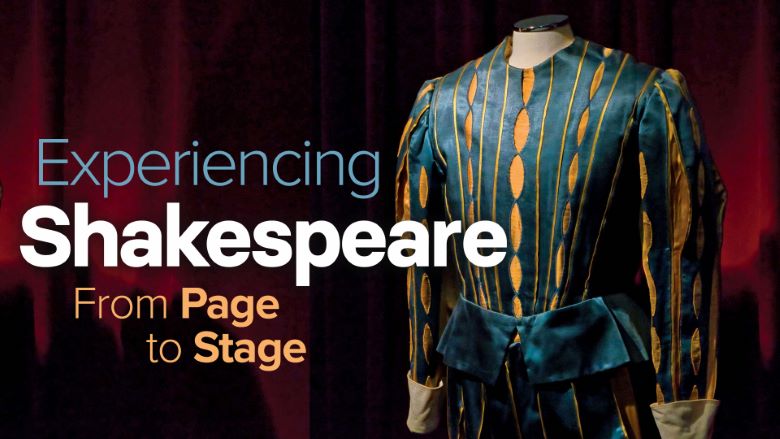
TTC - Experiencing Shakespeare: From Page to Stage
Released 10/2022
MP4 | Video: h264, 1280x720 | Audio: AAC, 44.1 KHz, 2 Ch
Genre: eLearning | Language: English | Duration: 12 Lessons (5h 10m) | Size: 4.44 GB


Four hundred years after his death, William Shakespeare's plays continue to live on vibrantly and remain among the most staged, even in modern theater. But just what is it about his work that has made him a household name? While little is known about the man's life, thankfully, we have a written guide his words to help us decode how his plays were meant to be interpreted and performed.

If you've ever been curious about everything that goes into a modern theatrical production of a Shakespeare play, here is your chance to peek behind the curtains in Experiencing Shakespeare: From Page to Stage. Professor Alissa Branch, award-winning actor, director, and creator of an advanced Shakespeare performance curriculum presents 12 riveting lessons that reveal how today's actors go about exploring, rehearsing, and performing Shakespeare s plays. She is accompanied by Brooke and Kam, two professional stage actors who will help you see the bard s work from the perspective of the players.

The Pact between Performers and Audience

Experiencing a play in performance involves a willing suspension of disbelief. When you go to the theater as an audience member, you make an unspoken pact with the actors telling the story, agreeing to involve yourself in the imaginary circumstances of the play. Likewise, the actors agree to do their best at every performance to present the story in a way that makes it feel spontaneous and exciting, as if it were unfolding for the very first time right in front of the audience.

For this magic to happen, there is a tremendous amount of work that must happen beforehand, and the performers must make many decisions. In Elizabethan theaters, there was a back wall to the stage, but not much scenery was built or changed from scene to scene or performance to performance; the audience was expected to imagine what they could not see by listening to the words that described the action.

This means that acting Shakespeare requires the actor to paint the scenery with their words, to use their body and voice to express and create an entire onstage world for the audience. Fortunately, Shakespeare gives the actors many clues in his texts about how to do that.

Just Who Was This Legend?

To understand his plays, it is helpful to know about the man behind the words and the theater culture in which he lived. But if you're a Shakespeare enthusiast, you might already know there is debate about who Shakespeare was. Some 19th- and 20th-century scholars claim that the name "William Shakespeare" was just a front for some other author who for their own reasons of royal rank or possibly even gender did not want their identity to be publicly known.

But here are some facts we can firmly establish about Shakespeare

He was a playwright from Stratford-upon-Avon who lived from April 1564 to April 1616.
He was the son of a successful glove-maker, which makes it almost certain that he attended the town's grammar school.
He was married with three children and eventually left his family to pursue theater in London.
He worked as an actor; a successful playwright; and, eventually, a partner in a popular acting company.
He retired in Stratford and seemed to have died there at 52.
It is useful to know that he attended English grammar school because these schools prized classical literature and history, taught pupils Greek and Latin, and required a lot of oral recitation of knowledge from every student. This makes it clear that Shakespeare received an education rigorous enough by any modern standards to have learned the skills necessary to become a playwright.

And there s also the genius of Shakespeare s language. He utilized 17,677 words across his body of work, inventing new ones, and innovating how they were used. In fact, scientists assert that his work alters the way our brains respond to language!

Exploring the Toolbox

Throughout these lessons, Professor Branch guides you on an exploration of specific tools that modern actors use in rehearsal to unlock Shakespeare's verse and bring his plays to life onstage. The language he wrote for his characters can be intimidating, and today's actors are responsible for figuring out how to honor its complexity.

One of the essential tools available to help us decode this is Shakespeare's use of iambic pentameter or blank verse which means one line is made up of 10 "beats" positioned in a roughly "unstressed/stressed" pattern. This heartbeat-like rhythm naturally falls into the tendencies of the English spoken language and helps to support the acting by giving clues with the emphasis of critical words and moments. Some of the other important tools include

Letting the Verse Lead: Unlike modern plays with submerged objectives, Shakespeare's characters often say exactly what they want; so, analyzing their language is the key to actors' understanding of physical movement.
Rhetoric: Shakespeare s characters use persuasive verbal techniques like witty banter, emotional augments, and logical reasoning in both verse and prose to accomplish their goals.
Soliloquy: Shakespeare often uses a monologue spoken by a character, not to be overheard by other characters in a play. Shakespeare breaks the "fourth wall" and gives his audience unique access to his main characters when they turn and address the audience directly.
Verse versus Prose: A closer examination of the shifts that Shakespeare makes between writing in poetry and prose provides instruction on the characters' feelings and behavior toward each other.
From the First Rehearsal to Opening Day

Once you have considered how actors and directors dive into the texts, Professor Branch gives you an intimate, behind-the-scenes peek at the rehearsal process and the designing and directing of the plays. From decisions made during practice to the myriad of jobs needed to support the actors producers, props persons, costume designers, stage managers, and more there are a staggering number of responsibilities.

Every production team must ask themselves three crucial questions when preparing to bring a play to the stage

Who will watch this performance?
What experiences, perspectives, and biases might this audience bring that is different from the perspectives an Elizabethan audience might have?
Why are we performing this particular play for this particular group of people?
Now, with Experiencing Shakespeare: From Page to Stage, you can take a deeper look at these questions. You will look back into the playwright s background, the theater culture of the Elizabethan era, and the acting toolbox Shakespeare embedded in his plays all of which will come together to bring you a richer appreciation of the genius behind the words and how they are performed today.

What Will You Learn?
Find out why, more than 400 years after Shakespeare s death, his plays persist in being among the most staged

Learn about theater culture in the Elizabethan era to get a deeper, humanized understanding of Shakespeare s texts for performance purposes

Discover the brilliant tricks that Shakespeare used to give clues and hints to actors, including his use of iambic pentameter and other tools like antithesis within the words themselves

Take a look at the rehearsal process, beginning with an initial read-through, called "table work"; then blocking movement; and, finally, scene repetition

Examine the many behind-the-scenes jobs required for a production of this level, from set builders and prop managers to producers and choreographers, with special attention to the costume designer and stage manager


406690891_experiencing_shakespeare_from_page_to_stage.jpg


20030.jpg


TTC - Creation Stories of the Ancient World
Released 1/2023
MP4 | Video: h264, 1280x720 | Audio: AAC, 44.1 KHz, 2 Ch
Genre: eLearning | Language: English | Duration: 12 Lessons (5h) | Size: 4.18 GB

Thus it is said of Ptah: He who made all who gave birth to the gods, and from whom everything came forth the Egyptian Memphite Theology

Creation stories, found within many ancient cultures, are narrative accounts of the ultimate origins of the universe, the earth, and humanity. Often embodied as epic poetry, and told through the acts of divine beings, creation stories illuminate the values, beliefs, and creeds of the earliest civilizations.

Within the scope of the ancient world, the cultures of the Mediterranean produced a stunning wealth of literary accounts of creation. Here, we find compelling creation stories in texts from cultures such as ancient Mesopotamia, often called the birthplace of civilization, and the majestic empire of ancient Egypt, as well as lesser-known cultures such as Ugarit and the Hittite civilization, and the more familiar Greek and Israelite worlds. Within this tradition, you will look at

The Sumerian Debate Between Bird and Fish, which refers to four deities who set up the divine rules of heaven and earth, laid out the Tigris and Euphrates Rivers, and populated the marshes with fish and birds, instructing them with regard to divine rules.
The Baal Cycle of ancient Ugarit, which develops a theme that recurs in other cultures of the Mediterranean: that of a storm-god who battles other gods in a struggle for universal supremacy, and who ultimately rules over and sustains the earth and the cycles of nature.
How the creation stories of the ancient Mediterranean cultures offer distinct conceptions both of how human beings came to exist, through divine acts, as well as why, with accounts explaining human existence in terms ranging from labor for the gods to an exalted role as the pinnacle of creation itself.
In 12 dynamic and thought-provoking lectures, Creation Stories of the Ancient World offers you a penetrating look at the origin stories of the great civilizations of the Mediterranean. With the inspired guidance of Professor Joseph Lam of the University of North Carolina at Chapel Hill, you ll delve into the creation accounts of civilizations ranging from Mesopotamia (Babylon) across the breadth of the ancient Near East to Greece in the West, and encompassing traditions from Egypt, Syria, Anatolia, and ancient Israel.

Discover Seminal Conceptions of Universal and Human Origins

Studied together, the creation texts produced in the Mediterranean shed fascinating light on the cultures they represent, and, more broadly, on the larger unfolding of human societies, offering vivid views into ancient conceptions of space, time, causality, and the forces governing the natural and human worlds.

For each culture, you ll follow Professor Lam through excerpts from iconic texts, uncovering key themes and conceptions regarding universal origins, set against the historical and political backgrounds that produced these written accounts. You ll also learn how the texts were understood within their cultures, and the ways in which shared thematic material between traditions indicates a high likelihood of cultural contact across the Mediterranean as these cosmologies developed.

And Professor Lam will demonstrate how creation stories served a number of interrelated purposes, from theological understanding and conceptualizing the forces of nature to the affirmation of social and political realities. These insightful lectures unpack the rich creation traditions of a pivotal region of the ancient world.

Explore the Power, Majesty, and Meanings of Ancient Creation Texts

Within the course s richly detailed inquiry, you ll explore origin stories in traditions such as

Creation Accounts of Ancient Mesopotamia Take the measure of the Babylonian Creation Epic, Enuma Elish, which portrays the genesis of the world and humanity through a nucleus of deities, placing the city of Babylon at the center of the universe. Also study the Atrahasis Epic, with a contrasting depiction of humanity s creation, set within the narrative tradition of the Flood;
The Egyptian Creation Traditions Encounter the pantheon of Egyptian gods related to creation, encompassing groups of deities and also the gods Amun, Ptah, and Khnum. Study Egyptian images of creation, from those depicting the spontaneous emergence of life from a primordial chaos to those of deities spitting or speaking other deities into existence;
The Hurro-Hittite Kumarbi Cycle In two passages from this important text named for the Hurrian deity Kumarbi, witness how universal cosmic order is established through the struggle of two entangled lineages of deities who compete for supremacy. Also study the text s account of how the world was created, with the heavens and earth cut apart from a single whole;
The Theogony of Hesiod Delve into this great work of Greek epic poetry, portraying the begetting of the gods and the development of the cosmos through generations of divine conflict. Follow the story of succession from the battle between the gods Ouranos and Kronos, where an act of castration establishes the order of the world, to ultimate cosmic stability under Zeus; and
The Judeo-Christian Genesis Chart the contours of the seven days of creation in the biblical Genesis 1, depicting human beings as the embodiment of divine presence in the world. Grasp the contrast between this account and the portrayal of creation in the Garden of Eden story (Genesis 2), which highlights humans as tillers of the soil, reflecting the daily realities of ancient Israelites.
Demonstrating a phenomenal knowledge of these traditions, and incisive interpretive skills, Professor Lam leads you in a richly layered investigation of the texts, the thematic interconnections between them, and their core societal functions. His commentary makes clear how the stories served as validation of the political orders that produced them, as reflections of the vital role of agriculture in these cultures, and as explorations of the boundaries between the human and divine worlds.

In the creation texts of the ancient Mediterranean region, we can witness how ancient peoples conceived of the creators of their world, and the natural order of that world. As such, creation stories show us how early cultures made sense of the human condition, in theological, philosophical, and political terms. This ancient perspective influenced the later cultures that would follow, meaning the stories ancient peoples used to understand their world have been woven into the larger tapestry of world history and culture, touching our lives our art, literature, religion, philosophy, and more even today.

What Will You Learn?
Explore some of the best-known and most-celebrated examples of the creation story genre, including the Babylonian creation epic of Enuma elish

Look at some examples of the genre that might be less familiar, such as the Ugaritic Baal Cycle

Investigate certain patterns or themes that recur throughout these stories and see that some of them are specific enough that the connection does not seem to be accidental

Ponder questions about the stories social and political significance within their historical contexts

Take a psychoanalytical approach with some of the stories to help uncover the depths of meaning within a story


Homepage


406690739_creation_stories_of_the_ancient_world.jpg


80580.jpg


TTC - Cooking Better with Science
Released 11/2022
MP4 | Video: h264, 1280x720 | Audio: AAC, 44.1 KHz, 2 Ch
Genre: eLearning | Language: English | Duration: 12 Lessons (5h 58m) | Size: 4.64 GB


Cooking: Is it art or is it science? As the great culinary chefs worldwide tell their students, it is both.

We all know people who seem to have been born with unique culinary talent they never use recipes and rarely employ measuring spoons but seem instead to have a preternatural understanding of flavor, texture, and aroma. These artists turn a bare pantry and a few leftovers into a meal beyond imagining; and although you were standing there the entire time, you still are not entirely sure how they did it.

Now, you can also master the skills of great chefs. With science and practice, you can become a culinary magician, astonishing your friends and family with your newfound knowledge and skill, creating dishes that nourish the body and feed the soul.

Enter the secret world of great culinarians with two experts, Sean Kahlenberg, Assistant Professor of Culinary Arts at The Culinary Institute of America (CIA) in Hyde Park, New York, and Ted Russin, Acting Dean of the CIA s School of Culinary Science and Nutrition. In Cooking Better with Science, their joint expertise will guide you through the world of leveraging science to cook with greater finesse.

The Science of Pizza

Start by following your expert chef into the kitchen to make what seems like a very simple and ordinary dish: pizza. Deceptively simple in practice, making pizza involves complicated and fascinating science. Garnished with the colors of the Italian flag, the pizza Napoletana is the most quintessential of pizzas. According to legend, it was created for Queen Margherita of Savoy during her visit to Naples in 1889, and little has changed about this perfect pizza since. Topped only with simple tomato sauce, fresh mozzarella, and basil leaves, it has captured hearts and imaginations across Italy and around the world for generations.

With Chef Kahlenberg s savvy instruction, you will see how easy it is to turn fresh milk into curds that are heated and stretched to make mild, smooth, fresh mozzarella. Combined with basil and a simple, homemade pizza sauce, you have the perfect pizza toppings. Learn how Chef Kahlenberg makes pizza dough and explore the different ways you might make your own. Through step-by-step instructions, you ll see that it s easier and less time-consuming than you might think, and so, so delicious.

After making your pizza with Chef Kahlenberg, turn to the CIA s culinary laboratory where Dean Russin works his own magic. With a brief background lesson on proteins and covalent bonds, Dean Russin takes us through the paces in his lab to explore the science of stretch. Using a texture analyzer, discover how a culinary scientist performs an extensibility test, then learn a low-tech version that you can do right in your kitchen at home. You can choose just the right combination to create your ideal pizza dough through careful analysis of flour, sheer force, time, and consequent extensibility.

Most pizza dough requires the help of gluten and yeast to rise to chewy perfection, and we ll return to the lab to consider these critical components of pizza dough. While the gluten in dough determines the physical properties that allow dough to stretch as we mix, it is yeast that provides leavening and flavor. This single-celled fungus, usually Saccharomyces cerevisiae, or brewer s yeast, acts through time and fermentation for bold flavor profiles and thick, chewy crusts. You ll learn the correlation between time and flavor to see why some restaurants keep their pizza dough in a cooler for up to five days before baking.

With the science of both gluten and yeast in mind, you can begin to experiment with your own dough, creating pizzas with bold flavors, textures, and aromas. As a bonus, your expanding understanding of gluten and yeast will inform your other baking, including a wide range of bread, from whole-wheat loaves to perfect naan.

A Perfect Chicken Dinner

What can I make tonight? Is there something easy, delicious, and savory that my family will love, but that is still great for guests and special events? Yes! Roasted chicken always rises to the occasion. Elegant enough for company, but inexpensive enough for every day, the humble chicken seems to do it all if you know how it s done. Chef Kahlenberg takes you to the kitchen to share the secrets of restaurant chicken. Learn to prepare your bird, from tying and seasoning to carving and serving. Discover what restaurants do to ensure that chicken is moist and evenly roasted; what sides pair well with chicken; and how to prepare those sides from scratch, including carrot pur e, broccoli, pan gravy, and sherry gastrique.

Once you understand how to create an unparalleled chicken dinner, turn your attention to the science that underlies the magic. How do we transform cold, raw chicken into a culinary delight of golden-brown skin and warm, juicy meat, bursting with flavor and aroma? Heat, enzymes, proteins, coenzymes, glycogen, anaerobic respiration, and resulting acid learn the metabolic processes from the muscle contraction of freshly butchered meat to its final transformation into perfectly cooked food on the table.

Learn all about the Maillard reaction, an essential reaction between proteins and sugars responsible for flavorful browning. Soon, you ll identify it everywhere: on the crust of bread fresh from your oven; on the surface of seared meat; and that crispy, browned chicken skin on your dinner table. Follow along as Dean Russin describes how Maillard browning works together with the proteins in flour to develop a flavor roux for your pan gravy, an insight into one of the most fundamental reactions in cooking.

Paella Mixta

Originally cooked and served in a wide, shallow pan called a paella, this essential dish of Spain traces its roots to the Spanish city of Valencia on the Mediterranean coast. The mixta, or mixed paella, combines short-grain rice, meat, seafood, sausage, and vegetables and is colored by vibrant yellow saffron. This is Spanish comfort food at its best. Let Chef Kahlenberg show you the essentials of paella: a base of slow-cooked vegetable sofrito, short-grain rice cooked into a pie in flavorful broth, seared meat, and vegetables lightly cooked to retain their color and texture. You will even learn the best way to cut an artichoke! Season your paella with a little salt and pepper, and garnish with chopped parsley. Call your family to the table and serve dinner straight from the pan, with a slice of lemon. Let this home-cooked fare bring you together, a fast favorite in every family.

When you have finished your meal and cleaned up (just one pan!), return to the lab to learn more about starch and vegetables, two critical components of paella. First, Dean Russin explores rice, the ideal vehicle for the carbohydrates that densely organize within each grain. Consider various rice types different processing and cooking methods and study each variety s sensory and nutritional attributes. Finally, explore heat and time in relation to vegetable moisture and consequent texture. You will learn how vegetables store water, how heat levels affect that storage, and the texture and flavor outcomes from different cooking techniques. Reflect on this new-found knowledge to better understand the method and ingredients in your paella mixta.

Eggs Three Ways

Not all eggs are created equal, nor are all egg dishes. The three recipes presented merge styles from around the world, but also challenge your knowledge about egg cooking as well as your understanding of chemistry and cookery! Eggs are simple, but their presence in cooking is pervasive and vital. Join Chef Kahlenberg in the kitchen to learn how to prepare a divine and rustic tortilla espa ola, a light and savory Gruy re and Parmesan cheese souffl , and a world-class salmon benedict with creamy b arnaise sauce. Whether served for brunch, dinner, or anything in between, all three recipes are sure to please the most discerning palates. If you once considered yourself more an aficionado of food rather than an artist of cuisine, these three dishes represent a graduation into the culinary majors.

Most store-bought eggs appear uniform in size and shape. This appearance is deceptive. Different eggs, often of different ages, possess a pH ranging from seven for the newly laid to nine or even nine and a half in eggs that are a few weeks old. Return to the lab to witness experiments that will expand your understanding of egg texture and viscosity and how they are affected both by the pH of the egg and the presence of potatoes and oil in our tortilla espa ola.

Texturally, a b arnaise sauce and a souffl could not be more different. Incredibly, they are both made of eggs. In our final episode, learn that the integration of either lipids, in the case of the b arnaise, or air, for the souffl , determines their structure. Keep your souffl from collapsing and your b arnaise sauce from breaking by getting a deeper understanding of the nature of eggs.

Bring Your Expertise Home

Whether this is your first cooking course or your one hundred and first, you will be charmed and inspired by the deft instruction of our culinary experts. These lessons provide new and intriguing opportunities for cooks to grow across the spectrum of skill and interest. Join Chef Kahlenberg and Dean Russin as they introduce you to delicious recipes and the science that makes the recipes possible.

What Will You Learn?
See first-hand, the secrets and science that make the perfect pizza, roasted chicken, paella, or egg dish

Discover what makes great food great

Experiment with common kitchen ingredients to understand the genius of a well-made meal

Make better decisions in the kitchen by understanding food science

Learn the science behind your favorite foods and discover how to get restaurant-quality results

Cultivate the art of cooking and the practice of science with two charming experts from The Culinary Institute of America

Learn six recipes that will have your friends and family asking for seconds every time


406690715_cooking_better_with_science.jpg


30120.jpg


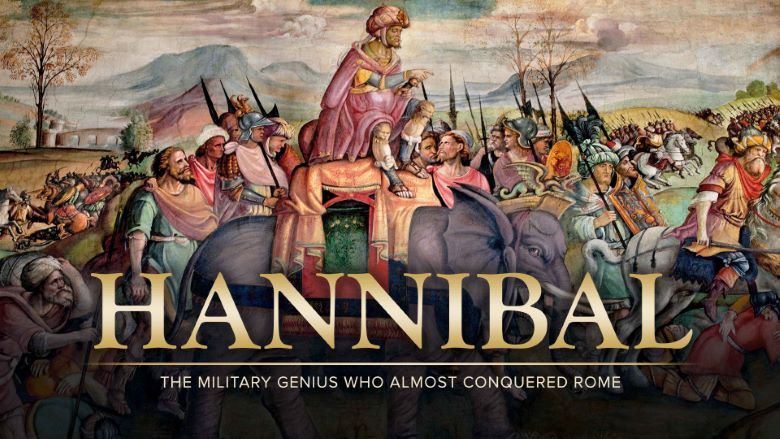
TTC - Hannibal: The Military Genius Who Almost Conquered Rome
Released 3/2023
MP4 | Video: h264, 1280x720 | Audio: AAC, 44.1 KHz, 2 Ch
Genre: eLearning | Language: English | Duration: 15 Lessons (8h 35m) | Size: 7.24 GB


While ancient history is full of larger-than-life figures, the famed Carthaginian military commander we know as Hannibal has taken on a particularly mythic quality. His story is woven together with hearsay, embellishment, and extremely limited source material...

While ancient history is full of larger-than-life figures, the famed Carthaginian military commander we know as Hannibal has taken on a particularly mythic quality. His story is woven together with hearsay, embellishment, and extremely limited source material. Nevertheless, Hannibal defined a critical period in Roman history and ancient history, more broadly plowing across the Italian peninsula with a cadre of foot soldiers, elite cavalry, envoys, and even elephants. His army laid waste to many strategically important cities; utilized intelligence networks to deter powerful Roman allies along the route; and triumphed in key skirmishes against formidable Roman generals and the impressive armies they commanded, triggering wave after wave of public outcry and panic back in Rome.

But when we peel back the legend, what s left? What do we know and what can we accurately say about the famed Hannibal Barca? Where did he and his family come from, and why did they and their fellow Carthaginian countrymen war repeatedly with Rome? How did the Carthaginian army manage to devastate the Italian peninsula so thoroughly in the Second Punic War? And perhaps most importantly why did Hannibal and his army ultimately fail in their long and impressive fight against Rome?

Answer these questions and more in the 15 lectures of Hannibal: The Military Genius Who Almost Conquered Rome, which detail the legendary Carthaginian commander s historic conquest of Rome from Italy to Iberia. Eve MacDonald, Senior Lecturer in Ancient History at Cardiff University, will be your expert guide. Together, you will travel back to antiquity and explore a time during which the future of the Roman polity was increasingly unclear, and the Barcid family commanded politics in the powerful port city of Carthage. You will survey the world that Hannibal was born into and came of age in, paying close attention to politics, culture, and society in Carthage and Rome in the age of the Punic Wars. Then, you will turn to the conquest itself, tracking Hannibal and his impressive army across the Alps and into the Roman heartland. And, finally, you will assess the aftermath: What became of the famous Hannibal, his once-powerful homeland, and Rome after the dust of combat and conquest had settled?

Hannibal s World

While the course centers on Hannibal and his remarkable incursion into Italy and Iberia, it also deals with his world a complex social and political ecosystem both like and unlike our own. You will begin with the rise of Carthage, a powerful port city-turned-empire that dominated the Mediterranean. From there, you will

Learn about the founding of Carthage by the Phoenicians and study its later ascent;
Get to know the prominent local figures that came before Hannibal, such as his father, Hamilcar Barca, a skillful military tactician and fighter in his own right;
Understand the factors that led to Carthage s initial collision and conflict with Rome;
Reconstruct the first of three Punic Wars, a military conflict that would shape the young Hannibal s life; and
See how Carthage contended with Hannibal s many victories on the Italian Peninsula alongside grave and sustained losses in Iberia and North Africa.
You will also head west to explore Rome before Caesar and Augustus, zeroing in on the state of its military and its politics in the age of Hannibal. As you study the First and Second Punic Wars from the Roman point of view, you will dive into how ordinary and elite folk alike reacted to one particularly skilled Carthaginian s threats to Rome s control of the Italian Peninsula. You will venture on an exploration of wartime culture and way of life in the Roman capital and be introduced to the cast of characters involved in Rome s war against Carthage, including commander Flaminius and the influential Scipiones family.

That s not all, though. In tracking Hannibal s movements across Italy and Carthage s incursion into Iberia, you will also get to explore the city-states that dotted the ancient world from Capua to Syracuse. This tour will help you paint a picture of each polity s culture, politics, military, and way of life. As you investigate the fragile allegiances that connected each to Rome or to Carthage, you will also see how partnerships broke down and how war between two great Mediterranean powers remade life wherever it reached. Ultimately, you will emerge with a much fuller and more detailed picture of what Hannibal s world was truly like.

The Man, the Myth, the March

You will spend the most time, however, getting to know Hannibal himself how he grew up, what he is most famous for, and what became of him and his homeland after the conclusion of one of the most impressive and important military conquests in history. In Hannibal: The Military Genius Who Almost Conquered Rome, you will dive into many facets and events of Hannibal s life, including

Childhood. Hannibal grew up in a city at war with Rome, and, as a teenager, he even accompanied his father and brothers on military expeditions westward. See how Hannibal s childhood and upbringing primed him for a life of not only military service, but also long-term conflict with Rome.
Family. Hannibal s father and brothers were important military strategists and commanders in their own right. Get to know the Barcid family and their important contributions to the First and Second Punic Wars.
Politics. Legend says that Hannibal s hatred of Rome often blinded and ultimately betrayed him in the Second Punic War. Determine how true that was and examine how Hannibal navigated fragile political partnerships with former Roman allies, tense political situations within Carthage, and peace negotiations with an increasingly desperate but very stubborn Rome.
Military Leadership. Hannibal s army a diverse cadre of foot soldiers, cavalry men, and even elephants that triumphed against so many odds is legendary. Explore what it was like to be a foot soldier in Hannibal s army and see how the group weathered the challenges that faced them.
March across the Alps. Hannibal s march defined his military career. Track the young Carthaginian general as he moved across treacherous terrain to get a better sense of what the famed march looked like and what it came to represent.
Reputation. At this point, Hannibal is more myth than he is man. Evaluate what Hannibal s contemporaries thought of him in his own time and see how fact often blended with fiction to create Hannibal Barca s now-legendary reputation.
In just 15 lectures, you will understand why Hannibal was able to win great victories and control parts of the Italian peninsula for so long, yet eventually he lost the war with Rome. Along the way, you will become familiar with the ancient world and its customs, politics, notable figures, and way of life. And you will emerge with a greater, more nuanced, more informed portrait of one of the most important military figures in world history.

What Will You Learn?
Find out how Hannibal consistently defeated Roman armies in the field, even though he was usually fighting from the position of an underdog

Explore how this great leader of a lost city nearly brought the Romans to the brink of ruin

Review Hannibal's life from his early career and rise in Spain to his exile in the Near East

See how Hannibal s victory at Cannae over the Romans has long been described as the perfect battle, and one that set the tone for military tactics for many centuries afterwards

Discover how Rome s victory over Hannibal brought out the best in the Romans and began the process of creating the powerful Rome we remember today


406690993_hannibal_the_military_genius_who_almost_conquered_rome.jpg


Zuletzt bearbeitet:
30150.jpg


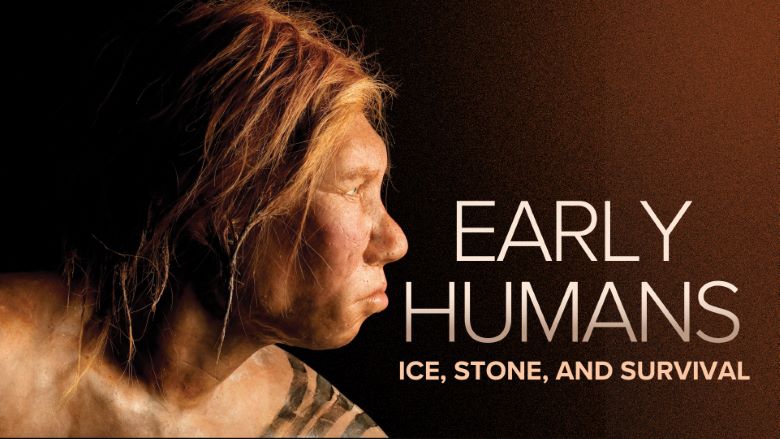
TTC - Early Humans Ice, Stone, and Survival
Released 4/2023
MP4 | Video: h264, 1280x720 | Audio: AAC, 44.1 KHz, 2 Ch
Genre: eLearning | Language: English | Duration: 20 Lessons (7h 48m) | Size: 6.54 GB


You are a member of the only species that has survived in the genus Homo since its 2.5-million-year evolutionary journey began. Homo habilis, H. erectus, H. neanderthalensis plus many other species we know of and perhaps dozens yet to be discovered have all come and gone. Homo sapiens alone has endured.

Who were these long-ago ancestors of ours? Where and how did they live and die? And how are we even able to learn about these humans, some of whom became extinct millions of years ago? These are only a few of the myriad fascinating questions explored in Early Humans: Ice, Stone, and Survival. In 20 captivating lectures, Professor Suzanne Pilaar Birch shares her expertise and passion for discovery as she peels back the millennia to expose the emergence and lives of early humans. You will learn about their environmental challenges, the methods they used to meet their basic needs, their cultural development, and the fascinating advances in our own technologies that have allowed us to take their few physical remains and develop a much fuller picture of who they were and, thus, who we are, today.

Although we might imagine a timeline of the past 2.5 million years as a straight path from the emergence of the genus Homo to modern H. sapiens in the 21st century, the truth of our family tree is much more convoluted and fascinating than that. As Dr. Birch explains, there have been times when specific aspects of human culture developed simultaneously in disparate regions on the planet, and times when several Homo species existed on the planet at the same time. This makes the journey more complex, but also infinitely more interesting.

Tools of the Trade

Who were our direct ancestors? How far back can we trace our lineage? Moreover, how can we answer such important and complex questions at such a distant vantage point? We attempt to answer them with both the most basic and the most modern of techniques: trowels and brushes in the field and cutting-edge technologies in the lab.

One of the first advanced technologies that allowed archaeologists to get a scientific view into the past was radiocarbon ******. Developed in the mid-20th century, this technique estimates the age of organic material by using the known radioactive decay rate of carbon-14. Radiocarbon ****** ushered in a new age for archaeological research, allowing scientists to approximate ages back as far as 50,000 years.

But as powerful as radiocarbon ****** is, we now have many more tools to see more accurately and ever farther back in our own history. These include

Optically Stimulated Luminescence. This method of ****** operates on the principle that granules of quartz commonly found in rock and sand absorb electrons when exposed to sunlight. In the lab, the sample s trapped electrons are released and measured, and a date for archaeological site formation can be calculated as far back as 100,000 years ago.
Thermoluminescence. This is another trapped-electron method, revealing when a sample was last heated above a certain temperature. It is extremely helpful in ****** ceramic artifacts.
DNA analysis. Perhaps the most powerful tool is the ability to analyze ancient DNA. Using genomics, scientists have discovered how ancient humans moved around the globe and if they interbred with other groups. They have also been able to estimate the astonishingly small number of ancient humans who survived the mega-colossal Toba volcanic super-eruption only about 10,000 people.
These, and other technologies, have allowed us unprecedented access to the secrets of our past. As new techniques are introduced, the potential to solve even more of the mysteries of humanity s earliest days increases.

Sharing Our Genus

We used to think we were the first animals to use tools, to organize ourselves into social groups, and to use language for communication. We now know that many other animals can claim those characteristics. What separates us from other hominids is our brain, which has grown relatively larger over time.

The current wisdom is that Homo habilis known as the handy man is the earliest member of our genus. This species brain size, measured as a percent of its body weight, represented an increase of about 50% over the genus Australopithecines. In Early Humans: Ice, Stone, and Survival, Dr. Birch will introduce you to many more extinct species of our genus, including

H. erectus stood notably taller than H. habilis and walked upright. H. erectus is one of the longest-lasting hominin species, persisting for more than 1.5 million years, overlapping with what we now know are multiple human species that developed during this same period, and potentially giving rise to several of them.
H. floresiensis is one of the most recently discovered species in our genus. So far, it has only been found on the island of Flores, Indonesia. Despite their small body and brain size, H. floresiensis made and used stone tools.
H. naledi was discovered recently in South Africa. Scientists believe H. naledi lived between 236,000 and 335,000 years ago and seemed to have the cultural practice of burying their dead.
The Family Album

If you were creating a family photo album of our shared Homo cousins, you certainly wouldn t have many concrete visual materials in your book. While scientists have gleaned as much information as possible from every artifact and bone that has been found, relatively few remains have been uncovered, compared to the number of humans who lived. But some discoveries have been so exciting, that these individuals have been named, not just numbered.

One of the first famous specimens was Lucy, discovered in 1974. A human ancestor, Australopithecus afarensis, Lucy was able to climb trees and stand upright. You ll meet many other famous specimens in this course, including

Turkana Boy who was discovered in Kenya. This H. erectus specimen is a male who lived about 1.6 million years ago and would have been between seven to 11 years of age at the time of death. More than 100 bones of his skeleton were found. Turkana Boy had modern limb proportions and would not have been able to live in trees.
Omo I and Omo II who were discovered in Ethiopia. Estimated to have lived about 195,000 years ago, these two fossils are the oldest commonly accepted examples of Homo sapiens.
Mungo Lady who was discovered in New South Wales, Australia. An H. sapiens, Mungo Lady s burial, approximately 42,000 years ago, represents the oldest known cremation in the world. It s thought that the body was burned, the skeletal remains crushed and then burned again, and then covered with ochre, transported from several hundred kilometers away.
The Iceman who was discovered at the end of the 20th century in the Italian Alps near the border between Italy and Austria. An H. sapiens, The Iceman died about 5,300 years ago and his naturally mummified remains are the earliest known, direct example of a tattooed individual.
Today, we now can apply sophisticated science and powerful analytical methods to these specimens, and many others, in order to answer our questions about the trajectory of human history. But, as you will discover, we shouldn t lose sight of what it means to be able to ask those questions in the first place. After all, isn t it our awareness of the existence of those who came before us one of the things that truly makes us human?

What Will You Learn?
See how the study of prehistory through molecular genetics, or archaeogenetics, has transformed archaeologists understanding of the human fossil record

Uncover the differences and similarities between humans and Neanderthals and find out if Neanderthals have truly gone extinct

Explore the difficulties archaeologists have in trying to discover whether or not our predecessors developed music and how and when it shows up in our own past

Understand how different burial practices tell archaeologists how humans coped with their environment and about their social structures

Take a look at recent archaeological evidence showing that the phenomenon of domestication occurred independently in many places around the world

Say Thank You

406690903_early_humans_ice_stone_and_survival.jpg


7-1.jpg


TTC - Discovering West Africa: Ghana, Senegal, Cameroon
Released 2/2023
MP4 | Video: h264, 1280x720 | Audio: AAC, 44.1 KHz, 2 Ch
Genre: eLearning | Language: English | Duration: 10 Lessons (4h 8m) | Size: 3.43 GB


Explore West Africa with adventurer "World Wide Nate."

In Discovering West Africa: Ghana, Senegal, Cameroon, take a 10-episode tour across three West African countries with Nathan Fluellen, known as World Wide Nate, as your expert guide. Moving through the nations of Ghana, Senegal, and Cameroon, you will join Nate and a mix of local artists, chefs, musicians, entrepreneurs, sportsmen, and other locals to see and experience what the region has to offer.


406690768_discovering_west_africa_ghana_senegal_cameroon.jpg


30390.jpg


TTC - Tibet History, Culture, and Religion
Released 5/2023
MP4 | Video: h264, 1280x720 | Audio: AAC, 44.1 KHz, 2 Ch
Genre: eLearning | Language: English | Duration: 24 Lessons (8h 48m) | Size: 7.3 GB


There are few regions that have been more misunderstood by the West than Tibet. It is still often portrayed in the West as the Shangri-la that was described in the 1933 novel Lost Horizon, one of the earliest references to Tibet in English-speaking culture

There are few regions that have been more misunderstood by the West than Tibet. It is still often portrayed in the West as the Shangri-la that was described in the 1933 novel Lost Horizon, one of the earliest references to Tibet in English-speaking culture. It is often envisioned as a mystical place full of happy, meditating monks and carefree nomads who use Tibetan singing bowls for healing and comfort and The Tibetan Book of the Dead to guide their journey from this life. But while the singing bowls are now ubiquitous in Tibetan tourist shops, scholars can find no original connection to Tibetan culture. And The Tibetan Book of the Dead that influenced so many Westerners in the 1960s and 1970s, from Carl Jung to the Beatles? Scholars, today, describe it as not Tibetan, not a book, and not about death.

In Tibet: History, Culture, and Religion, Professor Constance Kassor, will show you the real, multi-dimensional Tibet and its people who live on the Roof of the World, the highest and largest plateau on Earth. In 24 fascinating lectures, you will learn how Tibet s history was shaped by kings and kingdoms, power struggles, religion, traditions, and wars and peace. Today, geopolitical struggles, modernism, and the exile of its religious leaders form an existential threat that few other regions face: This is the real Tibet.

What Is Tibet?

Unlike most regions, even a definition of Tibet depends on who you ask. Is it an independent country with its own long history? Is it a region of the world that has been under Chinese influence for centuries? Is the whole of Tibet contained in the current Tibetan Autonomous Region created by China in the 1950s? Or does Tibet include the entire plateau, northern side of the Himalayas, and the areas formally annexed into China? What about the current Tibetan leadership in exile in Dharamsala, India? What are the legitimate borders of Tibet and who has the authority to say what they are?

These and many other questions are examined in Tibet: History, Culture, and Religion as Professor Kassor takes you through the varied and complex history of this fascinating region. As you learn about the complicated political and cultural dimensions of Tibetan history, you will engage with the region and its people, including

Lifestyles. Many Tibetans have lived as nomads for thousands of years, playing an important role in the creation of the Silk Road about two centuries before the Common Era. Today, many are nomads, farmers, or have combined the two although the Chinese government has made these lifestyles more challenging.
Food. Given that vegetables are so difficult to grow at such altitude, meat and animal products are the most important dietary staples. You ll learn about yakmo milk, butter, cheese, and yogurt, and the national delicacy of momo dumplings.
Festivals. The one holiday that is celebrated almost universally by Tibetans is Losar, the Tibetan New Year. Although it has traditionally been two weeks of celebration, it has recently been used as a time to protest Chinese authoritarian rule. While protests per se have been outlawed in Tibet, Tibetans protest quietly by not celebrating the holiday.
Tibetan Buddhism

More than 2,500 years ago, a prince named Siddhartha Gautama lived in today s northern India and Nepal. Raised with every luxury, he left his palatial life as a young man to pursue the spiritual life, searching for a way to rid the world of suffering. Eventually, he became enlightened, and, for the rest of his life, he taught the philosophy he had discovered. He was known as the Buddha, the Awakened One. Today, more than 500 million people follow his teachings and practice Buddhism worldwide.

Buddhist teachings made their way to Tibet, influencing nearly all aspects of Tibetan life. Tibet s alphabet and grammatical system are derived in part from Buddhist-influenced scholasticism in India. Over the centuries, Tibetan Buddhism developed a distinct tradition all its own, reflecting the influences of India and China, as well as the area s Indigenous religious traditions such as B n.

To better understand the importance of Tibetan Buddhism in the history and culture of the entire region, Professor Kassor will lead you through topics such as

The Great Dharma Kings. Buddhism flourished when Tibetan kings encouraged and supported the practice. Those who are most remembered for helping to establish Tibetan Buddhism are Songtsen Gampo, Trisong Detsen, and Ralpachen. But these men were not gods, and you will learn how the dissemination of Buddhism was influenced by their earthly loves, scholastic interests, and the specific teachers they chose to bring from India.
The Practice of Merit. Merit is a type of spiritual good fortune that can help Tibetan Buddhists along their religious path both in this life and the next. Two of the most common merit-making activities for Tibetan Buddhists are circumambulations, walking around holy places, and prostrations.
Sutras and Tantras. Tibetan Buddhist teachings and practices can be divided into sutras, instructions that can be taught to any practitioner, and tantras, philosophically complex, esoteric teachings that are usually only shared with highly trained and skilled meditators.
The Dalai Lama

Even most people with little real knowledge of Tibetan history or religion are familiar with images of Tibet s long-time leader, the fourteenth Dalai Lama. Although he humbly describes himself as a simple Buddhist monk by the name of Tenzin Gyatso, his role in Tibetan history, even world history, reveals a man who came to be the political and spiritual leader of his people at a very difficult and challenging time. In Tibet: History, Culture, and Religion, you will learn about the significant role he has played with respect to

The Government of Tibet. The fourteenth Dalai Lama assumed his office as the formal leader of Tibet at age 15 in 1950, just one month after the People s Republic of China sent troops into Tibet to peacefully liberate the country. In 1959, the Dalai Lama and thousands of Tibetans were given asylum in India, and the Dalai Lama began leading the Tibetan government in exile.
World Peace Efforts. As leader of Tibet, the Dalai Lama proposed a Five-Point Peace Plan for Tibet that was rejected by China. In 1989, he was awarded the Nobel Peace Prize for his long-time, non-violent struggle for the liberation of Tibet.
Future Dalai Lamas. In 2011, the Dalai Lama formally transferred his political leadership to a democratically elected leader, while retaining his spiritual leadership. Since China has formally outlawed the practice of reincarnation, it is unclear whether Tibet will see a 15th or subsequent Dalai Lamas.
With Professor Kassor as your guide, you will gain an understanding of the very real issues facing Tibet today, as opposed to the Tibetan stereotypes the West has often clung to. Will Tibet survive through the 21st century and into the future? At this time, the future is uncertain; this course will help you understand what is at stake.

What Will You Learn?
Encounter Tibet's tulku tradition of reincarnation and the 14 Dalai Lamas, who've served as Tibet's spiritual leader since the 15th century

Examine the Dalai Lama s exile from Tibet, his Middle Way approach toward autonomy, and Tibet s stalemate with the Chinese government regarding a potential peace agreement

Trace how the Dalai Lama s rise to worldwide fame framed the issue of Tibetan independence in the world spotlight

Discover the most recently established Buddhist tradition in Tibet and see how it has done a great deal to update Tibetan Buddhism in ways that are compatible with a modern, global society including advancing women s rights

Explore some important areas of Tibetan artistic culture poetry, music, and dance from both traditional and modern perspectives

Dive into some of the basics of Buddhist history and doctrine and discover what makes Tibetan Buddhism unique


406690302_tibet_history_culture_and_religion.jpg


60100.jpg


TTC - Ancient Wisdom for the Modern World
Released 6/2023
MP4 | Video: h264, 1280x720 | Audio: AAC, 44.1 KHz, 2 Ch
Genre: eLearning | Language: English | Duration: 10 Lessons ( 3h 25m ) | Size: 3.23 GB


Close your eyes and imagine a world without convenience. No cars. No air conditioning. No social media. No ease whatsoever. Sure, life would be a million times harder and more dangerous without advanced medicine and technology...

Close your eyes and imagine a world without convenience. No cars. No air conditioning. No social media. No ease whatsoever. Sure, life would be a million times harder and more dangerous without advanced medicine and technology. But we d also avoid the maladies that plague developed societies today diseases of immobility, processed foods, even loneliness. To be sure, if we lived just a little more like the ancients, there s a good chance we d be happier, less distracted, more balanced, and in tune with ourselves.

But what does that entail, exactly? How can we apply advice and techniques that have survived over centuries to rediscover what it means to be human? Can fasting, walking, and spending time with nature really make us feel better? What are flow states? How do relationships or lack thereof impact physical health? And what can the healthiest and happiest communities out there today reveal about the secret to good living?

Answer these questions and more with the 10 episodes of Ancient Wisdom for the Modern World. Sit in on a series of expert interviews moderated by artist and inspirational speaker Prince EA. You ll

Examine blue zones where people are the healthiest and live the longest to figure out why their inhabitants live so well;
Discover the health benefits of walking and intentional grounding;
Deconstruct your diet so you can eat better and feel better overall;
Figure out how to build and maintain lasting, meaningful relationships;
Discover flow states, forest bathing, tantra meditation, and grateful thinking;
And so much more.
Ancient Wisdom for the Modern World takes a fun, interactive, hands-on approach that goes beyond listening and taking notes. Through carefully designed homework assignments delivered to you at the end of every episode, you can start to build good habits from the second you press play. Hit key goals and benchmarks as you move through the course. Test out meditation techniques, walking exercises, and specific diet plans. And walk away with a real sense of what works and what doesn t for you. Ancient Wisdom for the Modern World doesn t hand you a one-size-fits-all approach but, instead, provides you with the requisite knowledge and tools you will need to build a simpler, more balanced, de-convenienced life.

From Old Worlds to Blue Zones

Ancient Wisdom for the Modern World looks backward so you can look forward to a healthier, happier, and more balanced life. Focus on the ancient world and the people who inhabited it. How did they live? And more importantly, what did they think, write, and say about the way they lived? Across 10 episodes, you ll dive into and become inspired by Chinese, Indian, Native American, Egyptian, and Greek philosophies. You ll get to know famous thinkers like Socrates, Seneca, and Luther Standing Bear. And you ll discover a range of old techniques that have powerful modern applications.

That s not all, though. While this series is all about looking to the ancients for inspiration, you ll also have a look at some contemporary communities known as blue zones that are vibing and thriving according to ancient wisdoms in Italy, Japan, and even California. See what makes them tick, from the foods they eat to the relationships they have with each other, to the habits they practice every day. Explore the cutting-edge research that s centered around and inspired by them. And learn with both ancient and contemporary communities as your reference point to begin a process to improve your life for the better.

Ancient Wisdom from Modern Experts

Prince EA, though front and center throughout the course, won t be the only expert you ll get to meet. You ll sit down with a range of professionals from sociologists to athletes who talk to you about topics they ve spent their lives thinking about and studying. Learn from some of the best, brightest, and most experienced people about how you can

Live an active lifestyle. Twenty-first century lifestyles are extremely sedentary but worry not. Walking a little bit more each day can do wonders. Talk to Francis Sanzaro about intentional grounding techniques to see how you can not only walk more but walk meaningfully and holistically as well.
Eat better. It s not just what we eat; it's how often, too. Chat with Shawn Stevenson about the benefits of fasting on a molecular and physiological level before trying to work out which fasting program makes the most sense for you.
Connect with nature. The only jungles that surround us nowadays are made of concrete. Yet, nature and more importantly, a strong connection to it can be a special space. Reconnect with Francis Sanzaro to learn about forest bathing, a popular Japanese stress relief technique.
Improve performance. You can half the amount of time it takes to master a skill if you ve entered a flow state. Discover what it means to be in the flow chemically and neurologically by talking to expert Steven Hotler, a human performance researcher at the Flow Research Collective.
Build meaningful relationships. Few things matter more than the relationships we have. Discover the importance of social contact and, conversely, the danger of isolation, before learning about the psychology behind social connection across all stages of life from Marisa G. Franco.
Think more positively. Negativity once key to human survival can do a lot of damage to body systems today. But it doesn t have to be this way. We ve got a lot to be thankful for: relationships, careers, health, nature. Discuss with Dr. Christine Carter the social and personal benefits of gratitude.
Relax. Meditation is all the rage right now, but it comes in so many different shapes and sizes. Sit down with Dr. Sadhvi Bhagawati Saraswati to discuss tantra meditation specifically, utilizing her academic and personal experiences with the power of this ancient relaxation technique.
Get to know the people working on the psychology of relationships, the runners connecting with the natural worlds around them, and the neuroscientists testing and retesting flow to measure human performance. In Ancient Wisdom for the Modern World, this diverse group of experts helps you help yourself by providing a roadmap to experience life the way it ought to be experienced, with no distractions.

What Will You Learn?
Explore the evolutionary biology, history, and philosophy behind the steps we take and learn an intentional grounding technique

Investigate different types of diets and examine the history of intermittent fasting

Ponder how ancient views of love and companionship have endured over time, and find out how we can forge and maintain quality friendships


406690526_ancient_wisdom_for_the_modern_world.jpg


30350.jpg


TTC - Assessing America s National Security Threats
Released 1/2023
MP4 | Video: h264, 1280x720 | Audio: AAC, 44.1 KHz, 2 Ch
Genre: eLearning | Language: English | Duration: 12 Lessons (4h 43m) | Size: 3.91 GB

The United States faces significant dangers and opportunities in the coming century. Malicious actors have harnessed new technologies such as drones, missiles, and offensive cyber weapons to threaten and, in some cases, attack America and its allies

The United States faces significant dangers and opportunities in the coming century. Malicious actors have harnessed new technologies such as drones, missiles, and offensive cyber weapons to threaten and, in some cases, attack America and its allies. Jihadist terrorist organizations are pursuing more destructive capabilities and are growing in strength as the United States disengages from protracted counterterrorism operations abroad. Since the end of the Cold War, US foreign policy and national security strategy have suffered from strategic narcissism the tendency to define complex challenges and opportunities abroad only in relation to the United States and to underappreciate the interests, emotions, and aspirations that drive and constrain rivals, adversaries, and enemies.

Former US National Security Advisor H. R. McMaster designed and delivered the 12 lectures of Assessing America s National Security Threats. A retired US Army lieutenant general; military historian; and expert in international relations, international security, and diplomacy, H. R. McMaster has packed this course with compelling histories, striking firsthand accounts, and contemporary case studies. Together, you will examine the risk of nuclear proliferation on the Korean peninsula. You will investigate the threats in new security domains like space and cyberspace, as well as how hostile actors like Russia and China operate within them. You will explore how Afghanistan and Pakistan sit at a global epicenter of jihadist terrorism. You will dive into the ideologies that drive Iran s theocratic dictatorship and its aggression toward the United States, Israel, and Israel s Arab neighbors. Ultimately, this course is designed to help restore strategic competence through the study of history and a deep understanding of the challenges and opportunities we face as well as the policies and strategies needed to secure a peaceful and prosperous future.

In Assessing America s National Security Threats, you will discover real solutions to complex problem sets and viable alternative strategies designed to overcome challenges, take advantage of opportunities, and build a better future for generations to come. Ask and answer these questions: How can the United States best protect itself from malware and other cyberattacks? What does strategic competence even look like? And does the private sector have a role to play when it comes to maintaining advantages in defense technologies, combating human rights abuses, and countering aggression abroad? Assessing America s National Security Threats is as concerned with developing and implementing sound strategies as it is with describing and understanding complex challenges and opportunities, a distinctive feature of this groundbreaking course.

Detailing Danger: America and Its Adversaries

Assessing America s National Security Threats uses history, contemporary affairs, and firsthand experience to help you thoroughly investigate and understand present-day security problems. Reconstruct the events some recent, some ancient that have shaped the world that we live in. Assess the logic behind foreign policy approaches to arms control and nuclear nonproliferation, war, humanitarian disasters, cyber warfare, and more. And take notes as H. R. McMaster details his own experiences in national security, from the White House to battlefields in Afghanistan and Iraq, painting a holistic picture of how foreign policy and national security strategy are developed at the highest levels of government and implemented overseas.

Assessing America s National Security Threats rejects strategic narcissism and emphasizes strategic empathy an effort to understand challenges and opportunities from the perspective of others. Each lecture examines the factors that drive and constrain rivals, adversaries, and enemies. In 12 sharply organized, innovative lectures, you will explore the internal politics, ideologies, and socioeconomic conditions of states, including

China. Understand why China has made such enormous investments in space and cyberspace and what drives the Chinese Communist Party s effort to perfect its technologically enabled police state.
Russia. Explore how dictator Vladimir Putin consolidated power in Russia and investigate how the Kremlin sows dissent abroad and undermines confidence in democracies.
North Korea. Consider why the Kim family regime in North Korea is so intent on developing nuclear weapons and long-range missiles, and how its ambitions threaten the security of its neighbors South Korea and Japan and the security of the United States and other nations around the world.
Iran. Investigate the roots of Iranian aggression toward Britain, Israel, Saudi Arabia, and its other Arab neighbors, and understand how Iran s four decades of proxy wars relate to its nuclear ambitions and the ideology of the Iranian Revolution.
Pakistan. Understand why Pakistan finances terrorist groups while posing as an ally of the United States. Explore the effect that Pakistan s support for the Taliban and other terrorist organizations had on security within its own borders and in Afghanistan.
From the Korean peninsula to Eastern Europe, get to know the historical and contemporary figures relevant to the most important geostrategic competitions of this century. Dive into the events that have shaped the course of international affairs across the world. Explore the tools that malicious actors use, both within and beyond their own borders, to undermine democracy, sow confusion, and fund terror. And examine multifaceted, global threats that are not specific to states, such as terrorism, cyber threats, and climate change. In just 12 carefully crafted lectures, you will emerge with a more complete picture of the forces and factors that will shape our future.

Moving Toward Strategic Competence

With a clearer understanding of threats and opportunities at hand, explore American responses past, present, and future. How have previous administrations responded to war in Vietnam, terrorism in the Middle East, and aggression from North Korea? And what can we learn when we break down the decisions, probe the logic that drove them, and evaluate the successes and failures of American foreign policy across decades? Assessing America s National Security Threats not only walks you through the policy decisions, military campaigns, and treaties that have defined the last 50 years, but it also equips you with the tools to judge whether they made America a safer place.

This course makes a grounded projection into the future. H. R. McMaster has years of experience under his belt, from participating in Gulf War military campaigns to advising the president of the United States on matters of national security. You will have the extraordinary opportunity to construct foreign policy solutions with one of the world s foremost foreign policy experts and to see what diplomacy can and should look like from his point of view. General McMaster will help you explore alternative approaches to US relationships with Iran, Afghanistan, China, and others. You will also learn how to apply terms like strategic narcissism, strategic empathy, and strategic competence to modern foreign policy making. And you will see how we can interrogate hardened but ineffectual approaches to national security threats and instead move toward a strategy that is well-informed and historically minded.

You will finish the course with a portrait of the national security threats facing the United States today, and a deep understanding of how those threats developed. You will judge for yourself the successes and failures of American foreign policy, from Vietnam to the wars in Afghanistan and Ukraine, and be able to talk intelligently about new aspects of national security like climate change, energy security, space, and cyberspace. And you will be able to develop your own approach to foreign policy and national security to overcome challenges, take advantage of opportunities, and build a better future for generations to come.

What Will You Learn?
Dig into the history, scope, and scale of America s most pressing national security threats

Work with former U.S. National Security Advisor H. R. McMaster to understand the threats facing the United States today

Dive into history to better understand the motivations, goals, and world views of adversaries of the U.S.

Investigate American foreign policy, both past and present

See how to reframe strategy and construct sound policy in light of specific challenges like climate change and Russian misinformation


Homepage


406690609_assessing_america-s_national_security_threats.jpg


406689915_ttc_-_how_to_create_comics.jpg


TTC - How to Create Comics
h264, yuv420p, 1280x720 | ENGLISH, 44100 Hz, 2channels | 5h 19mn | 4.92 GB

From political cartoons and the newspaper funny pages to emotionally resonant biographies and multi-volume superhero epics, the scope of comics is a broad one. While many people may still hold onto the outdated idea that comics are silly or childish, the truth is comics comprise a multi-billion-dollar industry with an immense, world-spanning fanbase of all ages and from all walks of life. Whether you consume them as syndicated strips on cheap newsprint or as serialized arcs in glossy, collector s edition volumes (often labeled graphic novels ), comics have something to offer everyone.

Comics in the US began in earnest at the tail end of the 19th century, with the first newspaper comic strip in 1896. However, if you look back to political cartoons and other forms where text and image collide, you could actually say comics have been around, in one form or another, for centuries. Since the early 20th century, iconic characters like Superman and Captain America have leapt from the pages of comics and onto the screen, culminating in comic books as the source material for some of our most successful films, television shows, and video games. Comics have also proven to be an ideal form for memoirs, biographies, historical narratives, and other more serious literature, with many titles becoming bestsellers and even finding their way into school curricula.

So, how are comics made? What are the rules of the medium? How would a writer or an illustrator or both begin creating their own comics? These and other questions are what you will explore in the 12 inspiring lessons of How to Create Comics. Taught by Peter Bagge, a cartoonist and award-winning comics creator, these lessons will show you how comics are made and why they have become so enduringly successful. Like any wide-ranging and long-lived medium, comics creators put certain technical and creative tools to use when they produce their stories. You will get a firsthand look at how these tools are used and how digital tools have changed the comics landscape. Whether you want to create your own comics or simply better understand the medium as a fan, this course will give you the tools and the insight to see how comics work and to start you on your way to creating your own stories.


406689978_ttc_-_how_to_create_comics.jpg


Zurück
Oben Unten