• Regeln für den Video-Bereich:

    In den Börsenbereich gehören nur Angebote die bereits den Allgemeinen Regeln entsprechen.

    Einteilung

    - Folgende Formate gehören in die angegeben Bereiche:
    - Filme: Encodierte Filme von BluRay, DVD, R5, TV, Screener sowie Telesyncs im Format DivX, XviD und x264.
    - DVD: Filme im Format DVD5, DVD9 und HD2DVD.
    - HD: Encodierte Filme mit der Auflösung 720p oder darüber von BluRay, DVD, R5, TV, Screener sowie Telesyncs im Format x264.
    - 3D: Encodierte Filme von BluRay, die in einem 3D Format vorliegen. Dies gilt auch für Dokus, Animation usw.
    - Serien: Cartoon/Zeichentrick, Anime, Tutorials, Dokumentationen, Konzerte/Musik, Sonstiges sind demnach in die entsprechenden Bereiche einzuordnen, auch wenn sie beispielsweise im High Definition-Format oder als DVD5/DVD9/HD2DVD vorliegen. Ausnahme 3D.
    - Bereich Englisch: Englische Releases gehören immer in diesen Bereich.
    - Bereich Talk: Der Bereich, in dem über die Releases diskutiert werden kann, darf, soll und erwünscht ist.


    Angebot/Beitrag erstellen

    - Ein Beitrag darf erst dann erstellt werden, wenn der Upload bei mindestens einem OCH komplett ist. Platzhalter sind untersagt.
    - Bei einem Scenerelease hat der Threadtitel ausschließlich aus dem originalen, unveränderten Releasenamen zu bestehen. Es dürfen keine Veränderungen wie z.B. Sterne, kleine Buchstaben o.ä. vorgenommen werden. Ausnahme Serienbörse:
    - Bei einem Sammelthread für eine Staffel entfällt aus dem Releasename natürlich der Name der Folge. Beispiel: Die Simpsons S21 German DVDRip XviD - ITG
    - Dementsprechend sind also u.a. verboten: Erweiterungen wie "Tipp", "empfehlenswert", "only", "reup", usw. / jegliche andere Zusatzinformation oder Ergänzung, welche nicht in obiger Beschreibung zu finden ist.

    Aufbau des Angebots und Threadtitel

    Der Titel nach folgendem Muster erstellt zu werden. <Name> [3D] [Staffel] [German] <Jahr> <Tonspur> [DL] [Auflösung] <Quelle> <Codec> - <Group>
    Beispiel: The Dark Knight German 2008 AC3 DVDRip XviD - iND
    Beispiel: The Dark Knight 2008 DTS DL BDRip x264 - iND
    Beispiel: The Dark Knight 2008 AC3 DL BDRip XviD - iND
    Beispiel: The Dark Knight German 2008 AC3 720p BluRay x264 iND
    Beispiel: The Dark Knight 2008 DTS DL 1080p BluRay x264 iND
    Beispiel: Die Simpsons S01 German AC3 DVDRip XviD iND
    Beispiel: Die Simpsons S20 German AC3 720p BluRay x264 iND
    Beispiel: Sword Art Online II Ger Sub 2014 AAC 1080p WEBRip x264 - peppermint
    Entsprechend sind also u.a. verboten: Sonderzeichen wie Klammern, Sterne, Ausrufezeichen, Unterstriche, Anführungszeichen / Erweiterungen wie "Tipp", "empfehlenswert", "only", "reup", usw. / jegliche andere Zusatzinformation oder Ergänzung, welche nicht in obiger Beschreibung zu finden ist
    Ausnahmen hiervon können in den Bereichen geregelt sein.

    Die Beiträge sollen wie folgt aufgebaut werden:
    Überschrift entspricht dem Threadtitel
    Cover
    kurze Inhaltsbeschreibung
    Format, Größe, Dauer sind gut lesbar für Downloader außerhalb des Spoilers zu vermerken
    Nfo sind immer Anzugeben und selbige immer im Spoiler in Textform.
    Sind keine Nfo vorhanden z.B. Eigenpublikationen, sind im Spoiler folgende Dateiinformationen zusätzlich anzugeben :
    Quelle
    Video (Auflösung und Bitrate)
    Ton (Sprache, Format und Bitrate der einzelnen Spuren)
    Untertitel (sofern vorhanden)
    Hosterangabe in Textform außerhalb eines Spoiler mit allen enthaltenen Hostern.
    Bei SD kann auf diese zusätzlichen Dateiinformationen verzichtet werden.

    Alle benötigten Passwörter sind, sofern vorhanden, in Textform im Angebot anzugeben.
    Spoiler im Spoiler mit Kommentaren :"Schon Bedankt?" sind unerwünscht.


    Releases

    - Sind Retail-Release verfügbar, sind alle anderen Variationen untersagt. Ausnahmen: Alle deutschen Retail-Release sind CUT, in diesem Fall sind dubbed UNCUT-Release zulässig.
    - Im Serien-Bereich gilt speziell: Wenn ein Retail vor Abschluss einer laufenden Staffel erscheint, darf diese Staffel noch zu Ende gebracht werden.62
    - Gleiche Releases sind unbedingt zusammenzufassen. Das bedeutet, es ist zwingend erforderlich, vor dem Erstellen eines Themas per Suchfunktion zu überprüfen, ob bereits ein Beitrag mit demselben Release besteht. Ist dies der Fall, ist der bereits vorhandene Beitrag zu verwenden.
    - P2P und Scene Releases dürfen nicht verändert oder gar unter einem iND Tag eingestellt werden.


    Support, Diskussionen und Suche

    - Supportanfragen sind entweder per PN oder im Bereich Talk zu stellen.
    - Diskussionen und Bewertungen sind im Talk Bereich zu führen. Fragen an die Uploader haben ausschließlich via PN zu erfolgen, und sind in den Angeboten untersagt.
    - Anfragen zu Upload-Wünschen sind nur im Bereich Suche Video erlaubt. Antworten dürfen nur auf Angebote von MyBoerse.bz verlinkt werden.


    Verbote

    - Untersagt sind mehrere Formate in einem einzigen Angebotsthread, wie beispielsweise das gleichzeitige Anbieten von DivX/XviD, 720p und 1080p in einem Thread. Pro Format, Release und Auflösung ist ein eigener Thread zu eröffnen.
    - Grundsätzlich ebenso verboten sind Dupes. Uploader haben sich an geeigneter Stelle darüber zu informieren, ob es sich bei einem Release um ein Dupe handelt.
    - Gefakte, nur teilweise lauffähige oder unvollständige Angebote sind untersagt. Dies gilt auch für eigene Publikationen, die augenscheinlich nicht selbst von z.B. einer DVD gerippt wurden. Laufende Serien, bei denen noch nicht alle Folgen verfügbar sind, dürfen erstellt und regelmäßig geupdatet werden.
    - Untersagt sind Angebote, welche nur und ausschließlich in einer anderen Sprache als deutsch oder englisch vorliegen. Ausnahmen sind VORHER mit den Moderatoren zu klären.


    Verstoß gegen die Regeln

    - Angebote oder Beiträge, die gegen die Forenregeln verstoßen, sind über den "Melden"-Button im Beitrag zu melden.
  • Bitte registriere dich zunächst um Beiträge zu verfassen und externe Links aufzurufen.

*** Bestes IPTV *** bester Preis *** gratis Test ***


Englische Tutorials

YKUz-Pwtg-KFpz-Pbu9i4z-Via-Xhn1o-FDku-J.jpg


The Ultimate Blender 3D Animated Short Ai Course
Published 12/2023
MP4 | Video: h264, 1920x1080 | Audio: AAC, 44.1 KHz
Language: English | Size: 52.17 GB | Duration: 57h 9m

Creating Animated Shorts with the Power of AI


What you'll learn
Learn how to use AI in your Blender animation workflow to create a full animated short.
Learn how to use AI for story, reference images, motion capture, 3d scanning, texturing, sound design & more.
Learn how to create a full animated short in Blender from story, modeling, rigging, texturing, environment creation, animating to music & sound effects.
By the end of this course you will have created a full ANIMATED SHORT and learned the skills from A-Z to do so while incorporating AI into your workflow.

Requirements
All you need to do is download Blender which is free and then grab your mouse and keyboard and join me on this adventure!

Description
Embark on a transformative 50+ hour journey into the realm of animation as we guide you through the intersection of artistic creativity and cutting-edge technology. In this comprehensive course, you will learn how to leverage the power of Blender 3D, a leading open-source 3D creation suite, to breathe life into your animated short films using the transformative capabilities of Artificial Intelligence (AI).What You'll Learn:Blender 3D Essentials: Gain a solid foundation in Blender 3D, mastering its interface, tools, and essential techniques for 3D modeling, texturing, and animation.AI Integration with Blender: Explore the seamless integration of AI technologies into your Blender workflow. Learn to harness the potential of machine learning for enhanced creativity.Conceptualizing Your Short Film: Dive into the art of storytelling and develop a compelling narrative for your animated short. Using AI we will see how to create storylines for animated shorts.Character Reference Images with AI: Explore how AI can aid in the creation of character reference images, providing a foundation for character design while preserving your artistic vision.Character Design and Rigging: Learn to create captivating characters and rig them for animation. Discover how AI can assist in character design and even generate character animations based on specific styles. We will be taking a look at multiple AI rigging and animation options for our workflowModeling Your Characters: We will learn how to model characters from scratch with the proper major loops.Adding Clothes to Characters: Learn multiple ways to add clothing to your characters including a jacket, pants, boots, belt and more.Learn How to Texture Your Characters: We will learn how to texture the characters and their clothing using AI generated textures and nodes.Learn How to Use Mixamo to Rig & Animate: Learn how to rig and animate characters using mixamo & how to combine Mixamo animations for a seamless look.Learn The Ins & Outs of the Rigify Addon: Learn how to use the Rigify addon properly & all of its settings. See how to easily setup and animate using Rigify in conjunction with motion capture.Scene Composition and Lighting: Master the art of scene composition and lighting to evoke emotion and atmosphere in your animated short.AI-Driven Animation Techniques: Delve into advanced animation techniques, including AI-assisted motion capture and procedural animation. Understand how AI algorithms can enhance the fluidity and realism of your animations.AI-Generated Textures: Elevate your visual aesthetics with AI-generated textures. Explore how AI can assist in creating realistic and visually stunning textures for your 3D models.3D Scanning and AI Integration: Unlock the potential of 3D scanning, enhanced by AI algorithms. Learn to seamlessly integrate real-world elements into your animated short, expanding the scope of your storytelling.AI-Infused Sound Design: Immerse your audience in an auditory experience with AI-powered sound design. Learn to integrate music and sound effects seamlessly, enhancing the emotional impact of your animated short.Rendering and Post-Production: Understand the rendering process in Blender and explore post-production techniques to polish your animated short. This course is not just a tutorial; it's an immersive experience that takes you from A to Z in creating an animated short using Blender 3D and AI. Embrace the future of animation, where AI is a powerful ally in your creative arsenal, enhancing your skills and expanding the possibilities of your storytelling. Join us and redefine what's possible in the world of animated shorts.

Overview
Section 1: Getting Started With Blender

Lecture 1 Downloading & Installing Blender

Lecture 2 Blender's Interface

Lecture 3 Navigating In Blender

Lecture 4 Manipulating Objects

Lecture 5 Edit & Object Mode

Section 2: Using AI to Create Our Script & Character

Lecture 6 Using AI to Write the Script

Lecture 7 Using AI to Generate Reference Images

Section 3: Modeling Our Character

Lecture 8 Creating Our Character Major Loops

Lecture 9 Creating Our Character Part 2

Lecture 10 Creating The Head

Lecture 11 Creating The Ears

Lecture 12 Creating The Hands

Lecture 13 Adding Detail Loops

Lecture 14 Adding Detail Loops Part 2

Lecture 15 Refining Mesh With Sculpting

Lecture 16 Refining Mesh With Sculpting Part 2

Lecture 17 Refining The Face With Sculpting

Lecture 18 Timelapse Detail

Lecture 19 Final Character Tweaks

Lecture 20 Adding the Teeth & Tongue

Lecture 21 Creating Seams & UV Unwrapping

Section 4: Rigging Our Character & AI Rigging Tools

Lecture 22 Setting Up Our Character For Rigging

Lecture 23 Rigging Using Mixamo

Lecture 24 Rigging Using AccuRig

Lecture 25 Rigging Using Rigify Addon

Lecture 26 Fixing Rigify Finger Issues

Lecture 27 How Rigify Works

Section 5: Creating The Clothes For Our Character

Lecture 28 Blocking Out The Clothes

Lecture 29 Making The Jacket

Lecture 30 Making The Pants

Lecture 31 Making The Boots

Lecture 32 Making The Shirt

Lecture 33 Making The Hair

Lecture 34 Final Tweaks on Clothes

Lecture 35 Parenting Clothes to Rig

Section 6: Texturing Our Character

Lecture 36 Using UDIMS for Texturing

Lecture 37 Texturing Our Character

Lecture 38 Texturing Our Character Part 2

Lecture 39 Texturing The Jacket

Lecture 40 Texturing The Pants

Lecture 41 Texturing The Boots

Lecture 42 Texturing The Gloves

Lecture 43 Texturing The Belt

Lecture 44 Texturing The Hair

Lecture 45 Making The Eyes

Lecture 46 Texturing The Teeth

Lecture 47 Optimizing The Character

Section 7: Rigging The Face

Lecture 48 Rigging The Eyes

Lecture 49 Creating The Eye Shapekeys

Lecture 50 Creating Jaw Shapekey

Lecture 51 Creating The Mouth Shapekeys

Lecture 52 Finishing The Shapekeys

Lecture 53 Adding Shapekey Drivers Part 1

Lecture 54 Adding Shapekey Drivers Part 2

Lecture 55 Adding The Jaw Driver

Lecture 56 Creating Custom Shapes For Shapekeys

Section 8: Making The Library & Using AI for Textures & 3D Scanning

Lecture 57 Blocking Out The Library

Lecture 58 Using AI to Make Textures

Lecture 59 Modeling The Pillars

Lecture 60 Creating The Bookshelves

Lecture 61 Making The Stairs

Lecture 62 Making The Archway

Lecture 63 Making The Roof

Lecture 64 Making The Dome

Lecture 65 Using AI to 3D Scan Objects

Lecture 66 Adding 3D Scanned Books to Scene

Lecture 67 Texturing The Bookcase

Lecture 68 Texturing The Pillars

Lecture 69 Texturing The Roof

Lecture 70 Texturing The Tree

Lecture 71 Creating The Stained Glass

Lecture 72 Texturing The Archway

Lecture 73 Making The Marble

Lecture 74 Texturing The Passageways

Lecture 75 Scattering Books On The Floor

Lecture 76 Creating Cracks In Floor

Lecture 77 Breaking Away The Pillars

Lecture 78 Creating The Tree Roots

Lecture 79 Breaking Away The Marble

Lecture 80 Creating Flying Pages

Section 9: Creating The Creature

Lecture 81 Creating The Creature Head

Lecture 82 Creating The Creature Body

Lecture 83 Creating The Creature Hands

Lecture 84 Creating Creature Details

Lecture 85 Texturing Our Creature

Lecture 86 Texturing Our Creature Details

Lecture 87 Texturing The Pants

Lecture 88 Texturing Timelapse

Lecture 89 Rigging Creature With Mixamo

Section 10: Animating Our Scene Using Motion Capture AI & Mixamo

Lecture 90 Blocking Camera Animation

Lecture 91 Blocking Camera Animation Part 2

Lecture 92 Creature Animation Jump & Growl

Lecture 93 Create Jump Attack & Walk Animation

Lecture 94 Create Lifting Animation

Lecture 95 Motion Capture With Rokoko

Lecture 96 Motion Capture With Deep Motion

Lecture 97 Motion Capture With Plask

Lecture 98 Retargeting Motion Capture

Lecture 99 Retargeting Motion Capture Part 2

Lecture 100 Retargeting Motion Capture Part 3

Lecture 101 Nonlinear Animation Editor

Lecture 102 Making The Walk Cycle

Lecture 103 Making Character Walk Across Library

Lecture 104 Finishing Creature Animations

Lecture 105 Combining The Two Animations

Lecture 106 Cleaning The MoCap Animation Part 1

Lecture 107 Cleaning The MoCap Animation Part 2

Lecture 108 Cleaning The MoCap Animation Part 3

Lecture 109 Creating The Run Cycle

Lecture 110 Second Animation With Motion Capture

Lecture 111 Creating The Character Movement

Section 11: Cleaning Up The Animation

Lecture 112 Cleaning Up Second MoCap Part 1

Lecture 113 Cleaning Up Second MoCap Part 2

Lecture 114 Blocking The Timing

Lecture 115 Fixing The Tweaking Issues

Section 12: Medium Level Animation

Lecture 116 Scaling Up The Monster

Lecture 117 Medium Level Detail Animation Part 1

Lecture 118 Medium Level Detail Animation Part 2

Lecture 119 Medium Level Detail Animation Part 3

Lecture 120 Pickup Animation Part 1

Lecture 121 Pickup Animation Part 2

Lecture 122 Fall Down Animation

Lecture 123 Punch & Fly Animation

Lecture 124 Medium Level Animation Cleanup

Section 13: Creating The Scene Physics

Lecture 125 Pillar Breaking Physics

Lecture 126 Books Falling Physics

Lecture 127 Finishing The Physics

Section 14: Adding More Detail To The Scene

Lecture 128 Making The Snake

Lecture 129 Making The Vines

Lecture 130 Adding The Sand

Lecture 131 Making The Gem Material

Lecture 132 Making The Pedestal

Lecture 133 Making The Door

Section 15: Animating The Fingers

Lecture 134 Finger Animation Part 1

Lecture 135 Finger Animation Part 2

Lecture 136 Finger Animation Part 3

Lecture 137 Finger Animation Part 4

Lecture 138 Finger Animation Part 5

Section 16: Creating The Ground Implosion & Rocks Simulation

Lecture 139 Rocks Simulation

Lecture 140 Rocks Simulation Part 2

Lecture 141 Ground Implosion Physics

Lecture 142 Adding Dust Particles

Section 17: Creating The Fire Simulation

Lecture 143 Creating The Fire Simulation

Lecture 144 Making The Torch

Lecture 145 Parenting Torch to Character

Section 18: Tweaking The Animation & Facial Animation

Lecture 146 Adding to the Walk Cycle

Lecture 147 NLA Strip Blending Modes

Lecture 148 Adding to the Walk Cycle Part 2

Lecture 149 Making The Torch Fly Our of Hand

Lecture 150 Different Camera Techniques

Lecture 151 Finishing Camera Animation Part 1

Lecture 152 Finishing Camera Animation Part 2

Lecture 153 Viewport Render Test Animation

Lecture 154 Final Animation Tweaks Part 1

Lecture 155 Final Animation Tweaks Part 2

Lecture 156 Final Animation Tweaks Part 3

Lecture 157 Timelapse Tweaking Part 1

Lecture 158 Timelapse Tweaking Part 2

Lecture 159 Timelapse Tweaking Part 3

Lecture 160 Timelapse Tweaking Part 4

Lecture 161 Timelapse Tweaking Part 5

Lecture 162 Timelapse Tweaking Part 6

Lecture 163 Facial Animation Part 1

Lecture 164 Facial Animation Part 2

Lecture 165 Facial Timelapse Tweak Part 1

Lecture 166 Facial Timelapse Tweak Part 2

Section 19: Creating & Animating The Creature Facial Rig

Lecture 167 Creating The Creature Shapekeys

Lecture 168 Creating The Creature Facial Rig

Lecture 169 Animating The Creature Face

Lecture 170 Creature Face Animating Timelapse

Lecture 171 Timelapse Tweak Final

Section 20: Finalizing Our Scene

Lecture 172 NLA Strips Transitions

Lecture 173 Creating The Outside

Lecture 174 Creating The Outside Part 2

Lecture 175 Creating The Intro Text Part 1

Lecture 176 Creating The Intro Text Part 2

Lecture 177 Tweaking The Interior

Lecture 178 Setting Up The Lighting

Lecture 179 Depth of Field Part 1

Lecture 180 Depth of Field Part 2

Lecture 181 Compositing Our Scene

Lecture 182 Using Cryptomattes For Compositing

Section 21: Doing Test Renders & Baking Simulations

Lecture 183 Test Renders Part 1

Lecture 184 Test Renders Part 2

Lecture 185 Test Renders Part 3

Lecture 186 Test Renders Part 4

Lecture 187 Test Renders Part 5

Lecture 188 Test Renders Part 6

Lecture 189 Test Renders Part 7

Lecture 190 Test Renders Part 8

Lecture 191 Test Renders Part 9

Lecture 192 Test Renders Part 10

Lecture 193 Final Tweaks

Lecture 194 Final Timelapse

Lecture 195 Baking Ambient Occlusion

Lecture 196 Baking The Fire

Section 22: Rendering Out Our Animation

Lecture 197 Rendering Out Our Animation

Lecture 198 Finishing The Intro Text Part 1

Lecture 199 Finishing The Intro Text Part 2

Lecture 200 Finishing The Intro Text Part 3

Section 23: Using AI to Add Sound Effects to Our Animation

Lecture 201 Using AI to Add Sound Effects Part 1

Lecture 202 Using AI to Add Sound Effects Part 2

Lecture 203 Using AI to Add Sound Effects Part 3

Lecture 204 Using AI to Add Sound Effects Part 4

Lecture 205 Using AI to Add Sound Effects Part 5

Lecture 206 Using AI to Add Sound Effects Part 6

Lecture 207 Using AI to Add Sound Effects Part 7

Lecture 208 Using AI to Add Sound Effects Part 8

Lecture 209 Using AI to Add Sound Effects Part 9

Lecture 210 Using AI to Add Sound Effects Part 10

Lecture 211 Using AI to Add Sound Effects Part 11

Lecture 212 Using AI to Add Sound Effects Part 12

Lecture 213 Using AI to Add Sound Effects Timelapse 1

Lecture 214 Using AI to Add Sound Effects Timelapse 2

Lecture 215 Using AI to Add Ambient Sounds & Music Part 1

Lecture 216 Using AI to Add Ambient Sounds & Music Part 2

Lecture 217 Using AI to Add Ambient Sounds & Music Part 3

Lecture 218 Fade From & To Black

Lecture 219 Final Timelapse Tweak

Section 24: Viewing Party & Goodbyes

Lecture 220 Viewing Party & Goodbyes

This course is for anyone who wants to learn how to use AI in their Blender workflow.,This course is for anyone who wants to create an animated short using Blender & learn all the skills for doing so.,This course is NOT for someone who wants to quickly create an animation using AI as there is still a lot of manual work involved.



415355814_the_ultimate_blender_3d_animated_short_ai_course.jpg


00a5c4f2.jpg


TTC - The Many Hidden Worlds of Quantum Mechanics
Released 11/2023
MP4 | Video: h264, 1280x720 | Audio: AAC, 44.1 KHz, 2 Ch
Genre: eLearning | Language: English | Duration: 24 Lessons ( 11h 56m ) | Size: 9.99 GB


Modern physics is filled with ideas that defy common sense, but, nonetheless, have a strong claim to be true. A prime example is Einstein s twin paradox, about identical twins who age at markedly different rates if one takes a trip at near-light speed. Another is Erwin Schr dinger s thought experiment involving a cat that is arguably both dead and alive due to a fundamental feature of quantum mechanics.

But no theory strains credulity like Many-Worlds, the proposal that we experience only one branch of possibly infinite realities, which sprout like the limbs on a tree, splitting into numberless parallel universes all of which are equally real. Officially called the Many-Worlds Interpretation (MWI) of quantum mechanics, this seemingly absurd idea may be what s really going on in our multiverse.

In The Many Hidden Worlds of Quantum Mechanics, noted theoretical physicist, philosopher, and popular author, Professor Sean Carroll of Johns Hopkins University makes an eloquent case that Many-Worlds is the framework that best explains quantum mechanics, which is the science of matter and energy at the atomic and subatomic scales. In 24 accessible and fascinating lectures, he guides you through the history, reasoning, and implications of this bold conjecture. Professor Carroll also covers alternate theories to Many-Worlds and unresolved questions in fundamental physics, making this course a fascinating window into the current state of this exciting field.

Not as Bizarre as It Sounds

How off-the-wall is Many-Worlds? Consider these consequences of the theory

Multiverse: Innumerable universes exist simultaneously, and the number is growing exponentially. These universes don t have a location in space, but space exists inside each, just as in our own universe.
No Contact: There is no way to travel to these other universes, nor can any signals pass between them. They are isolated and unknowable yet the simplest version of quantum theory predicts that they exist.
Duplicates: Countless versions of you exist in these parallel universes. At least, they are you in the sense that each of you shares the same past. However, each version of you is a different person who will experience a unique future.
These claims may sound like science fiction, but there are good reasons to believe them. The Many Hidden Worlds of Quantum Mechanics takes you step by step through the observations, arguments, and counter arguments that first built quantum theory, and then led a group of thinkers inexorably to the Many-Worlds hypothesis. Many-Worlds is by no means the conventional interpretation of quantum mechanics. But as Professor Carroll shows, the extra worlds almost miraculously emerge from the standard equation whether anyone wants them to or not.

The Birth of Many-Worlds

Many-Worlds is a response to the Copenhagen Interpretation of quantum mechanics, named for the city where its principal proponent, Niels Bohr, had his famous research lab in the early 20th century. Designed to account for the strange phenomena observed at the quantum scale, the Copenhagen Interpretation holds that quantum particles or waves exist in multiple states at the same time, as described by the wave function. This wave function is governed by the Schr dinger equation and encompasses all possible quantum states for a system. Upon measurement, the system assumes a definite state, an event that Bohr and his colleagues termed the wave function collapse. According to the Copenhagen Interpretation, these multiple states are real physical possibilities that become definite only at the moment of measurement.

In the 1950s, physicist Hugh Everett objected that the wave function collapse was an ad hoc addition to the mathematically elegant Schr dinger equation. Instead, he proposed that the collapse is only apparent, and that we should stick to what the equation tells us: that all possible outcomes continue to evolve in parallel, leading to a branching structure of many non-interacting universes.

Mysteries Solved?

The beauty of Many-Worlds is that it resolves several long-standing paradoxes that have given quantum mechanics its reputation as a theory that not even physicists fully understand. Among these are

Spooky Action at a Distance : This was Einstein s term for quantum interactions that appear to take place faster than the speed of light, due to the instantaneous collapse of the wave function.
Schr dinger s Cat: This thought experiment describes the puzzling state of a cat before the collapse of a wave function that will decide whether it is alive or dead due to the random release of poison.
The Observer Problem: In the Copenhagen Interpretation, the mere act of observing instantly collapses the wave function, making a macroscopic world of human thought and action a decisive part of a quantum system.
In each example, Many-Worlds sidesteps these problems by postulating that all possible outcomes take place in separate realities. In the case of spooky action at a distance, the consequences of the quantum interaction appear in different universes; therefore, no signal can pass between them, and no faster-than-light travel is involved. For Schr dinger s cat, it is alive in one universe and deceased in another. And in the observer problem, there is no special role for observers since all outcomes occur.

Physics Has Surprised Us Before

Not surprisingly, many scientists are unsettled by the Many-Worlds approach and have come up with rival theories that deal with the problems of the Copenhagen Interpretation without invoking multiple realities. Professor Carroll introduces a number of these proposals, discussing their strengths while noting that none is as mathematically simple as Many-Worlds. They include

Hidden Variables: Pioneered by French physicist Louis de Broglie and American physicist David Bohm, this class of theories adds new variables in addition to the wave function to make it deterministic and to remove the mystery of the Copenhagen model.
GRW: Ghirardi Rimini Weber theory (GRW) endorses the reality of the wave function collapse but makes it spontaneous and random rather than due to the act of measurement. It involves modifying the usual equation obeyed by the wave function.
QBism: Standing for Quantum Bayesianism, this view uses Bayesian reasoning to make probabilistic predictions about quantum experiments. Its proponents criticize other approaches for objectifying the quantum state, which QBism does not.
And looming over all the lectures is classical physics, the project energized by Isaac Newton in the 17th century, and which reached an unexpected hurdle at the beginning of the 20th century, to be supplanted by quantum theory. The Copenhagen Interpretation then reigned as the most influential view of quantum phenomena for many decades. Its critics have responded with counter proposals, seeking a breakthrough idea to explain the baffling quantum world.

The Many Hidden Worlds of Quantum Mechanics focuses on one of the most spectacular of these proposals. Professor Carroll is at pains to be open-minded, questioning, and skeptical, while marshalling powerful arguments that Many-Worlds a theory that almost defies belief should be believed. It wouldn t be the first time that physics has surprised us.

What Will You Learn?
Learn how the equation that governs quantum mechanics predicts a mind-boggling number of non-interacting universes

Discover how Many-Worlds resolves the paradoxes that plague quantum theory

Survey alternatives to Many-Worlds, including the Copenhagen Interpretation that was the most influential model for many decades

Cover the historic background for these developments, including classical physics

Consider the implications of Many-Worlds in philosophy and ethics

Explore the impact of Many-Worlds on unsolved questions in physics, including quantum gravity and the origins of space and time


412010219_the_many_hidden_worlds_of_quantum_mechanics.jpg


50040.jpg


TTC - Macroeconomics Made Clear
Released 2/2023
MP4 | Video: h264, 1280x720 | Audio: AAC, 44.1 KHz, 2 Ch
Genre: eLearning | Language: English | Duration: 24 Lessons (12h 34m) | Size: 10.5 GB


The issues addressed by macroeconomics are all around you, all the time from taxes to inflation to mentions of GDP on the nightly news. By learning the principles of macroeconomics, you ll be able to go beyond simply hearing the terms to better understanding their relationships to each other and how they create the economic environment in which you live. In fact, macroeconomics with its big-picture glasses allows you to better ask and better try to answer the biggest questions of our time, questions that impact the lives of billions of people

In 24 revealing lectures, Macroeconomics Made Clear will introduce you to the subject that people have been theorizing about and modeling for almost 100 years. With easy-to-understand visuals and examples, Dr. Akila Weerapana of Wellesley College shows you the real-world applications of the key ideas in macroeconomics. Dr. Weerapana shows you how macroeconomics offers a hopeful tool for the future and sheds light on what we observe now. He focuses on the beginning of macroeconomics when the new field tried to explain the causes of the Great Depression, subsequent business cycles, the COVID-19 pandemic with its economic impacts, and several of our greatest global challenges of today.

The People behind the Math

When we think about macroeconomics, images of equations, symbols, and models may come to mind. While those do depict the work of macroeconomics, behind all the math are real people trying to figure out something about the world they see around them.

What happened to cause the Great Depression and how can we prevent such a severe economic collapse from happening again? Why are two countries that are so similar in so many ways even sharing one small island in the case of Haiti and the Dominican Republic so very different in the quality of life experienced by their populations? Are masses of people destined to live in poverty while a few live in luxury or could we develop policies that really make a difference for everyone? These are the questions that drive macroeconomists.

In this course, you ll meet many of the most influential people behind the equations, economists who have changed our understanding of the way the world works. These economists include

John Maynard Keynes. Known as the father of macroeconomics, Keynes was one of the most influential economists to examine the causes of the Great Depression. He proposed occasional short-term government intervention in economies as opposed to always letting free-market forces reign.
Robert Solow. Solow studied the growth of economies what makes them grow and at what rate and created one of the most popular models of growth. His work revealed technology to be the key engine of economic growth.
Paul Romer. While Solow identified the role technology plays in an economy, it was Romer s work that explored how those technologies are created, also identifying specific policies that could encourage their development.
As you meet these and other influential economists, you will also see how there is no singular model for economic success There are different theories and varied solutions to the challenges facing modern economies.

Models

Macroeconomists do not have the option of running their experiments in the real world; no country s central bank is going to change their monetary policy to help a university professor test out a new theory. Instead, macroeconomists create mathematical models. Just like maps, these models preserve the main structures to be considered, while omitting the thousands of smaller features that exist in the real world. Macroeconomic models test what happens when one variable changes against another over time, when an altogether new variable is added into the mix, when government regulations change the value of a constant, and more.

In Macroeconomics Made Clear, Dr. Weerapana introduces you to the most significant macroeconomic modeling concepts in order to help you visualize the most interesting what if questions in economics. These models include

Solow Model. In its simplest form, the Solow Model describes how inputs to production (capital, labor, education, resources) are translated into output. The model reveals that in the absence of technological change, the long-run natural tendency of an economy is to not grow at all.
Aggregate Demand-Inflation Adjustment Model. This model is a more sophisticated version of a framework Keynes developed to understand the Great Depression. In this course, you ll use the model to examine economic fluctuations, like the 2020 COVID-19 recession and others, and to explore when and how policymakers should respond to various economic shocks.
Current Challenges

Macroeconomic models are excellent tools for explaining past economic crises or putting forth policy ideas about how to address a current recession. But even more important, they can help us address some of the defining economic challenges of our time, such as

Income Inequality. Increased economic inequality puts power in the hands of a wealthy minority and results in reduced upward mobility for wide swaths of the population. While economic growth is positive, if that growth becomes increasingly unequal across a population, negative political and economic changes can result.
Migration. Most economists agree that the average US citizen would be better off if many foreign workers were legally allowed to immigrate to the United States each year whether high- or low-skilled workers. But immigration remains the issue on which the gulf between what an economist would support and what the political process can deliver has remained the widest.
Climate Change. Changes in global climate will have a staggering impact on global income inequality and will pose a general global constraint on economic growth. The effects are expected to fall most heavily on hundreds of millions of the poorest people in the world s poorest countries.
Dr. Weerapana makes it clear that even macroeconomists who have spent decades studying the economy are not likely to find easy agreement on solutions to these three challenges; the problems are complicated and the solutions seemingly politically intractable. But in the conclusion of the course, he considers ways to address the most pressing issue: climate change. He discusses a potential carbon tax on either emitters or energy users, what the dollar amount of that tax should be, and the ways in which a carbon tax could spur technological innovation and subsequent economic growth.

In addition, Dr. Weerapana encourages you to take the principles that you learn in Macroeconomics Made Clear and begin to view the world around you through those lenses. He suggests that doing so can be a small, but important, step toward creating a global economy in the coming decades which will transform the lives of people in an equitable manner, for the better.

What Will You Learn?
Understand the meaning of the economic terms you hear in the news

Discover how modeling helps reveal the relationships between economic variables

Find out what economists have to say about our most challenging problems today


410312843_ttc_-_macroeconomics_made_clear.jpg


1878.jpg


TTC - Radio Astronomy: Observing the Invisible Universe
Last updated 8/2023
MP4 | Video: h264, 1280x720 | Audio: AAC, 44.1 KHz, 2 Ch
Genre: eLearning | Language: English | Duration: 25 Lessons (12h 41m) | Size: 10.7 GB


It s easy to imagine the first modern humans staring up at the heavens in wonder, their eyes and minds dazzled by a beautiful band of light splashed across the night sky, the ever-changing moon so large and bright, and pinpoints of light in every direction....

It s easy to imagine the first modern humans staring up at the heavens in wonder, their eyes and minds dazzled by a beautiful band of light splashed across the night sky, the ever-changing moon so large and bright, and pinpoints of light in every direction. For a few hundred thousand years, our eyes were our primary astronomical tool, and we used them well. We catalogued and analyzed what we saw, filled in the gaps with powerful stories, applied what we knew of mathematics, and then invented complex tools of stone, metal, and glass to expand our knowledge. Everything we knew about the universe was based on light, that small part of the electromagnetic spectrum detectable by human eyes.

Then one day in the 1930s, a young engineer named Karl Jansky was assigned a task at Bell Labs: What were the sources of radio static that could interrupt transatlantic radio communications? After several years of work, he identified one source as radio waves coming from thunderstorms near and far and another, from something at the center of the Milky Way. For the very first time, we had detected radiation below the visible part of the spectrum emanating from an astronomical object. For years, astronomers had been frustrated by interstellar dust that blocked their view and limited their

Radio Astronomy: Observing the Invisible Universe takes you on a thrilling journey through the universe with stunning visuals and animations to explain the science of radio astronomy and its astounding discoveries. Your guide is Felix J. Lockman, Ph.D., of the Green Bank Observatory, an active radio astronomer whose great passion for his work is absolutely contagious. As Dr. Lockman explains, radio astronomy is not simply a conglomeration of theories with no practical application to our lives today. While radio astronomy has the potential to one day answer the question of extraterrestrial intelligence, it also allows us to more accurately tell time right here on Earth, study terrestrial plate tectonics, and even get smartphone directions to that great new restaurant.

All about That Hydrogen

Some of radio astronomy s myriad discoveries can be traced to the structure of the hydrogen atom. In hydrogen, one electron is essentially in orbit around one proton and both have a property called spin, either up or down. The parallel spin wants to decay into antiparallel spin much like two magnets wanting to be aligned north to south, or antiparallel. In jumping position from parallel to antiparallel, a photon of radiation is emitted.

This process is certainly not unique to hydrogen. What is unique is that at the dawn of radio astronomy, a scientist predicted hydrogen would emit this radiation at detectable radio wavelengths, and this prediction offered astronomers a new tool for studying the universe. Three teams of scientists from around the world worked to discover the signal, and there it was, exactly as predicted: with a frequency of 1420 MHz, a wavelength of 21 cm.

For more than a decade, hydrogen at 21 cm wavelength remained the only spectral line which radio astronomers could use for their research. Later, signals from other elements and even molecules were identified. Over time, as both theory and technology improved, radio astronomers made discoveries that completely changed our understanding of the universe. Just a very few of these discoveries include

Jupiter s radiation belts;

Galactic non-thermal radiation, now called synchrotron emission;

The birth rate of stars in the Milky Way and the galaxy s rotational speed;

Sagittarius A, the black hole at the center of the Milky Way;

Dark matter;

Neutron stars, pulsars, and binary pulsar systems;

Gravitational radiation, as predicted by Einstein;

Cosmic background radiation, confirming the big bang theory;

Radio galaxies, quasars, and active galactic nuclei;

Giant molecular clouds, the birthplaces of stars and planets; and

Complex organic molecules in interstellar space.

Radio Telescopes, Seeing the Invisible

While you might have an optical telescope in your backyard, you will likely never have a radio telescope. Radio telescopes are large over 100 meters in diameter and beyond because radio waves contain such a small amount of energy. For example, the signal from your cell phone measured one kilometer away is five million billion times stronger than the radio signals received from a bright quasar! Although each radio telescope is designed for a specific use and often looks very different from others, they are all based on the same physical principles. Each collects, focuses, amplifies, and analyzes radio waves. In Radio Astronomy: Observing the Invisible Universe, Dr. Lockman takes you on an exciting virtual tour of radio telescopes. From the first handmade telescope built by radio astronomy pioneer Grote Reber to those on the drawing board for tomorrow, you re right there with the scientists

The Green Bank Telescope, West Virginia, where Dr. Lockman does his research. At 17 million pounds and with more than 2,000 surface panels that can be repositioned in real time, this telescope is one of the largest moveable, land-based objects ever built.

The Very Large Array (VLA), New Mexico. With its 27 radio antennas in a Y-shaped configuration, the data can be multiplied to form interference patterns, giving scientists a deeper and clearer look at galaxies than ever before.

The Atacama Large Millimeter/submillimeter Array (ALMA), Chile. With an array of 66 radio antennas located high above much of the earth s atmosphere, ALMA has revealed new stars and planetary systems in the making.

The Very-Long-Baseline Array (VLBA), with multiple locations. The VLBA includes telescopes located thousands of miles apart, all functioning together as one single radio telescope the size of the Earth, allowing scientists to peer deep into the centers of galaxies.

The Biggest Questions

Perhaps the most astounding of all radio astronomy discoveries is this: The dominant molecular structures in interstellar space are based on carbon. That is not what scientists had expected.

We have always labeled these molecules organic because life on Earth is carbon based. Now we know that the chemistry of the entire Milky Way is organic, not just our home planet, and it is likely that any extraterrestrial galactic life would be related to us, at least on the molecular level. Will we find other organic lifeforms out there? Radio astronomers don t know. But they re working on it, along with the study of many other objects and processes not yet understood. Dr. Lockman s current research addresses hydrogen clouds in the Andromeda galaxy, the nearest major galaxy to the Milky Way. Other radio astronomers are working to answer myriad questions about dark matter, fast radio bursts, and much more.

If the history of radio astronomy is any predictor, discoveries in these new research areas will lead to new questions, new technologies, more discoveries, and more questions. As Radio Astronomy: Observing the Invisible Universe shows, the field is on the cutting edge of knowledge itself. Astronomy, by looking outward, leads us to questions that reflect upon ourselves in very deep ways, Dr. Lockman says. Astronomical discoveries have changed the way we think.

What Will You Learn?
how understanding the hydrogen atom led to the discovery of dark matter.

that interstellar space is peppered with organic molecules.

how radio astronomy contributes to our lives on Earth.


410281855_radio_astronomy_observing_the_invisible_universe.jpg


20050.jpg


TTC - Banned Books, Burned Books: Forbidden Literary Works
Released 1/2023
MP4 | Video: h264, 1280x720 | Audio: AAC, 44.1 KHz, 2 Ch
Genre: eLearning | Language: English | Duration: 24 Lessons (13h 3m) | Size: 10.9 GB

The written word has amazing power. It can open your eyes to new ideas and allow you to view the world through different perspectives. It can create pathways of communication, pass down cultural knowledge, and connect disparate peoples and beliefs. Some books have even changed the world

The written word has amazing power. It can open your eyes to new ideas and allow you to view the world through different perspectives. It can create pathways of communication, pass down cultural knowledge, and connect disparate peoples and beliefs. Some books have even changed the world. This power is often why literacy is so strongly centered in cultures across the globe. It is also why some books are seen as a threat that must be contained or eliminated.

In Banned Books, Burned Books: Forbidden Literary Works, you will consider some of the so-called greatest works of literature ever written in English and some literature that s considered not so great. What all these works have in common is that someone a judge, a vocal parent, a government official, or a powerful librarian or a group of someones like a library board, PTA, or school board thought every one of these works was dangerous enough to challenge, or ban, or even burn.

Throughout these 24 lectures, author and book critic Professor Maureen Corrigan of Georgetown University will take you on a tour of some of the most challenged and controversial works of literature, from the plays of Shakespeare to 21st-century best-sellers even including the dictionary and classic fairy tales. You will trace the history, in the United States and Great Britain, of the challenges to books, the censoring of books, book bans, and even burnings. You will explore the common reasons books have been and continue to be banned, including profanity, heresy, illicit or sexual content, racism, violence, and more. And you ll consider the shifting trends in why books are challenged.

Books wouldn t be a target of censorship and banning if they weren t so powerful, right? Ironically, as you ll see throughout these lectures, sometimes the best way to publicize a book, increasing both its audience and securing its legacy, is to attempt to ban it.

Moral Misgivings and Contested Classics

Attempts at censorship have existed since the printing press made books and printed materials widely available in the 15th century. While headlines about book banning today are often centered on works within a school system or a local library, some books have been found so troubling or offensive they were put on trial for obscenity or outright banned at the national level. These legal battles and bans often had long-lasting repercussions for the concept of free speech. Some of these works include

Ulysses by James Joyce was published in book form in 1922. It was promptly banned as obscene throughout most of the English-speaking world, for over a decade, before it was tried (and appealed) in court.
Lady Chatterley s Lover by D. H. Lawrence was published in 1929. Lawrence s frank depictions of sexuality caused trouble for him throughout his career, but this novel was especially controversial and was heavily censored for decades and finally put on trial in the 1950s.
Howl by Allen Ginsberg was published with several other poems by Ginsberg in a small booklet in 1956. Later called the poem that would change America, Howl resulted in its publisher being charged with obscenity in 1957, and the trial made Ginsberg into a literary celebrity.
****** by Vladimir Nabokov was first published in 1955 and was banned in numerous countries due to its disturbing subject matter. However, it became an instant best-seller in the United States thanks to the controversy it stirred up. It continues to be one of the most challenged and banned books today.
Forever by Judy Blume was published in 1975. Though it never went to trial for obscenity, this classic of young adult (YA) literature has been consistently challenged over the years for its frank discussion of sexuality. And, it isn t the only title of Blume s to receive this treatment. She is considered one of the most challenged and banned authors in the United States.
Many of these works went on to be considered literary classics and are often taught as part of college English classes. A rise in popularity following public attempts at censorship is actually quite common, as you will see in reactions to the Harry Potter book series and Salman Rushdie s novel The Satanic Verses.

While you will meet many authors who took a stand against censorship, such as Thomas Morton the author of America s first banned book and a symbol of early American resistance to the religious and political status quo you will also be introduced to a number of authors and creators who have altered or destroyed their own work. In some cases, as Maureen highlights, this desire to make their own work disappear comes out of a sense of shame or frustration, but sometimes these texts are destroyed by concerned friends and family after an author s death.

Protecting the Children?

One of the primary reasons given for censoring literature is, in the words of 19th-century purity crusader Anthony Comstock, to protect the youth. So, it should come as little surprise that books written for children and young adults are some of the most challenged, censored, and banned books in the United States and Great Britain.

Common wisdom indeed, common sense holds that malleable young minds should be protected from material that s age inappropriate sexually or otherwise. But the question of which narratives and images fall into that category of inappropriate has been the focus of fierce controversy, as well as more than a few moments of absurdity. To cover even a little of the rich and complex history of challenging children s literature, Maureen focuses three lectures exclusively on kid s stories and touches on many time periods and genres, from classic fairy tales to surrealist Victorian adventures to graphic novels featuring an underwear-clad superhero.

Along the way, you will also see how books that have been widely accepted as part of school English literature programs works like The Catcher in the Rye, Adventures of Huckleberry Finn, and To Kill a Mockingbird, among others continue to also find their way onto lists of challenged and banned books. Likewise, you will see how the battles over the great American novel are part of a larger conflict over what is representative of the nation and its pluralistic roots.

What s Old Is New Again

The challenging, censorship, and even destruction of works found to be offensive or threatening to the status quo is not new, but the nature of 21st-century communication and politics has certainly influenced the way books are evaluated and judged today. The rise of social media has blurred the line between an author s work and their private life, while it has also given readers and would-be critics a platform to make their voices heard. And social justice movements have brought race, sexual identity, and other issues to the forefront of the consideration of literature and its influence on culture.

These new elements certainly influence how we approach censorship now, and yet many of the complaints brought against books today are not so different from the criticism of a century (or several) earlier. And the taboo and forbidden nature of banned books has its own special appeal for the human psyche as well, making literary censorship an especially complicated and fascinating subject. As you consider the broader history of book censorship, you will hopefully find yourself thinking more rigorously about your own views on intellectual freedom and the right to read.

What Will You Learn?
Trace the history in the United States and Great Britain of the challenges to books, the censoring of books, book bannings, and book burnings

Explore the common reasons books have been and continue to be banned, including profanity, heresy, illicit or sexual content, racism, and violence

Examine the shifting trends in why books are challenged


Homepage


410333542_banned_books_burned_books_forbidden_literary_works.jpg


38b51087b5c143f16b0a50f898d65e39.jpg


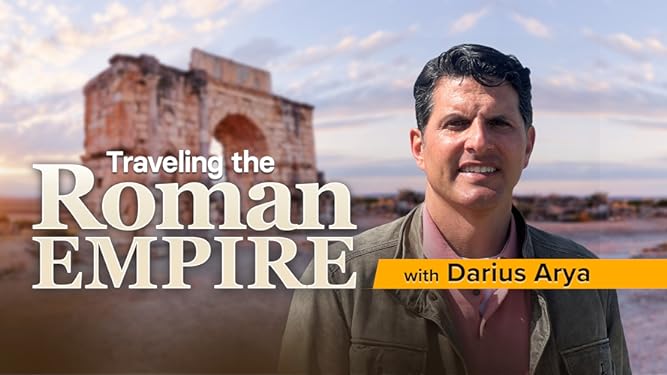
TTC - Traveling the Roman Empire
Released 09/2022
MP4 | Video: h264, 1280x720 | Audio: AAC, 44.1 KHz, 2 Ch
Genre: eLearning | Language: English | Duration: 8 Lessons (4h 50m) | Size: 4 GB


At its height, the Roman Empire spanned nearly two million square miles, extending over three continents, and including a large fraction of the ancient world s population. From Spain to the Middle East, from the Sahara to the Balkans, Roman civilization flourished, enhanced almost everywhere by architectural and artistic wonders

At its height, the Roman Empire spanned nearly two million square miles, extending over three continents, and including a large fraction of the ancient world s population. From Spain to the Middle East, from the Sahara to the Balkans, Roman civilization flourished, enhanced almost everywhere by architectural and artistic wonders. Two thousand years later, it s still possible to experience many of these marvels, including

The Roman Forum: Relics of the empire turn up everywhere in Rome. Some of the most magnificent are in the Forum, the center of Roman civic life, with temples, triumphal arches, commemorative columns, and other monuments evoking imperial glory.
M rida: This Spanish city was one of the most important in the empire and has many surviving structures, including a remarkable theater complex and a stone arched bridge extending nearly half a mile the longest extant span from Roman times.
Petra: Hidden in the Jordanian desert, this ancient Nabataean city shows how Roman culture blended with even older traditions. After taking control, the Romans added their usual civic improvements alongside mysterious local structures.
Taking you on a video tour of these and other sights and adventures, archaeologist Darius Arya brings the ancient world to life in Traveling the Roman Empire. Shot on location in Rome, Spain, Morocco, the Balkans, and elsewhere, the eight half-hour episodes are ideal for previewing possible destinations for your own travels, or you can simply sit back and bask in the glories of antiquity from the comforts of home.

Much more than a guide to must-see attractions, this series introduces you to Roman history and the societies that coexisted with Rome or replaced it after the disintegration of the empire. You discover how modern cities such as Seville and Belgrade, not to mention Rome itself, are a rich mix of cultures built on Classical, Christian, Islamic, or other civilizations. Further, Darius interviews current inhabitants who are still adhering to ancient practices.

An Expert Tour Guide

With a first name tracing to ancient Persian kings, Darius is an archaeologist in the T. E. Lawrence and Indiana Jones mold, immersing himself in the languages, religions, technologies, economies, and customs of the lands of the Roman Empire. His engaging expertise has been widely featured in television documentaries and online seminars. One common passion of archaeologists is to embrace the daily life of the countries where they do their research. In this spirit, Darius has much to say about the local cuisine, street life, and scenery of the sites he visits. He also demonstrates the athletic opportunities, riding horseback in Spain; rowing on the Tiber in Rome; rock climbing in Jordan; and swimming, boating, and diving in the Adriatic Sea all in pursuit of authentic ancient experiences.

Throughout Traveling the Roman Empire Darius puts the ruins he tours in context. Often the encounter with an archaeological site can be confusing, and it takes a leap of the imagination to see the place as it once was. Darius provides that creative spark, enlivening locations such as these

Diocletian s Palace: After bringing renewed stability to the empire in the 3rd century, the Emperor Diocletian built a coastal fortress retirement home in his native Dalmatia. Today, it is a vivid, immersive experience in the life of a Roman potentate.
Volubilis: This well-preserved Roman frontier town in Morocco has the remains of sprawling villas, each with a mythology-themed floor mosaic. Darius translates some of the city s abundant inscriptions, where long-vanished individuals speak across the millennia.
Jerash: Some 2,500 miles east of Volubilis, Jerash is another time-capsule of multicultural civilization. Situated in Jordan, here the arena of ancient civic life is on full display, with plazas, temples, public baths, theaters, a porticoed market, and a hippodrome.
An Incomparable Grand Tour

Aside from famous attractions in Rome, such as the Colosseum, Trajan s Column, and the Arch of Constantine, some of the settings in the series may look eerily familiar. That s because Star Wars, Dune, and other science fiction films were shot on location in Wadi-Rum. This alien-looking region is also called the Valley of the Moon and includes the renowned rock formation The Seven Pillars of Wisdom. In another d j -vu experience, visit Diocletian s Palace, which was the backdrop for scenes in the television series Game of Thrones.

Traveling the Roman Empire is a matchless grand tour covering an astonishing range of landscapes, cultures, and history. Even if you have explored many of these places before, Darius will give you fresh insights and a new appreciation for the remarkable achievements of a single-minded city on the Tiber that had the vision, discipline, and institutions to conquer the known world and make it prosper.

What Will You Learn?
Explore the length and breadth of the Rome Empire

Visit some of the gems of Roman civilization

See ruined cities come alive through the eyes of an expert archaeologist

Learn how local cultures blended with those of the Roman conqueror


406691871_traveling_the_roman_empire.jpg


1471.jpg


TTC - Great Thinkers, Great Theorems
Last updated 9/2023
MP4 | Video: h264, 1280x720 | Audio: AAC, 44.1 KHz, 2 Ch
Genre: eLearning | Language: English | Duration: 24 Lessons ( 12h 15m ) | Size: 10.2 GB


Mathematics is filled with beautiful theorems that are as breathtaking as the most celebrated works of art, literature, or music

Mathematics is filled with beautiful theorems that are as breathtaking as the most celebrated works of art, literature, or music. They are the Mona Lisas, Hamlets, and Fifth Symphonys of the field landmark achievements that repay endless study and that are the work of geniuses as fascinating as Leonardo, Shakespeare, and Beethoven. Here is a sample

Pythagorean theorem: Although he didn't discover the Pythagorean theorem about a remarkable property of right triangles, the Greek mathematician Euclid devised an ingenious proof that is a mathematical masterpiece. Plus, it's beautiful to look at!
Area of a circle: The formula for the area of a circle, A = r2, was deduced in a marvelous chain of reasoning by the Greek thinker Archimedes. His argument relied on the clever tactic of proof by contradiction not once, but twice.
Basel problem: The Swiss mathematician Leonhard Euler won his reputation in the early 1700s by evaluating an infinite series that had stumped the best mathematical minds for a generation. The solution was delightfully simple; the path to it, bewilderingly complex.
Larger infinities: In the late 1800s, the German mathematician Georg Cantor blazed the trail into the "transfinite" by proving that some infinite sets are bigger than others, thereby opening a strange new realm of mathematics.
You can savor these results and many more in Great Thinkers, Great Theorems, 24 half-hour lectures that conduct you through more than 3,000 years of beautiful mathematics, telling the story of the growth of the field through a carefully chosen selection of its most awe-inspiring theorems.

Approaching great theorems the way an art course approaches great works of art, the course opens your mind to new levels of math appreciation. And it requires no more than a grasp of high school mathematics, although it will delight mathematicians of all abilities.

Your guide on this lavishly illustrated tour, which features detailed graphics walking you through every step of every proof, is Professor William Dunham of Muhlenberg College, an award-winning teacher who has developed an artist's eye for conveying the essence of a mathematical idea. Through his enthusiasm for brilliant strategies, novel tactics, and other hallmarks of great theorems, you learn how mathematicians think and what they mean by "beauty" in their work. As added enrichment, the course guidebook has supplementary questions and problems that allow you to go deeper into the ideas behind the theorems.

An Innovative Approach to Mathematics

Professor Dunham has been taking this innovative approach to mathematics for over a quarter-century in the classroom and in his popular books. With Great Thinkers, Great Theorems you get to watch him bring this subject to life in stimulating lectures that combine history, biography, and, above all, theorems, presented as a series of intellectual adventures that have built mathematics into the powerful tool of analysis and understanding that it is today.

In the arts, a great masterpiece can transform a genre; think of Claude Monet's 1872 canvas Impression, Sunrise, which gave the name to the Impressionist movement and revolutionized painting. The same is true in mathematics, with the difference that the revolution is permanent. Once a theorem has been established, it is true forever; it never goes out of style. Therefore the great theorems of the past are as fresh and impressive today as on the day they were first proved.

What Makes a Theorem Great?

A theorem is a mathematical proposition backed by a rigorous chain of reasoning, called a proof, that shows it is indisputably true. As for greatness, Professor Dunham believes the defining qualities of a great theorem are elegance and surprise, exemplified by these cases

Elegance: Euclid has a beautifully simple way of showing that any finite collection of prime numbers can't be complete that there is always at least one prime number left out, proving that the prime numbers are infinite. Dr. Dunham calls this one of the greatest proofs in all of mathematics.
Surprise: Another Greek, Heron, devised a formula for triangular area that is so odd that it looks like it must be wrong. "It's my favorite result from geometry just because it's so implausible," says Dr. Dunham, who shows how, 16 centuries later, Isaac Newton used algebra in an equally surprising route to the same result.
Great Thinkers, Great Theorems includes many lectures that are devoted to a single theorem. In these, Professor Dunham breaks the proof into manageable pieces so that you can follow it in detail. When you get to the Q.E.D. the initials traditionally ending a proof, signaling quod erat demonstrandum (Latin for "that which was to be demonstrated") you can step back and take in the masterpiece as a whole, just as you would with a painting in a museum.

In other lectures, you focus on the biographies of the mathematicians behind these masterpieces geniuses who led eventful, eccentric, and sometimes tragic lives. For example

Cardano: Perhaps the most bizarre mathematician who ever lived, the 16th-century Italian Gerolamo Cardano was a gambler, astrologer, papal physician, convicted heretic, and the first to publish the solution of cubic and quartic algebraic equations, which he did after a no-holds-barred competition with rival mathematicians.
Newton and Leibniz: The battle over who invented calculus, the most important mathematical discovery since ancient times, pitted Isaac Newton mathematician, astronomer, alchemist against Gottfried Wilhelm Leibniz mathematician, philosopher, diplomat. Each believed the other was trying to steal the credit.
Euler: The most inspirational story in the history of mathematics belongs to Leonhard Euler, whose astonishing output barely slowed down after he went blind in 1771. Like Beethoven, who composed some of his greatest music after going deaf, Euler was able to practice his art entirely in his head.
Cantor: While Vincent van Gogh was painting pioneering works of modern art in France in the late 1800s, Georg Cantor was laying the foundations for modern mathematics next door in Germany. Unappreciated at first, the two rebels even looked alike, and both suffered debilitating bouts of depression.
Describing a common reaction to the theorems produced by these great thinkers, Professor Dunham says his students often want to know where the breakthrough ideas came from: How did the mathematicians do it? The question defies analysis, he says. "It's like asking: Why did Shakespeare put the balcony scene in Romeo and Juliet? What made him think of it?' Well, he was Shakespeare. This is what genius looks like!" And by watching the lectures in Great Thinkers, Great Theorems, you will see what equivalent genius looks like in mathematics.


410244767_great_thinkers_great_theorems.jpg


8713.jpg


TTC - The Vietnam War
Released 11/2022
MP4 | Video: h264, 1280x720 | Audio: AAC, 44.1 KHz, 2 Ch
Genre: eLearning | Language: English | Duration: 24 Lessons (11h 22m) | Size: 9.6 GB

The latter half of the 20th century was a turbulent time for Vietnam. This small Southeast Asian country once occupied by France found itself divided after nationalist revolutionaries overthrew the colonial government, splitting the country between the Democratic Republic of Vietnam in the north and the Republic of Vietnam in the south

The latter half of the 20th century was a turbulent time for Vietnam. This small Southeast Asian country once occupied by France found itself divided after nationalist revolutionaries overthrew the colonial government, splitting the country between the Democratic Republic of Vietnam in the north and the Republic of Vietnam in the south. Worse still, tensions between the two territories gave way to a decades-long civil conflict that would ensnare the likes of China, the USSR and perhaps most notably the United States.

Dig into this globally significant and politically transformative conflict in The Vietnam War. Join expert John C. McManus as he reconstructs the Vietnam War in stunning detail. In 24 illuminating and comprehensive lectures, you will

Examine the fall of French Indochina from the Battle of Dien Bien Phu to the Geneva Accords.
Explore the complicated political dynamics that emerged in both North and South Vietnam after World War II.
Investigate the details of American involvement from aerial bombing to ground combat. You will weigh the consequences both good and bad of major military operations and political decisions in Vietnam.
Get to know the personalities and ideologies behind the conflict.
Survey American domestic opposition to what would become an incredibly unpopular and controversial war.
And that s not all. You will also focus on the human dimensions of the conflict in Vietnam. How did it affect ordinary people? What did combat soldiers on both sides of the struggle see, feel, do, and think while enmeshed in the throes of battle? How did veterans and refugees fare after the dust of war had settled? To what extent were women impacted by the fighting? And what did regular Americans across the political spectrum not just the politicians and most vocal peace activists really think about the war? In the end, The Vietnam War is not just a history lesson, but also an exploration of war itself and the kind of impact it can have on ordinary hearts, minds, and spirits.

From French Colony to Socialist Republic

The conflict in Vietnam was more complicated than popularly assumed. It was more than just a proxy war between communist and Western world powers. It was the result of unique political dynamics within the country, and Southeast Asia more broadly, coupled with the nature of American culture and society of the 1960s and 1970s and US worldwide commitments after World War II, plus individual decisions of major leaders like US President Richard Nixon and Vietnamese revolutionary Ho Chi Minh. Together with expert John C. McManus, you will explore the history of the Vietnam War by focusing on these important questions

Who? Become acquainted with the major personalities behind the conflict s most consequential decisions and military operations. Determine how states like China, France, the United States, Cambodia, Laos, and the USSR shaped Vietnam s political destiny and military prowess in the 20th century. And understand the roles played by organizations like the Viet Cong, ARVN, and NVA within Vietnam.
What? See what the war looked like from overall military strategies to the day-to-day routines of regular combat soldiers. Explore the breadth of tools and tech on both sides of the conflict. And determine both the short- and long-term consequences of the war within Vietnam and around the world.
When? Piece together a blow-by-blow portrait of the conflict from its beginnings shortly after the fall of French Indochina to reunification in the 1990s. Construct a timeline of major political decisions and developments in both the United States and Vietnam. And track the erosion of support for war in the United States.
Where? Determine where the fighting was fiercest in Vietnam. Discover why the Ho Chi Minh Trail, jungles, and underground tunnels were pivotal to Viet Cong war efforts. And explore how and to what extent the situation in Vietnam affected and even bled into neighboring countries like Laos, Cambodia, and Indonesia.
Why? Dig deeply into the causes of war in Vietnam. Examine the nature and impact of US involvement, first in the sky and then on the ground. And zoom out to take stock of the regional and global geopolitical realities that shaped the war in the 1960s and 1970s.
The Vietnam War pieces together a conflict that so many of us have heard of, but so few of us really understand. This course contextualizes and reconstructs the conflict, zooming in and out of a thorny, decades-long struggle with remarkable precision and efficacy. In just 24 lectures, peel back the myths that have sprung up about the war and gain a far more complete portrait of one of the most important armed conflicts of the 20th century.

Vietnam s Unfortunate Sons

While most people have some insight into how the war in Vietnam ended, few have reckoned with the full scale and scope of its human impact. That is, how did regular Americans not just famed leaders and starred generals view the war? What did common US combat soldiers and Vietnamese guerilla fighters experience in Vietnam? To what extent did the conflict affect women on both sides? And could veterans transition back into American society after enduring such profound physical and psychological trauma in Southeast Asia? We cannot fully understand the conflict in Vietnam if we ignore the ordinary people soldiers, peace activists, teachers, refugees, children, families bound up in and forever changed by it.

Experience the Vietnam War from the perspective of the average US soldier and witness their everyday existence in wartime. Step into a pair of military-issued boots to see what daily life was like for a US grunt and average Viet Cong fighter. Listen to individual stories of heroism and tragedy as told by servicemen themselves. Examine the treatment of veterans who came back to America when the war was at its least popular. Look past the hippie movement and SDS to reveal a more complicated picture of domestic opposition to war in Vietnam. And see what life was like for regular Vietnamese people many who became refugees after the war.

Ultimately, The Vietnam War expands and adds crucial detail to what you may already know about the conflict. It animates major leaders on both sides of the struggle, detailing as well as analyzing the political and military decisions they made. It pieces together a complete timeline of the war from colonial Vietnam onward. It breaks down and details the importance of key events like the Tet Offensive, My Lai Massacre, and Winter Soldier Investigation. It situates the war in its appropriate regional and global contexts. And it clarifies and humanizes a conflict that is too often seen as confused, distant, and impersonal.

What Will You Learn?
Reconstruct the battle for Vietnam from the fall of French Indochina to reunification in the 1970s

Analyze a broad range of military operations and strategies utilized throughout the conflict

Survey the scope of American involvement in Vietnam alongside the politics of war back home

Explore the American anti-war movement

Dive into the human dimensions of war and its impact of the individuals involved in or touched by the fighting


Homepage


406691862_the_vietnam_war.jpg


1920.jpg


TTC - Mind-Body Medicine The New Science of Optimal Health
Last updated 8/2023
MP4 | Video: h264, 1280x720 | Audio: AAC, 44.1 KHz, 2 Ch
Genre: eLearning | Language: English | Duration: 36 Lessons (19h 8m) | Size: 16 GB


In recent decades, science has revealed that the mind and body are intimately connected in ways we haven't previously realized and this field of knowledge is now changing our understanding of health and disease. While it's easy to see that stress affects health and well-being, or that your blood pressure rises when you're angry, cutting-edge research shows that the mind-body connection goes much further.

Numerous studies on the brain's interaction with the body demonstrate that health is directly affected by our social environments, socioeconomic status, culture, behaviors, relationships, psychological states, and habits of mind, among many factors.

Current mind-body science reveals facts such as these

As few as eight weeks of mindfulness meditation can meaningfully boost your immune system.

Extreme stress and low social support increase the risk of breast cancer by a factor of 9.

Contact with nature is correlated with numerous positive health outcomes, including improved attention for children, reduced stress, and enhanced work performance.

Chronic hostility portends calcification of the coronary arteries, even in young people.

Expressive writing by patients is correlated with improved outcomes for both asthma and rheumatoid arthritis.

Mind-body medicine working in tandem with traditional medical practice makes use of a large spectrum of psychological, physical, and behavioral treatments, drawn from many disciplines, in an approach to health care that aims to treat the whole person. It provides highly effective resources for preventing and treating a wide range of medical conditions, such as cardiovascular disease, stress, cancer, and depression as well as for fostering the ultimate goals of health care: truly optimal and lasting physical health, and emotional and psychological well-being.

A knowledge of this exciting field offers you critical understanding of the state of the art of health care and a significant new direction in medicine. But beyond valuable knowledge, a grounding in mind-body medicine gives you numerous practical, empowering tools for your own health care, as well as that of your family tools that can make a profound difference for healthful, vibrant living.

In Mind-Body Medicine: The New Science of Optimal Health, you'll study this subject in compelling depth, with the expert guidance of Professor Jason M. Satterfield of the University of California, San Francisco. These 36 eye-opening lectures offer you a comprehensive overview of the field, providing rigorous answers to the questions of what makes us sick, what makes us well, and what we can do about it.

You'll look closely at the anatomical and biological systems through which what is outside in the environment gets inside to affect our minds and bodies. You'll also examine recent research on subjects ranging from the impact our emotions and psychology have on health to the crucial roles that social, cultural, and behavioral factors play. And you'll learn about effective mind-body treatments for numerous common medical conditions and diseases.

Finally, you'll finish the course with a toolbox of ideas and interventions for your personal wellness goals, empowering you to partner more effectively with your medical providers and maximize your own health.

A Remarkable New Context for Health Care

Professor Satterfield, a highly respected professor of clinical medicine and a specialist on the intersection of psychological factors and physical health, brings to the table his deep knowledge of mind-body science and extensive clinical experience in its application.

In the course's opening, he introduces you to the model of biopsychosocial medicine, which looks at the relationship between biological, psychological, and social factors in health.

In studying how the biopsychosocial model is applied in modern medicine, you delve into these core subject areas

Biological pathways:You first investigate the anatomy and physiology of four biological systems through which the outside gets in.

By reviewing a detailed study of the autonomic nervous system and the neuroendocrine system, discover how the brain activates the body's two stress-response systems, and how these systems crucially affect health and well-being.

Learn also about the physiology of immune function and the effects of stress on immune response and healing.

Study the mechanisms of genetics as well as fascinating research indicating that your behavior can alter your genetic material, for better or worse changes that can be passed on to future generations.

Psychological factors in health: In the course of nine lectures, you look in depth at the critical ways in which psychology affects the body.

Learn how negative emotional states such as anger and hostility can influence both the onset and progression of disease, and how positive emotions aid substantially in healing and wellness.

Study how cognition the ways in which we think and process our experiences affects emotional states and behavior. Drawing from cognitive and other behavioral therapies, learn effective techniques for reshaping thinking, emotions, and behavior.

Review evidence that certain personality types may be predisposed to conditions such as cardiovascular disease and depression, and learn how we can compensate for risk-carrying personality traits by working with cognitions and emotions.

Investigate the neuroscience of behavior and the important effects of our behaviors on both disease and disease prevention.

Look at stress as an integration of biological, cognitive, and social factors, and see how we can approach stress response and coping as a developmental skill.

Social and ecological factors: You also study the important effects on health of factors such as culture, identity, socioeconomic status, social support, communities, and public health policy.

Examine the studied correlations of income to health, education level to longevity, and ethnicity to susceptibility to disease, and consider how we can use this knowledge to benefit both individual and public health.

Review research linking social support to health in many medical conditions, such as heart disease, cancer, and pregnancy; and do a detailed assessment to evaluate and strengthen your own social support network.

Investigate how spiritual affiliations and practices have distinct physical benefits, such as reducing blood pressure, cortisol, and inflammation; improving lipid profiles and cardiovascular health; and extending life expectancy.

Assess how physical environments affect health, how national and local culture impacts health-related behaviors, and how public initiatives can create healthier behaviors, environments, and communities.

Tools and Strategies for Optimal Wellness

Building on the biopsychosocial model, you study mind-body treatments for common conditions such as cardiovascular disease, stress, cancer, obesity, chronic pain, depression, anxiety, and post-traumatic stress disorder.

Here, you learn about specific practices and interventions that you can use in your own health care program, such as these.

Stress management: For both personal and occupational stress, learn about a spectrum of stress management approaches, from cognitive restructuring and perspective shifting to meditation, breathing techniques, relaxation training, and the learnable skill of resilience.

Strategies for successful behavior change: With reference to concerns such as lifestyle change, weight management, and disease prevention, study the leading models of effective behavior change, as well as specific approaches such as the strategies of motivational interviewing, the four key elements of change, and the internal skills of self-regulation.

Heart disease prevention and treatment: Survey psychosocial interventions for heart disease, including a range of behavior change approaches, stress and emotion management, somatic quieting, social connection, and dramatic evidence that cardiac disease can be reversed through lifestyle change.

Treatment of pain: Study mind-body factors in pain experience, and learn about treatments including cognitive and behavior change, acupuncture, mindfulness-based stress reduction, and biofeedback.

Fatigue, headaches, insomnia: Investigate the variety of medical conditions that show no clear organic cause, such as chronic fatigue, tension headaches, and sleep disorders; and review effective psychological, physical, and behavioral approaches to treatment.

Professor Satterfield's teaching combines an extraordinary breadth of knowledge, clear and accessible explanations of the science involved, and a highly compassionate approach to patient care. He enriches the lectures with stories and case studies of patients in treatment for stress, heart conditions, insomnia, trauma, and other health challenges, showing you what mind-body medicine looks like in clinical practice and how you can integrate its lessons into your health program and daily life.

With the knowledge and tools you'll learn in Mind-Body Medicine: The New Science of Optimal Health, you can begin your own biopsychosocial assessment, identify your strengths and challenges in partnership with your medical providers, and take authentic steps toward your fullest physical and mental wellness.

Disclaimer

These lectures are not designed for use as medical references to diagnose, treat, or prevent medical illnesses or trauma. Neither The Great Courses nor Professor Jason Satterfield is responsible for your use of this educational material or its consequences. If you have questions about the diagnosis, treatment, or prevention of a medical condition or illness, you should consult a qualified physician.


410301058_mind-body_medicine_the_new_science_of_optimal_health.jpg


1518.jpg


TTC - Major Transitions in Evolution
Last updated 11/2023
MP4 | Video: h264, 1280x720 | Audio: AAC, 44.1 KHz, 2 Ch
Genre: eLearning | Language: English | Duration: 24 Lessons ( 12h 48m ) | Size: 10.3 GB


How and when did life on Earth get to be the way it is today?

How and when did life on Earth get to be the way it is today?

Imagine a world without bees, butterflies, and flowering plants. That was Earth 125 million years ago.
Turn back the clock 400 million years, and there were no trees.
At 450 million years in the past, even the earliest insects had not yet developed.
And looking back 500 million years-a half-billion years before the present-the land was devoid of life, which at that time flourished in a profusion of strange forms in the oceans.
These and other major turning points are the amazing story of evolution, the most remarkable force in the history of Earth, the organizing principle throughout the biological sciences, and the most important mechanism scientists use to understand the varieties of life on our planet.

To learn about these major transitions, each of which brought forth new possibilities for life, is to embark on an unforgettable look into the past. It's also a captivating opportunity to get a deeper understanding of how evolution works, to draw intricate connections between living things, and to think about life-not just yours but the lives of everything around you-in new ways.

Major Transitions in Evolution tells this science-detective story in 24 lavishly illustrated lectures that focus on the giant leaps that gave rise to nature's boundless diversity. In a course of breathtaking scope, you study the conditions that led to the first complex cells, flying insects, flowering plants, mammals, modern humans, and many other breakthroughs. And in the process of studying the past, you gain a powerful understanding of the present world.

Given the broad scope of the subject, this course is taught by two professors: Anthony Martin, a paleontologist and geologist at Emory University, and John Hawks, a paleoanthropologist at the University of Wisconsin-Madison. Each is an outstanding teacher in his field, adept at making the subject interesting and accessible no matter what your background in science. And in the final lecture, the two appear together for an absorbing conversation on common themes in the epic saga of life on Earth.

Giant Leaps that Brought Us to Today

Among the major transitions you cover are these

From simple to complex cells: Life's first major evolutionary transition was the leap from basic prokaryotic to more complex eukaryotic cells, which contain a nucleus and other specialized structures. This was the crucial step that eventually led to plants and animals.
From fish to four legs: The iconic image of evolution is a fish emerging onto land. This transition might not have happened without shade provided by the newly developing forests, whose protective canopy gave the first fishapods protection from the sun.
Dinosaurs become birds: Dinosaurs didn't go completely extinct; they survive today as birds, whose distinctive wings, feathers, and other features are visible in transitional fossils such as Archaeopteryx, from about 150 million years ago.
Modern humans: The evolution of tree-dwelling primates to upright-walking apes later led to the evolution of modern humans-a species that invented agriculture, poetry, computers, and the techniques to trace its own lineage and that of all life.
You also explore many other transitions that occurred between these milestones, and you take an intriguing look ahead to speculate about the future direction of evolution. From the deep past until today, evolution has been a story with countless subplots, false leads, and reversals of fortune. But it has had one overarching theme-that life is wondrous, resilient, and endlessly surprising.


410244691_ttc_-_major_transitions_in_evolution.jpg


30450.jpg


TTC - The History of the United States Navy
Released 8/2023
MP4 | Video: h264, 1280x720 | Audio: AAC, 44.1 KHz, 2 Ch
Genre: eLearning | Language: English | Duration: 24 Lessons (12h 43m) | Size: 10.2 GB


From its inception, the United States has been a maritime nation. Ever since the first use of sea power during the American Revolution, the growth, the trajectory, and the international standing of the United States has been deeply tied to its maritime role and its naval forces

The United States Navy has played a vital role both in resolving conflicts and in peacekeeping, spanning the entire history of the United States from subduing piracy in the 18th century to action in the Mexican-American War, the Civil War, the Spanish-American War, two World Wars, and the Vietnam War, as well as more recent international crises, and its longstanding work in ensuring maritime freedom across the globe.

Today, the US Navy, the world s most powerful naval force, remains a critical tool of American foreign policy, and a key player in preserving geopolitical stability throughout the world, as well as maintaining the security of the United States and its allies.

For these reasons and more, the story of the United States Navy offers essential perspectives on how the United States came to be, the unfolding of its history, the experiment of American democracy, and the nation s transformation into a global superpower. Beyond all of this, the history of the US Navy is a spellbinding and deeply poignant human story a chronicle of extraordinary commitment, ingenuity, valor, sacrifice, and patriotism, spanning the 250 years of its existence.

In The History of the United States Navy, you ll relive the extraordinary saga of America s naval forces, from the first naval shipbuilding on Lake Champlain in 1775 to the present age of nuclear-armed submarines. These 24 lectures unfurl a huge and multifaceted historical narrative, following the emergence of the US Navy from a fledgling naval force to the greatest maritime power in world history, unfolding over four centuries and mirroring the rise and development of the United States. Your guide is Professor Craig L. Symonds of the US Naval Academy, a celebrated maritime historian and favorite Great Courses lecturer, who brings to the table an astonishingly detailed and far-reaching knowledge of US naval history, coupled with a flair for engrossing storytelling.

An Epic Story of Enterprise and Endurance

Among many noteworthy features of US naval history, you ll discover that

By the 1830s, the US Navy had forged a global presence, through standing naval squadrons in the Caribbean, the Mediterranean, the coasts of Africa and Brazil, and the East Indies;
In its first decades, the US Navy endured tremendous controversy over its very existence, by navalist versus anti-navalist factions within the United States;
The submarine, now a core element of naval forces worldwide, was developed by the Confederate states during the Civil War;
A US naval fleet commanded by Commodore Matthew C. Perry opened Japan to trade with the West in 1853, ending centuries of Japanese isolationism; and
In the Second World War, the US Navy grew to the almost unimaginable size of 6,000+ warships, mounting massive naval campaigns simultaneously on opposite sides of the world, and playing a vital role in the Allied victory.
Across the course, you ll follow the evolution of naval technology, from the Age of Sail to the nuclear era. You ll observe how naval warfare changed with the technology and the times. And you ll witness how pivotal US naval engagements were fought, in moments such as the battle of Manila Bay in the Spanish-American War, the monumental World War II battle of Saipan, and the game-changing assault on Incheon in the Korean War.

Professor Symonds brings memorable depth and perspective to the story through compelling commentary on the Navy s tragedies, as well as its triumphs; key naval reforms; and blemishes on the Navy s record, such as racial and gender discrimination. The result is a rich and multidimensional panorama of naval history, profiling the US Navy s integral role in the nation s unfolding.

Landmarks of Naval Technology, Strategy, and Engagement

Ranging across the centuries, the lectures present an in-depth view of the operations of the Navy, encompassing subject matter such as

American Sea Power and Firepower. As a key feature of the story, track the unfolding development of the warships and armaments which defined naval warfare in each era, from the 18th century ships of the line and frigates and the 19th century s ironclads, steam warships, and battleships to the destroyers, aircraft carriers, submarines, and nuclear-powered vessels of modern times.
A New Nation on the High Seas. Early in the course, visualize the colorful and dramatic exploits of the young US Navy as it established global reach; study the events of the Navy s actions against piracy in Algiers and Tripoli and the Quasi war against France in the Caribbean; and chart the Navy s great expedition circumnavigating the globe from 1838 to 1842, in search of new land masses, fauna, and flora.
Naval Conquests of the Civil War. Delve into significant naval advances and engagements during this historic conflict, including the advent of ironclad and steam-powered warships, as well as major new weaponry; study the famous battle of the USS Monitor and the USS Merrimack, the first ironclads; US naval action against Confederate river defenses; and major naval campaigns at Charleston, South Carolina, and other strategic Confederate forts.
The 19th Century: On the World Stage. Witness the transformation of the US Navy in the late 19th century its modernization and major expansion as a crisis-ready standing fleet. See how the US Navy emerged as a global naval power during the Spanish-American War; mark the age of the battleship as the premier naval warship; and gauge the Navy s role in American diplomacy in the midst of a worldwide naval arms race.
The US Navy in World War II. Across four lectures, survey the massive role of the US Navy in the Second World War. Take the measure of aircraft carrier warfare, which dominated the Navy s wartime operations; study the major Allied effort to safeguard Britain s maritime supply lines, and the Navy s large-scale amphibious operations in Europe and Asia; and along the way, envision the events of the legendary battles of Midway, Guadalcanal, and D-Day.
The Cold War and Vietnam. With the advent of the Cold War, take account of sweeping changes in the Navy s work, reflecting a new geopolitical climate. Chart the Navy s integral work in nuclear deterrence, through its submarine forces. Study the role of the Navy and Marines in the Korean conflict. Study the Navy s response to political crises in the Mediterranean, Asia, and Cuba, and its critical operations throughout the Vietnam War.
The Navy in Today s World. Over recent decades, study the Navy s spectrum of operations within a precarious political environment. Delve into key naval incidents in the Middle East and the Navy s actions in the wars in Iraq and Afghanistan. Learn about its core peacetime work in combatting piracy and the drug trade, providing humanitarian aid, safeguarding endangered ships, and more.

A Force to Reckon With

The course concludes with a penetrating look at China s current naval buildup and the issues and frictions that characterize China s territorial claims to Taiwan and other islands within Asian waters. Professor Symonds incisively highlights the perils the US Navy faces in its current roles and the challenges of administering great naval power in the contemporary world.

You ll also keep track of the extraordinary technology that undergirds the Navy s work in the modern era, such as highly sophisticated smart bombs and missiles; the C-wiz, a shipboard missile defense system; and the nuclear-powered USS Gerald R. Ford, the largest warship ever built.

Brimming with historical detail and compelling insights, the 24 lectures of The History of the United States Navy offer you an unforgettable view into a core element of American history and experience.

What Will You Learn?
Learn the US Navy s history, from its inception to its emergence as a global naval power

Track the development of the warships and armaments that defined naval warfare in each era

See how the US Navy remains a critical tool of American foreign policy today, and is a key player in preserving geopolitical stability throughout the world


410267302_the_history_of_the_united_states_navy.jpg


60070.jpg


TTC - The Surprising Lives of Christian Saints
Released 10/2023
MP4 | Video: h264, 1280x720 | Audio: AAC, 44.1 KHz, 2 Ch
Genre: eLearning | Language: English | Duration: 24 Lessons ( 11h 48m ) | Size: 9.8 GB


You may be familiar with the Christian saints St. Peter, to whom Jesus gave the keys to the kingdom in the Bible; St. Joan of Arc, who led France to victory in the Hundred Years War; and St. Thomas Aquinas, whose philosophy around faith and reason, the existence of God, and the nature of the soul is embedded deeply in Church theology today

You may be familiar with the Christian saints St. Peter, to whom Jesus gave the keys to the kingdom in the Bible; St. Joan of Arc, who led France to victory in the Hundred Years War; and St. Thomas Aquinas, whose philosophy around faith and reason, the existence of God, and the nature of the soul is embedded deeply in Church theology today. There are a host of lesser-known saints, who ve been immortalized for the miracles attributed to them and the struggles they endured, including Kateri Tekakwitha, Absalom Jones, Josephine Butler, and many others.

Have you ever wondered who these people were who were named as saints? Or how everyday people around the world have been canonized to sainthood? Who were they, what did they do, and why do they matter for Christianity today? Now, you have the opportunity to unpack these questions with The Surprising Lives of Christian Saints. Over the course of 24 in-depth lectures, Professor Emily Graham, an Associate Professor of History at Oklahoma State University, surveys the global history of Christian sainthood.

As you ll discover, the stories of Christian saints are not just fascinating, but they re also an integral part of Christian history. Through their lives, in particular moments of time, you can trace the historical context that shaped the Church over two millennia, meeting such figures as

Mary Magdalen, an early saint who s been interpreted and reinterpreted countless times over the years;
Perpetua and Felicity, mothers and martyrs in fourth-century Carthage;
Francis of Assisi, a homeless veteran known for ministering to the poor;
Elizabeth Ann Seton, an American convert, founder, and struggling mother; and
Andrei Rublev, an icon painter whose striking artwork married Byzantine and Russian influence.
What these saints have in common is that they were ordinary people who did extraordinary things, from negotiating political strife to championing the poor and the dispossessed. Filled with illuminating stories and a cast of unforgettable figures, The Surprising Lives of Christian Saints takes you on an enlightening journey through time, revealing the profound lives of individuals who ve left an indelible mark on our world.

Embark on a Historical Tour

As Professor Graham takes you through the biographies of myriad saints, she also gives you a broader understanding of the historical and cultural context of the times in which these saints lived. She has carefully chosen to focus on saints whose lives are interesting in their own right, but who also reveal something about the history of the Church or civilization around the world.

Take, for instance, the life of Kateri Tekakwitha, a Mohawk native in what is now upstate New York. She is remembered today for her journey to join a new faith community led by Jesuit missionaries, and for her asceticism. A complicated figure who died young, Tekakwitha s life offers insights into the colonization of America.

Another powerful figure is Absalom Jones, a freed slave living in Philadelphia in the 19th-century. Jones was a venerated abolitionist, the first African American to be ordained as a priest in the Episcopal Church, and a founder of one of first Black churches in the United States. His story offers a significant development in the Episcopal Church, but it s also inextricably linked to the history of America in the years before the Civil War.

Across the Atlantic, Josephine Butler s story also offers insights into the intersection of religious and political history. A Victorian feminist, Butler was a passionate advocate for women s rights in a society that provided little opportunity for women. Professor Graham walks you through Butler s politically charged, often sensational life.

Discover the Human behind the Halo

The word saint likely conjures up the image of an innocent do-gooder or an impossibly kind soul who smiles even under great persecution. While every saint you meet in this course certainly has done something above and beyond, Professor Graham walks you through historical evidence to reveal the human behind the legend.

The lives of these saints represent an all too human experience. Consider Margaret of Cortona, a rebellious teenager who ran away to live with her wealthy boyfriend. But when her lover died, her fairytale existence came to an end, and she found herself to be a homeless single mother. You ll examine how she reinvented herself as a penitent and ultimately received holy visions from God.

scar Romero is perhaps best remembered for his dramatic assassination in 1980. His life of political struggle is quite understandable. You ll watch, for instance, as his family mortgages the farm during the Great Depression and he has to work his way into the seminary. The poverty and Cold War interventions in El Salvador inspired him to advocate for the rural poor, which ended up putting his name on government hit lists.

Margaret, scar, and the other saints you will study are complex figures. Beyond the virtue of loving one s neighbor, they faced flesh-and-blood challenges and lived in the arena of life. They spoke truth to power, fought for justice, and shined the light of salvation in what often were shadowy corners of the world.

Intellectually Fascinating, Spiritually Rewarding

Throughout this course, Professor Graham steps back to survey the bigger picture and asks: How does a person become canonized? From the early cults and legends of saints shrouded by the passage of time to the rigorous investigations of miracles in the 20th century, you ll see how Christianity has evolved over the centuries.

Additionally, you ll see how interpretations of people and events change as each new generation comes to its own understanding of Christianity and world history. Mary Magdalen offers an excellent case study for interpretation. On one hand, we have the figure presented to us in the Gospels (the biblical Magdalen), but medieval Europeans and then Reformation-era Protestants had radically different understandings of her. Which understanding is correct? And what does the historical evidence tell us?

The issue of interpretation is the most human of challenges. How are you meant to understand yourself? Your history? Or is it histories? Whether you re a history enthusiast, a devout Christian, or someone curious about sainthood, The Surprising Lives of Christian Saints is an extraordinary examination of the forces that have shaped our beliefs and our world.

What Will You Learn?
Explore the history of Christianity through its most venerated figures

Delve into the powerful stories of saints from Mary Magdalen to scar Romero

Consider how saints are made and how different denominations view these saints

Reflect on the nature of the Christian Church throughout a changing world


406691824_the_surprising_lives_of_christian_saints.jpg


Zurück
Oben Unten