• Regeln für den Video-Bereich:

    In den Börsenbereich gehören nur Angebote die bereits den Allgemeinen Regeln entsprechen.

    Einteilung

    - Folgende Formate gehören in die angegeben Bereiche:
    - Filme: Encodierte Filme von BluRay, DVD, R5, TV, Screener sowie Telesyncs im Format DivX, XviD und x264.
    - DVD: Filme im Format DVD5, DVD9 und HD2DVD.
    - HD: Encodierte Filme mit der Auflösung 720p oder darüber von BluRay, DVD, R5, TV, Screener sowie Telesyncs im Format x264.
    - 3D: Encodierte Filme von BluRay, die in einem 3D Format vorliegen. Dies gilt auch für Dokus, Animation usw.
    - Serien: Cartoon/Zeichentrick, Anime, Tutorials, Dokumentationen, Konzerte/Musik, Sonstiges sind demnach in die entsprechenden Bereiche einzuordnen, auch wenn sie beispielsweise im High Definition-Format oder als DVD5/DVD9/HD2DVD vorliegen. Ausnahme 3D.
    - Bereich Englisch: Englische Releases gehören immer in diesen Bereich.
    - Bereich Talk: Der Bereich, in dem über die Releases diskutiert werden kann, darf, soll und erwünscht ist.


    Angebot/Beitrag erstellen

    - Ein Beitrag darf erst dann erstellt werden, wenn der Upload bei mindestens einem OCH komplett ist. Platzhalter sind untersagt.
    - Bei einem Scenerelease hat der Threadtitel ausschließlich aus dem originalen, unveränderten Releasenamen zu bestehen. Es dürfen keine Veränderungen wie z.B. Sterne, kleine Buchstaben o.ä. vorgenommen werden. Ausnahme Serienbörse:
    - Bei einem Sammelthread für eine Staffel entfällt aus dem Releasename natürlich der Name der Folge. Beispiel: Die Simpsons S21 German DVDRip XviD - ITG
    - Dementsprechend sind also u.a. verboten: Erweiterungen wie "Tipp", "empfehlenswert", "only", "reup", usw. / jegliche andere Zusatzinformation oder Ergänzung, welche nicht in obiger Beschreibung zu finden ist.

    Aufbau des Angebots und Threadtitel

    Der Titel nach folgendem Muster erstellt zu werden. <Name> [3D] [Staffel] [German] <Jahr> <Tonspur> [DL] [Auflösung] <Quelle> <Codec> - <Group>
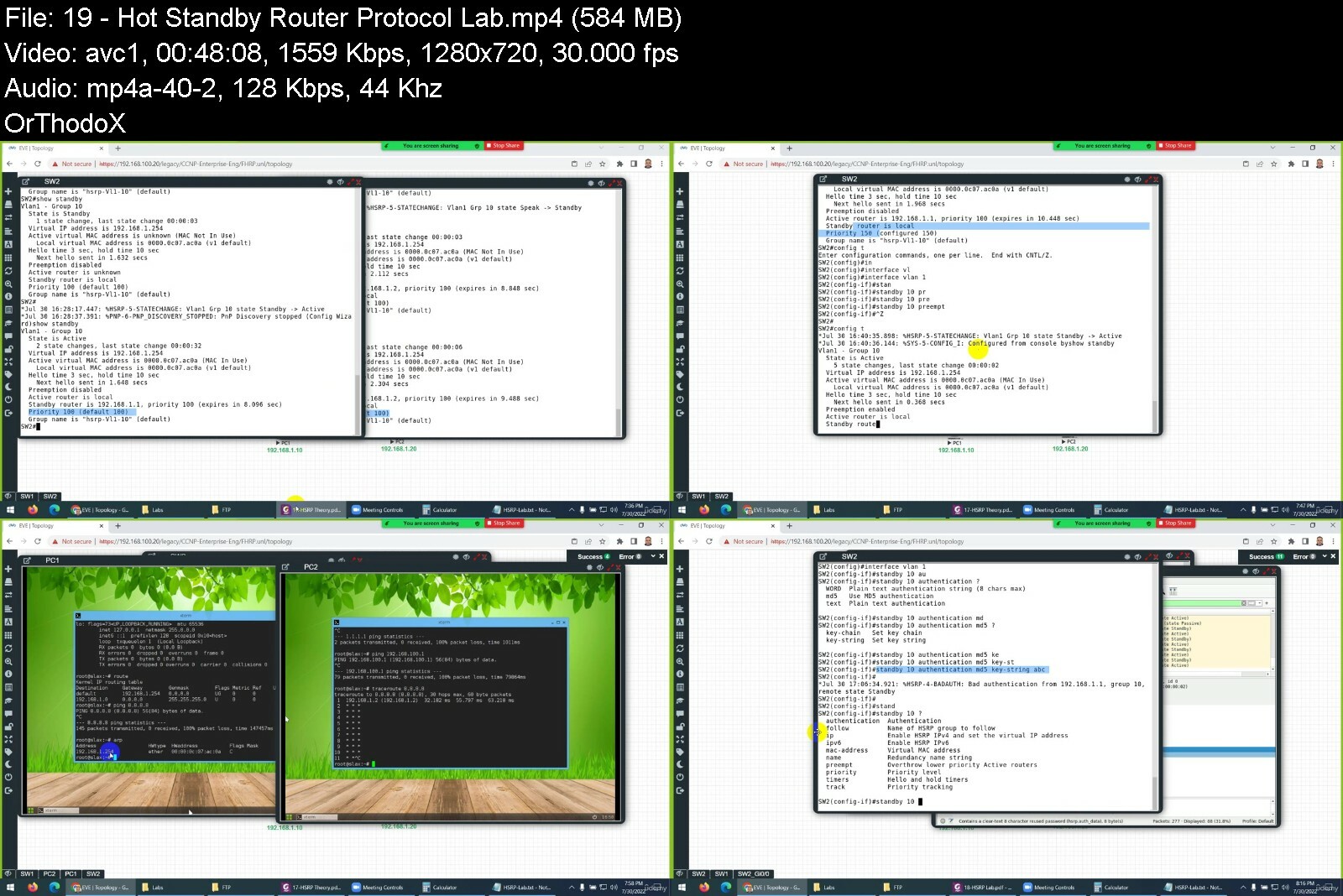
    Beispiel: The Dark Knight German 2008 AC3 DVDRip XviD - iND
    Beispiel: The Dark Knight 2008 DTS DL BDRip x264 - iND
    Beispiel: The Dark Knight 2008 AC3 DL BDRip XviD - iND
    Beispiel: The Dark Knight German 2008 AC3 720p BluRay x264 iND
    Beispiel: The Dark Knight 2008 DTS DL 1080p BluRay x264 iND
    Beispiel: Die Simpsons S01 German AC3 DVDRip XviD iND
    Beispiel: Die Simpsons S20 German AC3 720p BluRay x264 iND
    Beispiel: Sword Art Online II Ger Sub 2014 AAC 1080p WEBRip x264 - peppermint
    Entsprechend sind also u.a. verboten: Sonderzeichen wie Klammern, Sterne, Ausrufezeichen, Unterstriche, Anführungszeichen / Erweiterungen wie "Tipp", "empfehlenswert", "only", "reup", usw. / jegliche andere Zusatzinformation oder Ergänzung, welche nicht in obiger Beschreibung zu finden ist
    Ausnahmen hiervon können in den Bereichen geregelt sein.

    Die Beiträge sollen wie folgt aufgebaut werden:
    Überschrift entspricht dem Threadtitel
    Cover
    kurze Inhaltsbeschreibung
    Format, Größe, Dauer sind gut lesbar für Downloader außerhalb des Spoilers zu vermerken
    Nfo sind immer Anzugeben und selbige immer im Spoiler in Textform.
    Sind keine Nfo vorhanden z.B. Eigenpublikationen, sind im Spoiler folgende Dateiinformationen zusätzlich anzugeben :
    Quelle
    Video (Auflösung und Bitrate)
    Ton (Sprache, Format und Bitrate der einzelnen Spuren)
    Untertitel (sofern vorhanden)
    Hosterangabe in Textform außerhalb eines Spoiler mit allen enthaltenen Hostern.
    Bei SD kann auf diese zusätzlichen Dateiinformationen verzichtet werden.

    Alle benötigten Passwörter sind, sofern vorhanden, in Textform im Angebot anzugeben.
    Spoiler im Spoiler mit Kommentaren :"Schon Bedankt?" sind unerwünscht.


    Releases

    - Sind Retail-Release verfügbar, sind alle anderen Variationen untersagt. Ausnahmen: Alle deutschen Retail-Release sind CUT, in diesem Fall sind dubbed UNCUT-Release zulässig.
    - Im Serien-Bereich gilt speziell: Wenn ein Retail vor Abschluss einer laufenden Staffel erscheint, darf diese Staffel noch zu Ende gebracht werden.62
    - Gleiche Releases sind unbedingt zusammenzufassen. Das bedeutet, es ist zwingend erforderlich, vor dem Erstellen eines Themas per Suchfunktion zu überprüfen, ob bereits ein Beitrag mit demselben Release besteht. Ist dies der Fall, ist der bereits vorhandene Beitrag zu verwenden.
    - P2P und Scene Releases dürfen nicht verändert oder gar unter einem iND Tag eingestellt werden.


    Support, Diskussionen und Suche

    - Supportanfragen sind entweder per PN oder im Bereich Talk zu stellen.
    - Diskussionen und Bewertungen sind im Talk Bereich zu führen. Fragen an die Uploader haben ausschließlich via PN zu erfolgen, und sind in den Angeboten untersagt.
    - Anfragen zu Upload-Wünschen sind nur im Bereich Suche Video erlaubt. Antworten dürfen nur auf Angebote von MyBoerse.bz verlinkt werden.


    Verbote

    - Untersagt sind mehrere Formate in einem einzigen Angebotsthread, wie beispielsweise das gleichzeitige Anbieten von DivX/XviD, 720p und 1080p in einem Thread. Pro Format, Release und Auflösung ist ein eigener Thread zu eröffnen.
    - Grundsätzlich ebenso verboten sind Dupes. Uploader haben sich an geeigneter Stelle darüber zu informieren, ob es sich bei einem Release um ein Dupe handelt.
    - Gefakte, nur teilweise lauffähige oder unvollständige Angebote sind untersagt. Dies gilt auch für eigene Publikationen, die augenscheinlich nicht selbst von z.B. einer DVD gerippt wurden. Laufende Serien, bei denen noch nicht alle Folgen verfügbar sind, dürfen erstellt und regelmäßig geupdatet werden.
    - Untersagt sind Angebote, welche nur und ausschließlich in einer anderen Sprache als deutsch oder englisch vorliegen. Ausnahmen sind VORHER mit den Moderatoren zu klären.


    Verstoß gegen die Regeln

    - Angebote oder Beiträge, die gegen die Forenregeln verstoßen, sind über den "Melden"-Button im Beitrag zu melden.
  • Bitte registriere dich zunächst um Beiträge zu verfassen und externe Links aufzurufen.

*** Bestes IPTV *** bester Preis *** gratis Test ***


Englische Tutorials

4787156400cklid1.jpg


Cisco Routing & Switching (CCNA & CCNP Equivalent)
Last Updated 09/2022
MP4 | Video: h264, 1280x720 | Audio: AAC, 44.1 KHz, 2 Ch
Genre: eLearning | Language: English | Duration: 111 lectures (19h 18m) | Size: 10.9 GB


Master the Routing, Switching and IP Services Skills to be the best of the Network Engineers


What you'll learn
Routing Concepts
Default, Static and Dynamic routing
OSPF (Open Shortest Path First)
BGP (Border Gateway Protocol)
Switching Concepts
STP, VTP, Routing Ports, SVI, L2 & L3
Access Control Lists Concepts
Network Address Translation Concpets
IP services VRRP, NHRP, GLBP etc.
If you want to understand Switching than this is the course for you since we will be covering Layer2 & Layer3 switching, which is extremely important!
Student will also learn: Etherchannel, Switchport security, among other concepts in a switching environment
Wireless
MPLS
VXLAN

Description
Advanced Routing, Switching and Services networking course provides you with the skills and knowledge to implement and troubleshooting for advanced routing technologies and services, including Layer 3 services, Infrastructure security, Infrastructure services, L2 services etc. This course will provide you the knowledge and skills you need to install, configure, operate, and troubleshoot an enterprise network. This networking course helps prepare you to upskill yourself for day to day networking tasks as a Network Engineer.

If you want to start earning more while doing what you love, well then this course is perfect for you. Even if you have knowledge of creating networks or knowing different communication tools, still this course will teach you everything in depth you need to know about hubs, switches, networking, routers, etc.

The course has multiple modules which will enhance your knowledge in the particular technologies and features

Switching : The switching course has everything you need to know about switches. How switches learn MAC addresses, what VLANs and trunks are and how spanning-tree is used to create loop-free topologies. You will also learn more complex topologies like SDM, CEF etc.

Spanning Tree : When you add redundancy in your switched network, you add potential loops. Spanning-tree is used on switches to create a loop-free L2 topology. In these lessons you will learn the basics of spanning-tree and the different versions: PVST, RPVST, and MST.

EIGRP : EIGRP (Enhanced Interior Gateway Routing Protocol) is Cisco s IGP (Interior Gateway Protocol) that was made an open standard in 2013. It is a distance vector routing protocol similar to RIP but has many advanced features. In these lessons, we start with the basics of EIGRP and end with the most advanced topics.

OSPF : OSPF (Open Shortest Path First) is a popular link-state routing protocol. Routers exchange pieces of information called LSAs (link state advertisement) and build a topology database which we call the LSDB (link state database). In these lessons, we start with the basics and work our way through the most advanced OSPF topics.

BGP : BGP (Border Gateway Protocol) is the routing protocol of the Internet, used to route traffic from one autonomous system (AS) to another. It s an important topic to understand if you work at an ISP or at a large company that is connected to two or more ISPs. Unlike IGPs like OSPF or EIGRP, BGP uses a set of attributes to determine the best path for each destination.

IPv6 : IPv6 is the successor of IPv4 and the main reason we need it is because we are running out of IPv4 address space. IPv4 uses 32-bit addresses and offered us about 4.3 billion addresses, IPv6 offers 128-bit addresses so we have a huge amount of available addresses. These lessons will explain the basics of IPv6 and how to configure it on Cisco IOS routers.

IP Services: All about the different Load Balancing protocols to achieve high availability e.g NHRP, VRRP and GLBP etc.

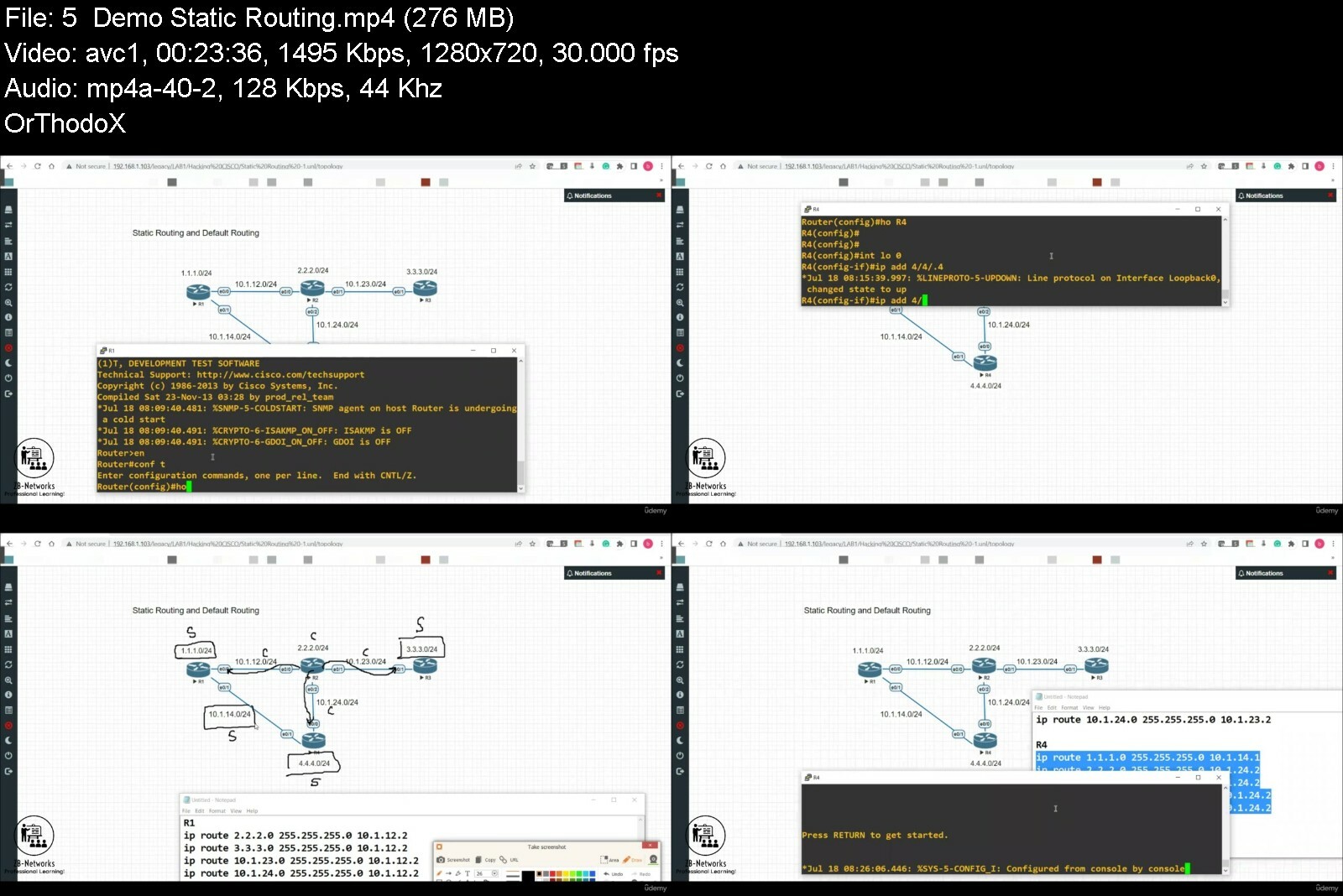
Static Routing Concepts : Deep dive in the logic of Static Routing so that you understand the basic building blocks of networking.

Default Routing : This course will make you understand the topics from a packet level, so that trouble shooting becomes a fun part for you.

******************************************************************************************

We will be continuously uploading more and more sections and lectures to this course.

Targeted course duration is 50 hours plus content.

******************************************************************************************

****Updated on 17-08-2022****

Uploaded Access Control Lists ACL section

******************************************************************************************

****Updated on 18-08-2022****

Uploaded Network Address Translation section

******************************************************************************************

****Updated on 17-09-2022****

Uploaded L2 Switching Concepts section

******************************************************************************************

****Updated on 17-09-2022****

Uploaded Inter-Vlan Routing section

******************************************************************************************

****Updated on 18-09-2022****

Uploaded Spanning Tree Protocol Basics section

******************************************************************************************

****Updated on 18-09-2022****

Uploaded Etherchannel / Port-Channel / Link Aggregation section

******************************************************************************************

Who this course is for
Network Engineers
Anyone that wants to learn the in's and out's of Routing and Switching
Cisco Administrators CCNA
CCNP and CCIE Students
CCNP and CCIE Administrators
Network and Security Engineer

Requirements
IT networking Fundamentals
TCP/IP


ciscoroutingswitchingani8h.jpg


8ms9jul4u4fd1qivtytqpjjcv9.jpg


Ccnp Service Provider -300-515 Spvi
Published 12/2022
MP4 | Video: h264, 1280x720 | Audio: AAC, 44.1 KHz
Language: English | Size: 22.42 GB | Duration: 38h 20m

Implementing Cisco Service Provider VPN Services (SPVI) v1.0


What you'll learn
MPLS L3 VPN, MPLS L2 VPN
Core MPLS _ Inter AS MPLS
Segment Routing, Unified MPLS
MPLS Traffic Engineering, Quality of Service with MPLS
Prepare to take the 300-515 SPVI exam

Requirements
CCNA level Knowledge - CCNP Routing Knowledge OSPF Routing

Description
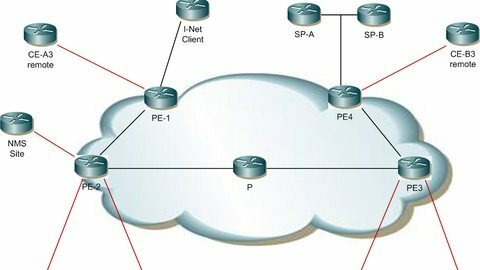
The Implementing Cisco Service Provider VPN Services (SPVI) v1.0 course prepares you to manage end-customer Virtual Private Network (VPN) environments built over a common service provider Multiprotocol Label Switching (MPLS) backbone.You will complete hands-on labs to reinforce MPLS VPN fundamental concepts, benefits, and classification, MPLS components, MPLS control plane and data plane operations, MPLS VPN routing using Virtual Routing and Forwarding (VRF), Layer 2 and Layer 3 MPLS VPNs, IPv6 MPLS VPN implementations, Shared services VPNs. The course also covers solutions for deploying MPLS VPN crossing multiple Service Provider domains that improve the use of network bandwidth.This course prepares you for the 300-515 Implementing Cisco Service Provider VPN Services (SPVI) exam. By passing this exam, you earn the Cisco Certified Specialist - Service Provider VPN Services Implementation certification, and you satisfy the concentration exam requirement for the CCNP Service Provider certification. This course will help you:Gain valuable skills in reinforcing MPLS VPN fundamental concepts, benefits, and classificationsLearn to configure optional paths for traffic to avoid network congestionPrepare to take the 300-515 SPVI examWhat to expect in the examThe 300-515 SPVI exam certifies your knowledge of implementing service provider VPN services including Layer 2, Layer 3, and IPv6. After you pass 300-515 SPVI, you earn the Cisco Certified Specialist - Service Provider VPN Services Implementation certification, and you satisfy the concentration exam requirement for the CCNP Service Provider certification.

Overview
Section 1: About Service Providers

Lecture 1 Interconnecting Service Providers

Lecture 2 Internet Exchange Point - IXP

Lecture 3 Internet Number Distribution -IANA - RIR

Lecture 4 IP- Autonomous System Allocation

Lecture 5 Service Provider Types

Lecture 6 T1-E1-T3-E3

Section 2: Virtual Labs - GNS3

Lecture 7 Cisco Lab Options

Lecture 8 About GNS3

Lecture 9 Installing GNS3 on Windows

Lecture 10 IOS IOSv IOU differences

Lecture 11 GNS3 - Adding IOS Images

Lecture 12 New GNS3 - Inbuilt devices options

Lecture 13 Default Topology- IOS Routers -Initial Configurations

Lecture 14 IOS Default Topology

Lecture 15 Connecting GNS3 Topology to Host Computer

Lecture 16 GNS3- VMWARE Integration

Lecture 17 GNS3- IOU- L2-L3 Configuration Steps

Lecture 18 GNS3 - IOSv L2-L3 Configuration Steps

Lecture 19 GNS3 - ASAv Setup

Lecture 20 ASA 84-GNS VM

Lecture 21 GNS3 - Topology Edit -Open old topologies

Lecture 22 GNS3 - SecureCRT Console

Lecture 23 Vmware PC - GNS3 Topology

Lecture 24 GNS3- XRv Integration

Section 3: Virtual Labs - GNS3

Lecture 25 EVE-NG Virtual Platform

Lecture 26 IOS IOSv IOU differences

Lecture 27 EVE-nG Professional License

Lecture 28 IOL Devices - EVE-nG

Lecture 29 Upload SD-WAN Images - EVE-NG

Lecture 30 Adding Viptela Devices - EVE-NG Lab

Lecture 31 ASAv 9.x- EVE-NG

Lecture 32 WIndows - EVE-NG

Lecture 33 ASA 8.4 Image - EVE-NG

Lecture 34 Connecting WIndows PC- EVE-Topology

Lecture 35 Connecting WIndows PC - Internet

Lecture 36 CSR1000v - EVE-NG

Section 4: WAN Services - Layer 2

Lecture 37 Ethernet WAN

Lecture 38 Ethernet WAN - VLAN-Trunking

Lecture 39 Q-in-Q Tunnelling

Lecture 40 LAB-1 QinQ Tunneling

Lecture 41 LAB-2 QinQ Tunneling

Section 5: MPLS - Cisco Express Forwarding (CEF)

Lecture 42 MPLS VPN - Introduction

Lecture 43 Layer 3 Process switching - CEF

Lecture 44 Identify Network Device Planes

Lecture 45 Data Plane

Lecture 46 Control Plane

Lecture 47 Management Plane

Lecture 48 Cisco Express Forwarding - CEF

Lecture 49 CEF in MPLS Networks

Section 6: MPLS - Label Distribution Protocol (LDP)

Lecture 50 MPLS Label Distribution Protocol

Lecture 51 Configuring LDP MPLS Core

Lecture 52 MPLS LDP - Verification

Lecture 53 How LDP Label forwarding Works

Lecture 54 Penultimate hop popping PHP

Lecture 55 MPLS LDP Troubleshooting

Section 7: 004 VRF -RD - RT

Lecture 56 VRF -Virtual Routing and Forwarding

Lecture 57 RD - Route-Distinguisher

Lecture 58 RT - Route Target

Lecture 59 RD vs RT values

Lecture 60 VRF, RD, RT Configuration

Section 8: MPLS L3 VPN - 6 Steps

Lecture 61 MPLS L3 VPN -Configuration Steps

Lecture 62 Routing PE- CE RIPv2

Lecture 63 Multi-Protocol -BGP

Lecture 64 VPNv4 -Peering PE-PE

Lecture 65 Redistribution on PE Routers

Lecture 66 MPLS L3 VPN - LSP Verification

Section 9: MPLS L3 VPN - Routing Options

Lecture 67 MPLS L3 VPN - Configuration Steps - Review

Lecture 68 MPLS L3 VPN - EIGRP PE-CE Routing

Lecture 69 MPLS L3 VPN - Static-Default -PE-CE

Lecture 70 MPLS L3 VPN - BGP Routing -PE-CE

Lecture 71 MPLS L3 VPN - OSPF Routing -PE-CE

Section 10: MPLS L3 VPN - Troubleshooting

Lecture 72 MPLS L3 VPN Troubleshooting

Section 11: Core MPLS Topology

Lecture 73 Core MPLS Topology

Section 12: Overlapping VPNs

Lecture 74 OVerlap VPNs

Lecture 75 Lab-Pre-Config - Overlapping VPN

Lecture 76 Overlapping VPN -Scenario 1

Lecture 77 Overlap VPN - Scenario 2

Section 13: Central Services VPN

Lecture 78 Central Services VPN

Lecture 79 Central Services VPN - Lab Pre-configuration

Lecture 80 Central Services-Import-Export

Lecture 81 Integrate Central Services - Simple VPNs

Lecture 82 Central Services-Simple VPN - LAB

Lecture 83 Central Services VPN-Overlap VPNs

Section 14: Import-Export Maps

Lecture 84 Import-Export Maps

Lecture 85 Export Maps - PART 1

Lecture 86 Export Maps - PART 2

Lecture 87 Export Maps - PART 3

Lecture 88 Import Maps - PART 1

Lecture 89 Import Maps - PART 2

Lecture 90 Import Maps - PART 3

Section 15: Managed CE Router Services

Lecture 91 Managed CE Router Service - PART 1

Lecture 92 Managed CE Router Service - PART 2

Lecture 93 Managed CE Router Service - PART 3

Section 16: IPv6 Over MPLS

Lecture 94 IPv6 support over MPLS

Lecture 95 IPv6 Tunnels on CE Routers

Lecture 96 IPv6 Tunnels on CE Routers - LAB

Lecture 97 IPv6 over MPLS L2 VPN tunnels

Lecture 98 IPv6 over MPLS L2 VPN tunnels - LAB PART 1

Lecture 99 IPv6 over MPLS L2 VPN tunnels - LAB PART 2

Section 17: IPv6 over MPLS - 6PE

Lecture 100 IPv6 over MPLS - 6PE

Lecture 101 6PE-Configuration - PART 1

Lecture 102 6PE-Configuration - PART 2

Lecture 103 6PE-Packet Forwarding Steps

Lecture 104 6PE-Advantages - Drawbacks

Section 18: IPv6 over MPLS - 6VPE

Lecture 105 IPv6 over MPLS - 6VPE

Lecture 106 6VPE - Configuration Pre-Requisite

Lecture 107 6VPE-Configuration - PART 1

Lecture 108 6VPE-Configuration - PART 2

Lecture 109 6VPE-Configuration - PART 3

Section 19: MP-BGP Route Reflectors

Lecture 110 MP-BGP Route Reflectors

Lecture 111 VPNv4 Route Reflector-Pre-configuration

Lecture 112 VPNv4 Route Reflector - Configuration- PART 1

Lecture 113 VPNv4 Route Reflector - Configuration- PART 2

Lecture 114 VPNv6 Route Reflector - Pre-Configuration

Lecture 115 VPNv6 Route Reflector - Configuration

Section 20: MPLS - INTERNET Access

Lecture 116 Internet Access Models with MPLS VPNs

Lecture 117 MPLS - De-centralized Internet Access

Lecture 118 MPLS - Centralized Internet Access

Lecture 119 MPLS - Internet Access via VRF Central Services-PART 1

Lecture 120 MPLS - Internet Access via VRF Central Services-PART 2

Section 21: MPLS - INTER-AS - Option 1

Lecture 121 Inter-AS MPLS VPN

Lecture 122 Option 1 - Back-to-Back VRF

Lecture 123 Option 1 - Lab Pre-Requisite

Lecture 124 Option1 - VPNv4 IBGP- PE-ASBR

Lecture 125 Option 1 - Back to Back VRF -ASBR

Lecture 126 Option 1 - ASBR-Route Exchange

Section 22: MPLS - INTER-AS - Option 2

Lecture 127 Inter-AS Option 2 - Single Hop MP-eBGP VPNv4

Lecture 128 Inter-AS Option 2 - Lab pre-requisite

Lecture 129 Inter-AS Option 2 VPNv4 IBGP (PE ASBR)

Lecture 130 Option-2 VPNv4 IBGP Redistribution

Lecture 131 Option 2 Route-Target issue on ASBR

Lecture 132 Option 2 VPNv4 EBGP ( ASBR)

Lecture 133 Option 2 BGP next-Hop issue -Option2A

Lecture 134 Option 2b- Using the Redistribution method

Lecture 135 Option 2c -Multi-Hop MP-eBGP

Section 23: MPLS - INTER-AS - Option 3

Lecture 136 Inter-AS-Option 3 - Multi-hop MP-EBGP

Lecture 137 Inter-AS-Option 3 - Lab pre-requisite

Lecture 138 Inter-AS -Option 3 - VPNv4 IBGP

Lecture 139 Inter-AS -Option 3 - Redistribution

Lecture 140 Inter-AS -Option 3 - IPv4 EBGP - ASBR

Lecture 141 Inter-AS -Option 3 - Redistribution- ABSR

Lecture 142 Inter-AS -Option 3 - VPNv4 EBGP- RR Servers

Lecture 143 Inter-AS -Option 3 - Summary

Section 24: MPLS Carrier Support Carrier - CSC

Lecture 144 MPLS Carrier Support Carrier - CSC

Lecture 145 CSC - Configuration Overview

Lecture 146 CSC - Lab pre-configuration

Lecture 147 CSC Backbone Carrier Configuration

Lecture 148 Customer Carrier Configuration Overview

Lecture 149 Customer Carrier - IGP-Redistribution

Lecture 150 Customer Carrier Label Switch Path

Lecture 151 Customer Carrier VRF Configuration

Lecture 152 Customer Carrier PE-CE Routing-Redistribution

Lecture 153 Customer Carrier VPNv4

Lecture 154 Inter-AS - CSC - Overview

Section 25: Traffic Engineering -MPLS

Lecture 155 MPLS Traffic Engineering -Introduction

Lecture 156 MPLS TE - Constrained-Based Shortest Path First -CSPF

Lecture 157 Resource Reservation Protocol -RSVP-TE

Lecture 158 MPLS Traffic Engineering Lab Prerequisite

Lecture 159 MPLS TE Configuration -IGP

Lecture 160 MPLS TE Configuration -RSVP

Lecture 161 MPLS TE - Tunnels

Lecture 162 MPLS TE - Tunnels -Configuration

Lecture 163 MPLS TE -Bandwidth Reservations

Lecture 164 Dynamic path-Reservations

Lecture 165 MPLS TE - Metric

Lecture 166 Explicit Path- TE Tunnels - Ex-1

Lecture 167 Explicit Path- TE Tunnels - Example 2

Lecture 168 Backup Path - Explicit

Lecture 169 backup path - Dynamic

Lecture 170 Fowarding Traffic - AutoRoute Announce

Lecture 171 Fowarding Traffic -Static Routing

Lecture 172 Fowarding Traffic - Policy Based Routing

Lecture 173 Fast Re-Route -FRR

Lecture 174 Fast Re-Route -FRR - LAB

Section 26: MPLS - Layer 2 VPN

Lecture 175 MPLS - Layer 2/Layer 3 VPN

Lecture 176 What is L2VPN

Lecture 177 Layer 2 VPN Models

Lecture 178 L2 VPN Initial configurations CORE

Lecture 179 L2 Local Switching

Section 27: L2TPv3

Lecture 180 L2TPv3 L2 Tunneling Protocol

Lecture 181 L3TPv3- Configuration

Section 28: ATOM -EVC

Lecture 182 AToM Any Transport over MPLS

Lecture 183 ATOM - Configuration

Lecture 184 ATOM - Sub-interfaces Configurations

Lecture 185 Point to Point EVC - Port Based

Lecture 186 Point to Point EVC - VLAN based

Section 29: VPLS - Virtual Private LAN Service

Lecture 187 VPLS - Virtual Private LAN Service

Lecture 188 VPLS - Local Switching

Lecture 189 VPLS - Connecting Remote Sites

Lecture 190 VPLS - Multiple Remote sites

Section 30: Quality of Service

Lecture 191 Quality of Service - QoS

Lecture 192 Network Congestion - Reasons

Lecture 193 QoS Models

Section 31: Classification

Lecture 194 QoS - Classification

Lecture 195 Modular QoS CLI - Hierarchy

Lecture 196 006 Classification - Configuration

Section 32: Marking

Lecture 197 QoS - Marking

Lecture 198 QoS - Layer 2 Marking

Lecture 199 QoS-Layer 3 Marking

Lecture 200 L3 Marking - IP Precedence

Lecture 201 IP Precedence - Configuration

Lecture 202 DSCP Marking

Lecture 203 DSCP Marking - Example

Section 33: Congestion Management - Queueing

Lecture 204 What is Congestion

Lecture 205 Congestion Management - Queuing

Lecture 206 Legacy Queuing Methods

Lecture 207 Weighted Fair Queuing -WFQ

Lecture 208 Class based Weighted Fair Queuing - CBWFQ

Lecture 209 Class Based WFQ Fixed Bandwidth

Lecture 210 Class Based WFQ Bandwidth Percent

Lecture 211 Low Latency Queuing

Section 34: Congestion Avoidance - WRED

Lecture 212 Tail Drop - Congestion Avoidance

Lecture 213 Random Early Detection

Lecture 214 Weighted Random Early Detection WRED

Lecture 215 WRED Configuration

Lecture 216 Class-based WRED - Configuration

Section 35: MPLS QoS

Lecture 217 MPLS - Quality of Service - QoS

Lecture 218 MPLS Qos Default behavior

Lecture 219 Penultimate Hop Popping PHP

Lecture 220 MPLS Qos Models

Lecture 221 MPLS QoS Lab Pre-configurations

Lecture 222 MPLS QoS Accounting Ingress Policy

Lecture 223 MPLS QoS Customer end-end Marking

Lecture 224 SP QoS Policy based on Customer Marking

Lecture 225 SP QoS Policy CE Interface

Lecture 226 SP QoS Policy CE Interface QoS Groups

Lecture 227 SP QoS EXP to QOS Group Mapping on PE

Section 36: Unified MPLS

Lecture 228 Unified MPLS - Introduction

Lecture 229 Unfied MPLS - Lab pre-configs

Lecture 230 Unfied MPLS - IGP Configuration

Lecture 231 Unfied MPLS - BGP Configuration - PART 1

Lecture 232 Unfied MPLS - BGP Configuration - PART 2

Lecture 233 BGP Next-Hop-self All

Lecture 234 Unfied MPLS - VPNv4 Peering PEs

Section 37: Segment Routing - MPLS

Lecture 235 Segment Routing - Overview

Lecture 236 Segment Routing - Terminology

Lecture 237 Segment Routing - Product Support

Section 38: Segment Routing- IOS-XE

Lecture 238 CSR1000v Setup - GNS3

Lecture 239 Segment Routing LAB Setup - IOS-XE -GNS3

Lecture 240 Segment Routing - IOS-XE -Initial Config

Lecture 241 MPLS L3 VPN LDP - IOS-XE

Lecture 242 SEGMENT ROUTING - XE ISIS

Lecture 243 SEGMENT ROUTING - XE OSPF

Section 39: Segment Routing- IOS-XR

Lecture 244 GNS3- XRv Integration

Lecture 245 Segment Routing - XR -Topology - Initial config

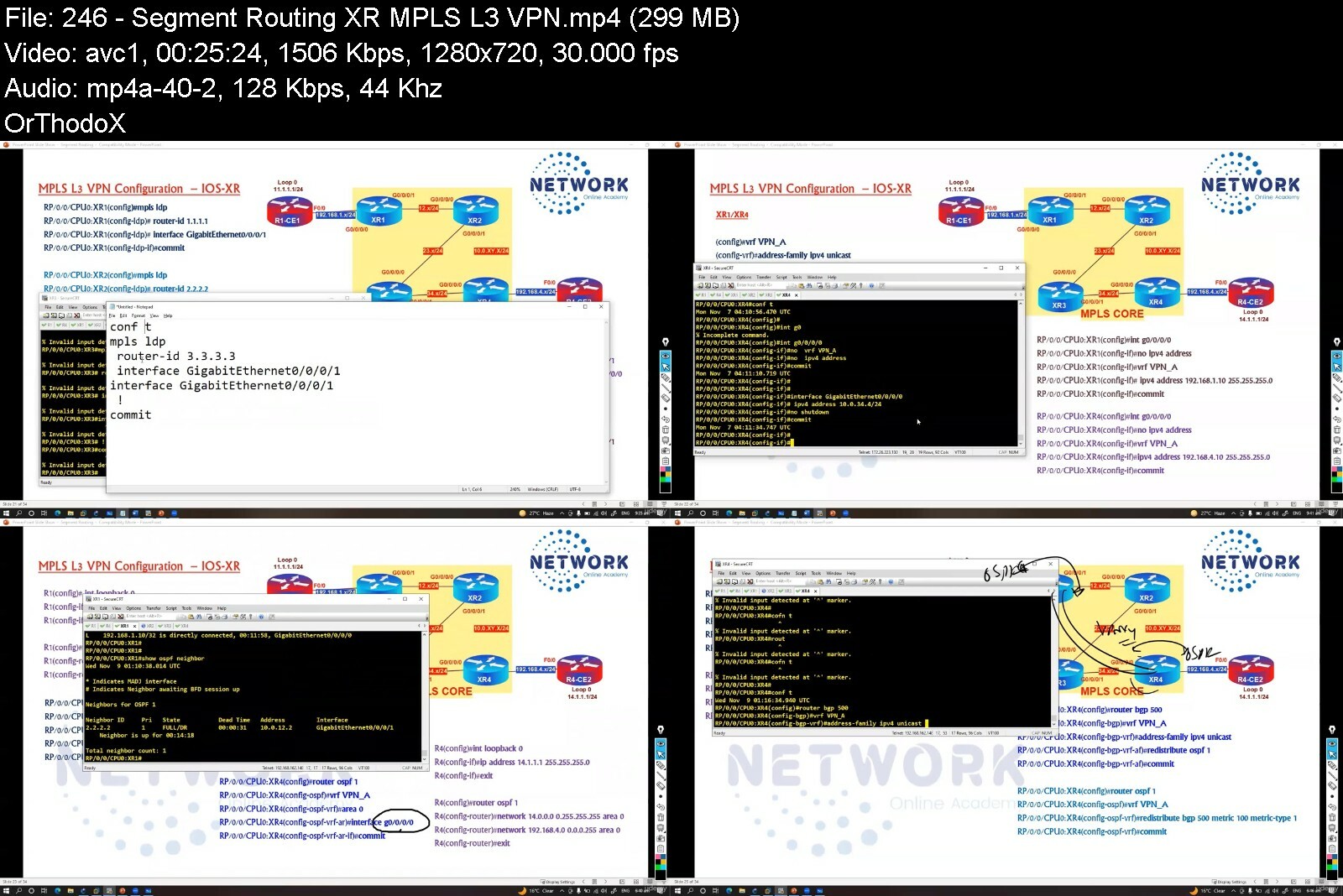
Lecture 246 Segment Routing - XR -MPLS L3 VPN

Lecture 247 OSPF Segment Routing - XR

Lecture 248 ISIS - Segment Routing - XR

Network administrators,Network engineers,Network designers,network professionals who need to learn the techniques to implement, configure, monitor, and support Service Provider VPN solutions based on MPLS backbones.




ccnpserviceprovider30m7e74.jpg


500479854f82rffcz.jpg


Talend ETL Data warehousing SQL Beginner to Experts
Published 12/2022
Created by Mahesh P
MP4 | Video: h264, 1280x720 | Audio: AAC, 44.1 KHz, 2 Ch
Genre: eLearning | Language: English | Duration: 55 Lectures ( 48h 0m ) | Size: 25.4 GB


Talend ETL Data warehousing SQL Beginner to Experts


What you'll learn
Talend , Talend Data Integration, Talend Bigdata ,Talend Admin ,TAC,Data Base ,Data Warehouse,ETL,Extract Transform Load,ELT,Extract Load Transform

Requirements
Basic SQL Knowledge

Description
Talend ETL Data warehousing SQL Beginner to Experts

Topics Datawarehousing Concepts ETL Concepts tsortrow,tunite,tuniqerow,tbufferinput,tbuffer,output,thashinput,thashoutput,tfilelist,tsleep,tloop,file,input,output,components,database,input,output,components,tsendmail,treplicate,tfiltercolumns,tfilterrows,treplace,tconverttype,tdie,tcontextload,trowgenerator,trunjob,prejob,postjob,tsamplerows,tnormalize,tdenormalize,tmap,taggrigator,tjoin,tsystem,tjava,tjavarow,tjavaflex,tschemacompliancecheck,tlogrow,tlogcatcher,t,statcatcher,tfilecopy,tfilearchive,tfileProperties,tfileunarchive,tfiletouch,tfiledelete,tfileexist,tftpfilelist,tftpput,tftpget,tftpdelete,tftpfileexist,tftpConnection,tftpRename,tftpfileproperties,toracleInput,toraclerow,toracleoutpt,toracleconnection,toracleoutputBulkexec,toracleBulkexec,toracleClose,toracleRollback,toraclecommit,tmssqlInput,tmssqlrow,tmssqloutpt,tmssqlconnection,tmssqlBulk,tmssqlBulkexec,tmssqlClose,tmssqlRollback,tmssqlcommit,tDb2Input,tDb2row,tDb2outpt,tDb2connection,tDb2Bulk,tDb2Bulkexec,tDb2Close,tDb2Rollback,tDb2commit,OnsubJobOK,OnSubjobError,OnComponentOk,OnComponentError,runif,tExcelInput,tExceloutput,tfileInputjson,tfileoutputjson,tfileInputXml,tfileoutputXml,tfileinputPositional,tfileOutputPositional,SCD1,SCD2,SCD3,stage loading Dimension Loading fact Loading project Explanation ,flow to iterate ,iterate to flow,tsortrow,tunite,tuniqerow,tbufferinput,tbuffer,output,thashinput,thashoutput,tfilelist,tsleep,tloop,file,input,output,components,database,input,output,components,tsendmail,treplicate,tfiltercolumns,tfilterrows,treplace,tconverttype,tdie,tcontextload,trowgenerator,trunjob,prejob,postjob,tsamplerows,tnormalize,tdenormalize,tmap,taggrigator,tjoin,tsystem,tjava,tjavarow,tjavaflex,tschemacompliancecheck,tlogrow,tlogcatcher,t,statcatcher,tfilecopy,tfilearchive,tfileProperties,tfileunarchive,tfiletouch,tfiledelete,tfileexist,tftpfilelist,tftpput,tftpget,tftpdelete,tftpfileexist,tftpConnection,tftpRename,tftpfileproperties,toracleInput,toraclerow,toracleoutpt,toracleconnection,toracleoutputBulkexec,toracleBulkexec,toracleClose,toracleRollback,toraclecommit,tmssqlInput,tmssqlrow,tmssqloutpt,tmssqlconnection,tmssqlBulk,tmssqlBulkexec,tmssqlClose,tmssqlRollback,tmssqlcommit,tDb2Input,tDb2row,tDb2outpt,tDb2connection,tDb2Bulk,tDb2Bulkexec,tDb2Close,tDb2Rollback,tDb2commit,OnsubJobOK,OnSubjobError,OnComponentOk,OnComponentError,runif,tExcelInput,tExceloutput,tfileInputjson,tfileoutputjson,tfileInputXml,tfileoutputXml,tfileinputPositional,tfileOutputPositional,SCD1,SCD2,SCD3,stage loading Dimension Loading fact Loading project Explanation ,flow to iterate ,iterate to flow,tsortrow,tunite,tuniqerow,tbufferinput,tbuffer,output,thashinput,thashoutput,tfilelist,tsleep,tloop,file,input,output,components,database,input,output,components,tsendmail,treplicate,tfiltercolumns,tfilterrows,treplace,tconverttype,tdie,tcontextload,trowgenerator,trunjob,prejob,postjob,tsamplerows,tnormalize,tdenormalize,tmap,taggrigator,tjoin,tsystem,tjava,tjavarow,tjavaflex,tschemacompliancecheck,tlogrow,tlogcatcher,t,statcatcher,tfilecopy,tfilearchive,tfileProperties,tfileunarchive,tfiletouch,tfiledelete,tfileexist,tftpfilelist,tftpput,tftpget,tftpdelete,tftpfileexist,tftpConnection,tftpRename,tftpfileproperties,toracleInput,toraclerow,toracleoutpt,toracleconnection,toracleoutputBulkexec,toracleBulkexec,toracleClose,toracleRollback,toraclecommit,tmssqlInput,tmssqlrow,tmssqloutpt,tmssqlconnection,tmssqlBulk,tmssqlBulkexec,tmssqlClose,tmssqlRollback,tmssqlcommit,tDb2Input,tDb2row,tDb2outpt,tDb2connection,tDb2Bulk,tDb2Bulkexec,tDb2Close,tDb2Rollback,tDb2commit,OnsubJobOK,OnSubjobError,OnComponentOk,OnComponentError,runif,tExcelInput,tExceloutput,tfileInputjson,tfileoutputjson,tfileInputXml,tfileoutputXml,tfileinputPositional,tfileOutputPositional,SCD1,SCD2,SCD3,stage loading Dimension Loading fact Loading project Explanation ,flow to iterate ,iterate to flow

Who this course is for
Freshers ,experienced and ETL developers


talendetldatawarehousy0df2.jpg


hilwhdj2d0snvc6bdqqutmqi3y.jpg


Go - Der Kurs Zum Buch
Zuletzt aktualisiert am 6/2021
MP4 | Video: h264, 1280x720 | Audio: AAC, 44.1 KHz
Language: Deutsch | Size: 10.01 GB | Duration: 17h 45m

Eine umfangreiche Einf hrung in Golang. Mit vielen spannenden Projekten f r einen schnellen Einstieg


What you'll learn
Einen schnellen berblick ber Go
Go Syntax
kleine spannende Projekte
Nebenl ufigkeit
Concurrency
Daten per HTTP laden
Webserver in Go erstellen

Requirements
Praktische Erfahrung in einer Programmiersprache

Description
Go (auch oft als Golang bezeichnet) ist eine relativ neue Programmiersprache, die f r moderne Anforderungen ausgelegt ist. Urspr nglich bei Google konzipiert, ist Golang perfekt geeignet, um leistungsf hige Programme zu erstellen. Die Sprache ist leicht zu erlenen, da sie viele bereits bewehrte Konzepte umsetzt und somit nicht das Rad neu erfindet. Die Standardbibliothek ist sehr m chtig und eignet sich sehr gut f r Microservices oder Backend-Anwendungen. Nicht umsonst wird Go auch als die Sprache der Cloud bezeichnet. Dieser Kurs ist eine perfekte Erg nzung zum Buch "Go - Das Praxisbuch" aus dem dpunkt-Verlag. Er beinhaltet alle Inhalte des Buches und geht auf weitere aktuelle Entwicklungen der Programmiersprache Go ein.Der Kurs richtet sich an Entwickler, die bereits in anderen Sprachen programmiert haben. Deshalb wird die Syntax schnell vorgestellt. Hier halten wir uns nicht an bekannten Konzepten bzw. Grundlagen auf. Somit bekommst Du einen schnellen berblick ber die Sprache. Kleine Projekte zeigen, wie die Sprache praktisch angewendet werden kann. Dabei erfolgt auch ein Einblick in die m chtige Standardbibliothek der Sprache. Der Kurs beinhaltet aktuell wie folgende Lektionen:Vorstellung der SyntaxEs werden einmal alle Elemente der Sprache kurz vorgestelltProjekt: Command Line InterfaceIm ersten Projekt wird ein Tool geschrieben, das Dateien laden kann und deren Inhalt an den Standardoutput bergibt. Anschlie end wird ein zweites Tool erstellt, dass Daten aus dem Standardinput verwendet, um diese als md5-Hash auszugeben.Projekt: Ein einfacher WebloaderDieses Projekt vertieft erneut die Verwendung des io.Reader und io.Writers und gibt weitere Einblicke in HTTP-Request, Umgang mit Files und geschickter Verwendung des Error-Typs.Eigene Pakete und ModuleEine Vorstellung, wie Module in Go abgebildet werden. Seit Version 1.11 werden Abh ngigkeiten ber Module verwaltet. In diesem Kapitel behandeln wir die wichtigsten Befehle und Grundlagen zu den Modulen.Projekt: Code generierenMit go generate ist es m glich Befehle vor dem Kompilieren ber das Go-Tool ausf hren zu lassen. Diese werden als Kommentar im Code angelegt. Dieses Projekt zeigt, wie go generate praktisch eingesetzt wird. Zus tzlich zeigt es, wie wir mit Go auch ganz schnell und einfach Code generieren k nnen.Concurrency-GrundlagenEines der wichtigsten Features von Go ist die nebenl ufige Programmierung. In diesem Kapitel wird der erste Grundstock f r dieses Konzept gelegt. Hier erfolgt eine Einf hrung in Goroutinten, Channels, Race Conditions und vieles mehr.Concurrency-PatternsAufbauend auf den Grundlagen werden immer wieder kehrende Elemente der nebenl ufigen Programmierung vorgestellt. Es wird gezeigt, wie unterschiedliche Problemstellungen nebenl ufig in Go gel st werden k nnen.Projekt: Go ConcurrencyDieses Projekt zeigt, wie wir praktisch die gelernten Concurrency Grundlagen und Pattern anwenden k nnen. Daf r erstellen wir ein CLI Tool, das Befehle nebenl ufig ausf hrt.Testen und BenchmarksGo besitzt schon seit Anfang eine integrierte Testumgebung. In diesem Kapitel wird dir gezeigt, wie Du Unit-Tests und Benchmarks in Go erstellst.Projekt: Ein Image ResizerIn diesem kleinen Projekt schreiben wir ein Tool, dass alle Bilder in einem Verzeichnis verkleinert. Dabei schreiben wir kleine Tests, verwenden ein externes Paket und bauen uns einen eigenen Fehlertyp. Am Ende bauen wir das sequentielle Programm in ein nebenl ufiges Programm um.InterfacesWie werden Interfaces intern abgebildet und was ist in Go anders gel st als in anderen Sprachen. Wie erzeugen wir auf idiomatische Weise kleine leistungsf hige Interfaces.Projekt: ReflectionIn diesem Projekt erstellen wir ein Paket, dass zur Laufzeit Strukturen auswertet und die Inhalte der Felder kopiert. Daf r verwenden wir das reflect-Paket. Neben den ersten Grundlagen zu Reflection in Go zeigt dieses Projekt einen Anwendungsfall f r dieses Thema.FehlerbehandlungEine kurze Darstellung, wie Fehler in Go abgebildet werden und welche Besonderheiten sich daraus ergeben.Der Kurs wird jedoch laufend weiter entwickelt und wird in Zukunft viele weitere Themen abdecken.Bald erg nzt werden noch Kapitel zum:Go ToolingWebserver

Who this course is for
Softwareentwickler


goderkurszumbuchq8djn.jpg


41gsxtfha1qrrlvslv3l2v7ffk.jpg


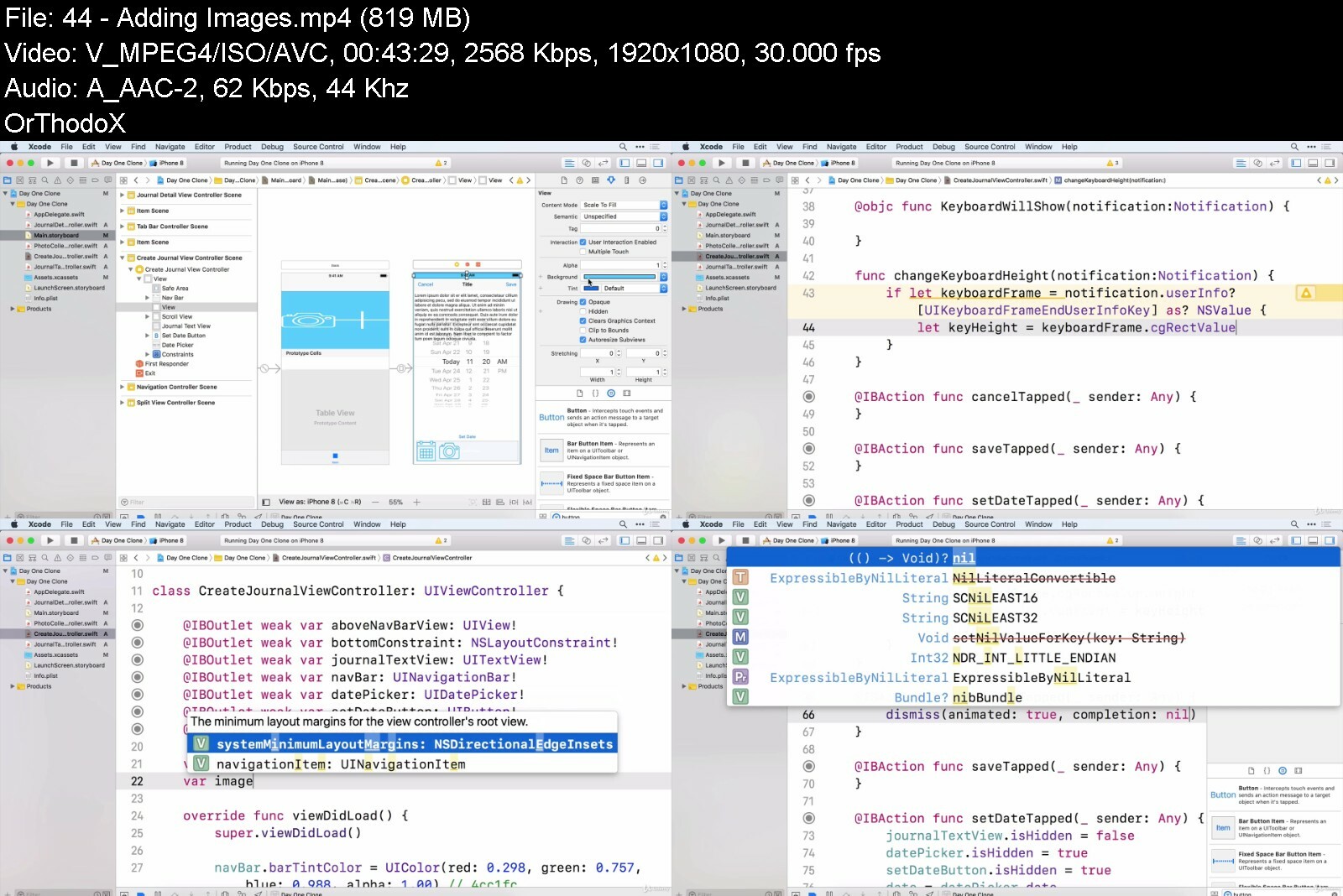
Intermediate Ios - Complex And Advanced Iphone Apps
Last updated 11/2018
MP4 | Video: h264, 1920x1080 | Audio: AAC, 44.1 KHz
Language: English | Size: 11.33 GB | Duration: 12h 37m

Use Xcode and Swift 4 to take your app development skills to the next level


What you'll learn
Security: TouchID and FaceID
Machine Learning with CoreML
Create Advanced Augmented Reality Apps with ARKit
Realm - A CoreData Alternative
Make Your Apps Come to Life with Animations
iPhone X Layout and Design
Create Apps Without Storyboards
Get a Job! Full-Length Mock Interview

Requirements
Basic iOS programming skills
Experience with Xcode
A Mac computer

Description
Have you taken a beginner iOS course on Udemy? Do you have some experience with iOS programming, but are looking for MORE? Are you a junior developer looking to enhance your abilities? Are you ready to take your programming skills to the next level? Do you want to be able to take on more challenging projects? Do you want to learn advanced iOS development techniques such as CoreML, ARKit, Realm, animations, TouchID and Face ID security, Alamofire, etc.? Do you want to dive deeper, get paid to make apps, and launch your career in iOS development?
If you answered yes to any of these questions, then this is the course for you!
For those who are serious about iOS development, there comes a point when you're ready to move on, move forward, and escalate your capabilities. You want to build amazing apps, apps that can handle greater complexity, and apps that truly impress. You want to see how these skills can impact your career and increase your earning potential. You want to stand out among other iOS developers. You want to take your skills to the next level.
Welcome to my intermediate iOS development course! This is the ONLY intermediate iOS 11 course on Udemy and the ONLY course that will walk you through the latest, cutting-edge iOS development techniques, while also preparing you for your next job as an iOS developer. My top-rated beginner iOS courses are great to get you started, but this course goes deeper into iOS development than any other course, youtube video, or tutorial that you may have seen.
In this course we will create beautiful and complex apps while focusing on design and user experience. Together we will make five complete, intermediate to advanced-level apps. Check the promo video to see how awesome they look!
1. Journal App - This app is a Day One clone, if you've never used Day One before, I highly recommend that you try it! In my opinion, it's one of the most well-designed apps on the app store! As we create this app we will learn
Realm (which is an alternative to Core Data)How to create animations with SpringMaking our app look great on an iPad with UISplitscreenStack ViewsTab Bar ControllersDesign techniques to help make your apps look more polished
2. News Fun App with CoreML - A fun way to read the top stories of the day. As we create this app we will learn
CoreML - Machine Learning to assign topics to our articlesAlamofire - A simpler way to work with APIsDownload images asynchronously Load website in your app using WebKitViews
3. Furniture Fun App with ARKit - For this app, I brought in my friend Mohammed Azam, who is a serious pro when it comes to ARKit. He will teach us how to use augmented reality to try out furniture in our living room before we buy it. Enjoy the deep dive into ARKit!
4. Sketchpad App - Together we will create a drawing app that will let our users doodle their hearts out and share their art with the world! As we create this app we will learn how to:
Build a drawing feature into your appAdjust your app's layout to work on iPhone XIntegrate third-party code into your appUse collection viewsShare content with the iOS Share Sheet
5. Cryptocurrency Price Tracker App - I'm a huge nerd when it comes to cryptocurrency, so this app was really fun for me to make! This app will list a ton of cryptocurrencies and their current price. You can also keep track of how much you own and tap on each coin to see a chart that shows its price over the last 30 days. Our app will also generate a pdf showing your current crypto portfolio. As we create this app we will learn how to:
Chart data in iOSBuild an app without storyboardsProtect your app with TouchID or FaceIDGenerate PDFs and print them
As you can tell, this is going to be a fun course! And on top of all of that, I also have a section where I talk about how to make money as an iOS developer, and then I walk you through a real-life iOS developer mock interview. Interviews are tough, but I know what it's like to be in your shoes, so I'll give you a bunch of interview tips!
I'm a self-taught programmer so I've spent tons of time experimenting, struggling, failing, and succeeding to learn new things. My own experience as an online student has made me want to change the way that people learn to code, which is why I created this course!
I ve built iOS apps. I ve had iOS internships. I ve done iOS freelance work. I've worked as an iOS developer. I ve coached and taught in meetups and live bootcamps that charge each student THOU$AND$. I've taught over 75,000 people on Udemy how to get started, but now I'm ready to teach YOU how to take the NEXT STEP in advancing your skills, launching your career, and boosting your confidence as a developer.
If you're excited for this course but you're a beginner to iOS development, make sure to check out my "How to Make a Freaking iPhone App" course first, and then you'll be all set to start with the intermediate stuff :)
Alright, let's get started! I think you're REALLY going to love this course!

Overview
Section 1: Introduction

Lecture 1 Welcome

Section 2: Crypto Price Tracker

Lecture 2 Intro

Lecture 3 Source Code

Lecture 4 No Storyboard

Lecture 5 Listing Coins and Images

Lecture 6 API and Prices

Lecture 7 Charting

Lecture 8 Coin Details

Lecture 9 Net Worth

Lecture 10 TouchID and FaceID

Lecture 11 PDF Report

Lecture 12 Saving Data

Lecture 13 Outro

Section 3: News Fun App - CoreML

Lecture 14 Intro

Lecture 15 Source Code

Lecture 16 Design

Lecture 17 Alamofire

Lecture 18 JSON Parsing

Lecture 19 CoreML

Lecture 20 Displaying Articles

Lecture 21 WebViews

Lecture 22 Outro

Section 4: Building Augmented Reality Apps Using ARKit

Lecture 23 Prerequisites

Lecture 24 What we will be building

Lecture 25 Setting Up Xcode Project and Downloading Chair Model

Lecture 26 Plane Detection and Displaying HUD

Lecture 27 Registering Gesture Recognizers

Lecture 28 Placing Chair Model on Detected Plane

Lecture 29 Scaling Chair Model

Lecture 30 Rotating Chair Model

Lecture 31 Fixing the Center for Rotating Chair Model

Lecture 32 Moving the Chair Model

Section 5: Making Money with iOS and Mock Interview

Lecture 33 Intro

Lecture 34 Ways to Make Money with iOS

Lecture 35 Mock Interview

Lecture 36 Answers

Lecture 37 Outro

Section 6: Journaling App - Day One Clone

Lecture 38 Intro

Lecture 39 Source Code

Lecture 40 Sketch

Lecture 41 Storyboard

Lecture 42 Add Buttons

Lecture 43 Create Journal Design

Lecture 44 Adding Images

Lecture 45 Realm Intro

Lecture 46 Realm in Real Life

Lecture 47 Listing Journal Entries

Lecture 48 Listing Details

Lecture 49 Photo Collectionview

Lecture 50 Journal Details

Lecture 51 Tab Bar and Animation

Lecture 52 Outro

Section 7: Sketchpad App

Lecture 53 Intro

Lecture 54 Source Code

Lecture 55 Finished Product

Lecture 56 iPhone X

Lecture 57 Drawing

Lecture 58 Drawing Tools

Lecture 59 Saving

Lecture 60 CollectionViews

Lecture 61 Sharing

Lecture 62 Outro

Lecture 63 Thanks!

Beginner to intermediate-level students looking to take their iOS development abilities to the next level,Those who are looking for more marketable app development skills in order to launch or improve their career in iOS development,Anyone who wants to learn CoreML, ARKit, Realm, Animations, and other advanced skills,Those who have taken beginning iOS courses and are looking for the next step


intermediateioscomplelvewp.jpg


5019386adcb48bip2.jpg


Cisco SDWAN In-depth + Lab Demonstration | NetworkJourney
Published 12/2022
Created by Network Journey
MP4 | Video: h264, 1280x720 | Audio: AAC, 44.1 KHz, 2 Ch
Genre: eLearning | Language: English | Duration: 65 Lectures ( 28h 29m ) | Size: 14.7 GB


Cisco SD-WAN now with indepth Lab Demonstration


What you'll learn
Cisco SDWAN Viptela
OMP, VPN, Controllers
vManage, vSmart, vBond Controllers
Onboarding, Certificates, Templates, Troubleshooting

Requirements
Basic CCNA
CCNA Routing & Switching
CCNP Enterprise

Description
The Implementing Cisco SD-WAN Solutions (SDWAN300) v1.0 course gives you deep-dive training about how to design, deploy, configure, and manage your Cisco Software-Defined WAN (SD-WAN) solution in a large-scale live network, including how to migrate from legacy WAN to SD-WAN. You will learn best practices for configuring routing protocols in the data center and the branch, as well as how to implement advanced control, data, and application-aware policies. The course also covers SD-WAN deployment and migration options, placement of controllers, how to deploy and replace edge devices, and how to configure Direct Internet Access (DIA) breakout. Course OverviewModule 1: Cisco SD-WAN Introduction High-level Cisco SD-WAN Deployment models Application level SD-WAN solution Cisco SDWAN high availability solution Cisco SD-WAN Scalability Cisco SD-WAN Solution BenefitsModule 2: Cisco SD-WAN Orchestration Introduction vManage NMS vSmart Controller vBond Orchestrator Controller Resiliency ArchitectureModule 3: Site Architecture and Deployment Models Site Capabilities vEdge Router vEdge form factorsModule 4: Zero Touch Provisioning Overview User Input Required for the ZTP Automatic Authentication Process Authentication between the vBond Orchestrator and a vEdge Router Authentication between the vEdge Router and the vManage NMS Authentication between the vSmart Controller and the vEdge RouterModule 5: Cisco SD-WAN Solution Overlay Management Protocol (OMP) Cisco SDWAN Circuit Aggregation Capabilities Secure Connectivity in Cisco SD-WAN Performance Tracking Mechanisms Application Discovery Dynamic Path Selection Performance Based Routing Dynamic Cloud AccessModule 6: Cisco SDWAN Security Aspects Role-based Security Control Plane Data Plane Controller Protection vEdge Protection Segmentation Application Blocking Zone-based FirewallModule 7: Application Monitoring vManage vAnalytics Ecosystem Partner SolutionsModule 8: Multi-Tenancy Multi-Tenant Mode Creating Tenants Adding Controller Adding Vedges RBACAfter taking this course, you should be able to:Describe the Cisco SD-WAN overlay network and how modes of operation differ in legacy WAN versus SD-WANDescribe options for SD-WAN cloud and on-premises deployments, as well as how to deploy virtual vEdge and physical cEdge devices with Zero Touch Provisioning (ZTP) and device templatesDescribe best practices in WAN routing protocols, as well as how to configure and implement transport-side connectivity, service-side routing, interoperability, and redundancy and high availabilityDescribe dynamic routing protocols and best practices in an SD-WAN environment, transport-side connectivity, service-side connectivity, and how redundancy and high availability are achieved in SD-WAN environmentsExplain how to migrate from legacy WAN to Cisco SD-WAN, including typical scenarios for data center and branchExplain how to perform SD-WAN Day 2 operations, such as monitoring, reporting, logging, and upgrading

Who this course is for
Basic CCNA
CCNA Routing & Switching
CCNP Enterprise
Network Engineers
Network L1, L2, L3


ciscosdwanindepthlabdxcinb.jpg


49113183dd5zlie5.jpg


Exploit Development Tutorial for Hackers and Pentesters
Published 10/2022
MP4 | Video: h264, 1280x720 | Audio: AAC, 44.1 KHz, 2 Ch
Genre: eLearning | Language: English | Duration: 59 lectures (17h 24m) | Size: 10.6 GB


Learn indepth exploit development techniques in linux and windows binary files and become a zero-day exploit developer


What you'll learn
You will learn Exploit Development basic building blocks for Linux and Windows so that you can understand most of the topics very easily in exploit development
This course will start your journey from very basics and go to indepths of Exploit Development processes in Linux and Windows platform exploit developments.
Exploit Development skills in Linux and Windows plays a very important role in Hacking Career, If you know Exploit Development skills then its a plus point.
Concept of exploiting software systems are very crucial to understand and this course will teach you all the important concepts of exploit development processes

Description
In this course of Exploit Development Tutorial for Beginners to Advanced Hacks you will learn the skills required to develop and create exploits from linux and windows programs. First this course of Exploit Development Tutorial for Beginners to Advanced Hacks will focus on the basics then it will dive into indepth concepts of vulnerabilites like buffer overflow, stack buffer overflow, heap overflow, format string buffer overflow, Data Execution Prevention, ASLR, SEH exploits, Egg Hunting, Heap sprays, ROP etc. You will learn how to use debuggers like IDA ,gdb, dbgx64, immunity debugger etc in order to develop your own exploit. You will learn how to create you exploits by performing fuzzing, shellcoding, building the payload then triggering the payload after the exploit runs. In this course of Exploit Development Tutorial for Beginners is for begginers as well as advanced hackers who wants to learn in depth skills of exploit development process. Exploit Development process is time consuming and needs basics to be cleared before like you should know how a binary works inside linux and windows. This course of Exploit Development will teach you how to master in developing the zero day exploits in modern binary applications. You will learn most advanced topics of ethical hacking in this course.

Who this course is for
Ethical Hackers who want to learn the most important skills in hacking which is Exploit Development skills
Penetration testers who want to learn Exploit Development skills in Linux and Windows OS
Malware Analysts who wants to improve their skills in Exploit Development process in Linux and Windows OS
Programmers who want to know how software protections can be bypassed with Exploit Development process in Linux and Windows.
Developers who want to improve their secure programming skills by knowing exploit development process in Linux and Windows
Computer Science students who wanted to explore new concepts in software security by learning how to create exploits for vulnerable softwares

Requirements
Linux command line basics
Assembly Language basics
C programming
Eager to learn new things


exploitdevelopmenttut69fvk.jpg


4629678af735q1i2z.jpg


Offensive C#
Last updated 11/2022
Created by Naga Sai Nikhil
MP4 | Video: h264, 1280x720 | Audio: AAC, 44.1 KHz, 2 Ch
Genre: eLearning | Language: English + srt | Duration: 63 Lectures ( 19h 36m ) | Size: 11 GB


Build your own hacking tools with C#


What you'll learn
Learn C# Basics
Learn how to build tools with C#
Learn how to enumerate Active Directory using C#
Automate tasks using C#
Learn some Powershell tools
Learn WinAPI with C#
Enumerate LSASS using WinAPI
Learn PE File Format
Writing Reflective PE Loader
Writing Reflective DLL Loader

Requirements
Basic knowledge of Active Directory is optional

Description
This course teaches you all the way from fundamentals of C# to invoke WinAPI with C#. C# is Microsoft developed language which can be used for multiple purposes. C# gives almost all access to windows components including WinAPI via PInvoke. This course also teaches how to build your own C2 Server with Python Flask as backend and C2 agent. Features include Client connection manager, File explorer, Registry Explorer, etc. More features of C2 will be added from time to time. We will see how to code a traditional reverse shell with C2 which by default bypasses Constrained Language Mode. Next we will see some privilege escalation techniques. Next we will enumerate Active Directory with C# and build our own automation tools. We will write tools that automate Kerberoasting, DCSync capable users, Delegation Attacks and much more. We will write a simple loader that loads .NET executables in memory and executes them. Next we will see how to use WinAPI functions in C# and write tools for Shellcode Injection, DLL Injection, Debugging checks, Backdooring of PE Files and much more. We will also see the structure of PE File format. No programming or Activedirectory experience required. This course explains all the theory necessary to get started into building your own tools.

Who this course is for
Penetration Testers
Red Teamers
System Administrators
Windows Enthusiasists
Security Researchers


offensivec4pf1y.jpg


aniyifuzvz0okupsm7xfixpige.jpg


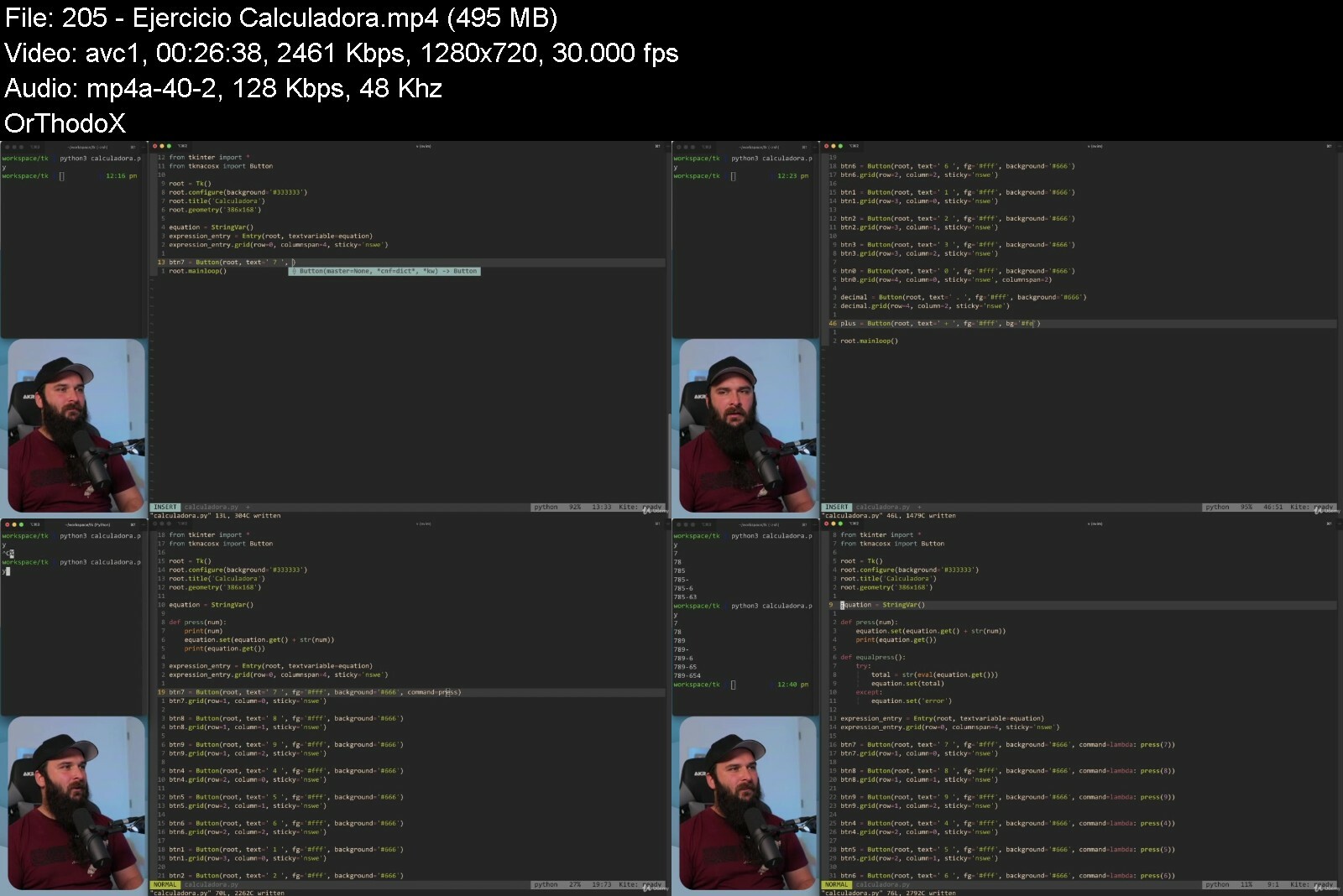
Python Sin Fronteras: Html, Css, Flask Y Mysql
ltima actualizaci n: 8/2021
MP4 | Video: h264, 1280x720 | Audio: AAC, 48 KHz
Language: Espa ol | Size: 19.95 GB | Duration: 24h 42m

Convi rtete en un experto en Python con este curso que te ense a a programar desde cero


What you'll learn
Programar
Lenguaje de programaci n Python
Framework Flask
Aplicaciones web con Python y Flask
Construir APIs rest con Flask
Introducci n a bases de datos relacionales
Modelar bases de datos relacionales
HTML5, el lenguaje de marcado para la web
CSS3, el lenguaje de estilos que le dar color a tus aplicaciones
CSS Grid, la grilla de CSS
CSS Flexbox
TKInter
Proyectos para practicar

Requirements
Tener un computador con internet

Description
Bienvenidos a este curso de Python! Ac inclu mos todas las materias que son de primera necesidad para los desarrolladores de software. Con estas tecnolog as podr s construir aplicaciones en el frontend y tambi n en el backend.Ac aprender s a programar desde cero con python, pensando que no tienes ning n conocimiento sobre programaci n desde antes.ProgramaHTMLCSSPythonVariablesComentariosOperadoresControl de flujoBuclesFuncionesTipos de datosMultiples ejercicios y mucho m s!MySQLFlaskRESTFUL APIY m s!Y muchos proyectos y ejercicios que iremos construyendo a lo largo del curso para ir practicando lo aprendido. Este curso cuenta con muchos ejercicios y proyectos para que puedas practicar todo lo que vas aprendiendo en este curso. Adem s de que finaliza con un proyecto de portafolio web, donde podr s subir los proyectos que hayas realizado en este curso para as mostrarlo a tu futuro empleador o cliente.Conocimientos previos?Para tomar este curso no necesitas ning n conocimiento previo, basta con que sepas prender el computador e instalar programas que descargues de internet ya que todos los conocimientos b sicos los iremos aprendiendo y practicando a lo largo del curso.Este curso tiene tecnolog as modernas que son utilizadas por todos los desarrolladores web del mundo en el d a a d a. Aprovecha esta oportunidad para que podamos encaminarte de una manera eficiente a convertirte en un desarrollador web.

Who this course is for
Interesados en aprender a programar,Desarrolladores que quieran aprender a programar en Python


pythonsinfronterashtmvgint.jpg


2hzn5yumz9o9n1ibk0gwa7wetl.jpg


Ccnp Advanced Enterprise 350-401 Encor Part1/2
Published 11/2022
MP4 | Video: h264, 1280x720 | Audio: AAC, 44.1 KHz
Language: English | Size: 17.08 GB | Duration: 26h 44m

Learn CCNP Advanced Enterprise ENCORE with Step by Step Lab Workbook


What you'll learn
Anyone who wants to prepare for the CCNP Enterprise certification exams.
Anyone who wants to prepare for the CCNP exam
Routing, Switching , Automation, Security and Wireless
Get hands on experience for Cisco routers and switches
Configure, troubleshoot, and manage enterprise wired and wireless networks
Implement security principles within an enterprise network
Configure and verify advanced Cisco Switching technologies
Configure and verify advanced Cisco Routing technologies
Understand EtherChannel and It's Modes
Understand Static, Default, Floating and Dynamic Routing

Requirements
CCNA Routing & Switching Knowledge CCNA 200-125 or CCNA 200-301
General understanding of network fundamentals
General understanding of how to manage network devices.
Basic knowledge of how to implement LANs, network automation.
Basic Knowledge of GNS3, EVE NG or Packet Tracer Simulations

Description
The ENCOR - Implementing and Operating Cisco Enterprise Network Core Technologies v1.0 course gives you the knowledge and skills needed to configure, troubleshoot, and manage enterprise wired and wireless networks. You ll also learn to implement security principles within an enterprise network and how to overlay network design by using solutions such as SD-Access and SD-WAN. CCNP Enterprise training includes advanced routing, switching , troubleshooting , security, SDN etc. Educational training videos are supported with step-by-step configuration and troubleshooting examples so you can easily understand topics , get hands on experience and you can be a network professional. You will get important information about advanced routing, switching , tshoot , security , SDN etc. If you want to prepare for the CCNP Enterprise certification exams, this course will be a great step for you. The core exam is also the qualifying exam for CCIE Enterprise certification. This course gives you the knowledge and skills needed to configure, troubleshoot, and manage enterprise wired and wireless networks. You ll also learn to implement security principles within an enterprise network and how to overlay network design by using solutions such as SD-Access and SD-WAN.After taking this course, you should be able to:Illustrate the hierarchical network design model and architecture using the access, distribution, and core layersCompare and contrast the various hardware and software switching mechanisms and operation, while defining the Ternary Content Addressable Memory (TCAM) and Content Addressable Memory (CAM), along with process switching, fast switching, and Cisco Express Forwarding conceptsTroubleshoot Layer 2 connectivity using VLANs and trunkingImplementation of redundant switched networks using Spanning Tree ProtocolTroubleshooting link aggregation using EtherchannelDescribe the features, metrics, and path selection concepts of Enhanced Interior Gateway Routing Protocol (EIGRP)Implementation and optimization of Open Shortest Path First (OSPF)v2 and OSPFv3, including adjacencies, packet types, and areas, summarization, and route filtering for IPv4 and IPv6Implementing External Border Gateway Protocol (EBGP) interdomain routing, path selection, and single and dual-homed networkingImplementing network redundancy using protocols including Hot Standby Routing Protocol (HSRP) and Virtual Router Redundancy Protocol (VRRP)Implementing internet connectivity within Enterprise using static and dynamic Network Address Translation (NAT)Describe the virtualization technology of servers, switches, and the various network devices and componentsImplementing overlay technologies such as Virtual Routing and Forwarding (VRF), Generic Routing Encapsulation (GRE), VPN, and Location Identifier Separation Protocol (LISP)Describe the components and concepts of wireless networking including Radio Frequency (RF) and antenna characteristics, and define the specific wireless standardsDescribe the various wireless deployment models available, include autonomous Access Point (AP) deployments and cloud-based designs within the centralized Cisco Wireless LAN Controller (WLC) architectureDescribe wireless roaming and location servicesDescribe how APs communicate with WLCs to obtain software, configurations, and centralized managementConfigure and verify Extensible Authentication Protocol (EAP), WebAuth, and Pre-shared Key (PSK) wireless client authentication on a WLCTroubleshoot wireless client connectivity issues using various available toolsTroubleshooting Enterprise networks using services such as Network Time Protocol (NTP), Simple Network Management Protocol (SNMP), Cisco Internetwork Operating System (Cisco IOS) IP Service Level Agreements (SLAs), NetFlow, and Cisco IOS Embedded Event ManagerExplain the use of available network analysis and troubleshooting tools, which include show and debug commands, as well as best practices in troubleshootingConfigure secure administrative access for Cisco IOS devices using the Command-Line Interface (CLI) access, Role-Based Access Control (RBAC), Access Control List (ACL), and Secure Shell (SSH), and explore device hardening concepts to secure devices from less secure applications, such as Telnet and HTTPImplement scalable administration using Authentication, Authorization, and Accounting (AAA) and the local database, while exploring the features and benefitsDescribe the enterprise network security architecture, including the purpose and function of VPNs, content security, logging, endpoint security, personal firewalls, and other security featuresExplain the purpose, function, features, and workflow of Cisco DNA Center Assurance for Intent-Based Networking, for network visibility, proactive monitoring, and application experienceDescribe the components and features of the Cisco SD-Access solution, including the nodes, fabric control plane, and data plane, while illustrating the purpose and function of the Virtual Extensible LAN (VXLAN) gatewaysDefine the components and features of Cisco SD-WAN solutions, including the orchestration plane, management plane, control plane, and data planeDescribe the concepts, purpose, and features of multicast protocols, including Internet Group Management Protocol (IGMP) v2/v3, Protocol-Independent Multicast (PIM) dense mode/sparse mode, and rendezvous pointsDescribe the concepts and features of Quality of Service (QoS), and describe the need within the enterprise networkExplain basic Python components and conditionals with script writing and analysisDescribe network programmability protocols such as Network Configuration Protocol (NETCONF) and RESTCONFDescribe APIs in Cisco DNA Center and vManage

Overview

Section 1: Introduction & Lab Setup

Lecture 1 Lab Files and Workbooks

Lecture 2 Introduction to CCNP Enterprise

Lecture 3 Introduction to Different Simulators

Lecture 4 EVE NG Device Images & Links

Lecture 5 Install EVE-NG Community Edition

Lecture 6 Install EVE-NG Client Pack

Lecture 7 Upload Cisco IOS Routers

Lecture 8 Upload Cisco IOL IOU Switches

Lecture 9 Upload vIOS Routers and Switches

Lecture 10 Concept of Cisco Routers

Lecture 11 Basic Configuration of Routers

Section 2: Cisco Switches

Lecture 12 Concept of Cisco Switches

Lecture 13 Switch MAC Address Table

Lecture 14 Process & Fast Switching and CEF

Lecture 15 FIB, Adjacency Table and RIP Table

Lecture 16 Process, Fast Switching & CEF Lab

Lecture 17 First Hop Redundancy Protocol FHRP

Lecture 18 Hot Standby Router Protocol HSRP

Lecture 19 Hot Standby Router Protocol Lab

Lecture 20 Interface Tracking in HSRP

Lecture 21 Virtual Router Redundancy Protocol

Lecture 22 Virtual Router Redundancy Protocol Lab

Lecture 23 HSRP Load Sharing Theory

Lecture 24 HSRP Load Sharing Lab

Lecture 25 Concept of Dot1Q (IEEE 802.1Q)

Lecture 26 Dynamic Trunking Protocol

Lecture 27 Dynamic Trunking Protocol Lab

Lecture 28 VLAN Hopping Attack Lab

Lecture 29 Concept of EtherChannel

Lecture 30 LACP, PAgP and Manual Mode

Lecture 31 Link Aggregation Control Protocol Lab

Lecture 32 Port Aggregation Protocol PAgP Lab

Lecture 33 EtherChannel Static or Manual Lab

Lecture 34 Theory EtherChannel Load-Balancing

Lecture 35 EtherChannel Load-Balancing Lab

Lecture 36 EtherChannel Misconfiguration Guard

Lecture 37 Concept of SPAN

Lecture 38 Local Switched Port Analyzer Lab

Lecture 39 Remote Switched Port Analyzer Lab

Lecture 40 ERSPAN Lab

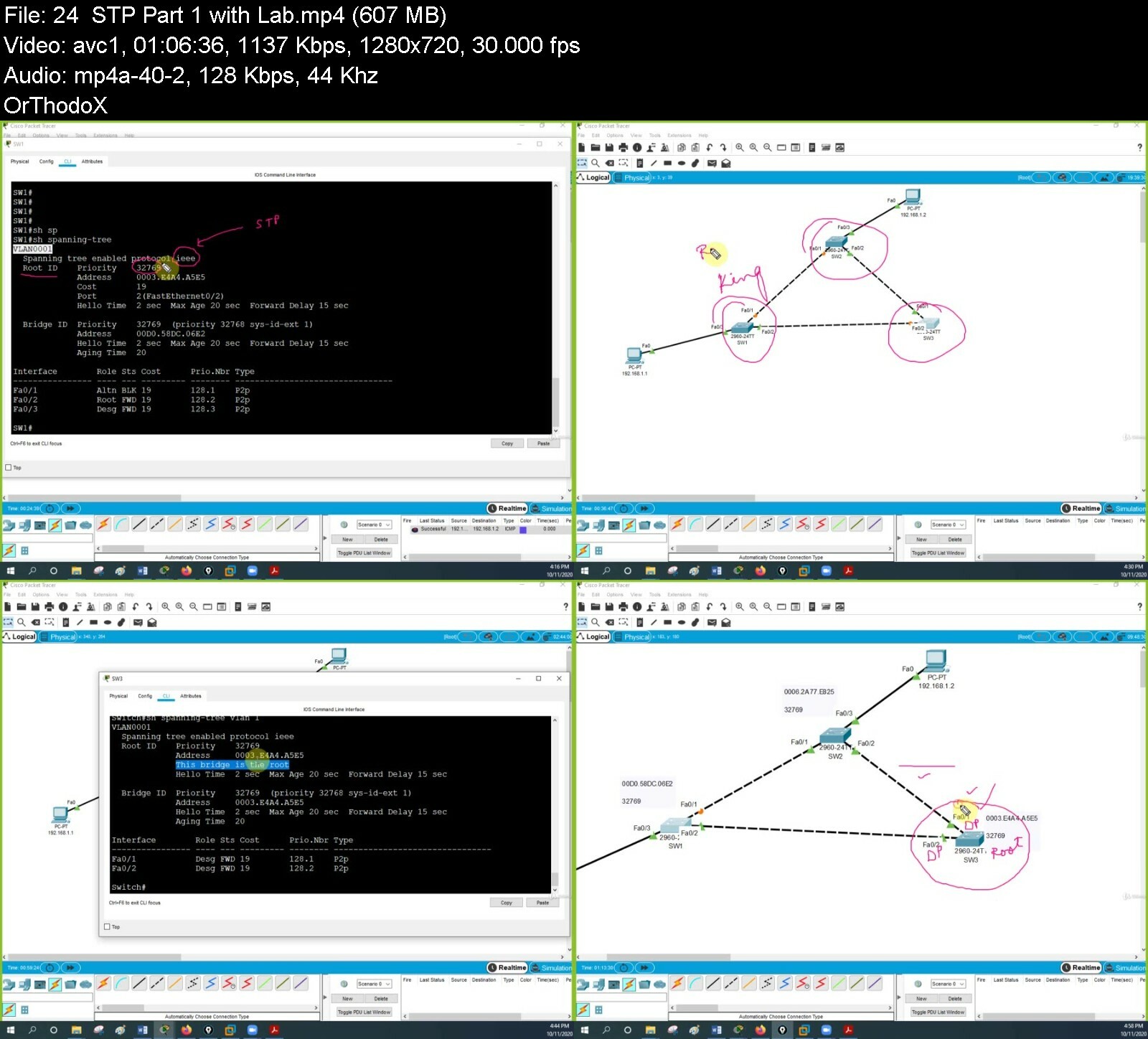
Lecture 41 Concept of Spanning Tree Protocols

Lecture 42 Need of STP in the Network

Lecture 43 STP Basic Terminologies

Lecture 44 Concept of STP Operation

Lecture 45 STP Root Port Selection

Lecture 46 STP Different Port Roles

Lecture 47 STP Different Port States

Lecture 48 Bridge Protocol Data Units

Lecture 49 Spanning Tree Protocols STP Lab

Lecture 50 Spanning Tree Protocols Adv Lab

Lecture 51 STP Different Timers

Lecture 52 Rapid Spanning Tree RSTP

Lecture 53 Rapid Spanning Tree Protocols Lab

Lecture 54 Concept of Multiple Spanning Tree

Lecture 55 Multiple Spanning Tree MSTP Lab

Section 3: Cisco Routing

Lecture 56 Routed & Routing Protocols

Lecture 57 AD Value and Metric

Lecture 58 Static Routing & Static Route Types

Lecture 59 Static and Default Routing Lab

Lecture 60 Static Routing Routes Types Lab

Lecture 61 Floating Static Route

Lecture 62 Floating Static Route Lab

Lecture 63 Concept of ARP and ARP Types

Lecture 64 IP Routing & ARP Packet Flow Lab

Lecture 65 Verify Longest Match

Lecture 66 Dynamic Routing Protocols

Section 4: Dynamic Protocols EIGRP

Lecture 67 Routing Protocols EIGRP

Lecture 68 Routing Protocols EIGRP Lab

Lecture 69 Dynamic Protocols EIGRP Tables

Lecture 70 EIGRP Metric Calculation

Lecture 71 EIGRP Five Packet Types

Lecture 72 EIGRP Path Optimization

Lecture 73 EIGRP Terminologies

Lecture 74 EIGRP Summarization Theory

Lecture 75 EIGRP Summarization Lab

Lecture 76 EIGRP Load Balancing Theory

Lecture 77 EIGRP Load Balancing Lab

Section 5: Dynamic Protocols OSPF

Lecture 78 Dynamic Routing Protocols OSPF

Lecture 79 OSPF Terminologies

Lecture 80 Dynamic Routing Protocols OSPF Lab

Lecture 81 Dynamic Protocols OSPF Tables

Lecture 82 OSPF Neighbor Adjacencies

Lecture 83 OSPF Metric Calculation

Lecture 84 OSPF Packet Header & Types

Lecture 85 OSPF Router ID Selection

Lecture 86 OSPF Different Router Types

Lecture 87 OSPF Different Routes Types

Lecture 88 OSPF DR and BDR Election

Lecture 89 OSPF equal Load Balancing

Lecture 90 OSPF Summarization Theory

Lecture 91 OSPF Summarization LAB

Lecture 92 OSPF Filtering Theory

Lecture 93 OSPF Filtering ACL Lab

Lecture 94 OSPF Passive Interfaces

Lecture 95 OSPF Network Types Theory

Lecture 96 OSPF Network Types Lab

Network administrators, Network support technicians, Help desk technicians,Enterprise network engineers, System engineers, System administrators


ccnpadvancedenterprisjve6x.jpg


46030560875588f4i.jpg


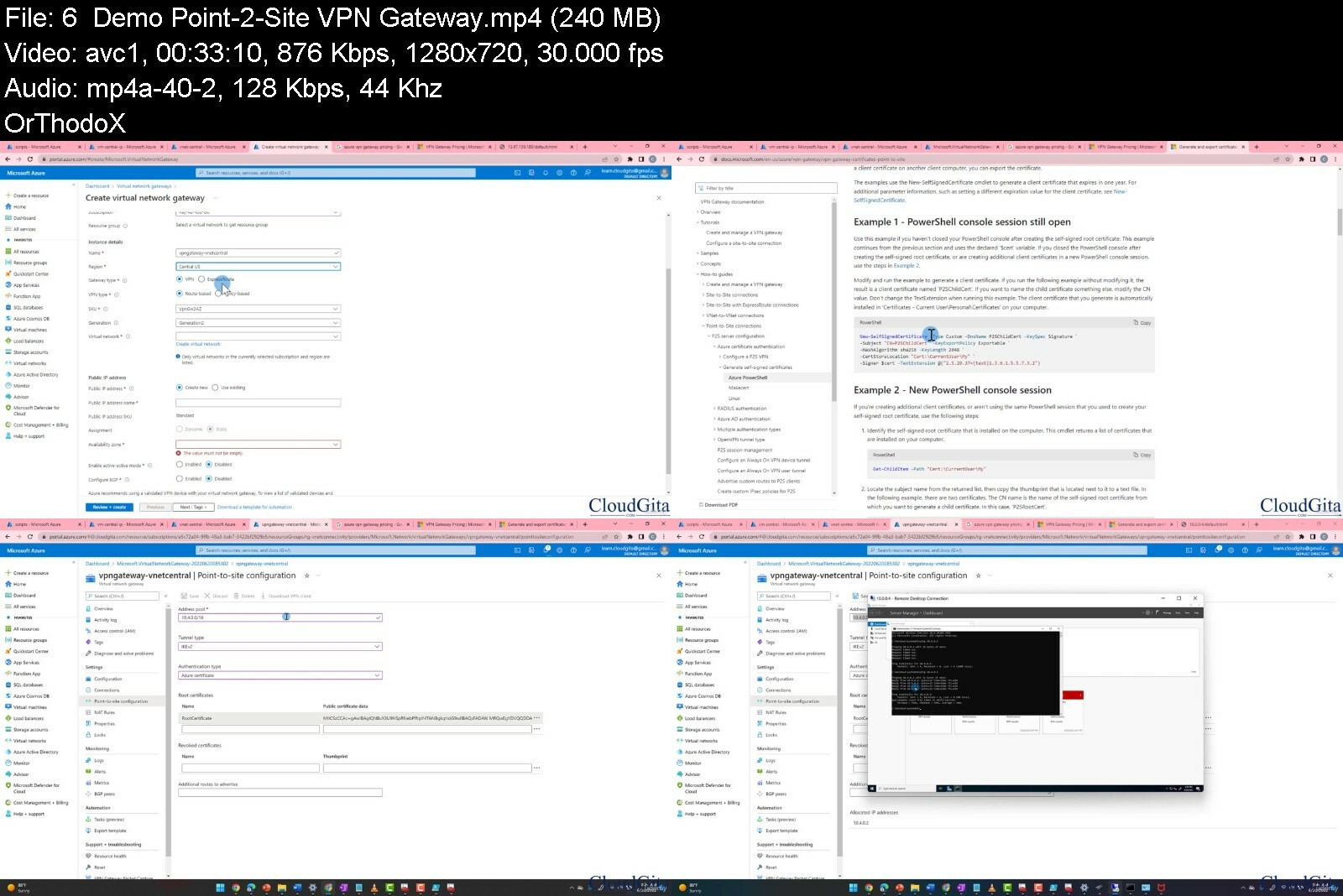
[NEW] AZ-104: Microsoft Azure Administrator - July 2023
Last updated 8/2023
Created by Saurabh Gupta || CloudGita || AZ-900 || AZ-104 || AWS Certified Cloud Practitioner
MP4 | Video: h264, 1280x720 | Audio: AAC, 44.1 KHz, 2 Ch
Genre: eLearning | Language: English + srt | Duration: 342 Lectures ( 34h 11m ) | Size: 15.3 GB


Deep-Dive for AZ-104 Exam: Microsoft Azure Administrator | Demos | 30+ hours of videos || 100% Syllabus || PPTs


What you'll learn
Manage Azure identities and governance
Implement and manage storage
Deploy and manage Azure compute resources
Configure and manage virtual networking
Monitor and back up Azure resources

Requirements
No prerequisites. Everything in this course is covered from basics.
AZ-900 preferred but not a requirement

Description
Why AZ-104 exam?Exam AZ-104: Microsoft Azure Administrator is a certification exam for Azure administrators at the intermediate level. The exam is essential and necessary for Azure admins. This exam verifies your abilities to implement, manage, and monitor Azure cloud identity, computing, storage, virtual networks, and governance. In addition, expertise in provisioning, scaling, monitoring, and modifying resources to meet business needs.After passing the AZ-104 exam, you may achieve the Microsoft Certified: Azure Administrator Associate credential and confirm your Azure administrator abilities with ease.This course Includes:30+ Hours Training Videos for all Exam Objectives (100% Syllabus Covered)400+Downloadable Slides PDF100+ Quiz QuestionsFull lifetime accessCertificate of course completion30-days Money-Back GuaranteeAttractive Features:Very Detailed course, cover from basic to great detailsAlways updated with latest syllabusLots of Demos/Hands On - Almost every concept explained with DemoExplained while keeping beginners in mindMicrosoft Certified Trainer - with 10+years of experience in Microsoft TechnologiesConcepts Covered in this courseThe exam objectives address the following critical competencies for the Azure AZ-104 examination:Manage identities and Azure governanceManage and implement storageManage Azure computing resource deploymentsManage and configure virtual networkingManage and protect Azure resourcesOur AZ-104 course will provide you with all the tools necessary to get practical experience through hands-on laboratories and practice problems designed to reinforce your theoretical understanding.Who should take the Microsoft Azure Administrator Exam (AZ-104)?If you are a cloud administrator or an IT professional with the required Azure expertise and you wish to advance your career in Azure administrator jobs, passing this exam is essential. In addition, if you aspire to become an Azure administrator or wish to concentrate in the Azure administrator certification route, then the abilities acquired by studying for this test are crucial.You can take this test if you are a software administrator, cloud administrator, software engineer, or cloud engineer, or if you work in a comparable position.After completing the AZ-104 exam and achieving the Microsoft Certified: Azure Administrator Associate credential, you will be able to:Capable of implementing, managing, configuring, and monitoring Azure services and virtual networks, as well as demonstrating administrative abilities on Azure.Capable of collaborating with the team on a variety of complex Azure projects with major businesses as Microsoft, Accenture, Mercedes-Benz, Randstad, Wipro, etc.In demand among cloud administrators and future-proof your cloud administration profession.Receive extraordinary opportunities and compensations.

Who this course is for
Anyone who wants to clear AZ-104 certification exam
Anyone who wants to learn Azure Administrator role related technology
Anyone who wants to learn core Azure technologies.


newaz104microsoftazur06den.jpg


35685771d949shd6r.jpg


Cisco CCNA 200-301 Complete Course with Real Labs by Mustafa Bin Amar
Last Updated 08/2022
MP4 | Video: h264, 1280x720 | Audio: AAC, 44.1 KHz, 2 Ch
Genre: eLearning | Language: English | Duration: 144 lectures (56h 35m) | Size: 31.2 GB


Learn Cisco CCNA 200-301 with plain English and with Labs


What you'll learn
Get what you need to pass the up-to-date Cisco CCNA 200-301 exam
Hands-on Cisco CCNA configuration and troubleshooting experience through practice labs
Learn how to configure Cisco Routers and Switches
Explore This course is for anyone who wants to attain the Cisco CCNA 200-301 certificationow routing and switching technologies work in real world

Requirements
Basic understanding of computers (connect to the Internet)
You ll need basic knowledge of how to operate a computer
Absolute beginners to networking are welcome.

Description
In this course you will learn

Learn the basics of networking.

The difference between protocols like IP, TCP, and UDP.

The difference between IPv4 and IPv6.

The difference between routers and switches.

How to configure Cisco Catalyst switches.

How to configure Cisco IOS routers.

How to configure the OSPF routing protocol.

How to protect your routers with access-lists and VPNs.

How network automation impacts traditional network management

And many other topics

Full lab exercises are included so you will get the hands-on practical skills you need to work on real world networks,

It gives you a full understanding of all the concepts and topics you need to earn the most in-demand networking certification today by passing the Cisco CCNA 200-301 exam

This course helps you prepare for the newest CCNA 200-301 exam.

Follow simple step by step instructions to build your own fully featured lab on your laptop.

Gain hands on configuration and troubleshooting experience through comprehensive lab exercises

Learn how networking really works through real world examples throughout the course

Large amount of practical video content with detailed explanations of CCNA topics in GNS3 and Cisco Packet Tracer.

In this course you will learn how to setup GNS3 with VMware also.

This Course help you to get understanding about network. How network is connected.

We attached all notes in this course you can download all pdf file and study.

We attached all lab configuration file with lab topology in this course. You can download and do practices.

Who this course is for
Beginners to networking.
This course is for you if you want to learn New CCNA 200-301
This Course is for you if you are new to networking.
Networking Students who want to learn CISCO Network


ciscoccna200301comple7jcxi.jpg


Zurück
Oben Unten