• Regeln für den Video-Bereich:

    In den Börsenbereich gehören nur Angebote die bereits den Allgemeinen Regeln entsprechen.

    Einteilung

    - Folgende Formate gehören in die angegeben Bereiche:
    - Filme: Encodierte Filme von BluRay, DVD, R5, TV, Screener sowie Telesyncs im Format DivX, XviD und x264.
    - DVD: Filme im Format DVD5, DVD9 und HD2DVD.
    - HD: Encodierte Filme mit der Auflösung 720p oder darüber von BluRay, DVD, R5, TV, Screener sowie Telesyncs im Format x264.
    - 3D: Encodierte Filme von BluRay, die in einem 3D Format vorliegen. Dies gilt auch für Dokus, Animation usw.
    - Serien: Cartoon/Zeichentrick, Anime, Tutorials, Dokumentationen, Konzerte/Musik, Sonstiges sind demnach in die entsprechenden Bereiche einzuordnen, auch wenn sie beispielsweise im High Definition-Format oder als DVD5/DVD9/HD2DVD vorliegen. Ausnahme 3D.
    - Bereich Englisch: Englische Releases gehören immer in diesen Bereich.
    - Bereich Talk: Der Bereich, in dem über die Releases diskutiert werden kann, darf, soll und erwünscht ist.


    Angebot/Beitrag erstellen

    - Ein Beitrag darf erst dann erstellt werden, wenn der Upload bei mindestens einem OCH komplett ist. Platzhalter sind untersagt.
    - Bei einem Scenerelease hat der Threadtitel ausschließlich aus dem originalen, unveränderten Releasenamen zu bestehen. Es dürfen keine Veränderungen wie z.B. Sterne, kleine Buchstaben o.ä. vorgenommen werden. Ausnahme Serienbörse:
    - Bei einem Sammelthread für eine Staffel entfällt aus dem Releasename natürlich der Name der Folge. Beispiel: Die Simpsons S21 German DVDRip XviD - ITG
    - Dementsprechend sind also u.a. verboten: Erweiterungen wie "Tipp", "empfehlenswert", "only", "reup", usw. / jegliche andere Zusatzinformation oder Ergänzung, welche nicht in obiger Beschreibung zu finden ist.

    Aufbau des Angebots und Threadtitel

    Der Titel nach folgendem Muster erstellt zu werden. <Name> [3D] [Staffel] [German] <Jahr> <Tonspur> [DL] [Auflösung] <Quelle> <Codec> - <Group>
    Beispiel: The Dark Knight German 2008 AC3 DVDRip XviD - iND
    Beispiel: The Dark Knight 2008 DTS DL BDRip x264 - iND
    Beispiel: The Dark Knight 2008 AC3 DL BDRip XviD - iND
    Beispiel: The Dark Knight German 2008 AC3 720p BluRay x264 iND
    Beispiel: The Dark Knight 2008 DTS DL 1080p BluRay x264 iND
    Beispiel: Die Simpsons S01 German AC3 DVDRip XviD iND
    Beispiel: Die Simpsons S20 German AC3 720p BluRay x264 iND
    Beispiel: Sword Art Online II Ger Sub 2014 AAC 1080p WEBRip x264 - peppermint
    Entsprechend sind also u.a. verboten: Sonderzeichen wie Klammern, Sterne, Ausrufezeichen, Unterstriche, Anführungszeichen / Erweiterungen wie "Tipp", "empfehlenswert", "only", "reup", usw. / jegliche andere Zusatzinformation oder Ergänzung, welche nicht in obiger Beschreibung zu finden ist
    Ausnahmen hiervon können in den Bereichen geregelt sein.

    Die Beiträge sollen wie folgt aufgebaut werden:
    Überschrift entspricht dem Threadtitel
    Cover
    kurze Inhaltsbeschreibung
    Format, Größe, Dauer sind gut lesbar für Downloader außerhalb des Spoilers zu vermerken
    Nfo sind immer Anzugeben und selbige immer im Spoiler in Textform.
    Sind keine Nfo vorhanden z.B. Eigenpublikationen, sind im Spoiler folgende Dateiinformationen zusätzlich anzugeben :
    Quelle
    Video (Auflösung und Bitrate)
    Ton (Sprache, Format und Bitrate der einzelnen Spuren)
    Untertitel (sofern vorhanden)
    Hosterangabe in Textform außerhalb eines Spoiler mit allen enthaltenen Hostern.
    Bei SD kann auf diese zusätzlichen Dateiinformationen verzichtet werden.

    Alle benötigten Passwörter sind, sofern vorhanden, in Textform im Angebot anzugeben.
    Spoiler im Spoiler mit Kommentaren :"Schon Bedankt?" sind unerwünscht.


    Releases

    - Sind Retail-Release verfügbar, sind alle anderen Variationen untersagt. Ausnahmen: Alle deutschen Retail-Release sind CUT, in diesem Fall sind dubbed UNCUT-Release zulässig.
    - Im Serien-Bereich gilt speziell: Wenn ein Retail vor Abschluss einer laufenden Staffel erscheint, darf diese Staffel noch zu Ende gebracht werden.62
    - Gleiche Releases sind unbedingt zusammenzufassen. Das bedeutet, es ist zwingend erforderlich, vor dem Erstellen eines Themas per Suchfunktion zu überprüfen, ob bereits ein Beitrag mit demselben Release besteht. Ist dies der Fall, ist der bereits vorhandene Beitrag zu verwenden.
    - P2P und Scene Releases dürfen nicht verändert oder gar unter einem iND Tag eingestellt werden.


    Support, Diskussionen und Suche

    - Supportanfragen sind entweder per PN oder im Bereich Talk zu stellen.
    - Diskussionen und Bewertungen sind im Talk Bereich zu führen. Fragen an die Uploader haben ausschließlich via PN zu erfolgen, und sind in den Angeboten untersagt.
    - Anfragen zu Upload-Wünschen sind nur im Bereich Suche Video erlaubt. Antworten dürfen nur auf Angebote von MyBoerse.bz verlinkt werden.


    Verbote

    - Untersagt sind mehrere Formate in einem einzigen Angebotsthread, wie beispielsweise das gleichzeitige Anbieten von DivX/XviD, 720p und 1080p in einem Thread. Pro Format, Release und Auflösung ist ein eigener Thread zu eröffnen.
    - Grundsätzlich ebenso verboten sind Dupes. Uploader haben sich an geeigneter Stelle darüber zu informieren, ob es sich bei einem Release um ein Dupe handelt.
    - Gefakte, nur teilweise lauffähige oder unvollständige Angebote sind untersagt. Dies gilt auch für eigene Publikationen, die augenscheinlich nicht selbst von z.B. einer DVD gerippt wurden. Laufende Serien, bei denen noch nicht alle Folgen verfügbar sind, dürfen erstellt und regelmäßig geupdatet werden.
    - Untersagt sind Angebote, welche nur und ausschließlich in einer anderen Sprache als deutsch oder englisch vorliegen. Ausnahmen sind VORHER mit den Moderatoren zu klären.


    Verstoß gegen die Regeln

    - Angebote oder Beiträge, die gegen die Forenregeln verstoßen, sind über den "Melden"-Button im Beitrag zu melden.
  • Bitte registriere dich zunächst um Beiträge zu verfassen und externe Links aufzurufen.

*** Bestes IPTV *** bester Preis *** gratis Test ***


Englische Tutorials

KUe-AUurle-Oudqv-Cqzr4-Mk04-B8-BRqny-Yi.jpg


Management Skills Training For New & Experienced Managers
Last updated 4/2023
MP4 | Video: h264, 1920x1080 | Audio: AAC, 44.1 KHz
Language: English | Size: 22.44 GB | Duration: 12h 1m

Management Skills Certification in Developing People, Leading Teams & Improving Processes in the Hybrid Work Culture


What you'll learn
Motivate your employees and create high engagement and empowerment.
Provide specific job training for your team members..
Lead teams to become high performing teams engaged in continuous improvement.
Understand and develop "lean management" problem-solving and process improvement.
Resolve conflicts with others and among team members.

Requirements
There are no requirements for this course other than the desire to become a highly successful manager.

Description
Note: at the suggestion of students, I have changed the title of this course to reflect its value for all managers, new or experienced. These are the essential management skills whether new team leader or a senior manager. The Challenge: Most new managers have the technical skills to succeed. What they often lack is the skill of managing, motivating and developing their employees. This course will provide those skills that are essential to your success as a manager.This course is organized around three critical blocks of skills: First, managing and motivating individuals; second, leading high performing teams; and third, engaging their people in the continuous improvement of work processes. If a you can master these skills your success is virtually guaranteed. These skills are important for EVERY level of management. It is a good refresher for middle and senior managers as well as new managers. The lessons in this course are strongly influenced by the instructor's extensive background in lean management and in developing high performing teams. The course is ideally suited for new managers in companies wanting to develop lean culture. It is also perfect for young entrepreneurs who are just beginning their journey as managers. The instructor has 45 years of experience training managers and building a culture of teamwork at companies like Honda, Shell Oil, Corning, Honeywell and many others. Action-Learning:This course is structured to facilitate the relationship between the new manager and a coach. There are thirteen exercises that ask the student to put the lessons to work with their team or practice with their coach. The instructor employs an "action-learning" model, recognizing that the best learning occurs from applying the lessons to the student's real work situation, and from receiving feedback from a coach. It is intended as a comprehensive model and curriculum for new managers. Recognition and Celebration:When you complete this course, you will receive a certificate of completion from Udemy. However, this is a demanding course and you are asked to demonstrate competence in managing people, teams and processes. The instructor believes that you deserve more recognition. If you complete the assignments and send a portfolio of completed assignments to the instructor you will be recognized with a Green Belt certification by the Institute for Leadership Excellence; and, the author will send you ebook copies of his three most recent books on coaching, team leadership, and developing lean organization and culture. You deserve it!In this course the instructor speaks to the needs and experience of newly promoted managers and entrepreneurs. I recently received the following message from one of my students who just completed this course: "Good morning Larry. I just finished your course and I did leave
a review but just wanted to message you, to tell you, thank you for the course.
I mentioned on the review but the company I work for went from a complete zoo
to a respectable place to work in just under 2 months and it was mainly because
of this course and your info. People have complemented me on the great job I
have been doing and I do owe it to you so thank you! I will be doing your other
course and you should continue doing more courses because you are a great
teacher!" Kevin Mohammed

Overview
Section 1: Introduction to the Essential Skills

Lecture 1 Developing People, Leading Teams & Managing Processes

Lecture 2 What is Management, Leadership and Process?

Lecture 3 Two Self-Assessments

Lecture 4 The Heart of the Matter: Values and Culture

Lecture 5 Values Worth Considering

Lecture 6 Management Essentials - Exercise 1

Section 2: The Changing World of Work 2022

Lecture 7 Managing in the New Hybrid World of Work

Lecture 8 Research Results from Microsoft - Effects on Collaboration

Lecture 9 The Competitive Advantage of Community

Lecture 10 The Hybrid Responsibility Matrix

Lecture 11 Management Responsibilities in the Hybrid Organization

Lecture 12 Team Member's Responsibilities in the Hybrid Organization

Lecture 13 Transitions

Lecture 14 Summary of Key Learnings

Section 3: Responsibilities: Communication, Boundaries and Delegation

Lecture 15 Essential Horizontal Communication

Lecture 16 Essential Vertical Communication

Lecture 17 Delegation and Assigning Tasks

Lecture 18 Stay Safe! Stay in Bounds!

Lecture 19 Exercise 2: Build a Communication Matrix

Section 4: Developing Employee Skills

Lecture 20 Improving Human Performance

Lecture 21 A Model for Basic Skills Training

Lecture 22 An Example of Skill Training

Lecture 23 Exercise 3: Create a Skill Development Plan

Section 5: Motivating Your Team Members

Lecture 24 The Hierarchy of Motivation

Lecture 25 The Power of Purpose

Lecture 26 Social Motivation and Creating The Bonds of Trust

Lecture 27 Motivation and Organization Life Cycles

Lecture 28 Situational Motivation

Lecture 29 Stimulus Control - The Power of the Environment

Lecture 30 Keys to Effectiveness

Lecture 31 Keys to Intrinsic Motivation

Lecture 32 Exercise 4: Develop a Plan to Improve Situational Motivation

Section 6: Coaching and Communication Skills

Lecture 33 The Manager's Role as "Coach"

Lecture 34 Coaching and Self-Awareness - Are You "Stu?"

Lecture 35 Body Language - Attending

Lecture 36 Asking Open-Ended Questions

Lecture 37 Reflecting or Rephrasing

Lecture 38 Expressing Empathy

Lecture 39 Acknowledging

Lecture 40 Using Silence

Lecture 41 Brainstorming Together

Lecture 42 Exercise 5: Coaching and Communication Skills

Section 7: Difficult Conversations - Giving and Receiving Feedback

Lecture 43 Giving Feedback

Lecture 44 Receiving Feedback

Lecture 45 Feedback Exercise Exercise 6

Section 8: Discipline - Justice, Discipline and Self-Control

Lecture 46 Justice and the Meaning of Discipline

Lecture 47 The Process of Discipline

Lecture 48 Solving Behavior Problems

Lecture 49 Standard Work

Lecture 50 Leader Standard Work - Setting the Example

Lecture 51 Exercise 7: Discipline and Self-Control

Section 9: Team Formation and Organization

Lecture 52 Teams - The Foundation of Organization

Lecture 53 Defining Your Team Structure

Lecture 54 Stages of Team Development

Lecture 55 Writing A Team Charter

Lecture 56 Roles and Responsibilities on A Team

Lecture 57 The Agenda

Lecture 58 Exercise 8: Team Formation and Organizaton

Section 10: Team Facilitation & Decision Making

Lecture 59 Team Facilitation - Why It Matters!

Lecture 60 Team Facilitation Skills - 1

Lecture 61 Team Facilitation Skills 2

Lecture 62 The Enron Story and the Abilene Paradox

Lecture 63 Clarifying Decision Styles

Lecture 64 How To Gain Consensus

Section 11: Conflict Resolution

Lecture 65 Principles of Conflict Resolution

Lecture 66 A Model of Conflict Resolution

Lecture 67 Conflict Resolution: Debate or Dialogue?

Lecture 68 Conflict Resolution: Behavioral Characteristics of Debate or Dialogue

Lecture 69 Exercise 9: Conflict Resolution

Section 12: Keeping Score and Goal Setting

Lecture 70 Developing Your Team Scorecard

Lecture 71 The Balanced Scorecard

Lecture 72 Targets, Goals and Objectives

Lecture 73 MBO & Self-Control

Lecture 74 Exercise 10: Keeping Score and Goal Setting

Section 13: Problem Solving Process Improvement

Lecture 75 Attitudes of Problem Solving

Lecture 76 Root Cause Analysis

Lecture 77 Plan-Do-Check-Act Problem Solving Model

Lecture 78 A3 - Lean Problem Solving

Lecture 79 The Skills of Brainstorming

Lecture 80 Exercise 11: Solving Problems

Section 14: Improving Your Work Process

Lecture 81 What Are Processes and Capabilities?

Lecture 82 Listening to Your Customer

Lecture 83 Exercise 12: Know Your Customer's Requirements

Lecture 84 Defining Your Process

Lecture 85 Mapping Your Work Process

Lecture 86 Eliminating Waste from Your Process

Lecture 87 Eliminating Management Waste

Lecture 88 Reducing Variances and Variability

Lecture 89 Exercise 13: Eliminating Waste

Lecture 90 Summary, Certification and Celebration!

New managers or recently promoted managers who want to learn the basic skills of managing people, leading teams and improving work processes.,Any manager wanting to improve their people management skills.,Technical or other employees seeking future leadership positions.


427068578_management_skills_training_for_new_experienced_managers.jpg


4dd4f31dede75c2fe0e935cb799f4172.jpg


Calculus 1, part 1 of 2: Limits and continuity
Published 9/2023
Created by Hania Uscka-Wehlou,Martin Wehlou
MP4 | Video: h264, 1280x720 | Audio: AAC, 44.1 KHz, 2 Ch
Genre: eLearning | Language: English + srt | Duration: 226 Lectures ( 59h 58m ) | Size: 43.1 GB


Single variable calculus


What you'll learn
How to solve problems concerning limits and continuity of real-valued functions of 1 variable (illustrated with 491 solved problems) and why these methods work.
The structure and properties of the set of real numbers as an ordered field with the Axiom of Completeness, and consequences of this definition.
Arithmetic on the extended reals, and various types of indeterminate forms.
Supremum, infimum, and a reformulation of the Axiom of Completeness in these terms.
Number sequences and their convergence or divergence; the epsilon-definition of limits of sequences, with illustrations and examples; accumulation points.
Getting new limits from old limits: limit of the sum, difference, product, quotient, etc, of two sequences, with illustrations, formal proofs, and examples.
Squeeze Theorem for sequences
Squeeze Theorem for functions
The concept of a finite limit of a real-valued function of one real variable in a point: Cauchy's definition, Heine's definition; proof of their equivalence.
Limits at infinity and infinite limits of functions: Cauchy's definition (epsilon-delta) and Heine's definition (sequential) of such limits; their equivalence.
Limit of the sum, difference, product, quotient of two functions; limit of composition of two functions.
Properties of continuous functions: The Boundedness Theorem, The Max-Min Theorem, The Intermediate-Value Theorem.
Limits and continuity of elementary functions (polynomials, rational f., trigonometric and inverse trigonometric f., exponential, logarithmic and power f.).
Some standard limits in zero: sin(x)/x, tan(x)/x, (e^x-1)/x, ln(x+1)/x and a glimpse into their future applications in Differential Calculus.
Some standard limits in the infinity: a comparison of polynomial growth (more generally: growth described by power f.), exponential, and logarithmic growth.
Continuous extensions and removable discontinuities; examples of discontinuous functions in one, several, or even infinitely many points in the domain.
Starting thinking about plotting functions: domain, range, behaviour around accumulation points outside the domain, asymptotes (vertical, horizontal, slant).
An introduction to more advanced topics: Cauchy sequences and their convergence; a word about complete spaces; limits and continuity in metric spaces.

Requirements
"Precalculus 1: Basic notions" (or equivalent): mathematical notation, logic, sets, proofs
"Precalculus 2: Polynomials and rational functions" (or equivalent)
"Precalculus 3: Trigonometry" (or equivalent)
"Precalculus 4: Exponentials and logarithms" (or equivalent)
You are always welcome with your questions. If something in the lectures is unclear, please, ask. It is best to use QA, so that all the other students can see my additional explanations about the unclear topics. Remember: you are never alone with your doubts, and it is to everybody's advantage if you ask your questions on the forum.

Description
Calculus 1, part 1 of 2: Limits and continuitySingle variable calculusS1. Introduction to the courseYou will learn: about the content of this course, and generally about Calculus and its topics.S2. Preliminaries: basic notions and elementary functionsYou will learn: you will get a brief recap of the Precalculus stuff you are supposed to master in order to be able to follow Calculus, but you will also get some words of consolation and encouragement, I promise.S3. Some reflections about the generalising of formulasYou will learn: how to generalise some formulas with or without help of mathematical induction.S4. The nature of the set of real numbersYou will learn: about the structure and properties of the set of real numbers as an ordered field with the Axiom of Completeness, and consequences of this definition.S5. Sequences and their limitsYou will learn: the concept of a number sequence, with many examples and illustrations; subsequences, monotone sequences, bounded sequences; the definition of a limit (both proper and improper) of a number sequence, with many examples and illustrations; arithmetic operations on sequences and The Limit Laws for Sequences; accumulation points of sequences; the concept of continuity of arithmetic operations, and how The Limit Laws for Sequences will serve later in Calculus for computing limits of functions and for proving continuity of elementary functions; Squeeze Theorem for Sequences; Weierstrass' Theorem about convergence of monotone and bounded sequences; extended reals and their arithmetic; determinate and indeterminate forms and their importance; some first insights into comparing infinities (Standard Limits in the Infinity); a word about limits of sequences in metric spaces; Cauchy sequences (fundamental sequences) and a sketch of the construction of the set of real numbers using an equivalence relation on the set of all Cauchy sequences with rational elements.S6. Limit of a function in a pointYou will learn: the concept of a finite limit of a real-valued function of one real variable in a point: Cauchy's definition, Heine's definition (aka Sequential condition), and their equivalence; accumulation points (limit points, cluster points) of the domain of a function; one-sided limits; the concept of continuity of a function in a point, and continuity on a set; limits and continuity of elementary functions as building blocks for all the other functions you will meet in your Calculus classes; computational rules: limit of sum, difference, product, quotient of two functions; limit of a composition of two functions; limit of inverse functions; Squeeze Theorem; Standard limits in zero and other methods for handling indeterminate forms of the type 0/0 (factoring and cancelling, using conjugates, substitution).S7. Infinite limits and limits in the infinitiesYou will learn: define and compute infinite limits and limits in infinities for functions, and how these concepts relate to vertical and horizontal asymptotes for functions; as we already have learned the arithmetic on extended reals in Section 5, we don't need much theory here; we will perform a thorough analysis of limits of indeterminate forms involving rational functions in both zero and the infinities.S8. Continuity and discontinuitiesYou will learn: continuous extensions and examples of removable discontinuity; piece-wise functions and their continuity or discontinuities.S9. Properties of continuous functionsYou will learn: basic properties of continuous functions: The Boundedness Theorem, The Max-Min Theorem, The Intermediate-Value Theorem; you will learn the formulation and the meaning of these theorems, together with their proofs (in both written text and illustrations) and examples of their applications; we will revisit some old examples from the Precalculus series where we used these properties without really knowing them in a formal way (but well relying on our intuition, which is not that bad at a Precalculus level); uniform continuity; a characterisation of continuity with help of open sets.S10. Starting graphing functionsYou will learn: how to start the process of graphing real-valued functions of one real variable: determining the domain and its accumulation points, determining the behaviour of the function around the accumulation points of the domain that are not included in the domain, determining points of discontinuity and one-sided limits in them, determining asymptotes. We will continue working with this subject in "Calculus 1, part 2 of 2: Derivatives with applications".S11. ExtrasYou will learn: about all the courses we offer, and where to find discount coupons. You will also get a glimpse into our plans for future courses, with approximate (very hypothetical!) release dates.Make sure that you check with your professor what parts of the course you will need for your final exam. Such things vary from country to country, from university to university, and they can even vary from year to year at the same university.A detailed description of the content of the course, with all the 225 videos and their titles, and with the texts of all the 491 problems solved during this course, is presented in the resource file 001 List_of_all_Videos_and_Problems_Calculus_1_p1.pdf under video 1 ("Introduction to the course"). This content is also presented in video 1.

Who this course is for
University and college students wanting to learn Single Variable Calculus (or Real Analysis)
High school students curious about university mathematics; the course is intended for purchase by adults for these students


428913540_calculus_1_part_1_of_2_limits_and_continuity.jpg


68df64d86d4a0fdf70c3d78b0fe80226.jpg


Learn OpenCV: Build # 30 Apps with OpenCV, YOLOv8 & YOLO-NAS
Published 10/2023
Created by Muhammad Moin
MP4 | Video: h264, 1280x720 | Audio: AAC, 44.1 KHz, 2 Ch
Genre: eLearning | Language: English | Duration: 87 Lectures ( 24h 42m ) | Size: 23.3 GB


OpenCV, Object Detection, Object Tracking, Object Segmentation, YOLOv8, YOLO-NAS, Train Custom Dataset, Pose Estimation


What you'll learn
Understand basics of OpenCV
Use OpenCV to work with Image and Video Files
Apply different image processing techniques with OpenCV including Blurring, Dilation, Erosion, Edge Detection, Finding and Drawing Contours, Warp Perspective
Use Haar Cascades Classifiers to Detection Face, License Plate etc
Use OpenCV to create Real-World Applications including Optical Mark Recognition, Lane Detection, QR & Bar Code Detection, Object Size Measurement etc
Use OpenCV to create Advanced Projects/ Applications including Basket Ball Shot Predictor, Parking Space Counter, Pong Game using Hand Gestures, Gesture Vol Cnt
Understand the fundamentals of Object Detection and learn how to use YOLO Algorithm to do Object Detection with YOLOv8 and YOLO-NAS
Understand the basics of Object Segmentation and learn how to do Object Segmentation with YOLOv8 and how to train YOLOv8 Segmentation Model on Custom Data
Understand the Basics of Object Tracking and how to integrate the SOTA Object Tracking Algorithms i.e. SORT and DeepSORT with YOLOv8 and YOLO-NAS
Build Real World Applications with YOLOv8 and YOLO-NAS including Potholes Detection, Personal Protective Equipment Detection, Vehicles Intensity Heatmaps etc
Learn Optical Character Recognition and create different apps i.e. License Plate Detection and Recognition, Multi-Cam License Plate Detection and Recognition,
Use Object Detection and Object Tracking Algorithms to create different Real World Applications including Vehicles Counting (Entering & Leaving) using YOLO-NAS
Learn how to integrate Object Tracking with an Object Detection Model trained on a Custom Dataset
Learn how to detection Grocery Items in a Retail Store with YOLO-NAS.
Understand the Segment Anything Model (SAM) and how to do Image and Video Segmentation with YOLO-NAS and Segment Anything Model (SAM)
Understand the Basics of Pose Estimation and Learn how to implement Pose Estimation using OpenCV and MediaPipe
Create Real World Applications using OpenCV and MediaPipe including Bicep Curl Counter and Push-Ups Counter

Requirements
Python Programming experience is an advantage but not required
Laptop/PC

Description
Welcome to the Course, we will start with the basics of OpenCV. From there, we'll dive into creating real-world applications using OpenCV. Next up, we'll explore different Object Detection Algorithms i.e. YOLOv8 and YOLO-NAS. We will create different applications using YOLOv8 and YOLO-NAS. In this course, we'll not only implement Object Tracking from scratch using OpenCV but also explore top-notch Object Tracking Algorithms like SORT and DeepSORT. Moreover, we'll also focus on Pose Estimation in this course as well. With the help of MediaPipe and OpenCV, we'll uncover the secrets of estimating poses. We'll apply this knowledge to develop practical applications, such as a Bicep Curl Counter and Push-Ups Counter, bringing your skills to life.This course covers all this and more, including the following topics:Basics of OpenCV.Different image processing techniques with OpenCV including Blurring, Dilation, Erosion, Edge Detection, Finding and Drawing Contours, Warp Perspective.Haar Cascades Classifiers to Detection Face, License Plate etc.Using OpenCV to create Real-World Applications including Optical Mark Recognition, Lane Detection, QR & Bar Code Detection, Object Size Measurement etc.Using OpenCV to create Advanced Projects/ Applications including Basket Ball Shot Predictor, Parking Space Counter, Pong Game using Hand Gestures, Gesture Volume Control.Fundamentals of Object Detection and how to use YOLO Algorithm to do Object Detection with YOLOv8 and YOLO-NAS.Basics of Object Segmentation and learn how to do Object Segmentation with YOLOv8 and how to train YOLOv8 Segmentation Model on Custom Data.Basics of Object Tracking and how to integrate the SOTA Object Tracking Algorithms i.e. SORT and DeepSORT with YOLOv8 and YOLO-NAS.Build Real World Applications with YOLOv8 and YOLO-NAS including Potholes Detection, Personal Protective Equipment Detection, Vehicles Intensity Heatmaps etc.Basics of Optical Character Recognition and create different apps i.e. License Plate Detection and Recognition, Multi-Cam License Plate Detection and Recognition.Using Object Detection and Object Tracking Algorithms to create different Real World Applications including Vehicles Counting (Entering & Leaving) using YOLO-NAS.Integrate Object Tracking with an Object Detection Model trained on a Custom Dataset.Grocery Items in a Retail Store with YOLO-NAS.Understand the Segment Anything Model (SAM) and how to do Image and Video Segmentation with YOLO-NAS and Segment Anything Model (SAM).Basics of Pose Estimation and Learn how to implement Pose Estimation using OpenCV and MediaPipe.Create Real World Applications using OpenCV and MediaPipe including Bicep Curl Counter and Push-Ups Counter.

Who this course is for
For Everyone who is interested in Computer Vision
For Everyone who wants to learn the OpenCV and latest YOLOv8 and YOLO-NAS version
For Everyone who study Computer Vision and want to know how to use YOLO for Object Detection
For Everyone who aims to build Deep learning Apps with Computer Vision


427396904_learn_opencv_build_-_30_apps_with_opencv_yolov8__yolo-nas.jpg


ba9915d9b46d4001d0032c4532181029.jpg


Digital Transformation In Banking - Practitioner
Published 9/2023
Created by Rian Chapman
MP4 | Video: h264, 1280x720 | Audio: AAC, 44.1 KHz, 2 Ch
Genre: eLearning | Language: English | Duration: 63 Lectures ( 19h 29m ) | Size: 20.3 GB


A professional level course on digital transformation in banking - 19+ hours of videos, assignments and cases studies!


What you'll learn
An essential framework for launching, delivering & executing digital transformation in banking
How to structure a digital transformation in banking
What precisely digital transformation is
Understand innovation and how it's different to digital transformation
What it takes to make digital transformations successful
What makes digital transformations fail
Why resistance to change is a major obstacle to digital transformation and a strategy to deal with it
The two types of strategy essential for digital transformation (Delivery Strategy vs Execution Strategy)
The importance of a digital transformation vision
Delivery strategies and how they are structured
The importance of innovation hubs
The importance of a fit for purpose digital transformation culture and how to embed it
The role of psychological safety in digital transformation
The best way to monitor and measure performance of a digital transformation
Design thinking
Technology architecture for digital transformation
Data & Analytics technology
Mobile technology
Cloud technology
IoT technology
Industry 4.0 & Industry 5.0
Robotics
Artificial Intelligence
Quantum computing
Edge computing
Virtual reality technology
Augmented reality technology
Cybersecurity
A compelling range of case studies in banking digital transformation

Requirements
No requisites apart from a basic understanding of common business concepts and a basic understanding of banking. This course is open to all students regardless of their maturity in digital transformation.

Description
A complete professional level Digital Transformation course that focuses on banking!You'll learn insights and knowledge that top digital transformation consultants and leaders in banking use to create successful digital transformations.From understanding digital transformation to what makes digital transformations successful, from the digital transformation framework to digital transformation technologies (including AI), from agile ways of working to design thinking.I also teach about the culture needed for digital transformation success in banking.You'll learn advanced practitioner level skills to do things like:Explain how innovation works, and the key factors that drive disruption in banking.Deal with resistance to change and making digital transformation happen.Understand and create your own digital transformation roadmap - across key phases like Discovery, Vision, Strategy and Execution.Apply the power of Agile Ways of Working (AWOW) along with great culture and learn how important it is to use agile methodology in digital transformation.Establish the foundations for creating strategies - both for Digital Transformation Delivery and Execution.Apply design thinking to unlocking incredible customer value.Understand and explain the value proposition of a wide range of digital technologies including:Artificial Intelligence, IoT, Robotics, Data &Analytics, Virtual &Augmented Reality and Quantum computing.Identify cybersecurity risks in digital transformation and apply strategies to deal with them.Understand the proven techniques that leading organizations use, which you'll discover through a wide range of case studies including:DBS, Capital One, BBVA, JPMorgan Chase and ING.Be a confident team member or leader in digital transformation in banking.This course will equip you with the knowledge and skills to standout when it comes to digital transformation practitioner career opportunities.You get access to personally crafted lectures, detailed lecture summaries, assignments to challenge you, and curated resources to help progress your knowledge.My courses in digital transformation are used, and in some cases mandated, by many organizations in banking, energy, manufacturing, technology consulting and government who actually make this a part of their mandatory annual learning!Students accelerate their careers after understanding digital transformation! 60% have started a new career after completing this specialization. 18% have received a pay increase or promotion.Understanding and applying the concepts taught in this course can help you accelerate your career too.Right now, there are 100,000s of job listings worldwide that are looking for digital transformation professionals - across product, technology and management, that pay on average $140,000+ year.Digital transformation consultants can earn upwards of USD10,000 per day.Demand for digital transformation professionals is hot - 52% of jobs require digital transformation skills.But how exactly do you get into digital transformation? There are definitely no degrees in digital transformation or formal certifications, and courses online just scrape the surface. They don't provide real, practical and proven digital transformation techniques. Most folks working in digital transformation, like me, have built up their skills over many years of hard work in technology and management. Well that's where I can help you. You'll get up to date, practical and proven digital transformation skills and knowledge from a seasoned insider with 20+ years experience.The kind of skills and knowledge that can help you land a job in digital transformation or help you grow your current knowledge of digital.Students aren't required to know anything beforehand. All you need is enthusiasm and an inquisitive mind. I'l teach you the fundamentals and how to apply them, to help you master digital transformation in banking.

Who this course is for
Anyone looking to understand more about digital transformation in banking
Anyone wanting to transition into working in banking digital transformation and apply advanced digital transformation skills and experience
Established digital professionals who want to advance their skillset and apply advanced digital transformation skills
Consultants looking to broaden their set of consulting expertise in digital


427365950_digital_transformation_in_banking_-_practitioner.jpg


7-Ma-HRPDVSh-HVh-ZD8wqk2h-VRr8-Uzhmak-B.jpg


Go (Golang): Develop Modern, Fast & Secure Web Applications
Published 10/2023
MP4 | Video: h264, 1280x720 | Audio: AAC, 44.1 KHz
Language: English | Size: 38.21 GB | Duration: 50h 43m

A comprehensive introduction to developing fast & secure web applications in GO (beginners & fairly advanced developers)


What you'll learn
How to build modern, fast, and secure web applications in Google's GO programming language
How to code your programs in the GO (golang) programming language
How to organize your application in GO while developing correctly
Integrate 3rd party packages with GO Modules
Write plain JavaScript without depending on something like jQuery
Creating HTML pages using HTML5
Creation and usage of Cascading Style Sheets (CSS)
How to write tests in GO
Brief insight in creating Entity Relationship Diagrams
Using "migrations" (and FIZZ) to build a develpoing environment for a PostgreSQL database
How to setup and connect to a PostgreSQL database (server) in GO
Managing sessions in GO
Learn best practices for security in web applications
Create and use of middleware in GO
Implementation of secure user authentication in GO
Deployment of a GO web application to a real server
Setup of Caddy 2 as Reverse Proxy with HTTPS
Many other competencies a full-stack developer should have

Requirements
No previous programming experience is required to participate in this course (but highly recommended!). This course starts by teaching very basic skills and guides you step by step to create modern web applications in Go.
Basic experience of coding GO and a working GO IDE (Integrated Developing Environment) is helpful but not mandatory.
Knowledge of HTML5, JavaScript, CSS, SQL, Linux, general understanding of processes in computers help and will also be covered in the course.
Willingness to learn and a fair amount of curiosity to figure out how things work!

Description
You are invited on an exciting journey where you will learn, with guidance, to use Google's GO programming language to develop modern web applications that are highly scalable in both depth and scope. You'll take advantage of the extraordinary capabilities GO holds for full-stack developers to build all sorts of server/client-based applications. This course is intended as a rich resource for learning programming basics as well as concepts in general and developing modern and fast web application with Google's GO (golang) programming language in particular - a comprehensive learning experience. The easiest way to learn new programming techniques and modern concepts in software design is to apply them using real-life examples. In this course you will learn how to plan, implement, test, debug and finally install a modern web application - a homepage for renting out bungalows as vacation homes - on a web server. You will learn about the advantages of the GO programming language and, on the way to a working application, how to integrate other elements such as SQL/PostgreSQL databases, JavaScript (client-side and server-side), AJAX techniques, HTML, CSS and how to use essential tools for full-stack developers.Besides programming in GO, this course also deals withHTML5 / CSS / DOMJavaScript (Vanilla, without jQuery dependence)SQL / PostgreSQLMigrations / FIZZJSONRoutes, Handlers, ModelsTests, Error HandlingLinux (bash), Windows (Command Line), macOS (bash)git / githubInstallation on a webserverand much moreWhile suitable for beginners with basic programming experience, it is designed to be a resource for fairly advanced developers. It's filled with examples, explanations, and clarifications of concepts needed to develop modern, fast and secure web applications, and comes with a code repository on Github and a detailed course outline as PDF, which serves as part of the course.Included external packages an dependencies:go-chi | Routerscs | Sessionsnosurf | CSRF-Tokengovalidator | Validator (server-sided)pgx/v5 | PostgreSQL Driver & Toolkitgo-simple-mail | Golang package for sending e-mailCaddy 2 | a powerful, enterprise-ready, open source web server with automatic HTTPS written in GOAlso playing a part:bootstrap | Bootstrap - HTML, CSS, and JavaScript framework (no jQuery)RoyalUI-Free-Bootstrap-Admin-Template | Free Bootstrap 4 Admin TemplateSimple-DataTables | DataTables but in TypeScript transpiled to Vanilla JSpostgres | PostgreSQL Server (mirror only)pop | Soda/Migrations - standardization of database tasksdbeaver | Dbeaver - free multi-platform database toolvanillajs-datepicker | Vanilla JavaScript datepickernotie | unobtrusive notifications - clean and simple JavaScriptSweetAlert2 | so many options for JavaScript popupsMailHog | Web and API based SMTP testingFoundation for Emails 2 | Quickly create responsive HTML e-mails that workCobra | A Framework for Modern CLI Apps in GOGoDotEnv | A GO port of Ruby's dotenv libraryWhen you sign up for this course, you have lifetime access to the course. You can learn at your own pace and return to content at any time for deeper insights or to learn additional concepts when you are ready.This course also comes with a 100% money back guarantee.I think this is one of the most comprehensive courses in English for developing modern, fast, and secure web applications from scratch.And if for some reason the course doesn't work for you, you can get a full refund within the first 14 days*.Enroll now!You can get great value from this course and, more importantly, you'll have a great time learning one of the best programming languages ever - the GO programming language, the fastest growing programming language with the highest paid programmers in the US within the last years.GO is an open-source programming language that makes it easy to develop simple, reliable, and efficient software.GO was developed by computer science luminaries at one of the best, if not the best, software development companies ever - Google. The design and implementations are by Robert Griesemer, Rob Pike and Ken Thompson.GO is a very good choice for learning a programming language because it was developed by some of the same people who created the C programming language, Unix, and UTF-8 - some of the most influential contributions to computer science. With GO Robert Griesemer, Rob Pike, and Ken Thompson created a modern programming language that can easily run on multiple processors in parallel, works smoothly in different environments, and makes it easy for programmers to write programs with a very streamlined and user-friendly syntax.Why did Google develop a new programming language?In Google's words, "GO was born out of frustration with existing languages and environments for systems programming. Programming had become too difficult and the choice of languages was partly to blame. One had to choose either efficient compilation, efficient execution, or ease of programming; all three were not available in the same mainstream language. Programmers who could were choosing ease over safety and efficiency by moving to dynamically typed languages such as Python and JavaScript rather than C++ or, to a lesser extent, Java. GO is an attempt to combine the ease of programming of an interpreted, dynamically typed language with the efficiency and safety of a statically typed, compiled language. It also aims to be modern, with support for networked and multicore computing. Finally, working with GO is intended to be fast: it should take at most a few seconds to build a large executable on a single computer. To meet these goals required addressing a number of linguistic issues: an expressive but lightweight type system; concurrency and garbage collection; rigid dependency specification; and so on. These cannot be addressed well by libraries or tools; a new language was called for."Learn with me the advantages in web programming of one of the best programming languages ever developed. You will get knowledge, ideas, concepts, inspiration and code examples to design software and applications yourself according to your wishes.* Check Udemy's Terms and Conditions for details.

Overview
Section 1: Introduction

Lecture 1 Allow Me To Introduce Myself - The whoami For Udemy Courses

Lecture 2 Why GO Of All Things? Why Not Node.js Or Another Programming Language?

Lecture 3 Installation Of GO And Setup Of A Free Integrated Development Environment (IDE)

Lecture 4 Learning Notes On This Course

Lecture 5 Accompanying Course Outline As PDF (Also Available On Github)

Lecture 6 Brief Section And Content Overview

Lecture 7 Basic Sources Of Information On The Web About GO And Used Software

Section 2: Brief Dive Into Go As A Crash Course

Lecture 8 Take This Hint And This One, And This One Too!

Lecture 9 Hello, World

Lecture 10 Variables - First Things First

Lecture 11 All Functional?

Lecture 12 Pointer Pointing The Finger At Others

Lecture 13 The Shadow World - It's Always About Types And Structs

Lecture 14 Receiver - The Madness Gets Method

Lecture 15 Maps And Slices

Lecture 16 Decisions & Conditionals If, Else, Else If, Switch

Lecture 17 In Da Loop: "For" And "Range" As A Team

Lecture 18 Polymorphism: Interfaces - The Name Says It All

Lecture 19 Go Modules

Lecture 20 Channels Are The Key To Concurrent Communication In Go!

Lecture 21 Import And Export Of Data In Json Format

Lecture 22 Unit Tests

Section 3: Basic Web Application - The Beginning

Lecture 23 The HTTP Request/Response Cycle

Lecture 24 The First Web Application: "It's Alive! It's Alive!"

Lecture 25 Unleash The Full Potential Of Handlers With The Magic Of Functions!

Lecture 26 Errors Have Value And Are A Value

Lecture 27 HTML Templates: Because Ain't Nobody Got Time To Code That From Scratch!

Lecture 28 Organize And Conquer: Let's Tidy Up And Optimize Our Space!

Lecture 29 Restructuring A Structure Like From The Textbook

Lecture 30 Layouts Like A Boss

Lecture 31 A Dynamic Cache For Effective Template Processing

Lecture 32 Creating A Static Cache #1: Efficient Template Processing

Lecture 33 Creating A Static Cache #2: Introducing Configuration File For Global Variables

Lecture 34 Creating A Static Cache #3: Final Step Of Implementation Using Global Variables

Lecture 35 What Else You Can Do With A Configuration File

Lecture 36 Sharing Is Caring: Sharing Data With Templates

Section 4: GO With The Flow: An Introduction To Middlewares In GO!

Lecture 37 Introduction Of Middleware And Routing In GO

Lecture 38 Implementation Of A Simple Routing Package (bmizerany/pat)

Lecture 39 Developer's Favorite: go-hhi/chi As New External Routing Package

Lecture 40 Middleware: DIY Your Own Middleware Today And Be The Coolest Coder In Town

Lecture 41 State Management With Session(s)

Lecture 42 Brief Function Test For Session Data

Section 5: Project Picking And Working With Forms: A Paperless Dream!

Lecture 43 Thoughts On Project Selection

Lecture 44 Brief Note On Github

Lecture 45 Static Files: Hold Still And Get Integrated!

Lecture 46 HTML - A Trip To The 1990th

Lecture 47 Spot Landing! We Create A Landing Page

Lecture 48 Preparing The HTML Of The Bungalow Pages

Lecture 49 Create And Pimp An Availability Check HTML Page

Lecture 50 make-reservation.html Is Our Answer To: "Do You Have A Reservation?"

Section 6: Code-Kaboom! JavaScript And CSS Come Into Play

Lecture 51 JavaScript: Friend Or Foe?

Lecture 52 Effortlessly Pick Dates: Grabbing A Vanilla JS Datepicker Package Now!

Lecture 53 Notie By Nature: Show Simple Messages

Lecture 54 Sweetalert: Candy Time!

Lecture 55 Sweetalert Is A Candy Store - Our Own JavaScript Module

Lecture 56 From Boring Button To Superstar: A New Functionality In Our JS Mod

Lecture 57 CSS: Making Websites Less Ugly Since 1996

Section 7: Turn HTML Into GO Templates, Server-Side Validation And Even More Handlers

Lecture 58 Brief Overview What's Going On In This Section

Lecture 59 From HTML To "Happily Ever After": Conversion Into GO Templates

Lecture 60 CSRF-Token Implementation

Lecture 61 Unlocking The Power Of JSON In Golang: A Handler That Returns Data In JSON

Lecture 62 Preparations For Submitting And Processing AJAX Requests

Lecture 63 From GET To POST: Let'S Teach The AJAX Requests Some Manners!

Lecture 64 Pimp Your Code: Refactoring Made Easy!

Lecture 65 Server-Sided Validation - The What, The How And The Why Of It All!

Lecture 66 Implementation Server-Side Form Validation I - Form Field Data & Errors

Lecture 67 Implementation Server-Side Form Validation II - Forms Model & Error Displaying

Lecture 68 Implementation Server-Side Form Validation III - More Fields & A Required Func

Lecture 69 Implementation Server-Side Form Validation IV - More Validators & govalidator

Lecture 70 Display Of An Overview Of The Reservation Data (By Using Sessions)

Lecture 71 Fast Feedback: Output Alerts As Feedback To The User Via notie

Lecture 72 Alternative Template Engine: Use The Power Of A Jet Engine

Section 8: Putting Your Code To The Test: How Writing Tests Can Save The Day (Or Days!)

Lecture 73 Testing In GO: The Why And Wherefore

Lecture 74 Testing Success: Mastering Tests For Package Main Of Our Web Application

Lecture 75 Handlers Tests I - The Beginning: Initial Setup/Handling GET-Request Handlers

Lecture 76 Handlers Tests II - Continued: Handling Post Request Handlers

Lecture 77 Render Tests I - Creating A Test Environment And Function Testadddefaultdata()

Lecture 78 Render Tests II - Creating Tests For Function Testrendertemplate() And The Rest

Lecture 79 Coverage Of Package Handlers And Package Render Tests

Lecture 80 Hands-On Exercise: Write A Basic Test For Package "forms"

Lecture 81 A Solution:[Solved] Testing For Package "forms"

Lecture 82 Final Notes And Tips For Starting Our Web Application

Section 9: Striving for Improvement: ErrorHandling

Lecture 83 Consolidation Of Error Handling In A Package "helpers"

Lecture 84 Use Of ClientError And ServerError And Updates Of The Relevant Tests

Section 10: Database I - Introduction To Database Usage And SQL With PostgreSQL And DBeaver

Lecture 85 Brief Section Overview And Download/Installation Of PostgreSQL And DBeaver

Lecture 86 Linux: Installing PostgreSQL And DBeaver And Making A Connection

Lecture 87 macOS: Installing PostgreSQL And DBeaver And Making A Connection

Lecture 88 Windows: Installing PostgreSQL And DBeaver And Making A Connection

Lecture 89 CRUD - Now It's Getting Dirty! SQL-Statements In Action

Lecture 90 SQL Queries For Advanced Users - Not Necessarily Complicated, But Complex

Section 11: Database II - Creation and Necessary Structuring of the Database

Lecture 91 Fascination Database Structure: Creation Of An Entity Relationship Diagram!

Lecture 92 *pop* "Want A Soda?" - Installation Of gobuffalo/pop Called Soda!

Lecture 93 Migrations I - Creation Of The "Users" Table

Lecture 94 Migrations II - Mass Production: Creation Of All Other Tables

Lecture 95 Migrations III - Creation Of A Foreign Key For The "Reservations" Table

Lecture 96 Migrations IV - To Be Continued ... The Remaining Foreign Keys

Lecture 97 Hands-On Exercise: Add The Missing Foreign Key To "bungalow_restrictions"

Lecture 98 A Solution:[SOLVED] The Missing Foreign Key For "bungalow_restrictions"

Lecture 99 Migrations V - Nitro Injection: Index For "users" And "bungalow_restrictions"

Lecture 100 Hands-On Exercise: Add Useful Indexes To The "reservations" Table

Lecture 101 A Solution:[SOLVED] Useful Indexes For The "reservations" Table

Lecture 102 Migrations VI - "The Sting" For The Development Phase Of The Database

Section 12: Database III - Connection of the PostgreSQL Database to the Web Application

Lecture 103 Example: How To Connect An Application To A Database In GO

Lecture 104 PostgreSQL Connection: Just like Golf! No Driver When You Need One Urgently!

Lecture 105 Integration Work: Inserting the Driver/Database Connection (Repository Pattern)

Lecture 106 An Easy Time: Creation Of The Necessary Models

Lecture 107 Cleaning up Your Code: Regular Maintenance and a Tiny Makeover For Your Project

Lecture 108 Don't Make It Complicated - But You Can If You Like: Object-Relational Mapping

Lecture 109 Double Trouble: Reservation Creation And Storage In The Database

Lecture 110 Poking With A Stick: Short Functional Test Of The Reservation Function

Lecture 111 One Small Step For Man... Database Entry In BungalowRestrictions

Lecture 112 Availability Check: Check Availability For A Specific Date Range Per Bungalow

Lecture 113 Availability Check: Availability For A Specific Date Range For All Bungalows

Lecture 114 Delicate Ties: Creating Connections Between Database Functions And Handlers

Lecture 115 What Can It Be? Connection Of The Availability Check To The Reservation Page

Lecture 116 Mission Accomplished: We Sucessfully Make A Reservation!

Lecture 117 Aftermath: Finalize Overview Page, Restrict Date Selection, Debugging

Lecture 118 Migrations VII - Preventing "Horsing Around" With Database Entries

Lecture 119 JavaScript On A Date With JSON: Availability Check And A JSON-Processing Handler

Lecture 120 Displaying the Result Of The Bungalow Availability Query To The User

Lecture 121 Session Creation: A Connector Between Availability Check And Reservation

Lecture 122 Data transfer: Copy JavaScript Into Templates, Idea For Code Abstraction

Section 13: Checkup: Updating Tests To Keep Your Code Fit And Healthy

Lecture 123 No Database For Your Test Setup? Fake One!

Lecture 124 Repairing The Tests For The Handlers - Reservation In Sessions As Context

Lecture 125 Improving Test Coverage And Multiple Test Cases For GET-Request Handlers

Lecture 126 An Example How To Write Tests For POST-Request Handlers

Lecture 127 Special Case: Testing POST Request Handler ReservationJSON

Lecture 128 Brief Look At The Rest Of The POST-Request Handlers Tests if you please

Lecture 129 Exchange and Type Change: reqBody Becomes postedData Of Type url.Values{}

Lecture 130 Houston, We Have A Problem! Emergency Debugging On The Fly!

Section 14: The Postman Always Rings Twice: Integration Of E-Mail Into The Web Application

Lecture 131 What Was That Again? How E-Mail And The SMTP Protocol Work...

Lecture 132 MailHog Installation For Testing Purposes: Go The Whole Hog!

Lecture 133 Sending E-Mails With The Standard Library - Just For The Sake Of Completeness!

Lecture 134 Go Simple Mail: Open An Application-Wide Channel For Sending E-Mails

Lecture 135 #MEGA - Make E-Mail Great Again! - Creating And Sending E-Mail Notifications

Lecture 136 Stay Informed: A Solution To Send E-Mails To The Operator

Lecture 137 ... Once Again With Feeling: Beautifully Formatted E-Mails With Foundations

Lecture 138 Updating The Tests - Doesn't Help, It's Got To Be Done!

Section 15: Prove It's You: Authenticate Your Identity And Access All The Goods!

Lecture 139 Elevate Your App: Craft an Easy Login Screen!

Lecture 140 Navigate To Success: Crafting A Login Route And Handler

Lecture 141 Unlocking Security: Building Authentication And DB Functions

Lecture 142 After The Form: A Login Handler That Delivers!

Lecture 143 Getting Middle-witty: Cooking Up Some Middleware Magic!

Lecture 144 Database Table For Awesome: Crafting A User With Migrations!

Lecture 145 Putting The Login Page To The Test: Success Awaits!

Lecture 146 Unveiling Authenticated Users And Log Out In Style!

Lecture 147 Fortify Your App: Building A Secure Admin Zone With The Middleware!

Lecture 148 Cleaning up Your Code: Smaller Cleaning Actions - Sweep Through Again Quickly!

Section 16: Home, Sweet Home: A Customized Backend For Easy Maintenance With Security

Lecture 149 Creating An Admin Dashboard In A Ready-Made Way - Choosing A Template

Lecture 150 Like On An Assembly Line: Bulk Creation Of Routes, Handlers And Templates

Lecture 151 Displaying All Reservations: Where DB Records Get A Seat At The Stylish Table

Lecture 152 A Copy & Paste Orgy: Creating A List With Only New Reservations

Lecture 153 Interlude: Makeover And Iron Out Small Mistakes

Lecture 154 Displaying A Single Reservation: Preparation For More To Come

Lecture 155 New Possibilities: Creating the Database Access Functions

Lecture 156 Very Concrete: Implementation Of The Editing Function

Lecture 157 Shift Up A Gear: Change The Status Of A Reservation

Lecture 158 Delete a Reservation: Is This Art Or Can It GO Away?

Lecture 159 Reservation Calendar I: Heading and Navigation

Lecture 160 Reservation Calendar II: Bungalows, Days and Checkboxes

Lecture 161 Reservation Calendar III: Reservations and Blocked Days

Lecture 162 Reservation Calendar IV: Render That! Display The Calendar!

Lecture 163 Reservation Processing I: Post Request, Route, And Handler

Lecture 164 Reservation Processing II: Correct Return After Processing

Lecture 165 Reservation Editing III: Handlers To Perform Actions

Lecture 166 Reservation Processing IV: Database Functions For Actions

Lecture 167 Quo Vadis? Correction Of Redirects After Editing

Lecture 168 Making The Handler Tests Run Again And A Few Tests

Section 17: Going Live: Deploying Your Web Application To A Server On The Internet!

Lecture 169 Launch Your Web Application Flexibly: Use Command Line Flags

Lecture 170 Note On Using .env Files For Your Web Application

Lecture 171 Text Editors Nano And Vi/Vim: Short Operating Remarks

Lecture 172 Get Server And Set Up The Necessary Server-Side Software

Lecture 173 Install Go And Get The Web Application On The Server

Lecture 174 No Mail Transfer Agent (MTA) Available? Fake It Till You Make It!

Lecture 175 Supervisor - Someone Has To Watch While You're Away

Lecture 176 Logo, Footer Content: Final Touches Before The Curtain Rises!

Section 18: Farewell & How It Could Go On From Here (And Room For Bugfixes)

Lecture 177 Goodbye And How It Could Go On With Your Web Application

Advanced developers as well as beginners who want to learn to write programs (especially web applications) professionally,Experienced full-stack web developers who are interested in learning the GO programming language,People with an attitude like Colonel John 'Hannibal' Smith from the A-Team who "love it when a plan comes together!"


427037620_go_golang_develop_modern_fast_secure_web_applications.jpg


998646dbd86ea79340e5decc62eb695f.jpg


Ultimate Stylized Character Creation Course
Mp4 | Video: h264, yuv420p, 1920x1080 | Audio: aac, 44100 Hz | Duration: 82h 22m | 47.1 GB
Genre: eLearning | Language: English

Introducing The Ultimate Stylized Character Creation Course: Unleash Your Creative Potential with Zbrush, Maya, and Substance Painter!

Are you ready to take your character creation skills to the next level? Do you dream of bringing your imaginative ideas to life in the form of captivating stylized characters?

Unlock the door to boundless creativity and master the art of character creation from start to finish using industry-leading tools such as Zbrush, Maya, and Substance Painter. Whether you're a beginner or an experienced artist, this comprehensive course is designed to equip you with the knowledge and skills needed to bring your artistic vision to life.


Homepage

427853203_ultimate_stylized_character_creation_course.jpg


564a8d1ab4f4a334e7725adbfd181075.jpg


Mastering Python - From Novice to Ninja
Published 10/2023
Created by Basit Ali
MP4 | Video: h264, 1280x720 | Audio: AAC, 44.1 KHz, 2 Ch
Genre: eLearning | Language: English | Duration: 271 Lectures ( 41h 23m ) | Size: 24.1 GB


Learn Python with Machine Learning, Object Oriented Programming, Data Structures, Web Services, Multi-Threading and more


What you'll learn
Start fresh and build command on Python programming - Acquired the most hired tech skill employers are looking for.
Master problem solving and building software that can scale and grow with time.
Learn to handle acquire, manage, modify and manipulate data from a variety of sources. Data is the basis for the machine learning and data science etc.
Learn how to make and use data structures in Python - Complete data structures course with examples
Master Object Oriented Programming in Python - Complete OOP course with examples
Create Graphical User interfaces in Python - Complete section with examples
Learn graph theory and data handling with graphs using Python
Learn to access web, make web service requests and make useful data utilizing the web services - Complete examples included
Introduction to Machine Learning using Python including Numpy, Pandas, Matplotlib, ScikitLearn, Regression, Decision Trees, Clustering, Naive Bayes Algo & more

Requirements
No prior programming knowledge required. Total Beginner course to start and be the master in the end.

Description
Become a master of Python programming and get hired instantly with the most hired skill in 2023This is the most detailed Python course on Udemy that will cover a vast variety of topics from the absolute basics all the way to expert-level, that we call a Python-Ninja. The course has more than 250 recorded video lectures, more than 40 hours of instructions, number of projects, homework and exercises to follow.You learn the skills that are highly in demand in the industry today like machine learning, accessing web-services, object-oriented programming, data visualization and manipulation, data structures and more.The course teaches you Python 3 in such a simple manner that you should be able to grasp and practice the code on your own alongside the lectures. The examples are simple to understand yet very relevant to real world requirements.We start from the very beginning by helping you install required software on popular platforms like Windows, Linux and Mac. The course starts with basics of computers, how computers work, how data is represented and how programs solve problems on computers. Beginners can start from scratch even if they don t know programming at all.The course is equally useful if you re moving from another programming language to Python. This course will get you up to speed with Python Syntax and you ll be a Python Ninja in no time.If you already know python basics, the course will teach you advanced topics. You can jump to later lectures and study the topics you don t know. Complete this course, become an expert and add value to your resume today.The course will make you complete a number of full-scale projects. The course comes with regular homework and exercises, quizzes and code samples to keep you on track with your Python learning.The course content:Introduction to computers and programmingInstalling required software for learning Python 3Getting Started with Python programmingData basics in PythonWriting multi-line programs vs Console instructionsVariables and ArithmeticBoolean Numbers and Binary OperationsInput and type castingConditions and decision makingRepeating code using loopsCode Reusability - FunctionsProblem solving using FunctionsRecursionIntroduction to ModulesIntroducing Lists and composite data typesData Sorting using Lists2D, 3D and higher dimension listsSets, Tuples and DictionariesFile handling and persistent storageHandling CSV files, opening, searching, sorting and adding data to CSVExceptions and ErrorsCreating Graphical User Interface (GUI) in pythonObject Oriented ProgrammingInheritance, Multiple Inheritance and PolymorphismProgramming is simple using Object Oriented ProgrammingOperator OverloadingData Structures - Introduction to QueueData Structures - StackIntroduction to Graph TheoryUsing Graphs and handling data in graphs using PythonThreading in PythonIntroduction to Internet and web requestsWeather App Project- A web service exampleIP address locator Project A web service exampleIntroduction to Machine LearningIntroduction to NumPyIntroduction to PandasData Visualization - Matplotlib and SeabornLinear RegressionDecision TreesNa ve Bayes AlgorithmClustering and K Means AlgorithmYou ll receive a course completion certificate at the end of the course that you can showcase to your potential employer or can share it on your LinkedIn profile.For some reason, if you don t find the course the best fit, the course comes with a 30-day money back guarantee.So, what are you waiting for? Signup for the course today and become a Python Ninja!Who should join?Absolute beginners, the programming novice who never programmed in any language beforeProgrammers who know how to code in other languages, can become Python expert with this courseThose who know python basics, can upgrade their skills by completing this course

Who this course is for
Those who want to build your career and earn big salary with the most hired skill in the market
Beginners who want to start fresh and want to master the programming language.
Those who want to switch from other languages to Python and be a champ in Python
Professionals who never knew how to program, Python is easy and this course is for you.
Students looking to learn Machine Learning but don't have a programming background
Young school **** learning their first programming language
College students who want to learn programming for their day to day problem solving
Decision makers and leaders in organizations who want to learn the language to lead from the front
Teachers who have been teaching other programming languages, want to switch to Python
Students looking to start their career in data sciences, this course is a must


427468592_mastering_python_-_from_novice_to_ninja.jpg


88bad2529c1addfdd2ce8f9c91814414.jpg


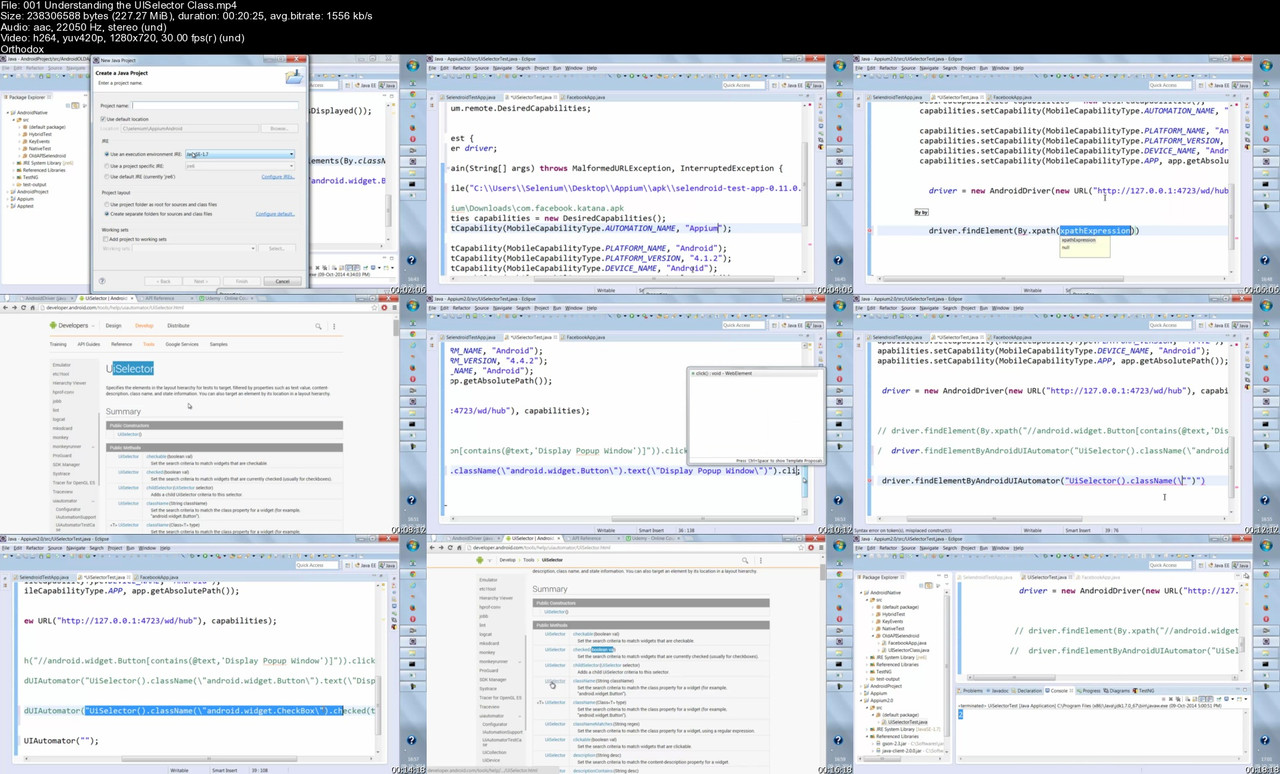
Appium - Mobile Testing with Latest 1.22 and Live Projects
Last updated 9/2023
Duration: 65h 32m | Video: .MP4, 1280x720 30 fps | Audio: AAC, 48 kHz, 2ch | Size: 30.7 GB
Genre: eLearning | Language: English

260+ Lectures, 65+ Hours of inDepth training on Mobile apps automation for IOS and Android using Appium on Real Devices


What you'll learn
By the end of the course you will be as much trained to automate any mobile based Native, Hybrid & Web application using Appium
Many pdf files, course code and other reference material will be provided along with the video lectures


Requirements
No prior Java / coding knowledge required as everything is taught from the scratch
All topics are covered in detailed with live programming in the lectures which will make you feel as in you are studying in a live class room
Basic understanding of WebDriver is required

Description

One single course to Master Mobile automation testing for IOS and Android 2021
***********FIRST COURSE TO COVER MAXIMUM TOPICS ON ANDROID AND IOS WITH MOBILE AUTOMATION FRAMEWORKS IN DEPTH*******

Update: New Lectures added based on Latest Appium 1.20 (2021) for IOS 14 with XCUITest and Android 10.0 update
Update: Master Mobile Automation framework added for IOS and Android

********What makes this course unique from others**********************

65+ hours of Latest and unique content, 260+ Lectures which you will not find in any other Appium courses on Udemy

**************************************************************************************************

RECENT UPDATES
Added the lectures from Recent API Updates i.e. 1.22.0
Added Lecture on Appium Grid - Parallel execution on Multiple Devices
Added lectures on Mobile Automation Master Framework - One Framework to Automate All Types of Native, Hybrid & WebApp with integration of Page Objects, Page Factory and Cucumber BDD
**************************************************************************************************
As the mobile market is growing so there's a demand of Mobile application testers increasing like anything across the Globe.

Appium:
supports Mobile application testing on Native, Hybrid & WebApps for Iphone, Ipads & Android real device and Emulators / Simulators.
These are the unique
Appium training tutorials
in market that will help you in learning Mobile apps automation testing for IOS and Android in very simple way
I have covered examples on both Simulators / Emulators and Real IOS & Android Devices.
Not just the video lectures you will see the entire coding part done step by step and the lectures are explained in a very detailed and practical approach is taken in every example by the trainer.
Who this course is for
Manual Testers who wants to switch to Automation testing and Learn mobile apps testing
Automation testers who wants to enhance their current skills
Test Managers
Selenium Testers who wants to Learn Mobile Apps testing


Homepage

001-Understanding-the-UISelector-Class-s.jpg


r-Fo6e6-TUTgk-G73-WTuznuhq-XFc8sh-Qh-Cp.jpg


The Complete Guide To Chess Calculation
Published 10/2023
MP4 | Video: h264, 1280x720 | Audio: AAC, 44.1 KHz
Language: English | Size: 32.69 GB | Duration: 28h 56m

Mastering Chess Calculation: Reinforce your Chess Tactics and Strategy through effective Calculation processes


What you'll learn
Be able to understand the importance of precise calculation in achieving successful outcomes in chess.
Be able to implement 'Safety-Check' calculations to mitigate risks, particularly when feeling overconfident or complacent.
Be able to fortify your position to reduce the consequences of potential calculation errors.
Be able to understand the disparities between human and computer calculation capabilities.
Be able to to identify and effectively navigate critical positions through enhanced calculation skil candidate forcing moves based on the spices
Be able to conduct accurate evaluations at the conclusion of your calculations to ensure strategic coherence.
Be able to rigorously apply the 'Checking all Checks' principle to uncover latent threats and opportunities.
Be able to systematically employ the 'Checking all Captures' principle to maximize positional advantage.
Be able to utilize the 'Checking all Major Threats' principle to preempt and neutralize opponent strategies.
Be able to leverage the Spice Framework to prioritize the most impactful forcing moves.
Be able to exploit the 'Weakness of the Last Move' to seize immediate tactical opportunities.
Be able to identify and control 'Killer Common Squares' for strategic advantage.
Be able to execute 'Liberational Spice' tactics to free your position and create dynamic play.
Be able to disrupt opponent plans through 'Opponent's Anti-Liberation' tactics, including effective blockades and interference.
Be able to master tactics that 'Lock or Cage the King', limiting your opponent's mobility and options.
Be able to formulate and execute 'Multi-Spice' or 'Multi-Major Threat' moves to overwhelm opponents
Be able to discern the benefits and drawbacks of puzzle practice in developing calculation skills.
Be able to translate calculation skills into real-game scenarios, prioritizing superior positions.
Be able to manage your clock effectively, understanding the interplay between time controls and calculation depth.
Be able to exploit human error potential in your opponent, treating chess as a psychological battle.
Be able to anticipate and counteract your opponent's calculations for strategic advantage.
Be able to integrate safe positional play with advanced calculation techniques.
Be able to learn from unrewarding calculations by identifying and understanding missing elements.
Be able to navigate the 'Horizon Effect', understanding its implications on your strategic planning.
Be able to recognize when to conclude calculations on a move, optimizing time and focus.
Be able to weigh the pros and cons of forcing moves, using them to their utmost potential.

Requirements
Know how the chess pieces move

Description
Welcome to "The Complete Guide to Chess Calculation," a comprehensive journey that takes you deep into the heart of calculation, one of the most critical skills in chess. Whether you're a beginner aspiring to elevate your game or an advanced player aiming to refine your skills, this course offers something invaluable for everyone.Section 1: Introduction and Building a Strong FoundationIn the opening section, we explore the vital role calculation plays in chess, starting from its general importance to its specific function in securing positions and avoiding pitfalls, especially when overconfidence creeps into play. We'll delve into the nuances of critical positions, where precise calculation isn't just helpful it's mandatory.Next, we lay the groundwork for advanced proficiency with a trilogy of lectures on foundational calculation skills: mastering visualization, tactical and checkmate patterns, and evaluation techniques. Understanding the limitations of human calculation compared to computers is essential, and strategies to mitigate these limitations are thoroughly discussed.The course then transitions into principles that guide effective calculation: checking all checks, captures, and major threats. Here, we introduce the Spice Framework, a unique method for prioritizing "spicy" forcing moves, which includes various "Spices" such as Weakness of the Last Move, Killer Common Square, and more.Rewarding calculations are the heart of this course, and several lectures are dedicated to understanding how to maximize the efficiency and effectiveness of your calculation process. From time management and blunder awareness to refuting opponent's plans and knowing when to halt calculations, these lectures are goldmines of practical knowledge.Other Sections: Practical Application through PuzzlesAfter the rich, theoretical groundwork, the course propels you into practical application with a diverse array of puzzles, starting from level #1. These puzzles, sourced from real games, range from classic scenarios to complex positions faced by Grandmasters. Each puzzle is an opportunity to apply learned concepts, sharpening your calculation skills in a practical context.As the puzzles progress in difficulty, you'll be challenged to integrate more advanced concepts, reinforcing not just your calculation skills but also your overall chess strategy. Through this rigorous practice, you'll learn to recognize patterns, anticipate challenges, and navigate even the most demanding of chess scenarios.Join us on this immersive journey, and transform the way you harness the power of the multi-purpose tool of calculation, and ultimately, triumph in the enthralling world of chess.

Overview
Section 1: Introduction

Lecture 1 Why is Calculation important in general?

Lecture 2 Importance of "Safety-Check" calculations especially when complacent

Lecture 3 Securing your position: Lowering the stakes of calculation errors

Lecture 4 Critical positions and Chess Calculation

Lecture 5 Foundational Calculation Skills: Mastering Visualisation

Lecture 6 Foundational Calculation Skills: Mastering Tactical and Checkmate patterns

Lecture 7 Foundational Calculation Skills: Mastering Evaluation at the end of Calculations

Lecture 8 Understanding Human Calculation Limitations vs. Computers

Lecture 9 Addressing the Limitations of Human Calculation

Lecture 10 Checking all Checks principle

Lecture 11 Checking all Captures principle

Lecture 12 Checking all Major Threats principle

Lecture 13 Rewarding Calculations: The Spice Framework for prioritising spicy forcing moves

Lecture 14 Weakness of the Last Move Spice

Lecture 15 Killer Common Square Spice

Lecture 16 Liberational Spice

Lecture 17 Opponent's Anti-Liberation Spice ("Interference" Tactics)

Lecture 18 Locking or Caging the King Spice

Lecture 19 Multi-Spice and or Multi-Major threat Moves: Maximizing Tactical Impact

Lecture 20 Rewarding Calculations - Puzzle Practice up and downsides

Lecture 21 Rewarding Calculations in Real Games - Prioritise superior positions

Lecture 22 Rewarding Calculations - Understanding Time Controls & Effective Time Management

Lecture 23 Rewarding Calculations - Human Blunder Awareness Potential - Chess as a fight.

Lecture 24 Rewarding Calculations - Refuting the opponent's calculations

Lecture 25 Rewarding Calculations - Safer positional play

Lecture 26 Rewarding Calculations - Learn Missing Ingredients from unrewarding calculations

Lecture 27 Rewarding Calculations - The Perils of the Horizon effect

Lecture 28 Rewarding Calculations - Knowing when to stop calculating a particular move

Lecture 29 Effective Calculations - Knowing Pros and Cons of Forcing moves

Section 2: Puzzle Difficulty Level #1

Lecture 30 Puzzle #182: No hiding place - 1970

Lecture 31 Puzzle #183: Even GMs blunder (Rd5??) - 1937

Lecture 32 Puzzle #191: Never resign a won position (17) - 1995

Lecture 33 Puzzle #240: Blacks Rh2-h3 overlooked.... - 2001

Lecture 34 Puzzle #272: Development lag causes catastrophe - 2002

Lecture 35 Puzzle #281: Mate in 2 - 1970

Lecture 36 Puzzle #282: Delayed castling punished - 2002

Lecture 37 Puzzle #330: Smart finish - 1992

Lecture 38 Puzzle #339: Mating attack - 1980

Lecture 39 Puzzle #341: Snappy finish - 1991

Lecture 40 Puzzle #353: Kravtsov v Kornev - 2002

Lecture 41 Puzzle #365: Too many pieces round the king? - 2002

Lecture 42 Puzzle #367: Attacking with all pieces - 2001

Lecture 43 Puzzle #368: Better coordinated attack wins out - 2000

Lecture 44 Puzzle #393: Gerbelli v Prol - 2001

Lecture 45 Puzzle #402: Blumenfeld v Alekhine - 1908

Lecture 46 Puzzle #410: Burn v Teichmann - 1895

Lecture 47 Puzzle #411: Adams v Szekely - 1987

Lecture 48 Puzzle #417: Hodgson v Plaskett - 1986

Lecture 49 Puzzle #423: Sokolov v Gluckman - 2002

Lecture 50 Puzzle #424: Sakalauskas v Chuah - 2002

Lecture 51 Puzzle #450: Mrdja v Luciani - 1995

Lecture 52 Puzzle #461: Rahmann v Saeed - 2003

Lecture 53 Puzzle #496: Prasca v Aderito - 2002

Lecture 54 Puzzle #509: Ziedinya v Auzinya - 1980

Lecture 55 Puzzle #515: Uhlmann v Smyslov - 1972

Lecture 56 Puzzle #526: Rodriguez v Popovic - 1986

Lecture 57 Puzzle #545: Gavrilov v Arbakov - 1990

Lecture 58 Puzzle #547: Bonin v Alburt - 1986

Lecture 59 Puzzle #563: Csom v Mainka - 1990

Lecture 60 Puzzle #579: Friesen v Lomineischwili - 1998

Lecture 61 Puzzle #592: Garcia v Letelier - 1967

Lecture 62 Puzzle #593: Bawart v Farago - 1999

Lecture 63 Puzzle #598: Radziewicz v Horvath - 2002

Lecture 64 Puzzle #608: Nyback v Lafuente - 2003

Lecture 65 Puzzle #609: Ganguly v Venkatesh - 2003

Lecture 66 Puzzle #614: Weiss v Kulhanek - 1998

Lecture 67 Puzzle #635: Haimovich v Slovineanu - 2001

Lecture 68 Puzzle #650: Grigoriev v Nadisewa - 1994

Lecture 69 Puzzle #674: Videki v Likavsky - 2003

Lecture 70 Puzzle #680: Geir v Olafsson - 1953

Lecture 71 Puzzle #688: Cochrane v Staunton - 1842

Lecture 72 Puzzle #692: Meijers v Raber - 1999

Lecture 73 Puzzle #706: Drabke v Horvath - 2003

Lecture 74 Puzzle #710: Staunton v Worrall - 1859

Lecture 75 Puzzle #711: Berger v Koss - 1882

Lecture 76 Puzzle #714: Capablanca v Graham - 1919

Lecture 77 Puzzle #715: Dorfman v Tseshkovsky - 1978

Lecture 78 Puzzle #719: Arkell v Summerscale - 2000

Lecture 79 Puzzle #810: Lalic v Summerscale - 1994

Lecture 80 Puzzle #1192: Nielsen vs. McShane - 2003

Lecture 81 Puzzle #1240: Dominguex vs. Jussupow - 2006

Lecture 82 Puzzle #1269: Rowson Mates in 4. - 1996

Lecture 83 Puzzle #1286: Tukmakov vs Gheorghiu - 2006

Lecture 84 Puzzle #1292: Lanin vs Pena Gomez - 2006

Lecture 85 Puzzle #1325: Baramidze vs. Babujian - 2006

Lecture 86 Puzzle #1352: Abeln vs. Oleksienko - 2005

Lecture 87 Puzzle #1408: Mayer-Nakamura, Washington - 1998

Lecture 88 Puzzle #1499: Lostuzzi vs. Spada - 2007

Lecture 89 Puzzle #1523: Schmidlechner vs. Peng Zhaoqin - 2007

Lecture 90 Puzzle #1524: Ineffectual pin (...Bh4) - 2007

Lecture 91 Puzzle #1537: Jovanovic vs. Popovic - 2007

Lecture 92 Puzzle #1768: Mikkelsen vs. Danielsen - 2008

Lecture 93 Puzzle #1800: Kidzinski-Gasik, Poland - 2000

Lecture 94 Puzzle #1953: Laxman vs. Rajesh - 2008

Lecture 95 Puzzle #4414: Spraggett vs Khedkar - 2004

Lecture 96 Puzzle #5617: Capape vs Anand - 1986

Lecture 97 Puzzle #6717: Greenfeld vs Topalov - 1994

Lecture 98 Puzzle #9072: De Firmian vs Caresana - 1993

Lecture 99 Puzzle #10539: Radziewicz vs Bacler - 2006

Lecture 100 Puzzle #10545: Tarrasch vs Kurschner - 1893

Lecture 101 Puzzle #10546: Skripchenko vs Zimmer - 1991

Lecture 102 Puzzle #10547: Iosif vs Skripchenko - 1992

Lecture 103 Puzzle #10559: Svidler vs Ivanchuk - 2008

Lecture 104 Puzzle #10571: Bisguier vs Penrose - 1950

Lecture 105 Puzzle #10579: Springe vs Gebhard - 1927

Lecture 106 Puzzle #10583: Tartakower vs Reti - 1920

Lecture 107 Puzzle #14044: Hodgson vs Rowson - 1997

Section 3: Puzzle Difficulty Level 3

Lecture 108 Puzzle #21: Coup de grace - 1913

Lecture 109 Puzzle #30: King in a tight spot - 1979

Lecture 110 Puzzle #44: 2P v 2P ending - Multipurpose move needed

Lecture 111 Puzzle #51: Simple combination (9) - Unprotected piece downside

Lecture 112 Puzzle #54: Simple combination (11)

Lecture 113 Puzzle #68: Never resign a won position (13) - 1983 aka Don't Panic - Calculate!

Lecture 114 Puzzle #81: 2P v 1P ending

Lecture 115 Puzzle #85: Never resign a won position (6) - 1937 - Don't panic -Calculate

Lecture 116 Puzzle #107: Bishop pair - 1876

Lecture 117 Puzzle #120: Powerful passed pawn - 1992

Lecture 118 Puzzle #122: Pleasing geometry - 1973

Lecture 119 Puzzle #123: Turning the tables - 1936

Lecture 120 Puzzle #129: Final twist - 1957

Lecture 121 Puzzle #142: Sanchez v Alcaraz - 2001

Lecture 122 Puzzle #143: Gruliev v Molina - 2001

Lecture 123 Puzzle #156: Removing flight squares - 2001

Lecture 124 Puzzle #159: Trap and Countertrap - 2001

Lecture 125 Puzzle #160: Minor pieces rule! - 2001

Lecture 126 Puzzle #162: Destroying the kings cover - 2001

Lecture 127 Puzzle #166: Recovering material - 2001

Lecture 128 Puzzle #172: Exploiting a pin - 1998

Lecture 129 Puzzle #179: Play by Chekhover - 1937

Lecture 130 Puzzle #186: Simple combination (1)

Lecture 131 Puzzle #192: Even GMs blunder (...,gxh4??) - 1978

Lecture 132 Puzzle #198: B+R mate - 1972

Lecture 133 Puzzle #206: Mating finish - 2001

Lecture 134 Puzzle #206: Mating finish - 2001

Lecture 135 Puzzle #207: Exploiting weak black squares - 2002

Lecture 136 Puzzle #208: Unblocking the h file - 2001

Lecture 137 Puzzle #215: Ripping open the king position - 2001

Lecture 138 Puzzle #217: Devastating blow - 2001

Lecture 139 Puzzle #232: Careless d5 pawn grab - 1989

Lecture 140 Puzzle #243: Sacrificial mating finish - 2001

Lecture 141 Puzzle #245: Too many pawns to stop? - 2001

Lecture 142 Puzzle #246: Kasparov combination - 2001

Lecture 143 Puzzle #248: Even GMs blunder (Be1??) - 1997 - "Downside of last move"

Lecture 144 Puzzle #249: Turning the tables - 1994

Lecture 145 Puzzle #250: Q and N work well together - 1972

Lecture 146 Puzzle #258: Never resign a won position (11) - 1977 - Don't panic - Calculate

Lecture 147 Puzzle #261: To pin, to fork or to skewer?? - 2001

Lecture 148 Puzzle #265: Missed opportunity (white played Qh7) - 1997

Lecture 149 Puzzle #267: Lima vs. Quinn - 1996

Lecture 150 Puzzle #268: Walter whips Wallach - 2002

Lecture 151 Puzzle #270: Mate in 3 - 2002

Lecture 152 Puzzle #271: Two ways to mate - 2002

Lecture 153 Puzzle #276: Powering through - 1982

Lecture 154 Puzzle #280: Bishops dominate - 1970

Lecture 155 Puzzle #283: Smaller forces overcome - 2002

Lecture 156 Puzzle #286: Standard mate in new setting - 2002

Lecture 157 Puzzle #292: Adnani v Hamdouchi - 2002

Lecture 158 Puzzle #304: Ariel - 2001

Lecture 159 Puzzle #312: Alekhine v Bernstein - 1911

Lecture 160 Puzzle #314: Nimzovitch v Alekhine (variation2) - 1912

Lecture 161 Puzzle #324: Howell v Luther - 1994

Lecture 162 Puzzle #326: Careless move (Nd8-e6?) - 1949

Lecture 163 Puzzle #335: Nasty pin - 2002

Lecture 164 Puzzle #336: Leenhouts v Savchenko - 2002

Lecture 165 Puzzle #340: Black gets in first - 1993

Lecture 166 Puzzle #349: Unwise weakening move ...,g6 - 1970

Lecture 167 Puzzle #350: Entombed queen - 1970

Lecture 168 Puzzle #354: Ostertag v Kostintseva - 2002

Lecture 169 Puzzle #355: Alekhine v Moller - 1934

Lecture 170 Puzzle #363: Incisive move decides - 1997

Lecture 171 Puzzle #364: Mate in 5 - 2002

Lecture 172 Puzzle #372: Lacking pawn cover - 2002

Lecture 173 Puzzle #373: Even GMs blunder (Rb1-d1) - 2002

Lecture 174 Puzzle #375: Why was blacks move Re8 a mistake? - 2002

Lecture 175 Puzzle #379: Torres v Alekhine - 1922

Lecture 176 Puzzle #386: Domination of a file - 2002

Lecture 177 Puzzle #392: Utjuin v Danilov - 2002

Lecture 178 Puzzle #395: Almasi v Korchnoi - 1996

Lecture 179 Puzzle #397: Alapin v Alekhine - 1914

Lecture 180 Puzzle #399: Alekhine v Reshevsky - 1937

Lecture 181 Puzzle #400: Alekhine v Koutny - 1936

Lecture 182 Puzzle #403: Dely v Gracs - 1953

Lecture 183 Puzzle #404: Alekhine v West - 1923

Lecture 184 Puzzle #405: Alekhine v Chajes - 1923

Lecture 185 Puzzle #409: Why was Qc3-Qf6 a blunder? - 1991

Lecture 186 Puzzle #412: Gufeld v Plaskett - 1986

Lecture 187 Puzzle #418: Yates v Colle - 1925

Lecture 188 Puzzle #420: Perecz v Rosta - 1980

Lecture 189 Puzzle #425: J. Polgar v Mamedyarov - 2002

Lecture 190 Puzzle #428: Reshevsky - Persitz - 1958

Lecture 191 Puzzle #430: Lie v Molale - 2002

Lecture 192 Puzzle #432: Del Val v Pelletier - 1994

Lecture 193 Puzzle #437: San Segundo Carrillo v Vera - 2002

Lecture 194 Puzzle #442: Manik v Gallagher - 2003

Lecture 195 Puzzle #445: Todorovic v Kraai - 2003

Lecture 196 Puzzle #449: Trifunovic v Aaron - 1962

Lecture 197 Puzzle #453: Quinteros v Tukmakov - 1973

Lecture 198 Puzzle #456: Petrosian v Moldagaliev - 1969

Lecture 199 Puzzle #458: Karpov v Stuebing - 1992

Lecture 200 Puzzle #460: Ghaem Maghami v Ishaq - 2003

Lecture 201 Puzzle #464: Maric v Arakhamia - 1995

Lecture 202 Puzzle #476: Georgiev v Shirazi - 2001

Lecture 203 Puzzle #476: Georgiev v Shirazi - 2001

Lecture 204 Puzzle #479: Koronghy v Tornai - 1972

Lecture 205 Puzzle #495: Hickl v Garcia - 2002

Lecture 206 Puzzle #498: Stahlberg v Becker - 1944

Lecture 207 Puzzle #500: Ciocaltea - Brzozka - 1958

Lecture 208 Puzzle #504: Malesic v Masic - 1965

Lecture 209 Puzzle #511: Rorvik v Bekker Jensen - 2002

Lecture 210 Puzzle #512: Christensen v Skovgaard - 2002

Lecture 211 Puzzle #513: Golubev v Khenkin - 2001

Lecture 212 Puzzle #514: Johansson v Metzing - 1973

Lecture 213 Puzzle #516: Gereben v Troianescu - 1952

Lecture 214 Puzzle #523: Oll v Cvitan - 1995

Lecture 215 Puzzle #530: Kazimdzhanov v Golubev - 2002

Lecture 216 Puzzle #533: Morphy v Allies - 1858

Lecture 217 Puzzle #538: Kotov v Botvinnik - 1939

Lecture 218 Puzzle #541: Hector v Ernst - 1995

Lecture 219 Puzzle #551: Smirin v Ehlvest - 2001

Lecture 220 Puzzle #555: Langer v Richter - 1998

Lecture 221 Puzzle #564: Stangl v Buchal - 1995

Lecture 222 Puzzle #566: Schlosser v Schmaltz - 2000

Lecture 223 Puzzle #567: Browne v Karpov - 1977

Lecture 224 Puzzle #569: Golubev v Torre - 2003

Lecture 225 Puzzle #572: Marchian v Vilar - 1998

Lecture 226 Puzzle #575: Spielmann v Tartakower - 1909

Lecture 227 Puzzle #578: Campos v Al Hadarani - 1998

Lecture 228 Puzzle #584: Cacho v Clement - 1996

Lecture 229 Puzzle #589: Kolbus v Sjaschkin - 1998

Lecture 230 Puzzle #590: Rozentalis v Adams - 1998

Lecture 231 Puzzle #600: Burnett v Ivanov - 2003

Lecture 232 Puzzle #601: Agdestein v Thiel - 2003

Lecture 233 Puzzle #603: Naiditsch v Koneru - 2003

Lecture 234 Puzzle #616: Hebden v Kalintschev - 1999

Lecture 235 Puzzle #620: Oratovsky v Nakamura - 2002

Lecture 236 Puzzle #621: Smeets v Werle - 2002

Lecture 237 Puzzle #630: Milov v Gaponenko - 2003

Lecture 238 Puzzle #633: Stjazkhina v Savin - 2002

Lecture 239 Puzzle #638: Kosintseva v Sultangareev - 2002 ( a bit hairy!)

Lecture 240 Puzzle #641: Tran v Truong - 2002

Lecture 241 Puzzle #643: Antoniewski v Venis - 2001

Lecture 242 Puzzle #645: Dreev v Zhu Chen - 2002

Lecture 243 Puzzle #647: Grabarska v Socko - 2001

Lecture 244 Puzzle #651: Tarrasch v Von Gottschall - 1896

Lecture 245 Puzzle #668: Khakimov v Askarov - 2002

Lecture 246 Puzzle #672: Simacek v Borgo - 2003

Lecture 247 Puzzle #681: Hennings v McCurdy - 1967

Lecture 248 Puzzle #682: Klimov v Lindberg - 1999

Lecture 249 Puzzle #683: Palliser v Bree - 1998

Lecture 250 Puzzle #686: Below v Ossatschuk - 1965

Lecture 251 Puzzle #691: Hellsten v Managadze - 2003

Lecture 252 Puzzle #701: Bolbochan v Pachman - 1956

Lecture 253 Puzzle #704: Korchnoi v Karpov - 1978

Lecture 254 Puzzle #707: Medvegy v Soln - 1998

Lecture 255 Puzzle #708: Minasian v Kosashvili - 1998

Lecture 256 Puzzle #712: Geller v Lubashov - 2003

Lecture 257 Puzzle #720: Jakubiec v Gross - 2000

Lecture 258 Puzzle #721: Reshevsky v Ivanovic - 1976

Lecture 259 Puzzle #729: Petraki v Alagiannis - 1999

Lecture 260 Puzzle #730: Fucak v Schneider - 2002

Lecture 261 Puzzle #735: Szabo v Zawadzki - 2004

Lecture 262 Puzzle #738: Steiner v Juhasz - 2004

Lecture 263 Puzzle #741: Lima v Quinn - 1996

Lecture 264 Puzzle #760: Bigaliev v Dao Thien Hai - 1996

Lecture 265 Puzzle #765: Vukic v Gavric - 1993

Lecture 266 Puzzle #770: Koloborot v Balbe - 1971

Lecture 267 Puzzle #864: One that got away - 1993

Lecture 268 Puzzle #912: Happy Birthday, Magnus ! - 2003

Lecture 269 Puzzle #1048: Struk v Ten Hagen - 2005

Lecture 270 Puzzle #1104: Whitehead, Jay E v Matthews, Steve - 1983

Lecture 271 Puzzle #1141: Lautier v Sokolov - 1995

Lecture 272 Puzzle #1185: Gruenfeld v Eliskases - 1935

Lecture 273 Puzzle #1206: Carlsson v Campos Moreno - 2006

Lecture 274 Puzzle #1233: Platz vs. Lampe - 1967

Lecture 275 Puzzle #1234: Arkipov vs. Kuznetsov - 1980

Lecture 276 Puzzle #1261: Gerzhoy vs. Kulic - 2006

Lecture 277 Puzzle #1262: Vospernik vs. Lois - 2006

Lecture 278 Puzzle #1264: Berglitz v Madl - 1984

Lecture 279 Puzzle #1268: Hebden v Snape - 2006

Lecture 280 Puzzle #1271: Valeanu vs Sveshnikov - 2006

Lecture 281 Puzzle #1284: Polak v Sakelsek - 2006

Lecture 282 Puzzle #1285: Balinov vs Naegelein - 2006

Lecture 283 Puzzle #1291: Hanley vs Vajic - 2006

Lecture 284 Puzzle #1293: Dommesz vs Fodorov - 1984

Lecture 285 Puzzle #1297: Gelfand vs Kramnik - 1996

Lecture 286 Puzzle #1302: Mengarini vs. Bylard - 1953

Lecture 287 Puzzle #1309: Fox vs Efremova - 2006

Lecture 288 Puzzle #1344: Zacurdajev vs. Stukopin - 2006

Lecture 289 Puzzle #1345: Kiik vs. Jelling - 2006

Lecture 290 Puzzle #1346: De Labourdonnais vs. McDonnell - 1834

Lecture 291 Puzzle #1355: Dragomirescu vs. Ionica - 2006

Lecture 292 Puzzle #1372: Nikolic vs. Djuric - 1983

Lecture 293 Puzzle #1373: Smyslov vs. Bertok - 1955

Lecture 294 Puzzle #1382: Winter-Gemzoe, Folkestone - 1933

Lecture 295 Puzzle #1383: Stoliarov-Gufeld, Kiev 1958 - 1958

Lecture 296 Puzzle #1384: Smagin-Kupreichik, Minsk 1985

Lecture 297 Puzzle #1388: Szabo-Donner, Goteborg 1955

Lecture 298 Puzzle #1393: Caspi vs. Kaplan - 2006

Lecture 299 Puzzle #1422: Nunn vs Short - 1986

Lecture 300 Puzzle #1431: Rosengarten vs. Schloerner - 1934

Lecture 301 Puzzle #1437: Katalimov vs. Ilivickij - 1959

Lecture 302 Puzzle #1477: Surprise rook move - 1949

Lecture 303 Puzzle #1481: Ivanchuk v Van Wely - 2007

Lecture 304 Puzzle #1484: Unzicker vs. Sanchez - 1952

Lecture 305 Puzzle #1485: Ozsvath - 1956

Lecture 306 Puzzle #1493: Karakehajov vs. Thesin - 2006

Lecture 307 Puzzle #1500: Atia vs. Adly - 2007

Lecture 308 Puzzle #1522: Samu vs. Petkov - 2007

Lecture 309 Puzzle #1527: Nestorovic vs. Zivkovic - 2007

Lecture 310 Puzzle #1538: Szabo vs. Minh - 2007

Lecture 311 Puzzle #1541: Gritsak vs. Bacrot - 2007

Lecture 312 Puzzle #1554: Karpov vs. Stojanovic - 2007

Lecture 313 Puzzle #1565: Stein vs. Liberzon - 1965

Lecture 314 Puzzle #1567: Bronstein v Keres - 1950

Lecture 315 Puzzle #1582: Pogorelov-Janoha, Prague 1988 - 1988

Lecture 316 Puzzle #1604: Leko vs. Anand - 2003

Lecture 317 Puzzle #1608: Timman vs. Radev - 1971

Lecture 318 Puzzle #1618: Shkuran vs. Ivanchuk - 2004

Lecture 319 Puzzle #1619: David vs. Nedev - 2007

Lecture 320 Puzzle #1627: Lasker vs. Ettlinger - 1893

Lecture 321 Puzzle #1645: Sharma vs. Madhukiran

Lecture 322 Puzzle #1663: Bellon Lopez vs. Ask - 2008

Lecture 323 Puzzle #1681: Leanse vs. Wood - 1986

Lecture 324 Puzzle #1801: Dannevig-Fossan, Gausdal 1988

Lecture 325 Puzzle #1837: Golsov-Moiseev, Kaluga 1970

Lecture 326 Puzzle #1845: Kuporosov-Yudasin, Kostromo 1985 - 1985

Lecture 327 Puzzle #1970: De Veauce vs. Cafferty - 1974

Lecture 328 Puzzle #1977: Uhlmann vs. Schwartz - 1975

Lecture 329 Puzzle #2036: Hausler vs. Tarrasch - 1892

Lecture 330 Puzzle #2067: Baumegger vs. Ragger - 2008

Lecture 331 Puzzle #8999: Krasenkow vs Nikolenko - 1994

Lecture 332 Puzzle #9005: Ahues vs Weissgerber - 1935

Lecture 333 Puzzle #9008: Alekhine vs Meck - 1925

Lecture 334 Puzzle #9011: Andreikin vs Lanin - 2007

Lecture 335 Puzzle #9014: Nigmadzianov vs Kaplun - 1977

Lecture 336 Puzzle #9071: Danielian vs Calzetta - 1993

Lecture 337 Puzzle #9093: Finegold vs Knoppert - 1991

Lecture 338 Puzzle #10457: Krush vs Stefanova - 2004

Lecture 339 Puzzle #10540: Blackburne vs Smith - 1882

Lecture 340 Puzzle #10542: Christiansen vs Nunn - 1991

Lecture 341 Puzzle #10543: De La Bourdonnais vs MacDonnell - 1834

Lecture 342 Puzzle #10544: Buckle vs Amateur - 1840

Lecture 343 Puzzle #10550: Hammer vs Carlsen - 2003

Lecture 344 Puzzle #10551: Steiner vs Becker - 1923

Lecture 345 Puzzle #10552: Hort vs Dunne - 1982

Lecture 346 Puzzle #10553: Petrosian vs Tomic - 1970

Lecture 347 Puzzle #10554: De Firmian vs Formanek - 1987

Lecture 348 Puzzle #10555: Euwe vs Van Mindeno - 1927

Lecture 349 Puzzle #10556: Radjabov vs Kovaljov - 1999

Lecture 350 Puzzle #10557: Probst vs Lowig - 1922

Lecture 351 Puzzle #10562: Golubenko vs Oja - 2001

Lecture 352 Puzzle #10563: Vahtra vs Golubenko - 2004

Lecture 353 Puzzle #10564: Ivanchuk vs Ivanovic - 1988

Lecture 354 Puzzle #10566: Danielian vs Brodsky - 2006

Lecture 355 Puzzle #10572: Bisguier vs Kudrin - 1985

Lecture 356 Puzzle #10587: Karpov vs Bidjukova - 1997

Lecture 357 Puzzle #14026: Hodgson vs Plaskett - 1991

Lecture 358 Puzzle #14034: Hodgson vs Cerrajeria - 1993

Lecture 359 Puzzle #14053: Adams vs Fernandez - 1989

Lecture 360 Puzzle #14056: Adams vs Wolff - 1990

Lecture 361 Puzzle #14096: Bird vs Mason - 1876

Section 4: Puzzle Difficulty Level 4

Lecture 362 Puzzle #1584: Variation of Dorfman-Zeschkowski, Tiflis 1978

Lecture 363 Puzzle #14011: Baklan vs Belozerov - 2006 - Tricky! - Abstract the "if only..."

Lecture 364 Puzzle #14033: Hodgson vs Koshy - 1993

Lecture 365 Puzzle #14041: Hodgson vs Shaw - 1996

Lecture 366 Puzzle #14052: Morrison vs Adams - 1988 - Potential Downsides lead to downsides

Lecture 367 Puzzle #14083: Alexander vs Wood - 1957

Lecture 368 Puzzle #14084: Basman vs Corden - 1972

Lecture 369 Puzzle #14126: Gilbert vs Grower - 2005

Lecture 370 Puzzle #14152: Bisguier vs Golombek - 1960

Lecture 371 Puzzle #14155: Gormally vs Zeidler - 1999

Lecture 372 Puzzle #14191: Hebden vs Boudre - 1987

Lecture 373 Puzzle #14257: Miles vs Watson - 1982 - Very tricky - resources for both sides!

Lecture 374 Puzzle #14283: Nunn vs Seirawan - 1982

Lecture 375 Puzzle #14285: Nunn vs Wockenfuss - 1984

Lecture 376 Puzzle #14294: Nunn vs Nikolic - 1991

Section 5: Puzzle Difficulty Level 5

Lecture 377 Puzzle #35: Early mistake in Petroff opening (Nxe4)

Lecture 378 Puzzle #43: Simple pawn ending

Lecture 379 Puzzle #47: Don't rush it!

Lecture 380 Puzzle #49: Simple combination (3)

Lecture 381 Puzzle #50: Simple combination (4)

Lecture 382 Puzzle #52: Simple combination (10)

Lecture 383 Puzzle #53: Simple combination (10.1)

Lecture 384 Puzzle #61: Never resign a won position (2) - 1905

Lecture 385 Puzzle #67: Never resign a won position (12) - 1981

Lecture 386 Puzzle #75: Even GMs blunder (Rg5??) - 1947

Lecture 387 Puzzle #84: Both kings in danger

Lecture 388 Puzzle #98: Never resign a drawn position (1) - 1919

Lecture 389 Puzzle #108: Pulling pieces to bad squares - 1976

Lecture 390 Puzzle #111: One-move finish 9 - 1927

Lecture 391 Puzzle #115: Simple combination (2)

Lecture 392 Puzzle #119: One-move finish (8) - 1944

Lecture 393 Puzzle #125: King on walkabout - 1992

Lecture 394 Puzzle #127: Danger of undevelopment - 1949

Lecture 395 Puzzle #131: Soviet champion beaten - 1991

Lecture 396 Puzzle #137: Martinsen v Pluemer - 2001

Lecture 397 Puzzle #139: Mueller v Van Weersel - 2001

Lecture 398 Puzzle #140: Chan v Wu - 2001

Lecture 399 Puzzle #141: Xie v Yu - 2001

Lecture 400 Puzzle #144: Basto v Alcaraz - 2001

Lecture 401 Puzzle #145: Winning material in the opening - 2001

Lecture 402 Puzzle #147: Rooks and Bishops - 2001

Lecture 403 Puzzle #149: QGD trap after Nxd5

Lecture 404 Puzzle #165: Paper thin defences - 2001

Lecture 405 Puzzle #168: Missed opportunity - 2001

Lecture 406 Puzzle #176: Power of the pin - 2001

Lecture 407 Puzzle #181: Was Rd1 a mistake? - 1956

Lecture 408 Puzzle #189: One-move finish (3) - 1977

Lecture 409 Puzzle #196: Tal magic - 1959

Lecture 410 Puzzle #197: Clever mating finish - 1986

Lecture 411 Puzzle #204: Underprotected king - 2001

Lecture 412 Puzzle #211: Major piece breakthrough - 2001

Lecture 413 Puzzle #214: Unpleasant surprise for white - 2002

Lecture 414 Puzzle #216: Weak link - 2001

Lecture 415 Puzzle #218: Opposite colored bishop attacks - 2002

Lecture 416 Puzzle #222: Simple combination (8)

Lecture 417 Puzzle #222 revisited from an Opening perspective - caging a bishop

Lecture 418 Puzzle #223: Never resign a won position! - 1902

Lecture 419 Puzzle #224: Nimzovitch combination - 1927

Lecture 420 Puzzle #233: Bronstein brilliancy - 1965

Lecture 421 Puzzle #236: Homing in on e6 - 2002

Lecture 422 Puzzle #237: Distracted by a passed pawn - 2001

Lecture 423 Puzzle #239: Tactics avoid a tricky ending - 2001

Lecture 424 Puzzle #241: Compensation for the piece - 2001

Lecture 425 Puzzle #247: Nailing the king - 2000

Lecture 426 Puzzle #251: Using the bishop pair - 1956

Lecture 427 Puzzle #252: Getting out of check constructively - 1881

Lecture 428 Puzzle #254: Judith mates - 1989

Lecture 429 Puzzle #256: Simple combination (7)

Lecture 430 Puzzle #257: Never resign a won position (5)

Lecture 431 Puzzle #262: Stop that king escaping - 2001

Lecture 432 Puzzle #263: Blowing up a "safe" position - 2001

Lecture 433 Puzzle #269: Dolmatov dominates - 1982

Lecture 434 Puzzle #275: Beautiful mating combination - 1951

Lecture 435 Puzzle #279: Two ways to win - 2002

Lecture 436 Puzzle #290: Andersson v Mecking - 1971

Lecture 437 Puzzle #294: One-move finish (7) - 1946

Lecture 438 Puzzle #297: One-move finish (9) - 1970

Lecture 439 Puzzle #298: Solleveld v Sutovsky - 2002

Lecture 440 Puzzle #299: Handke v Andre - 2002

Lecture 441 Puzzle #301: Eckhardt - 2002

Lecture 442 Puzzle #308: Alekhine v Steiner - 1937

Lecture 443 Puzzle #310: Von Bardeleben v Alekhine - 1908

Lecture 444 Puzzle #315: Keres v Spassky - 1955

Lecture 445 Puzzle #316: Honfi v Sebestyen - 1952

Lecture 446 Puzzle #317: Viakhirev v Alekhine - 1907

Lecture 447 Puzzle #320: Rodzinsky v Alekhine - 1913

Lecture 448 Puzzle #325: Speelman v Sax - 1990

Lecture 449 Puzzle #331: Two moves win material - 2001

Lecture 450 Puzzle #333: Seeing a combination through - 1967

Lecture 451 Puzzle #337: Freiman - 1913

Lecture 452 Puzzle #342: More sacrifices required! - 1991

Lecture 453 Puzzle #345: Shaarbaf v Vahidi - 2001

Lecture 454 Puzzle #358: Botvinnik combination - 1949

Lecture 455 Puzzle #359: End of Kramnik king hunt - 1995

Lecture 456 Puzzle #369: Strategist wins tactically - 1970

Lecture 457 Puzzle #376: What did whites move Nc6 overlook? - 2002

Lecture 458 Puzzle #377: Vygodchicov v Alekhine - 1908

Lecture 459 Puzzle #380: Alekhine v Colle - 1925

Lecture 460 Puzzle #381: Deflection and Interference

Lecture 461 Puzzle #384: Active pieces infiltrate - 2002

Lecture 462 Puzzle #390: Kuznetsov v Bachich - 2002

Lecture 463 Puzzle #406: Taher v Abdel Samee

Lecture 464 Puzzle #408: White played Nxg3 and only drew - 1989

Lecture 465 Puzzle #413: Chandler v Olafsson - 1990

Lecture 466 Puzzle #414: Hodgson v Chandler - 1991

Lecture 467 Puzzle #415: Holzl v Speelman - 1971

Lecture 468 Puzzle #429: Fischer v Benko - 1965

Lecture 469 Puzzle #434: Euwe v Thomas - 1934

Lecture 470 Puzzle #439: Weissgerber v Rellstab - 1933

Lecture 471 Puzzle #444: Morozevich v Grischuk - 2003 - Quite tricky!

Lecture 472 Puzzle #446: Balogh v Grommer - 1931

Lecture 473 Puzzle #451: Atlas v Almasi - 1998

Lecture 474 Puzzle #457: Karpov v Malaniuk - 1988

Lecture 475 Puzzle #482: Chuchelov v Meijers - 1997

Lecture 476 Puzzle #484: Alekhine (blindfolded) v Frieman - 1924

Lecture 477 Puzzle #489: Piot v Schekachev - 2001

Lecture 478 Puzzle #490: Olafsson v Alexander - 1956

Lecture 479 Puzzle #492: Wege v Schneider Zinner - 1997

Lecture 480 Puzzle #499: Gutop v Roschal - 1963

Lecture 481 Puzzle #505: Hochstrasser v Knoflicek - 1995

Lecture 482 Puzzle #506: Stean v Schneider (variation) - 1976

Lecture 483 Puzzle #507: Vera v Gulko - 1993

Lecture 484 Puzzle #510: Karjakin v Shirov - 2002

Lecture 485 Puzzle #519: Radulov v Soderborg - 1961

Lecture 486 Puzzle #520: Kras v van Easton - 1992

Lecture 487 Puzzle #522: Varga v Lengyel - 1995

Lecture 488 Puzzle #525: Gabriel v Zeller - 1995

Section 6: PGN Downloads

Lecture 489 PGN of the Puzzles made use of in the course

Section 7: Conclusions and Philosophical points

Lecture 490 Conclusions

Section 8: Bonus

Lecture 491 Bonus Lecture

Beginner to intermediate players who want to improve their chess in all phases of the game



426995111_the_complete_guide_to_chess_calculation.jpg


m-VJXULZSHNDx5-Ixma36-H8-TUu-BI8-WIq-IY.jpg


Data Science Bundle: 180 Hands-On Projects - Course 3 of 3
Last updated 10/2023
MP4 | Video: h264, 1280x720 | Audio: AAC, 44.1 KHz, 2 Ch Language: English | Duration: 51h 56m | Size: 23.1 GB

Build & Deploy 180 Projects - Data Science, Machine Learning, Deep Learning (Python, Flask, Django, AWS, Azure Cloud)


What you'll learn
Equip yourself with skills that are in high demand, increasing your chances of getting hired as a Data Scientist.
Apply Machine Learning to real-world scenarios, making you job-ready.
Get exposure to Deep Learning, Transfer Learning, and Neural Networks, expanding your skill set.
Master the essentials of Machine Learning using Python, the go-to language for Data Science.
Learn to build robust Machine Learning models that can withstand real-world uncertainties.
Acquire techniques to fine-tune and improve your Machine Learning models for better performance.
Develop a strong intuition for choosing the right Machine Learning models for different tasks.
Empower yourself to conduct powerful data analyses that can drive decision-making processes.

Requirements
Basic knowledge of machine learning

Description
Enroll in this course for an immersive learning experience with compelling benefits. You'll gain hands-on experience in practical machine learning and data-driven projects. Develop proficiency in Python, Flask, Django, and cloud deployment on platforms like Heroku, AWS, Azure, GCP, and Streamlit.

This course guides you through the entire project lifecycle, from ideation to deployment, with a focus on real-world applications. It bridges the gap between data analytics and business strategy, making it suitable for both newcomers and seasoned practitioners. With 60 diverse projects, you can build a robust portfolio at your own pace.

Don't miss this opportunity to advance your data science career and make a real impact in today's data-rich world. Enroll now before the offer expires and transform your future.

In This Course, We Are Going To Work On 60 Real World Projects Listed Below

Data Science Projects

Project-1: CarPricer: Fueling Car Prices - Build Car Prices Prediction App on Heroku

Project-2: LoveCounter: Counting Affairs - Build Affair Count Django App on Heroku

Project-3: ShroomSense: Unveiling Fungal Delights - Build Shrooming Predictions App on Heroku

Project-4: PlayRater: Play Store Insights - Google Play App Rating Prediction on Heroku

Project-5: BankGuru: Banking on Customer Predictions - Build Bank Customers Predictions Django App on Heroku

Project-6: ArtSculptor: Sculpting Artistic Insights - Build Artist Sculpture Cost Prediction Django App on Heroku

Project-7: MediCost: Healing Insights - Build Medical Cost Predictions Django App on Heroku

Project-8: PhishGuard: Safeguarding the Web - Phishing Webpages Classification Django App on Heroku

Project-9: FashionFit: Fit for Style - Clothing Fit-Size Predictions Django App on Heroku

Project-10: TextSim: Unveiling Textual Connections - Build Similarity In-Text Django App on Heroku

Project-11: ForgeryFinder: Unmasking Pan Card Tampering with AI - Deploy On Heroku

Project-12: BreedRover: Fetching Dog Breeds with a Flask Twist

Project-13: AquaMark: Immortalizing Images with Watermark Wizardry - Deploy On Heroku

Project-14: SignSense: Navigating the Road with Traffic Sign Detection

Project-15: TextXtract: Unlocking Secrets Hidden in Images

Project-16: PlantWhisperer: Decoding Nature's Language for Plant Disease Prediction

Project-17: AutoTrack: Counting Cars and Unleashing Traffic Insights with Flask

Project-18: FaceSwap Pro: Transform Faces and Dive into a World of Fun

Project-19: FeatheredForecast: Predicting Bird Species with Flask Feathers

Project-20: VisualIntel: Exploring Visual Intelligence with Intel Image Classification

Project-21: HeartBeatHero: Defending Hearts with Eval ML - Heart Attack Risk Prediction

Project-22: FraudGuardian: Shielding Finances with Pycaret - Credit Card Fraud Detection

Project-23: SkyHighForecaster: Soaring through Fare Predictions - Flight Fare Prediction

Project-24: FuelProphet: Fueling Future Insights - Petrol Price Forecasting

Project-25: ChurnSavior: Safeguarding Customer Loyalty - Bank Customer Churn Prediction

Project-26: AirQInsight: Breathing Easy with TPOT - Air Quality Index Predictor

Project-27: RainMaster: Unveiling Precipitation Patterns - Rain Prediction using ML models & PyCaret

Project-28: PizzaCraver: Predicting Pizza Prices - Pizza Price Prediction using ML and EVALML

Project-29: IPLOracle: Unlocking Cricket Magic - IPL Cricket Score Prediction using TPOT

Project-30: BikeRider: Pedaling through Rentals - Predicting Bike Rentals Count using ML and H2O Auto ML

Project-31: ConcreteWizard: Building Strong Foundations - Concrete Compressive Strength Prediction using Auto Keras

Project-32: HomePriceWhiz: Navigating the Housing Market - Bangalore House Price Prediction using Auto SK Learn

Project-33: LifeSaver: Predicting Hospital Outcomes - Hospital Mortality Prediction using PyCaret

Project-34: CareerPro: Elevating Professional Paths - Employee Evaluation for Promotion using ML and Eval Auto ML

Project-35: HydraH2O: Quenching the Thirst for Drinking Water Potability - Drinking Water Potability Prediction using ML and H2O Auto ML

Project-36: GameQuest: Unlocking the World of Video Game Sales Analysis

Project-37: TicTacToEvolved: A Strategic Battle of Wits - Build Tic Tac Toe Game

Project-38: PassGenie: Creating Secure Passwords - Random Password Generator Website using Django

Project-39: PortfolioPro: Showcasing Your Skills - Building Personal Portfolio Website using Django

Project-40: TodoTracker: Organizing Tasks Together - Todo List Website For Multiple Users

Project-41: CryptoPlanner: Riding the Waves of Crypto - Crypto Coin Planner GUI Application

Project-42: TweetBot: Your Personal Twitter Companion - Your Own Twitter Bot - Python, Request, API, Deployment, Tweepy

Project-43: DictBuilder: Crafting a Personal Dictionary - Create A Python Dictionary using Python, Tkinter, JSON

Project-44: EggCatcher: A Fun Game of Precision - Egg-Catcher Game using Python

Project-45: RoutineTracker: Keeping Your Day on Track - Personal Routine Tracker Application using Python

Project-46: ScreenPet: Unleashing the Pet on Your Screen - Building Screen-Pet using Tkinter & Canvas

Project-47: CaterpillarGame: A Journey of Transformation - Building Caterpillar Game using Turtle and Python

Project-48: HangmanMaster: Cracking the Word Code - Building Hangman Game using Python

Project-49: SmartCalc: Math Made Easy - Developing our own Smart Calculator using Python and Tkinter

Project-50: SecretSteganography: Hiding Messages in Images - Image-based steganography using Python and pillows

Power BI Projects

Project-51: Patient Summary Dashboard: Medical Records

Project-52: Global Super Store Sales Data Analysis

Project-53: Boston Housing Dataset Dashboard: Real Estate

Project-54: Crime in Los Angeles: Yearly City Analysis

Project-55: IMDB Movie Dataset Dashboard: Movie Comparison

Project-56: Hotel Reservation Dashboard: Global Hotel Business

Project-57: Toy Sales Data Analysis: Practice Dataset

Project-58: Netflix Stock Price Dashboard: Business Analysis

Project-59: Personal Finance Management Dashboard: Financial Insights

Project-60: A Deep Dive into Bank Customer Churn with Power BI

Tips: Create A 60 Days Study Plan , Spend 1-2hrs Per Day, Build 60 Projects In 60 Days.

The Only Course You Need To Become A Data Scientist, Get Hired And Start A New Career

Note: This Course Is Worth Of Your Time And Money, Enroll Now Before Offer Expires.

Who this course is for
Beginners in data science


Homepage

423917664_data_science_bundle_180_hands-on_projects_-_course_3_of_3.jpg


IRy2l-TCi-FX0xqf7ep0-Syupa-Yz3g7-Up-ER.jpg


Complete Python Megacourse: Beginner To Expert
Published 11/2023
MP4 | Video: h264, 1920x1080 | Audio: AAC, 44.1 KHz
Language: English | Size: 21.22 GB | Duration: 60h 1m

Learn how to work with Python with this step-by-step course!


What you'll learn
The essential Python programming language
How to use Python professionally or for personal tasks
How to solve problems involving conditional statements
How to build programs using advanced Python features
Create games with Python like Rock paper scissors
Gain and improve your coding skills
How to build projects and applications like a Banking System from scratch
Create a portfolio of Python projects that will allow you to apply to developer jobs
Understand Python 2 and Python 3
Using lists, tuples, dictionaries, and sets to organize data and solve problems
Working with functions and strings to create reusable code and manipulate text

Requirements
No previous knowledge of Python required
A desire to learn!
A positive attitude!

Description
Learn programming in Python!Develop like a pro!Have you ever wanted to develop a solid programming skillset in Python?Programming is currently the most important knowledge you could have, and it will be from now on. From developing an app to creating the e-shop for your favorite brands, the things you can do with programming are endless. Python is ranked as the fastest growing programming language since 2022 and the demand for Pythoneers has not ceased to increase. Not only that you can use Python to improve your chances of finding a job, but you can also make use of it to automate your daily tasks either professionally or personally, and we re here to teach you how.In this course, you will become familiar with several computer science concepts that we implement using Python. Therefore, both your problem-solving skills and coding abilities will be sharpened throughout this course to prepare you for the next step in your career. As a general-purpose programming language, Python is used in several fields, including Machine Learning, Data Analysis, Backend Systems, Web Scraping, and Automation. Before exploring each of these topics, we will develop the skills necessary to write Python code following proper practices.Our instructors have years of experience not only in programming, but also in teaching, and the expertly-crafted syllabus is designed to be easy to follow and thorough. We ve even included plenty of practice problems and real-life projects. That s why this is the only Python course you ll ever need to start programming like a pro!After taking this course, you will be able to:Work professionally with PythonHandle files and dictionariesDevelop the first project for your start upCode professionally in PythonCreate your own Python programsDemonstrate your knowledge of Python programmingAnalyze the complexity of algorithms and implement sorting algorithms like selection sort, bubble sort, and insertion sort.Start developing your projects today!

Overview
Section 1: Introduction

Lecture 1 Welcome

Section 2: Introduction to Python

Lecture 2 Python Characteristics

Lecture 3 Python 2 vs Python 3

Lecture 4 Installation, Jupyter, and Demo

Section 3: Python Basics

Lecture 5 Taking Input Data from the User

Lecture 6 Output Formatting

Lecture 7 Math Library in Python Part I

Lecture 8 Math Library in Python Part II

Lecture 9 Random Module in Python

Lecture 10 Random Module - Game Demo

Lecture 11 Generating Sequences using Range in Python

Lecture 12 Python Variables and Data Types

Lecture 13 More on Python Variables

Section 4: Conditional Statements

Lecture 14 Truth Values and Simple Conditional Statements

Lecture 15 Problem Solving Involving Conditional Statements I

Lecture 16 Problem Solving Involving Conditional Statements II

Lecture 17 Rock Paper Scissors Game in Python

Lecture 18 Capitals Game in Python

Section 5: Iterative Statements

Lecture 19 Introduction

Lecture 20 For-Loops and While Loops

Lecture 21 Printing Shapes Using Loops

Lecture 22 Building Shapes with Numbers Using Loops

Lecture 23 Finding LCM, GCD and Binary Conversion

Lecture 24 Nested Loops Introduction

Lecture 25 Nested Loops and Pattern Finding

Lecture 26 Nested Loops and Narcissistic Numbers

Section 6: List and Tuples

Lecture 27 Mutability Versus Immutability

Lecture 28 Common Methods in Lists

Lecture 29 Tuple Basics, Copy and Deepcopy Methods

Lecture 30 Tuple Basics and Zip Method

Lecture 31 Inner Product and Sorting a List of Tuples

Lecture 32 Practice Problems I

Lecture 33 2-Dimensional Lists (List of Lists) Part I

Lecture 34 2-Dimensional Lists (List of Lists) Part II

Section 7: Dictionaries

Lecture 35 Introduction to Dictionaries

Lecture 36 Most Common Methods in Dictionaries

Lecture 37 Simple Manipulations with Dictionaries

Lecture 38 Dictionaries Practice Problems I

Lecture 39 Handling a List of Dictionaries

Lecture 40 List of Dictionaries and JSON objects

Lecture 41 Creating a JSON File Using a Dictionary of Dictionaries

Section 8: Sets in Python

Lecture 42 Nature of Sets and Methods in the Normal and Frozen Sets

Lecture 43 Working with Frozen Sets and Evaluating Mathematical Set Expressions

Section 9: Functions

Lecture 44 Introduction to Functions

Lecture 45 Translating a code snippet to a function Part I

Lecture 46 Translating a code snippet to a function Part II

Lecture 47 Translating a code snippet to a function Part III

Lecture 48 Translating a code snippet to a function Part IV

Lecture 49 Translating a code snippet to a function Part V

Section 10: Strings

Lecture 50 Introduction to Strings and Most Common Methods

Lecture 51 More on String Methods

Lecture 52 String Boolean Methods Part I

Lecture 53 String Boolean Methods Part II

Lecture 54 String Boolean Methods Part III

Lecture 55 String Boolean Methods Part IV

Lecture 56 String Boolean Methods Part V

Lecture 57 String Boolean Methods Part VI

Lecture 58 String Boolean Methods Part VII

Lecture 59 String Boolean Methods Part VIII

Lecture 60 String Boolean Methods Part IX

Section 11: Data Structures

Lecture 61 Linear Data Structures: Stacks, Push and Pop Operations

Lecture 62 Using Stacks to Check for Balanced Expressions

Section 12: File Handling

Lecture 63 Files Handling Part I

Lecture 64 Files Handling Part II

Lecture 65 Files Handling Part III

Lecture 66 Files Handling Part IV

Lecture 67 Files Handling Part V

Lecture 68 Files Handling Part VI

Section 13: Projects

Lecture 69 Dictionaries Mini Project 1

Lecture 70 Mini Project 2 Workspace Monitoring System Part I

Lecture 71 Mini Project 2 Workspace Monitoring System Part II

Lecture 72 Bisection Method

Lecture 73 Banking System I

Lecture 74 Banking System II

Lecture 75 Banking System III

Lecture 76 Banking System IV

Lecture 77 Banking System V

Lecture 78 Banking System VI

Lecture 79 Banking System VII

Lecture 80 Banking System VIII

Lecture 81 Banking System IX

Lecture 82 Banking System X

Lecture 83 Banking System XI

Lecture 84 Banking System XII

Lecture 85 Banking System XIII

Lecture 86 Banking System XIV

Lecture 87 Banking System XV

Section 14: Python Intermediate: Object Oriented Programming

Lecture 88 Introduction

Lecture 89 Class Design and Implementation

Lecture 90 Class Instantiation

Lecture 91 Class Methods and Inheritance

Lecture 92 Polymorphism

Lecture 93 Recap

Lecture 94 Combining OOP Concepts I

Lecture 95 Combining OOP Concepts II

Lecture 96 Objects Storage Through Pickling

Lecture 97 Exceptions and the Exception Class

Lecture 98 Project I Part 1

Lecture 99 Project I Part 2

Lecture 100 Project I Part 3

Lecture 101 Project I Part 4

Section 15: Algorithms Design and Analysis

Lecture 102 Recursion I

Lecture 103 Recursion II

Lecture 104 Recursion III

Lecture 105 Complexity Analysis I

Lecture 106 Complexity Analysis II

Lecture 107 Sorting Using Selection Sort

Lecture 108 Sorting Using Bubble Sort

Lecture 109 Sorting Using Insertion Sort

Lecture 110 Divide and Conquer

Lecture 111 Merge Sort Recursively

Lecture 112 Merge Sort Complexity Analysis

Lecture 113 Iterative Merge Sort

Section 16: Iterators and Generators

Lecture 114 Iterables and Iterators

Lecture 115 Generators

Lecture 116 Lambda Functions I

Lecture 117 Lambda Functions II

Lecture 118 Map, Filter, Reduce with List Comprehension I

Lecture 119 Map, Filter, Reduce with List Comprehension II

Section 17: CVS Files

Lecture 120 Open, Reading, Writing

Lecture 121 Manipulate Data

Lecture 122 CVS Module

Section 18: NumPy

Lecture 123 Installation and Must-Know Functions

Lecture 124 Broadcasting

Lecture 125 Statistical Functions

Section 19: Pandas

Lecture 126 Installation and Introduction

Lecture 127 Series, Mutability, Initializing with Dictionaries

Lecture 128 Series, NumPy

Lecture 129 Statistical Functions and Indexing Using loc/iloc

Lecture 130 Filtering Dataframes

Lecture 131 Slicing Dataframes and the Group By Method

Lecture 132 Group By, Pivot and Sorting Methods

Lecture 133 Pivot vs Melt Methods

Lecture 134 Concat and Merge Methods I

Lecture 135 Concat and Merge Methods II

Lecture 136 Practice I

Lecture 137 Str and Replace Methods

Lecture 138 Reindex, Query, Dropna, and Fillna Methods

Lecture 139 Practice II

Lecture 140 Shift, iat, and Sub Methods

Lecture 141 Recap I

Lecture 142 Recap II

Lecture 143 Visualizations: Seaborn Library Part I

Lecture 144 Visualizations: Seaborn Library Part II

Section 20: Databases

Lecture 145 SQLite Intro

Lecture 146 Querying from Python

Lecture 147 Setting Up Cassandra I

Lecture 148 Setting Up Cassandra II

Lecture 149 IG Stream API Practice

Lecture 150 Grafana Introduction

Section 21: Python Advanced Add-ons

Lecture 151 Introduction

Section 22: HTML

Lecture 152 Introduction to HTML

Lecture 153 HTML Hello World

Lecture 154 Elements

Lecture 155 Attributes

Lecture 156 Lists & Tables

Lecture 157 Styles

Lecture 158 Formatting

Lecture 159 Classes

Lecture 160 Hyperlinks

Lecture 161 Forms

Lecture 162 Buttons

Lecture 163 Iframes

Lecture 164 Style Guide

Lecture 165 Summary

Lecture 166 Quiz

Section 23: CSS

Lecture 167 Introduction to CSS

Lecture 168 Syntax

Lecture 169 Selectors

Lecture 170 CSS Box Model

Lecture 171 Text

Lecture 172 Fonts

Lecture 173 Icons

Lecture 174 Links

Lecture 175 Lists and Tables

Lecture 176 Transforming and Positioning Elements

Lecture 177 Important

Lecture 178 Math Functions

Lecture 179 Variables

Lecture 180 Media Queries

Lecture 181 Flexbox

Lecture 182 Summary

Lecture 183 Quiz

Section 24: Project I

Lecture 184 Demo

Lecture 185 Setup

Lecture 186 Layout

Lecture 187 Placing the Elements

Lecture 188 Assets and Icons

Lecture 189 Hyperlinks

Lecture 190 Colgroup

Lecture 191 Styling

Lecture 192 Bringing It Together

Lecture 193 Finished Product

Section 25: Flask

Lecture 194 Introduction to Flask

Lecture 195 Routes and Templates

Lecture 196 Static Files

Lecture 197 Request Object and HTTP Methods

Lecture 198 Template Inheritance

Lecture 199 Form Data

Lecture 200 Cookies and Sessions

Lecture 201 Redirects, Errors, and Flash Messages

Lecture 202 Extensions

Lecture 203 Mail

Lecture 204 WTF

Lecture 205 SQL Alchemy

Lecture 206 Deployment

Lecture 207 Summary

Section 26: Project II

Lecture 208 Introduction and Demo

Lecture 209 Folder Structure

Lecture 210 Creating a Flask App

Lecture 211 Linking Static Files

Lecture 212 Creating the Database

Lecture 213 Flask Login

Lecture 214 Login Functionality

Lecture 215 Creating Forms

Lecture 216 User Product Methods

Lecture 217 Product Routes

Lecture 218 Flash Messages

Lecture 219 Wrapping Up

Lecture 220 Last Words

Anyone who wants to learn software development and programming- no experience needed!,Programmers who want to switch languages to Python,Anyone who has started working with Python but wants to level up their skills,Anyone who wants to start building their own websites and web apps


422408184_complete_python_megacourse_beginner_to_expert.jpg


MPUD1ennth-BICNn-Od-Y3sn-AKfl-O58cv-VB.jpg


Cisco Ccna 200 301 Complete Course by Mohanad Al-Zaidi
Published 11/2023
MP4 | Video: h264, 1920x1080 | Audio: AAC, 44.1 KHz
Language: English | Size: 28.71 GB | Duration: 23h 30m

Completed course to have full knowledge of CCNA curriculum and to pass the CCNA 200 - 301 exam.


What you'll learn
Get prepared for the CCNA 200-301 exam.
Learn about Network fundamentals.
Learn about Network services.
Learn about network security.
Learn about IPv6 addresses.
Learn about Network security.
Learn about QoS in networks.
Learn about using clouds with networks.
Learn about SDN and virtualization in networks.
Learn about wireless networks.

Requirements
Beginners of network can take this course.
The course takers need to install Cisco packet tracer in their PC (can be downloaded for free).
Other emulation software like GNS3 will be beneficial but not must.

Description
CONTENTS:Chapter 1 InternetworkingInternetworking BasicsSamples of the physical component of the networkInternetworking Models (OSI Reference Model)Review 1Chapter 2 Ethernet Networking and Data EncapsulationEthernet NetworksEthernet CablingData EncapsulationThe Cisco Three-Layer Hierarchical Model (Three-tier architecture)2-Tier Spine Leaf ArchitectureReview 2Chapter 3 Introduction to TCP/IPIntroducing TCP/IPIP AddressingReview 3Chapter 4 Subnetting and VLSMsSubnetting BasicsVariable Length Subnet Masks (VLSMs)SummarizationTroubleshooting IP AddressingReview 4Chapter 5 Cisco s Internetworking Operating System (IOS)The IOS User Interface & Command-Line Interface (CLI)Administrative ConfigurationsRouter and Switch InterfacesViewing, Saving, and Erasing ConfigurationsReview 5Chapter 6 Managing a Cisco InternetworkThe Internal Components of a Cisco Router and SwitchBacking Up and Restoring the Cisco ConfigurationConfiguring DHCPSyslogNetwork Time Protocol (NTP)Exploring Connected Devices Using CDP and LLDPUsing TelnetResolving HostnamesChecking Network Connectivity and TroubleshootingReview 6Chapter 7 Managing Cisco DevicesManaging the Configuration RegisterBacking Up and Restoring the Cisco IOSReview 7Chapter 8 IP RoutingRouting BasicsThe IP Routing ProcessConfiguring IP RoutingConfiguring IP Routing in Our NetworkRouting Information Protocol (RIP)Review 8Chapter 9 Layer 2 SwitchingSwitching ServicesConfiguring Catalyst SwitchesReview 9Chapter 10 VLANs and Inter-VLAN RoutingVLAN BasicsIdentifying VLANsRouting between VLANsConfiguring VLANsReview 10Chapter 11 SecurityTrusted & Untrusted networks termsIntroduction to Access ListsStandard Access ListsExtended Access ListsMonitoring Access ListsNGFW Firewall, IDS, IPS, ESA, and WSAReview 11Chapter 12 Network Address Translation (NAT)When Do We Use NAT?Types of Network Address TranslationNAT NamesHow NAT WorksTesting and Troubleshooting NATReview 12Chapter 13 Internet Protocol Version 6 (IPv6)Why Do We Need IPv6? / The Benefits and Uses of IPv6IPv6 Addressing and ExpressionsHow IPv6 Works in an InternetworkIPv6 Routing ProtocolsConfiguring IPv6 on Our InternetworkConfiguring Routing on Our InternetworkReview 13Chapter 14 Enhanced Switched TechnologiesVLAN Trunking Protocol (VTP)Spanning Tree Protocol (STP)Types of Spanning-tree ProtocolsModifying and Verifying the Bridge IDSpanning-Tree Failure ConsequencesPortFast and BPDU GuardEtherChannelReview 14Chapter 15 Network Device Management and SecurityMitigating Threats at the Access LayerExternal Authentication OptionsSNMPIntroducing First Hop Redundancy Protocols (FHRPs)Hot Standby Router Protocol (HSRP)Review 15Chapter 16 Enhanced IGRPEIGRP Features and OperationsConfiguring EIGRPVerifying and Troubleshooting EIGRPEIGRPv6Review 16Chapter 17 Open Shortest Path First (OSPF)Open Shortest Path First (OSPF) BasicsConfiguring OSPFVerifying OSPF ConfigurationManipulating the election of DR/BDROSPF ScalabilityBasic Multi-area ConfigurationVerifying and Troubleshooting Multi-area OSPFOSPFv3Review 17Chapter 18 Troubleshooting IP, IPv6, and VLANsTroubleshooting IP Network ConnectivityTroubleshooting IPv6 Network ConnectivityChapter 19 Wide Area NetworksIntroduction to Wide Area NetworksCabling the Serial Wide Area NetworkHigh-Level Data-Link Control (HDLC) ProtocolPoint-to-Point Protocol (PPP)Virtual Private NetworksGRE TunnelsBGPReview 19Chapter 20 Quality of Service (QoS)Quality of Service IntroductionTrust BoundaryIOS tools for Classification and MarkingCongestion Management (Queuing)Congestion Avoidance through Drop Policy methods (mostly dropping TCP messages)Policing and Shaping of the trafficQoS configuration in IOSReview 20Chapter 21 Evolution of Intelligent NetworksSwitch StackingIntroduction to the Cloud computingCloud computing characteristicsCloud computing Deployment modelsCloud computing service modelsVirtualizationSoftware Defined InfrastructureCisco SD-AccessCisco SD-WANNetwork Automation and Programmability IntroductionInteraction with Cisco IOS XE API Device ProgrammabilityReview 21Chapter 22 Wireless Networking FundamentalsWireless Network TypesWireless Network modesWireless Infrastructure architecturesAP modesWiFi spectrum and its channelsCisco Wireless LAN Controller (WLC) ports and interfacesWireless Lab DemoReview 22

Overview
Section 1: Introduction, the pdf file for the entire course, and the Cisco packet tracer

Lecture 1 Introduction

Section 2: Introduction to networks and IP addresses

Lecture 2 Chapter 1: Internetworking

Lecture 3 Chapter 2: Ethernet Networking and Data Encapsulation

Lecture 4 Chapter 3: Introduction to TCP/IP

Lecture 5 Chapter 4: Subnetting and VLSMs

Lecture 6 Chapter 4 Questions

Section 3: Network devices configuration

Lecture 7 Chapter 5: Cisco s Internetworking Operating System (IOS)

Lecture 8 Chapter 6: Managing a Cisco Internetwork

Lecture 9 Chapter 7: Managing Cisco Devices

Section 4: Introduction to routing and switching

Lecture 10 Chapter 8: IP Routing

Lecture 11 Chapter 9: Layer 2 Switching

Lecture 12 Chapter 10: VLANs and Inter-VLAN Routing

Section 5: Network security, NAT, IPv6 addresses

Lecture 13 Chapter 11: Security

Lecture 14 Chapter 12: Network Address Translation (NAT)

Lecture 15 Chapter 13: Internet Protocol Version 6 (IPv6)

Section 6: Enhanced network devices Management, Security, and Switching.

Lecture 16 Chapter 14: Enhanced Switched Technologies

Lecture 17 Chapter 15: Network Device Management and Security

Section 7: Routing (EIGRP, OSPF, and troubleshooting)

Lecture 18 Chapter 16: Enhanced IGRP

Lecture 19 Chapter 17: Open Shortest Path First (OSPF)

Lecture 20 Chapter 18: Troubleshooting IP, IPv6, and VLANs

Section 8: WAN, and QoS

Lecture 21 Chapter 19: Wide Area Networks

Lecture 22 Chapter 20: Quality of Service (QoS)

Section 9: Evolution of Intelligent Networks

Lecture 23 Chapter 21: Evolution of Intelligent Networks

Lecture 24 Chapter 21 questions

Section 10: Wireless Networking Fundamentals

Lecture 25 Chapter 22: Wireless Networking Fundamentals

Lecture 26 Chapter 22 questions

Section 11: General review Lab

Lecture 27 General review Lab

Beginners of network.


425582326_cisco_ccna_200_301_complete_course.jpg


Zurück
Oben Unten