

• Regeln für den Video-Bereich:

    In den Börsenbereich gehören nur Angebote die bereits den Allgemeinen Regeln entsprechen.

    Einteilung

    - Folgende Formate gehören in die angegeben Bereiche:
    - Filme: Encodierte Filme von BluRay, DVD, R5, TV, Screener sowie Telesyncs im Format DivX, XviD und x264.
    - DVD: Filme im Format DVD5, DVD9 und HD2DVD.
    - HD: Encodierte Filme mit der Auflösung 720p oder darüber von BluRay, DVD, R5, TV, Screener sowie Telesyncs im Format x264.
    - 3D: Encodierte Filme von BluRay, die in einem 3D Format vorliegen. Dies gilt auch für Dokus, Animation usw.
    - Serien: Cartoon/Zeichentrick, Anime, Tutorials, Dokumentationen, Konzerte/Musik, Sonstiges sind demnach in die entsprechenden Bereiche einzuordnen, auch wenn sie beispielsweise im High Definition-Format oder als DVD5/DVD9/HD2DVD vorliegen. Ausnahme 3D.
    - Bereich Englisch: Englische Releases gehören immer in diesen Bereich.
    - Bereich Talk: Der Bereich, in dem über die Releases diskutiert werden kann, darf, soll und erwünscht ist.


    Angebot/Beitrag erstellen

    - Ein Beitrag darf erst dann erstellt werden, wenn der Upload bei mindestens einem OCH komplett ist. Platzhalter sind untersagt.
    - Bei einem Scenerelease hat der Threadtitel ausschließlich aus dem originalen, unveränderten Releasenamen zu bestehen. Es dürfen keine Veränderungen wie z.B. Sterne, kleine Buchstaben o.ä. vorgenommen werden. Ausnahme Serienbörse:
    - Bei einem Sammelthread für eine Staffel entfällt aus dem Releasename natürlich der Name der Folge. Beispiel: Die Simpsons S21 German DVDRip XviD - ITG
    - Dementsprechend sind also u.a. verboten: Erweiterungen wie "Tipp", "empfehlenswert", "only", "reup", usw. / jegliche andere Zusatzinformation oder Ergänzung, welche nicht in obiger Beschreibung zu finden ist.

    Aufbau des Angebots und Threadtitel

    Der Titel nach folgendem Muster erstellt zu werden. <Name> [3D] [Staffel] [German] <Jahr> <Tonspur> [DL] [Auflösung] <Quelle> <Codec> - <Group>
    Beispiel: The Dark Knight German 2008 AC3 DVDRip XviD - iND
    Beispiel: The Dark Knight 2008 DTS DL BDRip x264 - iND
    Beispiel: The Dark Knight 2008 AC3 DL BDRip XviD - iND
    Beispiel: The Dark Knight German 2008 AC3 720p BluRay x264 iND
    Beispiel: The Dark Knight 2008 DTS DL 1080p BluRay x264 iND
    Beispiel: Die Simpsons S01 German AC3 DVDRip XviD iND
    Beispiel: Die Simpsons S20 German AC3 720p BluRay x264 iND
    Beispiel: Sword Art Online II Ger Sub 2014 AAC 1080p WEBRip x264 - peppermint
    Entsprechend sind also u.a. verboten: Sonderzeichen wie Klammern, Sterne, Ausrufezeichen, Unterstriche, Anführungszeichen / Erweiterungen wie "Tipp", "empfehlenswert", "only", "reup", usw. / jegliche andere Zusatzinformation oder Ergänzung, welche nicht in obiger Beschreibung zu finden ist
    Ausnahmen hiervon können in den Bereichen geregelt sein.

    Die Beiträge sollen wie folgt aufgebaut werden:
    Überschrift entspricht dem Threadtitel
    Cover
    kurze Inhaltsbeschreibung
    Format, Größe, Dauer sind gut lesbar für Downloader außerhalb des Spoilers zu vermerken
    Nfo sind immer Anzugeben und selbige immer im Spoiler in Textform.
    Sind keine Nfo vorhanden z.B. Eigenpublikationen, sind im Spoiler folgende Dateiinformationen zusätzlich anzugeben :
    Quelle
    Video (Auflösung und Bitrate)
    Ton (Sprache, Format und Bitrate der einzelnen Spuren)
    Untertitel (sofern vorhanden)
    Hosterangabe in Textform außerhalb eines Spoiler mit allen enthaltenen Hostern.
    Bei SD kann auf diese zusätzlichen Dateiinformationen verzichtet werden.

    Alle benötigten Passwörter sind, sofern vorhanden, in Textform im Angebot anzugeben.
    Spoiler im Spoiler mit Kommentaren :"Schon Bedankt?" sind unerwünscht.


    Releases

    - Sind Retail-Release verfügbar, sind alle anderen Variationen untersagt. Ausnahmen: Alle deutschen Retail-Release sind CUT, in diesem Fall sind dubbed UNCUT-Release zulässig.
    - Im Serien-Bereich gilt speziell: Wenn ein Retail vor Abschluss einer laufenden Staffel erscheint, darf diese Staffel noch zu Ende gebracht werden.62
    - Gleiche Releases sind unbedingt zusammenzufassen. Das bedeutet, es ist zwingend erforderlich, vor dem Erstellen eines Themas per Suchfunktion zu überprüfen, ob bereits ein Beitrag mit demselben Release besteht. Ist dies der Fall, ist der bereits vorhandene Beitrag zu verwenden.
    - P2P und Scene Releases dürfen nicht verändert oder gar unter einem iND Tag eingestellt werden.


    Support, Diskussionen und Suche

    - Supportanfragen sind entweder per PN oder im Bereich Talk zu stellen.
    - Diskussionen und Bewertungen sind im Talk Bereich zu führen. Fragen an die Uploader haben ausschließlich via PN zu erfolgen, und sind in den Angeboten untersagt.
    - Anfragen zu Upload-Wünschen sind nur im Bereich Suche Video erlaubt. Antworten dürfen nur auf Angebote von MyBoerse.bz verlinkt werden.


    Verbote

    - Untersagt sind mehrere Formate in einem einzigen Angebotsthread, wie beispielsweise das gleichzeitige Anbieten von DivX/XviD, 720p und 1080p in einem Thread. Pro Format, Release und Auflösung ist ein eigener Thread zu eröffnen.
    - Grundsätzlich ebenso verboten sind Dupes. Uploader haben sich an geeigneter Stelle darüber zu informieren, ob es sich bei einem Release um ein Dupe handelt.
    - Gefakte, nur teilweise lauffähige oder unvollständige Angebote sind untersagt. Dies gilt auch für eigene Publikationen, die augenscheinlich nicht selbst von z.B. einer DVD gerippt wurden. Laufende Serien, bei denen noch nicht alle Folgen verfügbar sind, dürfen erstellt und regelmäßig geupdatet werden.
    - Untersagt sind Angebote, welche nur und ausschließlich in einer anderen Sprache als deutsch oder englisch vorliegen. Ausnahmen sind VORHER mit den Moderatoren zu klären.


    Verstoß gegen die Regeln

    - Angebote oder Beiträge, die gegen die Forenregeln verstoßen, sind über den "Melden"-Button im Beitrag zu melden.
  • Bitte registriere dich zunächst um Beiträge zu verfassen und externe Links aufzurufen.

*** Bestes IPTV *** bester Preis *** gratis Test ***


Englische Tutorials

Finish It! Motivation & Processes For Video Game Development

grqcah5aqcchxvavab8i4yqd6b.jpg


Finish It! Motivation & Processes For Video Game Development
Last updated 8/2021
MP4 | Video: h264, 1280x720 | Audio: AAC, 44.1 KHz
Language: English | Size: 8.18 GB | Duration: 7h 39m

Tools & Techniques For Staying Motivated & Productive When Creating Video Games Or Apps.


What you'll learn
Specific strategies for finishing your technical and creative projects.
Methods for identifying why you are getting blocked on your project and what to do about it.
The What-Why-Who-How-When process for professionally completing projects.
Agile development processes for planning, scheduling and completing tasks.

Requirements
You should have a game, an app or a course that you are either currently working on or plan to start.
You want to be more efficient, productive or motivated when working on your creative or technical projects.

Description
If you have a technical or creative project that you want to finish (or start!), this course will help you to identify why you are getting blocked, how to stay on track and ultimately help you FINISH IT (your project that is).We often use the word "motivation"*to summarise the process of staying focused and getting our work done. But finishing challenging projects requires far more than just motivation - it requires systems, strategies, tools and planning.*In this course we start at the high level and explore how this project fits into your overall career or life goals. We look at what, exactly, your final product will look like and why on earth you are even working on your project. Often its not for very powerful reasons which can lead to some funky unproductive behaviour on our part.We continue to drill down through your project to look at what are your very next actions, where you are blocked, what you plan to accomplish this week, this month and the next 90 days. You will learn techniques such as:The Very Next Thing tecnhiqueThe Clear Your Cache techniqueYour own personal approach to Finding FlowThe Work-Or-Dont-Work philosophyThe Work Breakdown Structure techniqueThe Accountability Buddy approachAnd many more techniques for successThe goal of this course is very simple: Get you to Finish your project.Some examples of projects that our students are working to finish are:Video game projectApp development projectPortfolio building projectOnline course / study projectLooking for specific technical content? Check out our comprehensive range of game development courses.The course follows a step-by-step Workbook which will guide you through your specific set of circumstances and help you finish your project.The instructors of this course have spent years studying and teaching personal development. They have completed many projects as well as*not completed many projects and have an acute understanding of what it takes to achieve success when you are in charge of your own milestones and deadlines.You might be working solo on your project, but you don't have to do it alone. Come and get plugged into our communities of amazing developers on Facebook (nearly 20k), in our own TA-curated Community (17k views/day), and our student chat group (10k live at any one time).We hope you allow us to contribute to the completion of your project!*Come join us*now, you won't be disappointed!
Overview
Section 1: Your High Level Vision
Lecture 1 Section 1 Introduction
Lecture 2 Course Workbook
Lecture 3 What Is Your Project?
Lecture 4 Not A Waste Of Time
Lecture 5 Why This Project?
Lecture 6 Your Powerful Why
Lecture 7 Should. Want. Have To.
Lecture 8 Sharing And Asking Questions
Lecture 9 Role Models
Lecture 10 How Will You Finish?
Lecture 11 Changes And Gaps
Lecture 12 The Toughest Question
Lecture 13 Intention Vs. Commitment
Lecture 14 Ballpark Milestones
Lecture 15 Note On The Workbook
Section 2: Getting Unblocked
Lecture 16 Section 2 Introduction
Lecture 17 Why We Procrastinate
Lecture 18 Clear Your Cache
Lecture 19 Honest Assessment
Lecture 20 Procrastination Pattern
Lecture 21 VNT Technique
Lecture 22 1 Minute Reminder #1
Lecture 23 The 4-Letter Word
Lecture 24 Why Am I Blocked?
Lecture 25 Who Can You Ask
Lecture 26 Killing Distractions
Lecture 27 Your Workflow
Lecture 28 Work Or Don't Work
Lecture 29 Finding Flow
Lecture 30 Being Specific
Lecture 31 Setting Good Objectives
Section 3: Building Momentum
Lecture 32 Section 3 Introduction
Lecture 33 Work Breakdown Structure
Lecture 34 Single Most Important
Lecture 35 What Is Agile
Lecture 36 User Stories
Lecture 37 Skin In The Game
Lecture 38 Accountability Buddy
Lecture 39 Inputs Not Outputs
Lecture 40 Change Your Environment
Lecture 41 Make The Commitment
Section 4: Building Habits
Lecture 42 Section 4 Introduction
Lecture 43 Your MVP
Lecture 44 Create Your Backlog
Lecture 45 Event-Based Milestones
Lecture 46 Committing To Inputs
Lecture 47 Sharing Is Caring
Lecture 48 Who To Share With
Lecture 49 How To Share Projects
Lecture 50 Negative Feedback
Lecture 51 Iterate Not Zig Zag
Lecture 52 Dealing With Scope Creep
Lecture 53 Analysis Paralysis
Lecture 54 Being Concrete
Section 5: Getting Results
Lecture 55 Section 5 Introduction
Lecture 56 A Quick Note...
Lecture 57 What If We Ask What If
Lecture 58 The Four Whys
Lecture 59 Left Side / Right Side
Lecture 60 Marathon Not Sprint
Lecture 61 Manage Your Physiology
Lecture 62 Marketing Your Product
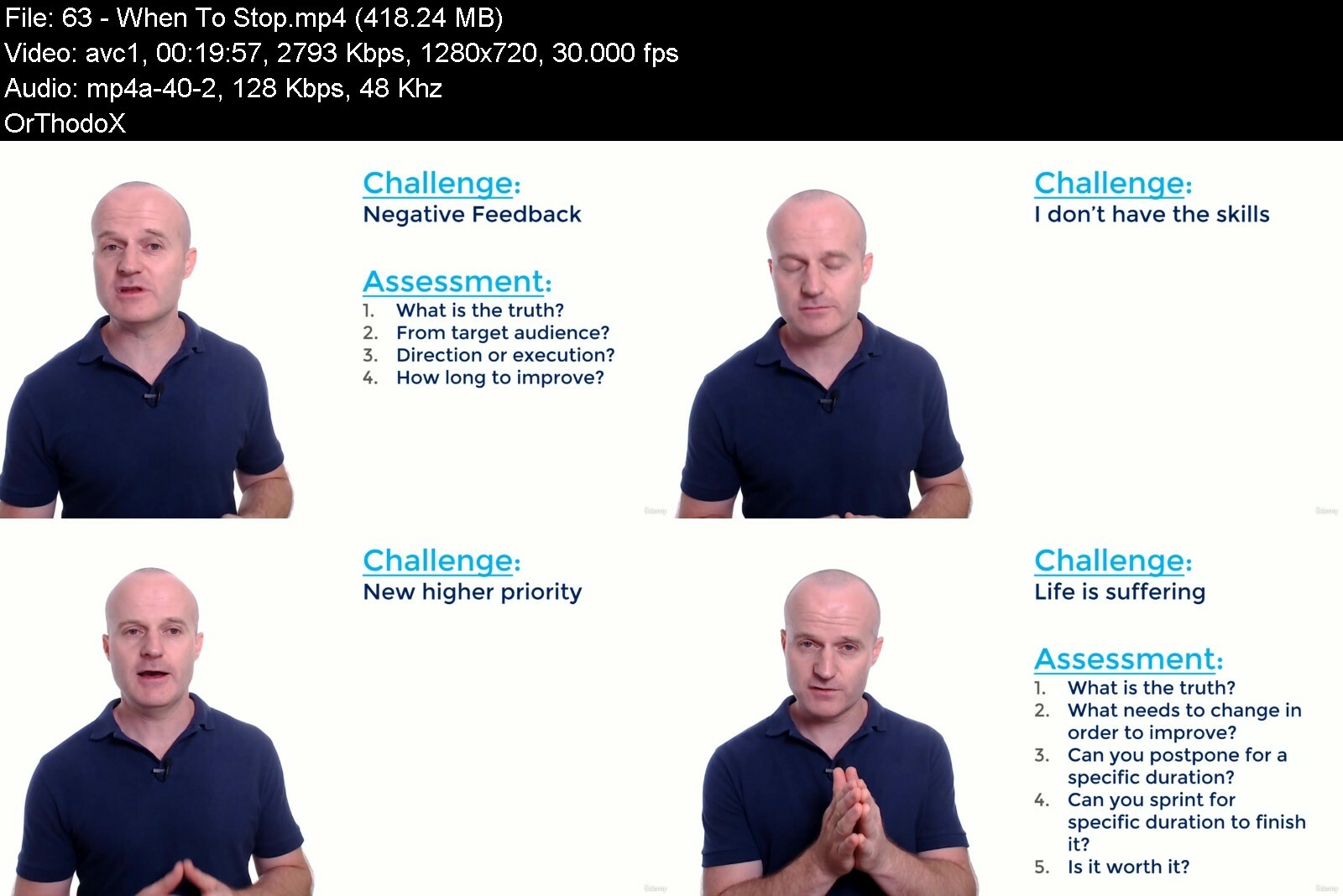
Lecture 63 When To Stop
Section 6: Continuous Improvement
Lecture 64 Section 6 Introduction
Lecture 65 Using Your Workbook
Lecture 66 More To Come!
Lecture 67 Being Driven
Lecture 68 State Of Work
Section 7: Continuing Your GameDev Journey
Lecture 69 BONUS LECTURE
Anyone who could use some help and support to stay focused, motivated and productive while working on their project.


finishitmotivationproe2d16.jpg


Download from RapidGator


Download from DDownload



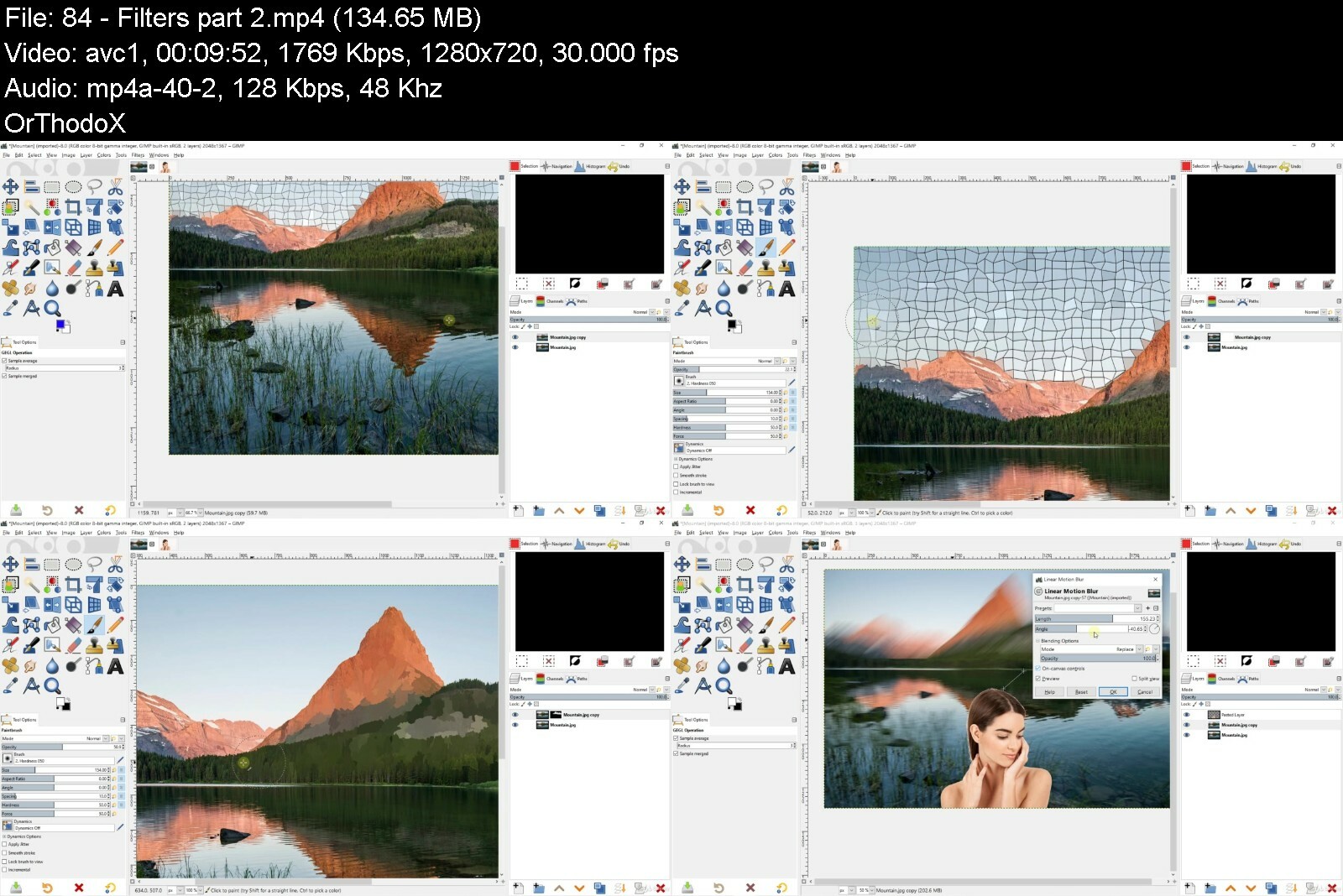
Gimp Masterclass The Complete Course

rnmtmbvmht7tgyypxnqicfcfhy.jpg


Gimp Masterclass The Complete Course
Last updated 2/2022
MP4 | Video: h264, 1280x720 | Audio: AAC, 44.1 KHz
Language: English | Size: 8.33 GB | Duration: 13h 27m

Learn Gimp software to work on all types of graphics projects


What you'll learn
Start with the software
Understand dashboard
Manage windows
Understand layers
Use layer mask
Master selection tools
Master transformation tools
Master painting tool
Manage colors
Add guides
Manage grid
Manage paths
Manage alignments
Add effects on text
Add photo adjustments
Use filters
Color drawing
Edit photo
Create photo montage
Create graphic documents

Requirements
You need to install Gimp

Description
Come and learn how to start with the Gimp softwareGIMP is a powerful software with wide functionality, many tools and filters, and it supports many formats used in digital imaging. It also has a very flexible and configurable interface to adapt to individual needs. It's an open source software, which means you can use for free. If you are looking for a free alternative to the famous Photoshop, then come and work on Gimp. You will have an impressive number of possibilities for image processing. This extremely comprehensive software allows you to create any type of project through high quality graphic compositions. It can therefore be used for professional or amateur purposes. Gimp manages the colors of your RGB or CMYK material.What can be done with the Gimp software- Clipping on images- Artistic drawing- Photo editing- Various manipulations on images- Web graphics- Creation of graphic documents like covers, flyers, banners, logos and moreGimpIn this training you will learn how to master Gimp perfectly from scratch. At the end of the training you will have an excellent level on this software and you will be able to work on all types of graphic documents. After explaining the interface and window management, you will learn the basics to get started, such as layers or masks. Then all the tools will be explained in great detail, with concrete examples to optimize understanding. You will also learn how to perfectly manage selections, create shapes or add text. We will also see the basics for editing photos, as well as the addition of filters and their different uses. At the end of the course, many training sessions will allow you to apply all the elements seen in the course.
Overview
Section 1: Introduction
Lecture 1 Introduction
Section 2: Start with Gimp
Lecture 2 Manage dashboard
Lecture 3 Edit toolbar
Lecture 4 Edit windows
Lecture 5 History panel
Lecture 6 Navigation on image
Lecture 7 Brush options
Section 3: Create save and export
Lecture 8 Create and open document
Lecture 9 Save and export
Section 4: Canevas and image
Lecture 10 Edit canvas
Lecture 11 Scale image
Section 5: Manage layers
Lecture 12 Layers part 1
Lecture 13 Layers part 2
Lecture 14 Layer mask
Lecture 15 Quick mask
Lecture 16 Blend mode
Lecture 17 Link layers
Lecture 18 Adjust layers
Section 6: Selection tools
Lecture 19 Rectangle selection tool
Lecture 20 Ellipse selection tool
Lecture 21 Free selection tool
Lecture 22 Scissor selection tool
Lecture 23 Foreground selection tool
Lecture 24 Fuzzy selection tool
Lecture 25 Selection by color tool
Lecture 26 Path tool for selection
Section 7: Edit selections
Lecture 27 Floating selection
Lecture 28 Edit selections
Lecture 29 Alpha channel
Lecture 30 Alpha to selections
Lecture 31 Recuperate selections
Lecture 32 Shrink and grow selections
Lecture 33 Stroke on selections
Lecture 34 Remove background
Section 8: Transformation tools
Lecture 35 Move tool
Lecture 36 Scale tool
Lecture 37 Perspective tool
Lecture 38 Cage transform tool
Lecture 39 Unified transform tool
Lecture 40 Shear tool
Lecture 41 Flip tool
Lecture 42 Crop tool
Lecture 43 Handle transform tool
Lecture 44 Rotation tool
Lecture 45 3D transform tool
Section 9: Painting tools
Lecture 46 Bucket fill tool
Lecture 47 Gradient tool
Lecture 48 Eraser tool
Lecture 49 Brush tool
Lecture 50 Pencil tool
Lecture 51 Air brush tool
Lecture 52 My paint brush tool
Lecture 53 Ink tool
Lecture 54 Paths tool
Lecture 55 Warp transform tool
Lecture 56 Clone tool
Lecture 57 Perspective clone tool
Lecture 58 Healing tool
Lecture 59 Smudge tool
Lecture 60 Blur sharpen tool
Lecture 61 Dodge burn tool
Lecture 62 Measure tool
Lecture 63 Color picker tool
Section 10: Colors and strokes
Lecture 64 Manage colors
Lecture 65 Manage strokes
Section 11: Add text
Lecture 66 Add text
Lecture 67 Text alignment
Lecture 68 Text along circle
Lecture 69 Text along path
Section 12: Grid and guides
Lecture 70 Add grid
Lecture 71 Add guides
Section 13: Image inside shape
Lecture 72 Image inside shape
Lecture 73 Image inside text
Section 14: Alignments and distribution
Lecture 74 Manage alignments
Lecture 75 Manage distribution
Section 15: Manage paths
Lecture 76 Manage paths part 1
Lecture 77 Manage paths part 2
Section 16: Photo adjustments
Lecture 78 Histogram photo
Lecture 79 Adjustments part 1
Lecture 80 Adjustments part 2
Lecture 81 Adjustment colorize
Lecture 82 Adjustment posterize
Section 17: Add filters
Lecture 83 Filters part 1
Lecture 84 Filters part 2
Lecture 85 Filters blur
Lecture 86 Filters enhance
Lecture 87 Filters distorts
Lecture 88 Filters shadow
Lecture 89 Filters light
Lecture 90 Filters noise
Lecture 91 Filters edge detect
Lecture 92 Filters generic
Lecture 93 Filters artistic
Lecture 94 Filters decor
Lecture 95 Filters map
Lecture 96 Filters render
Lecture 97 Create spheres
Lecture 98 Create shapes
Section 18: Colorize drawing
Lecture 99 Color drawing example 1
Lecture 100 Color drawing example 2
Section 19: Training add effects on images
Lecture 101 Change eyes color
Lecture 102 Black and white effect
Lecture 103 Lightning effect
Lecture 104 Snow effect
Lecture 105 Little planet effect
Section 20: Training add effects on text
Lecture 106 Reflect effect on text part 1
Lecture 107 Reflect effect on text part 2
Lecture 108 Snow effect on text part 1
Lecture 109 Snow effect on text part 2
Section 21: Training edit face
Lecture 110 Edit face part 1
Lecture 111 Edit face part 2
Section 22: Training create photo montage
Lecture 112 Slices on face part 1
Lecture 113 Slices on face part 2
Lecture 114 Montage double exposure part 1
Lecture 115 Montage double exposure part 2
Lecture 116 Montage 3D frame part 1
Lecture 117 Montage 3D frame part 2
Lecture 118 Photo montage part 1
Lecture 119 Photo montage part 2
Section 23: Training create graphic documents
Lecture 120 Post social network part 1
Lecture 121 Post social network part 2
Lecture 122 Cover magazine part 1
Lecture 123 Cover magazine part 2
Lecture 124 Montage nature part 1
Lecture 125 Montage nature part 2
Lecture 126 Banner design part 1
Lecture 127 Banner design part 2
Lecture 128 Logo design part 1
Lecture 129 Logo design part 2
People wishing to work in design graphics,Individuals wishing to use the software for editing or editing,People who want to work on a free alternative to Photoshop


gimpmasterclassthecompvdp3.jpg


Download from RapidGator


Download from DDownload



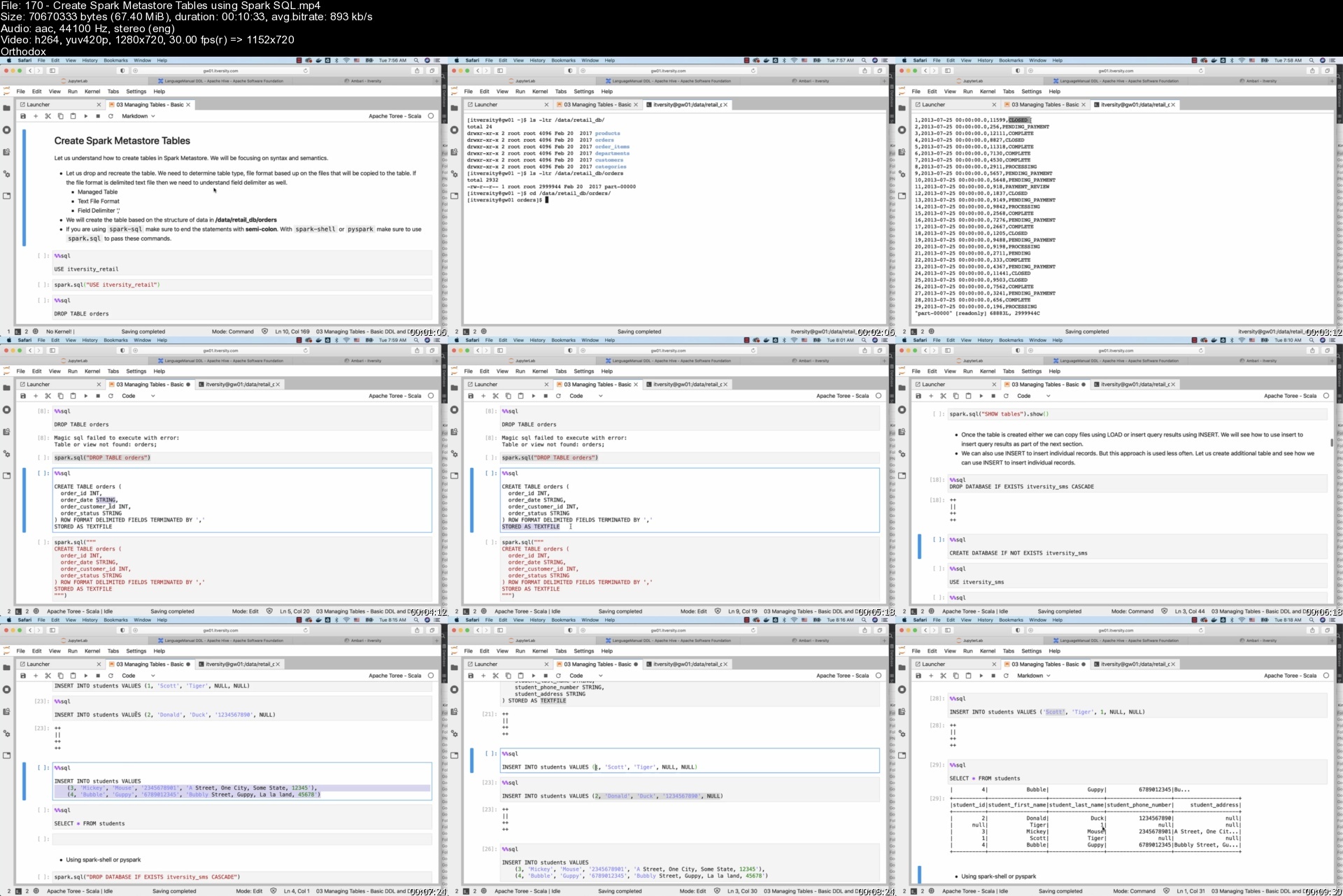
Spark Sql And Spark 3 Using Scala Hands-On With Labs

2luddd3d2pjszat5qgtmvk4epz.jpg


Spark Sql And Spark 3 Using Scala Hands-On With Labs
Last updated 2/2022
MP4 | Video: h264, 1280x720 | Audio: AAC, 44.1 KHz
Language: English | Size: 8.75 GB | Duration: 24h 12m

A comprehensive course on Spark SQL as well as Data Frame APIs using Scala with complementary lab access


What you'll learn
All the HDFS Commands that are relevant to validate files and folders in HDFS.
Enough Scala to work Data Engineering Projects using Scala as Programming Language
Spark Dataframe APIs to solve the problems using Dataframe style APIs.
Basic Transformations such as Projection, Filtering, Total as well as Aggregations by Keys using Spark Dataframe APIs
Inner as well as outer joins using Spark Data Frame APIs
Ability to use Spark SQL to solve the problems using SQL style syntax.
Basic Transformations such as Projection, Filtering, Total as well as Aggregations by Keys using Spark SQL
Inner as well as outer joins using Spark SQL
Basic DDL to create and manage tables using Spark SQL
Basic DML or CRUD Operations using Spark SQL
Create and Manage Partitioned Tables using Spark SQL
Manipulating Data using Spark SQL Functions
Advanced Analytical or Windowing Functions to perform aggregations and ranking using Spark SQL

Requirements
Basic programming skills
Self support lab (Instructions provided) or ITVersity lab at additional cost for appropriate environment.
Minimum memory required based on the environment you are using with 64 bit operating system
4 GB RAM with access to proper clusters or 16 GB RAM with virtual machines such as Cloudera QuickStart VM

Description
As part of this course, you will learn all the key skills to build Data Engineering Pipelines using Spark SQL and Spark Data Frame APIs using Scala as a Programming language. This course used to be a CCA 175 Spark and Hadoop Developer course for the preparation of the Certification Exam. As of 10/31/2021, the exam is sunset and we have renamed it to Spark SQL and Spark 3 using Scala as it covers industry-relevant topics beyond the scope of certification.About Data EngineeringData Engineering is nothing but processing the data depending on our downstream needs. We need to build different pipelines such as Batch Pipelines, Streaming Pipelines, etc as part of Data Engineering. All roles related to Data Processing are consolidated under Data Engineering. Conventionally, they are known as ETL Development, Data Warehouse Development, etc. Apache Spark is evolved as a leading technology to take care of Data Engineering at scale.I have prepared this course for anyone who would like to transition into a Data Engineer role using Spark (Scala). I myself am a proven Data Engineering Solution Architect with proven experience in designing solutions using Apache Spark.Let us go through the details about what you will be learning in this course. Keep in mind that the course is created with a lot of hands-on tasks which will give you enough practice using the right tools. Also, there are tons of tasks and exercises to evaluate yourself.Setup of Single Node Big Data ClusterMany of you would like to transition to Big Data from Conventional Technologies such as Mainframes, Oracle PL/SQL, etc and you might not have access to Big Data Clusters. It is very important for you set up the environment in the right manner. Don't worry if you do not have the cluster handy, we will guide you through support via Udemy Q&A.Setup Ubuntu-based AWS Cloud9 Instance with the right configurationEnsure Docker is setupSetup Jupyter Lab and other key componentsSetup and Validate Hadoop, Hive, YARN, and SparkAre you feeling a bit overwhelmed about setting up the environment? Don't worry!!! We will provide complementary lab access for up to 2 months. Here are the details.Training using an interactive environment. You will get 2 weeks of lab access, to begin with. If you like the environment, and acknowledge it by providing a 5* rating and feedback, the lab access will be extended to additional 6 weeks (2 months). Feel free to send an email to [email protected] to get complementary lab access. Also, if your employer provides a multi-node environment, we will help you set up the material for the practice as part of the live session. On top of Q&A Support, we also provide required support via live sessions.A quick recap of ScalaThis course requires a decent knowledge of Scala. To make sure you understand Spark from a Data Engineering perspective, we added a module to quickly warm up with Scala. If you are not familiar with Scala, then we suggest you go through relevant courses on Scala as Programming Language.Data Engineering using Spark SQLLet us, deep-dive into Spark SQL to understand how it can be used to build Data Engineering Pipelines. Spark with SQL will provide us the ability to leverage distributed computing capabilities of Spark coupled with easy-to-use developer-friendly SQL-style syntax.Getting Started with Spark SQLBasic Transformations using Spark SQLManaging Spark Metastore Tables - Basic DDL and DMLManaging Spark Metastore Tables Tables - DML and PartitioningOverview of Spark SQL FunctionsWindowing Functions using Spark SQLData Engineering using Spark Data Frame APIsSpark Data Frame APIs are an alternative way of building Data Engineering applications at scale leveraging distributed computing capabilities of Spark. Data Engineers from application development backgrounds might prefer Data Frame APIs over Spark SQL to build Data Engineering applications.Data Processing Overview using Spark Data Frame APIs leveraging Scala as Programming LanguageProcessing Column Data using Spark Data Frame APIs leveraging Scala as Programming LanguageBasic Transformations using Spark Data Frame APIs leveraging Scala as Programming Language - Filtering, Aggregations, and SortingJoining Data Sets using Spark Data Frame APIs leveraging Scala as Programming LanguageAll the demos are given on our state-of-the-art Big Data cluster. You can avail of one-month complimentary lab access by reaching out to [email protected] with a Udemy receipt.

Overview

Section 1: Introduction

Lecture 1 CCA 175 Spark and Hadoop Developer - Curriculum

Section 2: Setting up Environment using AWS Cloud9

Lecture 2 Getting Started with Cloud9

Lecture 3 Creating Cloud9 Environment

Lecture 4 Warming up with Cloud9 IDE

Lecture 5 Overview of EC2 related to Cloud9

Lecture 6 Opening ports for Cloud9 Instance

Lecture 7 Associating Elastic IPs to Cloud9 Instance

Lecture 8 Increase EBS Volume Size of Cloud9 Instance

Lecture 9 Setup Jupyter Lab on Cloud9

Lecture 10[Commands] Setup Jupyter Lab on Cloud9

Section 3: Setting up Environment - Overview of GCP and Provision Ubuntu VM

Lecture 11 Signing up for GCP

Lecture 12 Overview of GCP Web Console

Lecture 13 Overview of GCP Pricing

Lecture 14 Provision Ubuntu VM from GCP

Lecture 15 Setup Docker

Lecture 16 Why we are setting up Python and Jupyter Lab for Scala related course?

Lecture 17 Validating Python

Lecture 18 Setup Jupyter Lab

Section 4: Setup Hadoop on Single Node Cluster

Lecture 19 Introduction to Single Node Hadoop Cluster

Lecture 20 Setup Prerequisties

Lecture 21[Commands] - Setup Prerequisites

Lecture 22 Setup Password less login

Lecture 23[Commands] - Setup Password less login

Lecture 24 Download and Install Hadoop

Lecture 25[Commands] - Download and Install Hadoop

Lecture 26 Configure Hadoop HDFS

Lecture 27[Commands] - Configure Hadoop HDFS

Lecture 28 Start and Validate HDFS

Lecture 29[Commands] - Start and Validate HDFS

Lecture 30 Configure Hadoop YARN

Lecture 31[Commands] - Configure Hadoop YARN

Lecture 32 Start and Validate YARN

Lecture 33[Commands] - Start and Validate YARN

Lecture 34 Managing Single Node Hadoop

Lecture 35[Commands] - Managing Single Node Hadoop

Section 5: Setup Hive and Spark on Single Node Cluster

Lecture 36 Setup Data Sets for Practice

Lecture 37[Commands] - Setup Data Sets for Practice

Lecture 38 Download and Install Hive

Lecture 39[Commands] - Download and Install Hive

Lecture 40 Setup Database for Hive Metastore

Lecture 41[Commands] - Setup Database for Hive Metastore

Lecture 42 Configure and Setup Hive Metastore

Lecture 43[Commands] - Configure and Setup Hive Metastore

Lecture 44 Launch and Validate Hive

Lecture 45[Commands] - Launch and Validate Hive

Lecture 46 Scripts to Manage Single Node Cluster

Lecture 47[Commands] - Scripts to Manage Single Node Cluster

Lecture 48 Download and Install Spark 2

Lecture 49[Commands] - Download and Install Spark 2

Lecture 50 Configure Spark 2

Lecture 51[Commands] - Configure Spark 2

Lecture 52 Validate Spark 2 using CLIs

Lecture 53[Commands] - Validate Spark 2 using CLIs

Lecture 54 Validate Jupyter Lab Setup

Lecture 55[Commands] - Validate Jupyter Lab Setup

Lecture 56 Intergrate Spark 2 with Jupyter Lab

Lecture 57[Commands] - Intergrate Spark 2 with Jupyter Lab

Lecture 58 Download and Install Spark 3

Lecture 59[Commands] - Download and Install Spark 3

Lecture 60 Configure Spark 3

Lecture 61[Commands] - Configure Spark 3

Lecture 62 Validate Spark 3 using CLIs

Lecture 63[Commands] - Validate Spark 3 using CLIs

Lecture 64 Intergrate Spark 3 with Jupyter Lab

Lecture 65[Commands] - Intergrate Spark 3 with Jupyter Lab

Section 6: Scala Fundamentals

Lecture 66 Introduction and Setting up of Scala

Lecture 67 Setup Scala on Windows

Lecture 68 Basic Programming Constructs

Lecture 69 Functions

Lecture 70 Object Oriented Concepts - Classes

Lecture 71 Object Oriented Concepts - Objects

Lecture 72 Object Oriented Concepts - Case Classes

Lecture 73 Collections - Seq, Set and Map

Lecture 74 Basic Map Reduce Operations

Lecture 75 Setting up Data Sets for Basic I/O Operations

Lecture 76 Basic I/O Operations and using Scala Collections APIs

Lecture 77 Tuples

Lecture 78 Development Cycle - Create Program File

Lecture 79 Development Cycle - Compile source code to jar using SBT

Lecture 80 Development Cycle - Setup SBT on Windows

Lecture 81 Development Cycle - Compile changes and run jar with arguments

Lecture 82 Development Cycle - Setup IntelliJ with Scala

Lecture 83 Development Cycle - Develop Scala application using SBT in IntelliJ

Section 7: Overview of Hadoop HDFS Commands

Lecture 84 Getting help or usage of HDFS Commands

Lecture 85 Listing HDFS Files

Lecture 86 Managing HDFS Directories

Lecture 87 Copying files from local to HDFS

Lecture 88 Copying files from HDFS to local

Lecture 89 Getting File Metadata

Lecture 90 Previewing Data in HDFS File

Lecture 91 HDFS Block Size

Lecture 92 HDFS Replication Factor

Lecture 93 Getting HDFS Storage Usage

Lecture 94 Using HDFS Stat Commands

Lecture 95 HDFS File Permissions

Lecture 96 Overriding Properties

Section 8: Apache Spark 2 using Scala - Data Processing - Overview

Lecture 97 Introduction for the module

Lecture 98 Starting Spark Context using spark-shell

Lecture 99 Overview of Spark read APIs

Lecture 100 Previewing Schema and Data using Spark APIs

Lecture 101 Overview of Spark Data Frame APIs

Lecture 102 Overview of Functions to Manipulate Data in Spark Data Frames

Lecture 103 Overview of Spark Write APIs

Section 9: Apache Spark 2 using Scala - Processing Column Data using Pre-defined Functions

Lecture 104 Introduction to Pre-defined Functions

Lecture 105 Creating Spark Session Object in Notebook

Lecture 106 Create Dummy Data Frames for Practice

Lecture 107 Categories of Functions on Spark DAta Frame Columns

Lecture 108 Using Spark Special Functions - col

Lecture 109 Using Spark Special Functions - lit

Lecture 110 Manipulating String Columns using Spark Functions - Case Conversion and Length

Lecture 111 Manipulating String Columns using Spark Functions - substring

Lecture 112 Manipulating String Columns using Spark Functions - split

Lecture 113 Manipulating String Columns using Spark Functions - Concatenating Strings

Lecture 114 Manipulating String Columns using Spark Functions - Padding Strings

Lecture 115 Manipulating String Columns using Spark Functions - Trimming unwanted characters

Lecture 116 Date and Time Functions in Spark - Overview

Lecture 117 Date and Time Functions in Spark - Date Arithmetic

Lecture 118 Date and Time Functions in Spark - Using trunc and date_trunc

Lecture 119 Date and Time Functions in Spark - Using date_format and other functions

Lecture 120 Date and Time Functions in Spark - dealing with unix timestamp

Lecture 121 Pre-defined Functions in Spark - Conclusion

Section 10: Apache Spark 2 using Scala - Basic Transformations using Data Frames

Lecture 122 Introduction to Basic Transformations using Data Frame APIs

Lecture 123 Starting Spark Context

Lecture 124 Overview of Filtering using Spark Data Frame APIs

Lecture 125 Filtering Data from Spark Data Frames - Reading Data and Understanding Schema

Lecture 126 Filtering Data from Spark Data Frames - Task 1 - Equal Operator

Lecture 127 Filtering Data from Spark Data Frames - Task 2 - Comparison Operators

Lecture 128 Filtering Data from Spark Data Frames - Task 3 - Boolean AND

Lecture 129 Filtering Data from Spark Data Frames - Task 4 - IN Operator

Lecture 130 Filtering Data from Spark Data Frames - Task 5 - Between and Like

Lecture 131 Filtering Data from Spark Data Frames - Task 6 - Using functions in Filter

Lecture 132 Overview of Aggregations using Spark Data Frame APIs

Lecture 133 Overview of Sorting using Spark Data Frame APIs

Lecture 134 Solution - Get Delayed Counts using Spark Data Frame APIs - Part 1

Lecture 135 Solution - Get Delayed Counts using Spark Data Frame APIs - Part 2

Lecture 136 Solution - Getting Delayed Counts By Date using Spark Data Frame APIs

Section 11: Apache Spark 2 using Scala - Joining Data Sets

Lecture 137 Prepare and Validate Data Sets

Lecture 138 Starting Spark Session or Spark Context

Lecture 139 Analyze Data Sets for Joins using Spark Data Frame APIs

Lecture 140 Eliminate Duplicate records from Data Frame using Spark Data Frame APIs

Lecture 141 Recap of Basic Transformations using Spark Data Frame APIs

Lecture 142 Joining Data Sets using Spark Data Frame APIs - Problem Statements

Lecture 143 Overview of Joins using Spark Data Frame APIs

Lecture 144 Inner Join using Spark Data Fr - Get number of flights departed from US airports

Lecture 145 Inner Join using Spark Data Fram - Get number of flights departed from US States

Lecture 146 Outer Join using Spark Data Frame APIs - Get Aiports - Never Used

Section 12: Apache Spark using SQL - Getting Started

Lecture 147 Getting Started with Spark SQL - Overview

Lecture 148 Overview of Spark Documentation

Lecture 149 Launching and using Spark SQL CLI

Lecture 150 Overview of Spark SQL Properties

Lecture 151 Running OS Commands using Spark SQL

Lecture 152 Understanding Spark Metastore Warehouse Directory

Lecture 153 Managing Spark Metastore Databases

Lecture 154 Managing Spark Metastore Tables

Lecture 155 Retrieve Metadata of Spark Metastore Tables

Lecture 156 Role of Spark Metastore or Hive Metastore

Lecture 157 Exercise - Getting Started with Spark SQL

Section 13: Apache Spark using SQL - Basic Transformations

Lecture 158 Basic Transformation using Spark SQL - Introduction

Lecture 159 Spark SQL - Overview

Lecture 160 Define Problem Statement for Basic Transformations using Spark SQL

Lecture 161 Prepare or Create Tables using Spark SQL

Lecture 162 Projecting or Selecting Data using Spark SQL

Lecture 163 Filtering Data using Spark SQL

Lecture 164 Joining Tables using Spark SQL - Inner

Lecture 165 Joining Tables using Spark SQL - Outer

Lecture 166 Aggregating Data using Spark SQL

Lecture 167 Sorting Data using Spark SQL

Lecture 168 Conclusion - Final Solution using Spark SQL

Section 14: Apache Spark using SQL - Basic DDL and DML

Lecture 169 Introduction to Basic DDL and DML using Spark SQL

Lecture 170 Create Spark Metastore Tables using Spark SQL

Lecture 171 Overview of Data Types for Spark Metastore Table Columns

Lecture 172 Adding Comments to Spark Metastore Tables using Spark SQL

Lecture 173 Loading Data Into Spark Metastore Tables using Spark SQL - Local

Lecture 174 Loading Data Into Spark Metastore Tables using Spark SQL - HDFS

Lecture 175 Loading Data into Spark Metastore Tables using Spark SQL - Append and Overwrite

Lecture 176 Creating External Tables in Spark Metastore using Spark SQL

Lecture 177 Managed Spark Metastore Tables vs External Spark Metastore Tables

Lecture 178 Overview of Spark Metastore Table File Formats

Lecture 179 Drop Spark Metastore Tables and Databases

Lecture 180 Truncating Spark Metastore Tables

Lecture 181 Exercise - Managed Spark Metastore Tables

Section 15: Apache Spark using SQL - DML and Partitioning

Lecture 182 Introduction to DML and Partitioning of Spark Metastore Tables using Spark SQL

Lecture 183 Introduction to Partitioning of Spark Metastore Tables using Spark SQL

Lecture 184 Creating Spark Metastore Tables using Parquet File Format

Lecture 185 Load vs. Insert into Spark Metastore Tables using Spark SQL

Lecture 186 Inserting Data using Stage Spark Metastore Table using Spark SQL

Lecture 187 Creating Partitioned Spark Metastore Tables using Spark SQL

Lecture 188 Adding Partitions to Spark Metastore Tables using Spark SQL

Lecture 189 Loading Data into Partitioned Spark Metastore Tables using Spark SQL

Lecture 190 Inserting Data into Partitions of Spark Metastore Tables using Spark SQL

Lecture 191 Using Dynamic Partition Mode to insert data into Spark Metastore Tables

Lecture 192 Exercise - Partitioned Spark Metastore Tables using Spark SQL

Section 16: Apache Spark using SQL - Pre-defined Functions

Lecture 193 Introduction - Overview of Spark SQL Functions

Lecture 194 Overview of Pre-defined Functions using Spark SQL

Lecture 195 Validating Functions using Spark SQL

Lecture 196 String Manipulation Functions using Spark SQL

Lecture 197 Date Manipulation Functions using Spark SQL

Lecture 198 Overview of Numeric Functions using Spark SQL

Lecture 199 Data Type Conversion using Spark SQL

Lecture 200 Dealing with Nulls using Spark SQL

Lecture 201 Using CASE and WHEN using Spark SQL

Lecture 202 Query Example - Word Count using Spark SQL

Section 17: Apache Spark using SQL - Pre-defined Functions - Exercises

Lecture 203 Prepare Users Table using Spark SQL

Lecture 204 Exercise 1 - Get number of users created per year

Lecture 205 Exercise 2 - Get the day name of the birth days of users

Lecture 206 Exercise 3 - Get the names and email ids of users added in the year 2019

Lecture 207 Exercise 4 - Get the number of users by gender

Lecture 208 Exercise 5 - Get last 4 digits of unique ids

Lecture 209 Exercise 6 - Get the count of users based up on country code

Section 18: Apache Spark using SQL - Windowing Functions

Lecture 210 Introduction to Windowing Functions using Spark SQL

Lecture 211 Prepare HR Database in Spark Metastore using Spark SQL

Lecture 212 Overview of Windowing Functions using Spark SQL

Lecture 213 Aggregations using Windowing Functions using Spark SQL

Lecture 214 LEAD or LAG Functions using Spark SQL

Lecture 215 Getting first and last values using Spark SQL

Lecture 216 Ranking using Windowing Functions in Spark SQL

Lecture 217 Order of execution of Spark SQL Queries

Lecture 218 Overview of Subqueries using Spark SQL

Lecture 219 Filtering Window Function Results using Spark SQL

Section 19: Sample scenarios with solutions

Lecture 220 Introduction to Sample Scenarios and Solutions

Lecture 221 Problem Statements - General Guidelines

Lecture 222 Initializing the job - General Guidelines

Lecture 223 Getting crime count per type per month - Understanding Data

Lecture 224 Getting crime count per type per month - Implementing the logic - Core API

Lecture 225 Getting crime count per type per month - Implementing the logic - Data Frames

Lecture 226 Getting crime count per type per month - Validating Output

Lecture 227 Get inactive customers - using Core Spark API (leftOuterJoin)

Lecture 228 Get inactive customers - using Data Frames and SQL

Lecture 229 Get top 3 crimes in RESIDENCE - using Core Spark API

Lecture 230 Get top 3 crimes in RESIDENCE - using Data Frame and SQL

Lecture 231 Convert NYSE data from text file format to parquet file format

Lecture 232 Get word count - with custom control arguments, num keys and file format

Any IT aspirant/professional willing to learn Data Engineering using Apache Spark,Python Developers who want to learn Spark using Scala to add additional skill to be a Data Engineer,Java or Scala Developers to learn Spark using Scala to add Data Engineering Skills to their profile

Homepage


170createsparkmetastom8e0z.jpg


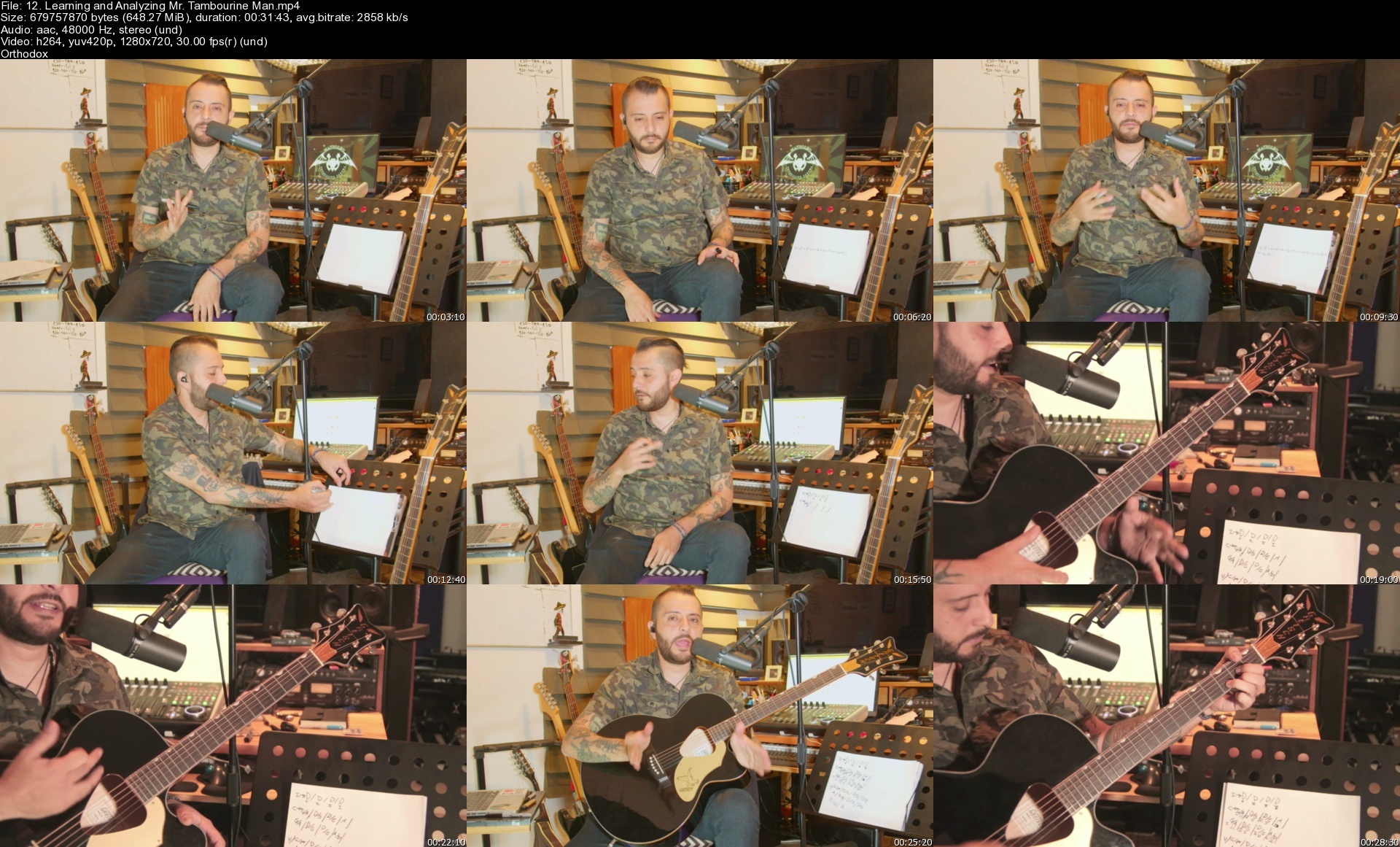
Complete Guitar Megacourse: Beginner to Expert (2022)

48373409dbdidibg.jpg


Complete Guitar Megacourse: Beginner to Expert (2022)
Last Updated 08/2022
MP4 | Video: h264, 1280x720 | Audio: AAC, 44.1 KHz, 2 Ch
Genre: eLearning | Language: English + srt | Duration: 219 lectures (65h 48m) | Size: 82.9 GB

Learn how to play the Guitar like a pro with this step-by-step course!


What you'll learn
How to play the guitar
The basics and techniques of playing different styles of guitar
Warm up and hand strengthening exercises
Music theory
The guitar chords and scales
The different types of gear and how to use it and take care of it properly
Different licks and tricks
How to play different songs
Different styles, including Blues, Folk, Bluegrass, Country, Funk, Ska, Reggae, Rock, Indie
How to play both the acoustic and electric guitar
The principles of guitar improvisation
Guitar recording techniques


Requirements
No previous knowledge of guitar-playing required
A desire to learn!
A positive attitude!


Description
Have you always wanted to play the guitar? Maybe you're taking the first steps in learning this instrument, or perhaps you want to improve your guitar skills by mastering different styles and techniques. Whether you're a beginner just starting off with the guitar, or a musician hoping to make a career out of it, this course is for everyone. You can take your guitar skills to the next level - and we're here to teach you how.

In this course we'll give you the tools to become a great guitarist, regardless of the style you like. You'll learn exercises to get those fingers up to speed for playing various styles, and mastering specific techniques for each of them. You will even learn music theory applied to the instrument and start writing your own songs and solos! You will also learn many different styles of guitar, such as Blues, Folk, Rock, Indie, and Slide guitar, to name a few. This course will also help you find your unique identity as a musician.

Our instructors have years of experience not only in guitar playing, but also in teaching, and the expertly-crafted syllabus is designed to be easy to follow and thorough. We've even included plenty of examples and tablatures for you to play and study. That's why this is the only Guitar course you'll ever need to learn and play the Guitar like a pro!

After taking this course, you will be able to

Play the acoustic and electric guitar

Play different songs on the guitar

Recognize different types of gear and what serves you the bestImprovise on the guitar

Read music from tablature

Play different styles of music on the guitar

Design and produce your own guitar solo

Who this course is for
Anyone who wants to learn to play the guitar - no experience needed!
Musicians/Guitar players who want to learn new styles
Anyone with specialized needs (professional musicians, guitarists, music teachers, sound engineers)

Homepage


12.learningandanalyzikoise.jpg


MERN Stack Project Course 2022 - Build Fullstack React App

485193869698u8dqb.jpg


MERN Stack Project Course 2022 - Build Fullstack React App
Last updated 9/2022
MP4 | Video: h264, 1280x720 | Audio: AAC, 44.1 KHz, 2 Ch
Genre: eLearning | Language: English + srt | Duration: 323 lectures (30h 28m) | Size: 16.2 GB

Learn MERN Stack By Building an Advanced E-commerce App incl. Product Attributes, SocketIO, Real Time Chat,Charts & More


What you'll learn
Learn How To Combine MongoDB, Express, React, NodeJS (MERN Stack)
How To Create Fullstack Web Applications (Frontend + Backend) From Scratch Using MERN Stack
How To Create Testable and Maintainable React Components
How To Test Your App using Jest & Postman/Insomnia
Understand Redux With Real Life Scenarios
Create Real Time Chat and Chart
Much much more


Requirements
JavaScript language at least intermediate level
ES6 syntax (object de-structuring and arrow functions)
Basics of HTML & CSS
Basics of React is recommended but not a must-have


Description
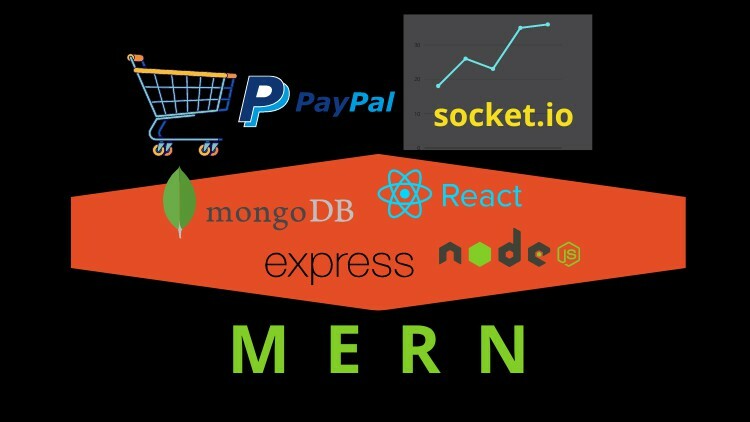
In this course, you will learn the MERN Stack by building an amazing e-commerce application from scratch. The application will have not only basic functionalities such as a shopping cart and product search, but also advanced things such as chat, real-time sales charts, product attributes (e.g. product color to choose from), creating testable components in React and other things (see free videos and curriculum).

MERN Stack is a very popular development kit for building web applications. MERN consists of MongoDB (as a database), Express (a framework to make it easier to use Node), React (to create user interfaces), and Node (as a server). You will learn how to combine all four technologies together and build an advanced fully responsive e-commerce application step by step.

In the first part, you will learn the basics of MERN Stack and the JSX extension. Thanks to JSX we can easily create components in React. I will also show you the entire application and give you some tips about VS Code and downloadable resources. And the rest of this course is about covering and going through the steps of creating each MERN Stack application from scratch using e-commerce as example app. I will explain you everything in elegant and understandable way. You will deeply understand Redux using real life scenarios.

We'll start by installing React and creating an HTML template for the entire application (using React Bootstrap). We will link the created subpages with routing

Next, we will install Express JS to handle the Node server for our application

We will connect to the MongoDD database and save example data to this database, such as a list of products for the store

We will create an API through which the frontend will retrieve data from the database, log in to the application, etc.

Once we have the frontend, backend and API, we can connect everything together and develop the application further by supplementing the frontend code with backend operations

Some of the e-commerce app features

shoping cart

login, register

PayPal payment

uload images to Clodinary and to local disk

searching, sorting, filtering, pagination of product list

multilevel categories

bestsellers carousel

star rating system and reviews

real time sales charts

chat

deploy application to Heroku

React local state

Redux state

beautiful functional programming using React Hooks

Much more!

Please go through the curriculum and see free videos to get better understanding of the course

Almost all of my students are satisfied with my courses! Take a look at some of the comments from them

"I loved this course, the author explains everything in a good way, even for me non native speaker. I was a bit scared to do an english course but it paid off.

Thanks a lot and greetings from Germany"

another

"This course is outstanding! It covers ground that no other course does. The instructor is well organized and thorough in all his examples and explanations. I'm looking forward to more of his courses."

Sign up for the course now and become a MERN Stack web developer !!!

Who this course is for
Everyone who wants to build full stack web applications using MERN Stack
Everyone who wants to add to the portfolio an advanced MERN Stack project

Homepage


2.managelocalstateforw2ed8.jpg


The Ultimate Hyper-Real Drawing With Colored Pen

ogbhwohyjrkffkdscaotcp3ffn.jpg


The Ultimate Hyper-Real Drawing With Colored Pen
Last updated 6/2021
MP4 | Video: h264, 1280x720 | Audio: AAC, 44.1 KHz
Language: English | Size: 10.27 GB | Duration: 7h 58m

Sketching and Drawing with Colored Ballpoint pen Step by Step Hyper-real- Realistic Drawing with Colored Pen


What you'll learn
Basic and primary sketching of the lips and cross with pencil
Learn how to hatch in layers
Learn to combine colors in painting with pens
Learning to combine skin colors
Lip coloring and creating volumes with pens
Teaching how to draw patterned golden metal texture

Requirements
Fabriano cardboard 220 g
Colored Ballpoint pens in different colors like Staedtler pens
White jelly pen
Eraser
Pencil

Description
Painting with pen technique is one of the sweetest painting techniques, and the popularity of this technique will double when you can draw an attractive painting with the limited color pens available. The advantages of painting with the colored ballpoint pen are the cheapness of its tools, the cleanliness of the technique (which does not require sharpening like a pencil or the need to wash a brush like oil paint, etc.), and it increases your creativity in using the limited colors of pens which are available in the market. Of course, this limitation of colors in pens may be seen as a weakness, but if we look at it from another angle, this weakness can be called a strength that will be a factor in your creativity in combining colors. In the following tutorial, you will be taught a sketch including lips and a cross, in which you will:1. first, get acquainted with the linear sketching of the design.2. then you will learn how to paint and hatch and shade the skin and create the volume of the face. Combining skin color is one of the main challenges in all colored techniques in painting.3. You will also learn the shape, color, and texture of the lips with a pen, and finally, you will learn the golden metallic shape of the cross with embossed designs, which will help you to draw all kinds of golden accessories. The present course is suitable for students over 15 years old who are generally familiar with drawing and painting. The purpose of this course is to teach painting with pen technique, teaching the skin and lip color and creating volumes, as well as gold ornaments and how to make volume.

Overview

Section 1: Introduction

Lecture 1 Introduction & Linear drawing with a pencil

Lecture 2 Main Picture

Lecture 3 Lip sketch

Lecture 4 Sketching of teeth and shape of nose

Lecture 5 Cross sketching

Lecture 6 Continue the Cross sketching

Section 2: Lip Painting with pens

Lecture 7 Upper lip background and foundation color

Lecture 8 Add colors to the upper lip

Lecture 9 Adding darkness and create upper lip volume

Lecture 10 Creating the background and foundation of the lower lip

Lecture 11 Adding colors, hatches, shadings, creating overall volume& texture of lower lip

Lecture 12 Increasing the darkness and creating the volume of the lips

Section 3: Face Volume Painting (Learning Skin Color) with pens

Lecture 13 Create volume and color for foundation of the nose and the space above the lips

Lecture 14 Creating the foundation of the chin

Lecture 15 Creating foundation hatches of the cheek bones

Lecture 16 Create neck background color

Lecture 17 Continue the Create neck background color

Lecture 18 Finish the neck background

Lecture 19 Adding complementary skin colors and creating more volume on the neck and face

Lecture 20 Continue to add complementary skin colors& create more volume on the neck & face

Lecture 21 Continue to complementary skin colors& create more volume on the neck & face

Lecture 22 Finish adding complementary skin colors& create more volume on the neck & face

Lecture 23 Create the inner part of the lips and gums

Lecture 24 Finish the inner part of the lips and gums

Section 4: Cross Painting with pens

Lecture 25 Shaping the general shape of the cross

Lecture 26 Continue Shaping the general shape of the cross

Lecture 27 Create cross background color

Lecture 28 Creating volume and construction of the cross with pens

Lecture 29 Continue to volume and construction of the cross with pens

Lecture 30 Continue to volume and construction of the cross with pen part 2

Lecture 31 Continue to volume and construction of the cross with pen part 3

Lecture 32 Continue to volume and construction of the cross with pen part 4

Lecture 33 Continue to volume and construction of the cross with pen part 5

Lecture 34 Finish to volume and construction of the cross with pen

Lecture 35 Complete the volume and color of facial skin

Section 5: Creating lights and painting teeth with a pen

Lecture 36 Create highlights with pen on lips and foundation of the teeth

Lecture 37 Finish highlights with pen on lips and foundation of the teeth

Lecture 38 Completing the shape, volume and color of the teeth

Lecture 39 Continue completing the shape, volume, and color of the teeth

Lecture 40 Finish completing the shape, volume, and color of the teeth

The present course is suitable for students over 15 years old who are generally familiar with drawing and painting.

Homepage


33continuetovolumeandy5fqw.jpg


Learn Ui Mobile App Design & Game Mechanics In Construct 2

4iqvh5yvbor698xv5xe85k4eop.jpg


Learn Ui Mobile App Design & Game Mechanics In Construct 2
Last updated 11/2017
MP4 | Video: h264, 1280x720 | Audio: AAC, 44.1 KHz
Language: English | Size: 13.72 GB | Duration: 67h 31m

Includes FREE book! This is our ULTIMATE course. Design real iOS apps in Swift.​ Make 60 complete games in Construct 2.


What you'll learn
Navigate Xcode 9's interface.
Code in Apple's programming language, Swift 4.0.
Build apps for the iPhone from start to finish. ​
Make the code AND art for projects.​
Learn how to build simple games from scratch in Construct 2

Requirements
To follow along in Xcode 9, you must have a Mac computer or MacOS software.
Must have the pro version of Construct 2.

Description
Do you want to learn a new skill no one can take away from you? Sign up now for our course.
Code in Swift with practical projects! Design apps from scratch. Learn to make games in Construct 2.
In Part 1 of this course you learn how to make apps in Xcode 9. This course is project-based -- you follow along with your instructor to build real projects.
The best way for you to learn how to make your own app is to follow project-based training content. You can put the apps you make in this course in your portfolio!
Learn to develop for the biggest company in the world
Xcode is Apple's FREE software for app development. Xcode is user-friendly and allows you to make complex and creative apps.
Xcode is accessible for beginners who want to make simple apps. Swift 4.0 is the programming language to learn if you want to make apps for Apple products.
Your teachers will teach you practical skills using real-world examples. Take this course to build your portfolio today.
In Part 2, you build 60 2D games in Construct 2. This course is unique because we make both the code and the art for the game from scratch.
We teach you the fundamentals of designing and coding a game.
Don't worry if you've never coded before. We start simple and add more to the game as the course goes on.
Included in this course is material for beginners to get comfortable with the interfaces. Please note that we reuse this content in similar courses because it is introductory material. You can find some material in this course in the following related courses
C# Unity and Swift 4 Masterclass: Make Games and Apps Xamarin Start to Finish Android & iOS Apps (& Learn to Code)iOS 11 & Swift 4.0 - A Beginner's Guide with ProjectsThe Ultimate iOS 11 & Swift 4 Course. Learn to Build Apps!Code in Kotlin & Java for Android and Complete 5 iPhone AppsFinish 26 Games & Apps Quickly (GameMaker: Studio & Xcode) Swift 4 and ELM Masterclass | Make iOS 11 apps and web apps!Complete Construct 2 and Angular: Make 60 Games and Web AppsBuild 60 Games in Construct 2This course is for you
Usually it takes a whole team of people to build a project like a game or web app. But creators Thomas Happ and Eric Barone developed and designed their games by themselves. Now they're millionaires. You can do it, too.
You get full lifetime access to this course for a single one-time fee.
Your purchase includes the best-selling e-book "The Ultimate iOS 10, Xcode 8 Developer Book. Build 30 apps!" by Mammoth Interactive.
Enroll right now to join the awesome community of Mammoth Interactive

Overview

Section 1: Introduction to the Course

Lecture 1 Course Trailer!

Lecture 2 Construct Game Engine Inspiration

Section 2: Introduction to Xcode 9

Lecture 3 Introduction to This Course

Lecture 4 Top 10 Reasons Why This Course is Awesome!

Lecture 5 How to Use this Course

Lecture 6 How to Download Xcode 9

Lecture 7 Updates

Section 3: Swift 4 - Language Basics

Lecture 8 Language Basics Topics List

Section 4: Swift 4 - Language Basics 01) Variables and Constants

Lecture 9 Learning Goals

Lecture 10 Intro to Variables and Constants

Lecture 11 Primitive Types

Lecture 12 Strings

Lecture 13 Nil Values

Lecture 14 Tuples

Lecture 15 Type Conversions

Lecture 16 Assignment Operators

Lecture 17 Conditional Operators

Lecture 18 Source Code

Section 5: Swift 4 - Language Basics 02) Collection Types

Lecture 19 Topics List and Learning Objectives

Lecture 20 Intro to Collection Types

Lecture 21 Creating Arrays

Lecture 22 Common Array Operations

Lecture 23 Multidimensional Arrays

Lecture 24 Ranges

Lecture 25 Source Code

Section 6: Swift 4 - Language Basics 03) Control Flow

Lecture 26 Topics List and Learning Objectives

Lecture 27 Intro to If and Else Statements

Lecture 28 Else If Statements

Lecture 29 Multiple Simultaneous Tests

Lecture 30 Intro To Switch Statements

Lecture 31 Advanced Switch Statement Techniques

Lecture 32 Testing for Nil Values

Lecture 33 Intro to While Loops

Lecture 34 Intro to For...In Loops

Lecture 35 Intro to For...In Loops (Cont'd)

Lecture 36 Complex Loops and Loop Control Statements

Lecture 37 Source Code

Section 7: Swift 4 - Language Basics 04) Functions

Lecture 38 Topics List and Learning Objectives

Lecture 39 Intro to Functions

Lecture 40 Function Parameters

Lecture 41 Return Statements

Lecture 42 Parameter Variations - Argument Labels

Lecture 43 Parameter Variations - Default Values

Lecture 44 Parameters Variations - InOut Parameters

Lecture 45 Parameter Variations - Variadic Parameters

Lecture 46 Returning Multiple Values Simultaneously

Lecture 47 Source Code

Section 8: Swift 4 - Language Basics 05) Classes, Structs and Enums

Lecture 48 Topics List and Learning Objectives

Lecture 49 Intro to Classes

Lecture 50 Properties as Fields - Add to Class Implementation

Lecture 51 Custom Getters and Setters

Lecture 52 Calculated Properties

Lecture 53 Variable Scope and Self

Lecture 54 Lazy and Static Variables

Lecture 55 Behavior and Instance Methods

Lecture 56 Class Type Methods

Lecture 57 Class Instances as Field Variables

Lecture 58 Inheritance, Subclassing and SuperClassing

Lecture 59 Overriding Initializers

Lecture 60 Overriding Properties

Lecture 61 Overriding Methods

Lecture 62 Structs Overview

Lecture 63 Enumerations

Lecture 64 Comparisons between Classes, Structs and Enums

Lecture 65 Source Code

Section 9: Introduction to XCode

Lecture 66 Intro and Demo

Lecture 67 General Interface Intro

Lecture 68 File System Introduction

Lecture 69 ViewController Intro

Lecture 70 Storyboard File Intro

Lecture 71 Connecting Outlets and Actions

Lecture 72 Running an Application

Lecture 73 Debugging an Application

Lecture 74 Source Code

Section 10: Simple Calculator App (Swift 4 Project)

Lecture 75 Intro and Demo

Lecture 76 Building the UI

Lecture 77 Connecting Outlets and Actions

Lecture 78 Implementation Planning

Lecture 79 Storing Input Values and Choosing Operation

Lecture 80 Implementing Calculate and Clear Function

Lecture 81 Error Checking and Handling

Lecture 82 Beautifying App and Finishing Touches

Lecture 83 Source Code

Section 11: RGB to Hex Code Color Converter App (Swift 4 Project)

Lecture 84 Intro and Demo

Lecture 85 Building the UI

Lecture 86 Connecting Outlets and Actions

Lecture 87 Planning Implementation and Setting Blueprint

Lecture 88 Implementing Conversion Selection

Lecture 89 Implementing Hex to RGB Conversion

Lecture 90 Implementing RGB to Hex Conversion

Lecture 91 Improving App Appearance

Lecture 92 Source Code

Section 12: Hangman Game App (Swift 4 Project)

Lecture 93 Demo and Intro

Lecture 94 Building the UI

Lecture 95 Connecting Outlets, Actions, and Textfield Protocol

Lecture 96 Planning our Implementation Process

Lecture 97 Implement Word and Hint Selection

Lecture 98 Implementing Remaining Set Up

Lecture 99 Implementing TextField Processing

Lecture 100 Implementing Correct Guess Processing

Lecture 101 Implementing Incorrect Guess Processing

Lecture 102 Implementing The Last Bit of Functionality

Lecture 103 Improving App Appearance

Lecture 104 Source Code

Section 13: Simple Flashcard App (Swift 4 Project)

Lecture 105 Intro and Demo

Lecture 106 Building the Interface

Lecture 107 Connecting Outlets and Actions

Lecture 108 Building the data model

Lecture 109 Planning Implementation

Lecture 110 Implement Save Functionality

Lecture 111 Implementing Fetch Functionality

Lecture 112 Implementing Display Functionality

Lecture 113 Implementing Delete Functionality

Lecture 114 Improving App Appearance

Lecture 115 BONUS #1: More About the NSManagedObjectContext

Lecture 116 BONUS #2: Implementing Subject Search

Lecture 117 Source Code

Section 14: Simple Weather App (Swift 4 Project)

Lecture 118 Introduction and Demo

Lecture 119 Building and Connecting the UI

Lecture 120 Learning about our Weather API

Lecture 121 Planning Implementation Phase

Lecture 122 Requesting and Retrieving Data

Lecture 123 Decoding JSON Data into Structs

Lecture 124 Setting up DateHandler Class

Lecture 125 Sorting Data into Todays and Tomorrows Data

Lecture 126 Storing Todays and Tomorrows Data

Lecture 127 Displaying Data on UI

Lecture 128 Retrieving and Displaying Icon

Lecture 129 Improving App Appearance

Lecture 130 Source Code

Section 15: UI Elements - UIController

Lecture 131 Intro and Demo

Lecture 132 Setting up the UI

Lecture 133 Displaying Simple Alert Message

Lecture 134 Dismissing Alert

Lecture 135 Adding Cancel Action

Lecture 136 Adding Multiple Actions

Lecture 137 Adding TextFields to Alert

Lecture 138 Simulating Login Scenario

Lecture 139 Altering Alert Controller Appearance

Lecture 140 Source Code

Section 16: UI Elements - UIViews

Lecture 141 Introduction

Lecture 142 View Hierarchy with Storyboards

Lecture 143 Modifying View Attributes with Storyboards

Lecture 144 Changing Attributes Programmatically

Lecture 145 Adding, Removing, and Shifting Subviews

Lecture 146 CGAffineTransforms

Lecture 147 Attaching Tap Gesture Recognizer to a View

Lecture 148 Source Code

Section 17: UI Elements - UILabels

Lecture 149 Introduction

Lecture 150 Adding Label to Storyboard

Lecture 151 Modifying Label Attributes Using Storyboards

Lecture 152 Modifying Label Attributes Through Code

Lecture 153 Adding Labels to Projects using ViewController

Lecture 154 Source Code

Section 18: UI Elements - UIButtons

Lecture 155 Introduction

Lecture 156 Why We Use Buttons

Lecture 157 Modifying Button Attributes Using Storyboard

Lecture 158 Using Button Outlets And Actions

Lecture 159 Button Interaction With Other Elements

Lecture 160 Connecting Multiple Buttons To Single Action

Lecture 161 Adding Buttons Programatically

Lecture 162 BONUS Setting Button Image

Lecture 163 Source Code

Section 19: UI Element - UISegmentedControl

Lecture 164 Introduction

Lecture 165 What are UISegmentedControls

Lecture 166 Adjusting Properties Using Storyboard

Lecture 167 Adding Behavior via Outlets and Actions

Lecture 168 Adding Segmented Controls Programatically

Lecture 169 Source Code

Section 20: UI Elements - UITextField

Lecture 170 Introduction

Lecture 171 Why We Use UITextFields

Lecture 172 Modifying TextField Attributes Using Storyboard

Lecture 173 Exploring TextField Attributes Using ViewController

Lecture 174 Implementing TextField Actions

Lecture 175 Adding TextFieldDelegate Methods

Lecture 176 Implementing Should Delegate Methods

Lecture 177 Implementing Did Delegate and Text Replacement Methods

Lecture 178 Adding TextFields Programatically

Lecture 179 Source Code

Section 21: UI Elements - UISliders

Lecture 180 Introduction

Lecture 181 What is a UISlider

Lecture 182 Exploring Attributes in Storyboards

Lecture 183 Adding Behavior to Sliders

Lecture 184 Changing Slider Properties Through Code

Lecture 185 BONUS - Changing Slider Images

Lecture 186 Source Code

Section 22: Introduction to the Construct Game Engine

Lecture 187 How do I - Part 1

Lecture 188 How do I - Part 2

Section 23: Avoid Falling Blocks Game (Construct 2 Project)

Lecture 189 Avoid Falling Blocks Game - Part 1

Lecture 190 Avoid Falling Blocks Game - Part 2

Lecture 191 Avoid Falling Blocks Game - Part 3

Lecture 192 Avoid Falling Blocks Game - Part 4

Section 24: Building a Collecting Game (Construct 2 Project)

Lecture 193 Building a Collecting Game - Part 1

Lecture 194 Building a Collecting Game - Part 2

Lecture 195 Building a Collecting Game - Part 3

Lecture 196 Building a Collecting Game - Part 4

Section 25: Simple Circular Shooter (Construct 2 Project)

Lecture 197 Simple Circular Shooter - Part 1

Lecture 198 Simple Circular Shooter - Part 2

Lecture 199 Simple Circular Shooter - Part 3

Section 26: Simple Monochrome Game (Construct 2 Project)

Lecture 200 Simple Monochrome Game - Part 1

Lecture 201 Simple Monochrome Game - Part 2

Lecture 202 Simple Monochrome Game - Part 3

Lecture 203 Simple Monochrome Game - Part 4

Section 27: Mobile Shooter in HD (Construct 2 Project)

Lecture 204 Mobile Shooter in HD - Part 1

Lecture 205 Mobile Shooter in HD - Part 2

Lecture 206 Mobile Shooter in HD - Part 3

Section 28: Avoid Mobile Game (Construct 2 Project)

Lecture 207 Avoid Mobile Game - Part 1

Lecture 208 Avoid Mobile Game - Part 2

Lecture 209 Avoid Mobile Game - Part 3

Lecture 210 Avoid Mobile Game - Part 4

Section 29: Simple Collection Game (Construct 2 Project)

Lecture 211 Simple Collection Game - Part 1

Lecture 212 Simple Collection Game - Part 2

Lecture 213 Simple Collection Game - Part 3

Section 30: Simple Fall Down Game (Construct 2 Project)

Lecture 214 Simple Fall Down Game - Part 1

Lecture 215 Simple Fall Down Game - Part 2

Lecture 216 Simple Fall Down Game - Part 3

Section 31: Physics Endless Runner (Construct 2 Project)

Lecture 217 Physics Endless Runner - Part 1

Lecture 218 Physics Endless Runner - Part 2

Lecture 219 Physics Endless Runner - Part 3

Section 32: Gravity Infinite Runner (Construct 2 Project)

Lecture 220 Gravity Infinite Runner - Part 1

Lecture 221 Gravity Infinite Runner - Part 2

Lecture 222 Gravity Infinite Runner - Part 3

Section 33: Drag and Drop Game (Construct 2 Project)

Lecture 223 Drag and Drop Game - Part 1

Lecture 224 Adding more game logic and fixing errors

Lecture 225 Making tech circles and other art

Lecture 226 Creating the titlepage

Lecture 227 Exporting and testing the game

Lecture 228 Metaphors and design

Lecture 229 Conclusion and challenge

Section 34: Avoid Game (Construct 2 Project)

Lecture 230 Avoid Game - Part 1

Lecture 231 Avoid Game - Part 2

Lecture 232 Avoid Game - Part 3

Section 35: Turret-Based Avoid Game (Construct 2 Project)

Lecture 233 Turret-Based Avoid Game - Part 1

Lecture 234 Turret-Based Avoid Game - Part 2

Lecture 235 Turret-Based Avoid Game - Part 3

Section 36: Drag and Drop Shooter (Construct 2 Project)

Lecture 236 Drag and Drop Shooter - Part 1

Lecture 237 Drag and Drop Shooter - Part 2

Lecture 238 Drag and Drop Shooter - Part 3

Lecture 239 Drag and Drop Shooter - Part 4

Section 37: Falling Running Away Game (Construct 2 Project)

Lecture 240 Falling Running Away Game - Part 1

Lecture 241 Falling Running Away Game - Part 2

Lecture 242 Falling Running Away Game - Part 3

Section 38: Endless Mobile Avoid Game (Construct 2 Project)

Lecture 243 Endless Mobile Avoid Game - Part 1

Lecture 244 Endless Mobile Avoid Game - Part 2

Lecture 245 Endless Mobile Avoid Game - Part 3

Section 39: Endless Runner Game (Construct 2 Project)

Lecture 246 Endless Runner Game - Part 1

Lecture 247 Endless Runner Game - Part 2

Lecture 248 Endless Runner Game - Part 3

Section 40: Gravity Ball Game (Construct 2 Project)

Lecture 249 Gravity Ball Game - Part 1

Lecture 250 Gravity Ball Game - Part 2

Lecture 251 Gravity Ball Game - Part 3

Section 41: Endless Runner With Gravity Flip (Construct 2 Project)

Lecture 252 Endless Runner With Gravity Flip - Part 1

Lecture 253 Endless Runner With Gravity Flip - Part 2

Lecture 254 Endless Runner With Gravity Flip - Part 3

Lecture 255 Endless Runner With Gravity Flip - Part 4

Section 42: Runner Game (Construct 2 Project)

Lecture 256 Runner Game - Part 1

Lecture 257 Runner Game - Part 2

Lecture 258 Runner Game - Part 3

Section 43: Retro Skiing Game (Construct 2 Project)

Lecture 259 Retro Skiing Game - Part 1

Lecture 260 Retro Skiing Game - Part 2

Lecture 261 Retro Skiing Game - Part 3

Section 44: **** Addition Game (Construct 2 Project)

Lecture 262 **** Addition Game

Section 45: Lane Avoid Game (Construct 2 Project)

Lecture 263 Lane Avoid Game - Part 1

Lecture 264 Lane Avoid Game - Part 2

Lecture 265 Lane Avoid Game - Part 3

Section 46: Physics Collect Game (Construct 2 Project)

Lecture 266 Physics Collect Game - Part 1

Lecture 267 Physics Collect Game - Part 2

Lecture 268 Physics Collect Game - Part 3

Section 47: **** Subtraction Game (Construct 2 Project)

Lecture 269 **** Subtraction Game

Section 48: Color Changing Vertical Shooter (Construct 2 Project)

Lecture 270 Color Changing Vertical Shooter - Part 1

Lecture 271 Color Changing Vertical Shooter - Part 2

Section 49: Rotational Color Game (Construct 2 Project)

Lecture 272 Rotational Color Game - Part 1

Lecture 273 Rotational Color Game - Part 2

Lecture 274 Rotational Color Game - Part 3

Section 50: Multiplication Game (Construct 2 Project)

Lecture 275 Multiplication Game

Section 51: Flappy Bird Clone (Construct 2 Project)

Lecture 276 Flappy Bird Clone - Part 1

Lecture 277 Flappy Bird Clone - Part 2

Lecture 278 Flappy Bird Clone - Part 3

Section 52: Ball Avoid (Construct 2 Project)

Lecture 279 Ball Avoid - Part 1

Lecture 280 Ball Avoid - Part 2

Section 53: Algebra Addition Game (Construct 2 Project)

Lecture 281 Algebra Addition Game

Section 54: One Page Platformer (Construct 2 Project)

Lecture 282 One Page Platformer - Part 1

Lecture 283 One Page Platformer - Part 2

Lecture 284 One Page Platformer - Part 3

Section 55: Platformer With Wrap (Construct 2 Project)

Lecture 285 Platformer With Wrap - Part 1

Lecture 286 Platformer With Wrap - Part 2

Section 56: **** Division Game (Construct 2 Project)

Lecture 287 **** Division Game

Section 57: Platform Shooter (Construct 2 Project)

Lecture 288 Platform Shooter - Part 1

Lecture 289 Platform Shooter - Part 2

Lecture 290 Platform Shooter - Part 3

Lecture 291 Platform Shooter - Part 4

Section 58: Pathfinding Block Count (Construct 2 Project)

Lecture 292 Pathfinding Block Count - Part 1

Lecture 293 Pathfinding Block Count - Part 2

Section 59: Algebra Subtraction Game (Construct 2 Project)

Lecture 294 Algebra Subtraction Game

Section 60: Drop Block Fun (Construct 2 Project)

Lecture 295 Drop Block Fun - Part 1

Lecture 296 Drop Block Fun - Part 2

Section 61: Algebra Multiplication Game (Construct 2 Project)

Lecture 297 Algebra Multiplication Game

Section 62: Color Switching Mobile Game (Construct 2 Project)

Lecture 298 Color Switching Mobile Game - Part 1

Lecture 299 Color Switching Mobile Game - Part 2

Section 63: Cross Shooter (Construct 2 Project)

Lecture 300 Cross Shooter - Part 1

Lecture 301 Cross Shooter - Part 2

Section 64: Algebra Division Game (Construct 2 Project)

Lecture 302 Algebra Division Game

Section 65: Action Game (Construct 2 Project)

Lecture 303 Action Game - Part 1

Lecture 304 Action Game - Part 2

Lecture 305 Action Game - Part 3

Section 66: Busting a Rock Game (Construct 2 Project)

Lecture 306 Busting a Rock Game - Part 1

Lecture 307 Busting a Rock Game - Part 2

Lecture 308 Busting a Rock Game - Part 3

Lecture 309 Busting a Rock Game - Part 4

Section 67: **** Coloring Game (Construct 2 Project)

Lecture 310 **** Coloring Game

Section 68: Turret Shooter Game (Construct 2 Project)

Lecture 311 Turret Shooter Game - Part 1

Lecture 312 Turret Shooter Game - Part 2

Section 69: Flashcard Game (Construct 2 Project)

Lecture 313 Flashcard Game - Part 1

Lecture 314 Flashcard Game - Part 2

Section 70: Cannon Game (Construct 2 Project)

Lecture 315 Cannon Game - Part 1

Lecture 316 Cannon Game - Part 2

Lecture 317 Cannon Game - Part 3

Section 71: Double Shooter (Construct 2 Project)

Lecture 318 Double Shooter

Section 72: Addicting Game (Construct 2 Project)

Lecture 319 Addicting Game - Part 1

Lecture 320 Addicting Game - Part 2

Section 73: Don't Shoot the Middle (Construct 2 Project)

Lecture 321 Don't Shoot the Middle - Part 1

Lecture 322 Don't Shoot the Middle - Part 2

Lecture 323 Don't Shoot the Middle - Part 3

Section 74: Flip Mobile Platformer (Construct 2 Project)

Lecture 324 Flip Mobile Platformer - Part 1

Lecture 325 Flip Mobile Platformer - Part 2

Lecture 326 Flip Mobile Platformer - Part 3

Section 75: Capture the Flag (Construct 2 Project)

Lecture 327 Capture the Flag - Part 1

Lecture 328 Capture the Flag - Part 2

Section 76: Color Sidescrolling Shooter (Construct 2 Project)

Lecture 329 Color Sidescrolling Shooter - Part 1

Lecture 330 Color Sidescrolling Shooter - Part 2

Section 77: Bloom Shooter (Construct 2 Project)

Lecture 331 Bloom Shooter - Part 1

Lecture 332 Bloom Shooter - Part 2

Section 78: Zombie Sword Game (Construct 2 Project)

Lecture 333 Zombie Sword Game - Part 1

Lecture 334 Zombie Sword Game - Part 2

Section 79: Resources

Lecture 335 ($25.99 value) FREE BOOK

Lecture 336 Please leave us a rating.

Lecture 337 Bonus Lecture: Get 155 courses!

Absolute beginners to mobile development who want an introduction to Swift 4 and Xcode 9.,People who want to make games.

Homepage


70storyboardfileintroneex7.jpg


Analyse Stratégique De Votre Entreprise En 7 Étapes Simples

svlcuoumuvn8hbjigl3vh7gfdc.jpg


Analyse Stratégique De Votre Entreprise En 7 Étapes Simples
MP4 | Video: h264, 1280x720 | Audio: AAC, 48 KHz
Language: French | Size: 6.54 GB | Duration: 5h 58m

Réalisez le diagnostic stratégique de votre entreprise et établissez un plan d'actions précis sur 3 ans


What you'll learn
Faire le diagnostic stratégique de votre entreprise
Apprendre à faire une analyse stratégique d'entreprise
Découvrir les forces et les faiblesses de votre entreprise (analyse SWOT)
Remplir une matrice Mc Kinsey
Rédiger un rétroplanning
Rédiger un mapping, plan d'actions opérationnelles
Rédiger un compte de résultat prévisionnel
Rédiger un plan de trésorerie prévisionnel

Requirements
Pas de prérequis nécessaires, toutes les notions abordées sont expliquées clairement.

Description
Suivez le guide et développez une stratégie précise pour votre entreprise pour les 3 prochaines années1 méthode simple, concrète, accessible à tous et applicable IMMEDIATEMENTGérer une entreprise, vous le savez très bien, c'est gérer avant tout mille tâches au quotidien.La tête dans le guidon, vous n'avez plus le temps de prendre du recul et de réfléchir véritablement aux orientations stratégiques que vous voulez donner à votre entreprise.Tout est fait dans l'urgence, sans aucune anticipation, à l'instinct.J'ai créé cette formation "Analyse stratégique de votre entreprise", qui est une méthode qui vous accompagne pas à pas, pour que vous ayez en votre possession tous les outils nécessaires à une prise de décision claire et cohérente.Pas besoin de maitriser les dernières notions de marketing à la mode, il suffit de suivre les étapes, l'une après l'autre, en faisant appel à votre bon sens.Après avoir suivi cette formation, vous serez capable d'analyser en profondeur votre entreprise et votre marché, et d'en tirer les conclusions pour savoir dans quelle direction stratégique vous diriger, et vous aurez entre les mains un plan d'actions concrètes et opérationnelles à suivre pour développer votre entreprise de façon pérenne et rentable sur les 3 à 5 prochaines années.

Who this course is for
chefs d'entreprise,chefs de projet,décideurs stratégiques

Homepage


20matricemckinseysqgfkp.jpg


C# Unity® And Swift 4 Masterclass: Make Games And Apps

jzpgs8okq0iywrtfnumbrd6fez.jpg


C# Unity® And Swift 4 Masterclass: Make Games And Apps
Last updated 5/2018
MP4 | Video: h264, 1280x720 | Audio: AAC, 44.1 KHz
Language: English | Size: 7.39 GB | Duration: 42h 0m

Includes FREE eBook, source code, and art assets! Make a 3D Portals game in Unity® and Blender. Make apps for iOS 11.


What you'll learn
Code in C#.
Create artwork in Blender.
Make a complete 3D game in Unity®.
Make real apps from scratch.
Code in Apple's programming language, Swift 4.0.
Build apps for the iPhone from start to finish. ​

Requirements
To follow along with these tutorials, you will need the following programs: Blender (for 3D modeling and texturing), Photoshop or a free program like Gimp (for 2D art and some texturing), Unity® (for game set-up and coding), and Xcode 9 (for the Swift sections of this course).
This course was recorded on a Mac computer, but you can use Unity® and Blender on a PC. Xcode is made for Mac computers, but you can use MacOS virtual machine software to use Xcode on a PC.

Description
In this course, you learn how to build a Portals game with Unity® and Blender. You also design and code practical apps from start to finish in Xcode 9. Join now to get so many new skills.
This course is unique because we make both the code and the art for the game from scratch! We teach you the fundamentals of designing, coding, and modeling a 3D game.
First you design the game and its functionality in Unity®. You learn how to code in C# and build video game levels.
Don't worry if you've never coded before. We start simple and add more to the games as the course goes on.
Why Unity®?
Unity® is one of the most popular platforms in game development. You can use Unity® to build 2D and 3D games. Unity® is cross-platform, which means it is easy to use with other platforms.
Then you create the 3D models for the game in Blender. You build all the art assets for the game. You learn how to integrate your art from Blender into Unity®.
Why Blender?
Blender, like Unity®, is a popular production suite that is free to download. Blender is a revolutionary tool for making 3D art digitally. With Blender, you can make art assets for games, like we do in this course.
Included in this course is material for beginners to get comfortable with the interfaces. Please note that we reuse this content in similar courses because it is introductory material. You can find some material in this course in the following related courses
Complete your first FPS and game art in Unity® and MakeHuman Practical Unity Developer Academy: Make Fully Featured GamesThe Complete Real World Game Development and Design BootcampMake a Portals clone in Unity and Blender from scratchMake Your 1st 3D Unity® Game & 40 Low Poly Models in Blender The Complete Blender Design & Unity Game Development CourseC# Unity and Swift 4 Masterclass: Make Games and AppsiOS 11 & Swift 4.0 - A Beginner's Guide with ProjectsCode in Kotlin & Java for Android and Complete 5 iPhone AppsFinish 26 Games & Apps Quickly (GameMaker: Studio & Xcode) Swift 4 and ELM Masterclass | Make iOS 11 apps and web apps!Learn UI Mobile App Design & Game Mechanics in Construct 2The Ultimate iOS 11 & Swift 4 Course. Learn to Build Apps!C# Unity and Swift 4 Masterclass: Make Games and Apps Xamarin Start to Finish Android & iOS Apps (& Learn to Code)
No experience necessary. Even if you've never coded before, you can take this course.
One of the best features is that you can watch the tutorials at any speed you want. This means you can speed up or slow down the video if you want to.
This course is project-based, where you follow along with your instructor to build real projects. The best way for you to learn how to make your own app is to follow project-based training content.
You learn practical, employable skills immediately. You can put the apps you make in this course in your portfolio!
Why Xcode?
Xcode is Apple's FREE software for app development. Xcode is user-friendly and allows you to make complex and creative apps.
At the same time Xcode is accessible for beginners who want to make simple apps. Swift 4.0 is the programming language to learn if you want to make apps for Apple products.
You will also get access to the eBook "The Ultimate iOS 10, Xcode 8 Developer Book. Build 30 apps." by Mammoth Interactive (normally $89.99).
Your teachers will teach you practical skills using real-world examples. Take this course to build your portfolio today!

Overview

Section 1: Introduction

Lecture 1 Course Trailer

Lecture 2 Unity Portals Gameplay!

Section 2: Introduction to Unity

Lecture 3 Downloading Unity

Lecture 4 Unity Editor

Lecture 5 Hello World

Lecture 6 Variables

Lecture 7 Methods

Lecture 8 Loops

Lecture 9 Positioning

Section 3: First Person, Boxes

Lecture 10 Enabling first person mode

Lecture 11 Adding a Box

Lecture 12 Clicking Logic

Lecture 13 Raycasts

Lecture 14 Grabbing Class

Lecture 15 Moving the Box

Lecture 16 Adjustments and Prefabs

Section 4: Buttons and Doors

Lecture 17 Designing a button

Lecture 18 Trigger colliders

Lecture 19 Pressure identification

Lecture 20 Button Animation

Lecture 21 Button Color

Lecture 22 Designing the Door

Lecture 23 Opening The Door

Lecture 24 Connecting the Button and the Door

Lecture 25 Orb

Section 5: Portals | Unity Project

Lecture 26 Portal Areas

Lecture 27 Getting the hit points

Lecture 28 Spawning Portals

Lecture 29 Normals

Lecture 30 Teleporting

Lecture 31 Adjusting teleporting angles

Lecture 32 Portal Rendering

Section 6: Interface and Level Management | Unity Project

Lecture 33 Game Interface

Lecture 34 Menu Scene

Lecture 35 Starting Level

Lecture 36 Finishing Level

Lecture 37 Level Flow

Section 7: Introduction to Blender

Lecture 38 Overview of Blender

Section 8: Portal Gun | Blender Project

Lecture 39 Gun

Lecture 40 Gun Unwrap

Lecture 41 Portal Gun Base Colors

Lecture 42 Portal Gun UV Saving

Lecture 43 Portal Gun Texturing

Lecture 44 Gun Texturing Cont'd

Section 9: Props and Pieces | Blender Project

Lecture 45 Button

Lecture 46 Button UV

Lecture 47 Button Texturing

Lecture 48 Button Crazybump

Lecture 49 Cables

Lecture 50 Cables Texturing

Lecture 51 Cables Crazybump

Lecture 52 Simple Block

Section 10: Scene Pieces | Blender Project

Lecture 53 Walls

Lecture 54 Walls and Floors UV

Lecture 55 Walls and Floors Export

Lecture 56 Floor and Wall Norm Spec map

Lecture 57 Floor Texturing

Lecture 58 Wall Texturing

Lecture 59 Doors

Lecture 60 Door UV Wrap

Lecture 61 Door Export

Lecture 62 Door Textured

Lecture 63 Door Unwrap Fix

Lecture 64 Door Normals and Unity Assembly

Lecture 65 Unity Wall Texturing

Lecture 66 Unity Floor Texturing

Section 11: Integrating Art from Blender to Unity

Lecture 67 New Box

Lecture 68 New Button

Lecture 69 New Wires

Lecture 70 New Doors

Lecture 71 New Walls

Lecture 72 New Floor and Ceiling

Lecture 73 Updating Level

Lecture 74 Portal Gun

Lecture 75 Project Cleanup

Lecture 76 Adjusting Wall and Floor Materials

Lecture 77 Materials for the Door

Lecture 78 Button and Cable Materials

Lecture 79 Portal Gun and Final Touches

Lecture 80 Challenge Time!

Section 12: ($2000 value!) Source Code and Assets | Portals Game

Lecture 81 Source Code and Assets

Section 13: Introduction to the Swift 4 Section of this Course

Lecture 82 Introduction to this Part

Lecture 83 Top 10 Reasons Why This Course is Awesome!

Lecture 84 How to Use this Course

Lecture 85 How to Download Xcode 9

Lecture 86 *Beta is free

Lecture 87 Updates

Section 14: Language Basics | Swift 4

Lecture 88 Language Basics Topics List

Section 15: Variable and Constants | Swift 4

Lecture 89 Learning Goals

Lecture 90 Intro to Variables and Constants

Lecture 91 Primitive types

Lecture 92 Strings

Lecture 93 Nil Values

Lecture 94 Tuples

Lecture 95 Type Conversions

Lecture 96 Assignment Operators

Lecture 97 Conditional Operators

Lecture 98 (60$ value!) Source Code

Section 16: Collection Types | Swift 4

Lecture 99 Topics List and Learning Objectives

Lecture 100 Intro to Collection Types

Lecture 101 Creating Arrays

Lecture 102 Common Array Operations

Lecture 103 Multidimensional Arrays

Lecture 104 Ranges

Lecture 105 (60$ value!) Source Code

Section 17: Control Flow | Swift 4

Lecture 106 Topics List and Learning Objectives

Lecture 107 Intro to If and Else Statements

Lecture 108 Else If Statements

Lecture 109 Multiple Simultaneous Tests

Lecture 110 Intro To Switch Statements

Lecture 111 Advanced Switch Statement Techniques

Lecture 112 Testing for Nil Values

Lecture 113 Intro to While Loops

Lecture 114 Intro to for...in Loops

Lecture 115 Intro to for...in Loops 2

Lecture 116 Complex Loops and Loop Control Statements

Lecture 117 (60$ value!) Source Code

Section 18: Functions | Swift 4

Lecture 118 Topics List and Learning Objectives

Lecture 119 Intro to Functions

Lecture 120 Function Parameters

Lecture 121 Return Statements

Lecture 122 Parameter Variations - Argument Labels

Lecture 123 Parameter Variations - Default Values

Lecture 124 Parameters Variations - InOut Parameters

Lecture 125 Parameter Variations - Variadic Parameters

Lecture 126 Returning Multiple Values Simultaneously

Lecture 127 (60$ value!) Source Code

Section 19: Classes, Struct and Enums | Swift 4

Lecture 128 Topics List and Learning Objectives

Lecture 129 Intro to Classes

Lecture 130 Properties as fields - Add to Class Implementation

Lecture 131 Custom Getters and Setters

Lecture 132 Calculated Properties

Lecture 133 Variable Scope and Self

Lecture 134 Lazy and Static Variables

Lecture 135 Behaviour as Instance Methods and Class type Methods

Lecture 136 Class Type Methods

Lecture 137 Class Instances as Field Variables

Lecture 138 Inheritance, Subclassing and SuperClassing

Lecture 139 Overriding Initializers

Lecture 140 Overriding Properties

Lecture 141 Overriding Methods

Lecture 142 Structs Overview

Lecture 143 Enumerations

Lecture 144 Comparisons between Classes, Structs and Enums

Lecture 145 (60$ value!) Source Code

Section 20: Introduction to XCode

Lecture 146 Intro and Demo

Lecture 147 General Interface Intro

Lecture 148 File System Introduction

Lecture 149 ViewController Intro

Lecture 150 Storyboard File Intro

Lecture 151 Connecting Outlets and Actions

Lecture 152 Running an Application

Lecture 153 Debugging an Application

Lecture 154 (60$ value!) Source Code

Section 21: Simple Calculator | Xcode Project

Lecture 155 Intro and Demo

Lecture 156 Building the UI

Lecture 157 Connecting Outlets and Actions

Lecture 158 Implementation Planning

Lecture 159 Storing Input Values and Choosing Operation

Lecture 160 Implementing Calculate and Clear Function

Lecture 161 Error Checking and Handling

Lecture 162 Beautifying App and Finishing Touches

Lecture 163 (60$ value!) Source Code

Section 22: RGB to Hex Code Color Converter | Xcode Project

Lecture 164 Intro and Demo

Lecture 165 Building the UI

Lecture 166 Connecting Outlets and Actions

Lecture 167 Planning Implementation and Setting Blueprint

Lecture 168 Implementing Conversion Selection

Lecture 169 Implementing Hex to RGB Conversion

Lecture 170 Implementing RGB to Hex Conversion

Lecture 171 Improving App Appearance

Lecture 172 (60$ value!) Source Code

Section 23: Hangman Game | Xcode Project

Lecture 173 Demo and Intro

Lecture 174 Building the UI

Lecture 175 Connecting Outlets, Actions, and Textfield Protocol

Lecture 176 Planning our Implementation Process

Lecture 177 Implement Word and Hint Selection

Lecture 178 Implementing Remaining Set Up

Lecture 179 Implementing TextField Processing

Lecture 180 Implementing Correct Guess Processing

Lecture 181 Implementing Incorrect Guess Processing

Lecture 182 Implementing The Last Bit of Functionality

Lecture 183 Improving App Appearance

Lecture 184 (60$ value!) Source Code

Section 24: Simple Flashcard App | Xcode Project

Lecture 185 Intro and Demo

Lecture 186 Building the Interface

Lecture 187 Connecting Outlets and Actions

Lecture 188 Building the data Model

Lecture 189 Planning Implementation

Lecture 190 Implement Save Functionality

Lecture 191 Implementing Fetch Functionality

Lecture 192 Implementing Display functionality

Lecture 193 Implementing delete functionality

Lecture 194 Improving App Appearance

Lecture 195 BONUS More About the NSManagedObjectContext

Lecture 196 BONUS Implementing Subject Search

Lecture 197 (60$ value!) Source Code

Section 25: Simple Weather App | Xcode Project

Lecture 198 Introduction and Demo

Lecture 199 Building and Connecting the UI

Lecture 200 Learning about our Weather API

Lecture 201 Planning Implementation Phase

Lecture 202 Requesting and Retrieving Data

Lecture 203 Decoding JSON Data into Structs

Lecture 204 Setting up DateHandler Class

Lecture 205 Sorting Data into Todays and Tomorrows Data

Lecture 206 Storing Todays and Tomorrows Data

Lecture 207 Displaying Data on UI

Lecture 208 Retrieving and Displaying Icon

Lecture 209 Improving App Appearance

Lecture 210 (60$ value!) Source Code

Section 26: UIController | UI Elements

Lecture 211 Intro and Demo

Lecture 212 Setting up the UI

Lecture 213 Displaying Simple Alert Message

Lecture 214 Dismissing Alert

Lecture 215 Adding Cancel Action

Lecture 216 Adding Multiple Actions

Lecture 217 Adding TextFields to Alert

Lecture 218 Simulating Login Scenario

Lecture 219 Altering alert controller Appearance

Lecture 220 (60$ value!) Source Code

Section 27: UIViews | UI Elements

Lecture 221 Introduction

Lecture 222 View Hierarchy with Storyboards

Lecture 223 Modifying View Attributes with Storyboards

Lecture 224 Changing Attributes Programmatically

Lecture 225 Adding, Removing, and Shifting Subviews

Lecture 226 CGAffineTransforms

Lecture 227 Attaching Tap Gesture Recognizer to a View

Lecture 228 (60$ value!) Source Code

Section 28: UILabels | UI Elements

Lecture 229 Introduction

Lecture 230 Adding Label to Storyboard

Lecture 231 Modifying Label Attributes Using Storyboards

Lecture 232 Modifying Label Attributes Through Code

Lecture 233 Adding Labels to Projects using ViewController

Lecture 234 (60$ value!) Source Code

Section 29: UIButtons | UI Elements

Lecture 235 Introduction

Lecture 236 Why we Use Buttons

Lecture 237 Modifying Button Attributes Using Storyboard

Lecture 238 Using Button Outlets And Actions

Lecture 239 Button Interaction With Other Elements

Lecture 240 Connecting Multiple Buttons To Single Action

Lecture 241 Adding Buttons Programatically

Lecture 242 BONUS: Setting Button Image

Lecture 243 (60$ value!) Source Code

Section 30: UISegmentedControl | UI Elements

Lecture 244 Introduction

Lecture 245 What are UISegmentedControls

Lecture 246 Adjusting Properties Using Storyboard

Lecture 247 Adding Behaviour via Outlets and Actions

Lecture 248 Adding Segmented Controls Programmatically

Lecture 249 (60$ value!) Source Code

Section 31: UITextField | UI Elements

Lecture 250 Introduction

Lecture 251 Why We Use UITextFields

Lecture 252 Modifying TextField Attributes Using Storyboard

Lecture 253 Exploring TextField Attributes Using ViewController

Lecture 254 Implementing TextField Actions

Lecture 255 Adding TextFieldDelegate Methods

Lecture 256 Implementing Should Delegate Methods

Lecture 257 Implementing Did Delegate and Text Replacement Methods

Lecture 258 Adding TextFields Programmatically

Lecture 259 (60$ value!) Source Code

Section 32: Resources

Lecture 260 Free book! ($89.99 value) The Ultimate iOS 10, Xcode 8 Developer Book.

Lecture 261 Please leave us a rating!

Lecture 262 Bonus Lecture: How to get more content.

Anyone who wants to learn game development and app development.,This course assumes you know a little about Unity Technologies and Blender,Absolute beginners to mobile development who want an introduction to Swift 4 and Xcode 9.

Homepage


38overviewofblendersb7dqt.jpg


Sewing: Create The Best Custom-Made Jeans

u27aydhvwyzctqrzwenutkjesp.jpg


Sewing: Create The Best Custom-Made Jeans
Last updated 8/2022
MP4 | Video: h264, 1280x720 | Audio: AAC, 44.1 KHz
Language: English | Size: 15.74 GB | Duration: 12h 37m

Learn how to make a pair of jeans using only ONE sewing machine. Stop buying jeans and start creating.


What you'll learn
Learn how to make custom-made jeans using only a single-stitch sewing machine
Learn how to create a pattern base on specified measurements
Know what parts of the pants to be measured when you want to get its measurement
Learn how to measure a person's body to achieve a perfect fit for his/her pants
Understand the different uses of sewing tools
Know what the thread numbers/sizes are
Learn how to use a bias to hide the rough edges

Requirements
No sewing experience required
You need at least a basic single-stitch sewing machine, thread, ruler, tape measure, pen, and scissors

Description
I'm Fred Deocariza and I have created the FIRST course on Udemy about how to make a pair of custom-made jeans.For years I have been learning and sewing and experimenting with jeans because I am in love with them. But great jeans are expensive, so I made it my life's mission to create the most amazing custom-made jeans in the world using ONLY a single stitch sewing machine. Why? Because jeans should be made in detail by 1 person per customer and not 20 people in a factory to create hundreds of pieces of denim in a day. And that's why I created this course.This course will provide you with the knowledge in creating a pair of jeans using a single stitch sewing machine. In this course, you will NOT need a double stitch sewing machine. You will NOT need a serger or overlock machine. You will NOT need a feed-off-the-arm sewing machine. You will NOT need a bar tacking machine. You will absolutely NOT need to use any complicated machines at all. This course has been designed to teach people at all levels regardless of their knowledge of sewing. You will learn to sew your jeans starting from getting the right measurement, making the pattern, and sewing the garment to create that pair of jeans that you've been dreaming of. THIS is the course that you need!

Overview

Section 1: Introduction

Lecture 1 About The Course

Lecture 2 Required & Optional Tools

Lecture 3 Understanding the Measurement

Lecture 4 FAQ's

Lecture 5 How to Use the Measurement Sheet

Lecture 6 Horizontal & Vertical Lines in Pants

Section 2: Getting the Pants Measurement

Lecture 7 Getting the measurement of the pair of pants

Section 3: Getting the Body Measurement

Lecture 8 Measuring a person or your client for his/her pants

Lecture 9 Review The Course

Section 4: Pants Pattern on a Tracing Paper

Lecture 10 NOTE: How to View the Pattern in this Video

Lecture 11 Crease line of the pants OR center of the tracing paper

Lecture 12 Hem and hem extension of the pants

Lecture 13 Length of the pants

Lecture 14 Riser OR crotch line of the pants

Lecture 15 Hip line of the pants

Lecture 16 Thigh line of the pants

Lecture 17 Knee line of the pants

Lecture 18 Hem to hem extension

Lecture 19 Knee circumference

Lecture 20 Thigh circumference

Lecture 21 Hip circumference

Lecture 22 Center front

Lecture 23 Waist

Lecture 24 Front crotch

Lecture 25 Completing the front pattern

Lecture 26 Blending the sharp corners

Lecture 27 Marking the size of the back pattern

Lecture 28 Back crotch line

Lecture 29 Back hip line

Lecture 30 Preparing for the back waist

Lecture 31 Back crotch

Lecture 32 Back waist

Lecture 33 Completing the back pattern

Lecture 34 Blending the sharp corners of the back pattern

Lecture 35 Marking the waistband

Lecture 36 Cutting the whole pattern

Lecture 37 Tracing the back pattern

Lecture 38 Cutting the front pattern

Lecture 39 Cutting the pocket

Lecture 40 Back yoke

Lecture 41 Back pocket

Lecture 42 Watch pocket

Lecture 43 Waistband

Lecture 44 Pocket bag

Lecture 45 Pocket facing

Lecture 46 Fly guard and facing

Lecture 47 Cutting the other parts into segments

Lecture 48 Cutting the watch and back pockets pattern pieces

Lecture 49 Cutting waistband pattern paper

Lecture 50 Pocket bag and its pieces

Lecture 51 Cutting the fly guard and facing

Lecture 52 Practice: Create different sizes of patterns

Lecture 53 Patterns for half the price

Section 5: Tracing Pants Pattern on a Fabric

Lecture 54 Preparing the fabric

Lecture 55 Position the pattern pieces on the fabric

Lecture 56 Tracing the waistband

Lecture 57 Tracing the front pant pattern

Lecture 58 Tracing the back pant pattern

Lecture 59 Tracing the back yoke

Lecture 60 Tracing the back pocket

Lecture 61 Tracing the watch pocket

Lecture 62 Tracing the fly guard and facing

Lecture 63 Tracing pocket side front

Lecture 64 Tracing the pocket facing

Lecture 65 Cutting the pattern pieces

Lecture 66 Cutting the front pant pattern

Lecture 67 Cutting the back pant pattern

Lecture 68 Cutting the back yoke

Lecture 69 Cutting the back pocket

Lecture 70 Cutting the coin pocket

Lecture 71 Cutting the fly guard and facing

Lecture 72 Cutting the pocket side front

Lecture 73 Cutting the pocket facing

Lecture 74 Cutting the belt loop

Lecture 75 Check all the pattern pieces

Lecture 76 Preparation for the pocket bag

Lecture 77 Tracing the pocket bag

Section 6: Before You Start Sewing

Lecture 78 1/8 compensating presser foot

Lecture 79 Making a Long Bias

Lecture 80 Ironing bias

Section 7: Sewing All the Pieces

Lecture 81 Sewing bias to fly guard

Lecture 82 Sewing bias to fly facing

Lecture 83 Sewing fly facing to the left front pant

Lecture 84 Sewing zipper to the fly facing

Lecture 85 Securing fly facing with zipper

Lecture 86 Sewing fly guard, right front pant, and zipper

Lecture 87 Securing fly guard

Lecture 88 Sewing front crotch

Lecture 89 Positioning of pocket parts

Lecture 90 Ironing watch pocket

Lecture 91 Sewing watch pocket in preparation to be sewn to the side front

Lecture 92 Sewing side front

Lecture 93 Sewing pocket facing

Lecture 94 Sewing watch pocket on the side front of the pocket bag

Lecture 95 Showing how pocket bags will be placed on the front pants

Lecture 96 Sewing pocket bag to the front pant

Lecture 97 Trim and fold after first sew

Lecture 98 Sewing the fold

Lecture 99 French seam the bottom of the pocket bag

Lecture 100 Secure the side and top of the pocket bag

Lecture 101 Sewing back yoke

Lecture 102 Sewing back pockets in preparation to be sewn to the back pants

Lecture 103 Positioning and measuring back pockets on the back pants

Lecture 104 Tailor's tack the back pants

Lecture 105 Sewing back pockets to the back pants

Lecture 106 Sewing the back crotch

Lecture 107 Sewing bias for back crotch

Lecture 108 Completing the back crotch

Lecture 109 Preparing inseam for the bias

Lecture 110 Clip the inseam in preparation to sew the front and back pants inseams

Lecture 111 Sewing the inseams

Lecture 112 Position the bias in the inseam

Lecture 113 Sewing the bias in the inseam

Lecture 114 Trimming the bias and inseams together

Lecture 115 Folding the bias toward the wrong side of the front pants

Lecture 116 Sewing the bias toward the wrong side of the front pants

Lecture 117 Topstitching the inseam

Lecture 118 Double row topstitching the inseam

Lecture 119 The final inseam

Lecture 120 Preparing the side seam

Lecture 121 Showing another presser foot for side seam

Lecture 122 Sewing side seam

Lecture 123 Preparing bias for side seam

Lecture 124 Sewing bias for side seam

Lecture 125 Trimming and folding bias for side seam

Lecture 126 Sewing side seam bias toward wrong side of the front pants

Lecture 127 Showing finished side seam bias

Lecture 128 Preparing the fold of the hem

Lecture 129 Sewing the fold

Lecture 130 Matching patterns to the pants

Lecture 131 Preparing the belt loop

Lecture 132 Sewing the belt loop

Lecture 133 Measuring the belt loops on the pants

Lecture 134 Cutting the belt loops

Lecture 135 Sewing side lock

Lecture 136 Sewing waistband with belt loops

Lecture 137 Trimming waistband with belt loops

Lecture 138 Sewing the edge (endpoint) of the waistband

Lecture 139 Basting the waistband

Lecture 140 Sewing the waistband with basting

Lecture 141 Securing the belt loops

Lecture 142 Removing the basting

Lecture 143 Punching a hole for the belt buttons and buttonhole

Lecture 144 Measuring the button for the buttonhole

Lecture 145 Hand stitch the buttonhole

Lecture 146 Reinforcing the belt loops

Section 8: Conclusion

Lecture 147 Conclusion

This is a straightforward course for people who wear denim pants or jeans.

Homepage


8measuringapersonoryo7ycdg.jpg


15 Days of SQL - A Complete Masterclass

4742966b6e512she8a.jpg


15 Days of SQL - A Complete Masterclass
Published 08/2022
MP4 | Video: h264, 1280x720 | Audio: AAC, 44.1 KHz, 2 Ch
Genre: eLearning | Language: English | Duration: 249 lectures (14h 13m) | Size: 5.77 GB

Master SQL in just 15 days from Basics to Pro by working daily on real-life projects


What you'll learn
You will master SQL in just 15 Days in real-life projects
Master real-life challenges and projects
Use SQL professionally in your career
Understand SQL for data analysis
Write complex and advanced SQL queries
Create & manage your own databases
Work with 2 complex real-life databases throughout the course and learn everything you need to master SQL
You will learn joining tables, group by, functions, conditional expressions, stored procedures, grouping sets, transactions, indexes and much more!


Requirements
No prior experience is needed - I will teach you everything you need to know


Description
Learn SQL with the world's best SQL course in just 15 days!

1 hour per day, for just 15 days and you will be fluent in SQL!

That's the only course you need to completely master SQL.

You will be guided step-by-step from beginner to absolute expert in SQL.

Why is this the best course you can take?

The most comprehensive course that teaches you everthing from beginner to expert

Much more challenges & hands-on coding exercises than other courses

Much more real-life advanced topics that other courses don't cover

By the end of this guided experience you will be so fluent in SQL to get a job and work professionally and with a lot of confidence with SQL!

This is the most comprehensive & most modern course you can find on SQL.

Here is why

· Most comprehenisve course with 14 hours video lectures and most topics

· Master SQL by working on real-life challenges

· Learn PostgreSQL - the most modern SQL system & easy to transfer to all other SQL dialects

· We will set up two modern databases and learn everything with realistic data, so you can do everything hands-on!

· Learn from a real expert - crystal clear & straight-forward

· Understand everything step by step from the absolute basics to the advanced topics

· Learn the practical to upskill your career or find a job with SQL

We cover every single important topic you will need including the advanced topics other courses do not cover!

Including...

GROUP BY

JOINs

Functions

UNIONs

Data manipulation & Data Definition

Views

Window functions

Grouping sets

Rollups

Transactions

Subqueries

Query optimization

Indexes and much more!

Plus, tons of practical challenges and 2 complete course projects and much more challenges than you can find anywhere else!

This course will take you all the way from beginner to being able to upskill your career and make you ready to get a job with SQL!

Check out the free video previews and enroll now!

See you inside the course!

Who this course is for
Anyone interested in SQL or PostgreSQL
Anyone that is interested in data analysis, data science and data analytics
Anyone that wants to improve their IT skills in any profession

Homepage


8.leftouterjoinsmae79.jpg


MasterClass - Judy Blume Teaches Writing

grpbqteeubdokxv1rcx8pnki52.jpg


MasterClass - Judy Blume Teaches Writing
Judy Blume | Duration: 4:50 h | Video: H264 1280x720 | Audio: AAC 44,1 kHz 2ch | 2,48 GB | Language: English

In 24 lessons, Judy Blume will show you how to develop vibrant characters and hook your readers.

Judy Blume broke the rules. Her refreshingly honest children's books were banned by hundreds of libraries and loved by generations of readers, who bought 85 million copies of classics like Are You There God? It's Me, Margaret and Superfudge. In her first online writing class, the award-winning author teaches you how to invent vivid characters, write realistic dialogue, and turn your experiences into stories people will

Homepage


whjuolcwdbxmi0u6ueoyjscedd.jpg


Zurück
Oben Unten