


• Regeln für den Video-Bereich:

    In den Börsenbereich gehören nur Angebote die bereits den Allgemeinen Regeln entsprechen.

    Einteilung

    - Folgende Formate gehören in die angegeben Bereiche:
    - Filme: Encodierte Filme von BluRay, DVD, R5, TV, Screener sowie Telesyncs im Format DivX, XviD und x264.
    - DVD: Filme im Format DVD5, DVD9 und HD2DVD.
    - HD: Encodierte Filme mit der Auflösung 720p oder darüber von BluRay, DVD, R5, TV, Screener sowie Telesyncs im Format x264.
    - 3D: Encodierte Filme von BluRay, die in einem 3D Format vorliegen. Dies gilt auch für Dokus, Animation usw.
    - Serien: Cartoon/Zeichentrick, Anime, Tutorials, Dokumentationen, Konzerte/Musik, Sonstiges sind demnach in die entsprechenden Bereiche einzuordnen, auch wenn sie beispielsweise im High Definition-Format oder als DVD5/DVD9/HD2DVD vorliegen. Ausnahme 3D.
    - Bereich Englisch: Englische Releases gehören immer in diesen Bereich.
    - Bereich Talk: Der Bereich, in dem über die Releases diskutiert werden kann, darf, soll und erwünscht ist.


    Angebot/Beitrag erstellen

    - Ein Beitrag darf erst dann erstellt werden, wenn der Upload bei mindestens einem OCH komplett ist. Platzhalter sind untersagt.
    - Bei einem Scenerelease hat der Threadtitel ausschließlich aus dem originalen, unveränderten Releasenamen zu bestehen. Es dürfen keine Veränderungen wie z.B. Sterne, kleine Buchstaben o.ä. vorgenommen werden. Ausnahme Serienbörse:
    - Bei einem Sammelthread für eine Staffel entfällt aus dem Releasename natürlich der Name der Folge. Beispiel: Die Simpsons S21 German DVDRip XviD - ITG
    - Dementsprechend sind also u.a. verboten: Erweiterungen wie "Tipp", "empfehlenswert", "only", "reup", usw. / jegliche andere Zusatzinformation oder Ergänzung, welche nicht in obiger Beschreibung zu finden ist.

    Aufbau des Angebots und Threadtitel

    Der Titel nach folgendem Muster erstellt zu werden. <Name> [3D] [Staffel] [German] <Jahr> <Tonspur> [DL] [Auflösung] <Quelle> <Codec> - <Group>
    Beispiel: The Dark Knight German 2008 AC3 DVDRip XviD - iND
    Beispiel: The Dark Knight 2008 DTS DL BDRip x264 - iND
    Beispiel: The Dark Knight 2008 AC3 DL BDRip XviD - iND
    Beispiel: The Dark Knight German 2008 AC3 720p BluRay x264 iND
    Beispiel: The Dark Knight 2008 DTS DL 1080p BluRay x264 iND
    Beispiel: Die Simpsons S01 German AC3 DVDRip XviD iND
    Beispiel: Die Simpsons S20 German AC3 720p BluRay x264 iND
    Beispiel: Sword Art Online II Ger Sub 2014 AAC 1080p WEBRip x264 - peppermint
    Entsprechend sind also u.a. verboten: Sonderzeichen wie Klammern, Sterne, Ausrufezeichen, Unterstriche, Anführungszeichen / Erweiterungen wie "Tipp", "empfehlenswert", "only", "reup", usw. / jegliche andere Zusatzinformation oder Ergänzung, welche nicht in obiger Beschreibung zu finden ist
    Ausnahmen hiervon können in den Bereichen geregelt sein.

    Die Beiträge sollen wie folgt aufgebaut werden:
    Überschrift entspricht dem Threadtitel
    Cover
    kurze Inhaltsbeschreibung
    Format, Größe, Dauer sind gut lesbar für Downloader außerhalb des Spoilers zu vermerken
    Nfo sind immer Anzugeben und selbige immer im Spoiler in Textform.
    Sind keine Nfo vorhanden z.B. Eigenpublikationen, sind im Spoiler folgende Dateiinformationen zusätzlich anzugeben :
    Quelle
    Video (Auflösung und Bitrate)
    Ton (Sprache, Format und Bitrate der einzelnen Spuren)
    Untertitel (sofern vorhanden)
    Hosterangabe in Textform außerhalb eines Spoiler mit allen enthaltenen Hostern.
    Bei SD kann auf diese zusätzlichen Dateiinformationen verzichtet werden.

    Alle benötigten Passwörter sind, sofern vorhanden, in Textform im Angebot anzugeben.
    Spoiler im Spoiler mit Kommentaren :"Schon Bedankt?" sind unerwünscht.


    Releases

    - Sind Retail-Release verfügbar, sind alle anderen Variationen untersagt. Ausnahmen: Alle deutschen Retail-Release sind CUT, in diesem Fall sind dubbed UNCUT-Release zulässig.
    - Im Serien-Bereich gilt speziell: Wenn ein Retail vor Abschluss einer laufenden Staffel erscheint, darf diese Staffel noch zu Ende gebracht werden.62
    - Gleiche Releases sind unbedingt zusammenzufassen. Das bedeutet, es ist zwingend erforderlich, vor dem Erstellen eines Themas per Suchfunktion zu überprüfen, ob bereits ein Beitrag mit demselben Release besteht. Ist dies der Fall, ist der bereits vorhandene Beitrag zu verwenden.
    - P2P und Scene Releases dürfen nicht verändert oder gar unter einem iND Tag eingestellt werden.


    Support, Diskussionen und Suche

    - Supportanfragen sind entweder per PN oder im Bereich Talk zu stellen.
    - Diskussionen und Bewertungen sind im Talk Bereich zu führen. Fragen an die Uploader haben ausschließlich via PN zu erfolgen, und sind in den Angeboten untersagt.
    - Anfragen zu Upload-Wünschen sind nur im Bereich Suche Video erlaubt. Antworten dürfen nur auf Angebote von MyBoerse.bz verlinkt werden.


    Verbote

    - Untersagt sind mehrere Formate in einem einzigen Angebotsthread, wie beispielsweise das gleichzeitige Anbieten von DivX/XviD, 720p und 1080p in einem Thread. Pro Format, Release und Auflösung ist ein eigener Thread zu eröffnen.
    - Grundsätzlich ebenso verboten sind Dupes. Uploader haben sich an geeigneter Stelle darüber zu informieren, ob es sich bei einem Release um ein Dupe handelt.
    - Gefakte, nur teilweise lauffähige oder unvollständige Angebote sind untersagt. Dies gilt auch für eigene Publikationen, die augenscheinlich nicht selbst von z.B. einer DVD gerippt wurden. Laufende Serien, bei denen noch nicht alle Folgen verfügbar sind, dürfen erstellt und regelmäßig geupdatet werden.
    - Untersagt sind Angebote, welche nur und ausschließlich in einer anderen Sprache als deutsch oder englisch vorliegen. Ausnahmen sind VORHER mit den Moderatoren zu klären.


    Verstoß gegen die Regeln

    - Angebote oder Beiträge, die gegen die Forenregeln verstoßen, sind über den "Melden"-Button im Beitrag zu melden.
  • Bitte registriere dich zunächst um Beiträge zu verfassen und externe Links aufzurufen.

*** Bestes IPTV *** bester Preis *** gratis Test ***


Englische Tutorials

Tritac Combatives System: 'No Rules' Mma ... With Weapons

nqoc0ntzivw2mn8uzmzpx34iec.jpg


Tritac Combatives System: 'No Rules' Mma ... With Weapons
Last updated 5/2019
MP4 | Video: h264, 1280x720 | Audio: AAC, 44.1 KHz
Language: English | Size: 9.76 GB | Duration: 7h 41m

Self Defense Training Framework For Martial Arts Skill Development


What you'll learn
Striking Skills
Self Defense Skills
Throws & Takedowns
Combat Entries
Ground Combat
Weapons Defense
Training Drills
Situational Self Defense
Requirements
Martial Arts Experience (1+ Years)
... or Combatives Experience (1+ Years)
... or Military
... or Police Officer
... or Private Security

Description
TRITAC COMBATIVES - FRAMEWORK FOR COMBAT SKILL DEVELOPMENTConfidence in martial arts isn't earned by throwing the best high kick or just grappling on the ground. True confidence is built from knowing that you have the ability to fight and win when the 'shit that hits the fan'. Whether you're a LEO and the stop just goes wrong, or when driving home some dude just takes it too far... the ability to defend yourself and fight is vital to your survival.TRITAC is NOT a martial arts style. It is a framework of concepts, movements, techniques, and flows (drills) that give the student the ability to focus on specific gaps in their fighting game, or explore enhance existing combat skills. We relate TRITAC to MMA with no rules, against multiple opponents, and where the use of a weapon, improvised or concealed, is a strong possibility. TRITAC is designed for the individual. Combat is in our nature. It's part of being a human. As individuals, we all have our own natural expression of combat, our instincts. The way you fight, won't be exactly the same way I fight. We may share similar techniques that we may use in combat, but no two humans think, react, move the same. A true fighting system is a play-book that is expressed by the individual When thinking about no-rules, survival-based combat, the only thing we can do is train to be prepared for any situation, any attack, and to remove 'holes' in our fighting game. One style does not have the answer. A style is an idea, a concept that you can use to fight. It should never be a rule-book for fighting, only a concept that might for you.THE TRITAC COMBATIVES*LEVEL 1 TRAINING*COURSEThe TRITAC Combatives self defense training course is a system for studying, training and learning reality based self defense. This is a hand to hand combat training DVD focusing on skill sets for street fights or life or death self defense situations. The skills you will develop are similar to a MMA fighter, minus the rules :). There are 6 main areas of combat skills you will focus on to become a well-rounded, powerful combat martial artist. LEVEL 1 CURRICULUM:Concepts & Movement (14 Videos):Stances & FootworkThe 'Fence'The 'Frame' ConceptCombat MovementsEvasionsCQC Striking (22 videos):punchesHammer FistsElbowsFramesHeabuttsKneesKicksEntries & Takedowns (22 videos):Frame EntriesHammer EntriesLevel-Change EntriesTrips & RearsBack Control TakedownsAttacking Elbow ClearsGround Combat (25 Videos):Climbing EscapesEscaping ControlsSubmissions DefenseCombat GuardGet-upsGround & PoundSituational Defense (21 Videos):Grab DefenseGrab & Hit DefenseBear Hug DefenseRear Bear Hug DefenseChoke DefenseRear Strangle DefenseWrist Grab CountersFront ShieldingRear ShieldingWeapons Combat (23 Videos):Knife DefenseKnife AttacksStick / Club DefenseStick / Club AttacksDefense & Attack Drills
Overview
Section 1: Concepts & Movements
Lecture 1 Introduction
Lecture 2 The 'Fence' Overview
Lecture 3 Step & Drag Footwork
Lecture 4 Walk-Thru Footwork
Lecture 5 Frame 1 Structure
Lecture 6 Fence, Frames & Footwork Integration
Lecture 7 Frame & Footwork Drill
Lecture 8 Falls & Rolls
Lecture 9 Technical Stand-up Movement
Lecture 10 Hip Escape Movement
Lecture 11 Level Flow Drill
Lecture 12 Rear Slip
Lecture 13 Rear Slip Drill
Lecture 14 Side Shoulder Slip
Lecture 15 Side Shoulder Slip Drill
Section 2: CQC Striking
Lecture 16 Frame 1: Wide Punch Defense
Lecture 17 Frame 1: Straight Punch Defense
Lecture 18 Frame 1: Attacks: Diagonal / Direct
Lecture 19 Hammers: External
Lecture 20 Hammers: Internal
Lecture 21 Hammers: Direct
Lecture 22 Hammers: Descending
Lecture 23 Hammers: Ascending
Lecture 24 Hammers: All Review
Lecture 25 Knee Strikes Overview
Lecture 26 Clinch Fighting Overview
Lecture 27 Clinch Fighting - Angle Change Footwork
Lecture 28 Clinch Fighting - Angle Change - Knees
Lecture 29 Clinch Fighting - Walk Thru - Knees
Lecture 30 Clinch Fighting - Pummel Escape #1
Lecture 31 Clinch Fighting - Pummel Escape #2
Lecture 32 Headbutts Overview
Lecture 33 Headbutts - Direct Entry Drill
Lecture 34 Headbutts - External Entry Drill
Lecture 35 Headbutts - Internal Entry Drill
Lecture 36 Headbutts - 3 Applications
Section 3: Entries & Takedowns
Lecture 37 Frame 1 to Overhook Control (W3)
Lecture 38 Frame 1 to Underhook Control (W4)
Lecture 39 Jam to Overhook Control
Lecture 40 Jam - Elbow Strikes - Overhook
Lecture 41 Kill the Lead Entrance (W1)
Lecture 42 Kill the Lead to Side/Head Clinch
Lecture 43 Kill The Lead Drills
Lecture 44 Hammer Entrance to Back Control
Lecture 45 Frame to Back Control (W5)
Lecture 46 Frame to Back / Head & Arm Clinch
Lecture 47 Frame to Back / Head & Arm Clinch Drill
Lecture 48 Overhook Osoto Gari
Lecture 49 Frame 1 to Overhook to Osoto Gari
Lecture 50 Frame 1 to Underhook to Head Push Takedown
Lecture 51 Frame 1 to Underhook to Arm Lock
Lecture 52 Kill The Lead - Ogoshi
Lecture 53 Pinch Headlock - Ogoshi
Lecture 54 Pinch Headlock - Tai Otoshi
Lecture 55 Kill The Lead to Kesa Nage
Lecture 56 Kill The Lead: Kesa Nage / Ogoshi Drills
Lecture 57 Kill the Lead to Arm Lock + Drills
Lecture 58 Frame 1 to Back Control to Tani Otoshi
Lecture 59 Frame 1 to Back Control to Rear Choke
Lecture 60 Elbow Clears 1-5
Lecture 61 Elbow Clears 6-10
Section 4: Ground Combat
Lecture 62 Overview / 3 Main Escapes
Lecture 63 Hip Reference Escape #1 (2 Options)
Lecture 64 Head Reference Escape - Guard Sweep
Lecture 65 Scarf Hold Escape: Combat
Lecture 66 Scarf Hold Escape: Jiu-Jitsu
Lecture 67 Side Control Escape #1
Lecture 68 Side Control Escape #2: Combat
Lecture 69 Side Control Escape #2: Jiu-Jitsu
Lecture 70 Side Control 'Wave' Escape #1
Lecture 71 Side Control 'Wave' Escape #2
Lecture 72 Reverse Side Control Escape: Combat
Lecture 73 Reverse Side Control Escape: Jiu-Jitsu
Lecture 74 Mount Escape #1: Combat
Lecture 75 Mount Escape #1: Jiu-Jitsu
Lecture 76 Mount Escape #2
Lecture 77 North South Escape: Combat
Lecture 78 Back Control Escape
Lecture 79 Takedown Defense: Sprawl + Drill
Lecture 80 Guillotine Choke Defense
Lecture 81 Arm Bar Escape #1
Lecture 82 Combat Guard: Overview - 4 Attacks
Lecture 83 Combat Guard: Monitoring Range - Get-up - Takedown Defense
Lecture 84 Combat Guard: Smashed Legs - Get-up - Takedown
Lecture 85 Ground & Pound Defense - Get-up - KO Punch
Lecture 86 Attacking With Ground & Pound
Section 5: Situational Defense
Lecture 87 Grab Defense Overview
Lecture 88 Front Grab Defense
Lecture 89 Grab & Hit Defense
Lecture 90 2 Handed Grab & Headbutt Defense
Lecture 91 Grab & Hit Defense - Headbutt - Throw
Lecture 92 Rear 1-Hand Grab Defense
Lecture 93 Rear 2-Handed Grab Defense
Lecture 94 Side 1-Hand Grab Defense
Lecture 95 Side 2-Handed Grab Defense
Lecture 96 Grab Series Review - Connecting Defense
Lecture 97 Front Bear Hug - Ear Slap + Eye Gouge
Lecture 98 Front Bear Hug - Knees - Hip Throw
Lecture 99 Rear Bear Hug - Knee Break
Lecture 100 Rear Bear Hug - Ippon Seoi Nage
Lecture 101 Rear Bear Hug - Kimura
Lecture 102 Rear Strangle - Osoto Gari
Lecture 103 Rear Strangle - Ippon Seoi Nage
Lecture 104 Wrist Grab Defense - Kicks & Elbows
Lecture 105 Wrist Grab Defense - Elbow & Arm Break
Lecture 106 Front Shielding
Lecture 107 Rear Shielding & Turns
Section 6: Weapons Combat
Lecture 108 Knife Defense: Slash / Thrust: Attacks & Concepts
Lecture 109 Knife Defense: Slash / Thrust: Footwork
Lecture 110 Knife Defense: Slash / Thrust: Hacking & Passing
Lecture 111 Knife Defense: Slash / Thrust: Hacking & Blasting
Lecture 112 Knife Defense: Slash / Thrust: Low Hacking & Passing
Lecture 113 Knife Defense: Front Stab: Low Hack - Strikes - Arm Break
Lecture 114 Knife Defense: Front Stab: Low Hack - Strikes - Kote Gaeshi
Lecture 115 Knife Defense: Front Stab: 2-on-1 Arm Break
Lecture 116 Knife Defense: Front Stab: 2-on-1 Kote Gaeshi
Lecture 117 Front Stab: Frame 4 - Judo Lock
Lecture 118 Front Stab: Frame 4 - Arm Break / Wrist Lock
Lecture 119 Knife Attack: Concepts & Hammer Drill
Lecture 120 Knife Attack: Hand Position & Movements
Lecture 121 Stick Defense: Overview / Jam - Osoto Gari - Arm Break
Lecture 122 Stick Defense: Jam - Ogoshi - Arm Break
Lecture 123 Stick Defense: Jam - Ippon Seoi Nage / Choke
Lecture 124 Stick Defense: Split Frame Avoid Defense
Lecture 125 Stick Defense: Avoid - Enter - Arm Break #1
Lecture 126 Stick Defense: Avoid - Enter - Arm Break #2
Lecture 127 Stick Attacks: Overview & Internal Strikes
Lecture 128 Stick Attacks: Internal Strikes Drill
Lecture 129 Stick Attacks: External Strikes
Lecture 130 Stick Attacks: All Strikes Drill
Section 7: Combat Flow Drills
Lecture 131 Flow 1: Entering Frames & Hammers[CQC Striking Focused]
Lecture 132 Flow 2: Smashing Elbows[CQC Striking Focused]
Lecture 133 Flow 3: Kill The Lead Finishers[CQC Striking Focused]
Lecture 134 Flow 4: Ear Grab Headbutt[CQC Striking Focused]
Lecture 135 Flow 5: Evade & Drop[CQC Striking Focused]
Lecture 136 Flow 6: Rib Destruction (W5)[CQC Striking Focused]
Lecture 137 Flow 7: Triple Wing Elbows #1[CQC Striking Focused]
Lecture 138 Flow 8: Bait Kick KO Hook[CQC Striking Focused]
Lecture 139 Flow 9: Triple Wing Elbows #2[CQC Striking Focused]
Lecture 140 Flow 10: Leg & Face Smash[CQC Striking Focused]
Lecture 141 Flow 11: Headbutt Punch Defense[CQC Striking Focused]
Lecture 142 Flow 12: Frame 1-4 Flowing[CQC Striking Focused]
Lecture 143 Flow 13: Wrap-N-Snap Vs Grabs[CQC Striking Focused]
Lecture 144 Flow 14: Front Shield Flow[CQC Striking Focused]
Lecture 145 Flow 15: Kill The Lead - Otoso Gari[Combat Grappling Focused]
Lecture 146 Flow 16: Kill The Lead - Strike & Clinch[Combat Grappling Focused]
Lecture 147 Flow 17: Kill The Lead - Tai Otoshi[Combat Grappling Focused]
Lecture 148 Flow 18: Hammer Entry - Armlock[Combat Grappling Focused]
Lecture 149 Flow 19: Knee Knock, Ouchi Gari[Combat Grappling Focused]
Lecture 150 Flow 20: Osoto Gari, Climbing Escape[Combat Grappling Focused]
Lecture 151 Flow 21: Osoto Gari, Sweep, Americana[Combat Grappling Focused]
Lecture 152 Flow 22: Ouchi Gari, Sweep, Americana[Combat Grappling Focused]
Lecture 153 Flow 23: Ouchi Gari, Pass, Americana[Combat Grappling Focused]
Lecture 154 Flow 24: Head Push, Armbar/Escape, Armbar[Combat Grappling Focused]
Lecture 155 Flow 25: Head Push, Kimura, Chokes & Escapes[Combat Grappling Focused]
Lecture 156 Flow 26: Hammer Entry, Chokes & Armbars[Combat Grappling Focused]
Lecture 157 Flow 27: Takedown Defense, Kimura[Combat Grappling Focused]
Lecture 158 Flow 28: Grab Defense, Duck-under, Choke[Combat Grappling Focused]
Lecture 159 Flow 29: Grab Defense, Knee-Knock, Kimura[Combat Grappling Focused]
Lecture 160 Flow 30: Guard Sweep, Mount, Americana[Combat Grappling Focused]
Combat-focused martial artists looking to expand their skill-set,Police officers looking for an edge in their ability to defend themselves,Active Military looking to expand their hand to hand combat fighting ability,Private Security who need to protect themselves and clients


tritaccombativessyste6fiup.jpg


Download from RapidGator


Download from Keep2Share


Passive Income - Unique YouTube Method

ucstw0y3ollywjo9ycurmbgd16.png


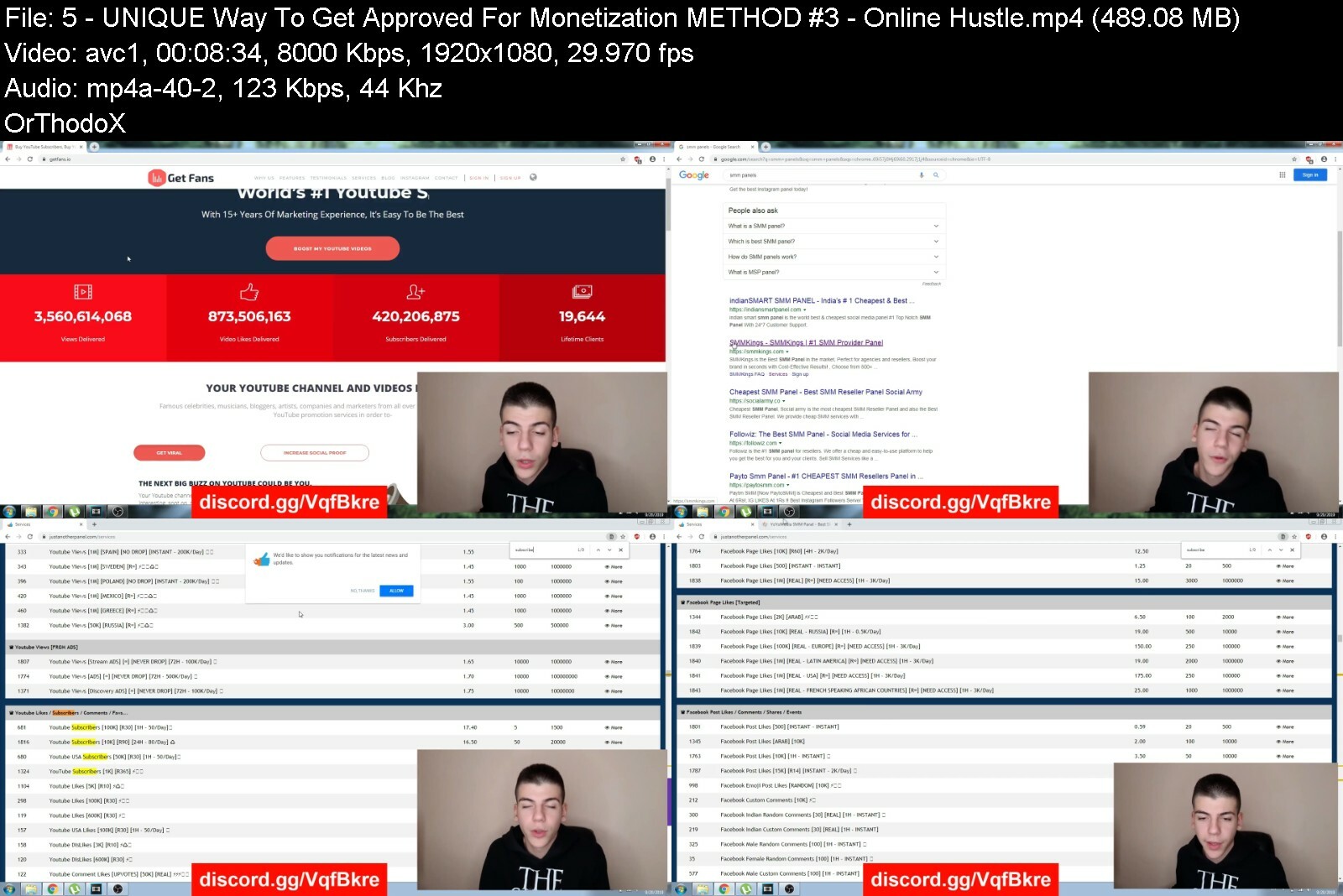
Dejan Nikolic - Unique YouTube Method - Make Any Video Viral and Unlimited Channels
MP4 | Video: h264, 1920x1080| Audio: AAC, 44100 Hz, s16
Genre: eLearning | Language: English | Duration: 02:37:01 | Size: 7.8 GB

Do you know what's crazy? This is my second source of income and I spend only one hour per day building massive channels in less than 30 days and I make 2 times more than average American that's working 8 hours per day.

Do you want to know what's even crazier? I figured out this business 3 months ago. Since then, my PayPal balance has been increasing rapidly. Take a look at this:

In this unique course I will take you step-by-step using the EXACT blueprint and secrets I used to generate this income combining YouTube and other well-known websites (not Shopify, not Facebook, Instagram, Amazon or anything like that).

I will show you the essential secret tricks I have used to get thousands of dollars using videos that YOU DON'T EVEN HAVE TO MAKE! Yes, you heard me right. You don't have to make them by yourself, you don't have to be in front of a camera, you can stay anonymous and much more.

There is no other course like this and you will not find this information anywhere else.

HOW DO I KNOW THIS IS 100% UNIQUE?
These are my own, personal strategies that I use to build channels quickly, my own secrets that got the official Online Hustle channel to over 22,000 subscribers in less than 2 months, my own secret tricks to getting hundreds of thousands of views over and over again and much, much more.

Homepage

uniqueyoutubemethodz0c0n.jpg


Download from RapidGator


Download from Keep2Share



Discrete Math | Learn Discrete Mathematics By Easy Methods

zm9fbs7fb4nbgzs7ssw5w5sia6.jpg


Discrete Math | Learn Discrete Mathematics By Easy Methods
Last updated 6/2022
MP4 | Video: h264, 1280x720 | Audio: AAC, 44.1 KHz
Language: English | Size: 6.19 GB | Duration: 5h 8m

Discrete Maths for Computer Science , Data science and Engineering Students


What you'll learn
Learn the foundational concepts of Set theory
Learn the foundational concepts of Relations
Learn the foundational concepts of Functions
Learn the foundational concepts of Combinatorics
Learn the foundational concepts of Logics
Requirements
A fair background math up to high school level

Description
This course on Discrete Mathematics can be used by the the students of math , computer science and Engg. as an introduction to the fundamentals. Discrete Mathematics / Discrete Math is the backbone of Computer Science and Mathematics . It is the study of topics that are discrete rather than continuous. The topics that are covered in this course are the essential ones which are required to be learned and understood by every Computer science or engineering student. The goal of this course is to build up a strong mathematical foundation for students so that they may use their knowledge in building up technological areas like*data structures, algorithms and database theory, This course can be broken into a few key categories:Set theoryRelationsFunctionsCombinatorics LogicsEach of the above topics has a simple explanation of concepts so that students may grasp them easily. I am sure that this course will be create a strong platform for students and those who are studying for higher Mathematics and would help them in a better understanding of the subject.You will also get a good support in Q&A section . It is also planned that based on your feed back, new course materials like Methods of proofs, Graph theory etc. and many more may be added to the course. Hope the course will develop better understanding and boost the self confidence of the students.Waiting for you inside the course!So hurry up and Join now !!
Overview
Section 1: Set Theory
Lecture 1 Introduction and Description of a Set
Lecture 2 Illustration 1
Lecture 3 Types of Sets
Lecture 4 Venn Diagrams
Lecture 5 Laws of Algebra of Sets
Lecture 6 Important Results on number of elements in sets
Section 2: Relations
Lecture 7 Cartesian Product of sets
Lecture 8 Relation : Introduction & Domain , Codomain and Range
Lecture 9 Types of Relations
Section 3: Functions
Lecture 10 Function: Definition & its Domain, Codomain and Range
Lecture 11 Equality of Functions
Lecture 12 Even and Odd Functions
Lecture 13 Illustrations
Section 4: Combinatorics
Lecture 14 Factorial notations
Lecture 15 Illustration 1
Lecture 16 Illustration 2
Lecture 17 Illustration 3
Lecture 18 Illustration 4
Lecture 19 Illustration 5
Lecture 20 Illustration 6
Lecture 21 Fundamental Principle of Counting
Lecture 22 Illustration 1
Lecture 23 Illustration 2
Lecture 24 Permutations
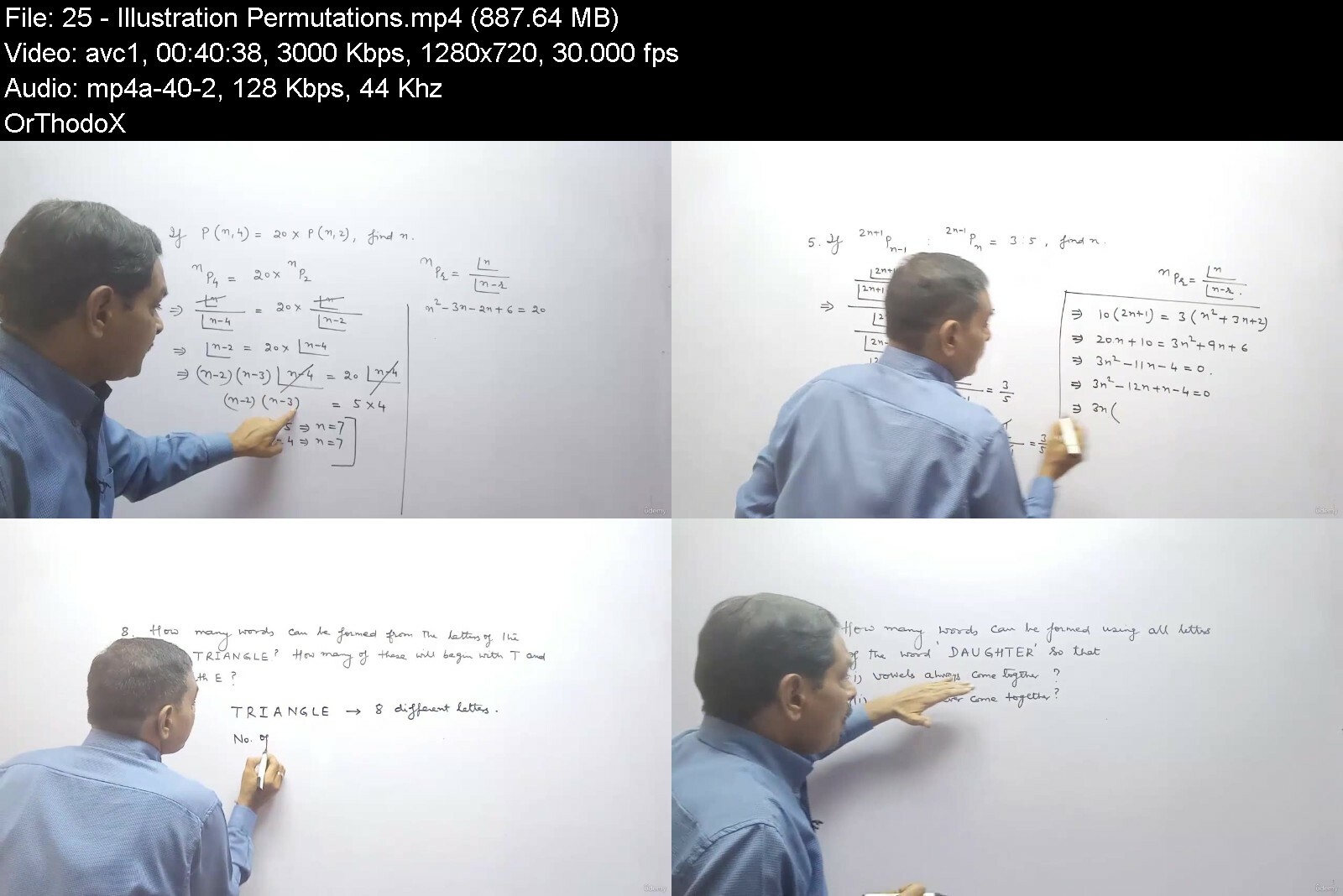
Lecture 25 Illustration(Permutations)
Lecture 26 Combinations
Lecture 27 Illustrations(Combinations)
Section 5: Logics
Lecture 28 Basic Concepts
Lecture 29 Illustration 1
Lecture 30 Illustration 2
This course is designed for students of Data science , Computer Science, Mathematics and Engineering


discretemathlearndisco7d39.jpg


Download from RapidGator


Download from Keep2Share


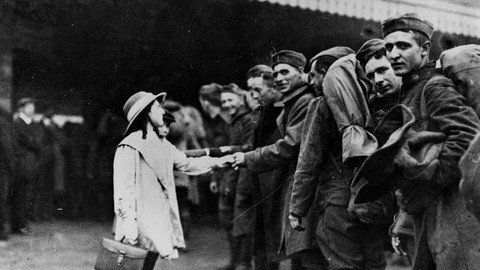
International Law of War in The Third Millennium

yfbvy1jgzklmzbq5ccqrya3inz.jpg


International Law Of War In The Third Millennium
Last updated 5/2022
MP4 | Video: h264, 1280x720 | Audio: AAC, 44.1 KHz
Language: English | Size: 7.78 GB | Duration: 6h 0m

Evolution of laws of war, state practices on compliance wars in oil wars in middle east, armed conflicts in India region


What you'll learn
Evolution of International law of war during the common era
War during the regime of modern International law
Geneva conventions on the law of war
Law of war after the advent of UN-war-armed conflict-civil wars
Interventions,invasions, special military operations- compliance of Geneva conventions
Oil wars and conflicts in Indian sub continent
Afghanistan- case studies of USSR and USA interventions
Penal jurisdiction of International criminal court
Requirements
Anyone who is interested in the history of war and understands english

Description
The course will trace the history of warfare and the evolution of modern international law relating to warfare. Geneva conventions of 1949 consolidate customary rules of international law relating to the law of war. Very often, we notice the levels of compliance with international legal norms are far from satisfactory. The course will focus on the levels of compliance with laws of war in the armed conflicts that took place after 1950 till date. The course is specially meant for civil service aspirants, diplomats, soldiers, and students of history and international relations.The Key Focus area is:Evolution of International law of war during the common era.War during the regime of modern international law.Geneva conventions on the law of war.Law of war after the advent of UN-war-armed conflict-civil wars.Interventions, invasions, special military operations-compliance with Geneva conventions.Oil wars and conflicts in the Indian subcontinent.Afghanistan-case studies of USSR and USA interventionsPenal jurisdiction of international criminal court.The course can be enrolled by, anyone who is interested in the history of war and understands English.This course is for diplomats, humanitarian lawyers, seekers of peace, soldiers of war, and history learners.It is also beneficial to civil service aspirants, and students of international relations and law.
Overview
Section 1: International Law of War In The Third Millennium
Lecture 1 An Introduction to law of war
Lecture 2 Geneva conventions 1949
Lecture 3 War case studies
Lecture 4 Oil wars of Middle East: Part 1
Lecture 5 Oil wars of Middle East: Part 2
Lecture 6 Compliance of laws of war in Indian Subcontinent
Lecture 7 Performance of big powers in wars between 1950-2000
Lecture 8 Analysis of death count in the wars between 1950-2020
Lecture 9 Types of military conflict
Lecture 10 Afghan, Ukraine wars
This course is for diplomats, humanitarian lawyers, seekers of peace, soldiers of war, history learners,Beneficial to civil services aspirants, students of international relations and law


internationallawofwara1f3b.jpg


Download from RapidGator


Download from Keep2Share


Kickbox, Muay Thai & Self Defense Training With Punching Bag

7jxtpuzql2sykmjopldro1vfod.jpg


Kickbox, Muay Thai & Self Defense Training With Punching Bag
Last updated 10/2021
MP4 | Video: h264, 1280x720 | Audio: AAC, 44.1 KHz
Language: English | Size: 12.59 GB | Duration: 10h 36m

Best of Kickboxing, Muay Thai, Boxing, Martial arts, How to learn Self-Defence while burning FAT and getting fit.


What you'll learn
How to learn Self-Defence while burning FAT and getting fit
This program has something for any level learners.
What you will learn;fight stances, How to throw impactful punches, bone breaking kick techniques, elbow and knee strikes
Total of 12 different exercise programs, , basically you will get fit, burn fat and learn how to fight!
This program includes;3 different levels BOXING training ,3 different levels KICKBOXING training, 3 different levels MUAY THAI, 3 different levels KICK training
You will also learn how to become more flexible by STRETCHING training lessons,
If you put the time and effort, it is possible to achieve split legs with these lessons.
As you trainer, I will be available for your questions and I will do my best for you to succeed with your goals!
Requirements
You don't need any experiments for this program.

Description
Hi everyone, This is Sensei Barbaros, I am a master of 6 different martial systems. My profession is a Kickboxing Personal Trainer. I also teach other types of self-defense systems to my students. If you wish to learn more about me please google my name. (Most of the content you will find are in my native language but some of the videos you will find will give an idea about my skills and competence) I created a heavy bag system for who wants to learn and practice martial arts at home, at the gym, or wherever. I want to be online trainer for you so if you have any questions just ask me. I will answer you as soon as possible.Some of the techniques I teach in my workout course videos are; Kickboxing, Muay Thai, boxing, and some self-defense techniques. This kickboxing training course covers all the best kickboxing techniques and teaches Muay Thai Kickboxing fundamentals. This course will enable you to master Muay Thai Kickboxing.My Udemy Heavy bag system, all workout videos show 3 different levels; For beginners, intermediate and advanced learners. Total of 12 unique lessons.You can choose your workout calendar according to your fitness level.kickboxenkick bokskick box
Overview
Section 1: BEFORE YOU START
Lecture 1 Fit-kickboxing trailer
Lecture 2 Let's learn the fighting techniques
Section 2: STRETCHING BASICS
Lecture 3 TOTAL BODY STRETCHING (SPLIT LEGS)
Section 3: WORKOUT CALENDAR (3 DIFFERENT LEVEL)
Lecture 4 LEVEL 1- CALENDAR
Lecture 5 LEVEL 2- CALENDAR
Lecture 6 LEVEL 3- CALENDAR
Lecture 7 if you can't download from udemy. You can download from my drive
Section 4: ALL TRAINING LESSONS
Lecture 8 BOXING LEVEL-1
Lecture 9 BOXING LEVEL-2
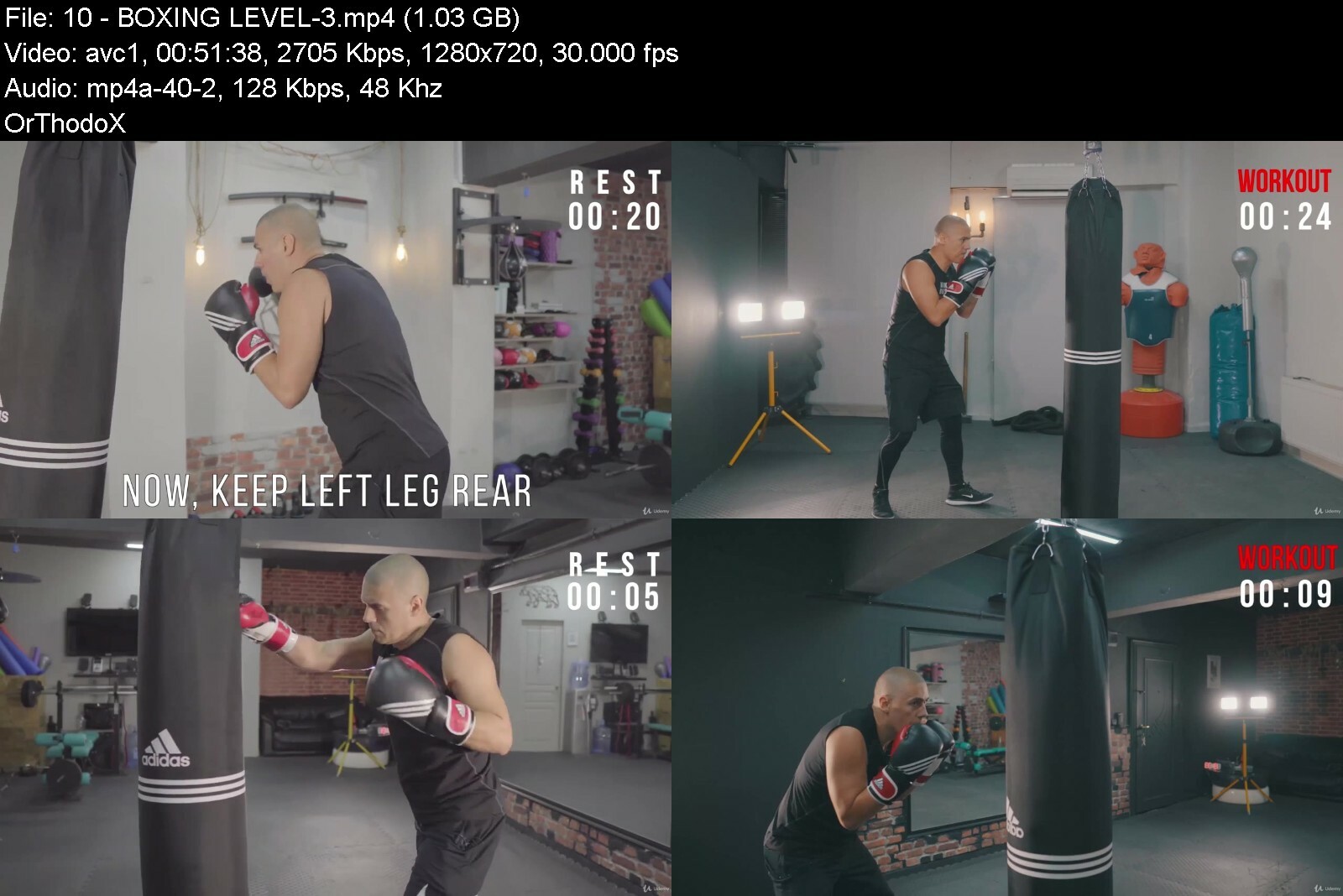
Lecture 10 BOXING LEVEL-3
Lecture 11 KICKBOXING LEVEL-1
Lecture 12 KICKBOXING LEVEL-2
Lecture 13 KICKBOXING LEVEL-3
Lecture 14 MUAY THAI LEVEL-1
Lecture 15 MUAY THAI LEVEL-2
Lecture 16 MUAY THAI LEVEL-3
Lecture 17 KİCK LEVEL-1
Lecture 18 KICK LEVEL-2
Lecture 19 KICK LEVEL-3
Section 5: BONUS
Lecture 20 SHADOW BOXING-1
Lecture 21 SHADOW BOXING-2
Lecture 22 SHADOW BOXING-3
Lecture 23 SHADOW BOXING-4
Lecture 24 SHADOW BOXING-5
Lecture 25 SHADOW BOXING-6
Lecture 26 SHADOW BOXING-7
Who wants to learning, improving fighting skill and build up better body,Who wants to fat burning fast


kickboxmuaythaiselfde88ewk.jpg


Download from RapidGator


Download from Keep2Share



Ccnp Enterprise -300-415 Ensdwi : Implementing Cisco Sd-Wan

hvp8imc5ceflujgs6aeugruidz.jpg


Ccnp Enterprise -300-415 Ensdwi : Implementing Cisco Sd-Wan
Last updated 11/2021
MP4 | Video: h264, 1280x720 | Audio: AAC, 44.1 KHz
Language: English | Size: 6.01 GB | Duration: 15h 42m

with Ratnesh 2XCCIE # 61380 (Sec | DC )


What you'll learn
This Course will provide knowledge of Cisco's SD-WAN solution including SD-WAN architecture, controller deployment, edge
router deployment, policies, security, quality or service, multicast and management and operations.
The course, Implementing Cisco SD-WAN Solutions, helps candidates to prepare for this exam.
Learn Cisco CCNP SD-WAN required Skills
Requirements
There are no formal prerequisites for CCNP Enterprise, but you should have a good understanding of the exam topics before taking the exam.
CCNP candidates often also have three to five years of experience implementing enterprise networking solutions.

Description
The Implementing Cisco SD-WAN Solutions (SDWAN300) v1.0 course gives you deep-dive training about how to design, deploy, configure, and manage your Cisco® Software-Defined WAN (SD-WAN) solution in a large-scale live network, including how to migrate from legacy WAN to SD-WAN. You will learn best practices for configuring routing protocols in the data center and the branch, as well as how to implement advanced control, data, and application-aware policies. The course also covers SD-WAN deployment and migration options, placement of controllers, how to deploy and replace edge devices, and how to configure Direct Internet Access (DIA) breakout.After taking this course, you should be able to:Describe the Cisco SD-WAN overlay network and how modes of operation differ in legacy WAN versus SD-WANDescribe options for SD-WAN cloud and on-premises deployments, as well as how to deploy virtual vEdge and physical cEdge devices with Zero Touch Provisioning (ZTP) and device templatesDescribe best practices in WAN routing protocols, as well as how to configure and implement transport-side connectivity, service-side routing, interoperability, and redundancy and high availabilityDescribe dynamic routing protocols and best practices in an SD-WAN environment, transport-side connectivity, service-side connectivity, and how redundancy and high availability are achieved in SD-WAN environmentsExplain how to migrate from legacy WAN to Cisco SD-WAN, including typical scenarios for data center and branchExplain how to perform SD-WAN Day 2 operations, such as monitoring, reporting, logging, and upgrading
Overview
Section 1: Describe Cisco SD-WAN Architecture and Components
Lecture 1 Welcome
Lecture 2 CCNP SDWAN + CCNP Certification introduction
Lecture 3 Exam Topics
Lecture 4 SDWAN Architecture
Lecture 5 SDWAN Components Controllers
Lecture 6 SDWAN Data plan Devices
Lecture 7 vEdge Features & terminologies used
Lecture 8 Transport Locators TLOCs
Lecture 9 IPSEC Data Plan Security
Lecture 10 SDWAN vRoute or Service side vpn Routes
Lecture 11 SDWAN Bidirectional Forwarding Detection BFD
Lecture 12 Distributed Architecture to accommodate high traffic loads
Lecture 13 IOS XE SDWAN Choose your best hardware part 01
Lecture 14 IOS XE SDWAN Choose your best hardware part 02
Section 2: Controller Deployment
Lecture 15 2.1 Describe controller cloud deployment
Lecture 16 Describe Controller on-Prem Deployment
Lecture 17 Entire system bringup process includes these steps
Lecture 18 2.2a Hosting Platform - Hyper-visor
Lecture 19 System Bring-up Demo Labs
Lecture 20 Series of Viptela Bring-up theory followed by Labs
Lecture 21 Controllers System wide Configuration
Lecture 22 vManage VPN & Static Route Configuration
Lecture 23 vSmart & vBond VPN & Static Route Configuration
Lecture 24 Add Controllers to vManage Dashboard
Lecture 25 Add CSR to Root CA Server
Lecture 26 Permanent certificates & install certificates to controllers
Lecture 27 2.2c Scalability & Redundancy
Lecture 28 2.3 Configure & Verify Certificates & White-listing
Lecture 29 2.4 Troubleshoot control-plane connectivity between controllers
Section 3: Router Deployment
Lecture 30 3.0 Router Deployment
Lecture 31 vManage Dashboard 01
Lecture 32 vManage Dashboard 02
Lecture 33 Zero Touch Provisioning ZTP Theory
Lecture 34 ZTP Lab
Lecture 35 WAN Edge On-boarding
Lecture 36 Device Configuration Starts from here
Lecture 37 Lap Topology
Lecture 38 Device Configuration via vManage
Lecture 39 What are Device Configuration Template
Lecture 40 Feature Template Creation Part01
Lecture 41 Feature Template Creation Part02
Lecture 42 Apply Feature Template
Lecture 43 CLI Template with Variables
Lecture 44 Template Creation Planning
Lecture 45 OMP TLOC Begins Here ..
Lecture 46 Verification Commands
Lecture 47 what is OMP ?
Lecture 48 OMP Route Types
Lecture 49 OMP Routes Verification
Lecture 50 OMP & TLOC Attributes
Lecture 51 OMP Best Path Selection
Lecture 52 OMP Route Redistribution
Lecture 53 TLOC-Extension Theory
Lecture 54 TLOC Extension Lab
Lecture 55 VRRP OSPF BGP Begins
Lecture 56 VRRP Theory
Lecture 57 VRRP Configuration
Lecture 58 VRRP Verification
Lecture 59 OSPF Part 01
Lecture 60 OSPF Part 02
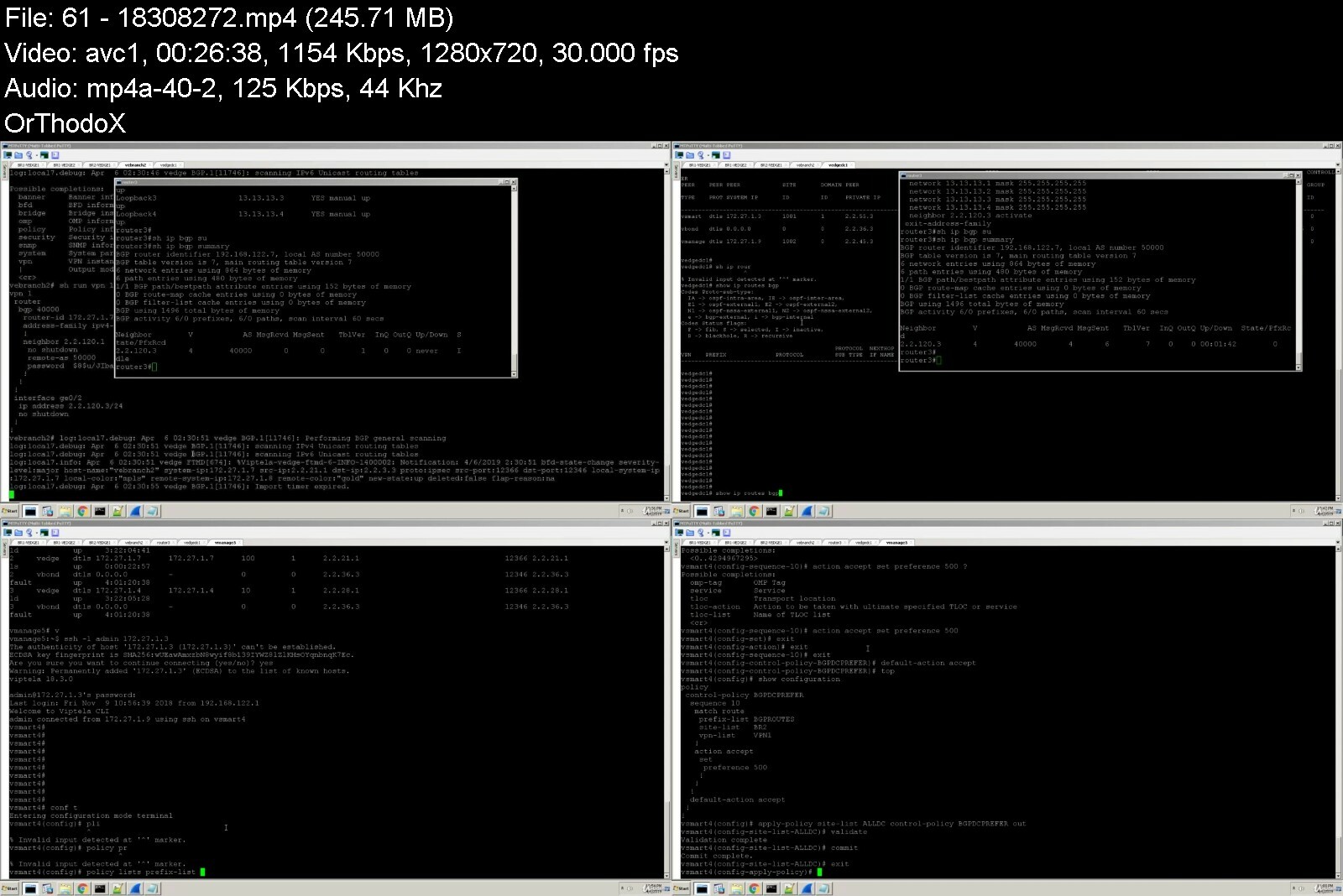
Lecture 61 BGP Configuration & Verification
Lecture 62 BGP Verification
Section 4: SDWAN Policy
Lecture 63 SDWAN Policy Section
Lecture 64 vSmart Policy Overview
Lecture 65 vSmart Policy Overview vSmart Policy Architecture Components
Lecture 66 Use Control Policy to Block subnet
Lecture 67 vSmart Policy Execution & Revision
Lecture 68 Hub & Spoke Control Policy
Lecture 69 Multi-topology Control Policy Configuration
Lecture 70 Multi-topology Control Policy Verification
Lecture 71 App-Aware Routing & Direct Internet Access Begins
Lecture 72 App Aware Routing Basic Introduction
Lecture 73 App Aware Routing BFD SLA Class
Lecture 74 app aware routing policy configuration 01
Lecture 75 app aware routing policy configuration 02
Lecture 76 app aware routing policy implementation 01
Lecture 77 app aware routing policy implementation 02
Lecture 78 app aware routing policy Verification
Lecture 79 SDWAN DIA Design Options
Lecture 80 Design - Cisco SD-WAN Direct Internet Access Design Components and Consideration
Lecture 81 centralized data policy and NAT DIA route to deploy DIA
Lecture 82 Remote site DIA exit Design Considerations
Lecture 83 SD-WAN Dual-Router Hybrid Remote-Site Design
Lecture 84 SD-WAN Single-Router Dual Internet Remote-Site Design
Lecture 85 SD-WAN Dual-Router Dual Internet Remote-Site Design
Lecture 86 Deploy - Cisco SD-WAN Direct Internet Access Configuration
Lecture 87 Deploy - Cisco SD-WAN DIA Lab
Lecture 88 Copy Edit Existing Policy & Basic Verification commands
Lecture 89 Create NAT DIA Route to Redirect Guest Internet Lab
Section 5: Section 5.0 Qos & Security
Lecture 90 Section 5.0 Qos & Security
Lecture 91 a Data Policy 01 Service Chaining
Lecture 92 b SD-WAN security challenges
Lecture 93 SD-WAN Threat Defense Delivered
Lecture 94 Secure Control & Data Plan
Lecture 95 Combining Best of Breed in Security
Lecture 96 Firewall DNS & IPS packet flow
Lecture 97 Container Architecture & installation Part01
Lecture 98 Container Architecture & installation Part02
Lecture 99 Security Dashboard
Lecture 100 SD-WAN Security-Use Case 1 Compliance Firewall
Lecture 101 Firewall Policy Same VRF Creation & Verification
Lecture 102 Firewall Policy Different VRF Creation & Verification part 01
Lecture 103 Firewall Policy Different VRF Creation & Verification part 02
Lecture 104 Qos Basics & WAN Qos
Lecture 105 viptela qos implementation
Lecture 106 viptela policer
Lecture 107 viptela Qos Policer Traffic Redirect
Section 6: Section 6.0 Monitoring
Lecture 108 vAnalytic walk-though 01
Lecture 109 vAnalytic Walk-though 02
Lecture 110 API 01
Lecture 111 API 02
Lecture 112 Image Upgrade Process
CCNP candidates often also have three to five years of experience implementing enterprise networking solutions.


ccnpenterpriseensdwiiaocwz.jpg


Download from RapidGator


Download from Keep2Share


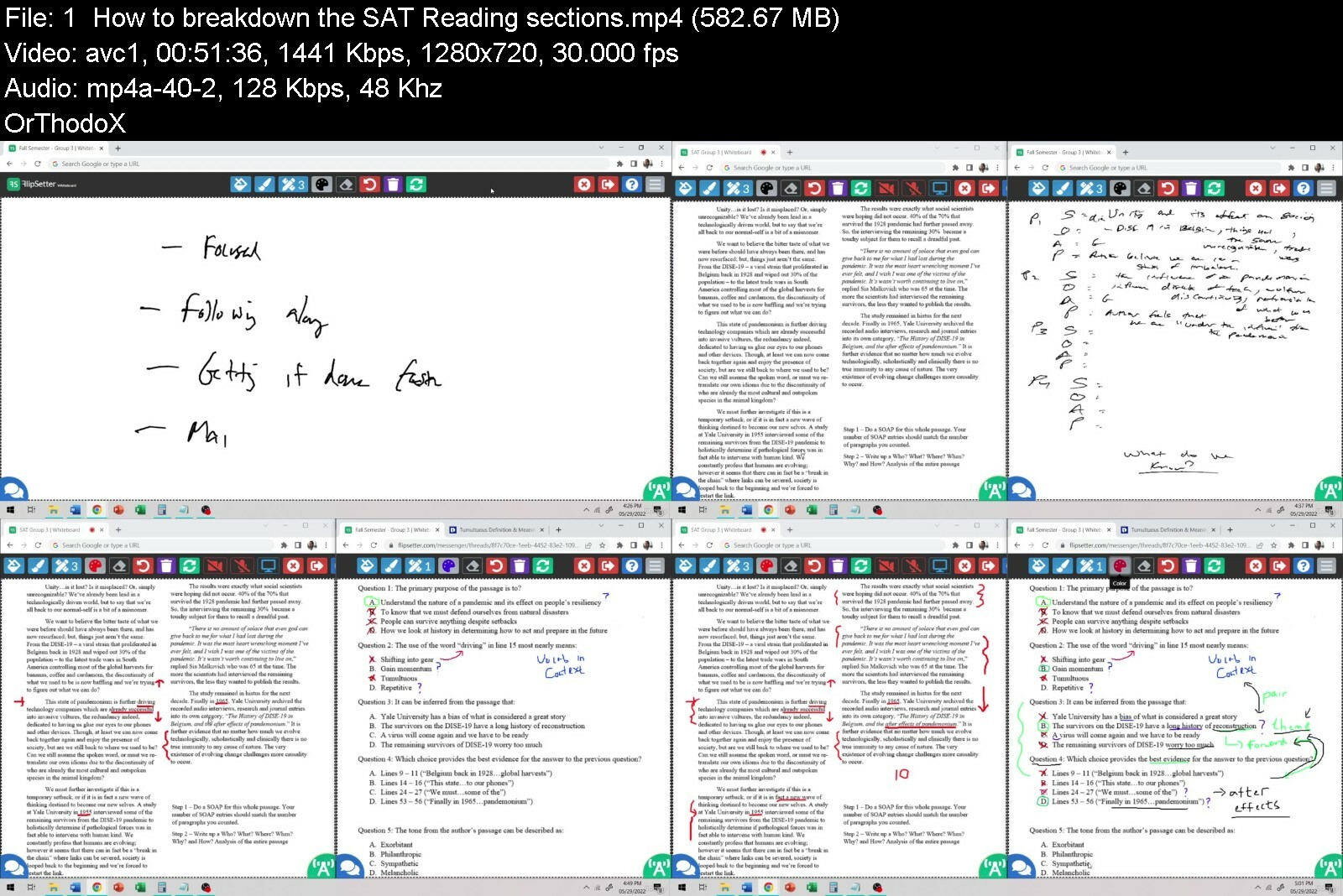
Master the SAT - Higher score guaranteed!

47042285d4b6b8dzz.jpg


Master the SAT - Higher score guaranteed!
Published 06/2022
MP4 | Video: h264, 1280x720 | Audio: AAC, 44.1 KHz, 2 Ch
Genre: eLearning | Language: English + srt | Duration: 9 lectures (6h 13m) | Size: 5 GB


Your journey to a rewarding college experience!


What you'll learn
Master Reading, Writing and Math
Learn to simplify math by going back to basic strategies
How to figure out what a word means in a passage using context clues
What to look for in the writing sections and sharpen your writing skills
Requirements
A positive attitude and willingness to strive forward!
Motivation....that is absolute key in doing well on the SAT
Be in a quiet spot, have plenty of paper and pencil to write with as you follow along.
Description
***The following information is subjective and can always be corroborated by researching further online.
What is the SAT?
The SAT stands for Scholastic Aptitude Test. It's issued by the CollegeBoard and is an option for students to stay competitive above others and to continue on the path to success.

Who takes the SAT?
It's a national exam taken by high school students in grade levels 10th, 11th and 12th. Students submit their scores to get into college, top ranked universities and can earn the best scholarships (FREE COLLEGE ADMISSIONS!)

What is tested on the SAT?
Reading, Writing and Math (Utilize your skills gained from the SAT to mold your inner philosophies!)

Is the SAT for me?
FlipSetter Academy encourages all students to take the SAT because it's a Think-Outside-The-Box type of test where your aptitude is challenged and it's excellent practice that raises awareness for
- Job Placement - Life-Long Skills
- Presentations - Life Decisions
- Higher Education

This is why it's called the Scholastic "Aptitude" Test and is a great way to be exposed to, and to be aware that your Aptitude will always be challenged.

Other benefits...
- Getting into the college of your choice
- Standing out from the masses with a high score
- Making you feel smarter & gaining confidence
- A higher score equals access to great scholarships
What is tested on the SAT?
Reading, Writing and Math (Utilize your skills gained from the SAT to mold your inner philosophies!)
Section 1 - Reading (basic ability to decipher what other people have accomplished and shows you a path to success.)
Section 2 - Writing (express your thoughts, emotions and dreams; and to motivate others to follow you. Transition from a follower to a leader)
Section 3 & 4 - Math (it's the language of the future. It powers the next generation)

What is considered a competitive score?
Any score that is 1400 and above
What are the age requirements for the SAT?
According to online articles, any student that is age 14 and above, 9th grade and above is eligible to take the SAT. (Their terms may change every year, so click on this link to learn more)
Who this course is for
SAT test takers ready to be more competitive. A higher SAT score results in a more rewarding college.
Want colleges to look for you? Impress them with your higher SAT score


masterthesathigherscoukcwn.jpg


Download from RapidGator


Download from Keep2Share

 
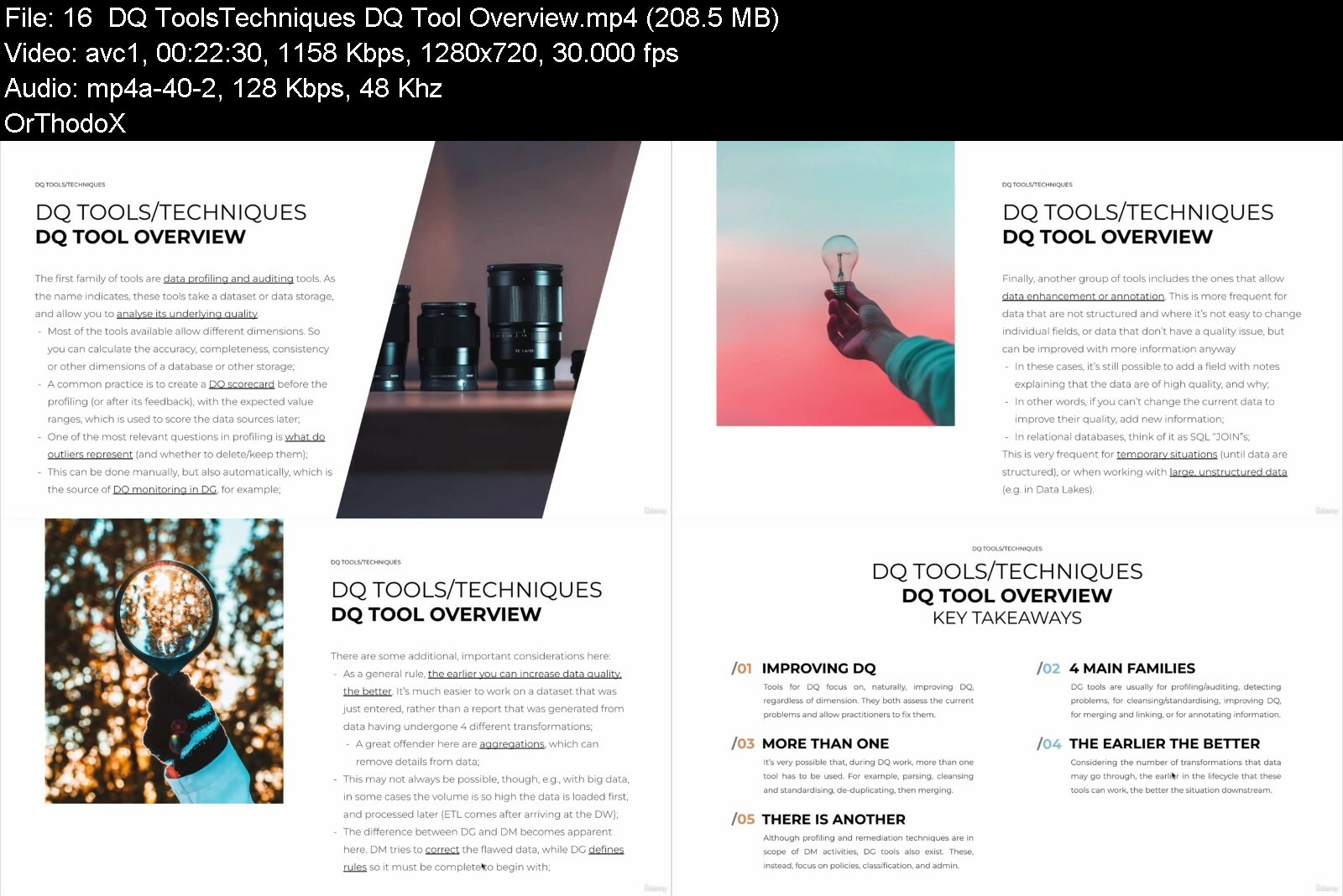
3x1 Data QualityData ManagementData Governance Masterclass

wwzxb0l6yxoniyof43i05cjdli.jpg


3x1 Data QualityData ManagementData Governance Masterclass
Genre: eLearning | MP4 | Video: h264, 1280x720 | Audio: AAC, 48.0 KHz
Language: English | Size: 5.79 GB | Duration: 65 lectures • 10h 40m


What you'll learn
You'll learn about the frequent data disciplines (Data Management, Data Governance, Data Stewardship, Data Science), their differences and nuances.
You'll learn about the most frequent types of Data Quality (DQ) operations, including profiling, parsing, cleansing, standardisation, record merging, and others
You'll learn about the levels of data sophistication in an organisation, and the usual DM/DG progression from projects to programs to centralised processes.
You'll learn about the 4 major types of data (master data, reference data, transactional data and metadata), as well as what each means, and how they intersect.
Requirements
You don't need prior knowledge (knowledge of data management/data governance naturally helps, but is NOT necessary)

Description
MANAGE YOUR KNOWLEDGE, MANAGE YOUR DATA
There are many activities related to data in organisations.
Data Management (DM), Data Governance (DG), Data Stewardship, Data Science, and many others.
All of these are crucial activities for organisations, especially those trying to protect their data from cyberattacks, complying with regulation, or just trying to improve the quality of their analytics and reports.
Frequently, you can find information on one of these activities, but not all.
And on top of that, many courses use different definitions, so you may become confused.
In short, most courses on data don't fit the minimum requirements.
And this has consequences not just for your career, but yourself personally as well.
What happens when you don't have enough information (or in the adequate format)?
You'll become confused by the myriad data activities, the tools used, which roles and responsibilities each person has, and how they intersect;
You won't be able to properly identify what belongs to Data Management or what belongs to Data Governance - and what should not be done at all;
You'll become frustrated and irritated that you don't know why an operation works, or why it doesn't;
You won't be able to identify what a specific data tool should be used for, and when your current tools don't fit the job;
You won't know how to optimize your DM and DG operations in an organisation, resulting people not taking data seriously, or making obvious mistakes;
So if you want to know everything about Data Management and Data Governance, what is my proposed solution?
This new course masterclass, of course!
A HIGH-QUALITY COURSE FOR HIGH-QUALITY DATA
Unlike other data management or data governance courses you'll find out there, this course is comprehensive and updated.
In other words, not only did I make sure that you'll find more topics (and more in-depth) than other courses you may find, but I also made sure to keep the information relevant to the types of data quality issues you'll find nowadays.
Data operations may seem complex by nature, but they rely on simple principles.
In this course, you'll learn about the essentials of how data are managed with activities such as profiling and remediation, as well as how data are governed with processes and policies.
Not only that, we'll dive deep into the activities, stakeholders, projects and resources that each discipline entails.
In this 4-hour+ masterclass, you'll find the following modules
You'll learn about the essential Data Literacy and Considerations (what are the key principles, what are the different data disciplines, usual processes of each, the information lifecycle, and sophistication levels in an organisation);
You'll get to know about Data and Data Quality in specific (including the types of data that exist, the types of data quality issues and their financial impact, the Data Management activity process flow, as well as the data dimensions and tools used);
By the end of this course, you will know exactly how data are managed and how they are governed in an organisation, to a deep level, including the necessary tools, people, and activities.
The best of this masterclass? Inside you'll find these 3 modules.
In short, even if you only fit one of the three profiles (only Data Management, only Data Governance, or only "general" Data Quality knowledge), you will still have a course dedicated to it!
And naturally, if you are interested in multiple of these topics... this is the ultimate package for you.
THE PERFECT COURSE... FOR WHOM?
This course is targeted at different types of people.
Naturally, if you're a current or future data professional, you will find this course useful, as well as if you are any other professional or executive involved in a data project in your organisation.
But even if you're any other type of professional that aims to know more about how data work, you'll find the course useful.
More specifically, you're the ideal student for this course if
You're someone who wants to know more about data management itself (how to profile datasets, how to parse/cleanse/standardise them, how to link and merge records, or how to enhance data);
You're someone who is interested in data governance (how to define rules and controls for data, how to institute policies, how to define required metadata, how to fill said metadata for different data sources, and many other activities);
You're someone who wants to know more about data quality in general (what are the usual types of problems, how do they create financial impact in organisations, what are the usual activities to improve DQ, and so on);
LET ME TELL YOU... EVERYTHING
Some people - including me - love to know what they're getting in a package.
And by this, I mean, EVERYTHING that is in the package.
So, here is a list of everything that this masterclass covers
Data Literacy and Fundamentals
You'll learn about the 4 key principles for any successful data initiative - considering data at assets, monetising them, seeing DG as business and not IT, and gauging your organisation's sophistication level;
You'll learn about the key data disciplines - that is, what is Data Management (DM), what is Data Governance (DG), what is Data Stewardship, and other activities such as Data Science, and terms such as Data Quality (DQ), as well as the specific roles and operations related to each of these in specific;
You'll learn about the main activities in DM and DG. In the case of DM, activities such as profiling data, remediating them, and setting future data validity requirements, and in the case of DG, uncovering business rules, setting policies and expectations for data, and controls to measure DQ, among others;
You'll get to know the different stages of the information lifecycle. Data being created, accessed, changed, deleted, and possibly other intermediate steps, as well as the usual preoccupations and controls at each stage;
You'll learn about the usual progression from projects to processes - how both DM and DG usually start as specific projects with local scope, and usually grow within an organisation, culminating in replicable and centralised processes to manage and govern data;
You'll get to know the possible sophistication levels of an organisation in terms of managing data. Being reactive, with no allocated tools or people, versus having centralised and standardised roles, tools and processes for data operations, and gauging your organisation;
Data and Data Quality Management
You'll get to know the 4 main types of data. Master data, reference data, transactional data and metadata, as well as the nuances of each and how they intersect;
You'll learn about the types of DQ issues and their financial impact, usually in one of 3 main ways: direct costs, operational inefficiencies, and/or compliance or regulatory sanctions;
You'll learn about the usual DQ improvement process, starting with profiling, usually followed by triage, remediation of the data, and possible setup of automated controls to prevent future errors;
You'll learn about the three main types of DQ actions. Remediating data on the spot, analyzing the root cause of data problems, and/or instituting rules with automated controls to measure/prevent future data problems;
You'll get to know the different data dimensions used when analyzing DQ problems. Completeness, accuracy, timeliness, lineage, and other relevant ones;
You'll know more about the effect of Big Data and/or AI in data management, specifically the consequences both have in terms of the remediation possibilities and the data pipelines;
You'll know more about the tools used for DQ management, including profiling, parsing and standardisation, linking and merging, and data enhancement tools;
You'll get to know data profiling tools and their specific uses, including validating values in datasets, detecting outliers, validating data formats and rules, and/or uncovering implicit business rules;
You'll learn more about parsing and standardisation tools, which usually take data in different formats, parse them into a unified format, and then standardise data in that format, including the possible removal/editing of wrong values ("cleansing");
You'll get to know linking and merging tools, used to prevent duplicates, which usually use a comparison algorithm to establish a match between records, as being the same, which can then be merged;
You'll learn about data enhancement and annotation tools, which allow you to add more data to the current data, when these can't be edited - or don't need to be edited;
You'll learn more about building a business case for DM/DG, including the usual operations and steps, the usual costs and savings mentioned, and how to present it;
Data Governance
You'll learn about the common functions and capabilities enabled by DG, from privacy and security controls to lineage tracking, metadata management, data classification, monitoring and more;
You'll learn about the usual roles and responsibilities in DG, from data owners to data stewards, Accountable Executives, who is the Data Council, the differences between the CDO (Chief Data Officer) and CIO (Chief Information Officer), and others;
You'll learn about data classification, including the 3 major systems used (by priority and criticality, by sensitivity and privacy requirements, and by processing stage), as well as the consequences of each;
You'll learn about what is data stewardship, and how it bridges Data Governance and reality, including multiple tasks related to metadata, master data, reference data, tracking DQ issues, and other activities, as well as the differences between business, technical and operational data stewards;
You'll learn about a day in the life in Data Governance, including the tasks that each role performs, how they coordinate, and how decisions are made;
You'll learn about assessing your organisation in preparation to implement DG, including data management maturity assessments and change capacity assessments, and how to define the scope of a DG program selecting processes, people and tools;
You'll learn about how to engage and obtain buy-in from different stakeholders, how to deal with resistance, how to prioritise the available projects, and how to ensure commitment to DG;
You'll learn about how to architect and define the initial DG program, including the tools used, the data lifecycle stages, the roles and responsibilities involved, and how to bring it all together in a single operating model;
You'll learn about how to deploy DG initially, with a roadmap, milestones, an operating model, and metrics to track;
You'll learn about the possible initiatives complementary to DG, including data-centric projects such as MDM (Master Data Management) or EIM (Enterprise Information Management), analytics and AI projects, and big ERP implementations, as well as how to let DG "piggyback" on these;
You'll learn about how to maintain a DG program, including maintaining key processes such as training and communication, while enforcing behavioral change through change management and controls;
You'll learn about how to scale a DG program, including dealing with resistance by new stakeholders from new projects and defining the federation of DG as it grows within the organisation;
You'll learn about how culture affects DG, including how aspects such as data literacy, commitment and others define the resources and the people accountable for DG;
MY INVITATION TO YOU
Remember that you always have a 30-day money-back guarantee, so there is no risk for you.
Also, I suggest you make use of the free preview videos to make sure the course really is a fit. I don't want you to waste your money.
If you think this course is a fit and can take your data quality knowledge to the next level... it would be a pleasure to have you as a student.
See you on the other side!
Who this course is for
You're a current (or future) data management or data governance professional
You're someone involved (willingly or not) in a data-related project, and need to understand it
You're involved in decision-making related to managing or governing data in an organisation
You're anyone else curious about data management, data governance, or any other activity related to data


3x1dataqualitydatamanlzfeg.jpg


Download from RapidGator


Download from Keep2Share

 
Learn Web design and development course from Scratch

4720322b39c0kenm.jpg


Learn Web design and development course from Scratch
Published 06/2022
MP4 | Video: h264, 1280x720 | Audio: AAC, 44.1 KHz, 2 Ch
Genre: eLearning | Language: English + srt | Duration: 174 lectures (19h 2m) | Size: 7.9 GB


Web development with CSS, JavaScript and Python for Data science at ONE course


What you'll learn
Build websites and webapps
Get a job as a junior web developer
Create your own stunning, CSS layouts for awesome websites
Start their own online business
Master front-end development using CSS & JavaScript back-end development using Python
Add Client-Side Web Page interactions using JavaScript
Apply CSS, JavaScript and Python for Data science code on real-world tasks
Create fully function web apps using Python and JavaScript
Requirements
No programming experience needed. You will learn everything you need to know
No software is required in advance of the course (all software used in the course is free)
No pre-knowledge is required - you will learn from basic
Description
In this course, we will learn the basic tools that every python developer needs to know. We will start from the scratch by learning how to implement modern web development with CSS, JavaScript and Python code.
Learn to code CSS, JavaScript and Python is The first step to Coding you need to learn to succeed in web development, it is easy to learn and understand our online CSS, JavaScript and Python Training course is designed for you with the complete steps to require learn Complete Developer topics. Mr. Sekhar Metla[MCP - Microsoft Certified Professional] will explain to you even complex topics to simplify and teach you even beginners can easily understand with real-time examples.
At this Development course is without a doubt the most comprehensive web development course available online. Even if you have zero programming experience, this course will take you from beginner to mastery. Here's why
The course is taught by the lead instructor having 20+ years of professional experience.
Become a Full-Stack Web Developer with just ONE course. CSS, JavaScript and Python
The course has been updated to be trending technology ready and you'll be learning the latest tools and technologies used at large companies such as Apple, Facebook, Google and Netflix.
The curriculum was developed over a period of four years, with comprehensive student testing and feedback who are working and applying these coding examples.
We've taught many students how to code and many have gone on to change their lives by becoming professional developers or starting their own tech startup.
The course is constantly updated with new content, with new projects and modules determined by students - that's you!
We'll take you step-by-step through engaging video tutorials and teach you everything you need to know to succeed as a web developer.
The course includes HD video tutorials and builds your programming knowledge while making real-world websites and web apps.
Throughout this comprehensive course, we cover a massive amount of tools and technologies, including
Front-End Web Development
CSS 3
Website layout
JavaScript
Client-side code
Validations
Python
Variables
Data types
Sequences
Control flow statements
Code Development
Web Design
Functions
Object oriented programming[OOPs]
Class
Methods
Inheritance
Polymorphism
Abstraction
Error Handling
By the end of this course, you will be fluently programming and be ready to make any website you can dream of.
Sign up today, and look forward to
HD Video Lectures
Code Challenges and Coding Exercises
Beautiful Real-World dynamic Projects
ABOUT YOUR INSTRUCTOR
Sekhar Metla is a software engineer with 20 years of professional experience. He is the author of several online-selling courses with more than 30,000+ students in many countries. He has a Master of Science in Computer Applications as Software Engineering. His students describe him as passionate, pragmatic, and motivational in his teaching.
What are you waiting join now to start learning how to make your own Web Development Career TODAY :)
Who this course is for
Beginner CSS, JavaScript Python developers curious about Data science
Anyone who wants to generate new income streams
Anyone who wants to build websites
Anyone who wants to become financially independent
Anyone who wants to start their own business or become freelance
Anyone who wants to become a Full stack web developer


learnwebdesignanddeveltcas.jpg


Download from RapidGator


Download from Keep2Share


Azure Compute, Storage and IAM Services [AZ-104]

460305608753q3dbi.jpg


Azure Compute, Storage and IAM Services [AZ-104]
Last Update: 6/2022
Duration: 21h 18m | Video: .MP4, 1280x720 30 fps | Audio: AAC, 48 kHz, 2ch | Size: 9.39 GB
Genre: eLearning | Language: English

Learn three most important Azure Service - Compute, Storage, and IAM || Exam AZ-104: Microsoft Azure Administrator


What you'll learn:
How to get Azure FREE exam voucher
How to keep using Azure for FREE using sandbox
How to get 100% discount on Azure Fundamental exams
How to get FREE Subscriptions without credit card[For Students]
Requirements
None

Description
In this course I will show you how you can make the most of Microsoft Azure.
I will share below techniques.
How to get FREE Practice Tests using Microsoft Enterprise Skill Initiative
How to get FREE exam vouchers for Microsoft Fundamental certifications
How to keep using Azure for FREE - Azure Sandbox
How to schedule exam and 100% Discount on Exam Fees
Azure FREE Subscription Without Credit Card[For Students]
Microsoft Exam Simulation and Types of Questions
I will try to add more helpful resources as I find them.
What is Azure?
Azure is a continually expanding set of cloud services that help your organization meet your current and future business challenges. Azure gives you the freedom to build, manage, and deploy applications on a massive global network using your favorite tools and frameworks.
What does Azure offer?
With help from Azure, you have everything you need to build your next great solution. The following table lists several of the benefits that Azure provides, so you can easily invent with purpose.
Be ready for the future: Continuous innovation from Microsoft supports your development today and your product visions for tomorrow.
Build on your terms: You have choices. With a commitment to open source, and support for all languages and frameworks, you can build how you want and deploy where you want to.
Operate hybrid seamlessly: On-premises, in the cloud, and at the edge--we'll meet you where you are. Integrate and manage your environments with tools and services designed for a hybrid cloud solution.
Trust your cloud: Get security from the ground up, backed by a team of experts, and proactive compliance trusted by enterprises, governments, and startups.

Who this course is for
Azure Learners

Homepage

azuretipstricksugda6.jpg


Download from RapidGator


Download from Keep2Share


PMP Dash - The Fastest Way To Ace PMP Exams

4665036322dhoeir.jpg


PMP Dash - The Fastest Way To Ace PMP Exams
Published 06/2022
MP4 | Video: h264, 1280x720 | Audio: AAC, 44.1 KHz, 2 Ch
Genre: eLearning | Language: English | Duration: 36 lectures (20h 37m) | Size: 9.2 GB


Just the right course to get you PMP Exams ready in the shortest possible time


What you'll learn
Clearly understand all the important concepts, models, definitions and formulas that are popular in PMP Exams.
Tailor the correct methodology for the specific project context.
Understand all the important processes along with their respective important Tools & Techniques that are popular in PMP Exams.
Understand how to approach and answer different kinds of questions that show up on PMP Exams.
Gain confidence about preparing and clearing PMP Exams in a short period of time.
Requirements
Meet all the eligibility requirements for PMP application. Preferably, approval from PMI on PMP application.
Mentally ready to prepare of acing PMP Exams.
Completed your 35 Contact hours certificate training from someplace.
Description
PMP Dash has been created with the aim of providing just the right amount of material, notes, tips and tricks and insights to help the candidate become exams ready in the shortest possible time.
This PMP Dash has been arranged and narrated such that it matches the actual flow of a Project and has been created in such a manner that even those who are not from IT background can answer Agile related questions that show up a lot in PMP exams.
PLEASE NOTE IT IS NOT A FULL PMP 35 CONTACT HOURS TRAINING. This course assumes that you have already undergone that training and are preparing for attempting the PMP Exams.
With all important Models, Tools & Techniques, Formulas, Concepts and Definitions that are popular in PMP Exams, the content of PMP Dash is so extensive that anything that would show up on PMP Exams has been covered here. EVERYTHING. Includes material from all the other references and standards earmarked by PMI for PMP Viz.,
- PMBOK Guide 6th edition
- PMBOK Guide 7th edition
- PMI Authorized PMP Prep
- PMI Standard for Agile
- Examination Content Outline for PMP
- Organizational Change Standard
Once you go through PMP Dash you will have all the notes, information, ability and as well as the attitude to ace PMP exams, let alone clearing it.
And as if all this was not enough, PMP Dash has one full guided format of 180 Questions very similar to the PMP Exams.
To understand exactly how comprehensive this course is, let's have a look at
WHAT IS COVERED?
o The entire PMP Dash course is done through a revolutionary new sequence
o All possible notes covered in a sequence that makes sense and relatable
o All references covered in creation of these notes
o Models and Tools & Techniques as well as their logic also covered
o Pitfalls to avoid covered
o All methodologies (Including Agile) explained in a manner that you will not forget
o Focus on only the processes that show up on PMP
o Notes through visual clues to help retain information
o 180 Questions (Nearest to PMP Exams) guided through by the narrator.
o Each question explained in a manner that you will develop immense confidence and certainty for clearing PMP Exams.
o Made by someone who has over 26,800 certified professionals to his personal credit.
o Comprehensive coverage of People and Interpersonal skills needed for PMP as contained in ECO and more.
WHY US?
o Explanation such that it would be hard for you to forget
o Focus on "Understanding" and not "Mugging Up".
o Complete and comprehensive coverage.
o Most comprehensive material in the industry targeted for PMP 2021
o Entire course replete with tips and tricks.
o PMP Experts since 2006
o Over 48,500 Certified through PM-Pulse
Subscribe to this package for mastering all PMP Concepts and Acing PMP Exams.
Who this course is for
PMP Candidate who has already undertaken 35 contact hours training and is now looking for the best source for preparing for PMP Exams in the shortest time possible.
Professionals who wish to prepare for and ace PMP exams in the shortest possible time.
Professionals preparing for the PMP Exams but have limited time to study.
Professionals who are not confident after the PMP Training.
Professionals who are unsure about the best material to prepare for PMP exams.
Professionals who want to ACE PMP Exams in their very first try.


pmpdashthefastestwayt8udj7.jpg


Download from RapidGator


Download from Keep2Share



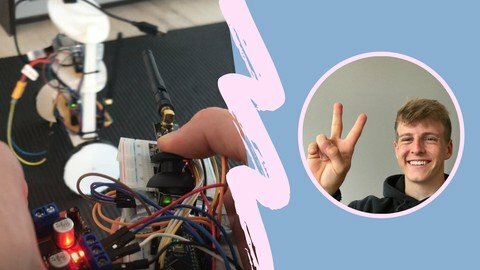
Arduino für Macher - nur für Macher!

5q7l4qb3duo4ulfhgqi0bpuiqx.jpg


Arduino für Macher - nur für Macher!
Video: .mp4 (1280x720, 30 fps(r)) | Audio: aac, 48000 Hz, 2ch | Size: 9.09 GB
Genre: eLearning Video | Duration: 41 lectures (9 hour, 39 mins) | Language: Deutsch


Bring deine Arduino-Skills auf das nächste Level durch den Bau eines ferngesteuerten selbststabilisierenden Roboters


What you'll learn
Das kommt darauf an wie gut du mitarbeitest. Wenn du Bock auf den Kurs hast und dich auch selbst in die Themen einarbeitest wirst du die folgendes wirklich verstanden haben und anwenden können!
Nach der 1. Sektion wirst du wissen was eine IMU ist, wie man sie mittels I2C ansteuert, wie I2C funktioniert, was das Gyroskop/ der Beschleunigungssensor ist und worin deren Vor-/Nachteile liegen, was ein Complementary Filter ist und warum wir ihn brauchen.
Nach der 2. Sektion wirst du einen eigenen Remote-Controller gebaut haben, welcher mit Hilfe von Neigung oder per Joystick ein selbstgebautes Auto steuert. Dabei lernst du was das NRF-Modul ist, wie man es mittels SPI verwendet, wie man damit Daten transferieren kann, wie du einen Joystick einlesen kannst und vieles mehr.
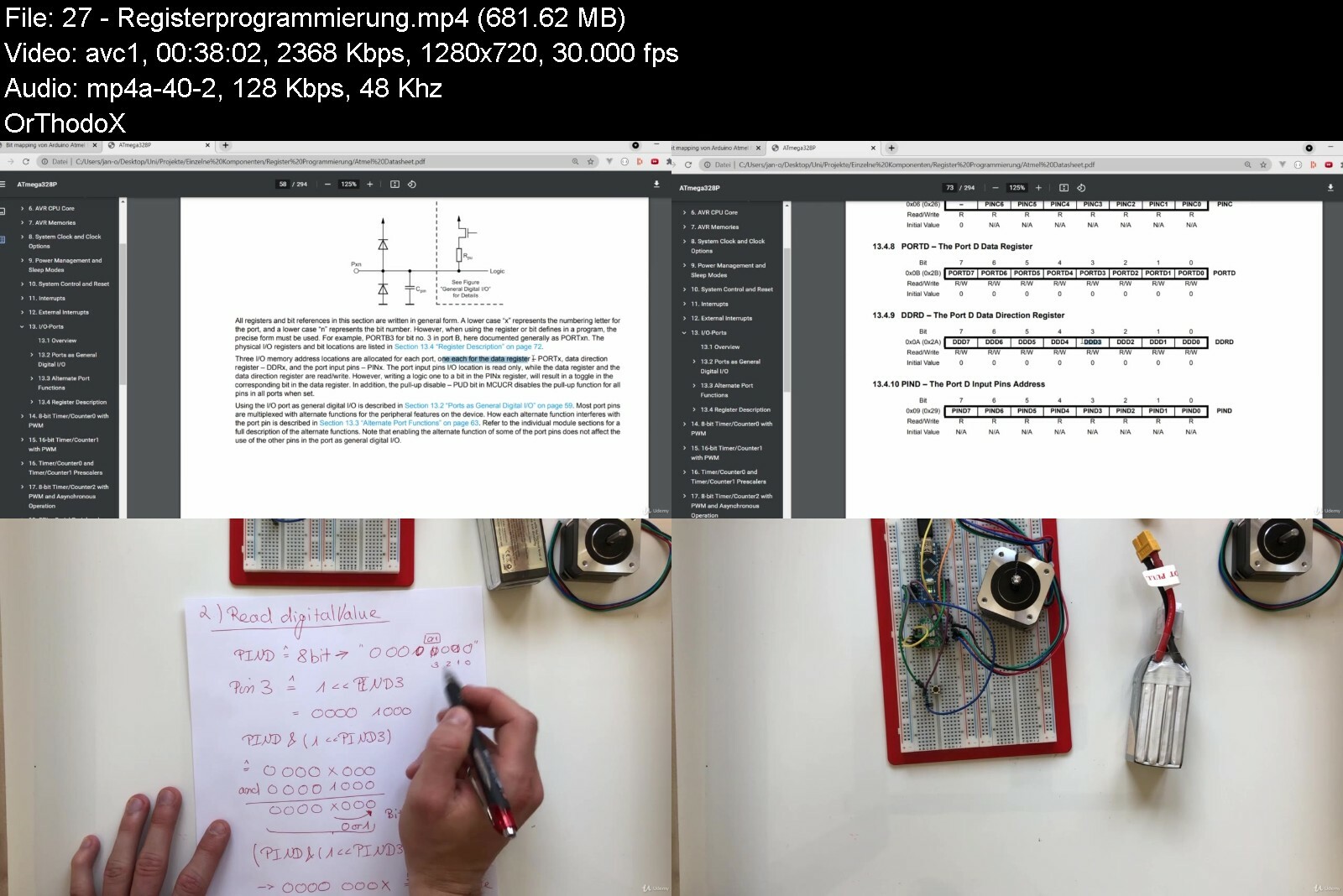
Nach der 3. Sektion wirst du wissen was ein Schrittmotor ist, wie du ihn mit Hilfe eines Motortreibers ansteuern kannst, wie du Registerprogrammierung nutzen kannst um digitale Ein-/Ausgänge anzusteuern, wie man Pull Up-/Pull Down-Widerstände verwendet & wie du eine Spannungsteiler-Schaltung dimensionierst um deine Batteriespannung zu überwachen.
Nach der 4. Sektion wirst du den selbststabilisierenden Roboter gebaut haben, welcher durch die ebenfalls selbstgebaute Fernbedienung steuerbar ist. Dabei lernst du was 8/16-Bit Timer sind, wie man sie konfiguriert und nutzen kann, warum wir diese benutzen, was ein P-/PID-Regler ist und man dessen Werte passend einstellt.
Es liegt an dir wie viel du aus dem Kurs mitnimmst! Je mehr du dich in die Themen reinfuchst die wir ansprechen, desto besser wird dein Verständnis nach dem Kurs sein. :D
Requirements
Du musst Spaß an der Verwendung von Microcontrollern haben, ansonsten hat der Kurs keinen Wert für dich.
Du wirst dich zu 100% selbst in relativ komplexe Themen einarbeiten müssen. Du wirst selbst tätig werden und dich an der ein oder anderen Stelle auch mal durchbeißen müssen. Dabei stehe ich dir natürlich mit Rat und Tat zur Seite! Suchst du aber nach einem Kurs, wo der Dozent dich mit "Wissen berieselt" das du noch am selben Tag wieder vergisst dann bist du hier falsch! :)
Du solltest aber bereits erste Erfahrungen mit dem Arduino gemacht haben. Wenn du weist wie du bspw. einen Taster einlesen kannst und was analoge und digitale Werte sind denke ich du bist fähig den Kurs zu meistern. Die Frage ist nur, ob du die Zeit investieren möchtest neue Dinge zu lernen oder nicht.

Description
Naaaa du, bist du ein Macher?
Komische Frage, oder? Also nach dem Kurs bist du auf jeden Fall einer :)
Ich bin mal so frei und sage kurz einen Satz zu meiner Wenigkeit :D
Mein Name ist Olli und ich studiere Mechatronik und Informationstechnologie im nun schon 6. Semester am KIT in Karlsruhe.
Mir persönlich macht es extrem viel Spaß eigene Projekte mit dem Arduino umzusetzen. Wenn es dir genauso geht dann hast du meinen Segen dir den Kurs zu kaufen! Uuuund wenn du keinen Spaß daran hast mit Arduino herumzuspielen . naja, warum suchst du dann überhaupt nach einem Arduino Kurs? ;D
So das Wichtigste ist also geklärt: Du möchtest dir den Kurs kaufen um deine Skills auf das nächste Level zu bringen und wirst dabei auch noch Spaß haben.
Außerdem bringst du bereits ein wenig Erfahrung im Umgang mit dem Arduino mit. Du kennst die Basics und weißt bspw. wie man Pins High/Low schaltet, wie man digitale/analoge Werte einliest, was der Unterschied zwischen digitalen und analogen Werten ist und hast ein grobes Gefühl für Spannung, Strom & Widerstände.
Du bist immernoch da :D? Sehr schön, dann lass mich dir sagen warum der Kurs genau der Richtige für dich ist
Und jaaaa ich weiß! Das sagen alle :D Im Endeffekt steht das ja unter jedem Kurs "Wenn du lesen/stehen/essen kannst, dann bist du hier genau richtig". Ach ne ist klar ^^. Ich würde vorschlagen, dass ich dir einfach kurz zeige was der Kurs bietet und du entscheidest dann, ob es dich anspricht oder nicht! :D Klingt nach einem Deal, oder nicht?
Was machen wir?
Der Kurs ist darauf ausgelegt dich bei deinem momentanen Stand abzuholen und an die Hand zu nehmen.
Ich neeehm dich an der Hand, zeig dir das Arduino-Land. Oder so ähnlich zumindest :D.
Auf unserer Reise werden wir so viele Sachen lernen, dass ich hier nur ein paar aufzähle. Wir schauen uns also die Inertial-Measurement-Unit an, bauen damit dann einen eigenen Remote-Controller mit welchem man durch die Neigung der Hand ein Auto steuern kann. Wir kommen darauf zu sprechen was Bibliotheken sind, wie I2C funktioniert, wie wir I2C nutzen können, wie man die Spannung seines Akkus überwacht, was ein PID-Controller ist, wie man Winkel aus Beschleunigungssensordaten berechnet, und und und.
Du siehst also, der Kurs deckt ein sehr breites Spektrum ab. Mit den ca. 10 Stunden Video-Material versuche ich dir einen roten Faden durch die Materie zu geben. Klar ist aber auch, dass du dich in einige Themen auch selbst einarbeiten/vertiefen musst wenn du etwas nicht verstehst/tiefer verstehen möchtest. Alleine bist du dabei allerdings nie. Bei Fragen stehen ich, und alle anderen Kurs Teilnehmer dir gerne mit Rat & Tat zur Seite.
Wie, alle anderen Kurs Teilnehmer?
Ich dachte mir es wäre cool eine Community um den Kurs herum aufzubauen. Ich habe deshalb eine Slack-Forum erstellt dem du beitreten kannst wenn du möchtest. Dort kann man sich mit anderen Teilnehmern austauschen, diskutieren und lernen. Ich habe das auch noch nie gemacht und hoffe das wird eine coole Sache! Ich freue mich auf jeden Fall riesig auf dich!
Struktur des Kurses!
Nach jedem Video sage ich dir was als nächstes zu tun ist. Für das Lösen der Aufgabe musst du dich selbst in die neue Thematik einarbeiten. Du musst bspw. einen Sensor mit I2C & Wire-Library auslesen, oder die Implementierung zur Ansteuerung von Schrittmotoren schreiben! Oder eher du darfst, da es dir ja Spaß macht .D.
Im darauffolgenden Video behandeln wir dann immer genau diese Aufgabe die ich dir gestellt hatte. Hast du die Aufgabe alleine hinbekommen dann kannst du hier nochmals schauen wie ich sie gelöst habe und ggf. neue Ideen sammeln. Hast du sie nicht hinbekommen, dann siehst du wie man sie lösen kann und erkennst was du falsch gemacht hast.
Durch diese Kursstruktur hoffe ich, das du nicht nur etwas lernst in dem Kurs sondern es dir auch langfristig merken kannst!
Was du für diesen Kurs sonst noch brauchst?
Im zweiten Video gehe ich genau darauf ein. Es sind einige Sachen, aber es lohnt sich auf jeden Fall! Schau am Besten vor dem Kauf des Kurses aber mal kurz rein.
Noch nicht so ganz sicher? Macht nichts! Durch die 30 Tage-Geld-Zurück Garantie von Udemy kannst du nichts verlieren! Schau dir den Kurs an und falls Ich Dir nicht zusagen dann holst du dir dein Geld wieder zurück - so einfach ist das :D
Ich freue mich extrem darauf dich im Slack-Forum willkommen zu heißen, wo du mit uns deinen Fortschritt teilen kannst!
Who this course is for
Dir haben deine ersten Erfahrungen mit dem Arduino Spaß gemacht und du möchtest dein Wissen und Können jetzt erweitern
Du möchtest lernen wie man eine neigungsbasierte Fernsteuerung, ein ferngesteuertes Auto und einen ferngesteuerten, selbststabilisierenden-Roboter baut
Es ist dir wirklich wichtig etwas zu lernen!

arduinofurmachernurfudvfb1.jpg


Download from RapidGator


Download from Keep2Share


Zurück
Oben Unten