50 Hours of Big Data, PySpark, AWS, Scala and Scraping
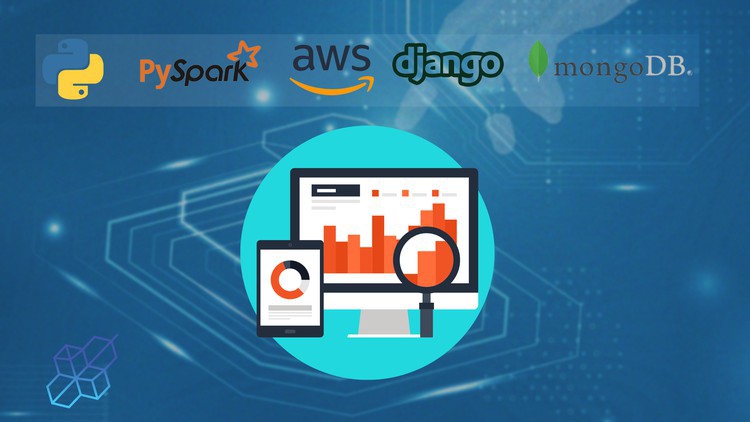
50 Hours of Big Data, PySpark, AWS, Scala and Scraping
MP4 | Video: h264, 1280x720 | Audio: AAC, 44.1 KHz, 2 Ch
Genre: eLearning | Language: English + srt | Duration: 617 lectures (54h 37m) | Size: 20 GB
Big Data with Scala and Spark,PySpark and AWS,Data Scraping & Data Mining With Python, Mastering MongoDB for Beginners
What you'll learn:
Introduction and importance of this course in this day and age
Approach all essential concepts from the beginning
Clear unfolding of concepts with examples in Python,Scrapy, Scala, PySpark and MongoDB
All theoretical explanations followed by practical implementations
Data Scraping & Data Mining for Beginners to Pro with Python
Master Big Data with Scala and Spark
Master Big Data With PySpark and AWS
Mastering MongoDB for Beginners
Building your own AI applications
Requirements
Basic understanding of HTML tags. Python, SQL and Node JS
No prior knowledge of data scraping and Scala is needed. You start right from the basics and then gradually build your knowledge of the subject.
Basic understanding of programming.
A willingness to learn and practice.
Since we teach by practical implementations so practice is a must thing to do
Description
The course content is designed in a way which is Simple to follow and understand, expressive, exhaustiv, practical with live coding, replete with quizzes, rich with state-of-the-art and up-to-date knowledge of this field.
I. Scala
It's true that Scala is not among the most-loved coding languages but don't let this minor discomfort bother you. Scala is doubtless one of the most in-demand skills for data scientists and data engineers. And the reason for this is not far to seek: The supply of professionals with Scala skills is a long way from catching up with the demand.
The well-thought-out quizzes and mini-projects in this course will cover all the important aspects and it will make your Scala learning journey that much easier. This course includes an overview of Hadoop and Spark with a hands-on project with Scala Spark. Right through the course, every theoretical explanation is followed by practical implementation.
This course is designed to reflect the most in-demand Scala skills that you will start using right away at the workplace. The 6 mini-projects and one Scala Spark project included in this course are a vital component of this course. These projects present you with a hands-on opportunity to experiment for yourself with trial and error. You get a chance to learn from the mistakes you commit. Importantly, it's easy to understand the potential gaps that might exist between theory and practice.
Scala, a power-packed language, has the capability to leverage most of the functions in Python, such as designing machine learning models. You can use this high-level language for an assortment of applications, from web apps to machine learning.
II. PySpark and AWS
The hottest buzzwords in the Big Data analytics industry are Python and Apache Spark. PySpark supports the collaboration of Python and Apache Spark. In this course, you'll start right from the basics and proceed to the advanced levels of data analysis. From cleaning data to building features and implementing machine learning (ML) models, you'll learn how to execute end-to-end workflows using PySpark.
Right through the course, you'll be using PySpark for performing data analysis. You'll explore Spark RDDs, Dataframes, and a bit of Spark SQL queries. Also, you'll explore the transformations and actions that can be performed on the data using Spark RDDs and dataframes. You'll also explore the ecosystem of Spark and Hadoop and their underlying architecture. You'll use the Databricks environment for running the Spark scripts and explore it as well.
Finally, you'll have a taste of Spark with AWS cloud. You'll see how we can leverage AWS storages, databases, computations, and how Spark can communicate with different AWS services and get its required data.
As this course is a detailed compilation of all the basics, it will motivate you to make quick progress and experience much more than what you have learned. At the end of each concept, you will be assigned Homework/tasks/activities/quizzes along with solutions. This is to evaluate and promote your learning based on the previous concepts and methods you have learned. Most of these activities will be coding-based, as the aim is to get you up and running with implementations.
III. Data Scraping and Data Mining from Beginner to Professional
Data scraping is the technique of extracting data from the internet. Data scraping is used for getting the data available on different websites and APIs. This also involves automating the web flows for extracting the data from different web pages.
This course is designed for beginners. We'll spend sufficient time to lay a solid groundwork for newbies. Then, we will go far deep gradually with a lot of practical implementations where every step will be explained in detail.
As this course is essentially a compilation of all the basics, you will move ahead at a steady rate. You will experience more than what you have learned. At the end of every concept, we will be assigning you Home Work/assignments/activities/quizzes along with solutions. They will assess / (further build) your learning based on the previous data scraping and data mining concepts and methods. Most of these activities are designed to get you up and running with implementations.
The 4 hands-on projects included in this course are the most important part of this course. These projects allow you to experiment for yourself with trial and error. You will learn from your mistakes. Importantly, you will understand the potential gaps that may exist between theory and practice.
Data Scraping is undoubtedly a rewarding career that allows you to solve some of the most interesting real-world problems. You will be rewarded with a fabulous salary package, too. With a core understanding of Data Scraping, you can fine-tune your workplace skills and ensure emerging career growth.
IV. MongoDB
In this course we'll go through the basics of MongoDB. We'll be using MongoDB to develop the understanding of the NoSQL databases. We'll explore the basic, Create, Read, Update and Delete operations in MongoDB. We'll explore in detail about the MongoDB query operators and project operators. Following that we'll learn about MongoDB update operators. In the end we'll move to explore MongoDB with Node and Python. We'll wind up this course with two projects, consisting of MongoDB with Djagno in which we'll develop a CRUD based application using Django and MongoDB and then we'll implement an ETL pipeline using PySpark to dump the data in the MongoDB.
This course is designed for beginners. We'll spend enough time to make a solid ground for newbies and they will go far deep gradually with a lot of practical implementations where every step will be explained in detail.
As this course is a compilation of all the basics, it will encourage you to move ahead and experience more than what you have learned. By the end of every concept, we will be assigning you Home Works/tasks/activities/quizzes along with solutions that will evaluate / (further build) your learning based on the previous concepts and methods. Several of these activities will be coding based to get you up and running with implementations.
With the increase of data there is a need to manage that, and not only manage it but also get the useful data and insights out of it for business analytics and correct decision making and for that the companies are actively looking for big data engineers. The major issue with big data is that it's so humongous that using regular data analysis techniques it is not possible to analyze it. Also due to continuously increasing data sources like IOT, SQL databases, NoSQL databases, social media platforms, point of sales and streaming data it is hard to even manage all this data through conventional methods and performing analytics on it is, as I just mentioned, is way beyond this. So we need new techniques and platforms for not only managing this data but also performing analysis on it and MongoDB supports all of this. We'll understand and learn using MongoDB which, in a nutshell, is a NoSQL database. All these skills are highly in demand..
So, without any further delay let's get started with the course and embrace yourself with the knowledge that waits for you.
Scope of Scala:
Understanding the variables in data types in Scala.
Understanding the flow controls in Scala and different ways for controlling the flow.
Understanding the functions and their usage in Scala.
Understanding the classes and their usage in Scala.
Understanding the data structures, namely: Lists, Lists Buffer, Maps, Sets, and Stack.
Understanding Hadoop.
Understanding the working of Spark.
Understanding the difference between Spark Rdds and Spark Dfs.
Understanding Map Reduce.
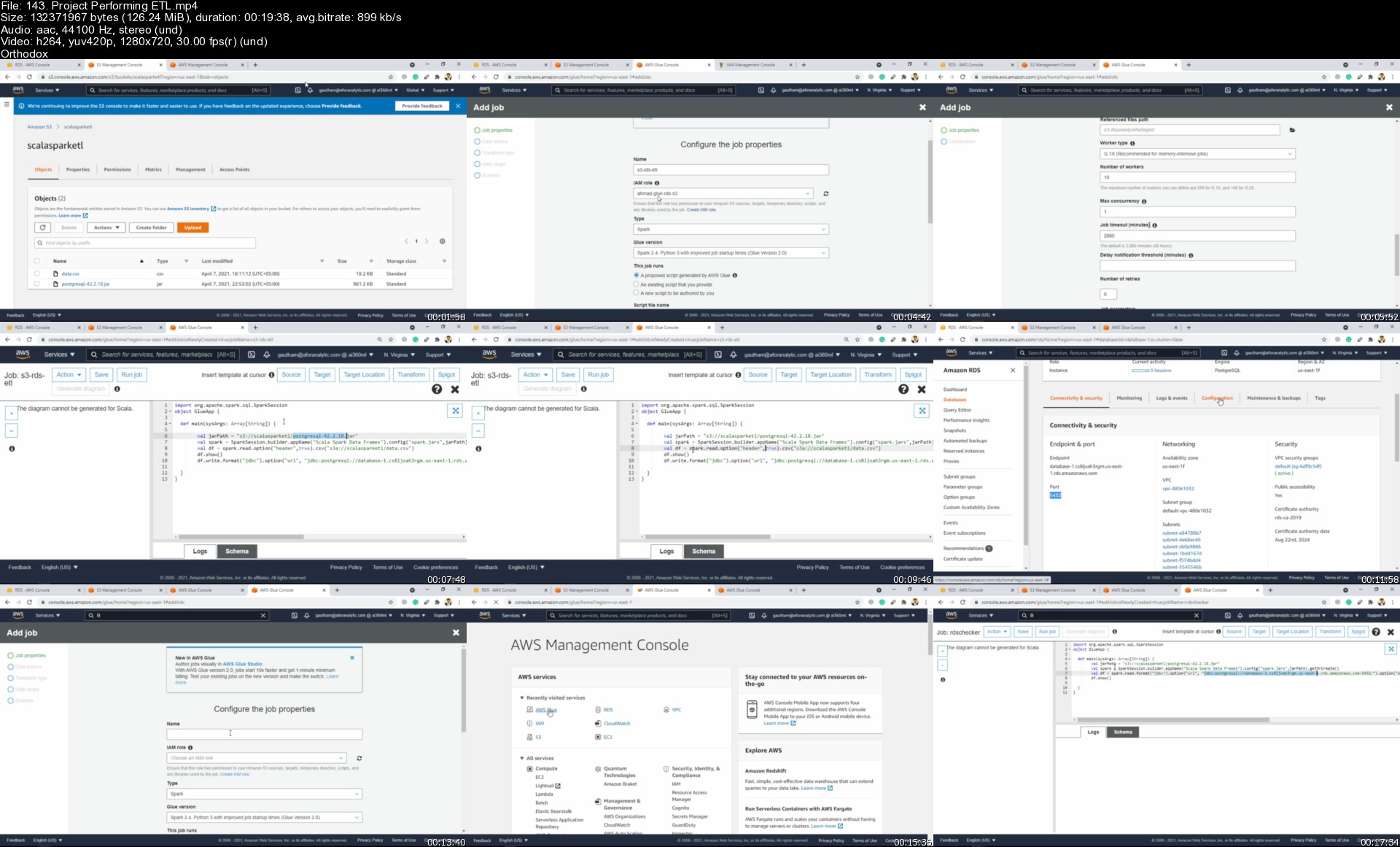
ETL pipeline from AWS S3 to AWS RDS using Spark.
Scope of PySpark:
Spark / Hadoop applications, EcoSystem and Architecture
PySpark RDDs
PySpark RDD transformations
PySpark RDD actions
PySpark DataFrames
PySpark DataFrames transformations
PySpark DataFrames actions
Collaborative filtering in PySpark
Spark Streaming
ETL Pipeline
CDC and Replication on Going
Scope of Data Scraping, Data Mining:
Internet Browser execution and communication with the server.
Request / Response to and from the server. Synchronous and Asynchronous
Parsing data in response from the server.
Difference between Synchronous and Asynchronous requests.
Introductions to Tools for data scraping: Requests, BS4, Scrapy & Selenium.
Explanation of different concepts like Python Requests Module, BS4 parsers functions, Scrapy for writing the spiders for crawling websites and extracting data, Selenium for understanding the automation and control of the web flows etc.
Scope of MongoDB:
Understanding MongoDB CRUD, Query Operators, Projection Operators Update Operators
Creating MongoDB cluster on Atlas
Understanding MongoDB with Node
Performing CRUD operation with Node in MongoDB Atlas
Understanding MongoDB with Python
Performing CRUD operation with Python in MongoDB Atlas
Understanding MongoDB with Django
Performing CRUD operation with Django in MongoDB Atlas
Building APIs for CRUD operations in MongoDB through Django
Understanding MongoDB with PySpark
After completing this information-packed course successfully, you will be able to:
● Implement any project from scratch that requires Data Scraping, Data Mining, Scala, PySpark, AWS and MongoDB knowledge.
● Relate the concepts and practical aspects of learned technologies with real-world problems.
● Gather data from websites in the smartest way.
Who this course is for:
● People who are absolute beginners.
● People who want to make smart solutions.
● People who want to learn with real data.
● People who love to learn theory and then implement it practically.
● Data Scientists, Machine learning experts and Drop Shippers.
Who this course is for
People who are absolute beginners.
People who want to make smart solutions.
People who want to learn with real data.
People who love to learn theory and then implement it practically.
Data Scientists, Machine learning experts and Drop Shippers.
Homepage
50 Hours of Big Data, PySpark, AWS, Scala and Scraping
MP4 | Video: h264, 1280x720 | Audio: AAC, 44.1 KHz, 2 Ch
Genre: eLearning | Language: English + srt | Duration: 617 lectures (54h 37m) | Size: 20 GB
Big Data with Scala and Spark,PySpark and AWS,Data Scraping & Data Mining With Python, Mastering MongoDB for Beginners
What you'll learn:
Introduction and importance of this course in this day and age
Approach all essential concepts from the beginning
Clear unfolding of concepts with examples in Python,Scrapy, Scala, PySpark and MongoDB
All theoretical explanations followed by practical implementations
Data Scraping & Data Mining for Beginners to Pro with Python
Master Big Data with Scala and Spark
Master Big Data With PySpark and AWS
Mastering MongoDB for Beginners
Building your own AI applications
Requirements
Basic understanding of HTML tags. Python, SQL and Node JS
No prior knowledge of data scraping and Scala is needed. You start right from the basics and then gradually build your knowledge of the subject.
Basic understanding of programming.
A willingness to learn and practice.
Since we teach by practical implementations so practice is a must thing to do
Description
The course content is designed in a way which is Simple to follow and understand, expressive, exhaustiv, practical with live coding, replete with quizzes, rich with state-of-the-art and up-to-date knowledge of this field.
I. Scala
It's true that Scala is not among the most-loved coding languages but don't let this minor discomfort bother you. Scala is doubtless one of the most in-demand skills for data scientists and data engineers. And the reason for this is not far to seek: The supply of professionals with Scala skills is a long way from catching up with the demand.
The well-thought-out quizzes and mini-projects in this course will cover all the important aspects and it will make your Scala learning journey that much easier. This course includes an overview of Hadoop and Spark with a hands-on project with Scala Spark. Right through the course, every theoretical explanation is followed by practical implementation.
This course is designed to reflect the most in-demand Scala skills that you will start using right away at the workplace. The 6 mini-projects and one Scala Spark project included in this course are a vital component of this course. These projects present you with a hands-on opportunity to experiment for yourself with trial and error. You get a chance to learn from the mistakes you commit. Importantly, it's easy to understand the potential gaps that might exist between theory and practice.
Scala, a power-packed language, has the capability to leverage most of the functions in Python, such as designing machine learning models. You can use this high-level language for an assortment of applications, from web apps to machine learning.
II. PySpark and AWS
The hottest buzzwords in the Big Data analytics industry are Python and Apache Spark. PySpark supports the collaboration of Python and Apache Spark. In this course, you'll start right from the basics and proceed to the advanced levels of data analysis. From cleaning data to building features and implementing machine learning (ML) models, you'll learn how to execute end-to-end workflows using PySpark.
Right through the course, you'll be using PySpark for performing data analysis. You'll explore Spark RDDs, Dataframes, and a bit of Spark SQL queries. Also, you'll explore the transformations and actions that can be performed on the data using Spark RDDs and dataframes. You'll also explore the ecosystem of Spark and Hadoop and their underlying architecture. You'll use the Databricks environment for running the Spark scripts and explore it as well.
Finally, you'll have a taste of Spark with AWS cloud. You'll see how we can leverage AWS storages, databases, computations, and how Spark can communicate with different AWS services and get its required data.
As this course is a detailed compilation of all the basics, it will motivate you to make quick progress and experience much more than what you have learned. At the end of each concept, you will be assigned Homework/tasks/activities/quizzes along with solutions. This is to evaluate and promote your learning based on the previous concepts and methods you have learned. Most of these activities will be coding-based, as the aim is to get you up and running with implementations.
III. Data Scraping and Data Mining from Beginner to Professional
Data scraping is the technique of extracting data from the internet. Data scraping is used for getting the data available on different websites and APIs. This also involves automating the web flows for extracting the data from different web pages.
This course is designed for beginners. We'll spend sufficient time to lay a solid groundwork for newbies. Then, we will go far deep gradually with a lot of practical implementations where every step will be explained in detail.
As this course is essentially a compilation of all the basics, you will move ahead at a steady rate. You will experience more than what you have learned. At the end of every concept, we will be assigning you Home Work/assignments/activities/quizzes along with solutions. They will assess / (further build) your learning based on the previous data scraping and data mining concepts and methods. Most of these activities are designed to get you up and running with implementations.
The 4 hands-on projects included in this course are the most important part of this course. These projects allow you to experiment for yourself with trial and error. You will learn from your mistakes. Importantly, you will understand the potential gaps that may exist between theory and practice.
Data Scraping is undoubtedly a rewarding career that allows you to solve some of the most interesting real-world problems. You will be rewarded with a fabulous salary package, too. With a core understanding of Data Scraping, you can fine-tune your workplace skills and ensure emerging career growth.
IV. MongoDB
In this course we'll go through the basics of MongoDB. We'll be using MongoDB to develop the understanding of the NoSQL databases. We'll explore the basic, Create, Read, Update and Delete operations in MongoDB. We'll explore in detail about the MongoDB query operators and project operators. Following that we'll learn about MongoDB update operators. In the end we'll move to explore MongoDB with Node and Python. We'll wind up this course with two projects, consisting of MongoDB with Djagno in which we'll develop a CRUD based application using Django and MongoDB and then we'll implement an ETL pipeline using PySpark to dump the data in the MongoDB.
This course is designed for beginners. We'll spend enough time to make a solid ground for newbies and they will go far deep gradually with a lot of practical implementations where every step will be explained in detail.
As this course is a compilation of all the basics, it will encourage you to move ahead and experience more than what you have learned. By the end of every concept, we will be assigning you Home Works/tasks/activities/quizzes along with solutions that will evaluate / (further build) your learning based on the previous concepts and methods. Several of these activities will be coding based to get you up and running with implementations.
With the increase of data there is a need to manage that, and not only manage it but also get the useful data and insights out of it for business analytics and correct decision making and for that the companies are actively looking for big data engineers. The major issue with big data is that it's so humongous that using regular data analysis techniques it is not possible to analyze it. Also due to continuously increasing data sources like IOT, SQL databases, NoSQL databases, social media platforms, point of sales and streaming data it is hard to even manage all this data through conventional methods and performing analytics on it is, as I just mentioned, is way beyond this. So we need new techniques and platforms for not only managing this data but also performing analysis on it and MongoDB supports all of this. We'll understand and learn using MongoDB which, in a nutshell, is a NoSQL database. All these skills are highly in demand..
So, without any further delay let's get started with the course and embrace yourself with the knowledge that waits for you.
Scope of Scala:
Understanding the variables in data types in Scala.
Understanding the flow controls in Scala and different ways for controlling the flow.
Understanding the functions and their usage in Scala.
Understanding the classes and their usage in Scala.
Understanding the data structures, namely: Lists, Lists Buffer, Maps, Sets, and Stack.
Understanding Hadoop.
Understanding the working of Spark.
Understanding the difference between Spark Rdds and Spark Dfs.
Understanding Map Reduce.
ETL pipeline from AWS S3 to AWS RDS using Spark.
Scope of PySpark:
Spark / Hadoop applications, EcoSystem and Architecture
PySpark RDDs
PySpark RDD transformations
PySpark RDD actions
PySpark DataFrames
PySpark DataFrames transformations
PySpark DataFrames actions
Collaborative filtering in PySpark
Spark Streaming
ETL Pipeline
CDC and Replication on Going
Scope of Data Scraping, Data Mining:
Internet Browser execution and communication with the server.
Request / Response to and from the server. Synchronous and Asynchronous
Parsing data in response from the server.
Difference between Synchronous and Asynchronous requests.
Introductions to Tools for data scraping: Requests, BS4, Scrapy & Selenium.
Explanation of different concepts like Python Requests Module, BS4 parsers functions, Scrapy for writing the spiders for crawling websites and extracting data, Selenium for understanding the automation and control of the web flows etc.
Scope of MongoDB:
Understanding MongoDB CRUD, Query Operators, Projection Operators Update Operators
Creating MongoDB cluster on Atlas
Understanding MongoDB with Node
Performing CRUD operation with Node in MongoDB Atlas
Understanding MongoDB with Python
Performing CRUD operation with Python in MongoDB Atlas
Understanding MongoDB with Django
Performing CRUD operation with Django in MongoDB Atlas
Building APIs for CRUD operations in MongoDB through Django
Understanding MongoDB with PySpark
After completing this information-packed course successfully, you will be able to:
● Implement any project from scratch that requires Data Scraping, Data Mining, Scala, PySpark, AWS and MongoDB knowledge.
● Relate the concepts and practical aspects of learned technologies with real-world problems.
● Gather data from websites in the smartest way.
Who this course is for:
● People who are absolute beginners.
● People who want to make smart solutions.
● People who want to learn with real data.
● People who love to learn theory and then implement it practically.
● Data Scientists, Machine learning experts and Drop Shippers.
Who this course is for
People who are absolute beginners.
People who want to make smart solutions.
People who want to learn with real data.
People who love to learn theory and then implement it practically.
Data Scientists, Machine learning experts and Drop Shippers.
Homepage