• Regeln für den Dokumente-Bereich:

    In den Börsenbereich gehören nur Angebote die bereits den Allgemeinen Regeln entsprechen.

    Allgemeines:

    Nicht erlaubt im Dokumente-Bereich sind:

    - indizierte Titel (inkl. Comics)
    - extremistische Werke, Zeitschriften und Comics (egal, welche Richtung)
    - jegliche Art von Pornographie
    - Anleitungen zu kriminellen Handlungen, gleich welcher Art
    - sadistische, menschenverachtende oder ähnliche Werke

    Nutzt den "Bedanken"-Button, bei Sammelthreads führen jegliche Kommentare, positiv wie negativ, sehr schnell zu einer Unübersichtlichkeit des Threads. Downmeldungen sind an den Uploader zu richten

    Vor dem Einstellen zu beachten:

    - Suchfunktion

    Vergewissert euch, dass es euer Dokument noch nicht im Board gibt, Doppelposts werden kommentarlos gelöscht. Ist es schon vorhanden, tragt es als Mirror im bestehenden Post ein.

    - Threadtitel

    Idealerweise ist sofort zu erkennen um was es sich handelt. Verseht euren Titel mit den relevanten Informationen, das hilft euch und damit auch uns und allen Suchenden erheblich weiter.

    Beispiel: [Thriller] Dan Brown - Inferno oder bei Magazinen:

    Computerbild - 14/2014 (es muss ersichtlich sein, um welche Ausgabe und welches Magazin es sich handelt)

    Folgende Präfixe stehen im Unterforum "Unterhaltung" zur Verfügung:

    [Humor]
    [Drama]
    [Erotik]
    [Fantasy]
    [Krimi]
    [Roman]
    [Thriller]
    [Horror]
    [Science Fiction]

    Inhalt des Beitrags:

    Folgende Pflichtangaben gilt es einzuhalten:

    - Autor
    - Titel
    - Präfix
    - Cover
    - Genre
    - Inhaltsbeschreibung
    - enthaltene Formate
    - Gesamtgröße des Downloads
    - Hoster
    - ggf. Passwort

    Nicht erlaubt sind alle Dateien, die den Download unnötig aufblähen um eine Affiliategrenze zu erreichen, wie zB. mp3-files, übergroße Bilder, etc.

    Ebenso nicht erlaubt sind sämtliche Dateien mit DRM, persönlichen Daten, etc., diese werden kommentarlos zu eurem eigenem Schutz gelöscht.

    Achtet bitte bei der Konvertierung der Formate auf die Lesbarkeit, ein epub, was nur einfach durch Calibre gejagt wird um ein PDF zu erhalten, ist zu 99% eben nicht lesbar. Wenn ihr es nicht könnt, dann lasst es besser oder lest euch ein, wie man es richtig macht.


    Unterforum Comics:

    Threadtitel:

    Ähnlich, wie bei Unterhaltung und Magazinen, sollte der Titel alle relevanten Informationen enthalten, hier bitte

    - den Titel des Comics
    - den Verlag (einige Comics sind in verschiedenen Verlagen erschienen)
    - das Erscheinungsjahr

    Erlaubt sind folgende Formate:

    - CBR
    - CBZ

    Grundsätzlich gilt: jede Version eines Comics erhält einen eigenen Thread, Ersteller eines Comics können ihre Bände gerne mit dem Zusatz (Original-Release) versehen.

    Bei Unsicherheiten zur korrekten Benennung bitte die Informationen von www.comicguide.de nutzen.

    Inhalt des Beitrags:

    Pflichtangaben hier sind:

    - Titel des Bandes und ggf. Nummer
    - Cover
    - falls bekannt technische Daten (DPI, Breite, Speicherqualität)
    - Größe des Downloads
    - Hoster
    - ggf. Passwort
    - falls bekannt Releasenamen
  • Bitte registriere dich zunächst um Beiträge zu verfassen und externe Links aufzurufen.

++ Premium IPTV ++ 7000 Live Sender ++ UHD Qualität ++ Mediathek mit 18.000 Inhalten ++


VenneTV


Collection Download Ebooks Best Seller Updated Daily

a48547cbc391771ac6b90e12ffa8c68a.webp

Brian King - Ship Modelling Solutions
Naval Institute Press | 2007 | ISBN: 1591148146 | 180 pages | PDF | 125.95 MB
The author enjoys an international reputation for the quality of his ship models, including his highly complex models of large battleships from all eras. In this new book, master modeler Brian King passes along a lifetime of experience in modeling. A compilation of material originally published in the specialist hobby magazine Model Boats, the book provides solutions to problems encountered by expert and novice modelers alike on such subjects as gun barrels, decking, anchors, fittings, turrets, life-saving gear, and cowl ventilators. It also discusses how to best photograph ship models, work to dimensions, and use computers. More than 130 photographs and ship plans further help the reader acquire the skills necessary to build ship models of all types.


Fileaxa


Links are Interchangeable - Single Extraction
 
ec07d8c1db79f427c2e7028cfcddd941.webp

Hirokazu Kanazawa - Shotokan Karate International Kata. Volume 1
Ikeda Shoten Co | 1991 | ISBN: 4262168514 | English / 日本語 / Français / Español / Deutsch | 278 pages | PDF | 190.75 MB
Shotokan featuring kata and kumite by the world famous shotokan master Hirokazu Kanazawa, chief instructor of SKIF, Shotokan Karate International Federation. Excellent photographic images showing detailed sequences of kata and kumite provide a superb reference for students and instructors alike.

Shotokan Karate International Kata Volume 1 and Shotokan Karate International Kata Volume 2 are complete references for the all 26 Shotokan Kata.
Numerous photographs with explanations in English, French, Spanish, German, and Japanese.


Fileaxa


Links are Interchangeable - Single Extraction
 
5bfc1d523daad32158074f456e085d8b.webp

Hirokazu Kanazawa - Shotokan Karate International Kata. Volume 2
Ikeda Shoten Co | 1982 | ISBN: 4262168522 | English / 日本語 / Français / Español / Deutsch | 304 pages | PDF | 206.58 MB
Shotokan featuring kata and kumite by the world famous shotokan master Hirokazu Kanazawa, chief instructor of SKIF, Shotokan Karate International Federation. Excellent photographic images showing detailed sequences of kata and kumite provide a superb reference for students and instructors alike.

Shotokan Karate International Kata Volume 1 and Shotokan Karate International Kata Volume 2 are complete references for the all 26 Shotokan Kata.
Numerous photographs with explanations in English, French, Spanish, German, and Japanese.


Fileaxa


Links are Interchangeable - Single Extraction
 
734f4ee7db68bafc924272e6021d1581.webp

Agim Kërçuku, "Shrinking Cities in Reunified East Germany"
English | 2024 | ISBN: 1032325542, 1032322586 | PDF | pages: 217 | 62.8 mb
The book explores the relationship between the shrinking process and architecture and urban design practices. Starting from a journey in former East Germany, six different scenes are explored in which plans, projects, and policies have dealt with shrinkage since the 1990s. The book is a sequence of scenes that reveals the main characteristics, dynamics, narratives, reasons and ambiguities of the shrinking cities' transformations in the face of a long transition. The first scene concerns the demolition and transformation of social mass housing in Leinefelde-Worbis. The second scene deals with the temporary appropriation of abandoned buildings in Halle-Neustadt. The third scene, observed in Leipzig, shows the results of green space projects in urban voids. The scene of the fourth situation observes the extraordinary efforts to renaturise a mining territory in the Lausitz region. The fifth scene takes us to Hoyerswerda, where emigration and ageing process required a reduction and demolition in housing stock and social infrastructures. The border city of Görlitz, the sixth and last scene, deals with the repopulation policies that aim to attract retirees from the West.


Fileaxa


Links are Interchangeable - Single Extraction
 
bb8b4e8e4a74522fa25d41cbaf829184.webp

Silicon-Plasmonic Photodetectors for High-Speed Signal Processing
Sascha Johannes Mühlbrandt
English | 2025 | ISBN: 9783731513674 | 204 Pages | True PDF | 5.7 MB

This book introduces and experimentally demonstrates a novel approach to exploit internal photoemission (IPE) for photodetection in silicon. The resulting device represents the first IPE-based detector that operates at technically viable performance figures. It combines a compact footprint and a high bandwidth with monolithic cointegration in silicon photonic circuits. The new concept opens an attractive route for optoelectronic generation and detection of waveforms in the sub-THz and THz range.


Fileaxa


Links are Interchangeable - Single Extraction
 
6d42f6495844a0338bb4a061a3d1954a.webp

Six Minutes to Winter: Nuclear War and How to Avoid It by Mark Lynas
English | May 8th, 2025 | ISBN: 1399410512 | 304 pages | True EPUB | 0.57 MB
The world is currently closer to superpower conflict than at any time since the 1962 Cuban Missile Crisis. World War III is a real possibility, and with 12,000 warheads in the arsenals of more than half a dozen countries, we are standing on a nuclear knife edge.


We are sleepwalking to Armageddon. There are no mass marches, no COPs, no nuclear Greta. But the climate experience teaches us that ignoring a problem is no solution, and that a worldwide mobilisation can work. Six Minutes to Winter presents an unflinching view of the nuclear nightmare, but also describes how weapons can be taken off hair-trigger alert and ultimately abolished altogether. If human civilisation is to survive long term, we have no alternative.


Fileaxa


Links are Interchangeable - Single Extraction
 
b235a4bed075c72afcb93b2916973912.webp

Slavery in the Cultural Imagination: Debates, Silences and Dissent in the Neerlandophone Space
by Marrigje Paijmans, Karwan Fatah-Black
English | 2025 | ISBN: 9463728791 | 374 Pages | True PDF | 4.4 MB

With the rising tide of scholarly and societal interest in the history and legacy of colonialism and slavery, this collection offers a much needed diachronic analysis of the cultural representations of the lives and afterlives of those subjected to slavery and indenture. It focuses on the history of the 'neerlandophone' space, defined as the complex linguistic space spanning former Dutch colonies. This collection gives a longue durée overview, with cases encompassing the period from the early modern period to the present-day, revealing the deep roots of the colonial 'cultural archive'.
A wide variety of scholars demonstrate how attention to the layered and polyphonic qualities of narratives can reveal silent and disruptive voices in colonial discourse, as well as collective emotions and imaginations that have hitherto remained unrecorded in most historical sources. They discuss different aesthetic, poetical, and storytelling practices, including literature, photography, performance, philosophy, and other forms of knowledge production that were formed both in the metropolis and by enslaved and indentured peoples in the colonies.


Fileaxa


Links are Interchangeable - Single Extraction
 
94a2922856c27c3201686c41aa2eb968.webp

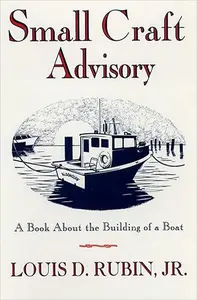
Louis D. Rubin Jr., "Small Craft Advisory: A Book About the Building of a Boat"
English | 1994 | ISBN: 0871135337 | EPUB | pages: 394 | 1.9 mb
Small Craft Advisory is an enchanting book about Louis Rubin's obsession with boats and his years of often hilarious boating adventures.

When Louis Rubin was thirteen, he built a leaky little boat and paddled it out to the edge of the ship channel in Charleston, South Carolina, where he felt the inexorable pull of the water. Fifty years and dozens of boats later-sailboats, powerboats, inboards and outboards-the pull is as strong as ever.
In the tradition established by Mark Twain, Joseph Conrad, and Herman Melville, distinguished author and scholar Louis Rubin explores man's longtime passion for boats. He examines the compulsion that has prompted him and hundreds of thousands of other non-nautical persons to spend so much time, and no small portion of their incomes, on watercraft that they can use only infrequently.
As his new boat (a cabin cruiser made of wood on a workboat hull) is being built, Rubin tells of his past boats and numerous boating disasters and draws a poignant comparison between his two passions: watercraft and the craft of writing.
Anyone who has ever bought and owned a boat-or wondered why people are obsessed by them-will love this amusing, evocative, beautifully crafted memoir by an inveterate boat-owner.


Fileaxa


Links are Interchangeable - Single Extraction
 
9f32121c9c9a260eca4384fd3a026f0a.webp

Smart Cities: Foundations and Perspectives
by Pier Luigi Mazzeo, Paolo Spagnolo
English | 2024 | ISBN: 0850143934 | 175 Pages | True PDF | 4.3 MB

In a rapidly urbanizing world, the concept of "smart cities" represents the future of urban living. These cities aim to harness advanced technologies to create environments that are efficient, sustainable, and responsive to the needs of their inhabitants. But what does it take to build a smart city? And what challenges must be overcome to realize this vision? Smart Cities - Foundations and Perspectives is a comprehensive guide that explores the intricate process of developing smart cities. The book is organized into two key sections. The first section, "Smart Cities Opportunities and Challenges", takes you through the initial stages of smart city development, with a focus on real-world examples like Saudi Arabia's ambitious smart city projects. It discusses the critical areas of energy, mobility, and waste management, offering a clear view of the evolution of these cities and the hurdles they face. In the second section, "Smart Cities Technologies", the book delves into the technological backbone of smart cities. From the Internet of Things (IoT) to renewable energy solutions and cybersecurity measures, it covers the cutting-edge innovations that are essential for creating intelligent urban environments. Written by leading experts in the field, this book provides invaluable insights for policymakers, urban planners, technologists, and anyone interested in the future of cities. Smart Cities - Foundations and Perspectives is not just a blueprint for building smart cities-it is a call to action for creating urban spaces that are secure, sustainable, and inclusive.


Fileaxa


Links are Interchangeable - Single Extraction
 
0d006508562eb682bdae185e600c392e.webp

So Very Small: How Humans Discovered the Microcosmos, Defeated Germs-and May Still Lose the War Against Infectious Disease by Thomas Levenson
English | April 29th, 2025 | ISBN: 0593242734 | 448 pages | True EPUB | 43.12 MB
The centuries-long quest to discover the critical role of germs in disease reveals as much about human reasoning-and the pitfalls of ego-as it does about microbes.

"Essential reading . . . Thomas Levenson brings to brilliant life the social history of medical detective work and illuminates the fascinating world of pathogenic microbes."-Deborah Blum, New York Times bestselling author of The Poison Squad
Scientists and enthusiastic amateurs first confirmed the existence of living things invisible to the human eye in the late seventeenth century. So why did it take two centuries to connect microbes to disease? As late as the Civil War in the 1860s, most soldiers who perished died not on the battlefield but of infected wounds, typhoid, and other diseases. Twenty years later, the outcome might have been different, following one of the most radical intellectual transformations in history: germ theory, the recognition that the tiniest forms of life have been humankind's greatest killers. It was a discovery centuries in the making, and it transformed modern life and public health.
As Thomas Levenson reveals in this globe-spanning history, it has everything to do with how we see ourselves. For centuries, people in the West, believing themselves to hold God-given dominion over nature, thought too much of humanity and too little of microbes to believe they could take us down. When nineteenth-century scientists finally made the connection, life-saving methods to control infections and contain outbreaks soon followed. The next big break came with the birth of the antibiotic era in the 1930s. And yet, less than a century later, the promise of the antibiotic revolution is already receding due to years of overuse. Is our self-confidence getting the better of us again?
So Very Small follows the thread of human ingenuity and hubris across centuries-along the way peering into microscopes, spelunking down sewers, visiting army hospitals, traipsing across sheep fields, and more-to show how we came to understand the microbial environment and how little we understand ourselves. Levenson traces how and why ideas are pursued, accepted, or ignored-and hence how human habits of mind can, so often, make it terribly hard to ask the right questions.


Fileaxa


Links are Interchangeable - Single Extraction

 
6ca0e41f7aa318fb0adf0c7356e26fbd.webp

Socialist Subjectivities: Queering East Germany under Honecker
by Katharine White, Scott Harrison
English | 2025 | ISBN: 0472077368 | 362 Pages | True ePUB | 2 MB

Socialist Subjectivities works within the logics of queer time to reanimate East German subjectivities in the 1970s and 1980s beyond the narrative of the German Democratic Republic's long march towards demise. While East Germany certainly ended in dissolution, not all East Germans experienced late socialism in a singular manner. Rather, even after a generation of building socialism, East Germans under Honecker continued to pursue a range of socialist presents and a multiplicity of socialist futures up to and beyond 1989. This edited volume utilizes queer temporalities to interrogate how individuals lived non-normative possibilities in a highly normative world.
Whether one was an apparatchik, artist, or alcoholic, the everyday interactions, experiences, and rituals of late socialism proved crucial to establishing the conditions around which subjecthood was constructed. Despite stereotypes of apathy and inertia, East Germans lent a considerable dynamism to their society, and by generating a cacophony of opinions and a heterogeneity of ideas, they constantly transformed state socialism. By foregrounding socialist subjects and the iterative nature of socialism during these decades, this volume paints a richer portrait of East Germany-one that illuminates how East Germans imagined their futures in a society whose collapse they could not foresee.


Fileaxa


Links are Interchangeable - Single Extraction

 
8bc82dcd5ad82004e1e86d4f665288b0.webp

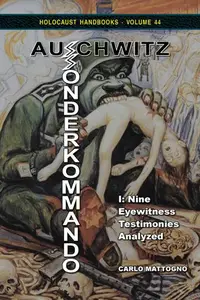
Sonderkommando Auschwitz I: Nine Eyewitness Testimonies Analyzed
Carlo Mattogno
English | 2021 | ISBN: 1591482585 | 304 Pages | True ePUB | 14.8 MB

To this day, the 1979 book Auschwitz Inferno: The Testimony of a Sonderkommando by former Auschwitz inmate and putative Sonderkommando member Filip Müller, who claims to have worked in the gas chambers of Auschwitz for three years, has a great influence both on the popular perception of Auschwitz and on historians probing or purporting to probe this camp's history. The late Raul Hilberg, for instance, one of the most-influential mainstream Holocaust scholars, called Müller "a remarkable, accurate, reliable person."
The first half of the present book critically analyzes Müller's various post-war writings and testimonies, starting with a brief essay he wrote just after the war, then his testimony during the Frankfurt Auschwitz Trial in 1964, the interviews he gave Claude Lanzmann for his epic 1985 documentary Shoah, and of course his 1979 book, which was to an unknown degree ghostwritten by one Helmut Freitag. A thorough analysis and comparison of these texts reveals that Müller's memory seems to have improved with the decades rather than faded. His later stories have him involved everywhere in Auschwitz where the mainstream narrative reported there was some dramatic action. But a closer look at what Müller (or Freitag) wrote reveals that they pilfered it from other writers, complete with historical mistakes and physical nonsense. One of Müller's main sources of such plagiarism was a book by Hungarian physician and proven impostor Miklós Nyiszli, but he also stole from the tales of the well-known false witnesses Kurt Gerstein and Rudolf Höss.
The second part of the present book analyzes the accounts of eight more witnesses who claim to have been members of the Auschwitz Sonderkommando: Dov Paisikovic, Stanisław Jankowski, Henryk Mandelbaum, Ludwik Nagraba, Joshuah Rosenblum, Aaron Pilo, David Fliamenbaum and Samij Karolinskij. The first three among them made substantial depositions which are often cited in Holocaust literature on Auschwitz, whereas the other five are less-well-known. A common feature of all of their accounts is that they follow a narrative developed after the war by the Soviet propaganda units which occupied Auschwitz after the German retreat. Large parts of that narrative are today considered wrong or at least exaggerated even by mainstream scholars. So how come these witnesses told the same overarching ideological lies in impressive concert, while they diverged on many concrete specifics on which they should have agreed, if their tales concerned actual events or conditions they all experienced in the same places and times? Find the answers in this revealing study!


Fileaxa


Links are Interchangeable - Single Extraction

 
Zurück
Oben Unten