



• Regeln für den Audio-Bereich:

    Allgemeine Boardregeln: MyBoerse-bz-Regelwerk Regelwerk Audioboerse

    1. Das richtige Forum

    Wähle ein passendes Unterforum für dein Angebot

    2. Doppelte Threads vermeiden / Ein Thread pro Interpret


    Da es hier langsam ausartet mit gleichen Interpreten, aber verschiedenen Jahren, gilt ab sofort: Nur noch ein Thread pro Interpret, unabhängig von der Jahreszahl der verschiedenen Alben. Wünschenswert wäre es wenn ihr den Titel ab sofort so benennt: Interpret - Diskographie

    Um Doppelpost zu vermeiden, nutze vor dem Posten die Suchenfunktion. Gibt es schon einen passenden Thread, dann poste Dein Angebot dort hinein. Für einzelne Alben einer Sammlung bzw. Hörbuchreihen bitte in den passenden Sammelthreads posten.

    3. Der richtige Titel

    Gib dem Thread einen einfachen aber vernünftigen Titel, der zum Angebot passt. Um den Thread besser über die Suche zu finden, solltest du einen normalen Titel benutzen. Bei Threads in den Foren Musik, HQ Audio / Lossless und Soundtracks / OST immer das Jahr am Ende des Threadtitels in Klammern angeben, z.B.: Interpretname - Albumname (2016)

    4. Die richtigen Angaben

    Ein Thread/Thema in der Audio-Börse muss dem User Informationen über das Angebot geben können.

    Pflichtangaben:

    Bild des Uploads
    Genre
    Bitrate der Musik Datei: in Kbit/s
    Hoster
    Größe in MB oder GB
    Tracklist

    Optional: Angabe wenn Cover dabei sind.


    Sollte ein Angebot diese Pflichtangaben nicht beinhalten, wird der Verfasser darauf hingewiesen. Sollte dieses dann nicht geändert werden, werden die Beiträge gelöscht.

    (Sollte der Upload nicht als mp3 vorliegen, sondern als ogg/Bin/Cue o.Ä., dann ist dies auch eine Pflichtangabe)

    5. Defekte/nicht verfügbare Links und andere Probleme mit einem Upload

    Sollte ein Upload down sein, dann meldet es per PN dem Uploader. Gibt es zwei Threads zum gleichen Thema oder ein Upload im falschen Forum, dann meldet dies via "Beitrag melden" Funktion, diese befindet sich neben dem Bedanken-Button.

    6. Reupp- /Hosteranfragen
    Reuppanfragen oder auch Anfragen ob es bei einem anderen Hoster geuppt werden kann, bitte direkt per PN an den Uploader und nicht in den Thread.
  • Bitte registriere dich zunächst um Beiträge zu verfassen und externe Links aufzurufen.

*** Bestes IPTV *** bester Preis *** gratis Test ***


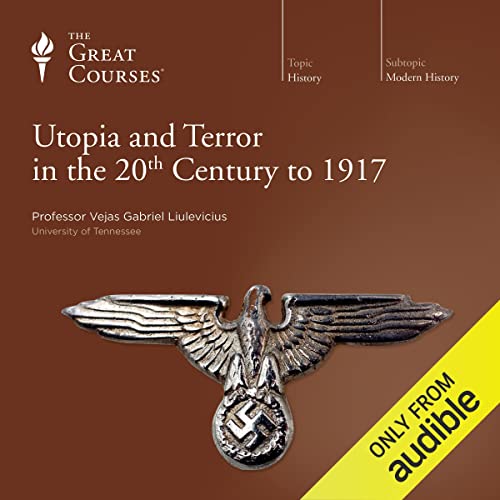
Utopia and Terror in the 20th Century [TTC Audio]

Srbija

MyBoerse.bz Pro Member
7e6f92fbcc8f52c3a732fd11aa5a5728.jpg


Utopia and Terror in the 20th Century [TTC Audio]
English | 2003 | 12 hrs and 30 mins | MP3 | 344 MB

by: Vejas Gabriel Liulevicius, The Great Courses
Narrated by: Vejas Gabriel Liulevicius

From the trenches of World War I to Nazi Germany to Saddam Hussein's Iraq, the 20th century was a time of unprecedented violence. Yet while such monumental violence seems senseless, it is not inexplicable. If we can understand the origins of violence, we may prevent even greater horrors in the century to come.

These 24 necessary lectures trace the violent history of the 20th century, beginning with its early roots in the American and, especially, the French revolutions. With each passing lecture, you will see how the 20th century's-violence was the result of specific historical developments that eventually combined, with explosive results.

You'll see how

the French Revolution proved that ideological movements could mobilize the public and, through violence, transform society;
the Industrial Revolution and subsequent technology created vastly more powerful weapons; and
Charles Darwin's theory of natural selection was perverted into Social Darwinism and eugenics.

The most sinister development of all, however, was the notion that utopia was not just a perfect paradise to look forward to in the afterlife. Instead, utopia could be built right now, in this life. Such 20th-century ideologies as Marxism, Nazism, Communism, and Fascism embraced this idea willingly - even enthusiastically - and used terror to implement it.

You'll see how leaders of totalitarian governments act as mobsters, and how regimes create fear and command allegiance through the use of bureaucratic "machines," such as the cult of the leader, secret police, and the media. In the final lectures, Professor Liulevicius considers recent figures such as Saddam Hussein and Osama bin Laden and assesses terrorism in the contemporary world.


 
Zurück
Oben Unten