• Regeln für den Video-Bereich:

    In den Börsenbereich gehören nur Angebote die bereits den Allgemeinen Regeln entsprechen.

    Einteilung

    - Folgende Formate gehören in die angegeben Bereiche:
    - Filme: Encodierte Filme von BluRay, DVD, R5, TV, Screener sowie Telesyncs im Format DivX, XviD und x264.
    - DVD: Filme im Format DVD5, DVD9 und HD2DVD.
    - HD: Encodierte Filme mit der Auflösung 720p oder darüber von BluRay, DVD, R5, TV, Screener sowie Telesyncs im Format x264.
    - 3D: Encodierte Filme von BluRay, die in einem 3D Format vorliegen. Dies gilt auch für Dokus, Animation usw.
    - Serien: Cartoon/Zeichentrick, Anime, Tutorials, Dokumentationen, Konzerte/Musik, Sonstiges sind demnach in die entsprechenden Bereiche einzuordnen, auch wenn sie beispielsweise im High Definition-Format oder als DVD5/DVD9/HD2DVD vorliegen. Ausnahme 3D.
    - Bereich Englisch: Englische Releases gehören immer in diesen Bereich.
    - Bereich Talk: Der Bereich, in dem über die Releases diskutiert werden kann, darf, soll und erwünscht ist.


    Angebot/Beitrag erstellen

    - Ein Beitrag darf erst dann erstellt werden, wenn der Upload bei mindestens einem OCH komplett ist. Platzhalter sind untersagt.
    - Bei einem Scenerelease hat der Threadtitel ausschließlich aus dem originalen, unveränderten Releasenamen zu bestehen. Es dürfen keine Veränderungen wie z.B. Sterne, kleine Buchstaben o.ä. vorgenommen werden. Ausnahme Serienbörse:
    - Bei einem Sammelthread für eine Staffel entfällt aus dem Releasename natürlich der Name der Folge. Beispiel: Die Simpsons S21 German DVDRip XviD - ITG
    - Dementsprechend sind also u.a. verboten: Erweiterungen wie "Tipp", "empfehlenswert", "only", "reup", usw. / jegliche andere Zusatzinformation oder Ergänzung, welche nicht in obiger Beschreibung zu finden ist.

    Aufbau des Angebots und Threadtitel

    Der Titel nach folgendem Muster erstellt zu werden. <Name> [3D] [Staffel] [German] <Jahr> <Tonspur> [DL] [Auflösung] <Quelle> <Codec> - <Group>
    Beispiel: The Dark Knight German 2008 AC3 DVDRip XviD - iND
    Beispiel: The Dark Knight 2008 DTS DL BDRip x264 - iND
    Beispiel: The Dark Knight 2008 AC3 DL BDRip XviD - iND
    Beispiel: The Dark Knight German 2008 AC3 720p BluRay x264 iND
    Beispiel: The Dark Knight 2008 DTS DL 1080p BluRay x264 iND
    Beispiel: Die Simpsons S01 German AC3 DVDRip XviD iND
    Beispiel: Die Simpsons S20 German AC3 720p BluRay x264 iND
    Beispiel: Sword Art Online II Ger Sub 2014 AAC 1080p WEBRip x264 - peppermint
    Entsprechend sind also u.a. verboten: Sonderzeichen wie Klammern, Sterne, Ausrufezeichen, Unterstriche, Anführungszeichen / Erweiterungen wie "Tipp", "empfehlenswert", "only", "reup", usw. / jegliche andere Zusatzinformation oder Ergänzung, welche nicht in obiger Beschreibung zu finden ist
    Ausnahmen hiervon können in den Bereichen geregelt sein.

    Die Beiträge sollen wie folgt aufgebaut werden:
    Überschrift entspricht dem Threadtitel
    Cover
    kurze Inhaltsbeschreibung
    Format, Größe, Dauer sind gut lesbar für Downloader außerhalb des Spoilers zu vermerken
    Nfo sind immer Anzugeben und selbige immer im Spoiler in Textform.
    Sind keine Nfo vorhanden z.B. Eigenpublikationen, sind im Spoiler folgende Dateiinformationen zusätzlich anzugeben :
    Quelle
    Video (Auflösung und Bitrate)
    Ton (Sprache, Format und Bitrate der einzelnen Spuren)
    Untertitel (sofern vorhanden)
    Hosterangabe in Textform außerhalb eines Spoiler mit allen enthaltenen Hostern.
    Bei SD kann auf diese zusätzlichen Dateiinformationen verzichtet werden.

    Alle benötigten Passwörter sind, sofern vorhanden, in Textform im Angebot anzugeben.
    Spoiler im Spoiler mit Kommentaren :"Schon Bedankt?" sind unerwünscht.


    Releases

    - Sind Retail-Release verfügbar, sind alle anderen Variationen untersagt. Ausnahmen: Alle deutschen Retail-Release sind CUT, in diesem Fall sind dubbed UNCUT-Release zulässig.
    - Im Serien-Bereich gilt speziell: Wenn ein Retail vor Abschluss einer laufenden Staffel erscheint, darf diese Staffel noch zu Ende gebracht werden.62
    - Gleiche Releases sind unbedingt zusammenzufassen. Das bedeutet, es ist zwingend erforderlich, vor dem Erstellen eines Themas per Suchfunktion zu überprüfen, ob bereits ein Beitrag mit demselben Release besteht. Ist dies der Fall, ist der bereits vorhandene Beitrag zu verwenden.
    - P2P und Scene Releases dürfen nicht verändert oder gar unter einem iND Tag eingestellt werden.


    Support, Diskussionen und Suche

    - Supportanfragen sind entweder per PN oder im Bereich Talk zu stellen.
    - Diskussionen und Bewertungen sind im Talk Bereich zu führen. Fragen an die Uploader haben ausschließlich via PN zu erfolgen, und sind in den Angeboten untersagt.
    - Anfragen zu Upload-Wünschen sind nur im Bereich Suche Video erlaubt. Antworten dürfen nur auf Angebote von MyBoerse.bz verlinkt werden.


    Verbote

    - Untersagt sind mehrere Formate in einem einzigen Angebotsthread, wie beispielsweise das gleichzeitige Anbieten von DivX/XviD, 720p und 1080p in einem Thread. Pro Format, Release und Auflösung ist ein eigener Thread zu eröffnen.
    - Grundsätzlich ebenso verboten sind Dupes. Uploader haben sich an geeigneter Stelle darüber zu informieren, ob es sich bei einem Release um ein Dupe handelt.
    - Gefakte, nur teilweise lauffähige oder unvollständige Angebote sind untersagt. Dies gilt auch für eigene Publikationen, die augenscheinlich nicht selbst von z.B. einer DVD gerippt wurden. Laufende Serien, bei denen noch nicht alle Folgen verfügbar sind, dürfen erstellt und regelmäßig geupdatet werden.
    - Untersagt sind Angebote, welche nur und ausschließlich in einer anderen Sprache als deutsch oder englisch vorliegen. Ausnahmen sind VORHER mit den Moderatoren zu klären.


    Verstoß gegen die Regeln

    - Angebote oder Beiträge, die gegen die Forenregeln verstoßen, sind über den "Melden"-Button im Beitrag zu melden.
  • Bitte registriere dich zunächst um Beiträge zu verfassen und externe Links aufzurufen.

*** Bestes IPTV *** bester Preis *** gratis Test ***


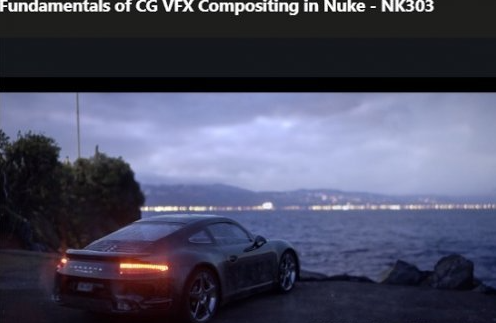
Udemy - Fundamentals of CG VFX Compositing in Nuke - NK303

Tutorials

MyBoerse.bz Pro Member
image.png

Udemy - Fundamentals of CG VFX Compositing in Nuke - NK303
Genre: eLearning | Language: English | 3D Tutorials | MP4
A VFX Compositing course on integrating computer generated images into the real world, using Nuke!

This is an*extensive*Nuke Compositing course on CGI*(Computer*Generated Imagery)*compositing inside of Nuke from an Industry Professional with years of*Hollywood feature film*experience.

Why learn from this course?
This course is providing a CGI render, footage, and all of the elements necessary to composite a CG shot. *It is difficult to find high quality courses on the internet for a good price to learn this set of skills, and*a course equivalent to this would cost $1000 or more from a VFX*university.**Not only are you receiving all of these elements which*Alex has specifically created for this course,*you will be guided by an industry professional who has worked at the top visual effects studios in the world.* This is a major bargain and extremely great opportunity for someone who wants to learn to become a compositor.

Your instructor has worked on feature films such as:

Star Wars:*The Rise of*Skywalker

Avengers:*Endgame
X-Men Apocalypse

The Mandalorian
Fantastic Beasts and Where to Find them
..And many more.


Content Source:


Recommend Download Link Hight Speed | Please Say Thanks Keep Topic Live
 

d008f7345d414fe60d36129d3fbacf78.jpg

Fundamentals Of Cg Vfx Compositing In Nuke - Nk303
Last updated 7/2021
MP4 | Video: h264, 1280x720 | Audio: AAC, 44.1 KHz
Language: English | Size: 4.11 GB | Duration: 6h 45m​

A VFX Compositing course on integrating computer generated images into the real world, using Nuke!

What you'll learn
Integrating a CGI (Computer Generated Image) render into a real scene
Render layers (AOVs) inside of Nuke, and how to break them apart
Create dynamic lens flares based off of source imagery
Studying shadow & light, and how to match the real world
Matching color tones, darks, highlights of an image
Using utility passes to do spot corrections (Position Pass)
Learn the variety of uses for Z-Depth passes
Use ID passes to correct different geometries
Learn how to match camera attribute (Defocus, Grain, Bokeh, Lens Distortion)
Create realistic post-production camera imperfections and artifacts
Compositing elements / FX into a shot
Creating water drips in Nuke, with light interaction
Creating a wetness / rain effect on dry surfaces
How to quality control (QC) your final shot
How to use the normals AOV to fine tune CG.
Requirements
Have a basic knowledge of Nuke's interface and nodes (Can be found in my class, NK101)
Have a basic knowledge of the 3d system inside of Nuke (Can be found in my class, NK202)
You must have Nuke and a computer that can run Nuke.
60gb of computer storage (For all of the project files. It is downloaded as a 7gb compressed file)
Description
This is an extensive Nuke Compositing course on CGI (Computer Generated Imagery) compositing inside of Nuke from an Industry Professional with years of Hollywood feature film experience.Why learn from this course?This course is providing a CGI render, footage, and all of the elements necessary to composite a CG shot. It is difficult to find high quality courses on the internet for a good price to learn this set of skills, and a course equivalent to this would cost $1000 or more from a VFX university. Not only are you receiving all of these elements which Alex has specifically created for this course, you will be guided by an industry professional who has worked at the top visual effects studios in the world. This is a major bargain and extremely great opportunity for someone who wants to learn to become a compositor.Your instructor has worked on feature films such as:Star Wars: The Rise of SkywalkerAvengers: EndgameX-Men ApocalypseThe MandalorianFantastic Beasts and Where to Find them..And many more.What is this class about?You will learn CG compositing techniques, up to an intermediate level, as well as advanced color grading techniques. By the end of this course, you will have successfully composited a fake render seamlessly into the real world.First, what do I need to know entering this course?:1. A basic understanding of Nuke and Nuke's interface (Taught Alex's Udemy class, NK101).2. Knowledege about the basic nodes in nuke, and beginner level color correction concepts (Taught Alex's Udemy class, NK101).3. Beginner level knowledge on the 3d system in Nuke (Taught Alex's Udemy class, NK202).What skills will I learn?CG Compositing Soft Skills (Understanding the basics of lighting, shadows, reflections, and other physical properties of the real world)Multi-pass CG compositing: Learning how to break a render into layers and control individual elementsGrading CG to match real world footageUsing "utility" passes to enhance a CG renderCreating light effects and glows based off of luminance keys and ID mattesCreating particle rain with light interactionCreating fake refractions inside of NukeProjecting color grade mattes to adjust the look of a sceneArtistic grading concepts and compositional lighting techniques Using mathematical expressions to generate 3d noise patternsExtra techniques and tricks along the wayWhat projects do I get to work on in this course?:There's only one project, but it's a very long one. You will composite a Porsche 911 into a real scene. You will start with a CGI render that is provided to you, but your job will be to make it look photorealistic. Of course, Alex will teach you how to achieve this!These techniques are absolutely vital to learn if you wish to pursue becoming a better compositor. Knowing where I was when I started, I would have jumped on this class in a heartbeat as the knowledge being conveyed is from actual experience.Who this course is for:Beginners / Intermediate users learning Nuke but already have a foundational understanding of the 2d and 3d system in nukePeople who have already taken NK101 and NK202, my previous classesIndividuals looking for a deeper education in Compositing for a very good priceNote: You will be required to sign up and download the project files if you want to follow along with this class

Overview

Section 1: Main Principles and Soft Skills

Lecture 1 The overall workflow of a standard shot (Breakdown)

Lecture 2 Lighting, and 3 point lighting

Lecture 3 Exposure

Lecture 4 Shadows

Lecture 5 Reflections, Fresnel effect

Lecture 6 Whitepoints

Lecture 7 Camera Artifacts

Lecture 8 Post-Processing Effects & Layering

Section 2: Beginning the project

Lecture 9 Downloading and looking at the project file

Lecture 10 Multi-Pass EXR, and AOVs

Lecture 11 Shuffling channels, reconstructing the image

Lecture 12 Grading our CG to match the plate

Lecture 13 Creating a shadow and reflection

Section 3: Utility Passes

Lecture 14 Z Depth

Lecture 15 Position

Lecture 16 Normals

Lecture 17 ID Passes

Section 4: Refining the CG

Lecture 18 Z-Depth and Defocusing

Lecture 19 Breaking up and grading the layers, using the Position utility

Lecture 20 Adjusting The Layers Part 2

Lecture 21 Adjusting The Layers Part 3

Lecture 22 Adjusting The Layers Part 4

Lecture 23 Headlight Glows

Lecture 24 Punching out the windows, creating a frame

Lecture 25 Creating refractions and using a UV pass

Lecture 26 Windows Part 3, Adjusting drips and fixing edges

Lecture 27 Fixing technical errors

Section 5: Post-processing our shot

Lecture 28 Creating CG Imperfections

Lecture 29 Lens distortions and grain matching

Lecture 30 Compositing in the exhaust effects

Lecture 31 Adding in 3d mist

Lecture 32 Creating Drips, Part 1

Lecture 33 Creating Drips, Part 2

Lecture 34 Drips part 3, and advanced Bokeh

Lecture 35 Cleanplating the bad areas

Lecture 36 Creating a wetness effect

Lecture 37 Fixing Projections & Adding Grain

Lecture 38 Sky Replacement

Lecture 39 Secondary Grading, Pools of Light (Aesthetic Grading)

Lecture 40 Secondary Part 2

Lecture 41 Atmospheric Fog

Lecture 42 Lens Drips

Lecture 43 Primary Grading

Lecture 44 Bonus: That's a wrap!

Beginner / Intermediate compositors looking to expand their skillset

 

fa0c4efa13935aacc925091d9f4d4eca.jpg

Fundamentals Of Cg Vfx Compositing In Nuke - Nk303
Last updated 7/2021
MP4 | Video: h264, 1280x720 | Audio: AAC, 44.1 KHz
Language: English | Size: 4.11 GB | Duration: 6h 45m​

A VFX Compositing course on integrating computer generated images into the real world, using Nuke!

What you'll learn
Integrating a CGI (Computer Generated Image) render into a real scene
Render layers (AOVs) inside of Nuke, and how to break them apart
Create dynamic lens flares based off of source imagery
Studying shadow & light, and how to match the real world
Matching color tones, darks, highlights of an image
Using utility passes to do spot corrections (Position Pass)
Learn the variety of uses for Z-Depth passes
Use ID passes to correct different geometries
Learn how to match camera attribute (Defocus, Grain, Bokeh, Lens Distortion)
Create realistic post-production camera imperfections and artifacts
Compositing elements / FX into a shot
Creating water drips in Nuke, with light interaction
Creating a wetness / rain effect on dry surfaces
How to quality control (QC) your final shot
How to use the normals AOV to fine tune CG.
Requirements
Have a basic knowledge of Nuke's interface and nodes (Can be found in my class, NK101)
Have a basic knowledge of the 3d system inside of Nuke (Can be found in my class, NK202)
You must have Nuke and a computer that can run Nuke.
60gb of computer storage (For all of the project files. It is downloaded as a 7gb compressed file)
Description
This is an extensive Nuke Compositing course on CGI (Computer Generated Imagery) compositing inside of Nuke from an Industry Professional with years of Hollywood feature film experience.Why learn from this course?This course is providing a CGI render, footage, and all of the elements necessary to composite a CG shot. It is difficult to find high quality courses on the internet for a good price to learn this set of skills, and a course equivalent to this would cost $1000 or more from a VFX university. Not only are you receiving all of these elements which Alex has specifically created for this course, you will be guided by an industry professional who has worked at the top visual effects studios in the world. This is a major bargain and extremely great opportunity for someone who wants to learn to become a compositor.Your instructor has worked on feature films such as:Star Wars: The Rise of SkywalkerAvengers: EndgameX-Men ApocalypseThe MandalorianFantastic Beasts and Where to Find them..And many more.What is this class about?You will learn CG compositing techniques, up to an intermediate level, as well as advanced color grading techniques. By the end of this course, you will have successfully composited a fake render seamlessly into the real world.First, what do I need to know entering this course?:1. A basic understanding of Nuke and Nuke's interface (Taught Alex's Udemy class, NK101).2. Knowledege about the basic nodes in nuke, and beginner level color correction concepts (Taught Alex's Udemy class, NK101).3. Beginner level knowledge on the 3d system in Nuke (Taught Alex's Udemy class, NK202).What skills will I learn?CG Compositing Soft Skills (Understanding the basics of lighting, shadows, reflections, and other physical properties of the real world)Multi-pass CG compositing: Learning how to break a render into layers and control individual elementsGrading CG to match real world footageUsing "utility" passes to enhance a CG renderCreating light effects and glows based off of luminance keys and ID mattesCreating particle rain with light interactionCreating fake refractions inside of NukeProjecting color grade mattes to adjust the look of a sceneArtistic grading concepts and compositional lighting techniques Using mathematical expressions to generate 3d noise patternsExtra techniques and tricks along the wayWhat projects do I get to work on in this course?:There's only one project, but it's a very long one. You will composite a Porsche 911 into a real scene. You will start with a CGI render that is provided to you, but your job will be to make it look photorealistic. Of course, Alex will teach you how to achieve this!These techniques are absolutely vital to learn if you wish to pursue becoming a better compositor. Knowing where I was when I started, I would have jumped on this class in a heartbeat as the knowledge being conveyed is from actual experience.Who this course is for:Beginners / Intermediate users learning Nuke but already have a foundational understanding of the 2d and 3d system in nukePeople who have already taken NK101 and NK202, my previous classesIndividuals looking for a deeper education in Compositing for a very good priceNote: You will be required to sign up and download the project files if you want to follow along with this class

Overview

Section 1: Main Principles and Soft Skills

Lecture 1 The overall workflow of a standard shot (Breakdown)

Lecture 2 Lighting, and 3 point lighting

Lecture 3 Exposure

Lecture 4 Shadows

Lecture 5 Reflections, Fresnel effect

Lecture 6 Whitepoints

Lecture 7 Camera Artifacts

Lecture 8 Post-Processing Effects & Layering

Section 2: Beginning the project

Lecture 9 Downloading and looking at the project file

Lecture 10 Multi-Pass EXR, and AOVs

Lecture 11 Shuffling channels, reconstructing the image

Lecture 12 Grading our CG to match the plate

Lecture 13 Creating a shadow and reflection

Section 3: Utility Passes

Lecture 14 Z Depth

Lecture 15 Position

Lecture 16 Normals

Lecture 17 ID Passes

Section 4: Refining the CG

Lecture 18 Z-Depth and Defocusing

Lecture 19 Breaking up and grading the layers, using the Position utility

Lecture 20 Adjusting The Layers Part 2

Lecture 21 Adjusting The Layers Part 3

Lecture 22 Adjusting The Layers Part 4

Lecture 23 Headlight Glows

Lecture 24 Punching out the windows, creating a frame

Lecture 25 Creating refractions and using a UV pass

Lecture 26 Windows Part 3, Adjusting drips and fixing edges

Lecture 27 Fixing technical errors

Section 5: Post-processing our shot

Lecture 28 Creating CG Imperfections

Lecture 29 Lens distortions and grain matching

Lecture 30 Compositing in the exhaust effects

Lecture 31 Adding in 3d mist

Lecture 32 Creating Drips, Part 1

Lecture 33 Creating Drips, Part 2

Lecture 34 Drips part 3, and advanced Bokeh

Lecture 35 Cleanplating the bad areas

Lecture 36 Creating a wetness effect

Lecture 37 Fixing Projections & Adding Grain

Lecture 38 Sky Replacement

Lecture 39 Secondary Grading, Pools of Light (Aesthetic Grading)

Lecture 40 Secondary Part 2

Lecture 41 Atmospheric Fog

Lecture 42 Lens Drips

Lecture 43 Primary Grading

Lecture 44 Bonus: That's a wrap!

Beginner / Intermediate compositors looking to expand their skillset

 

7193bcec54dd9b7687003f38202380a0.jpg

NUKE Fundamentals
MP4 | Video: AVC 1280x720 | Audio: AAC 44KHz 2ch | Duration: 3 Hours 39M | 773 MB
Genre: eLearning | Language: English​

NUKE is the compositing standard for the entertainment industry, particularly films and television. This course will teach you the fundamentals of NUKE. Software required: NUKE 10.5.

Have you ever wondered how fantastic the Hollywood FX make there way onto the silver screen? If so, this is the perfect course for you. In this course, NUKE Fundamentals, you'll learn the compositing package used by every major Hollywood studio. First, you'll be introduced to nodes, node based compositing, and fundamental techniques like concatenation in NUKE. Next, you'll learn all the fundamental aspects of NUKE as a tool to create your art. Finally, you'll walk through a simple composite from beginning to end, where you'll build a 3D render of Earth. When you're finished with this compositing course, you'll not only know how to get around NUKE easily, but you'll have a solid foundation to start creating Hollywood FXs of your own. Software required: NUKE 10.5.

kWRD4Ano_o.jpg


f3ff656b4def522507fac80031a5be29.jpg

NUKE Fundamentals
MP4 | Video: AVC 1280x720 | Audio: AAC 44KHz 2ch | Duration: 3 Hours 39M | 773 MB
Genre: eLearning | Language: English​

NUKE is the compositing standard for the entertainment industry, particularly films and television. This course will teach you the fundamentals of NUKE. Software required: NUKE 10.5.

Have you ever wondered how fantastic the Hollywood FX make there way onto the silver screen? If so, this is the perfect course for you. In this course, NUKE Fundamentals, you'll learn the compositing package used by every major Hollywood studio. First, you'll be introduced to nodes, node based compositing, and fundamental techniques like concatenation in NUKE. Next, you'll learn all the fundamental aspects of NUKE as a tool to create your art. Finally, you'll walk through a simple composite from beginning to end, where you'll build a 3D render of Earth. When you're finished with this compositing course, you'll not only know how to get around NUKE easily, but you'll have a solid foundation to start creating Hollywood FXs of your own. Software required: NUKE 10.5.

pUpx26tj_o.jpg


dcc4ca80129f7b76dba387938ab41f4b.jpg

Fundamentals Of Cg Vfx Compositing In Nuke - Nk303
Last updated 7/2021
MP4 | Video: h264, 1280x720 | Audio: AAC, 44.1 KHz
Language: English | Size: 4.11 GB | Duration: 6h 45m​

A VFX Compositing course on integrating computer generated images into the real world, using Nuke!

What you'll learn
Integrating a CGI (Computer Generated Image) render into a real scene
Render layers (AOVs) inside of Nuke, and how to break them apart
Create dynamic lens flares based off of source imagery
Studying shadow & light, and how to match the real world
Matching color tones, darks, highlights of an image
Using utility passes to do spot corrections (Position Pass)
Learn the variety of uses for Z-Depth passes
Use ID passes to correct different geometries
Learn how to match camera attribute (Defocus, Grain, Bokeh, Lens Distortion)
Create realistic post-production camera imperfections and artifacts
Compositing elements / FX into a shot
Creating water drips in Nuke, with light interaction
Creating a wetness / rain effect on dry surfaces
How to quality control (QC) your final shot
How to use the normals AOV to fine tune CG.
Requirements
Have a basic knowledge of Nuke's interface and nodes (Can be found in my class, NK101)
Have a basic knowledge of the 3d system inside of Nuke (Can be found in my class, NK202)
You must have Nuke and a computer that can run Nuke.
60gb of computer storage (For all of the project files. It is downloaded as a 7gb compressed file)
Description
This is an extensive Nuke Compositing course on CGI (Computer Generated Imagery) compositing inside of Nuke from an Industry Professional with years of Hollywood feature film experience.Why learn from this course?This course is providing a CGI render, footage, and all of the elements necessary to composite a CG shot. It is difficult to find high quality courses on the internet for a good price to learn this set of skills, and a course equivalent to this would cost $1000 or more from a VFX university. Not only are you receiving all of these elements which Alex has specifically created for this course, you will be guided by an industry professional who has worked at the top visual effects studios in the world. This is a major bargain and extremely great opportunity for someone who wants to learn to become a compositor.Your instructor has worked on feature films such as:Star Wars: The Rise of SkywalkerAvengers: EndgameX-Men ApocalypseThe MandalorianFantastic Beasts and Where to Find them..And many more.What is this class about?You will learn CG compositing techniques, up to an intermediate level, as well as advanced color grading techniques. By the end of this course, you will have successfully composited a fake render seamlessly into the real world.First, what do I need to know entering this course?:1. A basic understanding of Nuke and Nuke's interface (Taught Alex's Udemy class, NK101).2. Knowledege about the basic nodes in nuke, and beginner level color correction concepts (Taught Alex's Udemy class, NK101).3. Beginner level knowledge on the 3d system in Nuke (Taught Alex's Udemy class, NK202).What skills will I learn?CG Compositing Soft Skills (Understanding the basics of lighting, shadows, reflections, and other physical properties of the real world)Multi-pass CG compositing: Learning how to break a render into layers and control individual elementsGrading CG to match real world footageUsing "utility" passes to enhance a CG renderCreating light effects and glows based off of luminance keys and ID mattesCreating particle rain with light interactionCreating fake refractions inside of NukeProjecting color grade mattes to adjust the look of a sceneArtistic grading concepts and compositional lighting techniques Using mathematical expressions to generate 3d noise patternsExtra techniques and tricks along the wayWhat projects do I get to work on in this course?:There's only one project, but it's a very long one. You will composite a Porsche 911 into a real scene. You will start with a CGI render that is provided to you, but your job will be to make it look photorealistic. Of course, Alex will teach you how to achieve this!These techniques are absolutely vital to learn if you wish to pursue becoming a better compositor. Knowing where I was when I started, I would have jumped on this class in a heartbeat as the knowledge being conveyed is from actual experience.Who this course is for:Beginners / Intermediate users learning Nuke but already have a foundational understanding of the 2d and 3d system in nukePeople who have already taken NK101 and NK202, my previous classesIndividuals looking for a deeper education in Compositing for a very good priceNote: You will be required to sign up and download the project files if you want to follow along with this class

Overview

Section 1: Main Principles and Soft Skills

Lecture 1 The overall workflow of a standard shot (Breakdown)

Lecture 2 Lighting, and 3 point lighting

Lecture 3 Exposure

Lecture 4 Shadows

Lecture 5 Reflections, Fresnel effect

Lecture 6 Whitepoints

Lecture 7 Camera Artifacts

Lecture 8 Post-Processing Effects & Layering

Section 2: Beginning the project

Lecture 9 Downloading and looking at the project file

Lecture 10 Multi-Pass EXR, and AOVs

Lecture 11 Shuffling channels, reconstructing the image

Lecture 12 Grading our CG to match the plate

Lecture 13 Creating a shadow and reflection

Section 3: Utility Passes

Lecture 14 Z Depth

Lecture 15 Position

Lecture 16 Normals

Lecture 17 ID Passes

Section 4: Refining the CG

Lecture 18 Z-Depth and Defocusing

Lecture 19 Breaking up and grading the layers, using the Position utility

Lecture 20 Adjusting The Layers Part 2

Lecture 21 Adjusting The Layers Part 3

Lecture 22 Adjusting The Layers Part 4

Lecture 23 Headlight Glows

Lecture 24 Punching out the windows, creating a frame

Lecture 25 Creating refractions and using a UV pass

Lecture 26 Windows Part 3, Adjusting drips and fixing edges

Lecture 27 Fixing technical errors

Section 5: Post-processing our shot

Lecture 28 Creating CG Imperfections

Lecture 29 Lens distortions and grain matching

Lecture 30 Compositing in the exhaust effects

Lecture 31 Adding in 3d mist

Lecture 32 Creating Drips, Part 1

Lecture 33 Creating Drips, Part 2

Lecture 34 Drips part 3, and advanced Bokeh

Lecture 35 Cleanplating the bad areas

Lecture 36 Creating a wetness effect

Lecture 37 Fixing Projections & Adding Grain

Lecture 38 Sky Replacement

Lecture 39 Secondary Grading, Pools of Light (Aesthetic Grading)

Lecture 40 Secondary Part 2

Lecture 41 Atmospheric Fog

Lecture 42 Lens Drips

Lecture 43 Primary Grading

Lecture 44 Bonus: That's a wrap!

Beginner / Intermediate compositors looking to expand their skillset

 
Zurück
Oben Unten