




0daytutorial
MyBoerse.bz Pro Member
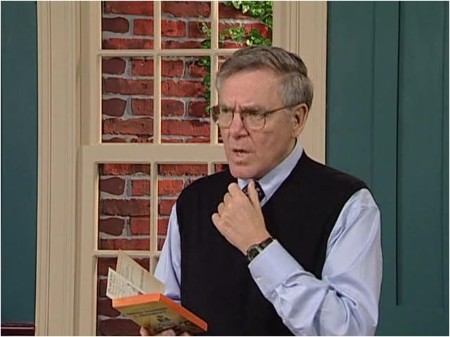
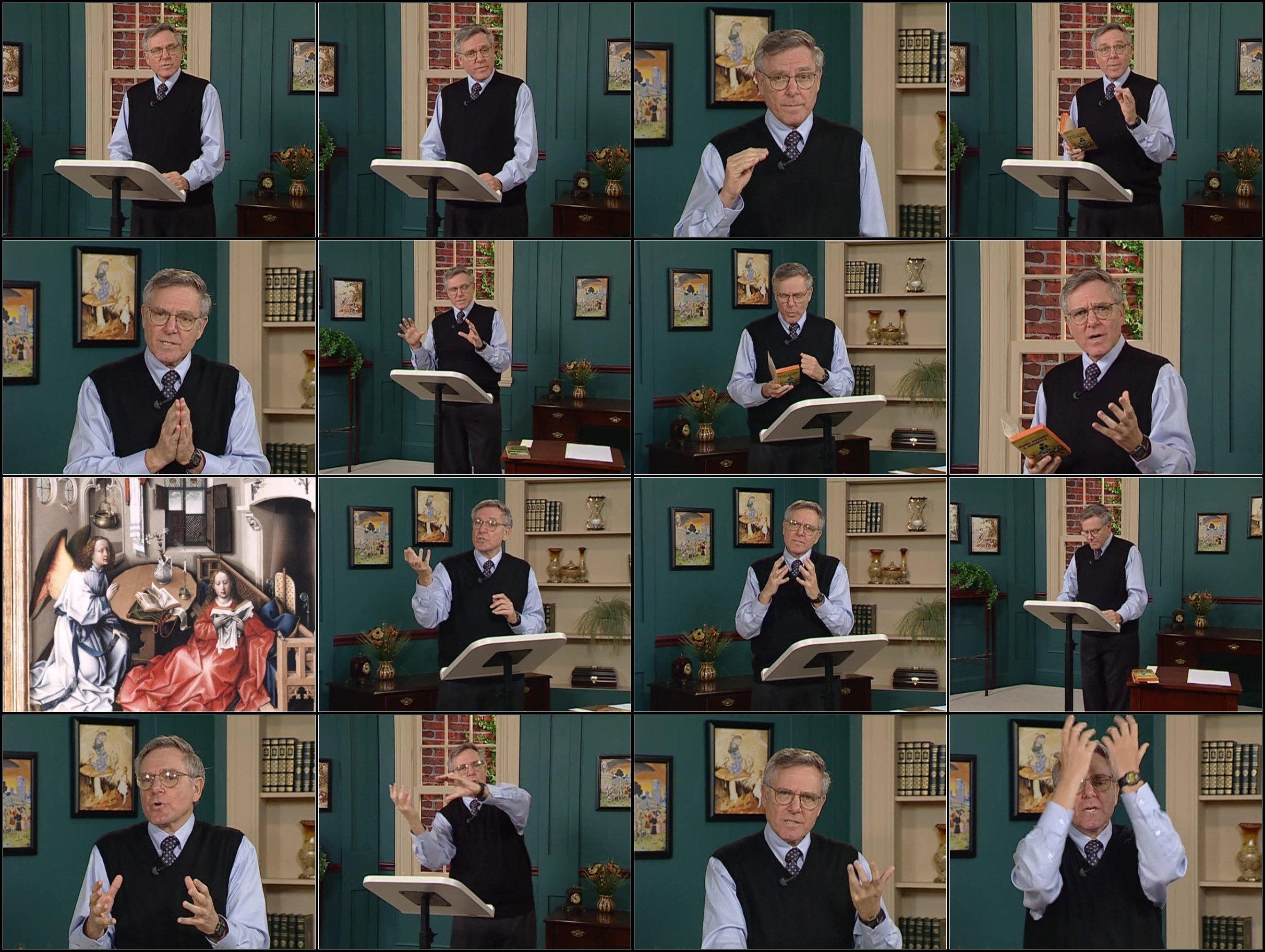
TTC Video - Masterpieces of the Imaginative Mind: Literature's Most Fantastic Works
Course No. 2997 | .AVI, XviD, 700 kbps, 640x480 | English, MP3, 128 kbps, 2 Ch | 24x30 mins | + PDF Guidebook | 4.36 GB
Lecturer: Eric S. Rabkin, Ph.D.
Many of literature's greatest works, from ancient myths to the works of Nobel laureates, rely on fantasy. Even when there has been a dominant preference for realism, generation after generation of readers have been drawn to stories of the fantastic not only for what they help us learn about ourselves as individuals and about our collective selves but also for what they show about our social values.
What can fairy tales and science fiction stories reveal about the psyches of individuals and nations? How does the literature of the fantastic reflect historical periods and preoccupations?
Join Professor Eric S. Rabkin, one of the world's foremost authorities on the literature of the fantastic and science fiction, as he takes you on a journey to explore Masterpieces of the Imaginative Mind, Literature's Most Fantastic Works. You'll study strange tales of talking frogs and cannibal witches through Mary Shelley's Frankenstein to Arthur C. Clarke's astonishing 2001: A Space Odyssey and beyond. Focusing on the early 19th century to contemporary times, Professor Rabkin casts a wide net for fantastic works and delves deeply into some of the most astounding. You'll learn about the works and times of Edgar Allan Poe, Virginia Woolf, Lewis Carroll, Franz Kafka, Jules Verne, H. G. Wells, J. R. R. Tolkien, Ray Bradbury, Robert A. Heinlein, Isaac Asimov, and more.
Once Upon a Time: The Lessons of Fairy Tales
In the early 19th century, two German brothers, Jakob and Wilhelm Grimm, sought to demonstrate the deep significance of German culture. In the process they collected oral tales, which they believed were handed down from prehistory. These fairy tales, including "Hansel and Gretel," "Rapunzel," and "Snow White," are certainly tales of the fantastic, but they also have profound lessons to teach. What they teach us, however, is not always classic morality. One tale ("Rumpelstiltskin") shows that it is better to be beautiful than honest; another ("The Little Tailor") demonstrates that you can lie your way up the social ladder from peasant to king. Others, such as "Cinderella," offer consolations, ways of symbolically moving through difficult transitions in life.
Fantastic Works of Literature
The imaginative minds of the 19th century did not leave the fantastic to ancient folk tales. E. T. A. Hoffmann, for example, an energetic and creative German Romantic who died in 1822, created his own wildly fantastic tales. Both Tchaikovsky's Nutcracker ballet and the Offenbach opera Tales of Hoffmann are based on Hoffmann's tales. Hoffmann's stories even probe the psychology of fantasy itself and anticipate by a century Freud's theories of the power of the unconscious.
In the mid-19th century, writers such as Nathaniel Hawthorne and Edgar Allan Poe in the United States and Lewis Carroll in England explored their own notions of the fantastic and its powers on the reader. Hawthorne wrote fanciful stories about scientists who lose their way, often as a result of torturous love. The masterful Poe mixed fantastic situations and the torments of the human heart. Lewis Carroll's two Alice books are fantastic masterpieces, challenging our notions of language and reality.
Social Criticism and the Imaginative Mind
By the late 19th and early 20th centuries, imaginative minds were creating astonishing and bizarre worlds, weaving into the fabric of their narratives a significant strand of social criticism. H. G. Wells criticized Victorian sexual repression in The Invisible Man and imperialism in The Island of Dr. Moreau. Franz Kafka created fantastic tales, many of which were critical of society's institutions. Virginia Woolf wrote a novel Orlando critical of gender stereotyping in which a man lives from the 16th to the 20th century and emerges as a woman and mother.
View the Breadth of Modern Fantasy
Nor has fantasy literature slackened since the early 20th century. The famous French "New Novel" writer Alain Robbe-Grillet uses the fantastic to free readers from what he perceives as the unconscious constraint imposed by society and language. J. R. R. Tolkien created whole fantasy worlds with their own geographies and languages. Children's literature - Prof. Rabkin devotes a lecture to it - has been especially fertile with fantasy. And Magical Realism has blossomed with important works such as Gabriel Garcia Marquez's One Hundred Years of Solitude and Laura Esquivel's Like Water for Chocolate.
The Most Important Fantastic Genre Today
Professor Rabkin next delves into science fiction, the genre that claims plausibility against a background of science, while weaving in high adventure and intellectual excitement. In this half of the course, Dr. Rabkin shows why science fiction should be regarded as the most important fantastic genre today.
Professor Rabkin posits Mary Shelley's Frankenstein as the first true science fiction novel. You'll hear the story about the origins of that novel-a challenge to write the best ghost story - and you'll examine how Frankenstein explores themes of the struggle between the individual and society as well as the destabilizing possibilities of new knowledge. Europe remained the center of science fiction with such writers as Jules Verne and H. G. Wells, but that was about to change.
The Golden Age of Science Fiction
Early in the 20th century, a popular blend of exciting tales and scientific speculation developed in the democratic milieu of pulp fiction magazines: Even Edgar Rice Burroughs, the creator of Tarzan, wrote of rousing adventures on Mars. Soon, however, pulp fiction gave way to longer treatments. The writers Ray Bradbury and Robert A. Heinlein, along with Isaac Asimov and Britain's Arthur C. Clarke, emerged as important voices after World War II and brought science fiction tales into the mainstream of serious literature. You'll discover how each of these important writers explored the wondrous and disturbing implications of science and technology, their stories raising profound questions about humanity, life, and the future.
What Does the Future Hold?
In Professor Rabkin's final lectures you'll learn about important and enduring links between science fiction and religion, and also between science fiction and utopian novels such as 1984 and Brave New World. You'll explore the works of outstanding science fiction writers today, including Ursula Le Guin, who writes of fabulous new worlds in her literature for children and in science fiction. You'll learn how William Gibson's Neuromancer introduced the words "matrix" and "cyberspace" into our language. You'll learn about Philip K. Dick, who wrote the novel that inspired the movie Blade Runner.
Recapture the Joy of Childhood and Learn about the Literature of the Fantastic
From talking frogs to human robots, from Mad Hatters to mad scientists, Professor Rabkin's course offers an illuminating journey through the world's most fantastic and imaginative literature. Discover the magic, wonder, and profound significance of that literature.
Download
Fikper
TurboBit
Fikper
FileAxa
RapidGator
TurboBit
