


• Regeln für den Video-Bereich:

    In den Börsenbereich gehören nur Angebote die bereits den Allgemeinen Regeln entsprechen.

    Einteilung

    - Folgende Formate gehören in die angegeben Bereiche:
    - Filme: Encodierte Filme von BluRay, DVD, R5, TV, Screener sowie Telesyncs im Format DivX, XviD und x264.
    - DVD: Filme im Format DVD5, DVD9 und HD2DVD.
    - HD: Encodierte Filme mit der Auflösung 720p oder darüber von BluRay, DVD, R5, TV, Screener sowie Telesyncs im Format x264.
    - 3D: Encodierte Filme von BluRay, die in einem 3D Format vorliegen. Dies gilt auch für Dokus, Animation usw.
    - Serien: Cartoon/Zeichentrick, Anime, Tutorials, Dokumentationen, Konzerte/Musik, Sonstiges sind demnach in die entsprechenden Bereiche einzuordnen, auch wenn sie beispielsweise im High Definition-Format oder als DVD5/DVD9/HD2DVD vorliegen. Ausnahme 3D.
    - Bereich Englisch: Englische Releases gehören immer in diesen Bereich.
    - Bereich Talk: Der Bereich, in dem über die Releases diskutiert werden kann, darf, soll und erwünscht ist.


    Angebot/Beitrag erstellen

    - Ein Beitrag darf erst dann erstellt werden, wenn der Upload bei mindestens einem OCH komplett ist. Platzhalter sind untersagt.
    - Bei einem Scenerelease hat der Threadtitel ausschließlich aus dem originalen, unveränderten Releasenamen zu bestehen. Es dürfen keine Veränderungen wie z.B. Sterne, kleine Buchstaben o.ä. vorgenommen werden. Ausnahme Serienbörse:
    - Bei einem Sammelthread für eine Staffel entfällt aus dem Releasename natürlich der Name der Folge. Beispiel: Die Simpsons S21 German DVDRip XviD - ITG
    - Dementsprechend sind also u.a. verboten: Erweiterungen wie "Tipp", "empfehlenswert", "only", "reup", usw. / jegliche andere Zusatzinformation oder Ergänzung, welche nicht in obiger Beschreibung zu finden ist.

    Aufbau des Angebots und Threadtitel

    Der Titel nach folgendem Muster erstellt zu werden. <Name> [3D] [Staffel] [German] <Jahr> <Tonspur> [DL] [Auflösung] <Quelle> <Codec> - <Group>
    Beispiel: The Dark Knight German 2008 AC3 DVDRip XviD - iND
    Beispiel: The Dark Knight 2008 DTS DL BDRip x264 - iND
    Beispiel: The Dark Knight 2008 AC3 DL BDRip XviD - iND
    Beispiel: The Dark Knight German 2008 AC3 720p BluRay x264 iND
    Beispiel: The Dark Knight 2008 DTS DL 1080p BluRay x264 iND
    Beispiel: Die Simpsons S01 German AC3 DVDRip XviD iND
    Beispiel: Die Simpsons S20 German AC3 720p BluRay x264 iND
    Beispiel: Sword Art Online II Ger Sub 2014 AAC 1080p WEBRip x264 - peppermint
    Entsprechend sind also u.a. verboten: Sonderzeichen wie Klammern, Sterne, Ausrufezeichen, Unterstriche, Anführungszeichen / Erweiterungen wie "Tipp", "empfehlenswert", "only", "reup", usw. / jegliche andere Zusatzinformation oder Ergänzung, welche nicht in obiger Beschreibung zu finden ist
    Ausnahmen hiervon können in den Bereichen geregelt sein.

    Die Beiträge sollen wie folgt aufgebaut werden:
    Überschrift entspricht dem Threadtitel
    Cover
    kurze Inhaltsbeschreibung
    Format, Größe, Dauer sind gut lesbar für Downloader außerhalb des Spoilers zu vermerken
    Nfo sind immer Anzugeben und selbige immer im Spoiler in Textform.
    Sind keine Nfo vorhanden z.B. Eigenpublikationen, sind im Spoiler folgende Dateiinformationen zusätzlich anzugeben :
    Quelle
    Video (Auflösung und Bitrate)
    Ton (Sprache, Format und Bitrate der einzelnen Spuren)
    Untertitel (sofern vorhanden)
    Hosterangabe in Textform außerhalb eines Spoiler mit allen enthaltenen Hostern.
    Bei SD kann auf diese zusätzlichen Dateiinformationen verzichtet werden.

    Alle benötigten Passwörter sind, sofern vorhanden, in Textform im Angebot anzugeben.
    Spoiler im Spoiler mit Kommentaren :"Schon Bedankt?" sind unerwünscht.


    Releases

    - Sind Retail-Release verfügbar, sind alle anderen Variationen untersagt. Ausnahmen: Alle deutschen Retail-Release sind CUT, in diesem Fall sind dubbed UNCUT-Release zulässig.
    - Im Serien-Bereich gilt speziell: Wenn ein Retail vor Abschluss einer laufenden Staffel erscheint, darf diese Staffel noch zu Ende gebracht werden.62
    - Gleiche Releases sind unbedingt zusammenzufassen. Das bedeutet, es ist zwingend erforderlich, vor dem Erstellen eines Themas per Suchfunktion zu überprüfen, ob bereits ein Beitrag mit demselben Release besteht. Ist dies der Fall, ist der bereits vorhandene Beitrag zu verwenden.
    - P2P und Scene Releases dürfen nicht verändert oder gar unter einem iND Tag eingestellt werden.


    Support, Diskussionen und Suche

    - Supportanfragen sind entweder per PN oder im Bereich Talk zu stellen.
    - Diskussionen und Bewertungen sind im Talk Bereich zu führen. Fragen an die Uploader haben ausschließlich via PN zu erfolgen, und sind in den Angeboten untersagt.
    - Anfragen zu Upload-Wünschen sind nur im Bereich Suche Video erlaubt. Antworten dürfen nur auf Angebote von MyBoerse.bz verlinkt werden.


    Verbote

    - Untersagt sind mehrere Formate in einem einzigen Angebotsthread, wie beispielsweise das gleichzeitige Anbieten von DivX/XviD, 720p und 1080p in einem Thread. Pro Format, Release und Auflösung ist ein eigener Thread zu eröffnen.
    - Grundsätzlich ebenso verboten sind Dupes. Uploader haben sich an geeigneter Stelle darüber zu informieren, ob es sich bei einem Release um ein Dupe handelt.
    - Gefakte, nur teilweise lauffähige oder unvollständige Angebote sind untersagt. Dies gilt auch für eigene Publikationen, die augenscheinlich nicht selbst von z.B. einer DVD gerippt wurden. Laufende Serien, bei denen noch nicht alle Folgen verfügbar sind, dürfen erstellt und regelmäßig geupdatet werden.
    - Untersagt sind Angebote, welche nur und ausschließlich in einer anderen Sprache als deutsch oder englisch vorliegen. Ausnahmen sind VORHER mit den Moderatoren zu klären.


    Verstoß gegen die Regeln

    - Angebote oder Beiträge, die gegen die Forenregeln verstoßen, sind über den "Melden"-Button im Beitrag zu melden.
  • Bitte registriere dich zunächst um Beiträge zu verfassen und externe Links aufzurufen.

*** Bestes IPTV *** bester Preis *** gratis Test ***


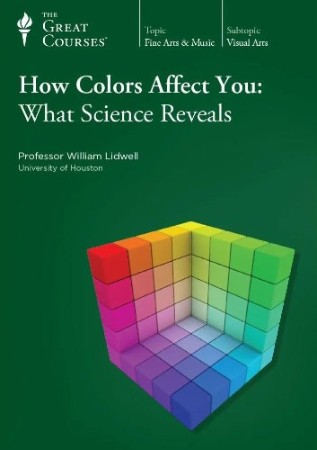
TTC Video How Colors Affect You: What Science Reveals

AgentofHeart

MyBoerse.bz Pro Member

700065158_yxusj-8a1zcktf9444.jpg

TTC Video - How Colors Affect You: What Science Reveals
.MP4, AVC, 1280x720, 30 fps | English, AAC, 2 Ch | 3h 20m | 2.79 GB
Lecturer: William Lidwell, M.S. Professor, University of Houston | Course No. 7022​

There's more to colors than just aesthetics. There's an actual science behind how colors work on your eyes and your brain. And the secrets that scientists are uncovering offer astounding revelations on how colors influence the way you think, feel, and behave-often without your conscious awareness.

It's an exciting time in the scientific study of how colors affect us. Thanks to recent research, we now understand more richly how our brains are affected by color. And knowing how colors affect us informs how we tap into their power to create environments and achieve a breathtaking range of visual goals. It also allows us to dodge popular myths and misconceptions about color that can easily lead businesses and companies to make costly mistakes.

Consider, for example, these scientific truths about color:


  • []Black uniforms tend to increase aggression and intimidation in conflict situations.
    []Red ties can give you an edge in confrontational negotiations, while blue ties can express a desire to collaborate.
    []Fire trucks increasingly are painted yellow because that's the color most visible to our eyes.
    []Aligning the right colors to products, brands, and ads can make or break a business's success.

That's only a small sampling of the increasingly detailed information we have about what colors mean. And what's truly surprising: The way our eyes perceive and our brains interpret reds, greens, blues, blacks, and other colors isn't a subjective experience, but a hard-wired one. It's a profound concept-one whose ramifications extend to everything from business and advertising to politics and entertainment to your personal diet and love life.

A must-have course for corporate leaders, design professionals, marketers, and anyone who communicates visually, How Colors Affect You: What Science Reveals tells you everything you need to know about the science of color and its impact on all aspects of human experience. Delivered by design expert and professor William Lidwell of the University of Houston, these six lectures explore


  • []the history, science, and cultural importance of the six universal colors,
    []how our brains have evolved to respond to colors without our conscious awareness,
    []the key experiments that have shaped our understanding of how colors work, and
    []ways to more effectively apply the science of color to achieve your personal or professional goals for a space.

Taken together, these lectures will open your eyes to why your favorite products practically jump off the shelf; why certain logos are more memorable than others; why particular scenes in nature evoke peace, joy, or fear; and so much more.

See Colors in a Whole New Way

Each lecture takes you inside the science behind a specific color or color pair, following the order in which humans have historically acquired color categories: black and white (which always come paired), red, yellow, green, and blue. In each instance, you'll investigate


  • []the history and common usage of the color,
    []some of the biggest myths related to that color,
    []what scientific research has revealed about the meaning of that color, and
    []specific situational contexts that show how the color operates in the real world.

Central to this course is the expanse of information about how these colors work on our brains to steer our thoughts and actions. You'll draw intriguing connections between colors and specific moods such as anger, fear, and love. You'll go behind the scenes and watch the fascinating experiments and case studies that scientists have used to uncover what they know about color. And you'll finally understand the (often hidden) significance behind the colors of your everyday life.

Debunk Common Myths about Color

As interesting as the research about color is understanding how researchers arrived at those results. To aid you in this understanding, Professor Lidwell has created a virtual laboratory that incorporates exciting green-screen technology to recreate key color experiments that have proven integral to our current scientific understanding of how colors affect us. As he conducts you step-by-step through these visually dynamic experiments, he points out that a lot of what we think we know about color turns out to be wrong. And if you're a design or marketing professional, it's essential to know the truth about color choices so that your business or company dodges expensive mistakes and maximizes profits.

While bringing you up to date on the latest discoveries in the field, Professor Lidwell debunks a number of persistent color myths. You'll learn that


  • []pink rooms will not calm aggressive prisoners or sap the strength of opposing teams;
    []yellow walls in the nursery will not cause babies to cry more often;
    []blue tableware or kitchen walls will not suppress your appetite (although food that's dyed blue certainly will); and more.

It's just the kind of eye-opening learning experience you'd expect from someone of Professor Lidwell's impressive background. Not only has he spent his career immersed in the intricate world of color as a designer, teacher, and best-selling author of Universal Principles of Design-he's lent his expertise as a consultant to major companies, including IKEA and Merrill Lynch.

With How Colors Affect You, you'll get a beautiful new perspective on color-one rooted in credible scientific knowledge and not popular myth. Once the curtain has been pulled back to show the myriad ways color truly shapes your life, you'll never look at the world in the same way again.


700065232_yxusj-o57m87ka0be2.jpg

wHnudnpr_o.jpg


5129e344b88ec654d99d590e4e57840d.jpg

TTC Video - How Colors Affect You: What Science Reveals
.MP4, AVC, 1280x720, 30 fps | English, AAC, 2 Ch | 3h 20m | 2.79 GB
Lecturer: William Lidwell, M.S. Professor, University of Houston | Course No. 7022​

There's more to colors than just aesthetics. There's an actual science behind how colors work on your eyes and your brain. And the secrets that scientists are uncovering offer astounding revelations on how colors influence the way you think, feel, and behave-often without your conscious awareness.

It's an exciting time in the scientific study of how colors affect us. Thanks to recent research, we now understand more richly how our brains are affected by color. And knowing how colors affect us informs how we tap into their power to create environments and achieve a breathtaking range of visual goals. It also allows us to dodge popular myths and misconceptions about color that can easily lead businesses and companies to make costly mistakes.

Consider, for example, these scientific truths about color:

  • Black uniforms tend to increase aggression and intimidation in conflict situations.
  • Red ties can give you an edge in confrontational negotiations, while blue ties can express a desire to collaborate.
  • Fire trucks ly are painted yellow because that's the color most visible to our eyes.
  • Aligning the right colors to products, brands, and ads can make or break a business's success.

That's only a small sampling of the ly detailed information we have about what colors mean. And what's truly surprising: The way our eyes perceive and our brains interpret reds, greens, blues, blacks, and other colors isn't a subjective experience, but a hard-wired one. It's a profound concept-one whose ramifications extend to everything from business and advertising to politics and entertainment to your personal diet and love life.

A must-have course for corporate leaders, design professionals, marketers, and anyone who communicates visually, How Colors Affect You: What Science Reveals tells you everything you need to know about the science of color and its impact on all aspects of human experience. Delivered by design expert and professor William Lidwell of the University of Houston, these six lectures explore

  • the history, science, and cultural importance of the six universal colors,
  • how our brains have evolved to respond to colors without our conscious awareness,
  • the key experiments that have shaped our understanding of how colors work, and
  • ways to more effectively apply the science of color to achieve your personal or professional goals for a space.

Taken together, these lectures will open your eyes to why your favorite products practically jump off the shelf; why certain logos are more memorable than others; why particular scenes in nature evoke peace, joy, or fear; and so much more.

See Colors in a Whole New Way

Each lecture takes you inside the science behind a specific color or color pair, following the order in which humans have historically acquired color categories: black and white (which always come paired), red, yellow, green, and blue. In each instance, you'll investigate

  • the history and common usage of the color,
  • some of the biggest myths related to that color,
  • what scientific research has revealed about the meaning of that color, and
  • specific situational contexts that show how the color operates in the real world.

Central to this course is the expanse of information about how these colors work on our brains to steer our thoughts and actions. You'll draw intriguing connections between colors and specific moods such as anger, fear, and love. You'll go behind the scenes and watch the fascinating experiments and case studies that scientists have used to uncover what they know about color. And you'll finally understand the (often hidden) significance behind the colors of your everyday life.

Debunk Common Myths about Color

As interesting as the research about color is understanding how researchers arrived at those results. To aid you in this understanding, Professor Lidwell has created a virtual laboratory that incorporates exciting green-screen technology to recreate key color experiments that have proven integral to our current scientific understanding of how colors affect us. As he conducts you step-by-step through these visually dynamic experiments, he points out that a lot of what we think we know about color turns out to be wrong. And if you're a design or marketing professional, it's essential to know the truth about color choices so that your business or company dodges expensive mistakes and maximizes profits.

While bringing you up to date on the latest discoveries in the field, Professor Lidwell debunks a number of persistent color myths. You'll learn that

  • pink rooms will not calm aggressive prisoners or sap the strength of opposing teams;
  • yellow walls in the nursery will not cause babies to cry more often;
  • blue tableware or kitchen walls will not suppress your appetite (although food that's dyed blue certainly will); and more.

It's just the kind of eye-opening learning experience you'd expect from someone of Professor Lidwell's impressive background. Not only has he spent his career immersed in the intricate world of color as a designer, teacher, and best-selling author of Universal Principles of Design-he's lent his expertise as a consultant to major companies, including IKEA and Merrill Lynch.

With How Colors Affect You, you'll get a beautiful new perspective on color-one rooted in credible scientific knowledge and not popular myth. Once the curtain has been pulled back to show the myriad ways color truly shapes your life, you'll never look at the world in the same way again.


WjuCITA1_o.jpg

 
Zurück
Oben Unten