0daytutorial
MyBoerse.bz Pro Member
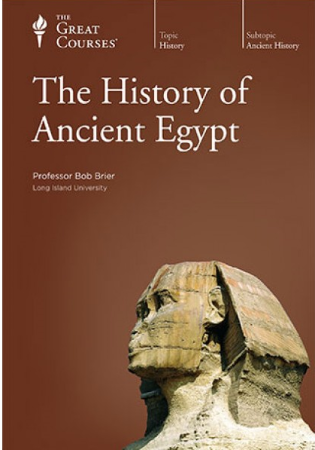
TTC Video - History of Ancient Egypt
Course No. 350 | English | AVI | 368 x 256 | XviD ~423 kbps | 23.976 fps
MP3 | 128 kbps | 48.0 KHz | 2 channels | 24:12:55 | 5.71 GB Genre: eLearning Video / Egyptology, History
Consider scale. The only one of the Eight Wonders of the Ancient World still standing, the Great Pyramid of Cheops, was the tallest building in the world until well into the 1800s. It covers 13.5 acres at the base and contains 2.3 million limestone blocks, weighing 5,000 pounds each on average. Tens of thousands of men labored to raise this tomb-but they were not slaves; they were free farmers and artisans. The social organization alone of this project humbles most modern achievements. And it was built in 2550 B.C., roughly 2,000 years before Rome was founded.
Consider its mystery. Egypt was the most advanced of any ancient civilization. Yet, even after deciphering the hieroglyphs, Egypt remains one of the most mysterious. Scarabs, mummies, obelisks, sphinxes-their civilization was extraordinary and yet so "other" from what we live today.
Professor Bob Brier regularly hosts and contributes to programs on ancient Egypt for The History Channel and The Learning Channel. He has served as Director of the National Endowment for the Humanities "Egyptology Today" Program and has twice been selected as a Fulbright Scholar. He is also the recipient of the David Newton Award for Teaching Excellence. He is the perfect guide to take you through the tombs, mummies, and history of Egypt.
Professor Brier combines the precision and care of a scientist with a novelist's feel for plot, action, and character. His approach brings together the best that the narrative and scientific schools of history have to offer.
"Professor Brier's style of presentation is as impressive as it is engaging, and combines the skills of a master teacher with an encyclopedic knowledge of his subject. The History of Ancient Egypt is enthusiastically recommended."
-Harold McFarland, Regional Editor,
Midwest Book Review
"In these lectures on ancient Egypt, the enthusiasm of Professor Brier is so infectious, the material chosen so fascinating, and the presentation so pleasant that any adult listener could enrich his knowledge of history with enjoyment."
-AudioFile magazine
The Big Picture
In this course, you chronologically survey the full 3,000 years of recorded ancient Egyptian history. Because Egyptian history lasted so long, Egyptologists divide it into three periods called Kingdoms:
The Old Kingdom saw the beginnings of nationhood for Egypt under one supreme ruler, the pharaoh. During this time, the pyramids were built and the rules of Egyptian art were established that would govern for 3,000 years.
The Middle Kingdom, a period of stabilizing after the Old Kingdom collapsed, saw a nation fighting to regain its greatness.
The New Kingdom, the glamour period of ancient Egypt, was when all the stars-Hatshepsut, Tutankhamen, Ramses the Great, Cleopatra, and others-appeared.
Professor Brier begins with a note on his approach.
"To a great extent, the fun of history is in the details. Knowing what kind of wine Tutankhamen preferred makes him come alive.
"Knowing that Ramses the Great was crippled by arthritis for the last decade of his long life makes us more sympathetic to the boastful monarch who fathered more than 100 children.
"If we understand what it was like to be a miner sent to the turquoise mines in the Sinai in the summer, we will feel a kinship with our long-dead counterparts.
"As we wind our way chronologically through 30 centuries of history, we will pause repeatedly to look at the details that make up the big picture."
The Base
The first five lectures are foundational. Professor Brier shows what Egypt was like before writing, how Egyptologists piece together the history of ancient Egypt, and how hieroglyphs were deciphered. These lectures show how Egyptology has been one ongoing detective story-and reveal Napoleon's massive contribution to what we know.
The Old Kingdom
In Lectures 6-10, you see the Egyptians rise to a greatness far surpassing any other people in the Near East, learn of a king who united Egypt by might, and discover a pharaoh who showed Egypt how to build the pyramids.
While you see how the pyramids were built, you learn just what it was that made Egypt great. At the end of these lectures, you see Egypt collapse into a dark age about which little is known, and with Professor Brier, you try to assess what happened.
The Middle Kingdom
Lectures 11-15 discuss Egypt's successful attempt to pull itself together, only to collapse once again. You study heroic kings from the south who battle to unite the country and establish a peace that would last for two centuries-as long as the United States has existed. Then Egypt is invaded by the mysterious people called the Hyksos, as the kings of the south battle Egypt back to greatness. These lectures also look in detail at the Old Testament story of Joseph in Egypt to see what light it might shed on this period.
The New Kingdom
Lectures 16-25 deal with the fabulous Dynasty XVIII, the period of Egypt's greatest wealth and personalities. Examining in-depth the kings and queens of this period, you study:
Hatshepsut, the woman who ruled as king and whose history was systematically erased from Egyptian records
Akhenaten, the first monotheist-and, arguably, the first individual-in history, who changed the religion of Egypt
Tutankhamen, the son of Akhenaten, who became the most famous of Egypt's kings when his undisturbed tomb was discovered in 1922
Egyptian medicine and why Egyptian physicians were justly the most famous in the ancient world.
Lectures 26-28 are a brief excursion into Professor Brier's specialty: mummies. You even learn how to make one. You also see that mummies are like books-packed with information-if you know how to read them.
Lectures 29-35 focus on the end of the New Kingdom, the last great epoch of Egyptian history, dominated by Ramses the Great. Professor Brier discusses the unnamed pharaoh of the Exodus, as well as Egyptian magic.
Greatness, but under Greek Rule
Lectures 36-41 recount the invasion of Egypt by a series of conquering peoples, including Nubians, Libyans, and s. Professor Brier examines the causes of Egypt's decline and the ways the falling pharaohs reached back 1,500 years to grasp at greatness.
Lectures 42-47 chart the rule of the Ptolemies, Greek kings. This period begins with the conquest of Alexander the Great and ends with Cleopatra. For 200 years, once-mighty Egypt was ruled by kings named Ptolemy, all of whom descended from General Ptolemy, who served under Alexander. These lectures examine what life was like for an Egyptian under the oppressive rule of their Greek masters. And they detail some of the achievements of this period, including the library at Alexandria.
Lecture 48 concludes the series with a summary of Egypt's legacy and suggestions for continuing study.
Lectures
00. The Professor's Biography
01. Introduction
02. Prehistoric Egypt
03. Ancient Egyptian Thought
04. Napoleon and the Beginnings of Egyptology
05. The Rosetta Stone and Much More
06. The First Nation in History
07. The Rise of the Old Kingdom
08. Sneferu, the Pyramid Builder
09. The Great Pyramid of Giza
10. The End of the Old Kingdom
11. The First Intermediate Period
12. The Middle Kingdom - Dynasty XI
13. The Middle Kingdom - Dynasty XII
14. The Second Intermediate Period
15. Joseph in Egypt
16. The Beginning of the New Kingdom - The Fabulous XVIIIth Dynasty
17. Queen Hatshepsut
18. Obelisks
19. Tuthmosis III - King At Last
20. The Fabulous XVIIIth Dynasty Rolls On
21. Akhenaten the Heretic Pharaoh
22. The Discovery of Tutankhamen's Tomb
23. The Murder of Tutankhamen - A Theory
24. Medicine - The Necessary Art
25. The End of Dynasty XVIII
26. Mummification - How We Know What We Know
27. What Mummies Tell Us
28. Making a Modern Mummy
29. Dynasty XIX Begins
30. Ramses the Great - The Early Years
31. Ramses the Great - The Later Years
32. The Exodus - Did It Happen
33. The Decline of Dynasty XIX
34. Dynasty XX - The Decline Continues
35. Ancient Egyptian Magic
36. Dynasty XXI - Egypt Divided
37. Dynasty XXII - Egypt United
38. Dynasty XXV - The Nubians Have Their Day
39. Dynasty XXVI - The Saite Period
40. Dynasty XXVII - The s
41. Dynasties XXVIII to XXXI - The Beginning of the End
42. Alexander the Great
43. The First Ptolemies
44. The Middle Ptolemies - The Decline
45. Animal Mummies
46. Cleopatra's Family
47. Cleopatra - The Last Ptolemy
48. The Grand Finale
General
Complete name : 46. Cleopatra's Family.avi
Format : AVI
Format/Info : Audio Video Interleave
File size : 120 MiB
Duration : 29 min 52 s
Overall bit rate : 560 kb/s
Video
ID : 0
Format : MPEG-4 Visual
Format profile : Advanced Simple@L5
Format settings, BVOP : 2
Format settings, QPel : No
Format settings, GMC : No warppoints
Format settings, Matrix : Default (MPEG)
Codec ID : XVID
Codec ID/Hint : XviD
Duration : 29 min 52 s
Bit rate : 423 kb/s
Width : 368 pixels
Height : 256 pixels
Display aspect ratio : 1.438
Frame rate : 23.976 (24000/1001) FPS
Color space : YUV
Chroma subsampling : 4:2:0
Bit depth : 8 bits
Scan type : Progressive
Compression mode : Lossy
Bits/(Pixel*Frame) : 0.187
Stream size : 90.4 MiB (75%)
Writing library : XviD 1.1.0 Beta2 (UTC 2005-04-04)
Audio
ID : 1
Format : MPEG Audio
Format version : Version 1
Format profile : Layer 3
Mode : Joint stereo
Mode extension : MS Stereo
Codec ID : 55
Codec ID/Hint : MP3
Duration : 29 min 52 s
Bit rate mode : Constant
Bit rate : 128 kb/s
Channel(s) : 2 channels
Sampling rate : 48.0 kHz
Compression mode : Lossy
Stream size : 27.3 MiB (23%)
Alignment : Aligned on interleaves
Interleave, duration : 42 ms (1.00 video frame)
Interleave, preload duration : 504 ms
Writing library : LAME3.96r
Encoding settings : -m j -V 4 -q 2 -lowpass 17.5 -b 128
ScreenShots
Exclusive eLearning Videos ← add to bookmarks
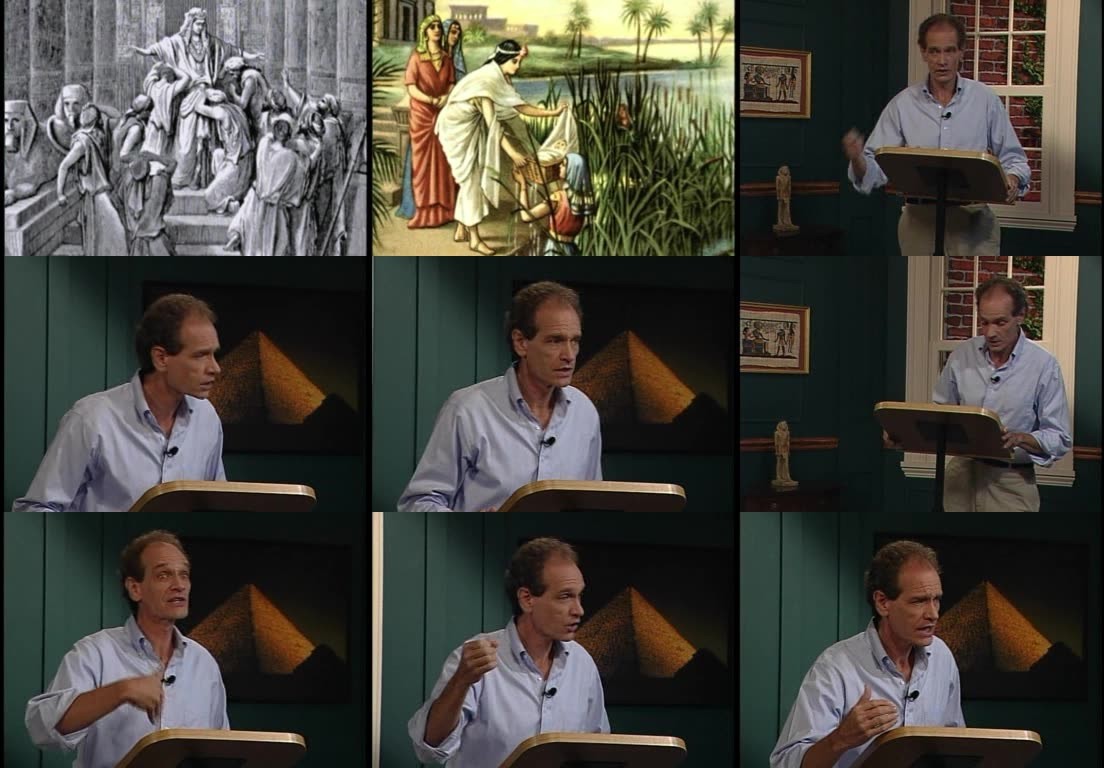
Feel free to contact mewhen links are dead or want any repost