




babymore87
MyBoerse.bz Pro Member
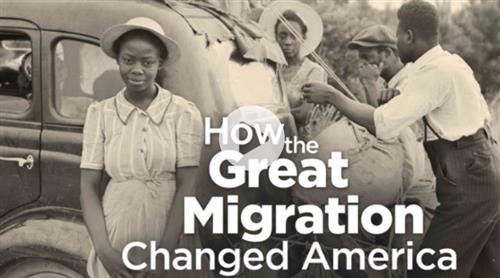
Free Download TTC - How the Great Migration Changed America
Last updated 9/2024
MP4 | Video: h264, 1280x720 | Audio: AAC, 44.1 KHz, 2 Ch
Genre: eLearning | Language: English | Duration: 12 Lessons ( 5h 44m ) | Size: 4.81 GB
In the early 20th century in the United States, Black Americans grew restless. Most were concentrated in the southern part of the country, caught in an oppressive maze of economic exploitation and Jim Crow segregation. To Black people in the South, northern and western cities like Chicago, Los Angeles, and New York City represented a wealth of opportunity-the glitz and glam of jazz clubs, the abundance of jobs, the absence of an overt segregation regime. So, over the next 60 years, tens of millions of Black Southerners packed their bags and migrated North and West. But what they encountered across locales like Harlem or Chicago's South Side neighborhood was far from what they had imagined.
America's "Great Migration"-the exodus of roughly 6 million Black men, women, and children from the southern United States between 1910 and 1970-transformed American politics, culture, and society forever. To be sure, life in the North was made profoundly difficult for new settlers. White resentment gave way to outright street violence and racist housing covenants, while more established Black residents resisted migrant imports like jazz and expressive religious worship. Yet, within this tumultuous environment, a new and distinct tradition emerged: a political, artistic, religious, and resistance culture underwritten by and grounded firmly in the Black migrant experience. The gospel and jazz music we love, the state lotteries we desperately hope to win, the sports we watch, and the neighborhoods we traverse have all been shaped by the movement of Black migrants northward. American life would never again be the same.
How the Great Migration Changed America will take you on a journey through one of the most consequential migration events in U.S. history. Professor Davarian L. Baldwin, the Raether Distinguished Professor of American Studies at Trinity College, will be your expert guide for 12 illuminating lectures that will show you the lasting transformation of American life in the 20th century. Professor Baldwin has written extensively on the Great Migration and represents a new generation of scholars who center this impressive movement in the retelling of African American and US history. But Professor Baldwin is not just a well-read and researched historian. The proud child of Black migrants to Wisconsin, he and his family have been touched by the Great Migration personally. Professor Baldwin, thus, balances an incredible wealth of knowledge with a special and serious sense of responsibility. This is an experience, a history, he knows intimately. And it is one he wants us to get right.
With Professor Baldwin, you will examine key push and pull factors, from oppressive sharecropping systems and public segregation in the South to the lure of New York City jazz clubs and factory jobs in the North. You'll evaluate the perils of northern city living, such as racist street violence, housing segregation, redlining, and white voyeurism. You'll explore how music, performance, film, art, and fashion changed as "down-home traditions" ran up against respectability and a hesitant Black elite. And you'll experience the trials and tribulations of resettlement by getting to know the people-Madam C. J. Walker and Louis Armstrong, notably among them-who lived through it themselves.
Pushes, Pulls, and Problems: From Southern Life to Northern Neighborhoods
To truly understand the motivations behind such a massive migration, you first must start with a look at life in the South. In this course, you'll get a clear picture of the driving forces that would cause entire families to uproot their lives for new opportunities. You'll examine the brutality of Jim Crow segregation and its effect on the individual psyche; you'll unpack the economics of sharecropping and the politics of poll taxes; and much more. Along the way, Professor Baldwin helps break down the myth that only rural African Americans fled the South. He also shows you how down-home Southern culture survived the journey to northern neighborhoods.
After looking at the migration journey, you'll then consider life as a Black American in northern cities. As you dive into the history of neighborhoods that were predominantly Black, like Harlem and Chicago's South Side, you'll learn about the newspapers, clubs, cooperative organizations, churches, and sports arenas that supported Black civic life and leisure. You'll also explore the industrial and labor landscape around cities like Chicago and New York to better understand what the North might have represented in the migrant imagination-and to understand what it was like in reality. Was it about economic opportunity and political freedom? Or was something deeper and more personal at work?
While the North held enormous promise for Southern families looking to escape Jim Crow and the post-Reconstruction political landscape, the harsh realities of northern living could be less of a relief and more of a fresh set of challenges. From redlining to the Red Summer of mid 1919, the Black men and women who settled in apartment blocks throughout the urban North endured a multifront attack. They ran up against extreme violence in the streets and on the factory floor, housing discrimination, sky high rents, and psychological damage. They also struggled to fit into established Black communities that placed outsized value on respectability, quiet religious worship, and a more modest posture. In sorting out the factors that pushed Black Americans out of the South and pulled them up North, you'll ground yourself firmly in the issues that were involved and you'll investigate the complicated tensions that defined Black migrant life. It was precisely during this time period, after all, that an impressive resistance and resilience flourished.
Legacies of the Migration
The Black migrant experience-both the good and the bad-changed American art, music, literature, sports, and leisure culture. In Chicago, New York, and Los Angeles, migrants fused Southern traditions with Northern experiences. Their world was one forged in collision and conversation; their music, art, and politics captured the woven expression of a Southern past and Northern present.
Examine the cultural, intellectual, political, and economic legacy of the Great Migration by exploring
Sports. Dive into the history behind the Negro Leagues and their relationship to state-run lotteries today.
Music. Understand how gospel and jazz music evolved out of migrant networks and rose to prominence in the mainstream.
Politics and Ideas. Trace the Civil Rights movement back to the Great Migration, and dive into a more radical Black political and intellectual tradition.
Art and Literature. See how key aesthetic and literary movements reflected the Black migrant experience.
Media. Investigate how film, advertisement, and performance was shaped by the joys and horrors of migration.
Work. Learn about the so-called "Proletarian Turn" and how Black migrants mobilized for a fairer workplace as economic prospects dimmed in the 1930s.
Business. Get to know the Black entrepreneurs, real estate tycoons, and sports team managers who cultivated empires in the long shadow of migration.
We know that wars, elections, and famines change history-but so too does mass movement over time. In the routes that Black migrants traveled, in the neighborhoods they inhabited, in the stories they wrote, and the music they crafted, we find a distinctly American story. We find the very best and the very worst of ourselves. How the Great Migration Changed America will help you build a deeper and more nuanced understanding of not only the past but also the complicated present, as well.
What Will You Learn?
Learn about the kinds of opportunities-economic but also existential-that pulled so many migrants northward
Examine the challenges faced in movement, from redlining to Red Summer
Learn about the rise of New York City's Harlem and Chicago's South Side neighborhoods
Discover how the Negro Baseball League was founded, and explore the elusive lottery systems that financed it all
Understand how gospel and jazz music evolved out of migrant networks and rose to prominence in the mainstream
Get to know the Black entrepreneurs, real estate tycoons, and sports team managers who cultivated empires in the long shadow of migration
Homepage
Recommend Download Link Hight Speed | Please Say Thanks Keep Topic Live
No Password - Links are Interchangeable
