


• Regeln für den Video-Bereich:

    In den Börsenbereich gehören nur Angebote die bereits den Allgemeinen Regeln entsprechen.

    Einteilung

    - Folgende Formate gehören in die angegeben Bereiche:
    - Filme: Encodierte Filme von BluRay, DVD, R5, TV, Screener sowie Telesyncs im Format DivX, XviD und x264.
    - DVD: Filme im Format DVD5, DVD9 und HD2DVD.
    - HD: Encodierte Filme mit der Auflösung 720p oder darüber von BluRay, DVD, R5, TV, Screener sowie Telesyncs im Format x264.
    - 3D: Encodierte Filme von BluRay, die in einem 3D Format vorliegen. Dies gilt auch für Dokus, Animation usw.
    - Serien: Cartoon/Zeichentrick, Anime, Tutorials, Dokumentationen, Konzerte/Musik, Sonstiges sind demnach in die entsprechenden Bereiche einzuordnen, auch wenn sie beispielsweise im High Definition-Format oder als DVD5/DVD9/HD2DVD vorliegen. Ausnahme 3D.
    - Bereich Englisch: Englische Releases gehören immer in diesen Bereich.
    - Bereich Talk: Der Bereich, in dem über die Releases diskutiert werden kann, darf, soll und erwünscht ist.


    Angebot/Beitrag erstellen

    - Ein Beitrag darf erst dann erstellt werden, wenn der Upload bei mindestens einem OCH komplett ist. Platzhalter sind untersagt.
    - Bei einem Scenerelease hat der Threadtitel ausschließlich aus dem originalen, unveränderten Releasenamen zu bestehen. Es dürfen keine Veränderungen wie z.B. Sterne, kleine Buchstaben o.ä. vorgenommen werden. Ausnahme Serienbörse:
    - Bei einem Sammelthread für eine Staffel entfällt aus dem Releasename natürlich der Name der Folge. Beispiel: Die Simpsons S21 German DVDRip XviD - ITG
    - Dementsprechend sind also u.a. verboten: Erweiterungen wie "Tipp", "empfehlenswert", "only", "reup", usw. / jegliche andere Zusatzinformation oder Ergänzung, welche nicht in obiger Beschreibung zu finden ist.

    Aufbau des Angebots und Threadtitel

    Der Titel nach folgendem Muster erstellt zu werden. <Name> [3D] [Staffel] [German] <Jahr> <Tonspur> [DL] [Auflösung] <Quelle> <Codec> - <Group>
    Beispiel: The Dark Knight German 2008 AC3 DVDRip XviD - iND
    Beispiel: The Dark Knight 2008 DTS DL BDRip x264 - iND
    Beispiel: The Dark Knight 2008 AC3 DL BDRip XviD - iND
    Beispiel: The Dark Knight German 2008 AC3 720p BluRay x264 iND
    Beispiel: The Dark Knight 2008 DTS DL 1080p BluRay x264 iND
    Beispiel: Die Simpsons S01 German AC3 DVDRip XviD iND
    Beispiel: Die Simpsons S20 German AC3 720p BluRay x264 iND
    Beispiel: Sword Art Online II Ger Sub 2014 AAC 1080p WEBRip x264 - peppermint
    Entsprechend sind also u.a. verboten: Sonderzeichen wie Klammern, Sterne, Ausrufezeichen, Unterstriche, Anführungszeichen / Erweiterungen wie "Tipp", "empfehlenswert", "only", "reup", usw. / jegliche andere Zusatzinformation oder Ergänzung, welche nicht in obiger Beschreibung zu finden ist
    Ausnahmen hiervon können in den Bereichen geregelt sein.

    Die Beiträge sollen wie folgt aufgebaut werden:
    Überschrift entspricht dem Threadtitel
    Cover
    kurze Inhaltsbeschreibung
    Format, Größe, Dauer sind gut lesbar für Downloader außerhalb des Spoilers zu vermerken
    Nfo sind immer Anzugeben und selbige immer im Spoiler in Textform.
    Sind keine Nfo vorhanden z.B. Eigenpublikationen, sind im Spoiler folgende Dateiinformationen zusätzlich anzugeben :
    Quelle
    Video (Auflösung und Bitrate)
    Ton (Sprache, Format und Bitrate der einzelnen Spuren)
    Untertitel (sofern vorhanden)
    Hosterangabe in Textform außerhalb eines Spoiler mit allen enthaltenen Hostern.
    Bei SD kann auf diese zusätzlichen Dateiinformationen verzichtet werden.

    Alle benötigten Passwörter sind, sofern vorhanden, in Textform im Angebot anzugeben.
    Spoiler im Spoiler mit Kommentaren :"Schon Bedankt?" sind unerwünscht.


    Releases

    - Sind Retail-Release verfügbar, sind alle anderen Variationen untersagt. Ausnahmen: Alle deutschen Retail-Release sind CUT, in diesem Fall sind dubbed UNCUT-Release zulässig.
    - Im Serien-Bereich gilt speziell: Wenn ein Retail vor Abschluss einer laufenden Staffel erscheint, darf diese Staffel noch zu Ende gebracht werden.62
    - Gleiche Releases sind unbedingt zusammenzufassen. Das bedeutet, es ist zwingend erforderlich, vor dem Erstellen eines Themas per Suchfunktion zu überprüfen, ob bereits ein Beitrag mit demselben Release besteht. Ist dies der Fall, ist der bereits vorhandene Beitrag zu verwenden.
    - P2P und Scene Releases dürfen nicht verändert oder gar unter einem iND Tag eingestellt werden.


    Support, Diskussionen und Suche

    - Supportanfragen sind entweder per PN oder im Bereich Talk zu stellen.
    - Diskussionen und Bewertungen sind im Talk Bereich zu führen. Fragen an die Uploader haben ausschließlich via PN zu erfolgen, und sind in den Angeboten untersagt.
    - Anfragen zu Upload-Wünschen sind nur im Bereich Suche Video erlaubt. Antworten dürfen nur auf Angebote von MyBoerse.bz verlinkt werden.


    Verbote

    - Untersagt sind mehrere Formate in einem einzigen Angebotsthread, wie beispielsweise das gleichzeitige Anbieten von DivX/XviD, 720p und 1080p in einem Thread. Pro Format, Release und Auflösung ist ein eigener Thread zu eröffnen.
    - Grundsätzlich ebenso verboten sind Dupes. Uploader haben sich an geeigneter Stelle darüber zu informieren, ob es sich bei einem Release um ein Dupe handelt.
    - Gefakte, nur teilweise lauffähige oder unvollständige Angebote sind untersagt. Dies gilt auch für eigene Publikationen, die augenscheinlich nicht selbst von z.B. einer DVD gerippt wurden. Laufende Serien, bei denen noch nicht alle Folgen verfügbar sind, dürfen erstellt und regelmäßig geupdatet werden.
    - Untersagt sind Angebote, welche nur und ausschließlich in einer anderen Sprache als deutsch oder englisch vorliegen. Ausnahmen sind VORHER mit den Moderatoren zu klären.


    Verstoß gegen die Regeln

    - Angebote oder Beiträge, die gegen die Forenregeln verstoßen, sind über den "Melden"-Button im Beitrag zu melden.
  • Bitte registriere dich zunächst um Beiträge zu verfassen und externe Links aufzurufen.

*** Bestes IPTV *** bester Preis *** gratis Test ***


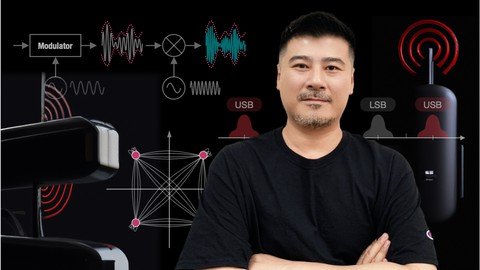
The Ultimate Crash Course For Rf Transceiver Fundamentals

Tutorials

MyBoerse.bz Pro Member
d757b912c9785c2f652cc4015b170940.jpeg

Published 5/2023
MP4 | Video: h264, 1280x720 | Audio: AAC, 44.1 KHz
Language: English | Size: 910.48 MB | Duration: 3h 30m
Never again struggle with comprehending the concepts of RF transceiver and digital communications.

Free Download What you'll learn
Modulation and demodulation techniques for wireless communication.
RF transceiver architecture and its principles.
Skills to comprehend RF transceiver system.
Phasing techniques.
Constellation diagrams.
Requirements
Basic understanding of phasors is helpful, but not a neccessity.
Description
Nowadays, having a deep understanding of wireless communications enhances the career prospects of electrical and electronics engineers.Are you fascinated by the world of wireless communications and eager to explore its underlying principles?Are you having difficulty comprehending the complexities of modulation, transceiver architectures, and digital communication techniques?Are you seeking for a comprehensive course that can assist you in mastering the fundamental skills required for wireless communication systems?Look no further than "The Ultimate Crash Course for RF Transceiver Fundamentals" - The final course in The Tao of Phasor Series.The aim of this course is to provide a simplified and easily understandable approach to RF transceiver and digital communications.This course encompasses the fundamental knowledge required to gain entry into the field of RF transceivers and digital communications:With high-quality content and insightful lessons, you'll have a solid foundation in RF transceivers and digital communications.Our focus is not just on the HOW, but also on the WHY and the evolution of analytical methods in this field.We will highlight the crucial factor - the time-varying phasor, in comprehending RF signals and systems.We will present specific examples of modulated signals and their conversions in frequency to provide a clear understanding.Without difficult math! By the end of this course:You'll have a solid foundation in wireless transceiver architecture, modulators, and demodulators. To name a few, linear transmitter, linear receiver, polar transmitter, polar recevier, I/Q modulator and demodulator, DSB/SSB modulator, etc.You'll learn the purposes of VCOs, phase-locked loops, mixers, power amplifiers, and low-noise amplifiers, etc.You'll learn about thec concepts of modulation techniques such as AM, FM, PM, amplitude shift keying (ASK), phase shift keying (PSK), quadrature amplitude modulation (QAM), OQPSK, pi/4-QPSK, MSK, etc.You'll learn the practical application of the Hilbert transform, analytic signals, and phasing techniques.You'll also gain a practical understanding of pulse shaping and optimum receivers.You'll be well on your way to mastering the art of wireless communications.Join us on this journey and discover the fun parts of RF transceivers and digital communications!
Overview
Section 1: Overview
Lecture 1 Welcome
Lecture 2 Overview
Section 2: Development of Radio Transmission
Lecture 3 What is Modulation?
Lecture 4 Spark-Gap Transmitter
Lecture 5 Fessenden
Lecture 6 Continuous Wave
Lecture 7 Vacuum Tube
Lecture 8 Armstrong
Lecture 9 The Key to Radio Downsizing
Lecture 10 Why Modulation?
Section 3: Modulation and Transmitter
Lecture 11 Amplitude Modulation (AM)
Lecture 12 Frequency and Phase Modulation (FM and PM)
Lecture 13 Angle Modulation
Lecture 14 Linear Modulation and Complex Envelope
Lecture 15 Linear Modulator (IQ Modulator)
Lecture 16 Linear Transmitter
Lecture 17 Polar Transmitter
Section 4: Demodulation and Receiver
Lecture 18 Linear Demodulation
Lecture 19 Linear Receiver
Lecture 20 Polar Receiver
Section 5: Modulated Spectrum
Lecture 21 Double-sided and Single-sided Spectrum
Lecture 22 Double sidebands (DSB) Spectrum of AM Signals
Lecture 23 DSB and SSB Spectrum of Upconverted Signals
Lecture 24 Spectrum of PM & IQ-modulated Signals
Section 6: Complex Envelope
Lecture 25 Complex Envelope
Lecture 26 Envelope Simulation
Section 7: Phasing Techniques
Lecture 27 Definition of Hilbert Transform
Lecture 28 Transformation of a Cosine Wave
Lecture 29 Spectrum Efficiency
Lecture 30 A Simple Analytical Signal
Lecture 31 Analytical Signal of a Modulated Signal
Lecture 32 Phasing Techniques
Section 8: Digital Communications
Lecture 33 Can Digital Signals Be Transmitted?
Lecture 34 QPSK
Lecture 35 Simple Constellation Diagram
Lecture 36 Constellation Diagram (I)
Lecture 37 Constellation Diagram (II)
Lecture 38 BPSK and 8PSK
Lecture 39 QAM
Lecture 40 Pulse Shaping
Lecture 41 Inter-symbol Interference (ISI)
Lecture 42 OQPSK and pi/4-QPSK
Lecture 43 Optimum Receiver
Lecture 44 Digital Signals in Transceivers
Section 9: Summary
Lecture 45 Conclusion
Lecture 46 Bonus
Students studying E.E. who want to dive deeper into RF transceivers and gain a strong understanding of its fundamentals. This is for you!,Engineers who want to expand their knowledge of RF transceivers and improve their skills. This is for you!,RF design engineers who want to deepen their understanding of the underlying principles of RF transceivers and improve their design capabilities. This is for you!,Educators who are teaching courses in RF transceivers and want to supplement their curriculum with high-quality content. This course is for you!,Examination candidates seeking a way to gain the knowledge necessary to succeed. This is for you!

Homepage


Recommend Download Link Hight Speed | Please Say Thanks Keep Topic Live
Links are Interchangeable - Single Extraction

 
Zurück
Oben Unten