• Regeln für den Video-Bereich:

    In den Börsenbereich gehören nur Angebote die bereits den Allgemeinen Regeln entsprechen.

    Einteilung

    - Folgende Formate gehören in die angegeben Bereiche:
    - Filme: Encodierte Filme von BluRay, DVD, R5, TV, Screener sowie Telesyncs im Format DivX, XviD und x264.
    - DVD: Filme im Format DVD5, DVD9 und HD2DVD.
    - HD: Encodierte Filme mit der Auflösung 720p oder darüber von BluRay, DVD, R5, TV, Screener sowie Telesyncs im Format x264.
    - 3D: Encodierte Filme von BluRay, die in einem 3D Format vorliegen. Dies gilt auch für Dokus, Animation usw.
    - Serien: Cartoon/Zeichentrick, Anime, Tutorials, Dokumentationen, Konzerte/Musik, Sonstiges sind demnach in die entsprechenden Bereiche einzuordnen, auch wenn sie beispielsweise im High Definition-Format oder als DVD5/DVD9/HD2DVD vorliegen. Ausnahme 3D.
    - Bereich Englisch: Englische Releases gehören immer in diesen Bereich.
    - Bereich Talk: Der Bereich, in dem über die Releases diskutiert werden kann, darf, soll und erwünscht ist.


    Angebot/Beitrag erstellen

    - Ein Beitrag darf erst dann erstellt werden, wenn der Upload bei mindestens einem OCH komplett ist. Platzhalter sind untersagt.
    - Bei einem Scenerelease hat der Threadtitel ausschließlich aus dem originalen, unveränderten Releasenamen zu bestehen. Es dürfen keine Veränderungen wie z.B. Sterne, kleine Buchstaben o.ä. vorgenommen werden. Ausnahme Serienbörse:
    - Bei einem Sammelthread für eine Staffel entfällt aus dem Releasename natürlich der Name der Folge. Beispiel: Die Simpsons S21 German DVDRip XviD - ITG
    - Dementsprechend sind also u.a. verboten: Erweiterungen wie "Tipp", "empfehlenswert", "only", "reup", usw. / jegliche andere Zusatzinformation oder Ergänzung, welche nicht in obiger Beschreibung zu finden ist.

    Aufbau des Angebots und Threadtitel

    Der Titel nach folgendem Muster erstellt zu werden. <Name> [3D] [Staffel] [German] <Jahr> <Tonspur> [DL] [Auflösung] <Quelle> <Codec> - <Group>
    Beispiel: The Dark Knight German 2008 AC3 DVDRip XviD - iND
    Beispiel: The Dark Knight 2008 DTS DL BDRip x264 - iND
    Beispiel: The Dark Knight 2008 AC3 DL BDRip XviD - iND
    Beispiel: The Dark Knight German 2008 AC3 720p BluRay x264 iND
    Beispiel: The Dark Knight 2008 DTS DL 1080p BluRay x264 iND
    Beispiel: Die Simpsons S01 German AC3 DVDRip XviD iND
    Beispiel: Die Simpsons S20 German AC3 720p BluRay x264 iND
    Beispiel: Sword Art Online II Ger Sub 2014 AAC 1080p WEBRip x264 - peppermint
    Entsprechend sind also u.a. verboten: Sonderzeichen wie Klammern, Sterne, Ausrufezeichen, Unterstriche, Anführungszeichen / Erweiterungen wie "Tipp", "empfehlenswert", "only", "reup", usw. / jegliche andere Zusatzinformation oder Ergänzung, welche nicht in obiger Beschreibung zu finden ist
    Ausnahmen hiervon können in den Bereichen geregelt sein.

    Die Beiträge sollen wie folgt aufgebaut werden:
    Überschrift entspricht dem Threadtitel
    Cover
    kurze Inhaltsbeschreibung
    Format, Größe, Dauer sind gut lesbar für Downloader außerhalb des Spoilers zu vermerken
    Nfo sind immer Anzugeben und selbige immer im Spoiler in Textform.
    Sind keine Nfo vorhanden z.B. Eigenpublikationen, sind im Spoiler folgende Dateiinformationen zusätzlich anzugeben :
    Quelle
    Video (Auflösung und Bitrate)
    Ton (Sprache, Format und Bitrate der einzelnen Spuren)
    Untertitel (sofern vorhanden)
    Hosterangabe in Textform außerhalb eines Spoiler mit allen enthaltenen Hostern.
    Bei SD kann auf diese zusätzlichen Dateiinformationen verzichtet werden.

    Alle benötigten Passwörter sind, sofern vorhanden, in Textform im Angebot anzugeben.
    Spoiler im Spoiler mit Kommentaren :"Schon Bedankt?" sind unerwünscht.


    Releases

    - Sind Retail-Release verfügbar, sind alle anderen Variationen untersagt. Ausnahmen: Alle deutschen Retail-Release sind CUT, in diesem Fall sind dubbed UNCUT-Release zulässig.
    - Im Serien-Bereich gilt speziell: Wenn ein Retail vor Abschluss einer laufenden Staffel erscheint, darf diese Staffel noch zu Ende gebracht werden.62
    - Gleiche Releases sind unbedingt zusammenzufassen. Das bedeutet, es ist zwingend erforderlich, vor dem Erstellen eines Themas per Suchfunktion zu überprüfen, ob bereits ein Beitrag mit demselben Release besteht. Ist dies der Fall, ist der bereits vorhandene Beitrag zu verwenden.
    - P2P und Scene Releases dürfen nicht verändert oder gar unter einem iND Tag eingestellt werden.


    Support, Diskussionen und Suche

    - Supportanfragen sind entweder per PN oder im Bereich Talk zu stellen.
    - Diskussionen und Bewertungen sind im Talk Bereich zu führen. Fragen an die Uploader haben ausschließlich via PN zu erfolgen, und sind in den Angeboten untersagt.
    - Anfragen zu Upload-Wünschen sind nur im Bereich Suche Video erlaubt. Antworten dürfen nur auf Angebote von MyBoerse.bz verlinkt werden.


    Verbote

    - Untersagt sind mehrere Formate in einem einzigen Angebotsthread, wie beispielsweise das gleichzeitige Anbieten von DivX/XviD, 720p und 1080p in einem Thread. Pro Format, Release und Auflösung ist ein eigener Thread zu eröffnen.
    - Grundsätzlich ebenso verboten sind Dupes. Uploader haben sich an geeigneter Stelle darüber zu informieren, ob es sich bei einem Release um ein Dupe handelt.
    - Gefakte, nur teilweise lauffähige oder unvollständige Angebote sind untersagt. Dies gilt auch für eigene Publikationen, die augenscheinlich nicht selbst von z.B. einer DVD gerippt wurden. Laufende Serien, bei denen noch nicht alle Folgen verfügbar sind, dürfen erstellt und regelmäßig geupdatet werden.
    - Untersagt sind Angebote, welche nur und ausschließlich in einer anderen Sprache als deutsch oder englisch vorliegen. Ausnahmen sind VORHER mit den Moderatoren zu klären.


    Verstoß gegen die Regeln

    - Angebote oder Beiträge, die gegen die Forenregeln verstoßen, sind über den "Melden"-Button im Beitrag zu melden.
  • Bitte registriere dich zunächst um Beiträge zu verfassen und externe Links aufzurufen.

*** Bestes IPTV *** bester Preis *** gratis Test ***


The Role Of Media In Shaping Military Interventions

babymore87

MyBoerse.bz Pro Member
43ca784b2944cf2207ba720a772e365b.jpeg

Free Download The Role Of Media In Shaping Military Interventions
Published 10/2024
MP4 | Video: h264, 1920x1080 | Audio: AAC, 44.1 KHz
Language: English | Size: 2.76 GB | Duration: 2h 23m
Media, Public Opinion, and the Power to Influence Military Decisions

What you'll learn
Understand the relationship between media, public opinion, and military interventions.
Analyze how media framing and agenda-setting influence the perception of military operations.
Examine case studies where media played a crucial role in shaping interventions, such as in Kosovo, Libya, Mali, and the Central African Republic.
Critically assess the role of both traditional and social media in promoting or challenging interventions.
Apply media-related theories and frameworks to real-world situations involving military interventions.
Requirements
For Military Personnel: No formal education beyond standard military training is required, but a background in public relations, communications, or military studies is advantageous. For Journalists/Media Professionals: A basic understanding of media theory, strategic communication, or public relations is helpful. Prior experience in conflict reporting is a plus. For Students: A bachelor's degree (or current studies) in international relations, political science, communication, or a related field. Familiarity with basic media and communication theories will help students grasp course concepts more easily. For Government/NGO Professionals: A background in international relations, political science, or communications, with experience or interest in conflict zones, peacekeeping, or policy formulation. Skills: Analytical Thinking: The course will require students to critically assess how media is used strategically in military contexts, so strong analytical skills are important. Basic Media Literacy: Students should have a foundational understanding of how media works, including the role of social media, traditional news outlets, and propaganda techniques. Familiarity with International Affairs: While not required, an understanding of international politics, conflict zones, and military operations will enrich the learning experience. Interest in Strategic Communication: Since the course focuses heavily on the use of media as a strategic tool, students should have a keen interest in how communication influences public opinion, political decisions, and military outcomes.
Description
In today's globalized world, the media plays a powerful role in shaping military interventions and influencing public opinion. This course explores the complex relationship between media, public perception, and military decisions. You will learn how governments, military forces, and other stakeholders use the media as a strategic tool to control narratives and influence both domestic and international audiences during conflicts.From traditional media outlets to the fast-paced world of social media, we will explore how different forms of media can frame conflicts, manage public sentiment, and sometimes even escalate or de-escalate military actions. The course will delve into key concepts such as media management, psychological operations (PsyOps), propaganda, and information warfare, using real-world case studies from interventions in Iraq, Afghanistan, Kosovo, Syria, and more.This course id designed for students, professionals in international relations, journalism, military studies, and anyone interested in understanding the dynamic role of media in global conflicts and provides both theoretical and practical insights. At the end of the course, students will be equipped with the knowledge to critically analyze how media influences military actions and policy decisions in today's information-driven world.Only a basic understanding of global affairs, media, or military operations will be beneficial before undertaking the course.
Overview
Section 1: Introduction
Lecture 1 Introduction: Cse Overview; Cse Outline; Learning Objectives
Section 2: SECTION 2 Foundations of Media and Military Interventions
Lecture 2 LECTURE 2.1: DEFINITION & Historical Evolution of Media's Role in Conflict
Lecture 3 LECTURE 2.2: The Public Sphere and Military Operations; MEDIA Feedback Loops
Section 3: SECTION 3: Theories and Frameworks
Lecture 4 LECTURE 3.1 THEORIES: 1. Framing Theory 2. Agenda-Setting Theory
Lecture 5 LECTURE 3.2 THEORIES: Cultivation Theory; Manufacturing Consent
Section 4: SECTION 4: Case Studies of Media Influence on Military Interventions
Lecture 6 LECTURE 4.1 CASES: 1.Kosovo Intervention (1999) 2.Iraq War (2003)
Lecture 7 LECTURE 4.2 CASES: 3.Libya 4.Syria 5. Central African Republic
Section 5: SECTION 5: Media as a Strategic Tool in Military Operations
Lecture 8 LECTURE 5.1: 1. Media Management in Modern Military Interventions; 2. PSYOPS
Lecture 9 LECTURE 5.2 1. Military-Media Symbiosis +Conflict Reporting; 2. Info Warfare
Section 6: SECTION 6: Social Media and Modern Military Interventions
Lecture 10 LECTURE 6.1: The Role of Social Media in Conflict Reporting
Lecture 11 LECTURE 6.2: The Impact of Social Media on Military Strategy
Section 7: SECTION 7 SUMMARY & CONCLUSION
Lecture 12 SUMMARY, ASSIGNMENT & CONCLUSION
The course on "Media as a Strategic Tool in Military Operations" is suitable for a range of professionals and students who have an interest in military operations, media influence, strategic communication, and the intersection of information and warfare.,Military Personnel: Officers and enlisted personnel involved in public affairs, strategic communications, psychological operations (PsyOps), or information warfare. This course would be beneficial for those seeking to understand how media impacts military operations and public perception. Journalists and Media Professionals: Journalists covering defense, conflict, and international relations, as well as media professionals working in public relations or strategic communication, would benefit from the insights into military-media relations and the role of media in shaping public opinion during conflicts. Students of International Relations, Security Studies, or Communication: Undergraduate and graduate students studying fields such as international relations, peace and conflict studies, security studies, and media studies. The course provides valuable theoretical and practical knowledge on the role of media in military operations. Government and Policy Analysts: Professionals working in government agencies, defense ministries, or international organizations like the UN or NATO, especially those involved in formulating policy related to military interventions, information warfare, or media regulation. NGOs and Humanitarian Workers: Individuals working in non-governmental organizations or humanitarian missions that operate in conflict zones. Understanding how media shapes public perception and influences international interventions can help in planning and communicating effectively in such environments. Academics and Researchers: Scholars and researchers focusing on the influence of media, military operations, international politics, or strategic communications would find the course a useful resource for further study.
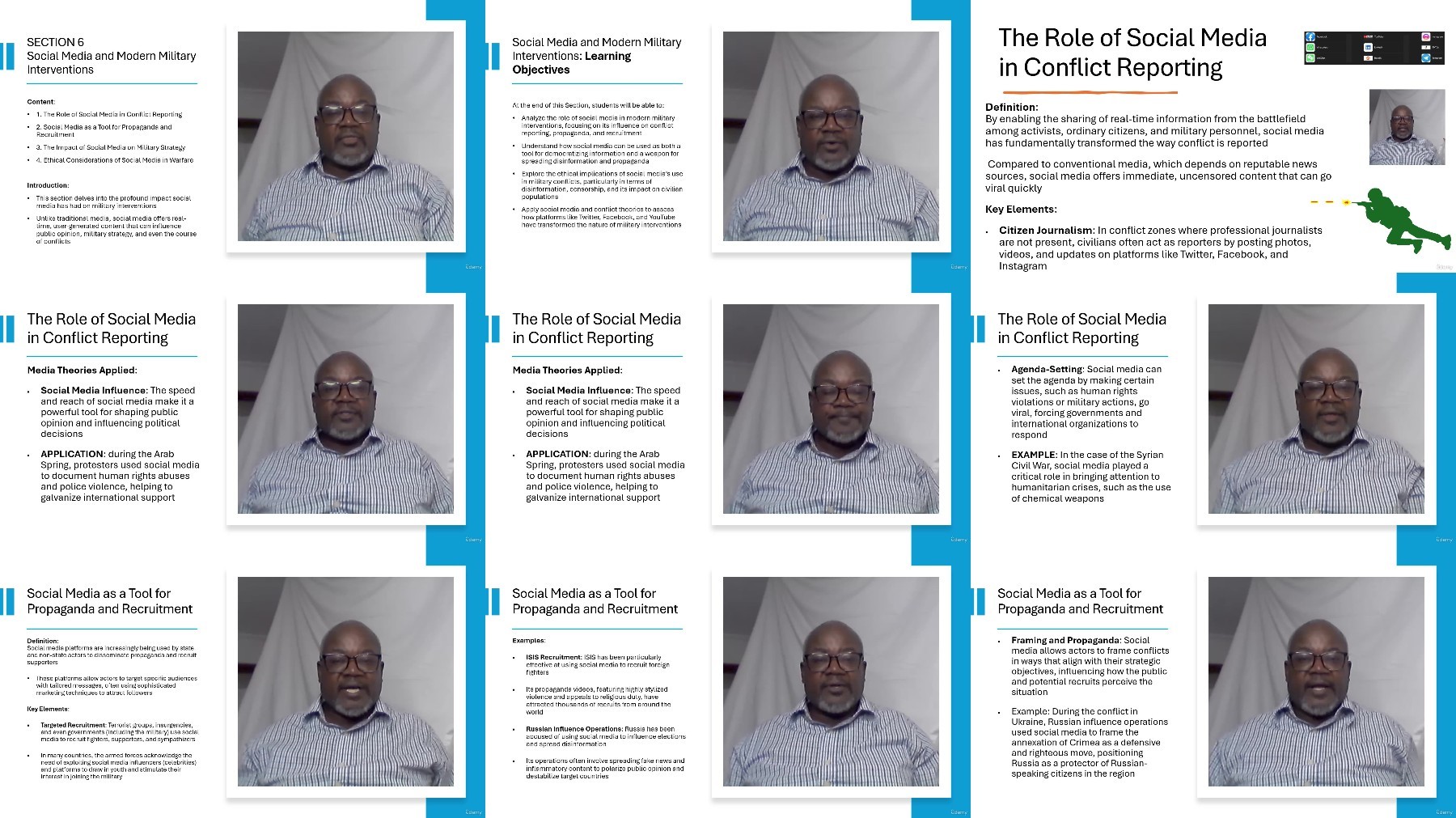
Screenshot
Homepage


Recommend Download Link Hight Speed | Please Say Thanks Keep Topic Live
No Password - Links are Interchangeable

 

908afaf48f89824f5bcc2ff1df7b92ff.jpg

The Role Of Media In Shaping Military Interventions
Published 10/2024
MP4 | Video: h264, 1920x1080 | Audio: AAC, 44.1 KHz
Language: English | Size: 2.76 GB | Duration: 2h 23m​

Media, Public Opinion, and the Power to Influence Military Decisions

What you'll learn

Understand the relationship between media, public opinion, and military interventions.

Analyze how media framing and agenda-setting influence the perception of military operations.

Examine case studies where media played a crucial role in shaping interventions, such as in Kosovo, Libya, Mali, and the Central African Republic.

Critically assess the role of both traditional and social media in promoting or challenging interventions.

Apply media-related theories and frameworks to real-world situations involving military interventions.

Requirements

For Military Personnel: No formal education beyond standard military training is required, but a background in public relations, communications, or military studies is advantageous. For Journalists/Media Professionals: A basic understanding of media theory, strategic communication, or public relations is helpful. Prior experience in conflict reporting is a plus. For Students: A bachelor's degree (or current studies) in international relations, political science, communication, or a related field. Familiarity with basic media and communication theories will help students grasp course concepts more easily. For Government/NGO Professionals: A background in international relations, political science, or communications, with experience or interest in conflict zones, peacekeeping, or policy formulation. Skills: Analytical Thinking: The course will require students to critically assess how media is used strategically in military contexts, so strong analytical skills are important. Basic Media Literacy: Students should have a foundational understanding of how media works, including the role of social media, traditional news outlets, and propaganda techniques. Familiarity with International Affairs: While not required, an understanding of international politics, conflict zones, and military operations will enrich the learning experience. Interest in Strategic Communication: Since the course focuses heavily on the use of media as a strategic tool, students should have a keen interest in how communication influences public opinion, political decisions, and military outcomes.

Description

In today's globalized world, the media plays a powerful role in shaping military interventions and influencing public opinion. This course explores the complex relationship between media, public perception, and military decisions. You will learn how governments, military forces, and other stakeholders use the media as a strategic tool to control narratives and influence both domestic and international audiences during conflicts.From traditional media outlets to the fast-paced world of social media, we will explore how different forms of media can frame conflicts, manage public sentiment, and sometimes even escalate or de-escalate military actions. The course will delve into key concepts such as media management, psychological operations (PsyOps), propaganda, and information warfare, using real-world case studies from interventions in Iraq, Afghanistan, Kosovo, Syria, and more.This course id designed for students, professionals in international relations, journalism, military studies, and anyone interested in understanding the dynamic role of media in global conflicts and provides both theoretical and practical insights. At the end of the course, students will be equipped with the knowledge to critically analyze how media influences military actions and policy decisions in today's information-driven world.Only a basic understanding of global affairs, media, or military operations will be beneficial before undertaking the course.

Overview

Section 1: Introduction

Lecture 1 Introduction: Cse Overview; Cse Outline; Learning Objectives

Section 2: SECTION 2 Foundations of Media and Military Interventions

Lecture 2 LECTURE 2.1: DEFINITION & Historical Evolution of Media's Role in Conflict

Lecture 3 LECTURE 2.2: The Public Sphere and Military Operations; MEDIA Feedback Loops

Section 3: SECTION 3: Theories and Frameworks

Lecture 4 LECTURE 3.1 THEORIES: 1. Framing Theory 2. Agenda-Setting Theory

Lecture 5 LECTURE 3.2 THEORIES: Cultivation Theory; Manufacturing Consent

Section 4: SECTION 4: Case Studies of Media Influence on Military Interventions

Lecture 6 LECTURE 4.1 CASES: 1.Kosovo Intervention (1999) 2.Iraq War (2003)

Lecture 7 LECTURE 4.2 CASES: 3.Libya 4.Syria 5. Central African Republic

Section 5: SECTION 5: Media as a Strategic Tool in Military Operations

Lecture 8 LECTURE 5.1: 1. Media Management in Modern Military Interventions; 2. PSYOPS

Lecture 9 LECTURE 5.2 1. Military-Media Symbiosis +Conflict Reporting; 2. Info Warfare

Section 6: SECTION 6: Social Media and Modern Military Interventions

Lecture 10 LECTURE 6.1: The Role of Social Media in Conflict Reporting

Lecture 11 LECTURE 6.2: The Impact of Social Media on Military Strategy

Section 7: SECTION 7 SUMMARY & CONCLUSION

Lecture 12 SUMMARY, ASSIGNMENT & CONCLUSION

The course on "Media as a Strategic Tool in Military Operations" is suitable for a range of professionals and students who have an interest in military operations, media influence, strategic communication, and the intersection of information and warfare.,Military Personnel: Officers and enlisted personnel involved in public affairs, strategic communications, psychological operations (PsyOps), or information warfare. This course would be beneficial for those seeking to understand how media impacts military operations and public perception. Journalists and Media Professionals: Journalists covering defense, conflict, and international relations, as well as media professionals working in public relations or strategic communication, would benefit from the insights into military-media relations and the role of media in shaping public opinion during conflicts. Students of International Relations, Security Studies, or Communication: Undergraduate and graduate students studying fields such as international relations, peace and conflict studies, security studies, and media studies. The course provides valuable theoretical and practical knowledge on the role of media in military operations. Government and Policy Analysts: Professionals working in government agencies, defense ministries, or international organizations like the UN or NATO, especially those involved in formulating policy related to military interventions, information warfare, or media regulation. NGOs and Humanitarian Workers: Individuals working in non-governmental organizations or humanitarian missions that operate in conflict zones. Understanding how media shapes public perception and influences international interventions can help in planning and communicating effectively in such environments. Academics and Researchers: Scholars and researchers focusing on the influence of media, military operations, international politics, or strategic communications would find the course a useful resource for further study.

NvWtM8Pj_o.jpg

 
Zurück
Oben Unten