



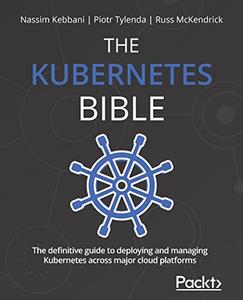
Free Download Nassim Kebbani, "The Kubernetes Bible: The definitive guide to deploying and managing Kubernetes across major cloud platforms"
English | 2022 | ISBN: 1838827692 | PDF | pages: 680 | 11.9 mb
Get up and running with Kubernetes 1.19 and simplify the way you build, deploy, and maintain scalable distributed systems
Key Features
- Design and deploy large clusters on various cloud platforms
- Explore containerized application deployment, debugging, and recovery with the latest Kubernetes version 1.19
- Become well-versed with advanced Kubernetes topics such as traffic routing or Pod autoscaling and scheduling
Book Description
With its broad adoption across various industries, Kubernetes is helping engineers with the orchestration and automation of container deployments on a large scale, making it the leading container orchestration system and the most popular choice for running containerized applications.
This Kubernetes book starts with an introduction to Kubernetes and containerization, covering the setup of your local development environment and the roles of the most important Kubernetes components. Along with covering the core concepts necessary to make the most of your infrastructure, this book will also help you get acquainted with the fundamentals of Kubernetes. As you advance, you'll learn how to manage Kubernetes clusters on cloud platforms, such as Amazon Web Services (AWS), Microsoft Azure, and Google Cloud Platform (GCP), and develop and deploy real-world applications in Kubernetes using practical examples. Additionally, you'll get to grips with managing microservices along with best practices.
By the end of this book, you'll be equipped with battle-tested knowledge of advanced Kubernetes topics, such as scheduling of Pods and managing incoming traffic to the cluster, and be ready to work with Kubernetes on cloud platforms.
What you will learn
- Manage containerized applications with Kubernetes
- Understand Kubernetes architecture and the responsibilities of each component
- Set up Kubernetes on Amazon Elastic Kubernetes Service, Google Kubernetes Engine, and Microsoft Azure Kubernetes Service
- Deploy cloud applications such as Prometheus and Elasticsearch using Helm charts
- Discover advanced techniques for Pod scheduling and auto-scaling the cluster
- Understand possible approaches to traffic routing in Kubernetes
Who this book is for
This book is for software developers and DevOps engineers looking to understand how to work with Kubernetes for orchestrating containerized applications and services in the cloud. Prior experience with designing software running in operating system containers, as well as a general background in DevOps best practices, will be helpful. Basic knowledge of Kubernetes, Docker, and leading cloud service providers assist with grasping the concepts covered easily.
Table of Contents
- Kubernetes Fundamentals
- Kubernetes Architecture - From Docker Images to Running Pods
- Installing your First Kubernetes Cluster
- Running Your Docker Containers
- Using Multi-Container Pods and Design Patterns
- Configuring Your Pods Using ConfigMaps and Secrets
- Exposing Your Pods with Services
- Managing Namespaces in Kubernetes
- Persistent Storage in Kubernetes
- Running Production-Grade Kubernetes Workloads
- Deployment - Deploying Stateless Applications
- StatefulSet - Deploying Stateful Applications
- DaemonSet - Maintaining Pod Singletons on Nodes
- Kubernetes Clusters on Google Kubernetes Engine
- Launching a Kubernetes Cluster on Amazon Web Services with Amazon Elastic Kubernetes Service
- Kubernetes Clusters on Microsoft Azure with Azure Kubernetes Service
- Working with Helm Charts
- Authentication and Authorization on Kubernetes
(N.B. Please use the Look Inside option to see further chapters)
Links are Interchangeable - Single Extraction
