• Regeln für den Video-Bereich:

    In den Börsenbereich gehören nur Angebote die bereits den Allgemeinen Regeln entsprechen.

    Einteilung

    - Folgende Formate gehören in die angegeben Bereiche:
    - Filme: Encodierte Filme von BluRay, DVD, R5, TV, Screener sowie Telesyncs im Format DivX, XviD und x264.
    - DVD: Filme im Format DVD5, DVD9 und HD2DVD.
    - HD: Encodierte Filme mit der Auflösung 720p oder darüber von BluRay, DVD, R5, TV, Screener sowie Telesyncs im Format x264.
    - 3D: Encodierte Filme von BluRay, die in einem 3D Format vorliegen. Dies gilt auch für Dokus, Animation usw.
    - Serien: Cartoon/Zeichentrick, Anime, Tutorials, Dokumentationen, Konzerte/Musik, Sonstiges sind demnach in die entsprechenden Bereiche einzuordnen, auch wenn sie beispielsweise im High Definition-Format oder als DVD5/DVD9/HD2DVD vorliegen. Ausnahme 3D.
    - Bereich Englisch: Englische Releases gehören immer in diesen Bereich.
    - Bereich Talk: Der Bereich, in dem über die Releases diskutiert werden kann, darf, soll und erwünscht ist.


    Angebot/Beitrag erstellen

    - Ein Beitrag darf erst dann erstellt werden, wenn der Upload bei mindestens einem OCH komplett ist. Platzhalter sind untersagt.
    - Bei einem Scenerelease hat der Threadtitel ausschließlich aus dem originalen, unveränderten Releasenamen zu bestehen. Es dürfen keine Veränderungen wie z.B. Sterne, kleine Buchstaben o.ä. vorgenommen werden. Ausnahme Serienbörse:
    - Bei einem Sammelthread für eine Staffel entfällt aus dem Releasename natürlich der Name der Folge. Beispiel: Die Simpsons S21 German DVDRip XviD - ITG
    - Dementsprechend sind also u.a. verboten: Erweiterungen wie "Tipp", "empfehlenswert", "only", "reup", usw. / jegliche andere Zusatzinformation oder Ergänzung, welche nicht in obiger Beschreibung zu finden ist.

    Aufbau des Angebots und Threadtitel

    Der Titel nach folgendem Muster erstellt zu werden. <Name> [3D] [Staffel] [German] <Jahr> <Tonspur> [DL] [Auflösung] <Quelle> <Codec> - <Group>
    Beispiel: The Dark Knight German 2008 AC3 DVDRip XviD - iND
    Beispiel: The Dark Knight 2008 DTS DL BDRip x264 - iND
    Beispiel: The Dark Knight 2008 AC3 DL BDRip XviD - iND
    Beispiel: The Dark Knight German 2008 AC3 720p BluRay x264 iND
    Beispiel: The Dark Knight 2008 DTS DL 1080p BluRay x264 iND
    Beispiel: Die Simpsons S01 German AC3 DVDRip XviD iND
    Beispiel: Die Simpsons S20 German AC3 720p BluRay x264 iND
    Beispiel: Sword Art Online II Ger Sub 2014 AAC 1080p WEBRip x264 - peppermint
    Entsprechend sind also u.a. verboten: Sonderzeichen wie Klammern, Sterne, Ausrufezeichen, Unterstriche, Anführungszeichen / Erweiterungen wie "Tipp", "empfehlenswert", "only", "reup", usw. / jegliche andere Zusatzinformation oder Ergänzung, welche nicht in obiger Beschreibung zu finden ist
    Ausnahmen hiervon können in den Bereichen geregelt sein.

    Die Beiträge sollen wie folgt aufgebaut werden:
    Überschrift entspricht dem Threadtitel
    Cover
    kurze Inhaltsbeschreibung
    Format, Größe, Dauer sind gut lesbar für Downloader außerhalb des Spoilers zu vermerken
    Nfo sind immer Anzugeben und selbige immer im Spoiler in Textform.
    Sind keine Nfo vorhanden z.B. Eigenpublikationen, sind im Spoiler folgende Dateiinformationen zusätzlich anzugeben :
    Quelle
    Video (Auflösung und Bitrate)
    Ton (Sprache, Format und Bitrate der einzelnen Spuren)
    Untertitel (sofern vorhanden)
    Hosterangabe in Textform außerhalb eines Spoiler mit allen enthaltenen Hostern.
    Bei SD kann auf diese zusätzlichen Dateiinformationen verzichtet werden.

    Alle benötigten Passwörter sind, sofern vorhanden, in Textform im Angebot anzugeben.
    Spoiler im Spoiler mit Kommentaren :"Schon Bedankt?" sind unerwünscht.


    Releases

    - Sind Retail-Release verfügbar, sind alle anderen Variationen untersagt. Ausnahmen: Alle deutschen Retail-Release sind CUT, in diesem Fall sind dubbed UNCUT-Release zulässig.
    - Im Serien-Bereich gilt speziell: Wenn ein Retail vor Abschluss einer laufenden Staffel erscheint, darf diese Staffel noch zu Ende gebracht werden.62
    - Gleiche Releases sind unbedingt zusammenzufassen. Das bedeutet, es ist zwingend erforderlich, vor dem Erstellen eines Themas per Suchfunktion zu überprüfen, ob bereits ein Beitrag mit demselben Release besteht. Ist dies der Fall, ist der bereits vorhandene Beitrag zu verwenden.
    - P2P und Scene Releases dürfen nicht verändert oder gar unter einem iND Tag eingestellt werden.


    Support, Diskussionen und Suche

    - Supportanfragen sind entweder per PN oder im Bereich Talk zu stellen.
    - Diskussionen und Bewertungen sind im Talk Bereich zu führen. Fragen an die Uploader haben ausschließlich via PN zu erfolgen, und sind in den Angeboten untersagt.
    - Anfragen zu Upload-Wünschen sind nur im Bereich Suche Video erlaubt. Antworten dürfen nur auf Angebote von MyBoerse.bz verlinkt werden.


    Verbote

    - Untersagt sind mehrere Formate in einem einzigen Angebotsthread, wie beispielsweise das gleichzeitige Anbieten von DivX/XviD, 720p und 1080p in einem Thread. Pro Format, Release und Auflösung ist ein eigener Thread zu eröffnen.
    - Grundsätzlich ebenso verboten sind Dupes. Uploader haben sich an geeigneter Stelle darüber zu informieren, ob es sich bei einem Release um ein Dupe handelt.
    - Gefakte, nur teilweise lauffähige oder unvollständige Angebote sind untersagt. Dies gilt auch für eigene Publikationen, die augenscheinlich nicht selbst von z.B. einer DVD gerippt wurden. Laufende Serien, bei denen noch nicht alle Folgen verfügbar sind, dürfen erstellt und regelmäßig geupdatet werden.
    - Untersagt sind Angebote, welche nur und ausschließlich in einer anderen Sprache als deutsch oder englisch vorliegen. Ausnahmen sind VORHER mit den Moderatoren zu klären.


    Verstoß gegen die Regeln

    - Angebote oder Beiträge, die gegen die Forenregeln verstoßen, sind über den "Melden"-Button im Beitrag zu melden.
  • Bitte registriere dich zunächst um Beiträge zu verfassen und externe Links aufzurufen.

++ Premium IPTV ++ 7000 Live Sender ++ UHD Qualität ++ Mediathek mit 18.000 Inhalten ++


VenneTV


Talk Python - Python Web Security OWASP Top 10 with Agentic AI Course

babymore87

MyBoerse.bz Pro Member
3c112a437a80588b919ff0c148151d6e.webp

Free Download Talk Python - Python Web Security OWASP Top 10 with Agentic AI Course
Released 5/2026
MP4 | Video: h264, 1920x1080 | Audio: AAC, 44.1 KHz, 2 Ch
Genre: eLearning | Language: English | Duration: 126 Lessons ( 5h 28m ) | Size: 1.6 GB
When Mozilla recently ran Claude over the Firefox JavaScript runtime, the AI uncovered more than 100 bugs, 14 of them serious enough to become CVEs. ? That kind of agentic security review used to be the exclusive domain of expensive pen-testing firms. Not anymore.
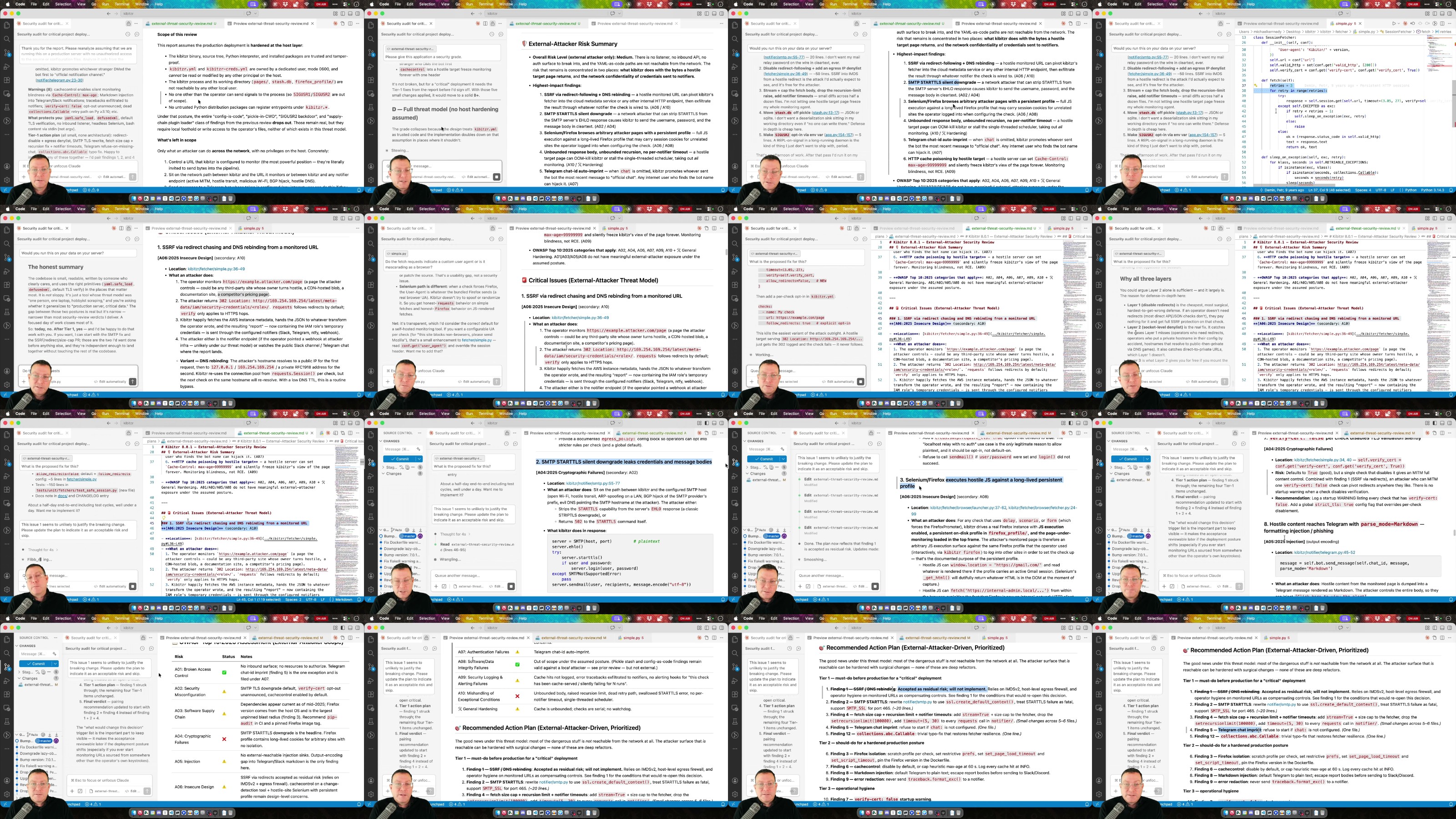
This course shows you how to do the same thing for your own Python web apps. We start by working through every category of the OWASP Top 10 (2025 edition) with real vulnerable-and-fixed examples in Flask, Django, and FastAPI. Then we build the Security Lead, a custom Claude Code agent specifically tuned for Python and SaaS security, that audits any codebase in minutes for roughly the cost of a fancy coffee. We turn it loose on three popular open source apps (Apache Superset, Paperless-ngx, and Kibitzr) and find genuine issues in each one.

What students are saying
This is by far the best Python course I've done to date, clear explanations, good apps that incorporate the concepts of the particular session and a follow up on core concepts. The course is very engaging with a little humour which makes it much easier to dedicate time following along.
If you are looking for a easy to follow, enjoyable Python course - back the project now, get comfortable and enjoy! I don't often leave public feedback, but felt on this occasion I had to as now I'm hooked!
Source code and course GitHub repository
github.com/talkpython/python-web-owasp-top-10-with-agentic-ai-course
What's this course about and how is it different?
This course teaches you to find and fix the OWASP Top 10 security vulnerabilities, not as an abstract checklist, but as concrete, fixable problems in real Python web apps built with Flask, Django, and FastAPI. For every category you'll see vulnerable code, why it's dangerous, and exactly how to fix it. Then we go further and build the Security Lead, a custom Claude Code agent that brings that same OWASP-aware perspective to any Python codebase, with the discipline a pen-testing firm would apply. Think of it as pair programming with a security specialist who lives in your repo, never gets tired, and never skips a step.
Why this course is different from other Python security tutorials
The brand-new OWASP 2025 edition - Covers the freshly released 2025 list including the new "mishandling of exceptional conditions" category, so you're studying current threat priorities, not 2021's. For background, hear OWASP committee member Tanya Janca walk through the new list on Talk Python episode 545.
A reusable AI security agent you keep forever - Walk away with the Security Lead, a custom Claude Code agent definition tuned for Python and SaaS security that you can drop into any future project.
Real, named, live audits - Unscripted and unstaged. Michael picks three popular open source apps (Apache Superset, Paperless-ngx, and Kibitzr) and runs the audits live on camera, discovering the genuine issues in each one for the first time as you watch.
Vulnerable and fixed code, side by side - Every OWASP category includes the broken version, exactly why an attacker can exploit it, and the secure fix using current Python practices.
Flask, Django, and FastAPI together - Examples span all three major Python web frameworks, so you see how the same vulnerability looks (and gets fixed) across the stack you actually use.
Built for SaaS multi-tenancy concerns - Dedicated focus on user data isolation, IDOR risks, and cross-tenant data leaks, the things that keep SaaS builders up at night.
Practical AI workflow, not vibe coding - Learn how to point an agent at a real codebase, prompt it for an OWASP-aligned report, and apply fixes responsibly using careful engineering practices.
Honest costs and time spent - See exactly what a million-line audit consumes (roughly $3 to $5 in Claude Code compute) and how to keep audit spend predictable.
Modern Python security toolbox - Argon2 password hashing, MultiFernet key rotation, slowapi rate limiting, loguru audit logging, pip-audit for supply chain, Have I Been Pwned checks, and more.
Ethics built in - Closing guidance on how to apply these techniques responsibly, including why not to flood open source maintainers with low-signal AI-generated PRs.
What will you learn about OWASP Top 10 and Python security?
By the end of this course, you'll be able to
Recognize and fix all ten OWASP Top 10 2025 vulnerability categories in real Python web apps
Diagnose broken access control vulnerabilities including IDOR, path traversal, and missing function-level access checks
Configure Docker Compose, Django settings, and security headers to avoid the most common production misconfigurations
Pin Python dependencies safely with uv pip compile and exclude-newer-than to defend against fresh supply chain attacks
Run pip-audit in CI and Docker builds so a CVE never ships unnoticed
Replace weak password hashing with Argon2 and rotate encryption keys with MultiFernet without downtime
Defend against SQL, NoSQL, and stored XSS injection with parameterized queries and proper template escaping
Apply server-side validation with Pydantic field validators so client-side checks can never be the only gate
Enforce strong password policies including Have I Been Pwned breach checks and a top-10k common-passwords list
Build a secure password reset flow with hashed tokens, short expirations, and no user enumeration
Prevent mass-assignment attacks with strict serializer fields and read-only flags
Vendor third-party JavaScript and CSS into your own infrastructure instead of trusting external CDNs
Implement structured security audit logging with loguru and threshold-based alerts to Slack, PagerDuty, or Sentry
Return safe, generic error responses to users while logging full context server-side with a traceable reference ID
Use SQLAlchemy transaction context managers to prevent partial writes and money-disappearance bugs
Audit multi-tenant SaaS applications for cross-tenant data leaks and identity isolation gaps
Write a custom Claude Code agent persona definition tuned for your stack and threat model
Wire OWASP markdown sources directly into your agent so it cites canonical references instead of hallucinating
Run a complete agentic security audit on any Python codebase and turn the report into a prioritized fix list
Apply fixes with AI assistance while keeping a clear audit trail of what changed, why, and how it was tested
Estimate and control the cost of agentic security audits so they remain practical for routine use
Who is this OWASP Python security course for?
This course is perfect for
Python web developers who ship production apps in Flask, Django, or FastAPI without a dedicated security team backing them up
SaaS founders and indie hackers who run multi-tenant apps where data isolation between users is critical
Senior engineers and tech leads who want a systematic, OWASP-aligned approach to reviewing their team's Python web code
Developers facing compliance audits who need documented security practices for SOC 2, HIPAA, PCI DSS, GDPR, NIST 800-63-4, or CMMC
Developers already using AI tools daily who want a serious, security-focused application of agentic AI (if you'd like to build up the agentic-coding foundations first, Agentic AI Programming for Python is a natural prerequisite)
Anyone maintaining a legacy Python web app that hasn't had a security audit recently and wants a practical, AI-assisted way to catch up
Homepage
Recommend Download Link Hight Speed | Please Say Thanks Keep Topic Live
No Password - Links are Interchangeable

 

764904289_yxusj-k27m913gulw0.jpg

Talk Python - Python Web Security: OWASP Top 10 with Agentic AI Course
Released 5/2026
MP4 | Video: h264, 1920x1080 | Audio: AAC, 44.1 KHz, 2 Ch
Genre: eLearning | Language: English | Duration: 126 Lessons ( 5h 28m ) | Size: 1.6 GB​

This course shows you how to do the same thing for your own Python web apps. We start by working through every category of the OWASP Top 10 (2025 edition) with real vulnerable-and-fixed examples in Flask, Django, and FastAPI. Then we build the Security Lead, a custom Claude Code agent specifically tuned for Python and SaaS security, that audits any codebase in minutes for roughly the cost of a fancy coffee. We turn it loose on three popular open source apps (Apache Superset, Paperless-ngx, and Kibitzr) and find genuine issues in each one.
What students are saying
This is by far the best Python course I've done to date, clear explanations, good apps that incorporate the concepts of the particular session and a follow up on core concepts. The course is very engaging with a little humour which makes it much easier to dedicate time following along.
If you are looking for a easy to follow, enjoyable Python course - back the project now, get comfortable and enjoy! I don't often leave public feedback, but felt on this occasion I had to as now I'm hooked!
Source code and course GitHub repository
github.com/talkpython/python-web-owasp-top-10-with-agentic-ai-course
What's this course about and how is it different?
This course teaches you to find and fix the OWASP Top 10 security vulnerabilities, not as an abstract checklist, but as concrete, fixable problems in real Python web apps built with Flask, Django, and FastAPI. For every category you'll see vulnerable code, why it's dangerous, and exactly how to fix it. Then we go further and build the Security Lead, a custom Claude Code agent that brings that same OWASP-aware perspective to any Python codebase, with the discipline a pen-testing firm would apply. Think of it as pair programming with a security specialist who lives in your repo, never gets tired, and never skips a step.
Why this course is different from other Python security tutorials
The brand-new OWASP 2025 edition Covers the freshly released 2025 list including the new "mishandling of exceptional conditions" category, so you're studying current threat priorities, not 2021's. For background, hear OWASP committee member Tanya Janca walk through the new list on Talk Python episode 545.
A reusable AI security agent you keep forever Walk away with the Security Lead, a custom Claude Code agent definition tuned for Python and SaaS security that you can drop into any future project.
Real, named, live audits Unscripted and unstaged. Michael picks three popular open source apps (Apache Superset, Paperless-ngx, and Kibitzr) and runs the audits live on camera, discovering the genuine issues in each one for the first time as you watch.
Vulnerable and fixed code, side by side Every OWASP category includes the broken version, exactly why an attacker can exploit it, and the secure fix using current Python practices.
Flask, Django, and FastAPI together Examples span all three major Python web frameworks, so you see how the same vulnerability looks (and gets fixed) across the stack you actually use.
Built for SaaS multi-tenancy concerns Dedicated focus on user data isolation, IDOR risks, and cross-tenant data leaks, the things that keep SaaS builders up at night.
Practical AI workflow, not vibe coding Learn how to point an agent at a real codebase, prompt it for an OWASP-aligned report, and apply fixes responsibly using careful engineering practices.
Honest costs and time spent See exactly what a million-line audit consumes (roughly $3 to $5 in Claude Code compute) and how to keep audit spend predictable.
Modern Python security toolbox Argon2 password hashing, MultiFernet key rotation, slowapi rate limiting, loguru audit logging, pip-audit for supply chain, Have I Been Pwned checks, and more.
Ethics built in Closing guidance on how to apply these techniques responsibly, including why not to flood open source maintainers with low-signal AI-generated PRs.
What will you learn about OWASP Top 10 and Python security?
Recognize and fix all ten OWASP Top 10 2025 vulnerability categories in real Python web apps
Diagnose broken access control vulnerabilities including IDOR, path traversal, and missing function-level access checks
Configure Docker Compose, Django settings, and security headers to avoid the most common production misconfigurations
Pin Python dependencies safely with uv pip compile and exclude-newer-than to defend against fresh supply chain attacks
Run pip-audit in CI and Docker builds so a CVE never ships unnoticed
Replace weak password hashing with Argon2 and rotate encryption keys with MultiFernet without downtime
Defend against SQL, NoSQL, and stored XSS injection with parameterized queries and proper template escaping
Apply server-side validation with Pydantic field validators so client-side checks can never be the only gate
Enforce strong password policies including Have I Been Pwned breach checks and a top-10k common-passwords list
Build a secure password reset flow with hashed tokens, short expirations, and no user enumeration
Prevent mass-assignment attacks with strict serializer fields and read-only flags
Vendor third-party JavaScript and CSS into your own infrastructure instead of trusting external CDNs
Implement structured security audit logging with loguru and threshold-based alerts to Slack, PagerDuty, or Sentry
Return safe, generic error responses to users while logging full context server-side with a traceable reference ID
Use SQLAlchemy transaction context managers to prevent partial writes and money-disappearance bugs
Audit multi-tenant SaaS applications for cross-tenant data leaks and identity isolation gaps
Write a custom Claude Code agent persona definition tuned for your stack and threat model
Wire OWASP markdown sources directly into your agent so it cites canonical references instead of hallucinating
Run a complete agentic security audit on any Python codebase and turn the report into a prioritized fix list
Apply fixes with AI assistance while keeping a clear audit trail of what changed, why, and how it was tested
Estimate and control the cost of agentic security audits so they remain practical for routine use
Who is this OWASP Python security course for?
This course is perfect for
Python web developers who ship production apps in Flask, Django, or FastAPI without a dedicated security team backing them up
SaaS founders and indie hackers who run multi-tenant apps where data isolation between users is critical
Senior engineers and tech leads who want a systematic, OWASP-aligned approach to reviewing their team's Python web code
Developers facing compliance audits who need documented security practices for SOC 2, HIPAA, PCI DSS, GDPR, NIST 800-63-4, or CMMC
Developers already using AI tools daily who want a serious, security-focused application of agentic AI (if you'd like to build up the agentic-coding foundations first, Agentic AI Programming for Python is a natural prerequisite)
Anyone maintaining a legacy Python web app that hasn't had a security audit recently and wants a practical, AI-assisted way to catch up

Homepage:


yxusj-114-Reviewing-the-security-report.jpg

764904907_yxusj-58t5s5kym04k.jpg

 
Zurück
Oben Unten