

• Regeln für den Video-Bereich:

    In den Börsenbereich gehören nur Angebote die bereits den Allgemeinen Regeln entsprechen.

    Einteilung

    - Folgende Formate gehören in die angegeben Bereiche:
    - Filme: Encodierte Filme von BluRay, DVD, R5, TV, Screener sowie Telesyncs im Format DivX, XviD und x264.
    - DVD: Filme im Format DVD5, DVD9 und HD2DVD.
    - HD: Encodierte Filme mit der Auflösung 720p oder darüber von BluRay, DVD, R5, TV, Screener sowie Telesyncs im Format x264.
    - 3D: Encodierte Filme von BluRay, die in einem 3D Format vorliegen. Dies gilt auch für Dokus, Animation usw.
    - Serien: Cartoon/Zeichentrick, Anime, Tutorials, Dokumentationen, Konzerte/Musik, Sonstiges sind demnach in die entsprechenden Bereiche einzuordnen, auch wenn sie beispielsweise im High Definition-Format oder als DVD5/DVD9/HD2DVD vorliegen. Ausnahme 3D.
    - Bereich Englisch: Englische Releases gehören immer in diesen Bereich.
    - Bereich Talk: Der Bereich, in dem über die Releases diskutiert werden kann, darf, soll und erwünscht ist.


    Angebot/Beitrag erstellen

    - Ein Beitrag darf erst dann erstellt werden, wenn der Upload bei mindestens einem OCH komplett ist. Platzhalter sind untersagt.
    - Bei einem Scenerelease hat der Threadtitel ausschließlich aus dem originalen, unveränderten Releasenamen zu bestehen. Es dürfen keine Veränderungen wie z.B. Sterne, kleine Buchstaben o.ä. vorgenommen werden. Ausnahme Serienbörse:
    - Bei einem Sammelthread für eine Staffel entfällt aus dem Releasename natürlich der Name der Folge. Beispiel: Die Simpsons S21 German DVDRip XviD - ITG
    - Dementsprechend sind also u.a. verboten: Erweiterungen wie "Tipp", "empfehlenswert", "only", "reup", usw. / jegliche andere Zusatzinformation oder Ergänzung, welche nicht in obiger Beschreibung zu finden ist.

    Aufbau des Angebots und Threadtitel

    Der Titel nach folgendem Muster erstellt zu werden. <Name> [3D] [Staffel] [German] <Jahr> <Tonspur> [DL] [Auflösung] <Quelle> <Codec> - <Group>
    Beispiel: The Dark Knight German 2008 AC3 DVDRip XviD - iND
    Beispiel: The Dark Knight 2008 DTS DL BDRip x264 - iND
    Beispiel: The Dark Knight 2008 AC3 DL BDRip XviD - iND
    Beispiel: The Dark Knight German 2008 AC3 720p BluRay x264 iND
    Beispiel: The Dark Knight 2008 DTS DL 1080p BluRay x264 iND
    Beispiel: Die Simpsons S01 German AC3 DVDRip XviD iND
    Beispiel: Die Simpsons S20 German AC3 720p BluRay x264 iND
    Beispiel: Sword Art Online II Ger Sub 2014 AAC 1080p WEBRip x264 - peppermint
    Entsprechend sind also u.a. verboten: Sonderzeichen wie Klammern, Sterne, Ausrufezeichen, Unterstriche, Anführungszeichen / Erweiterungen wie "Tipp", "empfehlenswert", "only", "reup", usw. / jegliche andere Zusatzinformation oder Ergänzung, welche nicht in obiger Beschreibung zu finden ist
    Ausnahmen hiervon können in den Bereichen geregelt sein.

    Die Beiträge sollen wie folgt aufgebaut werden:
    Überschrift entspricht dem Threadtitel
    Cover
    kurze Inhaltsbeschreibung
    Format, Größe, Dauer sind gut lesbar für Downloader außerhalb des Spoilers zu vermerken
    Nfo sind immer Anzugeben und selbige immer im Spoiler in Textform.
    Sind keine Nfo vorhanden z.B. Eigenpublikationen, sind im Spoiler folgende Dateiinformationen zusätzlich anzugeben :
    Quelle
    Video (Auflösung und Bitrate)
    Ton (Sprache, Format und Bitrate der einzelnen Spuren)
    Untertitel (sofern vorhanden)
    Hosterangabe in Textform außerhalb eines Spoiler mit allen enthaltenen Hostern.
    Bei SD kann auf diese zusätzlichen Dateiinformationen verzichtet werden.

    Alle benötigten Passwörter sind, sofern vorhanden, in Textform im Angebot anzugeben.
    Spoiler im Spoiler mit Kommentaren :"Schon Bedankt?" sind unerwünscht.


    Releases

    - Sind Retail-Release verfügbar, sind alle anderen Variationen untersagt. Ausnahmen: Alle deutschen Retail-Release sind CUT, in diesem Fall sind dubbed UNCUT-Release zulässig.
    - Im Serien-Bereich gilt speziell: Wenn ein Retail vor Abschluss einer laufenden Staffel erscheint, darf diese Staffel noch zu Ende gebracht werden.62
    - Gleiche Releases sind unbedingt zusammenzufassen. Das bedeutet, es ist zwingend erforderlich, vor dem Erstellen eines Themas per Suchfunktion zu überprüfen, ob bereits ein Beitrag mit demselben Release besteht. Ist dies der Fall, ist der bereits vorhandene Beitrag zu verwenden.
    - P2P und Scene Releases dürfen nicht verändert oder gar unter einem iND Tag eingestellt werden.


    Support, Diskussionen und Suche

    - Supportanfragen sind entweder per PN oder im Bereich Talk zu stellen.
    - Diskussionen und Bewertungen sind im Talk Bereich zu führen. Fragen an die Uploader haben ausschließlich via PN zu erfolgen, und sind in den Angeboten untersagt.
    - Anfragen zu Upload-Wünschen sind nur im Bereich Suche Video erlaubt. Antworten dürfen nur auf Angebote von MyBoerse.bz verlinkt werden.


    Verbote

    - Untersagt sind mehrere Formate in einem einzigen Angebotsthread, wie beispielsweise das gleichzeitige Anbieten von DivX/XviD, 720p und 1080p in einem Thread. Pro Format, Release und Auflösung ist ein eigener Thread zu eröffnen.
    - Grundsätzlich ebenso verboten sind Dupes. Uploader haben sich an geeigneter Stelle darüber zu informieren, ob es sich bei einem Release um ein Dupe handelt.
    - Gefakte, nur teilweise lauffähige oder unvollständige Angebote sind untersagt. Dies gilt auch für eigene Publikationen, die augenscheinlich nicht selbst von z.B. einer DVD gerippt wurden. Laufende Serien, bei denen noch nicht alle Folgen verfügbar sind, dürfen erstellt und regelmäßig geupdatet werden.
    - Untersagt sind Angebote, welche nur und ausschließlich in einer anderen Sprache als deutsch oder englisch vorliegen. Ausnahmen sind VORHER mit den Moderatoren zu klären.


    Verstoß gegen die Regeln

    - Angebote oder Beiträge, die gegen die Forenregeln verstoßen, sind über den "Melden"-Button im Beitrag zu melden.
  • Bitte registriere dich zunächst um Beiträge zu verfassen und externe Links aufzurufen.

*** Bestes IPTV *** bester Preis *** gratis Test ***


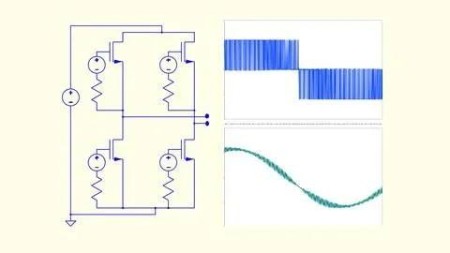
Simulating PWM Strategies For Power Converters With Qspice

babymore87

MyBoerse.bz Pro Member
379a760fdde54acc1bc214d62f2ecc12.jpeg

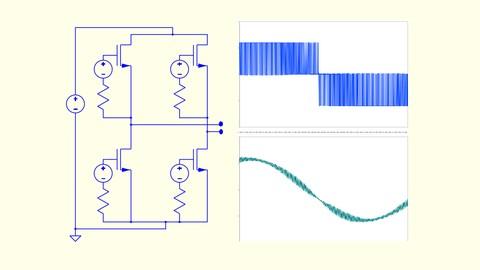
Free Download Simulating PWM Strategies For Power Converters With Qspice
Published: 11/2024
MP4 | Video: h264, 1920x1080 | Audio: AAC, 44.1 KHz
Language: English | Size: 5.89 GB | Duration: 12h 54m
Understanding the operation of power converter modules through simulation examples with QSPICE

What you'll learn
Concept of Pulse Width Modulation (PWM)
Simulation of a buck converter
Simulation of a modified buck-boost converter with discrete devices
Topology and operation of a half-bridge module
Simulation of bidirectional buck converter with a half bridge module
Simulation of a bidirectional buck-boost converter with two half-bridge modules
Simulation of a dc-ac converter with a half-bridge module
Topology and operation of a full-bridge module
Bipolar, unipolar and phase-shift PWM strategies
Topology and operation of a three-phase converter
Space vector PWM theory and procedure
Simulation of a three-phase converter with sine-triangle comparison PWM
Simulation of a three-phase converter with space vector PWM
Requirements
Simulating with QSPICE. Students are recommended to take my course "Simulating dc-dc converters with QSPICE".
Basic C programming
Basic electrical engineering and power electronics
Description
Effective implementation of Pulse Width Modulation (PWM) strategies is essential for simulating power electronic converters, particularly in the design of control systems and the analysis of system behavior. This course offers both theoretical insights and hands-on simulation experience in applying PWM strategies to commonly used power converter modules, including the half-bridge, full-bridge, and three-phase modules. Taking a unique approach that distinguishes it from typical power electronics courses, this course focuses on helping students gain a deep understanding of the capabilities and operation of power converter modules. Each power converter module and its corresponding PWM strategy is explored through detailed simulation studies in QSPICE, providing students with a strong foundation in both theory and practical application.The use of QSPICE in this course equips students with a powerful tool for simulating and analyzing the complex behavior of power electronic converters. Unlike traditional analytical methods, QSPICE enables high-fidelity simulations that capture the dynamic operation of circuits under realistic conditions, including switching transients and control loop interactions. By simulating power converters and PWM strategies with QSPICE, students will acquire a valuable skill highly sought after in the power electronics industry. Additionally, the ability to visualize waveforms in QSPICE helps students gain a clear understanding of converter operation, enhancing their ability to analyze performance and troubleshoot real-world power electronics applications. This course, along with future QSPICE-based courses, will prepare students to become simulation experts in emerging areas of power electronics.
Overview
Section 1: Introduction
Lecture 1 Welcome to the course
Lecture 2 Target students of the course
Lecture 3 Course Requirements
Lecture 4 Tips on completing the course
Section 2: Concept of modulation
Lecture 5 Introduction
Lecture 6 Background from communications
Lecture 7 Overview of power electronics
Lecture 8 Using PWM in power electronics
Lecture 9 Buck converter - topology and operation
Lecture 10 Simulation of the buck converter - part 1
Lecture 11 Simulation of the buck converter - part 2
Lecture 12 Simulation of the buck converter - part 3
Lecture 13 Simulation of the buck converter - part 4
Lecture 14 Simulation of the buck converter - part 5
Lecture 15 Conclusions
Section 3: Half bridge converter
Lecture 16 Introduction
Lecture 17 Modified buck-boost converter - topology and operation
Lecture 18 Simulating the modified buck-boost converter - part 1
Lecture 19 Simulating the modified buck-boost converter - part 2
Lecture 20 Simulating the modified buck-boost converter - part 3
Lecture 21 Bidirectional buck converter - topology and operation
Lecture 22 Half bridge module or converter leg
Lecture 23 Simulation of bidirectional buck converter - part 1
Lecture 24 Simulation of bidirectional buck converter - part 2
Lecture 25 Simulation of bidirectional buck converter - part 3
Lecture 26 Simulation of bidirectional buck converter - part 4
Lecture 27 Conduction states of the half bridge module
Lecture 28 Bidirectional buck-boost converter - topology and operation
Lecture 29 Bidirectional buck-boost converter simulation - part 1
Lecture 30 Bidirectional buck-boost converter simulation - part 2
Lecture 31 Bidirectional buck-boost converter simulation - part 3
Lecture 32 Half-bridge dc-ac converter
Lecture 33 Simulation of a half-bridge dc-ac converter - part 1
Lecture 34 Simulation of a half-bridge dc-ac converter - part 2
Lecture 35 Conclusions
Section 4: Full-bridge converter
Lecture 36 Introduction
Lecture 37 Full-bridge converter - topology and operation
Lecture 38 Bipolar PWM for the full-bridge converter
Lecture 39 Simulation of full-bridge converter with bipolar PWM - part 1
Lecture 40 Simulation of full-bridge converter with bipolar PWM - part 2
Lecture 41 Additional conduction states of the full-bridge converter
Lecture 42 Expressing the converter output voltage as a vector
Lecture 43 Simulation of full-bridge converter with unipolar PWM
Lecture 44 Simulation of full-bridge converter with phase-shift PWM - part 1
Lecture 45 Simulation of full-bridge converter with phase-shift PWM - part 2
Lecture 46 Simulation of full-bridge converter with phase-shift PWM - part 3
Lecture 47 Simulation of full-bridge converter with phase-shift PWM - part 4
Lecture 48 Conclusions
Section 5: Three-phase converter
Lecture 49 Introduction
Lecture 50 Overview of three-phase systems
Lecture 51 Topology of a three-phase converter
Lecture 52 Output voltages of the three-phase converter
Lecture 53 Simulation of the three-phase converter with sine-triangle PWM - part 1
Lecture 54 Simulation of the three-phase converter with sine-triangle PWM - part 2
Lecture 55 Simulation of the three-phase converter with sine-triangle PWM - part 3
Lecture 56 Vector representation of the output voltages of the three-phase converter
Lecture 57 Space Vector PWM theory - part 1
Lecture 58 Space Vector PWM theory - part 2
Lecture 59 Space Vector PWM theory - part 3
Lecture 60 Simulating a three-phase converter with Space Vector PWM - part 1
Lecture 61 Simulating a three-phase converter with Space Vector PWM - part 2
Lecture 62 Simulating a three-phase converter with Space Vector PWM - part 3
Lecture 63 Simulating a three-phase converter with Space Vector PWM - part 4
Lecture 64 Simulating a three-phase converter with Space Vector PWM - part 5
Lecture 65 Simulating a three-phase converter with Space Vector PWM - part 6
Lecture 66 Simulating a three-phase converter with Space Vector PWM - part 7
Lecture 67 Simulating a three-phase converter with Space Vector PWM - part 8
Lecture 68 Simulating a three-phase converter with Space Vector PWM - part 9
Lecture 69 Conclusions
Section 6: Conclusions
Lecture 70 Conclusions
Undergraduate and graduate students of electrical engineering,Practising electrical engineers,Power electronics researchers

Homepage:


Recommend Download Link Hight Speed | Please Say Thanks Keep Topic Live
No Password - Links are Interchangeable

 

63fa779b0687475264b344ba7647a56a.jpg

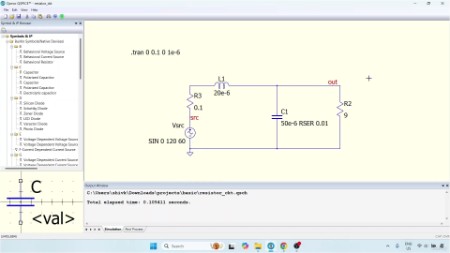
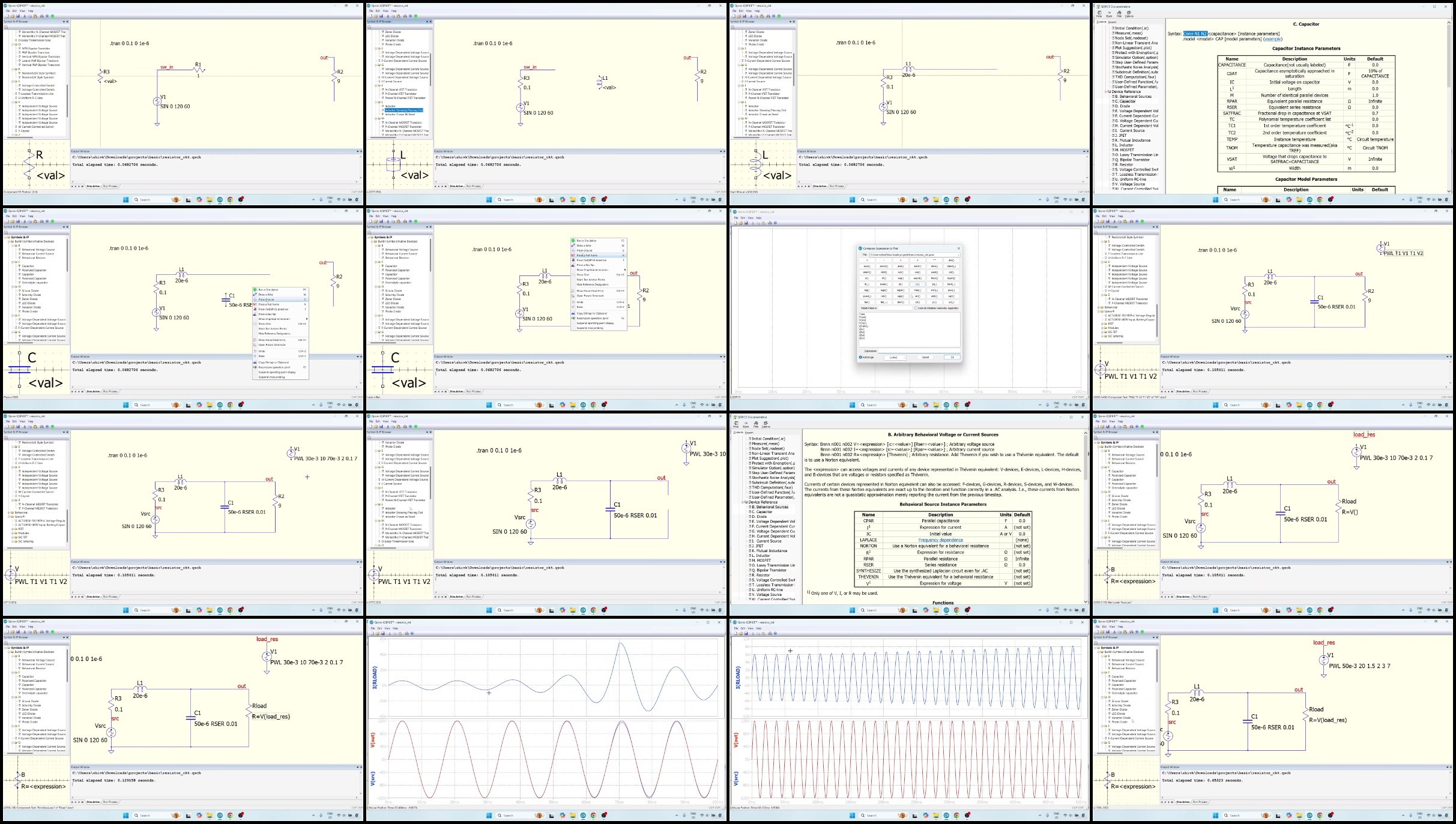
Simulating Dc-Dc Converters With Qspice
Published 10/2024
MP4 | Video: h264, 1920x1080 | Audio: AAC, 44.1 KHz
Language: English | Size: 5.35 GB | Duration: 10h 1m​

Learn the operation of basic non-isolated dc-dc converters through QSPICE simulations

What you'll learn

Operating principles of basic dc-dc converters

Non-isolated converters - buck, boost, buck-boost, Cuk, SEPIC, ZETA converters

Beginner QSPICE tutorial

Using QSPICE to simulate dc-dc converters

Analysis of simulation results to understand converter operation

Using 3rd party SPICE models in simulations

Requirements

Basic electrical engineering

Description

This course will describe how to simulate power electronic circuits with QSPICE. QSPICE is the latest trending SPICE software by Qorvo and is the successor to LTspice by Analog Devices. QSPICE is projected to be widely adopted by the power electronics and analog electronics industry. This course is targeted towards beginners who have never used a SPICE software before, and will use QSPICE to simulate basic dc-dc converters that any undergraduate will study in introductory course on power electronics. In addition to demonstrating the use of QSPICE as a simulation software, the course will examine a number of non-isolated dc-dc converters in great detail, such as the buck, boost, buck-boost, Ćuk, SEPIC and ZETA converters.The course will describe how QSPICE can be used to analyse the operation of a dc-dc converter, and therefore, can be used as both an effective learning tool for students, as well as a teaching tool for educators. The course will describe how QSPICE can be used to include hardware details in a simulation by importing third-party SPICE models provided by manufacturers, to bring simulations closer to a hardware prototype. The course will describe in detail the operation of the some of the more complex dc-dc converters such as the SEPIC and the ZETA converters, by using basic network laws and the basic principle of exchange of energy.QSPICE is a completely free simulation software based on SPICE which has been used for several decades. QSPICE features many exciting improvements over other SPICE software such as the ability to write control code using C++ or Verilog, and greater ability to simulate non-linear components. These features make QSPICE a very powerful tool for a power electronics engineer both in industry and academia.

Overview

Section 1: Introduction

Lecture 1 Welcome to the course

Lecture 2 Target students of the course

Lecture 3 Requirements of the course

Lecture 4 Tips on completing the course

Section 2: Installing and using QSPICE

Lecture 5 Introduction

Lecture 6 Background and history of SPICE

Lecture 7 Downloading and installing QSPICE

Lecture 8 A quick tour of QSPICE

Lecture 9 Links and references

Lecture 10 Starting with simulation - importance of ground and SPICE directives

Lecture 11 Generating plots

Lecture 12 Sine voltage source

Lecture 13 Pulse voltage source

Lecture 14 Piece-wise linear voltage source

Lecture 15 Correction on PWL voltage source parameters

Lecture 16 R-L-C circuit with behavioural resistor component

Lecture 17 Plot commands as SPICE directives

Lecture 18 Correction to simulation

Lecture 19 Conclusions

Section 3: Buck converter

Lecture 20 Introduction

Lecture 21 Converter topology

Lecture 22 Operation of the buck converter

Lecture 23 Drawing skeletal circuit in schematic editor

Lecture 24 Understanding parameters of the diode and the switch

Lecture 25 Running the simulation with switch and pulsed voltage waveform as gate pulses

Lecture 26 Analysing simulation results with switch and pulse gate voltage waveform

Lecture 27 Writing C++ code for implementing PWM logic

Lecture 28 Simulation results with the C++ PWM implementation

Lecture 29 Adding a MOSFET to the converter

Lecture 30 Running the simulation with the MOSFET

Lecture 31 Handling the Windows antivirus blocker

Lecture 32 Handling simulation transients due to initial conditions

Lecture 33 Ending remarks on the simulation

Lecture 34 Conclusions

Section 4: Boost converter

Lecture 35 Introduction

Lecture 36 Topology and operation of the boost converter

Lecture 37 Creating the boost converter simulation

Lecture 38 Analysing the simulation results of the boost converter

Lecture 39 The importance of handling initial conditions

Lecture 40 Conclusions

Section 5: Buck-boost converter

Lecture 41 Introduction

Lecture 42 Topology and working of the buck-boost converter

Lecture 43 Setting up the simulation of the buck-boost converter

Lecture 44 Analysing the simulation results of the buck-boost converter

Lecture 45 Handling initial conditions

Lecture 46 Conclusions

Section 6: Cuk converter

Lecture 47 Introduction

Lecture 48 Topology and operation of the converter

Lecture 49 Setting up the simulation of the Cuk converter

Lecture 50 Analysis of the simulation results

Lecture 51 Conclusions

Section 7: Single-Ended Primary Inductor Converter (SEPIC)

Lecture 52 Introduction

Lecture 53 Topology and operation of the SEPIC

Lecture 54 Setting up the SEPIC simulation

Lecture 55 Analysis of SEPIC simulation

Lecture 56 Conclusions

Section 8: ZETA converter

Lecture 57 Introduction

Lecture 58 Topology and operation of the ZETA converter

Lecture 59 Simulation of the ZETA converter

Lecture 60 Analysis of simulation results

Lecture 61 Conclusions

Section 9: Third-party models and hardware details

Lecture 62 Motivation for including hardware details

Lecture 63 Creating sub-circuits with hierarchical entries

Lecture 64 Choosing a gate driver for the MOSFET in the simulation

Lecture 65 Downloading and importing the gate driver SPICE model

Lecture 66 Making connections to gate driver SPICE model - part 1

Lecture 67 Making connections to gate driver SPICE model - part 2

Lecture 68 Correcting gate driver connections to prevent under-voltage lockout (UVLO)

Lecture 69 Conclusions

Section 10: Conclusions

Lecture 70 Conclusions

Electrical engineering students,Junior engineers in the power industry,Test/automation engineers

jBm5a1m3_o.jpg


4b100cb579076fbd868d3c2ea0172218.jpg

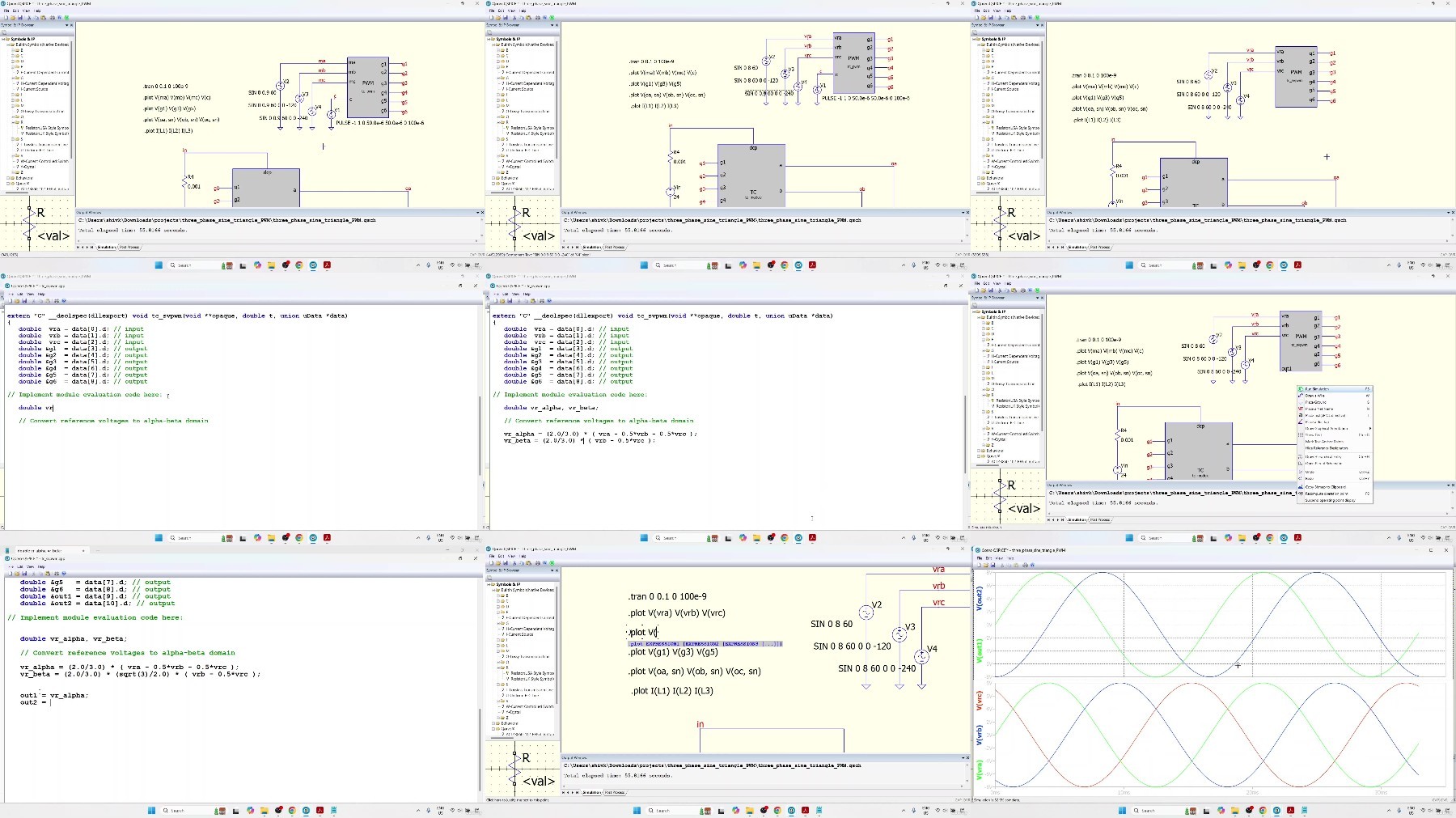
Simulating PWM Strategies For Power Converters With Qspice
Published 11/2024
MP4 | Video: h264, 1920x1080 | Audio: AAC, 44.1 KHz
Language: English | Size: 5.89 GB | Duration: 12h 54m​

Understanding the operation of power converter modules through simulation examples with QSPICE

What you'll learn
Concept of Pulse Width Modulation (PWM)
Simulation of a buck converter
Simulation of a modified buck-boost converter with discrete devices
Topology and operation of a half-bridge module
Simulation of bidirectional buck converter with a half bridge module
Simulation of a bidirectional buck-boost converter with two half-bridge modules
Simulation of a dc-ac converter with a half-bridge module
Topology and operation of a full-bridge module
Bipolar, unipolar and phase-shift PWM strategies
Topology and operation of a three-phase converter
Space vector PWM theory and procedure
Simulation of a three-phase converter with sine-triangle comparison PWM
Simulation of a three-phase converter with space vector PWM

Requirements
Simulating with QSPICE. Students are recommended to take my course "Simulating dc-dc converters with QSPICE".
Basic C programming
Basic electrical engineering and power electronics

Description
Effective implementation of Pulse Width Modulation (PWM) strategies is essential for simulating power electronic converters, particularly in the design of control systems and the analysis of system behavior. This course offers both theoretical insights and hands-on simulation experience in applying PWM strategies to commonly used power converter modules, including the half-bridge, full-bridge, and three-phase modules. Taking a unique approach that distinguishes it from typical power electronics courses, this course focuses on helping students gain a deep understanding of the capabilities and operation of power converter modules. Each power converter module and its corresponding PWM strategy is explored through detailed simulation studies in QSPICE, providing students with a strong foundation in both theory and practical application.The use of QSPICE in this course equips students with a powerful tool for simulating and analyzing the complex behavior of power electronic converters. Unlike traditional analytical methods, QSPICE enables high-fidelity simulations that capture the dynamic operation of circuits under realistic conditions, including switching transients and control loop interactions. By simulating power converters and PWM strategies with QSPICE, students will acquire a valuable skill highly sought after in the power electronics industry. Additionally, the ability to visualize waveforms in QSPICE helps students gain a clear understanding of converter operation, enhancing their ability to analyze performance and troubleshoot real-world power electronics applications. This course, along with future QSPICE-based courses, will prepare students to become simulation experts in emerging areas of power electronics.

cLXbODUd_o.jpg

 
Zurück
Oben Unten