

• Regeln für den Video-Bereich:

    In den Börsenbereich gehören nur Angebote die bereits den Allgemeinen Regeln entsprechen.

    Einteilung

    - Folgende Formate gehören in die angegeben Bereiche:
    - Filme: Encodierte Filme von BluRay, DVD, R5, TV, Screener sowie Telesyncs im Format DivX, XviD und x264.
    - DVD: Filme im Format DVD5, DVD9 und HD2DVD.
    - HD: Encodierte Filme mit der Auflösung 720p oder darüber von BluRay, DVD, R5, TV, Screener sowie Telesyncs im Format x264.
    - 3D: Encodierte Filme von BluRay, die in einem 3D Format vorliegen. Dies gilt auch für Dokus, Animation usw.
    - Serien: Cartoon/Zeichentrick, Anime, Tutorials, Dokumentationen, Konzerte/Musik, Sonstiges sind demnach in die entsprechenden Bereiche einzuordnen, auch wenn sie beispielsweise im High Definition-Format oder als DVD5/DVD9/HD2DVD vorliegen. Ausnahme 3D.
    - Bereich Englisch: Englische Releases gehören immer in diesen Bereich.
    - Bereich Talk: Der Bereich, in dem über die Releases diskutiert werden kann, darf, soll und erwünscht ist.


    Angebot/Beitrag erstellen

    - Ein Beitrag darf erst dann erstellt werden, wenn der Upload bei mindestens einem OCH komplett ist. Platzhalter sind untersagt.
    - Bei einem Scenerelease hat der Threadtitel ausschließlich aus dem originalen, unveränderten Releasenamen zu bestehen. Es dürfen keine Veränderungen wie z.B. Sterne, kleine Buchstaben o.ä. vorgenommen werden. Ausnahme Serienbörse:
    - Bei einem Sammelthread für eine Staffel entfällt aus dem Releasename natürlich der Name der Folge. Beispiel: Die Simpsons S21 German DVDRip XviD - ITG
    - Dementsprechend sind also u.a. verboten: Erweiterungen wie "Tipp", "empfehlenswert", "only", "reup", usw. / jegliche andere Zusatzinformation oder Ergänzung, welche nicht in obiger Beschreibung zu finden ist.

    Aufbau des Angebots und Threadtitel

    Der Titel nach folgendem Muster erstellt zu werden. <Name> [3D] [Staffel] [German] <Jahr> <Tonspur> [DL] [Auflösung] <Quelle> <Codec> - <Group>
    Beispiel: The Dark Knight German 2008 AC3 DVDRip XviD - iND
    Beispiel: The Dark Knight 2008 DTS DL BDRip x264 - iND
    Beispiel: The Dark Knight 2008 AC3 DL BDRip XviD - iND
    Beispiel: The Dark Knight German 2008 AC3 720p BluRay x264 iND
    Beispiel: The Dark Knight 2008 DTS DL 1080p BluRay x264 iND
    Beispiel: Die Simpsons S01 German AC3 DVDRip XviD iND
    Beispiel: Die Simpsons S20 German AC3 720p BluRay x264 iND
    Beispiel: Sword Art Online II Ger Sub 2014 AAC 1080p WEBRip x264 - peppermint
    Entsprechend sind also u.a. verboten: Sonderzeichen wie Klammern, Sterne, Ausrufezeichen, Unterstriche, Anführungszeichen / Erweiterungen wie "Tipp", "empfehlenswert", "only", "reup", usw. / jegliche andere Zusatzinformation oder Ergänzung, welche nicht in obiger Beschreibung zu finden ist
    Ausnahmen hiervon können in den Bereichen geregelt sein.

    Die Beiträge sollen wie folgt aufgebaut werden:
    Überschrift entspricht dem Threadtitel
    Cover
    kurze Inhaltsbeschreibung
    Format, Größe, Dauer sind gut lesbar für Downloader außerhalb des Spoilers zu vermerken
    Nfo sind immer Anzugeben und selbige immer im Spoiler in Textform.
    Sind keine Nfo vorhanden z.B. Eigenpublikationen, sind im Spoiler folgende Dateiinformationen zusätzlich anzugeben :
    Quelle
    Video (Auflösung und Bitrate)
    Ton (Sprache, Format und Bitrate der einzelnen Spuren)
    Untertitel (sofern vorhanden)
    Hosterangabe in Textform außerhalb eines Spoiler mit allen enthaltenen Hostern.
    Bei SD kann auf diese zusätzlichen Dateiinformationen verzichtet werden.

    Alle benötigten Passwörter sind, sofern vorhanden, in Textform im Angebot anzugeben.
    Spoiler im Spoiler mit Kommentaren :"Schon Bedankt?" sind unerwünscht.


    Releases

    - Sind Retail-Release verfügbar, sind alle anderen Variationen untersagt. Ausnahmen: Alle deutschen Retail-Release sind CUT, in diesem Fall sind dubbed UNCUT-Release zulässig.
    - Im Serien-Bereich gilt speziell: Wenn ein Retail vor Abschluss einer laufenden Staffel erscheint, darf diese Staffel noch zu Ende gebracht werden.62
    - Gleiche Releases sind unbedingt zusammenzufassen. Das bedeutet, es ist zwingend erforderlich, vor dem Erstellen eines Themas per Suchfunktion zu überprüfen, ob bereits ein Beitrag mit demselben Release besteht. Ist dies der Fall, ist der bereits vorhandene Beitrag zu verwenden.
    - P2P und Scene Releases dürfen nicht verändert oder gar unter einem iND Tag eingestellt werden.


    Support, Diskussionen und Suche

    - Supportanfragen sind entweder per PN oder im Bereich Talk zu stellen.
    - Diskussionen und Bewertungen sind im Talk Bereich zu führen. Fragen an die Uploader haben ausschließlich via PN zu erfolgen, und sind in den Angeboten untersagt.
    - Anfragen zu Upload-Wünschen sind nur im Bereich Suche Video erlaubt. Antworten dürfen nur auf Angebote von MyBoerse.bz verlinkt werden.


    Verbote

    - Untersagt sind mehrere Formate in einem einzigen Angebotsthread, wie beispielsweise das gleichzeitige Anbieten von DivX/XviD, 720p und 1080p in einem Thread. Pro Format, Release und Auflösung ist ein eigener Thread zu eröffnen.
    - Grundsätzlich ebenso verboten sind Dupes. Uploader haben sich an geeigneter Stelle darüber zu informieren, ob es sich bei einem Release um ein Dupe handelt.
    - Gefakte, nur teilweise lauffähige oder unvollständige Angebote sind untersagt. Dies gilt auch für eigene Publikationen, die augenscheinlich nicht selbst von z.B. einer DVD gerippt wurden. Laufende Serien, bei denen noch nicht alle Folgen verfügbar sind, dürfen erstellt und regelmäßig geupdatet werden.
    - Untersagt sind Angebote, welche nur und ausschließlich in einer anderen Sprache als deutsch oder englisch vorliegen. Ausnahmen sind VORHER mit den Moderatoren zu klären.


    Verstoß gegen die Regeln

    - Angebote oder Beiträge, die gegen die Forenregeln verstoßen, sind über den "Melden"-Button im Beitrag zu melden.
  • Bitte registriere dich zunächst um Beiträge zu verfassen und externe Links aufzurufen.

*** Bestes IPTV *** bester Preis *** gratis Test ***


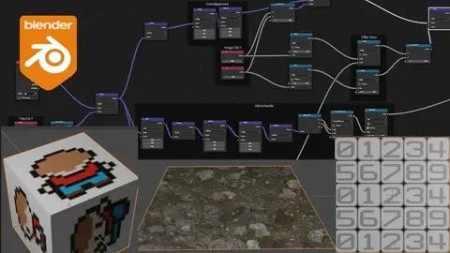
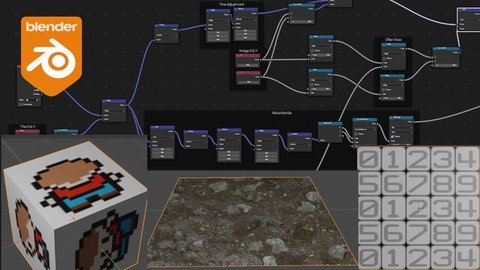
Shader Magic In Blender (Ver 3.41 And Above)

Tutorials

MyBoerse.bz Pro Member
56220dc701a9d8138aa79e3cd3802d8e.jpeg

Published 1/2023
MP4 | Video: h264, 1280x720 | Audio: AAC, 44.1 KHz
Language: English | Size: 7.80 GB | Duration: 14h 13m
More than just creating shapes! It's also about all the common techniques used in games!

What you'll learn
The most common shader techniques used in games and some Blende specific things.
How to work with the Blender Shader nodes
How to create procedural shapes from scratch in Blender
How Vector Math is working when creating Shaders.
Requirements
You should know how to handle basic tasks in Blender and have some knowledge of the Shader Editor.
Description
Are you one of those that think that nodes look scary when you see a big node tree...or perhaps you are just curious how the water in a game can flow so nicely around those rocks in the river and follow the stream perfectly?Regardless the reason, here is where you will learn more on how to connect those nodes!I will go through how to create shapes, how Vector math works (like cross and dot product, Face forward, snap,...) and all the common techniques used in games like vertex painting, flowmap, parallax mapping, using a texture atlas/sprite sheet, Sobel (Edge detection on textures), trimsheet and so on.I will also cover more "Blender specific"*stuff like finding the edges on models, how to create scratches and dirt, creating procedural patterns using the radial gradient among other things.You might wonder why in Blender and not in Unreal Engine or Unity? Well, why not?*Most things taught in the course can be used with only small adaptions in game engines as well. However, since we don't have all the whistles and extra stuff in Blender...you as a student are forced to learn the basics without cheating ;). I know from my own experience that it is a good path to walk if you really want to know how all things are put together.The teacher you will get, me, has more than 10 years of experience of Blender, is educated as Technical Artist in one of the highest ranked 3D schools in the World;*"The Game Assembly" and are currently working as a Technical Artist for the game "Midnight Ghost Hunt" in a Swedish Game Studio.NB!*You will however NOT*learn about how to create realistic and nice materials. Those topics I*cover in my course "Become a Material Guru in Blender". This course is Shader Magic.. not material magic :D.
Overview
Section 1: Introduction
Lecture 1 Introduction
Lecture 2 The Setting
Lecture 3 The resources!!
Section 2: The base to create shaders
Lecture 4 Texture Coordinate
Lecture 5 Basic Masking
Lecture 6 We create a tile!
Lecture 7 We transform one tile in to many tiles.
Lecture 8 Time to clean up the tile a bit.
Lecture 9 How you create a nodegroup
Lecture 10 Using the Vector math node "Length"
Lecture 11 Repetition of the base
Section 3: The Built in Textures in Blender
Lecture 12 Brick Texture
Lecture 13 Checker Texture
Lecture 14 Environment Texture
Lecture 15 Gradient Texture
Lecture 16 IES Texture
Lecture 17 Image Texture
Lecture 18 Magic Texture
Lecture 19 Musgrave Texture
Lecture 20 Noise Texture
Lecture 21 Voronoi Texture
Lecture 22 Wave Texture
Lecture 23 White Noise Texture
Lecture 24 Explaining the dimensions on textures
Section 4: Create Shapes from Math
Lecture 25 Visualize math with graphs
Lecture 26 Using the Compare Node to check the value of UV
Lecture 27 How to use X and Y more than once to increase amount of possible shapes.
Lecture 28 Introducing the node "Power"
Lecture 29 Making a "heart" with only math nodes
Lecture 30 Making the "spade" shape from cards by using the "heart" shape.
Lecture 31 Let's make the rest of the shapes from a deck of cards
Lecture 32 Shape things using Vector curves
Lecture 33 How to add a second border pattern on a floor
Lecture 34 Examples using Power node a bit more
Lecture 35 Blending Mortar and tiles together on the tiles we created in the base session
Lecture 36 Setting bounds or borders on your UV and merging UV Together
Section 5: Practice making shapes
Lecture 37 Create a smiley
Lecture 38 Create a red cross
Lecture 39 Create a cylinder shaped pill
Lecture 40 Copy a floor tile pattern (circle shapes)
Lecture 41 Copy a floor tile pattern again (handling gray scale)
Section 6: Common Techniques used in games
Lecture 42 Blend textures using a second texture
Lecture 43 Blend textures together using Vertex Color
Lecture 44 Introduction to Vector Math Normal and "Dot Product"
Lecture 45 Using Dot Product as Fresnel effect
Lecture 46 Using Dot Product together with Normal Maps
Lecture 47 How to use the "Cross Product"
Lecture 48 What is the vector node "Snap"?
Lecture 49 How to use "Face Forward"
Lecture 50 Using "Vector Rotate"
Lecture 51 Rotating our tiles
Lecture 52 Example on creating scratches
Lecture 53 How to find edges and add dirt
Lecture 54 Take a look at Vector Bump
Lecture 55 Using Trim sheets
Lecture 56 Using Sprite Sheets
Lecture 57 Using Flow maps
Lecture 58 Learning about Parallax mapping
Lecture 59 Randomizing tiles from an atlas
Lecture 60 Finding edges on a 2D Texture
Lecture 61 Introduction to using "Radial"
Lecture 62 Using "Radials" to create polygons
Lecture 63 Using UV to create simple VFX
Lecture 64 Creating Index to tiles on a UV
Lecture 65 A deeper example of tile math
Lecture 66 How to UV Offset to create things like wooden planks
This is for all that want to go deeper in to the techniques used by Technical Artists in games to create shaders.
Homepage

Recommend Download Link Hight Speed | Please Say Thanks Keep Topic Live
Links are Interchangeable - No Password - Single Extraction

 

549cc7de132dcfbffdc4ca1a0c169aca.jpg

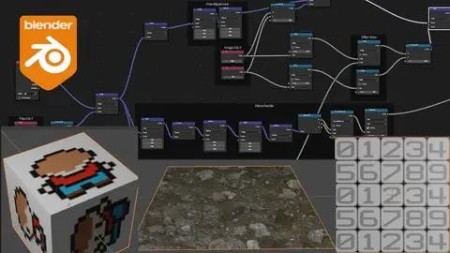
Shader Magic In Blender (Ver 3.41 And Above)
Published 1/2023
MP4 | Video: h264, 1280x720 | Audio: AAC, 44.1 KHz
Language: English | Size: 7.80 GB | Duration: 14h 13m​

More than just creating shapes! It's also about all the common techniques used in games!

What you'll learn

The most common shader techniques used in games and some Blende specific things.

How to work with the Blender Shader nodes

How to create procedural shapes from scratch in Blender

How Vector Math is working when creating Shaders.

Requirements

You should know how to handle basic tasks in Blender and have some knowledge of the Shader Editor.

Description

Are you one of those that think that nodes look scary when you see a big node tree.or perhaps you are just curious how the water in a game can flow so nicely around those rocks in the river and follow the stream perfectly?Regardless the reason, here is where you will learn more on how to connect those nodes!I will go through how to create shapes, how Vector math works (like cross and dot product, Face forward, snap,.) and all the common techniques used in games like vertex painting, flowmap, parallax mapping, using a texture atlas/sprite sheet, Sobel (Edge detection on textures), trimsheet and so on.I will also cover more "Blender specific" stuff like finding the edges on models, how to create scratches and dirt, creating procedural patterns using the radial gradient among other things.You might wonder why in Blender and not in Unreal Engine or Unity? Well, why not? Most things taught in the course can be used with only small adaptions in game engines as well. However, since we don't have all the whistles and extra stuff in Blender.you as a student are forced to learn the basics without cheating ;). I know from my own experience that it is a good path to walk if you really want to know how all things are put together.The teacher you will get, me, has more than 10 years of experience of Blender, is educated as Technical Artist in one of the highest ranked 3D schools in the World; "The Game Assembly" and are currently working as a Technical Artist for the game "Midnight Ghost Hunt" in a Swedish Game Studio.NB! You will however NOT learn about how to create realistic and nice materials. Those topics I cover in my course "Become a Material Guru in Blender". This course is Shader Magic.. not material magic :D.

Overview

Section 1: Introduction

Lecture 1 Introduction

Lecture 2 The Setting

Lecture 3 The resources!!

Section 2: The base to create shaders

Lecture 4 Texture Coordinate

Lecture 5 Basic Masking

Lecture 6 We create a tile!

Lecture 7 We transform one tile in to many tiles.

Lecture 8 Time to clean up the tile a bit.

Lecture 9 How you create a nodegroup

Lecture 10 Using the Vector math node "Length"

Lecture 11 Repetition of the base

Section 3: The Built in Textures in Blender

Lecture 12 Brick Texture

Lecture 13 Checker Texture

Lecture 14 Environment Texture

Lecture 15 Gradient Texture

Lecture 16 IES Texture

Lecture 17 Image Texture

Lecture 18 Magic Texture

Lecture 19 Musgrave Texture

Lecture 20 Noise Texture

Lecture 21 Voronoi Texture

Lecture 22 Wave Texture

Lecture 23 White Noise Texture

Lecture 24 Explaining the dimensions on textures

Section 4: Create Shapes from Math

Lecture 25 Visualize math with graphs

Lecture 26 Using the Compare Node to check the value of UV

Lecture 27 How to use X and Y more than once to increase amount of possible shapes.

Lecture 28 Introducing the node "Power"

Lecture 29 Making a "heart" with only math nodes

Lecture 30 Making the "spade" shape from cards by using the "heart" shape.

Lecture 31 Let's make the rest of the shapes from a deck of cards

Lecture 32 Shape things using Vector curves

Lecture 33 How to add a second border pattern on a floor

Lecture 34 Examples using Power node a bit more

Lecture 35 Blending Mortar and tiles together on the tiles we created in the base session

Lecture 36 Setting bounds or borders on your UV and merging UV Together

Section 5: Practice making shapes

Lecture 37 Create a smiley

Lecture 38 Create a red cross

Lecture 39 Create a cylinder shaped pill

Lecture 40 Copy a floor tile pattern (circle shapes)

Lecture 41 Copy a floor tile pattern again (handling gray scale)

Section 6: Common Techniques used in games

Lecture 42 Blend textures using a second texture

Lecture 43 Blend textures together using Vertex Color

Lecture 44 Introduction to Vector Math Normal and "Dot Product"

Lecture 45 Using Dot Product as Fresnel effect

Lecture 46 Using Dot Product together with Normal Maps

Lecture 47 How to use the "Cross Product"

Lecture 48 What is the vector node "Snap"?

Lecture 49 How to use "Face Forward"

Lecture 50 Using "Vector Rotate"

Lecture 51 Rotating our tiles

Lecture 52 Example on creating scratches

Lecture 53 How to find edges and add dirt

Lecture 54 Take a look at Vector Bump

Lecture 55 Using Trim sheets

Lecture 56 Using Sprite Sheets

Lecture 57 Using Flow maps

Lecture 58 Learning about Parallax mapping

Lecture 59 Randomizing tiles from an atlas

Lecture 60 Finding edges on a 2D Texture

Lecture 61 Introduction to using "Radial"

Lecture 62 Using "Radials" to create polygons

Lecture 63 Using UV to create simple VFX

Lecture 64 Creating Index to tiles on a UV

Lecture 65 A deeper example of tile math

Lecture 66 How to UV Offset to create things like wooden planks

This is for all that want to go deeper in to the techniques used by Technical Artists in games to create shaders.

uKnZjulr_o.jpg


ec21a3d9ab4b8fdd3ea45783dcc7590a.jpg

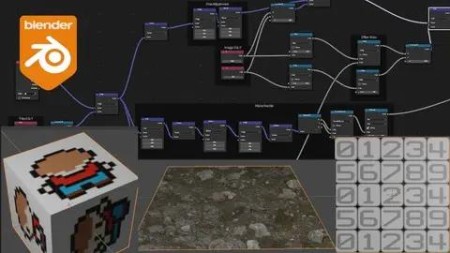
Shader Magic In Blender (Ver 3.41 And Above)
Published 1/2023
MP4 | Video: h264, 1280x720 | Audio: AAC, 44.1 KHz
Language: English | Size: 7.80 GB | Duration: 14h 13m​

More than just creating shapes! It's also about all the common techniques used in games!

What you'll learn

The most common shader techniques used in games and some Blende specific things.

How to work with the Blender Shader nodes

How to create procedural shapes from scratch in Blender

How Vector Math is working when creating Shaders.

Requirements

You should know how to handle basic tasks in Blender and have some knowledge of the Shader Editor.

Description

Are you one of those that think that nodes look scary when you see a big node tree.or perhaps you are just curious how the water in a game can flow so nicely around those rocks in the river and follow the stream perfectly?Regardless the reason, here is where you will learn more on how to connect those nodes!I will go through how to create shapes, how Vector math works (like cross and dot product, Face forward, snap,.) and all the common techniques used in games like vertex painting, flowmap, parallax mapping, using a texture atlas/sprite sheet, Sobel (Edge detection on textures), trimsheet and so on.I will also cover more "Blender specific" stuff like finding the edges on models, how to create scratches and dirt, creating procedural patterns using the radial gradient among other things.You might wonder why in Blender and not in Unreal Engine or Unity? Well, why not? Most things taught in the course can be used with only small adaptions in game engines as well. However, since we don't have all the whistles and extra stuff in Blender.you as a student are forced to learn the basics without cheating ;). I know from my own experience that it is a good path to walk if you really want to know how all things are put together.The teacher you will get, me, has more than 10 years of experience of Blender, is educated as Technical Artist in one of the highest ranked 3D schools in the World; "The Game Assembly" and are currently working as a Technical Artist for the game "Midnight Ghost Hunt" in a Swedish Game Studio.NB! You will however NOT learn about how to create realistic and nice materials. Those topics I cover in my course "Become a Material Guru in Blender". This course is Shader Magic.. not material magic :D.

Overview

Section 1: Introduction

Lecture 1 Introduction

Lecture 2 The Setting

Lecture 3 The resources!!

Section 2: The base to create shaders

Lecture 4 Texture Coordinate

Lecture 5 Basic Masking

Lecture 6 We create a tile!

Lecture 7 We transform one tile in to many tiles.

Lecture 8 Time to clean up the tile a bit.

Lecture 9 How you create a nodegroup

Lecture 10 Using the Vector math node "Length"

Lecture 11 Repetition of the base

Section 3: The Built in Textures in Blender

Lecture 12 Brick Texture

Lecture 13 Checker Texture

Lecture 14 Environment Texture

Lecture 15 Gradient Texture

Lecture 16 IES Texture

Lecture 17 Image Texture

Lecture 18 Magic Texture

Lecture 19 Musgrave Texture

Lecture 20 Noise Texture

Lecture 21 Voronoi Texture

Lecture 22 Wave Texture

Lecture 23 White Noise Texture

Lecture 24 Explaining the dimensions on textures

Section 4: Create Shapes from Math

Lecture 25 Visualize math with graphs

Lecture 26 Using the Compare Node to check the value of UV

Lecture 27 How to use X and Y more than once to increase amount of possible shapes.

Lecture 28 Introducing the node "Power"

Lecture 29 Making a "heart" with only math nodes

Lecture 30 Making the "spade" shape from cards by using the "heart" shape.

Lecture 31 Let's make the rest of the shapes from a deck of cards

Lecture 32 Shape things using Vector curves

Lecture 33 How to add a second border pattern on a floor

Lecture 34 Examples using Power node a bit more

Lecture 35 Blending Mortar and tiles together on the tiles we created in the base session

Lecture 36 Setting bounds or borders on your UV and merging UV Together

Section 5: Practice making shapes

Lecture 37 Create a smiley

Lecture 38 Create a red cross

Lecture 39 Create a cylinder shaped pill

Lecture 40 Copy a floor tile pattern (circle shapes)

Lecture 41 Copy a floor tile pattern again (handling gray scale)

Section 6: Common Techniques used in games

Lecture 42 Blend textures using a second texture

Lecture 43 Blend textures together using Vertex Color

Lecture 44 Introduction to Vector Math Normal and "Dot Product"

Lecture 45 Using Dot Product as Fresnel effect

Lecture 46 Using Dot Product together with Normal Maps

Lecture 47 How to use the "Cross Product"

Lecture 48 What is the vector node "Snap"?

Lecture 49 How to use "Face Forward"

Lecture 50 Using "Vector Rotate"

Lecture 51 Rotating our tiles

Lecture 52 Example on creating scratches

Lecture 53 How to find edges and add dirt

Lecture 54 Take a look at Vector Bump

Lecture 55 Using Trim sheets

Lecture 56 Using Sprite Sheets

Lecture 57 Using Flow maps

Lecture 58 Learning about Parallax mapping

Lecture 59 Randomizing tiles from an atlas

Lecture 60 Finding edges on a 2D Texture

Lecture 61 Introduction to using "Radial"

Lecture 62 Using "Radials" to create polygons

Lecture 63 Using UV to create simple VFX

Lecture 64 Creating Index to tiles on a UV

Lecture 65 A deeper example of tile math

Lecture 66 How to UV Offset to create things like wooden planks

This is for all that want to go deeper in to the techniques used by Technical Artists in games to create shaders.

hI9l1Z3h_o.jpg


fa9a30b6e794ec5456c861a7a47a7ba7.jpg

Shader Magic In Blender (Ver 3.41 And Above)
Published 1/2023
MP4 | Video: h264, 1280x720 | Audio: AAC, 44.1 KHz
Language: English | Size: 7.80 GB | Duration: 14h 13m​

More than just creating shapes! It's also about all the common techniques used in games!

What you'll learn

The most common shader techniques used in games and some Blende specific things.

How to work with the Blender Shader nodes

How to create procedural shapes from scratch in Blender

How Vector Math is working when creating Shaders.

Requirements

You should know how to handle basic tasks in Blender and have some knowledge of the Shader Editor.

Description

Are you one of those that think that nodes look scary when you see a big node tree.or perhaps you are just curious how the water in a game can flow so nicely around those rocks in the river and follow the stream perfectly?Regardless the reason, here is where you will learn more on how to connect those nodes!I will go through how to create shapes, how Vector math works (like cross and dot product, Face forward, snap,.) and all the common techniques used in games like vertex painting, flowmap, parallax mapping, using a texture atlas/sprite sheet, Sobel (Edge detection on textures), trimsheet and so on.I will also cover more "Blender specific" stuff like finding the edges on models, how to create scratches and dirt, creating procedural patterns using the radial gradient among other things.You might wonder why in Blender and not in Unreal Engine or Unity? Well, why not? Most things taught in the course can be used with only small adaptions in game engines as well. However, since we don't have all the whistles and extra stuff in Blender.you as a student are forced to learn the basics without cheating ;). I know from my own experience that it is a good path to walk if you really want to know how all things are put together.The teacher you will get, me, has more than 10 years of experience of Blender, is educated as Technical Artist in one of the highest ranked 3D schools in the World; "The Game Assembly" and are currently working as a Technical Artist for the game "Midnight Ghost Hunt" in a Swedish Game Studio.NB! You will however NOT learn about how to create realistic and nice materials. Those topics I cover in my course "Become a Material Guru in Blender". This course is Shader Magic.. not material magic :D.

Overview

Section 1: Introduction

Lecture 1 Introduction

Lecture 2 The Setting

Lecture 3 The resources!!

Section 2: The base to create shaders

Lecture 4 Texture Coordinate

Lecture 5 Basic Masking

Lecture 6 We create a tile!

Lecture 7 We transform one tile in to many tiles.

Lecture 8 Time to clean up the tile a bit.

Lecture 9 How you create a nodegroup

Lecture 10 Using the Vector math node "Length"

Lecture 11 Repetition of the base

Section 3: The Built in Textures in Blender

Lecture 12 Brick Texture

Lecture 13 Checker Texture

Lecture 14 Environment Texture

Lecture 15 Gradient Texture

Lecture 16 IES Texture

Lecture 17 Image Texture

Lecture 18 Magic Texture

Lecture 19 Musgrave Texture

Lecture 20 Noise Texture

Lecture 21 Voronoi Texture

Lecture 22 Wave Texture

Lecture 23 White Noise Texture

Lecture 24 Explaining the dimensions on textures

Section 4: Create Shapes from Math

Lecture 25 Visualize math with graphs

Lecture 26 Using the Compare Node to check the value of UV

Lecture 27 How to use X and Y more than once to increase amount of possible shapes.

Lecture 28 Introducing the node "Power"

Lecture 29 Making a "heart" with only math nodes

Lecture 30 Making the "spade" shape from cards by using the "heart" shape.

Lecture 31 Let's make the rest of the shapes from a deck of cards

Lecture 32 Shape things using Vector curves

Lecture 33 How to add a second border pattern on a floor

Lecture 34 Examples using Power node a bit more

Lecture 35 Blending Mortar and tiles together on the tiles we created in the base session

Lecture 36 Setting bounds or borders on your UV and merging UV Together

Section 5: Practice making shapes

Lecture 37 Create a smiley

Lecture 38 Create a red cross

Lecture 39 Create a cylinder shaped pill

Lecture 40 Copy a floor tile pattern (circle shapes)

Lecture 41 Copy a floor tile pattern again (handling gray scale)

Section 6: Common Techniques used in games

Lecture 42 Blend textures using a second texture

Lecture 43 Blend textures together using Vertex Color

Lecture 44 Introduction to Vector Math Normal and "Dot Product"

Lecture 45 Using Dot Product as Fresnel effect

Lecture 46 Using Dot Product together with Normal Maps

Lecture 47 How to use the "Cross Product"

Lecture 48 What is the vector node "Snap"?

Lecture 49 How to use "Face Forward"

Lecture 50 Using "Vector Rotate"

Lecture 51 Rotating our tiles

Lecture 52 Example on creating scratches

Lecture 53 How to find edges and add dirt

Lecture 54 Take a look at Vector Bump

Lecture 55 Using Trim sheets

Lecture 56 Using Sprite Sheets

Lecture 57 Using Flow maps

Lecture 58 Learning about Parallax mapping

Lecture 59 Randomizing tiles from an atlas

Lecture 60 Finding edges on a 2D Texture

Lecture 61 Introduction to using "Radial"

Lecture 62 Using "Radials" to create polygons

Lecture 63 Using UV to create simple VFX

Lecture 64 Creating Index to tiles on a UV

Lecture 65 A deeper example of tile math

Lecture 66 How to UV Offset to create things like wooden planks

This is for all that want to go deeper in to the techniques used by Technical Artists in games to create shaders.

MsJuAkqM_o.jpg

 
Zurück
Oben Unten