• Regeln für den Video-Bereich:

    In den Börsenbereich gehören nur Angebote die bereits den Allgemeinen Regeln entsprechen.

    Einteilung

    - Folgende Formate gehören in die angegeben Bereiche:
    - Filme: Encodierte Filme von BluRay, DVD, R5, TV, Screener sowie Telesyncs im Format DivX, XviD und x264.
    - DVD: Filme im Format DVD5, DVD9 und HD2DVD.
    - HD: Encodierte Filme mit der Auflösung 720p oder darüber von BluRay, DVD, R5, TV, Screener sowie Telesyncs im Format x264.
    - 3D: Encodierte Filme von BluRay, die in einem 3D Format vorliegen. Dies gilt auch für Dokus, Animation usw.
    - Serien: Cartoon/Zeichentrick, Anime, Tutorials, Dokumentationen, Konzerte/Musik, Sonstiges sind demnach in die entsprechenden Bereiche einzuordnen, auch wenn sie beispielsweise im High Definition-Format oder als DVD5/DVD9/HD2DVD vorliegen. Ausnahme 3D.
    - Bereich Englisch: Englische Releases gehören immer in diesen Bereich.
    - Bereich Talk: Der Bereich, in dem über die Releases diskutiert werden kann, darf, soll und erwünscht ist.


    Angebot/Beitrag erstellen

    - Ein Beitrag darf erst dann erstellt werden, wenn der Upload bei mindestens einem OCH komplett ist. Platzhalter sind untersagt.
    - Bei einem Scenerelease hat der Threadtitel ausschließlich aus dem originalen, unveränderten Releasenamen zu bestehen. Es dürfen keine Veränderungen wie z.B. Sterne, kleine Buchstaben o.ä. vorgenommen werden. Ausnahme Serienbörse:
    - Bei einem Sammelthread für eine Staffel entfällt aus dem Releasename natürlich der Name der Folge. Beispiel: Die Simpsons S21 German DVDRip XviD - ITG
    - Dementsprechend sind also u.a. verboten: Erweiterungen wie "Tipp", "empfehlenswert", "only", "reup", usw. / jegliche andere Zusatzinformation oder Ergänzung, welche nicht in obiger Beschreibung zu finden ist.

    Aufbau des Angebots und Threadtitel

    Der Titel nach folgendem Muster erstellt zu werden. <Name> [3D] [Staffel] [German] <Jahr> <Tonspur> [DL] [Auflösung] <Quelle> <Codec> - <Group>
    Beispiel: The Dark Knight German 2008 AC3 DVDRip XviD - iND
    Beispiel: The Dark Knight 2008 DTS DL BDRip x264 - iND
    Beispiel: The Dark Knight 2008 AC3 DL BDRip XviD - iND
    Beispiel: The Dark Knight German 2008 AC3 720p BluRay x264 iND
    Beispiel: The Dark Knight 2008 DTS DL 1080p BluRay x264 iND
    Beispiel: Die Simpsons S01 German AC3 DVDRip XviD iND
    Beispiel: Die Simpsons S20 German AC3 720p BluRay x264 iND
    Beispiel: Sword Art Online II Ger Sub 2014 AAC 1080p WEBRip x264 - peppermint
    Entsprechend sind also u.a. verboten: Sonderzeichen wie Klammern, Sterne, Ausrufezeichen, Unterstriche, Anführungszeichen / Erweiterungen wie "Tipp", "empfehlenswert", "only", "reup", usw. / jegliche andere Zusatzinformation oder Ergänzung, welche nicht in obiger Beschreibung zu finden ist
    Ausnahmen hiervon können in den Bereichen geregelt sein.

    Die Beiträge sollen wie folgt aufgebaut werden:
    Überschrift entspricht dem Threadtitel
    Cover
    kurze Inhaltsbeschreibung
    Format, Größe, Dauer sind gut lesbar für Downloader außerhalb des Spoilers zu vermerken
    Nfo sind immer Anzugeben und selbige immer im Spoiler in Textform.
    Sind keine Nfo vorhanden z.B. Eigenpublikationen, sind im Spoiler folgende Dateiinformationen zusätzlich anzugeben :
    Quelle
    Video (Auflösung und Bitrate)
    Ton (Sprache, Format und Bitrate der einzelnen Spuren)
    Untertitel (sofern vorhanden)
    Hosterangabe in Textform außerhalb eines Spoiler mit allen enthaltenen Hostern.
    Bei SD kann auf diese zusätzlichen Dateiinformationen verzichtet werden.

    Alle benötigten Passwörter sind, sofern vorhanden, in Textform im Angebot anzugeben.
    Spoiler im Spoiler mit Kommentaren :"Schon Bedankt?" sind unerwünscht.


    Releases

    - Sind Retail-Release verfügbar, sind alle anderen Variationen untersagt. Ausnahmen: Alle deutschen Retail-Release sind CUT, in diesem Fall sind dubbed UNCUT-Release zulässig.
    - Im Serien-Bereich gilt speziell: Wenn ein Retail vor Abschluss einer laufenden Staffel erscheint, darf diese Staffel noch zu Ende gebracht werden.62
    - Gleiche Releases sind unbedingt zusammenzufassen. Das bedeutet, es ist zwingend erforderlich, vor dem Erstellen eines Themas per Suchfunktion zu überprüfen, ob bereits ein Beitrag mit demselben Release besteht. Ist dies der Fall, ist der bereits vorhandene Beitrag zu verwenden.
    - P2P und Scene Releases dürfen nicht verändert oder gar unter einem iND Tag eingestellt werden.


    Support, Diskussionen und Suche

    - Supportanfragen sind entweder per PN oder im Bereich Talk zu stellen.
    - Diskussionen und Bewertungen sind im Talk Bereich zu führen. Fragen an die Uploader haben ausschließlich via PN zu erfolgen, und sind in den Angeboten untersagt.
    - Anfragen zu Upload-Wünschen sind nur im Bereich Suche Video erlaubt. Antworten dürfen nur auf Angebote von MyBoerse.bz verlinkt werden.


    Verbote

    - Untersagt sind mehrere Formate in einem einzigen Angebotsthread, wie beispielsweise das gleichzeitige Anbieten von DivX/XviD, 720p und 1080p in einem Thread. Pro Format, Release und Auflösung ist ein eigener Thread zu eröffnen.
    - Grundsätzlich ebenso verboten sind Dupes. Uploader haben sich an geeigneter Stelle darüber zu informieren, ob es sich bei einem Release um ein Dupe handelt.
    - Gefakte, nur teilweise lauffähige oder unvollständige Angebote sind untersagt. Dies gilt auch für eigene Publikationen, die augenscheinlich nicht selbst von z.B. einer DVD gerippt wurden. Laufende Serien, bei denen noch nicht alle Folgen verfügbar sind, dürfen erstellt und regelmäßig geupdatet werden.
    - Untersagt sind Angebote, welche nur und ausschließlich in einer anderen Sprache als deutsch oder englisch vorliegen. Ausnahmen sind VORHER mit den Moderatoren zu klären.


    Verstoß gegen die Regeln

    - Angebote oder Beiträge, die gegen die Forenregeln verstoßen, sind über den "Melden"-Button im Beitrag zu melden.
  • Bitte registriere dich zunächst um Beiträge zu verfassen und externe Links aufzurufen.

++ Premium IPTV ++ 7000 Live Sender ++ UHD Qualität ++ Mediathek mit 18.000 Inhalten ++


VenneTV


Reverse Engineering and Malware Analysis from Scratch

babymore87

MyBoerse.bz Pro Member
b77fcc97a2c78c7241303f8ca1bebb20.webp

Free Download Reverse Engineering and Malware Analysis from Scratch
Published 8/2026
Created by Danish Qadri PhD
MP4 | Video: h264, 1920x1080 | Audio: AAC, 44.1 KHz, 2 Ch
Level: All Levels | Genre: eLearning | Language: English | Duration: 44 Lectures ( 3h 46m ) | Size: 1.2 GB

Master Static & Dynamic Malware Analysis, PE Files, IDA Pro, WinDbg, ISA, Assembly Language & Windows Internals
What you'll learn
⚡ The Reverse Engineering Process
⚡ Learn Malware Analysis Methodology
⚡ Learn the x86/x64 assembly language
⚡ Static & Dynamic Malware Analysis
⚡ Learn CPU Architecture Fundamentals
⚡ Understand Registers And Memory
⚡ Explore Virtual Memory Concepts
⚡ Understand Machine Code Basics
⚡ Network Analysis
⚡ Understand Instruction Set Architecture
⚡ Identify Opcodes Mnemonics Operands
⚡ Perform Bitwise Operations Effectively
⚡ Understand Endianness And Data
⚡ Analyze Native Windows Code
⚡ Explore Portable Executable Format
⚡ Analyze Windows PE Files
⚡ Analyze API Calls Effectively
⚡ Use IDA Pro Effectively
⚡ Analyze Binary Code Structures
⚡ Use Hexadecimal Analysis Tools
⚡ Debugger Fundamentals And Commands
⚡ Use WinDbg For Debugging
⚡ Perform Dynamic Program Analysis
⚡ Trace Strings And APIs
⚡ Much more...
Requirements
❗ Basic understanding of computers and Windows operating systems
Description
Reverse Engineering and Malware Analysis from Scratch
Master Static & Dynamic Malware Analysis, PE Files, IDA Pro, WinDbg, APIs, Assembly Language & Windows Internals
Learn the foundations ofreverse engineering, malware analysis, and native Windows program analysis from the ground up. This practical course takes you from CPU architecture, registers, memory, and assembly language to analyzing real executable files and tracing program behavior with professional reverse-engineering tools.
You will learnhow programs work at the machine-code level, how Windows executables are structured, how analysts examine suspicious binaries, and how static and dynamic analysis techniques can be combined to understand program behavior.
The course begins with the fundamentals of CPU architecture and assembly language-the core knowledge required to understand native code. You will explore registers, virtual memory, machine code, instruction sets, mnemonics, operands, opcodes, bitwise operations, endianness, and program segments.
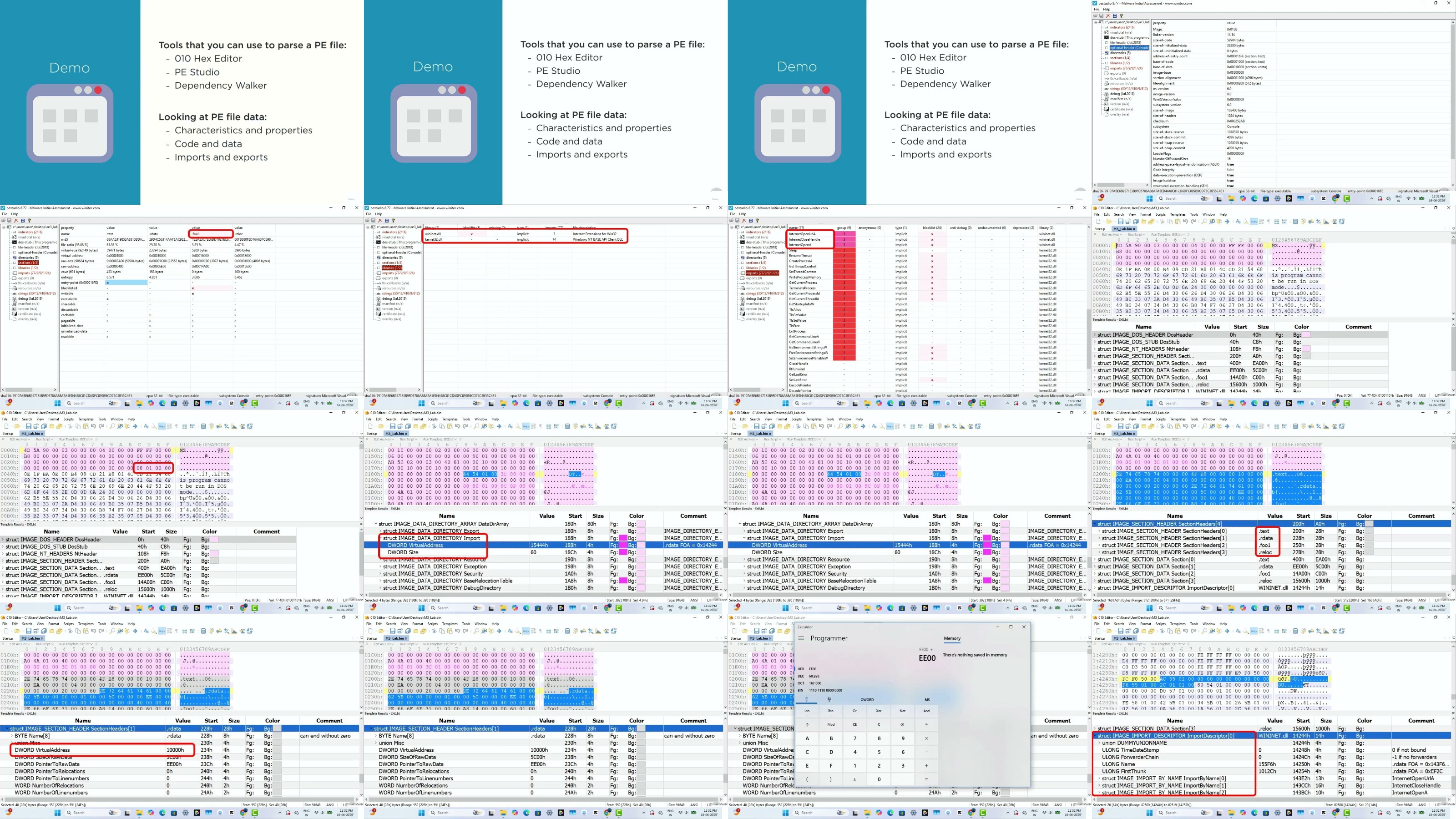
You will then move intoWindows native code and the Portable Executable (PE) format, learning how Windows executables are structured and how analysts can inspect and parse their contents. Practical demonstrations and labs will help you apply these concepts rather than simply learning theory.
The course also introduces theWindows API and shows how APIs, strings, and program behavior can provide valuable clues during reverse engineering and malware analysis.
For static analysis, you will work with tools such asIDA Pro, hexadecimal editors, and binary/PE analysis tools. You will learn how to examine executable code, identify important structures, follow program logic, and understand what a binary is doing without executing it.
For dynamic analysis, you will learn how to usedebuggers and WinDbg to observe programs while they are running. You will explore debugger commands, tracing techniques, breakpoints, registers, memory, and instruction-level execution to understand the actual behavior of native applications.
The course also covers practical assembly concepts includingfunctions, stack frames, calling conventions, conditionals, control structures, arrays, and program flow. These concepts are essential for understanding disassembled code and reconstructing the logic of compiled applications.
You will learn strategies fortracing program behavior, leveraging strings and Windows APIs, identifying interesting code paths, and combining static and dynamic analysis techniques to build a clearer picture of a program.
What You Will Learn
✨ Understand the completereverse-engineering process
✨ Understand CPU architecture, registers, memory, and machine code
✨ Learn the fundamentals ofx86/x64 assembly language
✨ Understand ISA, mnemonics, operands, opcodes, and instruction execution
✨ Work with bitwise operations, data sizes, and endianness
✨ Understand native Windows code and program segments
✨ Explore thePortable Executable (PE) file format
✨ Learn how Windows executables are structured
✨ Understand and analyze Windows APIs
✨ Parse and inspect PE files
✨ Perform practicalstatic analysis
✨ UseIDA Pro to examine native binaries
✨ Work with hexadecimal and binary analysis tools
✨ Understand disassembly and program flow
✨ UseWinDbg for dynamic analysis and debugging
✨ Learn essential debugger commands
✨ Trace program execution and behavior
✨ Understand functions, stack frames, and calling conventions
✨ Analyze conditionals, loops, arrays, and control structures
✨ Use strings and APIs as clues during analysis
✨ Combine static and dynamic analysis techniques
✨ Develop the mindset and methodology needed for reverse engineering and malware analysis
A Practical Journey from Machine Code to Malware Analysis
Rather than treating reverse engineering as a collection of tools and commands, this course focuses on understandingwhat is happening underneath the tools.
You will first understand the architecture and instructions that make native programs work. Then you will learn how those instructions are stored inside Windows executable files, how reverse-engineering tools expose that information, and finally how to observe the program dynamically using a debugger.
By connectingAssembly → CPU Architecture → PE Files → Static Analysis → Windows APIs → Debugging → Dynamic Analysis, you will develop a strong foundation for analyzing native Windows applications and suspicious binaries.
No previous professional reverse-engineering experience is required. The course builds the essential concepts progressively and combines theory with demonstrations and practical labs.
By the end of the course, you will have a solid foundation inassembly language, CPU architecture, Windows internals, PE files, static analysis, dynamic analysis, IDA Pro, WinDbg, APIs, and practical reverse-engineering methodology-the core skills needed to continue toward advanced reverse engineering and malware analysis.
Who this course is for
⭐ Beginners who want to enter reverse engineering
⭐ Cybersecurity students and professionals
⭐ Security researchers
⭐ Developers who want to understand compiled Windows programs
⭐ Penetration testers and incident-response professionals
⭐ Students interested in assembly language and Windows internals
⭐ Anyone who wants to understand how native Windows software works internally
Homepage
Recommend Download Link Hight Speed | Please Say Thanks Keep Topic Live
No Password - Links are Interchangeable

 

764538009_yxusj-09z6vtuc3q43.jpg

Reverse Engineering & Malware Analysis
MP4 | Video: h264, 1920x1080 | Audio: AAC, 44.1 KHz, 2 Ch
Genre: eLearning | Language: English (US) | Duration: 4 h | Size: 1.20 GB​

Reverse Engineering and Malware Analysis from Scratch
Master Static & Dynamic Malware Analysis, PE Files, IDA Pro, WinDbg, APIs, Assembly Language & Windows Internals
Learn the foundations of
reverse engineering, malware analysis, and native Windows program analysis
from the ground up. This practical course takes you from CPU architecture, registers, memory, and assembly language to analyzing real executable files and tracing program behavior with professional reverse-engineering tools.
You will learn
how programs work at the machine-code level, how Windows executables are structured, how analysts examine suspicious binaries, and how static and dynamic analysis techniques can be combined to understand program behavior
.
The course begins with the fundamentals of CPU architecture and assembly language-the core knowledge required to understand native code. You will explore registers, virtual memory, machine code, instruction sets, mnemonics, operands, opcodes, bitwise operations, endianness, and program segments.
You will then move into
Windows native code and the Portable Executable (PE) format
, learning how Windows executables are structured and how analysts can inspect and parse their contents. Practical demonstrations and labs will help you apply these concepts rather than simply learning theory.
The course also introduces the
Windows API
and shows how APIs, strings, and program behavior can provide valuable clues during reverse engineering and malware analysis.
For static analysis, you will work with tools such as
IDA Pro, hexadecimal editors, and binary/PE analysis tools
. You will learn how to examine executable code, identify important structures, follow program logic, and understand what a binary is doing without executing it.
For dynamic analysis, you will learn how to use
debuggers and WinDbg
to observe programs while they are running. You will explore debugger commands, tracing techniques, breakpoints, registers, memory, and instruction-level execution to understand the actual behavior of native applications.
The course also covers practical assembly concepts including
functions, stack frames, calling conventions, conditionals, control structures, arrays, and program flow
. These concepts are essential for understanding disassembled code and reconstructing the logic of compiled applications.
You will learn strategies for
tracing program behavior, leveraging strings and Windows APIs, identifying interesting code paths, and combining static and dynamic analysis techniques
to build a clearer picture of a program.
What You Will Learn

Understand the complete
reverse-engineering process

Understand CPU architecture, registers, memory, and machine code

Learn the fundamentals of
x86/x64 assembly language

Understand ISA, mnemonics, operands, opcodes, and instruction execution

Work with bitwise operations, data sizes, and endianness

Understand native Windows code and program segments

Explore the
Portable Executable (PE) file format

Learn how Windows executables are structured

Understand and analyze Windows APIs

Parse and inspect PE files

Perform practical
static analysis

Use
IDA Pro
to examine native binaries

Work with hexadecimal and binary analysis tools

Understand disassembly and program flow

Use
WinDbg
for dynamic analysis and debugging

Learn essential debugger commands

Trace program execution and behavior

Understand functions, stack frames, and calling conventions

Analyze conditionals, loops, arrays, and control structures

Use strings and APIs as clues during analysis

Combine static and dynamic analysis techniques

Develop the mindset and methodology needed for reverse engineering and malware analysis
A Practical Journey from Machine Code to Malware Analysis
Rather than treating reverse engineering as a collection of tools and commands, this course focuses on understanding
what is happening underneath the tools
.
You will first understand the architecture and instructions that make native programs work. Then you will learn how those instructions are stored inside Windows executable files, how reverse-engineering tools expose that information, and finally how to observe the program dynamically using a debugger.
By connecting
Assembly → CPU Architecture → PE Files → Static Analysis → Windows APIs → Debugging → Dynamic Analysis
, you will develop a strong foundation for analyzing native Windows applications and suspicious binaries.

No previous professional reverse-engineering experience is required.
The course builds the essential concepts progressively and combines theory with demonstrations and practical labs.
By the end of the course, you will have a solid foundation in
assembly language, CPU architecture, Windows internals, PE files, static analysis, dynamic analysis, IDA Pro, WinDbg, APIs, and practical reverse-engineering methodology
-the core skills needed to continue toward advanced reverse engineering and malware analysis.


yxusj-15-Lab-Analyzing-PE-Files.jpg

764538121_yxusj-80950wmos9ri.jpg

 
Zurück
Oben Unten