



• Regeln für den Dokumente-Bereich:

    In den Börsenbereich gehören nur Angebote die bereits den Allgemeinen Regeln entsprechen.

    Allgemeines:

    Nicht erlaubt im Dokumente-Bereich sind:

    - indizierte Titel (inkl. Comics)
    - extremistische Werke, Zeitschriften und Comics (egal, welche Richtung)
    - jegliche Art von Pornographie
    - Anleitungen zu kriminellen Handlungen, gleich welcher Art
    - sadistische, menschenverachtende oder ähnliche Werke

    Nutzt den "Bedanken"-Button, bei Sammelthreads führen jegliche Kommentare, positiv wie negativ, sehr schnell zu einer Unübersichtlichkeit des Threads. Downmeldungen sind an den Uploader zu richten

    Vor dem Einstellen zu beachten:

    - Suchfunktion

    Vergewissert euch, dass es euer Dokument noch nicht im Board gibt, Doppelposts werden kommentarlos gelöscht. Ist es schon vorhanden, tragt es als Mirror im bestehenden Post ein.

    - Threadtitel

    Idealerweise ist sofort zu erkennen um was es sich handelt. Verseht euren Titel mit den relevanten Informationen, das hilft euch und damit auch uns und allen Suchenden erheblich weiter.

    Beispiel: [Thriller] Dan Brown - Inferno oder bei Magazinen:

    Computerbild - 14/2014 (es muss ersichtlich sein, um welche Ausgabe und welches Magazin es sich handelt)

    Folgende Präfixe stehen im Unterforum "Unterhaltung" zur Verfügung:

    [Humor]
    [Drama]
    [Erotik]
    [Fantasy]
    [Krimi]
    [Roman]
    [Thriller]
    [Horror]
    [Science Fiction]

    Inhalt des Beitrags:

    Folgende Pflichtangaben gilt es einzuhalten:

    - Autor
    - Titel
    - Präfix
    - Cover
    - Genre
    - Inhaltsbeschreibung
    - enthaltene Formate
    - Gesamtgröße des Downloads
    - Hoster
    - ggf. Passwort

    Nicht erlaubt sind alle Dateien, die den Download unnötig aufblähen um eine Affiliategrenze zu erreichen, wie zB. mp3-files, übergroße Bilder, etc.

    Ebenso nicht erlaubt sind sämtliche Dateien mit DRM, persönlichen Daten, etc., diese werden kommentarlos zu eurem eigenem Schutz gelöscht.

    Achtet bitte bei der Konvertierung der Formate auf die Lesbarkeit, ein epub, was nur einfach durch Calibre gejagt wird um ein PDF zu erhalten, ist zu 99% eben nicht lesbar. Wenn ihr es nicht könnt, dann lasst es besser oder lest euch ein, wie man es richtig macht.


    Unterforum Comics:

    Threadtitel:

    Ähnlich, wie bei Unterhaltung und Magazinen, sollte der Titel alle relevanten Informationen enthalten, hier bitte

    - den Titel des Comics
    - den Verlag (einige Comics sind in verschiedenen Verlagen erschienen)
    - das Erscheinungsjahr

    Erlaubt sind folgende Formate:

    - CBR
    - CBZ

    Grundsätzlich gilt: jede Version eines Comics erhält einen eigenen Thread, Ersteller eines Comics können ihre Bände gerne mit dem Zusatz (Original-Release) versehen.

    Bei Unsicherheiten zur korrekten Benennung bitte die Informationen von www.comicguide.de nutzen.

    Inhalt des Beitrags:

    Pflichtangaben hier sind:

    - Titel des Bandes und ggf. Nummer
    - Cover
    - falls bekannt technische Daten (DPI, Breite, Speicherqualität)
    - Größe des Downloads
    - Hoster
    - ggf. Passwort
    - falls bekannt Releasenamen
  • Bitte registriere dich zunächst um Beiträge zu verfassen und externe Links aufzurufen.

*** Bestes IPTV *** bester Preis *** gratis Test ***


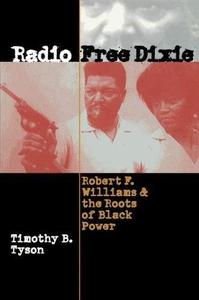
Radio Free Dixie Robert F. Williams and the Roots of Black Power

visoft

MyBoerse.bz Pro Member
54fd162d85aab41ed30142973e2d831b.jpeg

Free Download Radio Free Dixie: Robert F. Williams and the Roots of Black Power By Timothy B. Tyson
1999 | 416 Pages | ISBN: 0807825026 | PDF | 23 MB
This book tells the remarkable story of Robert F. Williams--one of the most influential black activists of the generation that toppled Jim Crow and forever altered the arc of American history. In the late 1950s, as president of the Monroe, North Carolina, branch of the NAACP, Williams and his followers used machine guns, dynamite, and Molotov cocktails to confront Klan terrorists. Advocating armed self-reliance by blacks, Williams challenged not only white supremacists but also Martin Luther King Jr. and the civil rights establishment. Forced to flee during the 1960s to Cuba--where he broadcast Radio Free Dixie, a program of black politics and music that could be heard as far away as Los Angeles and New York City--and then China, Williams remained a controversial figure for the rest of his life. Historians have customarily portrayed the civil rights movement as a nonviolent call on America's conscience--and the subsequent rise of Black Power as a violent repudiation of the civil rights dream. But Radio Free Dixie reveals that both movements grew out of the same soil, confronted the same predicaments, and reflected the same quest for African American freedom. As Robert Williams's story demonstrates, independent black political action, black cultural pride, and armed self-reliance operated in the South in tension and in tandem with legal efforts and nonviolent protest.Stunning. . . . Radio Free Dixie presents an engaging portrait of one man's continuous struggle to resist political and social oppression.--Emerge[A] radiant biography. . . . Tyson is that rarest of writers: a successful scholar who can actually tell a compelling story in clear, even handsome language.--Village Voice Literary SupplementTyson's firecracker text crackles with brilliant and lasting images of black life . . . across the South in the '40s, '50s and '60s. . . . Tyson successfully portrays Williams as a troubled visionary, a strong, stubborn and imperfect man, one who greatly influenced what became the Black Power Movement and its young leaders.--Publishers WeeklyThis book tells the riveting story of controversial black activist Robert F. Williams (1925-1996). In the late 1950s, as president of the Monroe, North Carolina, NAACP, Williams organized armed resistance to KKK terrorists--in the process challenging not only white supremacists but also Martin Luther King Jr. and the civil rights establishment. As Radio Free Dixie reveals, however, the civil rights movement and the Black Power movement grew out of the same soil, confronted the same predicaments, and were much closer than traditional portrayals suggest. In the civil rights-era South, independent black politics, black cultural pride, and armed self-reliance operated in tension and in tandem with legal efforts and nonviolent protests in the quest for African American freedom.


Links are Interchangeable - Single Extraction

 
Zurück
Oben Unten