

• Regeln für den Video-Bereich:

    In den Börsenbereich gehören nur Angebote die bereits den Allgemeinen Regeln entsprechen.

    Einteilung

    - Folgende Formate gehören in die angegeben Bereiche:
    - Filme: Encodierte Filme von BluRay, DVD, R5, TV, Screener sowie Telesyncs im Format DivX, XviD und x264.
    - DVD: Filme im Format DVD5, DVD9 und HD2DVD.
    - HD: Encodierte Filme mit der Auflösung 720p oder darüber von BluRay, DVD, R5, TV, Screener sowie Telesyncs im Format x264.
    - 3D: Encodierte Filme von BluRay, die in einem 3D Format vorliegen. Dies gilt auch für Dokus, Animation usw.
    - Serien: Cartoon/Zeichentrick, Anime, Tutorials, Dokumentationen, Konzerte/Musik, Sonstiges sind demnach in die entsprechenden Bereiche einzuordnen, auch wenn sie beispielsweise im High Definition-Format oder als DVD5/DVD9/HD2DVD vorliegen. Ausnahme 3D.
    - Bereich Englisch: Englische Releases gehören immer in diesen Bereich.
    - Bereich Talk: Der Bereich, in dem über die Releases diskutiert werden kann, darf, soll und erwünscht ist.


    Angebot/Beitrag erstellen

    - Ein Beitrag darf erst dann erstellt werden, wenn der Upload bei mindestens einem OCH komplett ist. Platzhalter sind untersagt.
    - Bei einem Scenerelease hat der Threadtitel ausschließlich aus dem originalen, unveränderten Releasenamen zu bestehen. Es dürfen keine Veränderungen wie z.B. Sterne, kleine Buchstaben o.ä. vorgenommen werden. Ausnahme Serienbörse:
    - Bei einem Sammelthread für eine Staffel entfällt aus dem Releasename natürlich der Name der Folge. Beispiel: Die Simpsons S21 German DVDRip XviD - ITG
    - Dementsprechend sind also u.a. verboten: Erweiterungen wie "Tipp", "empfehlenswert", "only", "reup", usw. / jegliche andere Zusatzinformation oder Ergänzung, welche nicht in obiger Beschreibung zu finden ist.

    Aufbau des Angebots und Threadtitel

    Der Titel nach folgendem Muster erstellt zu werden. <Name> [3D] [Staffel] [German] <Jahr> <Tonspur> [DL] [Auflösung] <Quelle> <Codec> - <Group>
    Beispiel: The Dark Knight German 2008 AC3 DVDRip XviD - iND
    Beispiel: The Dark Knight 2008 DTS DL BDRip x264 - iND
    Beispiel: The Dark Knight 2008 AC3 DL BDRip XviD - iND
    Beispiel: The Dark Knight German 2008 AC3 720p BluRay x264 iND
    Beispiel: The Dark Knight 2008 DTS DL 1080p BluRay x264 iND
    Beispiel: Die Simpsons S01 German AC3 DVDRip XviD iND
    Beispiel: Die Simpsons S20 German AC3 720p BluRay x264 iND
    Beispiel: Sword Art Online II Ger Sub 2014 AAC 1080p WEBRip x264 - peppermint
    Entsprechend sind also u.a. verboten: Sonderzeichen wie Klammern, Sterne, Ausrufezeichen, Unterstriche, Anführungszeichen / Erweiterungen wie "Tipp", "empfehlenswert", "only", "reup", usw. / jegliche andere Zusatzinformation oder Ergänzung, welche nicht in obiger Beschreibung zu finden ist
    Ausnahmen hiervon können in den Bereichen geregelt sein.

    Die Beiträge sollen wie folgt aufgebaut werden:
    Überschrift entspricht dem Threadtitel
    Cover
    kurze Inhaltsbeschreibung
    Format, Größe, Dauer sind gut lesbar für Downloader außerhalb des Spoilers zu vermerken
    Nfo sind immer Anzugeben und selbige immer im Spoiler in Textform.
    Sind keine Nfo vorhanden z.B. Eigenpublikationen, sind im Spoiler folgende Dateiinformationen zusätzlich anzugeben :
    Quelle
    Video (Auflösung und Bitrate)
    Ton (Sprache, Format und Bitrate der einzelnen Spuren)
    Untertitel (sofern vorhanden)
    Hosterangabe in Textform außerhalb eines Spoiler mit allen enthaltenen Hostern.
    Bei SD kann auf diese zusätzlichen Dateiinformationen verzichtet werden.

    Alle benötigten Passwörter sind, sofern vorhanden, in Textform im Angebot anzugeben.
    Spoiler im Spoiler mit Kommentaren :"Schon Bedankt?" sind unerwünscht.


    Releases

    - Sind Retail-Release verfügbar, sind alle anderen Variationen untersagt. Ausnahmen: Alle deutschen Retail-Release sind CUT, in diesem Fall sind dubbed UNCUT-Release zulässig.
    - Im Serien-Bereich gilt speziell: Wenn ein Retail vor Abschluss einer laufenden Staffel erscheint, darf diese Staffel noch zu Ende gebracht werden.62
    - Gleiche Releases sind unbedingt zusammenzufassen. Das bedeutet, es ist zwingend erforderlich, vor dem Erstellen eines Themas per Suchfunktion zu überprüfen, ob bereits ein Beitrag mit demselben Release besteht. Ist dies der Fall, ist der bereits vorhandene Beitrag zu verwenden.
    - P2P und Scene Releases dürfen nicht verändert oder gar unter einem iND Tag eingestellt werden.


    Support, Diskussionen und Suche

    - Supportanfragen sind entweder per PN oder im Bereich Talk zu stellen.
    - Diskussionen und Bewertungen sind im Talk Bereich zu führen. Fragen an die Uploader haben ausschließlich via PN zu erfolgen, und sind in den Angeboten untersagt.
    - Anfragen zu Upload-Wünschen sind nur im Bereich Suche Video erlaubt. Antworten dürfen nur auf Angebote von MyBoerse.bz verlinkt werden.


    Verbote

    - Untersagt sind mehrere Formate in einem einzigen Angebotsthread, wie beispielsweise das gleichzeitige Anbieten von DivX/XviD, 720p und 1080p in einem Thread. Pro Format, Release und Auflösung ist ein eigener Thread zu eröffnen.
    - Grundsätzlich ebenso verboten sind Dupes. Uploader haben sich an geeigneter Stelle darüber zu informieren, ob es sich bei einem Release um ein Dupe handelt.
    - Gefakte, nur teilweise lauffähige oder unvollständige Angebote sind untersagt. Dies gilt auch für eigene Publikationen, die augenscheinlich nicht selbst von z.B. einer DVD gerippt wurden. Laufende Serien, bei denen noch nicht alle Folgen verfügbar sind, dürfen erstellt und regelmäßig geupdatet werden.
    - Untersagt sind Angebote, welche nur und ausschließlich in einer anderen Sprache als deutsch oder englisch vorliegen. Ausnahmen sind VORHER mit den Moderatoren zu klären.


    Verstoß gegen die Regeln

    - Angebote oder Beiträge, die gegen die Forenregeln verstoßen, sind über den "Melden"-Button im Beitrag zu melden.
  • Bitte registriere dich zunächst um Beiträge zu verfassen und externe Links aufzurufen.

*** Bestes IPTV *** bester Preis *** gratis Test ***


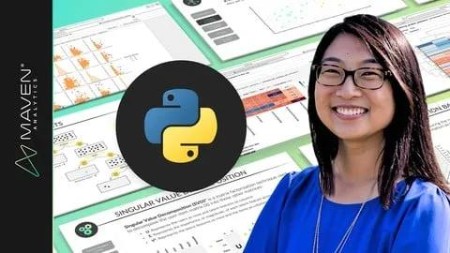
Python Data Science: Unsupervised Machine Learning

AgentofHeart

MyBoerse.bz Pro Member

711983469_yxusj-gh2vj50sp531.jpg

Python Data Science: Unsupervised Machine Learning
MP4 | Video: h264, 1920x1080 | Audio: AAC, 44.1 KHz
Language: English (US) | Size: 5.59 GB | Duration: 16h 47m​

Learn Python for data science & machine learning, and build unsupervised learning models w/ a top Python instructor!

What you'll learn
Master the foundations of unsupervised Machine Learning in Python, including clustering, anomaly detection, dimensionality reduction, and recommenders
Prepare data for modeling by applying feature engineering, selection, and scaling
Fit, tune, and interpret three types of clustering algorithms: K-Means Clustering, Hierarchical Clustering, and DBSCAN
Use unsupervised learning techniques like Isolation Forests and DBSCAN for anomaly detection
Apply and interpret two types of dimensionality reduction models: Principal Component Analysis (PCA) and t-SNE
Build recommendation engines using content-based and collaborative filtering techniques, including Cosine Similarity and Singular Value Decomposition (SVD)

Requirements
We strongly recommend taking our Data Prep & EDA course before this one
Jupyter Notebooks (free download, we'll walk through the install)
Familiarity with base Python and Pandas is recommended, but not required

Description
This is a hands-on, project-based course designed to help you master the foundations for unsupervised machine learning in Python.We'll start by reviewing the Python data science workflow, discussing the techniques & applications of unsupervised learning, and walking through the data prep steps required for modeling. You'll learn how to set the correct row granularity for modeling, apply feature engineering techniques, select relevant features, and scale your data using normalization and standardization.From there we'll fit, tune, and interpret 3 popular clustering models using scikit-learn. We'll start with K-Means Clustering, learn to interpret the output's cluster centers, and use inertia plots to select the right number of clusters. Next, we'll cover Hierarchical Clustering, where we'll use dendrograms to identify clusters and cluster maps to interpret them. Finally, we'll use DBSCAN to detect clusters and noise points and evaluate the models using their silhouette score.We'll also use DBSCAN and Isolation Forests for anomaly detection, a common application of unsupervised learning models for identifying outliers and anomalous patterns. You'll learn to tune and interpret the results of each model and visualize the anomalies using pair plots.Next, we'll introduce the concept of dimensionality reduction, discuss its benefits for data science, and explore the stages in the data science workflow in which it can be applied. We'll then cover two popular techniques: Principal Component Analysis, which is great for both feature extraction and data visualization, and t-SNE, which is ideal for data visualization.Last but not least, we'll introduce recommendation engines, and you'll practice creating both content-based and collaborative filtering recommenders using techniques such as Cosine Similarity and Singular Value Decomposition.Throughout the course you'll play the role of an Associate Data Scientist for the HR Analytics team at a software company trying to increase employee retention. Using the skills you learn throughout the course, you'll use Python to segment the employees, visualize the clusters, and recommend next steps to increase retention.COURSE OUTLINE:Intro to Data Science in PythonIntroduce the fields of data science and machine learning, review essential skills, and introduce each phase of the data science workflowUnsupervised Learning 101Review the basics of unsupervised learning, including key concepts, types of techniques and applications, and its place in the data science workflowPre-Modeling Data PrepRecap the data prep steps required to apply unsupervised learning models, including restructuring data, engineering & scaling features, and moreClusteringApply three different clustering techniques in Python and learn to interpret their results using metrics, visualizations, and domain expertiseAnomaly DetectionUnderstand where anomaly detection fits in the data science workflow, and apply techniques like Isolation Forests and DBSCAN in PythonDimensionality ReductionUse techniques like Principal Component Analysis (PCA) and t-SNE in Python to reduce the number of features in a data set without losing informationRecommendersRecognize the variety of approaches for creating recommenders, then apply unsupervised learning techniques in Python, including Cosine Similarity and Singular Vector Decomposition (SVD)__________Ready to dive in? Join today and get immediate, LIFETIME access to the following:16.5 hours of high-quality video22 homework assignments7 quizzes3 projectsPython Data Science: Unsupervised Learning ebook (350+ pages)Downloadable project files & solutionsExpert support and Q&A forum30-day satisfaction guaranteeIf you're a business intelligence professional or data scientist looking for a practical overview of unsupervised learning techniques in Python with a focus on interpretation, this is the course for you.Happy learning!-Alice Zhao (Python Expert & Data Science Instructor, Maven Analytics)__________Looking for our full business intelligence stack? Search for "Maven Analytics" to browse our full course library, including Excel, Power BI, MySQL, Tableau and Machine Learning courses!See why our courses are among the TOP-RATED on :"Some of the BEST courses I've ever taken. I've studied several programming languages, Excel, VBA and web dev, and Maven is among the very best I've seen!" Russ C."This is my fourth course from Maven Analytics and my fourth 5-star review, so I'm running out of things to say. I wish Maven was in my life earlier!" Tatsiana M."Maven Analytics should become the new standard for all courses taught on !" Jonah M.

Who this course is for:
Data scientists who want to learn how to build and interpret unsupervised learning models in Python, Analysts or BI experts looking to learn about unsupervised learning or transition into a data science role, Anyone interested in learning one of the most popular open source programming languages in the world

For More Courses Visit & Bookmark Your Preferred Language Blog
From Here:--------


711983534_yxusj-957ntwu1xp32.jpg

jCTbUY1T_o.jpg


77d73967c54e170626a6850b68a66b9a.jpg

Python Data Science: Unsupervised Machine Learning
MP4 | Video: h264, 1920x1080 | Audio: AAC, 44.1 KHz
Language: English (US) | Size: 5.59 GB | Duration: 16h 47m​

Learn Python for data science & machine learning, and build unsupervised learning models w/ a top Python instructor!

What you'll learn
Master the foundations of unsupervised Machine Learning in Python, including clustering, anomaly detection, dimensionality reduction, and recommenders
Prepare data for modeling by applying feature engineering, selection, and scaling
Fit, tune, and interpret three types of clustering algorithms: K-Means Clustering, Hierarchical Clustering, and DBSCAN
Use unsupervised learning techniques like Isolation Forests and DBSCAN for anomaly detection
Apply and interpret two types of dimensionality reduction models: Principal Component Analysis (PCA) and t-SNE
Build recommendation engines using content-based and collaborative filtering techniques, including Cosine Similarity and Singular Value Decomposition (SVD)

Requirements
We strongly recommend taking our Data Prep & EDA course before this one
Jupyter Notebooks (free download, we'll walk through the install)
Familiarity with base Python and Pandas is recommended, but not required

Description
This is a hands-on, project-based course designed to help you master the foundations for unsupervised machine learning in Python.We'll start by reviewing the Python data science workflow, discussing the techniques & applications of unsupervised learning, and walking through the data prep steps required for modeling. You'll learn how to set the correct row granularity for modeling, apply feature engineering techniques, select relevant features, and scale your data using normalization and standardization.From there we'll fit, tune, and interpret 3 popular clustering models using scikit-learn. We'll start with K-Means Clustering, learn to interpret the output's cluster centers, and use inertia plots to select the right number of clusters. Next, we'll cover Hierarchical Clustering, where we'll use dendrograms to identify clusters and cluster maps to interpret them. Finally, we'll use DBSCAN to detect clusters and noise points and evaluate the models using their silhouette score.We'll also use DBSCAN and Isolation Forests for anomaly detection, a common application of unsupervised learning models for identifying outliers and anomalous patterns. You'll learn to tune and interpret the results of each model and visualize the anomalies using pair plots.Next, we'll introduce the concept of dimensionality reduction, discuss its benefits for data science, and explore the stages in the data science workflow in which it can be applied. We'll then cover two popular techniques: Principal Component Analysis, which is great for both feature extraction and data visualization, and t-SNE, which is ideal for data visualization.Last but not least, we'll introduce recommendation engines, and you'll practice creating both content-based and collaborative filtering recommenders using techniques such as Cosine Similarity and Singular Value Decomposition.Throughout the course you'll play the role of an Associate Data Scientist for the HR Analytics team at a software company trying to increase employee retention. Using the skills you learn throughout the course, you'll use Python to segment the employees, visualize the clusters, and recommend next steps to increase retention.COURSE OUTLINE:Intro to Data Science in PythonIntroduce the fields of data science and machine learning, review essential skills, and introduce each phase of the data science workflowUnsupervised Learning 101Review the basics of unsupervised learning, including key concepts, types of techniques and applications, and its place in the data science workflowPre-Modeling Data PrepRecap the data prep steps required to apply unsupervised learning models, including restructuring data, engineering & scaling features, and moreClusteringApply three different clustering techniques in Python and learn to interpret their results using metrics, visualizations, and domain expertiseAnomaly DetectionUnderstand where anomaly detection fits in the data science workflow, and apply techniques like Isolation Forests and DBSCAN in PythonDimensionality ReductionUse techniques like Principal Component Analysis (PCA) and t-SNE in Python to reduce the number of features in a data set without losing informationRecommendersRecognize the variety of approaches for creating recommenders, then apply unsupervised learning techniques in Python, including Cosine Similarity and Singular Vector Decomposition (SVD)__________Ready to dive in? Join today and get immediate, LIFETIME access to the following:16.5 hours of high-quality video22 homework assignments7 quizzes3 projectsPython Data Science: Unsupervised Learning ebook (350+ pages)Downloadable project files & solutionsExpert support and Q&A forum30-day Udemy satisfaction guaranteeIf you're a business intelligence professional or data scientist looking for a practical overview of unsupervised learning techniques in Python with a focus on interpretation, this is the course for you.Happy learning!-Alice Zhao (Python Expert & Data Science Instructor, Maven Analytics)__________Looking for our full business intelligence stack? Search for "Maven Analytics" to browse our full course library, including Excel, Power BI, MySQL, Tableau and Machine Learning courses!See why our courses are among the TOP-RATED on Udemy:"Some of the BEST courses I've ever taken. I've studied several programming languages, Excel, VBA and web dev, and Maven is among the very best I've seen!" Russ C."This is my fourth course from Maven Analytics and my fourth 5-star review, so I'm running out of things to say. I wish Maven was in my life earlier!" Tatsiana M."Maven Analytics should become the new standard for all courses taught on Udemy!" Jonah M.

Who this course is for:
Data scientists who want to learn how to build and interpret unsupervised learning models in Python, Analysts or BI experts looking to learn about unsupervised learning or transition into a data science role, Anyone interested in learning one of the most popular open source programming languages in the world

For More Courses Visit & Bookmark Your Preferred Language Blog
From Here:--------


rq2L2PRW_o.jpg

 
Zurück
Oben Unten