



• Regeln für den Dokumente-Bereich:

    In den Börsenbereich gehören nur Angebote die bereits den Allgemeinen Regeln entsprechen.

    Allgemeines:

    Nicht erlaubt im Dokumente-Bereich sind:

    - indizierte Titel (inkl. Comics)
    - extremistische Werke, Zeitschriften und Comics (egal, welche Richtung)
    - jegliche Art von Pornographie
    - Anleitungen zu kriminellen Handlungen, gleich welcher Art
    - sadistische, menschenverachtende oder ähnliche Werke

    Nutzt den "Bedanken"-Button, bei Sammelthreads führen jegliche Kommentare, positiv wie negativ, sehr schnell zu einer Unübersichtlichkeit des Threads. Downmeldungen sind an den Uploader zu richten

    Vor dem Einstellen zu beachten:

    - Suchfunktion

    Vergewissert euch, dass es euer Dokument noch nicht im Board gibt, Doppelposts werden kommentarlos gelöscht. Ist es schon vorhanden, tragt es als Mirror im bestehenden Post ein.

    - Threadtitel

    Idealerweise ist sofort zu erkennen um was es sich handelt. Verseht euren Titel mit den relevanten Informationen, das hilft euch und damit auch uns und allen Suchenden erheblich weiter.

    Beispiel: [Thriller] Dan Brown - Inferno oder bei Magazinen:

    Computerbild - 14/2014 (es muss ersichtlich sein, um welche Ausgabe und welches Magazin es sich handelt)

    Folgende Präfixe stehen im Unterforum "Unterhaltung" zur Verfügung:

    [Humor]
    [Drama]
    [Erotik]
    [Fantasy]
    [Krimi]
    [Roman]
    [Thriller]
    [Horror]
    [Science Fiction]

    Inhalt des Beitrags:

    Folgende Pflichtangaben gilt es einzuhalten:

    - Autor
    - Titel
    - Präfix
    - Cover
    - Genre
    - Inhaltsbeschreibung
    - enthaltene Formate
    - Gesamtgröße des Downloads
    - Hoster
    - ggf. Passwort

    Nicht erlaubt sind alle Dateien, die den Download unnötig aufblähen um eine Affiliategrenze zu erreichen, wie zB. mp3-files, übergroße Bilder, etc.

    Ebenso nicht erlaubt sind sämtliche Dateien mit DRM, persönlichen Daten, etc., diese werden kommentarlos zu eurem eigenem Schutz gelöscht.

    Achtet bitte bei der Konvertierung der Formate auf die Lesbarkeit, ein epub, was nur einfach durch Calibre gejagt wird um ein PDF zu erhalten, ist zu 99% eben nicht lesbar. Wenn ihr es nicht könnt, dann lasst es besser oder lest euch ein, wie man es richtig macht.


    Unterforum Comics:

    Threadtitel:

    Ähnlich, wie bei Unterhaltung und Magazinen, sollte der Titel alle relevanten Informationen enthalten, hier bitte

    - den Titel des Comics
    - den Verlag (einige Comics sind in verschiedenen Verlagen erschienen)
    - das Erscheinungsjahr

    Erlaubt sind folgende Formate:

    - CBR
    - CBZ

    Grundsätzlich gilt: jede Version eines Comics erhält einen eigenen Thread, Ersteller eines Comics können ihre Bände gerne mit dem Zusatz (Original-Release) versehen.

    Bei Unsicherheiten zur korrekten Benennung bitte die Informationen von www.comicguide.de nutzen.

    Inhalt des Beitrags:

    Pflichtangaben hier sind:

    - Titel des Bandes und ggf. Nummer
    - Cover
    - falls bekannt technische Daten (DPI, Breite, Speicherqualität)
    - Größe des Downloads
    - Hoster
    - ggf. Passwort
    - falls bekannt Releasenamen
  • Bitte registriere dich zunächst um Beiträge zu verfassen und externe Links aufzurufen.

*** Bestes IPTV *** bester Preis *** gratis Test ***


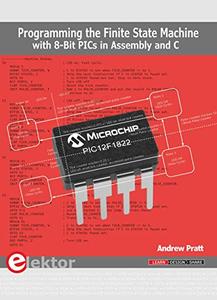
Programming the Finite State Machine with 8-Bit PICs in Assembly and C

visoft

MyBoerse.bz Pro Member
cc5f1cde219dba8d163d023605a77bc1.jpeg

Free Download Programming the Finite State Machine
by Pratt, Andrew;

English | 2020 | ISBN: 1907920927 | 188 pages | True PDF | 10.85 MB
This practical guide is aimed at electronics students and hobbyists. It is intended to be a valuable aid in writing programs using Finite State Machines (FSMs) in assembly language using 8-bit PIC microcontrollers. The last two chapters introduce the use of the C programming language and make a direct comparison with development in Assembly.​

An FSM is a way of writing a program to make it easier to produce and modify. The machine is abstract in that it is just the structure of the program. This abstract machine can be represented by drawing a diagram on paper. The diagram is independent of the programming language used. The FSM chart gives a complete description of what the program does. It can then be implemented as source code.
The book should appeal to those with an interest in the combination of electronics and software and have an interest in how things work. The book will describe writing code for two particular The 12F1822 and 16F1823. Both are mid-range and inexpensive. To read and write the programs to and from the PICs, all that is required is an FTDI TTL level USB lead (TTL-232R-5V-WE) in addition to two programs that are both available for free download as executable files and source code from Elektor. Microsoft Windows or Linux can be used.
The PIC programs are written in assembly language. This goes against the conventional wisdom of using a higher-level language such as C. One reason for this is that assembly is a good way of learning what is happening at the lowest level. This is important as microcontroller programming requires an understanding of the chip. Another reason for using the finite state machine approach is that it makes assembly programs surprisingly easy to follow. One of the main obstacles in the way of getting started with embedded programming is the installation and learning of new software tools.
The emphasis of this book is on making things straightforward with as little complication as possible. Therefore you can concentrate on understanding the code. Real projects aren't just about our software has to do something real. As a consequence, a chapter deals with a method of circuit board construction.
All coding is done in a text editor of your choosing. The command line is used for running programs. If you are a Windows user, you might look at this as old fashioned. This is actually an efficient way of doing simple scripts for repetitive tasks save lots of mouse clicks. The last two chapters give an introduction to programming in C using the XC8 compiler. Again this is done using a text editor and the command line.
The intention has been to achieve results using an inexpensive microcontroller with simple command line tools. Much emphasis is placed on using Microchip's datasheet as this is the best place to get correct detailed information

Links are Interchangeable - Single Extraction

 
Zurück
Oben Unten