



• Regeln für den Dokumente-Bereich:

    In den Börsenbereich gehören nur Angebote die bereits den Allgemeinen Regeln entsprechen.

    Allgemeines:

    Nicht erlaubt im Dokumente-Bereich sind:

    - indizierte Titel (inkl. Comics)
    - extremistische Werke, Zeitschriften und Comics (egal, welche Richtung)
    - jegliche Art von Pornographie
    - Anleitungen zu kriminellen Handlungen, gleich welcher Art
    - sadistische, menschenverachtende oder ähnliche Werke

    Nutzt den "Bedanken"-Button, bei Sammelthreads führen jegliche Kommentare, positiv wie negativ, sehr schnell zu einer Unübersichtlichkeit des Threads. Downmeldungen sind an den Uploader zu richten

    Vor dem Einstellen zu beachten:

    - Suchfunktion

    Vergewissert euch, dass es euer Dokument noch nicht im Board gibt, Doppelposts werden kommentarlos gelöscht. Ist es schon vorhanden, tragt es als Mirror im bestehenden Post ein.

    - Threadtitel

    Idealerweise ist sofort zu erkennen um was es sich handelt. Verseht euren Titel mit den relevanten Informationen, das hilft euch und damit auch uns und allen Suchenden erheblich weiter.

    Beispiel: [Thriller] Dan Brown - Inferno oder bei Magazinen:

    Computerbild - 14/2014 (es muss ersichtlich sein, um welche Ausgabe und welches Magazin es sich handelt)

    Folgende Präfixe stehen im Unterforum "Unterhaltung" zur Verfügung:

    [Humor]
    [Drama]
    [Erotik]
    [Fantasy]
    [Krimi]
    [Roman]
    [Thriller]
    [Horror]
    [Science Fiction]

    Inhalt des Beitrags:

    Folgende Pflichtangaben gilt es einzuhalten:

    - Autor
    - Titel
    - Präfix
    - Cover
    - Genre
    - Inhaltsbeschreibung
    - enthaltene Formate
    - Gesamtgröße des Downloads
    - Hoster
    - ggf. Passwort

    Nicht erlaubt sind alle Dateien, die den Download unnötig aufblähen um eine Affiliategrenze zu erreichen, wie zB. mp3-files, übergroße Bilder, etc.

    Ebenso nicht erlaubt sind sämtliche Dateien mit DRM, persönlichen Daten, etc., diese werden kommentarlos zu eurem eigenem Schutz gelöscht.

    Achtet bitte bei der Konvertierung der Formate auf die Lesbarkeit, ein epub, was nur einfach durch Calibre gejagt wird um ein PDF zu erhalten, ist zu 99% eben nicht lesbar. Wenn ihr es nicht könnt, dann lasst es besser oder lest euch ein, wie man es richtig macht.


    Unterforum Comics:

    Threadtitel:

    Ähnlich, wie bei Unterhaltung und Magazinen, sollte der Titel alle relevanten Informationen enthalten, hier bitte

    - den Titel des Comics
    - den Verlag (einige Comics sind in verschiedenen Verlagen erschienen)
    - das Erscheinungsjahr

    Erlaubt sind folgende Formate:

    - CBR
    - CBZ

    Grundsätzlich gilt: jede Version eines Comics erhält einen eigenen Thread, Ersteller eines Comics können ihre Bände gerne mit dem Zusatz (Original-Release) versehen.

    Bei Unsicherheiten zur korrekten Benennung bitte die Informationen von www.comicguide.de nutzen.

    Inhalt des Beitrags:

    Pflichtangaben hier sind:

    - Titel des Bandes und ggf. Nummer
    - Cover
    - falls bekannt technische Daten (DPI, Breite, Speicherqualität)
    - Größe des Downloads
    - Hoster
    - ggf. Passwort
    - falls bekannt Releasenamen
  • Bitte registriere dich zunächst um Beiträge zu verfassen und externe Links aufzurufen.

*** Bestes IPTV *** bester Preis *** gratis Test ***


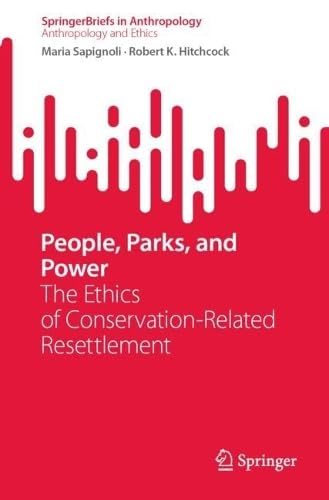
People, Parks, and Power The Ethics of Conservation-Related Resettlement

storylove

MyBoerse.bz Pro Member
4160d05bbab4bf992e7dde02b999b44a.jpeg

Free Download People, Parks, and Power: The Ethics of Conservation-Related Resettlement by Maria Sapignoli , Robert K. Hitchcock
English | PDF (True) | 2023 | 128 Pages | ISBN : 3031392663 | 2.5 MB
This book presents a critical review of the ethics of conservation-related resettlement. We examine what has become known as the" parks versus people" debate, also known as the "new conservation debate," which has pitted indigenous and other local people against nation states and social scientists against ecologists and conservationists for the past several decades. Aiming to promote biodiversity conservation and habitat preservation, some biologists, park planners, and conservation organizations have recommended that indigenous and other people should be removed from protected areas.​

Local people, for their part, have argued that residents of the areas that were turned into protected areas, national parks, game reserves and monuments had managed them in productive ways for generations and that they should have the right to remain there and to use natural resources as long as they do so sustainably. This position is often supported by indigenous rights organizations and social scientists, especially anthropologists. There are also some conservation-oriented NGOs that have policies involving a more human rights-oriented approach aimed at poverty alleviation, sustainable development, and social justice.
The book discusses biodiversity conservation, indigenous peoples (those who are ethnic minorities and who are often marginalized politically), and protected areas, those categories of land set aside by nation-states that have various kinds of rules about land use and residence.
The focus initially is on case studies from protected areas in the United States including Yellowstone National Park, Yosemite National Park, and Glacier National Park and on national monuments and historical parks where resettlement took place. We then consider issues of coercive conservation in southern Africa, including Hwange National Park (Zimbabwe), the Central Kalahari Game Reserve (Botswana), Etosha National Park, and Bwabwata National Park (Namibia), and Kgalagadi Transfrontier Park (South Africa and Botswana). All of these cases involved involuntary resettlement at the hands of the governments.
In the book we consider some of the social impacts of conservation-forced resettlement (CfR), many of which tend to be negative. After that, we assess some of the strategies employed by indigenous peoples in their efforts to recover rights of access to protected areas and the cultural and natural resources that they contain. Examples are drawn from cases in Asia, Africa, and South America. Conclusions are provided regarding the ethics of conservation-related resettlement and some of the best practices that could be followed, particularly with regard to indigenous peoples.
[/b]

Links are Interchangeable - Single Extraction

 
Zurück
Oben Unten