



• Regeln für den Video-Bereich:

    In den Börsenbereich gehören nur Angebote die bereits den Allgemeinen Regeln entsprechen.

    Einteilung

    - Folgende Formate gehören in die angegeben Bereiche:
    - Filme: Encodierte Filme von BluRay, DVD, R5, TV, Screener sowie Telesyncs im Format DivX, XviD und x264.
    - DVD: Filme im Format DVD5, DVD9 und HD2DVD.
    - HD: Encodierte Filme mit der Auflösung 720p oder darüber von BluRay, DVD, R5, TV, Screener sowie Telesyncs im Format x264.
    - 3D: Encodierte Filme von BluRay, die in einem 3D Format vorliegen. Dies gilt auch für Dokus, Animation usw.
    - Serien: Cartoon/Zeichentrick, Anime, Tutorials, Dokumentationen, Konzerte/Musik, Sonstiges sind demnach in die entsprechenden Bereiche einzuordnen, auch wenn sie beispielsweise im High Definition-Format oder als DVD5/DVD9/HD2DVD vorliegen. Ausnahme 3D.
    - Bereich Englisch: Englische Releases gehören immer in diesen Bereich.
    - Bereich Talk: Der Bereich, in dem über die Releases diskutiert werden kann, darf, soll und erwünscht ist.


    Angebot/Beitrag erstellen

    - Ein Beitrag darf erst dann erstellt werden, wenn der Upload bei mindestens einem OCH komplett ist. Platzhalter sind untersagt.
    - Bei einem Scenerelease hat der Threadtitel ausschließlich aus dem originalen, unveränderten Releasenamen zu bestehen. Es dürfen keine Veränderungen wie z.B. Sterne, kleine Buchstaben o.ä. vorgenommen werden. Ausnahme Serienbörse:
    - Bei einem Sammelthread für eine Staffel entfällt aus dem Releasename natürlich der Name der Folge. Beispiel: Die Simpsons S21 German DVDRip XviD - ITG
    - Dementsprechend sind also u.a. verboten: Erweiterungen wie "Tipp", "empfehlenswert", "only", "reup", usw. / jegliche andere Zusatzinformation oder Ergänzung, welche nicht in obiger Beschreibung zu finden ist.

    Aufbau des Angebots und Threadtitel

    Der Titel nach folgendem Muster erstellt zu werden. <Name> [3D] [Staffel] [German] <Jahr> <Tonspur> [DL] [Auflösung] <Quelle> <Codec> - <Group>
    Beispiel: The Dark Knight German 2008 AC3 DVDRip XviD - iND
    Beispiel: The Dark Knight 2008 DTS DL BDRip x264 - iND
    Beispiel: The Dark Knight 2008 AC3 DL BDRip XviD - iND
    Beispiel: The Dark Knight German 2008 AC3 720p BluRay x264 iND
    Beispiel: The Dark Knight 2008 DTS DL 1080p BluRay x264 iND
    Beispiel: Die Simpsons S01 German AC3 DVDRip XviD iND
    Beispiel: Die Simpsons S20 German AC3 720p BluRay x264 iND
    Beispiel: Sword Art Online II Ger Sub 2014 AAC 1080p WEBRip x264 - peppermint
    Entsprechend sind also u.a. verboten: Sonderzeichen wie Klammern, Sterne, Ausrufezeichen, Unterstriche, Anführungszeichen / Erweiterungen wie "Tipp", "empfehlenswert", "only", "reup", usw. / jegliche andere Zusatzinformation oder Ergänzung, welche nicht in obiger Beschreibung zu finden ist
    Ausnahmen hiervon können in den Bereichen geregelt sein.

    Die Beiträge sollen wie folgt aufgebaut werden:
    Überschrift entspricht dem Threadtitel
    Cover
    kurze Inhaltsbeschreibung
    Format, Größe, Dauer sind gut lesbar für Downloader außerhalb des Spoilers zu vermerken
    Nfo sind immer Anzugeben und selbige immer im Spoiler in Textform.
    Sind keine Nfo vorhanden z.B. Eigenpublikationen, sind im Spoiler folgende Dateiinformationen zusätzlich anzugeben :
    Quelle
    Video (Auflösung und Bitrate)
    Ton (Sprache, Format und Bitrate der einzelnen Spuren)
    Untertitel (sofern vorhanden)
    Hosterangabe in Textform außerhalb eines Spoiler mit allen enthaltenen Hostern.
    Bei SD kann auf diese zusätzlichen Dateiinformationen verzichtet werden.

    Alle benötigten Passwörter sind, sofern vorhanden, in Textform im Angebot anzugeben.
    Spoiler im Spoiler mit Kommentaren :"Schon Bedankt?" sind unerwünscht.


    Releases

    - Sind Retail-Release verfügbar, sind alle anderen Variationen untersagt. Ausnahmen: Alle deutschen Retail-Release sind CUT, in diesem Fall sind dubbed UNCUT-Release zulässig.
    - Im Serien-Bereich gilt speziell: Wenn ein Retail vor Abschluss einer laufenden Staffel erscheint, darf diese Staffel noch zu Ende gebracht werden.62
    - Gleiche Releases sind unbedingt zusammenzufassen. Das bedeutet, es ist zwingend erforderlich, vor dem Erstellen eines Themas per Suchfunktion zu überprüfen, ob bereits ein Beitrag mit demselben Release besteht. Ist dies der Fall, ist der bereits vorhandene Beitrag zu verwenden.
    - P2P und Scene Releases dürfen nicht verändert oder gar unter einem iND Tag eingestellt werden.


    Support, Diskussionen und Suche

    - Supportanfragen sind entweder per PN oder im Bereich Talk zu stellen.
    - Diskussionen und Bewertungen sind im Talk Bereich zu führen. Fragen an die Uploader haben ausschließlich via PN zu erfolgen, und sind in den Angeboten untersagt.
    - Anfragen zu Upload-Wünschen sind nur im Bereich Suche Video erlaubt. Antworten dürfen nur auf Angebote von MyBoerse.bz verlinkt werden.


    Verbote

    - Untersagt sind mehrere Formate in einem einzigen Angebotsthread, wie beispielsweise das gleichzeitige Anbieten von DivX/XviD, 720p und 1080p in einem Thread. Pro Format, Release und Auflösung ist ein eigener Thread zu eröffnen.
    - Grundsätzlich ebenso verboten sind Dupes. Uploader haben sich an geeigneter Stelle darüber zu informieren, ob es sich bei einem Release um ein Dupe handelt.
    - Gefakte, nur teilweise lauffähige oder unvollständige Angebote sind untersagt. Dies gilt auch für eigene Publikationen, die augenscheinlich nicht selbst von z.B. einer DVD gerippt wurden. Laufende Serien, bei denen noch nicht alle Folgen verfügbar sind, dürfen erstellt und regelmäßig geupdatet werden.
    - Untersagt sind Angebote, welche nur und ausschließlich in einer anderen Sprache als deutsch oder englisch vorliegen. Ausnahmen sind VORHER mit den Moderatoren zu klären.


    Verstoß gegen die Regeln

    - Angebote oder Beiträge, die gegen die Forenregeln verstoßen, sind über den "Melden"-Button im Beitrag zu melden.
  • Bitte registriere dich zunächst um Beiträge zu verfassen und externe Links aufzurufen.

*** Bestes IPTV *** bester Preis *** gratis Test ***


NestJs with Kafka Integration - Build Microservices Part -02

babymore87

MyBoerse.bz Pro Member
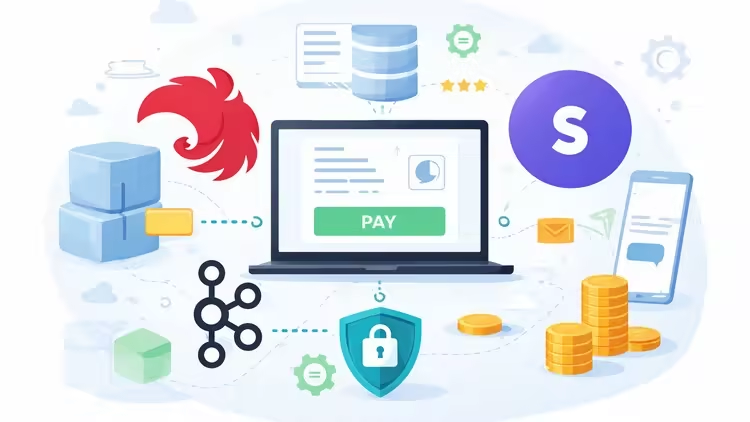
5f14f8b3b41a99f0f923414dc128a762.avif

Free Download NestJs with Kafka Integration - Build Microservices Part -02
Published 1/2026
MP4 | Video: h264, 1920x1080 | Audio: AAC, 44.1 KHz, 2 Ch
Language: English | Duration: 2h 16m | Size: 1.98 GB
Build a real-world Payment Microservice using NestJS, Kafka & Stripe - with API Gateway, Webhooks, Docker & Next.js

What you'll learn
Build a production-ready payment microservice using NestJS, Kafka, and Stripe from scratch
Implement secure checkout flows and webhook handling for real-world payment processing
Design an event-driven workflow connecting Orders, Payments, and API Gateway services
Integrate a Next.js frontend with backend microservices for seamless user payment experience
Requirements
Basic knowledge of JavaScript or TypeScript and familiarity with Node.js or NestJS is helpful but not required
Previous exposure to REST APIs is useful
NestJs Kafka Microservices part 1 is required
Kafka basics are helpful but fully explained
A Mac, Windows, or Linux machine to run Docker
Description
Event-driven architecture is changing how modern backend systems are built - and real-world platforms depend on reliable payments at the core of their business.In this hands-on course, you'll go beyond simple tutorials and learn how to build a production-ready Payment Microservice using NestJS, Kafka, Stripe, Docker, and Next.js - step-by-step.This course is designed for developers who want to master real-world backend architecture, not just write demo code. You will integrate Stripe securely, process real payments, handle webhooks, and coordinate event-driven workflows between services - just like real companies do.You won't just learn concepts - you'll build a working microservice system, connect it to a frontend, and run everything in Docker - so it's portable, scalable, and production-oriented.What You'll BuildPayment Microservice (NestJS + Stripe + Kafka)Secure Checkout FlowWebhook Event HandlingAPI Gateway / BFF LayerOrder → Payment workflowNext.js Frontend Checkout UIReal-world architecture patternsKey Topics You'll MasterPayment Microservice (NestJS + Stripe + Kafka) Secure Checkout Flow Webhook Event Handling API Gateway / BFF LayerOrder → Payment workflowNext.js Frontend Checkout UIDockerized Microservices StackReal-world architecture patternsAt the End of This Course You Will Be Able ToBuild secure backend payment flowsDesign scalable microservicesIntegrate Stripe professionallyImplement Kafka-based eventsHandle real-world edge casesConnect backend + frontendTech StackNestJSKafkaStripePostgreSQLNext.jsDockerPrismaTypeScriptWho Is This Course For?Backend developersFull-stack developersStudentsProfessionalsStartup engineersAnyone learning microservicesIf you've ever wanted to understand how payment systems REALLY work, this course is for you.Let's build something powerful together
Who this course is for
Software engineers, backend developers, and learners who want to master real-world microservices with payments, event-driven architecture, and modern full-stack development
Nestjs Developers who want to build microservices with Nestjs and Kafka
Nodejs Developers who want to build microservices in Nestjs
Homepage

Recommend Download Link Hight Speed | Please Say Thanks Keep Topic Live
No Password - Links are Interchangeable

 

685400293_yxusj-sh79g11hut12.jpg

Kafka with go
Published 12/2024
MP4 | Video: h264, 1280x720 | Audio: AAC, 44.1 KHz, 2 Ch
Level: All | Genre: eLearning | Language: English | Duration: 9 Lectures ( 4h 32m ) | Size: 3 GB​

Build asynchronous app using kafka

What you'll learn
You will learn kafka in depth
You will learn implementation of kafka with golang
You will be able to create kafka container in Docker
You will be able to create scalable application using kafka and golang

Requirements
Basics of Golang, and Docker

Description
Course DescriptionWelcome to "Mastering Kafka with Golang: Building a Robust Order Service Application." This comprehensive course is designed for software engineers, developers, and architects who want to dive deep into Kafka's distributed messaging platform and leverage its power using the Go programming language. Through practical and hands-on projects, you will gain a strong foundation in Kafka's architecture, features, and real-world applications.By the end of this course, you will have built a production-ready Order Service application, showcasing how to integrate Kafka for seamless communication, fault tolerance, and scalability.What You'll LearnFundamentals of Apache Kafka: Topics, partitions, producers, consumers, and brokers.Setting up a Kafka cluster locally and in the cloud.Writing Kafka producers and consumers using Golang.Managing Kafka topics, partitions, and replication for high availability.Implementing message serialization and deserialization with JSON.Handling message delivery guarantees: at-most-once, at-least-once, and exactly-once.Building a microservice architecture for the Order Service.Processing real-time orders and events using Kafka streams.Integrating Kafka with databases for storing order data.Debugging and monitoring Kafka applications.Course StructureSection 1: Introduction to Kafka and GolangWhat is Kafka? Overview of distributed messaging systems.Why use Golang with Kafka? Benefits and use cases.Course overview and application walkthrough.Section 2: Setting Up Your EnvironmentInstalling Kafka and Zookeeper locally.Setting up Go development environment.Installing Kafka libraries for Golang.Section 3: Kafka FundamentalsUnderstanding Kafka topics, partitions, and offsets.Configuring Kafka producers and consumers.Writing your first producer and consumer in Golang.Section 4: Advanced Kafka ConceptsHandling message serialization with JSON and Avro.Message delivery semantics: at-most-once, at-least-once, and exactly-once.Managing Kafka topics and partitions.Section 5: Building the Order Service ApplicationDesigning the Order Service architecture.Implementing the Order API with Golang.Integrating Kafka for publishing and consuming order events.Implementing error handling and retries.Section 6: Scaling the Order ServiceAdding partitions for scaling Kafka consumers.Using Kafka Streams for real-time order processing.Storing order data in a database (PostgreSQL or MongoDB).Section 7: Monitoring and DebuggingSetting up Prometheus and Grafana for Kafka monitoring.Debugging common issues in Kafka applications.Best practices for optimizing Kafka and Golang performance.Section 8: Deploying to ProductionContainerizing the Order Service with Docker.Deploying Kafka and Order Service to Kubernetes.Ensuring high availability and fault tolerance.Final Project: Build and Deploy a Production-Ready Order ServiceDevelop a fully functional Order Service application.Demonstrate real-time order processing with Kafka.Deploy the application to a cloud environment.Who This Course is ForSoftware developers interested in learning Kafka and Golang.Backend engineers building distributed systems and microservices.Architects designing scalable and reliable systems.Anyone interested in real-time data processing.PrerequisitesBasic knowledge of Golang programming.Familiarity with REST APIs and microservices.Fundamental understanding of distributed systems is helpful but not required.Tools and Technologies CoveredApache KafkaGolangDockerMongoDBJSON for message serializationEnroll NowDon't miss this opportunity to master Kafka with Golang and build a scalable Order Service application. Enroll now and take the next step in your software development journey!

Who this course is for
Beginner, who want to learn kafka in depth

685400323_yxusj-b821miohs086.jpg

bruioOfG_o.jpg


685784162_yxusj-atm77n1r35d7.jpg

NestJs with Kafka Integration - Build Microservices Part -02
Published 1/2026
Duration: 2h 16m | .MP4 1920x1080 30fps(r) | AAC, 44100Hz, 2ch | 1.32 GB
Genre: eLearning | Language: English​

Build a real-world Payment Microservice using NestJS, Kafka & Stripe - with API Gateway, Webhooks, Docker & Next.js

What you'll learn
- Build a production-ready payment microservice using NestJS, Kafka, and Stripe from scratch
- Implement secure checkout flows and webhook handling for real-world payment processing
- Design an event-driven workflow connecting Orders, Payments, and API Gateway services
- Integrate a Next.js frontend with backend microservices for seamless user payment experience

Requirements
- Basic knowledge of JavaScript or TypeScript and familiarity with Node.js or NestJS is helpful but not required
- Previous exposure to REST APIs is useful
- NestJs Kafka Microservices part 1 is required
- Kafka basics are helpful but fully explained
- A Mac, Windows, or Linux machine to run Docker

Description
Event-driven architecture is changing how modern backend systems are built - and real-world platforms depend on reliablepaymentsat the core of their business.

In this hands-on course, you'll go beyond simple tutorials and learn how to build aproduction-ready Payment MicroserviceusingNestJS, Kafka, Stripe, Docker, and Next.js- step-by-step.

This course is designed for developers who want to masterreal-world backend architecture, not just write demo code. You will integrate Stripe securely, process real payments, handle webhooks, and coordinate event-driven workflows between services - just like real companies do.

You won't just learn concepts - you'llbuild a working microservice system, connect it to a frontend, and run everything in Docker - so it's portable, scalable, and production-oriented.

What You'll Build

Payment Microservice (NestJS + Stripe + Kafka)

Secure Checkout Flow

Webhook Event Handling

API Gateway / BFF Layer

Order → Payment workflow

Next.js Frontend Checkout UI

Real-world architecture patterns

Key Topics You'll Master

Payment Microservice (NestJS + Stripe + Kafka)

Secure Checkout Flow

Webhook Event Handling

API Gateway / BFF Layer

Order → Payment workflow

Next.js Frontend Checkout UI

Dockerized Microservices Stack

Real-world architecture patterns

At the End of This Course You Will Be Able To

Build secure backend payment flows

Design scalable microservices

Integrate Stripe professionally

Implement Kafka-based events

Handle real-world edge cases

Connect backend + frontend

Tech Stack

NestJSKafkaStripePostgreSQLNext.jsDockerPrismaTypeScript

Who Is This Course For?

Backend developersFull-stack developersStudentsProfessionalsStartup engineersAnyone learning microservices

If you've ever wanted to understandhow payment systems REALLY work, this course is for you.

Let's build something powerful together

Who this course is for:
- Software engineers, backend developers, and learners who want to master real-world microservices with payments, event-driven architecture, and modern full-stack development
- Nestjs Developers who want to build microservices with Nestjs and Kafka
- Nodejs Developers who want to build microservices in Nestjs


685784577_yxusj-00fy51jzr6v7.jpg

5xP3Yngq_o.jpg

 
Zurück
Oben Unten