• Regeln für den Video-Bereich:

    In den Börsenbereich gehören nur Angebote die bereits den Allgemeinen Regeln entsprechen.

    Einteilung

    - Folgende Formate gehören in die angegeben Bereiche:
    - Filme: Encodierte Filme von BluRay, DVD, R5, TV, Screener sowie Telesyncs im Format DivX, XviD und x264.
    - DVD: Filme im Format DVD5, DVD9 und HD2DVD.
    - HD: Encodierte Filme mit der Auflösung 720p oder darüber von BluRay, DVD, R5, TV, Screener sowie Telesyncs im Format x264.
    - 3D: Encodierte Filme von BluRay, die in einem 3D Format vorliegen. Dies gilt auch für Dokus, Animation usw.
    - Serien: Cartoon/Zeichentrick, Anime, Tutorials, Dokumentationen, Konzerte/Musik, Sonstiges sind demnach in die entsprechenden Bereiche einzuordnen, auch wenn sie beispielsweise im High Definition-Format oder als DVD5/DVD9/HD2DVD vorliegen. Ausnahme 3D.
    - Bereich Englisch: Englische Releases gehören immer in diesen Bereich.
    - Bereich Talk: Der Bereich, in dem über die Releases diskutiert werden kann, darf, soll und erwünscht ist.


    Angebot/Beitrag erstellen

    - Ein Beitrag darf erst dann erstellt werden, wenn der Upload bei mindestens einem OCH komplett ist. Platzhalter sind untersagt.
    - Bei einem Scenerelease hat der Threadtitel ausschließlich aus dem originalen, unveränderten Releasenamen zu bestehen. Es dürfen keine Veränderungen wie z.B. Sterne, kleine Buchstaben o.ä. vorgenommen werden. Ausnahme Serienbörse:
    - Bei einem Sammelthread für eine Staffel entfällt aus dem Releasename natürlich der Name der Folge. Beispiel: Die Simpsons S21 German DVDRip XviD - ITG
    - Dementsprechend sind also u.a. verboten: Erweiterungen wie "Tipp", "empfehlenswert", "only", "reup", usw. / jegliche andere Zusatzinformation oder Ergänzung, welche nicht in obiger Beschreibung zu finden ist.

    Aufbau des Angebots und Threadtitel

    Der Titel nach folgendem Muster erstellt zu werden. <Name> [3D] [Staffel] [German] <Jahr> <Tonspur> [DL] [Auflösung] <Quelle> <Codec> - <Group>
    Beispiel: The Dark Knight German 2008 AC3 DVDRip XviD - iND
    Beispiel: The Dark Knight 2008 DTS DL BDRip x264 - iND
    Beispiel: The Dark Knight 2008 AC3 DL BDRip XviD - iND
    Beispiel: The Dark Knight German 2008 AC3 720p BluRay x264 iND
    Beispiel: The Dark Knight 2008 DTS DL 1080p BluRay x264 iND
    Beispiel: Die Simpsons S01 German AC3 DVDRip XviD iND
    Beispiel: Die Simpsons S20 German AC3 720p BluRay x264 iND
    Beispiel: Sword Art Online II Ger Sub 2014 AAC 1080p WEBRip x264 - peppermint
    Entsprechend sind also u.a. verboten: Sonderzeichen wie Klammern, Sterne, Ausrufezeichen, Unterstriche, Anführungszeichen / Erweiterungen wie "Tipp", "empfehlenswert", "only", "reup", usw. / jegliche andere Zusatzinformation oder Ergänzung, welche nicht in obiger Beschreibung zu finden ist
    Ausnahmen hiervon können in den Bereichen geregelt sein.

    Die Beiträge sollen wie folgt aufgebaut werden:
    Überschrift entspricht dem Threadtitel
    Cover
    kurze Inhaltsbeschreibung
    Format, Größe, Dauer sind gut lesbar für Downloader außerhalb des Spoilers zu vermerken
    Nfo sind immer Anzugeben und selbige immer im Spoiler in Textform.
    Sind keine Nfo vorhanden z.B. Eigenpublikationen, sind im Spoiler folgende Dateiinformationen zusätzlich anzugeben :
    Quelle
    Video (Auflösung und Bitrate)
    Ton (Sprache, Format und Bitrate der einzelnen Spuren)
    Untertitel (sofern vorhanden)
    Hosterangabe in Textform außerhalb eines Spoiler mit allen enthaltenen Hostern.
    Bei SD kann auf diese zusätzlichen Dateiinformationen verzichtet werden.

    Alle benötigten Passwörter sind, sofern vorhanden, in Textform im Angebot anzugeben.
    Spoiler im Spoiler mit Kommentaren :"Schon Bedankt?" sind unerwünscht.


    Releases

    - Sind Retail-Release verfügbar, sind alle anderen Variationen untersagt. Ausnahmen: Alle deutschen Retail-Release sind CUT, in diesem Fall sind dubbed UNCUT-Release zulässig.
    - Im Serien-Bereich gilt speziell: Wenn ein Retail vor Abschluss einer laufenden Staffel erscheint, darf diese Staffel noch zu Ende gebracht werden.62
    - Gleiche Releases sind unbedingt zusammenzufassen. Das bedeutet, es ist zwingend erforderlich, vor dem Erstellen eines Themas per Suchfunktion zu überprüfen, ob bereits ein Beitrag mit demselben Release besteht. Ist dies der Fall, ist der bereits vorhandene Beitrag zu verwenden.
    - P2P und Scene Releases dürfen nicht verändert oder gar unter einem iND Tag eingestellt werden.


    Support, Diskussionen und Suche

    - Supportanfragen sind entweder per PN oder im Bereich Talk zu stellen.
    - Diskussionen und Bewertungen sind im Talk Bereich zu führen. Fragen an die Uploader haben ausschließlich via PN zu erfolgen, und sind in den Angeboten untersagt.
    - Anfragen zu Upload-Wünschen sind nur im Bereich Suche Video erlaubt. Antworten dürfen nur auf Angebote von MyBoerse.bz verlinkt werden.


    Verbote

    - Untersagt sind mehrere Formate in einem einzigen Angebotsthread, wie beispielsweise das gleichzeitige Anbieten von DivX/XviD, 720p und 1080p in einem Thread. Pro Format, Release und Auflösung ist ein eigener Thread zu eröffnen.
    - Grundsätzlich ebenso verboten sind Dupes. Uploader haben sich an geeigneter Stelle darüber zu informieren, ob es sich bei einem Release um ein Dupe handelt.
    - Gefakte, nur teilweise lauffähige oder unvollständige Angebote sind untersagt. Dies gilt auch für eigene Publikationen, die augenscheinlich nicht selbst von z.B. einer DVD gerippt wurden. Laufende Serien, bei denen noch nicht alle Folgen verfügbar sind, dürfen erstellt und regelmäßig geupdatet werden.
    - Untersagt sind Angebote, welche nur und ausschließlich in einer anderen Sprache als deutsch oder englisch vorliegen. Ausnahmen sind VORHER mit den Moderatoren zu klären.


    Verstoß gegen die Regeln

    - Angebote oder Beiträge, die gegen die Forenregeln verstoßen, sind über den "Melden"-Button im Beitrag zu melden.
  • Bitte registriere dich zunächst um Beiträge zu verfassen und externe Links aufzurufen.

*** Bestes IPTV *** bester Preis *** gratis Test ***


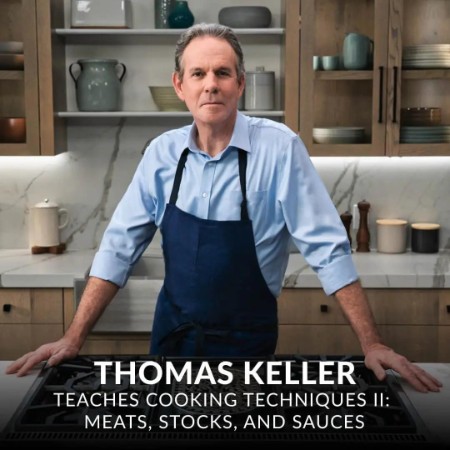
MasterClass - Thomas Keller Teaches Cooking Techniques II Meats, Stocks, and Sauces

babymore87

MyBoerse.bz Pro Member
dd73c9b68b322187e73ee383e51c21e5.avif

Free Download MasterClass - Thomas Keller Teaches Cooking Techniques II Meats, Stocks, and Sauces
.MP4, AVC, 7000 kbps, 1920x1080 | English, AAC, 192kbps, 2 Ch | 6h 6m | + PDF Workbook | 17 GB
Improve your skills in the kitchen
As a follow-up to his first MasterClass, Chef Thomas Keller devotes his second cooking class to beef, duck, chicken, pork, and veal, and the techniques he uses to prepare them. Learn to sauté, pan and oven roast, braise, fry, and grill, and how to select the best cut of meat for each technique with confidence. Then, learn to make the stocks and sauces that are essentials in Chef Keller's restaurant kitchens.
Chef Keller is the only American chef to have been awarded simultaneous three Michelin star ratings for two restaurants, The French Laundry and Per Se.

He is the holder of a total of seven Michelin stars and is the first American male chef to be designated a Chevalier of The French Legion of Honor, the highest decoration in France. He has received countless accolades, including The Culinary Institute of America's "Chef of the Year" Award and the James Beard Foundation's "Outstanding Chef" and "Outstanding Restaurateur" Awards. Chef Keller is credited with setting a new standard for excellence within the culinary and hospitality profession.
In his second MasterClass Chef Keller will introduce new techniques to cook with chicken, duck, pork, and beef to build complete meals for the holidays, a dinner party, or any occasion. Students will learn the fundamentals of cooking proteins-including how to select the best grades and cuts for different dishes-to help them to cook with confidence and precision, without relying on a recipe.
Chef Keller will teach students the techniques to cook some his most beloved dishes such as his signature fried chicken and pan roasted Côte de Boeuf. Students will also learn to make stocks and sauces from scratch, including the French mother sauce chicken velouté, as well as sauces suprême, allemande, and albufera. Chef Keller's MasterClass series continues to embody his finesse, refinement, and perfected techniques while using quality ingredients.
Lesson Plan
01. Introduction
Back to teach his second MasterClass, Chef Thomas Keller shares why he's returned, and outlines the techniques he'll teach you-and the philosophy you'll use to approach all your learning in the kitchen.
02. Getting Started: Meat Cuts and Quality
Chef Keller walks you through the grades and variety of cuts of beef, pork, and poultry. Learn the difference between choice and prime, the meaning of marbling, the purpose of air-drying meat, and the benefits of dry or wet aging
03. Sauté: Chicken Paillard
Chef Keller teaches you his paillard technique through this versatile, light dish finished with a sauce you'll learn in Chapter 19: Vinaigrettes. Learn how to pound out a protein for a thin cut and how to execute a quick sauté.
04. Sauté: Wiener Schnitzel
Using veal top round and building on techniques you learned in Chapter 3: Chicken Paillard, Chef Keller teaches you his tricks for achieving an airy, crisp layer of breading and the perfect level of seasoning.
05. Fried Chicken
Chef Keller teaches you how to make the fried chicken served every other Monday at his restaurant Ad Hoc. Learn how to brine and break down a whole chicken and fry each piece to perfection.
06. Technique: Oven Roasting Overview
Chef Keller gives an overview of the meats you'll be roasting in the next three chapters, including three cuts of beef, two cuts of lamb, and a whole chicken. Then, learn how to calibrate your oven, and the importance of bringing proteins to temp.
07. Pan Roasting: Duck Breast
Chef Keller teaches you his pan-roasting technique for Pekin duck breast, including how to render the fat for a crispy skin and how to achieve the perfect medium-rare finish. Then learn how to make a honey-orange gastrique sauce for a sweet and sour finish.
08. Pan Roasting: Côte de Bœuf
Chef Keller thinks of côte de bœuf, or rib steak, as a celebratory dish, built for sharing. Learn how to air-dry, truss, and roast a rib steak, and how to prepare a maître d'hôtel butter for the final flourish.
09. Oven Roasting: Chicken
Learn how to re-create what Chef Keller describes as his first choice for his "last meal." Chef Keller explains the benefits of brining and air-drying, and teaches you how to truss and roast a chicken in a single pot with vegetables.
10. Oven Roasting: Blowtorch Prime Rib Roast
The main ingredient is a center-cut rib roast, and a key implement is a propane blowtorch. Learn Chef Keller's technique for a prime rib roast cooked to an even medium rare in every slice.
11. Technique: Braising and Braising à la Matignon
Chef Keller teaches you the principles of braising and the role of mirepoix, marinating, and matignon in adding flavor and texture to slow-cooked cuts of meat.
12. Braising: Pork Shoulder à la Matignon
Learn how to truss, sear, and oven-braise a pork shoulder à la matignon with celery root, apples, and onions in a traditional cast-iron cocotte.
13. Braising: Red Wine Braised Short Ribs
Chef Keller teaches you how to braise short ribs through a slow-cooked recipe that is worth the patience it requires. Learn how to make a red wine marinade, clarify it to become the base of the sauce, and reduce it into a finishing glaze.
14. Grilling on a Hibachi: Steak, Lamb Chops, and Chicken
Chef Keller teaches you his techniques for grilling a variety of proteins on a stove top hibachi. Learn how to choose the right fuel and manage your safety while grilling indoors.
15. Stocks, Broths, and Jus: An Overview
Stocks are an essential building block in Chef Keller's restaurants. Learn stock-making fundamentals, from their ingredients and techniques to the broader applications of stocks throughout so many dishes.
16. Roasted Veal Stock
Chef Keller teaches you how to use a pressure cooker to make a restaurant-quality veal stock that will become the foundation for a number of sauces and recipes, including the sauce in Chapter 21: Brown Chicken Quick Sauce.
17. Light Chicken Stock
Learn the steps to simmering, clarifying, straining, and storing the light chicken stock that Chef Keller uses to cook pasta and as a base for soups and sauces.
18. Sauces: An Overview
Chef Keller walks you through the definition of a sauce and provides an overview of some the most common French sauces alongside the proteins they most commonly pair with.
19. Vinaigrette, Emulsified Vinaigrette, Sauce Vierge, and Pickled Chow Chow Vinaigrette
Learn how to makes a variety of sauces including a basic oil-and-vinegar vinaigrette; a creamy vinaigrette, emulsified with a raw egg yolk and mustard; a sauce vierge; and a chow-chow vinaigrette, from a medley of chopped and pickled vegetables.
20. Chicken Velouté and Sauces Suprême, Allemande, and Albufera
Using the stock you made in Chapter 17: Light Chicken Stock, Chef Keller teaches you how to make the French mother sauce, velouté. Then use your velouté to create three more versatile sauces.
21. Brown Chicken Quick Sauce and Sauce Chasseur
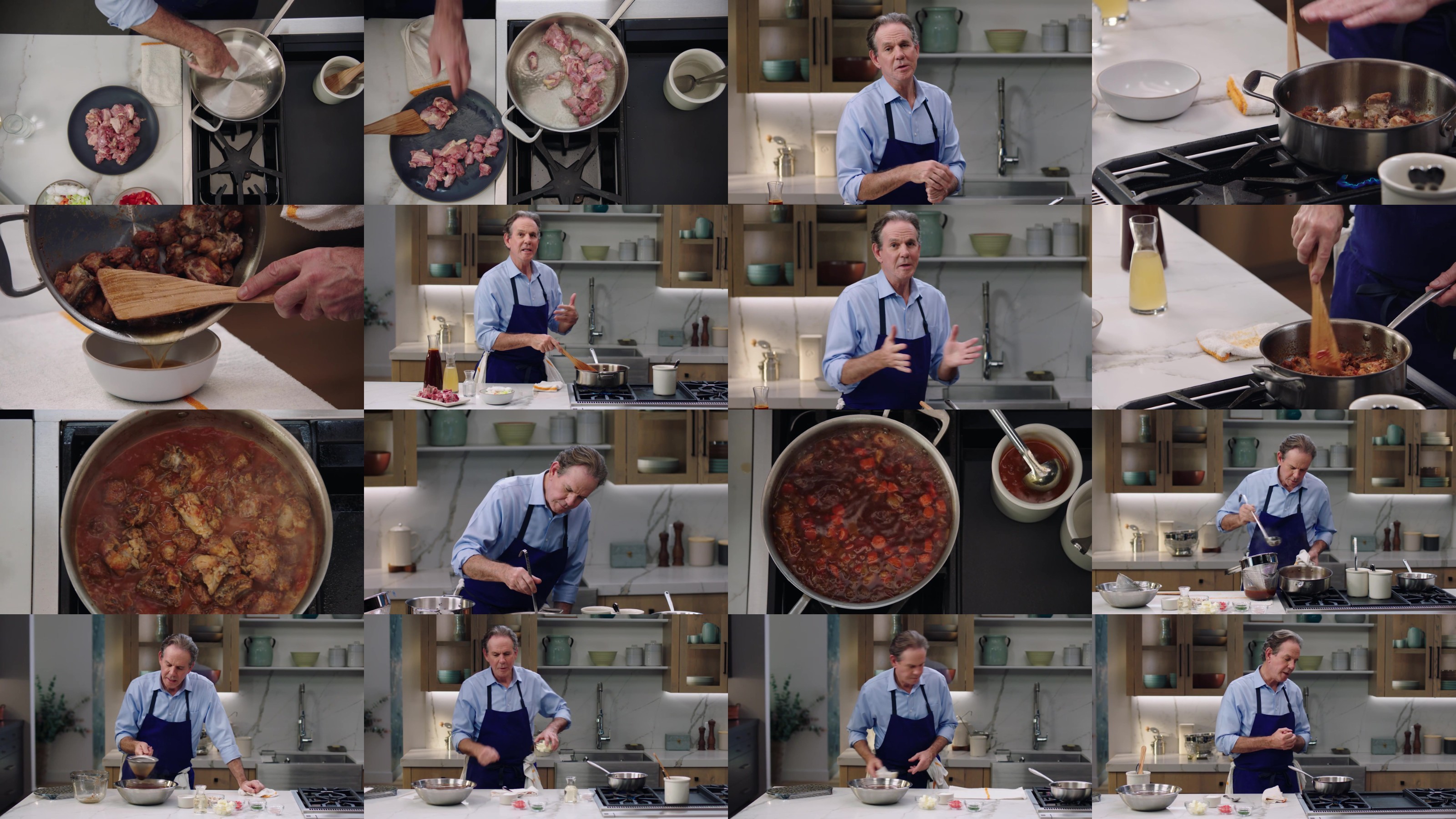
Chef Keller developed this "quick" sauce in the early days of The French Laundry. Learn how to build flavor by browning chicken parts, caramelizing vegetables, repeatedly glazing and reglazing, reducing, and clarifying.
22. Closing
Chef Keller concludes his MasterClass with parting words of wisdom and reminds you the importance of patience and practice as you continue on your culinary journey.
Homepage


Recommend Download Link Hight Speed | Please Say Thanks Keep Topic Live
No Password - Links are Interchangeable

 

72d8ec7ccab23037cb7dfeb11d5477c6.jpg

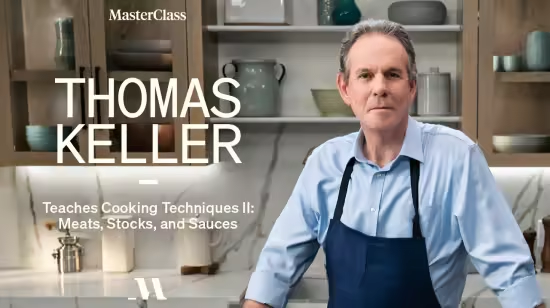
MasterClass - Thomas Keller Teaches Cooking Techniques II: Meats, Stocks, and Sauces
.MP4, AVC, 1500 kbps, 1280x720 | English, AAC, 192kbps, 2 Ch | 6h 6m | + PDF Workbook | 3.7 GB​

Improve your skills in the kitchen

As a follow-up to his first MasterClass, Chef Thomas Keller devotes his second cooking class to beef, duck, chicken, pork, and veal, and the techniques he uses to prepare them. Learn to sauté, pan and oven roast, braise, fry, and grill, and how to select the best cut of meat for each technique with confidence. Then, learn to make the stocks and sauces that are essentials in Chef Keller's restaurant kitchens.

Chef Keller is the only American chef to have been awarded simultaneous three Michelin star ratings for two restaurants, The French Laundry and Per Se.

He is the holder of a total of seven Michelin stars and is the first American male chef to be designated a Chevalier of The French Legion of Honor, the highest decoration in France. He has received countless accolades, including The Culinary Institute of America's "Chef of the Year" Award and the James Beard Foundation's "Outstanding Chef" and "Outstanding Restaurateur" Awards. Chef Keller is credited with setting a new standard for excellence within the culinary and hospitality profession.

In his second MasterClass Chef Keller will introduce new techniques to cook with chicken, duck, pork, and beef to build complete meals for the holidays, a dinner party, or any occasion. Students will learn the fundamentals of cooking proteins-including how to select the best grades and cuts for different dishes-to help them to cook with confidence and precision, without relying on a recipe.

Chef Keller will teach students the techniques to cook some his most beloved dishes such as his signature fried chicken and pan roasted Côte de Boeuf. Students will also learn to make stocks and sauces from scratch, including the French mother sauce chicken velouté, as well as sauces suprême, allemande, and albufera. Chef Keller's MasterClass series continues to embody his finesse, refinement, and perfected techniques while using quality ingredients.

01. Introduction
Back to teach his second MasterClass, Chef Thomas Keller shares why he's returned, and outlines the techniques he'll teach you-and the philosophy you'll use to approach all your learning in the kitchen.

02. Getting Started: Meat Cuts and Quality
Chef Keller walks you through the grades and variety of cuts of beef, pork, and poultry. Learn the difference between choice and prime, the meaning of marbling, the purpose of air-drying meat, and the benefits of dry or wet aging

03. Sauté: Chicken Paillard
Chef Keller teaches you his paillard technique through this versatile, light dish finished with a sauce you'll learn in Chapter 19: Vinaigrettes. Learn how to pound out a protein for a thin cut and how to execute a quick sauté.

04. Sauté: Wiener Schnitzel
Using veal top round and building on techniques you learned in Chapter 3: Chicken Paillard, Chef Keller teaches you his tricks for achieving an airy, crisp layer of breading and the perfect level of seasoning.

05. Fried Chicken
Chef Keller teaches you how to make the fried chicken served every other Monday at his restaurant Ad Hoc. Learn how to brine and break down a whole chicken and fry each piece to perfection.

06. Technique: Oven Roasting Overview
Chef Keller gives an overview of the meats you'll be roasting in the next three chapters, including three cuts of beef, two cuts of lamb, and a whole chicken. Then, learn how to calibrate your oven, and the importance of bringing proteins to temp.

07. Pan Roasting: Duck Breast
Chef Keller teaches you his pan-roasting technique for Pekin duck breast, including how to render the fat for a crispy skin and how to achieve the perfect medium-rare finish. Then learn how to make a honey-orange gastrique sauce for a sweet and sour finish.

08. Pan Roasting: Côte de Bœuf
Chef Keller thinks of côte de bœuf, or rib steak, as a celebratory dish, built for sharing. Learn how to air-dry, truss, and roast a rib steak, and how to prepare a maître d'hôtel butter for the final flourish.

09. Oven Roasting: Chicken
Learn how to re-create what Chef Keller describes as his first choice for his "last meal." Chef Keller explains the benefits of brining and air-drying, and teaches you how to truss and roast a chicken in a single pot with vegetables.

10. Oven Roasting: Blowtorch Prime Rib Roast
The main ingredient is a center-cut rib roast, and a key implement is a propane blowtorch. Learn Chef Keller's technique for a prime rib roast cooked to an even medium rare in every slice.

11. Technique: Braising and Braising à la Matignon
Chef Keller teaches you the principles of braising and the role of mirepoix, marinating, and matignon in adding flavor and texture to slow-cooked cuts of meat.

12. Braising: Pork Shoulder à la Matignon
Learn how to truss, sear, and oven-braise a pork shoulder à la matignon with celery root, apples, and onions in a traditional cast-iron cocotte.

13. Braising: Red Wine Braised Short Ribs
Chef Keller teaches you how to braise short ribs through a slow-cooked recipe that is worth the patience it requires. Learn how to make a red wine marinade, clarify it to become the base of the sauce, and reduce it into a finishing glaze.

14. Grilling on a Hibachi: Steak, Lamb Chops, and Chicken
Chef Keller teaches you his techniques for grilling a variety of proteins on a stove top hibachi. Learn how to choose the right fuel and manage your safety while grilling indoors.

15. Stocks, Broths, and Jus: An Overview
Stocks are an essential building block in Chef Keller's restaurants. Learn stock-making fundamentals, from their ingredients and techniques to the broader applications of stocks throughout so many dishes.

16. Roasted Veal Stock
Chef Keller teaches you how to use a pressure cooker to make a restaurant-quality veal stock that will become the foundation for a number of sauces and recipes, including the sauce in Chapter 21: Brown Chicken Quick Sauce.

17. Light Chicken Stock
Learn the steps to simmering, clarifying, straining, and storing the light chicken stock that Chef Keller uses to cook pasta and as a base for soups and sauces.

18. Sauces: An Overview
Chef Keller walks you through the definition of a sauce and provides an overview of some the most common French sauces alongside the proteins they most commonly pair with.

19. Vinaigrette, Emulsified Vinaigrette, Sauce Vierge, and Pickled Chow Chow Vinaigrette
Learn how to makes a variety of sauces including a basic oil-and-vinegar vinaigrette; a creamy vinaigrette, emulsified with a raw egg yolk and mustard; a sauce vierge; and a chow-chow vinaigrette, from a medley of chopped and pickled vegetables.

20. Chicken Velouté and Sauces Suprême, Allemande, and Albufera
Using the stock you made in Chapter 17: Light Chicken Stock, Chef Keller teaches you how to make the French mother sauce, velouté. Then use your velouté to create three more versatile sauces.

21. Brown Chicken Quick Sauce and Sauce Chasseur
Chef Keller developed this "quick" sauce in the early days of The French Laundry. Learn how to build flavor by browning chicken parts, caramelizing vegetables, repeatedly glazing and reglazing, reducing, and clarifying.

22. Closing
Chef Keller concludes his MasterClass with parting words of wisdom and reminds you the importance of patience and practice as you continue on your culinary journey.


sj0otdL1_o.jpg

 
Zurück
Oben Unten