


• Regeln für den Video-Bereich:

    In den Börsenbereich gehören nur Angebote die bereits den Allgemeinen Regeln entsprechen.

    Einteilung

    - Folgende Formate gehören in die angegeben Bereiche:
    - Filme: Encodierte Filme von BluRay, DVD, R5, TV, Screener sowie Telesyncs im Format DivX, XviD und x264.
    - DVD: Filme im Format DVD5, DVD9 und HD2DVD.
    - HD: Encodierte Filme mit der Auflösung 720p oder darüber von BluRay, DVD, R5, TV, Screener sowie Telesyncs im Format x264.
    - 3D: Encodierte Filme von BluRay, die in einem 3D Format vorliegen. Dies gilt auch für Dokus, Animation usw.
    - Serien: Cartoon/Zeichentrick, Anime, Tutorials, Dokumentationen, Konzerte/Musik, Sonstiges sind demnach in die entsprechenden Bereiche einzuordnen, auch wenn sie beispielsweise im High Definition-Format oder als DVD5/DVD9/HD2DVD vorliegen. Ausnahme 3D.
    - Bereich Englisch: Englische Releases gehören immer in diesen Bereich.
    - Bereich Talk: Der Bereich, in dem über die Releases diskutiert werden kann, darf, soll und erwünscht ist.


    Angebot/Beitrag erstellen

    - Ein Beitrag darf erst dann erstellt werden, wenn der Upload bei mindestens einem OCH komplett ist. Platzhalter sind untersagt.
    - Bei einem Scenerelease hat der Threadtitel ausschließlich aus dem originalen, unveränderten Releasenamen zu bestehen. Es dürfen keine Veränderungen wie z.B. Sterne, kleine Buchstaben o.ä. vorgenommen werden. Ausnahme Serienbörse:
    - Bei einem Sammelthread für eine Staffel entfällt aus dem Releasename natürlich der Name der Folge. Beispiel: Die Simpsons S21 German DVDRip XviD - ITG
    - Dementsprechend sind also u.a. verboten: Erweiterungen wie "Tipp", "empfehlenswert", "only", "reup", usw. / jegliche andere Zusatzinformation oder Ergänzung, welche nicht in obiger Beschreibung zu finden ist.

    Aufbau des Angebots und Threadtitel

    Der Titel nach folgendem Muster erstellt zu werden. <Name> [3D] [Staffel] [German] <Jahr> <Tonspur> [DL] [Auflösung] <Quelle> <Codec> - <Group>
    Beispiel: The Dark Knight German 2008 AC3 DVDRip XviD - iND
    Beispiel: The Dark Knight 2008 DTS DL BDRip x264 - iND
    Beispiel: The Dark Knight 2008 AC3 DL BDRip XviD - iND
    Beispiel: The Dark Knight German 2008 AC3 720p BluRay x264 iND
    Beispiel: The Dark Knight 2008 DTS DL 1080p BluRay x264 iND
    Beispiel: Die Simpsons S01 German AC3 DVDRip XviD iND
    Beispiel: Die Simpsons S20 German AC3 720p BluRay x264 iND
    Beispiel: Sword Art Online II Ger Sub 2014 AAC 1080p WEBRip x264 - peppermint
    Entsprechend sind also u.a. verboten: Sonderzeichen wie Klammern, Sterne, Ausrufezeichen, Unterstriche, Anführungszeichen / Erweiterungen wie "Tipp", "empfehlenswert", "only", "reup", usw. / jegliche andere Zusatzinformation oder Ergänzung, welche nicht in obiger Beschreibung zu finden ist
    Ausnahmen hiervon können in den Bereichen geregelt sein.

    Die Beiträge sollen wie folgt aufgebaut werden:
    Überschrift entspricht dem Threadtitel
    Cover
    kurze Inhaltsbeschreibung
    Format, Größe, Dauer sind gut lesbar für Downloader außerhalb des Spoilers zu vermerken
    Nfo sind immer Anzugeben und selbige immer im Spoiler in Textform.
    Sind keine Nfo vorhanden z.B. Eigenpublikationen, sind im Spoiler folgende Dateiinformationen zusätzlich anzugeben :
    Quelle
    Video (Auflösung und Bitrate)
    Ton (Sprache, Format und Bitrate der einzelnen Spuren)
    Untertitel (sofern vorhanden)
    Hosterangabe in Textform außerhalb eines Spoiler mit allen enthaltenen Hostern.
    Bei SD kann auf diese zusätzlichen Dateiinformationen verzichtet werden.

    Alle benötigten Passwörter sind, sofern vorhanden, in Textform im Angebot anzugeben.
    Spoiler im Spoiler mit Kommentaren :"Schon Bedankt?" sind unerwünscht.


    Releases

    - Sind Retail-Release verfügbar, sind alle anderen Variationen untersagt. Ausnahmen: Alle deutschen Retail-Release sind CUT, in diesem Fall sind dubbed UNCUT-Release zulässig.
    - Im Serien-Bereich gilt speziell: Wenn ein Retail vor Abschluss einer laufenden Staffel erscheint, darf diese Staffel noch zu Ende gebracht werden.62
    - Gleiche Releases sind unbedingt zusammenzufassen. Das bedeutet, es ist zwingend erforderlich, vor dem Erstellen eines Themas per Suchfunktion zu überprüfen, ob bereits ein Beitrag mit demselben Release besteht. Ist dies der Fall, ist der bereits vorhandene Beitrag zu verwenden.
    - P2P und Scene Releases dürfen nicht verändert oder gar unter einem iND Tag eingestellt werden.


    Support, Diskussionen und Suche

    - Supportanfragen sind entweder per PN oder im Bereich Talk zu stellen.
    - Diskussionen und Bewertungen sind im Talk Bereich zu führen. Fragen an die Uploader haben ausschließlich via PN zu erfolgen, und sind in den Angeboten untersagt.
    - Anfragen zu Upload-Wünschen sind nur im Bereich Suche Video erlaubt. Antworten dürfen nur auf Angebote von MyBoerse.bz verlinkt werden.


    Verbote

    - Untersagt sind mehrere Formate in einem einzigen Angebotsthread, wie beispielsweise das gleichzeitige Anbieten von DivX/XviD, 720p und 1080p in einem Thread. Pro Format, Release und Auflösung ist ein eigener Thread zu eröffnen.
    - Grundsätzlich ebenso verboten sind Dupes. Uploader haben sich an geeigneter Stelle darüber zu informieren, ob es sich bei einem Release um ein Dupe handelt.
    - Gefakte, nur teilweise lauffähige oder unvollständige Angebote sind untersagt. Dies gilt auch für eigene Publikationen, die augenscheinlich nicht selbst von z.B. einer DVD gerippt wurden. Laufende Serien, bei denen noch nicht alle Folgen verfügbar sind, dürfen erstellt und regelmäßig geupdatet werden.
    - Untersagt sind Angebote, welche nur und ausschließlich in einer anderen Sprache als deutsch oder englisch vorliegen. Ausnahmen sind VORHER mit den Moderatoren zu klären.


    Verstoß gegen die Regeln

    - Angebote oder Beiträge, die gegen die Forenregeln verstoßen, sind über den "Melden"-Button im Beitrag zu melden.
  • Bitte registriere dich zunächst um Beiträge zu verfassen und externe Links aufzurufen.

*** Bestes IPTV *** bester Preis *** gratis Test ***


Master Your Emotions: Enhance Awareness And Communication

0daytutorial

MyBoerse.bz Pro Member

f8cc6dce6d3a0e5a116011b67e14986c.jpg

Master Your Emotions: Enhance Awareness And Communication
Published 12/2024
MP4 | Video: h264, 1920x1080 | Audio: AAC, 44.1 KHz
Language: English | Size: 177.43 MB | Duration: 0h 53m​

Enhance self-awareness, regulate emotions, and improve communication skills for personal growth

What you'll learn

Identify and differentiate a range of emotions in yourself and others

Apply mindfulness and journaling techniques to enhance emotional awareness

Develop empathy and expand your emotional vocabulary for better communication

Implement effective emotional regulation strategies in various social interactions

Requirements

This course is open to all; no prior experience or specific prerequisites are required. A willingness to engage in self-reflection and personal growth is beneficial

Description

Emotional literacy is the ability to recognize, understand, express, and manage our own emotions, as well as to empathize with the emotions of others. It's a foundational component of emotional intelligence, influencing our interpersonal relationships, decision-making processes, and overall mental well-being. Developing emotional literacy and awareness equips individuals with the skills necessary to navigate the complexities of human emotions effectively.Understanding EmotionsThe journey toward emotional literacy begins with understanding emotions. This involves identifying and differentiating between various emotions, recognizing their nuances, and understanding how they manifest both physically and mentally. By becoming attuned to our emotional states, we can communicate more effectively and respond to situations with greater emotional clarity.Mindfulness PracticesMindfulness practices play a crucial role in enhancing emotional awareness. By engaging in mindfulness techniques, individuals can cultivate present-moment awareness, allowing for a deeper connection with their emotional states. Mindfulness encourages observing emotions without judgment, which facilitates better emotional regulation and reduces the likelihood of impulsive reactions.Journaling TechniquesImplementing journaling as a tool for emotional exploration provides a structured outlet for expressing feelings. Writing about emotions can clarify internal experiences, reveal patterns over time, and promote emotional processing. Regular journaling serves as a reflective practice that enhances self-awareness and personal growth.Emotion LabelingEmotion labeling, or affect labeling, involves identifying and naming emotions as they arise. This practice can reduce the intensity of negative emotions and enhance emotional clarity. By accurately labeling emotions, individuals can better understand their experiences and communicate their feelings to others more effectively.Body AwarenessDeveloping body awareness is essential in understanding how emotions are experienced physically. Recognizing physical cues associated with different emotions-such as increased heart rate during anxiety or muscle tension during anger-enables early identification and management of emotional responses.Empathy DevelopmentEmpathy, the ability to understand and share the feelings of others, is a cornerstone of emotional literacy. Cultivating empathy enhances interpersonal relationships and communication by fostering a deeper understanding of others' perspectives and emotional experiences.Emotional Vocabulary ExpansionBuilding a rich emotional vocabulary allows individuals to articulate their feelings more precisely. A broader vocabulary facilitates accurate expression and understanding of complex emotions, leading to more effective communication and emotional processing.Emotional Regulation StrategiesLearning techniques to manage and modulate emotional responses is vital for maintaining emotional balance. Strategies such as deep breathing, cognitive reframing, and relaxation methods empower individuals to handle challenging emotions constructively, reducing stress and enhancing resilience.Reflective PracticesEngaging in regular self-reflection enables individuals to assess their emotional experiences and responses. This practice promotes self-awareness, personal growth, and a deeper understanding of one's emotional patterns, leading to more intentional and informed reactions.Social Interaction SkillsDeveloping skills for effective emotional communication in social contexts is crucial for building and maintaining healthy relationships. Techniques such as active listening, assertiveness, and conflict resolution facilitate constructive interactions and foster a supportive social environment.By exploring and integrating these aspects of emotional literacy, individuals can enhance their emotional intelligence, leading to improved interpersonal effectiveness and overall well-being. This comprehensive approach to understanding and managing emotions equips individuals with the tools necessary to navigate the complexities of human interactions and personal experiences.If you have any questions or need further clarification on any of these topics, please feel free to inbox me on Udemy. I'm here to support your learning journey and will respond to your queries promptly.

Overview

Section 1: Introduction

Lecture 1 Course Introduction

Section 2: Developing Emotional Literacy and Awareness.

Lecture 2 Understanding Emotions

Lecture 3 Mindfulness Practices

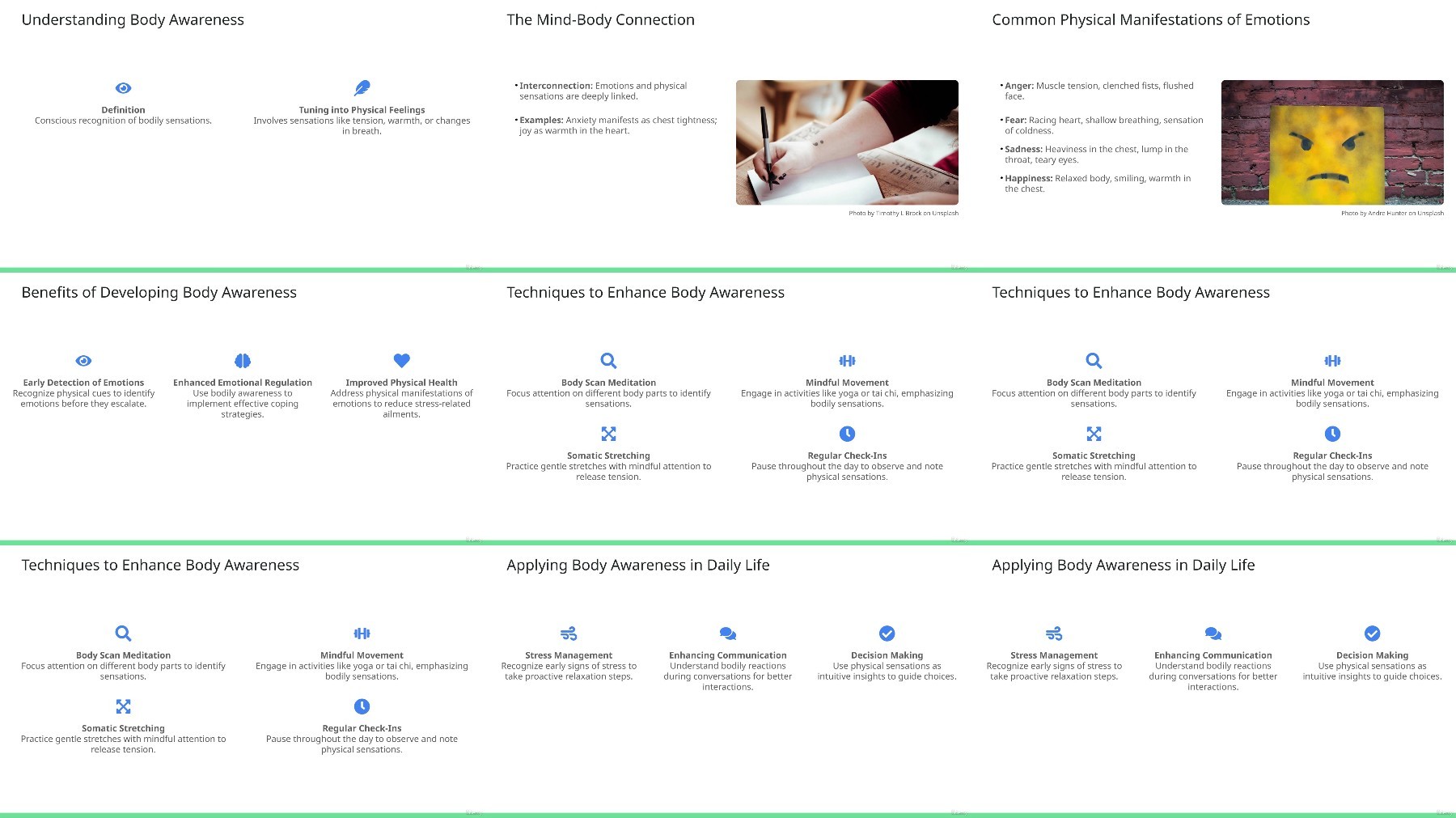
Lecture 4 Body Awareness

Lecture 5 Journaling Techniques

Lecture 6 Emotion Labeling

Lecture 7 Empathy Development

Lecture 8 Emotional Regulation Strategies

Lecture 9 Emotional Vocabulary Expansion

Lecture 10 Reflective Practices

Lecture 11 Social Interaction Skills

This course is ideal for individuals seeking to enhance their emotional intelligence, including professionals, students, and anyone interested in personal growth

59X9NOWl_o.jpg


22fec2036a28cc5a003ebe50c4acc376.jpg

Master Your Emotions: Enhance Awareness And Communication
Published 12/2024
MP4 | Video: h264, 1920x1080 | Audio: AAC, 44.1 KHz
Language: English | Size: 177.43 MB | Duration: 0h 53m​

Enhance self-awareness, regulate emotions, and improve communication skills for personal growth

What you'll learn

Identify and differentiate a range of emotions in yourself and others

Apply mindfulness and journaling techniques to enhance emotional awareness

Develop empathy and expand your emotional vocabulary for better communication

Implement effective emotional regulation strategies in various social interactions

Requirements

This course is open to all; no prior experience or specific prerequisites are required. A willingness to engage in self-reflection and personal growth is beneficial

Description

Emotional literacy is the ability to recognize, understand, express, and manage our own emotions, as well as to empathize with the emotions of others. It's a foundational component of emotional intelligence, influencing our interpersonal relationships, decision-making processes, and overall mental well-being. Developing emotional literacy and awareness equips individuals with the skills necessary to navigate the complexities of human emotions effectively.Understanding EmotionsThe journey toward emotional literacy begins with understanding emotions. This involves identifying and differentiating between various emotions, recognizing their nuances, and understanding how they manifest both physically and mentally. By becoming attuned to our emotional states, we can communicate more effectively and respond to situations with greater emotional clarity.Mindfulness PracticesMindfulness practices play a crucial role in enhancing emotional awareness. By engaging in mindfulness techniques, individuals can cultivate present-moment awareness, allowing for a deeper connection with their emotional states. Mindfulness encourages observing emotions without judgment, which facilitates better emotional regulation and reduces the likelihood of impulsive reactions.Journaling TechniquesImplementing journaling as a tool for emotional exploration provides a structured outlet for expressing feelings. Writing about emotions can clarify internal experiences, reveal patterns over time, and promote emotional processing. Regular journaling serves as a reflective practice that enhances self-awareness and personal growth.Emotion LabelingEmotion labeling, or affect labeling, involves identifying and naming emotions as they arise. This practice can reduce the intensity of negative emotions and enhance emotional clarity. By accurately labeling emotions, individuals can better understand their experiences and communicate their feelings to others more effectively.Body AwarenessDeveloping body awareness is essential in understanding how emotions are experienced physically. Recognizing physical cues associated with different emotions-such as increased heart rate during anxiety or muscle tension during anger-enables early identification and management of emotional responses.Empathy DevelopmentEmpathy, the ability to understand and share the feelings of others, is a cornerstone of emotional literacy. Cultivating empathy enhances interpersonal relationships and communication by fostering a deeper understanding of others' perspectives and emotional experiences.Emotional Vocabulary ExpansionBuilding a rich emotional vocabulary allows individuals to articulate their feelings more precisely. A broader vocabulary facilitates accurate expression and understanding of complex emotions, leading to more effective communication and emotional processing.Emotional Regulation StrategiesLearning techniques to manage and modulate emotional responses is vital for maintaining emotional balance. Strategies such as deep breathing, cognitive reframing, and relaxation methods empower individuals to handle challenging emotions constructively, reducing stress and enhancing resilience.Reflective PracticesEngaging in regular self-reflection enables individuals to assess their emotional experiences and responses. This practice promotes self-awareness, personal growth, and a deeper understanding of one's emotional patterns, leading to more intentional and informed reactions.Social Interaction SkillsDeveloping skills for effective emotional communication in social contexts is crucial for building and maintaining healthy relationships. Techniques such as active listening, assertiveness, and conflict resolution facilitate constructive interactions and foster a supportive social environment.By exploring and integrating these aspects of emotional literacy, individuals can enhance their emotional intelligence, leading to improved interpersonal effectiveness and overall well-being. This comprehensive approach to understanding and managing emotions equips individuals with the tools necessary to navigate the complexities of human interactions and personal experiences.If you have any questions or need further clarification on any of these topics, please feel free to inbox me on Udemy. I'm here to support your learning journey and will respond to your queries promptly.

Overview

Section 1: Introduction

Lecture 1 Course Introduction

Section 2: Developing Emotional Literacy and Awareness.

Lecture 2 Understanding Emotions

Lecture 3 Mindfulness Practices

Lecture 4 Body Awareness

Lecture 5 Journaling Techniques

Lecture 6 Emotion Labeling

Lecture 7 Empathy Development

Lecture 8 Emotional Regulation Strategies

Lecture 9 Emotional Vocabulary Expansion

Lecture 10 Reflective Practices

Lecture 11 Social Interaction Skills

This course is ideal for individuals seeking to enhance their emotional intelligence, including professionals, students, and anyone interested in personal growth

EQxn9tG3_o.jpg

 
Zurück
Oben Unten