• Regeln für den Video-Bereich:

    In den Börsenbereich gehören nur Angebote die bereits den Allgemeinen Regeln entsprechen.

    Einteilung

    - Folgende Formate gehören in die angegeben Bereiche:
    - Filme: Encodierte Filme von BluRay, DVD, R5, TV, Screener sowie Telesyncs im Format DivX, XviD und x264.
    - DVD: Filme im Format DVD5, DVD9 und HD2DVD.
    - HD: Encodierte Filme mit der Auflösung 720p oder darüber von BluRay, DVD, R5, TV, Screener sowie Telesyncs im Format x264.
    - 3D: Encodierte Filme von BluRay, die in einem 3D Format vorliegen. Dies gilt auch für Dokus, Animation usw.
    - Serien: Cartoon/Zeichentrick, Anime, Tutorials, Dokumentationen, Konzerte/Musik, Sonstiges sind demnach in die entsprechenden Bereiche einzuordnen, auch wenn sie beispielsweise im High Definition-Format oder als DVD5/DVD9/HD2DVD vorliegen. Ausnahme 3D.
    - Bereich Englisch: Englische Releases gehören immer in diesen Bereich.
    - Bereich Talk: Der Bereich, in dem über die Releases diskutiert werden kann, darf, soll und erwünscht ist.


    Angebot/Beitrag erstellen

    - Ein Beitrag darf erst dann erstellt werden, wenn der Upload bei mindestens einem OCH komplett ist. Platzhalter sind untersagt.
    - Bei einem Scenerelease hat der Threadtitel ausschließlich aus dem originalen, unveränderten Releasenamen zu bestehen. Es dürfen keine Veränderungen wie z.B. Sterne, kleine Buchstaben o.ä. vorgenommen werden. Ausnahme Serienbörse:
    - Bei einem Sammelthread für eine Staffel entfällt aus dem Releasename natürlich der Name der Folge. Beispiel: Die Simpsons S21 German DVDRip XviD - ITG
    - Dementsprechend sind also u.a. verboten: Erweiterungen wie "Tipp", "empfehlenswert", "only", "reup", usw. / jegliche andere Zusatzinformation oder Ergänzung, welche nicht in obiger Beschreibung zu finden ist.

    Aufbau des Angebots und Threadtitel

    Der Titel nach folgendem Muster erstellt zu werden. <Name> [3D] [Staffel] [German] <Jahr> <Tonspur> [DL] [Auflösung] <Quelle> <Codec> - <Group>
    Beispiel: The Dark Knight German 2008 AC3 DVDRip XviD - iND
    Beispiel: The Dark Knight 2008 DTS DL BDRip x264 - iND
    Beispiel: The Dark Knight 2008 AC3 DL BDRip XviD - iND
    Beispiel: The Dark Knight German 2008 AC3 720p BluRay x264 iND
    Beispiel: The Dark Knight 2008 DTS DL 1080p BluRay x264 iND
    Beispiel: Die Simpsons S01 German AC3 DVDRip XviD iND
    Beispiel: Die Simpsons S20 German AC3 720p BluRay x264 iND
    Beispiel: Sword Art Online II Ger Sub 2014 AAC 1080p WEBRip x264 - peppermint
    Entsprechend sind also u.a. verboten: Sonderzeichen wie Klammern, Sterne, Ausrufezeichen, Unterstriche, Anführungszeichen / Erweiterungen wie "Tipp", "empfehlenswert", "only", "reup", usw. / jegliche andere Zusatzinformation oder Ergänzung, welche nicht in obiger Beschreibung zu finden ist
    Ausnahmen hiervon können in den Bereichen geregelt sein.

    Die Beiträge sollen wie folgt aufgebaut werden:
    Überschrift entspricht dem Threadtitel
    Cover
    kurze Inhaltsbeschreibung
    Format, Größe, Dauer sind gut lesbar für Downloader außerhalb des Spoilers zu vermerken
    Nfo sind immer Anzugeben und selbige immer im Spoiler in Textform.
    Sind keine Nfo vorhanden z.B. Eigenpublikationen, sind im Spoiler folgende Dateiinformationen zusätzlich anzugeben :
    Quelle
    Video (Auflösung und Bitrate)
    Ton (Sprache, Format und Bitrate der einzelnen Spuren)
    Untertitel (sofern vorhanden)
    Hosterangabe in Textform außerhalb eines Spoiler mit allen enthaltenen Hostern.
    Bei SD kann auf diese zusätzlichen Dateiinformationen verzichtet werden.

    Alle benötigten Passwörter sind, sofern vorhanden, in Textform im Angebot anzugeben.
    Spoiler im Spoiler mit Kommentaren :"Schon Bedankt?" sind unerwünscht.


    Releases

    - Sind Retail-Release verfügbar, sind alle anderen Variationen untersagt. Ausnahmen: Alle deutschen Retail-Release sind CUT, in diesem Fall sind dubbed UNCUT-Release zulässig.
    - Im Serien-Bereich gilt speziell: Wenn ein Retail vor Abschluss einer laufenden Staffel erscheint, darf diese Staffel noch zu Ende gebracht werden.62
    - Gleiche Releases sind unbedingt zusammenzufassen. Das bedeutet, es ist zwingend erforderlich, vor dem Erstellen eines Themas per Suchfunktion zu überprüfen, ob bereits ein Beitrag mit demselben Release besteht. Ist dies der Fall, ist der bereits vorhandene Beitrag zu verwenden.
    - P2P und Scene Releases dürfen nicht verändert oder gar unter einem iND Tag eingestellt werden.


    Support, Diskussionen und Suche

    - Supportanfragen sind entweder per PN oder im Bereich Talk zu stellen.
    - Diskussionen und Bewertungen sind im Talk Bereich zu führen. Fragen an die Uploader haben ausschließlich via PN zu erfolgen, und sind in den Angeboten untersagt.
    - Anfragen zu Upload-Wünschen sind nur im Bereich Suche Video erlaubt. Antworten dürfen nur auf Angebote von MyBoerse.bz verlinkt werden.


    Verbote

    - Untersagt sind mehrere Formate in einem einzigen Angebotsthread, wie beispielsweise das gleichzeitige Anbieten von DivX/XviD, 720p und 1080p in einem Thread. Pro Format, Release und Auflösung ist ein eigener Thread zu eröffnen.
    - Grundsätzlich ebenso verboten sind Dupes. Uploader haben sich an geeigneter Stelle darüber zu informieren, ob es sich bei einem Release um ein Dupe handelt.
    - Gefakte, nur teilweise lauffähige oder unvollständige Angebote sind untersagt. Dies gilt auch für eigene Publikationen, die augenscheinlich nicht selbst von z.B. einer DVD gerippt wurden. Laufende Serien, bei denen noch nicht alle Folgen verfügbar sind, dürfen erstellt und regelmäßig geupdatet werden.
    - Untersagt sind Angebote, welche nur und ausschließlich in einer anderen Sprache als deutsch oder englisch vorliegen. Ausnahmen sind VORHER mit den Moderatoren zu klären.


    Verstoß gegen die Regeln

    - Angebote oder Beiträge, die gegen die Forenregeln verstoßen, sind über den "Melden"-Button im Beitrag zu melden.
  • Bitte registriere dich zunächst um Beiträge zu verfassen und externe Links aufzurufen.

++ Premium IPTV ++ 7000 Live Sender ++ UHD Qualität ++ Mediathek mit 18.000 Inhalten ++


VenneTV


Llmops And Aiops Bootcamp With 9+ End To End Projects

AgentofHeart

MyBoerse.bz Pro Member

0547cbc20a985c440f51c6025f11042a.jpg

Llmops And Aiops Bootcamp With 9+ End To End Projects
Published 7/2025
MP4 | Video: h264, 1920x1080 | Audio: AAC, 44.1 KHz
Language: English | Size: 24.89 GB | Duration: 29h 15m​

Jenkins CI/CD, Docker, K8s, AWS/GCP, Prometheus monitoring & vector DBs for production LLM deployment with real projects

What you'll learn

Build and deploy real-world AI apps using Langchain, FAISS, ChromaDB, and other cutting-edge tools.

Set up CI/CD pipelines using Jenkins, GitHub Actions, CircleCI, GitLab, and ArgoCD.

Use Docker, Kubernetes, AWS, and GCP to deploy and scale AI applications.

Monitor and secure AI systems using Trivy, Prometheus, Grafana, and the ELK Stack

Requirements

Modular Python Programming Knowledge

Basic Generative AI like Langchain,Vector Databases,etc

Description

Are you ready to take your Generative AI and LLM (Large Language Model) skills to a production-ready level? This comprehensive hands-on course on LLMOps is designed for developers, data scientists, MLOps engineers, and AI enthusiasts who want to build, manage, and deploy scalable LLM applications using cutting-edge tools and modern cloud-native technologies.In this course, you will learn how to bridge the gap between building powerful LLM applications and deploying them in real-world production environments using GitHub, Jenkins, Docker, Kubernetes, FastAPI, Cloud Services (AWS & GCP), and CI/CD pipelines.We will walk through multiple end-to-end projects that demonstrate how to operationalize HuggingFace Transformers, fine-tuned models, and Groq API deployments with performance monitoring using Prometheus, Grafana, and SonarQube. You'll also learn how to manage infrastructure and orchestration using Kubernetes (Minikube, GKE), AWS Fargate, and Google Artifact Registry (GAR).What You Will Learn:Introduction to LLMOps & Production ChallengesUnderstand the challenges of deploying LLMs and how MLOps principles extend to LLMOps. Learn best practices for scaling and maintaining these models efficiently.Version Control & Source ManagementSet up and manage code repositories with Git & GitHub, integrate pull requests, branching strategies, and project workflows.CI/CD Pipeline with Jenkins & GitHub ActionsAutomate training, testing, and deployment pipelines using Jenkins, GitHub Actions, and custom AWS runners to streamline model delivery.FastAPI for LLM DeploymentPackage and expose LLM services using FastAPI, and deploy inference endpoints with proper error handling, security, and logging.Groq & HuggingFace IntegrationIntegrate Groq API for blazing-fast LLM inference. Use HuggingFace models, fine-tuning, and hosting options to deploy custom language models.Containerization & Quality ChecksLearn how to containerize your LLM applications using Docker. Ensure code quality and maintainability using SonarQube and other static analysis tools.Cloud-Native Deployments (AWS & GCP)Deploy applications using AWS Fargate, GCP GKE, and integrate with GAR (Google Artifact Registry). Learn how to manage secrets, storage, and scalability.Vector Databases & Semantic SearchWork with vector databases like FAISS, Weaviate, or Pinecone to implement semantic search and Retrieval-Augmented Generation (RAG) pipelines.Monitoring and ObservabilityMonitor your LLM systems using Prometheus and Grafana, and ensure system health with logging, alerting, and dashboards.Kubernetes & MinikubeOrchestrate containers and scale LLM workloads using Kubernetes, both locally with Minikube and on the cloud using GKE (Google Kubernetes Engine).Who Should Enroll?MLOps and DevOps Engineers looking to break into LLM deploymentData Scientists and ML Engineers wanting to productize their LLM solutionsBackend Developers aiming to master scalable AI deploymentsAnyone interested in the intersection of LLMs, MLOps, DevOps, and CloudTechnologies Covered:Git, GitHub, Jenkins, Docker, FastAPI, Groq, HuggingFace, SonarQube, AWS Fargate, AWS Runner, GCP, Google Kubernetes Engine (GKE), Google Artifact Registry (GAR), Minikube, Vector Databases, Prometheus, Grafana, Kubernetes, and more.By the end of this course, you'll have hands-on experience deploying, monitoring, and scaling LLM applications with production-grade infrastructure, giving you a competitive edge in building real-world AI systems.Get ready to level up your LLMOps journey! Enroll now and build the future of Generative AI.

Overview

Section 1: COURSE INTRODUCTION

Lecture 1 Introduction to the Course

Section 2: Medical RAG Chatbot using Jenkins,Trivy,AWS,FAISS,Langchain,Flask,HTML/CSS

Lecture 2 Introduction to the Project

Lecture 3 Project & API Setup ( HuggingFace )

Lecture 4 Configuration Code

Lecture 5 PDF Loader Code

Lecture 6 Embeddings Code

Lecture 7 Vector Store Code using FAISS

Lecture 8 Data Loader Code

Lecture 9 LLM Setup Code

Lecture 10 Retriever Code

Lecture 11 Main Application using Flask & HTML

Lecture 12 Code Versioning & Dockerfile

Lecture 13 Jenkins Setup for CI-CD Deployment

Lecture 14 GitHub Integration with Jenkins

Lecture 15 Build, Scan with AquaTrivy & Push to AWS ECR

Lecture 16 Deployment to AWS Runner

Lecture 17 Cleanup Process

Section 3: Multi AI Agent using,Jenkins,SonarQube,FastAPI,Langchain,Langgraph,AWS ECS

Lecture 18 Introduction to the Project

Lecture 19 Project and API Setup ( Groq & Tavily )

Lecture 20 Configuration Code

Lecture 21 Core Code

Lecture 22 Backend using FastAPI

Lecture 23 Frontend using Streamlit

Lecture 24 Main Application Code

Lecture 25 Code Versioning

Lecture 26 Dockerfile

Lecture 27 Jenkins Setup for CI-CD Deployment

Lecture 28 GitHub Integration with Jenkins

Lecture 29 SonarQube Integration with Jenkins

Lecture 30 Build & Push Image to AWS ECR

Lecture 31 Deployment to AWS Fargate

Lecture 32 Cleanup Process

Section 4: AI Anime Recommender using Grafana Cloud,Minikube,ChromaDB,Langchain

Lecture 33 Introduction to the Project

Lecture 34 Project and API Setup ( Groq and HuggingFace )

Lecture 35 Configuration Code

Lecture 36 Data Loader Class Code

Lecture 37 Vector Store Code using Chroma

Lecture 38 Prompt Templates Code

Lecture 39 Recommender Class Code

Lecture 40 Training and Recommendation Pipeline

Lecture 41 Main Application Code

Lecture 42 Dockerfile , Kubernetes Deployment File and Code Versioning

Lecture 43 GCP VM Instance Setup with Docker Engine , Minikube and Kubectl

Lecture 44 GitHub Integration with Local and VM

Lecture 45 GCP Firewall Rule Setup

Lecture 46 Deployment of App on the Kubernetes

Lecture 47 Monitoring Kubernetes using Grafana Cloud

Lecture 48 Cleanup Process

Section 5: Flipkart Product Recommender using Prometheus,Grafana,Minikube,AstraDB,Langchain

Lecture 49 Introduction to the Project

Lecture 50 Project and API Setup ( Groq , HuggingFace and AstraDB )

Lecture 51 Configuration Code

Lecture 52 Data Converter Code

Lecture 53 Data Ingestion Code

Lecture 54 RAG Pipeline with Memory Code

Lecture 55 Main Application Code using Flask , HTML/CSS

Lecture 56 Dockerfile and Kubernetes Deployment File Code

Lecture 57 Prometheus Deployment File Code

Lecture 58 Grafana Deployment File Code

Lecture 59 Code Versioning using GitHub

Lecture 60 GCP VM Instance Setup with Docker Engine,Minikube,Kubectl

Lecture 61 GitHub Integration with VM

Lecture 62 GCP Firewall Rule Setup

Lecture 63 Build and Deploy Application on Kubernetes

Lecture 64 Monitor Application using Prometheus and Grafana

Section 6: AI Travel Planner using Filebeat,ELK(ElasticSearch,Logstash,Kibana) , Kubernetes

Lecture 65 Introduction to the Project

Lecture 66 Project and API Setup ( Groq )

Lecture 67 Configuration Code

Lecture 68 Itinerary Chain Code

Lecture 69 Core Planner Code

Lecture 70 Main Application Code using Streamlit

Lecture 71 Dockerfile, Kubernetes Deployment File and Code Versioning using GitHub

Lecture 72 Filebeat Deployment Code

Lecture 73 Logstash Deployment Code

Lecture 74 ElasticSearch Deployment Code

Lecture 75 Kibana Deployment Code

Lecture 76 GCP VM Instance Setup with Docker Engine,Minikube,Kubectl

Lecture 77 GitHub Integration with VM

Lecture 78 GCP Firewall Rule Setup

Lecture 79 Deploy your Application on Kubernetes

Lecture 80 Logging Management using ELK Stack with Filebeat

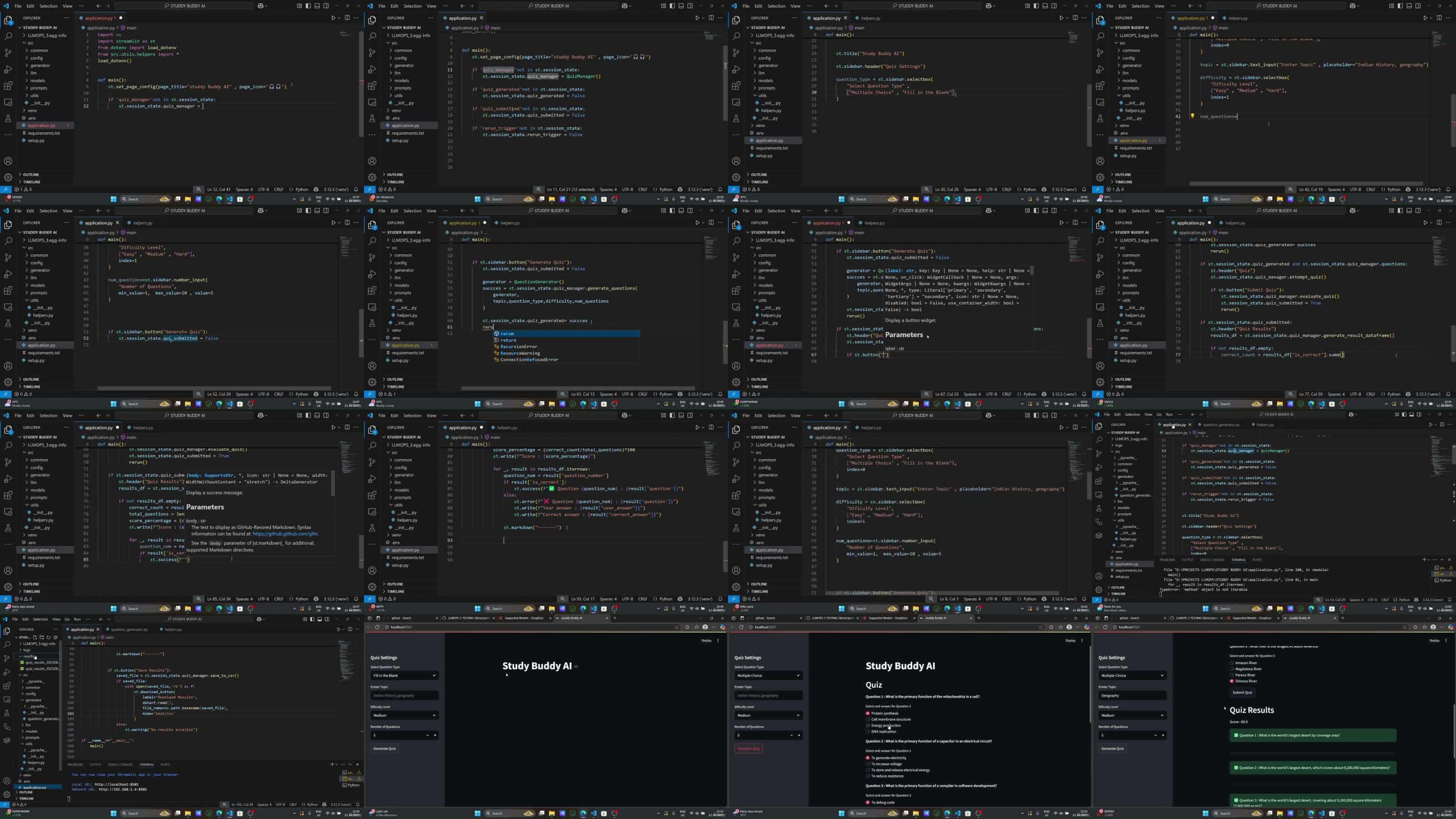
Section 7: Study Buddy AI using Minikube,Jenkins,ArgoCD,GitOps,Langchain,DockerHub

Lecture 81 Introduction to the Project

Lecture 82 Project and API Setup ( Groq )

Lecture 83 Configuration Code

Lecture 84 Question Schemas Models Code

Lecture 85 Prompt Templates Code

Lecture 86 GROQ Client Setup Code

Lecture 87 Question Generator Code

Lecture 88 Helper Class Code for Application

Lecture 89 Main Application Code

Lecture 90 Code Versioning and Dockerfile

Lecture 91 Kubernetes Manifests Files Code

Lecture 92 GCP VM Instance Setup for Docker,Minikube,Kubectl

Lecture 93 Jenkins Setup for Continuous Integration ( CI )

Lecture 94 GitHub Integration with Jenkins

Lecture 95 Build and Push Docker Image to DockerHub

Lecture 96 ArgoCD Setup for Deployment - Part 1

Lecture 97 ArgoCD Setup for Deployment - Part 2

Lecture 98 ArgoCD Setup for Deployment - Part 3

Lecture 99 WebHooks , Some Stages and Cleanup

Section 8: Celebrity Detector & QA using Kubernetes,CircleCI,Groq,Llama-4,OpenCV ,Flask

Lecture 100 Introduction to the Project

Lecture 101 Project and API Setup ( Groq )

Lecture 102 Image Handler Code with OpenCV

Lecture 103 Celebrity Detector Code using Llama-4

Lecture 104 Question Answer Engine Code

Lecture 105 Flask Backend Routes Code

Lecture 106 Main Application Code using HTML/CSS and Flask

Lecture 107 Dockerfile , Kubernetes Deployment File and Code Versioning using GitHub

Lecture 108 GCP Setup ( Service Accounts , GKE, GAR )

Lecture 109 Circle CI Pipeline Code

Lecture 110 Full CI/CD Deployment of Application on GKE

Section 9: AI Music Composer using GitLab CI/CD,GCP Kubernetes, Music21, Synthesizer,

Lecture 111 Introduction to the Project

Lecture 112 Project and API Setup ( Groq )

Lecture 113 Utility Functions Code

Lecture 114 Core Code for Application

Lecture 115 Main Application Code using Streamlit

Lecture 116 Dockerfile and Kubernetes Deployment File

Lecture 117 Code Versioning using GitLab

Lecture 118 GCP Setup ( Service Accounts , GKE, GAR )

Lecture 119 GitLab CI/CD Code

Lecture 120 Full CI-CD Deployment to GKE

Students or professionals aiming to enter the AI + DevOps job market

2fvnDPsS_o.jpg


7685bf2b09c3f44a604ffe95fef3a829.jpg

LLMOps And AIOps Bootcamp With 9+ End To End Projects
MP4 | Video: h264, 1920x1080 | Audio: AAC, 44.1 KHz
Language: English (US) | Size: 24.17 GB | Duration: 29h 15m​

Jenkins CI/CD, Docker, K8s, AWS/GCP, Prometheus monitoring & vector DBs for production LLM deployment with real projects

What you'll learn
Build and deploy real-world AI apps using Langchain, FAISS, ChromaDB, and other cutting-edge tools.
Set up CI/CD pipelines using Jenkins, GitHub Actions, CircleCI, GitLab, and ArgoCD.
Use Docker, Kubernetes, AWS, and GCP to deploy and scale AI applications.
Monitor and secure AI systems using Trivy, Prometheus, Grafana, and the ELK Stack

Requirements
Modular Python Programming Knowledge
Basic Generative AI like Langchain,Vector Databases,etc

Description
Are you ready to take your Generative AI and LLM (Large Language Model) skills to a production-ready level? This comprehensive hands-on course on LLMOps is designed for developers, data scientists, MLOps engineers, and AI enthusiasts who want to build, manage, and deploy scalable LLM applications using cutting-edge tools and modern cloud-native technologies.In this course, you will learn how to bridge the gap between building powerful LLM applications and deploying them in real-world production environments using GitHub, Jenkins, Docker, Kubernetes, FastAPI, Cloud Services (AWS & GCP), and CI/CD pipelines.We will walk through multiple end-to-end projects that demonstrate how to operationalize HuggingFace Transformers, fine-tuned models, and Groq API deployments with performance monitoring using Prometheus, Grafana, and SonarQube. You'll also learn how to manage infrastructure and orchestration using Kubernetes (Minikube, GKE), AWS Fargate, and Google Artifact Registry (GAR).What You Will Learn:Introduction to LLMOps & Production ChallengesUnderstand the challenges of deploying LLMs and how MLOps principles extend to LLMOps. Learn best practices for scaling and maintaining these models efficiently.Version Control & Source ManagementSet up and manage code repositories with Git & GitHub, integrate pull requests, branching strategies, and project workflows.CI/CD Pipeline with Jenkins & GitHub ActionsAutomate training, testing, and deployment pipelines using Jenkins, GitHub Actions, and custom AWS runners to streamline model delivery.FastAPI for LLM DeploymentPackage and expose LLM services using FastAPI, and deploy inference endpoints with proper error handling, security, and logging.Groq & HuggingFace IntegrationIntegrate Groq API for blazing-fast LLM inference. Use HuggingFace models, fine-tuning, and hosting options to deploy custom language models.Containerization & Quality ChecksLearn how to containerize your LLM applications using Docker. Ensure code quality and maintainability using SonarQube and other static analysis tools.Cloud-Native Deployments (AWS & GCP)Deploy applications using AWS Fargate, GCP GKE, and integrate with GAR (Google Artifact Registry). Learn how to manage secrets, storage, and scalability.Vector Databases & Semantic SearchWork with vector databases like FAISS, Weaviate, or Pinecone to implement semantic search and Retrieval-Augmented Generation (RAG) pipelines.Monitoring and ObservabilityMonitor your LLM systems using Prometheus and Grafana, and ensure system health with logging, alerting, and dashboards.Kubernetes & MinikubeOrchestrate containers and scale LLM workloads using Kubernetes, both locally with Minikube and on the cloud using GKE (Google Kubernetes Engine).Who Should Enroll?MLOps and DevOps Engineers looking to break into LLM deploymentData Scientists and ML Engineers wanting to productize their LLM solutionsBackend Developers aiming to master scalable AI deploymentsAnyone interested in the intersection of LLMs, MLOps, DevOps, and CloudTechnologies Covered:Git, GitHub, Jenkins, Docker, FastAPI, Groq, HuggingFace, SonarQube, AWS Fargate, AWS Runner, GCP, Google Kubernetes Engine (GKE), Google Artifact Registry (GAR), Minikube, Vector Databases, Prometheus, Grafana, Kubernetes, and more.By the end of this course, you'll have hands-on experience deploying, monitoring, and scaling LLM applications with production-grade infrastructure, giving you a competitive edge in building real-world AI systems.Get ready to level up your LLMOps journey! Enroll now and build the future of Generative AI.

Who this course is for:
Students or professionals aiming to enter the AI + DevOps job market

For More Courses Visit & Bookmark Your Preferred Language Blog
From Here: - - - - - - - -


WsnxvjTB_o.jpg


772909024_yxusj-1l3j0u07qg8l.jpg

LLMOps And AIOps Bootcamp With 8 End To End Projects
MP4 | Video: h264, 1920x1080 | Audio: AAC, 44.1 KHz
Language: English (US) | Size: 24.69 GB | Duration: 30h 0m​

What you'll learn
Build and deploy real-world AI apps using Langchain, FAISS, ChromaDB, and other cutting-edge tools.
Set up CI/CD pipelines using Jenkins, GitHub Actions, CircleCI, GitLab, and ArgoCD.
Use Docker, Kubernetes, AWS, and GCP to deploy and scale AI applications.
Monitor and secure AI systems using Trivy, Prometheus, Grafana, and the ELK Stack

Requirements
Modular Python Programming Knowledge
Basic Generative AI like Langchain,Vector Databases,etc

Description
Use COUPONS in this way:MONTH01 -> 5th of the MonthMONTH02 -> 15th of the MonthMONTH03 -> 25th of the Monthlike JANUARY01,JANUARY02,JANUARY03for instant discounts..Are you ready to take your Generative AI and LLM (Large Language Model) skills to a production-ready level? This comprehensive hands-on course on LLMOps is designed for developers, data scientists, MLOps engineers, and AI enthusiasts who want to build, manage, and deploy scalable LLM applications using cutting-edge tools and modern cloud-native technologies.In this course, you will learn how to bridge the gap between building powerful LLM applications and deploying them in real-world production environments using GitHub, Jenkins, Docker, Kubernetes, FastAPI, Cloud Services (AWS & GCP), and CI/CD pipelines.We will walk through multiple end-to-end projects that demonstrate how to operationalize HuggingFace Transformers, fine-tuned models, and Groq API deployments with performance monitoring using Prometheus, Grafana, and SonarQube. You'll also learn how to manage infrastructure and orchestration using Kubernetes (Minikube, GKE), AWS Fargate, and Google Artifact Registry (GAR).What You Will Learn:Introduction to LLMOps & Production ChallengesUnderstand the challenges of deploying LLMs and how MLOps principles extend to LLMOps. Learn best practices for scaling and maintaining these models efficiently.Version Control & Source ManagementSet up and manage code repositories with Git & GitHub, integrate pull requests, branching strategies, and project workflows.CI/CD Pipeline with Jenkins & GitHub ActionsAutomate training, testing, and deployment pipelines using Jenkins, GitHub Actions, and custom AWS runners to streamline model delivery.FastAPI for LLM DeploymentPackage and expose LLM services using FastAPI, and deploy inference endpoints with proper error handling, security, and logging.Groq & HuggingFace IntegrationIntegrate Groq API for blazing-fast LLM inference. Use HuggingFace models, fine-tuning, and hosting options to deploy custom language models.Containerization & Quality ChecksLearn how to containerize your LLM applications using Docker. Ensure code quality and maintainability using SonarQube and other static analysis tools.Cloud-Native Deployments (AWS & GCP)Deploy applications using AWS Fargate, GCP GKE, and integrate with GAR (Google Artifact Registry). Learn how to manage secrets, storage, and scalability.Vector Databases & Semantic SearchWork with vector databases like FAISS, Weaviate, or Pinecone to implement semantic search and Retrieval-Augmented Generation (RAG) pipelines.Monitoring and ObservabilityMonitor your LLM systems using Prometheus and Grafana, and ensure system health with logging, alerting, and dashboards.Kubernetes & MinikubeOrchestrate containers and scale LLM workloads using Kubernetes, both locally with Minikube and on the cloud using GKE (Google Kubernetes Engine).Who Should Enroll?MLOps and DevOps Engineers looking to break into LLM deploymentData Scientists and ML Engineers wanting to productize their LLM solutionsBackend Developers aiming to master scalable AI deploymentsAnyone interested in the intersection of LLMs, MLOps, DevOps, and CloudTechnologies Covered:Git, GitHub, Jenkins, Docker, FastAPI, Groq, HuggingFace, SonarQube, AWS Fargate, AWS Runner, GCP, Google Kubernetes Engine (GKE), Google Artifact Registry (GAR), Minikube, Vector Databases, Prometheus, Grafana, Kubernetes, and more.By the end of this course, you'll have hands-on experience deploying, monitoring, and scaling LLM applications with production-grade infrastructure, giving you a competitive edge in building real-world AI systems.Get ready to level up your LLMOps journey! Enroll now and build the future of Generative AI.

Who this course is for:
Students or professionals aiming to enter the AI + DevOps job market

For More Courses Visit & Bookmark Your Preferred Language Blog
From Here: - - - - - - - -


yxusj-60-Main-Application-Code.jpg

772909044_yxusj-j5h2h139my0t.jpg


RapidGator
-.part01.rar
-.part02.rar
-.part03.rar
-.part04.rar
-.part05.rar
-.part06.rar
-.part07.rar
-.part08.rar
-.part09.rar
-.part10.rar
-.part11.rar
-.part12.rar
-.part13.rar
-.part14.rar
-.part15.rar
-.part16.rar
-.part17.rar
-.part18.rar
-.part19.rar
-.part20.rar
-.part21.rar
-.part22.rar
-.part23.rar
-.part24.rar
-.part25.rar
-.part26.rar
-.part27.rar
-.part28.rar
-.part29.rar
-.part30.rar
-.part31.rar
-.part32.rar
DDownload
-.part01.rar
-.part02.rar
-.part03.rar
-.part04.rar
-.part05.rar
-.part06.rar
-.part07.rar
-.part08.rar
-.part09.rar
-.part10.rar
-.part11.rar
-.part12.rar
-.part13.rar
-.part14.rar
-.part15.rar
-.part16.rar
-.part17.rar
-.part18.rar
-.part19.rar
-.part20.rar
-.part21.rar
-.part22.rar
-.part23.rar
-.part24.rar
-.part25.rar
-.part26.rar
-.part27.rar
-.part28.rar
-.part29.rar
-.part30.rar
-.part31.rar
-.part32.rar
NitroFlare
-.part01.rar
-.part02.rar
-.part03.rar
-.part04.rar
-.part05.rar
-.part06.rar
-.part07.rar
-.part08.rar
-.part09.rar
-.part10.rar
-.part11.rar
-.part12.rar
-.part13.rar
-.part14.rar
-.part15.rar
-.part16.rar
-.part17.rar
-.part18.rar
-.part19.rar
-.part20.rar
-.part21.rar
-.part22.rar
-.part23.rar
-.part24.rar
-.part25.rar
-.part26.rar
-.part27.rar
-.part28.rar
-.part29.rar
-.part30.rar
-.part31.rar
-.part32.rar
​
 
Zurück
Oben Unten