• Regeln für den Video-Bereich:

    In den Börsenbereich gehören nur Angebote die bereits den Allgemeinen Regeln entsprechen.

    Einteilung

    - Folgende Formate gehören in die angegeben Bereiche:
    - Filme: Encodierte Filme von BluRay, DVD, R5, TV, Screener sowie Telesyncs im Format DivX, XviD und x264.
    - DVD: Filme im Format DVD5, DVD9 und HD2DVD.
    - HD: Encodierte Filme mit der Auflösung 720p oder darüber von BluRay, DVD, R5, TV, Screener sowie Telesyncs im Format x264.
    - 3D: Encodierte Filme von BluRay, die in einem 3D Format vorliegen. Dies gilt auch für Dokus, Animation usw.
    - Serien: Cartoon/Zeichentrick, Anime, Tutorials, Dokumentationen, Konzerte/Musik, Sonstiges sind demnach in die entsprechenden Bereiche einzuordnen, auch wenn sie beispielsweise im High Definition-Format oder als DVD5/DVD9/HD2DVD vorliegen. Ausnahme 3D.
    - Bereich Englisch: Englische Releases gehören immer in diesen Bereich.
    - Bereich Talk: Der Bereich, in dem über die Releases diskutiert werden kann, darf, soll und erwünscht ist.


    Angebot/Beitrag erstellen

    - Ein Beitrag darf erst dann erstellt werden, wenn der Upload bei mindestens einem OCH komplett ist. Platzhalter sind untersagt.
    - Bei einem Scenerelease hat der Threadtitel ausschließlich aus dem originalen, unveränderten Releasenamen zu bestehen. Es dürfen keine Veränderungen wie z.B. Sterne, kleine Buchstaben o.ä. vorgenommen werden. Ausnahme Serienbörse:
    - Bei einem Sammelthread für eine Staffel entfällt aus dem Releasename natürlich der Name der Folge. Beispiel: Die Simpsons S21 German DVDRip XviD - ITG
    - Dementsprechend sind also u.a. verboten: Erweiterungen wie "Tipp", "empfehlenswert", "only", "reup", usw. / jegliche andere Zusatzinformation oder Ergänzung, welche nicht in obiger Beschreibung zu finden ist.

    Aufbau des Angebots und Threadtitel

    Der Titel nach folgendem Muster erstellt zu werden. <Name> [3D] [Staffel] [German] <Jahr> <Tonspur> [DL] [Auflösung] <Quelle> <Codec> - <Group>
    Beispiel: The Dark Knight German 2008 AC3 DVDRip XviD - iND
    Beispiel: The Dark Knight 2008 DTS DL BDRip x264 - iND
    Beispiel: The Dark Knight 2008 AC3 DL BDRip XviD - iND
    Beispiel: The Dark Knight German 2008 AC3 720p BluRay x264 iND
    Beispiel: The Dark Knight 2008 DTS DL 1080p BluRay x264 iND
    Beispiel: Die Simpsons S01 German AC3 DVDRip XviD iND
    Beispiel: Die Simpsons S20 German AC3 720p BluRay x264 iND
    Beispiel: Sword Art Online II Ger Sub 2014 AAC 1080p WEBRip x264 - peppermint
    Entsprechend sind also u.a. verboten: Sonderzeichen wie Klammern, Sterne, Ausrufezeichen, Unterstriche, Anführungszeichen / Erweiterungen wie "Tipp", "empfehlenswert", "only", "reup", usw. / jegliche andere Zusatzinformation oder Ergänzung, welche nicht in obiger Beschreibung zu finden ist
    Ausnahmen hiervon können in den Bereichen geregelt sein.

    Die Beiträge sollen wie folgt aufgebaut werden:
    Überschrift entspricht dem Threadtitel
    Cover
    kurze Inhaltsbeschreibung
    Format, Größe, Dauer sind gut lesbar für Downloader außerhalb des Spoilers zu vermerken
    Nfo sind immer Anzugeben und selbige immer im Spoiler in Textform.
    Sind keine Nfo vorhanden z.B. Eigenpublikationen, sind im Spoiler folgende Dateiinformationen zusätzlich anzugeben :
    Quelle
    Video (Auflösung und Bitrate)
    Ton (Sprache, Format und Bitrate der einzelnen Spuren)
    Untertitel (sofern vorhanden)
    Hosterangabe in Textform außerhalb eines Spoiler mit allen enthaltenen Hostern.
    Bei SD kann auf diese zusätzlichen Dateiinformationen verzichtet werden.

    Alle benötigten Passwörter sind, sofern vorhanden, in Textform im Angebot anzugeben.
    Spoiler im Spoiler mit Kommentaren :"Schon Bedankt?" sind unerwünscht.


    Releases

    - Sind Retail-Release verfügbar, sind alle anderen Variationen untersagt. Ausnahmen: Alle deutschen Retail-Release sind CUT, in diesem Fall sind dubbed UNCUT-Release zulässig.
    - Im Serien-Bereich gilt speziell: Wenn ein Retail vor Abschluss einer laufenden Staffel erscheint, darf diese Staffel noch zu Ende gebracht werden.62
    - Gleiche Releases sind unbedingt zusammenzufassen. Das bedeutet, es ist zwingend erforderlich, vor dem Erstellen eines Themas per Suchfunktion zu überprüfen, ob bereits ein Beitrag mit demselben Release besteht. Ist dies der Fall, ist der bereits vorhandene Beitrag zu verwenden.
    - P2P und Scene Releases dürfen nicht verändert oder gar unter einem iND Tag eingestellt werden.


    Support, Diskussionen und Suche

    - Supportanfragen sind entweder per PN oder im Bereich Talk zu stellen.
    - Diskussionen und Bewertungen sind im Talk Bereich zu führen. Fragen an die Uploader haben ausschließlich via PN zu erfolgen, und sind in den Angeboten untersagt.
    - Anfragen zu Upload-Wünschen sind nur im Bereich Suche Video erlaubt. Antworten dürfen nur auf Angebote von MyBoerse.bz verlinkt werden.


    Verbote

    - Untersagt sind mehrere Formate in einem einzigen Angebotsthread, wie beispielsweise das gleichzeitige Anbieten von DivX/XviD, 720p und 1080p in einem Thread. Pro Format, Release und Auflösung ist ein eigener Thread zu eröffnen.
    - Grundsätzlich ebenso verboten sind Dupes. Uploader haben sich an geeigneter Stelle darüber zu informieren, ob es sich bei einem Release um ein Dupe handelt.
    - Gefakte, nur teilweise lauffähige oder unvollständige Angebote sind untersagt. Dies gilt auch für eigene Publikationen, die augenscheinlich nicht selbst von z.B. einer DVD gerippt wurden. Laufende Serien, bei denen noch nicht alle Folgen verfügbar sind, dürfen erstellt und regelmäßig geupdatet werden.
    - Untersagt sind Angebote, welche nur und ausschließlich in einer anderen Sprache als deutsch oder englisch vorliegen. Ausnahmen sind VORHER mit den Moderatoren zu klären.


    Verstoß gegen die Regeln

    - Angebote oder Beiträge, die gegen die Forenregeln verstoßen, sind über den "Melden"-Button im Beitrag zu melden.
  • Bitte registriere dich zunächst um Beiträge zu verfassen und externe Links aufzurufen.

*** Bestes IPTV *** bester Preis *** gratis Test ***


Learn Amr Detection From Raw Genomic Reads To Ml Prediction

babymore87

MyBoerse.bz Pro Member

cfb00f2cd2b61b124de5f7a818a29788.webp

Free Download Learn Amr Detection From Raw Genomic Reads To Ml Prediction
Published 10/2025
MP4 | Video: h264, 1920x1080 | Audio: AAC, 44.1 KHz
Language: English | Size: 3.44 GB | Duration: 7h 23m
Build end-to-end AMR analysis pipelines on Linux identify resistance genes, and prepare data for advanced ML predictions

What you'll learn
Understand the fundamentals of Antimicrobial Resistance (AMR) and its biological significance.
Learn how bioinformatics tools and databases are applied in AMR research and genomic analysis.
Set up a Linux-based bioinformatics environment and efficiently navigate the Linux file system.
Perform data preprocessing and quality control using tools like FastQC and Fastp.
Conduct de novo bacterial genome assembly using SPAdes and assess assembly quality with Quast.
Annotate genomes using Prokka and interpret gene annotation results in the context of AMR research.
Detect antimicrobial resistance genes from multiple databases using ABRicate.
Integrate all steps into a complete AMR analysis pipeline from raw data to gene detection.
Generate an AMR gene presence-absence matrix and prepare data for downstream analysis using Python.
Build and interpret machine learning models to predict antimicrobial resistance patterns based on genomic data.
Requirements
No prior experience in bioinformatics or Linux is required, this course is designed to start from the basics.
A computer (Windows, macOS, or Linux) with stable internet access for software installation and dataset downloads.
Basic understanding of biology or genetics will be helpful but not mandatory.
Interest in genomic data analysis, antimicrobial resistance, or computational biology.
Willingness to learn through hands-on practice using real-world data and pipelines.
Familiarity with Python programming will be an advantage but is not required, all steps are explained in detail.
Description
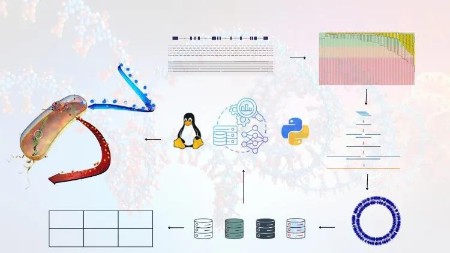
Antimicrobial resistance (AMR) is one of the most critical challenges in modern medicine and bioinformatics provides the tools to detect, analyze, and predict resistance directly from genomic data. In this hands-on course, you'll learn how to build complete AMR analysis pipelines starting from raw sequencing reads all the way to machine learning-based resistance prediction.You'll begin with the fundamentals of AMR and bioinformatics, then move on to Linux essentials, data preprocessing, and genome assembly using tools like SPAdes and Quast. Next, you'll perform genome annotation with Prokka and detect resistance genes through ABRicate using multiple AMR databases (CARD, NCBI, ResFinder).Finally, you'll learn how to extract key features from AMR data, build an AMR gene presence-absence matrix, and apply machine learning models in Python to predict resistance patterns.This course combines real-world genomic data, practical coding, and clear explanations to help you master AMR genomics analysis even if you're a beginner.No coding is required: all pipelines and codes are provided! Just follow the guided workflow and focus on learning the biological insights.By the end of this course, you will:Understand the principles of antimicrobial resistance genomicsPerform quality control and genome assembly using Linux-based toolsAnnotate genomes and detect AMR genes using Prokka and ABRicateUtilize major AMR databases for gene identificationPrepare AMR gene presence-absence data for ML analysisApply machine learning models to predict resistance patternsUse fully provided codes and pipelines without manual scriptingIdeal For:Students and researchers in bioinformatics, genomics, and microbiologyBeginners who want a guided, no-coding approach to AMR analysisProfessionals seeking hands-on AMR detection pipelines for real dataAnyone curious about integrating bioinformatics and machine learningEnroll now and start your journey to master AMR genomics and machine learning powered resistance detection today!
Students and beginners in bioinformatics, microbiology, or computational biology who want to understand how antimicrobial resistance (AMR) is studied using genomic data.,Researchers and academics interested in learning practical AMR analysis pipelines for bacterial genomics.,Healthcare and public health professionals looking to explore how bioinformatics tools can be used for AMR gene detection and surveillance.,Data science and machine learning enthusiasts who want to apply predictive modeling to real biological datasets.,Bioinformatics professionals seeking to expand their skills in AMR genomics, genome assembly, annotation, and machine learning integration.,Anyone curious about antimicrobial resistance and eager to learn how to analyze sequencing data using Linux and Python.
Homepage


Recommend Download Link Hight Speed | Please Say Thanks Keep Topic Live
No Password - Links are Interchangeable

 

193e206e20f340737dc60a0126ce603c.jpg

Learn AMR Detection: From Raw Genomic Reads to ML Prediction
Published 10/2025
Duration: 7h 23m | .MP4 1920x1080 30 fps(r) | AAC, 44100 Hz, 2ch | 3.44 GB
Genre: eLearning | Language: English​

Build end-to-end AMR analysis pipelines on Linux identify resistance genes, and prepare data for advanced ML predictions

What you'll learn
- Understand the fundamentals of Antimicrobial Resistance (AMR) and its biological significance.
- Learn how bioinformatics tools and databases are applied in AMR research and genomic analysis.
- Set up a Linux-based bioinformatics environment and efficiently navigate the Linux file system.
- Perform data preprocessing and quality control using tools like FastQC and Fastp.
- Conduct de novo bacterial genome assembly using SPAdes and assess assembly quality with Quast.
- Annotate genomes using Prokka and interpret gene annotation results in the context of AMR research.
- Detect antimicrobial resistance genes from multiple databases using ABRicate.
- Integrate all steps into a complete AMR analysis pipeline from raw data to gene detection.
- Generate an AMR gene presence-absence matrix and prepare data for downstream analysis using Python.
- Build and interpret machine learning models to predict antimicrobial resistance patterns based on genomic data.

Requirements
- No prior experience in bioinformatics or Linux is required, this course is designed to start from the basics.
- A computer (Windows, macOS, or Linux) with stable internet access for software installation and dataset downloads.
- Basic understanding of biology or genetics will be helpful but not mandatory.
- Interest in genomic data analysis, antimicrobial resistance, or computational biology.
- Willingness to learn through hands-on practice using real-world data and pipelines.
- Familiarity with Python programming will be an advantage but is not required, all steps are explained in detail.

Description
Antimicrobial resistance (AMR) is one of the most critical challenges in modern medicine and bioinformatics provides the tools to detect, analyze, and predict resistance directly from genomic data.

In this hands-on course, you'll learn how to build complete AMR analysis pipelines starting from raw sequencing reads all the way to machine learning-based resistance prediction.

You'll begin with the fundamentals of AMR and bioinformatics, then move on to Linux essentials, data preprocessing, and genome assembly using tools like SPAdes and Quast. Next, you'll perform genome annotation with Prokka and detect resistance genes through ABRicate using multiple AMR databases (CARD, NCBI, ResFinder).

Finally, you'll learn how to extract key features from AMR data, build an AMR gene presence-absence matrix, and apply machine learning models in Python to predict resistance patterns.

This course combines real-world genomic data, practical coding, and clear explanations to help you master AMR genomics analysis even if you're a beginner.

No coding is required: all pipelines and codes are provided!Just follow the guided workflow and focus on learning the biological insights.

By the end of this course, you will:

Understand the principles of antimicrobial resistance genomics

Perform quality control and genome assembly using Linux-based tools

Annotate genomes and detect AMR genes usingProkkaandABRicate

Utilize major AMR databases for gene identification

Prepare AMR gene presence-absence data for ML analysis

Apply machine learning models to predict resistance patterns

Use fully provided codes and pipelines without manual scripting

Ideal For:

Students and researchers inbioinformatics,genomics, andmicrobiology

Beginners who want aguided, no-coding approachto AMR analysis

Professionals seeking hands-onAMR detection pipelinesfor real data

Anyone curious about integratingbioinformatics and machine learning

Enroll now and start your journey to masterAMR genomics and machine learning powered resistance detectiontoday!

Who this course is for:
- Students and beginners in bioinformatics, microbiology, or computational biology who want to understand how antimicrobial resistance (AMR) is studied using genomic data.
- Researchers and academics interested in learning practical AMR analysis pipelines for bacterial genomics.
- Healthcare and public health professionals looking to explore how bioinformatics tools can be used for AMR gene detection and surveillance.
- Data science and machine learning enthusiasts who want to apply predictive modeling to real biological datasets.
- Bioinformatics professionals seeking to expand their skills in AMR genomics, genome assembly, annotation, and machine learning integration.
- Anyone curious about antimicrobial resistance and eager to learn how to analyze sequencing data using Linux and Python.


BE7cehdB_o.jpg

 
Zurück
Oben Unten