




How To Read Abdominal X-Ray From Zero To Hero
What you'll learn
Systematic Interpretation: Develop a structured, step-by-step approach to reading abdominal X-rays, ensuring nothing is missed.
Understanding Views and Techniques: Identify the different X-ray views (AP, lateral) and understand when each view is indicated.
Recognizing Normal vs. Abnormal: Distinguish normal anatomy, air-fluid levels, and common pitfalls from abnormal findings.
Identifying Pathologies: Detect key abdominal pathologies, including pneumoperitoneum, bowel obstructions, calcifications, and soft tissue abnormalities.
ABCDE Approach: Master the ABCDE approach to organize findings, covering air patterns, bowel changes, calcifications, bone and spine anomalies, and other signs
Artifact Identification: Recognize normal and pathological calcifications, foreign bodies, iatrogenic objects, and anatomical variants.
Clinical Relevance: Apply radiographic findings to clinical scenarios, especially in cases of abdominal pain.
Improving Diagnostic Confidence: Use checklists for supine and erect X-rays to catch subtle signs and develop diagnostic accuracy.
Requirements
Understanding of Medical Terminology: A foundational grasp of medical terminology, especially radiological and anatomical terms, is recommended.
Interest in Radiology or Medical Imaging: This course is ideal for medical students, radiology residents, or healthcare professionals interested in abdominal imaging.
Basic Anatomy and Physiology Knowledge: Familiarity with basic anatomy, particularly of the abdominal region, will be helpful.
No Prior X-ray Experience Required: While prior experience with X-rays can be beneficial, this course is designed to cover everything from the basics to more advanced interpretations.
Description
This comprehensive course is designed for medical students, residents, radiologic technologists, and healthcare providers who want to master the fundamentals of abdominal radiology.Starting with the basics, you'll learn how to choose the right view, set up the technique, and interpret various quadrants and regions of the abdomen. From there, we'll dive into the ABCDE approach, covering everything from normal anatomical variations to identifying air-fluid levels, calcifications, and critical pathologies like pneumoperitoneum, bowel obstruction, and emphysematous infections.With easy-to-follow modules, checklists, and practical cases, you'll gain the skills to recognize key signs, avoid common pitfalls, and apply your knowledge to real clinical situations. You'll also work through dedicated sections on both supine and erect X-ray checklists, as well as CXR (chest X-ray) interpretation to assess for intra-abdominal issues visible in chest films.By the end of this course, you'll be able to:Interpret abdominal X-rays systematically with the ABCDE approach.Distinguish normal from abnormal findings, including subtle signs.Recognize essential pathologies: pneumoperitoneum, bowel dilatation, calcifications, foreign bodies, and more.Apply radiologic findings to clinical scenarios for effective diagnosis and patient management.Enhance your confidence and diagnostic accuracy in abdominal imaging.Whether you're a beginner or looking to refine your skills, this course will equip you with a strong foundation in abdominal X-ray interpretation. Enroll today and take a significant step forward in your radiology journey!
Overview
Section 1: Introduction
Lecture 1 Introduction
Lecture 2 Be systemic
Section 2: Indication
Lecture 3 Indication
Section 3: Positions and technique quadrants
Lecture 4 AP position
Lecture 5 Lateral view
Lecture 6 Choose suitable position
Lecture 7 Technique setting
Lecture 8 Quadrants and regions
Section 4: Normal finding
Lecture 9 Normal Air fluid level
Lecture 10 Normal pitfalls
Lecture 11 Radiology and abdominal pain
Lecture 12 Supine position checklists
Lecture 13 Erect position checklists
Lecture 14 CXR checklists
Section 5: ABC approach
Lecture 15 ABC approach
Lecture 16 A in ABC approach
Lecture 17 Pneumoperitoneum
Lecture 18 Pitfall in pneumoperitoneum
Lecture 19 Rigler sign
Lecture 20 Pseudo rigler sign
Lecture 21 Faciform ligament sign
Lecture 22 Football sign
Lecture 23 Pneumoretroperitoneum
Lecture 24 Pneumatosis intestinal
Lecture 25 Pneumobilia
Lecture 26 Portal venous gas
Lecture 27 Emphysematous cholecystitis
Lecture 28 Emphysematous gastritis
Lecture 29 Emphysematous pancreatitis
Lecture 30 Emphysematous pyelonephritis
Lecture 31 Emphysematous cystitis
Lecture 32 Surgical emphysema
Lecture 33 Necrotizing fasciitis
Section 6: B in ABC approaching
Lecture 34 B in ABC approach
Lecture 35 Dilated small bowl
Lecture 36 Gallstones illeus
Lecture 37 Dilated large bowel
Lecture 38 Sigmoid volvulus
Lecture 39 Ceacal volvulus
Lecture 40 Dilated stomach
Lecture 41 Hernia
Lecture 42 Bowel inflammation
Lecture 43 Toxic megacolon
Lecture 44 Fecal loading
Lecture 45 Fecal impaction
Section 7: C. In ABC approach
Lecture 46 C in ABC approach
Lecture 47 Abdominal calcification
Lecture 48 Rim like calcification
Lecture 49 Linear calcification
Lecture 50 Lamellar calcification
Lecture 51 Cloud like calcification
Lecture 52 Gallstones
Lecture 53 Limey bile
Lecture 54 Porcelain GB
Lecture 55 Renal stones
Lecture 56 Nephrocalcinosis
Lecture 57 Pancreas calcification
Lecture 58 Adrenal calcification
Lecture 59 AAA calcification
Lecture 60 Fetus
Lecture 61 Calcified costal cartilage
Lecture 62 Phlebolith
Lecture 63 Calcified mesenteric LNs
Lecture 64 Calcified fibroids
Lecture 65 Calcified prostate
Lecture 66 Aortic calcification
Lecture 67 Splenic artery calcification
Section 8: D in ABCD approach
Lecture 68 D in ABCD approach
Lecture 69 Pelvic fracture
Lecture 70 Sclerotic and lucent Bone lesions
Lecture 71 Spine pathology
Lecture 72 Solid organ enlargement
Section 9: E in ABC approach
Lecture 73 E in ABC approach
Lecture 74 Iatrogenic medical and surgical objects
Lecture 75 Foreign bodies
Lecture 76 Lung bases
Section 10: Answers
Lecture 77 Answers
Medical Students and Radiology Residents: Ideal for those starting to learn abdominal X-ray interpretation and looking to build a strong, systematic foundation.,Junior Doctors and Interns: Beneficial for healthcare providers involved in patient care who want to improve their radiographic diagnostic skills, especially in the emergency setting.,Emergency Medicine and General Practitioners: Useful for practitioners who encounter abdominal pathologies and need to make quick, accurate interpretations.,Radiologic Technologists: Helps technologists refine their understanding of abdominal X-rays and improve their ability to spot key pathologies,Healthcare Professionals: Nurses, physician assistants, and other healthcare workers looking to broaden their diagnostic knowledge in abdominal radiology.
Say "Thank You"
rapidgator.net:
k2s.cc:
Published 11/2024
MP4 | Video: h264, 1920x1080 | Audio: AAC, 44.1 KHz
Language: English | Size: 254.25 MB | Duration: 2h 30m
A Systematic Approach to Diagnosing Key Pathologies"
MP4 | Video: h264, 1920x1080 | Audio: AAC, 44.1 KHz
Language: English | Size: 254.25 MB | Duration: 2h 30m
A Systematic Approach to Diagnosing Key Pathologies"
What you'll learn
Systematic Interpretation: Develop a structured, step-by-step approach to reading abdominal X-rays, ensuring nothing is missed.
Understanding Views and Techniques: Identify the different X-ray views (AP, lateral) and understand when each view is indicated.
Recognizing Normal vs. Abnormal: Distinguish normal anatomy, air-fluid levels, and common pitfalls from abnormal findings.
Identifying Pathologies: Detect key abdominal pathologies, including pneumoperitoneum, bowel obstructions, calcifications, and soft tissue abnormalities.
ABCDE Approach: Master the ABCDE approach to organize findings, covering air patterns, bowel changes, calcifications, bone and spine anomalies, and other signs
Artifact Identification: Recognize normal and pathological calcifications, foreign bodies, iatrogenic objects, and anatomical variants.
Clinical Relevance: Apply radiographic findings to clinical scenarios, especially in cases of abdominal pain.
Improving Diagnostic Confidence: Use checklists for supine and erect X-rays to catch subtle signs and develop diagnostic accuracy.
Requirements
Understanding of Medical Terminology: A foundational grasp of medical terminology, especially radiological and anatomical terms, is recommended.
Interest in Radiology or Medical Imaging: This course is ideal for medical students, radiology residents, or healthcare professionals interested in abdominal imaging.
Basic Anatomy and Physiology Knowledge: Familiarity with basic anatomy, particularly of the abdominal region, will be helpful.
No Prior X-ray Experience Required: While prior experience with X-rays can be beneficial, this course is designed to cover everything from the basics to more advanced interpretations.
Description
This comprehensive course is designed for medical students, residents, radiologic technologists, and healthcare providers who want to master the fundamentals of abdominal radiology.Starting with the basics, you'll learn how to choose the right view, set up the technique, and interpret various quadrants and regions of the abdomen. From there, we'll dive into the ABCDE approach, covering everything from normal anatomical variations to identifying air-fluid levels, calcifications, and critical pathologies like pneumoperitoneum, bowel obstruction, and emphysematous infections.With easy-to-follow modules, checklists, and practical cases, you'll gain the skills to recognize key signs, avoid common pitfalls, and apply your knowledge to real clinical situations. You'll also work through dedicated sections on both supine and erect X-ray checklists, as well as CXR (chest X-ray) interpretation to assess for intra-abdominal issues visible in chest films.By the end of this course, you'll be able to:Interpret abdominal X-rays systematically with the ABCDE approach.Distinguish normal from abnormal findings, including subtle signs.Recognize essential pathologies: pneumoperitoneum, bowel dilatation, calcifications, foreign bodies, and more.Apply radiologic findings to clinical scenarios for effective diagnosis and patient management.Enhance your confidence and diagnostic accuracy in abdominal imaging.Whether you're a beginner or looking to refine your skills, this course will equip you with a strong foundation in abdominal X-ray interpretation. Enroll today and take a significant step forward in your radiology journey!
Overview
Section 1: Introduction
Lecture 1 Introduction
Lecture 2 Be systemic
Section 2: Indication
Lecture 3 Indication
Section 3: Positions and technique quadrants
Lecture 4 AP position
Lecture 5 Lateral view
Lecture 6 Choose suitable position
Lecture 7 Technique setting
Lecture 8 Quadrants and regions
Section 4: Normal finding
Lecture 9 Normal Air fluid level
Lecture 10 Normal pitfalls
Lecture 11 Radiology and abdominal pain
Lecture 12 Supine position checklists
Lecture 13 Erect position checklists
Lecture 14 CXR checklists
Section 5: ABC approach
Lecture 15 ABC approach
Lecture 16 A in ABC approach
Lecture 17 Pneumoperitoneum
Lecture 18 Pitfall in pneumoperitoneum
Lecture 19 Rigler sign
Lecture 20 Pseudo rigler sign
Lecture 21 Faciform ligament sign
Lecture 22 Football sign
Lecture 23 Pneumoretroperitoneum
Lecture 24 Pneumatosis intestinal
Lecture 25 Pneumobilia
Lecture 26 Portal venous gas
Lecture 27 Emphysematous cholecystitis
Lecture 28 Emphysematous gastritis
Lecture 29 Emphysematous pancreatitis
Lecture 30 Emphysematous pyelonephritis
Lecture 31 Emphysematous cystitis
Lecture 32 Surgical emphysema
Lecture 33 Necrotizing fasciitis
Section 6: B in ABC approaching
Lecture 34 B in ABC approach
Lecture 35 Dilated small bowl
Lecture 36 Gallstones illeus
Lecture 37 Dilated large bowel
Lecture 38 Sigmoid volvulus
Lecture 39 Ceacal volvulus
Lecture 40 Dilated stomach
Lecture 41 Hernia
Lecture 42 Bowel inflammation
Lecture 43 Toxic megacolon
Lecture 44 Fecal loading
Lecture 45 Fecal impaction
Section 7: C. In ABC approach
Lecture 46 C in ABC approach
Lecture 47 Abdominal calcification
Lecture 48 Rim like calcification
Lecture 49 Linear calcification
Lecture 50 Lamellar calcification
Lecture 51 Cloud like calcification
Lecture 52 Gallstones
Lecture 53 Limey bile
Lecture 54 Porcelain GB
Lecture 55 Renal stones
Lecture 56 Nephrocalcinosis
Lecture 57 Pancreas calcification
Lecture 58 Adrenal calcification
Lecture 59 AAA calcification
Lecture 60 Fetus
Lecture 61 Calcified costal cartilage
Lecture 62 Phlebolith
Lecture 63 Calcified mesenteric LNs
Lecture 64 Calcified fibroids
Lecture 65 Calcified prostate
Lecture 66 Aortic calcification
Lecture 67 Splenic artery calcification
Section 8: D in ABCD approach
Lecture 68 D in ABCD approach
Lecture 69 Pelvic fracture
Lecture 70 Sclerotic and lucent Bone lesions
Lecture 71 Spine pathology
Lecture 72 Solid organ enlargement
Section 9: E in ABC approach
Lecture 73 E in ABC approach
Lecture 74 Iatrogenic medical and surgical objects
Lecture 75 Foreign bodies
Lecture 76 Lung bases
Section 10: Answers
Lecture 77 Answers
Medical Students and Radiology Residents: Ideal for those starting to learn abdominal X-ray interpretation and looking to build a strong, systematic foundation.,Junior Doctors and Interns: Beneficial for healthcare providers involved in patient care who want to improve their radiographic diagnostic skills, especially in the emergency setting.,Emergency Medicine and General Practitioners: Useful for practitioners who encounter abdominal pathologies and need to make quick, accurate interpretations.,Radiologic Technologists: Helps technologists refine their understanding of abdominal X-rays and improve their ability to spot key pathologies,Healthcare Professionals: Nurses, physician assistants, and other healthcare workers looking to broaden their diagnostic knowledge in abdominal radiology.
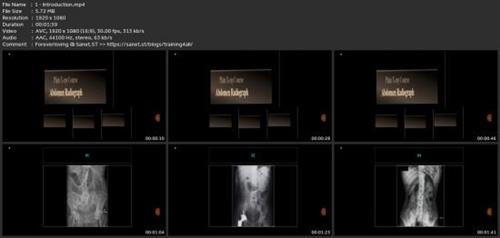
Screenshots
Say "Thank You"
rapidgator.net:
k2s.cc:
